mermaidcamp
Keeping current in wellness, in and out of the water
You can scroll the shelf using ← and → keys
You can scroll the shelf using ← and → keys

Alexios I
Alexios I Komnenos, or Comnenus (Greek: Αλέξιος Α’ Κομνηνός) (1048 – August 15, 1118), Byzantine emperor (1081–1118), was the son of John Comnenus and Anna Dalassena and the nephew of Isaac I Comnenus (emperor 1057–1059). The military, financial and territorial recovery of the Byzantine Empire began in his reign.
Life
Alexius’ father declined the throne on the abdication of Isaac, who was accordingly succeeded by four emperors of other families between 1059 and 1081. Under one of these emperors, Romanus IV Diogenes (1067–1071), he served with distinction against the Seljuk Turks. Under Michael VII Ducas Parapinaces (1071–1078) and Nicephorus III Botaneiates (1078–1081), he was also employed, along with his elder brother Isaac, against rebels in Asia Minor, Thrace and in Epirus.
Alexius’ mother wielded great influence during his reign, and he is described by his daughter, the historian Anna Comnena, as running next to the imperial chariot that she drove. In 1074, the rebel mercenaries in Asia Minor were successfully subdued, and, in 1078, he was appointed commander of the field army in the West by Nicephorus III. In this capacity, Alexius defeated the rebellions of two successive governors of Dyrrhachium, Nicephorus Bryennius (whose son or grandson later married Alexius’ daughter Anna) and Nicephorus Basilakes. Alexius was ordered to march against his brother-in-law Nicephorus Melissenus in Asia Minor but refused to fight his kinsman. This did not, however, lead to a demotion, as Alexius was needed to counter the expected Norman invasion led by Robert Guiscard near Dyrrhachium.
While the Byzantine troops were assembling for the expedition, Alexius was approached by the Ducas faction at court, who convinced him to join a conspiracy against Nicephorus III. Alexius was duly proclaimed emperor by his troops and marched on Constantinople. Bribing the western mercenaries guarding the city, the rebels entered Constantinople in triumph, meeting little resistance on April 1, 1081. Nicephorus III was forced to abdicate and retire to a monastery, and Patriarch Cosmas I crowned Alexius I emperor on April 4.
During this time, Alexius was rumored to be the lover of Empress Maria of Alania, the daughter of King Bagrat IV of Georgia, who had been successively married to Michael VII Ducas and his successor Nicephorus III Botaneiates, and was renowned for her beauty. Alexius arranged for Maria to stay on the palace grounds. It was also thought that Alexius may have been considering marrying the erstwhile empress. However, his mother consolidated the Ducas family connection by arranging the Emperor’s marriage to Irene Ducaena, granddaughter of the Caesar John Ducas, the uncle of Michael VII, who would not have supported Alexius otherwise. As a measure intended to keep the support of the Ducae, Alexius restored Constantine Ducas, the young son of Michael VII and Maria, as co-emperor and a little later betrothed him to his own first-born daughter Anna, who moved into the Mangana Palace with her fiancé and his mother.
However, this situation changed drastically when Alexius’ first son John II Comnenus was born in 1087: Anna’s engagement to Constantine was dissolved, and she was moved to the main Palace to live with her mother and grandmother. Alexius became estranged from Maria, who was stripped of her imperial title and retired to a monastery, and Constantine Ducas was deprived of his status as co-emperor. Nevertheless, he remained in good relations with the imperial family and succumbed to his weak constitution soon afterwards.
This coin was struck by Alexius during his war against Robert Guiscard.
Byzantine-Norman Wars
Alexius’ long reign of nearly thirty-seven years was full of struggle. At the very outset, he had to meet the formidable attack of the Normans (led by Robert Guiscard and his son Bohemund), who took Dyrrhachium and Corfu, and laid siege to Larissa in Thessaly (see Battle of Dyrrhachium). Alexius suffered several defeats before being able to strike back with success. He enhanced this by bribing the German king Henry IV with 360,000 gold pieces to attack the Normans in Italy, which forced the Normans to concentrate on their defenses at home in 1083–1084. He also secured the alliance of Henry, Count of Monte Sant’Angelo, who controlled the Gargano Peninsula and dated his charters by Alexius’ reign. Henry’s allegiance was to be the last example of Byzantine political control on peninsular Italy. The Norman danger ended for the time being with Robert Guiscard’s death in 1085, and the Byzantines recovered most of their losses.
Alexius had next to deal with disturbances in Thrace, where the heretical sects of the Bogomils and the Paulicians revolted and made common cause with the Pechenegs from beyond the Danube. Paulician soldiers in imperial service likewise deserted during Alexius’ battles with the Normans. As soon as the Norman threat had passed, Alexius set out to punish the rebels and deserters, confiscating their lands. This led to a further revolt near Philippopolis, and the commander of the field army in the west, Gregory Pakourianos, was defeated and killed in the ensuing battle. In 1087 the Pechenegs raided into Thrace and Alexius crossed into Moesia to retaliate but failed to take Dorostolon (Silistra). During his retreat, the emperor was surrounded and worn down by the Pechenegs, who forced him to sign a truce and pay protection money. In 1090 the Pechenegs invaded Thrace again, while the brother-in-law of the Sultan of Rum launched a fleet and attempted to arrange a joing siege of Constantinople with the Pechenegs. Alexius overcame this crisis by entering into an alliance with a horde of 40,000 Cumans, with whose help he crushed the Pechenegs at Levounion in Thrace on April 29, 1091.
The Byzantine Empire at the accession of Alexius I Comnenus, c. 1081
This put an end to the Pecheneg threat, but in 1094 the Cumans began to raid the imperial territories in the Balkans. Led by a pretender claiming to be Constantine Diogenes, a long-dead son of the Emperor Romanos IV, the Cumans crossed the mountains and raided into eastern Thrace until their leader was eliminated at Adrianople. With the Balkans more or less pacified, Alexius could now turn his attention to Asia Minor, which had been almost completely overrun by the Seljuk Turks.
Byzantine-Seljuk Wars
As early as 1090, Alexius had taken reconciliatory measures towards the Papacy, with the intention of seeking western support against the Seljuks. In 1095 his ambassadors appeared before Pope Urban II at the Council of Piacenza. The help which he wanted from the West was simply mercenary forces and not the immense hosts which arrived, to his consternation and embarrassment, after the pope preached the First Crusade at the Council of Clermont later that same year. Not quite ready to supply this number of people as they traversed his territories, the emperor saw his Balkan possessions subjected to further pillage at the hands of his own allies. Alexius dealt with the first disorganized group of crusaders, led by the preacher Peter the Hermit, by sending them on to Asia Minor, where they were massacred by the Turks in 1096.
The second and much more formidable host of crusaders gradually made its way to Constantinople, led in sections by Godfrey of Bouillon, Bohemund of Taranto, Raymond IV of Toulouse and other important members of the western nobility. Alexius used the opportunity of meeting the crusader leaders separately as they arrived and extracting from them oaths of homage and the promise to turn over conquered lands to the Byzantine Empire. Transferring each contingent into Asia, Alexius promised to supply them with provisions in return for their oaths of homage. The crusade was a notable success for Byzantium, as Alexius now recovered for the Byzantine Empire a number of important cities and islands. The crusader siege of Nicaea forced the city to surrender to the emperor in 1097, and the subsequent crusader victory at Dorylaion allowed the Byzantine forces to recover much of western Asia Minor. Here Byzantine rule was reestablished in Chios, Rhodes, Smyrna, Ephesus, Sardis, and Philadelphia in 1097–1099. This success is ascribed by his daughter Anna to his policy and diplomacy, but by the Latin historians of the crusade to his treachery and falseness. In 1099, a Byzantine fleet of 10 ships were sent to assist the Crusaders in capturing Laodicea and other coastal towns as far as Tripoli. The crusaders believed their oaths were made invalid when the Byzantine contingent under Tatikios failed to help them during the siege of Antioch; Bohemund, who had set himself up as Prince of Antioch, briefly went to war with Alexius in the Balkans, but was blockaded by the Byzantine forces and agreed to become Alexius’ vassal by the Treaty of Devol in 1108.
Personal life
During the last twenty years of his life Alexius lost much of his popularity. The years were marked by persecution of the followers of the Paulician and Bogomil heresies—one of his last acts was to publicly burn on the stake Basil, a Bogomil leader, with whom he had engaged in a theological dispute. In spite of the success of the crusade, Alexius also had to repel numerous attempts on his territory by the Seljuks in 1110–1117.
Alexius was for many years under the strong influence of an eminence grise, his mother Anna Dalassena, a wise and immensely able politician whom, in a uniquely irregular fashion, he had crowned as Augusta instead of the rightful claimant to the title, his wife Irene Ducaena. Dalassena was the effective administrator of the Empire during Alexius’ long absences in military campaigns: she was constantly at odds with her daughter-in-law and had assumed total responsibility for the upbringing and education of her granddaughter Anna Comnena.
Succession
Alexius’ last years were also troubled by anxieties over the succession. Although he had crowned his son John II Comnenus co-emperor at the age of five in 1092, John’s mother Irene Doukaina wished to alter the succession in favor of her daughter Anna and Anna’s husband, Nicephorus Bryennius. Bryennios had been made kaisar (Caesar) and received the newly-created title of panhypersebastos (“honoured above all”), and remained loyal to both Alexius and John. Nevertheless, the intrigues of Irene and Anna disturbed even Alexius’ dying hours.
Legacy
Alexius I had stabilized the Byzantine Empire and overcome a dangerous crisis, inaugurating a century of imperial prosperity and success. He had also profoundly altered the nature of the Byzantine government. By seeking close alliances with powerful noble families, Alexius put an end to the tradition of imperial exclusivity and coopted most of the nobility into his extended family and, through it, his government. This measure, which was intended to diminish opposition, was paralleled by the introduction of new courtly dignities, like that of panhypersebastos given to Nicephorus Bryennius, or that of sebastokrator given to the emperor’s brother Isaac Comnenus. Although this policy met with initial success, it gradually undermined the relative effectiveness of imperial bureaucracy by placing family connections over merit. Alexius’ policy of integration of the nobility bore the fruit of continuity: every Byzantine emperor who reigned after Alexius I Comnenus was related to him by either descent or marriage.
Family
By his marriage with Irene Ducaena, Alexius I had the following children:
Anna Komnene, who married the Caesar Nicephorus Bryennius.
Maria Komnene, who married (1) Gregory Gabras and (2) Nicephorus Euphorbenos Katakalon.
John II Komnenos, who succeeded as emperor.
Andronikos Comnenus, sebastokratōr.
Isaac Comnenus, sebastokratōr.
Eudocia Komnene, who married Michael Iasites.
Theodora Komnene, who married (1) Constantine Kourtikes and (2) Constantine Angelos. By him she was the grandmother of Emperors Isaac II Angelos and Alexios III Angelos.
Manuel Komnenos.
Zoe Komnene.
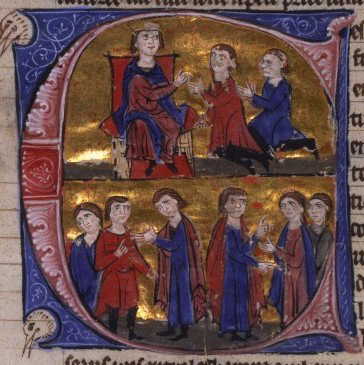
Council of the Crusaders

pool with reflection
If we were having coffee this weekend in Tucson I would bring a pitcher of water and another of iced beverage of your choice out to the pool. The only place to be on a day when the temperature reaches 106 degrees is in the pool. I have all manner of flotation devices, and there is a table in the shade where we can sit for a chat after we get wet. If you feel energetic we could chat while we do some exercise in the water. I have taught swimming and water exercise for years, and although I am not currently certified in lifesaving I will keep you safe. Come on in. The water is perfect.
This week was relatively uneventful, if you exclude all the political action in Washington, DC. I do watch with interest while Micheal Bloomberg, the states, and cities step up to fight climate change. I am happy to see all the marchers for science but in Arizona this is not possible at the moment. We must protest fro the pool. I think the best way for me to contribute to the entire issue of environmental protection is to act personally. I think I am carbon conservative, but there are probably a few more items I could buy locally or go without for the good of the planet. Rather than review the international scene, although that is of interest, I am looking for ways I can reduce my personal consumption of water, gasoline, and electricity.
While I fill your ice water glass again please tell me about your writing projects and your week. Did you finish or start any new writing? I admire those of you who write long works of fiction. I may attempt it someday, inspired by your success. It takes discipline as well as talent to do a long write. I have written a few short pieces of fiction, but this week I created a poem in response to Sue Vincent’s photo prompt. It was about death, and was fully depressing like the previous week’s. I do wonder at my creative self when I come up with all this dark gloomy haunted stuff. I also wonder if that is a direction I should try to go for a longer story..haunted and creepy is a genre, after all. I also wrote about my ancestors and tea, so it was not all gloom and doom…except the ancestors are dead, of course. I wrote about some from the Byzantine Empire this week.
I think perhaps I am haunted by the politics playing out before me, but that does not matter. Creative responses to horror and terror have always been used to change things. Satirists are having a having a hay day with all the crazy times in which we live. I wish I could draw cartoons, but I think this talent will be for another lifetime. I will have to stick to poems to express my distaste, rage, or general revolt. How do you best protest, gentle reader?Do tell, what makes you revolt (silently or otherwise)?
If you are in the mood, feel free to cannonball before you go. Hydrate fully, and stay safe. Please join the coffee party on the weekend hosted by Emily at Nerd in the Brain. Contribute a post, or read, comment, and visit here.

Weekend-Coffee-Share-Pic

Byzantine Empire
John Komnenos (Greek: Ἰωάννης Κομνηνός; ca. 1015 – 12 July 1067) was a Byzantine aristocrat and military leader. The younger brother of Emperor Isaac I Komnenos, he served as Domestic of the Schools during Isaac’s brief reign (1057–59). When Isaac I abdicated, Constantine X Doukas became emperor and John withdrew from public life until his death in 1067. Through his son Alexios I Komnenos, who became emperor in 1081, he was the progenitor of the Komnenian dynasty that ruled the Byzantine Empire from 1081 until 1185, and the Empire of Trebizond from 1204 until 1461.
Life.
John Komnenos was born ca. 1015 as the younger son of the patrikios Manuel Erotikos Komnenos, a senior military commander in the late reign of Basil II (ruled 976–1025). He is first mentioned in 1057, the year his elder brother Isaac I Komnenos, at the head of a group of generals, rebelled against Michael VI and forced him off the throne. At the time of the revolt, John held the post of doux, but after his brother’s victory, he was raised to the rank of kouropalates and appointed as Domestic of the Schools of the West.
Nothing is known of John’s activities during his brother’s reign, although Nikephoros Bryennios the Younger, who married John’s granddaughter Anna Komnene, says that in his capacity as Domestic of the West he left his (unspecified) acts as an “immortal monument” to the people of the Balkan provinces.
Isaac’s reign was cut short by his clash with the powerful Patriarch of Constantinople,Michael Keroularios, who had been instrumental in securing Michael VI’s abdication, and the powerful civil aristocracy of the capital. Keroularios and his supporters led the opposition against Isaac’s stringent economizing policies, forcing him to resign on 22 November 1059, after which he withdrew to the Stoudios Monastery.
The crown then passed to Constantine X Doukas (r. 1059–67), although Bryennios asserts that it was first offered to John, who refused it, despite the pressure of his wife, Anna Dalassene, to accept. According to the historian Konstantinos Varzos, however, this version is suspect, and may well be a post-fact attempt at legitimizing the eventual usurpation of the throne by John’s son, Alexios I Komnenos (r. 1081–1118).
John is not mentioned in the sources during the reign of Constantine X, perhaps indicating, according to Konstantinos Varzos, that he was in imperial disfavour, despite Bryennios’ assertion that both he and his brother remained much honoured by the new emperor.The late 12th-century typikon of the Monastery of Christ Philanthropos, founded by Alexios I’s wife Irene Doukaina, is the only source to record that John Komnenos retired to a monastery, probably at the same time as his wife, Anna Dalassene. He died as a monk on 12 July 1067.
Family..John Komnenos married Anna Dalassene, the daughter of Alexios Charon, most likely in 1044. Anna, born ca. 1028, long outlived her husband and after his death ran the family as its undisputed matriarch. Anna became involved in conspiracies against the Doukas family, whom she never forgave for taking the throne in 1059. Later she also played a major role in the successful overthrow of Nikephoros III Botaneiates (r. 1078–81) and the rise of her son Alexios to the throne. After that, and for about fifteen years, she served as the virtual co-ruler of the empire along her son. She then retired to a monastery, where she died in 1100 or 1102.
With Anna, John had eight children, five boys and three girls:
IOANNES Komnenos, son of MANUEL Erotikos Komnenos & his wife — ([1015]-12 Jul 1067). Nikephoros Bryennios names “maiori natu Isaacio…iunior Ioannes” as the two sons of “Comneni Manuelis” . His parentage is confirmed by the Alexeiad which describes Emperor Isaakios Komnenos as brother-in-law of Anna Dalassena, an earlier passage naming him Ioannes [43]. Patrikios. Skylitzes records that Emperor Isaakios created “Joannem fratrem et Catacalon Combustum curopalatas” and “fratrem suum magnum domesticum” after his accession, in 1057 . His brother abdicated in his favour 25 Dec 1059, but Ioannes refused the throne. He became a monk as IOANNES. The list of obituaries of Empress Eirene Doukas’s family records the death “12 Jul, monk John father of Emperor”.
m ([1042]) ANNA Dalassena, daughter of ALEXIOS Kharon Prefect of Italy & his wife — Dalassena (-1 Nov/27 Apr 1100/01). Nikephoros Bryennios records the marriage of “Ioanni” and “filia Charonis Alexii…Anna”, recording that her mother was “genus a Dalassenis”. The Alexeiad names “Anna Dalassena, the mother of the Komneni” when recording that she arranged the marriage of “the grandson of Botaneiates and the daughter of Manuel her eldest son”. Despoina 1048/57. Regent of Byzantium 1081 and 1094-1095. She became a nun at Pantopopte convent which she founded. The list of obituaries of Empress Eirene Doukas’s family records the death “1 Nov, Anna, mother of the Emperor”.
Ioannes Komnenos & his wife had eight children:

weeping window
The tower had been built in the time of the beheadings
Torture and murder were the order of the day
They wiped out knights and murdered the queens
Who did not please the monarch by giving him a male heir
Some of my ancestors lost their heads, fortunes, and means
As players in the center of the Tudor dynasty reign of terror
Some spent their last night in confinement writing poetry
To leave a written legacy to the future subjects of the crown
The sorrow and the suffering of every tortured soul is evident
The stones are carved with the names of the doomed who have past
While the window weeps tears of the ghosts who haunt the present
With their unresolved memories of cruel and heartless treatment
Looking from this point of view we can see the harm done by violence

#writephoto
This poem is in response to this week’s photo prompt from Sue Vincent’s Echo. Join writers from around the globe each week to read, comment, or write your own story for #writephoto.
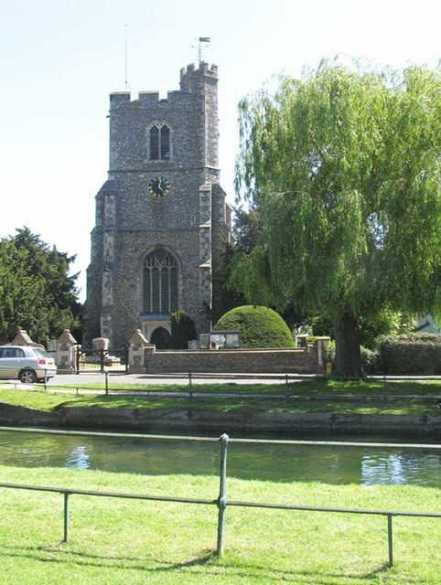
St Augustine, Broxbourne, Herts
Elizabeth Cheney (April 1422 – 25 September 1473) was an English aristocrat, who, by dint of her two marriages, was the great-grandmother of Anne Boleyn, Jane Seymour, and Catherine Howard, three of the wives of King Henry VIII of England, thus making her great-great-grandmother to King Edward VI, the son of Henry VIII and Jane Seymour, and Elizabeth I, the daughter of Henry VIII and Anne Boleyn. Her first husband was SirFrederick Tilney, and her second husband was Sir John Say, Speaker of the House of Commons. She produced a total of nine children from both marriages.
Born in Fen Ditton, Cambridgeshire in April 1422, she was the eldest child of Laurence or Lawrence Cheney or Cheyne, Esq. (c. 1396 – 1461), High Sheriff of Cambridgeshire and Elizabeth Cokayn or Cokayne[1] She had three younger sisters, Anne, wife of John Appleyard; Mary, wife of John Allington; Catherine, wife of Henry Barley, and one brother, Sir John Cheney who married Elizabeth Rempston, by whom he had issue. Sir John Cheney and his wife are ancestors of U.S. Vice President Dick Cheney. She had two half-brothers by her mother’s first marriage to Sir Philip Butler.
Her paternal grandparents were Sir William Cheney and Katherine Pabenham, and her maternal grandparents were Sir John Cockayne, Chief Baron of the Exchequer and Ida de Grey, the daughter of Reginald Grey, 2nd Baron Grey de Ruthyn and Eleanor Le Strange of Blackmere.[2]
Anne Boleyn, granddaughter of Elizabeth Tilney, eldest daughter of Elizabeth Cheney
On an unknown date, Elizabeth Cheney married her first husband Sir Frederick Tilney, of Ashwellthorpe, Norfolk, and Boston, Lincolnshire. He was the son of Sir Philip Tilney and Isabel Thorpe. They made their principal residence at Ashwellthorpe Manor. The couple had one daughter:
Elizabeth Tilney (before 1445 – 4 April 1497), married firstly in about 1466, Sir Humphrey Bourchier, by whom she had three children; and secondly on 30 April 1472, Thomas Howard, Earl of Surrey, who later became the 2nd Duke of Norfolk, by whom she had nine children. These children included Thomas Howard, 3rd Duke of Norfolk, Elizabeth Howard, mother of Anne Boleyn, and Lord Edmund Howard, father of Catherine Howard.
Sir Frederick Tilney died in 1445, leaving their young daughter Elizabeth as heiress to his estates. Shortly before 1 December 1446, Elizabeth Cheney married secondly Sir John Say, of Broxbourne, Hertfordshire, Speaker of the House of Commons, and a member of the household of King Henry VI. He was a member of the embassy, led by William de la Pole, which was sent to France in 1444 to negotiate with King Charles VII for the marriage between King Henry and Margaret of Anjou.[3] Her father settled land worth fifty marks clear per annum upon the couple and their issue before Candlemas, 1453. They made their home at Broxbourne, Hertfordshire.
Sir John Say and Elizabeth had three sons and four daughters:
Sir William Say (1452- 1529), of Baas (in Broxbourne), Bedwell (in Essendon), Bennington, Little Berkhampstead, and Sawbridgeworth, Hertfordshire, Lawford, Essex, Market Overton, Rutland, etc., Burgess (M.P.) for Plympton, Knight of the Shire for Hertfordshire, Sheriff of Somerset and Dorset, 1478–9, Sheriff of Essex and Hertfordshire, 1482–3, Justice of the Peace for Hertfordshire, 1486–1506, and, in right of his 1st wife, of East Lydford, Radstock, Spaxton, Wellesleigh, and Wheathill, Somerset, and, in right of his 2nd wife, of Wormingford Hall (in Wormingford), Essex, Great Munden, Hertfordshire, etc. He married (1st) before 18 November 1472 (date of letters of attorney) Genevieve Hill, daughter/heiress of John Hill, of Spaxton, Somerset. She was still alive in 1478. He married (2nd) shortly after 18 April 1480 Elizabeth Fray, widow of Sir Thomas Waldegrave, by whom he had two daughters, Mary Say and Elizabeth Say.
Mary, the eldest daughter married Henry Bourchier, 1st Earl of Essex and 6th Baron Bourchier, by whom she had one daughter, Anne Bourchier, 7th Baroness Bourchier.
Thomas Say, of Liston Hall, Essex.
Leonard Say, clerk, Rector of Spaxton, Somerset. See Testamenta Eboracensia, 4 (Surtees Soc. 53) (1869): 86–88 (will of Leonard Say, clerk).
Anne Say (died 1478/1494), married Henry Wentworth, K.B., of Nettlestead, Suffolk, Goxhill, Lincolnshire, Parlington and Pontefract, Yorkshire, and of London, Esquire of the Household, Knight of the Body, Sheriff of Norfolk and Suffolk, 1481–82, Sheriff of Yorkshire, 1489–90, 1492, Knight of the Shire for Yorkshire, 1491–92, by whom she had issue, including Margery Wentworth, mother of Jane Seymour.
Mary Say, married Sir Philip Calthorpe, Knt., by whom she had issue.
Margaret Say, married Thomas Sampson, Esq.
Katherine Say, married Thomas Bassingbourne.
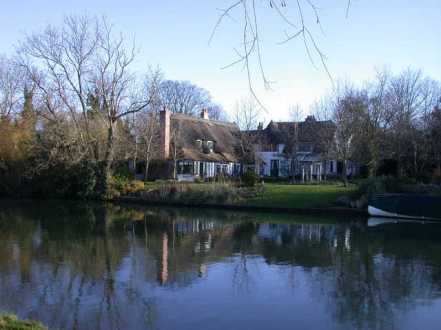
Fen Ditton from River Cam
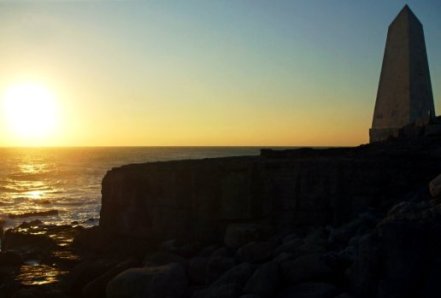
obelisk
The family sailed from England when they had a chance to come to America. The hardship of the voyage and the harsh conditions in the colonies took a toll on the surviving members of the family. They wondered about the decision to live in the new world, and felt lost without the comfort and status of British society. Carving out an existence turned out to be much more difficult than they had ever imagined. They lost touch with the roots of their family back in England and had no way to return even if they wanted to go. They had little money and just barely the time to protect and feed their offspring.
Eventually they came to feel pride in the American adventure they founded, and erected a monument to the first Morses to come to America. They had sailed from a harbor with a large assuming obelisk that bid them adieu when they left their homeland. The group decided to model the new world monument after the last sight they saw as the ship left the shore. British no more, but connected to the language and the culture of the motherland, the American obelisk builders were sure that God was on their side.

Morse Monument
This is a piece in response to Sue Vincent’s weekly photo prompt. Please join writers from around the world each week to read or submit your own story.
#writephoto

Elizabeth Tilney
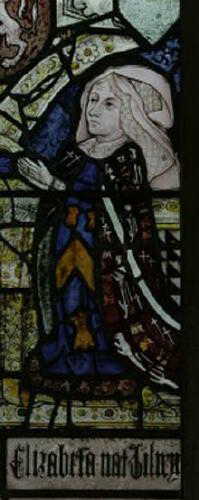
Elizabeth Tilney
Elizabeth Tilney, Countess of Surrey, was an English heiress and lady-in-waiting to two queens. She became the first wife of Thomas Howard, Earl of Surrey. She served as a lady-in-waiting to Queen consort Elizabeth Woodville, and later as Lady of the Bedchamber to the Queen’s daughter, Elizabeth of York, consort of King Henry VII of England. She stood as joint godmother to Princess Margaret Tudor at her baptism.
She was the mother of Thomas Howard, 3rd Duke of Norfolk. Through her daughter Elizabeth she was the maternal grandmother of Anne Boleyn, and through another son, Edmund, the paternal grandmother of Catherine Howard, both queens consort of King Henry VIII. Elizabeth’s great-granddaughter was Queen Elizabeth I of England.
Elizabeth was commemorated as the “Countess of Surrey” in John Skelton’s poem, The Garlande of Laurell, following his visit to the Howard residence of Sheriff Hutton Castle.
Elizabeth Tilney was born at Ashwellthorpe Hall sometime before 1445, the only child of Sir Frederick Tilney, of Ashwellthorpe, Norfolk, and Boston, Lincolnshire, and Elizabeth Cheney (1422–1473) of Fen Ditton, Cambridgeshire. Sir Frederick Tilney died before 1447, and before 1449 Elizabeth’s mother married as her second husband Sir John Say of Broxbourne, Hertfordshire, Speaker of the House of Commons, by whom she had three sons, Sir William, Sir Thomas and Leonard, and four daughters, Anne (wife of Sir Henry Wentworth of Nettlestead, Suffolk), Elizabeth (wife of Thomas Sampson), Katherine (wife of Thomas Bassingbourne), and Mary (wife of Sir Philip Calthorpe). A fifth daughter died as a young child. Henry VIII’s third queen consort, Jane Seymour, was the granddaughter of Henry Wentworth and Anne Say, and thus a second cousin to Henry VIII’s second and fifth queens consort, Anne Boleyn and Katherine Howard.
Elizabeth’s paternal grandparents were Sir Philip Tilney and Isabel Thorpe, and her maternal grandparents were Sir Laurence Cheney of Fen Ditton and Elizabeth Cockayne, widow of Sir Philip Butler. Elizabeth Cockayne was the daughter of Sir John Cockayne, Chief Baron of the Exchequer and Ida de Grey. Ida was a daughter of Welsh Marcher Lord Reginald Grey, 2nd Baron Grey de Ruthyn and Eleanor Le Strange of Blackmere. Through her mother, Ida was a direct descendant of Welsh Prince Gruffydd II ap Madog, Lord of Dinas Bran and his wife Emma de Audley.
Elizabeth was co-heiress to the manors of Fisherwick and Shelfield in Walsall, Staffordshire by right of her descent from Roger Hillary, Chief Justice of the Common Pleas (d.1356).
Elizabeth married her first husband, Sir Humphrey Bourchier, the son and heir of John Bourchier, 1st Baron Berners, and his wife Margery, in about 1466. The marriage produced a son, John Bourchier, 2nd Baron Berners and two daughters. Following her marriage, Elizabeth went to court where she served as lady-in-waiting to Queen Elizabeth Woodville, whose train she had carried at the latter’s coronation in May 1465 at Westminster Abbey. Elizabeth accompanied the Queen and her children into sanctuary at Westminster Abbey when King Edward IV had been ousted from the throne, and was present at the birth of the future King Edward V. She remained with the Queen until Edward IV was restored to power.
Sir Humphrey was killed at the Battle of Barnet on 14 April 1471 fighting on the Yorkist side. On 30 April 1472 Elizabeth married Thomas Howard, Earl of Surrey, a marriage arranged by the King. In 1475, Elizabeth inherited her father’s property of Ashwellthorpe Manor. Her second husband was a close friend and companion of Richard, Duke of Gloucester who was crowned king in 1483. Elizabeth was one of Queen Anne Neville’s attendants at Richard’s coronation, while her husband bore the Sword of State. On 22 August 1485 Thomas’s father John Howard, 1st Duke of Norfolk was killed at the Battle of Bosworth while fighting for Richard III; like his son, John was also one of King Richard’s dearest friends. Thomas Howard was wounded at Bosworth and imprisoned in the Tower for several years, and the dukedom of Norfolk was forfeited. Elizabeth was fortunate that Thomas’ attainder stipulated that she would not lose her own inheritance. On 3 October 1485, she wrote to John Paston, who was married to her cousin. The letter, which she had written from the Isle of Sheppey, mentioned how she had wished to send her children to Thorpe, pointing out that Paston had pledged to send her horses as a means of transporting them there. She continued to complain that Lord FitzWalter, an adherent of the new king Henry VII, had dismissed all of her servants; however, because of the stipulations in her husband’s attainder, FitzWalter was unable to appropriate her manor of Askwell. In December 1485 she was living in London, near St Katharine’s by the Tower, which placed her in the vicinity of her incarcerated husband. After Thomas was released from prison and his earldom and estates were restored to him, he entered the service of Henry VII. In November 1487, Thomas and Elizabeth attended the coronation of Henry’s consort Elizabeth of York, who appointed Elizabeth a Lady of the Bedchamber. Elizabeth was further honoured by being asked to stand as joint godmother to the Princess Margaret Tudor at her baptism in late 1489.
Her second marriage produced nine children, including Thomas Howard, 3rd Duke of Norfolk, Elizabeth Howard, mother of Queen Anne Boleyn, and Lord Edmund Howard, father of Queen Katherine Howard.
Elizabeth Tilney died on 4 April 1497 and was buried in the nun’s choir of the Convent of the Minoresses outside Aldgate. In her will, she left money to be distributed to the poor of Whitechapel and Hackney. By licence dated 8 November 1497 Thomas Howard married as his second wife her cousin, Agnes Tilney, by whom he had six more children.
Lady Elizabeth Tilney was governess to 1st Princess Mary Tudor and then later to Princess Elizabeth Tudor.
Elizabeth Tilney (1450 – 1497)
16th great-grandmother
Lord Thomas Howard (1473 – 1554)
son of Elizabeth Tilney
Lady Katherine Howard Duchess Bridgewater (1495 – 1554)
daughter of Lord Thomas Howard
William ApRhys (1522 – 1588)
son of Lady Katherine Howard Duchess Bridgewater
Henry Rice (1555 – 1621)
son of William ApRhys
Edmund Rice (1594 – 1663)
son of Henry Rice
Edward Rice (1622 – 1712)
son of Edmund Rice
Lydia Rice (1649 – 1723)
daughter of Edward Rice
Lydia Woods (1672 – 1738)
daughter of Lydia Rice
Lydia Eager (1696 – 1735)
daughter of Lydia Woods
Mary Thomas (1729 – 1801)
daughter of Lydia Eager
Joseph Morse III (1756 – 1835)
son of Mary Thomas
John Henry Morse (1775 – 1864)
son of Joseph Morse III
Abner Morse (1808 – 1838)
son of John Henry Morse
Daniel Rowland Morse (1838 – 1910)
son of Abner Morse
Jason A Morse (1862 – 1932)
son of Daniel Rowland Morse
Ernest Abner Morse (1890 – 1965)
son of Jason A Morse
Richard Arden Morse (1920 – 2004)
son of Ernest Abner Morse
Pamela Morse
I am the daughter of Richard Arden Morse
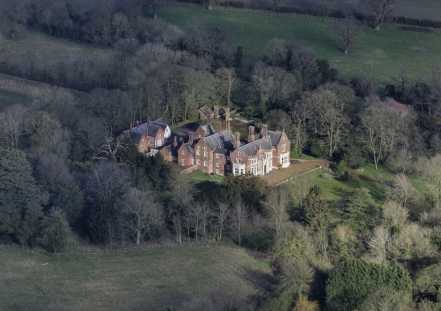
Ashwellthorpe

farm
While the millstone grinds the grain
The farmer is planting another field
Taking gamble that he will gain
When the harvest reveals his yield
His land is full of rocks and clay
He plowed by hand the garden soil
His seeds are saved for the day
The moon phase will bless his toil
He follows old traditions learned from the past
Then he hopes for survival, prays his work will last

Join poets all month for #NaPoWriMo. Read, write, recite, and discover new poems by following the hashtags, and checking the official site, here. Many contests and special events are planned during this special month.
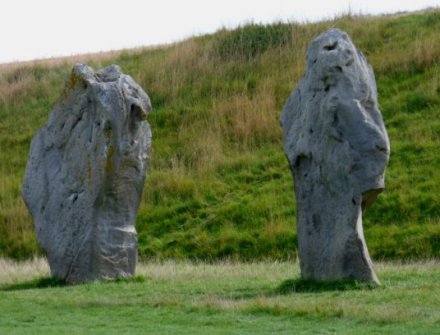
enigma
Druid stoners on equinox standing out in a field
Worshiped the earth and stars in mystic trances
A circle of magical intensity designed to conceal
The secrets of the forefathers who designed the dances
Bringing forth life, then harvesting it defined the seasons
Survival depended on the inherited wisdom and reason
The ancients passed down in ceremony, song, and fable
These figures stand to represent all of our history we know
Our ancestors who haunt this hill held ceremonies long ago


This enigmatic photo comes from Sue Vincent’s Echo, where each Thursday she holds a #writephoto party for anyone who wants to interpret the picture of the week. It is also #NaPoWriMo all month in April. You may find some mighty fine poets at the National Poetry Writing Month site. Enjoy following these hashtags all month and see where it leads you.

stone arch
When we find the arch of stones standing alone
In the ruins of a once grand castle of a once grand duke
We can feel the hours spent preening to make an entrance
Through the elegant opening that framed the costume
The servants scurried to please His Lordship and his guests
With musical serenades, crumpets, and a silver tea service
No expense nor effort was spared to create the illusion
Of grandeur and pomp, great excess and special privilege
Nothing remains of the era they thought would never end
This pile of stones can’t tell us now if history is foe or friend
#writephoto
Please join a talented group of writers who are inspired each week by Sue Vincent’s photo prompts. Visit Sue’s Daily Echo to read, write, or comment on the posts. It is fun to read all the variation on the same photo inspiration.

#NaPoWriMo2017
April is National Poetry Writing Month. Please bust a rhyme yourself, or enjoy reading some poetry at the #NaPoWriMo site here. There are poets contributing for all over the globe, so this year this had been acknowledged by using the #GloPoWriMo hashtag. Both can be followed on twitter or Facebook for more poetic material.

#GloPoWriMo
 mermaidcamp