mermaidcamp
Keeping current in wellness, in and out of the water
You can scroll the shelf using ← and → keys
You can scroll the shelf using ← and → keys
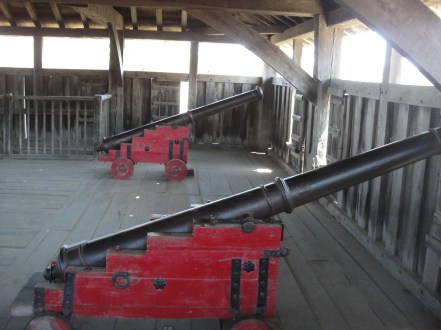
cannons above church Plymouth

Pilgrims

Pilgrim
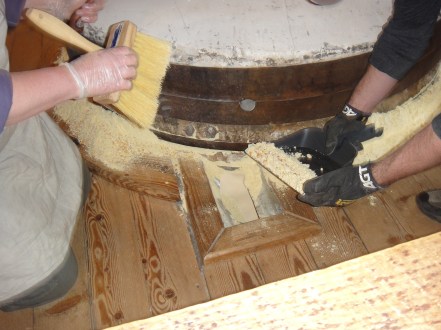
miller’s take

mill pond
When I visited Plymouth Plantation to see how my ancestors had lived the Mayflower was out of town being repaired. That did not bother me. I filled my day visiting at the museums of the living culture, including the grain mill extension in town. The details are fabulous and the actors doing the recreation are very knowledgeable and professional at their work. My personal ancestors were not on hand the day I went, but I did see the recreations of their homes. I also spent time in the cemetery and the church. The whole town is kind of preserved, with a definite Mayflower Pilgrim theme.
I was most interested in the Wampanoag section of the display. I thought for years I was a descendant of Quadequina, a member of the first Thanksgiving party. I was thrilled to be a Wamp, but later my first cousin discovered an error in my research. I had to cut that branch from the tree and begin again in the 1700s in South Carolina. I was super distressed at this news, which at first I was unwilling to accept. I was furious at my cousin, but had to face the reality that I had based my conclusions on specious data. I had mistaken one John Taylor in South Carolina for another, and that was all it took to lead me astray. It was a bummer. I was just a wanna be Wampanoag after all. It was a sad day when I had to admit that.
I stayed on Cape Cod where many of my ancestors moved after they had had it with the Plymouth bureaucracy and religious police. The whole area is filled with history. Even though my dreams of being a Wampanoag were dashed I enjoyed learning about the tribe and their struggle today. My relationship to them is purely intellectual, but I still love the People of The First Light. I love them more than I love the Pilgrims, who turned out to be pretty religious crazy. That whole story about religious freedom and Plymouth has been stilted quite a bit. They had no use for religious freedom other than their own specific brand of religious practice. They forced everyone to go to their church and obey their church’s rules. That is why many of my ancestors left for Cape Cod and later for Rhode Island. Those oppressive Pilgrims were just too intrusive to have as neighbors.
I hope to go back to Plymouth some day. I now have done more research and more people to find in the vicinity. I also hope I will revisit Williamsburg, VA because many of my ancestors were living down there in the 1600’s too. If you have a chance to go see the exhibits at Plimouth Plantation Thanksgiving will never be the same for you. You will see a clearer picture of what really happened in history.
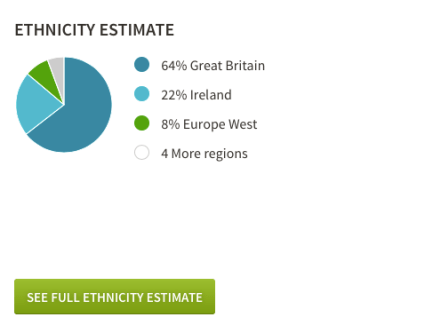
brother’s estimate

my estimate
The subject of DNA testing has become more and more popular since Ancestry.com directed some television programming at discovering the ethnicity of celebrities. Many folks are surprised to learn their DNA reveals a different or much more complex ethnic background than they had assumed. It is particularly poignant for black people to trace their ancestors back to slavery and find out how much non-African DNA they have. The show and the advertising have increased the number of people sending samples to the database at Ancestry.com. This has the effect of defining all of us in the database with more precision. I think that this is one way to eradicate racism. Our connections are much more complicated than any of us have been thinking.
The more DNA they have to compare, the more specific they can be. When I first took the test the program was new and not well known. My profile initially told me I was 98% from the British Isles, and trace elements. I was not very impressed. As the database grew my profile showed more specificity including western Europe. Recently my brother sent in his saliva in order to help a man find his birth father. He has distant DNA links to our family and asked us for some help with his own research. Male DNA reveals more than female, so my brother complied with his request. I had heard this before, but when I studied my brother’s DNA results I was surprised to see he had more detail than I did. We had the same parents for sure. My partner said it is because my brother is a later model, but this makes no sense. I think it is because he is a male. I will get to the bottom of this. In the meantime I have started to investigate some of the 550 DNA matches that Ancestry has compiled for me over the years while I basically ignored this feature. It is really interesting and fun. They send me new connections all the time with charts about the lineage. I am into it, and have made progress on my tree. I have confirmed some sketchy connections in my research, and found many new ones. DNA is where it is happening for my investigations right now. It is yielding progress. I paid my annual subscription fees this month, but feel really good about all the value I get from Ancestry.com. The more DNA they collect the better it is for me, so send your spit to my database, please.
DNA testing for the public is a huge growth market. It is also the talk of the town. When I ran into my friend who is a doctor and knows she has Swedish ancestry did the test at 123 and Me recently. She did it because it is possible to test for genetic predisposition to disease as well as for contraindicated medications. She wanted to know which meds are going to harm her. I did not know that was part of the information being shared, but that does sound incredibly useful. I need to check back with her to see what she learned beyond what she knows from that old family bible in Swedish that tells part of her story. Everyone finds surprises. Have you done any DNA tests yet, gentle reader? What have you discovered? What made you decide to do it?
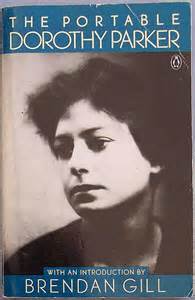 the queen of swords
One of my favorite authors of all time is Dorothy Parker who lived from 1893-1967. Her career included writing poetry, journalism, drama criticism, and screen writing. She is best known for her wit and satire. As a public figure she was both well-loved and controversial. Her political statements got her listed on the Hollywood black list during the witch hunt for communists. When she died she bequeathed her estate to Dr. Martin Luther King Jr. Her stance on civil rights was progressive long before it was socially accepted. I admire her for the way she used humor.
The Queen of Swords in tarot is a symbol of independent thought and judgement. She is professional, perceptive, analytical and sharp witted. She beckons to the future and is looking at it in the card, but we can’t see what she sees. Her intellect is mature and her discernment and ability to judge impartially make her a royal. She does not beat around the bush, but comes directly to the point without emotional investments. She uses logic and facts to make good decisions. When this card turns up reversed in a reading the shadow elements of the archetype are indicated. When she is upside down it means her normally clear vision is being clouded by emotions. Rather than clear and precise independent thought, she is influenced to preserve status quo in relationships. Her goals are compromised by fear of what others think. Dorothy Parker had a lot of tragedy and failed relationships in her life. She played both sides of the Queen of Swords, famously doing quite a bit of drinking. Like her buddies Hemingway and Fitzgerald she spent a great deal of time in bars. She suffered from alcoholism which consumed her last years. Her work endures.
Here are some of my favorite quotes attributed to this sharp and sassy sword queen:
“That would be a good thing for them to cut on my tombstone: Wherever she went, including here, it was against her better judgment.”
“A little bad taste is like a nice dash of paprika.”
“The first thing I do in the morning is brush my teeth and sharpen my tongue.”
“I think that the direction in which a writer should look is around.”
 Dorothy Parker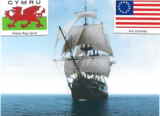
Immigrant to Virginia Colony
My eighth great-grandfather Nicholas Morris “the Immigrant” was born in England in 1605. He died in St Stephens Parish, Northumberland Co. Virginia on 20 Jan 1663. He was a Justice of the Court by profession. His wife, Martha, was born in England about 1609. She remarried after Nicholas died.
Nicholas Morris owned land on the Great Wicomico River before 1651. His near neighbor and associate was John Mottram, an English Protestant who had frequent visitors among those who had been banished from the colony of Maryland.
Nicholas and his wife, Martha (poss.Mottram) were living in the Virginia Colony by 1641, and first lived on land leased from John Upton. By April 1652, Nicholas was well-established in Northumberland County and was appointed a justice along with John Haynie.
Will probabted, in Virginia, data from familysearch.com per Ancestral File, ver. 4.19. According to Tidewater Virginia Families by Virginia Lee Hutcheson Davis, his will was presented in court in Northumberland Co.,VA on 20 Jan 1664, so he had to have died previous to that. He left his son, Anthony Morris, the plantation on which he lived, containing 550 acres and his wife, the land called “ye Island, being 506 acres”. He also bequeathed to his daughter, Jane (Morris) Haynie, one cow and to each of his three grandchildren, Martha, Elizabeth and Richard Haynie, one yearling heifer.
Martha Morris later married Thomas Lane, a wealthy land owner of Northumberland Co.
She signed her Morris inheritance over to her son, Anthony, on 15 July 1665.
Children:
Thomas Morris
John Morris
George Morris
Abraham Morris
Mary Morris
Elizabeth Morris
Edward Morris b. Bet. 1626 – 1652
Nickolas Morris b. Bet. 1626 – 1652
William Morris b. Bet. 1628 – 1642
Jane Morris b. About. 1630 in VA
Anthony Morris b. 1645 in Northumberland Co., VA m.Dorothy Samford (Wife) Marriage: 1665
Nicholas Morris (1605 – 1664)
8th great-grandfather
John Morris (1633 – 1713)
son of Nicholas Morris
William Morris (1659 – 1727)
son of John Morris
Thomas Morris (1678 – 1741)
son of William Morris
Thomas Morris (1730 – 1791)
son of Thomas Morris
Joanna Morris (1762 – 1839)
daughter of Thomas Morris
John Samuel Taylor (1798 – 1873)
son of Joanna Morris
William Ellison Taylor (1839 – 1918)
son of John Samuel Taylor
George Harvey Taylor (1884 – 1941)
son of William Ellison Taylor
Ruby Lee Taylor (1922 – 2008)
daughter of George Harvey Taylor
Pamela Morse
I am the daughter of Ruby Lee Taylor
Nicholas Morris served as a Justice of the Northumberland County Court eighteen times between 10 July 1652 and 21 Feb 1658/59 (Northumberland County Order Book 1650-1652, p. 64 and 1652-1665). He also signed the Great Oath (Northumberland County Order Book 1650-1652 p. 139b) VIRGINIA GENEALOGICAL SOCIETY QUARTERLY NOV 1986. When he died, he left and estate of 1000 acres in his 1664 will.

My parents
History teaches us that political and religious movements go through transformation on a continuous basis. While in the eye of any storm it is impossible to assess the impact it will have. We find ourselves embroiled in a serious vortex of change that promises to be destructive. It remains to be seen in what ways we will endure this shift. My ancestors all come to mind as well as into focus on Day of the Dead. My parents are buried in a section of the cemetery where holiday decor is the norm for the dead, especially at the end of October. I upgraded my parents to solar decorations this year. They have been popular with their neighbors, and my parents were always competitive about their yard. Leaving them without attention this time of year would signal some major abandonment, so I make sure they have a little seasonal something on their grave.
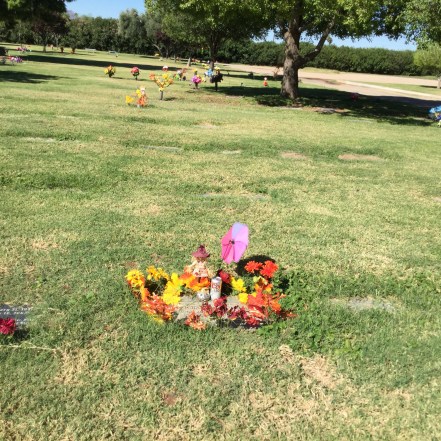
their ‘hood
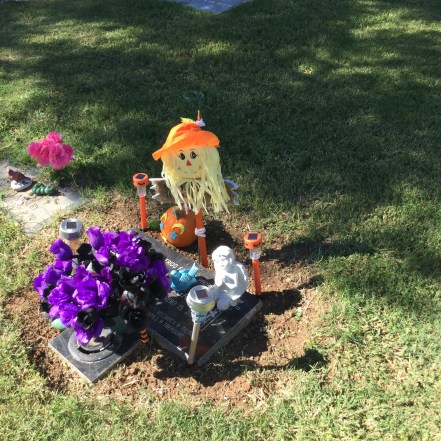
their neighbor

their neighbor
They voted Republican their whole lives. I have no idea how their parents voted. I have followed my ancestry back for centuries and can only detect very large trends in my family. They were pioneers, many early European residents of Massachusetts or Virginia. They followed different religious persuasions, predominantly Protestant in nature. My parents were not religious, but they carried the inherited beliefs of their respective families in their subconscious minds. I very recently learned that my mother’s grandfather William Ellison Taylor, who was a preacher in the Church of Christ, was not raised in that church. He was converted to his faith and began an itinerant preaching practice in East Texas after the Civil War. I had always assumed his parents and their parents had given him this idea. This recent discovery has shown me this was not the case:
William Ellyson Taylor was born in Alabama, November 22, 1839, and was reared in that state. His education was received in the common schools. When the war broke out between the states he enlisted in the 4th Alabama Regiment and went to Virginia. In the battle of Manassas. July 21, 1861, he was wounded, which made him a cripple for life.
Dec. 27. 1864, he was married to Lucinda Armer, who has been his faithful help-meet, and to the present shares his joys and sorrows. To this union six boys and two girls have been born.
November, 1869, he moved to Texas. In August, 1874, Dr. W. L. Harrison preached the first sermon he ever heard. Afterward and and David Pennington became a Christian. In 1877 he began preaching and though he works on the farm, he has preached as he found opportunity. Entering the firgin field he has established congregations in Montgomery, San Jacinto and Walker counties and is now preaching monthly for congregations at Willis, Bethan and Ne Bethel, Montgomery County. When confined for nearly two years through sickness his brethren administer to his every need. All who know Bro. Taylor love him for his intrinsic worth and work in the Lord.
Gospel Preachers Who Blazed the Trail by C. R. Nichol, 1911.
Originally posted by: Tom Childers
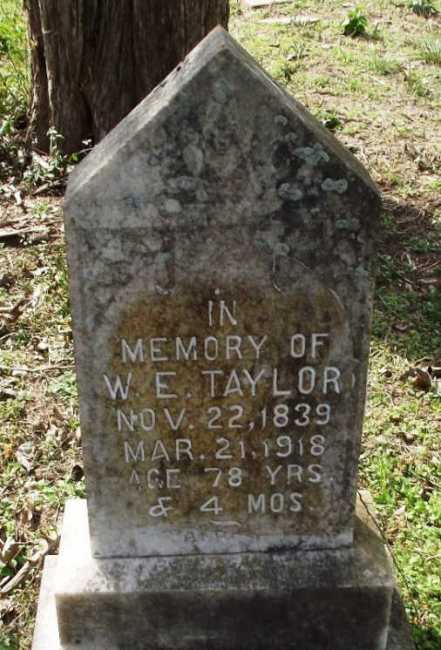
my great-grandfather
This is very interesting to me since some of his distant ancestors seem to the Presbyterian in a serious way in South Carolina. I wonder if the religious idea or the gene to get into religion is carried through generations. My father has a large number of teachers in many of his branches. My mother has a plethora of preachers. I am talking about over centuries, as well as in their lifetimes. They had to feel influenced by these people because their own image of reality came from them. William Taylor fought for the Confederacy, moved from Alabama to Texas on an ox cart, and became a preacher. He must have had some strong political views. We do not know what they were exactly, but we have in his own hand the Rules for the School, which must have to do with Sunday school for his congregation. This is pretty formal stuff:

handwritten rules
Do you ever wonder what part of your own political belief system you have inherited from your ancestors? I do. Many people say what would the founding fathers think. I don’t care what famous people in history thought. I care what my own relatives were thinking and doing that defined their lives and the future. That subject fascinates me. Do you know about the politics of your forefathers, gentle reader? What do you think of them?

1900 Census
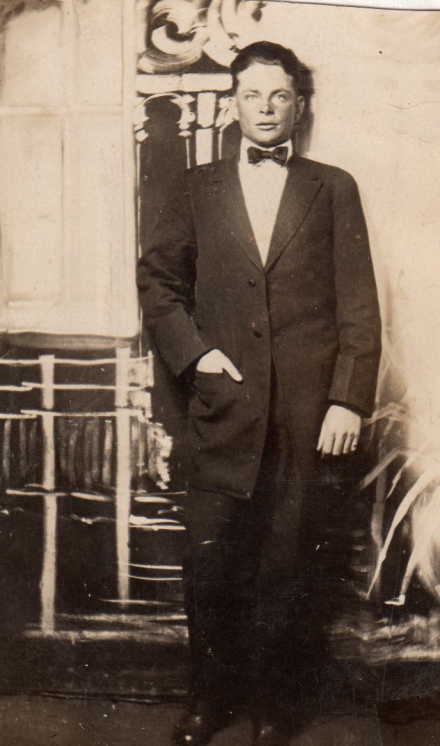
My grandpa Ernie
I will soon celebrate my anniversary as a student of my family history. I joined Ancestry.com during the financial crash of 2008. I had just inherited some stocks and bonds when they began to vanish into thin air before my very eyes. I was watching a website following the stock market when I saw an ad for the Ancestry site. I decided to take the free offer of two weeks because I was sure I could learn everything I needed to know in that two weeks. I had not planned to stay on for the paying contract. The first piece of evidence I found was the 1900 census taken on Indian Territory in Oklahoma. My grandfather lived there with his father and step mother. The census taker recorded him and his brother Ed as children of this Cherokee woman who was my grandfather’s second wife. This lady, Annie, turned out to be a relatively famous Cherokee con woman. In this census she says she was born in New Mexico in 1854. That is pretty suspicious since she says her parents were born in Georgia and North Carolina, a place where the Cherokees originated. She would be under very special circumstances to be born as a Cherokee in New Mexico in 1854. Later she says in other census records that she was born in Florida. She did have a reputation within the Morse family as a witch. I did not know any of this when I saw this record of my grandpa on the Cherokee Nation at the age of 10. I started searching madly to learn more about him and all my other ancestors. I became fascinated with all the history I learned and the puzzle of matching up the data with the tree. When the two weeks had passed I signed up for a permanent membership, and never looked back.
Now that I am a relatively sophisticated investigator of my ancestry I would urge beginners to follow some simple guidelines in order to have the best results:
There are more records available all the time. Since I joined the DNA study at Ancestry I have found new information and connections. My yearly subscription to this vast database is the best entertainment value for my dollar. I thought I would be done in 2 weeks, but now I know I can’t quit until I reach Adam and Eve. Have you ever looked into your own family history, gentle reader? What surprised you?
Psyche
Our political process in America has never been such a shocking reality show. The whole world is tuning in while we use the presidential election of 2016 to display our worst national attributes in public. Sexism has reared its ugly head and is parading around as if it were the only important issue we have to consider. It is paramount to perceive how much of our own thought processes are controlled by outside forces. Both men and women are subject to our inherited stereotypes. We may also carry deep prejudice about foreign cultures, races, or religions about which we have no direct knowledge. These oversimplifications of society’s condition harm everyone. The fact that a woman is running against a man has engendered some kind of cartoon version of public consternation, indignation, and unacceptable conduct by almost everyone.
I propose that we take a step back and see our personal situation as an integral part of a much larger scheme. People everywhere vote because of their feelings about their own economic future. This is not strange. It is survival instinct. In times of dramatic change and disruption dysfunctional systems must give way to new ideas for the survival of the entire environment. Civil rights were first won by serfs who existed as chattel to nobility. The hard fought war against tyranny will not be won in physical battle, but in hearts and minds. Terrorism begins at home, in the angry hearts and minds of indignant citizens. By imagining evil enemies everywhere we maintain a militant mindset that does not foster peace.
In ancient Greece Aristophanes wrote a comedy about women and war. The heroine, Lysistrata proposed that women take over the treasury, since the old men had squandered all the funds:
“What matters that I was born a woman, if I can cure your misfortunes? I pay my share of tolls and taxes, by giving men to the State. But you, you miserable greybeards, you contribute nothing to the public charges; on the contrary, you have wasted the treasure of our forefathers, as it was called, the treasure amassed in the days of the Persian Wars. You pay nothing at all in return; and into the bargain you endanger our lives and liberties by your mistakes. Have you one word to say for yourselves?… Ah! don’t irritate me, you there, or I’ll lay my slipper across your jaws; and it’s pretty heavy.”
The men were duly concerned:
“Chorus of old men: If we give them the least hold over us, ’tis all up! their audacity will know no bounds! We shall see them building ships, and fighting sea-fights like Artemisia; nay if they want to mount and ride as cavalry, we had best cashier the knights, for indeed women excel in riding, and have a fine, firm seat for the gallop. Just think of all those squadrons of Amazons Micon has painted for us engaged in hand-to-hand combat with men.”
― Aristophanes, Lysistrata
I think we are once again at a pivotal point in history. Equality will serve as the only kind of chivalry we can afford to accept. What do you think, gentle reader?

10th St school

841 Tenth St
I grew up in a small town in Pennsylvania in the 1950’s. We were a suburb of Pittsburgh, but had a very fancy golf club to distinguish our borough from all others—The Oakmont Country Club. Membership in this much sought after institution was costly as well as tricky to obtain. The members generally lived on top of the hill, near the club, in the neighborhoods developed for them. I lived near the Oakmont Country Club but my parents did not play golf or care about the snob appeal. This infuriated me because rather than walk to the swimming pool I had to wait for a ride to the Alcoma Country Club where our family belonged. Alcoma was less expensive, but still had all the country club trimmings. I was invited frequently to the Oakmont club pool with my member friends and neighbors, and never lost my desire to join. I believe I was absorbing not so subtle messages about social and financial status. I would have said it was because I wanted to walk to the pool, but I am sure I also desired the status that accompanied belonging to the fancier of the two country clubs. Today I have chosen the fancy, clean, multi functional Tucson JCC over the Tucson Racquet Club, even though Silver Sneakers provides free membership in both for me now. I do always prefer an upgrade if I can afford one. Perhaps it is all because of my upbringing.
Our town was on a hill, with a steel mill and barges full of coal floating down the Allegheny River at the bottom. The area by the river was dedicated to industry and commerce, with small working class homes scattered into the mix. Ascending the hill, the houses became larger and more elaborate. The streets were numbered from 1 to 14 climbing the hill. I lived on Tenth Street. One could almost tell by the address in our town how much money the family had. I lived in the upper middle category of housing, but very close to my home was a row of mansions belonging to robber barons. These super wealthy neighbors provided all manner of recreation for the kids in the area, including a trampoline, a very large field for sledding, and some woods for exploring. The mansion kids all went to public school and were part of our regular play group as youngsters. Still, we were aware that their parents were not in the same financial league with ours.
My parents put their own status emphasis on appearances. The wardrobe and/or landscaping needs of those two consumed most of their free time. They spared no expense on the clothes they wore and their precious yard. My mom was active in a garden club, and my dad just naturally loved to mow his lawn in his coveralls. They were a 50’s cartoon of suburban pride of ownership. I had to play along, helping with the yard work and dressing up to go to the country club, the University Club downtown, their friends’ homes, or to travel. I was also costumed to the hilt for the many parties they held at our house. I was fine with it up to a point, or up until I decided to have my own taste in fashion. When I was over the white gloves and the little white ankle socks I waged a war on fascist control over my wardrobe. My parents bemoaned my fate and warned against a hellish life ahead unless I started to want to dress more like they did. Life would never smile on me again without those white ankle socks. This was the beginning of our political differences. They were appalled to think I did not want a life like their life. How silly of them. I could not have a life like theirs because I was born in another generation with another set of circumstances, yet to be discovered. All we knew was that my white ankle socks would not be part of that future reality.
Today I am pleased to say that I understand that attachment or revulsion to any kind of status can only end in heartache. Possessions, titles, offices, locations, are just data dust in the true meaning of life. If we come to identify too greatly on the situation, how will we cope when the situation changes? My parents had their own giant cultural revolutions to endure. They came from the south, but spent many years freezing their bones in Pennsylvania because it furthered my father’s career with Gulf Oil Corporation. I learned by direct experience to stay aloof from judging circumstances. Nothing is ever a simple as it seems. There are generations of beliefs and traditions at play in every moment. Learning to define one’s own status rules and symbols is perhaps our essential role on earth.
I watch the political scene today go wildly off the rails with wonder. The United States has become very distracted by our own self image. The will to shun has outweighed the will to live in this country in peace. The electorate is behaving badly. Law and order is threatened. The fabric of society is frayed and damaged. Public faith in institutions is understandably at an all time low. As a nation divided we stand ready to implode if we can’t get a grip on the difference between rhetorical status and reality. Politics maintains status …quo or otherwise. Mother Nature maintains reality…harmonious or otherwise. It is time to strip away the political aims of these two parties and look directly into the soul of the tax paying nation. What did you learn from your childhood that influences your views today, gentle reader? Were they positive or negative? Do you belong to the same party as your parents?

The original painting hangs at the Pilgrim Hall Museum in Plymouth, Massachusetts. Mayflower Compact, Image from painting by Edward Percy Moran (1862-1935), showing Myles Standish, William Bradford, William Brewster and John Carver signing the Mayflower Compact in a cabin aboard the Mayflower while other Pilgrims look on, ca. 1900.
My eleventh great-grandfather sailed on the Mayflower as a paying customer, not part of the Leiden religious Pilgrims. He was a merchant who sailed from England without his wife and daughters, sending for them to join him after he was established in Plymouth. As we travel in time toward Thanksgiving I like to deconstruct some of the misconceptions we have about these Mayflower pioneers. They were not all religious and they did not all survive very well in the new world. Things were not as rose as they were presented to us back in elementary school. It was not all turkey and dressing. The Plymouth story is a complicated tale of cultural clashes that continue to this day.
Richard Warren (1580 – 1628)
11th great-grandfather
Anna Warren (1612 – 1675)
daughter of Richard Warren
William Little (1640 – 1731)
son of Anna Warren
William Little (1660 – 1740)
son of William Little
William Little Jr (1685 – 1756)
son of William Little
Jeanette Little (1713 – 1764)
daughter of William Little Jr
Andrew Armour (1740 – 1801)
son of Jeanette Little
William Armor (1775 – 1852)
son of Andrew Armour
William Armer (1790 – 1837)
son of William Armor
Thomas Armer (1825 – 1900)
son of William Armer
Lucinda Jane Armer (1847 – 1939)
daughter of Thomas Armer
George Harvey Taylor (1884 – 1941)
son of Lucinda Jane Armer
Ruby Lee Taylor (1922 – 2008)
daughter of George Harvey Taylor
Pamela Morse
I am the daughter of Ruby Lee Taylor
Richard Warren (c.1580 1628) a passenger on the Mayflower, old “May Floure,” in 1620, settled in Plymouth Colony and was among 10 passengers of the Mayflower landing party with Myles Standish at Cape Cod on November 11, 1620. Richard Warren co-signed the Mayflower Compact and was one of 19 among 41 signers who survived the first winter. His wife Elizabeth, nee Walker, baptised 1583 in Baldock, Hertfordshire, England, died October 2, 1673. She and his first five children, all daughters, came to America in the ship “Anne” in 1623. Once in America, they then had two sons before Richard’s untimely death in 1628. Clearly a man of rank, Richard Warren was accorded by Governor William Bradford the prefix “Mr.”, pronounced Master, used in those times to distinguish someone because of birth or achievement. From his widow’s subsequent land transactions, we can assume that he was among the wealthier of the original Plymouth Settlers.” In Mourt’s Relation, published in 1622, we learn that Warren was chosen, when the Mayflower stopped at Cape Cod before reaching Plymouth, to be a member of the exploring party among 10 passengers, and 8 crew, and he was described as being “of London” among 3 men. Charles Edward Banks, in Ancestry and Homes of the Pilgrim Fathers writes: “Richard Warren came from London and was called a merchand of that city, by Mourt.” He was not of the Leyden, Holland, Pilgrims, but joined them in Southampton, England to sail on the Mayflower. Richard Warren received his acres in the Division of Land in 1623. In the 1627 Division of Lands and Cattle, in May of 1627, “RICHARD WARREN of the Mayflower” was given “one of the black heifers, 2 she-goats, and a grant of 400 acres of land” at the Eel River in Plymouth, Massachusetts. The Warren house built in that year, 1627, stood at the same location as the present house; it was re-built about 1700, at the head of Clifford Road, with its back to the sea, and later owned by Charles Strickland, in 1976. However, Richard Warren died a year after the division, in 1628, the only record of his death being found as a brief note in Nathaniel Morton’s 1669 book New England’s Memorial, in which Morton writes: “This year [1628] died Mr. Richard Warren, who hath been mentioned before in this book, and was an useful instrument ; and during his life bore a deep share in the difficulties and troubles of the first settlement of the plantation of New Plimouth.” -Nathaniel Morton, New England’s Memorial (Boston : John Usher, 1669) Source: http://en.wikipedia.org/wiki/Richard_Warren The Mayflower Compact was the first governing document of Plymouth Colony. It was drafted by the “Pilgrims” who crossed the Atlantic aboard the Mayflower, seeking religious freedom. It was signed on November 11, 1620 in what is now Provincetown Harbor near Cape Cod. The Pilgrims used the Julian Calendar which, at that time, was ten days behind the Gregorian Calendar, signing the covenant “ye .11. of November.” Having landed at Plymouth, so named by Captain John Smith earlier, many of the Pilgrims aboard realized that they were in land uncharted by the London Company. For this reason the Mayflower Compact was written and adopted, based simultaneously upon a majoritarian model and the settlers’ allegiance to the king. Many of the passengers knew that earlier settlements in the New World had failed due to a lack of government, and the Mayflower Compact was in essence a social contract in which the settlers consented to follow the rules and regulations of the government for the sake of survival. The government, in return, would derive its power from the consent of the governed. The compact is often referred to as the foundation of the Constitution of the United States, in a figurative, not literal, way. The list of 41 male passengers who signed was supplied by Bradford’s nephew Nathaniel Morton in his 1669 New England’s Memorial include: Richard Warren Source: Mayflower Compact, Image from painting by Edward Percy Moran (1862-1935), showing Myles Standish, William Bradford, William Brewster and John Carver signing the Mayflower Compact in a cabin aboard the Mayflower while other Pilgrims look on, ca. 1900. Source: http://en.wikipedia.org/wiki/Mayflower_Compact
My 11th great-grandfather was probably born in Hertford, England. He married Elizabeth Walker, 14 April 1610, Great Amwell, Hertford, England, daughter of Augustine Walker. He died in 1628, in Plymouth. Children: Mary, Ann, Sarah, Elizabeth, Abigail, Nathaniel, and Joseph.
Richard Warren’s English origins and ancestry have been the subject of much speculation, and countless different ancestries have been published for him, without a shred of evidence to support them. Luckily in December 2002, Edward Davies discovered the missing piece of the puzzle. Researchers had long known of the marriage of Richard Warren to Elizabeth Walker on 14 April 1610 at Great Amwell, Hertford. Since we know the Mayflower passenger had a wife named Elizabeth, and a first child born about 1610, this was a promising record. But no children were found for this couple in the parish registers, and no further evidence beyond the names and timing, until the will of Augustine Walker was discovered. In the will of Augustine Walker, dated April 1613, he mentions “my daughter Elizabeth Warren wife of Richard Warren”, and “her three children Mary, Ann and Sarah.” We know that the Mayflower passenger’s first three children were named Mary, Ann, and Sarah (in that birth order).
Very little is known about Richard Warren’s life in America. He came alone on the Mayflower in 1620, leaving behind his wife and five daughters. They came to him on the ship Anne in 1623, and Richard and Elizabeth subsequently had sons Nathaniel and Joseph at Plymouth. He received his acres in the Division of Land in 1623, and his family shared in the 1627 Division of Cattle. But he died a year later in 1628, the only record of his death being found in Nathaniel Morton’s 1669 book New England’s Memorial, in which he writes: “This year [1628] died Mr. Richard Warren, who was an useful instrument and during his life bare a deep share in the difficulties and troubles of the first settlement of the Plantation of New Plymouth.”
All of Richard Warren’s children survived to adulthood, married, and had large families: making Richard Warren one of the most common Mayflower passengers to be descended from. Richard Warren’s descendants include such notables as Civil War general Ulysses S. Grant, President Franklin D. Roosevelt, and Alan B. Shepard, Jr. the first American in space and the fifth person to walk on the moon.
6 September 1620 Richard was one of the 102 passengers that embarked on the Mayflower, leaving Plymouth, England on this day. Many people are aware that the passengers of the Mayflower were fleeing religious persecution. What most people don’t realize is that over half the passengers were “strangers” picked up from London, whose passage to America on the Mayflower helped the religious separatists pay the excessive expenses involved with sending a ship to the New World. Those in the Leyden contingent are the “religious separatists” and those of the London contingent are the “strangers”.
9 November 1620 The passengers and crew aboard the Mayflower sighted land.
11 November 1620 The passengers and crew of the Mayflower made landfall in America. The group of 102 passengers who crowded aboard the Mayflower for the crossing was not homogenous. Many of the passengers were members of the Leiden congregation, but they were joined by a number of English families or individuals who were hoping to better their life situations, or were seeking financial gain. These two general groups have sometimes been referred to as the “saints” and “strangers.” Although the Leiden congregation had sent its strongest members with various skills for establishing the new colony, nearly half of the passengers died the first winter of the “great sickness.” Anyone who arrived in Plymouth on Mayflower and survived the initial hardships is now considered a Pilgrim with no distinction being made on the basis of their original purposes for making the voyage.

Andrew Armour’s fort
I recently started to study the matches that Ancestry.com has found for me. I took the test long ago and had paid little attention to that section of the website. I was asked to help a living person who is trying to find his birth father. He contacted me through the message system in Ancestry because he saw I was related to a DNA match he has. This man has done more research and has a much broader understanding of the various kinds of DNA testing available, and how to apply them to answer mystery ancestry questions. I have taken some time to look through the surnames he and I share with no luck in finding a connection. We are waiting for a y chromosome test from my brother to be processed at Ancestry to see if that reveals more. The match may come from as far back as 10 generations, so the whole thing is pretty complicated. I hope we find the answer my distant adopted cousin is seeking. In the process I am learning more about DNA testing and how helpful it can be.
I have had an excellent breakthrough on my maternal side by searching through all the matches and reading the trees. Some of the folks with whom I am matched have no tree. I am not sure what there are doing there. They are not much use until they get some data to go with the genetics. By following my matches in the Armer line I have found very early colonists from Plymouth and more new connections yet to be researched in Massachusetts. I have found Andrew Armour, 5th great-grandfather, born in Scotland 1740, died in Georgia, 1801. This line is also rich with history and original documents galore. The map above is of Andrew’s fort. I also have his will and testament in his own beautiful hand. I always love seeing the ancestors’ handwriting.
In the never ending research to learn more about my ancestors I appreciate any and all breakthroughs that help me verify my family members. The time spent studying my matches has given me a major breakthrough that will yield much more data as I dig into it. I will soon write more bios of this new/old branch of Scotsmen. If you have access to the Ancestry DNA database I believe you will learn something significant from taking the test. If you are already studying genealogy I recommend paying attention to the DNA section for possible happy consequences.
 mermaidcamp