mermaidcamp
Keeping current in wellness, in and out of the water
You can scroll the shelf using ← and → keys
You can scroll the shelf using ← and → keys
Does the fall equinox have special meaning to you? Native people around the world have marked and celebrated the night that is equal in northern and southern hemispheres in spring and fall for centuries. The balance of darkness and light, the nature of shadow, the harvest of what has been sown are celebrated at this powerful change of seasons. To enter winter with excess overhead or an insufficient supply has been a recipe for disaster since the first fairy tale was created. In both short and long terms fall is a time for risk assessment. The harvest is in, or soon will be, and it must last until new crops can be grown and harvested. Failure can mean starvation. Useless baggage must be jettisoned now to keep the boat afloat.
Today our supplies come from abroad and we don’t even know when and how harvests are made. Coal, natural gas, and petroleum are harvested to process, transport and refrigerate our food. The cost of the supply chain far outweighs the cost of the food itself. Our electronic devices are similar. They are harvested elsewhere and imported to us. Globalization demands that goods and services be produced at the lowest price and sold for the highest possible price. International business must take advantage of the lowest wages and least demanding labor forces. I believe that these imperialistic practices have caused a spiritual equinox. Forces that seem to be out of our control darken the skies and freeze out those with the fewest resources. Persephone returns to her husband Hades in the underworld every year as winter approaches. Her symbolic return in the spring celebrates light over darkness. As the days grow shorter and nights grow longer what seeds will you purposely germinate? Do you believe the violence and darkness being proliferated will be reversed?

fall color

change of season

Autumn

oldest Veteran’s memorial in the US
My 9th great grandfather was killed by my 11th great uncle. King Philip’s War was fought between the Wampanoag people and the colonists of Plymouth. This is the first, but not the last, war on American soil in which I had ancestors on both sides of the conflict. The memorial that commemorates this event is in preset day Providence, RI. It is the oldest Veterans memorial in the US. The vanquished native people were sent to the West Indies and sold into slavery. Nobody knows where the graves of my Wampanoag ancestors are.
Captain Michael Pierce was born in 1615 and died in1676. He and his descendants form the first American generation of Pierces in our family tree. Michael Pierce immigrated to the New World in the early 1640s from Higham, Kent, England to Scituate, in what later became Massachusetts. The ten year period from 1630 to 1640 is know as The Great Migration. During this period, 16,000 people, immigrated to the East Coast of North America.
Brother of famous Colonial Sea Captain, William Pierce. Captain Michael Pierce was the brother of the famous Colonial sea captain, William Pierce, who helped settle Plymouth Colony. Captain Michael Pierce played a significant role in the Great Migration. Historical records show that this one sea captain crossed the Atlantic, bringing settlers and provisions to the New World more frequently than any other. He had homes in London, the Bahamas and Rhode Island. He played a central role in the government of the early colonies. He was killed at Providence, one of the Bahama Islands, in 1641.
There were actually four Pierce brothers who made their mark on the New World: John Pierce (the Patentee), Robert Pierce, Captain William Pierce, and Captain Michael Pierce. All were grandsons of Anteress Pierce, and sons of Azrika Pierce and his wife Martha.
Marries Persis Eames. In 1643, Michael Pierce married Persis Eames of Charleston Massachusetts. His wife was born in Fordington, Dorsetshire England 28 October 1621. She was the daughter of Anthony Eames and Margery Pierce.
Pierce Family Moves to Scituate. Michael and Persis Pierce’s first child, a daughter, was born in 1645 and named Persis in honor of her mother. Unfortunately, their first child died in 1646 at one year of age. The new family settled first in Higham, but moved in 1676 to Scituate, where the Pierce family continued to reside for most of the next century. Scituate is located some 10 miles north of the original Plymouth colony. It was settled as early as 1628 by a group of men from Kent, England.
In 1646, Benjamin Pierce, their second child, a son and heir, was born. This son, Benjamin Pierce, fathered the second Pierce generation in this family tree. Twelve other children were born over the coming years: Ephraim, Elizabeth, Deborah, Sarah, Mary, Abigail, Anna, Abiah, John, Ruth and Peirsis.
Erected First Saw-Mill. Michael Pierce resided on a beautiful plain near the north river and not far form Herring brook. He assisted in erecting the first saw-mill. The mill was the first one erected in the colony. It is believed that Samuel Woodworth (1784-1842) wrote the song, “The Old Oaken Bucket,” concerning this river and mill in Scituate. Samuel Woodworth’s grandfather, Benjamine Woodworth, witnessed the signing of Captain Michael Pierce’s will, on January 1675. The lyrics to this classic American folk tune are given below:
How dear to this heart are the scenes of my childhood, When fond recollection presents them to view, The orchard, the meadow, the deep tangled wildwood, And ev’ry lov’d spot which my infancy knew. The wide spreading stream, the mill that stood near it, The bridge and the rock where the cataract fell. The cot of my father, the dairy house by it, And e’en the rude bucket that hung in the well. The old oaken bucket, the ironbound bucket, The moss-covered bucket that hung in the well. The moss-covered bucket I hail as a treasure, For often at noon when returned from the field, I found it the source of an exquisite pleasure, The purest and sweetest that nature can yield. How ardent I seized it with hands that were glowing, And quick to the white pebbled bottom it fell. Then soon with the emblem of truth overflowing, And dripping with coolness it rose from the well. The old oaken bucket, the ironbound bucket, The moss-covered bucket that hung in the well. How soon from the green mossy rim to receive it, As poised on the curb it reclined to my lips, Not a full flowing goblet could tempt me to leave it, Tho’ filled with the nectar that Jupiter sips. And now far removed from the loved situation, The tear of regret will intrusively swell. As fancy reverts to my father’s plantation, And sighs for the bucket that hung in the well. The old oaken bucket, the ironbound bucket, The moss-covered bucket that hung in the well.
Captain in the Local Militia Fighting the Indians. Unlike his famous brother, Captain William Pierce, Michael Pierce was not a sea captain. He attained the title, Captain, from the Colony court in 1669. Historical records show that he was first given the rank of Ensign under Captain Miles Standish, then later, in 1669, he was made Captain. These titles reflects his role as a leader in the local militia formed to protect the colony from the Indians.
Honored for Heroism in King Phillip’s War. Captain Michael Pierce’s memory is well-documented in American history. He is honored for the brave manner in which he died in defense of his country. The exact manner in which he died is repeated in more than 20 books and letters detailing the military history of the King Phillip’s War. This war took place between 1675 and 1676, and remains one of the bloodiest conflicts in American history. It was also a pivotal point in early American history. Although the English colonists were ultimately victorious over the Indians, it took the colonies over 100 years to recover from the economic and political catastrophy brought about by this conflict.
The battle in which Captain Michael Pierce lost his life is detailed in Drakes Indian Chronicles (pp. 220-222) as follows:
“Sunday the 26th of March, 1676, was sadly remarkable to us for the tidings of a very deplorable disaster brought into Boston about five o’clock that afternoon, by a post from Dedham, viz., that Captain Pierce of Scituate in Plymouth Colony, having intelligence in his garrison at Seaconicke, that a party of the enemy lay near Mr. Blackstorne’s, went forth with sixty-three English and twenty of the Cape Indians (who had all along continued faithful, and joyned with them), and upon their march discovered rambling in an obscure woody place, four or five Indians, who, in getting away from us halted as if they had been lame or wounded. But our men had pursued them but a little way into the woods before they found them to be only decoys to draw them into their ambuscade; for on a sudden, they discovered about five hundred Indians, who in very good order, furiously attacked them, being as readily received by ours; so that the fight began to be very fierce and dubious, and our men had made the enemy begin to retreat, but so slowly that it scarce deserved the name, when a fresh company of about four hundred Indians came in; so that the English and their few Indian friends were quite surrounded and beset on every side. Yet they made a brave resistance for about two hours; during which time they did great execution upon their enemy, who they kept at a distance and themselves in order. For Captain Pierce cast his sixty-three English and twenty Indians into a ring, and six fought back to back, and were double – double distance all in one ring, whilst the Indians were as thick as they could stand, thirty deep. Overpowered with whose numbers, the said Captain and fifty-five of his English and ten of their Indian friends were slain upon the place, which in such a cause and upon such disadvantages may certainly be titled “The Bed of Honor.” However, they sold their worthy lives at a gallant rate, it being affirmed by those few that not without wonderful difficulty and many wounds made their escape, that the Indians lost as many fighting men in this engagement as were killed in the battle in the swamp near Narragansett, mentioned in our last letter, which were generally computed to be above three hundred.”
Today, in Scituate, there is a Captain Pierce Road.
In Cumberland, Rhode Island, there is a monument called Nine Men’s Misery. A tablet near the monument reads:
NINE MEN’S MISERYON THIS SPOT WHERE
THEY WERE SLAIN
BY THE INDIANS
WERE BURIED
THE NINE SOLDIERS
CAPTURED IN
PIERCE’S FIGHT
MARCH 26, 1676
The monument is located in a dark, place in the woods, near a former monastery. The monastery is now a public library. The monument consists of little more than a pile of stones cemented together by a monk and marked with a plaque. However, this site is of major historical significance because it is concidered to be the oldest monument to veterans in the United States.
1. Captain Michael Pierce born 1615; died 3/26/1676.
married Persis Eames, 1643 (born. Oct. 28, 1621; died Dec. 31,1662). Micheal Pierce and Persis Eames had these 13 children:
2. Persis Pierce, born 1645. Persis died 1646 at 1 year of age. 3. >>>Benjamin Pierce, born 1646. 4. Ephraim Pierce, born 1647. Ephraim died 1719 at 72 years of age. 5. Elizabeth Pierce, born 1649. She married a Holbrook and gave birth to Captain Michael Pierce’s only two grandchildren at the time of his death who are mentioned in his will: Elizabeth Holbrook and Abigail Holbrook. 6. Deborah Pierce, born 1650. 7. Sarah Pierce, born 1652. 8. Mary Pierce, born 1654. She married Samuel Holbrook, 23 June 1675. Samuel was born in Weymouth, Mass 1650. Samuel was the son of William Holbrook and Elizabeth Pitts. Samuel died 29 October 1712 at 62 years of age. Mary Pierce and Samuel Holbrook had the following six children: Persis, Elizabeth, Bethiah, Samuel, Elizabeth, and Mary. 9.Abigail Pierce, born 1656. Abigail died 1723 at 67 years of age. 10. Anna Pierce, born 1657. 11. Abiah Pierce, born 1659. She married Andrew Ford. 12. John Pierce, born 1660. John died 28 June 1738 at 77 years of age. He married Patience Dodson 12 December 1683. 13. Ruth Pierce, born 1661. 14. Peirsis Pierce, born 1662. Persis 3 December 1695. She married Richard Garrett, 3rd, who was born in 1659. They lived in Scituate, Mass. and had three children: John (born 1706), Anna, and Deborah.
married Mrs. Annah James sometime soon after 1662. They had no children. Captain Michael Pierce remained married to Annah Pierce until his death. Annah Pierce is well provided for in his will.
Michael Pierce (1615 – 1676)
is my 9th great grandfather
Ann Pierce (1640 – 1655)
daughter of Michael Captain Pierce
Sarah Kinchen (1655 – 1724)
daughter of Ann Pierce
Philip Raiford (1689 – 1752)
son of Sarah Kinchen
Grace Raiford (1725 – 1778)
daughter of Philip Raiford
Sarah Hirons (1751 – 1817)
daughter of Grace Raiford
John Nimrod Taylor (1770 – 1816)
son of Sarah Hirons
John Samuel Taylor (1798 – 1873)
son of John Nimrod Taylor
William Ellison Taylor (1839 – 1918)
son of John Samuel Taylor
George Harvey Taylor (1884 – 1941)
son of William Ellison Taylor
Ruby Lee Taylor (1922 – 2008)
daughter of George Harvey Taylor
Pamela Morse
I am the daughter of Ruby Lee Taylor
When I read that he’d died during the Great Swamp Fight, it peaked my interest so I bought a book called King Philip’s War The History and Legacy of America’s Forgotten Conflict, by Eric B. Schultz and Michael J. Tougias. The following is an excerpt from the book describing Michael Pierce’s involvement in the conflict.
KING PHILIP’S WAR
PIERCE’S FIGHT, CENTRAL FALLS, RHODE ISLAND
The ambush of Captain Michael Pierce and his Plymouth Colony soldiers
occurred on Sunday, March 26, 1676, in the present-day city of Central
Falls, Rhode Island. Sometimes attributed to the Narragansett sachem
Canonchet, this ambush was in many respects a textbook military operation.
Several friendly natives escaped the engagement, but only nine English
survived, and these nine men were later discovered dead several miles
north of Central Falls in present-day Cumbedand, Rhode Island, a site now
known as Nine Men’s Misery. Not only was the ambush deadly for Pierce
and his men, but it was devastating to the morale of the colonies which, on
the very same day, witnessed the murder of settlers in Longmeadow, Massachusetts,
the burning of Marlboro, Massachusetts, and the destruction of
Simsbury, Connecticut.
Pierce, a resident of Scituate, Massachusetts, had gathered in Plymouth
a force of Englishmen from Scituate, Marshfield, Duxbury, Eastham, and
Yarmouth, supported by twenty friendly natives from Cape Cod. Together,
this band marched to Taunton, then along the Old Seacuncke Road
(Tremont Street) to Rehoboth (now East Providence, Rhode Island).
There, they were joined by several men from Rehoboth, expanding their total
number to sixty-three English and twenty friendly natives.
Reports indicated that a large group of the enemy had gathered in the
area of Pawtucket Falls, an ideal location from which to catch alewives,
salmon, and shad, and a natural fording spot in the river.149Pierce and his
men set out in pursuit. On Saturday, March 25, they skirmished with the
Narragansett, perhaps north of the falls, where, historian Leonard Bliss
concludes, Pierce “met with no loss, but judged he had occasioned considerable
to the enemy.”
It is not unreasonable to think that Pierce had skirmished with a small
patrol sent intentionally to meet and test the English-an exercise broken
off by the natives once they had gathered information on the size and”
strength of their opponent. In any event, Pierce met no other natives and returned
for the night to the garrison at Old Rehoboth. Meanwhile, armed
with information from the skirmish, native leaders undoubtedly set to work
devising a trap for the English troops.
On Sunday, March 26, Pierce and his troops returned to the field, probably
marching from present-day East Providence, north along the Seekonk
River (which becomes the Blackstone River), back toward Pawtucket Falls.
It is said that as they marched, they were watched by Narragansett from
Dexter’s Ledge, now the site of Cogswell Tower in Jenks Park, Central Falls
(rough distance and heavily wooded terrain made this questionable).
Somewhere close to the Blackstone, perhaps near a fording spot where
Roosevelt Avenue now crosses the river, in what Bliss describes as an
“obscure woody place,” they spotted four or five Narragansett fleeing as
if wounded or hurt. Had a more experienced commander witnessed this
show, he might have immediately fallen back. However, Pierce and his
troops charged after the bait, suddenly finding themselves surrounded by
“about 500 Indians, who, in very good order, furiously attacked them.”
Pierce apparently met the ambush on the eastern side of the Blackstone,
but crossed to the western side, where the natives were engaged in force. A
contemporary account of the battle by an anonymous Boston merchant,
paraphrased by Bliss, made the English out to be as heroic as possible, but
the devastation was complete:
Our men had made the enemy retreat, but so slowly, that it scarce deserved
the name; when a fresh company of about 400 Indians came in,
so that the English and their few Indian friends, were quite surrounded
and beset on every side. Yet they made a brave resistance for above two
hours, during all which time they did great execution upon the enemy,
whom they kept at a distance, and themselves in order. For Captain
Pierce cast his 63 English and 20 Indians into a ring and fought back to
back, and were double-double distance all in one ring, whilst the Indians
were as thick as they could stand thirty deep: overpowered with
whose numbers, the said captain, and 55 of his English, and 10 of their
Indian friends were slain upon the place; which, in such cause, and
upon such disadvantages, may certainly be styled the bed of honour.
It is unlikely, of course, that nine hundred natives participated in the ambush.
Nor does it seem logical that eighty-three men, disadvantaged by surprise,
terrain, and numbers, would have much chance of forcing even four
hundred warriors to retreat. (Contemporary writers reported that Pierce
and his men killed 140 of their enemy, a figure undoubtedly inflated.)
However, if Pierce and his troops crossed the Blackstone near present-day
Roosevelt Avenue, the battle may have moved northward along the river to
a spot near present-day Macomber Field on High Street, where a commemorative
marker was placed in 1907. The marker reads:
PIERCE’S FIGHT
NEAR THIS SPOT
CAPTAIN MICHAEL PIERCE
AND HIS COMPANY OF
PLYMOUTH COLONISTS
AMBUSHED AND OUTNUMBERED WERE
ALMOST ANNIHILATED
By THE INDIANS
MARCH 26 1676
ERECTED By THE STATE OF RHODE ISLAND
IN 1907
A visit to this site today places the traveler in a heavily industrialized area
surrounded by factories and baseball fields. It is worth remembering, however,
that Central Falls was once the “North Woods” of Providence and
remained only sparsely settled throughout the eighteenth century.
Marching along, Pierce would have seen a wooded land of oak, walnut,
chestnut, and birch trees with three falls (Pawtucket to the south, Valley to
the north, and Central near the crossing at Roosevelt Avenue) supplying the
Narragansett with rich fishing grounds. ’59Bycontrast, present-day Central
Falls is so densely built that the Blackstone River is all but invisible from
nearby Cogswell Tower.
Not all of Pierce’s troops died in the ambush. Several of the friendly natives
devised ingenious means of escape. One blackened his face with powder
like the enemy and passed through their lines without incident.16oAnother
pretended to chase his comrade with a tomahawk, the two running past
their enemies and on to safety.161It appears also that nine English soldiers
escaped death during the ambush, though the details of their story are conjecture
only. One tradition holds that they had gone ahead of the main body
of troops and were chased into present-day Cumberland, where they made
their stand against a large rock and all perished.161
A more plausible explanation is that these nine survived the ambush,
were taken prisoner, and were marched northward about three miles to a
piece of upland surrounded by swamp known as Camp Swamp. Here, upon
a large rock, they were executed. It was several weeks before their bodies
were found, scalped and uncovered, on this rock. The men were buried
some seventy yards northeast of the rock in a common grave. Above this
grave a heap of small stones was used to construct a fourteen-foot-Iong
stone wall, some three feet high and one foot wide at the base. To this
day, residents know this place as Nine Men’s Misery.
In the early twentieth century a cairn of stones (since damaged) was
placed over the spot, and in 1928 a granite marker was set by the Rhode Island
Historical Society. The marker reads:
NINE MEN’S MISERY
ON THIS SPOT
WHERE THEY WERE SLAIN BY
THE INDIANS
WERE BURIED THE NINE SOLDIERS
CAPTURED IN PIERCE’S FIGHT
MARCH 26, 1676
The cairn and marker can be found near the former Cistercian Monastery
on Diamond Hill Road, about six-tenths of a mile south of Route 295 in
Cumberland. (These grounds are now home to the Hayden Library, the
Northern Rhode Island Collaborative School, the Cumberland Senior Citizens
Department, and other city services.) A dirt road, heading northnortheast
from the northeast corner of the grounds, leads directly to the
site, which requires about a quarter-mile walk. (Many residents walk and
jog in this area and are able to point a visitor in the right direction.)
Around the time of the American Revolution a physician dug up remains
from the grave, identifying one skeleton as that of Benjamin Buckland
of Rehoboth by its large frame and double set of teeth.r65 When the
Catholic Order of Monks purchased the land, remains of the men killed at
Nine Men’s Misery were dug up and given to the Rhode Island Historical
Society. During the 1976 bicentennial celebration, after the land had been
turned over to the town of Cumberland for its use, the bones were reburied
at their original site.





I spent a lot of time in the basement of this house in Oakmont, PA as a child. It contained a player piano, a bar, a collection of dress up clothing, a record player with records, bottles of pigment, some prisms, a Teslacoil, and some fluorescent lights. In the garage my dad kept bottles of crude oil he admired and chemicals he brought home from the lab to to experiments with me. I had to practice on the piano daily and I often played with my friends in the playroom downstairs and out in the back yard. We loved to play with the prisms, which my mom had made during WWII at an optics plant where she had worked. We also enjoyed grabbing the electric end of the Teslacoil and lighting up the over head lights with our other hand. How my parents decided that kids could play with the Teslacoil is a mystery, but they did not mind.
Before I left Oakmont I had a conversation with the doctor who presently lives in the house, Merrill D Bowan, O D who specializes in neurological optometry. He told me about his studies with brain injury patients using prisms. He has remarkable results helping people correct problems with proprioception and balance. His work all made perfect sense to me, although I had just met him in the driveway and asked if he minded if I took a picture in the backyard of the basketball backboard my grandfather put up over 50 years ago. When I looked around and stirred the memories I knew this was always a unique house in this neighborhood. Our house was special and different because my father was a mad scientist who enjoyed teaching me to make hydrogen bombs for recreation. The science energy is still there, alive in the brilliant and progressive mind of Dr. Bowan. It is somehow very natural. I am glad I had the chance to meet and talk to him.
In the United States we have post and future traumatic stress over the date September 11. We have built memorials, and have sacrificed lives around the world in reaction to September 11, 2001. Each year the date returns to mark our progress or our immersion in maya. The Yom Kippur War between Syria, Egypt and Israel is celebrating a 40th anniversary this year. This date represents heavy issues and memories to all players in that region. If we continue on the current path we should expect the future September 11th’s and Yom Kippurs to have a very creepy ring of dejá vu. This week in the Jewish calendar is set aside for paying debts and clearing the slate with confession and repentance. Each year there is a chance to forgive and be forgiven in a formal and conscious way in order to start the new year at peace. Each year we have used the dates to strengthen our resolve to take matters into our own hands and fix the universe. This is not our job. Our job is to be still and know that the same scene is being replayed in our lives for a liberating and educational reason. Our job is to shut up and get it.

If war is declared responsible parties will do the utmost to declare a truce. Since Viet Nam the United Stares has felt the need to wage war without any declaration. Since I was a teen I have worked to influence my peers and the government to stop violent political action, no matter what it is called. I have traveled and watched the reputation of Americans enter a downward spiral that can make it uncomfortable for us to be in other countries. Most people from outside our borders do understand that the people here do not have the same democratic power that we did it he distant past. They may not know the details, but they have heard about the corporate lobbyist and commercial contributions to our lawmakers that have turned democracy into a joke.
I vote and pay taxes, lots of taxes. I have marched on Washington for peace, where I paid for the tear gas that was hurled at me. My position has not changed:
War is not healthy for children and other living things. I don’t know how healthy we might be if we had not engaged in all these undeclared wars, but I feel pretty sure we would be wealthier. We are not the most powerful country in the world if we resort to force and violence without the dignity to declare the reasons, and the goals of the use of armed violence. We are viewed as mortally bankrupt by many around the world. How can we manage to control our resources for the benefit of our citizens? How can we stop the military from invading or bombing other countries without a declared war? They have established a precident, but this is a very good time to take a U turn. If we sacrifice young lives and national security, we need to announce to the world and to the ones who are about to be killed in the conflict what our agenda is. I do not believe our agenda is coherent; and declaration of war would at least reveal what the terms are.

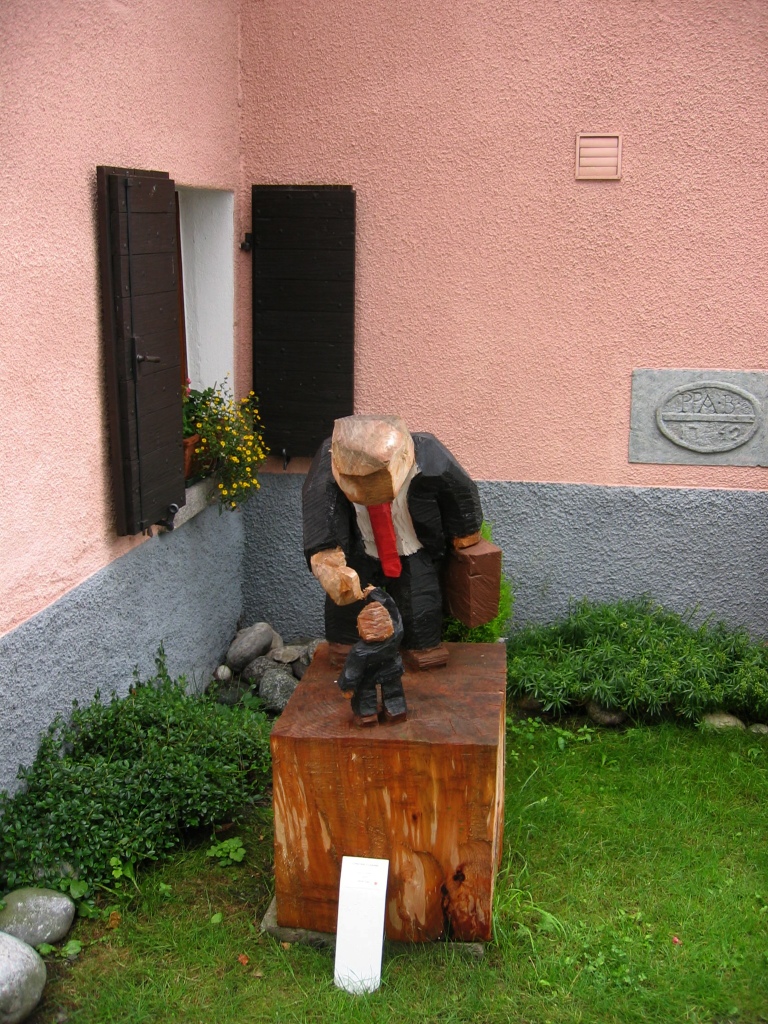
Big man Little man
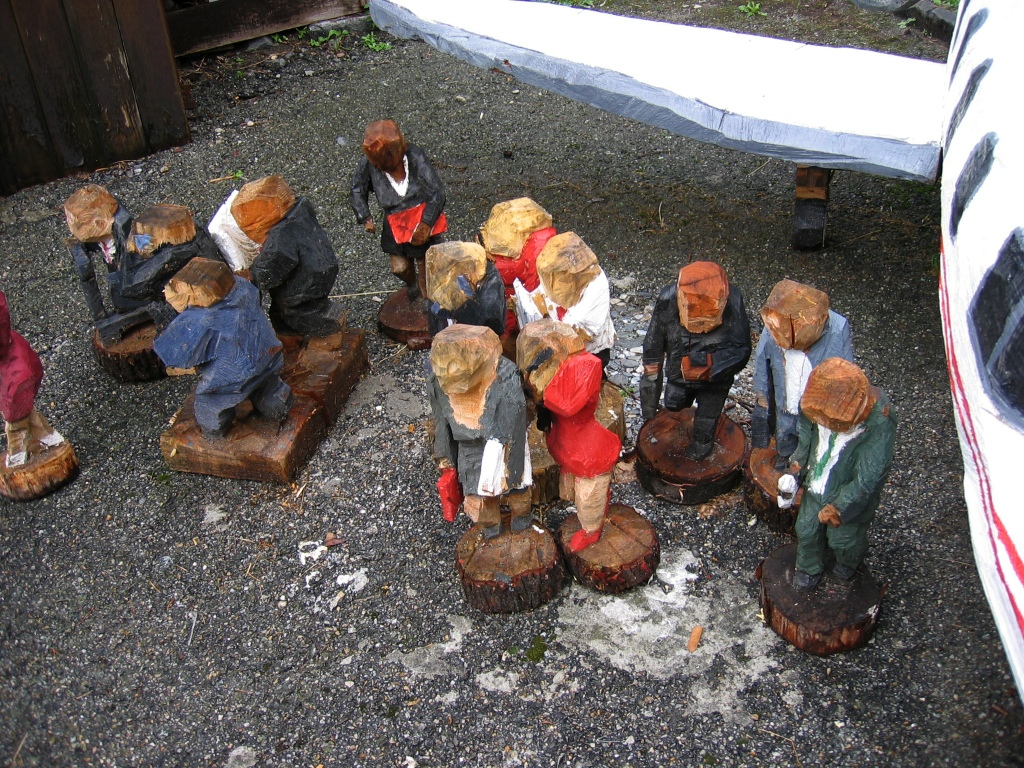
I grew up in heavily industrialized Pittsburgh in the 1950s. Coal Mines, steel mills, and other factories were staffed by union labor. The cruel and unusual history of Andrew Carnegie vs. the labor unions was close to the surface and burned into the memory of the workers. They had decent wages and retirement benefits won through very tough negotiation, but they would not guess how the tables would turn on both the workers and the owners of steel mills. Today the city has a strong economy based in part on the petroleum industry boom, but the mills went under, stripping the retirement benefits from the workers as they went into bankruptcy. The old way of creating and defining value no longer exists.
Today the new magazine from Chris Brogan, my first and favorite SoMe teacher has launched. The free publication is called Owner, and I subscribed instantly since Chris has never let me down in the past. His good friend and fellow entrepreneur, S Anthony Innarino, has written an excellent article for the first issue which takes a good look at value and expectations. Welcome to the Disruptive Age tells it like it is and invites the reader to take ownership of his or her own time and energy. We have entered a time in which it is not only extremely important to define and create value, but also to find ways to harvest more value for ourselves. This will involve knowing both what is most valuable to your customers and what you value most. Time is not money; It never has been, but the contracts of the past created a structure in which labor, time and money seemed hard to disentangle. In today’s economy disruption is the key to value.
business

business pigs
What kind of power does an exorcist have? Technically Catholic priests are in the business of exorcism, but in day to day life some people play the role of the exorcist to friends or family. I personally do not have much experience with this archetype, but we all recently witnessed a bookkeeper in a school in Georgia display extraordinary ability to drain the evil out of a situation. Antoinette Tuff found the strength to talk down a deranged gunman with 500 rounds of ammunition. Later in an interview she told the 911 dispatcher with whom she had been on the phone that she had been terrified. She called the courage to act the grace of God. I imagine that priest or not, it is always the grace of God that provides the purging of evil. Do you have any experience with exorcist archetypes?

George Harvey Taylor
I have found a true treasure today as I prepared to write this post about my grandfather, George Harvey Taylor. Somebody has placed his photo on Ancestry.com. I instantly knew it was he because he strongly resembles his children, one of my uncles in particular. This is the first time I have seen his image. He committed suicide ten years before I was born, and for at least the first ten years of my life he was never mentioned. I am not sure how old I was when I learned from a cousin that he had killed himself at home at night, his youngest son discovering the body in the morning. It shocked me out of my wits. It still does. The tightly held secret probably had some initial seed of the suicide of one of my cousins in about 1970.
George Harvey Taylor (1884 – 1941)
is my maternal grandfather
Ruby Lee Taylor (1922 – 2008)
daughter of George Harvey Taylor
Pamela Morse
I am the daughter of Ruby Lee Taylor
George Harvey was born in Texas in 1884 to parents who had moved there from Selma, Taledega to be precise, Alabama, after the Civil War. He met his wife, Hattie May Long, who had been adopted in Mississippi during or shortly after the war. Her adopted parents, the Longs, brought Hattie May with them to Texas, but seem to have left her brother, Fidel, back in Mississippi. After George and Hattie married they moved to Humble, TX, where George was a meter reader for Texaco on a very large oil lease. He rode a black horse around the lease and read various meters to document production. They had ten living children;Hattie lost a couple of pregnancies; then Hattie May died in childbirth, along with the baby….at home, in 1932. George Harvey was left to raise ten kids, the youngest being only two years of age.

grave in Waller TX
When my mother was near death and demented I asked about her father’s suicide and how she felt. She was not in the house that morning, but had gone to Houston to visit her sister. She said she was very angry at him; the reason given was that the lady next door turned down his proposal of marriage. He had carried on as a single father for 9 years and was severely depressed, I suppose. Suicide often leaves the family ashamed like my mother’s religious family. The taboo subject has strange and subtle effects on those who are left on earth. I know that it shaped my mother’s view of life.
Please join me in raising awareness and hopefully some funding for IAMalive.org. during suicide prevention week, Sept8-14, 2013. This 24 hour hot line is created to help people like my grandpa make it through an irrational moment of fear and loathing. This issue belongs to all of us. You can find the easy donation bottom here, along with a list of thank you gifts. My grandpa George and I thank you as well.
In archetypal roles we have potential to play out a positive aspect of a well-known character, such as the king, or play the shadow aspect. The king is such an essential male character in myth and culture that most men see themselves in some way to be a king. King of the home castle may be the only one, but there is a royal male at some point that will be portrayed by a man. The inner king and queen relationship, the balance between understanding and wisdom vs discipline and justice is at the heart of any society. When power is in the hands of weak or corrupt leadership, even within one’s own personality, balance must be restored for the good of society. When we see the strife in Syria and Egypt today it looks like the end of civilization.
The war and economic destruction still rampant in the world is the collective consciousness struggling with this ruling authority. I wonder, when I watch my neighbors as well as rioting middle easterners, if the earth will perish in flames sometime soon. Radioactivity is spewing out of Japan and sewage rolling into rivers all over the globe. When post apocalyptic themes are portrayed in fiction they seem too close to reality today. I love the movie Tank Girl which is a parody about authority, power, and the use of resources. Tank Girl is part of a severely abused underclass, dominated by the all-powerful utility company. They control all resources, except the resourcefulness of Tank Girl herself.
James Hillman, well known Jungian scholar, talks about soul and psychology:
His observations are pertinent today as we live with serious division in the nation’s psyche. The congress is a symbolic and highly visible example of our troubled national soul. When I was young I felt patriotic and secure that America was the greatest nation in the world. The Viet Nam War and civil rights struggles in the states changed my mind about that. I had the chance to live outside the US for a year when I was 13-14, in Venezuela. I learned Spanish. I had listened to Fidel Castro on the radio. My psyche had already been subverted before Viet Nam.
I have never missed an opportunity to vote in any election since I turned 21. I pay all my taxes and obey the law. I am a tiny part of the deeply troubled economy that is driving the young and the old into poverty. My personal comfort and economic security are good, but neighbors all around me are not as lucky. I am healthy, but the nation is statistically very ill, mentally and physically. I am concerned about the bifurcation that tears the country into two unhealthy sides of some eternal controversy. I am concerned about the soul of America.