mermaidcamp
Keeping current in wellness, in and out of the water
You can scroll the shelf using ← and → keys
You can scroll the shelf using ← and → keys

Thomas Taylor at rest
My 9th great grandfather was left an orphan when his father, Rowland Taylor, was burned at the stake as a martyr. His last words to Thomas were recorded:
Rev. Dr. Rowland Taylor’s final words, before being burned at the stake, to his son Thomas as reported by Foxe:
“Almighty God bless thee, and give you his Holy Spirit, to be a true servant of Christ, to learn his word, and constantly to stand by his truth all the life long. And my son, see that thou fear God always. Fly from all sin and wicked living. Be virtuous, serve God daily with prayer, and apply thy boke. In anywise see thou be obedient to thy mother, love her, and serve her. Be ruled by her now in thy youth, and follow her good counsel in all things. Beware of lewd company of young men, that fear not God, but followeth their lewd lusts and vain appetites. Flee from whoredom, and hate all filthy lying, remembering that I they father do die in the defense of holy marriage. And another day when God shall bless thee, love and cherish the poor people, and count that thy chief riches to be rich in alms. And when thy mother is waxed old, forsake her not, but provide for her to thy power, and see that she lacks nothing. For so will God bless thee, give thee long life upon earth, and prosperity, which I pray God to grant thee.”
Thomas Taylor (1548 – 1588)
is my 9th great grandfather
Thomas Taylor (1574 – 1618)
son of Thomas Taylor
James Taylor (1608 – 1698)
son of Thomas Taylor
John Taylor (1685 – 1776)
son of James Taylor
John Taylor (1727 – 1787)
son of John Taylor
John Taylor (1747 – 1781)
son of John Taylor
John Nimrod Taylor (1770 – 1816)
son of John Taylor
John Samuel Taylor (1798 – 1873)
son of John Nimrod Taylor
William Ellison Taylor (1839 – 1918)
son of John Samuel Taylor
George Harvey Taylor (1884 – 1941)
son of William Ellison Taylor
Ruby Lee Taylor (1922 – 2008)
daughter of George Harvey Taylor
Pamela Morse
I am the daughter of Ruby Lee Taylor
He was all about the defense of holy ( not Catholic) marriage and was dying for it, in his estimation. Fleeing from whoredom is a theme here, but at least he does tell Thomas to take care of his mother when she is old. These Taylors are ancestors of a few American presidents and Elizabeth Taylor: John (1685-1776), the immigrant, Taylor sailed to America.
Capt. Thomas J. TAYLOR, II (1572/73 England-1618 England) and Margaret SWINDERBY (1578 Denmark-1672 England) were the direct ancestors of 5 US presidents (Abraham LINCOLN, James MADISON, Zachary TAYLOR, William Henry HARRISON, Benjamin HARRISON) and 1 actress (Elizabeth TAYLOR)7G grandfather of the 16th President of the United States, Abraham LINCOLN. Abraham LINCOLN (1809-1865) son of Thomas LINCOLN and Nancy HANKS (1784-1818). Nancy HANKS daughter of James HANKS (1760-1793) and Mary SHIPLEY. James HANKS was the son of Joseph HANKS and Nancy Anna LEE (1728-1808). Nancy Anna LEE was the daughter of William LEE, Jr (1704-1764) and Anne. William LEE, Jr. was the son of William LEE, Sr. and Dorothy TAYLOR (1681-1754). Dorothy TAYLOR was the daughter of Thomas TAYLOR (1657-1712) and Elizabeth HARDWOOD. Thomas TAYLOR was the son of Thomas TAYLOR (1628-1687 and Mary. Thomas TAYLOR was the son of John “Immigrant” Taylor (1607-1652) and Elizabeth Jones. John TAYLOR was the son of Capt. Thomas J. TAYLOR and Margaret SWINDERBY. 4G grandfather of the 4th President of the United States James MADISON. James Madison (1751-1836) was the son of James MADISON (1723-1801) and Eleanor Rose CONWAY. James MADISON was the son of Ambrose MADISON (1700-) and Francis TAYLOR (1700-1761). Francis TAYLOR was the daughter of James TAYLOR, II (1675-1730) and Martha THOMPSON. James TAYLOR, II was the son of James TAYLOR, I (1608-) and Francis WALKER (-1680). James TAYLOR, I was the son of Capt. Thomas J. TAYLOR and Margaret SWINDRBY. 3G grandfather of the 12th President of the United States, Zachary Taylor. Zachary TAYLOR (1784-1850) was the son of Richard Lee TAYLOR (1742/3-1829) and Sarah Dabney STROTHER. Richard Lee TAYLOR was the son of Zachary TAYLOR, Sr. (1707-1768) and Elizabeth LEE. Zachary TAYLOR, Sr. was the son of James TAYLOR (1675-1730) and Martha THOMPSON. James Taylor was the son of James TAYLOR (1608-1698) and Francis WALKER. James Taylor was the son of Capt. Thomas J. TAYLOR and Margaret SWINDERBY. 4G grandfather of the 9th President of the United States, William Henry HARRISON. William Henry HARRISON (1773-1841) was the son of Benjamin HARRISON, V and Elizabeth BASSETT (1730-1792). Elizabeth BASSETT was the daughter of William BASSETT, IV (1709-1792) and Elizabeth CHURCHILL. William BASSETT, IV was the son of William BASSETT, III (1671-1723) and Joanna BURWELL. William BASSETT III was the son of William BASSETT and Bridgett CARY (1652-1670). Bridgett CARY was the daughter of Miles CARY (1621-) and ANNA TAYLOR (1611-1657). Anna TAYLOR was the daughter of Capt. Thomas TAYLOR and Margaret SWINDERBY. 6G grandfather of the 23rd President of the United States, Benjamin HARRISON. Benjamin HARRISON (1833-1901) was the son of John Scott HARRISON (1804-1878) and Elizabeth RAMSEY. John Scott HARRISON was the son of President William Henry HARRISON and Anna Tuthill SYMMES. (Of note, actress Elizabeth TAYLOR (1932-)) Elizabeth TAYLOR, daughter of Francis Lenn TAYLOR (1897-1968) and Sarah Viola WARMBRODT. Francis TAYLOR was the son of Francis Marion TAYLOR and Elizabeth ROSEMOND. Francis Marion TAYLOR was the son of Peter TAYLOR (1829-1921) and Margaret Jane PERIGO. Peter TAYLOR was the son of Lewis TAYLOR (1780-1874) and Rachel BAKER. Lewis TAYLOR was the son of Joseph TAYLOR (1741/2-1815) and Francis ANDERSON. Joseph TAYLOR was the son of John Powell TAYLOR (1696-1780) and Catherine PENDLETON. John Powell TAYLOR was the son of Sheriff James TAYLOR (1635-1698) and Mary GREGORY. Sheriff James TAYLOR was the son of John “Immigrant” TAYLOR (1607-1652). John “Immigrant” TAYLOR was the son of Capt. Thomas J. TAYLOR and Margaret SWINDERBY.
SOURCE: http://genforum.genealogy.com/taylor/messages/32876.html
Writing twenty-five hundred years ago, the Greek philosopher Protagoras (c. 490-420 BCE) might provide wise counsel to our troubled, conflicted age, and offer some hope: “Concerning the gods,” he wrote, “I have no means of knowing whether they exist or not, nor of what form they are; for there are many obstacles to such knowledge, including the obscurity of the subject and the shortness of human life.”
When a pantheon ruled many dramatic events took place between gods and goddesses, as well as between the immortals and the mortals; life was more exciting. The potential for anything to happen was greater in the collective consciousness before pesky science invaded religious belief. Philosophy turned a corner when Protagoras, a sophist who died when Plato was young, brought forth his teachings. He wrote and taught from 490-420 BC, and is reputed to be the first Greek to make money in higher education. His fees were reputedly very steep. He wrote, but none of his written work survived. He was itinerant, traveling all over Greece to find students. The new ideas he fostered and taught were:
This has meaning today as we see those who defend absolute truth of any kind. Modern courts of law have their foundations in these three ideas. Law schools teach orthoepeia as part of trial training. Reasonable doubt is relativism. Before Protagoras all earthly events were explained by relating nature to the gods’ whims. Once there was reasonable doubt of that, the world started to look more controllable. Justice, however, is not served when these valuable teachings are not spread equally and given to all citizens. We still have giant problems with democracy and education. What would Protagoras teach the Congress of the US???
“The greatness of a community is most accurately measured by the compassionate actions of its members, a heart of grace, and a soul generated by love.”
Coretta Scott King
I know a very special woman through social media named Ruby Taylor. She lives in Lancaster, PA, a town I knew well because I spent a year going to boarding school in Lititz, PA. She has a wonderful attitude, but the reason she caught my attention is that my mother’s name is Ruby Taylor. I study my ancestors to learn about ethical will and history. This week I thought about slavery in terms of my slave owning ancestor who ran away to Florida with her slaves in order to be in Spain in the 1700’s. She actually bought and sold slaves in Florida. This is heavy, and I can picture the whole crazy trip. Meanwhile the Zimmerman verdict was delivered in Florida. Much ado…
The most profoundly wise statement of the day came from Ruby Taylor:





My great-grandfather, Edward Scott, was the telegraph operator in Oswego, KS. His first wife, my great-grandmother, divorced him for having another family. He was born in Ohio, the son of a Civil War veteran. His mother, Maria Pendergrass moved to Kansas with Edward after her husband died. He and Sarah Helena married and had four daughters together, the last daughter born in 1905. By then Edward already had a son who had been born in 1902, with his other woman, Edna. Edna and Edward married in 1909 and lived in Oswego until he died. This must have been a major scandal at that time. Labette, where is daughters lived is very close to Oswego. I can’t imagine how he could keep this situation secret for very long. Somehow my great-grandmother was able to get a teaching job and make ends meet. She managed to get my grandmother through undergraduate school with a teaching degree before she married my grandfather. That seems like a big deal at the turn of the century. I don’t know if he saw his daughters after the divorce or not. He is one of the black sheep never mentioned.
Edward Ewing Scott (1874 – 1941)
In my tree I have several ancestors who owned slaves in America. When your family has owned slaves, you are forever affected by that history. The slave archetype is a very interesting symbol. I had not considered the aspects that can both teach and menace. The ultimate slavery is full surrender to the divine. One’s own will is sacrificed to the divine will in order to be fully enlightened. Military discipline requires following orders without question. We don’t think of soldiers as slaves, but there is an aspect of it in the lack of choices. Some are slaves to substance abuse or systems of belief. This slavery may seem completely voluntary, but cultural pressure might be a strong factor. The positive slave archetype is the monk who devotes his life to divine providence. The shadow aspect of the slave today is the person who gives up choices, such as cult activity. Choice involves individuation. Following the script of the collective consciousness today without question is slavery.
My 6th great -grandmother, Sara Holt, was from a family that came to Virginia in 1620, so slavery probably was always part of their existence, like most colonials. She and her husband from Northern Ireland owned slaves and lived in a fancy style:
Sarah Truly, A Mississippi Tory By Madel Jacobs Morgan
The Journal of Mississippi History, Vol. XXXVII, No. 1, February, 1975
One of the most loyal advocates of the rule of King George III of England was Sarah Truly, a resident of the Old Natchez District when it was a province of Spain. She came to the Natchez District from Amelia County, Virginia, where she lived in comfortable circumstances with her husband Hector and their seven children: John, James, Bennet, Eleanor, Sarah, Judith and Martha (Patsey). It can be deduced from Hector’s will, which was probated in 1761, that the Trulys pursued life in the cavalier tradition. Daughter Eleanor rode sidesaddle on her own bay mare, Hector owned slaves, and he had a “complete distillery”. He had, as well, three hundred acres of land, two prayer books, four testaments, two hymnals and “one other book”.
As Revolutionary sentiment took root and spread, the position of Sarah Truly and the other Tidewater Virginia loyalists became less and less tenable. At the close of the decade following Hector’s death, Sarah and her brothers Dibdal and David Holt took positive action to improve their situation. Having learned of the rich lands along the Mississippi River which the British were making available for colonization, they began investigating the possibilities of a move. One of the Holts went to British West Florida in 1770 to consult with the governmental authorities about lands. He returned to Virginia; then, along with his brother and a neighbor, Robert Montford, he came back to West Florida the following year on another scouting trip.
Along with her brothers, the Widow Truly made preparations for the long journey southward. “Refusing to be a traitor to my king,” she said later, “and not wanting to live at enmity with my neighbors, I sought a home under the Spanish flag.”
Six of her children came south with Sarah Truly, John remained in Virginia. Her three brothers, David, John and Dibdal, accompanied her, as did a son-in-law, Francis Spain (Eleanor’s husband), the Spain children, and the slaves. If their caravan followed the route described by other migrants of that time, they traveled overland through the Cumberland Gap and across what is now Kentucky, where they paused to build a flatboat to embark on the Ohio River, floating on to the Mississippi and thence downstream to West Florida.
Seventeen hundred and seventy-three was the date of their arrival in West Florida. The first grant of land to Sarah Truly was most likely in one of the Feliciana Parishes of Louisiana, and it has been said that Bayou Sarah was named for her. She soon moved to a site north of Fort Panmure in the Natchez District.
The Widow was beset with difficulties from the start. The first year, she and her family were all sick and could not make a crop. She was obliged to sell a negro to buy provisions. In 1774, the younger son, Bennett, was hired by a neighbor, Mr. Lum, to row his boat up the river—his pay to be in corn for the use of the family. On arriving upriver, Bennett found the hunting good and instead of returning home, he remained four years.
In 1775, son James took his departure. He returned to Virginia to fight with his native colony against the crown. By this action James not only left the Widow Truly without the help of either of her sons, but placed her in the deplorable situation of acknowledging herself the mother of a Revolutionary soldier.
In 1778, both of the boys had reappeared on the scene. Bennett returned to find Sarah engaged in getting her corn crop planted. Instead of staying close by to lend assistance, he betook himself off to the bright lights of Natchez. There he stayed wntil the fall of 1778 when he went off on another hunt. But this hunt was of shorter duration. Bennett and those with him were captured by James Willing, the American officer–and a resident of the Natchez District–who was then raiding, pillaging, and recruiting on behalf of the American Army. Bennett was taken to New Orleans but soon came back home to his mother; and, Loyalist that he was, he enlisted in the local militia.
In the meantime, James Truly had returned from Virginia the the Natchez country in 1778, still a Revolutionary. He immediately made himself useful to the American cause by acting as a guide for Willing when he arrived at the Natchez landing in mid-Feburary with a company of American soldiers.
In 1779, the Widow had son Bennett at home. In her own words, Bennett “came to my house and worked with my lands and finished the crop with my three slaves.” Out of the proceeds of that crop, she paid off $300.00 in debts that Bennett had contracted in the neighborhood.
The following year Bennett seems to have been somewhat more dependable. She put him in charge of her crop, and with the help of four slaves he cleared 3,000 pounds of tobacco. It seemed as though things might be looking up for the Widow Truly. Bennett was at home and working, and the crop was good. Unfortunately for all concerned, Bennett came up with the idea of building a grist mill in partnership with one George Fourney. Sarah, who could see through such schemes, was expected to provide the capital for this venture–an idea of which she heartily disapproved. As later attested by Sarah’s daughter and granddaughter, Eleanor and Tabitha Spain, the Widow considered Fourney unreliable; and Bennett had not yet proved himself capable of carrying out such an ambitious project. In other words, Sarah had no desire to have a mill stone around her neck. Irrepressible Bennett went on with his plans, however, in spite of the objections and scoldings from his mother.
There was another complication! The sight of the English flag over Fort Panmure no longer gladdened Sarah’s heart. In its place waved the golden lions of Spain, for the Natchez district had been surrendered to Galvez when he captured Baton Rouge in1779.
No sooner had the English garrison evacuated Fort Panmure to the Spanish than Anthony Hutchins and John Blommart began plotting to recapture the Natchez District for the English. They were aided and abetted by the Widow Truly. She was a mere woman and has thus far received scant notice of historians, but the testimonials by her Natchez District neighbors vouch for the fact that she did all she could to assist the English cause and deal misery to the Spaniards.
When Galvez withdrew his heavy artillery to Pensacola, to bombard the British stronghold there, the Loyalist element in the Natchez District made plans for a revolt. Their plans came to fruition in 1781. While one group of the Loyalists took up their position at the house of John Rowe (Row, Rault) in plain view of Fort Panmure, another group was ensconced in a blockhouse especially built for the occasion by Madame Truly. The so-called rebels who took refuge in the blockhouse on the Truly holdings prepared themselves for a seige and even dug a well so that water would be plentiful. This well was later the subject of much controversy, for it seems that Bennett had contracted with Thomas Rule to dig a well on Sarah’s plantation, giving him a horse in payment. Before Rule could dig the well, the “rebels” encamped in the blockhouse dug it. A year later Sarah sued Rule for the price of the horse, charging that he did not fulfil his contract. The court ordered Rule to fulfil his contract by digging a well as originally specified. Thus, we can be reasonably sure that in spite of other vicissitudes she may have encountered, the Widow Truly spent the last days of her life well watered.
With the capture of Pensacola by Galvez and the arrival of a Spanish force at Natchez, the revolt collapsed (in May, 1781). The insurgents scattered in every direction. Some, led by Anthony Hutchins, went overland to Savannah and thence to England. Some struck into the wilderness where they joined a robber band. Another group became Spanish prisoners and were taken to Spanish headquarters at New Orleans. It is a matter of record that Sarah Truly made a quick trip to New Orleans in 1781. Whether she went there in the interest of her land holdings or was called up before the Spanish authorities for her part in the counter revolution against them is a matter for conjecture. She left at home two of her daughters, Eleanor Spain and Patsey Truly and a granddaughter, Tabitha Spain. Also at home was Bennett whose gristmill project had been interrupted by the revolt. But while Sarah journeyed down the river to New Orleans, Bennett rounded up George Fourney; and they slyly took advantage of the widow’s absence to complete the gristmill.
Upon leaving New Orleans, Sarah embarked for home by rowboat. She “encouraged the hands to row briskly” saying that they should have plenty of meat when they reached home. A trip to New Orleans by rowboat would be an ordeal at best, but in May with intense heat added to the humidity of the river swamps, not to mention the abundant insect life that thrives in such conditions, it must have been almost unbearable. Worn and exhausted and accompanied by the hungry crew, the Widow reached home expecting a feast. She found only two pieces of meat in the house. She went into a rage. Eleanor, Tabitha and Patsey wrung their hands. When the Widow inquired of the three girls what had become of the meat, one can imagine the violence of her reaction on being told that Bennett had given it to George Fourney, his partner in the gristmill.
Sarah Truly lived for ten years after this unfortunate episode, and it was her fortune to spend the entire time under Spanish rule. From the court records we learn that she spent much of her remaining time before the bar of justice—suing, being sued and testifying as wittness. The Spanish governors seemingly bore her no ill will for having taken arms against them, and she was always treated with the greatest consideration. Her name is mentioned in more than forty different places in Spanish court records, indicating that she was a woman of diverse interests. She loaned money, she bought and sold slaves, she dealt in lands. Various witnesses testified that she “cursed” and “scolded”. No one could deny that Sarah Truly was a woman of spirit.
Her children settled close around her, forming a sizeable clan of Trulys and their kin. James married Elizabeth Burch, a widow, and they brought up an interesting family at Truly’s Flat in what is now Jefferson County. Irrepressible Bennett married Mary Lum. Always on the lookout for a good investment, Bennett became interested in a cotton gin and in 1796 we note that he was hauled into court for turning out inferior cotton. Eleanor Spain and her family lived in Jefferson County. Judith married a Holstein and she was in England in 1796.
Two of the Truly girls, first Sarah and after her death, Patsey, were married to Captain Richard Harrison who was noted for his services in the American Revolution when he served as a courier for George Rogers Clark. The Harrison home, Auburn House, still stand in Jefferson County.
Age finally caught up with Sarah Truly, and she was “infirm and weak” on March 15, 1792, when she made her will. She left her “beloved son Bennett” a slave “Annico”, who had two children, and one large looking glass. To daughter Eleanor Spain went her prized feather bed and furniture. To daughter Martha Harrison went her scissors and thimble. The residue of her estate was to be divided among James, Bennett and Eleanor. Then passed from the scene a forceful character and gallant pioneer–a woman of loyalty and courage.
That many of her traits passed down to her children there is little doubt. As a fitting sequel to her tempestuous life, we note a paragrapg appended to her will which begins as follows: “7 May 1793. Whereas a controversy has arisen between the heirs of the late Sarah Truly, concerning the division of her estate…..”
The vanishing middle class in America is the subject of much discussion. In fact, tonight some of the internet’s finest minds will tweet brilliant ideas in a twitter chat on this subject. How the advent of technology has reduced the need for big workforces that manufacturing employed in the past is part of our political history and our new economy. Pros and cons can be weighed, but there is nobody who believes our economic policies have not grown a very wealthy upper class with extrme privilege at the expense of the rest of the population. Our great divide grows larger each minute providing tax breaks, and a dream environment for big business while poverty grips our children and our elderly. The new fat cat is fat indeed. A generation of wealth has been wiped out and shifted to the wealthiest and most powerful of our citizens.
I had the pleasure of meeting Bill Moyers several times when I worked at fancy spas. He was a spa bunny. He is more charming in person than I ever imagined, quickly running to the top of my favorite celebrity list. I learned one time talking with him down in Mexico that his mother was from Texas, like mine. They both had the same first name, Ruby. His mom, however, was named Ruby Jewel. Wow. Last night on Charlie Rose his interview reminded me of all the reasons I love him, but it also taught me that we were both in Austin when he was working for LBJ and I was protesting LBJ. It’s like we’re connected.
Practice defines our reality. We spend our time and energy as if we had no control over them. We learn what we study and we believe what favors our own superior position in the human crowd. Nobody survives alone without help from others. In history we chose the people who prepared our food and sewed our clothing carefully to make the most of the means at our disposal. We used resources in the same way because they were scarce. Most individuals were not lavished with great luxury, but if they were lucky they had liberty and the pursuit of happiness.
Today we know nothing of the people who prepare our food like products or sew our disposable fashion. We may have a vague feeling that everything we use was made in China, but that is usually the end of it. Many seek pleasure in acquisition of goods and services just to be piggy. This general shift in responsibility is sad in a big karmic way because we have essentially eliminated the need for gratitude to those who serve our material needs. We buy the workers and then discard them like the objects they make for us.
Gratefulness.org is an organization created to enhance gratefulness around the globe in every way. The offers and courses are imaginative and very helpful. One can study on line everything from gratitude poetry writing to living the hours like a monastic. Given the international state of affairs I salute the Gratefulness organization for addressing the main problems right at the root. If you have not visited these grateful folks and discovered what they are teaching, you are missing an opportunity to be guided to a more grateful state of mind. Grace is gratitude, gentle reader; don’t leave home without it.
The decision to trust is a risk. Calculating risk should be a skill we develop and improve over our lives. The influence of relationships on our faith in others is central. Early betrayal can be a blessing because it can prevent deeper problems by showing true colors. Trust and the possibility of betrayal arise together. If we trust the government, or our spouse, or boss, we may find that faith has been misplaced. Few of us have the ability to accurately judge or predict the behavior of our closest companions. Being blind to imperfections is neither healthy nor honest. If we are honest we can admit our own imperfections, and our own potential to betray others. With perspective we can see how our national anger has damaged the entire society.
The rose-colored glasses version of America was a risk. The more we spun ourselves into the greatest country in the world, the more we found ourselves betrayed as a nation. The more we fought for our way of life around the world (whatever that meant), the more undesirable our way of life became. The more we declared war on everything from drugs to terror, the more ground we lost in the global trust department. Now American security is breeched on a regular basis in fairly spectacular fashion. It is lucrative, I imagine, for some, but it is becoming a badge of courage. If the seed of betrayal is trust, then it must also follow that after betrayal trust becomes mature and discerning. It is a cycle, gentle reader.
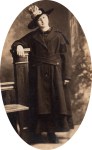
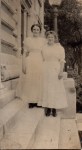

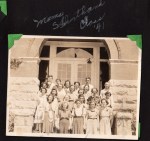


My grandmother, Olga Scott Morse, was a teacher of business skills. She graduated with her masters in education after she had four kids. She left them at home on the oil lease with their dad during the week to attend classes at Oklahoma State University. I believe that in the 1930s this was a bold feminist move. After graduation from OSU she taught typing and shorthand at a junior college near their home in Tonkawa,OK. Learning to type was a bold femenist move, believe it or not. Her students learned shorthand and typing and other current secretarial skills. The school to day is called Northern Oklahoma College. I stopped at the campus when I went to Oklahoma on an ancestry hunt a few years ago. I found her name in an old yearbook in the library, which was fun. I also looked through a lot of photos from the history of the school, where my dad and his brothers were students, but I did not find them. I walked around on campus, taking a break in my drive. Later, I found a picture of her with her students in the 1930’s in front of the central building at my uncle’s house in Wichita. I easily recognized the building since I had just been there.
Her mother, Sarah Helena Byrne, was a teacher and her great-grandfather , Amos Nichols,was also. My father was a university professor. The teacher archetype is all over my father’s family. I wonder if this is a DNA situation or all the reading and discipline that teachers represent. She was a farmer when I met her, having long since retired, but I remember her typewriter on the farm that had black keys..no letters. She could wail on that thing, but she had little reason to to so. I asked her to because I liked to watch her do it. She was a woman of many skills and talents, including flower and vegetable gardening. Most of the fruits and vegetables we ate in the winter in Pittsburgh were grown on my grandparents’ farm in Arkansas and frozen. I picture her in a sun bonnet, like all her friends wore, on the farm. Visiting the college where she taught before I was born was a really cool experience that showed me a part of her I never knew. For her day and place she was super highly educated and accomplished.
Olga Fern Scott (1897 – 1968)
I am in a chat group with some people who have been to est training or the Landmark Forum, but I have not done that. I enjoy their point of view, but am amused by much of the jargon. Recently somebody in that group asked if others had alienated others with special transformational language. I had to laugh and think of what my own transformational groups and languages have been:
There are sub groups,but these are the majors. I have recently been united with my early childhood neighbors and school friends, one of whom went to summer camp with me. I have also gotten in touch with many old friends and neighbors who lived in San Tomé, Venezuela in the early 1960’s. This mostly bilingual group has a language and a culture that is unique. I am not in contact with any high school or college friends, but a small group with whom I worked in a theater company in Cherokee, NC in 1968 has been drawn together through social media. The hippies, spa bunnies, swimmers, and vegetarians all switch places and morph into the current culture. I know a few of each group from the past. I stay in touch with Swiss friends, although I have not visited for a few years now.
The language, slang, and meaning of these transformational groups imprint on us as individuals, and as a collective groupthink. We share memories that fit together like jigsaw puzzles. In the last month I have been amazed to learn some of the things my elementary classmates remember about me, and what I know about them. The past plays back like a very funny movie, missing lots of dialog and motive. What seemed insignificant is memorable, and what was important at the time has lost significance. We do have a thread of common language, and some common ideas. Although we may no longer be a group who hangs out in real life, we somehow are still transforming each other. Even learning about the death of some of our old comrades shakes the foundation of mortality, the ultimate transformation.

