mermaidcamp
Keeping current in wellness, in and out of the water
You can scroll the shelf using ← and → keys
You can scroll the shelf using ← and → keys

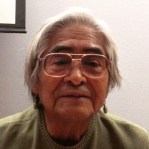

My week has been graced by the presence of a real writer. I went to hear the poet Simon Ortiz who was in Tucson for a reading of his work. I was deeply moved and highly impressed with his writing, which he delivered with lavish explanations about his process. He is now writing an epic poem, an idea he joked about by saying there is no real rule about exactly how long an epic has to be. He will include within the epic some of his older works, which he shared with the group who had come to the U of A Poetry Center to listen to him. I purchased his book, Sand Creek, which he signed for me after the reading. I told him how much I loved hearing him and he responded that he really loved reading to us. His genuine joy in sharing his work was evident. We were all truly blessed to be there. Some of his poems are funny, and some carry tragic stories from history, like Sand Creek.
The Poetics and Politics of Water series has evolved. Dr. Ofelia Zepeda is a poet and professor who collaborates to put together this very special program of Native American writers. She and her colleague Larry Evers introduced Politics and Poetics in 1992. I look forward to the next reading which will be given by Dr. Zepeda herself. She uses her native language from this region, Tohono O’odham, to welcome the visitors to her land and bless the participants. It is beautiful. She translates the traditional greeting in to English when she is done.

Ofelia Zepeda introduction
I have written and read some this week with mixed results. I believe the most profound thing that happened to set my poetic self on the path was my chance to hear Mr Ortiz. He said prose and poetry are all the same, and in the end, all language is poetry. He certainly was all poetic in every part of his being. He talked about his own recovery from alcoholism, and his father’s inability to recover from it. His identity as Acoma with deep religious and cultural heritage is important to him. His father exposed Simon to sorrow through addiction, but he also taught him his traditional language and mystical history. The last poem he read to us was about his father’s death. It was sung as a song, a chant, a rhythmic tribute to the spirit of his father and all he had inherited. It was a wonderful way to show his talent and end on a solemn, serious, meaningful note.
Alex Seotewa was our guide to the mission church he had painted in Zuni pueblo. We had driven there to see the interior of the mission church with the spectacular kachina murals which I had seen once briefly with a Catholic priest. My fascination with this epic work of art started when I saw a television special, maybe even the program above, about Zuni, kachinas, and Alex. I convinced my erstwhile father-in-law to land his private plane in Zuni to see the mural. At that time the church was locked and there was a heavy smell of smoke damage because there had been a fire in the building. I guess that was about 1988. A priest had the key and showed us the inside of church for about 10 minutes, with no background information. There were buffalo heads on sides of the altar. It struck me as not only amazing art but a highly sacred place. It was obviously not in use, and the priest did not expect it would be used in the future.
I tried to see it once again, while driving back to Tucson from a ski trip in Colorado. I jumped out of the car in my pink fluffy ski jumpsuit and asked the people at the convenience store at the turn off for Zuni on the highway for directions to get to the church to see the interior. They insisted there was no church with kachinas. I was adamant that I had been to it. They became highly annoyed with me. I finally got the message that I had behaved badly in that culture and was not welcome. I was confused, but nothing ventured, nothing gained. The mystery of the access to the kachinas in that mission church continued to intrigue me. On my third visit the kachinas themselves must have arranged special treats for us. We had a loft bedroom at a small hotel run by a French guy who runs the general store. We arrived in the late evening. At the tourist office in town I asked the young woman at the desk how I could see the kachina mural in the mission church. She said she had never seen it, so I had little chance of being so lucky. This was a real surprise, since she was a member of the tribe about 20 years old. I wondered why it was so difficult.
In the morning I headed downstairs for coffee and encountered fellow residents gearing up to go hunting with a Zuni guide. They were eating breakfast, so I joined them for a cup of coffee. The group had flown in from Atlanta for the privilege of hunting there. They were all excited because they would be in the company of the local expert, which one of them had done previously. I asked this hunting guide if he had any idea how I could arrange to see the inside of the mission, since that was our mission. He made a phone call to his wife and arranged for his father, Alex Seotewa, to meet us at the church and give us a tour. He left us a phone number to reach his father later, since it was only about 6 am, then took the happy hunters off in his truck. I knew this intervention had to be a special reward for holding the images of the kachinas in my mind for so many years. They must have answered my desire to see them again.
Alex was in poor health, but obviously enjoyed telling the story of his art work, his tribal culture, and his calling to preserve his traditional heritage. He spent about an hour with us answering questions and telling us about his life and work. I will cherish the time we spent in his presence because the kachinas came to life with his explanations. There has been controversy and dissent within the community between Catholic and traditional use of the mission. When Alex’s father was a child the church was in disrepair, but it had punitive kachinas painted on the walls. An agreement was made to restore the images between Alex and a priest who thought it was a good idea. Subsequent Catholic clerics have not been as enthusiastic about preserving Zuni religious practice within, or consecutively with their own practices. Alex stopped attending services held by Catholics, but continued to feel his work depicting the kachinas was eucharistic, and a gift given from above. He was a buffalo dancer in ceremony. He described choosing the buffalo to kill and creating the heavy mask he wore for hours. He told us what the importance of the buffalo was to his people, and why it was his responsibility not just to wear that mask, but to become a buffalo in spirit to keep his religion alive. I have a strong memory of the authenticity of his thinking, his truly welcoming appreciation of our visit, and of the moment he showed us his spirit as a buffalo. The old man turned his head away from us then slowly brought his upper body to face us with a steady, fierce gaze. This was not an impersonation of an animal spirit…it was the spirit inside the man. It was touched and grateful to be given the special gift. I consider our time with Alex to be a kind of miracle. Have you ever had an experience of an extraordinary spiritual nature?
Shiloh Baptist Church
My second great grandmother was born in Alabama. Her parents came from Mississippi and they owned slaves. In the 1840 census, when Sarah was 11 years of age, her mother was already dead. Her household contained 4 white persons and 44 slaves. 27 of them were involved with agriculture. I guess they grew cotton.
In 1845 Sarah’s father died and she married Thomas Armer, my 2nd great-grandfather. She had 13 children, 8 of whom were still alive in 1900. My great-grandmother was her oldest daughter. In 1850, when her daughter was 3, she and her husband lived in Lowdnes County, Alabama. Her husband’s occupation was listed as overseer. Everyone on the census page is either a planter or an overseer by trade. This is extremely creepy because they must be growing cotton and Thomas Armer was a slaver overseer. This was the time in which they lived, but it seems like such an outrage to think about it.

1860 census
The Black Panther Party was born as the Lowdnes Country Freedom Organization. In 1965 the county was 80% black, but not a single black citizen was registered to vote. Between 1850 and 1965 not that much had really changed.

lowdnes county
By 1860 the family had moved to Old Town Dallas, and Thomas was listed as a farmer. No planters are listed on the page with them. Engineers, physicians, and other farmers are their neighbors. No slaves are listed in the household. I think they have moved away from plantation life and started to farm for themselves. When the war broke out Thomas was conscripted to work in the Shelby Iron Works steel mill from 1861-1865.

Shelby Iron Works
After the war in 1870 the Armers moved to Waller County in east Texas, traveling in ox carts with their extended family. In 1871 they founded the Shiloh Baptist Church with other veterans of the war in the membership. Thomas died in August of 1900 at the age of 75, leaving Sarah a widow. She applied for a Confederate pension based on his service:

Confederate pension application
Sarah E Hughes (1829 – 1911)
is my 2nd great grandmother
Lucinda Jane Armer (1847 – 1939)
daughter of Sarah E Hughes
George Harvey Taylor (1884 – 1941)
son of Lucinda Jane Armer
Ruby Lee Taylor (1922 – 2008)
daughter of George Harvey Taylor
Pamela Morse
I am the daughter of Ruby Lee Taylor
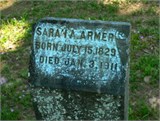
Sarah is buried with her husband and some of her children at the Shiloh Baptist Church, in Prairie View, Waller County, Texas.
ROW80
As a public speaker or teacher I specialize in improvisation. I like to joke on my feet and consider myself to be a bit of a wit. Now as I attempt to transfer my in person energy into the written word, I notice the same tendency. I want to wing it, then do it again if that did not work well. My urge to edit and refine has been absent from this process. I told you I want to be like all of these highly productive and impressive writers in #ROW80 by adding more editing and revision to each piece of poetry I write. I still am not attracted to the revision part of the deal, but am at least thinking more about structure up front.
I have a curiosity about trying to match a piece of poetry with a prose short story about a character (or characters) in my family tree. I am thinking hard about my Confederate family history as it relates to the Civil Rights movement, and our political situation today. I grew up in Pennsylvania but my cousins in Texas were taught to racially discriminate at the same time they were given strict religious rules. I didn’t know how lucky I was to escape early racist brainwashing until I moved to Texas as a 15-year-old. I was never confused by religious bigotry because it was not presented to me, but my classmates seemed very afflicted with some ancient hatred issues I just did not understand. I moved to the Brazos Valley, a place where cotton had been king and the population had once been around 90% enslaved Africans. I now know that this place was close to the homestead my ancestors settled after the Civil War. I am dreaming and obsessing about this time and what happened to my family, so I might as well use this to attempt my first twin set of prose/poetry. I will also use this occasion to debut a first draft!!!! I am doing this in an attempt to follow it with both a prose story and more refined and interesting drafts of this work in progress. Mind you, this is the first time I am using this phrase (WIP) because I never allowed much progress before moving on to another piece. I have no working title..unless it is maybe “Civil”:

DNA a wheel
The pendulum of social equality swings back and forth without fail
Generations carry the scars of hatred inherited without question
Blindly absorbing the sins of the past, each individual has been primed
To live in a time of upheaval and grief, suspecting it has been created by others
Dark secretive layers of cultural denial manage to influence consciousness
Seeping up from beneath the floor supporting our structure is a sticky tar
It reeks of rancid promotions and snake oil promises recorded in history
If we only knew the source of this gunk, this oozing mendacity of pride,
We might confront it and uncover the essence of the buried truth inside
If you, gentle readers, have any revisions you want to send my way, please feel free. You are probably much better at that than I am. Not to worry about my pride as a poet…I can honestly say I have none..because you need some progress to make you proud, and this is my first jaunt into this territory. I plan to start the prose story in the next week, but do not expect that to be published before much ado. Thanks for all the insight into what writers really do. It is extremely helpful.
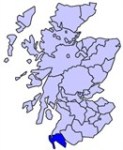
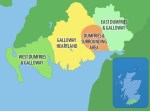
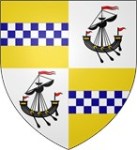
My 21st great-grandfather was the last of the independent Lords of Galloway, in Scotland. He married three or four times and is buried at Dundrennan Abbey in Galloway. He was mentioned in the Magna Carta, which is a big deal in English history. I like his outrageously long name.
Alan MacDonal FitzRoland MacFergus, Constable of Scotland, Lord Galloway (1186 – 1234)
is my 21st great grandfather
Helen Elena McDonald of Worcester Countess Galloway (1207 – 1245)
daughter of Alan MacDonal FitzRoland MacFergus, Constable of Scotland, Lord Galloway
Lady Helen Elena La Zouche Quincy (1222 – 1296)
daughter of Helen Elena McDonald of Worcester Countess Galloway
Eudo LaZouche (1245 – 1279)
son of Lady Helen Elena La Zouche Quincy
Elizabeth La Zouche (1274 – 1297)
daughter of Eudo LaZouche
Nicholas Poyntz (1303 – 1376)
son of Elizabeth La Zouche
Nicholas Poyntz (1355 – 1372)
son of Nicholas Poyntz
Pontius Poyntz (1372 – 1393)
son of Nicholas Poyntz
John Poyntz (1412 – 1447)
son of Pontius Poyntz
William Poyntz (1455 – 1494)
son of John Poyntz
Thomas Poyntz (1480 – 1562)
son of William Poyntz
Lady Susanna Elizabeth Poyntz (1528 – 1613)
daughter of Thomas Poyntz
Elizabeth Saltonstall (1557 – 1621)
daughter of Lady Susanna Elizabeth Poyntz
Henry Wyche (1604 – 1678)
son of Elizabeth Saltonstall
Henry Wyche (1648 – 1714)
son of Henry Wyche
George Wyche (1685 – 1757)
son of Henry Wyche
Peter Wyche (1712 – 1757)
son of George Wyche
Drury Wyche (1741 – 1784)
son of Peter Wyche
Mary Polly Wyche (1774 – 1852)
daughter of Drury Wyche
John Samuel Taylor (1798 – 1873)
son of Mary Polly Wyche
William Ellison Taylor (1839 – 1918)
son of John Samuel Taylor
George Harvey Taylor (1884 – 1941)
son of William Ellison Taylor
Ruby Lee Taylor (1922 – 2008)
daughter of George Harvey Taylor
Pamela Morse
I am the daughter of Ruby Lee Taylor
Alan, lord of Galloway (b. before 1199, d. 1234), magnate, was the eldest son of Roland, lord of Galloway (d. 1200), and Helen de Morville (d. 1217), sister and heir of William de Morville, lord of Lauderdale and Cunningham and royal constable. He had two brothers and two sisters, of whom Thomas (d. 1231) became earl of Atholl in right of his wife, Ada married Walter Bisset of Aboyne, and Dervorguilla married Nicholas de Stuteville of Liddel in Cumbria.
Alan contracted three marriages: to a daughter of Roger de Lacy, constable of Chester; to Margaret (d. before 1228), eldest daughter of David, earl of Huntingdon, in 1209; and, c.1229, to Rose, daughter of Hugh de Lacy, earl of Ulster. The first two marriages produced children, but only daughters attained adulthood. Helen, his daughter by his first marriage, married Roger de Quincy, while Christina (or Christiana) and Dervorguilla [see Balliol, Dervorguilla de], the children of Alan and Margaret, married William de Forz and John de Balliol respectively. Alan had one bastard son, Thomas.
Cross-border landholding and kinship with King John of England made Alan a man of consequence in both realms. His relationship with the king of Scots, based on loose overlordship rather than feudal subordination, allowed freedom of manoeuvre where his actions did not conflict with Scottish interests. Galloway’s military resources and substantial fleet gave added influence; Alan’s aid was courted unsuccessfully by John for his 1210 campaign against the Ulster Lacys, but he agreed to send one thousand men for the abortive Welsh campaign of 1212. A grant of estates in Antrim in 1212 was designed to draw him actively into the defence of Angevin Ulster against the native Irish. Despite such favours from John, when Alexander II entered the civil war in England in 1215, aligning himself with John’s baronial opponents, Alan joined the Scottish king and was his chief lieutenant in the occupation of Cumberland and Westmorland from 1215 to 1217.
From 1225 Alan used the freedom afforded by the loose overlordship of the Scottish crown to interfere in the feud between King Ragnvald of Man and his half-brother, Olaf. His private interest, arising from efforts to secure Antrim with Ragnvald’s support against the threat of a Lacy restoration, coincided at first with Anglo-Scottish policy towards the region and received the tacit support of his Scottish overlord. The prospect of a pro-Scottish client in Man led Alexander II to acquiesce to the marriage in 1226 of Alan’s bastard son, Thomas, to Ragnvald’s daughter, but the marriage provoked revolt against Ragnvald. Despite the support of Galwegian galleys and warriors, Ragnvald was overthrown and slain in 1229 by Olaf. Alan’s ensuing attempts to conquer Man for Thomas destabilized the Hebrides and western highlands, thereby threatening Scottish territorial interests, and in 1230–31 prompted active Norwegian support for Olaf. Joint action by Alan and Alexander averted catastrophe, but Scottish and Galwegian interests had diverged and the 1231 campaign marked the end of further Galwegian involvement in the Manx succession; Alan’s dynastic ambitions had caused an undesirable war with a major foreign power.
Uncertainty over the succession to Galloway shadowed Alan’s later years. His nearest legitimate male heir was Patrick of Atholl [see under Thomas, earl of Atholl], son of his younger brother, Thomas, who had died in 1231, but, although Celtic practice did not debar his bastard son, Thomas, Alan’s closest heirs by feudal law were his three daughters, all married to important Anglo-Scottish noblemen. To King Alexander, the crisis precipitated by Alan’s Manx ventures made partition, and the attendant opportunity to replace the loose overlordship enjoyed by Alan with a more tightly defined relationship, an attractive proposition, for succession by Thomas threatened a revival of Galwegian interests in Man and so of risks to Scottish security. Alan died about 2 February 1234 and was buried in Dundrennan Abbey, where his mutilated tomb effigy survives. Partition of the lordship followed and, despite a rebellion in 1235 in favour of Thomas, was successfully enforced.
OXFO RD DNB
Alan FitzRoland (c. 1175 – 1234) was the last of the MacFergus dynasty of quasi-independent Lords of Galloway. He was also hereditary Constable of Scotland.
He was the son of Roland, or Lochlann, Lord of Galloway and Helen de Morville. His date of birth is uncertain, but he was considered an adult in 1196.
In right of his mother he inherited the de Morville Lordship of Lauderdale. as well as others in that vicinity: West of Blainslie, in Lauderdale, but in the Lordship of Melrose, are the lands of Threepwood, which were granted by Alan, Constable of Scotland, to the monks of Melrose between 1177 and 1204.
In 1212 Alan responded to a summons from King John I of England by sending 1,000 troops to join the war against the Welsh. In this year he also sent one of his daughters to England as a hostage. She died in 1213 in the custody of her maternal uncle. Alan is listed as one of the 16 men who counseled King John regarding the Magna Carta.
Alan, like his forebears, maintained a carefully ambiguous relationship with both the English and Scottish states, acting as a vassal when it suited his purpose and as an independent monarch when he could get away with it. His considerable sea power allowed him to supply fleets and armies to aid the English King John in campaigns both in France and Ireland.
In 1228 he invaded the Isle of Man and fought a sea-war against Norway in support of Reginald, Prince of Man, who was engaged in a fratricidal struggle with his brother Olaf for possession of the island.
Alan died in 1234 and is buried at Dundrennan Abbey in Galloway.
He married three or four times: ?? an unnamed daughter of John, Baron of Pontefract and Constable of Chester, who had died by 1209. They had one daughter:
Female, (d. 1213).
He married Hilda (Helen) de L’Isle (b.abt1174 d.after 11/0/1245) m.1205 Carrick, Ayrshire, Scotland. She was the daughter of Rognvald Sumarlidasson, Lord of the Isles and Fonia of Moray.
Child of Alan of Galloway and Helen de l’Isle:
Helen of Galloway (b.c1208) Carrick, Ayrshire, Scotland, who married Roger de Quincy, 2nd Earl of Winchester.
He remarried Margaret of Huntingdon, daughter of David I of Scotland. By this marriage he had:
Dervorguilla of Galloway, who married John de Balliol, 5th feudal baron of Barnard Castle and founder of Balliol College, Oxford. Their son became King John of Scotland.
Christina of Galloway (d. 1246), who married William de Fortibus, Earl of Albemarle, but had no issue.
Thomas, possibly alive in 1220, but certainly dead by 1234
Alan married his last wife, (3) Rohese de Lacy, in 1229, the daughter of Hugh de Lacy, 1st Earl of Ulster.
Alan also had an illegitimate son, who was also named Thomas.
With Alan’s death his holdings were divided between his three daughters and their husbands. A popular attempt was made within Galloway to establish his illegitimate son, Thomas, as ruler, but this failed, and Galloway’s period as an independent political entity came to an end.
Wikipedia, The Free Encyclopedia @en.wikipedia.org
Additional Royal Descents; “A Line of Descent from Malcolm II, King of Scots, to the Rev. George Burroughs of Danvers, Mass. by Frederick Lewis Weis, Th. D., of Dublin, NH., NEHGR, 1954. Vol. 108, pg 174
ALAN of Galloway, son of ROLAND Lord of Galloway & his wife Helen de Moreville (-[2] Feb 1234, bur Dundraynan). He succeeded his father in 1200 as Lord of Galloway. “Alanus filius Rollandi de Galwythia” donated “partem terre in territorio de Gillebeccokestun…de Widhope” to Melrose abbey, for the souls of “Ricardi de Morevill avi mei et Willemi avunculi mei, Rollandi patris mei et…mea et Helene matris mee”, by undated charter. “Thomas de Colevilla cognomento Scot” donated “quartam partam de Almelidum…Keresban” to Melrose abbey by undated charter witnessed by “…Alano filio Rolandi de Galewai, Fergus filio Uctredi, Edgaro filio Douenad, Dunkano filio Gilbti comite de Carric…”. “Alanus fili Rolandi de Galweia constabularius dni regis Scottorum” donated property “in Ulkelyston” to Kelso monastery, for the souls of “patris mei Rolandi, avi mei Huhtredi”, by charter dated to [1206]. The Annals of Dunstable record that “dominus Galwinæ” died in 1235. The Liber Pluscardensis records the death in [1234] of “Alanus de Galway filius Rotholandi de Galway…qui…fuit constabilarius Scociæ” and his burial “apud Dundranan”. The Chronicle of Lanercost records the death “circa purificacionem beatæ Virginis” [2 Feb] in 1233 of “Alanus dominus Galwydiæ”. On his death Galway was divided between his daughters, but the people of Galway invited Alexander II King of Scotland to become their sole lord but he refused. The king finally defeated the insurgents after Jul 1235.
[m firstly (before [19 Dec 1200/1206]) — de Lacy, daughter of ROGER de Lacy Constable of Chester & his wife Maud de Clare (-[1201/06]). Keith Stringer says that “one of the daughters of Roger de Lacy was evidently Alan´s first wife” and that “the manor of Kippax” was her dowry, quoting a charter, dated to [19 Dec 1200/1206], under which “Alanus filius Rollandi, dominus Galuuaith Scotie constabularius…et heredibus meis” gave quitclaim to “Rogero de Lascy Cestrie constabularius et heredibus suis” for “advocationem ecclesie de Kipeis”.]
m [secondly] — [of the Isles, daughter of REGINALD Lord of the Isles & his wife Fonie —] (-before 1209). Balfour Paul says that Alan Lord of Galloway married first “a lady unknown, said to be a daughter of Reginald Lord of the Isles by whom he had two daughters”. The primary source which confirms her parentage and marriage has not yet been identified.
m [thirdly] (Dundee 1209) MARGARET of Huntingdon, daughter of DAVID of Scotland Earl of Huntingdon & his wife Matilda of Chester ([1194]-[after 6 Jan 1233]). The Chronicle of Melrose records the marriage in 1209 of “Alan FitzRoland” and “the daughter of earl David, the brother of the king of Scotland”. The Annales Londonienses name “Margaretam, Isabellam, Matildam, et Aldam” as the four daughters of “comiti David”, recording the marriage of “la primere fille Davi” and “Aleyn de Gavei”. John of Fordun´s Scotichronicon (Continuator) records the marriage in 1208 “apud Dunde” of “Alanus magnus de Galweyia, filius Rotholandi” and “Margaretam filiam David comitis de Huntingtona”. The primary source which confirms her appearance in Jan 1233 has not been identified. The date is inconsistent with Alan´s subsequent marital history, unless his marriage to Margaret was dissolved.
m [fourthly] (before 30 Mar 1222, annulled for consanguinity [1225/29]) JULIANA, daughter of —. Anderson records that Pope Honorius III wrote to the archbishop of Canterbury and others 30 Mar 1222 informing them that Alan constable of Scotland and his wife were related in a prohibited degree of affinity, and wrote again 28 Feb 1225 reported the hearing before the abbot of Bruern of the marriage of “Alan knight and Juliana”. Anderson states that Alan continued to litigate and that Juliana appeared in Rome before the Pope who “bade the archbishop examine the original acts and decide the case if Alan would not accept the woman as his wife”, and adds that “Juliana seems to have lost the case”.
m [fifthly] ([1228/29]) ROSE de Lacy, daughter of HUGH de Lacy & [his first wife Lesceline de Verdun] (-after 1237). According to Matthew of Paris, the wife of Alan of Galloway “iam defunctus” was the (unnamed) daughter of “Hugonem de Lasey”. The Chronicle of Lanercost records in 1229 that “Alan the lord of Galloway…set out for Ireland and there married the daughter of Hugh de Lacy”. John of Fordun´s Scotichronicon (Continuator) records that “Alanus de Galweia profectus in Hiberniam” married “filiam Hugonis de Lacy” in 1228. If her parentage and marriage is correctly stated in the two sources quoted, the chronology suggests that this daughter must have been born from Hugh´s first marriage, assuming that she was legitimate. She is named “Rose de Lacy” by Keith Stringer, who cites a charter of St Bees which indicates that she was still alive in 1237.
Lord Alan & his [first/second] wife had two children
http://fmg.a c/Projects/MedLands/SCOTTISH%20NOBILITY.htm#HelenGallowaydiedafter21Nov1245
Excert from The Magna Charta Sureties, 1215 by Frederick Lewis Weis
Excert from: Ancestral Roots of Certain American Colonists Who Came to America Before 1700. Author: Weis, Frederick Lewis Date of Publication: 2004
Offord Manor
An inquiry was held in 1199 on behalf of Roland de Galloway, whose wife Ellen was daughter of Richard de Moreville, whether Richard had forfeited for his adherence to ‘the young king’Henry, son of Henry II. Alan, son of Roland and Ellen, was pardoned a debt regarding this inquiry in 1213.
A History of the County of Huntingdon: Volume 2

let your light shine
My friend and neighbor asked me recently about my views on aging and dementia. She asked me if I would want to continue to live if I knew I would become demented like both of parents before me. I told her that not only would I want to live, but am actively taking steps to prepare for a care free and easy loss of memory. I am not even a tiny bit attached to most of the things that I know (or think I know). I can easily do without many of the facts I have collected in life. After all, today we can ask the internet to file all of our important information, freeing us to do more creative work. I embrace all the minutia that is now stored safely in the cloud, and the apps that give us access to it. I don’t need all this in the hard drive of my computer, and I certainly have no use for major data storage in my precious brain’s memory. My parents struggled with memory loss and confusion that made the end of life difficult for them. They had big control issues about being infallible and accurate long after they had the ability to understand what was happening around them. I believe their problems were exacerbated by trying too hard to appear to be competent when it became impossible.
My neighbor says she plans to write a list of facts about herself and hide the list in her house. When she is unable to recognize the facts she said she will know she has lost her mind. The irony in the plan is that the list itself would be lost as the first sign of trouble. I have no such thoughts. I think I will be able to adapt to memory loss because I have planned carefully to shift responsibility to reliable parties I already trust. I have a professional accountant who advises me on tax issues and helps me navigate them intelligently. Most of my investments are handled by my fiduciary who has a proven track record as well as a legal obligation to serve my financial best interests. I have placed my assets in trust to simplify and secure the management of them. We can’t foresee the future, but we can do our best to establish systems that will function well even when we may not be. We need to face the fact that our bodily health and mental skills are not eternal. We too will pass. While I am still able I am investing in the only true wealth, my health. My deposits into the health bank include:
Have you ever considered how you will stay secure if you loose some of your mental agility? Have you taken steps to make sure your own best interests are served if you can no longer make good decisions for yourself? I believe that we can be happy and productive in new creative ways if we embrace rather than struggle against aging. I fully expect to become a prolific poet, and I already don’t care who likes my poetry. I think with the right attitude forgetting can be gloriously liberating.
ROW80
My poetic week was full of images of the deep south and history. I studied ancestors from Alabama who moved to Texas after the Civil War, which conjured up all kinds of images. There are descriptive written accounts of the places and events, especially the battles. The river flood plain where my people settled was deadly with cholera and disease. This may be the reason the father of the family died so young, but there is no evidence. I become very wrapped up in the general as well as the specific information I find about my ancestors. I imagine daily life as well as how the big events must have taken place. After their town became a ghost town my mother’s family loaded up ox carts and moved to Texas. There is a lot of water and low land on their route, and roads were not established everywhere. Elizabeth Langley must have been full of stories by the time she died at age 96. I have no pictures of her, but her image is forming in my imagination. She was no stranger to mosquitos, and she must have had a strong constitution. She is one of these people in my family tree who perfectly represents a certain time in history. She has the makings of a very interesting character in a story. I have decided to follow my fellow writers and make a draft of a story. I am not ready to outline, but for once I plan to draft, edit, edit, and add, rather than finish and publish whatever this will be. It may be a short story, or I might be able to make it rhyme…like Evangeline. I thank you all for showing me that I could use some extra steps to create better written works. I have faith that this will work.
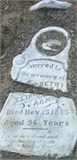
Elizabeth Langley, Texas
Scarlet O’Hara she clearly was not,
Her life was difficult, tragic, and hot
My range of subjects has been narrow but evolving, which is all I expect of my budding poetic voice. I have a new feeling about the poems, which is kind of a documentation of my progress as a writer. The worse they sound now, the more potential there is to see them improve over time. Sometimes I think of truly terrible rhymes, and hope to start using them instead of the trite kind of thing I do at this moment. I play around with bad rhymes in the pool, and later when I am dry they have gone to the place where bad rhymes hide. I need to work on this. I plan to write the daily poetry to keep the practice going while I write scenes or descriptions of Elizabeth Langley’s life. It was so long I may need to pick a short period to cover in the story. I might choose reaction to the end of the Civil War, which was a big deal for all involved.
I believe the best thing I have discovered through this challenge is poetry written by others. I listen and read poetry daily now, and think that alone is a wonderful upgrade to my life. Some work makes me laugh, and some brings out curiosity. I am thrilled to see so many different forms used to express poetic thoughts. It is liberating to find so many free style as well as highly formatted ways to go about painting with words. There is no right or wrong, but some have more impact than others. This week the UA Poetry Center will offer two readings I plan to attend, one in house and another next Saturday at the Tucson Botanical Gardens. The Valentine reading at the gardens is on birds. We will receive a packet of poems about birds, and they will be read and discussed. They have designed the perfect valentine for me!!!
I have the Confederate army records of my 2nd great-grandfather, William Ellison Taylor. Both he and his father in law applied and received Confederate pensions in Texas late in life. They came from the vicinity of what is now Selma, Alabama. The new movie about Selma has intrigued me although I have not seen it. I was alive to witness those events, and my mother’s family had a long history in Selma about which I recently learned. In fact, my 3rd great-grandmother owned a large tract of land in Old Town, Dallas, also known as Cahawba. She moved there from Georgia with her husband when it was the county seat, and maybe when it was still the capital of Alabama. It was a happening river port with a large warehouse. The area is now an archeological park with ongoing restoration projects. Elizabeth lived through the Civil War in Alabama, then moved to Texas with her son and extended family.

Old Town

Cahawba
Elizabeth Langley (1790 – 1885)
is my 3rd great grandmother
Thomas Armer (1825 – 1900)
son of Elizabeth Langley
Lucinda Jane Armer (1847 – 1939)
daughter of Thomas Armer
George Harvey Taylor (1884 – 1941)
son of Lucinda Jane Armer
Ruby Lee Taylor (1922 – 2008)
daughter of George Harvey Taylor
Pamela Morse
I am the daughter of Ruby Lee Taylor
Elizabeth was born in South Carolina and died in Texas. Her husband died before the Civil War. She obtained a land patent from the BLM. She sheltered her family there during the war.

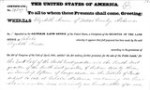
When the Armer family arrived in Waller, Texas they bought land with gold, then donated some of it to found the Shiloh Baptist Church, where Elizabeth is buried. I always wonder why they had gold since the men in the family were working in the service of the Confederacy, for Confederate money. When it became worthless the family must have had some tricks up the sleeves, or been able to sell the Alabama land for gold. They executed the move in oxcarts. They went to an area known for cotton farming, but I don’t think they grew cotton. In fact, the records do not reflect that the Armers owned slaves before the war. They were part of Confederate society, but either too poor or too religious to own slaves. In Texas they were preachers and subsistence farmers.
Elizabeth Langley, Texas
The parallel between what happened during Elizabeth’s life and the Civil Rights march in 1965 is striking. This story comes from the informative Facebook page of Cahawba:
In Gen’l James Wilson’s autobiography, he wrote that after meeting with Gen’l Forrest at Cahawba (after the Battle of Selma), they parted ways, and he returned to Selma then crossed the Alabama River and headed his Federal troops toward Montgomery. Here’s what he had to say about the enslaved African Americans that started to follow him: ” a great number of fugitives from the surrounding country flocked into the town and our march to the eastward had hardly begun when it became apparent that new crowds were following us, which made vigorous measures necessary for getting rid of them. The rear guard could keep them behind, but could not prevent them from taking the “ROAD TO FREEDOM.” Wow! The goosebumps started forming when I realized that this ROAD TO FREEDOM was exactly the same route that marchers for voting rights took exactly 100 years later! I can’t think of a better example of Selma’s tourism tag line, “Civil War to Civil Rights.”
FYI. Gen’l Wilson eventually organized, armed and equipped the able-bodied men and found them valuable additions to his force.
This is an amazing story and not a coincidence. I had not planned to go to Alabama again in my life, but now that they have put so much effort into uncovering the history of my 3rd great-grandmother’s lifetime in this place, I might need to visit. They specialize in birding, which is pretty cool. Visitors can participate in guided bird outings. Civil War to Civil Rights is a very interesting subject, still in progress.


My study of poetry and the lives of poets has enlightened as well as encouraged me to continue my poetic practice. I also loved hearing the news about the secret manuscript discovered that was written by Harper Lee, famous reclusive author. The story of her one big hit, To Kill a Mockingbird, followed by a life out of the public eye entirely is compelling. She never spoke to press people, but her sister did. Now that her sister has died this old copy of a typewritten story was found in the safe deposit box attached to the original of the published novel. It is super romantic because her fans have hoped to make her write again, but she had done it even before they knew her work. Truly a blast from the past for all involved, the publication with cause all manner of excitement. It has captured my imagination about finding the writing of my ancestors in the safe deposit box of history.
I found a poem about writing that has a deeply funny sense of humor. Anne Bradstreet, my 9th great-grandmother, wrote a poem to her published book in which she describes the work as a child of hers. Although her work is usually pretty serious, this one strikes me as not only funny, but also prescient. The book of which she speaks made her a famous person in the history of poetry, but she is both humble and comical in her description of the work:
Thou ill-formed offspring of my feeble brain,
Who after birth did’st by my side remain,
Till snatcht from thence by friends, less wise than true,
Who thee abroad exposed to public view,
Made thee in rags, halting to th’ press to trudge,
Where errors were not lessened (all may judge).
At thy return my blushing was not small,
My rambling brat (in print) should mother call.
I cast thee by as one unfit for light,
The visage was so irksome in my sight,
Yet being mine own, at length affection would
Thy blemishes amend, if so I could.
I washed thy face, but more defects I saw,
And rubbing off a spot, still made a flaw.
I stretcht thy joints to make thee even feet,
Yet still thou run’st more hobbling than is meet.
In better dress to trim thee was my mind,
But nought save home-spun cloth, i’ th’ house I find.
In this array, ‘mongst vulgars may’st thou roam.
In critic’s hands, beware thou dost not come,
And take thy way where yet thou art not known.
If for thy father askt, say, thou hadst none;
And for thy mother, she alas is poor,
Which caused her thus to send thee out of door.

Anne Bradstreet’s poems
I really get the way she edits and finds more fault. She calls her book a bastard and herself poverty stricken, which I think she knows is a joke. She warns it to stay away from critics, then lets it go. By animating the book to human stature she paints a picture of an underprivileged child, some awkward and unpolished brat. At the publication (return) her blushing was not small. She was proud to be published, and yet as a Pilgrim could take no personal credit for the art. This has become my favorite work by Mistress Bradstreet because I clearly relate to her sense of comedy. In 1678 some of her work was published posthumously. She was, in a certain sense, a feminist. Now we learn she was also something of a comic, concerned about the cosmic.
Birth: 1612 Death: Sep. 16, 1672 Poet.
Born Anne Dudley to nonconformist parents Thomas Dudley and Dorothy Yorke Dudley in Northampton, England. Her father was the steward for the Earl of Lincoln and afforded his daughter an unusually complete education. About 1620 she married Simon Bradstreet, her father’s assistant. On March 29, 1630, Bradstreet and her family sailed for the New World. After several years, they finally settled on a farm in North Andover, Massachusetts in 1644. Simon Bradstreet became a judge, royal councilor, and twice a governor of the colony. Anne Bradstreet became mother to eight children and wrote only privately. She was frequently ill and apparently developed a vaguely morbid mind set and was continually distressed by the culturally ingrained condescension toward women. Her first public work may well have been the epitaph she penned for her mother in 1643. Four years later, her brother-in-law carried a collection of her poems with him to England where he had them published. They appeared as ‘The Tenth Muse Lately Sprung Up in America, By a Gentlewoman of Those Parts’ in the New World in 1650. While it did sell in England, the volume was not well received in Massachusetts. Although she continued to write for herself and her family, no more of her work was published in her lifetime. She was purportedly buried in the Old Burying Point in Salem, Massachusetts beside her husband, though other locations for her grave have also been proposed. In 1678 her ‘Several Poems Compiled with Great Variety of Wit and Learning’ was posthumously published followed by ‘The Works of Anne Bradstreet in Prose and Verse.’ She is now considered the earliest of American poets and among the finest of her age. (bio by: Iola)
Now that Anne is a little bit funny she is a better poetry muse to me. Dorothy Parker, as my muse, as nixed the whole #Trwurse and #Twessings concept. She did wonderful intricate play on words before twitter and is not at all amused by the substitution of tw to indicate twitter being witty. She is right, of course. Nursing mothers are already occupying the #Twursing hashtag, as is the PGA. Back to the word board, sans #tw. I still like the blessings and curses for twitter, but am now inclined to call them just that. I have also realized that February is the perfect time to write short and funny rhymes..on Valentines. I feel okay about breaking out of my impersonal poetic rut because I have written a food poem and one Valentine that are in new territory. I have not said anything very funny yet, but think I will sometime soon. I aspire to write jokes that would be understood hundreds of years into the future, in case they are discovered, but still be funny now. Contrived twitter words will not be funny enough to last hundreds of years, but will seem like Olde English does to us now. Best to go for eternal when crafting a joke or a pun….
ROW80

Joan Fitzalan
My 18th paternal great-grandmother is also the ancestor of my famous poet, Anne Dudley Bradstreet. Her father was beheaded at the Tower of London by Richard II. I wonder if I have a record number of ancestors beheaded at the Tower. When Henry IV came to the throne Joan and her sisters were restored to wealth and power. Her sister Elizabeth is my mother’s ancestor, so this cozy castle was once home to both my bloodlines:

Arundel Castle
Joan Fitzalan (1360 – 1435)
is my 18th great grandmother
Joan Elizabeth Beauchamp (1396 – 1430)
daughter of Joan Fitzalan
Elizabeth Butler (1420 – 1473)
daughter of Joan Elizabeth Beauchamp
Isabel Talbot (1444 – 1531)
daughter of Elizabeth Butler
Sir Richard Ashton (1460 – 1549)
son of Isabel Talbot
Sir Christopher Ashton (1493 – 1519)
son of Sir Richard Ashton
Lady Elizabeth Ashton (1524 – 1588)
daughter of Sir Christopher Ashton
Capt Roger Dudley (1535 – 1585)
son of Lady Elizabeth Ashton
Gov Thomas Dudley (1576 – 1653)
son of Capt Roger Dudley
Anne Dudley (1612 – 1672)
daughter of Gov Thomas Dudley
John Bradstreet (1652 – 1718)
son of Anne Dudley
Mercy Bradstreet (1689 – 1725)
daughter of John Bradstreet
Caleb Hazen (1720 – 1777)
son of Mercy Bradstreet
Mercy Hazen (1747 – 1819)
daughter of Caleb Hazen
Martha Mead (1784 – 1860)
daughter of Mercy Hazen
Abner Morse (1808 – 1838)
son of Martha Mead
Daniel Rowland Morse (1838 – 1910)
son of Abner Morse
Jason A Morse (1862 – 1932)
son of Daniel Rowland Morse
Ernest Abner Morse (1890 – 1965)
son of Jason A Morse
Richard Arden Morse (1920 – 2004)
son of Ernest Abner Morse
Pamela Morse
I am the daughter of Richard Arden Morse
Joan FitzAlan, Baroness Bergavenny (1375 – 14 November 1435) was an English noblewoman, and the wife of William de Beauchamp, 1st Baron Bergavenny of the Welsh Marches.
Family and Lineage
Lady Joan FitzAlan was born in 1375, at Arundel Castle, Sussex, England, one of the seven children of Richard Fitzalan, 11th Earl of Arundel, Earl of Surrey, and his first wife Elizabeth de Bohun. Her only surviving brother was Thomas Fitzalan, 12th Earl of Arundel, of whom Joan was his co-heiress. She had an older sister Lady Elizabeth FitzAlan who married as her second husband Thomas Mowbray, 1st Duke of Norfolk. Her paternal grandparents were Richard Fitzalan, 10th Earl of Arundel and Eleanor of Lancaster, and her maternal grandparents were William de Bohun, 1st Earl of Northampton and Elizabeth de Badlesmere. On 3 April 1385, her mother died. Joan was about ten years old. Her father married secondly, Philippa Mortimer on 15 August 1390, by whom he had a son, John Fitzalan, who was born in 1394. John died sometime after 1397.
On 21 September 1397, Joan’s father, the Earl of Arundel, who was also one of the Lords Appellant, was beheaded on Tower Hill, London, on charges of high treason against King Richard II of England. The Earl had always enjoyed much popularity with the citizens of London. His titles and estates were forfeited to the Crown.
In October 1400, the new king Henry IV who had ascended the throne following Richard’s deposition in 1399, restored the titles and estates to Thomas Fitzalan, Joan’s brother. He became the 12th Earl of Arundel and Earl of Surrey. Although he married Beatrice, an illegitimate daughter of King John I of Portugal and Inez Perez Esteves, he died childless on 13 October 1415. The Earldom and castle of Arundel passed to a cousin John Fitzalan, 13th Earl of Arundel, the rest of his inheritance was divided among Joan and her two surviving sisters, Elizabeth and Margaret.
Marriage and Issue
On 23 July 1392, Joan was married to William de Beauchamp, 1st Baron Bergavenny (c.1344- 8 May 1411) the son of Thomas de Beauchamp, 11th Earl of Warwick and Katherine Mortimer. He was more than thirty years Joan’s senior.
The marriage produced a son and a daughter:
· Richard de Beauchamp, 1st Earl of Worcester, 2nd Baron Bergavenny (born before 1397- 1422), married Isabel le Despenser, daughter of Thomas le Despenser, 1st Earl of Gloucester and Constance of York, by whom he had one daughter Elizabeth de Beauchamp, Lady of Abergavenny.
· Joan de Beauchamp (1396- 3 August 1430), married on 28 August 1413 James Butler, 4th Earl of Ormond, son of James Butler, 3rd Earl of Ormond and Anne Welles, by whom she had five children, including Thomas Butler, 7th Earl of Ormond. Anne Boleyn and Mary Boleyn were notable descendants.
Joan FitzAlan died on 14 November 1435, at the age of sixty. She was buried in Black Friars, Hereford.
References
Charles Cawley,Medieval Lands, Earls of Arundel 1289–1580 (Fitzalan).
Thomas B. Costain,The Last Plantagenets, pages 196–201
thePeerage.com
Charles Cawley,Medieval Lands, Earls of Arundel 1289- 1580 (Fitzalan)
 mermaidcamp