mermaidcamp
Keeping current in wellness, in and out of the water
You can scroll the shelf using ← and → keys
You can scroll the shelf using ← and → keys
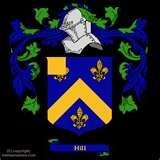
Hill coat of arms
My tenth great-grandfather arrived early in Massachusetts, and settled in Malden to be a miller and an inn keeper.
Abraham HILL arrived in Malden, MA in the 1630’s, among the first settlers there. He first received Lot #59, and then bought more land on the south side of Salem St. Later, when some 5 acre lots were divided up, he received 2 1/2 acres.
According to the History of Malden, Robert LONGE, the father of Abraham’s wife, Sarah, was also one of the first in Malden and received 5 acres. Daniel SHEPHERDSON, whose ggranddaughter,Sarah PARKER m. Moses’ grandson, Moses HILL, was also a pioneer in Malden.
Thomas CALL, the other grandfather of Joanna CALL, was a tenant of the SKINNERS. The house stood at the corner of Cross and Walnut Sts.
The only other mention of Abraham in the Malden book is that he was one of nine signers of a petition asking for a four mile square of land called Pennycooke to be an addition to the town.
Abraham Hill, the first American HILL ancestor of this branch of the family, was born in 1615, and was an inhabitant of Charlcstown, Massachusetts, in 1636. He kept a mill for John Coitmore, and was the owner of five lots of land in Charlestown and the neighborhood. He was admitted to the church in 1659, and his wife,’ Sarah Long, daughter of Robert Long, born in England in 1617, was admitted to the church in 1644. Abraham and Sarah (Long) Hill were married in 1639, and had eight children : Ruth, baptized in 1640, married William Augur; Isaac. 1641; Abraham. 164.1: Zachary, whose sketch follows; Sarah, 1647; Sarah, born and died in 1649; Mary, 1052 : Jacob, March, 1656-57. Abraham Hill died February 13, 1669-70, and the inventory of his estate amounted to six hundred and thirty-three pounds.
is my 10th great grandfather
daughter of Abraham Hill
son of Ruth Hill
daughter of Abraham Eager
daughter of Lydia Eager
Joseph Morse III (1752 – 1835)
son of Mary Thomas
John Henry Morse (1775 – 1864)
son of Joseph Morse III
son of John Henry Morse
Daniel Rowland Morse (1838 – 1910)
son of Abner Morse
son of Daniel Rowland Morse
Ernest Abner Morse (1890 – 1965)
son of Jason A Morse
Richard Arden Morse (1920 – 2004)
son of Ernest Abner Morse
I am the daughter of Richard Arden Morse

My 9th great-grandmother was a published poet. She was born in England and died in Massachusetts. Much is known about her because of her famous father and husband, but for a Pilgrim she was a feminist. Her poems were about cosmology and the elements. She was an intellectual in her own right. This is a good account from http://www.famouspoetsandpoems.com:
Anne Bradstreet
Anne Bradstreet was born in 1612 to a nonconformist former soldier of Queen Elizabeth, Thomas Dudley, who managed the affairs of the Earl of Lincoln. In 1630 he sailed with his family for America with the Massachusetts Bay Company. Also sailing was his associate and son-in-law, Simon Bradstreet. At 25, he had married Anne Dudley, 16, his childhood sweetheart. Anne had been well tutored in literature and history in Greek, Latin, French, Hebrew, as well as English.The voyage on the “Arbella” with John Winthrop took three months and was quite difficult, with several people dying from the experience. Life was rough and cold, quite a change from the beautiful estate with its well-stocked library where Anne spent many hours. As Anne tells her children in her memoirs, “I found a new world and new manners at which my heart rose [up in protest.]”a. However, she did decide to join the church at Boston. As White writes, “instead of looking outward and writing her observations on this unfamiliar scene with its rough and fearsome aspects, she let her homesick imagination turn inward, marshalled the images from her store of learning and dressed them in careful homespun garments.”Historically, Anne’s identity is primarily linked to her prominent father and husband, both governors of Massachusetts who left portraits and numerous records. Though she appreciated their love and protection, “any woman who sought to use her wit, charm, or intelligence in the community at large found herself ridiculed, banished, or executed by the Colony’s powerful group of male leaders.”Her domain was to be domestic, separated from the linked affairs of church and state, even “deriving her ideas of God from the contemplations of her husband’s excellencies,” according to one document.This situation was surely made painfully clear to her in the fate of her friend Anne Hutchinson, also intelligent, educated, of a prosperous family and deeply religious. The mother of 14 children and a dynamic speaker, Hutchinson held prayer meetings where women debated religious and ethical ideas. Her belief that the Holy Spirit dwells within a justified person and so is not based on the good works necessary for admission to the church was considered heretical; she was labelled a Jezebel and banished, eventually slain in an Indian attack in New York. No wonder Bradstreet was not anxious to publish her poetry and especially kept her more personal works private.Bradstreet wrote epitaphs for both her mother and father which not only show her love for them but shows them as models of male and female behavior in the Puritan culture.An Epitaph on my dear and ever honoured mother, Mrs. Dorothy Dudley, Who deceased December 27, 1643, and of her age, 61Here lies/ A worthy matron of unspotted life,/ A loving mother and obedient wife,/ A friendly neighbor, pitiful to poor,/ Whom oft she fed, and clothed with her store;/ To servants wisely aweful, but yet kind,/ And as they did, so they reward did find:/ A true instructor of her family,/ The which she ordered with dexterity,/ The public meetings ever did frequent,/ And in her closest constant hours she spent;/ Religious in all her words and ways,/ Preparing still for death, till end of days:/ Of all her children, children lived to see,/ Then dying, left a blessed memory.Compare this with the epitaph she wrote for her father:Within this tomb a patriot lies/ That was both pious, just and wise,/ To truth a shield, to right a wall,/ To sectaries a whip and maul,/ A magazine of history,/ A prizer of good company/ In manners pleasant and severe/ The good him loved, the bad did fear,/ And when his time with years was spent/ In some rejoiced, more did lament./ 1653, age 77There is little evidence about Anne’s life in Massachusetts beyond that given in her poetry–no portrait, no grave marker (though there is a house in Ipswich, MA). She and her family moved several times, always to more remote frontier areas where Simon could accumulate more property and political power. They would have been quite vulnerable to Indian attack there; families of powerful Puritans were often singled out for kidnapping and ransom. Her poems tell us that she loved her husband deeply and missed him greatly when he left frequently on colony business to England and other settlements (he was a competent administrator and eventually governor). However, her feelings about him, as well as about her Puritan faith and her position as a woman in the Puritan community, seem complex and perhaps mixed. They had 8 children within about 10 years, all of whom survived childhood. She was frequently ill and anticipated dying, especially in childbirth, but she lived to be 60 years old.Anne seems to have written poetry primarily for herself, her family, and her friends, many of whom were very well educated. Her early, more imitative poetry, taken to England by her brother-in-law (possibly without her permission), appeared as The Tenth Muse Lately Sprung Up in America in 1650 when she was 38 and sold well in England. Her later works, not published in her lifetime although shared with friends and family, were more private and personal–and far more original– than those published in The Tenth Muse. Her love poetry, of course, falls in this group which in style and subject matter was unique for her time, strikingly different from the poetry written by male contemporaries, even those in Massachusetts such as Edward Taylor and Michael Wigglesworth.Although she may have seemed to some a strange aberration of womanhood at the time, she evidently took herself very seriously as an intellectual and a poet. She read widely in history, science, and literature, especially the works of Guillame du Bartas, studying her craft and gradually developing a confident poetic voice. Her “apologies” were very likely more a ironic than sincere, responding to those Puritans who felt women should be silent, modest, living in the private rather than the public sphere. She could be humorous with her “feminist” views, as in a poem on Queen Elizabeth I:Now say, have women worth, or have they noneOr had they some, but with our Queen is’t gone?Nay, masculines, you have taxed us long;But she, though dead, will vindicate our wrong.Let such as say our sex is void of reason,Know ’tis a slander now, but once was treason.One must remember that she was a Puritan, although she often doubted, questioning the power of the male hierarchy, even questioning God (or the harsh Puritan concept of a judgmental God). Her love of nature and the physical world, as well as the spiritual, often caused creative conflict in her poetry. Though she finds great hope in the future promises of religion, she also finds great pleasures in the realities of the present, especially of her family, her home and nature (though she realized that perhaps she should not, according to the Puritan perspective).Although few other American women were to publish poetry for the next 200 years, her poetry was generally ignored until “rediscovered” by feminists in the 20th century. These critics have found many significant artistic qualities in her work.
Anne Dudley (1612 – 1672)
is my 9th great grandmother
John Bradstreet (1652 – 1718)
son of Anne Dudley
Mercy Bradstreet (1689 – 1725)
daughter of John Bradstreet
Caleb Hazen (1720 – 1777)
son of Mercy Bradstreet
Mercy Hazen (1747 – 1819)
daughter of Caleb Hazen
Martha Mead (1784 – 1860)
daughter of Mercy Hazen
Abner Morse (1808 – 1838)
son of Martha Mead
Daniel Rowland Morse (1838 – 1910)
son of Abner Morse
Jason A Morse (1862 – 1932)
son of Daniel Rowland Morse
Ernest Abner Morse (1890 – 1965)
son of Jason A Morse
Richard Arden Morse (1920 – 2004)
son of Ernest Abner Morse
Pamela Morse
I am the daughter of Richard Arden Morse
Here is an example her work:
Part of the poem “Contemplations” said to be the finest of Anne Dudley Bradstreet’s poems:
“Sometimes now past in the autumnal tide,
When Phoebus wanted but hour to bed,
The trees all richly clad, yet void of pride,
Were gilded O’er by his rich golden head.
Their leaves and fruits seemed painted, but was true
of green, of red, of yellow, mixed hue,
Rapt were my senses at this delectable view
I wist not what to wish, yet sure, thought I
If so much excellence abide below,
How excellent is He that dwells on high,
Whose power and beauty by His works we know,
Sure He is goodness, wisdom, glory, light,
That hath this underworld so rightly sight,
More Heaven than Earth was her, no winter & no night.”
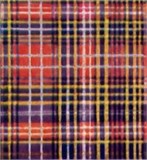
Clan Ogilvy tartan
Sir Walter was a sheriff who died in a battle. This was more or less natural life in Scotland in the middle ages. They had a very bellicose existence.
SIR WALTER OGILVY OF AUCHTERHOUSE, Knight, Sheriff of Angus. He is designed ‘Walter of Ogylwy miles’ in a charter by Thomas Sybald of Moneythin to Andrew Petcary of the lands of Monethin about 1368. On 24 October 1385 he had a grant from KingRobert II. of an annualrent out of the lands of Kyngaltny.
He was Sheriff of Angus before 1380. Douglas and Crawford state that he obtained the office by his marriage with Isabel Ramsay, daughter and heiress of Sir Malcolm Ramsay, Lord of Auchterhouse, but give no authority for their statement, and some doubt is cast upon it by a confirmation by King James III., 18 February 1482-3, of a charter by the late Alexander of Ogilvy, Sheriff of Forfar, of the lands of Balkery to his sister Matilda of Ramsay, relict of William of Fenton: the date of the original charter is therein stated to be at Auchterhouse, 21 August 1488, which is impossible, and is most probably a mistranscription of 1388, one of the witnesses being Sir David Lindesay of Glenesk, who was created Earl of Crawford in 1398.
Sir Walter Ogilvy’s mother’s name is unknown. Sir Walter of Lichtoun, who was killed along with him, is called his uterine brother. He was killed at the battle of Glenbrierachan or Glasklune in 1392 repelling an inroad of Highlandmen, and is celebrated by the chronicler Wyntoun as ‘stout and manfull, bauld and wycht,’ and as ‘Godlike, wis, and wertuous.
Sir Walter of Auchterhouse Ogilvy (1347 – 1391)
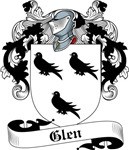
Glen Coat of Arms
My 20th great grandfather married the illegitimate daughter of Robert the Bruce, Margaret. His legitimate daughter Marjorie is also my ancestor. This is the kind of thing that gets the branches of your tree tangled. I wonder if he really accompanied the heart of Robert the Bruce to the holy land. What a totally bizarre mission. There is some confusion, but we know a lot, considering that he was born in 1303.
Robert, son of John de le Glen, married Margaret, illegitimate daughter of Robert Bruce Robert de Glen and ” Margaret Bruce the King’s sister,” his spouse, had a grant from David II., undated, of Nether Pitedye, Kinghorn, Fife (adjoining Balmuto) Robertson notes three other charters from David to this Robert de Glen, of the lands of Glasgow Forest, thanedom of Kintore, Aberdeen. Wood gives Margaret as legitimate, and says that she married, secondly, William, Earl of Sutherland. The latter did marry as his second wife, Margaret Bruce; but it is impossible that she was the widow of Glen, and an authority points out that the arms quartered by Glen, and attributed to the co-heiress of Abernethy, were not the Abernethy arms, but those of Scotland with the Scottish mark of illegitimacy, which agrees with a tradition preserved in several branches of the family, and is conclusive. Another tradition, traceable for four centuries, insists that Robert de Glen was one of those who accompanied the heart of Bruce to the Holy Land, and the Linlithgow line used two crests, one a martlet; the other an arm, the hand grasping a heart, in commemoration of that event. Moreover, the Glens of Bar possessed the sword of Bruce, which a descendant carried to Ireland, in 1606, where it was seen a few years since, the inscription on the blade leaving no doubt as to its original ownership.
Robert Glen (1303 – 1345)
is my 20th great grandfather
John Glen (1349 – 1419)
son of Robert Glen
Isabel Glen (1380 – 1421)
daughter of John Glen
Isabel Ogilvie (1406 – 1484)
daughter of Isabel Glen
Elizabeth Kennedy (1434 – 1475)
daughter of Isabel Ogilvie
Isabella Vaus (1451 – 1510)
daughter of Elizabeth Kennedy
Marion Accarson (1478 – 1538)
daughter of Isabella Vaus
Catherine Gordon (1497 – 1537)
daughter of Marion Accarson
Lady Elizabeth Ashton (1524 – 1588)
daughter of CATHERINE GORDON
Capt Roger Dudley (1535 – 1585)
son of Lady Elizabeth Ashton
Gov Thomas Dudley (1576 – 1653)
son of Capt Roger Dudley
Anne Dudley (1612 – 1672)
daughter of Gov Thomas Dudley
John Bradstreet (1652 – 1718)
son of Anne Dudley
Mercy Bradstreet (1689 – 1725)
daughter of John Bradstreet
Caleb Hazen (1720 – 1777)
son of Mercy Bradstreet
Mercy Hazen (1747 – 1819)
daughter of Caleb Hazen
Martha Mead (1784 – 1860)
daughter of Mercy Hazen
Abner Morse (1808 – 1838)
son of Martha Mead
Daniel Rowland Morse (1838 – 1910)
son of Abner Morse
Jason A Morse (1862 – 1932)
son of Daniel Rowland Morse
Ernest Abner Morse (1890 – 1965)
son of Jason A Morse
Richard Arden Morse (1920 – 2004)
son of Ernest Abner Morse
Pamela Morse
I am the daughter of Richard Arden Morse

Anne Devereux
Anne’s father Walter was a big Yorkist knight in the War of the Roses. She married a knight who was mixed up in this royal Lancaster/York mess as well. Her husband, William Herbert, was lord of a giant castle, Raglan. She had nice digs in Wales at this castle while the Brits were embroiled in their Rose thing. I am still having trouble sorting out the royal roses and why the people of Wales would care, but they got into it too.
Anne Devereux is the daughter of Sir Walter Devereux and Elizabeth Merbury. 2 She married William Herbert, 1st Earl of Pembroke, son of Sir William ap Thomas. Her married name became Herbert.
Children of Anne Devereux and William Herbert , 1st Earl of Pembroke
Lady Catherine Herbert + 3 d. b 8 May 1504
Lady Maud Herbert + 1 b. 1448, d. a 1485
Citations
[1] Richard Glanville-Brown, online , Richard Glanville-Brown (RR 2, Milton, Ontario, Canada), downloaded 17 August 2005.
[2] Tim Boyle, “re: Boyle Family,” e-mail message to Darryl Roger Lundy, 16 September 2006. Hereinafter cited as “re: Boyle Family.”
[3] G.E. Cokayne; with Vicary Gibbs, H.A. Doubleday, Geoffrey H. White, Duncan Warrand and Lord Howard de Walden, editors, The Complete Peerage of England, Scotland, Ireland, Great Britain and the United Kingdom, Extant, Extinct or Dormant, new ed., 13 volumes in 14 (1910-1959; reprint in 6 volumes, Gloucester, U.K.: Alan Sutton Publishing, 2000), volume VII, page 167. Hereinafter cited as The Complete Peerage.

Coat of Arms
Although I love this family from Ireland, alas, Roger has helped me see that the last reliable information in this tree belongs to Mary Wright of Somerset, PA, so this is NOT my ancestor. I am leaving the post for those seeking John and what I have found about him..but I have to kiss him goodbye.
John McGalliard was a teacher who was trained as a minister in Ireland. He settled in New Jersey about 1750, and survived for 17 years in the new world. His son was a tailor who took off for Ohio and became a postmaster. Ohio was extreme wilderness at the time. These Irish came to America long before the potato famine to seek a new adventure in New Jersey. What inspired them we will never know.
John, Sr. McGalliard (1710 – 1767)

grave of Elizabeth Henchman
Elizabeth Henchman has a birthplace on file of Plymouth, MA. I doubt this is true, since in 1612 the Mayflower had not yet landed. She came from England with her parents, I believe. She married my 10th great grandfather in Plymouth in 1634. Her second husband, Richard Hildreth, was prominent in Cambridge, MA. They married in Cambridge in 1645. Her grave can still be located in Malden, MA.
The origin of the name is really from being a royal henchmen in history:
ENGLISH ORIGINS
The origin, genealogy, history, and traditions of the Henchman, Hensman, Hinchman, and Hincksman families are known to many family members today, because of the research and dedication of Robert Hinchman, Jr. (1921-1996), of Dallas, Texas, the founder and first president of the Hinchman Heritage Society. It is from this beginning in England that we may someday find connections to The Hinchman Family in America. The following two paragraphs were written by Robert for the October 1992 Hinchman Heritage Week in England.
“Legend has it that Thomas Crosborough of Magna Doddington, Northamptonshire, saved the life of King Henry VII during a hunt. Upon being rescued from the tusks of a wild boar the King said to him: “Truly, thou art my veritable henchman.” Thomas thereupon, changed his name to Henchman, and thus, the family began. His great grandson, Thomas, was apprenticed at the age of 12 to William Cokayne, Master of the Skinners’ Guild, and subsequently became a prominent merchant and Freeman of the City of London during the latter part of the reign of Elizabeth I. Thomas was the father of Humfry who was instrumental in aiding Charles II escape to France during the English Civil War. Thus, two Henchmans have helped save the lives of two English kings.”
“The scions of Thomas Crosborough Henchman are the progenitors of the Henchman/Hinchman and Hensman Families of today. The variations in spellings began to stabilize during the reign of James I and by the time of the restoration of Charles II in 1660, the orthography had become almost set .. but as a Hinchman, you well know that confusion still exists. The family began its migration to New England in 1637, to Maryland in 1664, and to Australia in the 1860’s. And, of course, English members continued down to this day. Our generation, wherever we live, are descendants of Thomas Crosborough Henchman, his sons and grandsons. It is an adventure for each of us to discover our particular origins.”
Elizabeth Henchman (1612 – 1693)
is my 10th great grandmother
Mercy Vaughn (1630 – 1675)
daughter of Elizabeth Henchman
Sarah Carr (1682 – 1765)
daughter of Mercy Vaughn
John Hammett (1705 – 1752)
son of Sarah Carr
MARGARET HAMMETT (1721 – 1753)
daughter of John Hammett
Benjamin Sweet (1722 – 1789)
son of MARGARET HAMMETT
Paul Sweet (1762 – 1836)
son of Benjamin Sweet
Valentine Sweet (1791 – 1858)
son of Paul Sweet
Sarah LaVina Sweet (1840 – 1923)
daughter of Valentine Sweet
Jason A Morse (1862 – 1932)
son of Sarah LaVina Sweet
Ernest Abner Morse (1890 – 1965)
son of Jason A Morse
Richard Arden Morse (1920 – 2004)
son of Ernest Abner Morse
Pamela Morse
I am the daughter of Richard Arden Morse
This month many writers are writing a poem a day in NaPoWriMo..the poetry challenge. I am accomplished in a few expressive ways, but I have not visited my poet for years. I was a prolific song writer as a teenager, and wrote poetry every day of some kind. I am a language fan, loving words because they sound funny or because they have obscure specific meanings. Being poetic, or even doing rhymes as improvisational humor, sharpens the wit, grows the vocabulary and enhances connections and metaphoric images.
When I was young I heard my father recite the Cremation of Sam McGee by Robert W Service. He knew it by heart. After a couple of drinks he liked to sing, dance or recite that poem. It was always entertaining. He was a research scientist by profession, but my parents loved music and dance more than anything. We had a player piano which was the scene of many sing a long parties. What was truly admirable about my parents was their artistry. They had regular suburban lives, but my dad was an accomplished musician, and my mother designed and executed both landscape environments and fashion with amazing professionalism. My mother was a prize-winning floral arranger, and avid flower show horticulturist.
I was encouraged , and in some cases forced, to practice art. Piano was a mandatory 30 minutes every day of my life, and a legal pad sheet of cursive handwriting had to be inspected by my father each night. I eventually realized I could recycle some of the handwriting, but there was no faking the piano. My guitar and voice lessons came with mandatory practice sessions when I was in high school. I learned the power of practice at a very young age. Discipline is never natural to kids and maybe my parents overdid the whole rigidity thing. Today, however, I thank Dick and Ruby Morse, the living artists, who gave me the self confidence to know that I can be any kind of artist I care to be. My art will reflect my practice, and with practice I will improve. All poems, all songs, all dances are alive and need to be brought forth. Practice is the vehicle in which they travel into the light.
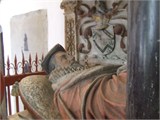
Thomas Forster monument
The Monument to Sir Thomas Forster A.D. 161 shows him in his judge’s robes, is a perfect example of the period with fine contemporary wrought-iron railings. He was born in 1548 and joined the Inner Temple in 1571 and was made Sergeant before Elizabeth’s death in 1603. He was knighted ii 1604 and appointed Judge of Common Pleas in 1607. Sir Thomas was one of the first Governors of Charterhouse and was counsel to Queen Ann and Prince Henry. He died on May 18th, 1612 at Clerkenwell and was buried in Hunsdon on May 20th, 1612.
Sir Thomas Forster (1548 – 1612)
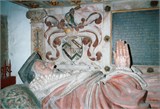
Judge in grave
F orsters continued to serve the Kings of England. Sir Richard Forster fought in the Hundred Years’War against France with King Edward III at Bordeaux and Crecy. Richard participated in the Battle ofPoictiers in 1356 and was knighted for his part in the battle.Sir Richard’s son, William, was born about 1355 and married Elizabeth De Orde about 1400 inBuckton, Northumberland, England. William was knighted for service to King Henry V and served asa General in the battle against France.Their son Thomas Forster married Joan De Elmerdon about 1430. Thomas and Joan’s son, alsonamed Thomas Forster, married Elizabeth Featherstone of Stanhope Hall, Durham, England. Theyhad Roger Forster, although records show that he spelled the name Foster rather than Forster.Roger Foster married Joan Hussey in 1540.
A Genealogy of the Descendants of Roger Foster of Edreston, Northumberlandwas compiled by Alkman Henryson Foster-Barham and published in London in 1897. Roger was 17 when he fled from Northumberland, as explained in a letter from Sir John Forster of Bamburgh, dated 17 April 1590. The letter below was written by Sir John to Roger Foster’s grandson, Thomas Foster of Hunsdon.
” Dear Cousin, After right hearty commendations unto you, ye shall understand I have received yourletter wherein you desire to know of your pedigree. Your grandfather, as ye havelearned, was descended out of the house of Etherstone – whether he was the elder,second, or third, or fourth brother – and fled the country of Northumberland. I assure you I can truly satisfy you therein. Your grandfather, called Roger Foster,was my great uncle. His father was called Thomas Forster and his mother’s namewas Featherstonehaugh. His eldest son was called Thomas Forster, my greatgrandfather. It happened that four of the said brethren had been at a-hunting and were ridinghomeward through a town called Newham. They and a company of Scottish Kerrs fellout and there began bloodshed and feuds which continued until there was but oneKerr living. During this time my grandfather and yours and another brother of theirs calledNicholas Forster (mine being twenty years old, yours 17 years, and Nicholas, a childof 14) being a-hunting – were waited upon by one of the Kerrs and two of theiralliance called Too and King. They set upon the three brothers and were thought tohave slain them at a place near Branton where a cross still stands.Two were slain there and Kerr fled. After the slaughter my grandfather fled toRidsdale in the county because he was safe there and yours fled to southern parts.” At my house near Alnwick, 17th April 1590, your loving cousin,John Forster.”
Roger Foster’s son was Thomas Foster (1515-1599) of Hunsdon, Hertfordshire, England, whomarried Margaret Browning (1520-1599). Thomas and Margaret had a son who was also named Thomas Foster (1548-1612), who married Susannah Forster(1555-1625).

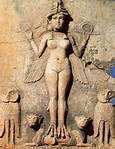
True religion is a concept hard to grasp. The idea seems to be that divine providence has finally brought all wisdom and knowledge into the possession of one exclusive (chosen) group. This group, who thinks it is all that, persecutes other groups because they are not in possession of true religion. In some places one needs to handle snakes or fall down on the floor speaking in tongues to satisfy the veracity of one’s religion. In other places one only has to donate funds, and then is totally off the hook. True religions distinguish themselves by claiming not to be connected or influenced by religions in history. They often have dead or living prophets that rule the roost. In the south they also have radio shows. Sister Kelly uses her pulpit to explain how the Babylonian fertility and war goddess, Ishtar, got mixed up into Easter. Kelly McGinley of Mobile, Alabama wants to get to the bottom of all this history and evil.
Yes, Sister Kelly, there is an Ishtar, and her fertility symbols are used in a mixed metaphor called Easter. It is fine if you want to stay home while the rest of us go out to brunch and eat chocolate bunnies. We have no need to cast aspersions on your beliefs.
 mermaidcamp