mermaidcamp
Keeping current in wellness, in and out of the water
You can scroll the shelf using ← and → keys
You can scroll the shelf using ← and → keys

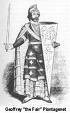

My 27th great-grandfather is buried in a very famous church. I have been inside this church, but was completely unaware that there were graves of other people at the Church of the Holy Sepulchre in Jerusalem. Orthodox religions say that Jesus of Nazareth was buried here, and arose from the dead in this location. Protestant churches have another site for their resurrection, which is outside of the city. My ancestor was there in the capacity of King of Jerusalem. Since he was knight from France the idea seems preposterous, but the history of the Crusades and the people who created them is a wild and crazy story. After Fulk’s wife died he hit the road for the Holy Land because it was totally the thing to do for rich Euros at the time. He found fame and fortune through his wife, whom he did not defy. She ruled and he did her bidding, as it was reported. He died in a hunting accident on holiday, which does sound normal for a Euro monarch.
Count of Anjou
Fulk was born in Angers between 1089 and 1092, the son of Count Fulk IV of Anjou and Bertrade de Montfort. In 1092, Bertrade deserted her husband and bigamously married King Philip I of France.
He became count of Anjou upon his father’s death in 1109. In the next year, he married Erembourg of Maine, cementing Angevin control over the County of Maine.
He was originally an opponent of King Henry I of England and a supporter of King Louis VI of France, but in 1118 or 1119 he had allied with Henry when Henry arranged for his son and heir William Adelin to marry Fulk’s daughter Matilda. Fulk went on crusade in 1119 or 1120, and became attached to the Knights Templar. (Orderic Vitalis) He returned, late in 1121, after which he began to subsidize the Templars, maintaining two knights in the Holy Land for a year. Much later, Henry arranged for his daughter Matilda to marry Fulk’s son Geoffrey of Anjou, which she did in 1127 or 1128.
Crusader and King
By 1127 Fulk was preparing to return to Anjou when he received an embassy from King Baldwin II of Jerusalem. Baldwin II had no male heirs but had already designated his daughter Melisende to succeed him. Baldwin II wanted to safeguard his daughter’s inheritance by marrying her to a powerful lord. Fulk was a wealthy crusader and experienced military commander, and a widower. His experience in the field would prove invaluable in a frontier state always in the grip of war.
However, Fulk held out for better terms than mere consort of the Queen; he wanted to be king alongside Melisende. Baldwin II, reflecting on Fulk’s fortune and military exploits, acquiesced. Fulk abdicated his county seat of Anjou to his son Geoffrey and left for Jerusalem, where he married Melisende on 2 June 1129. Later Baldwin II bolstered Melisende’s position in the kingdom by making her sole guardian of her son by Fulk, Baldwin III, born in 1130.
Fulk and Melisende became joint rulers of Jerusalem in 1131 with Baldwin II’s death. From the start Fulk assumed sole control of the government, excluding Melisende altogether. He favored fellow countrymen from Anjou to the native nobility. The other crusader states to the north feared that Fulk would attempt to impose the suzerainty of Jerusalem over them, as Baldwin II had done; but as Fulk was far less powerful than his deceased father-in-law, the northern states rejected his authority. Melisende’s sister Alice of Antioch, exiled from the Principality by Baldwin II, took control of Antioch once more after the death of her father. She allied with Pons of Tripoli and Joscelin II of Edessa to prevent Fulk from marching north in 1132; Fulk and Pons fought a brief battle before peace was made and Alice was exiled again.
In Jerusalem as well, Fulk was resented by the second generation of Jerusalem Christians who had grown up there since the First Crusade. These “natives” focused on Melisende’s cousin, the popular Hugh II of Le Puiset, count of Jaffa, who was devotedly loyal to the Queen. Fulk saw Hugh as a rival, and it did not help matters when Hugh’s own stepson accused him of disloyalty. In 1134, in order to expose Hugh, Fulk accused him of infidelity with Melisende. Hugh rebelled in protest. Hugh secured himself to Jaffa, and allied himself with the Muslims of Ascalon. He was able to defeat the army set against him by Fulk, but this situation could not hold. The Patriarch interceded in the conflict, perhaps at the behest of Melisende. Fulk agreed to peace and Hugh was exiled from the kingdom for three years, a lenient sentence.
However, an assassination attempt was made against Hugh. Fulk, or his supporters, were commonly believed responsible, though direct proof never surfaced. The scandal was all that was needed for the queen’s party to take over the government in what amounted to a palace coup. Author and historian Bernard Hamilton wrote that the Fulk’s supporters “went in terror of their lives” in the palace. Contemporary author and historian William of Tyre wrote of Fulk “he never attempted to take the initiative, even in trivial matters, without (Melisende’s) consent”. The result was that Melisende held direct and unquestioned control over the government from 1136 onwards. Sometime before 1136 Fulk reconciled with his wife, and a second son, Amalric was born.
Securing the borders
Jerusalem’s northern border was of great concern. Fulk had been appointed regent of the Principality of Antioch by Baldwin II. As regent he had Raymund of Poitou marry the infant Constance of Antioch, daughter of Bohemund II and Alice of Antioch, and niece to Melisende. However, the greatest concern during Fulk’s reign was the rise of Atabeg Zengi of Mosul.
In 1137 Fulk was defeated in battle near Barin but allied with Mu’in ad-Din Unur, the vizier of Damascus. Damascus was also threatened by Zengi. Fulk captured the fort of Banias, to the north of Lake Tiberias and thus secured the northern frontier.
Fulk also strengthened the kingdom’s southern border. His butler Paganus built the fortress of Kerak to the south of the Dead Sea, and to help give the kingdom access to the Red Sea, Fulk had Blanche Garde, Ibelin, and other forts built in the south-west to overpower the Egyptian fortress at Ascalon. This city was a base from which the Egyptian Fatimids launched frequent raids on the Kingdom of Jerusalem and Fulk sought to neutralise this threat.
In 1137 and 1142, Byzantine emperor John II Comnenus arrived in Syria attempting to impose Byzantine control over the crusader states. John’s arrival was ignored by Fulk, who declined an invitation to meet the emperor in Jerusalem.
Death
In 1143, while the king and queen were on holiday in Acre, Fulk was killed in a hunting accident. His horse stumbled, fell, and Fulk’s skull was crushed by the saddle, “and his brains gushed forth from both ears and nostrils”, as William of Tyre describes. He was carried back to Acre, where he lay unconscious for three days before he died. He was buried in the Church of the Holy Sepulchre in Jerusalem. Though their marriage started in conflict, Melisende mourned for him privately as well as publicly. Fulk was survived by his son Geoffrey of Anjou by his first wife, and Baldwin III and Amalric I by Melisende.
Depictions
According to William, Fulk was “a ruddy man, like David… faithful and gentle, affable and kind… an experienced warrior full of patience and wisdom in military affairs.” His chief fault was an inability to remember names and faces.
William of Tyre described Fulk as a capable soldier and able politician, but observed that Fulk did not adequately attend to the defense of the crusader states to the north. Ibn al-Qalanisi (who calls him al-Kund Anjur, an Arabic rendering of “Count of Anjou”) says that “he was not sound in his judgment nor was he successful in his administration.” The Zengids continued their march on the crusader states, culminating in the fall of the County of Edessa in 1144, which led to the Second Crusade (see Siege of Edessa).
Family
In 1110, Fulk married Ermengarde of Maine (died 1126), the daughter of Elias I of Maine. Their four children were:
Geoffrey V of Anjou (1113–1151, father of Henry II of England.
Sibylla of Anjou (1112–1165, Bethlehem), married in 1123 William Clito (div. 1124), married in 1134 Thierry, Count of Flanders.
Alice (or Isabella) (1111–1154, Fontevrault), married William Adelin; after his death in the White Ship she became a nun and later Abbess of Fontevrault.
Elias II of Maine (died 1151)
His second wife was Melisende, Queen of Jerusalem
Baldwin III of Jerusalem
Amalric I of Jerusalem

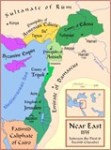

Fulk V The Younger King of Jerusalem Anjou * (1092 – 1143)
is my 27th great grandfather
Sibilla Anjou (1105 – 1165)
daughter of FULK V The Younger King of Jerusalem ANJOU *
Marguerite De LORRAINE (1135 – 1194)
daughter of Sibilla Anjou
Isabelle De Hainault (1170 – 1190)
daughter of Marguerite De LORRAINE
Louis VIII France (1187 – 1226)
son of Isabelle De Hainault
Charles I King of Jerusalem and Naples (1227 – 1285)
son of Louis VIII France
Charles NAPLES (1254 – 1309)
son of Charles I King of Jerusalem and Naples
Marguerite Sicily Naples (1273 – 1299)
daughter of Charles NAPLES
Jeanne DeVALOIS (1294 – 1342)
daughter of Marguerite Sicily Naples
Philippa deHainault (1311 – 1369)
daughter of Jeanne DeVALOIS
John of Gaunt – Duke of Lancaster – Plantagenet (1340 – 1399)
son of Philippa deHainault
Elizabeth Plantagenet (1363 – 1425)
daughter of John of Gaunt – Duke of Lancaster – Plantagenet
John Holland (1395 – 1447)
son of Elizabeth Plantagenet
Henry Holland (1430 – 1475)
son of John Holland
Henry Holland (1485 – 1561)
son of Henry Holland
Henry Holland (1527 – 1561)
son of Henry Holland
John Holland (1556 – 1628)
son of Henry Holland
Gabriell Francis Holland (1596 – 1660)
son of John Holland
John Holland (1628 – 1710)
son of Gabriell Francis Holland
Mary Elizabeth Holland (1620 – 1681)
daughter of John Holland
Richard Dearden (1645 – 1747)
son of Mary Elizabeth Holland
George Dearden (1705 – 1749)
son of Richard Dearden
George Darden (1734 – 1807)
son of George Dearden
David Darden (1770 – 1820)
son of George Darden
Minerva Truly Darden (1806 – 1837)
daughter of David Darden
Sarah E Hughes (1829 – 1911)
daughter of Minerva Truly Darden
Lucinda Jane Armer (1847 – 1939)
daughter of Sarah E Hughes
George Harvey Taylor (1884 – 1941)
son of Lucinda Jane Armer
Ruby Lee Taylor (1922 – 2008)
daughter of George Harvey Taylor
Pamela Morse
I am the daughter of Ruby Lee Taylor

marries Queen of Jerusalem

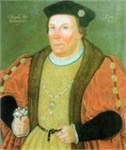
My 16th great-grandfather was beheaded for listening to prophecies of Henry VIII’s death. The king was personally involved in convicting him.
Edward Richard Buckingham Stafford (1479 – 1521)
is my 16th great grandfather
Elizabeth Dutchess Norfolk Stafford Howard (1497 – 1558)
daughter of Edward Richard Buckingham Stafford
Lady Katherine Howard Duchess Bridgewater (1495 – 1554)
daughter of Elizabeth Dutchess Norfolk Stafford Howard
William ApRhys (1522 – 1588)
son of Lady Katherine Howard Duchess Bridgewater
Henry Rice (1555 – 1621)
son of William ApRhys
Edmund Rice (1594 – 1663)
son of Henry Rice
Edward Rice (1622 – 1712)
son of Edmund Rice
Lydia Rice (1649 – 1723)
daughter of Edward Rice
Lydia Woods (1672 – 1738)
daughter of Lydia Rice
Lydia Eager (1696 – 1735)
daughter of Lydia Woods
Mary Thomas (1729 – 1801)
daughter of Lydia Eager
Joseph Morse III (1752 – 1835)
son of Mary Thomas
John Henry Morse (1775 – 1864)
son of Joseph Morse III
Abner Morse (1808 – 1838)
son of John Henry Morse
Daniel Rowland Morse (1838 – 1910)
son of Abner Morse
Jason A Morse (1862 – 1932)
son of Daniel Rowland Morse
Ernest Abner Morse (1890 – 1965)
son of Jason A Morse
Richard Arden Morse (1920 – 2004)
son of Ernest Abner Morse
Pamela Morse
I am the daughter of Richard Arden Morse
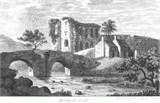
Born
3 February 1478
Brecon Castle, Wales
Died
17 May 1521 (aged 43)
Tower Hill
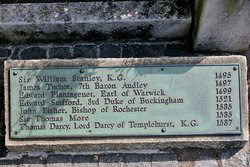
Edward Stafford, 3rd Duke of Buckingham, KG (3 February 1478 – 17 May 1521) was an English nobleman. He was the son of Henry Stafford, 2nd Duke of Buckingham, and Katherine Woodville, whose sister, Queen Elizabeth Woodville, was the wife of King Edward IV. He was convicted of treason, and executed on 17 May 1521.
Edward Stafford, born 3 February 1478 at Brecon Castle in Wales, was the eldest son of Henry Stafford, 2nd Duke of Buckingham, and Katherine Woodville, the daughter of Richard Woodville, 1st Earl Rivers, by Jacquetta of Luxembourg, daughter of Pierre de Luxembourg, Count of St. Pol, and was thus a nephew of Elizabeth Woodville, queen consort of King Edward IV.
By his father’s marriage to Katherine Woodville, Stafford had a younger brother, Henry Stafford, 1st Earl of Wiltshire, and two sisters, Elizabeth, who married Robert Radcliffe, 1st Earl of Sussex, and Anne, who married firstly, Sir Walter Herbert (d. 16 September 1507), an illegitimate son of William Herbert, 1st Earl of Pembroke, and secondly, George Hastings, 1st Earl of Huntingdon.
After the execution of the 2nd Duke of Buckingham, his widow, Katherine Woodville, married Jasper Tudor, second son of Owen Tudor and King Henry V’s widow, Catherine of Valois. After Jasper Tudor’s death on 21 December 1495, Katherine Woodville married Sir Richard Wingfield (d. 22 July 1525). Katherine Woodville died 18 May 1497. After her death, Sir Richard Wingfield married Bridget Wiltshire, daughter and heiress of Sir John Wiltshire of Stone, Kent.
In October 1483 Stafford’s father participated in a rebellion against King Richard III. He was beheaded without trial on 2 November 1483, whereby all his honours were forfeited. Stafford is said to have been hidden in various houses in Herefordshire at the time of the rebellion, and perhaps for the remainder of Richard III’s reign. However after Richard III’s defeat at Bosworth on 22 August 1485, and King Henry VII’s accession to the crown, Stafford was made a Knight of the Order of the Bath on 29 October 1485 as Duke of Buckingham, and attended Henry VII’s coronation the following day, although his father’s attainder was not formally reversed by Parliament until November. The young Duke’s wardship and lands were granted, on 3 August 1486, along with the wardship of his younger brother, Henry Stafford, to the King’s mother, Margaret Beaufort, and according to Davies it is likely Buckingham was educated in her various households.
Buckingham was in attendance at court at the creation of Henry VII’s second son, the future King Henry VIII, as Duke of York, on 9 November 1494, and was made a Knight of the Order of the Garter in 1495. In September 1497 he was a captain in the forces sent to quell a rebellion in Cornwall.
According to Davies, as a young man Buckingham played a conspicuous part in royal weddings and the reception of ambassadors and foreign princes, ‘dazzling observers by his sartorial splendour’. At the wedding of Henry VII’s then eldest son and heir Arthur, Prince of Wales, and Catherine of Aragon in 1501, he is said to have worn a gown worth £1500. He was the chief challenger at the tournament held the following day.
At the accession of King Henry VIII, Buckingham was appointed on 23 June 1509, for the day of the coronation only, Lord High Constable, an office which he claimed by hereditary right. He also served as Lord High Steward at the coronation, and bearer of the crown. In 1509 he was made a member of the King’s Privy Council. On 9 July 1510 he had licence to crenellate his manor of Thornbury, Gloucestershire, and according to Davies rebuilt the manor house as ‘an impressively towered castle’ with ‘huge oriel windows in the living-quarters in the inner court’.
In 1510 Buckingham was involved in a scandal concerning his sister, Anne. After hearing rumours concerning Anne and Sir William Compton, Buckingham found Compton in Anne’s room. Compton was forced to take the sacrament to prove that he and Anne had not committed adultery, and Anne’s husband, George Hastings, 1st Earl of Huntingdon, sent Anne away to a convent 60 miles distant from the court. There is no extant evidence establishing that Anne and Sir William Compton were guilty of adultery. However in 1523 Compton took the unusual step of bequeathing land to Anne in his will, and directing his executors to include her in the prayers for his kin for which he had made provision in his will.
From June to October 1513 Buckingham served as a captain during Henry VIII’s invasion of France, commanding 500 men in the ‘middle ward’. About 1517 he was one of twelve challengers chosen to tilt against the King and his companions, but excused himself on the ground that he feared to run against the King’s person. He and his wife, Eleanor, attended the Field of the Cloth of Gold in 1520.
Although Buckingham was appointed to commissions of the peace in 1514 and charged, together with other marcher lords, with responsibility for keeping order in south Wales, he was rebuked by the King in 1518 for failing to achieve the desired results. According to Davies, in general Buckingham exercised little direct political influence, and was never a member of the King’s inner circle.
Buckingham fell out dramatically with the King in 1510, when he discovered that the King was having an affair with the Countess of Huntingdon, the Duke’s sister and wife of the 1st Earl of Huntingdon. She was taken to a convent sixty miles away. There are some suggestions that the affair continued until 1513. However, he returned to the King’s graces, being present at the marriage of Henry’s sister, served in Parliament and being present at negotiations with Francis I of France and Charles V, Holy Roman Emperor.
Buckingham was one of few peers with substantial Plantagenet blood and maintained numerous connections, often among his extended family, with the rest of the upper aristocracy, which activities attracted Henry’s suspicion. During 1520, Buckingham became suspected of potentially treasonous actions and Henry VIII authorised an investigation. The King personally examined witnesses against him, gathering enough evidence for a trial. The Duke was finally summoned to Court in April 1521 and arrested and placed in the Tower. He was tried before a panel of 17 peers, being accused of listening to prophecies of the King’s death and intending to kill the King. He was executed on Tower Hill on 17 May. Buckingham was posthumously attainted by Act of Parliament on 31 July 1523, disinheriting most of his wealth from his children.
Guy (1988) concludes this was one of the few executions of high personages under Henry VIII in which the accused was “almost certainly guilty”. However Sir Thomas More complained that the key evidence from servants was hearsay.
Buckingham’s literary patronage included two translations, a printed translation of Helyas, Knyghte of the Swanne, which he commissioned in 1512, and A Lytell Cronicle, a translation of an account of the Middle East which he may have commissioned in 1520 in connection with his proposed pilgrimage to Jerusalem.
In 1488 Henry VII had suggested a marriage between Buckingham and Anne of Brittany, but in December 1489 the executors of Henry Percy, 4th Earl of Northumberland, paid the King £4000 for Buckingham’s marriage to Percy’s eldest daughter Eleanor (d. 1530). They had a son and three daughters:
Lord Henry Stafford, 1st Baron Stafford (18 September 1501 – 30 April 1563), who married Ursula Pole, daughter of Sir Richard Pole by his second wife, Margaret, Countess of Salisbury, daughter of George, Duke of Clarence.
Lady Elizabeth Stafford, Duchess of Norfolk (c. 1497 – 30 November 1558), who married, as his second wife, before 8 January 1513, Thomas Howard, 3rd Duke of Norfolk.
Lady Katherine Stafford (c. 1499 – 14 May 1555), who married Ralph Neville, 4th Earl of Westmorland.
Lady Mary Stafford, the youngest daughter, who married, about June 1519, as his third wife, George Neville, 5th Baron Bergavenny.
Buckingham is also said to have had three illegitimate children: George Stafford, Henry Stafford, Margaret Stafford (c. 1511 – 25 May 1537), whom Buckingham married to his ward, Thomas Fitzgerald of Leixlip, half-brother to the Earl of Kildare.
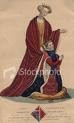
My 22nd great grandmother was born in Syria while her parents were on a crusade.
Joan Plantagenet (1272 – 1307)
is my 22nd great grandmother
Lady Margaret De Clare Baroness Audley (1292 – 1342)
daughter of Joan Plantagenet
Lady Alice De Audley Baroness Neville (1315 – 1373)
daughter of Lady Margaret De Clare Baroness Audley
Sir John ‘3rd Baron de Raby’ Neville, Admiral of the Kings Fleet (1341 – 1388)
son of Lady Alice De Audley Baroness Neville
Thomas De Neville (1362 – 1406)
son of Sir John ‘3rd Baron de Raby’ Neville, Admiral of the Kings Fleet
Maude de Neville (1392 – 1421)
daughter of Thomas De Neville
John Talbot (1413 – 1460)
son of Maude de Neville
Isabel Talbot (1444 – 1531)
daughter of John Talbot
Sir Richard Ashton (1460 – 1549)
son of Isabel Talbot
Sir Christopher Ashton (1493 – 1519)
son of Sir Richard Ashton
Lady Elizabeth Ashton (1524 – 1588)
daughter of Sir Christopher Ashton
Capt Roger Dudley (1535 – 1585)
son of Lady Elizabeth Ashton
Gov Thomas Dudley (1576 – 1653)
son of Capt Roger Dudley
Anne Dudley (1612 – 1672)
daughter of Gov Thomas Dudley
John Bradstreet (1652 – 1718)
son of Anne Dudley
Mercy Bradstreet (1689 – 1725)
daughter of John Bradstreet
Caleb Hazen (1720 – 1777)
son of Mercy Bradstreet
Mercy Hazen (1747 – 1819)
daughter of Caleb Hazen
Martha Mead (1784 – 1860)
daughter of Mercy Hazen
Abner Morse (1808 – 1838)
son of Martha Mead
Daniel Rowland Morse (1838 – 1910)
son of Abner Morse
Jason A Morse (1862 – 1932)
son of Daniel Rowland Morse
Ernest Abner Morse (1890 – 1965)
son of Jason A Morse
Richard Arden Morse (1920 – 2004)
son of Ernest Abner Morse
Pamela Morse
I am the daughter of Richard Arden Morse
Joan of Acre (April 1272 – 23 April 1307) was an English princess, a daughter of King Edward I of England and Queen Eleanor of Castile. The name “Acre” derives from her birthplace in the Holy Land while her parents were on a crusade.
She was married twice; her first husband was Gilbert de Clare, 7th Earl of Gloucester, one of the most powerful nobles in her father’s kingdom; her second husband was Ralph de Monthermer, a squire in her household whom she married in secret.
Joan is most notable for the claim that miracles have allegedly taken place at her grave, and for the multiple references to her in literature.
Birth and childhood
Joan (or Joanna, as she is sometimes called) of Acre was born in the spring of 1272 in Syria, while her parents, Edward I and Eleanor of Castile, were on crusade. At the time of Joan’s birth, her grandfather, Henry III, was still alive and thus her father was not yet king of England. Her parents departed from Acre shortly after her birth, traveling to Sicily and Spain before leaving Joan with Eleanor’s mother, Joan, Countess of Ponthieu, in France. Joan lived for several years in France where she spent her time being educated by a bishop and “being thoroughly spoiled by an indulgent grandmother.” Joan was free to play among the “vine clad hills and sunny vales” surrounding her grandmother’s home, although she required “judicious surveillance.”
As Joan was growing up with her grandmother, her father was back in England, already arranging marriages for his daughter. He hoped to gain both political power and more wealth with his daughter’s marriage, so he conducted the arrangement in a very “business like style”. He finally found a man suitable to marry Joan (aged 5 at the time), Hartman, son of King Rudoph I, of Germany. Edward then brought her home from France for the first time to meet him. As she had spent her entire life away from Edward and Eleanor, when she returned she “stood in no awe of her parents” and had a fairly distanced relationship with them.
Unfortunately for King Edward, his daughter’s suitor died before he was able to meet or marry Joan. The news reported that Hartman had fallen through a patch of shallow ice while “amusing himself in skating” while a letter sent to the King himself stated that Hartman had set out on a boat to visit his father amidst a terrible fog and the boat had smashed into a rock, drowning him.
First marriage
Edward arranged a second marriage almost immediately after the death of Hartman.[12] Gilbert de Clare, Earl of Gloucester, who was almost thirty years older than Joan and newly divorced, was his first choice. The earl resigned his lands to Edward upon agreeing to get them back when he married Joan, as well as agreed on a dower of two thousand silver marks.[14] By the time all of these negotiations were finished, Joan was twelve years old. Gilbert de Clare became very enamored with Joan, and even though she had to marry him regardless of how she felt, he still tried to woo her. He bought her expensive gifts and clothing to try to win favor with her. The couple were married on 30 April 1290 at Westminster Abbey, and had four children together. They were:
Gilbert de Clare, 7th Earl of Hertford
Eleanor de Clare
Margaret de Clare
Elizabeth de Clare
Joan’s first husband, Gilbert de Clare died on 7 December 1295.[18]
Secret second marriage
Joan had been a widow for only a little over a year when she caught the eye of Ralph de Monthermer, a squire in Joan’s father’s household. Joan fell in love and convinced her father to have Monthermer knighted. It was unheard of in European royalty for a noble lady to even converse with a man who had not won or acquired importance in the household. However, in January 1297 Joan secretly married Ralph. Joan’s father was already planning another marriage for Joan to Amadeus V, Count of Savoy, to occur 16 March 1297. Joan was in a dangerous predicament, as she was already married, unbeknownst to her father.
Joan sent her four young children to their grandfather, in hopes that their sweetness would win Edward’s favor, but her plan did not work. The king soon discovered his daughter’s intentions, but not yet aware that she had already committed to them, he seized Joan’s lands and continued to arrange her marriage to Amadeus of Savoy. Soon after the seizure of her lands, Joan told her father of that she had married Ralph. The king was enraged and retaliated by immediately imprisoning Monthermer at Bristol Castle. The people of the land had differing opinions on the princess’ matter. It has been argued that the ones who were most upset were those who wanted Joan’s hand in marriage.
With regard to the matter, Joan famously said, “It is not considered ignominious, nor disgraceful for a great earl to take a poor and mean woman to wife; neither, on the other hand, is it worthy of blame, or too difficult a thing for a countess to promote to honor a gallant youth.” Joan’s statement in addition to a possibly obvious pregnancy seemed to soften Edward’s attitude towards the situation. Joan’s first child by Monthermer was born in October 1297; by the summer of 1297, when the marriage was revealed to Edward I, Joan’s condition would certainly have been apparent, and would have convinced Edward that he had no choice but to recognize his daughter’s marriage. Edward I eventually relented for the sake of his daughter and released Monthermer from prison in August 1297.[17] Monthermer paid homage 2 August, and being granted the titles of Earl of Gloucester and Earl of Hertford, he rose to favour with the King during Joan’s lifetime.
Monthermer and Joan had four children:
Mary de Monthermer, born October 1297. In 1306 her grandfather King Edward I arranged for her to wed Duncan Macduff, 8th Earl of Fife. (Ancestor of Harry S Truman, 33rd President of the USA).
Joan de Monthermer, born 1299, became a nun at Amesbury.
Thomas de Monthermer, 2nd Baron Monthermer, born 1301.
Edward de Monthermer, born 1304 and died 1339.
Relationship with family
Joan of Acre was the seventh of Edward I and Eleanor’s fourteen children. Most of her older siblings died before the age of seven, and many of her younger siblings died before adulthood. Those who survived to adulthood were Joan, her younger brother, Edward of Caernarfon (later Edward II), and four of her sisters: Eleanor, Margaret, Mary, and Elizabeth.
Joan, like her siblings, was raised outside her parents’ household. She lived with her grandmother in Ponthieu for four years, and was then entrusted to the same caregivers who looked after her siblings. Edward I did not have a close relationship with most of his children while they were growing up, yet “he seemed fonder of his daughters than his sons.”
However, Joan of Acre’s independent nature caused numerous conflicts with her father. Her father disapproved of her leaving court after her marriage to the Earl of Gloucester, and in turn “seized seven robes that had been made for her.” He also strongly disapproved of her second marriage to Ralph de Monthermer, a squire in her household, even to the point of attempting to force her to marry someone else. While Edward ultimately developed a cordial relationship with Monthermer, even giving him the title of Earl, there appears to have been a notable difference in the Edward’s treatment of Joan as compared to the treatment of the rest of her siblings. For instance, her father famously paid messengers substantially when they brought news of the birth of grandchildren, but did not do this upon birth of Joan’s daughter.
In terms of her siblings, Joan kept a fairly tight bond. She and Monthermer both maintained a close relationship with her brother, Edward II, which was maintained through letters. After Edward II became estranged from his parents and lost his royal seal, “Joan offered to lend him her seal” .
Death
Joan of Acre died on 23 April 1307, at the manor of Clare in Suffolk. The cause of her death remains unclear, though one popular theory is that she died during childbirth, a common cause of death at the time. While Joan’s age in 1307 (about 35) and the chronology of her earlier pregnancies with Ralph de Monthermer suggest that this could well be the case, historians have not confirmed the cause of her death.
Less than four months after her death, Joan’s father, Edward I died. Joan’s widower, Ralph de Monthermer, lost the title of Earl of Gloucester soon after the deaths of his wife and father-in-law. The earldom of Gloucester was given to Joan’s son from her first marriage, Gilbert, who was its rightful holder. Monthermer continued to hold a nominal earldom in Scotland, which had been conferred on him by Edward I, until his death.
Joan’s burial place has been the cause of some interest and debate. She is interred in the Augustinian priory at Clare, which had been founded by her first husband’s ancestors and where many of them were also buried. Allegedly, in 1357, Joan’s daughter, Elizabeth De Burgh, claimed to have “inspected her mother’s body and found the corpse to be intact which in the eyes of the Roman Catholic Church is an indication of sanctity. This claim was only recorded in a fifteenth-century chronicle, however, and its details are uncertain, especially the statement that her corpse was in such a state of preservation that “when her paps [breasts] were pressed with hands, they rose up again.” Some sources further claim that miracles took place at Joan’s tomb, but no cause for her beatification or canonization has ever been introduced.
Joan in fiction
Joan of Acre makes an appearance in Virginia Henley’s historical romance, entitled Infamous. In the book, Joan, known as Joanna, is described as a promiscuous young princess, vain, shallow and spoiled. In the novel she is only given one daughter, when she historically has eight children. There is no evidence that supports this picture of Joan.
In The Love Knot by Vanessa Alexander, Edward the II’s sister, Joan of Acre is an important heroine. The author portrays a completely different view of the princess than the one in Henley’s novel. The Love Knot tells the story of the love affair between Ralph de Monthermer and Joan of Acre through the discovery of a series of letters the two had written to each other.
Between historians and novelists, Joan has appeared in various texts as either an independent and spirited woman or a spoiled brat. In Lives of the Princesses of England by Mary Anne Everett Green, Joan is portrayed as a “giddy princess” and neglectful mother. Many have agreed to this characterization; however, some authors think there is little evidence to support the assumption that Joan of Acre was a neglectful or uncaring mother.

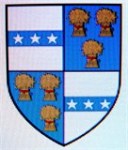
My 20th great grandmother was born in Scotland and married Sir Adam Mure. She gave birth to her daughter, Elizabeth, who became queen of Scotland, at Rowallan Castle.
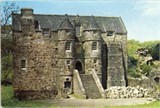
Rowallan Castle
The surname of MURE was derived from the Old French word ‘more’ – a nickname given to one with a swarthy complexion. The name was brought into England in the wake of the Norman Conquest of 1066. There are also places of the name in Cheshire, from which the name may have been derived. Early records of the name mention Johannes filius More, 1185 County Kent. More Kalendrer was documented in County Surrey in 1332, and Thomas Mor was recorded in the year 1340
Elizabeth Mure, daughter of Sir Adam Mure of Rowallan, became Queen of King Robert 11 in 1347. Alicia del More of Yorkshire was listed in the Yorkshire Poll Tax of 1379. Henry More married Alice Simpson in London in the year of 1578. Francis Moore (1656-1715) was an Astrolger and quack physician. He advertised his pills by publishing an almanac, forecasting the weather. George Moore (1852-1933) was the Irish novelist, the author of Esther Water, The Brook of Kerith, Heloise and Abelard. The name was taken to Ireland at an early date, and is one of the twenty most popular names in Ireland. Of the several thousand Moore families, some are of settler descent, their forebears being immigrants from England, who have come to Ireland in considerable numbers over the centuries since the Anglo-Norman invasion.
Lady Joanna Danzielstour, Baroness More of Rowallan (1275 – 1330)
is my 20th great grandmother
Elizabeth Mure (1320 – 1355)
daughter of Lady Joanna Danzielstour, Baroness More of Rowallan
Robert Scotland Stewart (1337 – 1406)
son of Elizabeth Mure
James I Scotland Stewart (1394 – 1434)
son of Robert Scotland Stewart
Joan Stewart (1428 – 1486)
daughter of James I Scotland Stewart
John Gordon (1450 – 1517)
son of Joan Stewart
Robert Lord Gordon (1475 – 1525)
son of John Gordon
Catherine Gordon (1497 – 1537)
daughter of Robert Lord Gordon
Lady Elizabeth Ashton (1524 – 1588)
daughter of Catherine Gordon
Capt Roger Dudley (1535 – 1585)
son of Lady Elizabeth Ashton
Gov Thomas Dudley (1576 – 1653)
son of Capt Roger Dudley
Anne Dudley (1612 – 1672)
daughter of Gov Thomas Dudley
John Bradstreet (1652 – 1718)
son of Anne Dudley
Mercy Bradstreet (1689 – 1725)
daughter of John Bradstreet
Caleb Hazen (1720 – 1777)
son of Mercy Bradstreet
Mercy Hazen (1747 – 1819)
daughter of Caleb Hazen
Martha Mead (1784 – 1860)
daughter of Mercy Hazen
Abner Morse (1808 – 1838)
son of Martha Mead
Daniel Rowland Morse (1838 – 1910)
son of Abner Morse
Jason A Morse (1862 – 1932)
son of Daniel Rowland Morse
Ernest Abner Morse (1890 – 1965)
son of Jason A Morse
Richard Arden Morse (1920 – 2004)
son of Ernest Abner Morse
Pamela Morse
I am the daughter of Richard Arden Morse
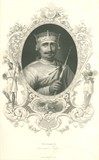
William Longsword (Plantagenet) (Earl of Salisbury) Longespee
My 25th great-grandfather is buried at Salisbury Cathedral in England. He was allegedly poisoned. His body was exhumed 431 years after his death. The corpse of a rat was found within his skull, which can be seen at a museum in Salisbury. I think I am good just with the grave, no need to see the rat with traces of arsenic.
William Longsword (Plantagenet) (Earl of Salisbury) Longespee (1173 – 1226)
is my 25th great grandfather
Stephen Longespee (1216 – 1260)
son of William Longsword (Plantagenet) (Earl of Salisbury) Longespee
Ela Longespee (1246 – 1276)
daughter of Stephen Longespee
Alan laZOUCHE (1267 – 1314)
son of Ela Longespee
Maude LaZouche (1290 – 1349)
daughter of Alan laZOUCHE
Sir Thomas de Holand Wake Kent (1314 – 1360)
son of Maude LaZouche
Sir Thomas Holand Knight deHolland (1350 – 1397)
son of Sir Thomas de Holand Wake Kent
Margaret DeHoland (1385 – 1439)
daughter of Sir Thomas Holand Knight deHolland
Joan Beaufort (1407 – 1445)
daughter of Margaret DeHoland
Joan Stewart (1428 – 1486)
daughter of Joan Beaufort
John Gordon (1450 – 1517)
son of Joan Stewart
Robert Lord Gordon (1475 – 1525)
son of John Gordon
Catherine Gordon (1497 – 1537)
daughter of Robert Lord Gordon
Lady Elizabeth Ashton (1524 – 1588)
daughter of Catherine Gordon
Capt Roger Dudley (1535 – 1585)
son of Lady Elizabeth Ashton
Gov Thomas Dudley (1576 – 1653)
son of Capt Roger Dudley
Anne Dudley (1612 – 1672)
daughter of Gov Thomas Dudley
John Bradstreet (1652 – 1718)
son of Anne Dudley
Mercy Bradstreet (1689 – 1725)
daughter of John Bradstreet
Caleb Hazen (1720 – 1777)
son of Mercy Bradstreet
Mercy Hazen (1747 – 1819)
daughter of Caleb Hazen
Martha Mead (1784 – 1860)
daughter of Mercy Hazen
Abner Morse (1808 – 1838)
son of Martha Mead
Daniel Rowland Morse (1838 – 1910)
son of Abner Morse
Jason A Morse (1862 – 1932)
son of Daniel Rowland Morse
Ernest Abner Morse (1890 – 1965)
son of Jason A Morse
Richard Arden Morse (1920 – 2004)
son of Ernest Abner Morse
Pamela Morse
I am the daughter of Richard Arden Morse
William Longespée, jure uxoris 3rd Earl of Salisbury (c. 1176 – 7 March 1226) was an English noble, primarily remembered for his command of the English forces at the Battle of Damme and for remaining loyal to King John .
Early life
He was an illegitimate son of Henry II of England. His mother was unknown for many years, until the discovery of a charter of William mentioning “Comitissa Ida, mater mea” (engl. “Countess Ida, my mother”).
This Ida de Tosny, a member of the prominent Tosny or Toesny family, later (1181) married Roger Bigod, 2nd Earl of Norfolk.
King Henry acknowledged William as his son and gave him the Honour of Appleby, Lincolnshire in 1188. Eight years later, his half-brother, King Richard I, married him to a great heiress, Ela of Salisbury, 3rd Countess of Salisbury in her own right, and daughter of William of Salisbury, 2nd Earl of Salisbury.
During the reign of King John, Salisbury was at court on several important ceremonial occasions, and held various offices: sheriff of Wiltshire , lieutenant of Gascony , constable of Dover and warden of the Cinque Ports, and later warden of the Welsh Marches. He was then, circa 1213, appointed High Sheriff of Cambridgeshire and Huntingdonshire.
Military career
He was a commander in the king’s Welsh and Irish expeditions of 1210-1212. The king also granted him the honour of Eye .
In 1213, Salisbury led a large fleet to Flanders , where he seized or destroyed a good part of a French invasion fleet anchored at or near Damme . This ended the invasion threat but not the conflicts between England and France . In 1214, Salisbury was sent to help Otto IV of Germany, an English ally, who was invading France. Salisbury commanded the right wing of the army at their disastrous defeat in that year at the Battle of Bouvines, where he was captured.
By the time he returned to England, revolt was brewing amongst the barons. Salisbury was one of the few who remained loyal to John. He was appointed High Sheriff of Devon in 1217 and High Sheriff of Staffordshire and Shropshire in 1224. In the civil war that took place the year after the signing of the Magna Carta, Salisbury was one of the leaders of the king’s army in the south. He was made High Sheriff of Wiltshire again, this time for life. After raising the siege of Lincoln with William Marshall he was also appointed High Sheriff of Lincolnshire (in addition to his current post as High Sheriff of Somerset) and governor of Lincoln castle. However, after the French prince Louis (later Louis VIII) landed as an ally of the rebels, Salisbury went over to his side. Presumably, he thought John’s cause was lost.
After John’s death and the departure of Louis, Salisbury, along with many other barons, joined the cause of John’s young son, now Henry III of England. He held an influential place in the government during the king’s minority and fought in Gascony to help secure the remaining part of the English continental possessions. Salisbury’s ship was nearly lost in a storm while returning to England in 1225, and he spent some months in refuge at a monastery on the French island of Ré.
Death
He died not long after his return to England at Salisbury Castle. Roger of Wendover alleged that he was poisoned by Hubert de Burgh. He was buried at Salisbury Cathedral in Salisbury, Wiltshire, England.
William Longespee’s tomb was opened in 1791. Bizarrely, the well-preserved corpse of a rat which carried traces of arsenic, was found inside his skull. The rat is now on display in a case at the Salisbury and South Wiltshire Museum.
Family
By his wife Ela, Countess of Salisbury, he had four sons and four daughters :
• Willi am II Longespée (1212?-1250), who was sometimes called Earl of Salisbury but never legally bore the title because he died before his mother, Countess Ela, who held the earldom until her death in 1261;
• Richard, a canon of Salisbury ;
• Stephen (d. 1260), who was seneschal of Gascony and married Emeline de Ridelsford. Their two daughters were Eleanor Longspee, who married Sir Roger La Zouche and Emeline Longspee, who married Sir Maurice FitzMaurice, Justicar of Ireland.
• Nicholas (d. 1297), bishop of Salisbury
• Isabella, who married William de Vesey
• Ella, married William d’Odingsels
• Ela Longespée, who first married Thomas de Beaumont, 6th Earl of Warwick, and then married Philip Basset
• Ida, who first married Ralph de Somery, and then William de Beauchamp


My 18th great-grandmother married Edmund of Langley but she was not faithful to him. She was famous as a tart.
Isabella of Castile (c. 1355 – 23 December 1392) was the youngest of the three daughters of King Peter of Castile by his favourite mistress, María de Padilla (d.1361).
On 21 September 1371 Edward III’s fourth son, John of Gaunt, 1st Duke of Lancaster, married Isabella’s elder sister, Constanza (d.1394), who after the death of her father in 1369 claimed the throne of Castile. Isabella accompanied her sister to England, and on 11 July 1372, at about the age of 17, married John of Gaunt’s youngest brother, Edmund of Langley, 1st Duke of York, fifth son of King Edward III and Philippa of Hainault, at Wallingford, Oxfordshire, as part of a dynastic alliance in furtherance of Gaunt’s claim to the crown of Castile. According to Pugh, Isabella and Edmund of Langley were ‘an ill-matched pair’.
As a result of her indiscretions, including an affair with King Richard II’s stepbrother, John Holland, 1st Duke of Exeter (d.1400), whom Pugh terms ‘violent and lawless’, Isabella left behind a tarnished reputation, her loose morals being noted by the chronicler Thomas Walsingham. According to Pugh, the possibility that Holland was the father of Isabella’s favourite son, Richard of Conisburgh, 3rd Earl of Cambridge, ‘cannot be ignored’.
In her will Isabel named King Richard II as her heir, requesting him to grant her younger son, Richard, an annuity of 500 marks. The King complied. However further largess which might have been expected when Richard came of age was not to be, as King Richard II was deposed in 1399, and according to Harriss, Isabella’s younger son, Richard, ‘received no favours from the new King, Henry IV’.
Isabella died 23 December 1392, aged about 37, and was buried 14 January 1393 at the church of the Dominicans at Kings Langley. After Isabella’s death, Edmund of Langley married Joan Holland, sister and co-heir of Edmund Holland, 4th Earl of Kent (9 January 1382 – 15 September 1408), with whom his daughter, Constance, had lived as his mistress.
Isabella was named a Lady Companion of the Order of the Garter in 1378.
Isabella Perez Plantagenet (1355 – 1392)
is my 18th great grandmother
Constance Plantagenet Despencer (1374 – 1416)
daughter of Isabella Perez Plantagenet
Eleanor DeHoland (1405 – 1452)
daughter of Constance Plantagenet Despencer
Ann Touchet (1441 – 1503)
daughter of Eleanor DeHoland
Anna Dutton (1449 – 1520)
daughter of Ann Touchet
Lawrence Castellan of Liverpool Mollenaux (1490 – 1550)
son of Anna Dutton
John Mollenax (1542 – 1583)
son of Lawrence Castellan of Liverpool Mollenaux
Mary Mollenax (1559 – 1575)
daughter of John Mollenax
Francis Gabriell Holland (1596 – 1660)
son of Mary Mollenax
John Holland (1628 – 1710)
son of Francis Gabriell Holland
Mary Elizabeth Holland (1620 – 1681)
daughter of John Holland
Richard Dearden (1645 – 1747)
son of Mary Elizabeth Holland
George Dearden (1705 – 1749)
son of Richard Dearden
George Darden (1734 – 1807)
son of George Dearden
David Darden (1770 – 1820)
son of George Darden
Minerva Truly Darden (1806 – 1837)
daughter of David Darden
Sarah E Hughes (1829 – 1911)
daughter of Minerva Truly Darden
Lucinda Jane Armer (1847 – 1939)
daughter of Sarah E Hughes
George Harvey Taylor (1884 – 1941)
son of Lucinda Jane Armer
Ruby Lee Taylor (1922 – 2008)
daughter of George Harvey Taylor
Pamela Morse
I am the daughter of Ruby Lee Taylor
Infanta Isabella of Castile, Duchess of York was the daughter of King Peter of Castile and María de Padilla. She was a younger sister of Constance, Duchess of Lancaster.
On March 1, 1372, Isabella married Edmund of Langley, 1st Duke of York, he was the fourth son of Edward III of England and Philippa of Hainault, at Wallingford, England. As a result of her marriage, she became the first of a total of eleven women who became Duchess of York. They had three children:
Edward of Norwich, 2nd Duke of York (1373 – 25 October 1415).
Constance of York (1374 – 29 November 1416). Married Thomas le Despenser and was mother of Isabel le Despenser, Countess of Worcester and Warwick.
Richard of Conisburgh, 3rd Earl of Cambridge (1375 – 5 August 1415).
She was named a Lady Companion of the Order of the Garter in 1378. Isabella died 23 December 1392 and on 14 January 1393 was buried in Kings Langley Manor House in Hertfordshire, England.
Isabel lies entombed with her husband in King’s Langley. By the terms of her will, dated December 6, 1392, she asked that a hundred trentals and a hundred sauters were to be said for her soul, and four priests, or one at least, were to sing for her by the space of four years. Upon the day of her burial her best horse was to be delivered for her mortuary. She bequeathed to the King her heart of pearls; to the Duke of Lancaster, a tablet of jasper, given her by the King of Armenia; to her son Edward, her crown, to remain to his heirs; to Constance le Despencer, her daughter, a fret of pearls; to the Duchess of Gloucester, her tablet of gold with images, and also her sauter with the arms of Northampton; and to the King the residue of her goods, in trust that he should allow his godson Richard, her younger son, an annuity of 500 marks for life, a trust which the King, out of the great respect he bore to her, accepted.
Originally interred in the Church of the Friary at Langley, the remains of the Duke and his wife were brought to All Saint’s, King’s Langley, about the year 1574.
The couple were destined for a second exhumation. On November 22, 1877, Professor George Rolleston, M.D. The professor was expecting to find two remains instead he found three. The remains are those of Isabella of Castile, her husband Edmund of Langley and the third are those of their daughter in law Anne Mortimer.
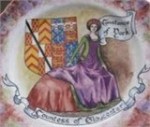

Constance of York Plantagenet had an affair with Edmund Holland after her husband was beheaded. Their daughter Eleanor is my ancestor.
Constance Plantagenet Despencer (1374 – 1416)
is my 17th great grandmother
Eleanor DeHoland (1405 – 1452)
daughter of Constance Plantagenet Despencer
Ann Touchet (1441 – 1503)
daughter of Eleanor DeHoland
Anna Dutton (1449 – 1520)
daughter of Ann Touchet
Lawrence Castellan of Liverpool Mollenaux (1490 – 1550)
son of Anna Dutton
John Mollenax (1542 – 1583)
son of Lawrence Castellan of Liverpool Mollenaux
Mary Mollenax (1559 – 1575)
daughter of John Mollenax
Francis Gabriell Holland (1596 – 1660)
son of Mary Mollenax
John Holland (1628 – 1710)
son of Francis Gabriell Holland
Mary Elizabeth Holland (1620 – 1681)
daughter of John Holland
Richard Dearden (1645 – 1747)
son of Mary Elizabeth Holland
George Dearden (1705 – 1749)
son of Richard Dearden
George Darden (1734 – 1807)
son of George Dearden
David Darden (1770 – 1820)
son of George Darden
Minerva Truly Darden (1806 – 1837)
daughter of David Darden
Sarah E Hughes (1829 – 1911)
daughter of Minerva Truly Darden
Lucinda Jane Armer (1847 – 1939)
daughter of Sarah E Hughes
George Harvey Taylor (1884 – 1941)
son of Lucinda Jane Armer
Ruby Lee Taylor (1922 – 2008)
daughter of George Harvey Taylor
Pamela Morse
I am the daughter of Ruby Lee Taylor
Constance of York (c. 1374 – 29 November 1416) was the only daughter of Edmund of Langley, 1st Duke of York and his wife Isabella of Castile, daughter of Pedro of Castile and Maria de Padilla. On about 7 November 1379, Constance married Thomas le Despenser, 1st Earl of Gloucester (22 September 1373 – 16 January 1400). He would be eventually be beheaded at Bristol.
She was involved in an affair with Edmund Holland, 4th Earl of Kent and had a daughter by him, Eleanor de Holland. Eleanor was later married to James Tuchet, 5th Baron Audley.
In 1405, during the rebellion of Owain Glyndŵr, Constance, who held Caerphilly Castle, arranged the escape of Edmund Mortimer, 5th Earl of March, from Windsor Castle, apparently intending to deliver the young earl, who had the best claim to the throne of any of Henry IV’s rivals, to his uncle Edmund who was married to Glyndwr’s daughter. The earl was recaptured before entering Wales.
When Constance died in 1416, she was buried at the High altar in Reading Abbey.
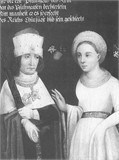
Otto and Agnes
Agnes Countess Of Rhein (1202 – 1267)
is my 21st great grandmother
Elisabeth Wittelsbach Duchess Bavaria (1227 – 1273)
daughter of Agnes Countess Of Rhein
Consort Elisabeth the Romans Carinthia (1263 – 1313)
daughter of Elisabeth Wittelsbach Duchess Bavaria
Albrecht Albert II ‘The Wise’ Duke of Austria Habsburg (1298 – 1358)
son of Consort Elisabeth the Romans Carinthia
Leopold III “Duke of Austria” Habsburg (1351 – 1386)
son of Albrecht Albert II ‘The Wise’ Duke of Austria Habsburg
Ernst I “Ironside” Archduke of Austria Habsburg (1377 – 1424)
son of Leopold III “Duke of Austria” Habsburg
Katharina Archduchess Austria Von Habsburg (1420 – 1493)
daughter of Ernst I “Ironside” Archduke of Austria Habsburg
Christof I VanBaden (1453 – 1527)
son of Katharina Archduchess Austria Von Habsburg
Beatrix Zahringen (1492 – 1535)
daughter of Christof I VanBaden
Sabine Grafin VonSimmern (1528 – 1578)
daughter of Beatrix Zahringen
Marie L Egmond (1564 – 1584)
daughter of Sabine Grafin VonSimmern
Richard Sears (1590 – 1676)
son of Marie L Egmond
Silas Sears (1638 – 1697)
son of Richard Sears
Silas Sears (1661 – 1732)
son of Silas Sears
Sarah Sears (1697 – 1785)
daughter of Silas Sears
Sarah Hamblin (1721 – 1814)
daughter of Sarah Sears
Mercy Hazen (1747 – 1819)
daughter of Sarah Hamblin
Martha Mead (1784 – 1860)
daughter of Mercy Hazen
Abner Morse (1808 – 1838)
son of Martha Mead
Daniel Rowland Morse (1838 – 1910)
son of Abner Morse
Jason A Morse (1862 – 1932)
son of Daniel Rowland Morse
Ernest Abner Morse (1890 – 1965)
son of Jason A Morse
Richard Arden Morse (1920 – 2004)
son of Ernest Abner Morse
Pamela Morse
I am the daughter of Richard Arden Morse
AGNES ([1201]-16 Nov 1267, bur Scheyern). The Notæ Sancti Emeranni record the marriage of “Otto dux Bawarie” and “filiam Heinrici palatine Rheni”. The Altahenses Annales name “Agnes ducissa Bawarie” when recording the birth of her son Ludwig.
m (Worms May 1222) OTTO von Bayern, son of LUDWIG I Duke of Bavaria, Pfalzgraf bei Rhein & his wife Ludmila of Bohemia (Kelheim 1206-Landshut 29 Nov 1253, bur Scheyern). Pfalzgraf bei Rhein 1228. He succeeded his father in 1231 as OTTO II “der Erlauchte” Duke of Bavaria.
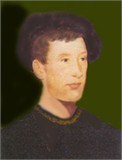
Thomas DeHoland
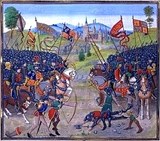
Battle of Najera
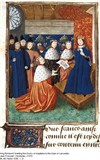
Richard II deeding Aquitaine to Lancaster
Thomas Deholand is my ancestor on both sides of my family. My maternal line looks like this:
Thomas DeHoland (1350 – 1397)
is my maternal 18th great grandfather
Edmund Holland (1383 – 1408)
son of Thomas DeHoland
Eleanor DeHoland (1405 – 1452)
daughter of Edmund Holland
Ann Touchet (1441 – 1503)
daughter of Eleanor DeHoland
Anna Dutton (1449 – 1520)
daughter of Ann Touchet
Lawrence Castellan of Liverpool Mollenaux (1490 – 1550)
son of Anna Dutton
John Mollenax (1542 – 1583)
son of Lawrence Castellan of Liverpool Mollenaux
Mary Mollenax (1559 – 1575)
daughter of John Mollenax
Francis Gabriell Holland (1596 – 1660)
son of Mary Mollenax
John Holland (1628 – 1710)
son of Francis Gabriell Holland
Mary Elizabeth Holland (1620 – 1681)
daughter of John Holland
Richard Dearden (1645 – 1747)
son of Mary Elizabeth Holland
George Dearden (1705 – 1749)
son of Richard Dearden
George Darden (1734 – 1807)
son of George Dearden
David Darden (1770 – 1820)
son of George Darden
Minerva Truly Darden (1806 – 1837)
daughter of David Darden
Sarah E Hughes (1829 – 1911)
daughter of Minerva Truly Darden
Lucinda Jane Armer (1847 – 1939)
daughter of Sarah E Hughes
George Harvey Taylor (1884 – 1941)
son of Lucinda Jane Armer
Ruby Lee Taylor (1922 – 2008)
daughter of George Harvey Taylor
Pamela Morse
I am the daughter of Ruby Lee Taylor
Thomas Holland, 2nd Earl of Kent (1350–April 25, 1397) was an English nobleman and a councillor of his half-brother Richard II.Thomas was the son of Thomas Holland, 1st Earl of Kent and Joan of Kent. His mother was a daughter of Edmund of Woodstock, 1st Earl of Kent and Margaret Wake. Edmund was in turn a son of Edward I of England and his second Queen consort Marguerite of France, and thus a younger half-brother of Edward II of England.
When his father died in 1360 Thomas became Baron Holand. His mother was still Countess of Kent in her own right. At sixteen, in 1366, Holland was appointed captain of the English forces in Aquitaine. He fought in various campaigns over the following years, and was made a Knight of the Garter in 1375.
Richard II became king in 1377, and soon Holland acquired great influence over his younger half-brother, which he used for his own enrichment. In 1381 he was created Earl of Kent.
Marriage and issue
Holland married Alice FitzAlan, daughter of Richard FitzAlan, 10th Earl of Arundel, and Eleanor of Lancaster. They had eight children:
Thomas Holland, 1st Duke of Surrey, who succeeded him
Edmund Holland, 4th Earl of Kent, married Constance of York
John Holland
Joan Holland, married Edmund of Langley, 1st Duke of York
Alianore Holland, married first Roger Mortimer, 4th Earl of March and second Edward Cherleton, 5th Baron Cherleton
Margaret Holland, married first John Beaufort, 1st Earl of Somerset and second Thomas of Lancaster, 1st Duke of Clarence
Elizabeth Holland, married Sir John Neville (eldest son of Ralph Neville, 1st Earl of Westmoreland)
Eleanor Holland, married Thomas Montacute, 4th Earl of Salisbury
Through the marriages of his daughters, he became the ancestor of many of the prominent figures in the Wars of the Roses, including Richard Plantagenet, 3rd Duke of York and Warwick the Kingmaker
Military career
At sixteen, in 1366, Holland was appointed captain of the English forces in Aquitaine. Over the next decade he fought in various campaigns, including the Battle of Nájera, under the command of his stepfather Edward, the Black Prince. He was made a Knight of the Garter in 1375.
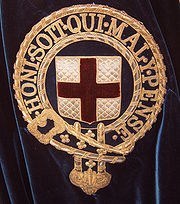
Order of the Garter
The Battle of Nájera, a k a the Battle of Navarrete, 3 April 1367
Fo ught between an Anglo-Gascon army and Franco- Castilian forces near Nájera, in the province of La Rioja, Castile. The English were led by Edward, the Black Prince, and John of Gaunt, Duke of Lancaster, allied with Peter of Castile (sometimes called “Peter the Cruel”) against his brother Henry of Trastámara (Spanish: Enrique II).
Peter and Henry had been in armed conflict, the Castilian Civil War, for some time before the intervention of foreign powers was sought. Peter begged assistance from the Black Prince in Bordeaux to restore him to his throne. James IV of Majorca also agreed to support Peter.
History
With 24,000 men, the Anglo-Gascon army marched south from Aquitaine and crossed the river Ebro at Logroño. They took control of the fortified village of Navarrete and continued towards Nájera to face Henry’s Franco-Castilian army, the latter’s strength being 60,000. Despite the large size of his army, Henry’s commander, Bertrand du Guesclin was later reported to have been reluctant to face the English in a pitched battle, but he was overruled.
The battle began with the English longbowmen gaining dominance over the French archers. Then, the English vanguard, led by Sir John Chandos and the Duke of Lancaster, attacked the French mercenaries commanded by Du Guesclin and Arnoul D’Audrehem. The chronicler Froissart gives detailed information about the participants in the battle.
Under the pennon of St. George, and attached to the banner of Sir John Chandos, were the free companies, who had in the whole twelve hundred streamers. Among them were good and hardy knights and squires, whose courage was proof; namely, Sir Robert Cheney, Sir Perducas d’Albret, Robert Briquet, Sir Garsis du Chastel, Sir Gaillard Viguier, Sir John Charnels, Nandon de Bagerant, Aymemon d’Ortige, Perrot de Savoye, le bourg Camus, le bourg de l’Esparre, le bourg de Breteuil, Espiote, and several others.
Th e Castilian cavalry, under heavy arrow fire from the English longbowmen, fled early, leaving Henry’s battle exposed to attack from the mounted English rearguard. The Franco-Castilian army disintegrated and retreated, pursued by the English, back to the bank of the river Najerilla. Du Guesclin was captured, but Henry escaped and fled.
Peter and the English completely routed Henry and the French, inflicting heavy losses. Unlike at other battles of the Hundred Years’ War, at Nájera it was the English who were attacking dismounted French troops. As with many other battles of the period, the English longbow proved a significant advantage, probably for the first time in the Iberian Peninsula. However, the battle was of dubious long-term significance as Peter and the Black Prince fell out over money, and Peter was not able to maintain his rule for long without foreign support.
References
Sir John Froissart; Translated from the French by Thomas Johnes. Chronicles of England, France and Spain and the Surrounding Countries. London 1808
My paternal connection to Sir Thomas looks like this:
Sir Thomas Holand Knight deHolland (1350 – 1397)
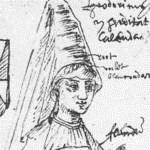
Sibilla Anjou
My 25th great grandmother was from the House of Anjou (like the pear) . Her father, Fulk, was a crusader who is buried at the Church of the Holy Sepulchre in Jerusalem, as King of Jerusalem, which is a very big deal, and pretty creepy. I have been there but did not think to look for my ancestors at the time. The Anjous are Plantagenets in that way that royal Euros had lots of different names and houses. The crusade thing is equally confusing. This is how the Anjous took over the English throne:
The Plantagenets are also called Angevins, because their immediate paternal progenitors were Counts of Anjou, an autonomous county in northern France. They descend in the male line from from the Counts of Gatinais, one of whom had married an heiress to the county, her Anjou ancestors deriving from an obscure 9th century nobleman named Ingelger. It is due to this lineage that the Plantagenets are sometimes referred to as the First House of Anjou. One of the more notable Counts was Fulk, a crusader who became King of Jerusalem. It was his son, Geoffrey, nicknamed Plantagenet, who gave his name to the dynasty, and Fulk’s grandson, Henry, was the first of the family to rule England.
Henry’ s claim to the English throne came through his mother, the Empress Matilda, who had claimed the crown as the daughter of Henry I of England. Empress Matilda’s brother William Adelin had died in the wreck of the White Ship, leaving Matilda her father’s only surviving legitimate child. However, on Henry’s death in 1135, Matilda’s cousin Stephen of Blois was supported by much of the Anglo-Norman nobility, and was able to have himself crowned instead. A tightly fought civil war known as The Anarchy ensued, with Matilda gaining support from her illegitimate half-brother, Robert, 1st Earl of Gloucester. The balance swayed both ways during the war, Matilda gained control at one point and carried the title “Lady of the English” before Stephen forced her out to Anjou. Unrest and instability continued throughout Stephen’s reign, while on the continent, Geoffrey managed to take control of the Duchy of Normandy for the Angevins in 1141 but seemingly showed no interest in campaigning across the Channel.
Sibilla went to Jerusalem where her father married the queen. Later she became a nun, like lots of my royal female ancestors:
Sibylla of Anjou (c. 1112-1165) was a daughter of Fulk V of Anjou and Ermengarde of Maine, and wife of William Clito and Thierry, Count of Flanders.
In 1123 Sibylla married to William Clito, son of the Norman Robert Curthose and future Count of Flanders. Sibylla brought the County of Maine to this marriage, which was annulled in 1124 on grounds of consanguinity. The annulment was made by Pope Honorius II upon request from Henry I of England, William’s uncle; Fulk opposed it and did not consent until Honorius excommunicated him and placed an interdict over Anjou. Sibylla then accompanied her widower father to the crusader Kingdom of Jerusalem, where he married Melisende, the heiress of the kingdom, and became king himself in 1131. In 1139 she married Thierry, Count of Flanders, who had arrived on his first pilgrimage to the Holy Land.
She returned to Flanders with her new husband, and during his absence on the Second Crusade the pregnant Sibylla acted as regent of the county. Baldwin IV, Count of Hainaut took the opportunity to attack Flanders, but Sibylla led a counter-attack and pillaged Hainaut. In response Baldwin ravaged Artois. The archbishop of Reims intervened and a truce was signed, but Thierry took vengeance on Baldwin when he returned in 1149.
In 1157 she travelled with Thierry on his third pilgrimage, but after arriving in Jerusalem she separated from her husband and refused to return home with him. She became a nun at the convent of St. Lazarus in Bethany, where her step-aunt, Ioveta of Bethany, was abbess. Ioveta and Sibylla supported Queen Melisende and held some influence over the church, and supported the election of Amalric of Nesle as Latin Patriarch of Jerusalem over a number of other candidates. Sibylla died in Bethany in 1165.
With Thierry she had six children:
Sibilla d’Anjou born about 1105 Anjou, France died 1165/67
father: *Foulques V “le Jeune” Count of Anjou & King of Jerusalemborn 1092 Anjou, France
died 10 November 1143 Jerusalem, Holy Landburied Church Of Holy Sepulchre, Jerusalem, Holy Land
mother: *Ermengarde (Ermentrude) du Maineborn about 1096 Maine, France
died 1126 Maine, Francemarried 11 July 1110 France
siblings:
*Geoffrey V “le Bon” Plantagenet born 24 August 1113 Anjou, France; died 7 September 1151 Chateau, France
Mathilde d’Anjou born about 1104 Angers, Maine-et-Loire, France; died 1154 Fontevrault Abbey, Fontevrault, Maine-et-Loire, France
Elias d’Anjou born about 1111 Anjou, France; died 15 January 1151 St Serge Abbey, Angers, Anjou, France buried L’Abbey des Sergela, Angers, France
spouse: *Dietrich (Thierry) d’ Alsaceborn about 1099 Alsace, France
died 17 January 1168married 1134
children:
*Marguerite de Lorraine born about 1135 Alsace, France died 15 November 1194
*Matthieu d’ Alsace born about 1137 Flanders, Belgium died 1214 buried St. Judoc, Ponthieu, France
 mermaidcamp