mermaidcamp
Keeping current in wellness, in and out of the water
You can scroll the shelf using ← and → keys
You can scroll the shelf using ← and → keys


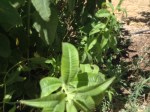
My favorite herb in the garden is lemon verbena. I like to make tea with it all the time, but there are many other uses for this luscious herb. As a bath herb it brightens and refreshes the body and mind. The fragrance is used extensively in perfumery for the lemony zest it adds. In cooking it creates a lemon taste with no bitterness or aftertaste. It can be added to baked goods, salad dressings, drinks, sauces, and fruit salads to brighten a dish. Simple syrup of lemon verbena is useful for many drink and popsicle recipes with or without alcohol. Mixed with citrus fruit it becomes a big flavor enhancer. Rice pilaf, carrot cake, gazpacho, and other dishes can benefit from a pinch of this delicious herb. Store it in a glass jar in the dark to preserve freshness.
I love herbal bathing as retreat and meditative practice. The first one I tried about 20 years ago was rosemary bath. I brewed a strong tea of rosemary and added it to my bath. This method works well, as does the brewing of the tea in the tub by running hot water over a sachet, allowing it to steep, then filling the tub. When you choose the herbs and when you enter the water you can make the entire process a mindfulness experience. Drinking tea made with the same herbs will enhance the aromatic sensory intake. I am planning to take some baths this week with matching beverages and bath herbs. If you have a favorite herb you can try this at home. If the bath is taking place at the cocktail hour I think it is suitable to include the herb in a tasty concoction from the bar that aligns with the indented purposes.
These are ideas for you to design your very own aroma world to enliven your senses and change your mood. There is an art to choosing herbs for the desired mood, but there are very few side effects that inhibit experimentation. If you like an herb you can research it fully or simply determine that it is not toxic, then try it in a bath. The effectiveness may surprise you. When all the pores of your skin are soaking in the active ingredients the results are swift. Bringing to the mind’s eye the results you want to see is the strongest link that brings this practice into the meditational realm. By creating sensory stimulation and awareness at once we step out of our normal situation and into synesthsia of our own design. We use the aroma as an anchor for our meditation. At the least you can enjoy smelling and feeling bit better from the herbal bath. At the most it can be a rebirth and transformation.
 Basil
BasilThere is a long history of perfumes and incense used in ceremony and in popular culture. The Ancient Egyptians used many fragrant oils in the embalming process. It is said that when King Tut’s tomb was opened 3000 years after it had been sealed the urns still gave off the fragrance of frankincense and other spices. Ancient Greeks called all the aromatic products they used aromata. Athletes were anointed with scented oils before competing, and bay leaves were burned at Delphi to induce trance in the priestesses who foretold the future. The Romans raised the popularity and awareness of aromatherapy to new heights. Scented oil massage was the ritual ending at the communal baths in Julius Caesar’s time. Many Roman holidays involved great quantities of scented materials. Rose petals were strewn before men of stature as they walked, and perfume was sprayed on spectators at games. In China the herbal tradition is rich and deep, and it includes the use of oils extracted from plants. They believed that the extraction of the oil liberated the soul of the plant.
Artemisia vulgaris is used in Chinese medicine for moxibustion. In ancient China some people could afford a special room for childbirth. It was called the Artemisia room because the plant was burned during labor to attract kind spirits to the mother and child. The first uses of romantic plants in Chinese healing practices date back to about 2000 BC in The Yellow Emperor’s Book of Chinese Medicine. In Japan incense and the formal art of burning it is taken seriously and used in religion. Special schools, still in existence today, teach the art of Kodo, or perfumery.
Druids burned incense for ceremonial rites, and the Celtic people continued the use. Juniper was used frequently to banish spirits for healing or magic. In Britain monasteries grew medicinal herbs and shared knowledge of plants with other monks. The Crusades brought new plants and remedies traveling back from the Holy Land with the Knights Templar and others. The plague was a time when aromatic plants were used in amulets and strewn to deter fleas, the carriers of the dread disease. The Renaissance brought even wider use of perfumery and aromatic oils in healing.
Today we have many products and options available to us. The availability of pure essential oils is much more widely enjoyed than it was 10 years ago. Products for skin and hair that contain pure oils also abound. Bath sachets, herbal teas, and hair rinses are easy water based ways to absorb botanicals through the skin. Using oils can be simple too. Simply place a few drops on a cotton ball or piece of cloth and take a whiff. Here are a couple of common and inexpensive oils to try:


My 19th great-grandfather was Speaker of the House of Commons, and asked the king to excuse him from that duty. Richard II refused to excuse him. He is buried on the north side of the parish church St. Mary at Bures in Essex. These Waldegraves must be added to the buried in church tour of Europe I need to make someday.
Sir Richard II Lord Bures De Waldegrave (1335 – 1401)
is my 19th great grandfather
Sir Richard III Lord Bures Silveste DeWALDEGRAVE (1370 – 1434)
son of Sir Richard II Lord Bures De Waldegrave
Sir John William deWaldegrave (1397 – 1454)
son of Sir Richard III Lord Bures Silveste DeWALDEGRAVE
Lady Anne De Waldegrave (1429 – 1454)
daughter of Sir John William deWaldegrave
Knight Edmond Bedingfield (1450 – 1496)
son of Lady Anne De Waldegrave
Edmund Bedingfield (1483 – 1552)
son of Knight Edmond Bedingfield
Henry Bedingfield (1509 – 1583)
son of Edmund Bedingfield
Edmund Bedingfield (1534 – 1585)
son of Henry Bedingfield
Nazareth Bedingfeld (1561 – 1622)
daughter of Edmund Bedingfield
Elishua Miller Yelverton (1592 – 1688)
daughter of Nazareth Bedingfeld
Yelverton Crowell (1621 – 1683)
son of Elishua Miller Yelverton
Elishua Crowell (1643 – 1708)
daughter of Yelverton Crowell
Yelverton Gifford (1676 – 1772)
son of Elishua Crowell
Ann Gifford (1715 – 1795)
daughter of Yelverton Gifford
Frances Congdon (1738 – 1755)
daughter of Ann Gifford
Thomas Sweet (1759 – 1844)
son of Frances Congdon
Valentine Sweet (1791 – 1858)
son of Thomas Sweet
Sarah LaVina Sweet (1840 – 1923)
daughter of Valentine Sweet
Jason A Morse (1862 – 1932)
son of Sarah LaVina Sweet
Ernest Abner Morse (1890 – 1965)
son of Jason A Morse
Richard Arden Morse (1920 – 2004)
son of Ernest Abner Morse
Pamela Morse
I am the daughter of Richard Arden Morse
Sir Richard Waldegrave (died 2 May 1401) was a member of Parliament for Lincolnshire in 1376, and Speaker of the House of Commons from 1381 to 1382, during the reign of King Richard II.
Life
His father Sir Richard Waldegrave was returned to parliament in 1335 for Lincolnshire. Richard the son resided at Smallbridge in Suffolk, and was returned to parliament as a knight of the shire in the parliament of February 1376. He was elected to the first and second parliaments of Richard II and to that of 1381. In 1381 he was elected speaker of the House of Commons, and prayed the king to discharge him from the office; the first instance, according to James Alexander Manning, of a speaker desiring to be excused. The king, however, insisted on his fulfilling his duties.
During his speakership parliament was chiefly occupied with the revocation of the charters granted to the villeins by Richard during Wat Tyler’s rebellion. It was dissolved in February 1382. Waldegrave represented Suffolk in the two parliaments of 1382, in those of 1383, in that of 1386, in those of 1388, and in that of January 1389–90.
He died at Smallbridge on 2 May 1402, and was buried on the north side of the parish church of St. Mary at Bures in Essex. He married Joan Silvester of Bures, by whom he had a son, Sir Richard Waldegrave.
Referenc es
” Waldegrave, Richard”. Dictionary of National Biography, 1885–1900. London: Smith, Elder & Co.
Attribution
This article incorporates text from a publication now in the public domain: “Waldegrave, Richard”. Dictionary of National Biography, 1885–1900. London: Smith, Elder & Co.

secret garden

lemon thyme

lemon thyme

lemon thyme
My garden is full of lemon thyme, a culinary herb I love to use for seasoning food and drinks. It is potent as a flavoring agent, and has medicinal qualities as well. It is one of the earliest recorded plants used in Western medicine. It can be helpful in treating respiratory problems, digestive disorders, and infections. It strengthens the immune system and can ease headaches and insomnia. Those with high blood pressure need to take caution when using it because thymol, the active ingredient, can prove to be too stimulating for those individuals. Lemon thyme generally contains less thymol and more linalol than red thyme, which may cause less irritation and sensitivity. To take thyme as a remedy you can brew an infusion and drink it three times a day, or make a tincture by soaking the herb in alcohol to extract the active agents and take a few drops of the tincture three times a day. Commercially thyme is used in mouthwashes, toothpastes, and cough lozenges. It is used to flavor foods and drinks as well as in the fragrance industry.
This herb was highly praised in ancient Greece and Rome. The magical significance of the plant is to strengthen the will and promote confidence. Egyptians used it in mummification, and it was used in funeral rites in other parts of the world. The ancient belief that the dead take up residence in the flowers of the thyme plant gives some extra meaning to the psychic dimension. Making a bath sachet to use as both a confidence builder and an anti bacterial boost is a pleasant and effective way to use thyme externally. Skin absorbs the active ingredients quickly during a bath, allowing a low dose to create the maximum healing. Wrap dried herbs in a cloth and brew the tea in your bath for 10 minutes or so before bathing to enjoy the benefits of this method. You keep the sachet in the tub with you so you can scrub with it and enjoy smelling it while you soak. Since I like to include the medicinal ingredients in cocktails here are some ideas:
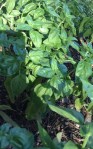


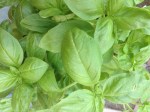

Basil is a culinary herb that has magical qualities. The different varieties add distinct flavors to dishes and drinks. You can purchase seeds for many varieties, but the most commonly used and grown is the Genovese. This very hardy herb does well in pots or in the ground. It is very tolerant of sun and thrives with minimal care. It is important to keep the flowers trimmed so the plant does not go to seed. The flowers have delicate flavor that can be used to flavor anything for which you would use the leaves. The blooms look good in cut flower arrangements, and will scent the room where they are displayed. A few common ways we see basil used are:
I love using basil in all of these traditional ways. When I find a really excellent tomato I always want to eat it with basil and fresh mozzarella. Pesto is used on everything in our house, not just for pasta. We put it on eggs, roasted veggies, potato dishes, rice, and sandwiches of all kinds. The bright green color and the bright flavor wake up any meal. I find that making a large batch with really good olive oil, roasted pine nuts, garlic and basil stores very well. I add the parmesan cheese at the time I am using it. This also allows a different proportion for each kind of use. The pesto is delicious without any cheese for those who prefer that. I have tried some really tasty cocktails that contain muddled basil for flavor. Here are some of my favorites:
That will give you some ideas to get started on your own basil concoctions to drink this summer. It is good with citrus, cucumber, and other herbs. Try a plain basil mojito to get yourself started. Basil is a prosperity herb, so you really can’t have too much of it in your food and drinks. Enjoy!

Hilton Big Horn
I was privileged to spend the weekend with a group of about 170 people who came from all over the country to a conference on the Spirituality of Healing taught by James Finley. The group included many mental health professionals and teachers who were earning credits in continuing education in their professions. Many were members of churches with meditation/prayer groups. I was new to the genre, but felt right at home in he congenial student group. I saw an ad for this in a local paper and followed up with some research into James Finley. I ordered a couple of audio books he wrote and signed up for the conference. The resort where it was held is where the Dalai Lama taught in September of 1993, so I have very fond memories of the place. The Hilton El Conquistador was turned into the the El Comtemplador for a couple of days. The hotel is dog friendly so my partner and dog could come along for a staycation away from home. It was a remarkable experience. I did not photograph the sessions or the participants because I did not want to distract myself from the teaching. I am happy I made that decision because those photos would add little to this post.
Dr. Finley is very generous with free resources on his website, His teaching in person is designed to pack the time spent together with dense, rich, profound, yet simplistic and practical ideas. His background allows him to use language of psychotherapy as well as religious language to explain his concepts. He is a brilliant speaker, but the style of presenting really enhances the message he brings. First of all, he establishes silence in the hall where the conference takes place. There is time and space outside the room to talk. On the second day the group broke bad and got noisy, so he asked that we reestablish the silence in the room. He uses humor to make his point many times, and refers to patient/clinician dialogs to shed light with specific examples. In his opening remarks he lets the audience know that trauma is a difficult and personal subject to address. He encouraged each person to leave the room, move around, take breaks as needed. He repeated several times, “To thine own self be true.” This was good for me when I decided the chairs were not sized so well for me, so I took up a spot against the wall where I had support from the wall for sitting or could even lie down. The sessions covered in sequence his Seven Steps of Spiritual Healing, which logically build upon the preceding steps. He speaks for a little over an hour to cover the material and then a 15-20 minute discussion is opened with the students. A short break for everyone is followed by the next lecture. The time is very well ordered and managed to the greatest advantage of the students. I must say the staff at the resort could not have been more pleasant and helpful, which was icing on the very tasty cake.
He shows the highest regard for the integrity of the students in his assignment of homework. He gave us several exercises to do on our own that will require a great deal of time and consideration, and then moved on to his core curriculum. If you practice you reap the benefits of practice. If you don’t, you don’t. Dr. Finley drives this point home in dramatic and impressive ways in his teaching. Not only is the task of enlightenment or healing our own responsibility, but we are doing it as a microcosm of all that is. We can only put ourselves in the position of least resistance for our desired outcome, and then let go. Deep meaning, philosophy, poetry, art and love are contained in each precious moment, available to us, and being created by us. We have all heard such statements somewhere in our past, and may believe them. What Dr. Finley offers is a system, a practice, a devotional idea to stabilize the consciousness in a state of pure love. It requires diligence and patience. He ended by giving us homework for seven years. It was the perfect wrap up for this conference. He showed how to use lexia divina, discursive meditation, and practice to move into and through the seven steps. He assigned us a step each week for seven weeks, then do that seven times (49 weeks) after a short break we were to take it up again from the beginning..seven steps, one step a week , repeated 7 times. Of course, after a break we are to start at the beginning, until we have done this practice for 7 years. I am sure some kind of heavy duty breakthrough would have to take place if we were all to do our homework. I love his optimism in assigning it. If you have a chance to study with these contemplatives, take advantage of it.

The Freaks Shall Inherit the Earth
There are different ways to approach finances, but there is only one way to count. You can count by 5’s or by 10’s but when you come up with a sum, that is reality. People today are often confused about what constitutes wealth, security, or satisfaction. One of the problems I notice is the addition of interest rates and complicated denial schemes to hide from financial reality. When people became accustomed to using credit cards many also abandoned balancing the budget. Some might believe ignorance is bliss, but when the interest rates catch up with your finances there will be no bliss for you. The popularity of Suze Orman shows how very well educated and powerful people can be financially illiterate to the point of causing agony in their lives. When I was a child there were no credit cards. The parents had metal plates that belonged to specific stores, but I don’t think there was credit advanced. The bill at the store was paid each month in full. We did not consider borrowing money to buy everything. Time was more bountiful too, so people were not strapped to decide which meeting/sporting event/social episode to choose. We had time for everything, including hopping in the car to drive across the country. I do not think we need to return to the days of yesteryear to conquer or mathematical shortcomings. I think we need a simple way to teach those who have always lived in a world with credit cards how to understand compounded interest.
Chris Brogan, one of my favorite authors, has written a book, The Freaks Shall Inherit the Earth, that offers a wonderful solution to our dilemma of rampant financial delusion. He calls it “Mortgage Math”. It is a brilliant way to compare and bring into focus money that one is contemplating spending. Instead of trudging onward randomly spending, paying, and wondering how to get out of debt he suggests that each expenditure be compared to something you buy all the time. A mortgage payment is a very common overhead expense to which people can relate. If you have to decide if what you will pay (both now and in interest) for something is worth it, just ask how it compares to your mortgage payment. This adds perspective to an otherwise never-ending spending problem that has buried many Americans in hopeless debt. I have no mortgage, but I use this system to compare anything to a trip. I want a first class ticket to Europe, plus time and money to spend months tracking down my dead ancestors in style. This adventure will be pretty pricey, and I want it more than most day to day things I might purchase. I am not really saving up for it, but rather am using it as a guideline for comparison. I am not an interest payer. I like to be an interest collector, but I still find this idea very useful for attuning with financial reality. He uses a similar formula to determine how valuable time is. By limiting meetings to 20 minutes, saying no often, and staying aware that tempus fugit, memento mori, he gives good advice to create frameworks for more abundant free time. By valuing what you already have, time and freedom of choice, you can make your own financial future more comfortable and successful. There are many good ideas in this book, but this way of looking at finances and time has great potential to help many get on track and fulfill dreams.
It is always fascinating to watch Jerry W Harris work in his blacksmith shop. The metal birds are so realistic, some even fly. His latest piece is a forged steel blue teal duck which is able to sway around on the metal mount, simulating flying. He will add some plants to finish the sculpture. I love the expression on the face of the duck, which looks happy to me. It is a blast to experience his creative process.




cheers

hotel dog
The earth appreciates that I need less travel in my life that I did when I was younger. I was a carbon hog, flying all the time. I enjoyed it and will not regret it now that I like staying at home better than ever. I got while the getting was very good, and now I fly with much more selective purposes and goals in mind. I saw a lot of the world, and plan to see more of it. I also plan to concentrate on the wonderful options available in Arizona that require little time in transit. I like the idea of maximum tourism time and minimum time on the road. We have stayed at resorts around Tucson and in Scottsdale that make us happy for different reasons. These days any hotel stay has to include our coon hound, Artemisia, who is a hotel fan. A short get away with the dog that includes some dining and walking in nature works as a retreat for the whole family. I usually like to get in the water, but since I do that at home all the time it is not my first priority when looking for a weekend location near home. There are many benefits the staycation offers the holiday maker as well as Mother Earth:
Consider a place near home that makes you want to get away, but not very far away. You might find you will come back from holiday much more rested and perhaps in harmony with the earth.

Herman and I
I listed my own IPO on Empire Avenue last July with the hope of seeing better statistics about my social media activity. I have really enjoyed the extra data complied for me, but the real fun on the Avenue is all the support the players give each other. I am done with wild speculation in my real life finances but am happy to swing from the fences to invest in new and quirky people on the Avenue. The minimum investment for a brand new kiting is 200 shares, but generally they start at a low price, so this is affordable. The best part for me is the lack of risk, although it mimics the stock market. The top four scores on your social media ratings create your stock price, along with action on your account. I do love seeing the charts of each platform and details on the activity. I am a chart freak, so I look at the EA data all the time to check my execution. When my score drops I pay attention to that platform and change the way I post and respond. Generally speaking the score is about volume of participation. In that sense it is like Klout. Unlike Klout, the scores and the elements of them are revealed on a daily basis, so you can make real time use of them.
Empire Avenue is social and helpful in the missions department. By visiting twitter streams, websites, and fan pages one becomes familiar with members and earns Empire bucks in the process. It is a really good form of advertising that exists for members only. I have not issued any missions for my own platforms, but I do enjoy meeting new people and supporting my old friends by completing their missions. I have spent less time on the Avenue than on other platforms, not really chatting and commenting in it, and yet the usefulness has surpassed other platforms. I have found it to be much more professional than LinkedIn, and more social than Facebook. The people I meet there tend to be connected on all platforms, which is pretty cool. The idea that we own shares in each other and can boost each other specifically is unique to Empire Avenue. I don’t do any other kind of gaming, but I adore the thrill of my stock price going up and my portfolio paying big dividends. Many EA participants have paid to expand their ability to purchase, etc. I have yet to spend a penny of real money, but have reaped almost a year of bountiful social profits. This may not be for everyone, but if you like the real life stock market, and also participate in social media you might like to see what Empire Avenue will do for you. If you join, let me know and I will buy some shares to kick start your price. It provides excellent cheap thrills.
 mermaidcamp