mermaidcamp
Keeping current in wellness, in and out of the water
You can scroll the shelf using ← and → keys
You can scroll the shelf using ← and → keys
The poet archetype is insightful and artistic. Symbolic language captures the spirit of a person, place or time to place it in the timeline of history. Painters paint and dancers dance to express wonder. Joy, sorrow, and the deepest amazement can be brought to the surface through art. The audience, the reader, or the viewer is symbolically imprinted by the artists’ insight and ability. Poetic styles change with language as it evolves over time. Essence is the poet’s product. Language is capable of painting subtle watercolors, and leaving haunting images with the reader. Poetic language does not always need to appear in published poems. Poetry and motion have similar qualities. There is style, strength, and expression in everything we do. If we were to become conscious of a story that is ours to tell, and begin to tell it, we will be poetic.
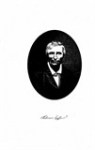
My 9th great-grandfather was one of the Quakers of Sandwich plantation who were heavily persecuted by the Pilgrims of Plymouth. He owned property when he died in New Jersey, which was controlled by the Dutch.
William Gifford arrived in New England after 1643, as he does not appear among those able to bear arms in that year. The first record of him is in the list of debts due on the inventory of Joseph Holiway of Sandwich dated 4 December 1647: “dew from Willi Gifford” 3s. 4d. On 4 June 1650 he served on the Grand Enquest. The original deed for the Sandwich plantation was executed by Governor William Bradford 22 May 1651. It ordered that Goodman (Thomas) Tupper, Goodman (Thomas) Burges, Sr., Nathaniel Willis, and William Gifford have the power to call a town meeting.Both Brown, and Daniels & McLean say that by 1651 he was married and had a family; that he probably married in England, and children John, Patience and Hannaniah were probably born in England. Birth records are available for only the last four of his nine children; the birth dates of the older children are estimated based upon the birth dates of their first children. There is a sizeable gap in these estimated dates between Hannaniah and William, suggesting William, Robert, Christopher and Mary may have been by a second wife. Only the last wife, Mary Mills, is of record; she is the mother of the last two children, Jonathan and James.
There is a record in England of a “Guilielm Gifford” (i.e., William Gifford) who married Elizabeth Grant on 11 February 1635 in St. Martin-in-the-Fields, London. Also, the London Merchant Taylors’ Guild shows a record: “William Gifford, son of Anthi (sic) Gifford of Dublin in the kingdom of Ireland, gentleman, apprenticed to Thomas Southerne of New Exchange, London, for a period of seven years from 7 December 1628.” Apprentices were forbidden to marry, so this would mean the apprenticed William Gifford would have been given his freedom 7 December 1635, in perfect time to be the one who married 11 February 1635/1636. Also, the records of St. Martin-in-the-Fields show that an Ananias Gifford married Maria Read on 18 November 1621. Ananias (also spelled Hananias, Hannaniah and Annaniah) is a relatively rare name. William named one of his sons Hannaniah, and the name has been carried down in the family. Also, the name occurs in the Giffords of Dry Drayton, county Cambridge, England. But it cannot be proven that these English records apply to the family of William Gifford of Sandwich.
Nor can the English ancestry of William Gifford of Sandwich be proven, according to Daniels & McLean. “English Giffords can be traced back to Normandy at the time of William the Conqueror when most branches usually spelled the name Giffard. Inevitably the temptation to connect the Sandwich Giffords with these celebrated families has produced a rash of printed accounts in which the connection is stated as fact but without solid references. (Cutter’s “Genealogical History of Western New York,” 2:901; “History of Bristol County, Mass.;” “Vineland (N.J.) Historical Magazine,” 3:32; “Seabury-Gifford Families,” Hartford (Conn.) 1941) In view of the fact that highly skilled professional genealogists have found no proof as yet of such connections, it can only be said that evidence has yet to be found to confirm these wishful thoughts.”
William Gifford of Sandwich was a Quaker, and as such, suffered persecution for his faith. “Little Compton Families” says “It is supposed that he was the William Gifford who in 1647 or earlier was ordered by the court at Stanford to be whipped and banished.” On 1 June 1658, he was one of a dozen men who “all of Sandwich were summoned, appeared to give a reason for theire refusing to take the Oath of Fidelitie to this government and unto the State of England, which again being tendered them in open court, they refused, saying they held it unlawful to take any oath att all.” At the court held 2 October 1658, they were fined L5 each. At the court held 1 March 1658/1659 George Barlow, Marshall for Sandwich, Barnstable and Yarmouth, complained against William Gifford and Edward Perry in an action of defamation, asking damages of L100, in saying he took a false oath. The defendants were ordered to pay 50s and make their acknowledgement publically, or else be fined L5 plus costs. As Quakers, they could not accept the verdict, and at the 2 October court William Gifford and 11 other Friends were fined L5 for refusing to take the Oath of Fidelitie. At the June 1660 court Gifford was again summoned to take the oath, again refused, and was again fined L5. In October 1660, for persisting in his refusal and for attending Quaker meeting, he was fined L57 — an enormous sum for those times. At this point he disappears from the records, and may have left Plymouth colony, but where he went is unknown. It has been suggested that he went to New Jersey which, like New Amsterdam, was then under the control of the Dutch. On 8 April 1665 William Gifford was one of the signers of the Monmouth (NJ) Patent, but there is no evidence he actually settled there; his sons Christopher and Hannaniah did, however. In a deed by his son Christopher William was described as a tailor.
On 10 November 1670 Mr. Gifford bought from mistress Sarah Warren of Plymouth, widow of Richard Warren, one half her share in the land at Dartmouth, which he gave equally to his sons Christopher and Robert by deed dated 6 May 1683. In 1673 William Gifford purchased land in Suckanesset (Falmouth) from the Indian Sachem, Job Noantico. Gifford continued to appear in Sandwich town records and in records of the Sandwich Friends meeting, and he married Mary Mills, also of Sandwich, at the Friends Meeting of 16 day 5 mo: 1683. Thirty witnesses signed the certificate, but none of William Gifford’s children signed the document, nor did James Mills, Mary’s brother.
William Gifford (1615 – 1687)
is your 9th great grandfather
John Gifford (1640 – 1708)
son of William Gifford
Yelverton Gifford (1676 – 1772)
son of John Gifford
Ann Gifford (1715 – 1795)
daughter of Yelverton Gifford
Frances Congdon (1738 – 1755)
daughter of Ann Gifford
Thomas Sweet (1759 – 1844)
son of Frances Congdon
Valentine Sweet (1791 – 1858)
son of Thomas Sweet
Sarah LaVina Sweet (1840 – 1923)
daughter of Valentine Sweet
Jason A Morse (1862 – 1932)
son of Sarah LaVina Sweet
Ernest Abner Morse (1890 – 1965)
son of Jason A Morse
Richard Arden Morse (1920 – 2004)
son of Ernest Abner Morse
Pamela Morse
I am the daughter of Richard Arden Morse
I have been hearing a lot about the Maker House downtown, so today I dropped off some of my old Christmas decorations and took a tour of the space with Lisa. What a fabulous space!!!! I plan to go back over the weekend for the tree trimming party. I want to learn how to use the programmed sewing machines and the 3D printers. This is exactly the kind of development that will make downtown vibrant and economically sustainable. I enjoyed a very tasty cappuccino before I left, then came right home and joined on line. I think this is just what the fun doctor ordered. I always like old and well designed buildings. It is great that this one has opened to the public.
Dancing in our heads in December are sugar plums, even if we don’t know what they are. I started making them years ago after I looked them up in a cookbook. I mix and match any dried fruits and nuts for the desired texture. I am not a fan of fennel or anise, so I never use those spices. You can choose the ones you prefer. I like the drunk ladies’ addition of the orange peel, and I plan to incorporate it this year. I am also stalking an exotic date found only in Scottsdale, the Black Sphinx. I am going up soon on a visit and will bring these delicate beauties home for an extra special batch of sugar plums. Dates are extra sticky and sweet, and lend themselves well to this treat. If you have not tried to make this, it is almost impossible to fail, so give it a whirl. They are universally liked by all ages.
In the tropical part of the world Christmas is celebrated differently. Aguinaldos are songs that people sing during the season. The man above is playing an instrument I have not seen, the Puerto Rican cuatro ( which seems to have 8 strings and be pretty big). The traditions differ, but where I lived in Venezuela, the parranda, or band of musical merry makers, went from house to house singing, drinking and then taking the family with them along to the next house. Unlike Christmas caroling, this parranda gets bigger and more spirited as the night continues. They usually came to my house last because my dad was their boss (everyone who lived in the petroleum camp) and it was fitting that he supply the alcohol for the majority of the evening. They came with harps and cuatros, guitars and furucos, cramming into our large central courtyard and rushing the bar. They made up improvisational songs about our house and our family, a la calypso (which comes from neighbor Trinidad). Many of the songs were funny and had nothing to do with Jesus. Some people think of Christmas and snow, and that is fine, but there is more to December than sleighs and gluttony. Here are some religious Venezuelan aguinaldos. I do like to hear the Mormans ripping a Hallelujah Chorus or two, but I am also very nostalgic about the memory of my tropical Christmas fun. Feliz Navidad!
When our parents told us about Santa they may have introduced the trickster archetype. They meant to transcend stuffy conventional behavior by using a character who rides in a reindeer sleigh. They created a fairy tale about being good little girls and boys in order to influence us. They fooled us, some more, some less. I remember finding the matching Ginny doll ( she was before Barbie, and younger with flat feet) dress my mother was sewing hidden in a drawer before Christmas. I knew it was going to become a surprise from Santa, and I instantly activated my own trickster archetype in order to make my parents keep up the heavy duty gifting. The double tricking, which was probably known to all, lasted until I felt the need to tell them I had busted them and was no longer in need of a Santa Claus.
Kids in other cultures are taught different stories about Christmas. Traditional celebrations frequently predate Christianity, but have blended now with church practices. Krampus, aka Shmutzli, is the dark, scary-hairy dude who travels with St. Nicholas on Dec 6. They have the job of scaring all the children into good behavior for the following three weeks. Only the well behaved kids will be gifted by the baby Jesus on the night before Christmas when he flies around and enters their windows with presents. Advent is typically a big deal in Europe, as is Three Kings Day. They spread it out over a longer period, not so much focus on 25 Dec and buying all the goods in the world. December 6th is officially Krampus Day in Austria, which they enjoy with much costuming and scary monster gear, like torches. I was once in Vienna on Krampus Day and came upon one in the night..they jump out and shock the bejezuz out of you. Krampus is much more popular in Austria than Santa, I think because he is more exciting. He is often seen hanging from rear view mirrors in December in Austria.
My physical space is crowded as much as my digital space. I plan to use the month of December to remove all kinds of paper records, clothing, household items, and energy in general that I am not using. My closet is in dire straights because I have not taken my summer clothing to the barn for the winter. I have twice ( at least ) the amount of clothing than I can fit in my closet, just bursting and dripping off the shelves. I am sure that I can donate at least half of the summer clothes to a thrift store and never miss them. All real and digital items that are not in use must go. The clutter will not go away by itself in my computer, barn, or office files. In December I will:
The month of cleansing will make my office, my home, and my body cleaner and more spacious. The mind works best in beautifully designed spaces, and although I love my home I have allowed it to become too crowded. I feel that restoration follows a good purge of unwanted goods and energy. I purposely have a desk with a glass top. When it is clear and all clean I adore my desk. I know in my heart I am happiest when I feel order, clarity, and well organized space. I have no desire to acquire. I want to feel more like a zen monk and less like a consumer of objects. The darkest days are ahead, and this is the perfect time to make way for an abundant spring, by clearing space and time. I am into it, and I am sure all those things would rather go be used than spend another year in the back of my closet.
All good things must come to an end. My month of blogging daily has been a good practice. NaBloPoMo, the challenge, officially ends today. I had not participated in any blogging events before this one, and have found many new blogs I enjoy reading during the month. BlogHer is very well organized and vast. Now that I have been there for a month, I think I will look around more and learn how the whole site really works. The blogging conference they hold each year is popular and well attended. In 2014 it will be in San Jose, CA. I am not too excited about conferences in general, and big ones like this are even less appealing. I do believe I can enjoy meeting and reading other bloggers who participate without getting on a plane and seeing them in person. I appreciate the opportunity to join in the fun from my own office. Next November I think I will prepare by making an editorial calendar. The best part of reading new blogs is the variety. I am constantly amazed by the creative and imaginative work I find in blogs. Finding new work I like to read is like finding buried treasure. The discipline of producing a post every day was good, but even better was the fantastic artistic energy of the entire group of participants. I expect it gets bigger each year. Next November, instead of growing a mustache, consider blogging daily…(They are not mutually exclusive, and many blog about their mustaches).
Without Julia Child America might never have learned technique.
When we celebrate the holiday of food, her presence is floating across the nation bidding us all a “bon appetite”. This PBS tribute to her career is a blast. Enjoy! Happy Feast, America.
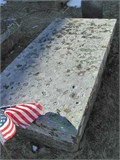
grave

Dr John
My 9th great-grandfather bought Shawomet, Warwick, RI for 144 fathoms of wampum:
Dr. John Greene was the fourth and youngest son of Sir Richard Greene, of Bowridge Hall. He was born in 9 Feb 1597 at Salisbury, Wiltshire, England. He came to Warwick, Rhode Island, sailing on the ship “James” 5 April 1635, arriving in Boston, Massachusetts, 3 June 1635. He moved his family to Providence, Rhode Island in 1637 all four of his sons being born in England. John born 15 Aug 1620, Peter born 10 Mar 1622, James born 21 Jun 1626, Thomas born 4 Jun 1628. His wife and sons all lived out their lives and are buried in Warwick, Rhode Island. He was one of the original 12 members of the Baptist Church. In January 1643, he and 10 others bought from Miantonimoh, Chief of the Narrowgansets (Native American Tribe), for 144 fathoms of Wampun, the tract of land called Shawomet (Warwick, Rhode Island). — A fathom (six feet of strung beads) of white wampum was worth ten shillings and double that for purple beads. A coat andBuskins “set thick with these Beads in pleasant wild works and a broad Belt of the same (Josselyn 1988: 101)” belonging to King Philip (Wampanoag) was valued at Twenty pounds. Even in the 1600s there was noted distinctiveness of Native-made wampum and the inability of others to counterfeit it, although attempts at imitations included beads of stone and other materials. — In 1644 Dr. John Greene went to England with Samuel Gorton and Randall Holden, returning in 1646, their mission successful. John Greene was Commissioner from 1654-57, Deputy Governer 1654. He married his first wife, Joan Tattersall, at Salisbury, England in St. Thomas Church, 4 Nov. 1619. Dr. John Greene died 11 Mar 1658. He is buried next to his wife Joan.
He married often and well:
JOHN GREENE, Surgeon, the progenitor of the Warwick Greenes, was the son of Richard and Mary (Hooker) Greene, and was born on his father’s estate at Bowridge Hill in the parish of Gillingham, County Dorset, England, about 1590. Though not so recorded, dates before and after him would seem to determine this as the year of his birth. His father, Richard, grandfather Richard, and great-grandfather, Robert, had for nearly one hundred years before him resided at Bowridge Hill, and were undoubtedly a branch of the Northamptonshire family of Greene through a younger son.
The mother of John Greene, surgeon, Mary Hooker, was the daughter of John Hooker (alias Vowell), who was born at Exeter, England, about 1524, his father, Robert Hooker, having been mayor of that city in 1520.
John Greene removed early to Sarum (Salisbury), the county town of Wiltshire, and was there married at St. Thomas’s Church,’ November 4, 1619, to Joanne Tattershall (or, as it was written on the church register, “Tatarsole”). Nothing is definitely known of her English connections. The name is frequently found in early records among post-mortem examinations, parliamentary writs, and charters, and is variously written Tatersall, Tateshall, Tatashall, Tatershal, and Tattershall. The first of the family of whom we have mention came in with William the Conqueror and obtained the lordship of Tattershall in Lincolnshire, where he seated himself and from which he took his surname. His descendants were seated in Berkshire and Norfolkshire, and were held in high repute. It is probable that other branches located in other counties, and it is not improbable to suppose that Joanne the wife of John Greene, who emigrated to America from Salisbury, County Wilts, was a connection of the family of George Tattershall, who was seated at Stapleford, County Wilts, which is about five miles distant from his Salisbury home ; but as yet this relationship has not been proved. The following note, recently received by the compiler in answer to an inquiry about records at Stapleford, may be of interest in this connection
“Stapleford Vicarage, Salisbury,” October 18, 1900.
“Madam: I have received your letter of the 25th September, but regret to say that I cannot help you in your research, as the Stapleford Register begins only with the year 1637. “J. F. D. HOERNLE, “Vicar of Stapleford.” [Joanne Tattershall ‘s marriage date was 1619, eighteen years earlier.]
The marriage of John Greene and the baptisms of all his seven children, recorded in the Parish Register of St. Thomas’s Church at Salisbury, England, are still extant. He is therein styled “Mr.” and “Gent,” a mark of some distinction at that date.” He resided at Salisbury with his family, following his profession, for about sixteen years. On April 6, 1635, he was registered for embarkation at Hampton, England with his wife and six children (one having probably died in England before this date),” in the ship James, of 200 tons, William Cooper, Master, for New England.” After a voyage of fifty-eight days he arrived at Boston, Mass., June 3, 1635. He first settled at Salem, Mass., where he was associated with Roger Williams, purchasing or building a house there, but soon after Mr. Williams’s flight from Salem (1636) he sold it and, joining Williams at Providence, secured his home lot, No.15, on the main street. He was one of eleven men baptized by Roger Williams, and one of the twelve original members of the first Baptist church on this continent, organized at Providence, R. I. He was the first professional medical man in Providence Plantations. He is alluded to in Goodwin’s Pilgrim Republic (p. 407) as “one of the two local surgeons” at Providence in 1638, though we are told “the people of Providence relied solely upon him for surgical aid long after his removal to Warwick in 1643.”
His first wife, Joanne Tattershall , the mother of all his children, died soon after his removal to Rhode Island and it is supposed was buried at Conimicut, Old Warwick (?). He married (2) ” Ailsce (Alice) Daniels, a widow” (recorded as proprietor of a home lot in Providence, 1637). They removed to Warwick, 1642-3. At the time of the persecution of the Shawomet pioneers (October, 1643), when “forty mounted and armed men,” sent from Boston to arrest them, fired over their houses, the women and children fled to the woods. Fright and exposure caused the death of the (second) wife of John Greene. (It seems more probable that this was the wife who was buried at Conimicut.) Samuel Gorton wrote of this attack of the Massachusetts troops: ” Afflicting our wives and children, forcing them to betake themselves some into the woods among the Indians, suffering such hardships as occasioned the death of divers of them, as the wife of John Greene, as also the wife of Robert Potter.” Judge Staples, in his Annals of Providence, mentions the fact that the second marriage of John Greene was not recorded, but he found evidence in Probate Records, where mention is made of the son of Alice Daniels as “John Greene’s stepson.”
Evidence of this marriage is also given in the following item:
“In the division of 52 House lots John Greene senior had lot between Thomas James on the North and John Smith on the South, and he inherited the lot of Alice Daniels his second wife between Wm. Harris on the North and John Sweet on the South” {Rhode Island Colonial Records [Printed], vol. i., p. 24).
In files. City Clerk’s office. Providence, is a book containing “A revised List of Lands and Meadows as they were originally lotted for the beginning of the Plantations of Providence in the Narragansett Bay in New England unto the [then] inhabitants of the said Plantations until anno i6—-.”
First in order are the “home lots,” beginning at the Mile-end Cove, south end of town, between Fox Point and Wickenden Streets, lots all bounded by Town (Main) Street on the west and by what is now Hope Street on the east. The name of Alice Daniels is found on this list.
Mr. Greene was married (3) in London, England, about 1644, to Phillippa (always written Phillip), who returned with him to Warwick, R. I., 1646. Her family name is not known. She died at Warwick, March 11, 1687, aged about eighty-seven years, having survived her husband for nearly thirty years.’ In further support that his third wife was from London we quote the words of Samuel Gorton, who, in a letter from Warwick addressed ” to Edward Calverly at his house by the east end of Christ Church in Newgate Market, London,” and dated November 20, 1649, wrote of this last wife of John Greene: ” Your auld neighbour, our loving friend, Mrs. Greene, hath writ a letter of advise to you [which] made me laugh not a little, which I heartily wish may come to your hands. She laies out the benefights of these parts better than I could have advised to have done. She takes well with the country and cheerfully performs her place [part], hath the love of all, non can open their mouth against her, which is a rare thing in these parts.”
Excerpt from the Book Title: The Greenes of Rhode Island, with historical records of English ancestry, 1534-1902 Author: General George Sears Greene (1801-1899) Publisher: Knickerbocker press Published in: New York Date of Publication: 1903 The Excerpt is Pages 54 – 56 The Document was retrieved from http://www.archive.org/details/greenesofrhodeis00gree
 mermaidcamp