mermaidcamp
Keeping current in wellness, in and out of the water
You can scroll the shelf using ← and → keys
You can scroll the shelf using ← and → keys

Entrance to Old Sound Cemetery, also known as the Tomac Burying Grounds
“William Mead, born in England, about 1600, probably sailed from Lydd, County Kent, England, in the ship, Elizabeth, Captain Stagg, April 1635, for the Massachusetts Bay Colony; first settled in Wethersfield, Connecticut; removed to Stamford, Connecticut, in 1641, where he died about 1663. His wife died at Stamford, Sept. 19, 1657. Their children were: Joseph, Martha, and John. Joseph and John settled in the town of Greenwich. See “History & Genealogy of the Mead Family”, Spencer Mead.”
THE MEAD FAMILY
The Mead Family of Greenwich, Fairfield Co., Conn. was originally from England, and came to this country shortly after the Mayflower had landed its load of Pilgrims on the shores of Massachusetts. It has generally been the tradition in the family that two brothers came over; that one stopped at the Eastward, while the other came to Horse-Neck. That two brothers or possibly three, came over is very probable, as it would not be natural for one to come alone, could he find a relative to join him in his adventures. In the “History of Lexington, Mass.” we find that Gabriel Mead was one of the earliest settlers of that place, as also David. The dates of their arrival, and of William of Horse-Neck (or rather Stamford) agree with one another, leading to the conclusion that all three were near relatives; furthermore the Coat-of -arms of both branches is identical, which is almost proof positive. It is not fully detemined from what part of England the Connecticut family came; but searches that have been made there seem to show a starting place somewhere near London, possibly Greenwich, Co. Kent.
The first record of any Mead in Fairfield Co. is the following in Stamford Town Records: “Dec. 7, 1641, William Mayd received from the town of Stamford, a homelot and 5 acres of land.” This William was undoubtedly the ancestor of the Fairfield Co. Meads. His wife died Sept. 19, 1657. We have record of three children. Joseph, born in 1630, the ancestor of the Ridgefield and North Fairfield Co. Meads; Martha, who married John Richardson, of Stamford, and John, the ancestor of the Horse-Neck Meads. The two sons, Joseph 2 and John 2, seem to have migrated (though if proved only a temporary sojourn) to Hempstead, L. I.
John 2 removed from Hempstead, L. I. to Greenwich (Horse-neck) in 1660. It was in this village that he purchased land; the date of the deed is Oct. 26, 1660, and is as follows, verbatim et literation.
These presents witnesseth an agreement made between Richard Crab of Grenwich, on ye one side & John Mead of Hemstead on Long Island on ye other side, viz: ye sd Richard Crab hath sould unto ye sd John Mead all his houses & Lands yt sd Richard Crab hath in Grenwich with all ye Apurtenances. Rights & Privileges & Conveniences yt doth belong unto ye sd houses & lands or shall here after belong unto them namely ye house yt Rechard Crab liveth in. Ye house yt Thomas Studwell liveth in with ye Barne yt is on ye other side of ye hyewaye; also ye home lott ye house stands on being bounded with a fence about them Lying on ye North west side against ye home lott also Eightene Acres of Land in Elizabeth neck more or less being bounded on ye sea on ye East ans south east and a fence on ye west norwest & ye north. Also ye Rig (ridge?) with five acres of Meadow Lying in it more or les. Ye rig being bounded by ye Sea on ye south east. Williamses Land on the east & a fence on ye northwest. Ye hye waye & hubert (Hubbard?) & angell Husted land on ye west; also three acres of meadow in ye Long meadow & one acre of Meadow by ferris bounded by Jeffere Ferris land on ye southwest and ye Cove on ye west and northwest: ye hyewaye on ye East & northeast & five acres of meadow in myanos neck. All these above spesiffied I do acknoledge to have sould unto ye above sd John Mead. His heaires & asignes fully & freely to be posses forever & for ye just & full performance hereof I have hereunto subscribed my hand Ann 1660 October 26 Daye.
Richerd Crabb
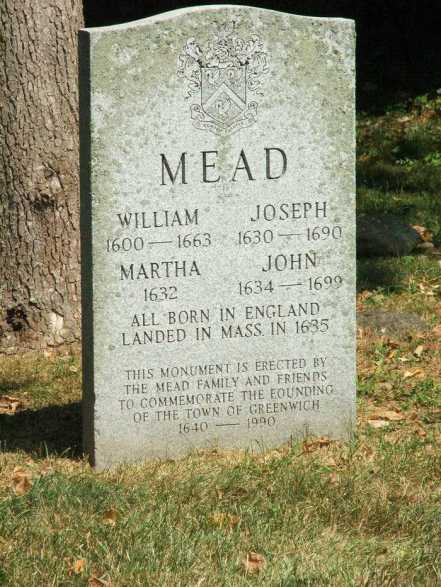
Tomac Burying Grounds
William Mead (1600 – 1659)
9th great-grandfather
John Mead (1634 – 1699)
son of William Mead
Benjamin Daniel Mead (1667 – 1746)
son of John Mead
Mary Mead (1724 – 1787)
daughter of Benjamin Daniel Mead
Abner Mead (1749 – 1810)
son of Mary Mead
Martha Mead (1784 – 1860)
daughter of Abner Mead
Abner Morse (1808 – 1838)
son of Martha Mead
Daniel Rowland Morse (1838 – 1910)
son of Abner Morse
Jason A Morse (1862 – 1932)
son of Daniel Rowland Morse
Ernest Abner Morse (1890 – 1965)
son of Jason A Morse
Richard Arden Morse (1920 – 2004)
son of Ernest Abner Morse
Pamela Morse
I am the daughter of Richard Arden Morse
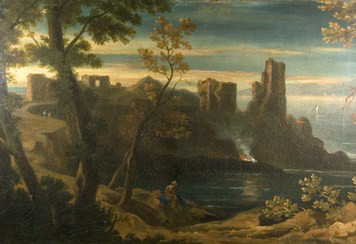
birthplace, Turnberry Castle


This is one of the ways I descend from the famous badass, Robert the Bruce:
Robert Bruce (1274 – 1329)
21st great-grandfather
Marjorie Bruce (1297 – 1316)
daughter of Robert Bruce
Robert II, King of Scotland, Stewart (1316 – 1390)
son of Marjorie Bruce
Robert Scotland Stewart (1337 – 1406)
son of Robert II, King of Scotland, Stewart
James I Scotland Stewart (1394 – 1434)
son of Robert Scotland Stewart
Joan Stewart (1428 – 1486)
daughter of James I Scotland Stewart
John Gordon (1450 – 1517)
son of Joan Stewart
Robert Lord Gordon (1475 – 1525)
son of John Gordon
Catherine Gordon (1497 – 1537)
daughter of Robert Lord Gordon
Lady Elizabeth Ashton (1524 – 1588)
daughter of Catherine Gordon
Capt Roger Dudley (1535 – 1585)
son of Lady Elizabeth Ashton
Gov Thomas Dudley (1576 – 1653)
son of Capt Roger Dudley
Anne Dudley (1612 – 1672)
daughter of Gov Thomas Dudley
John Bradstreet (1652 – 1718)
son of Anne Dudley
Mercy Bradstreet (1689 – 1725)
daughter of John Bradstreet
Caleb Hazen (1720 – 1777)
son of Mercy Bradstreet
Mercy Hazen (1747 – 1819)
daughter of Caleb Hazen
Martha Mead (1784 – 1860)
daughter of Mercy Hazen
Abner Morse (1808 – 1838)
son of Martha Mead
Daniel Rowland Morse (1838 – 1910)
son of Abner Morse
Jason A Morse (1862 – 1932)
son of Daniel Rowland Morse
Ernest Abner Morse (1890 – 1965)
son of Jason A Morse
Richard Arden Morse (1920 – 2004)
son of Ernest Abner Morse
Pamela Morse
I am the daughter of Richard Arden Morse
Robert The Bruce was born on 11 July 1274, probably in Turnberry Castle. He was descended from Scots, Gaelic and English nobility. His mother, Countess Marjorie of Carrick, was heir to a Gaelic earldom.
Robert’s grandfather, Robert Bruce ‘The Competitor’, was one of the claimants to the Scots throne. Bruce’s father, Robert de Brus of Annandale, fought in Wales for Edward I, was made governor of Carlisle Castle and fought on Edward’s side at the Battle of Dunbar in 1296. The Bruces refused to support John Balliol’s kingship and stayed close to Edward I. Balliol gave Bruce lands to the Comyns.
In 1298 Robert the Bruce became a guardian of Scotland alongside his great rival John ‘Red’ Comyn of Badenoch, and William Lamberton, Bishop of St Andrews. When Bruce and Comyn quarrelled Bruce resigned as guardian. In 1302 Bruce submitted to Edward I and returned ‘to the King’s peace’. Bruce married Elizabeth de Burgh.
Robert the Bruce’s father died in 1304. Bruce now had a viable claim to the throne. On 10 February 1306 Bruce met John Comyn of Badenoch at Greyfriars Kirk in Dumfries. A fight broke out, daggers were drawn and Bruce killed Red Comyn by the altar. The Pope excommunicated Bruce but Robert Wishart, Bishop of Glasgow, absolved him and made plans for Bruce to quickly take the throne. On 27 March 1306, Isobel of Fife, Countess of Buchan, crowned Bruce at Scone. His inauguration was small and hastily arranged but Robert Bruce was now King of Scots.
To Edward I the usurper King Robert was a rebel to be crushed. Edward’s reprisals were swift and brutal. Bruce was defeated at Methven. His wife, daughter and sisters were captured and imprisoned in England. Countess Isobel was locked in an iron cage at Berwick while Bruce’s brothers were hanged, drawn and beheaded. Bruce fled Edward’s wrath and spent a long winter hiding on the islands off the west coast and Ireland.
Bruce began a guerrilla war and struck at his enemies. His forces defeated Edward’s men at Glen Trool and Loudon Hill, then Edward I finally died in July 1307 – Bruce now faced Longshanks’ son, Edward II.
Bruce attacked his Scots enemies – destroying Comyn strongholds along the Great Glen and harrowing Buchan and the north east. His men cut a bloody swathe through Galloway and the south west.
One by one Scotland’s castles fell to Bruce and his supporters. Bruce had the castles ‘slighted’ – walls were torn down and defences were raised to the ground – the fortresses were made useless to an invading English army. As more castles fell more nobles pledged support to Bruce.
In 1314 Bruce watched Edward II’s army march toward Stirling Castle. Edward II had been given a year to relieve the besieged English force at Stirling or surrender the castle. Their forces met at the Battle of Bannockburn on 23 and 24 June 1314. Thousands died as the Scots defeated Edward’s army. The river was choked with the dead as Edward II fled the field and returned to England.
Bannockburn was not the end of Bruce’s struggle but it was a turning point. Captured English nobles were traded for his family and King Robert I gained international recognition. The Scots took the final English stronghold at Berwick in 1318 but Edward II still claimed overlordship of Scotland. Two years later the Scots sent a letter to the Pope – the Declaration of Arbroath – as part of an ongoing battle of words.
In 1327 Edward II was deposed by his Queen, Isabella. He was murdered in captivity. The English made peace with the Scots and renounced their claim of overlordship. The Black Rood, taken by Edward I, was returned to the Scots. It seemed that Bruce had finally won.
Robert the Bruce retired to Cardross near Dumbarton on the Firth of Clyde. He lived peacefully in a comfortable mansion house until his death on 7 June 1329. He asked that James Douglas take his heart on crusade. Bruce’s body was buried at Dunfermline Abbey, by his wife Elizabeth’s side, beneath an alabaster tomb. Bruce’s heart was finally buried at Melrose Abbey.
In the 1370s the Scots poet John Barbour wrote of Bruce, the hero-king, in ‘The Brus’.
Robert I, known as Robert the Bruce, was the king of the Scots who secured Scotland’s independence from England.
Here is another lineage:
Robert I “The Bruce” Bruce, King of Scotland (1274 – 1329)
21st great-grandfather
Margaret Bruce (1307 – 1346)
daughter of Robert I “The Bruce” Bruce, King of Scotland
John Glen (1349 – 1419)
son of Margaret Bruce
Isabel Glen (1380 – 1421)
daughter of John Glen
Isabel Ogilvie (1406 – 1484)
daughter of Isabel Glen
Elizabeth Kennedy (1434 – 1475)
daughter of Isabel Ogilvie
Isabella Vaus (1451 – 1510)
daughter of Elizabeth Kennedy
Marion Accarson (1478 – 1538)
daughter of Isabella Vaus
Catherine Gordon (1497 – 1537)
daughter of Marion Accarson
Lady Elizabeth Ashton (1524 – 1588)
daughter of Catherine Gordon
Capt Roger Dudley (1535 – 1585)
son of Lady Elizabeth Ashton
Gov Thomas Dudley (1576 – 1653)
son of Capt Roger Dudley
Anne Dudley (1612 – 1672)
daughter of Gov Thomas Dudley
John Bradstreet (1652 – 1718)
son of Anne Dudley
Mercy Bradstreet (1689 – 1725)
daughter of John Bradstreet
Caleb Hazen (1720 – 1777)
son of Mercy Bradstreet
Mercy Hazen (1747 – 1819)
daughter of Caleb Hazen
Martha Mead (1784 – 1860)
daughter of Mercy Hazen
Abner Morse (1808 – 1838)
son of Martha Mead
Daniel Rowland Morse (1838 – 1910)
son of Abner Morse
Jason A Morse (1862 – 1932)
son of Daniel Rowland Morse
Ernest Abner Morse (1890 – 1965)
son of Jason A Morse
Richard Arden Morse (1920 – 2004)
son of Ernest Abner Morse
Pamela Morse
I am the daughter of Richard Arden Morse
Both connect with Anne Dudley, my famous poet ancestor. One went through the Gordons for many generations, and the other went though the Kennedy family.
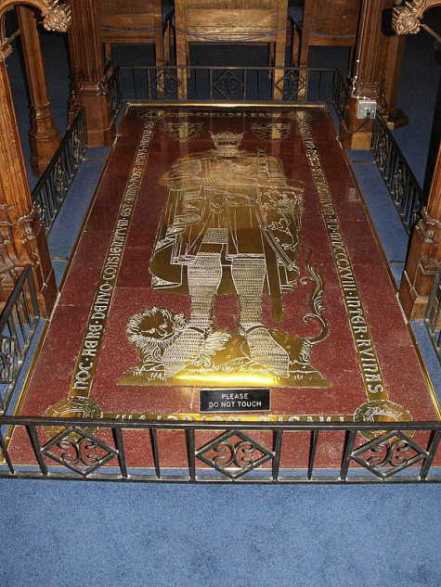
Robert’s grave
Robert was born on 11 July 1274 into an aristocratic Scottish family. Through his father he was distantly related to the Scottish royal family. His mother had Gaelic antecedents. Bruce’s grandfather was one of the claimants to the Scottish throne during a succession dispute in 1290 – 1292. The English king, Edward I, was asked to arbitrate and chose John Balliol to be king. Both Bruce and his father refused to back Balliol and supported Edward I’s invasion of Scotland in 1296 to force Balliol to abdicate. Edward then ruled Scotland as a province of England.
Bruce then supported William Wallace’s uprising against the English. After Wallace was defeated, Bruce’s lands were not confiscated and in 1298, Bruce became a guardian of Scotland, with John Comyn, Balliol’s nephew and Bruce’s greatest rival for the Scottish throne In 1306, Bruce quarrelled with Comyn and stabbed him in a church in Dumfries. He was outlawed by Edward and excommunicated by the pope. Bruce now proclaimed his right to the throne and on 27 March was crowned king at Scone. The following year, Bruce was deposed by Edward’s army and forced to flee. His wife and daughters were imprisoned and three of his brothers executed. Robert spent the winter on the island off the coast of Antrim (Northern Ireland).
Returning to Scotland, Robert waged a highly successful guerrilla war against the English. At the Battle of Bannockburn in June 1314, he defeated a much larger English army under Edward II, confirming the re-establishment of an independent Scottish monarchy. Two years later, his brother Edward Bruce was inaugurated as high king of Ireland but was killed in battle in 1318. Even after Bannockburn and the Scottish capture of Berwick in 1318, Edward II refused to give up his claim to the overlordship of Scotland. In 1320, the Scottish earls, barons and the ‘community of the realm’ sent a letter to Pope John XXII declaring that Robert was their rightful monarch. This was the ‘Declaration of Arbroath’ and it asserted the antiquity of the Scottish people and their monarchy.
Four years later, Robert received papal recognition as king of an independent Scotland. The Franco-Scottish alliance was renewed in the Treaty of Corbeil, by which the Scots were obliged to make war on England should hostilities break out between England and France. In 1327, the English deposed Edward II in favour of his son and peace was made with Scotland. This included a total renunciation of all English claims to superiority over Scotland. Robert died on 7 June 1329. He was buried at Dunfermline. He requested that his heart be taken to the Holy Land, but it only got as far as Spain. It was returned to Scotland and buried in Melrose Abbey.
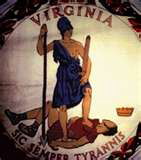
Virginia Colony
My seventh great-grandmother’s grandfather was John Washington of Surry Co, VA. (See the Washington information from Louise Ingersoll’s book.) She inherited 200 acres of Surry Co. land from her father. That land was sold 2/19/1734. After Sampson died, she went into NC to live with her son James. On 22 Nov 1757 Edward Goodrich, Isaac Rowe Walton and John Maclin, gentlemen, laid off and assigned to Elizabeth Lanier, widow of Sampson Lanier, deceased her dower of said Sampson’s estate.
She remarried after Sampson died. Marriage bond, dated 23 July 1758 on file Brunswick Co, VA, shows Elizabeth Lanier,widow, marrying Cuthbert Smith, and an order dated
27 Feb 1759 appointed Cuthbert Smith guardian of Rebecca Lanier,orphan of Sampson Lanier, and an order dated 5 Sept 1759 appointing Lemuel Lanier as guardian for Burwell Lanier, Buckner Lanier, Winifred Lanier, Martha Lanier and Anne Lanier.
My seventh great-grandfather, Sampson Lanier, was born in 1681 and died in 1743.
Third son of John Lanier, Jr. born Charles City County 1681 (by deposition made in Surry Co. March 21, 1738), first appears in contemporary records as a “Tithable” in the upper end of Surry County above Stony Run in 1701. Richard Washington’s will leaves 200 acres of land to his daughter, Elizabeth, and leaves to his son-in-law, 200 acres lying in the Isle of Wight. Sampson Lanier sold this land which is now a part of Southhampton County; in February of 1734, Sampson
and Elizabeth Lanier sold the 200 acres of land given her by her father. They moved to Brunswick County before 1740. Sampson Lanier was a Justice, a Vestryman of St. Andrews, and, at one time, on the School Board. His will, dated 8 Jan. 1743, was proved on 5 May 1743. It lists their children as Thomas, Lemuel, Sampson, Richard, Elizabeth, and James. He married about 1706 in Surry, Elizabeth, daughter of Richard Washington (1660 Virginia – 1725 Virginia) & Elizabeth Jordan of Surry County, VA, and granddaughter of Major John Washington (born England 1632) of Surry County, VA. (See pp 40-41, Ingersoll.) She died in Pitt County, NC. Major John Washington was first cousin to Colonel John Washington of Westmoreland County, VA and was the Great Grandfather of George Washington, first President of the United States.
Elizabeth Washington (1689 – 1773)
7th great-grandmother
Elizabeth Lanier (1719 – 1795)
daughter of Elizabeth Washington
Martha Burch (1743 – 1803)
daughter of Elizabeth Lanier
David Darden (1770 – 1820)
son of Martha Burch
Minerva Truly Darden (1806 – 1837)
daughter of David Darden
Sarah E Hughes (1829 – 1911)
daughter of Minerva Truly Darden
Lucinda Jane Armer (1847 – 1939)
daughter of Sarah E Hughes
George Harvey Taylor (1884 – 1941)
son of Lucinda Jane Armer
Ruby Lee Taylor (1922 – 2008)
daughter of George Harvey Taylor
Pamela Morse
I am the daughter of Ruby Lee Taylor
Richard Washington’s will, dated November 9, 1724, leaves 200 acres of land to his daughter Elizabeth Lanier, “land where she now lives”; he leaves to his son-in-law, Sampson Lanier, 200 acres lying in the Isle of Wight. On March 23, 1732, Sampson Lanier sold the above 200 acres to the Vestry of Nottingham Parish, now Southampton County. On February 19, 1734, Sampson and Elizabeth Lanier sold the 200 acres of land given her by her father, and before 1740 they had moved to Brunswick County, Virginia. Sampson was a Justice, a Vestryman of St. Andrews, and at one time he was on the school board.
Sampson Lanier died about May 15, 1743 in Brunswick County, Virginia. Elizabeth died about 1773 in Pitt County, North Carolina.

In this inventory- Jeanette Armour gets a years support-Her son Andrew is the person who did the inventory.
My seventh great-grandfather was born in Surry, Virginia in 1685. His father, William Sr, was born in Massachusetts Colony and migrated to Virginia. There is a William Little in Surry County by 1687 when he and Edward Napkin are convicted of not going to church. Even earlier, in 1673, a William Little is listed in those who took part in the Lawne’s Creek Church uprising, the first tax strike. According to Elizabeth Wright, a William Little is found on the tax rolls as early as 1674. A John Little appears in 1688.
William Little Sr. was involved in the early colonial tax strike in Surry County, Virginia in 1674. Upon his death, he left his son, William Little II, his plantation and 200 acres upon which William II lived. He also set his slaves free (source: Michael C. Little, 2004).
William Little Jr. was born about 1685. He is listed in his father’s will as the oldest son. Thigpen Tribe lists his birth in 1685. He owned Bought land in 1738 in Surry Co. VA. He owned land that sold on 18 Feb 1755 in Surry Co. VA. William sold 100 acres to Buford Pleasant ” it being part of a tract of land granted by patent to Phillip Hunniford bearing date the 17 Day of May 1666 which was left to the said John Little by his Father in his last will and testament it is part of the tract of land which William Little the father of the sd John Little purchased of Edward Napkin junr” on 5 Jan 1709. He was living on 23 Jun 1755 in Surry Co. VA. 10 Jan 1755 William Little and wife Mourning of Surry Co. to Thomas Davis of Elizabeth City Count 300 acres (being the land William Hart sold him on 16 Mar 1738) bounded by the Mill Swamp, the Meadow Branch, Mile Branch, Benjamin Bell, and the Hog Pen Branch. Witnesses were Thomas Wilson, Benjamin Little, Jacob Little, Joseph Holleman.
On 23 Jun 1755 Mourning Little, wife of William Little, relinquished her Right of Dower in the 300 acres sold to Thomas Davis of Elizabeth City County
In the 1755 tax list for Beaufort; Wm. Little, Abraham Little, James Little, John Little, and Thomas Little were listed. William and Abraham were listed together with only 2 polls (themselves). Amos Atkinson was also listed.
In 1762; Isaac, James, John, Joseph, and Robert Little were listed. He moved before Sep 1755 to Beaufort Co. NC. September 1755, William Little of Surry Co. VA received 300a on Cheeks Mill Swamp to pay a 40 pound obligation from James Cheek in Halifax precinct NC. Deed was witnessed by Amos Atkinson and Abraham Little. He died in Mar 1756 in Beaufort Co. NC. Beaufort Co. NC March Court, 1756. Son Abraham 100 acres where he now dwells, Thos Sharp, Cheek’s Mill Creek, James Hearn; 12lb to survey the land I bought from James Cheek & then to make a title to his 2 brothers. Son William & James – the remainder of sd tract of land which I bought from James Cheek. Son Jacob – 100 acres where I now dwell joining the Dividing Branch. Son John – 100 acres on north side of sd Dividing Branch except my daughter Jane Moring to have the use of where she now dwells during her lifetime. Son Isaac – pot. Son Joseph 10L VA. Wife Morning – rest of my estate during her lifetime & then to my 5 youngest sons Jacob, William, James, Joseph & John. Wife: Morning. Executors sons Isaac and Jacob Little. Witnesses Amos Atkinson, Mary Judkins, Jane Atkinson
He was married to Morning Kimborough . It is likely that Morning is not the mother of Abraham, Isaac, and Jane. William’s will gives Abraham the land where he now lives, Isaac only a pot, and Jane the right to live where she is now living. He makes other specific requests to Jacob and John. He then gives the balance to Morning as long as she lives and then to be divided between his youngest 5 sons. I believe this indicates these are Morning’s children and the other three are not.
(Notes from Jane M. Lindsay 1/3/99 and updated 2002)
William II was involved as a North Carolina commissioner helping settle the Virginia/North Carolina border in 1728, resulting in North Carolina becoming a royal colony.
William Little Jr (1685 – 1756)
7th great-grandfather
Jane Jeanette Little (1713 – 1764)
daughter of William Little Jr
Andrew Armour (1740 – 1801)
son of Jeanette Little
William Armor (1775 – 1852)
son of Andrew Armour
William Armer (1790 – 1837)
son of William Armor
Thomas Armer (1825 – 1900)
son of William Armer
Lucinda Jane Armer (1847 – 1939)
daughter of Thomas Armer
George Harvey Taylor (1884 – 1941)
son of Lucinda Jane Armer
Ruby Lee Taylor (1922 – 2008)
daughter of George Harvey Taylor
Pamela Morse
I am the daughter of Ruby Lee Taylor


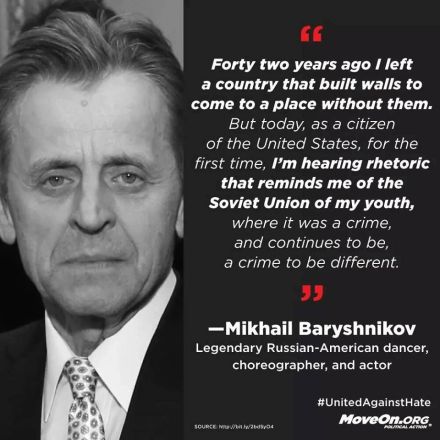
Bryshnikov speaks
I was at the Metropolitan Opera on the 4th of July, 1986, the day after Misha became an American citizen. He danced in the ballet Giselle, and leapt into the air with what appeared to be the greatest of ease, but was the result of a lifetime of training. He was young and stunningly talented. American Ballet Theater gave the people an outstanding show, starring the rock star, movie star, ballet star who came to us as a gift from Russia “with love”. The crowd went wild and threw hundreds of roses while giving a standing ovation after the performance. The audience showed how deeply his presence, and now his citizenship, was appreciated in New York. It was an exquisite moment in history to witness. He made his stage debut at the Mariinsky Theatre in 1967, featuring in a production of Giselle. He was born in Riga, present day Latvia. He was trained in ballet in Riga and St. Petersburg in his youth. He defected from the Soviet Union in 1974 after a performance of the Kirov Ballet in Toronto. He moved to New York and became the director of American Ballet Theater.
I was also lucky enough to see him on stage in Paris in the 1990’s when he was dancing to his own choreography in the White Oak Project. His leaping had been somewhat subdued, but he chose younger dancers for his company who could still hit the very high leaps. His own style had only mellowed and perfected itself then dancing his own creations. He has performed around the world with many different troupes. His talents and achievements are legendary. His training by and defection from the former Soviet Union made his gift even sweeter. Now his birth land of Latvia is voting to confer Latvian citizenship on their famous son. He has applied for it and the parliament is scheduled to take it under consideration. It would be ironic and odd if he were to need to defect to Latvia once his dual citizenship has been conferred.
Last week it was Prince Charles of the British monarchy warning us that he feels a 1930’s vibe. Now Misha tells us he is feeling a cold war. We should take heed, gentle readers. Experience and history are talking to us.
My 9th great-grandfather was a baker who arrived in Connecticut in 1638. He was an original settler in that colony. He landed in Massachusetts then moved to New Haven. He signed the New Haven Plantation Covenant on June 4, 1639.
“The Story of the Early Settlers of Stamford, Connecticut, 1641 – 1700” by Jeanne Majdalany (including genealogies comp. with Edith M. Wicks), page 152: “Peter Brown was born 1610, died 1658, married 1 Elizabeth Smith(d1657); m2 1658 Unice/Unica Buxton…Peter Brown was of Concord, MA in 1632 and of New Haven in 1639 where he was a baker. In 1647 he was in Stamford. He probably was a brother of Francis. He lived on the west side of “River Street”.

Brown Coat of Arms
Peter Brown (1610 – 1658)
9th great-grandfather
Deliverance Brown (1656 – 1727)
son of Peter Brown
Rachel Brown (1700 – 1716)
daughter of Deliverance Brown
Mary Mead (1724 – 1787)
daughter of Rachel Brown
Abner Mead (1749 – 1810)
son of Mary Mead
Martha Mead (1784 – 1860)
daughter of Abner Mead
Abner Morse (1808 – 1838)
son of Martha Mead
Daniel Rowland Morse (1838 – 1910)
son of Abner Morse
Jason A Morse (1862 – 1932)
son of Daniel Rowland Morse
Ernest Abner Morse (1890 – 1965)
son of Jason A Morse
Richard Arden Morse (1920 – 2004)
son of Ernest Abner Morse
Pamela Morse
You are the daughter of Richard Arden Morse
Peter Brown was one of the Governor Theophilus Eaton and Rev. John Davenport Company, that made a settlement at New Haven in the spring of 1638. This company was partly from the City of London, where Rev. John Davenport had been a celebrated minister, and partly from the counties of York, Hertford, Kent, Surry and Sussex, and sailed from London, England, in the ship Hector, which arrived at Boston on the twenty-sixth day of June, 1637. Peter Brown signed the compact appertaining to the government of the New Haven Colony, in 1639. He sold out in 1647, and removed to Stamford, Connecticut, where his wife, Elizabeth, died Sept. 21, 1657, and his son, Ebenezer, Aug. 19, 1658. He married again at Stamford, May 25, 1658, Unity, widow of Clement Buxton, and died there Aug. 22, 1658. His widow afterwards married, March 9, 1659, Nicholas Knapp.
From the book One Life at a Time: A New World Narrative by R. Thomas Collins, Joseph Wood
Peter Brown was born 1610 in Hastings, England. A baker, Peter was a member of the immigrant company organized by London merchant Theophilus Eaton and the Puritan divine, Rev. John Davenport. Peter Brown was one of the signatories of the New Haven Plantation Covenant on June 4, 1639.
Peter Brown was one of the many townsmen to seek opportunity elsewhere after the failure of the Great Shippe. In 1647, Peter moved to Stamford. Peter, who died in 1648, and his first wife had at least one son, Hackaliah (#51). Peter’s second wife, Unity, widowed, later married Nicholas Knapp (#2) in Stamford.

memorial
My 8th great-grandfather was born in Virginia Colony in 1643. His parents were both killed in the Jamestown Massacre when he was an infant.
Godfrey Ragsdale I was the first generation emigrant to America. He came sometime before 1641. He and his wife were killed in an Indian massacre on April 18, 1644. Their baby, Godfrey II, was spared. He evidently came at his own expense with intent to inhabit the land, for no grant has been found to him, but there is a record of a purchase of 300 acres of land by deed from John Butler, 25 Feb 1642. This land lay on the north side of the Appomatox River in Henrico Co. Virginia. Source: “Godfrey Ragsdale From England to Henrico Co. Virginia” by Caroline Nabors Skelton; 1969; and Henrico Co. Records; Bk. 6; p. 21.
Godfrey Ragsdale II (1643 – 1703)
8th great-grandfather
Ann Wragsdale (1659 – 1724)
daughter of Godfrey Ragsdale II
Benjamin Abraham Vesser (1740 – 1779)
son of Ann Wragsdale
Samuel Harris Vassar (1757 – 1846)
son of Benjamin Abraham Vesser
Mary Vessor (1801 – 1836)
daughter of Samuel Harris Vassar
Margaret Mathews (1831 – 1867)
daughter of Mary Vessor
Julia McConnell (1854 – 1879)
daughter of Margaret Mathews
Minnie M Smith (1872 – 1893)
daughter of Julia McConnell
Ernest Abner Morse (1890 – 1965)
son of Minnie M Smith
Richard Arden Morse (1920 – 2004)
son of Ernest Abner Morse
Pamela Morse
I am the daughter of Richard Arden Morse
The Ragsdale family name is said to come from Ragdale, England, meaning either “valley at the pass” or “dweller in the valley where the lichen grows.” Henry Ragsdale was born in Leicestershire, England about 1450, his son Robert was born about 1485 in Ragsdale, Leicestershire, England. He died about 1559 and some of his children were Henry, Thomas R. and John R. Henry was born about 1510; he married Elizabeth Oglethorpe about 1532 , and their children were William, Dorothy, Elizabeth, Margaret, Owen and Catherine. Henry died in 1559. William was born in 1575; he married a woman named Heathcote, about 1615; they had a son, Godfrey I, who married Lady Mary Cookney and they both came to America.
Godfrey Ragsdale I and his wife, Lady Mary Cookney arrived in Virginia some time late in the summer of 1638. They were some of the first Ragsdales to come to America. Godfrey Ragsdale I ands his wife, Lady Mary Cookney lived in Henrico County Virginia on a 300 acre plantation on February 25, 1642, upon the north side of the Appomattox River.
On April 18, 1644 afterwards known as “Opechancanough Day” the Pamunkee Indians and several tribes in the Indian Federation went on a rampage. There was a carnage that was greater than the one in the Norfolk area in 1622. The Indians slaughtered no less than 500 Englishman. This massacre fell almost entirely upon the frontier Counties at the head of the great rivers, and upon the plantations on the south side of the James River. Both Godfrey I and his wife Lady Mary were killed and scalped.
From documents we know that Godfrey and Lady Mary had a son named Godfrey Ragsdale II, who was born in 1644. Because his mother and father had been killed in the “Jamestown Massacre”, Godfrey II’s next door neighbors raised him and later became his in-laws. Historians say that most Ragsdales in America came from Godfrey II.

Ragsdales in Virginia

the ginvent calendar
I am impressed with the creativity and packaging of these specialty advent calendars by Drinks by the Dram. They are partnering with Masters of Malt to bring customers a unique way to celebrate the season. They are offering 24 different drams of spirits to cheer up the recipient who opens each day with anticipation. Alternately they sell Christmas crackers, a British thing, also filled with spirits. The crackers include a bad joke and a party hat, all that any reveler needs to crank up a holiday fiesta at the office or anywhere.
The chance to taste test exotic and rare spirits is a very festive idea. I like gin because of all the variance in the botanicals used. Each gin has a particular blend of herbs that creates that flavor profile. I have tried a few expensive gins, and have thought the extra cost was worth it. I think it would be fun to be guided like this for 24 days to try 24 new kinds of gin. We don’t have a traditional gift exchange around here because we are trying to go minimalistic with little success. I am tempted to buy it for myself. Which spirit would you choose, gentle reader? The most expensive collection is $156.57 worth of fancy whiskey. They also offer the customer a chance to build you own calendar by combining spirits. This is a special way to make the season bright with delight. Cheers!!!

the armagnac advent calendar

Andrew Armour’s fort
I recently started to study the matches that Ancestry.com has found for me. I took the test long ago and had paid little attention to that section of the website. I was asked to help a living person who is trying to find his birth father. He contacted me through the message system in Ancestry because he saw I was related to a DNA match he has. This man has done more research and has a much broader understanding of the various kinds of DNA testing available, and how to apply them to answer mystery ancestry questions. I have taken some time to look through the surnames he and I share with no luck in finding a connection. We are waiting for a y chromosome test from my brother to be processed at Ancestry to see if that reveals more. The match may come from as far back as 10 generations, so the whole thing is pretty complicated. I hope we find the answer my distant adopted cousin is seeking. In the process I am learning more about DNA testing and how helpful it can be.
I have had an excellent breakthrough on my maternal side by searching through all the matches and reading the trees. Some of the folks with whom I am matched have no tree. I am not sure what there are doing there. They are not much use until they get some data to go with the genetics. By following my matches in the Armer line I have found very early colonists from Plymouth and more new connections yet to be researched in Massachusetts. I have found Andrew Armour, 5th great-grandfather, born in Scotland 1740, died in Georgia, 1801. This line is also rich with history and original documents galore. The map above is of Andrew’s fort. I also have his will and testament in his own beautiful hand. I always love seeing the ancestors’ handwriting.
In the never ending research to learn more about my ancestors I appreciate any and all breakthroughs that help me verify my family members. The time spent studying my matches has given me a major breakthrough that will yield much more data as I dig into it. I will soon write more bios of this new/old branch of Scotsmen. If you have access to the Ancestry DNA database I believe you will learn something significant from taking the test. If you are already studying genealogy I recommend paying attention to the DNA section for possible happy consequences.
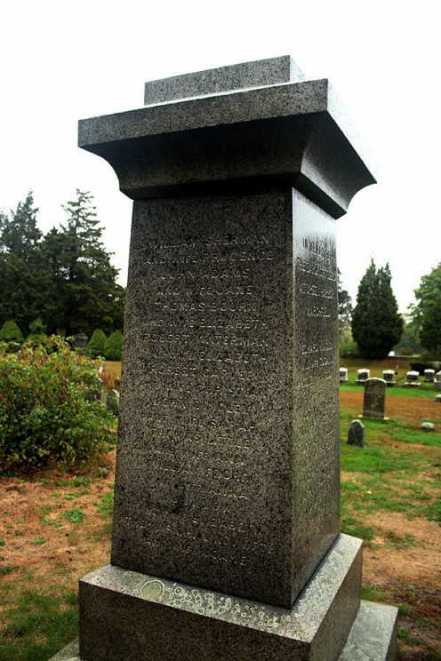
His name is on the monument dedicated to the early settlers of Green Harbor at the Winslow Cenetery in Marshfield, Mass.
The first record of Thomas Little in the new world was on the tax list of March 25, 1633. It is not known on which ship he had arrived. He moved to Marshfield, which is 14 miles from Plymouth. In the 1600’s 14 miles was a very long distance to travel. He was the constable in Marshfield, MA, in June of 1662.
Thomas married Anna Warren on April 19, 1633, in Plymouth Colony. They were the parents of about nine children.

Thomas Little, lawyer
Thomas Little was born in England before 1608 based on his marriage (Anderson, Great Migration). The Ancestral file, without documentation, lists his origin as Devon which is also known as Devonshire with Exeter as the county seat. According to many writers, he arrived at Plymouth, Massachusetts in 1630, but it is not positively known when, or on what ship he came. The earliest date in the Plymouth records is January 2nd, 1632/3, when he was taxed. He married, April 19th, 1633, Ann, born in England about 1612, daughter of Richard and Elizabeth Warren, who were Mayflower passengers (Avery 127, 129; NEHGR XIII, 279). Avery writes that Thomas Little came from England to Plymouth in 1630. He was a lawyer, and his coat of arms is still preserved at the old homestead in the house of Luther Little at Sea View, Massachusetts known as Littletown (Avery 126-127).
Thomas Little and Ann Warren had nine children as listed by Avery, Anderson in the “Great Migration,” and various others. Abigail married Josiah Keene; Patience married Joseph Jones; Ruth apparently unmarried; Hannah married Stephen Tilden; Mercy married John Sawyer; Isaac married Bethia Thomas; Ephraim married at Scituate Mary Sturtevant; Thomas died in King Phillips War; and Samuel married Sarah Gray (Anderson, Great Migration).
Thomas Little bought a shallop in 1633, and was enrolled for military service in August, 1643, at Plymouth, as was every other male in the Colony between 16 and 60 on that date (Avery 129-130).
His first residence was at Plymouth where he was a “Keeper of the Colony of New Plymouth books.” He was assessed 18 shillings in Plymouth tax lists of 1633 and 1634. In 1647, he had five acres of upland meadow on “Indian Brook,” listed as within the limits of the township of Plymouth, retaining that land in 1655. But in 1664, Jonathan Morey expressed an interest in the land that was “sometimes Thomas Little’s. Prior to that, in 1652, Thomas Little and his wife Ann sold a house and land on the Eel river in the township of Plymouth (a former residence). On 3 June 1662, Thomas Little had rights confirmed to a farm at Marshfield, and on 3 October 1665 was granted a hundred acres on which he settled title by 1 May 1666. Back in June 1662, he was a Marshfield Constable (Anderson, Great Migration, quoting Plymouth Records).
In his will, dated 17 May 1671, Thomas Little, Sr. bequeathed to “my loving wife all my housing and all of my land, upland and meadow on that side of the brook I now dwell, except only the meadow I purchased of Thomas Tildin and Morris Trewant.” He left land to sons Isacke and Ephraim land on the other side of the brook; all his land at Namassakett upland and meadow to his younger sons Thomas and Samuel, excepting an identified upland to grandson John Jones; a featherbed and furniture to Ephraim; the whole stock of cattle to be equally divided amongst all his children; and other dispositions. Administration of the estate was granted to Anna Little, his wife, on 14 August, 1662.(Anderson, Great Migration listing sources).
Thomas Little was buried at Marshfield, March 12, 1671. His widow died after February 19, 1675 (Avery 129-130).
There is some confusion from 28 October 1633 when a grant of land to Richard Warren was returned to court for failure to erect a building; the land was to be regranted to a Mr. Ralph Fogg upon his satisfactory payment to Widow Warren for her fence remaining there (PCR 1:18). But on 7 March 1636, “it is agreed upon, by the consent of the whole court, that Elizabeth Warren, widow, the relict of Mr. Richard Warren, deceased, shall be entered, and stand, and be purchaser instead of her said husband, as well because that (he dying before he had performed the said bargain) the said Elizabeth performed the same after his decease, and also for the establishing of the lots of lands givern formerly by her unto her sons-in-law Richard Church, Robert Bartlett, and Thomas Little, in marriage with their wives, her daughters” [PCR 1:54; 2:177]. On 5 May 1640, “Richard Church, Rob(er)te Bartlett, Thomas Little, and Mrs. Elizabeth Warren are granted enlargements at the heads of their lots to the foot of the Pyne Hills, leaving a way betwixt them and the Pyne Hills, for cattle and carts to pass” (PCR: 1:52). Ann Warren born est 1613, m. Thomas Little at Plymouth 19 April 1633 (PCR 1:13)
Thomas Little (1609 – 1675)
10th great-grandfather
William Little (1640 – 1731)
son of Thomas Little
William Little (1660 – 1740)
son of William Little
William Little Jr (1685 – 1756)
son of William Little
Jeanette Little (1713 – 1764)
daughter of William Little Jr
Andrew Armour (1740 – 1801)
son of Jeanette Little
William Armor (1775 – 1852)
son of Andrew Armour
William Armer (1790 – 1837)
son of William Armor
Thomas Armer (1825 – 1900)
son of William Armer
Lucinda Jane Armer (1847 – 1939)
daughter of Thomas Armer
George Harvey Taylor (1884 – 1941)
son of Lucinda Jane Armer
Ruby Lee Taylor (1922 – 2008)
daughter of George Harvey Taylor
Pamela Morse
I am the daughter of Ruby Lee Taylor
 mermaidcamp