mermaidcamp
Keeping current in wellness, in and out of the water
You can scroll the shelf using ← and → keys
You can scroll the shelf using ← and → keys

Elizabeth Stafford
My 15th great-grandmother was married to a duke who treated her very badly. She was involved with court intrigue during the reign of Henry VIII.
Elizabeth Stafford was the daughter of Edward, 3rd duke of Buckingham (February 3,1478-May 17,1521) and Eleanor Percy (1470-1530). Robert Hutchinson’s House of Treason gives alternate life dates as 1493-September 4, 1558. Elizabeth was to have married one of her father’s wards, Ralph Neville, earl of Westmorland, at Christmas 1512, but shortly before that she acquired a new suitor in the person of the recently widowed Thomas Howard, earl of Surrey (1473-August 25,1554).
Buckingham offered his other daughters to Sussex, but the earl was determined to have Elizabeth, described by Jessie Childs in Henry VIII’s Last Victim: The Life and Times of Henry Howard, Earl of Surrey as “…passably pretty, with soft features, light colouring and a distinguished forehead….”
Early in 1513, Elizabeth married Surrey, bringing with her a dowry of 2,000 marks. They had five children:
Henry (1517-x.January 19,1547),
Mary (1519-December 9,1557),
Charles (d.yng),
Thomas (1528-1582), and a fifth child who died young and may have been named Muriel.
Elizabeth was often at court and became close friends with Catherine of Aragon. She carried Princess Mary to the font at the princess’s christening in 1516 and was a patron of the poet John Skelton, who describes Elizabeth and her ladies making a chapelet in the poem “A Goodly Garlande or Chapelet of Laurell.” When the earl of Surrey was appointed Lord Lieutenant of Ireland in 1520, he was ordered to take his entire family with him.
There they were exposed to war, disease, crowded conditions, and severe shortages of just about everything. To make matters worse, during their sojourn in Ireland, Elizabeth’s father was accused of treason and beheaded. In 1524, with the death of her father-in-law, Elizabeth became duchess of Norfolk. She continued to serve as a lady-in-waiting to the queen, at court for months at a time, but with the king’s growing determination to obtain a divorce, her role changed.
By 1530, Elizabeth was spying on her own husband, on the lookout for any information that would help Queen Catherine. By then, there were also problems in Elizabeth’s marriage. In 1526, Norfolk took Bess Holland, daughter of his chief steward, as his mistress, a long-term relationship which he did not trouble to keep secret from his wife.
Elizabeth continued to be vocal in her support of Catherine of Aragon. Norfolk, and most of the Howard family, favored the king’s plan to marry Anne Boleyn, whose mother was a Howard. Elizabeth went so far as to refuse to bear Anne’s train at her investiture as Marchioness of Pembroke and was conspicuously absent from both Anne’s coronation and the christening of Princess Elizabeth. In May,1533, Norfolk wrote to Elizabeth’s brother, Henry Stafford, asking him to take her in. Stafford refused, expressing the fear that “…her accustomed wild language…” would place him and his family in danger if he did so.
The matter came to a head on Tuesday of Passion Week, 1534. Norfolk arrived at Kenninghall, his principal residence, to find his wife in a rage because he was still keeping Bess Holland as his mistress. Norfolk’s response was to lock Elizabeth in her chamber, then banish her to Redbourne, a manor in Hertfordshire. Elizabeth referred to this as imprisonment, even though she had twenty servants and an allowance of three hundred marks per annum.
Legally Norfolk was within his rights to do as he wished with her. She tried three times for a reconciliation, but to no avail. Norfolk was not about to forgive some of the claims she had made, including one that he had assaulted her when she was pregnant with their daughter in 1519. Some of the charges may indeed have been “false and abominable lies,” but Norfolk was known to have a temper, too. In 1541, Elizabeth was still trying to regain freedom of movement, as well as a bigger allowance.
Her children, to her distress, sided with their father. Indeed, most people did. Wives were expected to put up with their husbands’ infidelities, not make a fuss about them. Upon Mary Tudor’s accession, Elizabeth returned to court and there was reunited with her husband, who had been in the Tower of London since 1547. He died at Kenninghall the following August.
Although both Elizabeth and Norfolk appear in effigy on the same monument in Framlingham, completed in 1559, only he is buried there. She was interred in the Howard Chapel in St. Mary’s Church, Lambeth, in December 1558. The epitaph written by her brother lauds her kindness and says she was to him “a mother, sister, a friend most dear.”
Biography:
“Marriage Sixteenth-Century Style: Elizabeth Stafford and the Third Duke of Norfolk” by Barbara J. Harris in Journal of Social History, 15/3 (1982).
Source– A WHO’S WHO OF TUDOR WOMEN: Stafford
Elizabeth Dutchess Norfolk Stafford Howard (1497 – 1558)
is my 15th great grandmother
Lady Katherine Howard Duchess Bridgewater (1495 – 1554)
daughter of Elizabeth Dutchess Norfolk Stafford Howard
William ApRhys (1522 – 1588)
son of Lady Katherine Howard Duchess Bridgewater
Henry Rice (1555 – 1621)
son of William ApRhys
Edmund Rice (1594 – 1663)
son of Henry Rice
Edward Rice (1622 – 1712)
son of Edmund Rice
Lydia Rice (1649 – 1723)
daughter of Edward Rice
Lydia Woods (1672 – 1738)
daughter of Lydia Rice
Lydia Eager (1696 – 1735)
daughter of Lydia Woods
Mary Thomas (1729 – 1801)
daughter of Lydia Eager
Joseph Morse III (1756 – 1835)
son of Mary Thomas
John Henry Morse (1775 – 1864)
son of Joseph Morse III
Abner Morse (1808 – 1838)
son of John Henry Morse
Daniel Rowland Morse (1838 – 1910)
son of Abner Morse
Jason A Morse (1862 – 1932)
son of Daniel Rowland Morse
Ernest Abner Morse (1890 – 1965)
son of Jason A Morse
Richard Arden Morse (1920 – 2004)
son of Ernest Abner Morse
Pamela Morse
I am the daughter of Richard Arden Morse
Elizabeth Howard (nee Stafford) (1494- 30 November1558) was the daughter of Edward Stafford, 3rd Duke of Buckingham and the wife of Thomas Howard, 3rd Duke of Norfolk.
Elizabeth was born in 1494, the eldest daughter of Edward Stafford, 3rd Duke of Buckingham (3 September1478-1521 and Eleanor Percy. Her paternal grandparents were Henry Stafford, 2nd Duke of Buckingham and Catherine Woodville. Her maternal ancestors were Henry Percy, 4th Earl of Northumberland and Maud Herbert. Her grandfather, the Duke of Buckingham, was executed in 1483 by King Richard III for treason, and in 1521, her own father suffered the same fate when he was beheaded on Tower Hill for treason against his king, Henry VIII. Elizabeth had two sisters, Mary, Lady Bergavenny and Catherine, Countess Westmoreland, and a brother, Henry Stafford, 1st Baron Stafford.
On 8 January1513, Elizabeth married Thomas Howard, earl of Surrey, who in 1524, would become the 3rd Duke of Norfolk. The marriage was his second. His first wife had been Anne of York, the daughter of Edward IV, but none of their children had lived beyond early infancy. Elizabeth bore her husband four surviving children but their marriage was unhappy and violent. He had taken as his mistress Bess Holland, who was her own laundress, and when Elizabeth protested, calling her “a churl’s daughter who was but a washer in my nursery for eight years” Howard savagely beat her. She later accused his mistress of striking her. They separated in 1533, the year Howard’s niece, Anne Boleyn, was crowned Queen of England. Elizabeth did not like Anne and was staunchly partisan in favour of Catherine of Aragon. In 1530, Elizabeth smuggled letters received from Italy to Catherine concealed in oranges Elizabeth also later told the Spanish Ambassador, Eustace Chapuys, that Howard had confided in her that “Anne would be the ruin of all her family”.. Anne, however, managed to win the favour of Elizabeth by arranging brilliant matches for the Howard children. Henry was married to the daughter of the Earl of Oxford, while Mary married the King’s illegitimate son, Henry FitzRoy, 1st Duke of Richmond and Somerset. Appeased, Elizabeth stopped plotting against Anne and returned to Court. She died on 30 November 1558 in Lambeth, London at the age of sixty-four. Elizabeth was the Dowager Duchess of Norfolk at the time of her death, her estranged husband, the Duke, having died four years earlier. She was buried on 7 December 1558 in Lambeth.
Elizabeth was often at court and became close friends with Catherine of Aragon. She carried Princess Mary to the font at the princess’s christening in 1516.
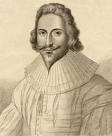
Elizabeth Stafford, Duchess of Norfolk, wife of Anne Boleyn’s uncle Thomas Howard, Duke of Norfolk

Elizabeth Stafford
Roger La Zouche
Roger la Zusche, for his fidelity to King John, had a grant from that monarch of the manors of Petersfield and Maple Durham, co. Southampton, part of the lands of Geoffrey de Mandeville, one of the rebellious barons then in arms. In the next reign he was Sheriff of Devonshire, and had further grants from the crown. Roger la Zouche, Sheriff of Devonshire, between 1228 and 1231,was a younger son of Alan la Zouche and Alice de Belmeis. He was born circa 1182 in Ashby, Leicestershire, England. He was the heir of his brother William in 1199. He married Margaret (?) before 1203. He was a witness to Henry III’s confirmation of the Magna Charta. He died before 14 May 1238. The Roger la Zouche family manor, built in the 12th century, was converted into Ashby de la Zouche Castle in 1447 by Lord William Hastings.
Roger la Zouche [elder brother William dsp 1199], of Ashby-de-la-Zouche, Leics; served in Poitou, possibly under Geoffrey (died 1205), an illegitimate son of King John who held the homour of Perche and led an expedition of mercenaries to France in 1205, and again in 1214, though under some other leader; served in Ireland 1210; took an oath to uphold the baronial enforcement of Magna Carta 1215 but witnessed a charter issued by John 1216, hence had presumably switched support to the King by then; benefited from substantial land grants in Cambs, Devon, Hants and Norfolk at John’s and Henry III’s hands; Sheriff of Devon 1228-31; a witness to Henry III’s confirmation of Magna Carta Jan 1236/7; married Margaret (died in or after 1220 or even as late as 1232 or after) and died by 14 May 1238. [Burke’s Peerage]
Roger la Zusche who, for his fidelity to King John, had a grant from that monarch of the manors of Petersfield and Maple Durham, co. Southampton, part of the lands of Geffrey de Mandeville, one of the rebellious barons then in arms. In the next reign he was sheriff of Devonshire and had further grants from the crown. By Margaret, his wife, he had issue, Alan, his successor, and William, who left an only dau., Joice, who m. Robert Mortimer, of Richard’s Castle, and had issue, Hugh Mortimer, summoned to parliament as Lord Mortimer, of Richard’s Castle; and William Mortimer, who assumed the surname of Zouche, and was summoned to parliament as Lord Zouche, of Mortimer. He was s. by his elder son, Sir Alan la Zouche. [Sir Bernard Burke, Dormant, Abeyant, Forfeited, and Extinct Peerages, Burke’s Peerage, Ltd., London, 1883, p. 598, Zouche, Baron Zouche, of Ashby, co. Leicester]—————–Ancestral Roots, p. 43, younger son (of Alan Ceoche of La Coche), heir to brother William 1199, sheriff of Devonshire 1228-31, a witness to Henry III’s confirmation of the Magna Carta, d. shortly before 14 May 1238. Browning, p. 308, lists him as son of Roger, son of Alain IV, Viscount de Rohan, Count of Brittany and Mabilla, dau. of Raoul II, Lord of Fourgeres.————————————————————————– ———–ROGER LA ZOUCHE, brother and heir, paid £100 to have William’s lands in 1199. Those in England were seized, before 1204, while he was in Brittany, because of the war in Normandy, and he proffered 100m. to regain possession of them in that year. He served in Poitou, 1204-05 and 1214; was in Ireland, 1210; and swore to support the Barons who were enforcing Magna Carta in 1215. However, he soon joined the King, for he witnessed a royal charter, 11 June 1216, and was rewarded, both at the end of John’s reign and during the opening years of Henry III, with numerous grants of land. He had licence to go on pilgrimage to Santiago, 6 August 1220; was given money as a royal messenger, October 1224; was going to Brittany, with the King’s leave, May 1228; Sheriff of Devon, 10 November 1228-April 1231. In May 1229 he, with Philip Daubeney and Godfrey de Crawcombe, was allowed 100m. to cover the costs of a mission across the seas for the King. He served in Brittany, 1230; was ordered to find one knight at the King’s cost to aid the Duke of Brittany, 1234; and was among those who witnessed Henry III’s confirmation of Magna Carta at Westminster, 28 January 1236/7. He married Margaret, who was living in 1220 and presumably 1232. He died shortly before 14 May 1238. [Complete Peerage XII/2:931-2, (transcribed by Dave Utzinger)]
Roger Devonshire La Zouche (1175 – 1238)
is my 20th great grandfather
Sir Knight Alan II Knight Baron of Ashby Constable of the Tower of London de la Zouche (1205 – 1270)
son of Roger Devonshire La Zouche
Eudo LaZouche (1245 – 1279)
son of Sir Knight Alan II Knight Baron of Ashby Constable of the Tower of London de la Zouche
Elizabeth La Zouche (1274 – 1297)
daughter of Eudo LaZouche
Nicholas Poyntz (1303 – 1376)
son of Elizabeth La Zouche
Nicholas Poyntz (1355 – 1372)
son of Nicholas Poyntz
Pontius Poyntz (1372 – 1393)
son of Nicholas Poyntz
John Poyntz (1412 – 1447)
son of Pontius Poyntz
William Poyntz (1455 – 1494)
son of John Poyntz
Thomas Poyntz (1480 – 1562)
son of William Poyntz
Lady Susanna Elizabeth Poyntz (1528 – 1613)
daughter of Thomas Poyntz
Elizabeth Saltonstall (1557 – 1621)
daughter of Lady Susanna Elizabeth Poyntz
Henry Wyche (1604 – 1678)
son of Elizabeth Saltonstall
Henry Wyche (1648 – 1714)
son of Henry Wyche
George Wyche (1685 – 1757)
son of Henry Wyche
Peter Wyche (1712 – 1757)
son of George Wyche
Drury Wyche (1741 – 1784)
son of Peter Wyche
Mary Polly Wyche (1774 – 1852)
daughter of Drury Wyche
John Samuel Taylor (1798 – 1873)
son of Mary Polly Wyche
William Ellison Taylor (1839 – 1918)
son of John Samuel Taylor
George Harvey Taylor (1884 – 1941)
son of William Ellison Taylor
Ruby Lee Taylor (1922 – 2008)
daughter of George Harvey Taylor
Pamela Morse
I am the daughter of Ruby Lee Taylor
Baron Zouche is a title that has been created three times in thePeerage of England. The de la Zouche family descended from Alan de la Zouche, sometimes called Alan de Porhoët and Alan la Coche (c. 1093-1150), a Breton who settled in England during the reign of Henry II. He was the son of Vicomte Geoffrey I de Porhoët and Hawisa of Brittany. He married Adeline (Alice) de Belmeis, daughter of Phillip de Belmeis and Maud la Meschine and died at North Molton in North Devon. He obtained Ashby in Leicestershire(called after him Ashby-de-la-Zouch) by his marriage. His son was Roger la Zouche (c. 1175 – bef. 14 May 1238). Roger La Zouche became the father of Alan la Zouche (1205–1270) and Eudo La Zouche. Alan was justice of Chester and justice ofIreland under Henry III of England. He was loyal to the king during the struggle with the barons, fought at the Battle of Lewesand helped to arrange the peace of Kenilworth. As the result of a quarrel over some lands with John de Warenne, 6th Earl of Surrey, he was seriously injured in Westminster Hall by the earl and his retainers, and died on 10 August 1270.Eudo La Zouche married Millicent de Cantilupe. Alan’s grandson, Alan la Zouche, was summoned to Parliament on 6 February 1299 as Baron la Zouche of Ashby. He was governor of Rockingham Castle and steward of Rockingham Forest. However, this barony fell into abeyance on his death in 1314. Another grandson of Alan de la Zouche was William la Zouche, Lord of Haryngworth, who wassummoned to Parliament as Baron Zouche, of Haryngworth, on 16 August 1308. His great-great-great-grandson, the fifth Baron, married Alice Seymour, 6th Baroness St Maur, and assumed this peerage in her right. Their son succeeded to both titles; his stepmother, Elizabeth St. John, was an aunt of the future Henry VII, a connection which proved useful to later members of the family. The seventh Baron was attainted in 1485 for loyalty to Richard III but was eventually restored to his title and a portion of his lands. On the death in 1625 of the eleventh and twelfth Baron, the peerages fell into abeyance between the latter’s daughters Hon. Elizabeth and Hon. Mary. However, in 1815 the Barony of Zouche was called out of abeyance in favour of Sir Cecil Bishopp, 8th Baronet, of Parham Park (see Bishopp baronets of Parham), who became the twelfth Baron Zouche. Through his mother he was a descendant of the aforementioned Hon. Elizabeth. The Barony of St Maur, however, remains in abeyance to this day. His two sons had died before him and on his death in 1828 he was succeeded in the Baronetcy by a cousin, while the Barony of Zouche once again fell into abeyance, this time between his two daughters Hon. Harriet Anne Curzon and Katherine Annabella, Lady Brooke-Pechell. His eldest son Lieutenant-Colonel Cecil Bisshopp had died in 1813 at age 30 at Ontario, Canada, from wounds received in action against the Americans in the War of 1812. The abeyance was terminated the following year in favour of Hon. Harriet Anne, who became the thirteenth Baroness. Known as Baroness de la Zouch, she was the wife of Hon. Robert Curzon, younger son of Assheton Curzon, 1st Viscount Curzon. Her son was the fourteenth Baron. On his death the title passed to his son, the fifteenth Baron, and then to the latter’s sister, the sixteenth Baroness. She never married and was succeeded by her second cousin, the seventeenth Baroness, the granddaughter of a younger son of the thirteenth Baroness. She was succeeded by her grandson, the eighteenth and (As of 2013) present Baron, who had already succeeded his father as 12th Baronet in 1944.Another grandchild of the original Alan de la Zouche, Joyce la Zouche, married Robert Mortimer of Richard’s Castle; one of their younger sons, William la Zouche, took the name of la Zouche and bought Ashby-de-la-Zouch from Alan in 1304, the latter to hold it until his death (1314). On 26 December 1323, he was created, by writ, Baron Zouche of Mortimer. This peerage became abeyant in 1406.Barons la Zouche of Ashby (1299)[edit]Alan la Zouche, 1st Baron la Zouche of Ashby (1267–1314) (abeyant 1314)Barons Zouche of Haryngworth (1308)[edit]Barons Zouche of Haryngworth:[1]William la Zouche, 1st Baron Zouche (18 or 21 December 1276– 11 or 12 March 1351)William la Zouche, 2nd Baron Zouche (c.25 December 1321 – 23 April 1382)William la Zouche, 3rd Baron Zouche (c. 1355 – 4 May 1396)William la Zouche, 4th Baron Zouche (c. 1373 – 3 November 1415)William la Zouche, 5th Baron Zouche (c. 1402 – 25 December 1462)William la Zouche, 6th Baron Zouche, 7th Baron St Maur (c. 1432 – 15 January 1468/9)John la Zouche, 7th Baron Zouche, 8th Baron St Maur (1459 – c. March 1525/6) (His attainder of 1485 was reversed in 1495)John la Zouche, 8th Baron Zouche, 9th Baron St Maur (c. 1486 – 10 August 1550)Richard la Zouche, 9th Baron Zouche, 10th Baron St Maur (c. 1510 – 22 July 1552)George la Zouche, 10th Baron Zouche, 11th Baron St Maur (c. 1526 – 19 June 1569)Edward la Zouche, 11th Baron Zouche, 12th Baron St Maur (6 June 1556 – 18 August 1625) (abeyant 1625)Cecil Bisshopp, 12th Baron Zouche (29 December 1752 – 11 November 1828) (abeyance terminated 1815; abeyant 1828)Harriet Anne Curzon (née Bisshopp), 13th Baroness Zouche (7 September 1787 – 15 May 1870) (abeyance terminated 1829)Robert Curzon, 14th Baron Zouche (16 March 1810 – 2 August 1873) son of 13th BaronessRobert Nathaniel Cecil George Curzon, 15th Baron Zouche (12 July 1851 – 31 July 1914) son of 14th BaronDarea Curzon, 16th Baroness Zouche (1860–1917) sister of 15th BaronMary Cecil Frankland, 17th Baroness Zouche (1875–1965) second cousin of 16th BaronessJames Assheton Frankland, 18th Baron Zouche and 12th Baronet (b. 1943) grandson of 17th BaronessThe heir apparent is the present holder’s son Hon. William Thomas Assheton Frankland (b. 1983).Barons Zouche of Mortimer (1323)[edit]William la Zouche, 1st Baron Zouche of Mortimer (d. 1337)Alan la Zouche, 2nd Baron Zouche of Mortimer (1317–1346)Hugh la Zouche, 3rd Baron Zouche of Mortimer (1338–1368)Robert la Zouche, 4th Baron Zouche of Mortimer (d. 1399)Joyce Burnell, 5th Baroness Zouche of Mortimer (d. 1406) (abeyant 1406)See also[edit]House of RohanBaron St MaurBishop baronets, of ParhamFrankland baronets, of ThirkelbyNotes[edit]Jump up^ Cokayne, George Edward (1910–1959). The Complete Peerage of England, Scotland, Ireland, Great Britain, and the United Kingdom. London: The St. Catherine Press.[page needed]References[edit]Leigh Rayment’s Peerage Pages [self-published source][better source needed]Burke’s Dormant and Extinct Peerages, London, 1883

sky
Symbols in dreams are personal. We dream only of faces we have seen before, even if we are barely familiar with the person. The character, or archetype played by the face depends completely on personal experience. Dream dictionaries and aids to interpret meaning found in dreams can only make references to universal archetypes. To grasp the personal message brought to the dreamer the images themselves must be savored and visited in waking time. Writing in a diary upon awaking before moving or engaging in the activities of the day is helpful. By keeping these notes on a regular basis you may discover themes that you can identify in a personal way.
Sometimes at crossroads in life a person will receive a vivid memorable message during sleep. The images and meaning of mythic dreams are significant beyond the every day way the unconscious communicates. The protagonists in the drama make a deep impression that lasts and speaks to the psyche for a long time. Carl Jung identified seven basic archetypes making appearances in dream time.
Loaded images and story lines float through our heads while we sleep. If we have a problem on the mind it is possible to solve it during a dream. Practice and meditation on our own dream images will make clearer the point of the communication. Our subconscious warns us, encourages us, and sometimes tells us we are foolish. It is never straightforward, but over time we can dig more deeply into the messages our dreams deliver on a nightly basis. Have you ever kept a dream diary, gentle reader? Have you ever had a mythic dream that changed your thinking?

desert

Morse Monument This monument was erected to the memory of seven Puritans who emigrated from England to America in 1935-39. The front inscriptions are: John Mosse, Born 1604, settled at N. Haven, died 1707 at Wallingford Ct. Samuel Morse, born 1585, settled at Dedham 1636, died at Medfield 1654. Joseph Morse, settled at Ipswich where he died 1646. Anthony Morse, born at Marlborough Engl’d 1616, died at Newbury 1686. William Mors B. 1608, D. 1683 and Robert & Peter brothers, settled and d in N. J. Rear inscriptions: Elizth Morse wid. of Samuel D. June 26, 1654. Samuel Morse Col in Cromwell’s ARmy D. at the Eastward Sept. 24, 1688. John, D at Boston 1657. Daniel, D. at Sherborn JUne 5, 1688. Jeremiah, D in the Civil War in Eng. Joseph, D in Medfield 1653. Lt. Samuel who D. in Medf. Feb. 28, 1718, CPT. Joseph who D. in Sherboren Feb. 19, 1718 and Jeremiah who D. in Medf. February 19, 1716. Taken from The Morse Society Webmaster
Anthony Morse of Newbury, MA came from Marlborough, Wiltshire, England and settled in Newbury, Massachusetts in 1635. He and his brother, William Morse, registered as shoemakers. Anthony arrived in Boston with his brother William, on the “James” June 3, 1635 which sailed from Southampton on April 5, 1635. Anthony built a house about 1/2 mile south of the cemetery in what is now called Newbury old town. He was admitted as a Freeman May 25, 1636.
Anthony Morss (1606 – 1686)
is my 10th great grandfather
Robert Morse (1629 – 1677)
son of Anthony Morss
Joshua Morse (1669 – 1753)
son of Robert Morse
Joseph Morse (1692 – 1759)
son of Joshua Morse
Joseph Morse (1721 – 1776)
son of Joseph Morse
Joseph Morse III (1756 – 1835)
son of Joseph Morse
John Henry Morse (1775 – 1864)
son of Joseph Morse III
Abner Morse (1808 – 1838)
son of John Henry Morse
Daniel Rowland Morse (1838 – 1910)
son of Abner Morse
Jason A Morse (1862 – 1932)
son of Daniel Rowland Morse
Ernest Abner Morse (1890 – 1965)
son of Jason A Morse
Richard Arden Morse (1920 – 2004)
son of Ernest Abner Morse
Pamela Morse
I am the daughter of Richard Arden Morse
Last Will and Testament of Anthony Morse of Newbury, Mass I anthony Morss of Newbury in the name of god amen i being sensible of my own frality and mortality being of parfit memory due make this as my last will and testament commanding my sole to god that gave it and my body to the dust in hope of a joyful resurixition and as for my wourly good I dispose of as foloieth. I give and bequeth to my son Joshua Morse making him my lawful eaire all my housing and lands both upland and meddow with my freehould and privilidge in all comon land both upland and meddow alweais provided that it the town of Newbury dou divide any part of the comon lands that then the on half part of that land which belongeth to me which cometh by vartu of my freehould shall be the lawful inheritance of my son benieman (Benjamin)morse all so I geve to my son Joshua morse all my cattell an horsis and sheep, swuine and all my toules for the shumaking trade as allso my carte wheles dung pot plow harrow youkes chains houses forkes shovel spad grin stone yt as allso on father bed which he lieth on with a bouister and pillo and a pair of blinkets and covrlitt and tou pair of shetes scillet and to platars and a paringer and a drinking pot and tou spoons and the water pails and barils and tobes all these about named I geve to my son Joshua and his eaires of his own body begotten lawfully than then all aboue geven to my son Joshua shall Return to the Rest of my children upon the peayment on good peay to my sons widow besides waht estate she att any time brought to her husband she the said widdow shall enjoy the houl estate on half year before she shall surrenter – also I geve to my son Robard (Robert) Morse Eighteen pounds or his children to my son Peter Morse or children L3, to my son Anthony Morse children I geve L3 to my son Joseph Morses children I geve L12 to my son Benieman Morse or children I geve L12 to my dafter Thorlo or children L12 to my dafter Skickney or children I geve L12 to my dafter Newman children I geve L12 to my dafter Smith or children I geve L12 to my grandson Richard Thorlo I geve an sheep, to my grandson Robard Homes I giev fiev pounds allso I geve the Remainder of my housall which is not in partikelar geven to my son Joshua in the former part of this my will to all my children equally to be devided between them and my grand children hous parents are dead, namely anthonys children, Josephs children hanahs children, allso I dou by this my last will allow and geve loberty to mu son Joshua morse hou is my Eaire to make said and dispose of that land by the pine swamp which I had of Nenieman lacon of that pece of land by John Akisons hous if he see Resan so to do. also I du by this my will apoynt my son Joshua morse to be my sole esecutor to peay all debts and legacies by this will geven and to Rceve all debtes allso I dou apoynt my loving and crisian frinds Cap danil Pears and Tristram Coffin and thomas noyes to be oversers of this my last will also I dou apoynt my Exicutor to peay my son Robard and son peter within one yeare after my death on the the other to be peaid within three years the plas of peayment to be newbury my will is tyhat my son benieman shall have the on half of all comon lands when devided as above said in witness thereof I anthony morse have hereunto Set my hand and seall this 28th Aprell, 1680. Sinid selid and onid in the presense of us James Coffin Mary Brown that whereas I anthong Morse in this my will abou said have geven on half of all common lands if devided to my sonn benieman mors; my meaning iss that my sons benieman shall haev the on half of my proportion of lands when devided, but my sonn Joshua to haev all my Rights in the lower comon this is my mind and will as witnes my seall this 20 of aprell 1680. Anthony Morse (Seal) Witness to this part of my will James Coffin Mary Brown Joshua Morse is allowed Exer to this will. from – The Morse Genealogy, 1903-05 – Will is on file at Salem, Essex County, Massachusetts. From History of Newbury – Newbury MA Web site: The settlers of Newbury were much like those of what is now northern Essex county. They were not religious enthusiasts or pilgrims who fled from religious persecution in England. The were substantial, law abiding, loyal English tradesmen of that staunch middle class that was the backbone of England. Those that settled Newbury came at different times and on different ships between the end of April 1634 and July 1635. In one of the first ships arriving in 1645, was Thomas Parker, a minister who came along with a small company of settlers. They were first at Agawan (Ipswich) and later along with their countrymen, who came from Wiltshire England to Newbury. The first settlers came by water from Ipswich through Plum Island Sound and up the Quascacunquen River, which was later renamed the Parker River. There had been a few fisherman occupying the banks of the Merrimac and Parker rivers before this, but they were not permanent settlers. These settlers came to New bury in May or June of 1635. Ships from England began to arrive almost immediately with cattle and more settlers. Governor Winthrop in his history of New England under the date of June 3, 1635, records the arrival of two ships with Dutch cattle along with the ship James from Southampton bringing more settlers. Newbury was therefore begun as a stock raising enterprise and the settlers came to engage in that business and to establish homes for themselves. In total 15 ships came in June and one each in August, November and December, bringing still more families to the settlement. There is no record of how many families arrived in the first year. Houses were erected on both sides of the Parker River. The principal settlement was around the meeting house on the lower green. The first church in Newbury could not have been formed before June as some of those recorded at its formation are not recorded as having arrived until June. In the division of land, the first settlers recognized the scripture rule “to him that hath shall be given” and the wealth of each grantee can be estimated by the number of acres given him. The reason for establishing Newbury, as stated above, was not from fleeing religious persecutions, but to utilize vacant lands and to establish a profitable business for the members of a stock-raising company. When they arrived in Massachusetts, the settlers found that the state had established the Congregational form of religion. Everyone was taxed to support the Congregational Society and was commanded to attend worship at the meeting house. The Reverend Thomas Parker was a member of the stock raising company and was also the minister of the settlers. The outlying settlers had a long journey to the meeting house. The congregations were in danger of attacks from Indians and wild beasts on their way to and from worship. There was a constant dread of attack during the time of services and all able bodied inhabitants were required to bring their weapons to church. Sentinels were posted at the doors. In spite of the hardship and danger, the population steadily increased in number and gradually improved its worldly condition. Being cramped for room, the settlers moved up to the upper or training green. This was in order to get tillable land and engage in commercial pursuits. This movement began in 1642. Each had been allotted half an acre for a building lot on the lower green. On the upper green each was to have four acres for a house lot. Also on the upper green a new pond was artificially formed for watering cattle. The new town gradually extended along the Merrimac River to the mouth of the Artichoke River. It appears that all desirable land in this region was apportioned among the freeholders by October 1646. The land beyond was ordered to lie perpetually common. This tract of common land was a part of Newbury and what is now West Newbury. The Indian threat had disappeared as most of the Indians in the region had been exterminated by an epidemic. The first record of an Indian living in Newbury is in January 1644, when a lot was granted to “John Indian”. In 1639 Edward Rawson began the manufacture of gun powder in what was probably America’s first powder mill. Newbury had a trial for witchcraft thirteen years before the trials in Salem. In 1679 Elizabeth Morse, sister-in-law to our ancestor, Anthony, was accused. She was condemned three times to die, but was reprieved and spent her last years in her home at what is now Market square in Newburyport. The first American born silversmith was Jeremiah Dummer of Newbury, who apprenticed to John Hull, an Englishman. He practiced his trade at what is now Newburyport. Jeremiah was the father of Governor William Dummer the founder of Gov. Dummer Academy. Jeremiah’s brother-in-law John Coney, engraved the plates for the first paper money made in America. In 1686, when the upper Commons (West Newbury) were divided among the freeholders of the town of Newbury, Pipestave Hill was covered with a dense forest of oak and birch. These trees were cut and used to make staves for wine casks and molasses hogsheads. For many years, this industry, the first of its kind in American, flourished and the place is still called Pipestave Hill. Limestone was discovered in Newbury in 1697. Previous to this all the lime used for building was obtained from oyster and clam shells. Mortar made from this lime was very durable and came in time, to be almost as hard as granite. This business prospered for many years until a superior quality of lime was discovered elsewhere. The first toll bridge and shipyard in America were also in Newbury. The latter giving rise to the ship building industry, which was to determine the prosperity of Newburyport in the coming centuries. In West Newbury, in 1759, Enoch Noyes began making horn buttons and coarse combs of various kinds. This was the beginning of the comb making business in Newbury and other places. This business continued and grew, moving to Newburyport inn its later years, closing in 1934. Lt Gov. William Dummer, in his will of 1761 directing that a school house be erected on the most convenient part of his farm. In 1762, the first schoolhouse was erected, a low one story building about twenty feet square commencing its sessions in 1783, this is the oldest boarding school in America. In 1764, that part of Newbury, which had become the commercial center was divided off and made Newburyport. This action relegated Newbury to a rural and fishing community. Today Newbury is a quiet New England town, rich in heritage, the birthplace of many things American, not the least of which is an abiding reverence for our past. The Landing at Parker River from Ould Newbury – Historical and Biographical Sketches by John L. Currier *196 – Damrell and Upham, Boston, Mass. debthomas660debthomas660 originally shared this to Thomas/Jones Family Tree22 Aug 2009

Fiddler’s Convention
I became a vegetarian at Union Grove, North Carolina in March of 1970. I had travelled with a group of friends to camp over Easter weekend at my first fiddler’s convention. I cooked and baked for the occasion, very excited to be camping out right next to the music. I did not know what to expect, nor did I have any idea what others might bring. I made hot crossed buns and brought a really giant (about 15 pounds) country ham, and made plenty of biscuits. I can’t remember the rest of the spread but do know everyone brought way too much food. We ate, drank, and gave the food to our fellow merry makers so we would not need to take it back home with us. The ham was super savory, chosen very carefully for Easter on the go. Country hams are salt cured and require no cooking. I was 19 years old with a big appetite and plenty of energy to dance late into the night. The party was memorable, wonderful, and very delicious. A fun time was had by all.
When I arrived home in Durham Sunday night something just clicked in my mind. I had a friend who had recently become a vegetarian because she witnessed a bird hang itself. This did not strike me as a good reason not to eat meat, but the idea of being a vegetarian sprouted in my mind because of her. She worked with me, and on Monday at the office I started talking to her about her two week old vegetarian practice. I decided to try it. There was no particular issue or reason at the time. I ate way too much ham, and was having some kind of rebound from it. In North Carolina in 1970 people did not take kindly to being questioned about meat in the restaurant dishes. Vegetarianism was an extreme fringe belief system with few believers. The Seventh Day Adventists were the core. They sometimes had little health food stores with Worthington fake meat in cans, but there was not much catering to vegetarians in the 70’s.
Now being vegan is all the rage. The vegetarian lifestyle services and product lines are mind boggling. My diet went through a metamorphic change over time. First I stopped eating meat, but had few cooking skills. I learned to make tasty food, but had never heard of vegetarian diet for health, so I was heavy on the butter and whipped cream, etc. Any food can be made to taste great with enough cream and butter. In about 1972 I met a woman from California who was not only a vegetarian, but did not eat white flour or sugar. We thought her odd in our Austin household of hippies and did not know what to feed her. We cooked from scratch but put sugar and white flour in almost everything. We also drank Dr. Pepper like it was going out of style. She did leave an impression, however. By learning to cook and expand the healthy ingredients in my cuisine I eventually gave up all sugar and white flour myself.
Today I am still a lacto-ovo vegetarian. I like to make vegan food, and tend to eat much of my food raw. I am not interested in full on veganism although I think it can be a very healthy choice. I still enjoy dairy and eggs, so I buy organic products and use them as a minor part of the menu. A little cheese goes a long way, and my butter habit is well under control now too. I eat a bit of sugar these days too, but keep that at a minimum. Common sense and savoring each bite are the keys to happy relating with sugar. Why I am telling you this story, gentle reader? I want you to know that being a vegetarian since 1970 has shown me a lot of different attitudes toward the idea. I am often asked how to become a vegetarian by those who want to make a change. I think the way to go is find one new vegetarian dish you like each week and start to switch out that for some of your beefier meals. Experiment and try recipes your mother never served you. Check out some ethnic restaurants with exotic vegetable preparations, and make them at home. Don’t restrict yourself or feel deprived. Just branch out and do it. If and when you succeed, don’t give us a bad name by telling other people what they should eat. Badgering will never become popular.

Mistress of the Wind
In China the goddess Feng Po is in charge of wild animals, weather and movement. She must certainly be involved in global warming. She is seen riding a tiger. She holds the wind in a bag over her shoulder on the days when it is calm on earth. She has the power to move and or shake things into place. Her message is integrity. Representing the winds of change, she must discern the most appropriate velocity of wind for each purpose. Her energy can be very refreshing, cleansing and clearing the air for new ventures. Think of how many metaphors there are in English for this breath of fresh air.
Like other gods and humans she has a dark nature that is dangerous. She warns against all false agreements and conditions. Move carefully through your obligations and promises to others. Giving requires a cheerful heart. Quid pro quo, expecting something in return for favors, leads to resentment. Feng Po teaches a healthy balanced approach to the needs of others. If we allow space, time, and understanding into our decision making process we will be authentic. We will say yes only when we genuinely want to engage, and we will discover the beauty of saying no when we are really not into it. Feng Po will support and stay at the back of the sincere sailor on the winds of change. She is known to reek havoc, unleashing stormy gusts of destruction to tear down bonds built from guilt. She is sometimes called Feng Po Po, and even sometimes referred to as a male. She represents the value in conserving and preserving energy, and spending it wisely. On a personal basis she shows us how to say no to time wasting. On a global level she asks us to make some sense of the power balance at work around the world. We need to resist certain larger issues on the world stage in order to survive. It is time to both show power and control it wisely.
May is mental health month, so I want to pay a tribute to Lyssa, the Greek goddess of rage, rabies, and madness. In Rome she became known as Furor. She is the daughter of Nyx and Erebus, who was ruler of the underworld. She hangs out with other terrifying qualities like death and darkness, but she represents sudden uncontrollable rage and frenzy. Her sisters are vengeance and retribution. This is one very angry family. Lyssa is seen in the company of dogs because of her rabies association. Fits like rabies are attributed to her influence. She is the messenger the gods send to drive a victim into madness.
What does this character have to do with mental health? The acknowledgement that rage, fury, and madness really exist is very good because they do. The pantheon portrayal of mad dogs suggests that this misfortune can befall anyone. In Athenian tragedy she is a figure who has the power to drive humans and dogs suddenly out of their wits. Madness itself is a character that plays central roles in the plays of Aeschylus, Euripides and others. Anger, and repressed anger create illness and depression when left unattended. The sudden and supernatural anger experienced by victims of Lyssa show dark rage as a curse. Tragedy follows angry outbursts in these stories teaching the dangers of explosive fury.
It would be impossible to go through life without anger entirely. Some of us have more than others. Our mental health and well being depend on our relationship with anger. Finding constructive ways to engage in happiness producing activities is a life long search. Learning to control stress and personal need to be right can make the difference between a close relationship with Lyssa and her sisters and a walk in the park. Learn to recognize and avoid this goddess. Here she is dressed in a short hunting skirt, driving dogs mad and causing them to eat their master Actaeon:

Lyssa and Actaeon
If you see her coming run the other way.
My 11th great-grandfather was born in England in 1590, and died in Bridgewater, Massachusetts in 1667. He was active in service to the colony.
Descendants of John Peabody[From Ancestors and Anecdotes Genealogy Blog, posted 17 Jan 2007 by JEM]
JOHN1 PEABODY was born 1590 in St. Albans, Hertfordshire, England, and died 1667 in Bridgewater, Mass. He married ISABEL HARPER Bet. 1608 – 1638. She was born 1592 in St. Albans, England, and died Bet. 1624 – 1686. The name Peabody is said to have originated during the reign of Nero, when Queen Broadicia was located at Icena, Briton. This Brave Queen opposed the Romans in their invasion of the country and with her son Boadie, took refuge in the craggy heights of Wales. Among his Britain’s “Boadie” signified a man of great strength and Pea meant “hill or mountain”. Consequently the name Peabody was applied to a mountain man. This name became the name of a tribe and in some branches of the family, “Boadie” became anglicized to the name Mann and Pea into the well-known name of Hill.In later times the name was spelled in different ways; Pbodie,Paybody, and Peabody. One of the earliest settlers in America of this name was William Pabodie who was a member of Captain Miles Standish’s military company of Mass. in 1643. John Peabody was another early settler who was active colonist of the Bay State, serving as its ensign, captain and deputy to the general court. More About JOHN PEABODY:Came to America: 1635, Bridgewater, Mass Isabell married John Peabody in 1608 in Stafford Stafford England. (John Peabody was born in 1589-1590 in St Albans Hertfordshire England, christened about 1635 in St AlbansHertfordshire England, died in Apr 1667 in Bridgewater Plymouth MA and was buried on 27 Apr 1667 in Boston Suffolk MA.More
Note to Reader: This genealogical narrative is drawn from my many years of research on the Peabody family and related families. It is presented here, for what help it might be to other researchers, in the same format as it was first published on my website in about 1998. No effort has been made to update this material or to incorporate more recent genealogical discoveries published on Ancestry.com or elsewhere. The list of sources at the end may prove especially helpful. This narrative is archived at http://web.archive.org/web/20001018124830/www.pbdy.com/begin.html -Velton Peabody
JOHN PAYBODY1 was born about 1590 in England. He probably arrived in the Plymouth Colony in 1635 or 1636, for his name appears on the list of freemen of the colony dated March 7, 1636/37, and he was admitted and sworn with others whose names were on that list on Jan. 2, 1637/8. He married Isabel Harper, sister of Thomas Harper of London, England.John Peabody received a grant of 10 acres of land Jan. 1, 1637/8, “on Duxburrow side, lying betwixt the lands of William Tubs on the north side and those of Experience Mitchell on the south side, and from the sea in the west; and from Blew Fish River in the easte.” Another tract, granted him Nov. 2, 1640, was 30 acres “with meadow to it” at North River. He was a member of the jury that convicted three young Englishmen of the murder of an Indian on Sept. 4, 1638, and of the “Grand Inquest” at the court June 4, 1639. He was one of the sureties on a neighbor’s bond June 4, 1645.In 1645, John Paybody and his son, William, were among the original proprietors of Bridgewater, Mass. He was a witness with Thomas Winterton against Edward Richards when he was tried in court at Salem 4:9:1645, on a charge of making a false statement to them concerning shipboard killings. Richards was convicted and fined 10 shillings and ordered to acknowledge his sin before the congregation at Lynn.John’s will, dated July 16, 1649, at Duxbury, was proved Apr. 27, 1666/7 at Boston:“In and about the sixteenth of July in the yeare of our Lord 1649 I John Paybody of Duxbrook in the Collonie of New Plymoute planter being in prfect health and sound in memory God be blessed for it doe ordaine and make this my last Will and Testament In maner and forme as foloweth;“Imprimis I bequeath my soule to God that gave it hopeing to be saved by the Meritt of Christ my blessed Saviour and Redeemer; as for my worldly goods as followeth“Item I give and bequeath unto Thomas my eldest sonne one shilling“Item I give and bequeath unto ffrancis Paybody my second son one shilling.“Item I give and bequeath unto William Paybody my youngest son one shilling.“Item I give and bequeath unto Annis Rouse my daughter one shilling.“Item I give and bequeath unto John Rouse the son of John Rouse my lands att Carswell in Marshfield after my wifes decease;“Item I give unto John Pabodie the son of William my lott of Land att the new plantation,“Item I give and bequeath all the Rest of my goods that are my mine liveing and dead unto my wife Isabell Paybody whome I make my sole executrix of this my last Will and Testament; memorandum all these legasyes before sett downe are to yayed by William Paybody my youngest son when they shallbe demanded John PaybodyJohn ffernesyde Boston in New England the 27th of April, 1667“Mr John ffernesyde came before mee under written and deposed that by order of Paybody above written and mentioned: hee wrote what is above written and Read it to the said John Paybody on the day of the date thereof and declared the same to be his Last Will and that when hee soe did hee was of a sound disposing mind to his best knowlidg and alsoe subscribed his name thereunto John ffernesyde as a witness; As Attesteth Edward Rawson Recorder”Children, probably all born in England: i. Thomas,2 b. about 1612 #2 ii. Francis, b. about 1614#3 iii. William, b. 1619 iv. Annis or Annie, b. about 1620; m. Jan. 7, 1638/9, in Marshfield, John Rouse of Marshfield; John was a Quaker, he was a town officer in Marshfield in 1645; he d. Dec. 16, 1684, in Marshfield, and she d. before Sept. 12, 1688, when he will was proved; children: Mary Rouse, John Rouse, Simon Rouse, George Rouse, Elizabeth Rouse, Anna Rouse.Sources: Records and Files of the Quarterly Courts of Essex County, [Mass.], I, 1911; “Plymouth Colony Wills and Inventories,” Mayflower Descendant XVII:1 (January 1915); Justin Winsor, History of the Town of Duxbury, Massachusetts, 1849; Eugene Willard Montgomery, Willard Peabody Genealogy, 1915; Charles Henry Pope, Pioneers of Massachusetts, 1900; William Richard Cutter and William Frederick Adams, Genealogical and Personal Memoirs Relating to the Families of the State of Massachusetts, II, 1910; C.M. Endicott, Genealogy of the Peabody Family, 1867, revised and corrected by William S. Peabody with a partial record of the Rhode Island Branch by B. Frank Peabody, cited hereafter as Peabody Genealogy, 1867; Selim Hobart Peabody, Peabody (Paybody, Pabody, Pabodie) Genealogy, 1909, cited hereafter as Peabody Genealogy, 1909; Leon Clark Hills, History and Genealogy of the Mayflower Planters (Cape Cod Series), I, 1975 reprint of 1936 1941 ed.; Dorothy A. Sherman Lainson, John Paybodie (Peabody) English Immigrant to Plymouth Duxbury, 1635, 1972; Goldie Peabody Brownyard and Theodore Lucius Brownyard, Ancestors and Descendants of Charles Elmer Peabody, 1980; Richard Gentry, Gentry Family in America, 1909; Detroit Society for Genealogical Research Magazine XXX:3 (Spring 1967); Family History Library; William R. Marsh, Ancestors and Descendants of F.A. Marsh and Ivy Crites, 1990; Nahum Mitchell, History of the Early Settlement of Bridgewater, in Plymouth County, Massachusetts, 1840.
CaptainJohnPabodie
John Peabody and descendants
The PEABODY Family of St. Albans, Hertfordshire, Hampton, Rockingham, NH and Topsfield, Essex, MASend comments and corrections to anneb0704@yahoo.co.ukJOHN PAYBODY (d. by 1649) of St. Albans and Duxbury m. Isabel Harper|FRANCIS PEABODY (abt 1614 – 1698) of Hampton and Topsfield m. Lydia Unknown|WILLIAM PABODIE (c. 1620 – 1707) m. Elizabeth Alden|LYDIA PEABODY (bp. 1640 – 1715), wife of Thomas Howlett 2LYDIA PABODIE (1667 – 1748) m. Daniel Grinnell
History of the Town of Duxbury, Massachusetts with Genealogical Registers
Seventeenth Century Colonial Ancestors, Vol. I
Elizabeth (Alden) Pabodie and descendants
A genealogy of the Peabody family
John Capt Peabody Pabodie (1590 – 1667)
is my 11th great grandfather
Lieut Francis Peabody (1614 – 1697)
son of John Capt Peabody Pabodie
Lydia Peabody (1640 – 1715)
daughter of Lieut Francis Peabody
Mary Howlett (1664 – 1727)
daughter of Lydia Peabody
John Hazen (1687 – 1772)
son of Mary Howlett
Caleb Hazen (1720 – 1777)
son of John Hazen
Mercy Hazen (1747 – 1819)
daughter of Caleb Hazen
Martha Mead (1784 – 1860)
daughter of Mercy Hazen
Abner Morse (1808 – 1838)
son of Martha Mead
Daniel Rowland Morse (1838 – 1910)
son of Abner Morse
Jason A Morse (1862 – 1932)
son of Daniel Rowland Morse
Ernest Abner Morse (1890 – 1965)
son of Jason A Morse
Richard Arden Morse (1920 – 2004)
son of Ernest Abner Morse
Pamela Morse
I am the daughter of Richard Arden Morse
There are several goddesses involved in different aspects of peace. Spring was a season in ancient Greece associated with military campaigns, therefore a time when peace was hard to achieve. Irene is a daughter of Zeus and Themis, one of the Horai. Along with her sisters she rules natural timing and seasons. Her season is Spring. She is a peace goddess who guards the gates of Mount Olympus. Conscious clear peace is a result of coming into alignment with Divine Time. Peace and harmony are results of staying in tune with natural rhythm and seasonal harvests.
As mistress of timing and peace Irene is a natural diplomat. She has the skills and power to negotiate differences between sides to reach solutions. Her symbols, Herme’s staff, corn and the infant Ploutus, represent wealth and abundance. In times of peace prosperity can flourish and progress can be made. Now, as in ancient times, war is devastating to both civil and economic success. In personal ways we can employ the wisdom of Irene to bring more peace into our existence. Take note of the phases of the moon, the seasonal changes around you, and the longer cycles of global warming and dramatic weather. You don’t have to be a farmer to feel the power of nature’s timekeeping. How do you fit into the seasons, Gentle Reader?
Rowley burial ground
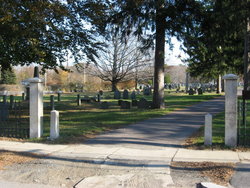
My 9th great-grandfather was a Puritan who came to Rowley, Massachusetts with a religious community. Rowley was one of New England’s earliest settlements, founded in 1639. Like Haverill, it was originally inhabited by a small group of Puritans who emigrated from England. A Puritan minister named Ezekiel Rogers founded Rowley. He gathered together 20 families, including the Grants, from his Yorkshire parish of Rowley in England to establish the American Rowley. Edward arrived with his first wife Elizabeth, who died in 1649. He then married my 9th great-grandmother, Hannah Grant.
Edward Hazen (1614 – 1683)
is my 9th great grandfather
Lt Thomas HAZEN (1658 – 1735)
son of Edward Hazen
John Hazen (1687 – 1772)
son of Lt Thomas HAZEN
Caleb Hazen (1720 – 1777)
son of John Hazen
Mercy Hazen (1747 – 1819)
daughter of Caleb Hazen
Martha Mead (1784 – 1860)
daughter of Mercy Hazen
Abner Morse (1808 – 1838)
son of Martha Mead
Daniel Rowland Morse (1838 – 1910)
son of Abner Morse
Jason A Morse (1862 – 1932)
son of Daniel Rowland Morse
Ernest Abner Morse (1890 – 1965)
son of Jason A Morse
Richard Arden Morse (1920 – 2004)
son of Ernest Abner Morse
Pamela Morse
I am the daughter of Richard Arden Morse
Edward Hazen b:1614
THE IDENTIFICATION OF EDWARD HAZEN
What are the reasons for concluding that Edward Hazen of Rowley, Massachusetts, the founding ancestor of the American family, was the same ‘Edwardus Hasson filius Thomae’ who ‘fuit baptizatur 24 die Decembris 1614’ as entered in the registers of Cadney, Lincolnshire?1. The surname was not a very common one in England, and a great deal of research in Northumberland and Lincolnshire has not disclosed any otherEdward Hazen of suitable age.2. No other history has been found for Edward Hazen (baptized 24 Dec. 1614), who was living in 1628 when his father made his will. No record ofburial has been found in the search of many Parish registers of Lincolnshire. In July 1641, Parliament passed an act that Every clergyman shouldtake a census of males over eighteen in his Parish, presenting tothem for signature a paper upholding the Protestant faith. ; This ‘ProtestationRoll’ is very compete for Lincolnshire. It shows at Cadney, William Hassen, first cousin of Edward; at Great Limber, Richard Hason, Edward’sbrother; and at South Ferraby, a Thomas Hason, servant to William Bromby. Edward does not appear in this Roll, indicating that unlesshe had diedwith record, he had left Lincolnshire before 1641.3. The date of birth is about what we should expect for Edward of Rowley, and makes him in his sixty-nineth year at death.4. The names which Edward of Rowley gave his children are very significant. The first child was Elizabeth named after his mother, and also hisgrandmother who lived until he was fifteen years old. The next child, Hannah, was named for Edward’s wife. Then came John, the eldest son, whichwas the name of Edward’s grandfather and elder brother. The next child, Thomas, was named after both grandfather, Edward’s father andHannah’sfather both bearing the name of Thomas. The next son, Edward, was named for himself, and the youngest, Richard, for Edward’s brother of that name.The names of the other children, who were daughters, are not significant, since Edward had no sisters for whom they could have been named.5. Other settlers in Rowley were from Lincolnshire, and after Edward Hazen married Hannah Grant, her sister Anna married Robert Emerson, who was,like Hazen, a native of Cadney.This from the records of Tracy Elliott Hazen.In the political life of the town also, the Rowley records show that Edward Hazen was a man of influence and importance.On 3 Jan. 1650, at a town meeting, Edward Hazen was chosen as on of the four overseers, and was again chosen to this office, 19 Dec. 1651 and 12 Dec.1654. He was also overseer for the years 1660, 1661, and 1662, and was a selectman for the year 1669. These overseers were not the same asselectmen, as sometimes has been stated, but were always named after and in addition to the select men, or ‘prudentiall men,’ and in 1649aredescribed as ‘ouerseers for the execution of towne orders and Hy wayes.’ On 10 Jan. 1660/70, ‘Thomas Tene’ and ‘Edward Hasne’ werre chosen’ouerseers for vuiin fences and hywayes and vuiin Chimneys.’ Among the ‘Towne Charges for the year past 1651: for John Smith for going to Court0-4-6: alsoe for Edward Hasen the lyke worke 0-3-6.’ ‘Town charges 1665: Edward hasen a Day Jury Man.’ The Ipswich Court Records and Files showthat Ed. Hassen served on Trial Jury 30: 7: 1651 and also 26:7:1654. On 9 Jan. 1665/66, Edward Hazon was chosen one of the four judges ofdelinquents ‘for not comeing to towne meetings’; 9 Jan. 1666/67, ‘Edward hasen Judge for yeare ensuing.’ In a list [of town charges?] 1662: ‘Edhason 0-10-2.’ Towne charges 1667: ‘Edward Hason for ueiwinge fence 0-3-0.’ In an undated record probably referring to King Phillip’s War and toEdward Hazen’s sone: ‘Work done for Samuel person in ye war–James Tenny 1 day: Thomas Hasen and Edward each a day.’ [Early Records of the Town ofRowley (1894), pp 70, 71, 73, 91, 106, 118, 132, 146, 159, 162, 165, 185, 200, 205, 224; Quarterly Courts of Essex County, 1:232, 362.]The follow account of the settlement of Edward Hazen’s estate is taken from the original papers, in two sheets, on file at Salem, and differssomewhat from the clerk’s book copy.Edward Hazen and his wife Hannah appear in the following deeds:Peter Eyers and wife Hannah of Haverhill convey to Edward Hasen of Rowley 6 1/2 acres of puland, Peter Eyers’ 3d division, with land abutting on theMerrimack River, (date not give in copy). Witnesses, Jno. Carlton, Jno. Gryffyn [Old Norfolk Co. Deeds, 3:336, p. 367 in copy.]Edward Hassen and wife Hannah of Rowley convey to John Tennie of Rowley100 acres in the division called ‘Merimake land,’ the northwest end abuttingon the Merrimack River, and 4 acres of meadow called Crane meadow; also a parcel of land granted to John Harris, John Tod, Richard Longhorne,Richard Holmes, and Edward Hassen by the town of Rowley, dated 20 May 1664. Witnesses, Ezekiell Jewit, Thomas Tenny.The name was signed ‘Hasin.’ Edward acknowledged 16 June 1673. [Ipswich Deeds, 4:41.]John Pearly and wife Mary of Newbury convey to Edward Hazen of Rowley 7acres of upland in Rowley Village-land of Thomas Pearly, Daniel Wood, andEzekiel Northen mentioned, (date not given in copy). Witnesses, Benjamin Rolfe, Thomas Hale. John and Mary acknowledged on 19 Feb. 1684 and sheresigned her right of dower to Edward Hazen’s administrators. [Ibid., 5:371.]’Hanah ye Relict and late wife of said Edward Hason deceased & Edward Hason son of ye said Edward Hason Joynt administrators’ confirm to ThomasHason land in Rowley Village where he now lives and which his father Edward before his death settled upon him as his portion-land bought of JohnPearly of Rowley Village and on 19 Feb. 1684 acknowledged by him, dated 14 May 1685. No witnesses. Signed ‘Hannah Hazzen alias Browne.’ Hannah acknowledged 19 May 1685; Edward, 4 Nov. 1685. [Ibid., 5:371.]Hannah Browne of Haverhill, widow and relict of Capt. George Browne, ‘for & in consideration of natural & christian love & afection which I beare unto my loving & beloved sonns Thomas & Edward wch I had by my former Husband Edward Hazen long time deceased at Rowley,’ conveys to them all theinterest in the estate of her brother John Grant of Rowley, dec’d; 1 Mar. 1699 or 1700. Witnesses, Thomas Eaton, Senr., Richard Saltonstall. [EssexCo. Deeds, 14:37.]Capt. George Brown and wife Hannah of Haverhill convey to Thomas Carlton of Bradford 76 acres laid out to her former husband Edward Hazzen ofRowley, dec’d, and her part of the estate of Edward Hazzen in Bradford-widow Smith, widow Hobson mentionsed, 3 Apr. 1697. Witnesses, AbrahamPerkins, Solomon Reves, Senr., Jacob Perkins, 3d. Acknowledged 3 Dec. 1698. [Ibid.,30:44,45.]Richard Hazzen, Thomas Hazzen, Edward Hazzen, Daniel Wicom, Junr., Nathaniel Storey, children of Edward Hazzen and Hannah, now wife of Capt. GeorgeBrowne, quitclaim to Thomas Carlton, 3 Apr. 1697. Witnesses, Edward Carleton, Nath. Walker, Solomon Keyes, Senr., Jacob Perkins, tertius. [Ibid.,30:45.]An agreement concerning some land that was their father Edward Hazen’s and that after his death was laid out to his wife for her thirds, was made by Thomas Hazen of Norwich, John Wood of Bradford, Timothy Perkins of Topsfield, Edward Hazzen of Boxford, Richard Hazzen of Haverhill; first, thatEdward Hazzen is satisfied with 16 pounds already received, one ox gate in east end of ox pasture, and 5 pounds which his brothers promise to pay;secondly, that the others are satisfied with a lpiece of march, call cowbridge marsh, and a piece of land called cowbridge lot, and another piece ofland in Symond’s new field from their mother’s thirds, taking in brother Jeremy Person, brother Harris’ children, brother Gibson’s children, andbrother Wicom’s children, they having their sharewith the others; dated 20 June 1716. Witnesses, Thomas Perley, Junr., Nathaniel Perley.d [Ibid.,34:189]On 4 July a ‘Hanah Hazen’ was a witness to the will of Ann Swan, relictof Richard Swan of Rowley. [Essex Co. probate files, Docket 268976.] It is highly probable that she was the wife of Edward Hazen, as his daughter Hannah was presumably married before that date.From Hazen family in America by Tracy Elliott Hazen[Hazen21404.FTW] SiteMap | Visitors: 772 | TribalPages Forum
Family History
http://www.angelfire.com/journal/pondlilymill/heisende.htmlThe Hazen Family in AmericabyTracy Elloit HazenTHE ORIGIN OF THE ENGLISH HAZENS
There is a township in Northumberland, England, near Alnwick, and Warworth Castle, now called Hazon (or Hazen). In early records it was written Heisende, and philiolgists beleive it was derived from Hegges ende (softened into Heies ende), meaning end of the hedge. To this day there are miles of hedge by the roadside in the township.From this town, the surname was derived. Hugh of Heisende [in the Latin form, Hugo de Heisende] made an agreement 8 Sept. 1202 regarding 100 acres of wood in Heisende [Feet of Fines, John Northumberland, case 180, file 2, no. 8]; a Hugo de Heisende is also found in 1256, in an Assize Roll of Northumberland, and in another Roll in 1277 he appears as “Hugo Heisand [Surtees Society Pub. 88: 64,387].Men removing from the town and settling elsewhere, during the period when surnames were coming into use, would be called “de Heisende” – from Heisende- to identify them by their place of origin, and their offspring would become plain Heisende. The name seems to have worked down through Yorkshire, south into Linconshire, all on the eastern coast of England. Many records have been found, in both printed and documentary sources, of the occurrence of the name. It has been decided not to include full mention of these records, partly because of space limitations, and even more because no descent or generation sequence can be established, so that the sporadic occurrance of the surname, variously spelled, is of importance solely as indicating the continutity of appearance of the surname in the northeast counties. It cannot be proved that all who bore the surname in this region were of the same blood, since more than one family deriving from the town of Heisende may have adopted the name.In Northumberland, more than a century after Hugh de Heisende, we fine Will Haysand mentioned in 1376 [De Banco Roll, Michaelmas Term, 49 Edward III]. In 1455 one Willaim Haysand of Newcastle, Northumberland, claimed part of the manor of Dopmanford, co. Huntingdon, being son of Hugh, son of Thomas (born in Haysand, Northumberland), son of William Haysand, brother and heir of Gilbert Haysnad who married the heiress of Dopmanford and died without issue [De Branco Roll, Easter Term, 33 Henry VI, memb. no. 128]. Before 1399 John of Gaunt granted the leper hospital at Warenford to a hermit named Richard Hayzaund [John Crawford Hodgson, History of Northumberland, 1:251].In Yorkshire is found the will (in Latin) of Willaim Hassand of Watton, dated 11 August 1484, which mentions his father and eldest son, both named Thomas [Reg. Test. Edor., 5:243]. John Hasande late of Watton died 22 October 1515; and John Hassand of Kirkburne died interstate before 13 April 1559 [Act Book for the Deanery of Harhill and Hull with Beverley].In 1535 Richard Hasande was bailiff, paid for collecting the rents, in the Deanery of Ludburghe, Lincolnshire [Valor Ecclesiasticus, 4:59]. He may be the Richard Hassand with whom the proved ancestry of Edward Hazen beginning in the section. The known ancestors of Edward Hazen were husbandmen of the better class, of sufficient substance to make wills. The family was not armigerous, and no Hazen coat of arms is known.NOTE: There are similar sounding names in Dutch (Haas) and German (Haassen) with a Jack-Rabbitt on a family Coat of Arms, there is no family connection. So don’t be fooled by misleading family Coat of Arms. Hazzan is the Hebrew spelling which means a cantor, one who crys out the truth. Hazen is a common first name in Isreal. Jews were not allowed to be armigerous. All the Hazen’s in America and Canada are decended from Edward Hazen who came from Cadney, Lincolnshire, England to Rowley, Massachusetts in 1638,. There is two recent arivals from England who are related to the family back in England. Where the family name is still spelled Hason.
In 2008 on the programme ‘Who do you think you are?’ the story of the model Jodie Kidd’s family history was featured As he sory unfolded it was revealed that Jodie was descendent from Edward. This part of the programme explained how the Hazen family had orginally been one of the founding family of America. Edwrd had moved the family from the nearby settlement Rowley to Haverill. The story of the family’s struggles was told and Jodie was able to work backward thrugh her family history from Rowley and back to England to Rowley in Yorkshire. The programme brought Edward’s family’s story back to life and explained why they had left England.Edward’s wife Hannah (Hannah was Edward’s second wife whom he married after his first wife died in 1649) parents Thomas and Jane Grant were among the original settlers who founded Rowley in 1639. This group of settlers were Puritans and were led by their minister Ezekiel Rogers. He had gathered together 20 families from his parish of Rowley in Yorkshire, England and they had set out to the new world to find religous freedom as Puritans were being persecuted in England when the King, Charles 1, had banned the puritan clergy from preaching.Thomas and Jane Grant were amongst 20,000 British Puritans who travelled to the new world. This new life was extremely hard to begin with and many died making the journey or from stravation, disease or the severe cold winter. The surviours through great sacrifce gradully established themselves in the new world and craved out there settlements.
Sources:
U.S., Sons of the American Revolution Membership Applications, 1889-1970
New England Marriages Prior to 1700
The Hazen family in America : a genealogy
History of Essex County, Massachusetts. : with biographical sketches of many of its pioneers and prominent men
Vital records of Rowley, Massachusetts to the end of the year 1849
Vital records of Rowley, Massachusetts to the end of the year 1849
Massachusetts, Town and Vital Records, 1620-1988
The Granberry family and allied families : including the ancestry of Helen (Woodward) Granberry
 mermaidcamp