mermaidcamp
Keeping current in wellness, in and out of the water
You can scroll the shelf using ← and → keys
You can scroll the shelf using ← and → keys
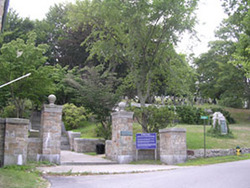
buried in Plymouth
My 13th great-grandmother arrived in Plymouth Colony in 1623 on the ship Ann. Her husband was a Mayflower Compact signer. She lived a long and, for her time, independent life. We know a lot about her:
A WOMAN OF VALOR : ELIZABETH WARREN OF PLYMOUTH COLONY by Peggy M. Baker
Director & Librarian, Pilgrim Society & Pilgrim Hall Museum
“A woman of valor, who can find? Far beyond pearls is her value… Give her the fruit of her hands, and she will be praised at the gates by her very own deeds.”
Proverbs 31:10
The “Pilgrim Mothers” are mysteries. These intrepid women of 17th century Plymouth Colony are known by their husbands and known by their children. Their own lives, however, are seen only in glimpses, pale images reflected off the activities of the families which revolved around them. The women themselves are almost invisible. While the court records of Plymouth Colony reveal much about the daily activities of the law-abiding men of the Colony, they tell us little about the women (except for those few women who broke the law). There was, in fact, no officially recognized role for the law-abiding married woman. The activities and contributions of those women, although vital to the survival and success of the Colony, are nowhere registered or officially acknowledged.
According to the accepted legal convention of the times, all married women, even those conducting business independently, were regarded as representatives of their husbands. Only widows could be legally recognized as agents in their own right. Very few widows availed themselves of the privileges and the responsibilities that such independent status would entail.
One Pilgrim woman, however, breaks through the patriarchal conventions of 17th century society. By the longevity of her widowhood and by the independence of her actions, Elizabeth Warren emerges from the collective category of “Pilgrim Mother” as a highly individual woman.
Elizabeth Warren appears full-grown on the shores of American history. Nothing is known of her English background, apart from her marriage to Richard Warren. Richard was one of the 102 passengers on the Mayflower, that sailed into Plymouth Harbor in December 1620.
Many of the Mayflower passengers traveled as families. Some families, however, with many young children or other family responsibilities, or those thought (in Pilgrim William Bradford’s words) “most unfit to bear the brunt of this hard adventure,” separated. The men sailed in 1620 and the women and children delayed their sailing, planning on joining their menfolk after the Colony was established. Richard Warren was among the men who sailed alone in 1620.
According to family tradition, Richard Warren brought with him on the Mayflower a particularly treasured (and very portable) family possession – a large linen damask napkin, woven in the Netherlands c.1600, now on display at Pilgrim Hall Museum in Plymouth, Massachusetts.
The napkin’s woven design forms horizontal bands. One band shows a series of symbols – maces encircled by laurel branches and flanked by winged cherubs — representing the city of Amsterdam, with the words “Amster Dam” appearing beneath each symbol. Another band shows the city with houses, churches and canal bridges. The harbor below has rows of small boats with festive figures that appear to be dancing among barrels and boxes on the near shore.
The Warren family was separated for three years. One small ship, the Fortune, arrived in Plymouth in 1621 carrying a number of “lusty young men, and many of them wild enough” to supplement the fledgling Colony’s manpower. It was not until 1623 that two ships, the Anne and the Little James, arrived in Plymouth carrying 80-some new immigrants to Plymouth Colony, including members of the separated families. Among them were Fear and Patience Brewster, the daughters of Mayflower passengers William and Mary Brewster, as well as Samuel Fuller’s wife Bridget. Francis Cooke, who had voyaged on the Mayflower with his teenage son John, was joined by his wife, Hester, and their three younger children Jane, Jacob and Hester. Richard Warren was reunited by his wife Elizabeth and the five Warren daughters, Mary, Anna, Sarah, Elizabeth and Abigail.
The Warrens joined in the life of the small but growing agricultural community : Richard would have played a role in public affairs and worked the fields. Elizabeth would have run the large household that included not only the immediate family but also their farm workers and hired help. On occasion, she would have joined Richard in the fields. The Warren home would have been small and modestly furnished.
Very little furniture survives from the early years of Plymouth Colony. Most pieces were simple and sturdy, suited to life in a frontier community. The Warren “joint stool,” so-named for its joined mortise-and-tenon construction, would have been used both as seating furniture and as a table. The Warren stool is now in the collections of Pilgrim Hall Museum.
Two sons were born to the Warrens after Elizabeth’s 1623 arrival in Plymouth Colony. Their birth dates are not recorded but evidence of their presence can be found in the “1627 Division of Cattle.”
In 1627, the Colony’s livestock, formerly held in common, was divided among the Colony’s residents. Every person living in Plymouth in 1627 was assigned to a “Lot,” generally arranged by family group, and the name of every resident was individually recorded in Plymouth Colony Records Volume I. Listed there we find not only Richard and Elizabeth and their five daughters, but also the names of their two young sons, Nathaniel and Joseph Warren.
Richard Warren died in 1628. Elizabeth, left a widow with 7 children (five young women, ranging from early teens to probably early twenties, and two small boys under the age of 5), never remarried. Elizabeth outlived her husband Richard by 45 years.
Unlike the majority of Plymouth Colony women, Elizabeth Warren’s name appears regularly in the records of Plymouth Colony during the long period of her widowhood. She appears first as paying the taxes owed by all heads of household. She appears next as executor of her husband’s estate.
Elizabeth then appears as one of the Plymouth Colony “Purchasers.” In 1626, 53 (male) citizens of Plymouth Colony agreed to underwrite some of the Colony’s debt in a complicated arrangement with its financial backers. Richard Warren was one of the original 1626 Purchasers. The list of the names of the Purchasers did not appear in the Plymouth Colony Records, however, until several years had passed. During that time, Richard Warren had died. In a startling break with tradition, the list of Purchasers does not contain the name of Richard Warren but, instead, “Elizabeth Warren, widow.” The Court felt it necessary to explain this unprecedented move, noting that Elizabeth was listed in Richard’s stead because Richard, “dying before he had performed the bargain, the said Elizabeth performed the same after his decease.”
In 1635, Elizabeth Warren appears in the Records of Plymouth Colony in a totally new role. No longer seen as acting to fulfill the obligations of her long-deceased husband Richard, Elizabeth now enters the recorded life of the Colony as a totally independent agent. We have not only a court case involving Elizabeth, we hear an echo of her actual words.
Elizabeth brought her servant Thomas Williams before the Court for “speaking profane & blasphemous speeches against the majesty of God.” In a disagreement between mistress and servant, Elizabeth Warren had exhorted Thomas Williams “to fear God and do his duty. He answered, he neither feared God, nor the devil.” Although Governor William Bradford advocated “bodily punishment,” the judgment of the Court was that a reproof was sufficient, Williams having “spoken in passion and distemper,” and making “humble acknowledgment of his offense.”
Elizabeth’s activities continue to be documented to an unusual extent in theRecords of Plymouth Colony. In the late 1630s, she appears in the Records deeding land from the Warren holdings in Plymouth’s Eel River Valley to her sons-in-law.
The Warren daughters had matured and married: Mary to Anne passenger Robert Bartlett, Anna to Thomas Little, Sarah to Mayflower passenger John Cooke, Elizabeth to Richard Church and Abigail to Anthony Snow. Relations within the large extended family seemed amicable.
In 1652, however, trouble suddenly loomed! Elizabeth’s deeds to her sons-in-law, deeds that had been executed 15 years previously, were challenged by persons unnamed. The Plymouth Colony Records report a petition brought by Elizabeth’s son-in-law Robert Bartlett asking for clarification of Elizabeth’s right to deed land because “sundry speeches have passed from some who pretend themselves to be the sole and right heirs unto the lands on which the said Robert Bartlett now liveth, at the Eel River, in the township of Plymouth, which he, the said Robert, had bestowed on him by his mother-in-law Mistress Elizabeth Warren.”
The Court decided, unequivocally, in Elizabeth’s favor, finding that she had the power to give the land, since she had been “by an order of Court bearing date March the 7th, 1637, and other acts of the Court before, invested into the state and condition of a Purchaser.”The Court once again ratified and confirmed her status as a Purchaser and specifically ruled that Elizabeth Warren had the right to dispose of her lands, including the gifts of land she had made to her sons-in-law. Even this clear-cut Court ruling was insufficient to settle the quarrel. And as the dispute continued, the identity of those “who pretend themselves to be the sole and right heirs” was revealed to be Elizabeth’s own son Nathaniel Warren and his grandmother-in-law Jane Collier.
Nathaniel, now married and in his mid-to-late 20s, claimed that he “hath right unto as heir unto the lands of Mr. Richard Warren, deceased.” The two sides in the quarrel agreed to submit the argument to arbitration, each choosing 2 members to sit on the 4-man arbitration panel. Elizabeth Warren chose William Bradford and Thomas Willett. Nathaniel Warren chose Thomas Prence and Myles Standish.
The arbitration panel came swiftly to its unanimous conclusion. Nathaniel Warren received an acknowledgment of his right to share in the Warren lands. The panel confirmed what had never seemed to be in doubt, namely that Nathaniel could continue to hold the land he currently possessed. Nathaniel was also granted 2/3 of the Warren “Purchase Lands” which had not as yet been assigned and possession, after Elizabeth’s death, of 3 acres of land near his current holdings.
The major finding of the arbitration panel, however, must have come as a severe shock to young Nathaniel! The expected outcome by law and by custom would certainly have favored Elizabeth’s son. But, far from vindicating his patriarchal claims, the panel issued a stunning and resounding confirmation of Elizabeth’s status as head of her household and of her authority to act as an independent agent. The panel not only found that she “shall enjoy all the rest of her lands and all of them to whom she hath already at any time heretofore disposed any part thereof by gift, sale or otherwise, or shall hereafter do the same, to them and their heirs for ever without any trouble or molestation” but severely rapped Nathaniel’s unfilial knuckles. The Court concluded by bidding Nathaniel to
forever cease all other or further claims, suits, questions, or any molestations or disturbance at any time hereafter concerning the premises, but that his said mother and all her children, or any other to whom she has any way disposed any lands or shall hereafter do the same, but that they may quietly and peaceably possess and enjoy the same.
Elizabeth Warren seems, indeed, to have quietly and peaceably enjoyed the remainder of her days. When she died in 1673, this remarkable woman received the unprecedented but well-earned tribute of a eulogy in the Records of Plymouth Colony
Mistress Elizabeth Warren, an aged widow, aged above 90 years, deceased on the second of October, 1673. Who, having lived a godly life, came to her grave as a shock of corn fully ripe.

layout of the plots
Elizabeth Jouatt Walker (1583 – 1673)
is my 13th great grandmother
Nathaniel Warren (1624 – 1667)
son of Elizabeth Jouatt Walker
Sarah Warren (1649 – 1692)
daughter of Nathaniel Warren
Elizabeth Blackwell (1662 – 1691)
daughter of Sarah Warren
Thomas Baynard (1678 – 1732)
son of Elizabeth Blackwell
Deborah Baynard (1720 – 1791)
daughter of Thomas Baynard
Mary Horney (1741 – 1775)
daughter of Deborah Baynard
Esther Harris (1764 – 1838)
daughter of Mary Horney
John H Wright (1803 – 1850)
son of Esther Harris
Mary Wright (1816 – 1873)
daughter of John H Wright
Emiline P Nicholls (1837 – )
daughter of Mary Wright
Harriet Peterson (1856 – 1933)
daughter of Emiline P Nicholls
Sarah Helena Byrne (1878 – 1962)
daughter of Harriet Peterson
Olga Fern Scott (1897 – 1968)
daughter of Sarah Helena Byrne
Richard Arden Morse (1920 – 2004)
son of Olga Fern Scott
Pamela Morse
I am the daughter of Richard Arden Morse
Richard & Elizabeth Warren appear often in the records of the 17th century:
Richard Warren : Mayflower passenger
“The names of those which came over first, in the year 1620, and were by the blessing of God the first beginners and in a sort the foundation of all the Plantations and Colonies in New England ; and their families … “Mr. Richard Warren, but his wife and children were left behind and came afterwards.”
William Bradford, Of Plymouth Plantation 1620-1647, ed.
Samuel Eliot Morison (New York : Knopf, 1991), p. 441-3.
It is possible that Elizabeth Warren and her daughters were also part of the original group that meant to travel to America. William Bradford notes that, when the Speedwell was determined to be unseaworthy,
“…it was resolved to dismiss her [the Speedwell] and part of the company, and proceed with the other ship [the Mayflower]. The which (though it was grievous and caused great discouragement) was put into execution. So after they had took out such provision as the other ship could well stow, and concluded both what number and what persons to send back, they made another sad parting; the one ship [the Speedwell] going back for London and the other [the Mayflower] was to proceed on her voyage. Those that went back were for the most part such as were willing so to do, either out of some discontent or fear they conceived of the ill success of the voyage, seeing so many crosses befall, and the year time so far spent. But others, in regard of their own weakness and charge of many young children were thought least useful and most unfit to bear the brunt of this hard adventure; unto which work of God, and judgment of their brethren, they were contented to submit.”
William Bradford, Of Plymouth Plantation 1620-1647, ed. Samuel Eliot Morison (New York : Knopf, 1991), p. 53.
Richard Warren : Signer of the Mayflower Compact
“I shall … begin with a combination made by them before they came ashore; being the first foundation of their government in this place. Occasioned partly by the discontented and mutinous speeches that some of the strangers amongst them had let fall from them in the ship: That when they came ashore they would use their own liberty, for none had power to command them, the patent they had being for Virginia and not for New England … And partly that such an act by them done, this their condition considered, might be as firm as any patent, and in some respects more sure. “The form was as followeth : IN THE NAME OF GOD, AMEN. We whose names are underwritten, the loyal subjects of our dread Sovereign Lord King James, by the Grace of God of Great Britain, France and Ireland King, Defender of the Faith, etc. Having undertaken, for the Glory of God and advancement of the Christian Faith and Honour of our King and Country, a Voyage to plant the First Colony in the Northern parts of Virginia, do by these presents solemnly and mutually in the presence of God and one of another, Covenant and Combine ourselves together into a Civil Body Politic, for our better ordering and preservation and furtherance of the ends aforesaid; and by virtue hereof to enact, constitute and frame such just and equal Laws, Ordinances, Acts, Constitutions and Offices, from time to time, as shall be thought most meet and convenient for the general good of the Colony, unto which we promise all due submission and obedience. In witness whereof we have hereunder subscribed our names at Cape Cod, the 11th of November, in the year of the reign of our Sovereign Lord King James, of England, France and Ireland the eighteenth, and of Scotland the fifty-fourth. Anno Domini 1620.”
William Bradford, Of Plymouth Plantation 1620-1647, ed. Samuel Eliot Morison (New York : Knopf, 1991), p. 75-76.
Richard Warren and the “First Encounter”
This story appears both in Mourt’s Relation, published in London in 1622, and (in a condensed version) in William Bradford’s Of Plymouth Plantation.
“Wednesday, the sixth of December [1620]. It was resolved our discoverers should set forth … So ten of our men were appointed who were of themselves willing to undertake it, to wit, Captain Standish, Master Carver, William Bradford, Edward Winslow, John Tilley, Edward Tilley, John Howland, and three of London, Richard Warren, Stephen Hopkins, and Edward Doten, and two of our seamen, John Alderton, and Thomas English. Of the ship’s company there went two of the master’s mates, Master Clarke and Master Coppin, the master gunner, and three sailors …
Mourt’s Relation, ed. Jordan D. Fiore (Plymouth, Mass. :
Plymouth Rock Foundation, 1985), p. 27-28.
” … the 6th of December [1620] they sent out their shallop again with ten of their principal men and some seamen, upon further discovery, intending to circulate that deep bay of Cape Cod. The weather was very cold and it froze so hard as the spray of the sea lighting on their coats, they were as if they had been glazed. Yet that night betimes they got down into the bottom of the bay, and as they drew near the shore they saw some ten or twelve Indians very busy about something. They landed about a league or two from them … they made themselves a barricado with logs and boughs as well as they could in the time, and set out their sentinel and betook them to rest, and saw the smoke of the fire the savages made that night. When morning was come they divided their company, some to coast along the shore in the boat, and the rest marched through the woods to see the land, if any fit place might be for their dwelling. They came also to the place where they saw the Indians the night before, and found they had been cutting up a great fish like a grampus …
“So they ranged up and down all that day, but found no people, nor any place they liked. When the sun grew low, they hasted out of the woods to meet with their shallop … of which they were very glad, for they had not seen each other all that day since the morning. So they made them a barricado as usually they did every night, with logs, stakes and thick pine boughs, the height of a man, leaving it open to leeward, partly to shelter them from the cold and wind (making their fire in the middle and lying round about it) and partly to defend them from any sudden assaults of the savages, if they should surround them; so being very weary, they betook them to rest. But about midnight they heard a hideous and great cry, and their sentinel called “Arm! arm!” So they bestirred them and stood to their arms and shot off a couple of muskets, and then the noise ceased. They concluded it was a company of wolves or such like wild beasts, for one of the seamen told them he had often heard such noise in Newfoundland.
“So they rested till about five of the clock in the morning; for the tide, and their purpose to go from thence, made them be stirring betimes. So after prayer they prepared for breakfast, and it being day dawning it was thought best to be carrying things down to the boat …
“But presently, all on the sudden, they heard a great and strange cry, which they knew to be the same voices they heard in the night, though they varied their notes; and one of their company being abroad came running in and cried, “Men, Indians! Indians!” And withal, their arrows came flying amongst them. Their men ran with all speed to recover their arms, as by the good providence of God they did. In the meantime, of those that were there ready, two muskets were discharged at them, and two more stood ready in the entrance of their rendezvous but were commanded not to shoot till they could take full aim at them. And the other two charged again with all speed, for there were only four had arms there, and defended the barricado, which was first assaulted. The cry of the Indians was dreadful, especially when they saw their men run out of the rendezvous toward the shallop to recover their arms, the Indians wheeling about upon them. But some running out with coats of mail on, and cutlasses in their hands, they soon got their arms and let fly amongst them and quickly stopped their violence …
“Thus it pleased God to vanquish their enemies and give them deliverance; and by his special providence so to dispose that not any one of them were either hurt or hit, though their arrows came close by them and on every side [of] them; and sundry of their coats, which hung up in the barricado, were shot through and through. Afterwards they gave God solemn thanks and praise for their deliverance, and gathered up a bundle of their arrows and sent them into England afterward by the master of the ship, and called that place the FIRST ENCOUNTER.”
William Bradford, Of Plymouth Plantation 1620-1647, ed. Samuel Eliot Morison (New York : Knopf, 1991), p. 68-72.
Richard Warren & the 1623 Division of Land
The 1623 Division of Land marked the end of the Pilgrims’ earlier system of land held in common by all. Governor Bradford explains it in this way: “And so assigned to every family a parcel of land, according to the proportion of their number, for that end, only for present use (but made no division for inheritance) and ranged all boys and youth under some family. This had very good success, for it made all hands very industrious, so as much more corn was planted than otherwise would have been by any means the Governor or any other could use, and saved him a great deal of trouble, and gave far better content. The women now went willingly into the field, and took their little ones with them to set corn; which before would allege weakness and inability; whom to have compelled would have been thought great tyranny and oppression.” William Bradford, Of Plymouth Plantation 1620-1647, ed.
Samuel Eliot Morison (New York : Knopf, 1991) p. 120
Plymouth Colony Records, Deeds, &c Vol. I 1627-1651 is the oldest record book of the Plymouth settlement. It begins with the 1623 Division of Land, recorded in the handwriting of Governor William Bradford. The lands of Richard Warren were among those designated as “their grounds which came first over in the May Floure, according as thier lotes were case” and are described in this way “these lye one the north side of the towne next adjoyning to their gardens which came in the Fortune.”
Richard Warren & the 1627 Division of Cattle
Plymouth Colony Records, Deeds, &c, Vol. I 1627-1651 also tells of the 1627 Division of Cattle:
“At a publique court held the 22th of May it was concluded by the whole Companie, that the cattell wch were the Companies, to wit, the Cowes & the Goates should be equally devided to all the psonts of the same company … & so the lotts fell as followeth, thirteene psonts being pportioned to one lot … ” “The ninth lot fell to Richard Warren & his companie Joyned with (2) him his wife Elizabeth Warren (3) Nathaniell Warren (4) Joseph Warren (5) Mary Warren (6) Anna Warren (7) Sara Warren (8) Elizabeth Warren (9) Abigall Warren (10) John Billington (11) George Sowle (12) Mary Sowle (13) Zakariah Sowle. To this lott fell one of the 4 black heyfers that came in the Jacob caled the smooth horned Heyfer and two shee goats.”
Richard Warren : a 1626 Purchaser
In 1621, King James I authorized the Council for New England to plant and govern land in this area. This Council granted the Peirce Patent, confirming the Pilgrims’ settlement and governance of Plymouth. Peirce and his associates, the merchant adventurers, were allotted 100 acres for each settler the Company transported. The Pilgrims had a contract with the Company stating all land and profits would accrue to the Company for 7 years at which time the assets would be divided among the shareholders. Most of the Pilgrims held some stock. The Pilgrims negotiated a more favorable contract with the Company in 1626. In 1627, 53 Plymouth freemen, known as “The Purchasers,” agreed to buy out the Company over a period of years. In turn, 12 “Undertakers” (8 from Plymouth and 4 from London) agreed to pay off Plymouth’s debts in return for trade benefits.
The list we have of the 1626 Purchasers comes from the Plymouth Colony Records (Vol. 2, p. 177). Because of some discrepancies in the names, it is usually assumed that the list was compiled several years after the actual agreement was negotiated. The Plymouth Colony Records do not list Richard Warren; instead “Elizabeth Warren, widdow” is listed even though Richard Warren was still living in 1626/1627.
Richard Warren : his death
“And seeing it hath pleased Him to give me [William Bradford] to see thirty years completed since these beginnings, and that the great works of His providence are to be observed, I have thought it not unworthy my pains to take a view of the decreasings and increasings of these persons and such changes as hath passed over them and theirs in this thirty years … “Mr. Richard Warren lived some four or five years and had his wife come over to him, by whom he had two sons before [he] died, and one of them is married and hath two children. So his increase is four. But he had five daughters more came over with his wife, who are all married and living, and have many children.”
William Bradford, Of Plymouth Plantation 1620-1647, ed.
Samuel Eliot Morison (New York : Knopf, 1991), p. 443-7.
“1628.
“This year died Mr. Richard Warren, who hath been mentioned before in this book, and was an useful instrument ; and during his life bore a deep share in the difficulties and troubles of the first settlement of the plantation of New Plimouth.”
Nathaniel Morton, New England’s Memorial
(Boston : John Usher, 1669)
Richard Warren’s burial site is unknown.
Elizabeth Warren in the Records of Plymouth Colony
1631 [a bequest in the will of Mary Ring] : “I give unto mrs Warren one woodden cupp with a foote as a token of my love.”
Mayflower Descendant, Vol. 1, p. 29-30.
1633 : “a misted [meerstead] that was granted formerly to Richard Warren, deceased, & forfeited by a late order, for want of building, the said misted was granted to Mr. Raph Fog & his heires forever, provided the said Raph w’thin twelve moneths build a dwelling howse upon the same, & allow the widow Warren so much for her fence remayning thereon …”
Plymouth Colony Records, Vol. 1, p. 18.
1633 : “According to an order in Court held the 2d of January, in the seaventh yeare of the raigne of o’r soveraigne lord, Charles, by the grace of God King of Engl., Scotl., France, & Irel., defendr of the faith, &c, the psons heere under menconed were rated for publike use … to be brought in by each pson as they are heere under written, rated in corne at vi [pence] bushell … Widow Warren … 12 s[hilling]s.”
Plymouth Colony Records, Vol. I, p. 9-10.
In 1634, she was also “rated” : “Widow Warren …. 9 [shillings].”
Plymouth Colony Records, Vol. 1, p. 26-27.
1633 [inventory] : “John. Thorp debtor to … To mrs Warren 01 10 08.”
Mayflower Descendant, Vol. 1, p. 160.
1635 : “At this Court, Thomas Williams, ye sarvant of widow Warren, was accused for speaking profane & blasphemous speeches against ye mauestie of God, which wer these : ther being some discention betweene him & his dame, shee, after other things, exhorted him to fear God & doe his duty ; he answered, he neither feared God, nor the divell ; this was proved by witneses, and confesed by himselfe. This, because ye Courte judged it to be spoken in passion & distemper, with reprove did let him pass, upon humble acknowledgmente of his offence ; though ye Gove’r would have had him punished wth bodly punishmente, as ye case seemed to require.”
Plymouth Colony Records, Vol. 1, p. 35.
1635 : “Thomas Clarke was plaintive against widow Warren, for taking a boat of his, which was lost in ye Eele River, wher she left it, by an extraordinary storme, in ye same place ; for which he demanded 15 [pounds] damage ; but ye jury aquite ye defendante, finding ye boat to be borowed, & laid in an ordinary place of saftie ; yet, for other considerations, they gave ye said Thomas Clarke 30 [shillings].”
Plymouth Colony Records, Vol. 1, p. 36.
1636/37 : “It is agreed upon, by the consent of the whole Court, that Elizabeth Warren, widdow, the relict of Mr. Richard Warren, deceased, shalbe entred, and stand, and bee purchaser instead of her said husband, as well because that (hee dying before he had pformed the said bargaine) the said Elizabeth pformed the same after his decease, as also for the establishing of the lotts of land given formly by her unto her sonnes in law, Richard Church, Robert Bartlett, and Thomas Little, in marriage with their wives, her daughters.”
Plymouth Colony Records, Vol. 1, p. 54.
1637 : “That Mrs Elizabeth Warren of the Eele River Widdow for and in consideracon of a Marriage already solempnized betwixt John Cooke the yeonger of the Rockey Noocke and Sarah her daughter doth acknowledge that shee hath given granted enfeoffed and confirmed unto the said John Cooke one lot of land lying at the Eele River containeing eighteene acrees or thereabouts and lying on the North side of Robert Bartletts lott formly also given the said Robert in Marriage w’th Mary another of the sd Mrs Warrens daughters …”
Plymouth Colony Records, Vol. 12, p. 27.
1637 : “whereas John Cooke hath a lott of land at the Eele River lying next to Robert Barlet containeing by estimacon eighteene acrees or thereabout given him by Mrs. Elizabeth Warren in marriage w’th his wyfe and Robte Bartlett hath a lott of land of like quantitie lying on the Duxborrow side … the said John Cooke & Robert Bartlett have exhcaunged the said lotts w’th eich other …”
Plymouth Colony Records, Vol. 12, p. 28.
1639 : “M’ris Elizabeth Warren Widdow for and in consideracon of a marriage already consummate betwixt Anthony Snow & Abigall her daughter Hath freely & absolutely given granted assigned & made over unto the said Anthony Snow All that her house scituate nere the place called Wellingsly (alis) Hobs Hole …”
Plymouth Colony Records, Vol. 12, p. 53.
1640 : “Richard Church, Robte Bartlett, Thomas Little, & Mrs Elizabeth Warren are graunted enlargement at the head of their lotts to the foote of the Pyne Hills, leaveing a way betwixt them and the Pyne Hills, for cattell & cart to passe by.”
Plymouth Colony Records, Vol. 1, p. 152.
1644 [from the will of Stephen Hopkins] : “I do bequeath by this my will to my sonn Giles Hopkins my great Bull w’ch is now in the hands of m’ris Warren Also I do give to Stephen Hopkins my sonn Giles his sonne twenty shillings in m’ris Warrens hands for the hire of the said Bull”
Mayflower Descendant, Vol. 2, p. 12.
1651 : “The Names of those that have Interest and proprieties in the Townes land att Punchkateesett over against Road Iland … Mistris Elizabeth Warren.”
Records of the Town of Plymouth, Vol. 1, p. 36
1652 : “petition was prefered by Robert Bartlet unto the Court holden att Plymouth the 7th of October, 1652, therin requesting that wheras sundry speeches have pased from som who pretend themselves to bee the sole and right heires unto the lands on which the said Robert Barlet now liveth, at the Eelriver, in the townshipp of Plymouth, which hee, the said Robert, had bestowed on him by his mother in law, Mis Elizabeth Warren, in marriage with her daughter … doe therby find that Mis Elizabeth Warren, who gave the said lands unto the said Robert and others in like condicion, had power soe to doe, as being by an order of Court bearing date March the 7th, 1637, and other actes of Court before, envested into the state and condicon of a purchaser, as in the said order is expressed ; the said Court doth by these presents, therefore, further ratify and confeirme the aforesaid actes of Court wherby the said Elizabeth Warren is declared to have right to despose of the aforsaid lands, approveing and allowing of the abovesaid gift of land unto the said Robert Barlet and others in like condicon with him, to bee called …”
Plymouth Colony Records, Vol. 3, p. 19.
1653 : “An Obligation appointed to bee recorded ;
“Wheras there hath been a Difference Depending betwixt Mis Elizabeth warren and her sonn Nathaniell Warren about certaine lands which the said Nathaniell conceiveth hee hath right unto as heire unto the lands of Mr Richard Warren Deceased ; These are therfore to Declare and certify unto the court by Mis Jane Collyare in the behalfe of her grandchild Sara the wife of the said Nathaniell Warren and an other petition formerly prefered to the court by Robert Bartlett sonn inlaw of the said Elizabeth wArren by each petitions the prties requesting Justice in the prmises ; the said Mis Elizabeth Warren and Mis Jane Collyare and Nathaniell Warren haveing agreed to refer the said Difference unto such of the bench as they have chosen ; viz Mis Elizabeth Warren hath chosen Mr William Bradford and captaine Willett and Mis Jane Collyare and Nathaniell Warren haveing Chosen Mr Thomas Prence and capt : Myles Standish and they the said Elizabeth Jane and Nathaniell Doe bind them selves heerby videlecett Elizabeth Warren in the summe of an hundred pounds and the said Jane Collyare and Nathaniell Warren in the summe of an hundred pounds to stand to whatsoever they shall Doe and finally Determine in the prmises or the Maior prte of them ; and incase they can not agree they are to chose a fift to bee Umpire in the case In Witnesse wherof they have heerunto sett theire hands The eleventh of June 1653.”
Mayflower Descendant, Vol. 2, p. 64.
1653 : “These are to signifye that upon a claime made by Nathaniell Warren as heire to the lands of Richard Warren late of Plymouth and by Reason alsoe of a petition prefered to the court held att Plymoth the seaventh of June 1653 by mis Jane Collyare in behalfe of her grandchild the wife of the said Nathaniell Warren conserning sundry passages and Discourses between her and mis Elizabeth Warren ye mother of the said Nathaniell Warren about the time of theire contract ; by which the said mis Collyare Did conceive her grandchild should by promise have been Invested and entersed in more lands then the said mis Warren Doth now acknowlidge By Reason wherof many great and sad Differences were like to arise between the prties abovsaid and the said mis Warren and her other children to whom shee had Desposed som prte of her lands to theire great Discontent if not undoeing ; The case was Refered by both prties ; videlecett the said Nathaniell Warren and mis Jane Collyare on the one prtie and mis Elizabeth Warren on the other prtie To Mr Willam Bradford Mr Thomas Prence captaine Myles Standish and captaine Thomas Willett as arbetrators chosen Indiffrently by them to end Deside Issue and finnally Determine all contraversies Differences and claimes about this matter that hath arisen or may for ever arise heerafter for which end the prties abovesaid were all and every of them bound in an assumsett of an hundred pounds apeece to stand to theire award which is as followeth
“first That the said Nathaniell Warren shall enjoy to him and his heires for ever all that land which hee is now possess of ; and moreover shall have two thirds of those lands called purchase lands as yett unlayed out ;
“2’condly And mis Warren shall enjoy that three acres of land bee it more or lesse lying neare to the lotts of Nathaniell Warren ; Dureing his life ; but after her Decease it shall come to Nathaniell Warren
“3’dly shee and her children (viz mis Warren aforsaid) shall quietly enjoy all the Rest of her lands and all of them to whom shee hath alreddy att any time heer(to)fore Desposed any prte therof by gift sale or otherwise or shall heerafter Doe the same To them and theire heires for ever without any trouble or molestacon ;
“4’ly Lastly the said Nathaniell Warren shall for ever cease all other or further claimes suites questions or any molestations or Disturbance att any time heerafter conserning the pr’mises ; but that his said mother and all her children or any other to whom shee hath any way Desposed any lands or shall heerafter Doe the same ; But that they may quietly and peacably posesse and enjoy the same they and theire heires for ever without any molestation from him and his att any time heerafter ; This Determination and award wee have signed under our hands The eleventh of June 1653.
Willam Bradford, Thomas Prence, Myles Standish, Thomas Willett.”
Mayflower Descendant, Vol. 3, p. 141-142.
1660 re the Purchasers of Dartmouth : “Att a generall meeting of the Purchasers att Plymouth the seaventh of march 1652 It was ordered and fully agreed unto and Concluded by the whole that all that Tract and tracts of lands lying from the Purchassers bounds on the west side of Acoughcusse to a river called Accusshaneck and three miles to the Eastwards of the same ; with all Ilands meddows woods waters rivers Creekes and all appurtenances therunto belonging Should bee given to those whose names are heerunder written Containing thirty four shares and was then given alloted Assigned and sett over to them by the whole to have and to hold to them and their heires and Assignes for ever ; to Devide and Dispose of the same as they should see good ; and they are to Satisfy the Indians for the Purchase therof and to beare all other Due Charges that shall any way arise about the same According to their severall proportions… mistris Warren, [et al.]…Wheras these Purchasers whoe by agreement of the whole had theire proportions of Purchase land falling unto them in the places above mencioned whoe by agreement had theire severall names entered into a list (together with some other old Comers) under the hand of the honored Gov’r : late Deceased they Did Desire that the list of theire Names might bee recorded ; but the above written originall list of Names and the agreement Could not bee found in some yeares ; soe that it was Judged lost These purchasers notwithstanding still Desiring that what was theire right might bee recorded ; wherupon order was given by the aforsaid Gov’r that it might bee Done …
“The names of those whoe by order of the Purchasers mett att Plymouth the seaventh Day of march 1652 whoe by Joyne consent and agreement of the said purchasers are to have theire prtes shares or proportions att the place or places commonly called and knowne by the names of Acushena alias acquessent which entereth in att the western end of Neckatay and to Coaksett alisa acoakius and places adjacent ; the bounds of which Tract fully to extend… The said Tract or tract[s] of Land soe bounded as abovesaid which is purchased of the Indians which were the right propriators therof ; as appeers by a Deed under theire hands with all the mershes meddows rivers waters woods Timbers ; and all other profitts privilidges emunities comodities and appurtenances belonging to the said Tract or Tracts above expressed or any prte or prcell therof to belonge unto the prties whose names are underwritten (whoe are in number thirty four whole prtes or shares and noe more) to them and their heires and assignes for ever …Mis Warren one whole share, [et al.]”
Mayflower Descendant, Vol. 4, p. 185-188.
1673 : “Mistris Elizabeth Warren, an aged widdow, aged above 90 yeares, deceased on the second of October, 1673, whoe, haveing lived a godly life, came to her grave as a shocke of corn fully ripe. Shee was honorably buried on the 24th of October aforsaid.” Plymouth Colony Records, Vol. 8, p. 35.

Truckload sale
Tucson, the city I call home, is a large sprawling city in a valley. Development has taken place in spurts, causing a race to the distant suburbs, followed by a race back to downtown. There are significant advantages to life in a university town with a very mild climate. Economic opportunity as well as cultural and educational enrichment are the city’s gifts from the University of Arizona and even from Pima College. I live in a neighborhood close to the university and downtown as yet untouched by urban renewal that has vastly improved the city center. Our new trolley system and upscale development along the route it serves has revitalized a sagging economic scene downtown. I am pleased that we finally have desirable business and residential options for students and others who want to live close to the university. With a long history of serving the community, the Food Conspiracy has grown to meet the needs of the downtown neighborhood.
The Food Conspiracy Coop was founded in 1971 by a small group of people who met in the alley behind the present storefront once a month to divide bulk food. We used the bed of a pick up truck, in which the food was delivered, to weigh out and package our orders. It was as crude and basic as you might imagine, but it worked. Soon we rented the building, but had no store. Later we opened the storefront to the public, but retained the values of our cooperative. Today the Coop is a vibrant and vital part of the new downtown. By sticking to the Roachdale pioneer Principles developed in 1837, the business has survived, thrived, and expanded. The statement of cooperative identity defines the purpose: “A cooperative is an autonomous association of people united voluntarily to meet their common economic, social, and cultural needs and aspirations, through a jointly-owned and democratically controlled enterprise.”
This weekend we have a chance to see how well this mission is working at a Truckload Sale. I love the idea that on May 16 and 17 the truck will offer special deals for purchase from approximately the same spot on which we started this co-op 44 years ago in a truck. There are now gardens, a full kitchen, and an educational space. In honor of the 7th Rochdale Principle, Concern for Community, the sale will feature a beer garden to benefit BICAS. The store will offer 10% off, while the beef and veggie hot dogs and beer will flow in the back yard (parking lot). Garden tours will be offered both days at noon and 5 pm. Come on downtown to celebrate the ongoing success of the co-op.

Truckload sale


My 10th great-grandfather made the trip from England to America in 1639, establishing himself before sending for his wife and children. He was one of the first settlers in Barnstable, MA, where he and his wife are buried.
James Hamlin (Hamblen) was living in London, England, in 1623. He came to New England and settled in Barnstable, Massachusetts, where he was a proprietor. He was admitted a freeman March 1, 1641-1642 and was on the list of those able to bear arms in 1643. He was a town officer.
James arrived at Barnstable in 1639. (Source: Virkus, “Abridged Compendium”). HAMBLEN, or HAMLIN, came from London. He first came to America without his family, in 1639, and they came later. It is believed that he was obliged to flee England due to religious persecution. He was a Puritan, and member of Rev. Lothrop’s church in Barnstable. He became a Freeman 1 MAR 1641-42. He was appointed constable soon after. He and his wife were members of the church in Barnstable at the settlement of Mr. Jonathon Russell in 1683.
James Hamblen (1606 – 1690)
is my 10th great grandfather
Eleazer Hamblen (1648 – 1698)
son of James Hamblen
Isaac Hamblin (1676 – 1710)
son of Eleazer Hamblen
Eleazer Hamblin (1699 – 1771)
son of Isaac Hamblin
Sarah Hamblin (1721 – 1814)
daughter of Eleazer Hamblin
Mercy Hazen (1747 – 1819)
daughter of Sarah Hamblin
Martha Mead (1784 – 1860)
daughter of Mercy Hazen
Abner Morse (1808 – 1838)
son of Martha Mead
Daniel Rowland Morse (1838 – 1910)
son of Abner Morse
Jason A Morse (1862 – 1932)
son of Daniel Rowland Morse
Ernest Abner Morse (1890 – 1965)
son of Jason A Morse
Richard Arden Morse (1920 – 2004)
son of Ernest Abner Morse
Pamela Morse
I am the daughter of Richard Arden Morse
James Hamblen, so far as has been ascertained, was the first of the name who settled in America. He came from London and settled in Barnstable, Massachusetts, in the Spring of 1639. Of his earlier life very little has been learned; records exist, however, from which some traces of him are supposed to have been discovered. The name of Hamblen appears frequently in th records of Plymouth Colony. The first mention is “March 1, 1741-2. James Hamblen was propounded for Freeman.”March 15, 1657, James Hamblen served on inquest on the body of a child, Simeon Davis.June 3, 1657, James Hamblen was sick and could not serve on the Grand Enquest.The name of James Hamblen appears in the list of Freemen of Barnstable in 1658.June 7, 1670, James Hamblen served on Grand Enquest; same day he was member of a trial jury.May 29, 1670, James Hamblen, Juni, and James Hamblen Seni, in list of Freeman.March 6, 1671, James Hamblen served on a jury.June 3, 1679, James Hamblen served on a jury in the case betgween Capt. John Williams and Edward Jenkins.July 7, 1681, James Hamblen served on juries.July 6, 1682, James Hamblen summoned to serve on a jury, and served.In the list of Freemen of Barnstable for 1689, among others appear the names of James Hamblen, James Hamblen, Jr., John Hamblen, Eleazar Hamblen. From Genealogy of James Hamblen and His Descendents and The Hamlin Family
As nearly all the first settlers of Barnstable came from London and the County of Kent, it is probable that James Hamblen,the ancestor, came from that city, as stated by Mr. David Hamblenin the New England Historic and Genealogical Journal. Ofhis early history, little is known. He appears to have been anearly member of Mr. Lothrop’s Church,’ though the date, is notfound on tie record. His son Bartholemew was baptized April24, 1642, but the baptism of his older children, James and Hannah,do not appear on the record. It is probable that they wereborn in England, and that neither they nor their mother cameover so early as the father. This was a common occurrence inearly times. The father came over, and when he had provided ahome sent for his family.He was one of the earliest settlers, and was in Barnstable inthe spring of 1639. His houselot, containing eight acres, was at Coggin’s Pond, and was one of those that I presume were laid outunder the authority of Mr. Collicut. It was bounded northerlyby the lot of Gov. Hinckley, easterly by the Commons, (now the ancient graveyard) southerly by the Commons, and westerly by the highway, which at that time after crossing the hill on the westturned to the north on the borders of the pond to Gov. Hinckley’sold house, which stood near the pond, and thence turnedeasterly, joining the present road at the head of Calve’s PastureLane. In 1686 the present road was laid out through Hamblen’s lot, and leaving a triangular shaped portion of it on the north ofthe road. Afterwards, in 1693, the location of the road havingbeen changed, the Hamblens were allowed to enclose that part of the old road situate between their land and the pond, and adjoining to Gov. Hinckley’s. The westerly portion of the roadwhich was discontinued, opposite the south end of the pond, wasreserved as a public watering-place, and is so occupied to thisday.His other lands were six shares and six acres of upland in$he Calves Pasture, twenty acres of upland, and the meadow onthe north, bounded easterly by the land of Henry Bourne, andwesterly by the land of Dea. John Cooper. His great lot of fifty acres was bounded south-westerly by the great Indian Pond, southerly by the lot of Thomas Lothrop, and northerly by theCommons. It was the most northerly of the Indian Pond lots,and his son John built a house thereon. The Hamblens were among the first settlers in that part of the town, and that region of country is now known as Hamblen’s Plain.In 1686 James Hamblen, Senior’s, house is described as standingon his twenty acre lot, on the north side of the highway, between the houses of Mr. Russell (known in modern times as Brick John Hinckley’s) and Dea. John Cooper’s, now owned by Mr.William Hinckley and others. In the year 1653 this land is calledon the records Mr. Groom’s land, but in the following year, 1654,Goodman Hamblen’s.James Hamblen, Sen’r, died in 1690. In his will dated Jan.23, 1683-4, he names his wile Anne and all his children. To Jame she gave £10, to Bartholemew, £5, and to his daughter Hannah,”according to ye desire of my mother,” £5. All the rest of his esta-te he gave to his wife during her natural life, and after her deathto be divided equally among his children He had a large real estate.His personal estate was appraised at £19,17.3.Goodman Hamblen was not much in public life. He was anhonest man, a, good neighbor, and a sincere christian. He was industriousand prudent in his habits, and, brought up his children to walk in his footsteps. His descendants have, with few exceptions,inherited the good qualities pf their ancestor. The Hon. HannibalHamlin, Vice President of the United States, is the only one amongthem who has been eminent in public life. To give a full genealogyof the family would require a volume. I cannot use all the materialI have collected without transcending the limits of a newspaper article.Several of this name came over early. Capt. Giles Hamlin, ofMiddletown, was a shipmaster, an,d a man of note in his time.There was a Clement Hamlin of Boston, in 1776,. James, of Barnstable,is supposed to have been a brother of Giles, but I have seen no evidence that renders it probable. Capt. Giles wrote his name Hamblin; James Hamblin. This is not conclusive evidence ; but if they were brothers the probability is they would have written their names in the same manner. On the Colony Records, except in two instances, his name is written, Hamlen. The exceptions are aninstrument to which he affixed his own signature, and, an exemptipnin 1657 from serving on the grand jury in consequence of sickness.His sons wrote their name Hamblen, Rev. Mr. Lothrop wrote the name uniformly, Hamling; Rev. Mr. Russell Hamblin. In 1642 James Hamlin ws admitted a freeman of the Colony, and in 1643 was constable of the town of Barnstable. The usual spelling is Hamblin, but the descendants of James are not uniform. Eleazer,the great-grandfather of Vice President Hamlin, dropped the b as a useless letter, and his descendants have continued to do so.
Family of James Hamblen.
His son James and daughter Hannah were probably born in England, his other children in Barnstable.I. JamesII, HannahIII. Bartholemew, 11th April, 1642, bap. April 24IV. John, 26th June, 1644, bap. June 30V. Sarah, 7th Nov. 1647, bap. same dayVI. Eleazer, 17th March, 1649-50, bap. same dayVII. Israel, 25th June, 1652, bap. same day This record shows that Goodman Hamblen was very exact in the performance of what he believed to be a religious duty, that none of his children should die unbaptised.
sources:
U.S., New England Marriages Prior to 1700
The Hamlin family : a genealogy of James Hamlin of Barnstable, Massachusetts, eldest son of James Hamlin, the immigrant
Geneological and Personal History of the Allegheny Valley, Pennsylvania. By John Woolf Jordan. Lewis Historical Pub. Co., 1913 – 1162 pages.

copper
The race of spirit men who are attendants to the Goddess Cybele are known as the Dactyls. They are small and phallic, like the fingers of human hands. Cybele is a 5th century Anatolian goddess who became popular in Greece, then Rome in the 3rd century. She is principally a nature goddess, but has responsibility for nations and the welfare of the people. She is merged with various other mother figures in Greece and Rome. The Dactyls discovered metal and metal smithing and taught it to humans. They are skilled musicians and magicians. On Crete they are said to have discovered copper.
In English poetry a dactyl is a foot in poetic meter. The word poetry itself is a dactyl, one long syllable followed by two short. Greek elegiac poetry was written as a line of dactylic hexameter followed by a line of dactylic pentameter. This was done to make the lines easy for the players to remember, since they had to memorize and recite long choruses. This three beat rhythm is a verbal waltz.
Digital now refers to things not crafted by hands, but in cyberspace. These miracles of programming still require fingers to type in the codes. Take some time today to consider the meaning of fingers and the ability to employ them. Prayer position, or namaste, pressing the fingers of both hands together, is significant as a symbol of gratitude and honor. Sensitivity in each finger brings sensory information to us and allows us to reach out and touch others with feeling. Everything we touch nourishes our inner wisdom and feeds our souls. Give some thanks today for everyone who has given you a hand in life. In what ways do you give as well as receive with your hands? Acknowledge the magic in these exchanges of energy and emotion.
Tethys is a Titan goddess, daughter of Gaia and Uranus. Her job title is mother of the sea. She works together with Nyx and Gaia to form the Titan’s world. She and her husband Oceanus have 3000 daughters called Oceanids. Their 3000 sons are fresh water entities called Potamoi. The earth’s constitution of 80% water is similar to that of our bodies’, 80-90%. The tides and waves of deep and constant churning represent the emotions, the realm of feelings. This goddess was mentioned in poetry, but was never worshiped by a cult. Today one of Saturn’s moons is named for her. Saturn III, as it is also known, has a low density because it is made of ice , with very little rock.
To ride the tides of outrageous fortune in life we must handle our own emotions and those of people around us. There may be times the feelings of others threaten to drown us. It can be difficult to distinguish the heart’s desire from the desires of our loved ones and associates. The message Tethys brings us is to allow the energy of emotions to flow freely through us. Stay true to your own heart, and remain open. The open releasing state allows strong waves to flow through without causing damage. Go with the current rather than struggle to defend or retain emotional stuff from others. Your feelings move you to a calm destination when you let go and float on the surface. There may be turmoil, but you can rise above it.

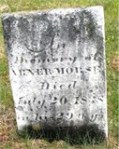
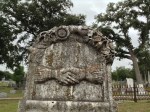
During the exciting and educational April #NaPoWriMo I managed to kick out 30 poems in 30 days. I will follow the poets I met because they make my days richer with only short bursts of time invested. I can read a poem for a minute or two and ponder it forever. I love the community that develops around the special poetry writing month and plan to keep my connection to it. I have learned that the process of writing poems is therapeutic . While engaged in poetic efforts I happened to digitally meet new people who are as interesting to me as the poets. Much to my surprise, my niche geek group, family history freaks, is alive and meeting regularly to share data and support.
This new group found me, or I found it on Facebook. New England Family Genealogy and History is a special interest group for those of us who study these subjects. I am delighted to find people as obsessed with history as I am. Some of them still carry the Mayflower pilgrim family names. There have been wonderful pictures and stories posted in which I have identified members as having common ancestors. This is a full time party of like minded genealogy freaks I can join on line any time. Be still my heart! People who have much more direct information and verification are there to help anyone with inquiries. The first ancestor I found I had in common with other members was my famous poet, Ann Dudley Bradstreet, who may be my favorite ancestor of all. In a few weeks I have met others with whom I share different progenitors. A recent discussion revealed that others share perhaps Native ancestry. Like me, few can definitively prove a connection to a tribe.
Some of the active participants are professional genealogists or family archivists of large collections. Plenty are DAR and Mayflower Society members. Many live in New England now and are connected to local societies for the preservation of everything under the sun. I enjoy learning about some of the old buildings that have stayed in family hands for hundreds of years. I feel a tinge of jealousy when they go off to Providence to a genealogy convention for the weekend. Then I remember that to live in New England one must endure snow and other unpleasantries. I may return to Cape Cod and Rhode Island on a history hunt one day. For now I am very pleased to be in touch with history fans who share interest, passion, and loads of information about New England and the people who have lived there. I can digitally visit every day. You can too if New England History is an interest of yours.

leap
Ancestral chieftain ritually bound to honor natural forces
Protect the seasons, the directions, the winds over the seas
Passing that mastery to students of physical magical realms
Thunderous laughter is carried and amplified on the breeze
Followed by flashing bolts of lightening, blinding light overwhelms

NaPoWriMo 2015
Read, write, recite poetry this April. Meet new poets to enjoy here.

deep center
My dear gentle readers, it is with some trepidation that I embark on a voyage that will take this blog into new territory. During the month of April, National Poetry Writing Month, I will be publishing 30 poems in 30 days right here. It has been my desire to portray my persona in a writing. I like covering subjects like my family tree and current events because it gives me a fact based framework, like news reporting. I do enjoy that kind of research, so I will resume my prose posting when my 30 poems have been produced. Do not fear. I will not turn this into my own little garden of verses. I think it is fun to be a scribe, choosing subjects that I find intriguing. Your fact finding reporter will return in May.
One aspect of creativity and psychic phenomena I notice and follow is the way willingness to practice opens new frontiers. I believe we are all psychic, and all poets. These talents or gifts can’t develop unless they are used. Another belief that I hold strongly is that we create art that has a specific audience. The audience can only find us if we publish or otherwise give them a chance to read it. During April contests and events will be held to teach and share poetry writing. By following the hashtag #NaPoWriMo on social media you can tune into happenings in your area and share fun with folks from around the world. You may decide to participate in a group poem or attend a reading. Of course you do not need to publish 30 poems to enjoy reading them. I started on my path by tuning into this a couple of years ago and writing only a few of my own. I think it is contagious in a very good way.

psyche
I was a production potter for years, selling my pots to make a living. Some of the best and most interesting pottery I made was done when I was a beginner and had very little skill. Later I made technically better pieces, but I was always producing something to sell, so I was influenced by that thought. I hope that my poetry will follow that pattern. My April adventure is intended to break out some new area of my ability in order to stay truly creative. I count on beginner’s luck, but am working hard to find good subjects. Please stay tuned to find out where this leads. I appreciate any suggestions you may have.

pitcher plant

ROW80
Our 80 day writing exercise has flown by quickly for me. I planned to write a poem every day, but have managed to do so about half the time. I am not at all discouraged by this result because I have also managed to expand my repertoire of subjects and formats in my poetry. Last April I wrote daily and all of my poems were inspired by works of art, ekphrastic in nature. This was fun because I visited artist friends and took photos to use as the subjects. When I began this challenge all of my poems were ekphrastic, but I created the art myself rather than finding it. First I tired making the art followed by the words, then I tried it in reverse. It does not seem to matter which way I do it now, which is sort of silly to me. If you are inspired by it, it seems like it should exist before you write…but I am practicing both ways, trying them both to monitor results.
Lately I am happy because I attempted very unusual subjects and did some slightly representational drawing about them. I wrote about a lady who was ditched by her Euro-spy boyfriend in a restaurant. She was presented with a giant plate of raw meat, steak tartare, and a note saying her boyfriend had never existed. Now this might seem macabre or in bad taste, and perhaps it is. What is interesting is that I finally put a character and plot into a poem. My first attempt at this involved a swarm of ladybugs around a cabin. These might not have come up if I had not been following my fiction writing friends who work on plot and character all the time. My desire to make poems from historical figures and history itself lends itself to this practice. If I want to turn my dead ancestors into epic poems I need to employ some of the devices used to flesh out characters and thicken the plot. Since I endeavor to bring dream images into my poetry my technique will now expand to outlining plots and characters, then working on lucid dreaming to give me some vivid imagery with which to work. I can embellish the true stories of my family in my dreams and use the impressions to create poetic versions of historical events.
As the solar eclipse tomorrow brings us a dramatic illustration of light and shadow, I see a metaphor for the known and the unknown. What is obscured from view is often the most important part of the plot, and revealing it is the point of the story. What I do not know about my ancestors leaves room for invention and fancy. Here are some of the real people I think can become interesting poems:
I also have a true contemporary story I want the public to hear and remember. The Emperor’s New Neighborhood Watch is a rap poem about city government running amok. If I do this with rhyme and humor it will be more impactful. A good (digital) friend of mine told me this week that hexameter was the form used by Homer in his classic epics, not because it was great language, but so the actors could easily remember it. I have written about just the facts in this case for years, but what this story needs is some memorable rhyming truth. After the solar eclipse I will start outlining these stories for Poetry Month in April. It is a fun new way for me to paint with words. I am grateful to my fellow writers for teaching my some of their process. Check out the diversity of this group here. There is a lot of talent in this creative group of people. Thanks for sharing these 80 days with a beginner. Your support has been very inspirational. I aspire to be like you.

reaching higher
ROW80
We have no idea what tomorrow will bring, but today is overflowing with potential.
Allan Lokos
Through the Flames
This quote by Mr Lokos perfectly describes my current position on my poetic future. By starting to investigate life and learning through poetry I have opened a vast area of artistic and intellectual study that I am just beginning to understand. Turning my attention to it has automatically turned some poets’ attention to me. One or two people post poems on my Facebook wall every day, which adds a social element to the mix. I don’t believe these writers have read any of my poems, but they have decided to share theirs directly to/with me. I follow more poets all the time who blog. Calligraphy with word significance has also come to my attention. This is a wonderful way to make words larger than life and more colorful than just typing. I have not tried it myself but am thinking of doing some writing by hand instead of always on a keyboard. It may stimulate something new.
I have thought about working with my ancestors as characters to create epic poems or stories, and have done a little work in that direction. People work with notes and written outlines, but I have yet to put these to work for me. I still contemplate images in my head for a while before I begin, but think I can benefit from a notebook with handwritten notes and drawings. When this 80 days has come to a full circle I plan to start a notebook and handwriting practice. I want to see if random idea trapping and tracking will help me kill my darlings and move on to deeper subjects. If I start pages for different times in history or branches of my family tree I think I can develop some themes from which to write fiction or poetry. I like mind mapping, but have not employed it to the task of writing. I believe it can unlock a boat load of potential material using this method. I have no idea what I may do with it, but it will be fun to find it.
Allan Lokos was in a plane that crashed and burned leaving him injured. His book was written to help others find compassion and patience in the face of challenging circumstances. His attitude about potential is key because every day is full of potential. Many of our lives contain too much repetition, little true bliss, and a lack of compassion. We are all recovering from something, although normally nothing so severe as an airplane crash. Honoring potential today by writing is a tribute to collective creativity. Rarely do plans for tomorrow work out exactly as we imagined. Writing creates a trail of breadcrumbs for the soul to trace its’ way. Poetry celebrates the way each of us is gifted with our own set of talents and perspectives. Leaving our stories and thoughts recorded for others to read may turn out to be uplifting or helpful to someone. This journey has contributed greatly to my ability to tap into the overflowing potential all around us. I appreciate the chance to interact with magic, words, and power. Cheers, gentle readers!

cocktail that wants to be a poem
 mermaidcamp