mermaidcamp
Keeping current in wellness, in and out of the water
You can scroll the shelf using ← and → keys
You can scroll the shelf using ← and → keys
What is your relationship to God? Your archetypes will define and expose your spirit. While we may all want to be a visionary or some very special rare spiritually gifted being, our story may be stronger than our experience. If you know the spiritual archetype, you will also have some experience with the shadow of it. Spirit does not bring along only happy good time feelings. It brings lessons required for our own wisdom and advancement. If you really are a martyr you have used your own suffering to manipulate others. The depth of the reality depends on how truthful and open you are. None of us worships like our parents before us…well, very few. Do you give your spirit a rich practice or a platitude?

PA and Penn State Teach Fracking
In 1947 you could obtain from the Pennsylvania Mineral Industries Experiment Station a paper written by my father. It cost 25 cents to learn the science behind water flooding from The School of Mineral Industries. He and his friend, Pete Terwillager, a co-author of this paper, would go on to work together to frack many a well.

Science Behind Fracking
This was the work my father did to earn his masters degree before I was born. Water flooding is the subject of this research. When he graduated with his masters he went to work in Tulsa for Stanolind, and so did Pete Terwillager. He obtained a patent for fracking together with Stanolind. Now they were done with water injection as the displacement method, and had moved on to an oil like substance.
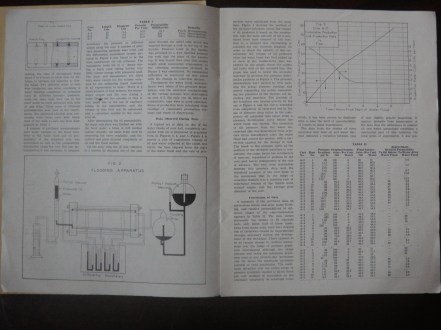
Fracking explained
My father grew up on the Cherokee Strip seeing all kinds of explosions done to procure petroleum. His father, Ernest Morse, drilled for oil with a crew before the invention of the rotary bit, so they were desperate. The fact that he eventually became the first man to make a numerical model of an oil field on a computer made him brilliant. It did not change his relationship with the resources of the earth. The wild-wild west, boomer sooner attitude is the reason they both lost and won. These barons of resources saw themselves as saviors of society. It was years after my father’s death in 2004 that fracking became a subject the public discussed. It came up as if the practice had recently been invented and applied. Not hardly.
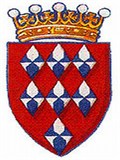
De Burgh Coat of Arms
My 20th great grandmother was born in Ulster, and died in Kildare, Ireland. Her father,Richard Og, was Earl of Ulster and a very powerful man:
Richard Og de Burgh, 2nd earl of Ulster (1259 – July 29, 1326), called The Red Earl, was one of the most powerful Irish nobles of the late 13th and early 14th centuries, a son of Walter de Burgh, the 1st Earl of Ulster (of the second creation) and Lord of Connacht.[1] His name, “Richard Og”, meant Richard the Young, probably a reference to his youth when he became earl in 1271, or to differentiate him from his grandfather, Richard Mor. He was also known as the Red Earl.
Richard Og was the most powerful of the de Burgh Earls of Ulster, succeeding his father in Ulster and Connacht upon reaching his majority in 1280.[1] He was a friend of King Edward I of England, and ranked first among the Earls of Ireland. Richard’s wife Marguerite de Guînes was the cousin of King Edward’s queen. He pursued expansionist policies that often left him at odds with fellow Anglo-Irish lords.
His daughter Elizabeth was to become the second wife of King Robert the Bruce of Scotland. However, this did not stop him leading his forces from Ireland to support England’s King Edward I in his Scottish campaigns and when the forces of Edward Bruce invaded Ulster in 1315, the Earl led a force against him, but was beaten at Connor in Antrim. The invasion of Bruce and the uprising of Felim O’Connor in Connacht left him virtually without authority in his lands, but O’Connor was killed in 1316 at the Second Battle of Athenry, and he was able to recover Ulster after the defeat of Bruce at Faughart.[1]
He died July 29, 1326 at Athassel Priory, near Cashel, County Tipperary.
Children and family
Lady Joan De Burgh, Baroness Darcy (1290 – 1359)
Lady Joan de Burgh was the daughter of Richard de Burgh, 2nd Earl of Ulster and Margaret.1 She married, firstly, Thomas FitzJohn FitzGerald, 2nd Earl of Kildare, son of John FitzThomas FitzGerald, 1st Earl of Kildare and Blanche de la Roche, on 16 August 1312 at Greencastle, County Down, Ireland.2 She married, secondly, Sir John Darcy, 1st Lord Darcy de Knayth, son of Sir Roger Darcy and Isabel d’Aton, on 3 July 1329.3 She died on 23 April 1359.1 From 16 August 1312, her married name became FitzGerald.1 As a result of her marriage, Lady Joan de Burgh was styled as Countess of Kildare on 12 September 1316. From 3 July 1329, her married name became Darcy.3
Children of Lady Joan de Burgh and Thomas FitzJohn FitzGerald, 2nd Earl of Kildare
· John FitzGerald2 b. 1314, d. 1323
· Maurice FitzThomas FitzGerald, 4th Earl of Kildare+1 b. 1318, d. 15 Aug 1390
· Richard FitzGerald, 3rd Earl of Kildare2 b. c 1319, d. 7 Jul 1333
Children of Lady Joan de Burgh and Sir John Darcy, 1st Lord Darcy de Knayth
· Elizabeth Darcy+3
· Aymer Darcy3
· Roger Darcy3
· Sir William D’Arcy+3 b. 1330
Citations
1. G.E. Cokayne; with Vicary Gibbs, H.A. Doubleday, Geoffrey H. White, Duncan Warrand and Lord Howard de Walden, editors, The Complete Peerage of England, Scotland, Ireland, Great Britain and the United Kingdom, Extant, Extinct or Dormant, new ed., 13 volumes in 14 (1910-1959; reprint in 6 volumes, Gloucester, U.K.: Alan Sutton Publishing, 2000), volume VII, page 222. Hereinafter cited as The Complete Peerage.
2. Charles Mosley, editor, Burke’s Peerage, Baronetage & Knightage, 107th edition, 3 volumes (Wilmington, Delaware, U.S.A.: Burke’s Peerage (Genealogical Books) Ltd, 2003), volume 2, page 2298. Hereinafter cited as Burke’s Peerage and Baronetage, 107th edition.
3. Charles Mosley, Burke’s Peerage and Baronetage, 107th edition, volume 1, page 1027.
My hero was interviewed by PBS’s Charlie Rose tonight. Sandra Day O’Connor was feisty, and classy and well spoken. Yesterday she was on NPR radio, making the publicity rounds. She is promoting her new book, Out of Order and her project, iCivics. She points out that we have public education to teach the students to be good citizens, but there is no longer civics instruction in public school. Her humility is as impressive as her continued public service. She does refer to herself as a retired cowgirl, which is typical of her style. Her mission to keep the government of the people, for the people, and by the people from perishing from this earth is a Supreme gift to the American people of the future.
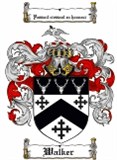
Walker Coat of Arms
My 10th great grandmother was 17 years old when she sailed from London to Salem, MA. She married John Brown soon after arrival in America and moved to New Hampshire. Her husband, who had been a baker, became a ship builder and a very wealthy man. Her sons were all farmers who fought against the Native people in King Philip’s War.
John Brown was born about 1589 in London, England. He emigrated on APR 17 1635 from London, England. *Genealogy of John Brown : “He sailed out of London on the ‘Elizabeth’, 17 April, 1635.” He immigrated in JUN 1635 to Boston, MA. (2646) *Genealogy of John Brown : They arrived in Boston in June 1635 and he remained, as tradition says, in Salem, Massachusetts, until 1638. He died on FEB 28 1687 in Hampton, NH. He is my 9th great grandfather. 9th great grandfather
*Genealogy of John Brown : “John Brown was born in London, England, in 1589 of Scottish parents. For several years he ran a bakery in London and at age fourty-six years decided to go to American Plantations. He sailed out of London on the ‘Elizabeth’, 17 April, 1635. Among his fellow passengers were Sarah Walker, age 17, (later to become his wife) and her brother, James Walker, age 15, who was formerly employed by John in the bakery. John registered at customs as a baker and they registered as servants. Sarah had been in the employ of William Brazey, a linen Draper in Cheapside.
They arrived in Boston in June 1635 and he remained, as tradition says, in Salem, Massachusetts, until 1638. Then John went to Hampton, New Hampshire, where he was one of the first settlers to receive a grant, a tract of four acres, for a house lot, lying near a branch of the river afterwards called Brown’s River. [ Note: This referrs to Browns River, along the Seabrook / Hampton Falls border.]
In 1640 he married Sarah Walker. She was born in 1618, and presumably, left London as a servant to John.” “…the fact that John Brown signed his own name, instead of a mark, shows that his education was not limited, and since he was a single man of fourty-six years when he came to this country, it is presumed that he did not leave London entirely destitute of property but was a man of considerable wealth. This may be one reason why Sarah married a man so much older than herself…”
”John built the first ‘barque’ (small boat) ever built in Hampton in 1641 or 1642 at the river near Perkins Mill.” “… it would seem that this barque was the one that John Green Wittier mentions in his poem, ‘The Wreck of River Mouth’.”
”John was a sober, industrious, hard-working and enterprising man, having made purchases of large additions to his four acres of land in various transactions in the different parts of town. He became one of the largest land owners and the third man of wealth in Hampton, being owner of four farms. He bought of John Sanders in March 1645 house and houselot with 12 acres of upland in the north field next to Morris Hobbs, six acrea of fresh meadow lying by the Great Boar’s Head next to William Fifield’s meadow.
Even though John was a selectman in 1651 and 1656, he never seemed to have taken an active part in town or church affairs. From the records of the court, it appears that John and his sons were engaged considerably in stock, and in 1654 they sued Thomas Swetman for a debt due for two fat oxen, for the want of which money they claimed to have been much damaged.
In 1673 and 1674 he and his eldest son, John, brought suit against the’prudential men’ and also against the Town of Hampton for not causing a road to be built to his farm near the Falls River toward Salisbury, Mass. (now Seabrook, NH). The courts decided in his favor and Landing Raod was built.
All five of John’s sons were farmers and were all engaged in conflict with the Indians in King Philip’s War.”…
*History of Hampton : “John Brown, born in England in 1588 or ’89, emigrated in 1635, and is said to have settled in Hampton as early as 1639. A tract of four acres, for a house-lot, lying near a branch of the river, afterward bearing his own name, was granted to him, though he seems not to have settled there. His residence was on a ten-acre lot bought of John Sanders, on which Zacceus Brown, a lineal descendant of the seventh generation, now resides. He afterward, by purchase, made large additions to this lot, and obtained various other tracts in different parts of the town.”
Note: This refers to Browns River, along the Seabrook/Hampton Falls border.
*E-Mail : “John Browne of Hampton, said to be the son of Sir Angus Browne of Scotland, came to the American colonies from London, England, where he was a baker of considerable means. Embarked on the ship “Elizabeth de London” in April 1635. While on board, he met Sarah Walker, age 17, with her brother, James, age 15, also of London. Reached Salem, Mass. in June 1635. After a few weeks residence there married Sarah and went with the first company of settlers to Hampton, N.H. Was one of richest men in the community. Was a ship builder and made several voyages to England to induce colonists to come to New England.” He was married to * Sarah Walker in 1640.
“In 1669, her brother, John, became violently ill and she cared for him in her home for several years. Sarah died 28 December, 1678 at the age of thirty-five years, being one of the fourty victims of smallpox in Charlestown.”
I will soon have the opportunity to learn about the history of my ancestors in the museum at Plymouth, MA. This young man named Philip eloquently describes the first world war, which he believes happened on his homeland. I agree with him. The culture that introduced war rather than ball games for conflict resolution not only wiped out the Wampanoag population, but disrespected all aspects of the sovereignty of the nations who lived here. Forcing them from Eden is a pretty accurate way to describe what the Euro colonists did. They had everything (except yellow fever) before the colonists landed. Now a remnant of the culture is reenacted at Plymouth for tourists. There is also a small museum at Mashpee which I plan to visit. I am getting very excited about seeing it all in person.
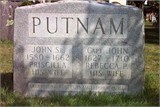
Priscilla Gould Putnam
The family feud between the Goulds and the Putnams (my 12th gg parents) of Salem sparked the famous witch trials. All the living children of my 12th great grandmother, Priscilla Gould, were accused of witchcraft during the hysteria. It is well documented in old English:
Priscilla Gould (1590 – 1662)
is my 12th great grandmother
Salem Witch Trials Notes from the “Topsfield Historical Collection”:
The marriage of John Wild and Sarah Averill within a year of the death of Priscilla (Gould) Wild, seems to have caused trouble between Wild and two relatives of his first wife, Lieut. John Gould, her brother, and Mary, wife of John Reddington, her sister, who lived on an adjoining farm. The first intimation of this state of affairs, appears in the statement John Wild, Jr., made in his will, regarding his Gould inheritance, in order that his father might not be troubled by any claims of his uncle Gould. In 1686 the breach was widened by the testimony of John Wild against John Gould on the charge of treason. Shortly after this episode, Mary Reddington began to spread witchcraft stories about Sarah Wild through the town and it is to her authority that most of the evidence against Sarah Wild may be traced. When John Wild threatened to sue her husband for slander, she denied her previous statements, but evil had already been wrought. Now the Goulds were related to the Putnam family of Salem Village, in whose home the delusion originated and who were the chief accusers in the trials to come and it is probable that the accusations brought against Sarah Wild by their Topsfield connections, were brought to the willing ears of the afflicted girls of the Putnam family and proved the immediate cause of her arrest. On April 21, 1692, the following warrant was issued, casting terrible affliction upon several Topsfield homes, none more so than that of John Wild, for the warrant named not only his wife but his daughter and son-in-law, Edward and Sarah Bishop of Salem Village. “Salem Aprill the 21th 1692. “There being Complaint this day made (before vs) by Thomas Putnam and John Buxton of Salem Village Yeomen, in behalfe of theire Majests, for themselves and also for severall of theire neighbours Against William Hobs husbandman Delive his wife, Nehemiah Abot junior weaver, Mary Easty, the wife of Isaac Easty and Sarah Wilds the wife of John Wilds, all of the Towne of Topsfield or Ipswitch and Edward Bishop husbandman and Sarah his wife of Salem Village and Mary Black A negro of Leut. Nath Putnams of Salem Village also. And Mary English the wife of Philip English Merchant in Salem for high Suspition of Sundry acts of witchcraft donne or Committed by them Lately vpon the Bodys of Anna putnam and Marcy Lewis belonging to the famyly of ye abouesd Thomas Putnam complaint and Mary Walcot ye daughter of Capt Jonathn Walcot of sd Salem Village and others, whereby great hurt and dammage hath beene donne to ye bodys of said persons abouenamed therefore craued Justice. “You are therefore in theire Majestis names here by Comrequired [sic] to Apprehend and bring before vs William Hobs husbandman and (???) his wife Nehemian A bot Junr weaver Mary Easty and all the rest abouenamed tomorrow aboute ten of the clocke in the forenoon at the house of Lieut Nathll Ingersalls in Salem Village in order to theire examination Relaiting to the premises abouesayd and here of you are not to faile. Dated Salem Aprill 21th 1692 John Hatorne Jonathan Corwin Assists. “To George Herrick Marshall of Essex: and or all of ye Constables in Salem or Topsfield or any other Towne.” On the next morning marshal Herrick arrived at the Wild home in Topsfield. By the irony of fate, Ephraim Wild, the only son of John and Sarah, was the constable of Topsfield that year, and the marshal brought the warrant to him. What a tragedy is laid bare in these old and musty records–the young man finding his mother’s name upon the warrant, witnessing her arrest and sad departure from her home and family, never to return and then slowly turning to his duty–the arrest of the remaining victims. His first petition for the release of his mother gives some details of the scene at the house of William Hobbs:–“the woman did show a ueriey bad spirit when I sezed: on might almost se revenge in har face she looked so malishosly on mee.” At her examination, which apparently occurred before that of Sarah Wild, Deliverance Hobbs confessed herself a witch, and “to be revenged of mee” as Ephraim Wild says, accused his mother of tormenting her. She declared that the shape of Mrs. Wild tore her nearly to pieces, and passed her the Devil’s book to sign, bribing her with promises of new clothes. The account of the examination of Sarah Wild is still preserved: The examination of Sarah Wilds at a Court held at Salem village 1692. by the wop = John Hathorn & Jonathan Corwin The Suffers were seized with sou [fits as soon as] the accused came into the Court Hath this woman hurt you Oh she is vpon the beam Goody Bibber that never saw her before says she saw her now vppon the beam & then said Bibber fell into a fit What say you to this are you guilty or not? I am not guilty. Sir. Is this ye woman? speaking to the afflicted. They all or most said yes, and then fell into fits. What do you say are you guilty I thank God, I am free. Here is clear evidence that you have been not only a Tormenter but that you have caused done (some) to signe the book the night before last. What you say to this? I never saw the book in my life and I never saw these persons before. Some of the afflicted fell into fits. Do you deny this thing that is? All fell into fits and confirmed that the accused hurt them. Did you never consent that these should be hurt? Never in my life She was charged by some with hurting John Herrick’s mother. The accused denied it. Capt. How gave in a relation and conformation of the charge made. She was ordered to be taken away and they all cryed out that she was on the beam and fell into fits. The evidence of the witnesses that appeared against her has been lost, but from other papers the names of some of them may be learned. “John Herrick’s mother,” mentioned in the examination, was probably Mary Reddington, whose daughter Mary had married John Herrick. This same Mary Reddington, whose hatred seems to have been insatiable, was responsible for the testimony of the wife of Samuel Simonds of Topsfield, with whose daughter Ephraim Wild had made a marriage engagement which had been broken when the girl’s mother believed the gossip circulated by Mary Redington. “And now she will reward me” the heart-broken son says in a petition. The only other witness, of whom there is any record, is the little daughter of Martha Carrier, one of the accused. She tells the story of a witches’ meeting, held at night in Mr. Parris’s field, at which Sarah Wild and many others were present, pledging the Devil in wine cups filled with blood, a story which received full credit from the most learned and serious men of the time. Mrs. Wild was taken to Boston gaol on May 13. In the interval of over two months which elapsed before her execution, her husband and son did everything in their power to prove the evidence against her false and save her from death. Three of their petitions are preserved and are as follows: “John Wiells testifieth that he did hear yt Mary the wife of Jno Reddington did raise a report yt my wife had bewitched her and I went to ye saide Jno Reddington and told him I would arest him for his wife: defaming of my wife but ye said Reddington desired me not to do it for it would but waste his estate and yt his wife would a done wth it in tyme and yt he knew nothing she had against mye wife–after this I gotmy brother Averill to goe to ye said Sarah Reddington and my sd Bror told me yt he told ye said Sarah Reddington yt if she had anything agst my wife yt he would be a means and would help her to bring my wife out: and yt ye said Sarah Reddington replyed yt she new no harm mye wife had done her. “The testimony of Ephraim Willdes aged about 27 or therabouts testifieth and saith that about fouer yers agoe there was som likly hode of my hauing one of Goody Simonds dafter and as the maid towld me hur mother and father were ueriey willing I should haue her but after some time I had a hint that Goodeey Simonds had formerly said she beleud my mother had done her wrong and I went to hare and toch Marke how that is now dead who dyed at the Eastward: along with me and before both of us she denied that euer she had eneey grounds to think any halme of my mother only from what Goodiey Redington had saide and afterwards I left the house and went no more and euer since she (has) bene ueriey angriey with me and now she will reward mee. Ephraim Willdes” “This may inform this Honered Court That I Ephraim Wildes being constabell for topsfield this yere and the Marshall of Sallem coming to fetch away my mother he then showed me a warrant from authority directed to the constabel of topsfelld wherein was William Hobbs and Deliverence his wife with many others and the Marshall did then require me forthwith to gow and aprehend the bodyes of William hobs and his wife which acordingly I did and I have had sereous thoughts many times sence whether my sezing of them might not be some case of here thus a cusing my mother thereby in some mesure to be revenged of me the woman did show a ueriey bad spirit when I sezed: on might allmost se revenge in har face she looked so malishosly on me as fore my mother I neuer saw any harm by har upon aniey such acout neither in word nor action as she is now acused for she hath awlwais instructed me well in the christian religon and the wais of God euer since I was abell to take instructions and so I leve at all to this honored Cort to consider of it Ephraim Willdes” All the efforts of the family were in vain, however, and Sarah Wildes was executed on July 19, with Sarah Good, Rebecca (Towne) Nurse, Elizabeth How and Susannah (North) Martin. Edward and Sarah Bishop managed to make their escape from prison, and Phoebe (Wild) Day, the other daughter of John Wild, who was imprisoned on the same charge at Ipswich, was apparently never tried.
I stand corrected about the spa culture in Pennsylvania. It is alive and well in Bedford Springs. The indoor and outdoor pools are heated with mineral spring water. The hotel, now operated by Omni, is an historic building as well as a health resort from another era. The historic Bedford Springs Hotel was a favorite of many presidents of the US. The healing waters were taken internally as well as used in bathing. The existence of 8 different sources makes this a very special location. The revival of the hotel to a glorious state of the art facility warms my heart, and will warm my body in September. I love to visit places that have been in continuous use as health resorts for centuries. They acquire a certain culture that is always interesting and usually healthy too.
As an historic landmark the hotel building has very specific restoration standards. They are exacting. A source of water was discovered during the renovation that is known as Spring Eternal. The new deluxe spa is named after this spring. The large property was purchased by Dr Anderson in 1796 for development as a health center. His approach included diet and exercise as well as use of the healing waters. The inclusion of local botanicals as well as the spring water is still part of the treatments at the fancy new facility. I look forward to taking a dip, wishing the live musicians were still playing at the indoor pool. There is even an herbal steam room..be still my heart.
The newest food craze is not called vegetarian, but plant-based diet. I listened to the interview on Marketplace with the CEO of Veggie Grill who is capitalizing on the trend. I noticed also in the news is the very trendy Engine 2 Diet in which real firemen show you how to quit eating meat. Firefighters are known to enjoy good food and being fit, so this image gets the attention of guys. I love all the new recipes and products one can try on the market. I even love the boot camps the Engine 2 peeps do at farms. The mother of them all will take place in New York in August. It will be called…you will not believe it…Plant stock. It will be followed be the Woodstock Fruit Festival.
Drugs are not the alternative now, since everyone is on prescriptions for virtually any small annoyance. Everyone is on drugs, so the alternative culture to take the stage for the youth today is raw vegan health food. Who would ever have thought this would happen? We should have known something was up when Bill Clinton became a vegan. I have been mostly vegetarian since 1969, with a few fishes eaten in the late 1970s. Frequently when fads catch up to me I drop them because it is dull by the time everyone does it. This time I am crazy about the fad, and embrace the young hippies with all their kale and juicers. They have a good idea, and it is catchy. I wish them luck as they try to make food last for the next set of eaters.

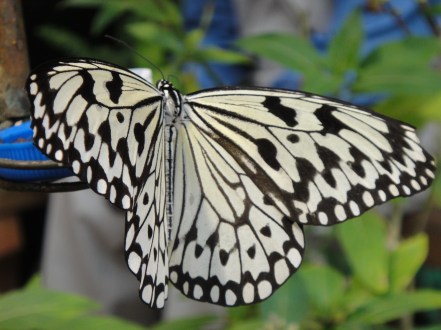
Butterfly
Psyche is the goddess of the soul. Her curiosity and her great beauty made her life difficult. She was the object of Aphrodite’s jealousy. The story of Beauty and the Beast is almost exactly the tale of Psyche. She earns her place in the pantheon by enduring hardship and deceit. Psychic has come to mean the ability to sense beyond the obvious. Our experiences in life that test our ability to see through disguises are maturing our psyches.

 mermaidcamp