mermaidcamp
Keeping current in wellness, in and out of the water
You can scroll the shelf using ← and → keys
You can scroll the shelf using ← and → keys

memorial
My 8th great-grandfather was born in Virginia Colony in 1643. His parents were both killed in the Jamestown Massacre when he was an infant.
Godfrey Ragsdale I was the first generation emigrant to America. He came sometime before 1641. He and his wife were killed in an Indian massacre on April 18, 1644. Their baby, Godfrey II, was spared. He evidently came at his own expense with intent to inhabit the land, for no grant has been found to him, but there is a record of a purchase of 300 acres of land by deed from John Butler, 25 Feb 1642. This land lay on the north side of the Appomatox River in Henrico Co. Virginia. Source: “Godfrey Ragsdale From England to Henrico Co. Virginia” by Caroline Nabors Skelton; 1969; and Henrico Co. Records; Bk. 6; p. 21.
Godfrey Ragsdale II (1643 – 1703)
8th great-grandfather
Ann Wragsdale (1659 – 1724)
daughter of Godfrey Ragsdale II
Benjamin Abraham Vesser (1740 – 1779)
son of Ann Wragsdale
Samuel Harris Vassar (1757 – 1846)
son of Benjamin Abraham Vesser
Mary Vessor (1801 – 1836)
daughter of Samuel Harris Vassar
Margaret Mathews (1831 – 1867)
daughter of Mary Vessor
Julia McConnell (1854 – 1879)
daughter of Margaret Mathews
Minnie M Smith (1872 – 1893)
daughter of Julia McConnell
Ernest Abner Morse (1890 – 1965)
son of Minnie M Smith
Richard Arden Morse (1920 – 2004)
son of Ernest Abner Morse
Pamela Morse
I am the daughter of Richard Arden Morse
The Ragsdale family name is said to come from Ragdale, England, meaning either “valley at the pass” or “dweller in the valley where the lichen grows.” Henry Ragsdale was born in Leicestershire, England about 1450, his son Robert was born about 1485 in Ragsdale, Leicestershire, England. He died about 1559 and some of his children were Henry, Thomas R. and John R. Henry was born about 1510; he married Elizabeth Oglethorpe about 1532 , and their children were William, Dorothy, Elizabeth, Margaret, Owen and Catherine. Henry died in 1559. William was born in 1575; he married a woman named Heathcote, about 1615; they had a son, Godfrey I, who married Lady Mary Cookney and they both came to America.
Godfrey Ragsdale I and his wife, Lady Mary Cookney arrived in Virginia some time late in the summer of 1638. They were some of the first Ragsdales to come to America. Godfrey Ragsdale I ands his wife, Lady Mary Cookney lived in Henrico County Virginia on a 300 acre plantation on February 25, 1642, upon the north side of the Appomattox River.
On April 18, 1644 afterwards known as “Opechancanough Day” the Pamunkee Indians and several tribes in the Indian Federation went on a rampage. There was a carnage that was greater than the one in the Norfolk area in 1622. The Indians slaughtered no less than 500 Englishman. This massacre fell almost entirely upon the frontier Counties at the head of the great rivers, and upon the plantations on the south side of the James River. Both Godfrey I and his wife Lady Mary were killed and scalped.
From documents we know that Godfrey and Lady Mary had a son named Godfrey Ragsdale II, who was born in 1644. Because his mother and father had been killed in the “Jamestown Massacre”, Godfrey II’s next door neighbors raised him and later became his in-laws. Historians say that most Ragsdales in America came from Godfrey II.

Ragsdales in Virginia

revolutionary pension
My third great-grandfather served in the Revolutionary War. On his pension his rank is listed as Dragoon, which is a name for cavalry soldier. After the war all of the cavalry units were disbanded. His wife Joanna received $50 twice a year from 1836-1850 to compensate for his service. He married at the age of 26 and died in South Carolina at the age of 60.
Jonathan Aaron Taylor (1760 – 1820)
3rd great-grandfather
John Samuel Taylor (1798 – 1873)
son of Jonathan Aaron Taylor
William Ellison Taylor (1839 – 1918)
son of John Samuel Taylor
George Harvey Taylor (1884 – 1941)
son of William Ellison Taylor
Ruby Lee Taylor (1922 – 2008)
daughter of George Harvey Taylor
Pamela Morse
I am the daughter of Ruby Lee Taylor
Jonathan Taylor enlisted in service in Cumberland County, Virginia. He was discharged at Cambridge in South Carolina on June 9, 1781. He was wounded at the Battle of Herrington, N. J., and also was in the Battles of Brandywine and Monmouth in New Jersey. He served under Col. Bailee and Col. William Washington.
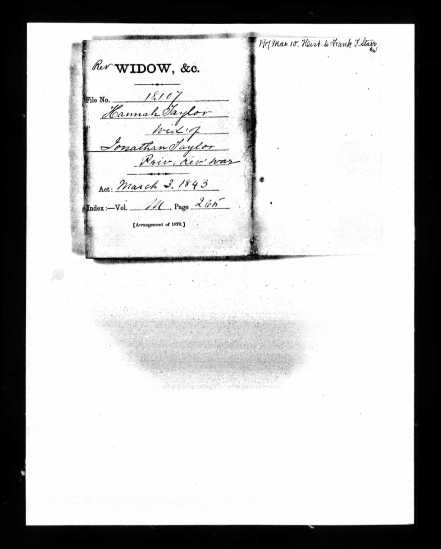
revolutionary pension
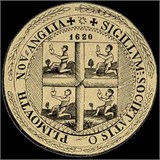
Mayflower seal
My 15th great-grandfather was a big adventurer in the New World. He sailed to Jamestown in 1609, and was on the ill fated voyage to Bermuda that inspired William Shakespeare to write the Tempest. His wife died while he was in Virginia, so he returned to England to care for his three children. He brought his family to Plymouth on the Mayflower. As an experienced colonist he was an important part of the Pilgrim’s diplomatic mission to the Wampanoag tribe. He fell from grace when he opened a shop selling alcohol. He went down a slippery slope from allowing drinking and shuffleboard playing on Sunday to selling beer for twice what it was worth. He managed to stay in town, but did some jail time for defying the court. I am thankful to you, Grandpa Stephen, for attempting so many grand adventures and defying your odds of survival.
Stephen Hopkins was from Hampshire, England. He married his first wife, Mary, and in the parish of Hursley, Hampshire; he and wife Mary had their children Elizabeth, Constance, and Giles all baptized there. It has long been claimed that the Hopkins family was from Wortley, Gloucester, but this was disproven in 1998. Stephen Hopkins went with the ship Sea Venture on a voyage to Jamestown, Virginia in 1609 as a minister’s clerk, but the ship wrecked in the “Isle of Devils” in the Bermudas. Stranded on an island for ten months, the passengers and crew survived on turtles, birds, and wild pigs. Six months into the castaway, Stephen Hopkins and several others organized a mutiny against the current governor. The mutiny was discovered and Stephen was sentenced to death. However, he pleaded with sorrow and tears. “So penitent he was, and made so much moan, alleging the ruin of his wife and children in this his trespass, as it wrought in the hearts of all the better sorts of the company”. He managed to get his sentence commuted. Eventually the castaways built a small ship and sailed themselves to Jamestown. How long Stephen remained in Jamestown is not known. However, while he was gone, his wife Mary died. She was buried in Hursley on 9 May 1613, and left behind a probate estate which mentions her children Elizabeth, Constance and Giles. Stephen was back in England by 1617, when he married Elizabeth Fisher, but apparently had every intention of bringing his family back to Virginia. Their first child, Damaris, was born about 1618. In 1620, Stephen Hopkins brought his wife, and children Constance, Giles, and Damaris on the Mayflower (child Elizabeth apparently had died). Stephen was a fairly active member of the Pilgrims shortly after arrival, perhaps a result of his being one of the few individuals who had been to Virginia previously. He was a part of all the early exploring missions, and was used almost as an “expert” on Native Americans for the first few contacts. While out exploring, Stephen recognized and identified an Indian deer trap. And when Samoset walked into Plymouth and welcomed the English, he was housed in Stephen Hopkins’ house for the night. Stephen was also sent on several of the ambassadorial missions to meet with the various Indian groups in the region. Stephen was an assistant to the governor through 1636, and volunteered for the Pequot War of 1637 but was never called to serve. By the late 1630s, however, Stephen began to occasionally run afoul of the Plymouth authorities, as he apparently opened up a shop and served alcohol. In 1636 he got into a fight with John Tisdale and seriously wounded him. In 1637, he was fined for allowing drinking and shuffleboard playing on Sunday. Early the next year he was fined for allowing people to drink excessively in his house: guest William Reynolds was fined, but the others were acquitted. In 1638 he was twice fined for selling beer at twice the actual value, and in 1639 he was fined for selling a looking glass for twice what it would cost if bought in the Bay Colony. Also in 1638, Stephen Hopkins’ maidservant got pregnant from Arthur Peach, who was subsequently executed for murdering an Indian. The Plymouth Court ruled he was financially responsible for her and her child for the next two years (the amount remaining on her term of service). Stephen, in contempt of court, threw Dorothy out of his household and refused to provide for her, so the court committed him to custody. John Holmes stepped in and purchased Dorothy’s remaining two years of service from him: agreeing to support her and child. Stephen died in 1644, and made out a will, asking to be buried near his wife, and naming his surviving children.
Pilgrim Stephen Hopkins (1581 – 1644)
is my 15th great grandfather
Constance HOPKINS (1600 – 1677)
daughter of Pilgrim Stephen Hopkins
Sarah Snow (1632 – 1704)
daughter of Constance HOPKINS
Sarah Walker (1622 – 1700)
daughter of Sarah Snow
Sarah Warren (1649 – 1692)
daughter of Sarah Walker
Elizabeth Blackwell (1662 – 1691)
daughter of Sarah Warren
Thomas Baynard (1678 – 1732)
son of Elizabeth Blackwell
Deborah Baynard (1720 – 1791)
daughter of Thomas Baynard
Mary Horney (1741 – 1775)
daughter of Deborah Baynard
Esther Harris (1764 – 1838)
daughter of Mary Horney
John H Wright (1803 – 1850)
son of Esther Harris
Mary Wright (1816 – 1873)
daughter of John H Wright
Emiline P Nicholls (1837 – )
daughter of Mary Wright
Harriet Peterson (1856 – 1933)
daughter of Emiline P Nicholls
Sarah Helena Byrne (1878 – 1962)
daughter of Harriet Peterson
Olga Fern Scott (1897 – 1968)
daughter of Sarah Helena Byrne
Richard Arden Morse (1920 – 2004)
son of Olga Fern Scott
Pamela Morse
I am the daughter of Richard Arden Morse
Richard and his second wife had a child born at sea on the Mayflower. They named her Oceanus.
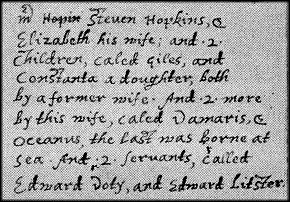
Mayflower record
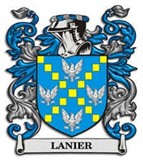
Lanier coat of arms
My eighth great-grandfather came to Virginia with John Washington, and once owned Richmond:
John Thomas Lanier, son of Nicholas and grandson of Jerome was from
Bordeaux in 1603 to America with John Washington. He brought much of the
family furniture with him. He was given a grant of 10 miles or 1400 acres
of land on the South of James River and it included what is now Richmond,
located in what is now counties of Prince George, Brunswick, etc. He
subsequently moved to North Carolina (North border) and was very
prominent.
John Thomas Lanier (1631 – 1719)
is my 8th great grandfather
Sampson Lanier (1682 – 1743)
son of John Thomas Lanier
Elizabeth Lanier (1719 – 1795)
daughter of Sampson Lanier
Martha Burch (1743 – 1803)
daughter of Elizabeth Lanier
David Darden (1770 – 1820)
son of Martha Burch
Minerva Truly Darden (1806 – 1837)
daughter of David Darden
Sarah E Hughes (1829 – 1911)
daughter of Minerva Truly Darden
Lucinda Jane Armer (1847 – 1939)
daughter of Sarah E Hughes
George Harvey Taylor (1884 – 1941)
son of Lucinda Jane Armer
Ruby Lee Taylor (1922 – 2008)
daughter of George Harvey Taylor
Pamela Morse
I am the daughter of Ruby Lee Taylor
State-Wide, NC – Lanier Family Genealogical Tree
The following bible record is found on the LAGenWeb Archives at the
following http://files.usgwarchives.org/la/state/bible/lghsbible/
This record is “bible4-4.txt” in the list of records
Bible Records Published by Louisiana Genealogical and Historical Society.
Be it Known And Remembered: Vol. II, Bible Records 1961: Pages 1 – 60
Submitted to the USGenWeb Archives by LGHS, Jun. 1998
LANIER FAMILY GENEALOGICAL TREE
Taken from the Family Records of Mr. Lee Lanier of Amite, La. Submitted to
the Society by Mrs. Kathryne Watkins, Hammond, La., State Librarian of
Louisiana Daughters of the American Revolution.
Jerome Lanier of Brodeaux, France in 1558 emigrated with his family to
England, in the latter part of the reign of Queen Elizabeth. Jerome was a
Huguenot who fled from execution or persecution and finding himself
without means in a foreign land availed himself of his accomplishments and
secured a position in Queen Elizabeth’s household as Court musician. He
found great favor at the court and for about one hundred years – 1558 to
1666 – the Laniers flourished in England, distinguished themselves in
music, art and military genius. They were a family of means and culture in
France. Jerome Lanier had three sons: Nicholas, Clement and Jerome.
Nicholas Lanier was born in 1568, he was the most prominent of Jerome’s
sons. He enjoyed high favor under James the 7th reign and especially so
under Charles the 7th’s reign. English history says of him that he was one
of those artists whose various talents were so noticeable as to suit the
taste of Charles the 7th. He gathered Charles the 7th’s collection of
paintings. He was a skilled musician, artist and courier. Five of his
famous paintings are distributed as follows: one owned by Van Dyke, one in
the collection of Charles the 7th, one now in the music hall of Oxford.
Two owned by the Prince of Wales. He died in 1648 leaving two sons:
Nicholas, Jr. and John Thomas Lanier.
Nicholas Lanier, Jr., brother of John Thomas Lanier who migrated to
America in 1683; was also a noted musician and artist. He was frequently
seen at the court of England. He was made president of the English Society
of Musicians
Page 133
and Artists for life. He enjoyed many favors from the King. Other members
of the Society were Clement, Andreu, and Jerome. These appear to be of
another branch of Laniers.
(Comment of J. B. Lanier Plooard – 1947 – Apparently history closes out
all branches of the family who may have remained in England and the
Laniers in America seem to be descendants of John Thomas Lanier and
Elizabeth Washington, the aunt of George Washington.)
Jerome Lanier lives in a palatial house in Greenwich, was a great and
famous musician. Owned the greatest collection of paintings than in
existence. He had only one son.
Sir John Lanier in 1690 comes again in history of being knighted “Knight
of his valor, in the capture of Castle of Edinboro. He was Major General
of the “Horse & Dragon.” In the Irish war made himself prominent in Battle
of Boyne and fell at Battle of Steinkiek fighting gloriously along with
the brave Douglas. This closes his story as far as we know of Clement and
Jerome Lanier, so the family name was apparently perpetuated by the
descendants of the son Nicholas Lanier. They may have had daughters.
John Thomas Lanier, son of Nicholas and grandson of Jerome was from
Bordeaux in 1603 to America with John Washington. He brought much of the
family furniture with him. He was given a grant of 10 miles or 1400 acres
of land on the South of James River and it included what is now Richmond,
located in what is now counties of Prince George, Brunswick, etc. He
subsequently moved to North Carolina (North border) and was very
prominent. In 1688 he married Elizabeth Washington, daughter of John
Washington, aunt of George Washington. His will is on record in Prince
George County, Virginia. He was prosperous and left sons Sampson, Robert,
Nicholas, John Thomas and Buckner.
Nicholas Lanier, son of John Thomas Lanier, died 1779 and left two
daughters.
Sampson Lanier was the only surviving son of John Thomas Lanier and
Elizabeth Washington Lanier. He died in 1743 also rather young, but lived
a life of great usefulness as a plantation teacher and physician. His will
in Brunswick County, Va. left large estate to Thomas Dannell Lanier;
Sampson Lanier, Jr., James, Richard and Elizabeth.
Thomas Dannell Lanier died in 1745 and left two daughters.
Elizabeth married a Burch and second a Smith.
Richard Lanier had sons Lewis, Burwell, Buckner and daughter Winnifred.
Lewis, son of Richard Lanier, had a son Alexander Lanier that settled in
New York City. Alexander had a son James D. F. Lanier.
Burwell Lanier had one son David. David moved from Brunswick Co. to
Pittsylvania Co., Va. in 1772. The land is in what is now Henry Co., Va.
Va. records show that David Lanier was a Capt of a Co. in the revolution
distinguished himself as a brave military genius. He married Miss Mollie
Hicks.
Page 134
David Lanier, Jr. had son James Monroe Lanier, grandson Charles and
grandson James who named a son James Monroe Lanier, who was a Capt. in War
of 1812. Was of fine personal appearance and was a large land owner in
Virginia. Daughters of James Monroe Lanier, son of David, were Sally and
Judith.
John Hicks Lanier, Lucy and Nancy and Eliza were other children of David
Lanier.
John Hicks Lanier married a Miss Carter. She was the mother of his
children and when he married a second time the children could not get
along with the new wife and they moved to Missouri. Daughter Mary married
and moved to Lincoln Co., Mo. She married John Lovell__ Children: John,
Jr., Wilie and Allie. Son David had a daughter Mary. Mary first married
James Jones and then a Ferguson. John Hicks, Jr. married Sallie Robinson
and had children: David, Demarous, Mollie. Edward, son of John Hicks
Lanier, Sr. married Jane and had two sons. Robert, son of John H. Lanier,
Sr. married twice. His descendants live around St. Louis.
Sampson Lanier, Jr. – Sampson died 1757, Brunswick Co., Va. and it named
children:
Buckner Lanier, son of Sampson, Jr. was famous for ability to settle
disputes. Well educated – physician and planter. Had one son Sterling
Robert Lanier, son of Sterling, married Mary Anderson of Macon, Georgia.
Sterling Lanier had sons Sidney, the poet, who died of TB contracted
during the Civil War and son Clifford Lanier who went to Montgomery,
Alabama and settled. Sidney Lanier was born 1841.
These are old family records and are not documented; however, they are a
good finding list. There has recently been published a book regarding this
family that will bear out this information. Hillery and his brother
Benjamin were in the Florida Parishes section of Louisiana as early as
1873 but the court records do not show estate papers.
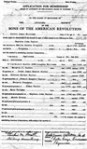

My 4th great-grandfather was born in Virginia and died in the Revolutionary War in South Carolina.
His father, John TAYLOR, b. ca. 1723, migrated from Virginia in 1754 to the east bank of the Congaree River, 10 miles south of Columbia, South Carolina.
Captain John TAYLOR (b. 1746 m. Sarah HIRONS d. 1 Feb 1781) was wounded twice, at Fort Moultrie and Sullivan’s Island, and captured with Colonel Thomas TAYLOR (b. 10 Sept 1743 & John’s brother) at Fishing Creek, but escaped while being carried to Camden, South Carolina. He was one of three brothers who fought in the American Revolution for the SC Militia.The 3rd brother, James TAYLOR, married both Sarah’s sister, Mary HIRONS, & Sarah DANIELL. (Taylor info: http://www.geocities.com/bcvsmith/ 19 April 2002)
Captain John Taylor died of smallpox during the war.
John Taylor (1747 – 1781)
is my 4th great grandfather
John Nimrod Taylor (1770 – 1816)
son of John Taylor
John Samuel Taylor (1798 – 1873)
son of John Nimrod Taylor
William Ellison Taylor (1839 – 1918)
son of John Samuel Taylor
George Harvey Taylor (1884 – 1941)
son of William Ellison Taylor
Ruby Lee Taylor (1922 – 2008)
daughter of George Harvey Taylor
Pamela Morse
I am the daughter of Ruby Lee Taylor

coat of arms Davis
My 7th great-grandfather was born in Northern Ireland and came to South Carolina with Presbyterians. He first settled in Virginia, then traveled south.
Tradition states that Robert Davis was born in North Ireland, where he was married to Anne Pickens. Some of their children were born in Ireland, and they are said to have come to America about 1735 or a bit earlier. The know facts in America about them from Kegley’S Virginia Frontier records are as follows: Robert Davis first received 400 acres in 1735 in South Garden, among the mountains of the Branches of Hardware River in Virginia. At that time all this territory was in Goochland County, and is located in what became the extreme southern end of Augusta county. The same year he received an additional 400 agres in the same location. This section is actually in the Branches of James and Roanoke Rivers. Kegley shows that in 1746 Robert Davis received a grant of 300 acres on the west side of the Blue Ridge. On Nov. 22, 1746, one James Davis, received a grant of 626 acres part of a larger grant of 8,100 acres on Catawaba river. Kegley shows that in 1748 the Clerk’s fee book in Augusta County,Va. shows that Robert Davis, along with many others, is “not found”. This,says Kegley, is an indication of how restless the pioneers were on the frontier, moving from place to place and the county officials unable, or unwilling to keep up with them. Robert Davis seems to have lived a fairly quiet life while in Augusta as there are relatively few records of him. Hedid not trade lands, but witnessed a good many deeds for other eople showing who his friedds and neighbors were. Most other records of Robert Davis in Augusta are in connection with the settlement of the estate of Robert Crockett. North Carolina list of applications for land grants, show that on 1 October 1751, the following applied for land: Robert Davis-for 600 acres, William Davis-for 300 acres Robert Caldwell-for 600 acres, Andrew Pickens-for 800 acres. North Carolina had a law granting land only to people who came into the colony to live on the land. Applicatons,howerever were received in advance of actual removal. In 1753 Robert Davis made the statement in Augusta county that he planned to leave the colony. It was about this date or the next year at the latest that he arrived in the Waxhaw Section, along with others from the same ara in Augusta County. The land when granted was in the then constituted county of Anson which included most of western North Carolina. Source: THE DAVIS FAMILY ** With Crockett and Pickens connections. ** compiled by E. M. Sharp From research done by Mr. D. L. McWhorter of Bethel, North Carolina, in the Archives of the State of North Carolina, and in Mecklenburg Co. North Carolina. and Researched on the Pickens family by E. M. Sharp of Memphis, Tenn.
He served in the militia with his father-in law and brother:
Early Anson county records show the follow ANSON COUNTY, MILITIA COMPANY: Year 1755. Had 61 officers and men. Among those listed were: Captain – Andrew PickensLieutenant – Robert Ramsey Ensin – John Crockett Sgt. – Thomas Wright, Sgt. – William Geard, Sgt. – William King. Corporal – Alexander Crockett. Archibald Crockett, Andrew Nutt, George Davis, John Davis, Joh Pickens, John Linn, Joseph Pickens, Moses Davis, Robert Davis, Robert Crockett, Robert McClelland, Robert Caldwell, Robert Montgomery, William Davis, William Pickens and others.
Jamestown
My 10th great-grandfather sailed to America in 1610, settling in Virginia. He became the official interpreter for the colony, and served in many other public service capacities.
John Flood (1595 – 1658)
Notes- John Flood alias Fludd sailed from London aboard the ship “SS Swan(n)” in the summer of 1610 and landed at Jamestowne, Virginia, America in the same year. The passenger list describes him as “a gent” (gentleman). He took with him a considerable supply of provisions, including “corn, pease and beanes”, and also firearms and ammunition. He was the son of Nicholas Fludd, who was a younger son of Sir Thomas Fludd, a wealthy land owner living at Millgate, Bearsted, Kent. Nicholas married Elizabeth Davis at St. Andrews Church, Canterbury, Kent in February 1588/9.Initially John would have worked for various employers but he is known to have been employed in 1616 by The Reverend Alexander Whitaker, in Charles City, a settlement just to the west of Jamestowne, who is reputed to have converted Princess Pocahontas to Christianity in c1613. She is said to have been married to John Rolfe by Reverend Bucke at about this time. John was to marry Margaret Finche, widow, in c1624/5. She had arrived in Jamestowne in 1620 aboard the “SS Supply” with her husband William Finche and their daughter Frances. In September 1620 they are recorded as each holding fifty acres of land, but by 1624 William had passed away and John had married the widow Finche and they were living in Jordan’s Journey with their children Frances Finche and William Flood.By 1638 John had accumulated a considerable amount of land including that of his wife by right of marriage, and he was declared an Ancient Planter such that he was entitled to another 100 free acres of land. He was also granted a Patent of 2100 acres of land, where he established his plantation, located on the south side of the James River just opposite the town of Jamestowne. Here their other children were born, John c1627, Thomas c1629, and Mary c1635.His wife Margaret died c1644, leaving John with the young children. A year or so later he married Fortune Jordan, sister of Col. George Jordan, legislator, a member of a well known and influential family of Virginia. Their first daughter Jane, was born soon after and son Walter was born in 1656 when John was aged sixty-four.John served as a Representative in the Virginia House of Burgesses for twenty-two years, representing the areas of Flowerdieu Hundred, Westover and Weyanoke and served at least one term as their Speaker. By 1643 he was one of the representatives of James City County. In 1655 as Colonel John Flood, he was serving as a member of the local militia.At his death in 1658 he was Chairman of the Surry County Commission which held Court and administered the affairs of the County.John survived many hardships including the Indian uprising and massacre of 1644 which caused a break in the Colony’s fur trade. The Indian Treaty of 1646 gave the trade some protection with the erection of 4 forts along the frontier to which the Indians were permitted to come and trade. One of them, Fort Henry, was located on the south side of the James River, on the Appomattox. Across the river from the fort was the home of Captain John Flood, as he was then, who was appointed to the post of official interpreter for the colony.The Grand Assembly held at James City October 5, 1646, enacted the following: “that upon any occasion of a message to the Governor or trade, the said Necotowance and his people the Indians doe repair to fforte Henery, alias Appmattucke fforte, or to the house of Capt. John ffloud, and to no other place or places of the south side of the river, att which places the aforesayd badges of striped stuffe are to be and remaine. Indians found in ceded lands who were not wearing special striped coats picked up at the designated forts were to be killed on sight, and any white illegally entertaining Indians was to be punished severely. Be it also enacted that Capt. John ffloud be interpreter for the collony, and that for his service therin and transporting such Indians as shall be employed from time to tyme to the Gov=r in a message or otherwise, he is to be allowed from the publique the salary of four thousand pounds of tob’o yeerly.”. (The farming of tobacco was so widespread that it was used as a basis for money and trade).FLOOD(from page 301; “VIRGINIA HISTORICAL GENEALOGIES”, by Boddie)Col. John Flood (ca 1595-1658), of James City and Surry Counties, Va., arrived in 1610. In the “Muster Rolls, of Settlers in Virginia, 1624/5” is; “The MUSTER of John Fludd: John Fludd arrived in the ‘Swan’ 1610, Margaret, his wife, in the ‘Supply’ 1620. Frances Finch, her daughter, in the ‘Supply’ 1620, William Fludd, his son, aged 3 weeks”. John Flood was living in Charles City in 1616 and at “Jordan’s Journey” in 1625; in 1638 he patented land and settled in James City County just across the river from Jamestown in the section which in 1652 became Surry County.The above mentioned patent, dated May 12, 1638, was issued to “John Fludd, Gent,” and was for 2100 acres “E. upon land of Capt. Henry Browne, N. upon the maine river, S. into the maine woods & W. upon Benjamine Harrisons marked trees being upon the W. side of Sunken Marsh Cr.”, for transportation of 42 person. On June 7, 1650, “Capt. John Flood, Gent.” surrendered this patent and was given another of 1100 acres “on S. side the river, bounded S.E.S. upon land of Capt. Henry Browne, N.W. by N. upon land of Mr. Charles Foord and Richard Baven.” Among his headrights were listed: John Flood, an Ancient Planter, Margt., his wife, Frances Finch her daughter, John Flood, Junr., Eliza. Browne, John Lawrence, John Wright, Wm. Wood, and others. (“Cavaliers and Pioneers”, pages 86 and 194).On Jan 16, 1643/4, John Flood witnessed the will of Capt. Thomas Pawlett (owner of Westover) who left one silver spoon and one sow shote apiece to his godchildren, Wm. Harris, John Woodson, Tho. Aston, Thomas Fludd, Henry Richley, John Bishop, Tho. Woodward, Tho. Boyse, Tho. Poythers, and William Bayle. (“Title of Westover”, by Dr. Lyon G. Tyler, in Wm & Mary Qrtly, Vol 4, p 151).The Grand Assembly held at James City October 5, 1646, enacted – “That upon any occasion of message to the Gov’r. or trade, the said Necotowance and his people the Indians doe repair to fforte Henery alias Appmattucke fforte, or to the house of Capt. John ffloud, and to no other place or places of the south side of the river, att which places the aforesayd badges of striped stuffe are to be and remaine.” ***”Be it also inacted that Capt. John ffloud be interpreter for the collony, and that for his service therein and transporting such Indians as shall be employed from time to time to the Gov’r. In message or otherwise, he is to be allowed from the publique the salarey of four thousand pounds of tob’o yeerly.”The Grand Assembly held at James City July 5, 1653, ordered – “And the commissioners of York are required that such persons as are seated upon the land of Pamunkey or Chickahominy Indians be removed according to a late act of Assembly made to that purpose, and Coll. John Fludd to go to Tottopottomoy to exam the preceedings of business and to deliver it upon his oath.”John Flood was only a boy when he came to Virginia but he was active and energetic and rose to high honors. He was Burgess for Flowerdieu Hundred in 1630, for Westover, Flowerdewe in September 1632; he was one of the Burgesses for James City County in 1643, 1645, and 1654. He was Captain in 1643 (and probably earlier), Lieutenant-Colonel in 1652, and Colonel in 1653. At his death in 1658, he was Chairman of the Surry County Commission which held Court and administered the affairs of the county; the other commissioners at that time were Lt. Col. Thomas Swann, Capt. George Jordan, Capt. Benjamin Sidway, Mr. George Stephens, Mr. Thomas Warren and Mr. James Mason. He was also Speaker of the House of Burgesses in 1652. (5 V. 185) Spouses1 Margaret Unknown, F Death Date1644Death PlaceVAMarr Dateabt 1624Marr PlaceVAChildrenMary , F (~1635-~1678)2Fortune Jordan, F Birth Date abt 1623 Birth Place England Death Date14 Jul 1668 Age: 45Death Place VA Father Arthur Jordan , MMother? Unknown , F Marr Date 1645 Marr Place VA Children Walter , M (-1722)
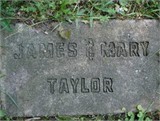
grave James and Mary Taylor
My 7th great grandfather sailed to America when he was 27 years old, to start a new life in the new world. Two different James Taylors on the early Virginia scene make research a bit tricky:
The James Taylor known in history as James Taylor 1st, may be the son of immigrant John Taylor and nephew of the above Dr. James Taylor. He was b in England 1635 and was transported to America under the Headright System by John Rosier of Northumberland Co., Va., 7 Feb 1650. He was well educated, an able lawyer, surveyor, vestryman of the church, and a member of the ‘40’s,’ a group of trustworthy men chosen to defend the Colony against Indians. Each man was levied a tax in arms and provisions. The record of this assignment is in the Parish Register of Northumberland County, Virginia, 1676, listed by Melnor Ljungstead in early court records and notes.
“James Taylor I was a large landowner and he was a prominent citizen in the colony. He was a lawyer and public official and served as a member of the House of Burgesses. He was sheriff of New Kent County in 1690 and vestryman of Saint George’s Parish. He was married, first, about 1666 in Virginia to Frances Walker who died September 23, 1680. He moved to Orange County, Virginia, and belonged to Saint Stephen’s Parish in New Kent County and also in King and Queen County…
“James Taylor I was married, second, to Mary Gregory August 12, 1682. She was born about 1665 and died about 1747. She was a sister of John Gregory, Jr., and they were from Essex County, Virginia. Her father was John Gregory and her mother was Elizabeth Bishop of Sittenbourne Parish, Rappahannock County, Virginia…”
James Taylor of New Kent County 10/21/1687 744 acres Rappahanock County Virginia Land Patents Book 7 page 625 South side of the Rappahanock River, 480 acres granted to Mr. Henry Abery, who sold to Mr. Robert Bishopp, who bequeathed to John Gregory, who gave to his sister Mary, now wife of said James Taylor; said land in danger of being lost was petitioned for by said Taylor the 1st day of the last Genrll. Court -04/15/1687 & granted by the Gov’r; beg. by the Indian Path alias Mr. Abrey’s path, to fork of Gregory’s Creek, on Richard Gregory’s lyne, in sight of John Gatewood’s plantation, to the Rowleing Roade. 246 acres for the transport of 5 persons: James Taylor, Hanna Martin, Robert Jones, Ursula Collis, Hanna Collier.
Mr. James Taylor and John Neal of New Kent County 10/20/1689 209 acres New Kent County Virginia Land Patents Book 8 page 16 in St Stephen’s Parish, on North side of Mattapony (Mattaponi) River, beg. below James Taylor’s plantation, along John Neel’s line, to Col. Thomas Walker, on Robert Jones, To Thomas White’s. Importation of 5 persons: Tho. Grimstone, Hugh Jones, Tho. Allen, Tho. Davis, Anne Brooking.
The Virginia Heraldica Being a “Registry of Virginia Gentry Entitled To Coat Armor” edited by Wm Armstrong Crozier; 2nd addition; Southern Book Co., Baltimore 1953, List James Taylor in Vol 7 on pg 108.
Crest: A naked arm couped at the shoulder embowed, holding an arrow ppr. Motto: Consequitur quodcunque petit. “Strikes what he aims at or he gains what he seeks.”
James Taylor, ancestor of the Caroline County family of that name, is said to have come from the vicinity of Carlisle, England. He was in VA before 1650 and took out patents of land on the Mattaponi River.
An old ring handed down in the family is said to have once been his property, and it bears engraved upon it the above crest which is that of the Taylors of Pennington Castle.
Taylor Caroline county Crest: A naked arm couped at the shoulder embowed, holding an arrow ppr. Motto: Consequitur quodcunque petit. James Taylor, ancestor of the Caroline county family of that name, is said to have come from the vicinity of Carlisle, England. He was in Virginia before 1650 and took out patents of land on the Mattaponi River. By his first wife, Frances, he had Jane, born 27 Dec., 1668; James, born 1674; Sarah, born 1676. His first wife died in 1680, and in 1682 he married Mary, sister of John Gregory, by whom he had the following children: John and Anne, twins, born 1685, John died young; Mary, born 1688; Edmund, born 1690; John, born 1693, died young; Elizabeth, born 1694, died young; John, born 1696. James Taylor died about 1698 at an advanced age. An old ring handed down in the family is said to have once been his property, and it bears engraved upon it the above crest which is that of the Taylors of Pennington Castle. The descendants of James Taylor have been exceedingly prominent in the history of the State, one of them–Zachary, becoming President.
Frances Bell Evans, a Gr Gdau of James Taylor has in her possession a Seal Ring, which bears the Taylor Arms, which he wore, and with the ring the legend has been handed down which is said to have added the fourth Boars’ Head to the Arms. It relates that when the Chase was at it’s height, a wild boar, hard driven, turned upon the Royal Huntsman, whereat there sprang to his defence one of the attending Knights, who interposing, thrust the animal through with his lance. The King, in gratitude, told him to prefer any request whatsoever and that it should be granted. From this time the “Crest” and Distinguishing Mark of this Knight and his descendants was the uplifted Arm with Lance in Hand, accompanied by the Motto:
“Consequitor quadcumque Petit” (He Strikes what He Aims at or He Gains What He Seeks).
The descendants of James Taylor have been prominent in the history of the State, one of them — Zachary, becoming President. A common ancestor with Pres. Lincoln. “Old Taylor” liquor was created by a KY relative.
“There are two recorded dates of the death of James Taylor, one April 30, 1698, and another September 10, 1698. He died in King and Queen County, Virginia, Saint Stephen’s Parish. King and Queen County was formed from New Kent County in 1691.
“James Taylor held many land patents. In 1671 he owned 1,650 acres of land along the Mattaponi River. Between 1687 and 1695 he purchased more land along the Mattaponi so that his total acreage was 13,925. In 1693 he deeded to trustees of South Farnham Parish two acres and fifty perches of land on the south side of Hoskins Creek for a church. He held a patent for 950 acres of land in Kent County, Virginia, where he built his home and named it Hare Forest, named for the Earls of Pennington Castle in England where Taylor ancestors are buried. By division of county lines his home was in Orange County, Virginia, where his children were born. This home is now located in Caroline County, Virginia, about eight miles from Bowling Green, Virginia. He died 30 April 1698, and is buried in King William County, Virginia, which was a part of his estate. (Comment: Note that some of the above information seems to be referring to Dr. James Taylor, the uncle of our James. Researchers beware!- his uncle may have built Hare Forest).
“On 6 June 1933 a memorial tablet to James Taylor 1st was unveiled at King and Queen County courthouse in Virginia. Dr. Rupert Taylor, Senator Henry Taylor Wickham and Admiral Hugh Redman of the U.S. Navy addressed the gathering. Following is some information taken from excerpts of their speeches: New Kent County was formed in 1654. King and Queen was formed from New Kent 1691. Essex was formed in 1692, King William 1701 and Caroline in 1727.
“In 1690 as Sub-Sheriff of New Kent, County, Virginia, James Taylor served summons on those connected with Jacobite disturbances. He was Attorney of several cases in Essex County. He was also connected with trying to stop the lawless organization known as ‘Plant Cutters,’ who destroyed and burned tobacco plants and beds at night in an effort to control the price of tobacco.
In 1683 Gov. Henry Chicheley called out the militia, arrested and punished the offenders. However, Lord Culpepper who represented England’s interests, didn’t agree with the decision. Consequently many were indicted and ‘hanged by the neck until they were dead.’
The Tablet is inscribed as follows:
“James Taylor of England emigrant lawyer, public officer, lived in St. Stephen parish, King and Queen County, Virginia, died April 30, 1698, first wife, Frances Walker, born 1640, died April 22 or Sept 22, 1680, she was the daughter of Thomas Walker and niece of Edward Walker of Virginia. James’s second wife, Mary Gregory, daughter of John Gregory the son of Roger Gregory who first married Mildred Washington, aunt of General/President George Washington. Mary was from Essex County, married August 12, 1682, from him were descended , President James Madison, President Zachary Taylor, Colonel James Taylor (Knighe of the Horse Shoe), Judge Edmond Pendleton, John Penn signer of the Declaration of Independence, John Taylor of Carolina, General James Taylor of Kentucky, Admiral David Taylor, Admiral Hugh Rodman, Admiral Robert M. Berry, and other distinguished churchmen, soilders, sailors and officials, in each generation who assisted in the formation and perpetuation of the colonies and this nation”.
“This tablet given by Jaquelin P. Taylor, seventh in descent, June 1933.” A short biography of James Taylor, filled with the errors alluded to above, is contained in Carte’s The Forebearers and Descendants of William Taylor and Mahala Cromwell:
“The Forebearers & Desc of Wlm Taylor & Mahala Cromwell” by Carrie Carte 1980 LDS 929.273T219c “Americans of Gentle Birth & Their Ancestors” LDS 973D2pa “Historical Southern Families” by Boddie LDS 975D2B Vol 4 & 5 Note:James Taylor age 28 is listed as a px on the Truelove of London to Bermuda in 1635 (from “The Original Lists of Persons of Quality 1600-1700 by John Hotlen 1931) See the 1st listed doc above for info on the Taylor home & cemetery James Taylor was a lineal desc of the Earls of Pennington & emigrated in 1635.
[Comment: Note that some of the above information, especially the dates, seems to be referring to Dr. James Taylor, the uncle? of our James. Researchers beware!]
In Family Puzzlers, Feb 3, 1977, No. 485: The Taylors of Orange trace their ancestry back to James Taylor of Carlisle, ENG. The time of his emigration to VA is not actually known. He settled on Chesapeake between North and York Rivers, and died in 1698.
Jamestown VA – 1624 MARTINS HUNDRED VA T460 ? TAYLOR 1624 JAMES CITY CO. VA T460 TAYLOR, Fortune
Moss, Mary m. 19 Aug., 1724, John Taylor. St. Paul’s Parish Register.
Submitted by Sara Beth Swope, a descendant of Mary & Samuel J. Dunn. 8/97; EMail: sbswope@netten.net
In 1987 she found the old Lewis-Taylor Cemetery now Crowder Cemetery, near Whiteville, Hardeman Co. TN. She mailed me Bible records, wills, charts, other researchers notes; a great deal of data on the Joseph Taylor and Mary Ann Taylor families who migrated to Hardeman Co. TN. See list below.
History of Fayette Co. TN. 1986; Family Puzzler 2-3-77 No. 485; Mary Ann Blackwell Bible records; R. B. Shore Bible Records; 1985 Taylor Descent; Shore chart & Shore Descent; Crowder Cemetery Picture; Rev Thomas Taylor memoirs; Joseph Taylor’s will and 1985 letter; Ancestory of Elizabeth Willis Goode by Carol J. McCraw and Col. Joseph Taylor record.
Other sources where info on James Taylor can be found are listed below some with conflicting info. One Thousand Years of Hubbard History Genealogy of the Cloyd Basye and Tapp Families Beverly’s History of VA St. Mark’s p. 74; Genealogical and Historical Notes on Culpeper, VA Register of Maryland’s Heraldic Families Vol 1 The Lewis Family of the Seventeenth Century
“Of Carlisle, ENG; much of the descent and vital statistics from NGS Quarterly Vol XVIII, Jun 1930, No 2. Located in VA between the York and North Rivers. 1693 DEED: King and Queen Co, VA, DB 8-268. Capt. Joshua Story, James Taylor, and Jonathan Fisher 9,150 acres. 1694 DEED: King and Queen Co, VA, DB 8-317. James Taylor 134 acres. 1695 DEED: King and Queen Co, VA, DB 8-414. James taylor 500 acres.
According to this researcher: Name is James Cary Taylor Birth: 1615 in Earl Hare,Carlisle,England 1 Death: 12 Sep 1698 in King And Queen,Virginia Father: Thomas Taylor b. 15 Mar 1574 in Hadley,Middlesex,London,England Mother: Margaret Swinderby b. 1578 in Copenhagen,Denmark Burial: Bowling Green,Caroline County,Virginia Mary Bishop Gregory (Wife) b. 1665 in Essex,Caroline County,Virginia Marriage: 12 AUG 1682 Children: Elizabeth Taylor b. 1684 Ann Taylor b. 1684 Mary Taylor b. 1686 Mary Bishop Taylor b. 2 Jun 1688 in Caroline County,Virginia John Powell Taylor b. 18 Nov 1696 in Caroline County,Virginia
Frances Walker (Wife) b. 1640 in Accomoac. Accomack County,Virginia Marriage: 1666 in New Kent County,Virginia Children: James Taylor b. 1668 James Taylor b. 14 Mar 1675 in King And Queen,Virginia Jane Taylor b. 1674 Sarah Taylor b. 1676
James Taylor held many land patents. In 1671 he owned 1,650 acres of land along the Mattaponi River. Between 1687 and 1695 he purchased more land along the Mattaponi so that his total acreage was 13,925. In 1693 he deeded to trustees of South Farnham Parish two acres and fifty perches of land on the south side of Hoskins Creek for a church. He held a patent for 950 acres of land in Kent County, Virginia, where he built his home and named it Hare Forest, named for the Earls of Pennington Castle in England where Taylor ancestors are buried. By division of county lines his home was in Orange County, Virginia, where his children were born. This home is now located in Caroline County, Virginia, about eight miles from Bowling Green,Virginia. He died 30 April 1698, and is buried in King William County, Virginia, which was a part of his estate. (Comment: Note that some of the above information seems to be referring to Dr. James Taylor, the uncle of our James. Researchers beware!- his uncle may have built Hare Forest).
James Taylor (1608 – 1698)
is my 7th great grandfather
John Taylor (1685 – 1776)
son of James Taylor
John Taylor (1727 – 1787)
son of John Taylor
John Taylor (1747 – 1781)
son of John Taylor
John Nimrod Taylor (1770 – 1816)
son of John Taylor
John Samuel Taylor (1798 – 1873)
son of John Nimrod Taylor
William Ellison Taylor (1839 – 1918)
son of John Samuel Taylor
George Harvey Taylor (1884 – 1941)
son of William Ellison Taylor
Ruby Lee Taylor (1922 – 2008)
daughter of George Harvey Taylor
Pamela Morse
I am the daughter of Ruby Lee Taylor
My Dead Peeps
I have traveled in person only once to visit my dead ancestors and look for local records of their lives. I went to Tulsa, where I was born, and my grandparents are buried, but I can not find their graves. After my cousin went back to Iowa I did more investigation in the town where my father was born, Independence, KS. I drove to the small rural town of Ladore, where many of my ancestors settled when they came from Ohio and New York. I found the grave of one of my 2nd great grandmother while looking for somebody else. It made the hair stand up on my neck even in sweltering humid July in Kansas. I have been all over the world on all kinds of journeys, but this is a whole new way to look at travel…visiting history by combining the ancestors and geography. Kinky, and very cool.
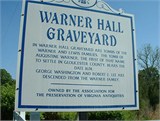
I have accumulated and am trying to geographically arrange data on ancestors around Plymouth Colony, MA and around Jamestown, VA. I will go to both destinations eventually, but have to choose one to be the first. The peeps are mostly very fancy in both places and we know how to find many of the graves, some homes, etc. I am not really into them for the royal blood and fame, I just like them because they survived. It is nothing like visiting living relatives. They are past judgement and are all very low maintenance. They are what you might call spooky. I just learned from a local that Virginia is a vortex for ticks, which makes graves in Massachusetts instantly sound so much more appealing. I am thinking now of flying to tick free, but cold Boston. Someday I will procure the right tick graveyard gear to safely visit my Virginians…like Mary, who is in the private and elite graveyard at Warner Hall with a lot of my other ancestors:
The walled family cemetery of the Warner and Lewis families is located on the Warner Hall property, southeast of Warner Hall. Access to the Graveyard is from the road North of Warner Hall and not from Warner Hall or the Driveway to Warner Hall located West of the Graveyard. The cemetery is the final resting place for many of the Warner and Lewis family members. The family cemetery, is also the resting place for such well known ancestors of George Washington, Robert E. Lee, The Queen Mother of England, and Queen Elizabeth II. Queen Elizabeth has visited Gloucester where she placed a wreath upon her ancestor’s grave. The cemetery has thirteen graves and plaques in memory of all the family. The cemetery is owned and maintained by the Association for Preservation of Virginia Antiquities (A.P.V.A.). The A.P.V.A. acquired the cemetery at Warner Hall in 1903, since which time the Association’s Gloucester Branch, now known as the Joseph Bryan Branch, has zealously maintained it.
There are thirteen graves in the Warner Hall Grave Yard. they are:1 Mary Warner (believed to be Mary Towneley Warner), 1614 – 16622 Augustine Warner I, 1611 – 16743 Augustine Warner II, 1642 – 16814 Mildred Reade Warner (wife of Augustine Warner II), 16945 Augustine Warner III, 1666 – 16866 Elizabeth Warner Lewis (d/o Augustine Warner II w/o Col John Lewis), 1672 – 17197 Col John Lewis (s/o John & Isabella Lewis h/o Elizabeth Warner), 1669 – 17258 Mary Chiswell Lewis (d/o John & Elizabeth Randolph Chiswell w/o Warner Lewis II, 1748 – 17769 Warner Lewis II (s/o Warner Lewis I & Eleanor Bowles Gooch Lewis & grandson of Col John Lewis & Elizabeth Warner Lewis), 1747 – 179110 Juliana Clayton (d/o Dr. Thomas & Isabella Lewis Clayton), 1731 – 173411 Isabella Lewis Clayton (d/o Col John Lewis & Elizabeth Warner w/o Dr. Thomas Clayton), 1706/7 – 1742 (the dates 1706/7 is exactly what is engraved on her stone)12 (Dr.) Thomas Clayton (h/o Isabella Lewis), 1701 – 173913 Caroline Lewis Barrett (d/o Warner Lewis II), 1783 – 1811

Private Graveyard at Warner Hall

Colonel Augustine Warner II (1642-1681)
Colonel Augustine Warner II succeeded his father and became political friends with Nathaniel Bacon, who was educated at Oxford and a Barrister in London. Bacon staged the first actual American Revolution in 1676, as he organized an army of three hundred to four hundred pioneers to cope with the Indians North of the York River. He was involved in a private fur deal spanning the entire Virginia frontier. By the end of the decade, Bacon’s troops had taken care of all the Indian tribes. They marched on Jamestown as Governor William Burkeley fled, and sailed to the Eastern Shore. Nathaniel Bacon and his troops soon set up their headquarters at Warner Hall after the burning of Jamestown in 1676. This Virginia Colony was in charge of matters North of the York to the Potomac River. Beyond the Potomac, lay the Maryland Colony. It was at Warner Hall, where he sent notices for the people to assemble to take the “Oath of Fidelity” of his fellow countrymen. Bacon contracted Malaria and died within a year his troops then fleeing the Colony.
Augustine Warner II inherited Warner Hall at the death of his father in 1674. He married Mildred Reade, the daughter of George Reade, founder of Yorktown, and after her death, Elizabeth Martian. Augustine II was speaker of the House of Burgesses during Bacon’s Rebellion in 1676, and also was a member of the Council.
When Augustine Warner II died, he left three daughters his son dying June 19, 1681. Mary became the wife of John Smith, of Purton, on the York, and their son Augustine Smith was said to have been one of the Knights of the Golden Horseshoe with Governor Spotswood, on his famous expedition across the Blue Ridge in 1716. Mildred, another daughter of Augustine Warner II, married Lawrence Washington, of Westmoreland, and her second husband was George Gale. Her three Washington children were John, who built Highgate, Augustine, father of George Washington (first President of the United States), and Mildred. Augustine Washington married Mary Ball, and named his son George for his great grandfather, George Reade, who founded Yorktown.
Elizabeth, the third daughter of Augustine Warner II, became the wife of John Lewis and inherited Warner Hall. Their son, John Lewis II was a member of His Majesty’s Council, and was prominent in the county. For generations the Lewises lived here, and members of the family emigrated to all parts of the United States. Their descendants built Belle Farm, Eagle Point, Abingdon, Severby, and Severn Hall, all in Virginia. Elizabeth and John Lewis I’s grandson, Colonel Fielding Lewis, of Belle Farm, married Catherine Washington, and after her death married Elizabeth Washington, also known as Betty, sister of George. He built beautiful Kenmore for her, in Fredericksburg.
Ideally situated at the head of the Severn River in Gloucester County, the manor house at Warner Hall stands on a neck of land that has been occupied and built upon continually from the mid-17th century. Referred to as “Austin’s Desire” in the 1642-land patent, the original six hundred-acre plantation site was established by Augustine Warner as a “land grant” from the British Crown. Augustine Warner received the acreage in exchange for bringing twelve settlers across the Atlantic Ocean to the Jamestown Settlement, a colony desperately in need of manpower to survive in the New World.
The two families associated with the property from this early period until well into the 19th century, the Warners and the Lewises, were among the most prominent families in Colonial Virginia. Over the years, Warner Hall Plantation thrived, as did the descendants of Augustine Warner. Some of the most recognized names in American history are direct descendents of Augustine Warner – George Washington, the first president of the United States, Robert E. Lee, the most famous Civil War General and Captain Meriwether Lewis, renowned American explorer of the Lewis & Clark expedition. George Washington was a frequent visitor to his grandparent’s plantation.
Queen Elizabeth II, the current monarch of England, is a direct descendent of Augustine Warner through the Bowes-Lyon family and the Earl of Strathmore. In England, Warner Hall is referred to as “The home of the Queen’s American ancestors”. In 1957, in conjunction with her trip to Jamestown, VA, for the 350th anniversary of the settlement, Queen Elizabeth II visited Warner Hall Plantation. The Queen was photographed placing a wreath on the grave of Augustine Warner.
Warner Hall is also significant for the part it played in the drama of Bacon’s rebellion, one of the most important events in early Virginia history. After leading a 1676 rebellion against the British governor and burning Jamestown, Bacon retreated to Warner Hall Plantation. At the time, Augustine Warner II, who was Speaker of the House of Burgesses and a member of the King’s Council, was in residence and very likely agitated that his plantation was taken over by opponents of the Crown.
Today, Warner Hall consists of a Colonial Revival manor house (circa 1900) which was rebuilt on the earlier 17th and 18th century foundation. Like the previous structures at Warner Hall, all of which indicated the prominence of their owners, the Colonial Revival core is a grand architectural gesture. The original 17th century west wing dependency (the plantation schoolroom and tutor’s quarters) has been completely restored and offers a rare glimpse into the past. Historic outbuildings include 18th century brick stables, a dairy barn and smokehouse. The Warner-Lewis family graveyard, maintained by the Association for the Preservation of Virginia Antiquities, offers a remarkable collection of 17th and 18th century tombstones.
 mermaidcamp