mermaidcamp
Keeping current in wellness, in and out of the water
You can scroll the shelf using ← and → keys
You can scroll the shelf using ← and → keys
ROW80
Our 80 day writing exercise has flown by quickly for me. I planned to write a poem every day, but have managed to do so about half the time. I am not at all discouraged by this result because I have also managed to expand my repertoire of subjects and formats in my poetry. Last April I wrote daily and all of my poems were inspired by works of art, ekphrastic in nature. This was fun because I visited artist friends and took photos to use as the subjects. When I began this challenge all of my poems were ekphrastic, but I created the art myself rather than finding it. First I tired making the art followed by the words, then I tried it in reverse. It does not seem to matter which way I do it now, which is sort of silly to me. If you are inspired by it, it seems like it should exist before you write…but I am practicing both ways, trying them both to monitor results.
Lately I am happy because I attempted very unusual subjects and did some slightly representational drawing about them. I wrote about a lady who was ditched by her Euro-spy boyfriend in a restaurant. She was presented with a giant plate of raw meat, steak tartare, and a note saying her boyfriend had never existed. Now this might seem macabre or in bad taste, and perhaps it is. What is interesting is that I finally put a character and plot into a poem. My first attempt at this involved a swarm of ladybugs around a cabin. These might not have come up if I had not been following my fiction writing friends who work on plot and character all the time. My desire to make poems from historical figures and history itself lends itself to this practice. If I want to turn my dead ancestors into epic poems I need to employ some of the devices used to flesh out characters and thicken the plot. Since I endeavor to bring dream images into my poetry my technique will now expand to outlining plots and characters, then working on lucid dreaming to give me some vivid imagery with which to work. I can embellish the true stories of my family in my dreams and use the impressions to create poetic versions of historical events.
As the solar eclipse tomorrow brings us a dramatic illustration of light and shadow, I see a metaphor for the known and the unknown. What is obscured from view is often the most important part of the plot, and revealing it is the point of the story. What I do not know about my ancestors leaves room for invention and fancy. Here are some of the real people I think can become interesting poems:
I also have a true contemporary story I want the public to hear and remember. The Emperor’s New Neighborhood Watch is a rap poem about city government running amok. If I do this with rhyme and humor it will be more impactful. A good (digital) friend of mine told me this week that hexameter was the form used by Homer in his classic epics, not because it was great language, but so the actors could easily remember it. I have written about just the facts in this case for years, but what this story needs is some memorable rhyming truth. After the solar eclipse I will start outlining these stories for Poetry Month in April. It is a fun new way for me to paint with words. I am grateful to my fellow writers for teaching my some of their process. Check out the diversity of this group here. There is a lot of talent in this creative group of people. Thanks for sharing these 80 days with a beginner. Your support has been very inspirational. I aspire to be like you.

reaching higher
ROW80
This week I bought a book of poetry that has been created by illiterate women in Pakistan and Afghanistan. These cultural specialties of the Pashtun tribe are biting commentary on life. Since they live in a war-torn state, to say the least, and their rights are severely limited because they are female, their point of view contains irony and stinging truth about love, war, grief, homeland, and separation. They tackle these subjects with depth and witty metaphor which they have learned from other women. The special right to express themselves is frequently withdrawn if the males in a family learn about it. The book I am reading, I am the Beggar of the World, was inspired by a young girl’s suicide when she was forbidden to create landays and share them on a telephone hot line in Kabul. The journalists who composed the images and couplets are veteran reporters who had been in the area during years of war, covering just the facts. They were emotionally and creatively blown away by the density and artfulness of this pastime/folk literature. The Poetry Foundation helped fund the expedition and Poetry magazine published some of the works. The response from the magazine’s readers was overwhelming. People want to see more of this kind of primal undiscovered poetry that is hidden and unknown to outsiders. It has touched me deeply and makes excellent meditation material.
As a writer I am taking on new subjects. My poems are still simplistic, but I am stretching to find subjects, characters, and perhaps real events that spark my imagination. I have considered how fresh and essential the landays are because of the restrictions of illiteracy and the need to remain anonymous. They are wisecracks, jokes, and political farce all rolled into a few words, like a comic distillation of the concept. Like the work of Dorothy Parker which I am reading, admire, and want to emulate, these jokes are intricate and require some practice to make them work. They pack a lot of editorial punch into 22 syllables, as Mrs. Parker did in her short witty quips. Subjects that are taboo can be handled with humor in such a way as to make emphatic points without confronting issues directly. The discovery of landays and the women who create them leads me to want to take on more difficult subjects. Politics, art and poetry overlap in any era, and the result can be revealing. I am working to develop some good cosmic jokes that resonate with my gentle readers on many levels.
As a practice writing poems is revealing and confidence building. I take zero risks typing away on my iPad saying anything that pops into my mind. In comparison to the Pashtun ladies I suffer very little for my art. I can publish it, tweet it, change it, illustrate it, and it is free to travel wherever people care to read it. I am starting to have an appreciation of the opportunity as well as the responsibility that situation creates. I wonder if I can say something funny and profound that has the power to stick in the mind and change it. For me the ROW80 challenge continues to be more about what I read and learn than it is about what I am writing now. The stepping stones to better work are contained in the works of other poets. They inspire me to look for subjects that matter.
poppy
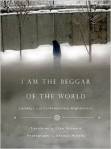
The book I am the Beggar of the World is a collaborative effort by Eliza Griswold and Seamus Murphy. Last night at the U of A Poetry Center Seamus was present for the opening of an exhibit on the book. He spoke to the audience about the process they had followed to find the landays in the book. He explained the cultural significance and historical tradition of these spoken couplets specific to Pashtun women in Pakistan and Afghanistan. The two journalists had served in the region as reporters. They wanted to bring a deeper insight into culture and life than they could offer in a news story. Their investigative trip involved finding women who know the poems and convincing them to share them. Ms. Griswold handled the interview tasks while Mr Murphy shot photos and video footage of the region. They did not attempt to shoot the women reciting themselves for various reasons. This poetry is spoken, forbidden, and often critical. Any image of the women identified with landay might cause them great danger.
There are about 40,000 landays in use at any given time. They are 22 syllables, 9 in the first line, and 13 in the second. They are general statements on life from a woman’s point of view. They remind me of the Mexican dicho, a short philosophical statement that explains the situation at hand. My favorite dicho (saying) is, “Cuando hay dinero baila el perro.” When there is money the dog dances (anything is possible). Landays do sometimes contain great humor, but in general I think they are more haunting and pithy than dichos. Here is one example translated into English: “When sisters sit together, they always praise their brothers. When brothers sit together they sell their sisters to others.” The repression of women is a theme, since this real problem plagues family life. The landay is a way to express emotions as well as outrage at the political systems that are unfair to women.
One of my favorite poets, Piet Hein, wrote short works like these called Grooks. He started in Danish, and worked his way into English. The reception last night was catered with beautiful food and wine for the guests. They had outrageously ripe strawberries and chunks of fresh pineapple, which I enjoyed immensely while standing in line to purchase a copy of the book. I was reminded of what may be my favorite poem of all time, a Grook. “Love is like a pineapple, sweet and undefinable.” I had amazing dreams in my sleep last night. I was wandering around in some other ethnic zone searching for poets, just like in the book. I found some and there was great dreamy party about saving the poems and being anthropologically correct. I was in a fancy tent with a spread that look suspiciously like the food at the reception. I woke up with no pineapple, but a distinct taste of liberation in my mouth. I have my copy of the book to savor and enjoy. I would recommend it to anyone. This is a story of inspiration from history and daily life. The most important thing to remember about them is that their authors are illiterate. This sentiment is shot straight from the heart with no filter, publisher, or even permission. This is the birthplace of all poetry. Edited over centuries, these couplets reflect an accurate and poignant view of Pashtun women and their culture. I believe any reader would enjoy the book.

book cover
ROW80
I still publish short quickly composed poems with art. This practice that I set up here has been a good platform for discovery of my strengths and weaknesses. I need to keep the mojo going by posting a poem almost daily. This is the first step to being constant and nourishing to my poet persona. First of all I need to convince myself that creative writing is within my ability. In order to move up from my current level of unpolished, slightly redundant writing I need to follow more steps and enjoy deleting at least as much as I enjoy first drafting. I improvise well in many modes. In real life this leads to using creativity to approach many things that I do. I like to play chef and meet the creative challenge of using all the left-overs to make something delicious. I like to eat the result and start on something new. My preference for finishing fast is an impediment to becoming a better writer. I don’t need to count words as much as I need to spend more time editing and improving the initial writing. I have learned that from both my own critique of my situation as a poet, and from reading the works and works in progress presented by my fellow ROW80 writers.
The time we have spent has gone by quickly, with only a couple of weeks left in our 80 day challenge. Each writer has a different style of check in. Some are describing works in progress and sometimes sharing excerpts. There are novelists, poets and fantasy writers here, each with a different point of view, environment, and level of experience. As one of the least experienced participants I am lucky to hear from those of you who have wisdom to share. You give me confidence as well as tools for the job before me. After the challenge has ended your inspiration will still be with me forever. I believe I can go right into NaPoWriMo, the poetry challenge for April, with better preparation than ever before. This challenge is simply to write a poem daily during National Poetry Month (April). I started as a fluke two years ago, but last year I thought I needed to do it again. Now I am looking forward to it this time with happy anticipation. It will not be a chore, but part of this regular practice I have established.
Thank you all for inspiring and challenging me to discover more about the crafty and powerful world of words!! The fun has just begun. As a tribute to the importance of editing I am going on a big clean/clear/organize binge in my office. I did this to my bedroom in December with spectacular results. I expect cleaning out the office can only bring joy and space to operate. This is a spring cleaning of both a physical and mental kind. This edit is a metaphor for the editing I will do in my process in the future. Less really is more.
icelandic poppies

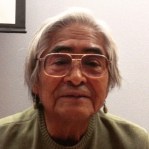
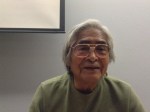
My week has been graced by the presence of a real writer. I went to hear the poet Simon Ortiz who was in Tucson for a reading of his work. I was deeply moved and highly impressed with his writing, which he delivered with lavish explanations about his process. He is now writing an epic poem, an idea he joked about by saying there is no real rule about exactly how long an epic has to be. He will include within the epic some of his older works, which he shared with the group who had come to the U of A Poetry Center to listen to him. I purchased his book, Sand Creek, which he signed for me after the reading. I told him how much I loved hearing him and he responded that he really loved reading to us. His genuine joy in sharing his work was evident. We were all truly blessed to be there. Some of his poems are funny, and some carry tragic stories from history, like Sand Creek.
The Poetics and Politics of Water series has evolved. Dr. Ofelia Zepeda is a poet and professor who collaborates to put together this very special program of Native American writers. She and her colleague Larry Evers introduced Politics and Poetics in 1992. I look forward to the next reading which will be given by Dr. Zepeda herself. She uses her native language from this region, Tohono O’odham, to welcome the visitors to her land and bless the participants. It is beautiful. She translates the traditional greeting in to English when she is done.

Ofelia Zepeda introduction
I have written and read some this week with mixed results. I believe the most profound thing that happened to set my poetic self on the path was my chance to hear Mr Ortiz. He said prose and poetry are all the same, and in the end, all language is poetry. He certainly was all poetic in every part of his being. He talked about his own recovery from alcoholism, and his father’s inability to recover from it. His identity as Acoma with deep religious and cultural heritage is important to him. His father exposed Simon to sorrow through addiction, but he also taught him his traditional language and mystical history. The last poem he read to us was about his father’s death. It was sung as a song, a chant, a rhythmic tribute to the spirit of his father and all he had inherited. It was a wonderful way to show his talent and end on a solemn, serious, meaningful note.
ROW80
I have achieved one of the goals I stated in my first post here. I have been to the U of A Poetry Center this week. The free reading on Thursday evening was part of series on the poetics and politics of water. Sherwin Bitsui, a Navajo poet, read from his works. The were haunting and evocative of desert landscapes. He was generous in his explanation of the background and muse for the works he presented to us. This gave us both biographical information about him, and a sense of how long he worked on the books he had published. Mr Bitsui is now a professor of creative writing in San Diego, but he comes form the Navajo reservation. In his introduction he was recognized for his support of other Native American poets. He mentored and helped a number of people during his time at the University of Arizona who have gone on to publish books of poetry. I thoroughly enjoyed listening to him read. Ideas from the reading have been resonating and reverberating in my mind…a good sign that those poems hit home in ways I have yet to understand.
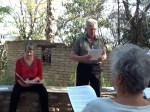
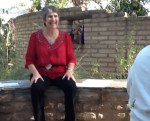
Yesterday, for Valentine’s Day the Poetry Center docents presented a reading at the Tucson Botanical Gardens. Poetry in the Garden is a regular series open to the public held in the natural setting of the gardens. Our broad subject this month was birds as symbols of love. These readings are enjoyable for all ages and stages of poetic interest. The docents compile a packet of poems and read from the collection. The audience is invited to read too, and discussion takes place after each reading. The docents encourage the audience to express thoughts and feelings about the meaning or the sounds in the readings. The discussion is broad and not academic. The programs are very well prepared and produced, this one being no exception. We heard from e.e. cummings, Emily Dickinson, some other well known writers, and less famous poets with all kinds of styles. The setting and weather were ideal as we were visited by singing birds before and after the session. They seemed to be voicing approval or applause.
Both of these very well produced events are an example of the very good luck it is to live near the Poetry Center. Having access to these high quality readings is a gift. Some of the attendees at the evening readings are enrolled in a University of Arizona seminar on the poetics and politics of water. They spend class time with these visiting poets as well as the public reading time. There will be 3 more in this series. I plan to go to all of them because they touch a very serious subject for us in Arizona…water. The fact that they are all Native American is meaningful. In history tribes respected natural resources while the invaders worked to deplete them. Our situation today is precarious. We have less security about water every minute. The scientists involved in this seminar agree that poets bring something to the study that pure science can not.
I am still writing, listening and learning about the lives of poets in my own practice. I have expanded my subject matter a little, but nothing too impressive. The best thing I discovered through listening at these readings is that you can write poetry any way you want. There are no forms that are rejected. Free verse is square, some poems are drawings of shapes with the lines, some use sound with mysterious meaning, still others rhyme and are held together in quartrians. It is all good. I still notice my preference to hear the sound rather than see it written on the page. The garden readings are particularly pleasurable for me because I am sitting in a favorite spot with someone reading stories to me. It is a big luxury to glance around the gardens and take in the poems. It is like having a limousine instead of driving yourself. Do you like to listen to spoken word, gentle reader, or do you like to read it in print? My dad used to read to me, and he did recite a few poems, so I think this reminds me of my childhood in a good way.





My study of poetry and the lives of poets has enlightened as well as encouraged me to continue my poetic practice. I also loved hearing the news about the secret manuscript discovered that was written by Harper Lee, famous reclusive author. The story of her one big hit, To Kill a Mockingbird, followed by a life out of the public eye entirely is compelling. She never spoke to press people, but her sister did. Now that her sister has died this old copy of a typewritten story was found in the safe deposit box attached to the original of the published novel. It is super romantic because her fans have hoped to make her write again, but she had done it even before they knew her work. Truly a blast from the past for all involved, the publication with cause all manner of excitement. It has captured my imagination about finding the writing of my ancestors in the safe deposit box of history.
I found a poem about writing that has a deeply funny sense of humor. Anne Bradstreet, my 9th great-grandmother, wrote a poem to her published book in which she describes the work as a child of hers. Although her work is usually pretty serious, this one strikes me as not only funny, but also prescient. The book of which she speaks made her a famous person in the history of poetry, but she is both humble and comical in her description of the work:
Thou ill-formed offspring of my feeble brain,
Who after birth did’st by my side remain,
Till snatcht from thence by friends, less wise than true,
Who thee abroad exposed to public view,
Made thee in rags, halting to th’ press to trudge,
Where errors were not lessened (all may judge).
At thy return my blushing was not small,
My rambling brat (in print) should mother call.
I cast thee by as one unfit for light,
The visage was so irksome in my sight,
Yet being mine own, at length affection would
Thy blemishes amend, if so I could.
I washed thy face, but more defects I saw,
And rubbing off a spot, still made a flaw.
I stretcht thy joints to make thee even feet,
Yet still thou run’st more hobbling than is meet.
In better dress to trim thee was my mind,
But nought save home-spun cloth, i’ th’ house I find.
In this array, ‘mongst vulgars may’st thou roam.
In critic’s hands, beware thou dost not come,
And take thy way where yet thou art not known.
If for thy father askt, say, thou hadst none;
And for thy mother, she alas is poor,
Which caused her thus to send thee out of door.

Anne Bradstreet’s poems
I really get the way she edits and finds more fault. She calls her book a bastard and herself poverty stricken, which I think she knows is a joke. She warns it to stay away from critics, then lets it go. By animating the book to human stature she paints a picture of an underprivileged child, some awkward and unpolished brat. At the publication (return) her blushing was not small. She was proud to be published, and yet as a Pilgrim could take no personal credit for the art. This has become my favorite work by Mistress Bradstreet because I clearly relate to her sense of comedy. In 1678 some of her work was published posthumously. She was, in a certain sense, a feminist. Now we learn she was also something of a comic, concerned about the cosmic.
Birth: 1612 Death: Sep. 16, 1672 Poet.
Born Anne Dudley to nonconformist parents Thomas Dudley and Dorothy Yorke Dudley in Northampton, England. Her father was the steward for the Earl of Lincoln and afforded his daughter an unusually complete education. About 1620 she married Simon Bradstreet, her father’s assistant. On March 29, 1630, Bradstreet and her family sailed for the New World. After several years, they finally settled on a farm in North Andover, Massachusetts in 1644. Simon Bradstreet became a judge, royal councilor, and twice a governor of the colony. Anne Bradstreet became mother to eight children and wrote only privately. She was frequently ill and apparently developed a vaguely morbid mind set and was continually distressed by the culturally ingrained condescension toward women. Her first public work may well have been the epitaph she penned for her mother in 1643. Four years later, her brother-in-law carried a collection of her poems with him to England where he had them published. They appeared as ‘The Tenth Muse Lately Sprung Up in America, By a Gentlewoman of Those Parts’ in the New World in 1650. While it did sell in England, the volume was not well received in Massachusetts. Although she continued to write for herself and her family, no more of her work was published in her lifetime. She was purportedly buried in the Old Burying Point in Salem, Massachusetts beside her husband, though other locations for her grave have also been proposed. In 1678 her ‘Several Poems Compiled with Great Variety of Wit and Learning’ was posthumously published followed by ‘The Works of Anne Bradstreet in Prose and Verse.’ She is now considered the earliest of American poets and among the finest of her age. (bio by: Iola)
Now that Anne is a little bit funny she is a better poetry muse to me. Dorothy Parker, as my muse, as nixed the whole #Trwurse and #Twessings concept. She did wonderful intricate play on words before twitter and is not at all amused by the substitution of tw to indicate twitter being witty. She is right, of course. Nursing mothers are already occupying the #Twursing hashtag, as is the PGA. Back to the word board, sans #tw. I still like the blessings and curses for twitter, but am now inclined to call them just that. I have also realized that February is the perfect time to write short and funny rhymes..on Valentines. I feel okay about breaking out of my impersonal poetic rut because I have written a food poem and one Valentine that are in new territory. I have not said anything very funny yet, but think I will sometime soon. I aspire to write jokes that would be understood hundreds of years into the future, in case they are discovered, but still be funny now. Contrived twitter words will not be funny enough to last hundreds of years, but will seem like Olde English does to us now. Best to go for eternal when crafting a joke or a pun….
ROW80
ROW80
By joining the Round of Words in 80 Days writers I have been given the opportunity to peek into the process used by different people. Initially revealing goals, and now following the theme for 80 days of pursuit of those goals, we let each other know how our lives are proceeding. Some have chosen more personal ideals, and others are achieving astonishing numbers of words/outlines/rewrites and characters developed. I am impressed with all of the participants, and have started to think more about character development. I have not done this, but am now seeing the merit of telling stories of well-developed characters. From fairy tales to murder mysteries the characters hold our attention, and in some cases can bring about new stories or a series of tales. I live tweeted Downton Abbey last week and find it highly amusing to see how emotional the audience is about the characters. I also noticed that my own poetry is void of any characters. I make it all about the cosmos, memory, psyche, all very general and without personality. I need to work on this aspect of my poems.
There are three levels of character development I can identify in this challenge:
These three have all been at work in my life this week. I have been reading about Dorothy Parker, her life and times. Her character has been made larger than life since the internet. It dawned on me that Mrs Parker was a feminist in the early 20th century. She was a contemporary of my grandmother Olga, who got a masters in education and taught shorthand and typing. I was thinking about how odd it must have been to have no vote and be better educated than your husband. I wondered if Olga read Dorothy in Vanity Fair. I still prefer Mrs. Parker as my muse in poetry, but I must admit my grandmother was a feminist in a different part of the country. They were both strong characters, but I have real memories of Olga. I did write a poem about my grandmother, although it is short and sweet. This whole process has brought me to think it is very wise for me to use these characters in my family tree about whom I know so much. They inhabit my dreams and imagination, so I might as well use them as characters in my poems. I have written plenty about the facts in their lives, but I could focus on a more essential theme.
I gave myself two poetry days off this week, which I regret. I took a birthday holiday. This aspect goes back to number one on the list above, discipline and character. It is actually pleasurable to write a poem each day. The mindset that tells me I deserve a day off from this grueling task is quite bogus. I don’t plan to make up in penance for the lapse, or enhance guilt over this. I do notice that some silly side of my psyche wants to claim that poetry is hard and working on it is, oh my, such a burden on my important schedule. This is obviously rubbish made by some shadow character. I reject the claims of this looser. That character will not be developed. I will write about this poetic couple on the left in the photo below:

My grandparents on a double date
I have told a few people in the last week that I am a poet. I believe I am trying it out to see if I like the title because I don’t think of myself as a poet. First I explained to my fiduciary who handles my investments and gives me advice for retirement that my most important interest at the moment is poetry. He knows, since we do split the money he makes in the market, that I am interested in his best performance with little or no chit-chat. He has incentive to do that since his own profit is tied directly to mine. He is not a stock broker, but has a fiduciary responsibility to me for which I pay him a percentage of the profits. I switched to this arrangement before the last presidential election because it all felt too volatile and risky. Since he has done a bang up job I feel secure to trust his future work on my (our) behalf. My debt free, secure financial position is one reason I can dabble with being a poet. I have arrived at a time in my life during which I can reflect and use my talents in any way I choose. Now that I have told the fiduciary I am a poet he is convinced I will not be producing any more income during my lifetime. I am fine with that because it puts the pressure on him to make sure I never become a staving artist.
Last night I told a friend I have known for many years who came over for a drink and conversation. He is visiting from out-of-town, so we had news about our lives to share since our last reunion. After he left I was kind of surprised that I had told him about the poetry writing at all, let alone describe myself to him as a poet. I did make it clear that although I publish it daily I am not promoting it per se because it is not very well-developed. I am not ashamed of it, but I have no pride in it either. It is a practice and a new persona. I told him I admire and want to emulate Dorothy Parker. He recited a couple of her witty lines. I am not sure how sincere he was, but he told me that I am like Dorothy Parker. We were laughing and joking together all evening, so this was part of the fun. In retrospect I am giddy about being compared to her, and this little exchange has given me new hope about my poetic prospects. With some work I do believe I can be witty, satirical, and poetic all at the same time. I have loaded up two books by Dorothy into my Kindle and pre-ordered another about her life, Dorothy Parker Drank Here, by Ellen Meister. Now I am carrying with me two poetic muses, both ghosts. Henry Howard represents Tudor England and Mrs. Parker post WWII New York City. That should cover everything.
It is in the spirit of Mrs. Parker that I am working on curses and blessings suitable for twitter. They must be short and pithy. I am calling them #Twurses and #Twessings. Join me if you like. I think there is a market. It is a bit of haiku in 130 characters, ideal length. I think rhyming makes it memorable. #Twurse the snow and howling wind, Super Bowl parties must begin. I am sure I can warm up and do better than that. Thanks to all the #ROW80 writers who have taught me to have a good time and just do it, as they say at Nike.
ROW80
ROW80
I have managed to slip out of my creativity rut, just a bit. I admire the way so many writers in this program work on several books or projects at once. I rarely start a post that I do not finish in a day, so this longer attention span on a written piece is intriguing. I heard an interview on PBS radio with a professor of creative writing. He shall remain nameless, in part because I do not remember his name. He described two distinct ways of working on a story. He starts by just grinding out the words, and later in the day he edits them. He says the later session in which he edits can be relaxing and easy. I see this advice as a basic guide for me to expand my ability to tackle different subjects and new kinds of forms. I not only need to just do it, as they say at Nike. I also need to just edit it. I have written poetry this week that is not all about soul and butterflies, so that is a start. I spun a little story into a poem about real life. This is something I might try with matching prose and poetry posts. Starting with beheading was just too tricky, but I did relate to my grandmother’s craft work and extreme busy-ness with a short tribute. I still reserve judgement because I have not been doing this for very long.
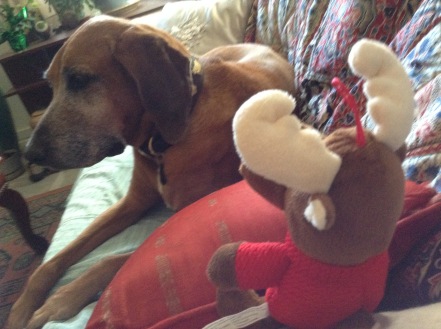
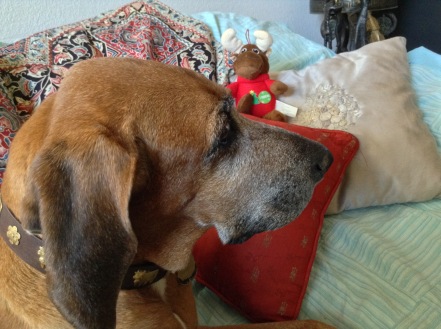
Two goals are eluding me, but I think I can find ways to accomplish them. I want to be loyal to my dream journal by writing before I get out of bed, or even stir. This worked well for a while, but during the last week my dog, who has end of life issues, needed me to let her out during the night 4 or 5 times, including first thing in the morning. I can keep a little bit of the memory while I walk down the stairs and give her the relief she needs, but it is difficult. I have tried to capture specific words and colors from dreams to inspire the poems. I am sad about the kidney failure of my darling dog, so a certain sorrow takes over as soon as I think about how often she needs to go and how much water she is drinking. She has had a good life, and is not in pain, but this is a shadow covering the early morning dream memory. Maybe I need to write about my dog. I have also failed to physically visit the U of A Poetry Center. I keep planning to dedicate Friday to Venus, to revere all things of beauty and love. I think sitting around the Poetry Center reading is a total dedication to beauty, but my daily routine has not capitulated enough to allow this to occur. I will overcome, although maybe not on a Friday. I know that once I establish a habit, a ritual, I will enjoy it. I do love the podcasts and the apps that read to me in the comfort of my home, but I believe the pilgrimage to the poets’ place will change my perspective. I am not taking these failures too much to heart because the whole point was to write poems, and I am doing that. Onward and upward..
I am chiming in one day later than some because yesterday I made a stunning discovery in my family tree. I do think that since many of my real family members have been the subjects of fiction and even operas and poems, I should look more closely at making stories based on fact, or even on imagination. These characters are already alive in my thoughts and dreams and do some predictable stuff. I enjoy all the time I spend learning about the family facts and the supporting evidence. I notice that fiction writers develop their characters out of thin air, perhaps with a culture or time in history in mind. I can start with facts and the skeleton of what is known to make my stories real. I can also write about my dog and stop whining about my precious dream journal. Soon enough she will be only in my dreams. Now is my chance to see her in real life and help her with her dreams.
Artemisia the wonder hound
Artemisia the wonder hound

