mermaidcamp
Keeping current in wellness, in and out of the water
You can scroll the shelf using ← and → keys
You can scroll the shelf using ← and → keys
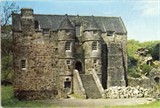
Rowallan Castle
Rowallan Castle is an ancient castle located near Kilmaurs, at NS 4347 4242, about 5 kilometres (3.1 mi) north of Kilmarnock, East Ayrshire, Scotland. The castle stands on the banks of the Carmel Water, which may at one time have run much closer to the low eminence upon which the original castle stood. The castle and barony has been owned or held by the medieval Mure family, the (Boyle) Earls of Glasgow, the (Campbell) Earls of Loudoun, the (Corbett) Barons Rowallan, and by Historic Scotland. It is said that the earliest piece of Lute music was written at Rowallan. It is said to have been visited by the unfortunate King James I of Scotland when on his way from Edinburgh to England. The first Mure holder, Sir J. Gilchrist Mure was buried in the Mure Aisle at Kilmarnock The original castle is thought to date back into the 13th century. Rowallan was said to be the birth place of Elizabeth Mure(Muir), first wife of Robert, the High Steward, later Robert II of Scotland.[6] She was mother to the Duke of Albany, and the Earls of Carrick, Fife and Buchanan. In 1513 the Rowallan Estate took its present day form. In about 1690 the estate was home to the Campbells of Loudoun, who held it into the 19th century
Row Allan, row!
A tale is told of one Allan of Stewarton
who was rowing a Scottish
chief off the Ayrshire coast.
The weather made a turn for
the worse and the chief became
anxious. The chief in his fear of
the ocean said to Allan, Row, Allan row! Bear me to safety and you will have the
rich lands of Carmelside,
wuth silver to build yourself
a castle. Hill and valley and
rivers of fish will be yours …. but just row, Allan, row!
Allan won his prize and named
the estate ‘Rowallan’ after his
adventure. The same story is
told in the form of a poem written
by the Rev. George Paxton from
Kilmaurs, pastor of a Secession Church from 1789 – 1807
…David de More, of the house of Polkelly, Renfrewshire, appears as a witness to a charter of Alexander II. Willielmi de Mora and Laurentii de Mora also occur in two charters granted by Robert the Bruce.The first on record of the family is stated to have been the above-named David de More. His successor is supposed to have been Sir Gilchrist More, the first of the name mentioned in the family ‘Historie.’
In the beginning of the reign of Alexander III., Sir Walter Cumyn took forcible possession of the house and living of Rowallan, “the owner thereof, Gilchrist More, being redacted for his safety to keep close in his castle of Pokellie.”The latter distinguished himself at the battle of Largs in 1263, and for his bravery was knighted. “At which time,” says the ‘Historie,’ “Sir Gilchrist was reponed to his whole inheritance, and gifted with the lands belonging to Sir Walter Cuming before mentioned, a man not of the meanest of that powerful tribe, which for might and number have scarcelie to this day been equaled in this land.”
He married Isobel, daughter and heiress of the said Sir Walter Cumyn, and in the death of his father-in-law, he found himself secured not only in the title and full possession of his old inheritance, but also in the border lands wherein he succeeded to Sir Walter Cuming, within the sheriffdom of Roxburgh. Sir Gilchrist “disponed to his kinsman Ranald More, who had come purposlie from Ireland for his assistance: in the time of his troubles, and also at the battle of Largs, the lands of Polkellie, which appear to have been the original inheritance of the family.
He died “about the year 1280, near the 80 year of his age,” and was buried “with his forfathers in his own buriell place in the Mures Isle at Kilmarnock.”
He had a son, Archibald, and two daughters, Elizabeth, the wife of Sir Godfrey Ross, and Anicia, married to Richard Boyle of Kelburne, ancestor of the earls of Glasgow.In the Ragman Roll, among those barons who swore fealty to Edward I. in 1296, we find the names of Gilchrist More of Craig and Reginald More de Craig, that is, the Craig of Rowallan. The former is stated to have been the ancestor of the Mures of Polkellie, who, Nisbet thinks, were “the stem of the Mures, and an ancienter family than the Rowallan.” The latter was in 1329 chamberlain of Scotland.
William More, the son and successor of Archibald, married a daughter of the house of Craigie, then Lindsay, and with two daughters, had a son, Adam, who succeeded him. Of William honourable mention is made in an indenture of truce with England in the nonage of King David, wherein he is designated Sir William.
He died about the time when King David was taken prisoner at the battle of Durham, fought 17th October 1346. There is supposed to have been an older son than Adam, named Reynold. The editor of the ‘Historie,’ on the authority of Crawford’s Officers of State, (vol. i. p. 290), says in a note: Reynold, son and heir of Sir William More, was one of the hostages left in England at David’s redemption.
This is certainly the same Sir William mentioned above, but whether of Rowallan seems still doubtful; If so, he must have lived long after 1348. There is a William More, Miles, mentioned in M’Farlane’s MS., as living in 1363. Supposing this Sir William More to have been of Rowallan, Reynold probably never returned from England, and thus the estate may have fallen to Sir Adam, a younger son. During the long protracted payment of the king’s ransom, many of the hostages died in confinement.
Sir Adam More, who, “in his father’s auld age,” had the management of all his affairs, both private and public, considerably enlarged and improved the estate. He married, in his younger years, Janet Mure, heiress of Polkellie, granddaughter of Ranald More, and thus restored that estate to the family. By this marriage he had two sons, Sir Adam, his successor, and Andrew, and a daughter, Elizabeth, married in 1348, to Robert, the high steward, afterwards King Robert II.
She was a lady of great beauty and rare virtues, and attracted the high steward’s regard in his younger years when living in concealment about Dundonald castle during Edward Baliol’s usurpation.
There was long considerable doubt as to this marriage, and Buchanan and earlier historians were of opinion that none had ever taken place. The fact of her marriage, however, is now set beyond all question, and the author of the ‘Historie’ says, “Mr. John Learmonth, chaplain to Alexander, archbishop of St. Andrews, hath left upon record, in a deduction of the descent of the house of Rowallan, collected by him at command of the said archbishop, that Robert, great steward of Scotland, having taken away the said Elizabeth, drew to Sir Adam her father ane instrument that he should take her to his lawful wife, which myself have seen, saith the collector, as also ane testimonie, written in Latin by Roger M’Adam, priest of our Ladie Marie’s chapel, (‘Our Lady’s Kirk of Kyle,’ in the parish of Monktown,) that the said Roger married Robert and Elizabeth foresaids.”
The editor of the ‘Historie’ remarks in a note: “Mr. Lewis Innes, principal of the Scots college at Paris, first completely proved the fallacy of Buchanan’s account of King Robert’s marriages, by publishing in 1694, a charter granted by him in 1364, which charter showed that Elizabeth More was the first wife of Robert, and made reference to a dispensation granted by the pope for the marriage. That dispensation was long sought for in vain, but was at length discovered in 1789, at which time a dispensation for the marriage with Euphemia Ross was also found. These discoveries have decided the question. The dispensation for the marriage with Elizabeth More is dated in December, in the sixth year of the pontificate of Clement VI. He was elected pope in 1342; this dispensation must therefore have been granted in December 1347. The dispensation for the marriage with Euphemia Ross is dated in the third year of the pontificate of Innocent VI. He was elected pope in 1352; this dispensation must therefore have been given in 1355.”
Sir Adam, the eldest son, had on his own resignation, a new charger from Robert III., of the barony of Rowallan and whole lands holden of the crown, as also of the barony of Polkellie, &c., with very ample privileg4es, the designation given him by the king being ‘consanguineus.’
He married Joan, daughter of Danielston of that ilk, and by her had three sons. “Caried away,” says the ‘Historie,’ “as appears with emptie surmises and hopes founded on court favors, he made unawares a new rent in his estate and provided his second son, Alexander, to the barronie of Pokellie, together with the lands of Limflare and Lowdonehill, wherein his lady was infeft in liferent, and wer given out by him, now the second time, to the great damage and prejudice of his house and posteritie. However, at that time the court seemed to smile upon him, his proper estate considerable, his friendship strong, and of the greatest of these times. He gave a quartered coat of the arms of Mure and cumin.
The hoarseness and asperitie of the Irish pronunciation of his title and lands is forgot, and Rigallane is now Rowallane, Pothkellath is now Pokellie, &c., and More is now Mure by the court dialect.

Elizabeth Mure
Elizabeth Mure (1320 – 1355)
Elizabeth Mure (died before May 1355) was mistress and then wife of Robert, High Steward of Scotland, and Guardian of Scotland (1338 – 1341 and from October 1346), who later became King Robert II of Scotland.
History
Elizabeth Mure (Muir) was said to be born at Rowallan Castle. Her parents were Sir Adam Mure of Rowallan and Joan Cunningham.
She initially became the Steward’s mistress. He married her in 1336 but the marriage was criticised as uncanonical, so he remarried her in 1349 following a papal dispensation dated at Avignon 22 November 1347.
She died before her husband inherited the crown at the rather advanced age of 54, and he married again (Papal Dispensation dated 2 May 1355), so she was never queen of Scotland.
On 27 March 1371, “–The Lord John (who later took the title of King Robert III, changing his name because of what he saw as John de Baliol’s unpatriotic desecration of the name John), Earl of Carrick and Steward of Scotland, first-born son of King Robert II–” was declared heir to the Crown by Parliament in Scone Abbey.
They had at least ten children – some accounts say thirteen. Doubts about the validity of her marriage led to family disputes over her children’s right to the crown.
* Robert III, born John Stewart, Earl of Carrick
* Walter Stewart, Lord of Fife
* Robert Stewart, Duke of Albany
* Andrew Stewart, Earl of Buchan
* Margaret Stewart, married John of Islay, Lord of the Isles
* Marjorie Stewart, married (1), John Dunbar, 5th Earl of Moray, and (2), Alexander Keith
* Johanna Stewart, married (1), Sir John Keith, (2), Sir John Lyon, and (3) in 1384, Sir James Sandilands.
* Isabella Stewart, married (1), James Douglas, 2nd Earl of Douglas, and (2), David Edmonstone
* Katherine Stewart, married Sir Robert Logan of Grugar and Restalrig, Lord High Admiral of Scotland
* Elizabeth Stewart, married Sir Thomas Hay, Lord High Constable of Scotland

Alexander Stewart

tartan
The Stewart Stewards of Scotland were powerful. Alexander took over as Steward from his father. Although there is some question about the parentage of his wife, there is no doubt about his children:
ALEXANDER Stewart, son of WALTER FitzAlan High Steward of Scotland & his wife — (-1283). The Liber Pluscardensisnames “dominus Alexander Stevart de Dundonald, pronepos primi Walteri Stewart”[1101]. The Visitation of Cambridge 1575 names “Alexander Stuart secundo genitus Gualt, Senescalli Scotie”[1102]. He succeeded his father as High Steward of Scotland. “Alexander filius Walteri Scotie senescallus” donated flour from “firma mea de Inchynnan” to Paisley monastery by charter dated Jan 1286 (presumably misdated)[1103]. The seal of “Alexandri filii Walterii senescalli regis Scotie” is appended to a charter under which “Alexander Stuart” donated lands at Machline and Carentabel to Melrose by charter dated to [1226] (presumably misdated)[1104]. John of Fordun´s Scotichronicon (Continuator) records the death in 1281 of “Alexander senescallus Scotiæ, avus…Walteri generi domini Roberti Bruce regis”[1105].
m JEAN, daughter of —. Balfour Paul names Jean of Bute heiress of the Isles of Bute and Arran, daughter of James Lord of Bute and Arran & his wife —, and records her marriage to Alexander Stewart, but does not cite the corresponding primary source[1106]. Andrew McEwen suggests that there is no evidence to indicate that the wife of Alexander Stewart was the daughter of James Lord of Bute[1107]. He adds that what evidence there is “suggests a double marriage alliance…about 1240 between Sir Walter fitz Alan II and Richard Comyn by which the Steward´s son and heir Alexander married Comyn´s daughter Joanna, while Comyn´s son and heir John married Sir Walter´s daughter Eva”, but he does not cite the nature of the evidence in question[1108].
Alexander Stewart & his wife had [six] children:
1. [JAMES Stewart (-young). The Visitation of Cambridge 1575 names “Jacobus Styward” as eldest son of “Alexander Stuart secundo genitus Gualt, Senescalli Scotie”, adding that he died young[1109].
2. JAMES Stewart ([1243]-16 Jul 1309). The Visitation of Cambridge 1575 names “Johannes Steward” as second son of “Alexander Stuart secundo genitus Gualt, Senescalli Scotie”, adding that he was killed in battle “ad variu´ Sacella”[1110]. He succeeded his father as High Steward of Scotland. He was appointed one of the six guardians of the kingdom on the death of King Alexander III in 1286[1111]. King Edward I confirmed the grant of “castro de Roo” made by “Ricardus de Burgo comes Ultoniæ et dominus Connactensis” to “Jacobo Senescallo Scotiæ et Egidiæ sorori ipsius comitis” by charter dated 10 Oct 1296[1112]. John of Fordun´s Scotichronicon (Continuator) records the death “XVII Kal Aug” in 1309 of “dominus Jacobus senescallus Scotie, pater…Walteri, generi regis Roberti Bruce”[1113]. [m firstly CECILIA de Dunbar, daughter of PATRICK Earl of Dunbar & his wife Cecilia —. Symson records that James Stewart married “Cecilia daughter to Patrick Earl of Dunbar…the first of that family who quitted that title and assumed that of March”, adding that Cecilia was the mother of James´s children. without citing the corresponding primary source[1114]. Andrew McEwen indicates that “no documentary evidence has been found” to support this statement, but adds that “though hardly free from error, Symson´s work is always deserving of respect”, and highlights that “it is highly unlikely that Muriel of Strathearn, whom he married in 1278, was James´s first wife”[1115].] [m secondly (before Jan 1279, [divorced before 1291]) as her second husband, MURIEL of Strathearn, widow of WILLIAM Earl of Mar, daughter of MALISE Earl of Strathearn & his first wife Marjory de Muschamp of Wooler ([1244]-[16 May/12 Nov] 1291). The evidence for this possible second marriage is indicated by an assize roll dated “7 Edw I” [Nov 1278/Nov 1279] which records a claim relating to the barony of Muschamp brought by “Jacobus filius Alexandri et Muriella uxor eius” and “Maria uxor Nicholai de Grame”, both represented by “Stephanum de Muschaump vel Thomam de Hagarston”, against “Thomam de Rok”[1116]. Pleas taken at Newcastle 20 Jan 1279 (N.S.) include a jury finding that “the heirs of Muschampe hold their barony by service of four knights, and making suit to the county of Newcastle”[1117]. Andrew MacEwen indicates that “Muriella…Maria” were the two daughters of Malise Earl of Strathearn by his first wife Marjory de Muschamp, and identifies “Jacobus filius Alexandri”, the husband of Muriel, as James Stewart the future High Steward of Scotland, although he cites no primary source which confirms that the latter identification is correct[1118]. The absence of any reference to Muriel´s husband “James” in the document dated 16 May 1291, which records the homage sworn to King Edward by “Muriellæ quæ fuit uxor Willelmi quondam comitis de Mar, filiæ et heredis Margeriæ filiæ Roberti de Muschaumps defunctæ” for the lands of “Margeria mater sua”[1119], suggests that her second marriage to “James” must have terminated before that date by divorce or annulment.] m [thirdly] EGIDIA de Burgh, daughter of WALTER de Burgh Earl of Ulster & his wife Aveline FitzJohn ([1260/70]-). King Edward I confirmed the grant of “castro de Roo” made by “Ricardus de Burgo comes Ultoniæ et dominus Connactensis” to “Jacobo Senescallo Scotiæ et Egidiæ sorori ipsius comitis” by charter dated 10 Oct 1296[1120]. The Visitation of Cambridge 1575 records that “Johannes Steward”, second son of “Alexander Stuart secundo genitus Gualt, Senescalli Scotie”, married “heredem de Bouthill”[1121]. According to Burke, James Stewart married “Cecilia, daughter of Patrick de Dunbar 7th Earl of Dunbar & March” by whom he fathered Walter Stewart[1122]. James Stewart & his [third] wife had [five] children:
a) ANDREW Stewart ([after 1290]-after 25 Aug 1306). The fact that Andrew was his father´s oldest [surviving] son is confirmed by a notarial confirmation dated 9 Aug 1306 which attested the verity of various documents, including one indicating that William Bishop of St Andrews had delivered “Andrew son and heir of Sir James the Steward of Scotland” to Robert de Brus[1123]. Malise Earl of Strathearn and John de Inchmartyn were ordered to produce “Andrew son of the Steward of Scotland and John son of John Earl of Athol” by charter dated 25 Aug 1306[1124]. These two documents presumably indicate that Andrew was still a minor in 1306, which confirms that he must have been from his father´s marriage to Egidia de Burgh.
b) WALTER Stewart ([1292]-9 Apr [1326/29]). The Liber Pluscardensis names “dominus Alexander Stevart de Dundonald, pronepos primi Walteri Stewart” as “proavus…nobilis Walteri Stevart qui filiam Roberti de Broys desponsavit”[1125]. He succeeded his father as High Steward of Scotland.
c) EGIDIA Stewart . Her parentage and marriage are confirmed by the charter under which “Alexandro de Meyners militi et Egidie Senescalli sponse sue” renounced “totam baroniam de Dorsidere” {Durrisdeir} in favour of her brother James, dated to [1315/21][1126]. m ALEXANDER de Meyners, son of —.
d) [JOHN Stewart (-killed in battle Dundalk 1318). “…Johe Senescallo…” witnessed a charter dated 9 Jul 1316 under which “Thomas Ranulphi comes Morauie et dns Mannie” confirmed a donation to Newbattle abbey[1127]. Andrew McEwen states that “if there was such a son [John], he must have been illegitimate”, but he does not explain his reasoning for this statement[1128].]
e) JAMES Stewart of Durisdeer (-after Nov 1330). “…Domino Malcolmo Flemyng, domino Jacobo senescallo fratre quondam domini Walteri quondam senescalli Scotie, domino Alano Senescallo…” subscribed the charter dated Nov 1330 under which “Malcolmus comes de Levenax” donated “ecclesiam de Kylpatrick” to Paisley monastery[1129].
3. ELIZABETH Stewart . The primary source which confirms her parentage and marriage has not yet been identified. Balfour Paul records her parentage and marriage without citing a precise source[1130]. The marriage is suggested by Barbour´s The Brus which records that “Walter Steward” and “Douglas” were “cosynis in ner degre”[1131]. m as his first wife, Sir WILLIAM Douglas “the Hardy” of that Ilk, son of Sir WILLIAM Douglas of Douglas & his wife — (-London in prison 1298).
4. [ANDREW Stewart (-after 1350). m — Beith, daughter of JAMES Beith & his wife —. The Visitation of Cambridge 1575 records the marriage of “Andreas Stuard iunior filius” (of Alexander Stuart secundo genitus Gualt, Senescalli Scotie) and “filiam Jacobi Bethe”, adding that he was decorated with a military swordbelt by “Johanne Francor´ Rege” and naming “Alexander Styward unicus filius Andree” who was awarded military honours by “Carolus rex Francor” (together with eight generations of Alexander´s alleged descendants in East Anglia)[1132]. The chronology of this entry is extremely shaky and it is unlikely that Andrew was the son of Alexander.]
5. Sir JOHN Stewart of Bonkyl (-killed in battle Falkirk 1298). A charter dated 15 May 1296 records the submission of “Johan le Seneschal frere Mons James Seneschal d Escoce” to Edward I King of England[1133]. m as her first husband, MARGARET Bonkyl, daughter and heiress of Sir ALEXANDER Bonkyl of that Ilk & his wife —. She married secondly as his first wife, David de Brechin. Sir John & his wife had six children:
a) Sir ALEXANDER Stewart of Bonkyl (-1317). m —. The name of Sir Alexander’s wife is not known. Sir Alexander & his wife had one child:
i) JOHN Stewart (-9 Dec 1331). He succeeded his father in 1319 at Bonkyl, co. Berwick. He was created Earl of Angus before 15 Jun 1329, when he is styled as such in a charter[1134].
Alexander 4th High Steward Stewart (1214 – 1298)
Alexander Stewart (c.1214-c.1283) was the hereditary High Steward of Scotland from c.1241 until his death. He was a member of the House of Stewart (later known as Stuart). Alexander was a son of Walter Stewart, 3rd High Steward of Scotland and his wife Bethóc of Angus. Bethóc was daughter of Gille Críst, Earl of Angus.
Alexander Stewart was instrumental in the Battle of Largs on October 2, 1263.
Marriage and Issue
The Stewart married Jean, daughter of James, Lord of Bute. They were parents to at least three children:
James Stewart, 5th High Steward of Scotland (c. 1243 – 1309).
Sir John Stewart, Lord of Bonkyl (before 1269 – 1298). Killed while fighting in the Battle of Falkirk.
Elizabeth Stewart.(d. before 1288) Married Sir William Douglas the Hardy, mother of the Good Sir James Douglas
Through their eldest son James, Alexander and Jean were the great-grandparents of King Robert II, the first Stewart to be King of Scots, and thus an ancestor of all subsequent Scottish monarchs and the later and current monarchs of Great Britain.
Alexander and Jean were also the direct male-line ancestors, through their second son, of Henry Stuart, Lord Darnley.
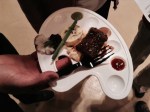
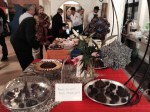
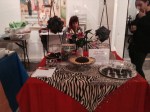


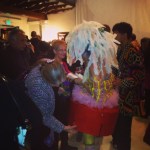





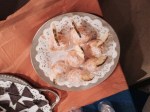


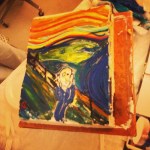
The Edible Art Gala hosted at Maker House last night by the Tucson Arts Brigade was extravagantly well produced. There were musicians in all areas, some dancers and other short acts entertaining all the guests. The food art was set out for tasting and also served by waiters circulating through the crowd. Artists with works in the silent auction were on hand, and everyone was encouraged to come in a costume that represented a work or art or a genre of art. The lively crowd enjoyed the historic setting and the Maker House bar which makes a perfect community gathering place. I tasted almost everything that had no meat, but the sensory excitement abounded, and I found I filled very quickly as I tasted my way around the tables. I am happy to have been introduced to several catering businesses that are new to me and do some seriously high quality original work. Everything I tested was delicious, but I saved myself for the scream cake as the last taste of the night. It was outstanding kiwi flavor with the icing of the dreamiest texture. I savored it with a lovely cappuccino from the bar as we enjoyed the outdoor patio with music under the stars. It was an example of Tucson at it’s best. Old friends, new art, and historic building turned community center…this is what I like to see happening in my city.








Vero Amore Pizza has opened a new and very snazzy location near my home, so we tried it yesterday. Everything about it was outstanding. The new space is super open and contemporary, with a view of the kitchen and wood fired oven at work. The staff is friendly and very prompt with service. We had beer and a cocktail, both unusual and delicious. Bob loves prosciutto, so he enjoyed a personal pizza without sauce. In our minds pizza is all about the crust, and at Vero Amore the authentic Neopolitan style pizza is light and crisp. I ordered manicotti which was rich and well balanced. The sauce was garlic enhanced just perfectly. My Oso Nero cocktail with honey bourbon and blackberries was fresh and complimented my seriously cheesy good manicotti. I am glad I had not ordered anything else because I just a rely was able to finish my dinner, with a little help from Bob. Next time we want to go for happy hour so we can sample smaller plates which all look very good.
We gave our server Matt a challenge by asking him to prepare a take home pizza checca to be ready when we finished our meals. He did it perfectly, presenting the bill right when we finished with exactly enough time to settle it and walk out with our fresh from the oven pizza to share with a neighbor who stayed home. We give Matt A plus in service. In fact, from the manager to the bartender to the kitchen staff everyone is genuinely pleased to serve the guests and it shows. We will return to explore the extensive menu and outdoor party patio. This is a wonderful addition to the dining options in our neighborhood.
For catering the company owns a mobile fire truck with a wood fired oven that they bring to a party. The pricing on this fabulous service is reasonable, and I am sure any event would be popular with authentic pizza cooked on site rather than boxed and delivered.


In the dark of winter I love to visit the tropics by going to the Butterfly Magic show at the Tucson Botanical Gardens. We are fortunate to have such a special nature spot with a controlled environment. Kids and grown ups are all delighted by a short stay in a world of unusual beauty. It is also fun to be hot and steamy in a greenhouse when the wind is blowing cold outside.

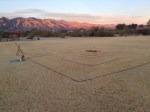
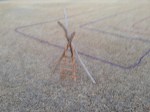



The practice of drawing and walking labyrinths is ancient and has been found all over the world. Today there is an interest in this form of meditation, and full moon is a perfect time to commemorate a moment in time by walking one. In Tucson there is a group hosting a full moon labyrinth walk each month and just recently they decided to become mobile. Rather than center the walks at a Unitarian Church with a lovely permanent labyrinth the design is now drawn on the ground for a temporary portal. Last night was the last full moon of the year, just a few days before the winter solstice. The labyrinth was constructed of ropes on the lawn, a shiny center with LED lights, and rattles for those who wanted to borrow them.
The weather was mild so we enjoyed the meditation and stayed to share cookies one of the ladies brought. Everyone expressed a feeling a full presence and appreciation. I have normally liked to go on these alone, but the drumming and the shared reverence, not to mention to rainbow around the full moon as we said good night, gave a depth to the moment that was very special. People of all ages, shapes, sizes, and cultures came to participate and commemorate the season. It was perfect.
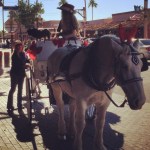
There is an arch rivalry between the cities of Phoenix and Tucson. We Tucsonans know that people outside the state have no way to distinguish the two and often confuse them. Politics aside (which would be impossible for Arizonans), there are extreme differences in the tourism and hospitality styles of these two towns. Tourists are attracted to the golf tournaments in both Maricopa and Pima Counties. Baseball spring training has all moved up there, and brings in millions. Bowl games and the Phoenix Suns brighten the economic situation for them too. The typical Tucson tourist is much less interested in shopping and is more likely to be spending time involved in outdoor sports of all kinds. Scottsdale is not afraid to step up and cover that niche offering the shopper from back east a wester phantasy phree phun time. Phree parking in old town allows these people to leave the car and ride around in a horse-drawn wagon for an exorbitant price. Everyone is excited to be way out west. The city of Scottsdale hires the trusty horse Dusty and Gary J Sprague, the singing cowboy, to serenade the crowd 1-4 on Saturdays. They are a huge hit.
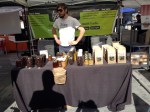
I am inspired to drive to the Valley of the Sun for the phabulous phood scene. The AZ Slow Food newsletter informed me recently about the existence of a special highly rare date variety growing only in Scottsdale known as the Black Sphinx. The market was established in 1951 selling a date that developed there from seed and was distinct from all others. The extremely thin skin makes it a poor candidate (pun intended) for shipping. The fresh dates require refrigeration and are extremely delicate. After shopping the Scottsdale Pharmer’s market where I scored amazing produce and preserved items, we visited the date store, which features Arizona products of high gourmet quality. Bob bought beers brewed in Arizona, one of which was a stout that contained the dates from the Sphinx Pharm. We both agree the Black Sphinx is the best date we have ever tasted, and before Bob ate it he told me he does not like dates…a convert. We also tried a very good date cookie and some chocolate covered Medjools that are scrumptious. We came home loaded with gourmet groceries and exotic citrus. We have to admit we had phun.







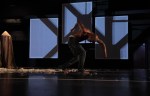
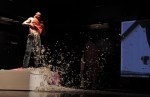
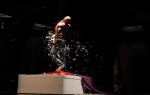
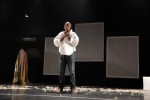
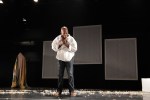
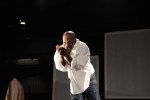

I met Elisio Pitta 20 years ago when he visited Rancho la Puerta to teach and do a capoeira demonstration. I had never seen capoeira before and was fascinated by the grace and power of the movements. He taught us some Brazilian folkloric dance also. We were all beginners, but he managed to get us all moving and enthusiastic in the few days he was our teacher. I have had the opportunity to learn from excellent teachers, but his talent to both teach and move was beyond compare. I never really attempted to learn the form, but I never forgot it either.
His career in dance has taken him around the world from his hometown, Bahia. He lives on a hill with a fantastic view of the Atlantic and has very deep cultural roots in the city. He has been performing a new dance of his own creation there this week, and soon will take the show on the road. Next month he will perform Othello in Shakespeare’s own country, in Liverpool England. Using Brazilian music and original choreography by Elisio he interprets the classic story of jealousy and regret. He dances the part of Othello and projects the other characters onto the stage in preproduced segments to tell the story of Desdemona’s ill fated murder and his subsequent remorse. He is using contemporary props and costuming in the production to go with his digital cast members. I asked him why he decided to be Othello and he told me that it is the Year of Shakespeare and he always wanted to do it. Classy.
I admire his extreme creativity and dedication to the art of dance. His natural talent is obvious, but he has used his talents and his strong cultural lineage to transcend boundaries. I think Shakespeare is proud of him. I am pleased to know such a talented and artistically ambitious man.
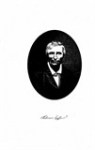
My 9th great-grandfather was one of the Quakers of Sandwich plantation who were heavily persecuted by the Pilgrims of Plymouth. He owned property when he died in New Jersey, which was controlled by the Dutch.
William Gifford arrived in New England after 1643, as he does not appear among those able to bear arms in that year. The first record of him is in the list of debts due on the inventory of Joseph Holiway of Sandwich dated 4 December 1647: “dew from Willi Gifford” 3s. 4d. On 4 June 1650 he served on the Grand Enquest. The original deed for the Sandwich plantation was executed by Governor William Bradford 22 May 1651. It ordered that Goodman (Thomas) Tupper, Goodman (Thomas) Burges, Sr., Nathaniel Willis, and William Gifford have the power to call a town meeting.Both Brown, and Daniels & McLean say that by 1651 he was married and had a family; that he probably married in England, and children John, Patience and Hannaniah were probably born in England. Birth records are available for only the last four of his nine children; the birth dates of the older children are estimated based upon the birth dates of their first children. There is a sizeable gap in these estimated dates between Hannaniah and William, suggesting William, Robert, Christopher and Mary may have been by a second wife. Only the last wife, Mary Mills, is of record; she is the mother of the last two children, Jonathan and James.
There is a record in England of a “Guilielm Gifford” (i.e., William Gifford) who married Elizabeth Grant on 11 February 1635 in St. Martin-in-the-Fields, London. Also, the London Merchant Taylors’ Guild shows a record: “William Gifford, son of Anthi (sic) Gifford of Dublin in the kingdom of Ireland, gentleman, apprenticed to Thomas Southerne of New Exchange, London, for a period of seven years from 7 December 1628.” Apprentices were forbidden to marry, so this would mean the apprenticed William Gifford would have been given his freedom 7 December 1635, in perfect time to be the one who married 11 February 1635/1636. Also, the records of St. Martin-in-the-Fields show that an Ananias Gifford married Maria Read on 18 November 1621. Ananias (also spelled Hananias, Hannaniah and Annaniah) is a relatively rare name. William named one of his sons Hannaniah, and the name has been carried down in the family. Also, the name occurs in the Giffords of Dry Drayton, county Cambridge, England. But it cannot be proven that these English records apply to the family of William Gifford of Sandwich.
Nor can the English ancestry of William Gifford of Sandwich be proven, according to Daniels & McLean. “English Giffords can be traced back to Normandy at the time of William the Conqueror when most branches usually spelled the name Giffard. Inevitably the temptation to connect the Sandwich Giffords with these celebrated families has produced a rash of printed accounts in which the connection is stated as fact but without solid references. (Cutter’s “Genealogical History of Western New York,” 2:901; “History of Bristol County, Mass.;” “Vineland (N.J.) Historical Magazine,” 3:32; “Seabury-Gifford Families,” Hartford (Conn.) 1941) In view of the fact that highly skilled professional genealogists have found no proof as yet of such connections, it can only be said that evidence has yet to be found to confirm these wishful thoughts.”
William Gifford of Sandwich was a Quaker, and as such, suffered persecution for his faith. “Little Compton Families” says “It is supposed that he was the William Gifford who in 1647 or earlier was ordered by the court at Stanford to be whipped and banished.” On 1 June 1658, he was one of a dozen men who “all of Sandwich were summoned, appeared to give a reason for theire refusing to take the Oath of Fidelitie to this government and unto the State of England, which again being tendered them in open court, they refused, saying they held it unlawful to take any oath att all.” At the court held 2 October 1658, they were fined L5 each. At the court held 1 March 1658/1659 George Barlow, Marshall for Sandwich, Barnstable and Yarmouth, complained against William Gifford and Edward Perry in an action of defamation, asking damages of L100, in saying he took a false oath. The defendants were ordered to pay 50s and make their acknowledgement publically, or else be fined L5 plus costs. As Quakers, they could not accept the verdict, and at the 2 October court William Gifford and 11 other Friends were fined L5 for refusing to take the Oath of Fidelitie. At the June 1660 court Gifford was again summoned to take the oath, again refused, and was again fined L5. In October 1660, for persisting in his refusal and for attending Quaker meeting, he was fined L57 — an enormous sum for those times. At this point he disappears from the records, and may have left Plymouth colony, but where he went is unknown. It has been suggested that he went to New Jersey which, like New Amsterdam, was then under the control of the Dutch. On 8 April 1665 William Gifford was one of the signers of the Monmouth (NJ) Patent, but there is no evidence he actually settled there; his sons Christopher and Hannaniah did, however. In a deed by his son Christopher William was described as a tailor.
On 10 November 1670 Mr. Gifford bought from mistress Sarah Warren of Plymouth, widow of Richard Warren, one half her share in the land at Dartmouth, which he gave equally to his sons Christopher and Robert by deed dated 6 May 1683. In 1673 William Gifford purchased land in Suckanesset (Falmouth) from the Indian Sachem, Job Noantico. Gifford continued to appear in Sandwich town records and in records of the Sandwich Friends meeting, and he married Mary Mills, also of Sandwich, at the Friends Meeting of 16 day 5 mo: 1683. Thirty witnesses signed the certificate, but none of William Gifford’s children signed the document, nor did James Mills, Mary’s brother.
William Gifford (1615 – 1687)
is your 9th great grandfather
John Gifford (1640 – 1708)
son of William Gifford
Yelverton Gifford (1676 – 1772)
son of John Gifford
Ann Gifford (1715 – 1795)
daughter of Yelverton Gifford
Frances Congdon (1738 – 1755)
daughter of Ann Gifford
Thomas Sweet (1759 – 1844)
son of Frances Congdon
Valentine Sweet (1791 – 1858)
son of Thomas Sweet
Sarah LaVina Sweet (1840 – 1923)
daughter of Valentine Sweet
Jason A Morse (1862 – 1932)
son of Sarah LaVina Sweet
Ernest Abner Morse (1890 – 1965)
son of Jason A Morse
Richard Arden Morse (1920 – 2004)
son of Ernest Abner Morse
Pamela Morse
I am the daughter of Richard Arden Morse
I have been hearing a lot about the Maker House downtown, so today I dropped off some of my old Christmas decorations and took a tour of the space with Lisa. What a fabulous space!!!! I plan to go back over the weekend for the tree trimming party. I want to learn how to use the programmed sewing machines and the 3D printers. This is exactly the kind of development that will make downtown vibrant and economically sustainable. I enjoyed a very tasty cappuccino before I left, then came right home and joined on line. I think this is just what the fun doctor ordered. I always like old and well designed buildings. It is great that this one has opened to the public.
 mermaidcamp