mermaidcamp
Keeping current in wellness, in and out of the water
You can scroll the shelf using ← and → keys
You can scroll the shelf using ← and → keys
Investigating the possibilities to spa down in Pennsylvania, the past appeals to me much more than the present. The current favorite for PA visitors is the Hotel at Hershey which has many chocolate ways to do body treatments. Oh dear, was that ever not what I had in mind. I looked for hot springs, which are almost non existent. The one that served as a health spa is now part of a state park near Pittsburgh. In the 1800s it was all the rage to take the waters and seek health in Beaver County. I wish my class reunion in Oakmont could end with a month of water taking, but, alas, that was a different century. This spring was closed in 1912. The lodge burned down in 1932 and was closed for good. The ghost people like it. If my own ancestors had been there I might be more into the hauntedness. What I am seeking is a big pool full of hot mineral water. This does not seem to exist. It looks like the only ones who do spa rituals in Pennsylvania are dead people and folks for whom chocolate is a travel destination…very interesting.
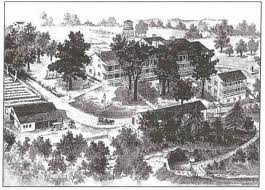
early sketch
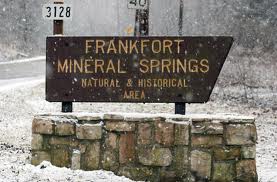
state park
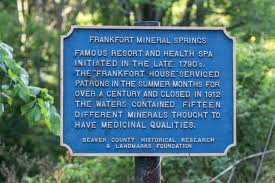
Beaver County Landmark
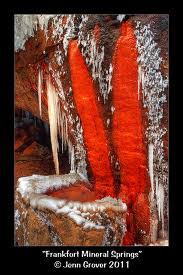
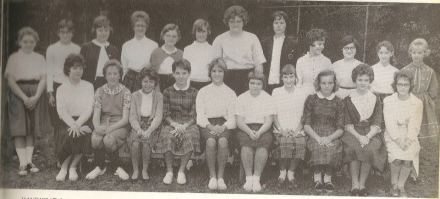
Handicrafts Club
I have been found by a group of people I would never have guessed were looking for me. My classmates from elementary and junior high have tracked me down to invite me to the reunion of the graduation I would have had with them had I not moved. I am blown away in many ways. First, I always admire good detective work. Second, I am touched and pleased and thrilled to be remembered for so long. Third, in am in flashback mode, laughing hysterically. Stories and pictures have been produced that take me back to Oakmont, PA in the 1950’s and early 1960’s. These were very fun, if somewhat unfashionable, times. In the above picture I am in the front row with jazz hands crossed on lap at the left end. Nobody remembers what kind of handicrafts we made. Another sexist ploy like home ec, where I received the one and only D of my academic career for stabbing the seam ripper through the pocket of my apron sewing project. Mrs. Gallashun, you can shove your apron….because I still have it for some perverse reason.
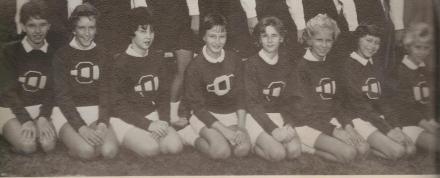
Jr high cheerleaders
In the photo above I am seated in my Oaks sweater, which was green and white. I am third from the left, leaning conspicuously to the left in some body language clue about my feelings about my fellow cheerleaders. This one is very funny to me because it brings on total recall of the games and the cheers and getting my collar bone broken playing tackle football with the high school boys when my parents were out of town. In fact it brings back floods of nostalgia and appreciation for the really excellent place we had to live as kids. We had Roberto Clemente, and life was very easy.
These are the people with whom I built snow forts, went sledding, ice skated, sang, baton twirled, and played dodge ball. These are the people who taught me to speak with a very heavy accent I no longer have, but do enjoy hearing. I am into the Amish Mafia on TV because I like to hear them talk. I can’t believe they have changed so much, but still sound the same. The Oakmonters are having a party which includes a tour of the high school, which happens to be the same building where I went to elementary school, two blocks from my house. I think I have to go. I think the past is calling loudly, and I have to answer. It is just too funny.
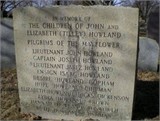
Howland Monument
While my first cousin 12x removed, King Philip, was waging war against the Pilgrims, Joseph Howland, my 9th great grandfather, was guarding Wampanoag prisoners. The fact that I am related to so many people in the colonies is not all that strange because they only had a limited pool of religiously correct folks to marry. The ones who went Baptist and went to Rhode Island, had even fewer. If my Pilgrim ancestor, Gabriel Wheldon, had not gone AWOL upon arrival in Plymouth and married a Wampanoag princess I would not be related to both sides of this bloody war. The conflict between the welfare of the Pilgrim people and the welfare of the native people is still in gear. Guess who is winning.
Joseph lived and died in Plymouth, where he was always closely identified with the welfare of the people. He was commissioned a lieutenant of militia in 1679 which position he held many years. He was a large real estate owner, and he and his son Thomas, his grandson, Consider, and his great grandson, Thomas, successively held the land on which Pilgrim Hall, in Plymouth, now stands. Joseph d. 1st mo. n1704.
JOHN HOWLAND: A MAYFLOWER PILGRIMJoseph Howland was the second son of the Pilgrim, born about 1635 to 1640. A pioneer farmer as his father was, he too held various offices, among them that of surveyor, church delegate, selectman which at that time included the office of justice of the peace,and deputy to the General Court. He served on many town committees, once with the Governor, and was foreman of the jury.
Joseph was also a soldier. In 1667 he agreed to serve the town as a standing trooper for a period of five years. He later became lieutenant of the Plymouth Military Company. During King Philip’s War, in 1675, when the Indians reached the outskirts of Plymouth and were burning houses, he and another soldier guarded Indian prisoners.
By 1690 he had become Captain of the Plymouth Company. This was a considerable honor as this company was the oldest in the Colony and its first Captain was Myles Standish. A special law had been passed which permitted its former officers who had resigned to keep their military titles. Military titles in those days of Indian attack were very highly thought of.
Starting out originally with two acres Joseph eventually became a large landowner. He ingerited land not only from his father, but also through his wife from her father. Captain Thomas Southworth. Much of the latter was of considerable value as it was situated in the center of Plymouth, where Pilgrim Hall now stands.
In 1664 Joseph married Elizabeth . Joseph’s mother-in-law. Elizabeth Reynor Southworth was a close relation of the Reverend John Reynor, for many years the Plymouth misister. He, as many of the early Colonial New England clergy was a graduate of Magdalen College Cambridge University. The Reverend John referred to Joseph as “beloved kind man”, and Joseph eventually became trustee of his estate.
As at the present time, there was servant problems in those days. One sued Joseph for unpaid wages. However, Joseph won the suit.
In Joseph’s inventory, a horse, saddle, and pillion are mentioned. He and his wife Elizabeth must have ridden often together from Rocky Nook to Plymouth and beyond.
The Pilgrim John Howland had bought the property at Rocky Nook in 1633. He left this in his will to his wife Elizabeth stating that it was to be hers for the rest of her life, then it was to go to Joseph. In 1675, during King Philip’s War Indians attacked Rocky Nook and burned the main “dwelling house”, Elizabeth eventually went to live with her daughter Lydia Brown, the wife of James Brown, Swansea. Joseph Howland took over and built his house in 1676. When he died in 1736, he left the property to his son James ? who finally sold it in 1735. All told Howlands lived at Rocky Nook for almost one hundred years.From and address at Dedication at Rocky Nook, Kingston, Mass. by McClure M. Howland September 7, 1963.
Joseph Howland (1640 – 1703)

King Philip
I have a sourdough start that has been living for about 5 years. I feed it potato water, sugar and potatoes to keep the yeast alive. The yeast lives in the air and will be different in each geographic location. Technically beer yeast and bread yeast are different strains, but they are both alive. The sourdough is a domesticated life form growing in my kitchen. Each time I make bread I take out half of the starter and add potatoes and sugar to the bowl. After it grows for a day or so I refrigerate it because I have no need to make bread every 24 hours. The ritual of making the bread and keeping the levain alive is important. Mine is unusual because I use no flour in the starter liquid.
Making and sharing food has deep significance. Not everyone has time or interest in bread baking or cooking as a sport, but everyone gets hungry. The way we deal with our appetites tells us something about our relationship to divine providence. To be too strict or picky results in loss of joy, whereas to be undiscriminating will have the exact same result. Culinary taste can and does vary greatly, but the full pleasure of dining is in the execution. The delightful MFK Fisher wrote before the advent of Food Network and the crush of celebrity chefs as entertainers. I have purchased tickets to see Anthony Bordain live on stage in Providence because he does the same schtick. His travel and dining adventures are metaphor fairy tale food stories. Once I saw that he and I will have traveled to the same city at the same time I knew I had to see his show Good and Evil, an obvious referral to food as life. He and I do not eat the same things, but we dine with the same attitude. I look forward to the evening with delight. It will be tasty.

Portsmouth Compact
The Puritans left England for religious freedom. As soon as they arrived in New England some of them needed to be religiously free of the Puritans in Plymouth. These ultra free people formed their own “Plantations” in Rhode Island. One such Bodie Politick was Portsmouth, which made it’s political agreement in 1638 with God Himself.
The Portsmouth Compact
The following is quoted from the book Story of Dr. John Clarke; The Founder of The First Free Commonwealth of the World; on the Basis of “Full Liberty in Religious Concernments” by Thomas W. Bickness, published by the Author, Providence, R. I., 1915; third edition. Note: In the book is a picture of the compact which has been scanned in color for these pages. The transciption has been corrected to spell Phillip Shearman’s name with two “L”s and to add the words “his mark” as they appear next to Henry Bull’s name and under his mark “+”.
Prior to leaving Boston, a compact was drawn up, under date of March 7, 1638, by which a number of the leading men of the proposed Colony incorporated themselves into “A Bodie Politik” to the end that they might go to their new Plantation in a formal organization, under a chosen leader or Governor.
The compact is as follows:
The 7th Day of the First Month, 1638
We whose names are underwritten do hereby solemnly in the presence of Jehovah incorporate ourselves into a Bodie Politick and as He shall help, will sub- mit our persons, lives and estates unto our Lord Jesus Christ, the King of Kings, and Lord of Lords, and to all those perfect and most absolute laws of His given in His Holy Word of truth, to be guided and judged thereby. William Coddington John Clarke William Hutchinson, Jr. John Coggeshall W illiam Aspinwall Sa muel Wilbore John Porter John Sanford Edwa rd Hutchinson, Jr. Esq. Thomas Savage Willi am Dyre William Freeborne Ph illip Shearman [ John Walker Richa rd Carder Willi am Baulston Edw ard Hutchinson, Sr. + H enry Bull [“his mark” written next to name] Randal l Holden
Exodus, 24c., 3:4.II Cron., 11c., 3. II Kings, 11:17.
This compact was signed originally by twenty-three persons. The original paper is in the keeping of the Secretary of State, at the State House, Providence, a photograph of which appears on the opposite page. Four names,– Thomas Clarke, brother of John, John Johnson, William Hall and John Bright-man, Esq.,– follow the nineteen that appear above. Erasure marks have been made over these names, the reason for which it is not easy to understand as the first three were among the first recorded settlers of Newport, and Mr. Brightman may have been.
Neither was a Constitution nor a Bill of Rights for a Colony. Boston called the compact an act of incorporation. Plymouth called theirs a covenant, Boston did the act in “the presence of Jehovah,” Plymouth wrote “in the presence of God.” Boston formed a “Bodie Politick,” Plymouth called theirs a “Civill Bodie Politick.” Boston submitted their “persons, lives and estates unto our Lord Jesus Christ.” * * * ** “And to all those perfect and most absolute lawes of His given us in His Holy word of truth, to be guided and judged thereby.” Plymouth promised submission and obedience to such “just and equal lawes, ordinances, acts, constitutions and offices” as might be enacted, constituted and framed. Each compact had for its purpose the formation of a civil state under an orderly government. The Boston paper was probably written by Dr. John Clarke, whose piety and purpose lent a strongly religious sentiment to the document, so much so that some historians have called it theocratic. But Dr. Clarke did not classify The Christ as a theocrat, for all his writings make the great Teacher the interpreter of a new Democracy in which soul-liberty is established and enforced.
Samuel G. Arnold, our Rhode Island historian, has given a very clear and just interpretation of the Portsmouth Compact. He says, “So prominent indeed is the religious character of this instrument, that it has by some been considered, although erroneously, as being itself ‘a church covenant, which also embodied a civil compact.’ Their plans were more matured than those of the Providence settlers. To establish a Colony independent of every other was their avowed intention, and the organization of a regular government was their initial step. That their object was to lay the foundation of a Christian state, where all who bore the name might worship God according to the dictates of conscience, untrammelled by written articles of faith, and unawed by the civil power, is proved by their declarations and by their subsequent conduct.” * * * *
My 10th great grandfather was on the list signing the document breaking up totally with England, church and state. They were disarmed and put in jail by the Puritans for praying in the home of Anne Hutchinson. They decided to leave.
Richard Carder (1604 – 1675)
is my 10th great grandfather

Portsmouth Compact

Providence, RI
John was born ca 1617 based on his age at the time of death, probably in England. In 1632 he came to Dorchester, Massachusetts, in service to Israel Stoughton, carpenter. He married by about 1640, Sarah . Since John was a young, unmarried servant when he first arrived in Dorchester, it is not surprising that he does not appear in the records very often during the 1630s. However, he also generated remarkably few records between 1640 and 1658, during which period he lived in Dorchester as a married man.
On October 3, 1632 the General Court ordered that “Alex: Miller & John Wipple shall give iijs iiijd apiece to their master, Israell Stoughton, for their wasteful expense of powder & shot”. On January 2, 1637/8 John was granted eight acres in Dorchester about the mill. “John Whiplle” was the last of the Dorchester proprietors to sign his name to an agreement submitting to arbitration a dispute over the fencing and division of land.
In 1641, John and Sarah became members of the Dorchester church. On November 15, 1658 “John Whiple of Dorchester…carpenter” sold to George Minot of Dorchester “his now dwelling house and housements scituate and being in Dorchester near the River Naponset together with thirty-seven acres of upland more or less thereto adjoining,” also “eight acres of salt marsh more or less lying near the place commonly called the penny ferry”; “Sarah the wife of the said John Whiple” relinquished her dower rights.” John then moved his family to Providence, Rhode Island.
On July 27, 1659, he was received in Providence as a purchaser. On February 3, 1661/2 John Whipple Sr. petitioned for a piece of land next to his orchard, but his will was referred to the next court. On July 27, 1662 John Whipple Sr. was permitted to exchange sixty acres at Mashapauge Pond for lands at Loquasqussuck. These lands were probably the eights acres at Loquasqussuck laid out to him by Thomas Harris Sr. on April 13, 1667. On November 23, 1663 John Whipple Sr. of Providence deeded to “my son John Whipple” a houselot formerly owned by William Arnold excepting two acres, two shares of meadow, six acres of upland, sixty acres of land at Loquasqussuck. On February 19 John Whipple Sr. drew lot #45 in the division of lands east of Seven Mile Line.
On November 13, 1666 John Whipple Sr. was granted permission to exchange his sixty acres at Tare Breech Plain. On February 24, 1674 John Whipple St. gave a deed of gift to his “son Eliezer Whipple”. On April 12, 1675 he drew lot #43 in the lands on the west side of Seven Mile Line. On January 27, 1674/5 John Whipple Sr. was granted permission to change a fifty-acre division of upland. On May 24, 1675 he drew lot #91 in the land on the east side of Seven Mile Line. He was among those who “stayed and went not away” in 1676 and as such was entitled to share in the disposition of Indian captives, whose services were sold for a term of years. On June 6, 1681 John Whipple Sr. was granted permission to exchange his twenty-five acres at Goatum valley “which he bought of Mr. Benedict Arnold”. On March 4, 1683/4 John Whipple Sr. made a deed of gift to his “son David Whipple”.
John was a carpenter and tavern-keeper. In 1669 John Whipple, Sr. was paid 10s. to allow the town council to meet at this house. In 1670 the amount was raised to 20s. He took the Oath of allegiance (freeman) May 31, 1666.
John held several offices in Providence. He was Deputy to the General Court, September 4, 1666. He served on a Petit jury October 19, 1670. John was a Providence selectman, 1670, 1674, and on April 27, 1676 he was made moderator. He served as Treasurer, June 1, 1668 and Surveyor, June 6, 1670-71. John was on the Committee to run the line, January 27, 1663/4 and on the Committee to consider building a new town house. He was on a jury, May 12, 1663. He was appointed to confer about mending a bridge, January 27, 1664/5, October 28, 1667. He was appointed to a Committee to arbitrate over fences, December 2, 1666. John was an arbiter in the matter of the estate of Resolved Waterman, deceased, January 9, 1700/1. He served on the Committee to “demand & receive at every garrison what was taken from the Indians,” September 7, 1676 and on the Committee to lay out a common, April 27, 1678.
John died on May 16, 1685 at Providence. Sarah predeceased him, dying sometime in 1666.
In his will, dated May 8, 1682 and proved May 27, 1685, John Whipple Sr. of Providence “being in a great measure of health…having many children & to prevent all differences that otherwise may hereafter arise…having formerly given unto three of my sons all my lands…namely Samuell, Eliazer & William equally to be divided among them…only excepting thirty acres which I gave unto my son John at the northwest end”; to “my three aforenamed sons, namely Samuell, Eliazer & William, each of them a quarter part of one right of commoning for pasturing, cutting of timber, & firewood”; to “my son Benjamin a right of lands in the late division which is already laid out unto him”; to “my son Jonathan one division of lands”; to “my son Joseph my dwelling house & my three home lots & the garden next the river, also a six acre lot…also twenty acres near Thomas Clemence his dwelling, also I give unto my son Joseph my share of meadow near Solletarey Hill & two six acre lots…also a five acre lot lying near where William Wickenden formerly dwelt; also one division beyond the Seven Mile Line…also I do give unto my son Joseph all other divisions which shall hereafter belong unto two rights throughout”; to “my sons John, Samuell, Eliazer, William, Benjamin, David & Jonathan unto these seven twelve pence to every of them”; to “my three daughters (namely) Sarah, Mary & Abigall unto every of them ten shillings”; to “my son Joseph all my right of lands in the Narragansett Country”; to “my son Joseph” residue; “my son Joseph my executor.”
In May of 1685, Thomas Olney, Town Clerk of Providence, deposed that he had gone to John Whipple, at his request, and obtained clarification of some of the bequests:
That upon ye sixteenth day of this instant may John whipple senior of the aforesaid towne of Providence sent for to speake with him; This deponant sayth he Emediatly went to him: the said John whipple then shewed him this paper & the writeing which on ye other side of this said paper is written down, desireing this deponant to peruse it. This deponant saith he then did peruse it, & haveing well perused it, he asked the said John whipple what his mind was concerning ye lands which in ye said writeing he had desposed of to his severall sons, whether or no he did intent by that writeing, or will that ye said lands should be unto his said sons & theire Heirs & Assignes for Ever, or only unto his said sons for terme of life, he Emediatly made this Answer; That how Ever it was worded in ye said writeing yet his mind & will was that his sons Each one of them should have those lands house & Rights which hee in ye said writeing unto Each one of them had desposed, to be unto them, theire Heirs & Assignes for Ever to despose ye same or any part thereof at any time as they see cause. & that ye same was his Mind & Will when ye said will was written: And further, that whereas in ye said Will it was omitted to be inserted that his son Jonathan should have one of his Rights of land & Comoning on ye west side of ye seven mile line, yet that was his mind & will; That his son jonathan whipple should have one of his Rights of land & Comoning on ye west side of ye seven mile line to be unto him his Heires & Assignes for Ever; and that was his mind when ye said will was written, how Ever by ye scribe it was omitted. And whereas in ye first part of ye said Will there is an Exception made only of thirty acres of land to his son John by him formerly given, that he owned to be a mistake, & that ye Exception must be of sixty acres which formerly by deede of Gift he had given to his son John whipple; and all the remainder of his said farme lieing about Loquasqussuck should be devided Equally betweene his said three sons (viz) Samuell, Eliezer, & william; This saith this deponant is trueth, & that hee tooke it Emediatly from ye said John whipple his mouth & wrott it downe. And also that whereas the said Will Expresseth a quarter part of a Right of Comoning to Each of his three sons, (namely) Samuell, Eliezer & william, he said his Meaneing intent & will was that it should be so farr westward as ye Seven mile line & no further; And that the said John whipple was then when hee did declare the Same of Sound mind & of Good memory May ye 27th: 1685 upon Oath…
The inventory of John Whipple Sr. was taken May 22, 1685 and totaled £41 11s. 10d., including no real estate, viz: yoke of oxen, 2 cows, 2 yearlings, 2 two years, 2 calves, steer, 3 swine, feather bed, 7 pewter platters, 5 pewter porringers, 3 old spoon, chisel, gauge, augurs, etc.
Captain John Whipple is buried in the Whipple family plot in the North Burial Ground on Main Street in Providence, Rhode Island. Some sources indicate that John and his wife Sarah were initially buried in the garden burial site near their home. Their bodies were moved to the North Burial Ground when it was established in 1700. The headstones of John and his wife Sarah are located approximately 48 feet west-south-west of the “Dahlia Path” sign in the cemetery. On the tomb stones of John and Sarah Whipple, in the north burial ground in Providence, are the following inscriptions:
In Memory ofCapt. John Whipple, whowas born in England &Died in Providence Townye 16th Day of May AnnoDom. 1685. About 68years of age
In Memory of Mrs. SarahWhipple, wife of Capt.John Whipple. She wasborn in Dorchester, inNew England, & Died inProvidence, Anno Dom.1666. Aged about 42years
Many published genealogies state John Whipple married Sarah They or Darling ca 1639. (He would have been 22-23, she 15-16.) No evidence has been found to confirm that Sarah’s maiden name was either They or Darling. Neither appears among early Dorchester surnames; the closest being Thayer. Sarah’s tombstone states she was born in Dorchester and died in Providence in 1666, aged about 42 years. The stones do not appear to be very ancient and may have been erected fifty years or more after the decease of Capt. Whipple and his wife. But if the year and age are correct, she would have been born ca 1624. Thus, she could not have been born in Dorchester, unless she was a Neponset Indian, since Dorchester wasn’t founded until 1630. English settlers didn’t marry Indians in those days, so we can presume she was white. With a birth date of 1624, we can be sure that if she was born in New England, it must have been in Plymouth, which was settled in 1620. Travel by a ferry at a cost of a penny per person between Dorchester and Plymouth was common in 1638.

Jessica Breton, L Ac
Last week I had a treatment from Jessica Breton at my hospital/spa. She does acupuncture at the Supportive Care for Healing at U of A Cancer Center. I recently overcame my fear of needles to try acupuncture and am now a huge fan. It has had a very salubrious effect on me. I expect when one is very ill it might be super curative. Jessica is like the other practitioners I have met at the hospital, extremely competent. She has additional skills that she uses in her private practice that are not employed at the hospital. As my treatment progressed I already felt good, but when she commenced to to cranial sacral work while I wore my needles I just loved it. It was noticeable to me that this was only my third acupuncture treatment and I was relaxed and looking forward to the boost of euphoria that I now associate with it. I had a big fear of needles that had existed since early childhood. I still do not want anyone to give me a shot or take my blood, but these needles are really super friendly.
Jessica has a low key style that made me feel very relaxed. In fact, at one point I asked if the needles were still in because I had no sensation of them. The resulting effects were not subtle. I noticed a freeing and balanced feeling that I am starting to know comes from acupuncture. In her private practice she does cupping and moxa as well as Tui Na. These modalities are similar in that they diagnose by reading pulses and your tongue. They address the balance of chi in the meridians. Tui Na works on the ligaments to restore balance and order. Each can be powerful alone, but combined they make an effective treatment more beneficial for the body.
To reach Jessica for an appointment at Zylla Acupuncture in Tucson you can call 520-221-6559 or reach her at zhenpoints@gmail.com. She is punctual, polite and professional.

Ship Bevis log

Old Rehoboth Cemetery
William Carpenter was a notable town clerk of Rehoboth, Massachusetts. He is from the Carpenter family that became large and influential in Rhode Island and southeastern Massachusetts by the 1700s.
Early Life
William Carpenter, Jr. was baptized on November 22, 1631. His parents were William Carpenter, III and Abigail Briant (sometimes erroneously reported as Bennett or Sale/Seals/Searles), both originally from Wiltshire. Since his family was able to bring a servant with them to Plymouth Colony, it is likely that they came from some affluence.
Carpenter’s place of baptism is variously recorded as Shalbourne, Berkshire, England or Southampton, Wiltshire, England. (Sources also differ on whether it was the Shalbourne in Berkshire, Wiltshire, or the non-existent “Whitshire.”) Professional genealogist Eugene Cole Zubrinsky, author of the Carpenters’ Encyclopedia, maintains that it was Shalbourne, Berkshire based on primary source records. The confusion could be blamed on Shalbourne having been split between Berkshire and Wiltshire around 1841, since it had straddled the line, with some records going to one county and some going to the other. Southampton, meanwhile, was the family’s departure port from England, explaining why some list Carpenter as having been born there.
Arrival in America
By May 2, 1638, Carpenter and his family set sail from Southampton, Hampshire, England on the Bevis, arriving at Boston in July or July. (The passenger list said that by May 2, “they had been some Dayes gone to sea,” so the exact date of departure is unknown.) The family’s full entry said:
William Carpenter 62 Carpenter of Horwell, William Carpenter Jr. 33 Carpenter of Horwell, Abigael Carpenter 32 and 4 children 10 and under, Tho: Banshott 14 Servant
A scan of the log can be seen in the “Photos” section of this profile; a more legible transcription is available throughOlive Tree Genealogy.
The family first settled in Weymouth, and then moved to Rehoboth in 1644.
Marriages & Children
Carpenter’s first marriage was to Priscilla Bennett on October 5, 1651 at Rehoboth. It is unclear whether she was the daughter or widow of Edward Bennett of Weymouth, Massachusetts Bay Colony. She died on October 20, 1663 in Rehoboth.
His second marriage was to Miriam Sale on February 10, 1663/4. (It is sometimes recorded as December since the original record, following the old calendar, called February the “12 month.”) She was born c. 1645 and died on May 1, 1722 at Rehoboth. She was the daughter of Edward sale of Weymouth and Rehoboth and was approximately 20 years old at the time of her marriage.
With his first wife, Carpenter had (all in Rehoboth):
John Carpenter, b. October 19, 1652, d. probably April 9, 1713 in Dedham, Massachusetts
William Carpenter, b. June 20, 1659, d. March 10, 1718/9 in Attleborough, Massachusetts
Priscilla Carpenter Sweet, b. July 24, 1661, d. 1745 in East Greenwich, Rhode Island
Benjamin Carpenter, b. October 20, 1663, d. April 18, 1738 in Coventry, Connecticut
With his second wife, Carpenter had (all in Rehoboth):
Josiah Carpenter, b. December 18, 1664, d. February 28 or 29, 1727/8 in Rehoboth
Nathaniel Carpenter, b. May 12, 1667, d. Rehoboth or Attleborough
Daniel Carpenter, b. October 8, 1669, d. September 14, 1721 in Rehoboth
Noah Carpenter, b. March 28, 1672, d. Attleborough
Miriam Carpenter Bliss, b. October 26, 1674, d. May 21, 1706 in Rehoboth
Obadiah Carpenter, b. March 12, 1677/8, d. October 25, 1749 in Rehoboth
Lt. Ephraim Carpenter, b. April 25, 1681, d. April 30, 1743 in Rehoboth
Hannah Carpenter Chaffee, b. April 10, 1684, d. after January 19, 1767 probably in Rehoboth
Abigail Carpenter Perrin, b. April 15, 1687, d. January 15, 1781 in Rehoboth
The Carpenter family house was on the left-hand side of the road from Rehoboth to the East Providence meetinghouse, “some 50 or 60 rods from the crossing of the Ten Mile river.”
Professional Life
Carpenter was propounded on June 6, 1660 in Weymouth but not admitted as a freeman until June 1, 1663.
Fitting with his surname, Carpenter was originally a carpenter. Records show him owning a “long Cross cutt saw” that he used at his home and which he later willed, along with assorted tools, to his son John, also a carpenter.
For nearly 35 years, Carpenter served as the town clerk of Rehoboth. His records are notable due to his exceptional handwriting and general literacy, which point to some formal education in his background. He also owned a small library of mostly theological books.
Records show that, while serving as clerk, he oversaw the highways, served as constable and juryman, was appointed to settle boundary disputes, helped hired the schoolmaster, served as magistrate, and was otherwise involved in all aspects of local governance.
Deacon or Deputy?
In his 1898 genealogy, Amos Carpenter said that William Carpenter was a deacon of the Rehoboth church and a deputy to the General Court of Plymouth Colony in 1668. Although these “facts” continue to be passed down through some branches of the family, Zubrinsky has conclusively shown that neither could have been true. Although Carpenter’s father served as deputy to the General Court in 1656, Carpenter himself never appears on any list of deputies. Furthermore, the original records of the Rehoboth church list a Deacon Cooper, not Carpenter. Even though he served as neither deacon nor deputy, he continues to be popularly known as “Deacon” simply due to the number of years for which the myth was propagated.
Death & Legacy
Carpenter’s will was dated November 10, 1702 and was proved April 20, 1703. His entire estate, including housing and lands, was worth £215 5s. 4d., or roughly £16,500/US$27,700 in 2011 figures.
Carpenter was buried at Newman Cemetery, one of the oldest (established in 1643) in present-day Rhode Island but which was, at the time of its founding, part of Rehoboth and Plymouth Colony. His parents are also buried in the same cemetery.
Additional Reading
Zubrinsky’s profile of William is perhaps the best available. It is uploaded in the “Documents” section of this profile.
The Wikipedia on the Rehoboth Carpenter family is a good starting point for learning about the family’s spread and influence over time.
Amos Carpenter’s A Genealogical History of the Rehoboth Branch of the Carpenter Family in America, often referred to as “The Carpenter Memorial,” was printed in 1898 and serves as the basis for most modern genealogies. Press of Carpenter & Morehouse, Amherst, Mass., 1898) However, due to the problems noted above with his biographical sketch of Carpenter, it must be read with caution.
Sources
Beers, J. H. Representative Men and Old Families of Southeastern Massachusetts. Chicago: J. H. Beers & Co., 1912.
Carpenter, Amos B. A Genealogical History of the Rehoboth Branch of the Carpenter Family in America. Amherst, Mass.: Carpenter & Morehouse Press, 1898.
Zubrinsky, Eugene Cole. “William Carpenter of Rehoboth, Massachusetts.” Carpenters’ Encyclopedia, updated January 18, 2011.
This biographical profile was written in May 2011 by J. Ashley Odell for Geni. It should not be reposted elsewhere without full attribution.

Grave of William Carpenter

Pawtuxet, Rhode Island
My 9th grandfather was a founder of the town of East Greenwich, Rhode Island. I am excited to find that in Warwick, RI there is an historical village of Pawtuxet where I will be able to visit the Malachi Rhodes home. It will be a huge thrill. I love preserved history, and am so pleased that the Rhode Islanders decided to preserve entire villages of Rhode’s stuff. The village is the oldest in the US, and contains historic buildings that model the past. This will be my kind of village because the Rhodes are not the only family to whom I am related. Ghost tourism at the highest levels will be savored. These people still dress up and guard the village with a militia..can’t wait!!
Malachi Rhodes (1650 – 1682)
is my 9th great grandfather
Malachi Rhodes (1676 – 1714)
Son of Malachi
Dorothy Rhoades (1705 – 1705)
Daughter of Malachi
MARGARET HAMMETT (1721 – 1753)
Daughter of Dorothy
Benjamin Sweet (1722 – 1789)
Son of MARGARET
Paul Sweet (1762 – 1836)
Son of Benjamin
Valentine Sweet (1791 – 1858)
Son of Paul
Sarah LaVina Sweet (1840 – 1923)
Daughter of Valentine
Jason A Morse (1862 – 1932)
Son of Sarah LaVina
Ernest Abner Morse (1890 – 1965)
Son of Jason A
Richard Arden Morse (1920 – 2004)
Son of Ernest Abner
Pamela Morse
I am the daughter of Richard Arden
The the P’s have served me well as a guide since I first saw them on a sign in a panyard in Port of Spain, Trinidad. I hung out at the Neal and Massey Trinidad All Stars yard in the early 1980’s. I took my video camera and shot the practice sessions. I adored the look as well as the sound of the steel drum. The panman was just leaving the shadows of Trini society in the 1980’s. The Despers, The All Stars, and some other very old steel bands were representing very hard neighborhoods in Port of Spain. The idea that you could build an instrument out of an oil barrel and make a professional orchestra of people who did not read music was not yet considered to be a fine art by everyone.
I had some of the best times of my life at that yard. I remember Dane Gulston for his artistry and also his super friendly attitude. He was very young, but was already indoctrinated with the discipline of the All Stars. Dedication and cooperation are the ingredients needed to win in Panorama and in life. Today Pantrinbago oversees educational programs and the nation is proud of their indigenous instrument. Brooklyn has a large contingent of the best musicians for at least part of the year. In the above solo Dane ably demonstrates the benefits of practicing the three P’s.
 mermaidcamp