mermaidcamp
Keeping current in wellness, in and out of the water
You can scroll the shelf using ← and → keys
You can scroll the shelf using ← and → keys
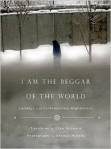
The book I am the Beggar of the World is a collaborative effort by Eliza Griswold and Seamus Murphy. Last night at the U of A Poetry Center Seamus was present for the opening of an exhibit on the book. He spoke to the audience about the process they had followed to find the landays in the book. He explained the cultural significance and historical tradition of these spoken couplets specific to Pashtun women in Pakistan and Afghanistan. The two journalists had served in the region as reporters. They wanted to bring a deeper insight into culture and life than they could offer in a news story. Their investigative trip involved finding women who know the poems and convincing them to share them. Ms. Griswold handled the interview tasks while Mr Murphy shot photos and video footage of the region. They did not attempt to shoot the women reciting themselves for various reasons. This poetry is spoken, forbidden, and often critical. Any image of the women identified with landay might cause them great danger.
There are about 40,000 landays in use at any given time. They are 22 syllables, 9 in the first line, and 13 in the second. They are general statements on life from a woman’s point of view. They remind me of the Mexican dicho, a short philosophical statement that explains the situation at hand. My favorite dicho (saying) is, “Cuando hay dinero baila el perro.” When there is money the dog dances (anything is possible). Landays do sometimes contain great humor, but in general I think they are more haunting and pithy than dichos. Here is one example translated into English: “When sisters sit together, they always praise their brothers. When brothers sit together they sell their sisters to others.” The repression of women is a theme, since this real problem plagues family life. The landay is a way to express emotions as well as outrage at the political systems that are unfair to women.
One of my favorite poets, Piet Hein, wrote short works like these called Grooks. He started in Danish, and worked his way into English. The reception last night was catered with beautiful food and wine for the guests. They had outrageously ripe strawberries and chunks of fresh pineapple, which I enjoyed immensely while standing in line to purchase a copy of the book. I was reminded of what may be my favorite poem of all time, a Grook. “Love is like a pineapple, sweet and undefinable.” I had amazing dreams in my sleep last night. I was wandering around in some other ethnic zone searching for poets, just like in the book. I found some and there was great dreamy party about saving the poems and being anthropologically correct. I was in a fancy tent with a spread that look suspiciously like the food at the reception. I woke up with no pineapple, but a distinct taste of liberation in my mouth. I have my copy of the book to savor and enjoy. I would recommend it to anyone. This is a story of inspiration from history and daily life. The most important thing to remember about them is that their authors are illiterate. This sentiment is shot straight from the heart with no filter, publisher, or even permission. This is the birthplace of all poetry. Edited over centuries, these couplets reflect an accurate and poignant view of Pashtun women and their culture. I believe any reader would enjoy the book.

book cover

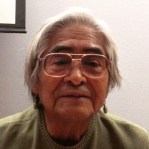

My week has been graced by the presence of a real writer. I went to hear the poet Simon Ortiz who was in Tucson for a reading of his work. I was deeply moved and highly impressed with his writing, which he delivered with lavish explanations about his process. He is now writing an epic poem, an idea he joked about by saying there is no real rule about exactly how long an epic has to be. He will include within the epic some of his older works, which he shared with the group who had come to the U of A Poetry Center to listen to him. I purchased his book, Sand Creek, which he signed for me after the reading. I told him how much I loved hearing him and he responded that he really loved reading to us. His genuine joy in sharing his work was evident. We were all truly blessed to be there. Some of his poems are funny, and some carry tragic stories from history, like Sand Creek.
The Poetics and Politics of Water series has evolved. Dr. Ofelia Zepeda is a poet and professor who collaborates to put together this very special program of Native American writers. She and her colleague Larry Evers introduced Politics and Poetics in 1992. I look forward to the next reading which will be given by Dr. Zepeda herself. She uses her native language from this region, Tohono O’odham, to welcome the visitors to her land and bless the participants. It is beautiful. She translates the traditional greeting in to English when she is done.

Ofelia Zepeda introduction
I have written and read some this week with mixed results. I believe the most profound thing that happened to set my poetic self on the path was my chance to hear Mr Ortiz. He said prose and poetry are all the same, and in the end, all language is poetry. He certainly was all poetic in every part of his being. He talked about his own recovery from alcoholism, and his father’s inability to recover from it. His identity as Acoma with deep religious and cultural heritage is important to him. His father exposed Simon to sorrow through addiction, but he also taught him his traditional language and mystical history. The last poem he read to us was about his father’s death. It was sung as a song, a chant, a rhythmic tribute to the spirit of his father and all he had inherited. It was a wonderful way to show his talent and end on a solemn, serious, meaningful note.
Alex Seotewa was our guide to the mission church he had painted in Zuni pueblo. We had driven there to see the interior of the mission church with the spectacular kachina murals which I had seen once briefly with a Catholic priest. My fascination with this epic work of art started when I saw a television special, maybe even the program above, about Zuni, kachinas, and Alex. I convinced my erstwhile father-in-law to land his private plane in Zuni to see the mural. At that time the church was locked and there was a heavy smell of smoke damage because there had been a fire in the building. I guess that was about 1988. A priest had the key and showed us the inside of church for about 10 minutes, with no background information. There were buffalo heads on sides of the altar. It struck me as not only amazing art but a highly sacred place. It was obviously not in use, and the priest did not expect it would be used in the future.
I tried to see it once again, while driving back to Tucson from a ski trip in Colorado. I jumped out of the car in my pink fluffy ski jumpsuit and asked the people at the convenience store at the turn off for Zuni on the highway for directions to get to the church to see the interior. They insisted there was no church with kachinas. I was adamant that I had been to it. They became highly annoyed with me. I finally got the message that I had behaved badly in that culture and was not welcome. I was confused, but nothing ventured, nothing gained. The mystery of the access to the kachinas in that mission church continued to intrigue me. On my third visit the kachinas themselves must have arranged special treats for us. We had a loft bedroom at a small hotel run by a French guy who runs the general store. We arrived in the late evening. At the tourist office in town I asked the young woman at the desk how I could see the kachina mural in the mission church. She said she had never seen it, so I had little chance of being so lucky. This was a real surprise, since she was a member of the tribe about 20 years old. I wondered why it was so difficult.
In the morning I headed downstairs for coffee and encountered fellow residents gearing up to go hunting with a Zuni guide. They were eating breakfast, so I joined them for a cup of coffee. The group had flown in from Atlanta for the privilege of hunting there. They were all excited because they would be in the company of the local expert, which one of them had done previously. I asked this hunting guide if he had any idea how I could arrange to see the inside of the mission, since that was our mission. He made a phone call to his wife and arranged for his father, Alex Seotewa, to meet us at the church and give us a tour. He left us a phone number to reach his father later, since it was only about 6 am, then took the happy hunters off in his truck. I knew this intervention had to be a special reward for holding the images of the kachinas in my mind for so many years. They must have answered my desire to see them again.
Alex was in poor health, but obviously enjoyed telling the story of his art work, his tribal culture, and his calling to preserve his traditional heritage. He spent about an hour with us answering questions and telling us about his life and work. I will cherish the time we spent in his presence because the kachinas came to life with his explanations. There has been controversy and dissent within the community between Catholic and traditional use of the mission. When Alex’s father was a child the church was in disrepair, but it had punitive kachinas painted on the walls. An agreement was made to restore the images between Alex and a priest who thought it was a good idea. Subsequent Catholic clerics have not been as enthusiastic about preserving Zuni religious practice within, or consecutively with their own practices. Alex stopped attending services held by Catholics, but continued to feel his work depicting the kachinas was eucharistic, and a gift given from above. He was a buffalo dancer in ceremony. He described choosing the buffalo to kill and creating the heavy mask he wore for hours. He told us what the importance of the buffalo was to his people, and why it was his responsibility not just to wear that mask, but to become a buffalo in spirit to keep his religion alive. I have a strong memory of the authenticity of his thinking, his truly welcoming appreciation of our visit, and of the moment he showed us his spirit as a buffalo. The old man turned his head away from us then slowly brought his upper body to face us with a steady, fierce gaze. This was not an impersonation of an animal spirit…it was the spirit inside the man. It was touched and grateful to be given the special gift. I consider our time with Alex to be a kind of miracle. Have you ever had an experience of an extraordinary spiritual nature?


Words make things happen. In most cultures spoken ceremonies are repeated verbatim purposefully. The sacred nature of both written and spoken language is celebrated around the world. The Torah, Koran, and Bible are viewed as sacred texts to be studied, read and taught. Art depicting religious stories was used to teach in the times before reading was common. Art and design of a religious nature is preserved to demonstrate to future generations the devotion the ancestors had to their beliefs. Sites that are sacred to people for thousands of years become inundated with the energy of pilgrims and believers who have visited throughout history.
In the fast paced and highly saturated language designed to sell products we experience subliminal suggestions buried beneath images and characters. Appeals contain images and voices that speak to our deep unconscious. The investment and energy required to sell Coca Cola around the world now is probably greater than investments in creating sacred art and literature. Political campaigns burn resources and overwhelm the public awareness. Messages bombard the audio and the visual landscapes. The plentiful access to information is both miraculous and sinister. The power of the published word, once reserved for exclusive use by a small group, has been granted to a much wider population. This expansion has created a deluge of spoken and written language available in the blink of an eye on the internet. The cascade of words never ends.
I think it is important to remember that everything we read, write, say, hear, and repeat (or retweet) is power. How do you filter the words you give and receive? I limit the number of ads I see by not watching much commercial television. I don’t buy magazines, and rarely buy papers. Most marketing messages reach me by internet. This makes it simple to delete, unsubscribe, block many of the unwanted communications. The companies that continue to fill my mailbox with catalogs after I ask them to stop sending them invoke my ire. I decide they are too rude to have my business if they will not manage one simple customer service request to stop bombarding me with glossy paper. The world has changed, and so should the unwanted advertisers who think they are reaching me by mail.
Lately I have discovered the vast selection of poetry available free on-line. This filter, which includes several apps for my phone and the voca library, has changed the kind of words I receive on a regular basis. The essence of the poets who crafted those words is portrayed in print and audio. I am making the acquaintance on-line of poets writing now that I like to read. It is fun to be able to comment in real-time on a poet’s blog. By shifting my attention to poems and the use of words to capture time I am pleased to report that my own world is richer and more creative. Words are magical, indeed. My magic words for the year 2015, patience, persistence, and poetry are proving to have the ability to open new realities to me. The are providing a portal into a place of poets, and are just the medicine I needed. Do you believe in magic words, gentle reader?

butterfly

ROW80
As a public speaker or teacher I specialize in improvisation. I like to joke on my feet and consider myself to be a bit of a wit. Now as I attempt to transfer my in person energy into the written word, I notice the same tendency. I want to wing it, then do it again if that did not work well. My urge to edit and refine has been absent from this process. I told you I want to be like all of these highly productive and impressive writers in #ROW80 by adding more editing and revision to each piece of poetry I write. I still am not attracted to the revision part of the deal, but am at least thinking more about structure up front.
I have a curiosity about trying to match a piece of poetry with a prose short story about a character (or characters) in my family tree. I am thinking hard about my Confederate family history as it relates to the Civil Rights movement, and our political situation today. I grew up in Pennsylvania but my cousins in Texas were taught to racially discriminate at the same time they were given strict religious rules. I didn’t know how lucky I was to escape early racist brainwashing until I moved to Texas as a 15-year-old. I was never confused by religious bigotry because it was not presented to me, but my classmates seemed very afflicted with some ancient hatred issues I just did not understand. I moved to the Brazos Valley, a place where cotton had been king and the population had once been around 90% enslaved Africans. I now know that this place was close to the homestead my ancestors settled after the Civil War. I am dreaming and obsessing about this time and what happened to my family, so I might as well use this to attempt my first twin set of prose/poetry. I will also use this occasion to debut a first draft!!!! I am doing this in an attempt to follow it with both a prose story and more refined and interesting drafts of this work in progress. Mind you, this is the first time I am using this phrase (WIP) because I never allowed much progress before moving on to another piece. I have no working title..unless it is maybe “Civil”:

DNA a wheel
The pendulum of social equality swings back and forth without fail
Generations carry the scars of hatred inherited without question
Blindly absorbing the sins of the past, each individual has been primed
To live in a time of upheaval and grief, suspecting it has been created by others
Dark secretive layers of cultural denial manage to influence consciousness
Seeping up from beneath the floor supporting our structure is a sticky tar
It reeks of rancid promotions and snake oil promises recorded in history
If we only knew the source of this gunk, this oozing mendacity of pride,
We might confront it and uncover the essence of the buried truth inside
If you, gentle readers, have any revisions you want to send my way, please feel free. You are probably much better at that than I am. Not to worry about my pride as a poet…I can honestly say I have none..because you need some progress to make you proud, and this is my first jaunt into this territory. I plan to start the prose story in the next week, but do not expect that to be published before much ado. Thanks for all the insight into what writers really do. It is extremely helpful.

let your light shine
My friend and neighbor asked me recently about my views on aging and dementia. She asked me if I would want to continue to live if I knew I would become demented like both of parents before me. I told her that not only would I want to live, but am actively taking steps to prepare for a care free and easy loss of memory. I am not even a tiny bit attached to most of the things that I know (or think I know). I can easily do without many of the facts I have collected in life. After all, today we can ask the internet to file all of our important information, freeing us to do more creative work. I embrace all the minutia that is now stored safely in the cloud, and the apps that give us access to it. I don’t need all this in the hard drive of my computer, and I certainly have no use for major data storage in my precious brain’s memory. My parents struggled with memory loss and confusion that made the end of life difficult for them. They had big control issues about being infallible and accurate long after they had the ability to understand what was happening around them. I believe their problems were exacerbated by trying too hard to appear to be competent when it became impossible.
My neighbor says she plans to write a list of facts about herself and hide the list in her house. When she is unable to recognize the facts she said she will know she has lost her mind. The irony in the plan is that the list itself would be lost as the first sign of trouble. I have no such thoughts. I think I will be able to adapt to memory loss because I have planned carefully to shift responsibility to reliable parties I already trust. I have a professional accountant who advises me on tax issues and helps me navigate them intelligently. Most of my investments are handled by my fiduciary who has a proven track record as well as a legal obligation to serve my financial best interests. I have placed my assets in trust to simplify and secure the management of them. We can’t foresee the future, but we can do our best to establish systems that will function well even when we may not be. We need to face the fact that our bodily health and mental skills are not eternal. We too will pass. While I am still able I am investing in the only true wealth, my health. My deposits into the health bank include:
Have you ever considered how you will stay secure if you loose some of your mental agility? Have you taken steps to make sure your own best interests are served if you can no longer make good decisions for yourself? I believe that we can be happy and productive in new creative ways if we embrace rather than struggle against aging. I fully expect to become a prolific poet, and I already don’t care who likes my poetry. I think with the right attitude forgetting can be gloriously liberating.
Do you need a creepy reminder?
Bird Cafe in Japan…Adorable!!

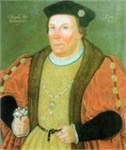
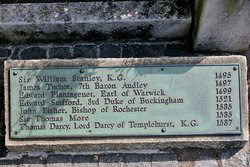
My 16th great-grandfather was beheaded for listening to prophecies of Henry VIII’s death. The king was personally involved in convicting him.
Edward Richard Buckingham Stafford (1479 – 1521)
is my 16th great grandfather
Elizabeth Dutchess Norfolk Stafford Howard (1497 – 1558)
daughter of Edward Richard Buckingham Stafford
Lady Katherine Howard Duchess Bridgewater (1495 – 1554)
daughter of Elizabeth Dutchess Norfolk Stafford Howard
William ApRhys (1522 – 1588)
son of Lady Katherine Howard Duchess Bridgewater
Henry Rice (1555 – 1621)
son of William ApRhys
Edmund Rice (1594 – 1663)
son of Henry Rice
Edward Rice (1622 – 1712)
son of Edmund Rice
Lydia Rice (1649 – 1723)
daughter of Edward Rice
Lydia Woods (1672 – 1738)
daughter of Lydia Rice
Lydia Eager (1696 – 1735)
daughter of Lydia Woods
Mary Thomas (1729 – 1801)
daughter of Lydia Eager
Joseph Morse III (1752 – 1835)
son of Mary Thomas
John Henry Morse (1775 – 1864)
son of Joseph Morse III
Abner Morse (1808 – 1838)
son of John Henry Morse
Daniel Rowland Morse (1838 – 1910)
son of Abner Morse
Jason A Morse (1862 – 1932)
son of Daniel Rowland Morse
Ernest Abner Morse (1890 – 1965)
son of Jason A Morse
Richard Arden Morse (1920 – 2004)
son of Ernest Abner Morse
Pamela Morse
I am the daughter of Richard Arden Morse
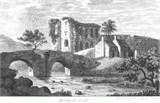
Born
3 February 1478
Brecon Castle, Wales
Died
17 May 1521 (aged 43)
Tower Hill
Edward Stafford, 3rd Duke of Buckingham, KG (3 February 1478 – 17 May 1521) was an English nobleman. He was the son of Henry Stafford, 2nd Duke of Buckingham, and Katherine Woodville, whose sister, Queen Elizabeth Woodville, was the wife of King Edward IV. He was convicted of treason, and executed on 17 May 1521.
Edward Stafford, born 3 February 1478 at Brecon Castle in Wales, was the eldest son of Henry Stafford, 2nd Duke of Buckingham, and Katherine Woodville, the daughter of Richard Woodville, 1st Earl Rivers, by Jacquetta of Luxembourg, daughter of Pierre de Luxembourg, Count of St. Pol, and was thus a nephew of Elizabeth Woodville, queen consort of King Edward IV.
By his father’s marriage to Katherine Woodville, Stafford had a younger brother, Henry Stafford, 1st Earl of Wiltshire, and two sisters, Elizabeth, who married Robert Radcliffe, 1st Earl of Sussex, and Anne, who married firstly, Sir Walter Herbert (d. 16 September 1507), an illegitimate son of William Herbert, 1st Earl of Pembroke, and secondly, George Hastings, 1st Earl of Huntingdon.
After the execution of the 2nd Duke of Buckingham, his widow, Katherine Woodville, married Jasper Tudor, second son of Owen Tudor and King Henry V’s widow, Catherine of Valois. After Jasper Tudor’s death on 21 December 1495, Katherine Woodville married Sir Richard Wingfield (d. 22 July 1525). Katherine Woodville died 18 May 1497. After her death, Sir Richard Wingfield married Bridget Wiltshire, daughter and heiress of Sir John Wiltshire of Stone, Kent.
In October 1483 Stafford’s father participated in a rebellion against King Richard III. He was beheaded without trial on 2 November 1483, whereby all his honours were forfeited. Stafford is said to have been hidden in various houses in Herefordshire at the time of the rebellion, and perhaps for the remainder of Richard III’s reign. However after Richard III’s defeat at Bosworth on 22 August 1485, and King Henry VII’s accession to the crown, Stafford was made a Knight of the Order of the Bath on 29 October 1485 as Duke of Buckingham, and attended Henry VII’s coronation the following day, although his father’s attainder was not formally reversed by Parliament until November. The young Duke’s wardship and lands were granted, on 3 August 1486, along with the wardship of his younger brother, Henry Stafford, to the King’s mother, Margaret Beaufort, and according to Davies it is likely Buckingham was educated in her various households.
Buckingham was in attendance at court at the creation of Henry VII’s second son, the future King Henry VIII, as Duke of York, on 9 November 1494, and was made a Knight of the Order of the Garter in 1495. In September 1497 he was a captain in the forces sent to quell a rebellion in Cornwall.
According to Davies, as a young man Buckingham played a conspicuous part in royal weddings and the reception of ambassadors and foreign princes, ‘dazzling observers by his sartorial splendour’. At the wedding of Henry VII’s then eldest son and heir Arthur, Prince of Wales, and Catherine of Aragon in 1501, he is said to have worn a gown worth £1500. He was the chief challenger at the tournament held the following day.
At the accession of King Henry VIII, Buckingham was appointed on 23 June 1509, for the day of the coronation only, Lord High Constable, an office which he claimed by hereditary right. He also served as Lord High Steward at the coronation, and bearer of the crown. In 1509 he was made a member of the King’s Privy Council. On 9 July 1510 he had licence to crenellate his manor of Thornbury, Gloucestershire, and according to Davies rebuilt the manor house as ‘an impressively towered castle’ with ‘huge oriel windows in the living-quarters in the inner court’.
In 1510 Buckingham was involved in a scandal concerning his sister, Anne. After hearing rumours concerning Anne and Sir William Compton, Buckingham found Compton in Anne’s room. Compton was forced to take the sacrament to prove that he and Anne had not committed adultery, and Anne’s husband, George Hastings, 1st Earl of Huntingdon, sent Anne away to a convent 60 miles distant from the court. There is no extant evidence establishing that Anne and Sir William Compton were guilty of adultery. However in 1523 Compton took the unusual step of bequeathing land to Anne in his will, and directing his executors to include her in the prayers for his kin for which he had made provision in his will.
From June to October 1513 Buckingham served as a captain during Henry VIII’s invasion of France, commanding 500 men in the ‘middle ward’. About 1517 he was one of twelve challengers chosen to tilt against the King and his companions, but excused himself on the ground that he feared to run against the King’s person. He and his wife, Eleanor, attended the Field of the Cloth of Gold in 1520.
Although Buckingham was appointed to commissions of the peace in 1514 and charged, together with other marcher lords, with responsibility for keeping order in south Wales, he was rebuked by the King in 1518 for failing to achieve the desired results. According to Davies, in general Buckingham exercised little direct political influence, and was never a member of the King’s inner circle.
Buckingham fell out dramatically with the King in 1510, when he discovered that the King was having an affair with the Countess of Huntingdon, the Duke’s sister and wife of the 1st Earl of Huntingdon. She was taken to a convent sixty miles away. There are some suggestions that the affair continued until 1513. However, he returned to the King’s graces, being present at the marriage of Henry’s sister, served in Parliament and being present at negotiations with Francis I of France and Charles V, Holy Roman Emperor.
Buckingham was one of few peers with substantial Plantagenet blood and maintained numerous connections, often among his extended family, with the rest of the upper aristocracy, which activities attracted Henry’s suspicion. During 1520, Buckingham became suspected of potentially treasonous actions and Henry VIII authorised an investigation. The King personally examined witnesses against him, gathering enough evidence for a trial. The Duke was finally summoned to Court in April 1521 and arrested and placed in the Tower. He was tried before a panel of 17 peers, being accused of listening to prophecies of the King’s death and intending to kill the King. He was executed on Tower Hill on 17 May. Buckingham was posthumously attainted by Act of Parliament on 31 July 1523, disinheriting most of his wealth from his children.
Guy (1988) concludes this was one of the few executions of high personages under Henry VIII in which the accused was “almost certainly guilty”. However Sir Thomas More complained that the key evidence from servants was hearsay.
Buckingham’s literary patronage included two translations, a printed translation of Helyas, Knyghte of the Swanne, which he commissioned in 1512, and A Lytell Cronicle, a translation of an account of the Middle East which he may have commissioned in 1520 in connection with his proposed pilgrimage to Jerusalem.
In 1488 Henry VII had suggested a marriage between Buckingham and Anne of Brittany, but in December 1489 the executors of Henry Percy, 4th Earl of Northumberland, paid the King £4000 for Buckingham’s marriage to Percy’s eldest daughter Eleanor (d. 1530). They had a son and three daughters:
Lord Henry Stafford, 1st Baron Stafford (18 September 1501 – 30 April 1563), who married Ursula Pole, daughter of Sir Richard Pole by his second wife, Margaret, Countess of Salisbury, daughter of George, Duke of Clarence.
Lady Elizabeth Stafford, Duchess of Norfolk (c. 1497 – 30 November 1558), who married, as his second wife, before 8 January 1513, Thomas Howard, 3rd Duke of Norfolk.
Lady Katherine Stafford (c. 1499 – 14 May 1555), who married Ralph Neville, 4th Earl of Westmorland.
Lady Mary Stafford, the youngest daughter, who married, about June 1519, as his third wife, George Neville, 5th Baron Bergavenny.
Buckingham is also said to have had three illegitimate children: George Stafford, Henry Stafford, Margaret Stafford (c. 1511 – 25 May 1537), whom Buckingham married to his ward, Thomas Fitzgerald of Leixlip, half-brother to the Earl of Kildare.
I was lucky to find an apartment to rent in Paris in Montmartre. The landlord lived in Belgium, and the local woman who managed and cleaned the flat lived in the same block. This was long before Air bnb, but I found the place to be perfect for me. My block was a highly Arabic space, including an Egyptian convenience mart on the main floor of my building. I shopped there first, finding all kinds of delights and basic grocery items. All the merchants, particularly the Egyptian grocer, were helpful and ultra polite. My metro stop was Barbès – Rochechouart, right in front of a large Tati store. Tati is a Parisian version of a low price emporium. Since they are French, rather than have a giant “big box” arrangement, they have zillions of tiny specific departments, from which you must pay and check out before proceeding. I had a hysterical incident at that Tati store when I tried to buy paper plates from a Chinese guy who spoke French about as well as I did (pas bien). I was using the word plate, which he translated into prepared dish of food . He told me many times they did not have what I wanted, but I persisted. Finally he showed me plastic replicas of food, toys for kids. This showed me what had gone wrong and I managed to score those paper plates. I never felt threatened or out-of-place in my neighborhood, although I was experiencing the rare feeling of being a minority. I always heard French people were snooty, but I did not notice any of that. They even seemed to like to speak English when they had the chance.
When I think of the city of lights in the current state of shock I know I would be afraid to be there now. In fact, the last time I had reserved that Montmartre flat for a holiday I canceled and forfeited my rent because 9/11 had occurred and I felt uncertain about being single and American in my old neighborhood. My French had not improved and I did not see the reason to risk arriving and feeling unsafe. Like other cities where I had created beautiful and lasting memories I let it Paris go as a destination. I remain attached to the places and the experiences, even to the people whose names I never learned. Paris stays in my heart as sophisticated, artful, cosmopolitan, highly civilized and full of history. Recent events leave La France in trauma, in need of healing. I can’t say I feel the pain of the French people, but I do feel terrible loss. Parisians had managed to live in harmony with all kinds of ethnic and cultural deviations. Their cosmopolitan way of seeing the world served as a foundation for tolerance. The city has lost an innocence that can’t be replaced. The world grieves. Cartoonists reach into their deepest wells of talent and art to express outrage. The next New Yorker cover will depict the Eiffel Tower with a pencil top to show defiance. France has elevated the meaning of art for centuries. Freedom of expression is essential to the regular French citizen. This may be a time when art and politics merge for the better. In the words of Jean Paul Sartre, “There may be more beautiful times, but this one is ours.”

