mermaidcamp
Keeping current in wellness, in and out of the water
You can scroll the shelf using ← and → keys
You can scroll the shelf using ← and → keys
flower

aloe
green
The quest for balance and health leads down some blind alleys. I found a medical doctor last year in my neighborhood because I will soon have Medicare and have no idea how to make it work for me. The guy is billed as alternative health gerontologist, so I thought he would be right for my philosophy. We had a fairly long initial interview and then he asked me to get a mammogram or thermography. I was glad to go for a full body thermography because I was curious to know what it would reveal.
After my test was concluded the results were sent to the doctor and we discussed them on my next visit, which was for a pelvic exam. My breasts showed no signs of problems, so the doctor decided that everything must be fine. I asked him to discuss the areas where my thermography revealed inflammation because I was really concerned when I saw it. He dismissed my concern by saying “Don’t you think that is just a generalization?” I was shocked for half a second, and then I realized there was no point in talking to him about anything not initiated by him. He would call the agenda for my body and let me know. Strike one. He told me to go do my “alternative thing”, using two fingers on each side to make that obnoxious parenthesis gesture. I honestly wanted to slap him.
The pelvic exam results were inconclusive and he thought there was some problem. I was sent to a specialist for another exam. My insurance had covered the first one, but I had to pay full price for the extra one. My pelvic exam, done by a more professional person, showed no signs of problems. Strike two. Now I have received a letter from this guy informing me that I have the opportunity to pay him $500 EXTRA dollars a year and have super special access to him. He will give one hour consultations and hand out his private cell number to the exclusive group of patients which will be limited. I do have the option of being followed by a physicians assistant who will be hired to deal with those of us who do not care to see the doctor. This was a very easy decision for me. I picked the assistant.
I am not of the mindset that the doctor is always right. In fact I am intensely iatrophobic, suspecting error and negligence in every medial procedure done on the planet. I have not taken any prescription drugs for any reason, and do not plan to start. I feel good and enjoy life. I think my health is a function of my own enjoyment and self expression. One of the ways the new “health care system” disrespects the individual is by not listening. I have decided to take the entire incident as a warning. I still go to my osteopath and pay cash when I need a doctor. She does manipulative medicine only , and I trust her completely. I am a regular receiver of body work and acupuncture, which I value much more than time in a MD’s office.
I believe it is my own responsibility to care for myself and evaluate my choices constantly. I also think that repression is a source of ill health. Wellness springs from our emotional and spiritual contentment. Acceptance of the self as magical, artistic, and full of creativity opens the door to a full life. We each have instinctual wisdom about our own health. My own philosophy is that we need to open to our center to give our art a conduit to the world. Of course it is wise to seek medical attention when needed, but a daily dose of movement, social interaction with friends, and creative challenge is the prescription for well being. I hope you find your own creative muse, gentle reader. The relationship can be a valuable asset to your continued good health. The right primary care muse can make all the difference to your future.
shrimp plant
Our memories are not accurate, but serve as a guide to learning more about what might have happened. We fill in the blanks with what we are told or what is presumably common knowledge when we think about the past. This was never so clear to me as when a group of my elementary school friends recalled our childhood together after 50 years. Most of us remembered different versions of the past, with a few striking exceptions. The most hated teacher was remembered in her worst aspects. None of us could recall her being nice at all during the entire 5th grade year. The memories had become more like cartoons than real events, with only a few details sparking us to bring up related stories. The only event we all vividly recalled exactly the same was an incident involving a girl who spewed vomit out of her nose. In the third grade this made a very big impression on all of us. I believe the intense olfactory element of the memory is what made it so specific. We laughed about it, but this was the most memorable shared experience we had from our time in elementary school. She was not present, but she was the center of attention for a while.
Good and romantic memories may be built on delusion or on fables that are repeated and slightly altered by each person who tells them. We recall certain details and omit others to patch together a self-fulfilling story of cause and effect. Our dreams and pastimes create frameworks for the past to become a fairy tale, and our self-image a sport. Time changes our perspective and buries much of the unpleasant reality under a blanket of foggy forgetfulness. We are all in the same memory soup in this sense. None of us is a reliable witness to anything we experienced in the past. Some choose to highlight the suffering, and others feature past success or accomplishment as the anchor to the ship of self-definition. The overriding emotions blur the facts, and that is all perfectly normal.
I remember writing poems and songs when I was very young. I have no examples of any of it, but I am sure I was prolific. I sent poems to magazines for publication. I saved my rejection letters because I was into my role as a poet. I played piano and clarinet when I was very young, but switched to baritone ukulele, then later guitar for my role as teen folk singer. My first job in life was as a singer and a costumer when I was 17 years old. I traveled to North Carolina for the summer theater gig my high school choir director had helped me land. My mother and aunt drove me across Tennessee, stopping at the Grand Ole Opry to see a show. Minnie Pearl was on stage…memorable Minnie. I arrived in Cherokee, North Carolina in high spirits because I was working and living away from my parents. It was my high dive into the deep end, and I was thrilled. “Where am I going with this?”, you may wonder, gentle reader.
I am returning to some kind of remembered roots in this blog for the month of April, 2015. I will participate in #NaPoWriMo and create 30 poems in 30 days right here. I have been enjoying a period of study and immersion into poems and poets, and now will boldly commit to the creative task of being a poet all next month. I have done enough creative ventures in my life to know that there are many different tastes, and therefore room for all kinds of art. After April I will resume my matter of fact writing style. I hope my poetic posting will please you. For me it is a big stretch beyond my present boundaries, and that is why I want to do it. If you send rejection letters I will be perfectly understanding. By publishing I am already moving beyond my childhood limits. I believe it is good to find a new high dive into the deep end from time to time.

yucca
ROW80
On this last check in to #ROW80 I am taking stock of the bountiful benefits I harvested from this program. I tried it on a lark in order to revive my dead tumblr blog and work on poetry. Results have surpassed my wildest imagination even though I did not fully complete every goal I set at the start. There is the goal, and then there is the spirit of the goal. I am pleased to have established:
For me this means I am primed and ready for #NaPoWriMo in April. Taking the plunge into poetry during National Poetry Month is a pleasure. There are poems everywhere, tweeting across the universe at lightening speed, during the month of April. You don’t need to write them to enjoy reading the participants’ creations. If you follow the hashtag #NaPoWriMo you may be inspired to contribute. Last year PBS wrote a group poem on twitter which turned out to be very good. I can’t wait to see what creative events might be in store this year. I find the energy and the generosity of #ROW80 to be similar to the poetry month program. Maybe some of my colleagues from here will migrate, or just pop in to enjoy. It is a non judgmental, creative canvass with major potential for fun.
March happens to be National Nutrition Month, which has made me think about the metaphor of feeding the body and feeding the soul. We need to ingest calories to stay alive, but there are other qualities to nourishment. A home-grown lovingly prepared meal has extra positive energy and support that cannot be found at a drive through window. Joyful play and movement bring circulation to the blood as well as to the senses. We do not live by bread alone. The similarities I see between delicious healthy food and a carefully crafted poem may not be obvious. They are both nourishing to the spirit, and necessary to life. I plan to write some cooking and eating poems in April as I expand my repertoire. Thank you all very much for sharing these 80 days with me.
I will end with a nourishing metaphor by William Shakespeare in his Sonnet 75:
So are you to my thoughts as food to life,
Or as sweet-seasoned showers are to the ground;
And for the peace of you I hold such strife
As ‘twixt a miser and his wealth is found.
Now proud as an enjoyer, and anon
Doubting the filching age will steal his treasure;
Now counting best to be with you alone,
Then bettered that the world may see my pleasure;
Sometimes all full with feasting on your sight,
And by and by clean starvèd for a look;
Possessing or pursuing no delight
Save what is had, or must from you be took.
Thus do I pine and surfeit day by day,
Or gluttoning on all, or all away.
ROW80
Our 80 day writing exercise has flown by quickly for me. I planned to write a poem every day, but have managed to do so about half the time. I am not at all discouraged by this result because I have also managed to expand my repertoire of subjects and formats in my poetry. Last April I wrote daily and all of my poems were inspired by works of art, ekphrastic in nature. This was fun because I visited artist friends and took photos to use as the subjects. When I began this challenge all of my poems were ekphrastic, but I created the art myself rather than finding it. First I tired making the art followed by the words, then I tried it in reverse. It does not seem to matter which way I do it now, which is sort of silly to me. If you are inspired by it, it seems like it should exist before you write…but I am practicing both ways, trying them both to monitor results.
Lately I am happy because I attempted very unusual subjects and did some slightly representational drawing about them. I wrote about a lady who was ditched by her Euro-spy boyfriend in a restaurant. She was presented with a giant plate of raw meat, steak tartare, and a note saying her boyfriend had never existed. Now this might seem macabre or in bad taste, and perhaps it is. What is interesting is that I finally put a character and plot into a poem. My first attempt at this involved a swarm of ladybugs around a cabin. These might not have come up if I had not been following my fiction writing friends who work on plot and character all the time. My desire to make poems from historical figures and history itself lends itself to this practice. If I want to turn my dead ancestors into epic poems I need to employ some of the devices used to flesh out characters and thicken the plot. Since I endeavor to bring dream images into my poetry my technique will now expand to outlining plots and characters, then working on lucid dreaming to give me some vivid imagery with which to work. I can embellish the true stories of my family in my dreams and use the impressions to create poetic versions of historical events.
As the solar eclipse tomorrow brings us a dramatic illustration of light and shadow, I see a metaphor for the known and the unknown. What is obscured from view is often the most important part of the plot, and revealing it is the point of the story. What I do not know about my ancestors leaves room for invention and fancy. Here are some of the real people I think can become interesting poems:
I also have a true contemporary story I want the public to hear and remember. The Emperor’s New Neighborhood Watch is a rap poem about city government running amok. If I do this with rhyme and humor it will be more impactful. A good (digital) friend of mine told me this week that hexameter was the form used by Homer in his classic epics, not because it was great language, but so the actors could easily remember it. I have written about just the facts in this case for years, but what this story needs is some memorable rhyming truth. After the solar eclipse I will start outlining these stories for Poetry Month in April. It is a fun new way for me to paint with words. I am grateful to my fellow writers for teaching my some of their process. Check out the diversity of this group here. There is a lot of talent in this creative group of people. Thanks for sharing these 80 days with a beginner. Your support has been very inspirational. I aspire to be like you.

reaching higher
ROW80
We have no idea what tomorrow will bring, but today is overflowing with potential.
Allan Lokos
Through the Flames
This quote by Mr Lokos perfectly describes my current position on my poetic future. By starting to investigate life and learning through poetry I have opened a vast area of artistic and intellectual study that I am just beginning to understand. Turning my attention to it has automatically turned some poets’ attention to me. One or two people post poems on my Facebook wall every day, which adds a social element to the mix. I don’t believe these writers have read any of my poems, but they have decided to share theirs directly to/with me. I follow more poets all the time who blog. Calligraphy with word significance has also come to my attention. This is a wonderful way to make words larger than life and more colorful than just typing. I have not tried it myself but am thinking of doing some writing by hand instead of always on a keyboard. It may stimulate something new.
I have thought about working with my ancestors as characters to create epic poems or stories, and have done a little work in that direction. People work with notes and written outlines, but I have yet to put these to work for me. I still contemplate images in my head for a while before I begin, but think I can benefit from a notebook with handwritten notes and drawings. When this 80 days has come to a full circle I plan to start a notebook and handwriting practice. I want to see if random idea trapping and tracking will help me kill my darlings and move on to deeper subjects. If I start pages for different times in history or branches of my family tree I think I can develop some themes from which to write fiction or poetry. I like mind mapping, but have not employed it to the task of writing. I believe it can unlock a boat load of potential material using this method. I have no idea what I may do with it, but it will be fun to find it.
Allan Lokos was in a plane that crashed and burned leaving him injured. His book was written to help others find compassion and patience in the face of challenging circumstances. His attitude about potential is key because every day is full of potential. Many of our lives contain too much repetition, little true bliss, and a lack of compassion. We are all recovering from something, although normally nothing so severe as an airplane crash. Honoring potential today by writing is a tribute to collective creativity. Rarely do plans for tomorrow work out exactly as we imagined. Writing creates a trail of breadcrumbs for the soul to trace its’ way. Poetry celebrates the way each of us is gifted with our own set of talents and perspectives. Leaving our stories and thoughts recorded for others to read may turn out to be uplifting or helpful to someone. This journey has contributed greatly to my ability to tap into the overflowing potential all around us. I appreciate the chance to interact with magic, words, and power. Cheers, gentle readers!

cocktail that wants to be a poem
A tasty way to commemorate the day
 Irish Soda Bread with Whiskey Butter
Growing up, we had a little book of Irish toasts and poems sitting in our living room. My maternal grandmother, seeing that the strength of the Irish was growing too strong, came over one day very briefly and went into the living room. When she left, we found an Italian book sitting next to the Irish one so her grandchildren wouldn’t forget their mother’s roots. It is with great irony and a big smile that I remember one of the Irish poems, which I read so many times that I have now have memorized it:
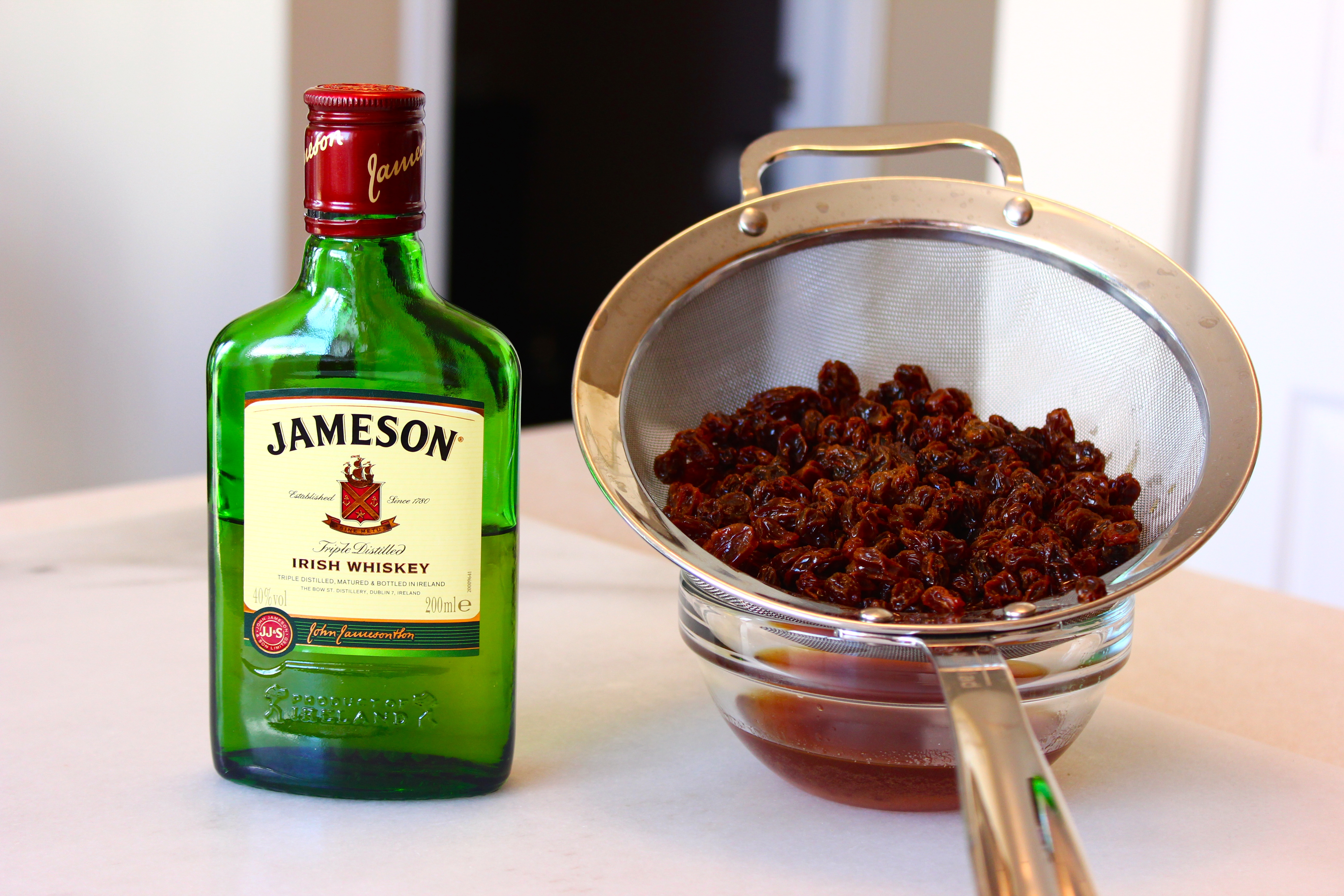 Soaking raisins in Whiskey for Irish Soda Bread
St. Patrick was a gentleman
Who through strategy and stealth
Drove all the snakes from Ireland
Here’s a toasting to his health
But not too many toastings
Lest you lose yourself
And forget good St. Patrick
and see all those snakes again.
View original post 508 more words
This week I want to invite you to use the transporter cloaks to travel back in time to Edgefield, South Carolina in 1798. I want you to help me solve a history mystery. My 2nd great grandfather, John Samuel Taylor, was born May 1, 1798 in Edgefield County, South Carolina. He died Mar.11, 1873 in Edgefield County, South Carolina. The town was founded in 1785, and I imagine John’s parents could have been involved. I have not found solid evidence of his birth or his parents, so I am here to find out exactly what happened. Having the name John Taylor is a serious problem in research because there were so many other people with the same name. I might despair of ever finding the truth about which John Taylor’s parents are mine but for a lucky break. Fortunately Edgefield has taken the historical heritage of the area very seriously and probably has the answer.
My life as an ancestry detective was rudely interrupted this week by a claim by my first cousin. Some of you know I do research all the time to learn about my family tree. I have found errors in the past which have caused me to start over from that point. This is painful, like tearing out your knitting. The funny part about it is the attachment I have to these people. For a while after removing some phantom limbs in the past I have missed those people terribly in addition to being vexed at having spent so much time on the wrong trail of data. I had an idea of who they were and how my DNA was built, but I was wrong, all wrong. If my cousin is right, and all the rest of the people on Ancestry.com are mistaken I have done a massive amount of research based on specious evidence. She thinks that John Taylor has a different set of parents than I do. She has no proof, but I don’t either. One of us is correct, and I just have to know which one.
The Southern Studies Showcase is an event that celebrates the history of the town. Prohibition is the theme for the next Showcase in September, and will feature moonshiners, model A cars, and period costuming. The genealogical society is the largest in the state, and prides itself on keeping excellent records. I would have a very good time dressing up in a flapper dress I already own and going to a big history party, so I think I can kill two birds with one stone in September, 2015. I can discover just who the parents of my John Taylor are, and visit a historically significant place that cherishes it’s past. I went to the Somerset, PA Historical Society to do research. I even bought a membership. When I arrived in person I was shunned. Nobody would help me and I had never been in an archive like that, so I found nothing. I had paid them to do some research for me, but that never happened either. I don’t think that will happen in the deep South. I think a trip to The Gateway to Southern History would be highly educational as well as enjoyable. I can solve this ancestry mystery and party at the same time.
The timing for me is intriguing because I recently went to a performance by the Steep Canyon Rangers here in Tucson. They play modern bluegrass music. I became very homesick for North Carolina hearing it. I lived there when I was young, and had a very good time. I bought a couple of their albums and have binged on bluegrass for weeks now. Now I have a really good reason to go to the source. So I hope you will enjoy this visit to the historical South where they do have coffee, tea, lemonade, and RC Cola ( Moon Pies and more). I am going to suggest that this week, since it is digital, we all just pass this jar of moonshine around the table while we sit and tell our tales. I am interested to hear about your week, gentle reader. I sincerely hope you have not discovered possible flaws in your research. If so, not to fret..tomorrow is another day.

#Weekendcoffeeshare

Carolina Moonshine
ROW80
This week I bought a book of poetry that has been created by illiterate women in Pakistan and Afghanistan. These cultural specialties of the Pashtun tribe are biting commentary on life. Since they live in a war-torn state, to say the least, and their rights are severely limited because they are female, their point of view contains irony and stinging truth about love, war, grief, homeland, and separation. They tackle these subjects with depth and witty metaphor which they have learned from other women. The special right to express themselves is frequently withdrawn if the males in a family learn about it. The book I am reading, I am the Beggar of the World, was inspired by a young girl’s suicide when she was forbidden to create landays and share them on a telephone hot line in Kabul. The journalists who composed the images and couplets are veteran reporters who had been in the area during years of war, covering just the facts. They were emotionally and creatively blown away by the density and artfulness of this pastime/folk literature. The Poetry Foundation helped fund the expedition and Poetry magazine published some of the works. The response from the magazine’s readers was overwhelming. People want to see more of this kind of primal undiscovered poetry that is hidden and unknown to outsiders. It has touched me deeply and makes excellent meditation material.
As a writer I am taking on new subjects. My poems are still simplistic, but I am stretching to find subjects, characters, and perhaps real events that spark my imagination. I have considered how fresh and essential the landays are because of the restrictions of illiteracy and the need to remain anonymous. They are wisecracks, jokes, and political farce all rolled into a few words, like a comic distillation of the concept. Like the work of Dorothy Parker which I am reading, admire, and want to emulate, these jokes are intricate and require some practice to make them work. They pack a lot of editorial punch into 22 syllables, as Mrs. Parker did in her short witty quips. Subjects that are taboo can be handled with humor in such a way as to make emphatic points without confronting issues directly. The discovery of landays and the women who create them leads me to want to take on more difficult subjects. Politics, art and poetry overlap in any era, and the result can be revealing. I am working to develop some good cosmic jokes that resonate with my gentle readers on many levels.
As a practice writing poems is revealing and confidence building. I take zero risks typing away on my iPad saying anything that pops into my mind. In comparison to the Pashtun ladies I suffer very little for my art. I can publish it, tweet it, change it, illustrate it, and it is free to travel wherever people care to read it. I am starting to have an appreciation of the opportunity as well as the responsibility that situation creates. I wonder if I can say something funny and profound that has the power to stick in the mind and change it. For me the ROW80 challenge continues to be more about what I read and learn than it is about what I am writing now. The stepping stones to better work are contained in the works of other poets. They inspire me to look for subjects that matter.

poppy
This weekend the transporter cloaks are outfitted with time travel capabilities. We are able to zoom through both space and time at will now. I figured once we had warmed up,why not go on an excellent adventure with these cloaks? I spend a lot of time studying my family tree. It is a fascination of mine that teaches me history as well as how my own family members were acting at various times. I have started to think beyond what I know, beyond the facts that have been recorded, in each of the personal dramas of my ancestors. I have been thinking about the role that Selma, Alabama played in my mother’s ancestry. Her ancestors lived there and some fought for the Confederacy in the Civil War. They were a religious group who founded a Baptist church in Texas after the war. I keep contemplating how religious people could believe in slavery. I can come up with no logic for that situation. If we were having coffee this weekend I am afraid we would have to take up some heavy subjects like racism and liberation.
I grew up in Pittsburgh and was living in Venezuela when the first march on Selma took place 50 years ago. My own exposure to racism and class divisions was played out in the petroleum camp where I lived in South America. I lived a privileged life of an imperialistic overlord, and was enthusiastically in favor of it because I was 13 years old. I now believe that immature societies take advantage of weakness and corruption rather than building up the core strength of the population. Dictators and now terrorists make it a goal to dominate, control, and torture others. I am not sure if this is relatively new, or if people have always used power to harm others.
I invite you for coffee in 1865 in Selma, Alabama at Elizabeth Langley, my 3rd great-grandmother’s house. Maybe she can answer some of the questions many of us must have about slavery and emancipation. I hope she will help us make sense of the seeming contradiction between Christian faith and the Confederacy. I want to ask her about the day 100 years before the 1965 march with Dr. Martin Luther King, when General James Wilson was followed by the liberated slaves on the exact same route followed in 1965. I want her to tell us what it was like to hear about black men marching behind the army that freed them. I am sure Elizabeth will whip up a mean batch of biscuits for all who are hungry. Her southern hospitality will not fail to make us feel at home, I am sure. There will be rocking chairs out on the porch for rest and conversation before we cloak back to this century. I look forward to hearing about your week and your take on life in 1865. Thanks, as always, for your company.
#Weekendcoffeeshare


