mermaidcamp
Keeping current in wellness, in and out of the water
You can scroll the shelf using ← and → keys
You can scroll the shelf using ← and → keys
Magnesium is an essential nutrient that keeps us clam. The GABA receptors in the brain require magnesium to do their job, which is to switch off the stress. When we are low in magnesium our bodies respond with insomnia, daytime jitters, and other unpleasant symptoms. This uncomfortable situation can be addressed by taking supplements. Another way to introduce extra magnesium into the body is by bathing in epsom salts. I have used them for foot baths when I have sore feet, and occasionally for tub baths, but now I am trying a new technique to improve my sleep. By using honey before bed I have made some improvements in deeper more uninterrupted sleep. Last night when I woke to let the dog outside at 2 in the morning I decided to try a bath recipe I saw to test the effects. It was nothing short of spectacular.
I ran a hot bath and used about 1 and a half cups of epsom salt, about 1/2 cup baking soda, and 2 cups strong ginger tea. The ginger makes you sweat while you are in the tub, and for a few minutes after you exit. The recommended time for maximum benefits is an hour, but I was falling back to sleep in about 20 minutes. I did fall deeply back into dreamland and awoke this morning feeling very well rested. My fitbit reports that I had a very good night of sleep, just over 8 hours.
This is such an easy and pleasant cure I plan to incorporate it into my routine every day. One of the effects one can expect to see is lower blood pressure. Pharmaceutical drugs are one reason we become magnesium deficient in the first place. I don’t take any drugs and hope to stay that way. Isn’t it good to know that both insomnia and high blood pressure, very common today, can often be completely cured in the bathtub? Have you used epsom salts to get a better night’s sleep, gentle reader? I highly recommend it. The addition of the ginger adds anti-inflamatory properties, again an easy and cheap cure for the entire body. There are no harmful side effects, and the evidence shows that this bath might be just what the doctor should have ordered.
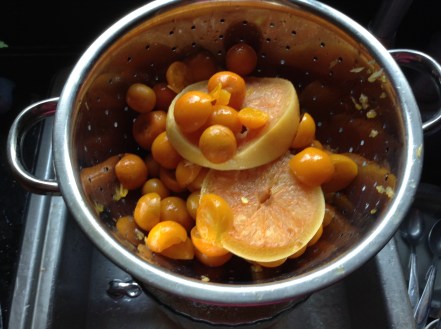
grapefruit and calamondin
It is time for the Food Conspiracy Coop’s eat local challenge. The concept is key to saving the planet in my opinion. I do some gardening and shop at farmers’ markets, but I can’t say I eat 100% locally grown or produced food. When I turn my attention to this challenge, as I have in the past years, I notice how much I still buy in jars and bottles. By shipping my food around in heavy glass containers I add to the cost, but not really to the value, of my selections. I make an effort to use less and less from jars, and I very rarely buy any product in a can. If I can start form scratch I prefer it. Some condiments and ethnic delicacies are beyond my abilities to create at home, so I take pleasure in selecting tasty treats from foreign lands that are either a new sensation, or a serious favorite from the past. Truth be told some of those exotic pricey packaged products are sold at the coop along with locally sourced groceries. That is why the 1-14 of July is an extra special time to head down to Food Conspiracy.
First Fridays are always a day of 10% discounts throughout the store. This month in addition to that discount, all local foods will be on sale for 10% off for two weeks, 1-14 July. This is a chance to kick start the local eating habit with some helpful discounts. A contest will also be held on instagram. Using the hashtag #TucsonEatsLocal, and tagging @foodconspiracy contestants can enter shots of gardens, markets, and dishes prepared with local ingredients to win prizes. The t shirts and $50 gift certificate to the store are cool prizes, but the real prize is the satisfaction of starting a habit that is good for everyone. If this concept caught on in a big way factory farming would become obsolete. Processed foods would give way to fresh and organic because the costs in the long run are lower. By participating in the eat local challenge we bring our attention to how easy it is to do. Have you ever tired to be a locavore, gentle reader? Some places it is much easier than others. I still have citrus vodka I made from our fruits last winter..waste not want not.

citrus hootch

monsoon clouds
The Aztecs worshiped the sun, but in Arizona we worship the rain. Our rainy season is dramatic and somewhat predictable. Summer heat draws moisture up from the Sea of Cortez to form clouds. The monsoon season lasts from late June until August, shifting slightly from year to year. Winter rains are scattered at best, but in the heat of our dry summer we are guaranteed to get some rain. Tropical style thunder storms fly around, dropping a big loads of water and filling the sky with lightening. They can be dangerous because of lightening strikes. Almost every year someone here is stuck by lightning on a golf course. The most severe safety issue that comes with rainy season is flash flooding. Washes fill with water and swell so quickly that anyone in the bed has to hustle in order to avoid being swept away. The rivers that flow through the city can flood the banks and cause damage along the shore, but normally it just carries debris and silt down from the mountains rapidly. Hiking this time of year carries with it risk that other seasons just don’t have. There is erosion of the soil because the surface becomes so compacted that the rain does not sink into the earth when it begins to rain. If we are lucky we will have many afternoons that run in to thunder storms for a few hours. It is rare that it would rain all day. These tropical events are short and sweet.

desert
I catch water from my roof in a rain container in my backyard. It is empty and ready to receive. For those who live in cloudy places it is hard to explain the full significance of these first glimpses of our holy rainy season. It holds promise and humidity for the future. We know that we spend more water resources than we can afford, but for a brief period every summer we can immerse ourselves in storms and lightening, floods and washes overflowing. Water, water, everywhere….but not for long. Here is to a glorious monsoon that sinks into the ground and makes everything bloom with happiness.

ocotillo

Truckload sale
Tucson, the city I call home, is a large sprawling city in a valley. Development has taken place in spurts, causing a race to the distant suburbs, followed by a race back to downtown. There are significant advantages to life in a university town with a very mild climate. Economic opportunity as well as cultural and educational enrichment are the city’s gifts from the University of Arizona and even from Pima College. I live in a neighborhood close to the university and downtown as yet untouched by urban renewal that has vastly improved the city center. Our new trolley system and upscale development along the route it serves has revitalized a sagging economic scene downtown. I am pleased that we finally have desirable business and residential options for students and others who want to live close to the university. With a long history of serving the community, the Food Conspiracy has grown to meet the needs of the downtown neighborhood.
The Food Conspiracy Coop was founded in 1971 by a small group of people who met in the alley behind the present storefront once a month to divide bulk food. We used the bed of a pick up truck, in which the food was delivered, to weigh out and package our orders. It was as crude and basic as you might imagine, but it worked. Soon we rented the building, but had no store. Later we opened the storefront to the public, but retained the values of our cooperative. Today the Coop is a vibrant and vital part of the new downtown. By sticking to the Roachdale pioneer Principles developed in 1837, the business has survived, thrived, and expanded. The statement of cooperative identity defines the purpose: “A cooperative is an autonomous association of people united voluntarily to meet their common economic, social, and cultural needs and aspirations, through a jointly-owned and democratically controlled enterprise.”
This weekend we have a chance to see how well this mission is working at a Truckload Sale. I love the idea that on May 16 and 17 the truck will offer special deals for purchase from approximately the same spot on which we started this co-op 44 years ago in a truck. There are now gardens, a full kitchen, and an educational space. In honor of the 7th Rochdale Principle, Concern for Community, the sale will feature a beer garden to benefit BICAS. The store will offer 10% off, while the beef and veggie hot dogs and beer will flow in the back yard (parking lot). Garden tours will be offered both days at noon and 5 pm. Come on downtown to celebrate the ongoing success of the co-op.
Truckload sale

leap
Ancestral chieftain ritually bound to honor natural forces
Protect the seasons, the directions, the winds over the seas
Passing that mastery to students of physical magical realms
Thunderous laughter is carried and amplified on the breeze
Followed by flashing bolts of lightening, blinding light overwhelms

NaPoWriMo 2015
Read, write, recite poetry this April. Meet new poets to enjoy here.

iris only looks up
There are three separate kinds of truth in the world:
Empirical has backing of indisputable evidence, proven fact
Cultural is believed by everyone in our group without question
Rhetorical is instilled through language, debated into being
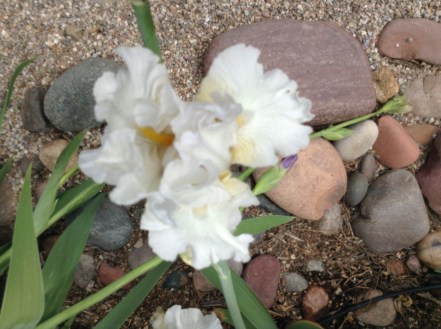
iris only looks up
These tributaries of veracity flow from different mountains:
Facts fall vertically from the highest peaks of observed reality
Tribal beliefs are instilled from birth with social hill climbing
The waterfall of rhetoric is loud and impressively massive

iris only looks up
Politicians are dealers in rhetoric designed to sway opinions
Cultures have blind spots that obscure parts of the total picture
Empirical truth is obvious, amplifying proof, ignoring prejudice
The well of pure truth will quench your thirst only if you draw from it
NaPoWriMo 2015
Ride the poetry train with some very creative and witty folk here during the month of April.

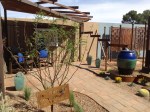
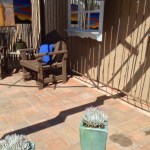

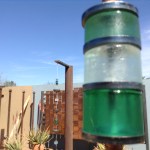
Then Grow Down event is a competition held in the spring each year at the Tucson Botanical Gardens. This year the designers created spaces featuring native plants coordinated with metal, wood, stone, bamboo, brick, and glass. I liked all of them, but my favorite one was the most stark. The copper background wall sets off the large rain chain designed with metal bowls and colored glass sitting in the center of the garden. This installation won no prize, probably because there was no seating provided. The other two entries gave the visitor a feeling of private seating in an outdoor room. The winner has a wonderful water feature that circulates around the space creating a rushing liquid sound.


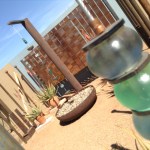
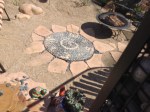
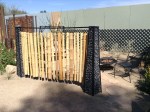
The third design used a theme of feng shui. The bamboo divider functions as a wind chime as well as a privacy veil. The seating is cozy around the artful floor with a stone compass made of rounded pebbles. This design felt the most personal to me. It won the people’s choice award.
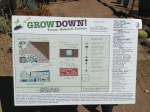



These contests give gardeners ideas to try ourselves, and introduce us to local landscape designers we can hire when we want something special. The entries this year were less elaborate than in the past, but to my taste they were more artful. They all bring new ways to think about garden spaces that are easy to execute, and not too wildly expensive for a home gardener.

ROW80
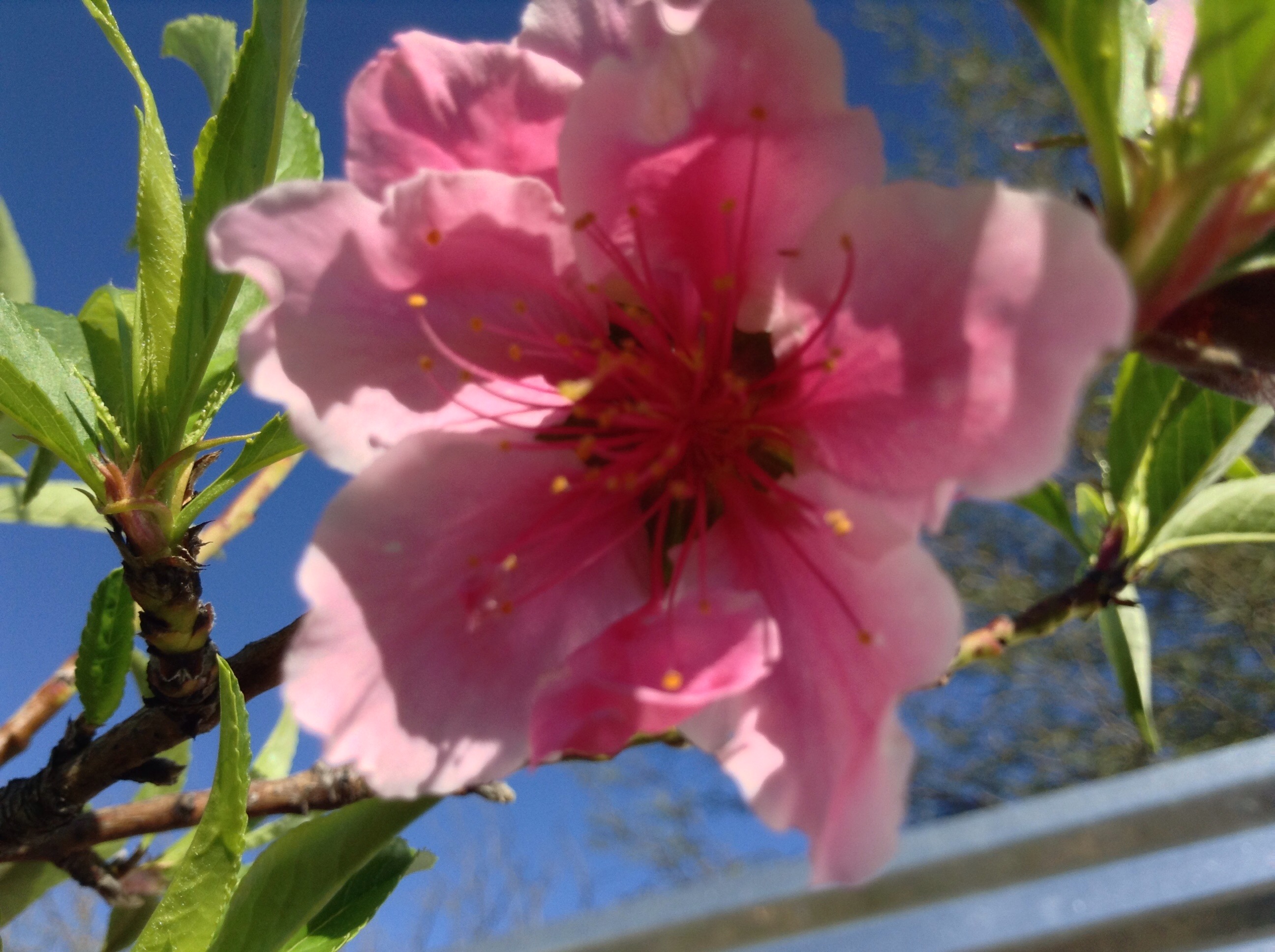
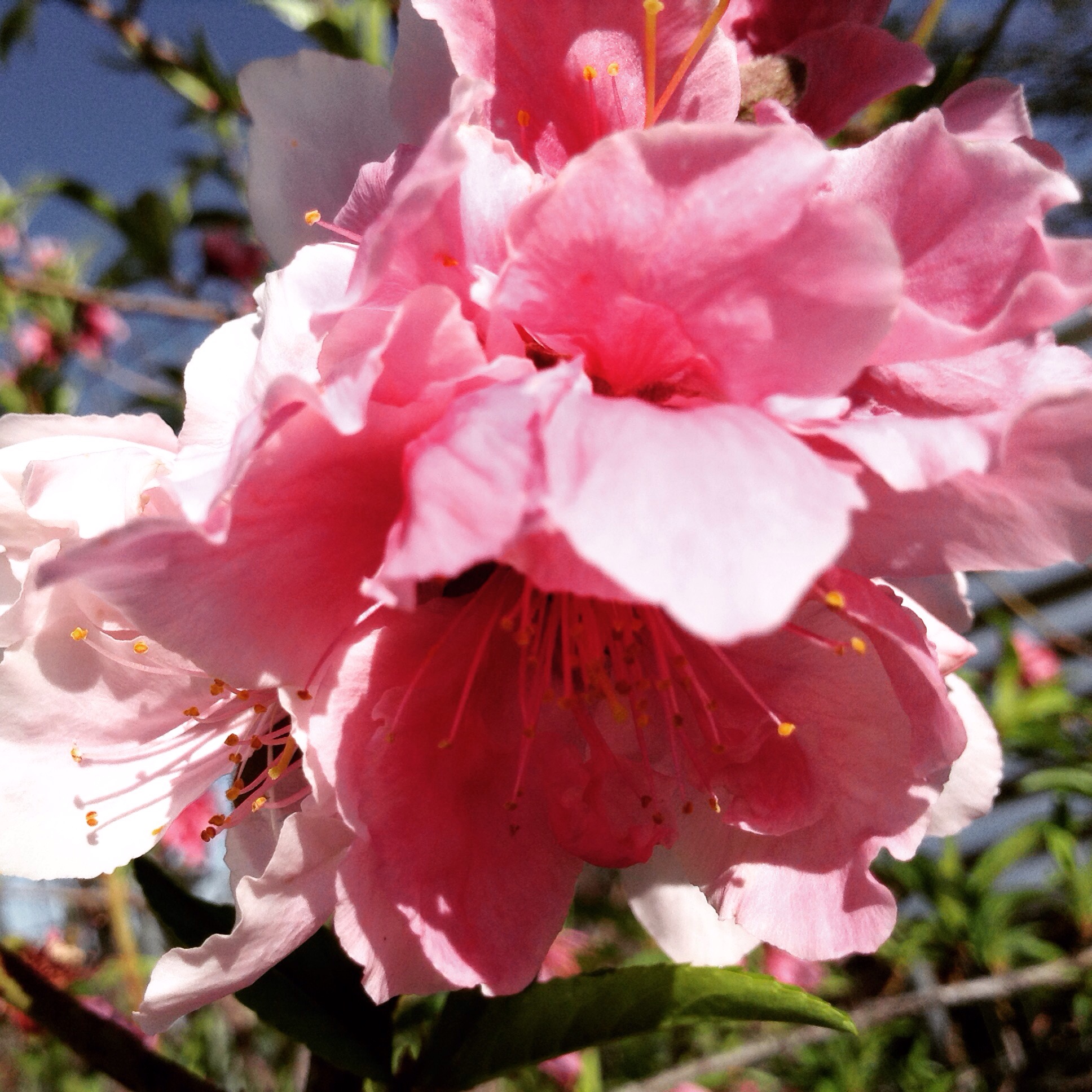
Spring has sprung here in Arizona. We have another month of daily ruby red grapefruit harvest, which is my favorite crop of the year. I juice them and think they do wonders for my health. Since we have had a very mild winter, with the exception of a harsh freeze that ruined some plants, the trees are in bloom early. This can mean that we will be sure to have an early crop of peaches, or it could mean that survival is all the more tricky since we may dip back down in temperature before the fruits can ripen. Gardening requires both close observation and plenty of patience. Nature sometimes thrills us with the delicious outcome of our labors, but just as often some pest or weather storm renders our efforts useless. I have had some kind of garden for all of my adult life. I have had a revelation about gardening and writing that I want to share with you in this post.
Now that I am regularly spending time listening to and reading poetry I see that a well manicured garden resembles a well tuned and well edited piece of writing. Even though all the writers have different styles, I notice that the choice of words as well as the way the sound works has been nurtured and fed. Some of the initial choices have been eliminated, just as weeds are pulled and mulch set on the ground to keep them from returning. The editing process creates a stronger work just as thinning makes larger sweeter peaches. Keeping every one of the fruits is penny wise and pound foolish. After the muse brings the word or the subject or the image to light, the writer must work the creative mental soil, feed the story, and decide when and where to trim for effect. The volunteer plants and some of my current work have something in common. Although they have not been fully worked, or given time to evolve into something more complete, they grew up naturally from a seed that had fallen in the past. Like yellow pear tomatoes, this natural offspring of my imagination, can turn out never ending butterfly psyche poems, if left undisturbed.
Spending more time taking notes, spinning rhymes, and considering new territory for my writing I am pleased with all I have learned. My #ROW80 mates have inspired as well as instructed me in ways I had never expected. Thanks to all of you. I have found a great resource to consult that some of you may also enjoy. The U of A Poetry Center, of which you have heard me tell, has a library of recorded readings called voca. Poets read from their work and explain some of the process they used. This has opened my eyes to the many devices and forms that might be used to write a poem. Everything can be used as inspiration, and any writing has the possibility of becoming great, if edited with sensitivity.
ROW80
I have achieved one of the goals I stated in my first post here. I have been to the U of A Poetry Center this week. The free reading on Thursday evening was part of series on the poetics and politics of water. Sherwin Bitsui, a Navajo poet, read from his works. The were haunting and evocative of desert landscapes. He was generous in his explanation of the background and muse for the works he presented to us. This gave us both biographical information about him, and a sense of how long he worked on the books he had published. Mr Bitsui is now a professor of creative writing in San Diego, but he comes form the Navajo reservation. In his introduction he was recognized for his support of other Native American poets. He mentored and helped a number of people during his time at the University of Arizona who have gone on to publish books of poetry. I thoroughly enjoyed listening to him read. Ideas from the reading have been resonating and reverberating in my mind…a good sign that those poems hit home in ways I have yet to understand.
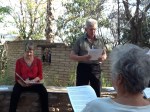
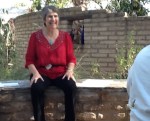
Yesterday, for Valentine’s Day the Poetry Center docents presented a reading at the Tucson Botanical Gardens. Poetry in the Garden is a regular series open to the public held in the natural setting of the gardens. Our broad subject this month was birds as symbols of love. These readings are enjoyable for all ages and stages of poetic interest. The docents compile a packet of poems and read from the collection. The audience is invited to read too, and discussion takes place after each reading. The docents encourage the audience to express thoughts and feelings about the meaning or the sounds in the readings. The discussion is broad and not academic. The programs are very well prepared and produced, this one being no exception. We heard from e.e. cummings, Emily Dickinson, some other well known writers, and less famous poets with all kinds of styles. The setting and weather were ideal as we were visited by singing birds before and after the session. They seemed to be voicing approval or applause.
Both of these very well produced events are an example of the very good luck it is to live near the Poetry Center. Having access to these high quality readings is a gift. Some of the attendees at the evening readings are enrolled in a University of Arizona seminar on the poetics and politics of water. They spend class time with these visiting poets as well as the public reading time. There will be 3 more in this series. I plan to go to all of them because they touch a very serious subject for us in Arizona…water. The fact that they are all Native American is meaningful. In history tribes respected natural resources while the invaders worked to deplete them. Our situation today is precarious. We have less security about water every minute. The scientists involved in this seminar agree that poets bring something to the study that pure science can not.
I am still writing, listening and learning about the lives of poets in my own practice. I have expanded my subject matter a little, but nothing too impressive. The best thing I discovered through listening at these readings is that you can write poetry any way you want. There are no forms that are rejected. Free verse is square, some poems are drawings of shapes with the lines, some use sound with mysterious meaning, still others rhyme and are held together in quartrians. It is all good. I still notice my preference to hear the sound rather than see it written on the page. The garden readings are particularly pleasurable for me because I am sitting in a favorite spot with someone reading stories to me. It is a big luxury to glance around the gardens and take in the poems. It is like having a limousine instead of driving yourself. Do you like to listen to spoken word, gentle reader, or do you like to read it in print? My dad used to read to me, and he did recite a few poems, so I think this reminds me of my childhood in a good way.





These Italians have perfected the art of making containers from citrus peels. They use bergamot, but I have seen this kind of box made out of an orange peel. The scent remains for a few years after the box is created, making it perfect for tea, or other aromatic products. The specialty here is a tobacco pouch, which is light and fragrant. I am crazy about this idea, and am the producer of hundreds of grapefruit peels each year. I have so many that my compost gets full of citrus and hard to digest. I hate to waste them, but really do not eat candy. The candied peels are a treat to some, but require as much work as these containers. I have looked for a way to use these byproducts of my juicy winter crop, and I think I have found one to try. Martha Stewart does hers in the oven and keeps them right side out. I like the whole process the Italians use, but do not want a tobacco pouch as a result. I tried Martha’s oven method with some lemon peels, but they warped after I thought they were done. Her method is tedious and it requires the use of the oven. I live in Arizona where ample sunshine should be able to do this job. I will try a simple shape with a lid, and skip the sand step and building of presses. If they go free form, like my first attempt, I will need to deal with the fit of top to bottom. My lemon bowls are all wonky because I took them from the oven after 40 minutes. If I were in survival mode and had to use them, they might hold something, but they are a failure at a design level. I plan to try some grapefruit peels this week inside out to see if I can be a peel artist. These Italian ladies are obvious professionals, shaping it around the form like a pice of clay. I admire their skill, and aspire someday to make a swanky shape. Like clay, I need to start with a good cylinder and move on from that. I have at least 100 grapefruit still on the tree, so there will be plenty with which to experiment. Have you ever seen this done, Gentle Reader?

failed lemon box
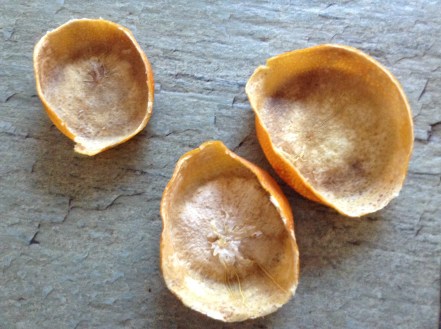
as tiny bowls
 mermaidcamp