mermaidcamp
Keeping current in wellness, in and out of the water
You can scroll the shelf using ← and → keys
You can scroll the shelf using ← and → keys

#InCoWriMo supplies
Today is the last day of #InCoWriMo, International Correspondence Writing Month. I just achieved one of my goals, which was to use all the 37 cent stamps I inherited form my mother in 2008. I had 18 left, and used them on an international package. Now I will be able to use forever stamps forever. I found out about this month by associating with some bullet journal people on social media. They write down and draw in their journals to be more creative and archive ideas for writing. I started the BuJu-ing, but am not very prolific with the journalling. I might get into it, because it is a very valid way to stimulate creativity.
I do make some iPad art, digital style, but have thought for a while the manual side of my skill set has been left to atrophy. Indeed, my cursive writing has become a thing of the past. I will never be able to compete with the pen pals with beautiful handwriting, but pen pals don’t compete. I have found that waiting to see what is in the mailbox as well as composing an artful response has become a real joy. I have just barely made a dent in the card collection with which I started the month. Inspired by my BuJu and calligraphy pals, I have bought some finger color ink and some sealing wax to make my mail more exciting and individual. Some new designer stamps will arrive in the mail soon, and today I purchased some international stamps to keep in touch with my new friends in Canada and England. The handwritten mail reveals more about the sender than digital communication. I have instantly become fond of my letter writing friends. I plan to write to them until all the cards are gone.
I have met artists of various kinds, gardeners, crochet and knitting crafters, a book binder, and many who are into botany and botanical gardens. I mentioned my botanical interests when I publicly listed my mailing address, so I attracted many like minded plant lovers. Now a group has been formed on Facebook for a combination of correspondence and poetry for the month of April. I think I can get behind that challenge also, since I already write 30 poems in 30 days for #NaPoWriMo in April. I might be really cool to write them out and decorate them ..and send them away in the mail. It is really kind of mysterious. I like many retro trends, but am surprised by how much I delight in this one. Do you write snail mail, gentle reader? I am still collecting addresses, so if you want a card..or possibly a poem, in the snail mail, give me your mailing address here. I would never share it with anyone else.
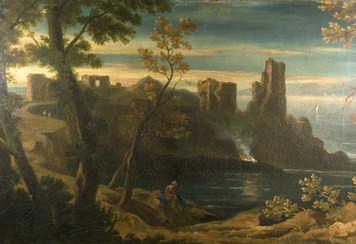
birthplace, Turnberry Castle


This is one of the ways I descend from the famous badass, Robert the Bruce:
Robert Bruce (1274 – 1329)
21st great-grandfather
Marjorie Bruce (1297 – 1316)
daughter of Robert Bruce
Robert II, King of Scotland, Stewart (1316 – 1390)
son of Marjorie Bruce
Robert Scotland Stewart (1337 – 1406)
son of Robert II, King of Scotland, Stewart
James I Scotland Stewart (1394 – 1434)
son of Robert Scotland Stewart
Joan Stewart (1428 – 1486)
daughter of James I Scotland Stewart
John Gordon (1450 – 1517)
son of Joan Stewart
Robert Lord Gordon (1475 – 1525)
son of John Gordon
Catherine Gordon (1497 – 1537)
daughter of Robert Lord Gordon
Lady Elizabeth Ashton (1524 – 1588)
daughter of Catherine Gordon
Capt Roger Dudley (1535 – 1585)
son of Lady Elizabeth Ashton
Gov Thomas Dudley (1576 – 1653)
son of Capt Roger Dudley
Anne Dudley (1612 – 1672)
daughter of Gov Thomas Dudley
John Bradstreet (1652 – 1718)
son of Anne Dudley
Mercy Bradstreet (1689 – 1725)
daughter of John Bradstreet
Caleb Hazen (1720 – 1777)
son of Mercy Bradstreet
Mercy Hazen (1747 – 1819)
daughter of Caleb Hazen
Martha Mead (1784 – 1860)
daughter of Mercy Hazen
Abner Morse (1808 – 1838)
son of Martha Mead
Daniel Rowland Morse (1838 – 1910)
son of Abner Morse
Jason A Morse (1862 – 1932)
son of Daniel Rowland Morse
Ernest Abner Morse (1890 – 1965)
son of Jason A Morse
Richard Arden Morse (1920 – 2004)
son of Ernest Abner Morse
Pamela Morse
I am the daughter of Richard Arden Morse
Robert The Bruce was born on 11 July 1274, probably in Turnberry Castle. He was descended from Scots, Gaelic and English nobility. His mother, Countess Marjorie of Carrick, was heir to a Gaelic earldom.
Robert’s grandfather, Robert Bruce ‘The Competitor’, was one of the claimants to the Scots throne. Bruce’s father, Robert de Brus of Annandale, fought in Wales for Edward I, was made governor of Carlisle Castle and fought on Edward’s side at the Battle of Dunbar in 1296. The Bruces refused to support John Balliol’s kingship and stayed close to Edward I. Balliol gave Bruce lands to the Comyns.
In 1298 Robert the Bruce became a guardian of Scotland alongside his great rival John ‘Red’ Comyn of Badenoch, and William Lamberton, Bishop of St Andrews. When Bruce and Comyn quarrelled Bruce resigned as guardian. In 1302 Bruce submitted to Edward I and returned ‘to the King’s peace’. Bruce married Elizabeth de Burgh.
Robert the Bruce’s father died in 1304. Bruce now had a viable claim to the throne. On 10 February 1306 Bruce met John Comyn of Badenoch at Greyfriars Kirk in Dumfries. A fight broke out, daggers were drawn and Bruce killed Red Comyn by the altar. The Pope excommunicated Bruce but Robert Wishart, Bishop of Glasgow, absolved him and made plans for Bruce to quickly take the throne. On 27 March 1306, Isobel of Fife, Countess of Buchan, crowned Bruce at Scone. His inauguration was small and hastily arranged but Robert Bruce was now King of Scots.
To Edward I the usurper King Robert was a rebel to be crushed. Edward’s reprisals were swift and brutal. Bruce was defeated at Methven. His wife, daughter and sisters were captured and imprisoned in England. Countess Isobel was locked in an iron cage at Berwick while Bruce’s brothers were hanged, drawn and beheaded. Bruce fled Edward’s wrath and spent a long winter hiding on the islands off the west coast and Ireland.
Bruce began a guerrilla war and struck at his enemies. His forces defeated Edward’s men at Glen Trool and Loudon Hill, then Edward I finally died in July 1307 – Bruce now faced Longshanks’ son, Edward II.
Bruce attacked his Scots enemies – destroying Comyn strongholds along the Great Glen and harrowing Buchan and the north east. His men cut a bloody swathe through Galloway and the south west.
One by one Scotland’s castles fell to Bruce and his supporters. Bruce had the castles ‘slighted’ – walls were torn down and defences were raised to the ground – the fortresses were made useless to an invading English army. As more castles fell more nobles pledged support to Bruce.
In 1314 Bruce watched Edward II’s army march toward Stirling Castle. Edward II had been given a year to relieve the besieged English force at Stirling or surrender the castle. Their forces met at the Battle of Bannockburn on 23 and 24 June 1314. Thousands died as the Scots defeated Edward’s army. The river was choked with the dead as Edward II fled the field and returned to England.
Bannockburn was not the end of Bruce’s struggle but it was a turning point. Captured English nobles were traded for his family and King Robert I gained international recognition. The Scots took the final English stronghold at Berwick in 1318 but Edward II still claimed overlordship of Scotland. Two years later the Scots sent a letter to the Pope – the Declaration of Arbroath – as part of an ongoing battle of words.
In 1327 Edward II was deposed by his Queen, Isabella. He was murdered in captivity. The English made peace with the Scots and renounced their claim of overlordship. The Black Rood, taken by Edward I, was returned to the Scots. It seemed that Bruce had finally won.
Robert the Bruce retired to Cardross near Dumbarton on the Firth of Clyde. He lived peacefully in a comfortable mansion house until his death on 7 June 1329. He asked that James Douglas take his heart on crusade. Bruce’s body was buried at Dunfermline Abbey, by his wife Elizabeth’s side, beneath an alabaster tomb. Bruce’s heart was finally buried at Melrose Abbey.
In the 1370s the Scots poet John Barbour wrote of Bruce, the hero-king, in ‘The Brus’.
Robert I, known as Robert the Bruce, was the king of the Scots who secured Scotland’s independence from England.
Here is another lineage:
Robert I “The Bruce” Bruce, King of Scotland (1274 – 1329)
21st great-grandfather
Margaret Bruce (1307 – 1346)
daughter of Robert I “The Bruce” Bruce, King of Scotland
John Glen (1349 – 1419)
son of Margaret Bruce
Isabel Glen (1380 – 1421)
daughter of John Glen
Isabel Ogilvie (1406 – 1484)
daughter of Isabel Glen
Elizabeth Kennedy (1434 – 1475)
daughter of Isabel Ogilvie
Isabella Vaus (1451 – 1510)
daughter of Elizabeth Kennedy
Marion Accarson (1478 – 1538)
daughter of Isabella Vaus
Catherine Gordon (1497 – 1537)
daughter of Marion Accarson
Lady Elizabeth Ashton (1524 – 1588)
daughter of Catherine Gordon
Capt Roger Dudley (1535 – 1585)
son of Lady Elizabeth Ashton
Gov Thomas Dudley (1576 – 1653)
son of Capt Roger Dudley
Anne Dudley (1612 – 1672)
daughter of Gov Thomas Dudley
John Bradstreet (1652 – 1718)
son of Anne Dudley
Mercy Bradstreet (1689 – 1725)
daughter of John Bradstreet
Caleb Hazen (1720 – 1777)
son of Mercy Bradstreet
Mercy Hazen (1747 – 1819)
daughter of Caleb Hazen
Martha Mead (1784 – 1860)
daughter of Mercy Hazen
Abner Morse (1808 – 1838)
son of Martha Mead
Daniel Rowland Morse (1838 – 1910)
son of Abner Morse
Jason A Morse (1862 – 1932)
son of Daniel Rowland Morse
Ernest Abner Morse (1890 – 1965)
son of Jason A Morse
Richard Arden Morse (1920 – 2004)
son of Ernest Abner Morse
Pamela Morse
I am the daughter of Richard Arden Morse
Both connect with Anne Dudley, my famous poet ancestor. One went through the Gordons for many generations, and the other went though the Kennedy family.
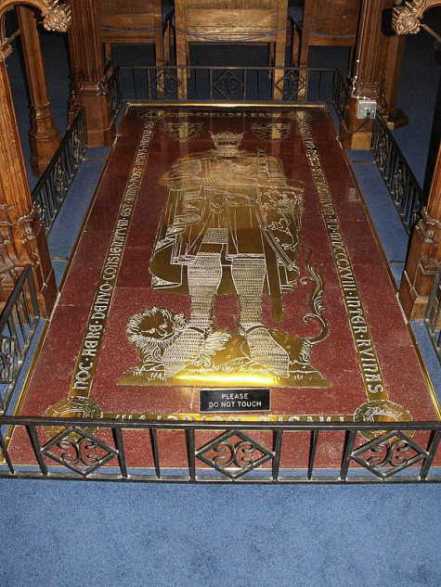
Robert’s grave
Robert was born on 11 July 1274 into an aristocratic Scottish family. Through his father he was distantly related to the Scottish royal family. His mother had Gaelic antecedents. Bruce’s grandfather was one of the claimants to the Scottish throne during a succession dispute in 1290 – 1292. The English king, Edward I, was asked to arbitrate and chose John Balliol to be king. Both Bruce and his father refused to back Balliol and supported Edward I’s invasion of Scotland in 1296 to force Balliol to abdicate. Edward then ruled Scotland as a province of England.
Bruce then supported William Wallace’s uprising against the English. After Wallace was defeated, Bruce’s lands were not confiscated and in 1298, Bruce became a guardian of Scotland, with John Comyn, Balliol’s nephew and Bruce’s greatest rival for the Scottish throne In 1306, Bruce quarrelled with Comyn and stabbed him in a church in Dumfries. He was outlawed by Edward and excommunicated by the pope. Bruce now proclaimed his right to the throne and on 27 March was crowned king at Scone. The following year, Bruce was deposed by Edward’s army and forced to flee. His wife and daughters were imprisoned and three of his brothers executed. Robert spent the winter on the island off the coast of Antrim (Northern Ireland).
Returning to Scotland, Robert waged a highly successful guerrilla war against the English. At the Battle of Bannockburn in June 1314, he defeated a much larger English army under Edward II, confirming the re-establishment of an independent Scottish monarchy. Two years later, his brother Edward Bruce was inaugurated as high king of Ireland but was killed in battle in 1318. Even after Bannockburn and the Scottish capture of Berwick in 1318, Edward II refused to give up his claim to the overlordship of Scotland. In 1320, the Scottish earls, barons and the ‘community of the realm’ sent a letter to Pope John XXII declaring that Robert was their rightful monarch. This was the ‘Declaration of Arbroath’ and it asserted the antiquity of the Scottish people and their monarchy.
Four years later, Robert received papal recognition as king of an independent Scotland. The Franco-Scottish alliance was renewed in the Treaty of Corbeil, by which the Scots were obliged to make war on England should hostilities break out between England and France. In 1327, the English deposed Edward II in favour of his son and peace was made with Scotland. This included a total renunciation of all English claims to superiority over Scotland. Robert died on 7 June 1329. He was buried at Dunfermline. He requested that his heart be taken to the Holy Land, but it only got as far as Spain. It was returned to Scotland and buried in Melrose Abbey.

summerhouse
The long trek to the remote village has exhausted the group. The backpacks grew heavy as they walked for miles in the woods. They had all come to be part of a writers’ retreat designed to spark creativity. The accommodations in the country were intended to take the group away from day to day concerns in order to concentrate on writing. Most of them came from big cities and were not accustomed to primitive conditions. They were told they would need to pump water and carry wood, but this sounded more romantic at the time than it was when they started scouting for fire wood in the wet forrest. The rain had drenched the woods, so all the wood was too wet to start a fire. They had no wilderness skills, and were weary and wasted before they even started the weekend. The emotions were tightly wound before they even saw the bunk beds in the attic where they would sleep, dormitory style.
On Saturday morning they awoke to find no staff at the summerhouse. There was a sign left on the screen door that said, “We have gone to town. Now you go to town.” This naturally infuriated the writers who had come to be taught some kind of creative trick to unlock their talent. “Go to town? What the hell does THAT mean?” Left to their own devices, they scattered into space to figure out what to do. Sitting under the shade of a large oak tree Emily spotted Eric. He was wearing a velvet coat, leaning against the trunk of the tree, casually smoking a pipe. She approached him with caution, but when she clearly saw his handsome face she was instantly smitten by this stranger in the woods. She wondered why he was so calm, cool, and dressed like a person from a different century. He explained that these woods are haunted with the ghosts of writers who never pushed themselves beyond their limits. They are the real ghost writers. They can never be free because they dissed their muse while they were alive.
When Emily awoke back in New England in the 21st century she knew she had just met destiny in a dream. Her muse, Eric, would be her greatest asset, and it did not matter that nobody else could see him. He was hers alone. He faithfully pushed her to work with words every day. Their tryst was a gift from the creative creator of creation, and would last forever and ever.
To enjoy more interpretations of this photo by other writers, please visit Sue Vincent, who provides these in fleek prompts each week. Read, comment, or try your hand at fiction here.
#writephoto

post cards from the world
The journey into my stationary drawer and the the mailbox this month is a very healthy investigation into my skills. #InCoWriMo is a challenge in correspondence by hand, by snail mail during the month of February. I have received the most beautifully written letters from around the country. I am so impressed with some of the cursive that I tried it myself. Good grief, was I ever bad at it. It is not like riding a bicycle, it does not come back naturally. I was never great at penmanship, but I could do it 50 years ago. I am not sure when I switched to printing, but it probably was in architecture school. When I attempted to write longhand it was incredibly challenging, and I only lasted a short paragraph before I abandoned hope. I also notice how very addicted I am to spellcheck. I halt in the middle of writing a word by hand, and no magic feature steps in to spell for me..I am almost disabled by this. I have personally lost my own skills by not practicing them. It is not too late for me to recover lost skills of youth.
My new pen pals have shown me that I lean to hard on digital skills. If the internet goes down what will become of me? I must balance my creative life by spending some of it by hand on paper..I can still take a picture of it and post it on instagram. I used to sew, draw, write songs and poetry, all without computer assistance of any kind. I even had a treadle sewing machine at one point. I made my living as a production potter, throwing pots on a kick wheel. I was such a home grown/ hand made/ alternative economy hippie that I did now own a television. Now I hear people talking about going back to the old Nokia un-smart phone to regain balance in life. I don’t really have a phone addiction so much as a general digital device issue. Balance for me will involve spending more time writing by hand. I need the tactile therapeutic value of putting the pen on the paper. The muse responds differently than when it is coming through a keyboard. My manual muse needs encouragement. What about you, gentle reader? Do you still write by hand?

bonfire of vanities
We watched them huddle around the fire to confer
About the plot they hatched to silence her
Laws and rule books were tossed in to burn
The flames grew large and the wind swirled
The bonfire of their vanities was burning in space
They were enveloped in a hellish backfire
There was no remedy for the sudden change
With pants all aflame they tried to conspire
We could neither believe them nor save them
They were consumed by their own vanities.
To participate by reading or writing a post about this picture go to Sue Vincent’s blog. She generously provides a new photo for inspiration each Thursday. Some very creative writers participate, and it is fun to see how the same picture inspires completely different responses in each writer.
#writephoto

The Leo Moon is all bright and shiny today, happily soaking up all the attention she can get and encouraging us to do the same. She exchanges witty remarks with Mercury in Aquarius first thing this morning before basking in the pleasure of a trine to beautiful Venus in Aries. The warmth of the fiery […]

Halls of Justice, Blurred
We will soon discover if what appears to some to be extreme Fascism will be contained by the United States judicial system. The checks and balances originally designed into our system have been blurred by political power. If religious organizations are liberated to use funds for direct political campaigning we will be in a whole new universe of crossed purposes. Many worry that when the president said he revoked Dodd Frank financial regulations because some of his friends have good businesses and can’t borrow (yes, that is what he said) that we are running fast down the road that brought us to ruin when Wall Street was too big to fail. Since we made up that term we have done absolutely nothing (except Dodd Frank) to address this too big to fail banking problem. The complicated regulations are never well understood by normal people, but we are clearly being told that banks will be able to lend more freely and do as they please (gamble) with the banks’ holdings as soon as this has been enacted. I am no banking expert, but this sounds very fishy to me. We don’t fully understand it, but we have political deja vu.
The executive branch of the government is intended to enforce the laws created by Congress. The president, the military, and the police are “arms of the law” intended not to make law but to enforce it. The judicial branch provides needed expertise to guide the executive branch to stay within the law. It adjudicates disputes about the laws that congress creates. The Supreme Court has been fully politicized to the point that the appointment is viewed now as extreme political victory. It is such a big deal that the present vacancy was “held open” until the election was concluded. This says a lot about The Supreme Court and Congress. This appointment is now a public political wrestling match which is getting messy. Is this how the government is even supposed to work?
The reason to watch the judicial branch very carefully now is that it holds the key to rule of law. With a strong independent and functional judiciary branch we can move forward and resolve disputes without running amok in political expediency. I currently trust the court system more than I trust the other two branches. In my own mind the checks and balances are wildly out of balance. A poorly educated public that does not understand how the government is intended to work is not very likely to be governed by a functional, rational leadership. This is a formula for Fascism. This is how rule of law is destroyed, with ignorance. I am not as much a subscriber to good and evil as I am to real and unreal. The evil I believe we need to fight in the world today is unconsciousness. If we think someone is criminally unconscious it is our duty to persuade them to make contact with reality. That task is much harder than judging or assuming anything about anyone. These are troubled times, gentle reader.

Europe is having more fun at President Trump’s expense. After a spoof of Trump’s “America First” slogan from the Netherlands went viral, the Swiss comedy show Deville Late Night made the case for “Switzerland Second.” The bit begins by burning the Dutch—”they so flat, total disaster”—before taking aim at Trump on issues like women’s rights,…
via Switzerland Parodies President Trump’s ‘America First’ — TIME

low-tide #writephoto
The dark clouds linger over the sprawling river delta as the sun sets over the water. During the night a fleet of smugglers will carry stolen treasures across the straights to land on the shores of the island nation ruled by trolls. The long shoreline and rocky jagged coast gave plenty of cover for small dories to remain hidden until the moon was dark and the deal had been done. The troll king had forbidden the population to sing and dance, which lead to a mass depression in the troll population. They were required to spend the entire workday grumbling and making false accusations. The opportunities for advancement were few, and depended on nepotism and corruption. Most of the nation was enslaved for the sole purpose of making the world a darker place. After years of this oppression they found ways to slip away across the water into the land of big industry. Over there, singing and dancing were not outlawed, and neither was heavy drug use by employers on their slaves. They gave them meth every day to make them more productive in the factories and on the job sites. At night they took sleeping pills to get some rest after a day all jazzed up at the factory. Most of them took 5 or 6 other drugs, but they did not know why they had been prescribed. They were all addicted to pills, and were all desperately unhappy.
When the adventuresome trolls first encountered the miserable industrial workers they thought there was nothing to gain by visiting there. The workers did not sing or dance, even though they had the chance. They worked their fingers to the bone and had little personal space or time. This factory life looked much worse than the mandatory idle grumpiness at home. The effort made to cross the water seemed like a waste until they stumbled into a rebel teen from industry land. This teen rebel had been crossing the straights to sneak into troll land since she was knee high to a grasshopper. The girl had a troll father and an industrial strength mother. She had a hard time with the other industrial kids because she did not fit in with the repressive regime. She hated the meth and refused to ingest it, hiding it in her hoodie until she could dispose of it. She was bullied in school for being too grumpy and lazy, qualities inherited from her father. She made the crossing first with her mom, who showed her the way. Since then she has been visiting her father on the island on her own. As far as she knows she is the only one of her kind, a product of both cultures. Her parents can’t tell her how they met because there is danger in knowing.
She discovered the constant large demand for peanut butter and chocolate, both of which the troll king had outlawed for the trolls, but kept for himself. There was a long list of banned substances and activities. No smiling, no laughing, no peanut butter cups..what kind of a life was that? She took it upon herself to procure peanut butter and chocolate at wholesale prices then rowed it over to the trolls each month on the new moon. Stealth was of the utmost importance. Much was at risk. If caught she would spend the rest of her life on the island, forced to grump and grumble. Her capture would also mean the end of the only pleasure the trolls still had, the smuggling of peanut butter and chocolate past the authorities guarding the coast. The trade continues to this day, still undercover.
Please visit Sue Vincent’s blog each Thursday for a new photo prompt. You can read the stories and poems inspired by the picture, and add your own submission. It is fun to see the variety.
#writephoto


On my first day of International Correspondence Writing Month I was completely surprised by my friend in New Jersey. He started early and mailed a letter to me so that it arrived on the very first day—way to go, Marc. You completely shocked me. I started to unpack my desk drawer full of cards, writing paper, and postcards and found that the situation is much more serious that I thought it was. I knew I had hoarded some paper goods, but I drastically underestimated the volume of my stash. I have removed less than half of the contents of the drawer and have a selection on the table of at least 200 different ways to send mail in February. I found 7 plain vintage postcards of unknown age, that my mom left me with 2 cents postage printed on the front. I am going to send one of those to the Postmaster General in case it has some value.
I have cards from all over the world, and I still think they are as artful as the day I bought them. I found 2 copies of my high school graduation invitation, so for the first day I gave my neighbor an invitation to my graduation. We joke about having too much stuff stored in our houses all the time, so she was the perfect recipient of this 49 year old card for which nobody has any earthly use. I found another copy and wish I could find somebody who went to that high school to be the surprise recipient of the other. I might work on that because it would be funny.
Maybe I will just get into mailing things and keep sending them until they are all gone, but that would take years of daily diligence. This is a crossroads, for sure. I need to use these paper goods or release them to another more loving home where they will be used and appreciated. I am now even more pleased to have decided to join the correspondence challenge in February now that i review my vast collection. I realize the people to whom I mail these cards will get a charge out of them, and I have the possibility of freeing up a large drawer in my desk to use for other purposes. Win/win. If you want to help me win the battle of the paper drawer send me your mailing address, gentle reader. Thanks.


