mermaidcamp
Keeping current in wellness, in and out of the water
You can scroll the shelf using ← and → keys
You can scroll the shelf using ← and → keys

White House
The United States is reeling from yet another mass shooting. The prayer group interrupted by violence is etched into the soul of the country, no matter where we live, no matter what our own religious affiliations. The idea that sanctuaries are not safe is a chilling reminder. While the world watched the church showed the meaning of Christianity and compassion. The city of Charleston displayed solidarity and strength in the face of the tragedy in one of the most significant structures in town. This flow of forgiveness and faith witnessed from the victims’ friends and families has been powerful in its simplicity. They managed to overcome the natural feelings of betrayal and loss by practicing what they preach. They defer judgement to God and pray for peace that surpasses all understanding. I am overwhelmed with gratitude to the congregation of Mother Emmanuel for teaching the country how to mourn, and how to move past sorrow into great compassion. We all need to heed this lesson. These people seem like saints, and indeed they may be. They have a powerful message of hope for us. Nothing is black and white. Nothing is really even under our control. Remember the first commandment when you think you might need to right some wrongs…this is clearly not your personal job.
Meanwhile, right before Gay Pride Weekend in many parts of the country, same sex marriage has become the law of the land. With rainbows flying and floating and projecting everywhere the party to celebrate these new civil rights began. The rainbows appeared early in the morning on Friday and by nightfall the projected rainbows fell on buildings and natural wonders of the world. Other countries celebrated with us by lighting structures to tweet with the hashtag #LoveWins. Twitter supplies a rainbow heart for each #LoveWins, adding to the colorful festive digital fiesta. I found the switch from our black and white racial and political divides to an all out rainbow nation to be refreshing. We need to have a reason to be proud, to embrace the happiness of others, and to actually celebrate equality. Rainbows signify our diversity and our harmony. Let us keep the faith that this nation still has the spirit and the will to make sure that #LoveWins in our future.
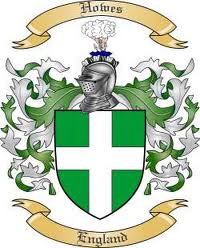
Howes Coat of Arms
My 13th great-grandmother was arrested in London for her religious beliefs. She moved to Barnstable, on Cape Cod with her extended family.
It is claimed that this family descends from one John de Huse who had a large manorial property in Basthorpe, Norfolk, England in 1065.
Penninahs father was a Reverend, Rector of Eastwell, Kent. Penninah and her brother Samuel Howes were arrested in 1632 in London in connection with the prosecution of Rev John Lothrop and his flock of Dissenters who had been meeting in Blackfriars, London. Penninah Howes was called and required to take her oath but she refused. The prosecutor asked “Will you trust Mr Lathropp and believe him rather than the Church of England?” She replied “I referre myself to the Word of God, whether I maie take this oath or now.”
Jemimah Peninah Howse (1589 – 1633)
is my 13th great grandmother
Sarah Linnell (1603 – 1652)
daughter of Jemimah Peninah Howse
Thomas Ewer (1593 – 1638)
son of Sarah Linnell
Mary Ewer (1637 – 1693)
daughter of Thomas Ewer
Mehitable Jenkins (1655 – 1684)
daughter of Mary Ewer
Isaac Hamblin (1676 – 1710)
son of Mehitable Jenkins
Eleazer Hamblin (1699 – 1771)
son of Isaac Hamblin
Sarah Hamblin (1721 – 1814)
daughter of Eleazer Hamblin
Mercy Hazen (1747 – 1819)
daughter of Sarah Hamblin
Martha Mead (1784 – 1860)
daughter of Mercy Hazen
Abner Morse (1808 – 1838)
son of Martha Mead
Daniel Rowland Morse (1838 – 1910)
son of Abner Morse
Jason A Morse (1862 – 1932)
son of Daniel Rowland Morse
Ernest Abner Morse (1890 – 1965)
son of Jason A Morse
Richard Arden Morse (1920 – 2004)
son of Ernest Abner Morse
Pamela Morse
I am the daughter of Richard Arden Morse
The Howes, Lothrops, and Linnells of Kent and London, England, and Scituate
and Barnstable, Massachusetts
By Dan R. McConnell
Published by the Cape Cod Genealogical Society Bulletin, Fall 2007
The family of Reverend John Howes [also House, Howse], whose children, kin, and friends, were brought before the Royal Court of the High Commission in London, England in the 1630’s, were persecuted and imprisoned for their religious beliefs. These beliefs also had political effects, which we will explain. Some fled to America, first to Scituate, then Barnstable, both of which were in Plymouth Colony in that time, a place friendly to their Separatist beliefs. Others remained in England and played a key role in the emergence of non-conformist churches, the disputes in Parliament, and the English Civil War.
In the 17th Century, for ordinary people, a lengthy confinement in London prisons such as Newgate, Clink, Fleet or Bridewell was tantamount to a death sentence due to crowded, filthy, disease-ridden conditions. Such dangerous confinement, for religious non-conformity, under the arbitrary rules of the High Commission, became a driving force for like minded people to flee to America. English resentment to the many breaches of Common Law led to the rise of Parliament in opposition, and ultimately to the abolishment of the High Commission in 1641 and the Civil war in the 1640’s. After the “Glorious Revolution’ in 1688, the English Bill of Rights was enacted to specifically forbid such practices, echoed famously in our own Bill of Rights, the First Ten Amendments to the U.S Constitution.
For the Howes family and their kin, the road to prison and to America began in Kent. The Reverend John Howes matriculated at St. John’s College, Cambridge in 1590. He is listed in the Alumni Cantabrigienes as such with the further note that he was rector at Eastwell, Kent in 1610. In the Bishop’s Transcripts for Canterbury he is also given as Curate for Egerton, 1592-6. From his location at the time of the baptism of his children, he is likely to have also been Curate for Eastwell from 1603 to his death in 1630. He performed the marriage ceremony for his daughter Hannah, in her marriage to Rev. John Lothrop [also Lothropp] in Eastwell, 16 October, 1610. In his will, dated 1630, he is described as Minister, Eastwell. In his will, his wife’s name is given as Alice.
Children of the Reverend John Howes:
Elizabeth Howes, Bapt, unkn. Married, Eastwell to John Champion, of Little Chart, 28 September 1607
Hannah Howes, Bapt. Egerton, 5 May, 1595. Died between 1632 and 1634, London, while her husband, Rev Lothrop, was in prison. Married,Eastwell to Rev. John Lothrop, 16 October 1610.
Peninah Howes, Bapt, Egerton, 11 April, 1596. Died after 1669, Barnstable, Massachusetts.
Married between 1632 and 1638 to Robert Linnell, probably in London.[The will of her brother Thomas Howes, in 1643 gives her name as Peninah Linnell [also Lynell]. In the High Commission proceedings in 1632, she is given as Peninah Howes].
Druscilla Howes. Bapt., unkn. Married, Eastwell, to Simon Player 17 April 1637 John Howes. Bapt. Eastwell 19 June, 1603. Married Eastwell to Mary Osborn of Ashford, 18 September, 1623.
Priscilla Howes. Bapt Eastwell 25 August, 1605. Buried, Eastwell 28 Nov 1618
Thomas Howes. Bapt. Eastwell, 21 August, 1608. Died 1644 London. In his will, dated 18 October 1643, he lists his wife Elizabeth, his brother Samuel [of Scituate and Barnstable, Mass. See Great Migration Series, Vol. III, I634-5, page 424-8], his sister Peninah Lynell, his sister Druscilla Player.
He also lists as administrators, the famous Puritan Praise God Barbon [Speaker of Parliament during the Commonwealth period, known as “Barebones Parlaimant”, and William Granger, who was brought up before the High Commission along with Barbon’s wife Sara. All were members of Rev. Lothrop’s congregation in London]
Samuel Howes. Bapt Eastwell, 10 June, 1610. Died 12 September 1667, Mass. Married about April 1636 to Ann Hammond of Watertown, Mass. He emigrated to America in 1634, joined Rev Lothrop’s church in Scituate then Barnstable, and returned to Scituate.
Henry Howes. Bapt. Eastwell, 28 June, 1612.
Note. There has been great confusion in the American record to the effect that Robert Linnell’s first wife was a Jemimah Howes, presumably another daughter to Rev. John Howes. This has been compounded by an LDS record of the supposed marriage of a Jemimah Howes to Robert Linnell in 1621 in Ashford, Kent. There are no records to support this.
John Lothrop, son of Thomas Lothrop, bapt, Etton, Yorkshire, 20 Dec, 1584, first entered Oxford, then withdrew and matriculated at Queen’s College, Cambridge, graduating with a B.A 1606, M.A. 1609. He was curate at Little Chart 1609, Egerton 1610, serving until his resignation between 1621 and 1624. In 1625, he succeeded Henry Jacob as Minister to the first Independent Church in London, founded in 1616, and one of the five oldest independent [non-conformist]
churches in England. The principles or covenant of the Jacob/Lothrop church were essentially Separatist and were very close to those of the Rev. John Robinson in Leiden [Pilgrims]. During a period of exile before 1616, Henry Jacob resided with the Robinson congregation in Leiden. These
churches were illegal, as the Church of England, under the King and his appointed Archbishop of Canterbury was the only legal church. The Jacob/Lothrop church met in private, in the homes of congregants. These secret meetings for the purpose of praying preching and interpreting the Bible, were called conventicles.
In 1632, Rev. Lothrop was arrested in the house of one of his congregants along with 42 of his congregation, and was brought before the Court of the High Commission. He, and they, were charged with sedition and holding conventicles. The political nature of the charge of sedition [“an insurrection against established authority”], and the antique language of “conventicle’ [ a
private meeting to hear illegal preaching] renders the charges unclear to modern ears. The charges were, however, deadly serious and the court proceedings unimaginable. The accused had none of the rights of modern citizens. The court was an inquisition, where the accused were forced to testify against themselves, with our counsel. The process was so intimidating that many people were driven to flee. It was one of the driving forces in the Great Migration to New England.
It was no dispute over prayer books and vestments. It was about life, death, and salvation. First, what was the Court of the High Commission? It, along with the Court of the Star Chamber, was a Royal Prerogative Court [King’s Rights], originally created in the time of Henry VII [1485-1509]. These courts were separate from the Civil Courts, or Common Law Courts, which
operated on the basis of precedent, and the rights of English people under the Common Law.
Originally, these courts were established under the King’s right to protect individuals from abuse in Common Law Courts. Under the Elizabeth I and the Stuart Kings [James I and Charles I], these courts were used by the Church of England to suppress those who sought to reform the church, or to seek a different path to salvation, using court rules that were in clear violation with the Common Law. They came down, with extreme severity, on Separatists in particular. Because of
their covenant relationship, Separatists believed that every congregation could be a church unto itself, and could elect it’s own Ministers, by vote of it’s elders, based upon the model of the early Christian church [pre-Constantine]. To do so meant they had no need of the Church of England, and did not accept the authority of the Bishops. This was unacceptable to the Crown. As famously said by King James I, “ No Bishop, no King”. Since the King was the head of the Church of England,
and appointed the Archbishop, he wanted one church with order and conformity. To the King, the Separatists position implied anarchy and chaos, and must be stopped. As James I said further, “ I will harry them out of the land”.
Under Charles I and his Archbishop, William Laud, the screws were tightened much more. Laud was the Chief Judge of the High Commission. In his zeal to suppress nonconformists, he scrapped several principles of English Common Law, including [1] protection against selfincrimination, 2] the right to confront one’s accusers, [3] the right to produce witnesses in one’s
own defense, [4] the right to a prompt hearing in court, so one did not languish in a dangerous jail without a trial, and [5] cruel and unusual punishments. All of these rights were suspended for those, such as the members of Rev. Lothrops congregation, who were brought before the Court of the High Commission in May 1632.
The Ministers and there flock faced brutal treatment. For the high crime of publishing tracts critical of the Bishops many ministers had their ears cut off, their faces branded and were confined to prison for life, which meant death within a few months or a few years at most. When one was brought before the court, the requirement was to sign an oath of Allegiance to the
Church of England, to forswear any contrary belief or practice and to answer any question posed by the judges,consisting of Laud and five other Bishops. To do so meant to abandon their right to choose their own Minister, to hear preaching and to attend Bible study with a Minister of their choice. They believed their own souls to be at stake. They were not allowed any of the basics of a fair trial, and certainly faced cruel punishment. So what did they do? They refused to swear the oath and were jailed. Some died in prison, some were released and fled to America, and some fought for Parliament in the English Civil War.
Now, hear the voices of Archbishop Laud, of Rev. John Lothrop and of the Howes and their friends [from the Proceedings of the Court of the High Commission]:
“ 5 May, 1632. This day were brought to the court out of prison diverse persons whixh were taken on Sunday last at a conventicler met at the House of Barnet, a brewer’s clerk, dwelling in the precinct of Black Friars: By name, John Lothrop, their Minister, Humphrey Barnard, Henry Dod, Samuel Eaton, William Granger, Sara Jones, Sara Jacob, Peninah Howes, Sara Barbon, Susan Wilson and diverse others”—
Statement by the Archbishop—“ You show your selves to be unthankful to God, to the King and to the Church of England, that when, God bbe praised, through his Majesties care and ours that you have preaching in every church, and men have liberty to join in prayer and participation in the sacrements and have catechizing to enlighten you, you in an unthankful manner cast off all this yoke, and in private unlawfully assemble yourselves together making rents and divisions in the church.—You are unlearned men that seek to make up a religion of your own heads!”—“you are desperately heretical”
“Then came in Mr. Lothrop, who is asked by what authority he had to preach and keep this conventicler.” Laud,–“How many women sat cross legged upon the bed, while you sat on one side and preached and prayed most devoutly?” Lothrop. “I keep no such evil company” “Will you lay your hand upon the book and take your oath?’ Lothrop. “I refuse the oath.”
Peninah Howes “ I dare not swear this oath till I am better informed of it, for which I desire time”;;;”I will give an answer of my faith, if I be demanded, but not willingly forswear myself”
Sara Barbon “ I dare not swear, I do not understand it. I will tell the truth without swearing”
Then they were then all taken to the New Prison.
“8 May, 1632. Laud to Sara Jones—“ This you are commanded to do of God who says you must obey your superiors.” Sara Jones “That which is of God is according to God’s Word and the Lord will not hold him guiltless that takes His name in vain”
‘Lothrop. I do not know that that I have done anything which might cause me justly to be brought before the judgement seat of man, and for this oath, I do not know the nature of it”
Laud “You are accused of Schism”
To Samuel Howes ‘Will you take your oath?’ Howes I am a young man and do not know what this oath is”
Peninah Howes is then asked to take the oath, but she refused. Laud “Will you trust Mr Lothrop and believe him rather than the Church of England?’
Because women were not able to hold property she had to sue the court in 1669 for her husband’s estate:
Robert, called “my Brother,” by Mr. John Lothrop, adm. chh. scituate with his wife Sept. 16. 1638, “having a letter of dismission from the church in London.: Took oath of allegaince 1 Feb. 1638. Propr. at Barnstable 22 jan 1638-9. ch. Hannah (m. 15 March, 1648, John Davis of Bar.,) Abigail, (m. May 1650, Joshua Lombard,) David, (m. March 9, 1652, Hannah Shelley).
He made will 23 Jan. 1662, prob. 12 March, 1662-3; beq. to wife; to son David; to Abigail and Bethys; to John Davis. The widow Penninnah petitioned the Court 29 Oct. 1669, to recover the house her husband had left her from the hands of David L.

monsoon clouds
The Aztecs worshiped the sun, but in Arizona we worship the rain. Our rainy season is dramatic and somewhat predictable. Summer heat draws moisture up from the Sea of Cortez to form clouds. The monsoon season lasts from late June until August, shifting slightly from year to year. Winter rains are scattered at best, but in the heat of our dry summer we are guaranteed to get some rain. Tropical style thunder storms fly around, dropping a big loads of water and filling the sky with lightening. They can be dangerous because of lightening strikes. Almost every year someone here is stuck by lightning on a golf course. The most severe safety issue that comes with rainy season is flash flooding. Washes fill with water and swell so quickly that anyone in the bed has to hustle in order to avoid being swept away. The rivers that flow through the city can flood the banks and cause damage along the shore, but normally it just carries debris and silt down from the mountains rapidly. Hiking this time of year carries with it risk that other seasons just don’t have. There is erosion of the soil because the surface becomes so compacted that the rain does not sink into the earth when it begins to rain. If we are lucky we will have many afternoons that run in to thunder storms for a few hours. It is rare that it would rain all day. These tropical events are short and sweet.

desert
I catch water from my roof in a rain container in my backyard. It is empty and ready to receive. For those who live in cloudy places it is hard to explain the full significance of these first glimpses of our holy rainy season. It holds promise and humidity for the future. We know that we spend more water resources than we can afford, but for a brief period every summer we can immerse ourselves in storms and lightening, floods and washes overflowing. Water, water, everywhere….but not for long. Here is to a glorious monsoon that sinks into the ground and makes everything bloom with happiness.

ocotillo

Rhode Island native
My 5th great-grandfather was born in Rhode Island. He was a blacksmith by trade, which is fascinating to me because items he made may still be buried in Rhode Island and New York. We will never know. He was in the militia during the Revolution, but his son served in his place for most of his time. He sold his shop and moved to upstate New York in 1779, where his granddaughter would meet and marry Daniel Rowland Morse. The rest is history.
Thomas Sweet (1732 – 1813)
is my 5th great grandfather
Thomas Sweet (1765 – 1844)
son of Thomas Sweet
Valentine Sweet (1791 – 1858)
son of Samuel Thomas Sweet
Sarah LaVina Sweet (1840 – 1923)
daughter of Valentine Sweet
Jason A Morse (1862 – 1932)
son of Sarah LaVina Sweet
Ernest Abner Morse (1890 – 1965)
son of Jason A Morse
Richard Arden Morse (1920 – 2004)
son of Ernest Abner Morse
Pamela Morse
I am the daughter of Richard Arden Morse
Thomas Sweet, son of James and Mary Sweet was a blacksmith, born in North Kingston, RI.
South Kingston, RI Deed Book 5 p. 639 dated 4-21-1757 states Daniel Stedman yeoman of S. Kingston for 160 pounds in bill of old tenor deeded 2 acres of land in So. Kingston to Thomas Sweet, blacksmith. April 1766 Thomas Sweet freeman of So. Kingston, RI Book 6 p. 383 Indenture 6-19-1766 between Thomas sweet blacksmith of S. Kingston and John Robinson for 150 pounds paid by Robinson – mortgages land in So. Kingston which dwelling house, blacksmith shop and Cole house. Paid in full, signed by John Robinson in 1769.
In 1779 Thomas Sweet sold the land, house and blacksmith shop to Thomas Champlin, Jr. for 1050 pounds. He moved to Albany Co. NY which became Rensselaer County. “Thomas Sweet, a Blacksmith, settled early at South Berlin” and “A blacksmith shop was opened by Thomas Sweet on the east side of the road, a short distance north of Sweet’s Corners”.
He was in the Militia of Rhode Island during the Revolutionary War period, but his son William substituted for him in all but one month in Newport, when William stated in his pension application that his father went for himself. His service is accepted by the DAR, my application approved, A819
Thomas served as a Corporal from RI in the Militia, under Capt. Samuel Potter. RI State Archives Index of Mil. & Nav. Recs. He resided in South Kingston, Washington Co., RI during the war.
He married first possibly Hannah Congdon by 1757, had one child, Thomas Jr., prior to his marriage to Frances Congdon in 1760, in RI.
He died in Rensselaer Co., NY March 26, 1813, in an accident by a falling tree in Little Hoosick, NY.
References:
Declaration of service for Revolutionary War of his son William Sweet.
Compendium of American Genealogy Vol. Vii p. 508
1790 US Census; NY; Albany Co;, StephenTown; p. 286; 1 male over age 16 in household
1800 Census NY, Rensselaer Co., Hoosick p. 16A
History of Rensselaer Co., town of Berlin
DAR Patriot Index Centennial Edition p. 2867.
June 24th is the special day honoring the fates. Fors, an ancient Roman goddess of luck was merged with Fortuna, the abundance goddess to create Fors Fortuna, the trifecta of luck. In neutral aspect this goddess functions in three distinct ways:
These three show shadow aspects when they are not honored. They become the Furies:
The fate sisters, in good moods and bad, share one eye and one existence. The saying blind luck may come from this idea. Fortune, by its very nature, can go either way. If it were stable rather than fickle it would cease to be luck. You may have some rituals or beliefs about good and bad luck that you rarely examine. This year on the 24th of June take some time to contemplate the role of luck in your life. What does the phrase “There but for fortune go you or I.” mean to you?

Fors Fortuna


Like his father Ebenezer served as Justice of the Peace in Fairfield County, Connecticut. He also served in the military and as deputy in the assembly. Late in life he married a very young woman.
Ebenezer Mead II was born in Greenwich on October 25, 1692, the eldest son of Ebenezer Mead and Sarah Knapp.
He was married on December 12, 1717, to Hannah Brown, the daughter of Peter Brown of Rye NY, and they had Ebenezer, Silas, Abraham, Jonas, Solomon, Deliverance, Amos, Edmund, Hannah, Jabez, Jared and Abraham.
On May 9, 1728, Ebenezer was commissioned a Lieutenant of the East Company, or Train-band, at Horseneck. On May 11, 1738, he was commissioned a Captain of the same company.
He was a Justice of the Peace for Fairfield County from 1733 to 1758, and was a deputy to the assembly in 1733, 1734, 1737 and 1738.
Late in life, in 1759, when he was approaching 70, he was married for a second time, this time to Naomi Weed, the daughter of Abraham Weed. She was about twenty years old at the time.
Ebenezer Mead’s will was dated June 3, 1772, and probated June 15, 1775. In it he mentions his wife Naomi and children Deliverance, Jared, Silas, Jonas, Solomon, Amos, Abraham, Jr.; his grandson Enoch Mead, granddaughter Hannah, and grandson Ebenezer, the children of his son Ebenezer, who had predeceased him. His executor was his son Jared. The witnesses were Daniel Smith, Joshua Smith, and Jesse Parsons.
Ebenezer Mead (1692 – 1775)
is my 7th great grandfather
Deacon Silas Meade (1730 – 1807)
son of Ebenezer Mead
Abner Mead (1749 – 1810)
son of Deacon Silas Meade
Martha Mead (1784 – 1860)
daughter of Abner Mead
Abner Morse (1808 – 1838)
son of Martha Mead
Daniel Rowland Morse (1838 – 1910)
son of Abner Morse
Jason A Morse (1862 – 1932)
son of Daniel Rowland Morse
Ernest Abner Morse (1890 – 1965)
son of Jason A Morse
Richard Arden Morse (1920 – 2004)
son of Ernest Abner Morse
Pamela Morse
I am the daughter of Richard Arden Morse
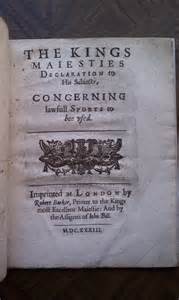
Book of Sports
When James I of England published the Book of Sports in 1617 it caused an uproar from the Puritans. The belief that no work or pleasure should take place on the sabbath was much debated at that time in Britain. The book was published after King James had his very own translation of the Bible released. Trouble was brewing in the British Isles that would eventually lead to the settlement of Plymouth Colony. The Puritans believed that all citizens must be required to attend religious services on Sunday, and they wanted them mandatory morning and evening on that day. Many of my own ancestors left England to live in Holland for a decade about that time, before sailing on the Mayflower to America. All the countries in Europe posed problems to their ideals except the Netherlands. There they could practice their severe brand of religion. There they built up strength to go to the new world.
The concept is taught to American children that these people came to America for religious freedom. That is only partially the case. They wanted to be free to dominate others and force them to follow Puritan rules. The freedom was just for their own religious beliefs, but did not apply to the beliefs of others. They were convinced of the righteousness of their logic. This made life in the new colony very contentious. It was easy to run afoul of the Pilgrim fathers who were all about sabbath and strict adherence.
Charles I reissued the Declaration of Sports in 1633, continuing the tradition of requiring attendance to religious services (in the Church of England) to qualify to dance, leap, or play sports on Sunday. There were a few sports not permitted on the sabbath such as bear and bull baiting and bowling. Charles I expanded the merriment to include local fairs and festivals on the list of sanctioned Sunday activities. England was trending Puritan in the 1630’s. In 1643 the book was publicly burned. When Charles II was restored to the throne after the English Civil War in 1660 the country was liberated from the strict sabbath rules and could once again party on Sunday afternoons.
When we think about sports and religion in America today we observe a very different story. Church attendance and membership are dropping off dramatically, but sports dominate the public attention. It is ironic to think that our initial colony was founded to make sure that Sunday would be sport free for everyone. I wonder what the Pilgrim fathers would think of the NFL and the NBA.
The term community policing has been tossed around in the media lately by experts and citizens of all kinds. This trending topic has been defined by the US Department of Justice:
Community policing is a philosophy that promotes organizational strategies, which support the systematic use of partnerships and problem-solving techniques, to proactively address the immediate conditions that give rise to public safety issues such as crime, social disorder, and fear of crime. Community policing is composed of three key components:
Partnerships – Collaborative partnerships between the law enforcement agency and the individuals and organizations they serve to develop solutions to problems and increase trust in police.
Organizational Transformation – The alignment of organizational management, structure, personnel, and information systems to support community partnerships and proactive problem solving.
Problem Solving – The process of engaging in the proactive and systematic examination of identified problems to develop and evaluate effective responses.
I hope incorporation of these policies will take place as soon as possible. Within the organizational transformation plan is a geographic approach to assignments. In other words, provide neighborhood cops who know and interact with a certain area by assigning them to that area. This is essential in my opinion, and would be helpful where I live. The advice given is to despecialize the force, creating a more generally skilled team to handle most situations. Problem solving and cooperation with the public have been missing elements to improving the safety in our city. Obvious ongoing crime would be obvious to any cop who patrolled here all the time. The force would see what we see, and even become known to the neighbors. These concepts will improve safety for both officers and the public.
The month of June is designated as National Safety Month in the US. Attention to safe practices and awareness is geared toward making the country safer. During this year we are faced with graphic evidence that one threat to our safety can be the police. The teen pool party in McKinney, Texas that turned ugly can only be seen as inappropriate. An enraged cop tackled a teen girl smashing her face into the lawn, then drew his gun on bystanders. I feel the fear as I watch these proceedings. I imagine what my own feelings might be if I was taken down by an irrational armed cop. This reality does make me fear and loathe what police do in my country.
The Department of Justice and the White House sponsored a task force to make recommendations for 21st century policing. The report names 6 pillars on which to focus:
There is a wider gap each day between the cops and the communities paying for police protection. It is not an easy task to build trust when we observe this kind of event on a regular basis. Law enforcement officers are hired to prevent crime and keep the peace. When they look like the most criminal among us, we are right to question the authority we have given them. I don’t know how to reverse this trend, other than doing what you can to love your neighbor and treat him as you want to be treated. That includes all of us.

sky
Symbols in dreams are personal. We dream only of faces we have seen before, even if we are barely familiar with the person. The character, or archetype played by the face depends completely on personal experience. Dream dictionaries and aids to interpret meaning found in dreams can only make references to universal archetypes. To grasp the personal message brought to the dreamer the images themselves must be savored and visited in waking time. Writing in a diary upon awaking before moving or engaging in the activities of the day is helpful. By keeping these notes on a regular basis you may discover themes that you can identify in a personal way.
Sometimes at crossroads in life a person will receive a vivid memorable message during sleep. The images and meaning of mythic dreams are significant beyond the every day way the unconscious communicates. The protagonists in the drama make a deep impression that lasts and speaks to the psyche for a long time. Carl Jung identified seven basic archetypes making appearances in dream time.
Loaded images and story lines float through our heads while we sleep. If we have a problem on the mind it is possible to solve it during a dream. Practice and meditation on our own dream images will make clearer the point of the communication. Our subconscious warns us, encourages us, and sometimes tells us we are foolish. It is never straightforward, but over time we can dig more deeply into the messages our dreams deliver on a nightly basis. Have you ever kept a dream diary, gentle reader? Have you ever had a mythic dream that changed your thinking?

desert

