mermaidcamp
Keeping current in wellness, in and out of the water
You can scroll the shelf using ← and → keys
You can scroll the shelf using ← and → keys
The Roman goddess Pax is in charge of peace. When I think of Romans the first words that come to my mind are army, Latin, and empire. We did not translate Latin peace poems in school. We studied the Gallic Wars. We think of Roman soldiers at the crucifixion of Jesus, and building aqueducts and roads to Rome. They were strategists and conquerers the likes of which the world had never seen, and some might argue we have not seen since. They were organized. They believed in slavery and blood sports. They are famous for gluttony and excess. The United States is often compared to the Roman empire for some pretty obvious reasons.
Celebrations were a big part of Roman culture, and Pax has three holidays a year dedicated to her. The olive branch, a symbol of protection, safety, and peace was used to crown citizens’ heads for this holiday. She is the daughter of Justice and Jupiter. She is often depicted with a cornucopia, a symbol of abundance. The Romans believed that prosperity and peace reside together and depend on each other. The days dedicated to honoring Pax included processions, music, poetry, and olive branches for everyone. Today when we march for peace we are actually expressing anti-war ideals. We stop short of truly giving honor to the power of peace. The Romans managed to conquer the known world and hold processions for peace at the same time. If we look deeply into our current ideas about peace we might notice that we mean peace on our own terms, or peace by conquest of our enemies. This is a core issue that could shatter our empire.
My 20th great grand-mother is buried in the cathedral in Basel, where I have been several times. It is a very impressive building on the Rhine. Basel is one of my favorite cities on earth. The Rhineland has a special kind of mysticism, culture, and history. I have been to the crypt of St. Verena right up the river in Bad Zurzach. Now I need to go again to visit my ancestor in the cathedral:
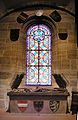
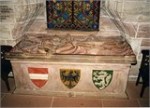
Many of her children were born in Rhinefelden, a mineral spa town with a salt water source next to the river. I took both my parents there to spa down many years ago. My father had had a stoke and was impressed with the way he felt after his water soaking and foot treatments in the Swiss therapy center. I remember telling him to take it all in because it was all part of his cure. We were sitting at that moment in the gardens (aka kurpark) watching the Rhine flow before dinner with the family. It was peaceful, beautiful, and my type A father seemed to get it for that moment. He was one with nature and the flow of life, and part of his own cure. I know now that these are not the only ancestors my father had who lived in the tiny town of Rhinefelden.
Gertrude Von Hohenberg (1225 – 1281)
is my 20th great grandmother
Albert I King of Germany Habsburg (1248 – 1308)
son of Gertrude Von Hohenberg
Albrecht Albert II ‘The Wise’ Duke of Austria Habsburg (1298 – 1358)
son of Albert I King of Germany Habsburg
Leopold III “Duke of Austria” Habsburg (1351 – 1386)
son of Albrecht Albert II ‘The Wise’ Duke of Austria Habsburg
Ernst I “Ironside” Archduke of Austria Habsburg (1377 – 1424)
son of Leopold III “Duke of Austria” Habsburg
Katharina Archduchess Austria Von Habsburg (1420 – 1493)
daughter of Ernst I “Ironside” Archduke of Austria Habsburg
Christof I VanBaden (1453 – 1527)
son of Katharina Archduchess Austria Von Habsburg
Beatrix Zahringen (1492 – 1535)
daughter of Christof I VanBaden
Sabine Grafin VonSimmern (1528 – 1578)
daughter of Beatrix Zahringen
Marie L Egmond (1564 – 1584)
daughter of Sabine Grafin VonSimmern
Richard Sears (1590 – 1676)
son of Marie L Egmond
Silas Sears (1638 – 1697)
son of Richard Sears
Silas Sears (1661 – 1732)
son of Silas Sears
Sarah Sears (1697 – 1785)
daughter of Silas Sears
Sarah Hamblin (1721 – 1814)
daughter of Sarah Sears
Mercy Hazen (1747 – 1819)
daughter of Sarah Hamblin
Martha Mead (1784 – 1860)
daughter of Mercy Hazen
Abner Morse (1808 – 1838)
son of Martha Mead
Daniel Rowland Morse (1838 – 1910)
son of Abner Morse
Jason A Morse (1862 – 1932)
son of Daniel Rowland Morse
Ernest Abner Morse (1890 – 1965)
son of Jason A Morse
Richard Arden Morse (1920 – 2004)
son of Ernest Abner Morse
Pamela Morse
I am the daughter of Richard Arden Morse
Gertrude of Hohenburg (c. 1225 – 16 February 1281, Vienna) was the first Queen consort of Rudolph I of Germany.
Family
She was born to Burchard V, Count of Hohenberg (d. 1253) and his wife Mechtild of Tübingen.
Her paternal grandparents were Burchard IV, Count of Hohenberg and his unnamed wife. Her maternal grandparents were Rudolph II, Count palatine and his wife, a daughter of Henry, Margrave of Ronsberg and Udilhild of Gammertingen.
Burchard IV was a son of Burchard III, Count of Hohenberg.
Burchard III was one of two sons of Burchard II, Count of Hohenberg. He was co-ruler with his brother Frederick, Count of Hohenberg. His brother had no known descendants and the two brothers consequently had a single successor.
Burchard II was one of five known sons of Frederick I, Count of Zollern and his wife Udachild of Urach.
Frederich I was the son of Burchard I, Count of Zollern. He was the founder of the so-called Burchardinger family line, male-line ancestors of the House of Hohenzollern.
Marriage and children
In 1245, Gertrude married Rudolph IV, Count of Habsburg. They had nine children:
Albert I of Germany (July 1255 – 1 May 1308), Duke of Austria and also of Styria.
Hartmann (1263, Rheinfelden–21 December 1281), drowned in Rheinau.
Rudolph II, Duke of Austria and Styria (1270–10 May 1290, Prague), titular Duke of Swabia, father of John the Patricide of Austria.
Matilda (ca. 1251/53, Rheinfelden–23 December 1304, Munich), married 1273 in Aachen to Louis II, Duke of Bavaria and became mother of Rudolf I, Count Palatine of the Rhine and Louis IV, Holy Roman Emperor.
Katharina (1256–4 April 1282, Landshut), married 1279 in Vienna to Otto III, Duke of Bavaria who later (after her death) became the disputed King Bela V of Hungary and left no surviving issue.
Agnes (ca. 1257–11 October 1322, Wittenberg), married 1273 to Albert II, Duke of Saxe-Wittenberg and became the mother of Rudolf I, Elector of Saxony.
Hedwig (d. 1285/86), married 1270 in Vienna to Otto VI, Margrave of Brandenburg and left no issue.
Klementia (ca. 1262–after 7 February 1293), married 1281 in Vienna to Charles Martel of Anjou, the Papal claimant to the throne of Hungary and mother of king Charles I of Hungary, as well as of queen Clementia of France, herself the mother of the baby king John I of France.
Jutte/Bona (13 March 1271–18 June 1297, Prague), married 24 January 1285 to King Wenceslaus II of Bohemia and became the mother of king Wenceslaus III of Bohemia, Poland and Hungary, of queen Anna I of Bohemia, duchess of Carinthia, and of queen Elisabeth I of Bohemia, countess of Luxembourg.
Her husband was elected King of Germany in Frankfurt on 29 September 1273, largely due to the efforts of her cousin Frederick III, Burgrave of Nuremberg. Rudolph was crowned in Aachen on 24 October 1273. She served as his Queen consort for the following eight years.
She died early in 1281. Rudolph remained a widower for three years and proceeded to marry Isabelle of Burgundy.
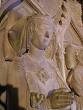

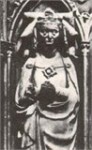
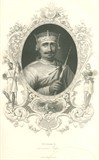
William Longsword (Plantagenet) (Earl of Salisbury) Longespee
My 25th great-grandfather is buried at Salisbury Cathedral in England. He was allegedly poisoned. His body was exhumed 431 years after his death. The corpse of a rat was found within his skull, which can be seen at a museum in Salisbury. I think I am good just with the grave, no need to see the rat with traces of arsenic.
William Longsword (Plantagenet) (Earl of Salisbury) Longespee (1173 – 1226)
is my 25th great grandfather
Stephen Longespee (1216 – 1260)
son of William Longsword (Plantagenet) (Earl of Salisbury) Longespee
Ela Longespee (1246 – 1276)
daughter of Stephen Longespee
Alan laZOUCHE (1267 – 1314)
son of Ela Longespee
Maude LaZouche (1290 – 1349)
daughter of Alan laZOUCHE
Sir Thomas de Holand Wake Kent (1314 – 1360)
son of Maude LaZouche
Sir Thomas Holand Knight deHolland (1350 – 1397)
son of Sir Thomas de Holand Wake Kent
Margaret DeHoland (1385 – 1439)
daughter of Sir Thomas Holand Knight deHolland
Joan Beaufort (1407 – 1445)
daughter of Margaret DeHoland
Joan Stewart (1428 – 1486)
daughter of Joan Beaufort
John Gordon (1450 – 1517)
son of Joan Stewart
Robert Lord Gordon (1475 – 1525)
son of John Gordon
Catherine Gordon (1497 – 1537)
daughter of Robert Lord Gordon
Lady Elizabeth Ashton (1524 – 1588)
daughter of Catherine Gordon
Capt Roger Dudley (1535 – 1585)
son of Lady Elizabeth Ashton
Gov Thomas Dudley (1576 – 1653)
son of Capt Roger Dudley
Anne Dudley (1612 – 1672)
daughter of Gov Thomas Dudley
John Bradstreet (1652 – 1718)
son of Anne Dudley
Mercy Bradstreet (1689 – 1725)
daughter of John Bradstreet
Caleb Hazen (1720 – 1777)
son of Mercy Bradstreet
Mercy Hazen (1747 – 1819)
daughter of Caleb Hazen
Martha Mead (1784 – 1860)
daughter of Mercy Hazen
Abner Morse (1808 – 1838)
son of Martha Mead
Daniel Rowland Morse (1838 – 1910)
son of Abner Morse
Jason A Morse (1862 – 1932)
son of Daniel Rowland Morse
Ernest Abner Morse (1890 – 1965)
son of Jason A Morse
Richard Arden Morse (1920 – 2004)
son of Ernest Abner Morse
Pamela Morse
I am the daughter of Richard Arden Morse
William Longespée, jure uxoris 3rd Earl of Salisbury (c. 1176 – 7 March 1226) was an English noble, primarily remembered for his command of the English forces at the Battle of Damme and for remaining loyal to King John .
Early life
He was an illegitimate son of Henry II of England. His mother was unknown for many years, until the discovery of a charter of William mentioning “Comitissa Ida, mater mea” (engl. “Countess Ida, my mother”).
This Ida de Tosny, a member of the prominent Tosny or Toesny family, later (1181) married Roger Bigod, 2nd Earl of Norfolk.
King Henry acknowledged William as his son and gave him the Honour of Appleby, Lincolnshire in 1188. Eight years later, his half-brother, King Richard I, married him to a great heiress, Ela of Salisbury, 3rd Countess of Salisbury in her own right, and daughter of William of Salisbury, 2nd Earl of Salisbury.
During the reign of King John, Salisbury was at court on several important ceremonial occasions, and held various offices: sheriff of Wiltshire , lieutenant of Gascony , constable of Dover and warden of the Cinque Ports, and later warden of the Welsh Marches. He was then, circa 1213, appointed High Sheriff of Cambridgeshire and Huntingdonshire.
Military career
He was a commander in the king’s Welsh and Irish expeditions of 1210-1212. The king also granted him the honour of Eye .
In 1213, Salisbury led a large fleet to Flanders , where he seized or destroyed a good part of a French invasion fleet anchored at or near Damme . This ended the invasion threat but not the conflicts between England and France . In 1214, Salisbury was sent to help Otto IV of Germany, an English ally, who was invading France. Salisbury commanded the right wing of the army at their disastrous defeat in that year at the Battle of Bouvines, where he was captured.
By the time he returned to England, revolt was brewing amongst the barons. Salisbury was one of the few who remained loyal to John. He was appointed High Sheriff of Devon in 1217 and High Sheriff of Staffordshire and Shropshire in 1224. In the civil war that took place the year after the signing of the Magna Carta, Salisbury was one of the leaders of the king’s army in the south. He was made High Sheriff of Wiltshire again, this time for life. After raising the siege of Lincoln with William Marshall he was also appointed High Sheriff of Lincolnshire (in addition to his current post as High Sheriff of Somerset) and governor of Lincoln castle. However, after the French prince Louis (later Louis VIII) landed as an ally of the rebels, Salisbury went over to his side. Presumably, he thought John’s cause was lost.
After John’s death and the departure of Louis, Salisbury, along with many other barons, joined the cause of John’s young son, now Henry III of England. He held an influential place in the government during the king’s minority and fought in Gascony to help secure the remaining part of the English continental possessions. Salisbury’s ship was nearly lost in a storm while returning to England in 1225, and he spent some months in refuge at a monastery on the French island of Ré.
Death
He died not long after his return to England at Salisbury Castle. Roger of Wendover alleged that he was poisoned by Hubert de Burgh. He was buried at Salisbury Cathedral in Salisbury, Wiltshire, England.
William Longespee’s tomb was opened in 1791. Bizarrely, the well-preserved corpse of a rat which carried traces of arsenic, was found inside his skull. The rat is now on display in a case at the Salisbury and South Wiltshire Museum.
Family
By his wife Ela, Countess of Salisbury, he had four sons and four daughters :
• Willi am II Longespée (1212?-1250), who was sometimes called Earl of Salisbury but never legally bore the title because he died before his mother, Countess Ela, who held the earldom until her death in 1261;
• Richard, a canon of Salisbury ;
• Stephen (d. 1260), who was seneschal of Gascony and married Emeline de Ridelsford. Their two daughters were Eleanor Longspee, who married Sir Roger La Zouche and Emeline Longspee, who married Sir Maurice FitzMaurice, Justicar of Ireland.
• Nicholas (d. 1297), bishop of Salisbury
• Isabella, who married William de Vesey
• Ella, married William d’Odingsels
• Ela Longespée, who first married Thomas de Beaumont, 6th Earl of Warwick, and then married Philip Basset
• Ida, who first married Ralph de Somery, and then William de Beauchamp


My 19th great grandmother is buried in the cathedral in Sevilla, just like Christopher Columbus. I always wanted to go to Sevilla to dance with gypsies. Now I have another reason to go:
María Díaz de Padilla (María de Padilla) (1334 – August 1361) was the mistress of King Peter of Castile whom she married in secret in 1353.
She was a Castilian noblewoman. Her father was Juan García de Padilla, 1st Lord of Villagera, her mother was his wife María Fernández de Henestrosa, a relative of Juan Fernández de Henestrosa, who mediated an apparent pardon to Fadrique Alfonso of Castile, a half-brother and rival of María de Padilla’s lover, King Peter.
In the summer of 1353, under coercion from family and court nobles, Peter denied the fact of his marriage to María to marry Blanche of Bourbon, but his relationship with María continued. María and Peter had at least four children: a daughter named Beatrice (born 1354), a daughter named Constance (1354–1394), another daughter named Isabella (1355–1394), and a son named Alfonso, crown-prince of Castile (1359 – October 19, 1362).
Two of their daughters were married to sons of Edward III, King of England. Isabella, married Edmund of Langley, 1st Duke of York, while the eldest, Constance, married John of Gaunt, 1st Duke of Lancaster, leading him to claim the crown of Castile on behalf of his wife. The daughter of Constance, Catherine of Lancaster, was married by Henry III of Castile in order to reunify any claim to succession that may have passed via Constance.
Depictions in fiction
Gaetano Donizetti composed Maria Padilla (1841), an opera about her relationship with King Peter.
Rudolf Gottschall wrote Maria de Padilla (18??), a drama about her life.
Maria Juana Depadilla (1335 – 1361)
is my 19th great grandmother
Isabella Perez Plantagenet (1355 – 1392)
daughter of Maria Juana Depadilla
Constance Plantagenet Despencer (1374 – 1416)
daughter of Isabella Perez Plantagenet
Eleanor DeHoland (1405 – 1452)
daughter of Constance Plantagenet Despencer
Ann Touchet (1441 – 1503)
daughter of Eleanor DeHoland
Anna Dutton (1449 – 1520)
daughter of Ann Touchet
Lawrence Castellan of Liverpool Mollenaux (1490 – 1550)
son of Anna Dutton
John Mollenax (1542 – 1583)
son of Lawrence Castellan of Liverpool Mollenaux
Mary Mollenax (1559 – 1575)
daughter of John Mollenax
Francis Gabriell Holland (1596 – 1660)
son of Mary Mollenax
John Holland (1628 – 1710)
son of Francis Gabriell Holland
Mary Elizabeth Holland (1620 – 1681)
daughter of John Holland
Richard Dearden (1645 – 1747)
son of Mary Elizabeth Holland
George Dearden (1705 – 1749)
son of Richard Dearden
George Darden (1734 – 1807)
son of George Dearden
David Darden (1770 – 1820)
son of George Darden
Minerva Truly Darden (1806 – 1837)
daughter of David Darden
Sarah E Hughes (1829 – 1911)
daughter of Minerva Truly Darden
Lucinda Jane Armer (1847 – 1939)
daughter of Sarah E Hughes
George Harvey Taylor (1884 – 1941)
son of Lucinda Jane Armer
Ruby Lee Taylor (1922 – 2008)
daughter of George Harvey Taylor
Pamela Morse
I am the daughter of Ruby Lee Taylor
King Peter met María in the summer of 1352 during an expedition to Asturias to battle his rebellious half-brother Henry. It was probably her maternal uncle, Juan Fernández de Henestrosa, who introduced them, as mentioned in the chronicle of King Peter’s reign written by Pero López de Ayala. . At that time, María was being raised at the house of Isabel de Meneses, wife of Juan Alfonso de Alburquerque, a powerful nobleman. They became lovers and their relationship lasted until her death despite the King’s other marriages and affairs.
In the summer of 1353, under coercion from family and the main court favorite, Juan Alfonso de Alburquerque, Peter wed Blanche of Bourbon, the grand-daughter of the king of France. Peter abandoned Blanche within three days when he learned that she had an affair with his bastard brother Fadrique Alfonso en route to Spain, and that the dowry was not coming.
Risk is part of life. The gambler is excited by risk and winning against odds. This bold, sometimes foolish attitude toward taking risks lands the gambler in trouble. Betting on companies or new technology can result in very good returns for the confident intuitive investor. It can also backfire as quickly as a casino game. Each of us has a unique profile for risky behavior/spending/investing/loyalties. We may be suspicious of the stock market and decide to collect coins, precious metals, or guns. We might like to see our assets in the bank earning a little interest. We may believe that real estate makes us secure, although recent events have shown how volatile real property investments can be. The truth is that nobody knows what the future will bring. A well-adjusted approach to gambling is needed to moderate stress. We can neither gamble away our life savings without consequence, nor can we find a way to be 100% immune to losses.
When circumstances are completely out of your control, as in our recent banking crisis, freaking out will only add to the strain. Cutting losses is a concept we need to use in life, but we normally learn it by enduring some difficult losses while clinging to some delusion. The shadow gambler has developed a risk taking addiction, not necessarily in a casino or game setting. A strong compulsion to take risks will eventually create a personality nobody can trust. The danger exists in the loss of control over various types of greed. Politicians risk their reputations on a regular basis. Money, status, and freedom are at stake. Do you have a relationship with a gambler? How is your own relationship with risk?
We may not have had formal training in meditation as children, but we probably had profound spiritual experiences as a natural part of childhood. Contemplation is a normal activity. When life is undisturbed we contemplate our surroundings, our connection to the universe, and more. If you scan your past for times during which you felt connected, in a state of grace, or full of bliss you will find them. By bringing back the feeling of spontaneous enlightening experiences we might be able to recreate that magic today. Our conscious minds often cling to our problems, our challenges, and our individual specialty suffering, keeping these wounds close to the surface. Through practice we can train the mind to hold on to the positive, unexplained flashes of light and insight, treating them as our natural state. Bringing contemplation and spacious states of mind into our practice is liberating. The long term benefits can be compared to physical strength or agility in the body. We don’t know what demands the future will put on that preparation. We can only learn when an event challenges that strength. We know we will encounter stressful situations and loss in our lives. A meditative state of mind is the very best investment/tool to cope with adversity that can be acquired.
There are many forms of meditation. A qualified teacher is not always available, but can show the student how to create the transition into mindfulness. If you believe that you have never meditated, let your memory go over the special times of youth that stand out in your memory today. You will probably be able to identify a few enchanted, enlightened times that brought you a glimpse into eternity. That lightness is a state that is available to you always. What is required is a steady practice. Walking, chanting, sitting….the style does not matter as long as it suits the user. The pure state of bliss meditation brings the practitioner is the armor that protects the mind from stress and worry. It is the true fountain of youth.
Wisdom springs from meditation;
without meditation wisdom wanes.
Having known these two paths of progress and decline,
let one so conduct oneself that one’s wisdom may increase.
Dhammapada 20.282
The Buddha
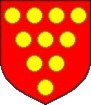
La Zouche COA
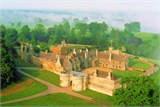
Rockingham Castle
My 24th great-grandfather was loyal to Henry III, and later Edward I of England. As usual, the royal association brought both positive and negative aspects:
Alan la Zouche (born about 1203) was summoned to accompany King Henry III to France in the 26th year of Henry’s reign. (Henry III was king from 1216 to 1272.) Within the next ten years, the whole county of Chester and all of North Wales were placed under Alan’s government. In the 45th year of Henry’s reign, Alan In the 45th year of the same reign he obtained a charter for a weekly market at Ashby-La-Zouche, in Leicestershire, and for two fairs in the year at Swavesey. At about the same time, Alan was made warden of the forests south of Trent and sheriff of Northamptonshire. In the 46th year of Henry’s reign, Alan was made Justice Iternerant for the counties of Southamptom, Buckingham, and Northampton. In the next three years, he was made Constable of the Tower of London, and Governor of the castle at Northampton. In 1268, he was violently attacked in Westminster Hall by John, Earl of Warren and Surrey, who had a dispute with Alan about some land. Alan’s son Roger was with him at the time, and Alan was severely wounded.
Alan’s son, Sir Roger la Zouche, was the Lord of Ashby. He married Ela Longespee, who was the daughter of Emmeline de Ridelisford and Sir Stephen Longespee.
Stephen Logespee was Justiciar of Ireland (something like a Prime Minister) and Seneschal of Gascony (a Seneschal was the Lord’s representative in the administration of an estate who would preside at courts, audit account,s conduct investigations, etc.).
Roger’s son Alan la Zouche (born about 1267) was the First Baron la Zouche of Ashby. Alan was governor of Rockingham Castle and steward of Rockingham Forest, England. Alan La Zouche died without any sons shortly before at the age of 46, and his barony fell into abeyance among his daughters.
Alan was in Gascony with King Edward I of England in October 1288, when he was one of the hostages given by the king to Alfonso of Aragon for the fulfillment of certain agreements. He was in Scotland in the King’s service in June of 1291. In April 1294 he had a writ of protection from the King when he travelled overseas with the King’s daughter, Eleanor of Bar. He served in Gascony in 1295 and 1296, and was present at the action around Bordeaux on March 28, 1296, when his standard bearer was captured by the French. In 1297 he was summoned for service in Flanders, and attended Councils in Rochester and London in that year.
Alan was summoned for service against the Scots in 1297-1313. He fought in the Vanguard at the Battle of Falkirk on July 22, 1298. King Edward’s army at that battle consisted of 12,000 infantry, including 10,000 Welsh, and 2,000 cavalry. William Wallace, the Scottish leader accepted battle in a withdrawn defensive position. Wallace had few cavalry and few archers; but his solid “schiltrons” (circles) of spearmen were almost invincible. The armoured cavalry of the English vanguard were hurled back with severe losses. Edward brought up his Welsh archers in the intervals between the horsemen of the second line, concentrating their arrows on specific points in the Scottish schiltrons. It was into these gaps that the English knights forced their way, and once the Scottish order was broken the spearmen were quickly massacred. Alan was at the siege of Caerlaverock in July 1300. His part was described in Nicholas’ Siege of Carlaverock:
Aleyn de la Souche tresor Signiioit ke fust brians
Sa rouge baniere a besans
Car bienscai ki a dependu Tresor plus ke en burce pendu
He was summoned to Edward II’s coronation on January 18, 1307/08. In December of that year he had a protection to go on a pilgrimage to Santiago de Compostela. He was the Constable of Rockingham Castle and the Keeper of the forests between the bridges of Oxford and Stamford.
Alan LaZouche (1203 – 1270)
is my 24th great grandfather
Roger LaZouche (1242 – 1285)
son of Alan LaZouche
Alan laZOUCHE (1267 – 1314)
son of Roger LaZouche
Maude LaZouche (1290 – 1349)
daughter of Alan laZOUCHE
Sir Thomas de Holand Wake Kent (1314 – 1360)
son of Maude LaZouche
Sir Thomas Holand Knight deHolland (1350 – 1397)
son of Sir Thomas de Holand Wake Kent
Margaret DeHoland (1385 – 1439)
daughter of Sir Thomas Holand Knight deHolland
Joan Beaufort (1407 – 1445)
daughter of Margaret DeHoland
Joan Stewart (1428 – 1486)
daughter of Joan Beaufort
John Gordon (1450 – 1517)
son of Joan Stewart
Robert Lord Gordon (1475 – 1525)
son of John Gordon
Catherine Gordon (1497 – 1537)
daughter of Robert Lord Gordon
Lady Elizabeth Ashton (1524 – 1588)
daughter of Catherine Gordon
Capt Roger Dudley (1535 – 1585)
son of Lady Elizabeth Ashton
Gov Thomas Dudley (1576 – 1653)
son of Capt Roger Dudley
Anne Dudley (1612 – 1672)
daughter of Gov Thomas Dudley
John Bradstreet (1652 – 1718)
son of Anne Dudley
Mercy Bradstreet (1689 – 1725)
daughter of John Bradstreet
Caleb Hazen (1720 – 1777)
son of Mercy Bradstreet
Mercy Hazen (1747 – 1819)
daughter of Caleb Hazen
Martha Mead (1784 – 1860)
daughter of Mercy Hazen
Abner Morse (1808 – 1838)
son of Martha Mead
Daniel Rowland Morse (1838 – 1910)
son of Abner Morse
Jason A Morse (1862 – 1932)
son of Daniel Rowland Morse
Ernest Abner Morse (1890 – 1965)
son of Jason A Morse
Richard Arden Morse (1920 – 2004)
son of Ernest Abner Morse
Pamela Morse
I am the daughter of Richard Arden Morse
Alan II (grandson of the first Baron Zouche) was justice of Chester and justice of Ireland under Henry III of England. He was loyal to the king during the struggle with the baroons, fought at the Battle of Lewes and helped to arrange the peace of Kenilworth. As a result of a quarrel over some lands with John de Warenne, 7th Earl of Surrey, he was seriously injured in Westminster Hall by the Earl and his retainers, and died on August 10, 1270.
The de la Zouche family descended from Alan la Zouche, 1st Baron la Zouche of Ashby, sometimes called Alan de Porhoët and Alan la Coche (c. 1136–1190), aBreton who settled in England durin g the reign of Henry II. He was the son of Vicomte Geoffrey I de Porhoët and Hawisa of Brittany. He married Adeline (Alice) de Belmeis, daughter of Phillip de Belmeis and Maud la Meschine and died at North Melton in Devon. He obtained Ashby in Leicestershire (called after himAshby-de-la-Zouch) by his marriage. His son was Roger la Zouche (~1175- bef 14 May 1238). Roger La Zouche became the father of Alan la Zouche (1205-1270) and Eudo La Zouche. [1]
Alan was justice of Chester and justice of Ireland under Henry III of England. He was loyal to the king during the struggle with the barons, fought at the Battle of Lewes and helped to arrange the peace of Kenilworth. As the result of a quarrel over some lands with John de Warenne, 7th Earl of Surrey, he was seriously injured in Westminster Hall by the earl and his retainers, and died on August 10,1270 .
E udo La Zouche married Millicent de Cantilou. [2]
Alan’s grandson, Alan la Zouche, was summoned to Parliament on February 6,1299 as Baron la Zouche of Ashby. He was governor of Rockingham Castle and steward of Rockingham Forest. However, this barony fell into abeyance on his death in 1314.
Another grandson of Alan de la Zouche was William la Zouche, Lord ofHaryngworth, who was summoned to Parliament as Baron Zouche, of Haryngworth, on August 16, 1308 . His great-great-great-grandson, the fifth Baron, married Alice Seymour, 6th Baroness St Maur, and assumed this peerage in her right. Their son succeeded to both titles. On the death in 1625 of the eleventh and twelfth Baron, the peerages fell into abeyance between the latter’s daughters Hon. Elizabeth and Hon. Mary. However, in 1815 the Barony of Zouche was called out of abeyance in favour of Sir Cecil Bishopp, 8th Baronet, of Parham (see Bishopp Baronets of Parham), who became the twelfth Baron Zouche. Through his mother he was a descendant of the aforementioned Hon. Elizabeth. The Barony of St Maur, however, remains in abeyance to this day. On his death in 1828 he was succeeded in the Baronetcy by a cousin, while the Barony of Zouche once again fell into abeyance, this time between his two daughters Hon. Harriet Anne Curzon and Lady Katherine Isabella Brooke-Pechell. The abeyance was terminated the following year in favour of Hon. Harriet Anne, who became the thirteenth Baroness. Known as Baroness de la Zouch, she was the wife of Hon. Robert Curzon, younger son of Assheton Curzon, 1st Viscount Curzon. Her son was the fourteenth Baron. On his death the title passed to his son, the fifteenth Baron, and then to the latter’s sister, the sixteenth Baroness. She never married and was succeeded by her cousin, the seventeenth Baroness, the granddaughter of a younger son of the thirteenth Baroness. She was succeeded by her grandson, the eighteenth and present Baron, who had already succeeded his father as 12th Baronet in 1944.
Another grandchild of the original Alan de la Zouche, Joyce la Zouche, married Robert Mortimer of Richard’s Castle; one of their younger sons, William la Zouche, took the name of la Zouche and bought Ashby-de-la-Zouch from Alan in 1304, the latter to hold it until his death (1314). On December 26, 1323 , he was created, by writ, Baron Zouche of Mortimer. This peerage became abeyant in 1406.

Bitters
I bought a hard cover copy of Bitters by Brad Thomas Thompson after reading about the history of this elixir and the revival of its popularity today. I have always enjoyed cooking with bitters and had only ventured out from Angostura to a couple of other flavors until recently. I saw some sampler sets and bought chocolate, key lime and lavender in small bottles to try. I also bought a fancy one from Scotland that I adore. Experimenting with these flavors in cocktails and in food (I always put some is soups) has piqued my interest in producing some of my own with ingredients from my garden.
The medicinal use of bitters has a very long history of curing headache, indigestion, stomach cramps and more. The herbs and fruits used create both the flavor profile and the curative values. Bitters and soda is the classic companion for rich foods and an abundance of alcohol. There are two kinds, potable and cocktail bitters. Potable are sipped straight up as a digestif, like Campari or Fernet Branca. Cocktail bitters are used to marry flavors in drinks or cooking. They balance and enhance the other ingredients to create a complex synergy.
The book is very well written and researched. The history, the prominent producers today, and opinions from bartenders are covered in the opening chapters. The complete recipes and instructions to create 13 different kinds of homemade varieties follows. Most contain gentian, others calamus root, hops and cinchona bark (the main taste in tonic water) as the bitter element. Fruits and spices such as ginger, allspice and cardamom are used. Since I have ripe calamondins on my tree I plan to follow the orange or the lemon recipe to make my first batch using the citrus I have. The technique is simple, involves vodka and soaking for a month, and seems pretty foolproof. The exciting part is that I have a new way to use my garden herbs and fruits that preserves their flavor and creates a unique product not available on the open market. Mr Parsons suggests a bitters exchange party at which friends gather, make the mixture, and return after a month to finish the process and bottle. I am happy I have just met a neighbor how wants to be my bitters buddy. We are going to make one that includes turmeric for inflammation. I don’t think it will take very long to become expert bitters makers, and since a small amount is effective it will be great to share batches of new concoctions.
The greatest part of the book is dedicated to cocktail and cooking recipes. Beautiful pictures, detailed instructions and a wide variety of new and old make this section of the book really fun to own in hardcover. I have read more of the drinks than I have tried, but am fascinated with some of the non alcoholic drinks like smoked lemonade in which the lemons are smoked for up to an hour before the preparation. There are some flavor ideas that will spark your imagination and creativity. It is the complete guide to the adventure of making and using these curative combinations. Santé!
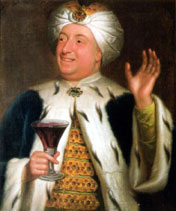
Sir Francis Dashwood
The word dilettante is derived from the Latin word delectare, to delight. The English word came to us from Italy, and originally had no negative connotation. Any person who loves art, sports, or cooking, for example, can launch a happy career as a dilettante. Amateur is a word that indicates love for a subject. I have no problem embracing the novice in myself. One does not need professional training or certificates to be delighted with a pursuit. This archetype seems to be blooming today with all the new ways to share our art work, recipes, or other accomplishments. I am comfortable with this surge in creativity. The shadow characteristic of the dilettante is a tendency to be superficial and shallow. We have all met this person who pretends to know, or sets themselves up as a master without foundation.
I think the meaning was turned on it’s head by the Dilettante Society, a club formed in London in 1734. Initially the society had a mission to transform public taste by supporting and importing arts from Greece and Italy. All of the original members had been on the Grand Tour and were wealthy. Sir Francis Dashwood was the first leader of the club, and an all around prankster. These rich Brits were the embodiment of the shadow of this archetype. They did a lot of boozing while they traveled and launched art and architecture studies. The Dilettantes of today are working to revive respect for those who dabble. After all, if you don’t attempt new things as an amateur how will you find out if you have talent for them? In support of this new wave I plan to show up for pickleball practice, a team sport at which I will, no doubt, suck. I have not been a team sport player since whiffle ball in the yard in elementary school. If I can’t cut the mustard on the court, I can always be a cheerleader.
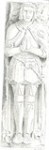
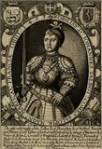

My 17th great-grandfather was the first Earl of Shrewsbury. There is still an Earl of Shrewsbury in England today. He was a military man who died fighting for king and country.
The death of John Talbot at the Battle of Castillon.
John Talbot, 1st Earl of Shrewsbury (1384/1390 – 17 July 1453) was an important English military commander during the Hundred Years’ War, as well as the only Lancastrian Constable of France.
Family
He was second son of Richard, 4th Baron Talbot, by Ankaret, heiress of the last Lord Strange of Blackmere.
Talbot was married on 12 March 1406 to Maud Nevill, daughter and heiress of Thomas Nevill, 5th Baron Furnivall, the son of John Neville, 3rd Baron Neville de Raby. He was summoned to Parliament in her right from 1409.
Children
The couple had four children:
Lady Joan Talbot
John Talbot, 2nd Earl of Shrewsbury (c. 1413 – 11 July 1460)
Sir Christopher Talbot (d. 10 July 1460)
Hon. Thomas Talbot (died before his father in Bordeaux)
In 1421 by the death of his niece he acquired the Baronies of Talbot and Strange.
2nd Marriage
He married, secondly, Lady Margaret Beauchamp, daughter of Richard de Beauchamp, 13th Earl of Warwick and Elizabeth de Berkeley, on 6 September 1425 and had four children:
Sir Lewis Talbot
John Talbot, 1st Viscount Lisle (c. 1426 – 17 July 1453)
Sir Humphrey Talbot (before 1453 – c. 1492)
Lady Elizabeth Talbot (before 1453). She married John de Mowbray, 4th Duke of Norfolk.
Lady Eleanor Talbot (d. 1468) married to Thomas Butler and King Edward IV of England.
Early career
From 1404 to 1413 he served with his elder brother Gilbert in the Welsh war or the rebellion of Owain Glyndŵr. Then for five years from February 1414 he was lieutenant of Ireland, where he held the honour of Wexford. He did some fighting, and had a sharp quarrel with the Earl of Ormonde. Complaints were made against him both for harsh government in Ireland and for violence in Herefordshire. From 1420 to 1424 he served in France. In 1425, he was lieutenant again for a short time in Ireland.
Service in France
So far his career was that of a turbulent Marcher Lord, employed in posts where a rough hand was useful. In 1427 he went again to France, where he fought with distinction in Maine and at the Siege of Orléans. He fought at the Battle of Patay where he was captured and held prisoner for four years.
He was released in exchange for the French leader Jean Poton de Xaintrailles. Talbot was a daring and aggressive soldier, perhaps the most audacious Captain of the Age. He and his forces acted as a kind of fire brigade ever ready to retake a town and to meet a French advance. His trademark was rapid aggressive attacks. In January 1436 he led a small force including Kyriell and routed La Hire and Xaintrailles at Ry near Rouen. The following year at Crotoy, after a daring passage of the Somme, he put a numerous Burgundian force to flight. In December 1439, following a surprise flank attack on their camp, he dispersed the 6000 strong army of the Constable Richemont, and the following year he retook Harfleur. In 1441 he pursued the French army 4 times over the Seine and Oise rivers in an unavailing attempt to bring it to battle.
The English Achilles
He was appointed in 1445 by Henry VI of England (as king of France) as Constable of France. Taken hostage at Rouen in 1449 he promised never to wear armour against the French King again, and he was true to his word. He was defeated and killed in 1453 at the Battle of Castillon near Bordeaux, which effectively ended English rule in the duchy of Gascony, a principal cause of the Hundred Years’ War. His heart was buried in the doorway of St Alkmund’s Church, Whitchurch, Shropshire.[1]
The victorious French generals raised a monument to Talbot on the field called Notre Dame de Talbot. And the French Chroniclers paid him handsome tribute:
“Such was the end of this famous and renowned English leader who for so long had been one of the most formidable thorns in the side of the French, who regarded him with terror and dismay” – Matthew d’Escourcy
Although Talbot is generally remembered as a great soldier, some have raised doubts as to his generalship. In particular, charges of rashness have been raised against him. Speed and aggression are key elements in granting success in medieval war, and Talbot’s numerical inferiority necessitated surprise. Furthermore, he was often in the position of trying to force battle on unwilling opponents. At his defeat at Patay in 1429 he was advised not to fight there by Sir John Fastolf, who was subsequently blamed for the debacle, but the French, inspired by Joan of Arc, showed unprecedented fighting spirit – usually they approached an English position with great circumspection. The charge of rashness is perhaps more justifiable at Castillon where Talbot, misled by false reports of a French retreat, attacked their entrenched camp frontally – facing wheel to wheel artillery and a 6 to 1 inferiority in numbers.
He is portrayed heroically in William Shakespeare’s Henry VI, Part I: “Valiant Lord Talbot, Earl of Shrewsbury, Created, for his rare success in arms”
Political officesPreceded by
New CreationLord High Steward of Ireland
1446–1453Succeeded by
The Earl of ShrewsburyPeerage of EnglandPreceded by
New CreationEarl of Shrewsbury
1442–1453Succeeded by
John TalbotPreceded by
Ankaret TalbotBaron Talbot
1421–1453Succeeded by
John TalbotBaron Strange of Blackmere
1421–1453Peerage of IrelandPreceded by
New CreationEarl of Waterford
1446–1453Succeeded by
John TalbotCultural influence
John Talbot is shown as a featured character in Koei’s video game known as ‘Bladestorm: The Hundred Years’ War’, appearing as the left-arm of Edward, the Black Prince, in which he assists the former and the respective flag of England throughout his many portrayals.
Talbot appears as one of the primary antagonists in the PSP game Jeanne d’Arc.
Battle of Castillon
Date17 July 1453LocationCastillon-la-Ba taille, GasconyResult Decisive French victory
Belligerents Kingdom of England vs Kingdon of France and Duchy of Brittany
Commanders – John Talbot, Earl of Shrewbury vs Jean Bureau
Strength – 6,000-7,000 7,000-10,000
Casualties and losses – 4,000, mainly wounded or captured – 100 dead or wounded
The Battle of Castillon of 1453 was the last battle fought between the French and the English during the Hundred Years’ War. This was the first battle in European history where cannons were a major factor in deciding the battle.[
After the French capture of Bordeaux in 1451, the Hundred Years’ War appeared to be at an end. However, after three hundred years of English rule the citizens of Bordeaux considered themselves English and sent messengers to Henry VI of England demanding he recapture the province.
On 17 October 1452, the Earl of Shrewsbury landed near Bordeaux with a force of 3,000 men-at-arms and archers. The French garrison was ejected by the citizens of Bordeaux, who then gleefully opened the gates to the English. Most of Gascony followed Bordeaux’s example and welcomed the English home.
During the winter month Charles VII of France gathered his armies in readiness for the campaigning season. When spring arrived Charles advanced toward Bordeaux simultaneously along three different routes with three armies.
Preparation
Talbot, the Earl of Shrewsbury, received another 3,000 men to face this new problem, but it was still an inadequate number to hold back the thousands of Frenchmen on Gascony’s borders. When the leading French army laid siege to Castillon, Talbot abandoned his original plans (acceding to the pleas of the town commanders) and set out to relieve it. The French commander, Jean Bureau, in fear of Talbot, ordered his 7,000 to 10,000 men to encircle their camp with a ditch and palisade, and deployed his 300 cannon on the parapet. This was an extraordinarily defensive setup by the French, who enjoyed great numerical superiority. They had made no attempt to invest Castillon.
Talbot approached the French camp on 17 July 1453, arriving before his main body of troops with an advance guard of 1,300 mounted men. He routed a similar sized force of French francs-archers (militia) in the woods before the French encampment, giving his men a large boost of morale.
Main battle
A few hours after this preliminary skirmish, a messenger from the town reported to Shrewsbury’s resting troops (they had marched through the night) that the French army was in full retreat and that hundreds of horsemen were fleeing the fortifications. From the town walls a huge dust cloud could be seen heading off into the distance. Unfortunately for him, they were only camp followers ordered to leave the camp before the upcoming battle.
Shrewsbury hastily reorganised his men and charged down towards the French camp, only to find the parapets defended by thousands of archers and crossbowmen and hundreds of cannons. Surprised but undaunted, Shrewsbury gave the signal to attack the French army. Shrewsbury didn’t take part in the battle directly. He had been previously captured and paroled, thus was not allowed to take arms against the French.
English troops charged the camp, across a ditch, only to be met with a hail of arrows and quarrels, and a fierce gun, cannon and small arms fire. The concentrated fire could be explained by the fact that the ditch followed, probably by accident, the former bed of a small stream, giving a bastionned look to defences.
Once battle started, Shrewsbury received a thin trickle of men from his leading footmen. After an hour the cavalry of the Breton army sent by the Duke of Brittany arrived and charged his right flank. The English gave way, pursued instantly by the French main body of troops.
During the rout Shrewsbury’s horse was killed by a cannon ball and he fell trapped beneath it, until a Frenchman, a Francs Archer, recognised him and killed him with a hand-axe. His death, and the subsequent recapture of Bordeaux three months later, effectively brought the Hundred Years’ War to a close.
Aftermath
Following Henry VI’s episode of insanity in 1453, the subsequent outbreak of the Wars of the Roses and the evident loss of military ascendancy to the French, the English were no longer in any position to pursue their claim to the French throne and lost all their land on the continent (except for the city of Calais, the last English possession in France, finally lost in 1558).
General John Talbot * (1384 – 1453)
is my 17th great grandfather
John Talbot (1413 – 1460)
son of General John Talbot *
Isabel Talbot (1444 – 1531)
daughter of John Talbot
Sir Richard Ashton (1460 – 1549)
son of Isabel Talbot
Sir Christopher Ashton (1493 – 1519)
son of Sir Richard Ashton
Lady Elizabeth Ashton (1524 – 1588)
daughter of Sir Christopher Ashton
Capt Roger Dudley (1535 – 1585)
son of Lady Elizabeth Ashton
Gov Thomas Dudley (1576 – 1653)
son of Capt Roger Dudley
Anne Dudley (1612 – 1672)
daughter of Gov Thomas Dudley
John Bradstreet (1652 – 1718)
son of Anne Dudley
Mercy Bradstreet (1689 – 1725)
daughter of John Bradstreet
Caleb Hazen (1720 – 1777)
son of Mercy Bradstreet
Mercy Hazen (1747 – 1819)
daughter of Caleb Hazen
Martha Mead (1784 – 1860)
daughter of Mercy Hazen
Abner Morse (1808 – 1838)
son of Martha Mead
Daniel Rowland Morse (1838 – 1910)
son of Abner Morse
Jason A Morse (1862 – 1932)
son of Daniel Rowland Morse
Ernest Abner Morse (1890 – 1965)
son of Jason A Morse
Richard Arden Morse (1920 – 2004)
son of Ernest Abner Morse
Pamela Morse
I am the daughter of Richard Arden Morse

