mermaidcamp
Keeping current in wellness, in and out of the water
You can scroll the shelf using ← and → keys
You can scroll the shelf using ← and → keys


My 19th great-grandfather was Speaker of the House of Commons, and asked the king to excuse him from that duty. Richard II refused to excuse him. He is buried on the north side of the parish church St. Mary at Bures in Essex. These Waldegraves must be added to the buried in church tour of Europe I need to make someday.
Sir Richard II Lord Bures De Waldegrave (1335 – 1401)
is my 19th great grandfather
Sir Richard III Lord Bures Silveste DeWALDEGRAVE (1370 – 1434)
son of Sir Richard II Lord Bures De Waldegrave
Sir John William deWaldegrave (1397 – 1454)
son of Sir Richard III Lord Bures Silveste DeWALDEGRAVE
Lady Anne De Waldegrave (1429 – 1454)
daughter of Sir John William deWaldegrave
Knight Edmond Bedingfield (1450 – 1496)
son of Lady Anne De Waldegrave
Edmund Bedingfield (1483 – 1552)
son of Knight Edmond Bedingfield
Henry Bedingfield (1509 – 1583)
son of Edmund Bedingfield
Edmund Bedingfield (1534 – 1585)
son of Henry Bedingfield
Nazareth Bedingfeld (1561 – 1622)
daughter of Edmund Bedingfield
Elishua Miller Yelverton (1592 – 1688)
daughter of Nazareth Bedingfeld
Yelverton Crowell (1621 – 1683)
son of Elishua Miller Yelverton
Elishua Crowell (1643 – 1708)
daughter of Yelverton Crowell
Yelverton Gifford (1676 – 1772)
son of Elishua Crowell
Ann Gifford (1715 – 1795)
daughter of Yelverton Gifford
Frances Congdon (1738 – 1755)
daughter of Ann Gifford
Thomas Sweet (1759 – 1844)
son of Frances Congdon
Valentine Sweet (1791 – 1858)
son of Thomas Sweet
Sarah LaVina Sweet (1840 – 1923)
daughter of Valentine Sweet
Jason A Morse (1862 – 1932)
son of Sarah LaVina Sweet
Ernest Abner Morse (1890 – 1965)
son of Jason A Morse
Richard Arden Morse (1920 – 2004)
son of Ernest Abner Morse
Pamela Morse
I am the daughter of Richard Arden Morse
Sir Richard Waldegrave (died 2 May 1401) was a member of Parliament for Lincolnshire in 1376, and Speaker of the House of Commons from 1381 to 1382, during the reign of King Richard II.
Life
His father Sir Richard Waldegrave was returned to parliament in 1335 for Lincolnshire. Richard the son resided at Smallbridge in Suffolk, and was returned to parliament as a knight of the shire in the parliament of February 1376. He was elected to the first and second parliaments of Richard II and to that of 1381. In 1381 he was elected speaker of the House of Commons, and prayed the king to discharge him from the office; the first instance, according to James Alexander Manning, of a speaker desiring to be excused. The king, however, insisted on his fulfilling his duties.
During his speakership parliament was chiefly occupied with the revocation of the charters granted to the villeins by Richard during Wat Tyler’s rebellion. It was dissolved in February 1382. Waldegrave represented Suffolk in the two parliaments of 1382, in those of 1383, in that of 1386, in those of 1388, and in that of January 1389–90.
He died at Smallbridge on 2 May 1402, and was buried on the north side of the parish church of St. Mary at Bures in Essex. He married Joan Silvester of Bures, by whom he had a son, Sir Richard Waldegrave.
Referenc es
” Waldegrave, Richard”. Dictionary of National Biography, 1885–1900. London: Smith, Elder & Co.
Attribution
This article incorporates text from a publication now in the public domain: “Waldegrave, Richard”. Dictionary of National Biography, 1885–1900. London: Smith, Elder & Co.
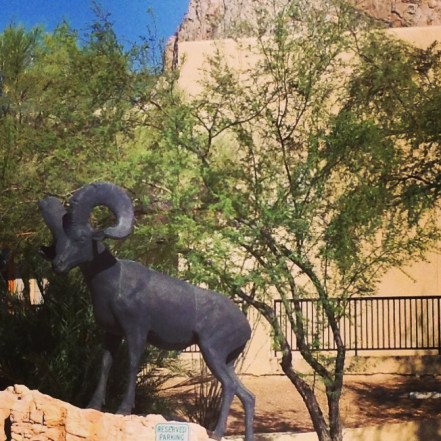
Hilton Big Horn
I was privileged to spend the weekend with a group of about 170 people who came from all over the country to a conference on the Spirituality of Healing taught by James Finley. The group included many mental health professionals and teachers who were earning credits in continuing education in their professions. Many were members of churches with meditation/prayer groups. I was new to the genre, but felt right at home in he congenial student group. I saw an ad for this in a local paper and followed up with some research into James Finley. I ordered a couple of audio books he wrote and signed up for the conference. The resort where it was held is where the Dalai Lama taught in September of 1993, so I have very fond memories of the place. The Hilton El Conquistador was turned into the the El Comtemplador for a couple of days. The hotel is dog friendly so my partner and dog could come along for a staycation away from home. It was a remarkable experience. I did not photograph the sessions or the participants because I did not want to distract myself from the teaching. I am happy I made that decision because those photos would add little to this post.
Dr. Finley is very generous with free resources on his website, His teaching in person is designed to pack the time spent together with dense, rich, profound, yet simplistic and practical ideas. His background allows him to use language of psychotherapy as well as religious language to explain his concepts. He is a brilliant speaker, but the style of presenting really enhances the message he brings. First of all, he establishes silence in the hall where the conference takes place. There is time and space outside the room to talk. On the second day the group broke bad and got noisy, so he asked that we reestablish the silence in the room. He uses humor to make his point many times, and refers to patient/clinician dialogs to shed light with specific examples. In his opening remarks he lets the audience know that trauma is a difficult and personal subject to address. He encouraged each person to leave the room, move around, take breaks as needed. He repeated several times, “To thine own self be true.” This was good for me when I decided the chairs were not sized so well for me, so I took up a spot against the wall where I had support from the wall for sitting or could even lie down. The sessions covered in sequence his Seven Steps of Spiritual Healing, which logically build upon the preceding steps. He speaks for a little over an hour to cover the material and then a 15-20 minute discussion is opened with the students. A short break for everyone is followed by the next lecture. The time is very well ordered and managed to the greatest advantage of the students. I must say the staff at the resort could not have been more pleasant and helpful, which was icing on the very tasty cake.
He shows the highest regard for the integrity of the students in his assignment of homework. He gave us several exercises to do on our own that will require a great deal of time and consideration, and then moved on to his core curriculum. If you practice you reap the benefits of practice. If you don’t, you don’t. Dr. Finley drives this point home in dramatic and impressive ways in his teaching. Not only is the task of enlightenment or healing our own responsibility, but we are doing it as a microcosm of all that is. We can only put ourselves in the position of least resistance for our desired outcome, and then let go. Deep meaning, philosophy, poetry, art and love are contained in each precious moment, available to us, and being created by us. We have all heard such statements somewhere in our past, and may believe them. What Dr. Finley offers is a system, a practice, a devotional idea to stabilize the consciousness in a state of pure love. It requires diligence and patience. He ended by giving us homework for seven years. It was the perfect wrap up for this conference. He showed how to use lexia divina, discursive meditation, and practice to move into and through the seven steps. He assigned us a step each week for seven weeks, then do that seven times (49 weeks) after a short break we were to take it up again from the beginning..seven steps, one step a week , repeated 7 times. Of course, after a break we are to start at the beginning, until we have done this practice for 7 years. I am sure some kind of heavy duty breakthrough would have to take place if we were all to do our homework. I love his optimism in assigning it. If you have a chance to study with these contemplatives, take advantage of it.
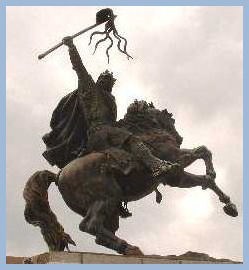
William the Conqueror
My 26th great-grandfather is famous for bringing big changes to England. He died from injuries sustained when he fell from his horse in battle. He became king of England in 1066. He was too fat to fit into his burial sarcophagus. His grave was vandalized several times, including during the French Revolution. Although the memorial remains, almost none of his remains are in the grave.

William the Conqueror
William I ‘ the Conqueror’ of Normandy (1024 – 1087)
is my 26th great grandfather
King Henry I of England Beauclerc (1068 – 1135)
son of William I ‘ the Conqueror’ of Normandy
Mathilda Roesa (1090 – 1110)
daughter of King Henry I of England Beauclerc
Lady Gilberta Godiva le Becket (1100 – 1186)
daughter of Mathilda Roesa
Hervey Butler (Boteler) (1130 – 1190)
son of Lady Gilberta Godiva le Becket
Theobald I FitzWalter, 1st Chief Butler of Eng & Ire, de Butler (Boteler) (1170 – 1206)
son of Hervey Butler (Boteler)
Theobald II le Boteler (1200 – 1230)
son of Theobald I FitzWalter, 1st Chief Butler of Eng & Ire, de Butler (Boteler)
Lady Maud Matilda DeVerdun Countess DeBoteler Countess Arundel (1225 – 1283)
daughter of Theobald II le Boteler
Matilda Tideshall FitzAlan Baroness Corbet De Arundel (1244 – 1309)
daughter of Lady Maud Matilda DeVerdun Countess DeBoteler Countess Arundel
Sir Thomas Corbet of Moreton, Knight of The Bath Corbet (1281 – 1310)
son of Matilda Tideshall FitzAlan Baroness Corbet De Arundel
Knight Sir Robert XII Corbet, Lord of Moreton Corbet (1304 – 1375)
son of Sir Thomas Corbet of Moreton, Knight of The Bath Corbet
Sir Roger XIII (Lord of Morton) Corbet (1330 – 1396)
son of Knight Sir Robert XII Corbet, Lord of Moreton Corbet
Robert Corbet (1383 – 1440)
son of Sir Roger XIII (Lord of Morton) Corbet
Blanche Corbet (1423 – 1458)
daughter of Robert Corbet
Humphrey Coningsby (1458 – 1535)
son of Blanche Corbet
Amphyllis Coningsby (1478 – 1533)
daughter of Humphrey Coningsby
Margaret Tyndale (1510 – 1555)
daughter of Amphyllis Coningsby
Thomas Taylor (1548 – 1588)
son of Margaret Tyndale
Thomas Taylor (1574 – 1618)
son of Thomas Taylor
James Taylor (1608 – 1698)
son of Thomas Taylor
John Taylor (1685 – 1776)
son of James Taylor
John Taylor (1727 – 1787)
son of John Taylor
John Taylor (1747 – 1781)
son of John Taylor
John Nimrod Taylor (1770 – 1816)
son of John Taylor
John Samuel Taylor (1798 – 1873)
son of John Nimrod Taylor
William Ellison Taylor (1839 – 1918)
son of John Samuel Taylor
George Harvey Taylor (1884 – 1941)
son of William Ellison Taylor
Ruby Lee Taylor (1922 – 2008)
daughter of George Harvey Taylor
Pamela Morse
I am the daughter of Ruby Lee Taylor
William I (1027[1] – 9 September 1087), better known as William the Conqueror (French: Guillaume le Conquérant), was Duke of Normandy from 1035 and King of England from 1066 to his death. William is also referred to as “William II” in relation to his position as Duke of Normandy. In particular, before his conquest of England, he was known as “William the Bastard” (French: Guillaume le Bâtard) because of the illegitimacy of his birth.[2]
To claim the English crown, William invaded England in 1066, leading an army of Normans to victory over the Anglo-Saxon forces of Harold Godwinson (who died in the conflict) at the Battle of Hastings, and suppressed subsequent English revolts in what has become known as the Norman Conquest.[3]
His reign, which brought Norman culture to England, had an enormous impact on the subsequent course of England in the Middle Ages. In addition to political changes, his reign also saw changes to English law, a programme of building and fortification, changes to the vocabulary of the English language, and the introduction of continental European feudalism into England.
Early life
William was born in Falaise, Normandy, the illegitimate and only son of Robert I, Duke of Normandy, who named him as heir to Normandy. His mother, Herleva (among other names), who later had two sons to another father, was the daughter of Fulbert, most probably a local tanner. William had a sister, Adelaide of Normandy, another child of Robert and Herleva. Later in his life, the enemies of William are said to have commented derisively that William stank like a tannery, and the residents of besieged Alençon hung skins from the city walls to taunt him.
William is believed to have been born in either 1027 or 1028, and more likely in the autumn of the latter year.[1] He was born the grandnephew of Queen Emma of Normandy, wife of King Ethelred the Unready and later of King Canute the Great.[4]
William’s illegitimacy affected his early life and he was known to contemporaries as ‘William the Bastard’. Nevertheless, when his father died, he was recognised as the heir.[5]
Duke of Normandy
By his father’s will, William succeeded him as Duke of Normandy at age eight in 1035 and was known as Duke William of Normandy (French: Guillaume, duc de Normandie; Latin: Guglielmus Dux Normanniae). Plots by rival Norman noblemen to usurp his place cost William three guardians, though not Count Alan III of Brittany, who was a later guardian. William was supported by King Henry I of France, however. He was knighted by Henry at age 15. By the time William turned 19 he was successfully dealing with threats of rebellion and invasion. With the assistance of Henry, William finally secured control of Normandy by defeating rebel Norman barons at Caen in the Battle of Val-ès-Dunes in 1047, obtaining the Truce of God, which was backed by the Roman Catholic Church.
Against the wishes of Pope Leo IX, William married Matilda of Flanders in 1053 in the Cathedral of Notre Dame at Eu, Normandy (Seine-Maritime). At the time, William was about 24 years old and Matilda was 22. William is said to have been a faithful and loving husband, and their marriage produced four sons and six daughters. In repentance for what was a consanguine marriage (they were distant cousins), William donated St-Stephen’s church (l’Abbaye-aux-Hommes) and Matilda donated Sainte-Trinité church (Abbaye aux Dames).
Feeling threatened by the increase in Norman power resulting from William’s noble marriage, Henry I attempted to invade Normandy twice (1054 and 1057), without success. Already a charismatic leader, William attracted strong support within Normandy, including the loyalty of his half-brothers Odo of Bayeux and Robert, Count of Mortain, who played significant roles in his life. Later, he benefitted from the weakening of two competing power centers as a result of the deaths of Henry I and of Geoffrey II of Anjou, in 1060. In 1062 William invaded and took control of the county of Maine, which had been a fief of Anjou.
English succession
Upon the death of the childless Edward the Confessor, the English throne was fiercely disputed by three claimants — William, Harold Godwinson, the powerful Earl of Wessex, and the Viking King Harald III of Norway, known as Harald Hardraada. William had a tenuous blood claim, through his great aunt Emma (wife of Ethelred and mother of Edward). William also contended that Edward, who had spent much of his life in exile in Normandy during the Danish occupation of England, had promised William the throne when William visited Edward in London in 1052. Finally, William claimed that Harold had pledged allegiance to him in 1064. William had rescued the shipwrecked Harold from the count of Ponthieu, and together they had defeated Conan II, Count of Brittany. On that occasion, William knighted Harold. He also deceived Harold by having him swear loyalty to William over the concealed bones of a saint.[7]
In January 1066, however, in accordance with Edward’s last will and by vote of the Witenagemot, Harold Godwinson was crowned King by Archbishop Aldred.
Norman Invasion
Meanwhile, William submitted his claim to the English throne to Pope Alexander II, who sent him a consecrated banner in support. Then, William organized a council of war at Lillebonne and openly began assembling an army in Normandy. Offering promises of English lands and titles, he amassed at Saint-Valery-sur-Somme a considerable invasion force of 600 ships and 7,000 men, consisting of Normans, Bretons, French mercenaries, and numerous foreign knights. In England, Harold assembled a large army on the south coast and a fleet of ships to guard the English Channel.
Fortuitously for William, his crossing was delayed by weeks of unfavourable winds. William managed to keep his army together during the wait, but Harold’s was diminished by dwindling supplies and falling morale with the arrival of the harvest season.[8] Harold also consolidated his ships in London, leaving the English Channel unguarded. Then came the news that the other contender for the throne, Harald III of Norway, allied with Tostig Godwinson, had landed ten miles from York; Harold was forced to march against them.
Before he could return south, the wind direction turned and William crossed, landing his army at Pevensey Bay (Sussex) on 28 September. Thence he moved to Hastings, a few miles to the east, where he built a prefabricated wooden castle for a base of operations. From there, he ravaged the hinterland and waited for Harold’s return from the north.
William chose Hastings as it was at the end of a long peninsula flanked by impassable marshes. Battle was on the isthmus. William at once built a fort at Hastings to guard his rear against potential arrival of Harold’s fleet from London. Having landed his army, William was less concerned about desertion and could have waited out the winter storms, raided the surrounding area for horses and started a campagn in the spring. Harold had been reconnoitering the south of England for some time and well appreciated the need to occupy this isthmus at once.
Battle of Hastings
Main article: Battle of Hastings
Harold, after defeating his brother Tostig and Harald Hardrada in the north, marched his army 241 miles to meet the invading William in the south. On 13 October, William received news of Harold’s march from London. At dawn the next day, William left the castle with his army and advanced towards the enemy. Harold had taken a defensive position atop the Senlac Hill/Senlac ridge, about seven miles from Hastings, at present-day Battle, East Sussex.
The Battle of Hastings lasted all day. Although the numbers on each side were about equal, William had both cavalry and infantry, including many archers, while Harold had only foot soldiers and few if any archers.[10] Along the ridge’s border, formed as a wall of shields, the English soldiers at first stood so effectively that William’s army was thrown back with heavy casualties. William rallied his troops, however — reportedly raising his helmet, as shown in the Bayeux Tapestry, to quell rumors of his death. Meanwhile, many of the English had pursued the fleeing Normans on foot, allowing the Norman cavalry to attack them repeatedly from the rear as his infantry pretended to retreat further. Norman arrows also took their toll, progressively weakening the English wall of shields. A final Norman cavalry attack decided the battle irrevocably, resulting in the death of Harold, killed by an arrow in the eye. Two of his brothers, Gyrth and Leofwine Godwinson, were killed as well. At dusk, the English army made their last stand. By that night, the Norman victory was complete and the remaining English soldiers fled in fear.
March to London
For two weeks, William waited for a formal surrender of the English throne, but the Witenagemot proclaimed the quite young Edgar Ætheling instead, though without coronation. Thus, William’s next target was London, approaching through the important territories of Kent, via Dover and Canterbury, inspiring fear in the English. However, at London, William’s advance was beaten back at London Bridge, and he decided to march westward and to storm London from the northwest. After receiving continental reinforcements, William crossed the Thames at Wallingford, and there he forced the surrender of Archbishop Stigand (one of Edgar’s lead supporters), in early December. William reached Berkhamsted a few days later where Ætheling relinquished the English crown personally and the exhausted Saxon noblemen of England surrendered definitively. Although William was acclaimed then as English King, he requested a coronation in London. As William I, he was formally crowned on Christmas day 1066, in Westminster Abbey, by Archbishop Aldred.[7]
English resistance
Although the south of England submitted quickly to Norman rule, resistance in the north continued for six more years until 1072. During the first two years, King William I suffered many revolts throughout England (Dover, western Mercia, Exeter) and Wales. Also, in 1068, Harold’s illegitimate sons attempted an invasion of the south western peninsula, but William defeated them.
For William I, the worst crisis came from Northumbria, which had still not submitted to his realm. In 1068, with Edgar Ætheling, both Mercia and Northumbria revolted. William could suppress these, but Edgar fled to Scotland where Malcolm III of Scotland protected him. Furthermore, Malcolm married Edgar’s sister Margaret, with much éclat, stressing the English balance of power against William. Under such circumstances, Northumbria rebelled, besieging York. Then, Edgar resorted also to the Danes, who disembarked with a large fleet at Northumbria, claiming the English crown for their King Sweyn II. Scotland joined the rebellion as well. The rebels easily captured York and its castle. However, William could contain them at Lincoln. After dealing with a new wave of revolts at western Mercia, Exeter, Dorset, and Somerset, William defeated his northern foes decisively at the River Aire, retrieving York, while the Danish army swore to depart.
William then devastated Northumbria between the Humber and Tees rivers, with his Harrying of the North. This devastation included setting fire to the vegetation, houses and even tools to work the fields. He also burnt crops, killed livestock and sowed the fields and land with salt, to stunt growth. After this cruel treatment the land did not recover for more than 100 years. The region ended up absolutely deprived, losing its traditional autonomy towards England. However it may have stopped future rebellions, scaring the English people into obedience. Then, the Danish king disembarked in person, readying his army to restart the war, but William suppressed this threat with a payment of gold. In 1071, William defeated the last rebellion of the north through an improvised pontoon, subduing the Isle of Ely, where the Danes had gathered. In 1072, he invaded Scotland, defeating Malcolm, who had recently invaded the north of England. William and Malcolm agreed to a peace by signing the Treaty of Abernethy and Malcolm gave up his son Duncan as a hostage for the peace. In 1074, Edgar Ætheling submitted definitively to William.
In 1075, during William’s absence, the Revolt of the Earls was confronted successfully by Odo. In 1080, William dispatched his half brothers Odo and Robert to storm Northumbria and Scotland, respectively. Eventually, the Pope protested that the Normans were mistreating the English people. Before quelling the rebellions, William had conciliated with the English church; however, he persecuted it ferociously afterwards.
Reign in England English RoyaltyHouse of NormandyWilliam I Robert II Curthose, Duke of Normandy Richard, Duke of Bernay William II Rufus Adela, Countess of Blois Henry I Beauclerc
Events
As would be habit for his descendants, William spent much of his time (11 years, since 1072) in Normandy, ruling the islands through his writs. Nominally still a vassal state, owing its entire loyalty to the French king, Normandy arose suddenly as a powerful region, alarming the other French dukes who reacted by attacking the duchy persistently. William became focused on conquering Brittany, and the French King Philip I admonished him. A treaty was concluded after his aborted invasion of Brittany in 1076, and William betrothed Constance to the Breton Duke Hoel’s son, the future Alan IV of Brittany. The wedding occurred only in 1086, after Alan’s accession to the throne, and Constance died childless a few years later.
The mischief of William’s elder son Robert arose after a prank of his brothers William and Henry, who doused him with filthy water. The situation became a large scale Norman rebellion. Only with King Philip’s additional military support was William able to confront Robert, who was based at Flanders. During the battle in 1079, William was unhorsed and wounded by Robert, who lowered his sword only after recognizing him. The embarrassed William returned to Rouen, abandoning the expedition. In 1080, Matilda reconciled both, and William revoked Robert’s inheritance.
Odo caused many troubles to William, and he was imprisoned in 1082, losing his English estate and all royal functions, except the religious ones. In 1083, Matilda died, and William became more tyrannical over his realm.
Reforms
William initiated many major changes. He increased the function of the traditional English shires (autonomous administrative regions), which he brought under central control; he decreased the power of the earls by restricting them to one shire apiece. All administrative functions of his government remained fixed at specific English towns, except the court itself; they would progressively strengthen, and the English institutions became amongst the most sophisticated in Europe. In 1085, in order to ascertain the extent of his new dominions and to improve taxation, William commissioned all his counselors for the compilation of the Domesday Book, which was published in 1086. The book was a survey of England’s productive capacity similar to a modern census.
William also ordered many castles, keeps, and mottes, among them the Tower of London’s foundation (the White Tower), to be built throughout England. These ensured effectively that the many rebellions by the English people or his own followers did not succeed.
His conquest also led to French (especially, but not only, the Norman French) replacing English as the language of the ruling classes for nearly 300 years. Furthermore, the original Anglo-Saxon culture of England became mingled with the Norman one; thus the Anglo-Norman culture came into being.
William is said to have eliminated the native aristocracy in as little as four years. Systematically, he despoiled those English aristocrats who either opposed the Normans or who died without issue. Thus, most English estates and titles of nobility were handed to the Norman noblemen. Many English aristocrats fled to Flanders and Scotland; others may have been sold into slavery overseas. Some escaped to join the Byzantine Empire’s Varangian Guard, and went on to fight the Normans in Sicily. By 1070, the indigenous nobility had ceased to be an integral part of the English landscape, and by 1086, it maintained control of just 8% of its original land-holdings.[15] However, to the new Norman noblemen, William handed the English parcels of land piecemeal, dispersing these wide. Thus nobody would try conspiring against him without jeopardizing their own estates within the so unstable England. Effectively, this strengthened William’s political stand as a monarch.
William also seized and depopulated many miles of land (36 parishes), turning it into the royal New Forest region to support his enthusiastic enjoyment of hunting.
Death, burial, and succession
In 1087 in France, William burned Mantes (50 km west of Paris), besieging the town. However, he fell off his horse, suffering fatal abdominal injuries by the saddle pommel. On his deathbed, William divided his succession for his sons, sparking strife between them. Despite William’s reluctance, his combative elder son Robert received the Duchy of Normandy, as Robert II. William Rufus (his third son) was next English king, as William II. William’s youngest son Henry received 5,000 silver pounds, which would be earmarked to buy land. He also became King Henry I of England after William II died without issue. While on his deathbed, William pardoned many of his political adversaries, including Odo.
William died at age 59 at the Convent of St Gervais in Rouen, capital city of Normandie, France, on 9 September 1087. William was buried in the Abbaye-aux-Hommes, which he had erected, in Caen, Normandy.
According to some sources, a fire broke out during the funeral; the original owner of the land on which the church was built claimed he had not been paid yet, demanding 60 shillings, which William’s son Henry had to pay on the spot; and, in a most unregal postmortem, William’s corpulent body would not fit in the stone sarcophagus.
William’s grave is currently marked by a marble slab with a Latin inscription; the slab dates from the early 19th century. The grave was defiled twice, once during the French Wars of Religion, when his bones were scattered across the town of Caen, and again during the French Revolution. Following those events, only William’s left femur remains in the tomb and some skin particles
Legacy
William’s invasion was the last time that England was successfully conquered by a foreign power. Although there would be a number of other attempts over the centuries, the best that could be achieved would be excursions by foreign troops, such as the Raid on the Medway during the Second Anglo-Dutch War, but no actual conquests such as William’s. There have however been occasions since that time when foreign rulers have succeeded to the English/British throne, notably the Dutch Stadtholder William III of Orange in 1688 after a successful invasion of England by Dutch troops (see Glorious Revolution) and George of Hanover b. 1660, who acceded by virtue of the exclusion of Roman Catholics from the succession.
As Duke of Normandy and King of England he passed the titles on to his descendants. Other territories would be acquired by marriage or conquest and, at their height, these possessions would be known as the Angevin Empire.
They included many lands in France, such as Normandy and Aquitaine, but the question of jurisdiction over these territories would be the cause of much conflict and bitter rivalry between England and France, which took up much of the Middle Ages, including the Hundred Years War and, some might argue, continued as far as the Battle of Waterloo of 1815.
An example of William’s legacy even in modern times can be seen on the Bayeux Memorial, a monument erected by Britain in the Normandy town of Bayeux to those killed in the Battle of Normandy during World War II. A Latin inscription on the memorial reads NOS A GULIELMO VICTI VICTORIS PATRIAM LIBERAVIMUS – freely translated, this reads “We, once conquered by William, have now set free the Conqueror’s native land” .
Physical appearance
No authentic portrait of William has been found. Nonetheless, he was depicted as a man of fair stature with remarkably strong arms, “with which he could shoot a bow at full gallop”. William showed a magnificent appearance, possessing a fierce countenance. He enjoyed an excellent health until old age; nevertheless his noticeable corpulence in later life augmented eventually so much that French King Philip I commented that William looked like a pregnant woman.
Descendants
Family tree
William is known to have had nine children, though Agatha, a tenth daughter who died a virgin, appears in some sources. Several other unnamed daughters are also mentioned as being betrothed to notable figures of that time. Despite rumours to the contrary (such as claims that William Peverel was a bastard of William)[19] there is no evidence that he had any illegitimate children,[20]
Robert Curthose (1054–1134), Duke of Normandy, married Sybil of Conversano, daughter of Geoffrey of Conversano.
Richard (c. 1055 – c. 1081), Duke of Bernay, killed by a stag in New Forest.
Adeliza (or Alice) (c. 1055 – c. 1065), reportedly betrothed to Harold II of England.
Cecilia (or Cecily) (c. 1056 – 1126), Abbess of Holy Trinity, Caen.
William “Rufus” (c. 1056 – 1100), King of England.
Agatha (c. 1064 – 1079), betrothed to Alfonso VI of Castile.
Constance (c. 1066 – 1090), married Alan IV Fergent, Duke of Brittany; poisoned, possibly by her own servants.
Adela (c. 1067 – 1137), married Stephen, Count of Blois.
Henry “Beauclerc” (1068–1135), King of England, married Edith of Scotland, daughter of Malcolm III, King of the Scots. His second wife was Adeliza of Leuven.
It is always fascinating to watch Jerry W Harris work in his blacksmith shop. The metal birds are so realistic, some even fly. His latest piece is a forged steel blue teal duck which is able to sway around on the metal mount, simulating flying. He will add some plants to finish the sculpture. I love the expression on the face of the duck, which looks happy to me. It is a blast to experience his creative process.











For our Father’s Day fling I took Bob to Iron John’s Brewing Company for some beer and a tee shirt. His needs are simple, with craft beer and tee shirts always hitting the mark. We had tried some of the beers last week at pizza throw down and had agreed that Iron John was our favorite new discovery that intrigued us. They hold free tastings each Saturday from 11-6pm in their small but very cool artisan brewery and bottle shop. They are not opening a bar or a restaurant. They have a passion for the art of beer making, and are sticking to producing small batches of seasonally changing beers. They sell in a few local restaurants, and are open at the brewery Thursday-Saturday for sales of the current line up. Although I am not much of a beer drinker myself I liked all of the samples I tried. They take great care to adjust each water source for each beer, sometimes adding minerals to distilled water to arrive at the perfect chemical balance. They also buy small batches of brewing yeast and grow it themselves to assure quality. I was impressed with the taste, the tour, and the dedication these folks are showing to making an excellent local product for local consumption. I am always happy to support locals serving tasty treats to locals. Bob has a beer collection to make his week a pleasant and delicious one. We recommend a visit and a tour to anyone who likes beer.
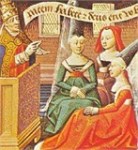

My 28th great grandmother married the king of France when both she and he were already married.
Bertrade de Montfort (1059 – 1115)
is my 28th great grandmother
Louis VI France ( – 1180)
son of Bertrade de Montfort
Louis VII France (1119 – 1180)
son of Louis VI France
Philippe Auguste II France (1165 – 1223)
son of Louis VII France
Louis VIII France (1187 – 1226)
son of Philippe Auguste II France
Charles I King of Jerusalem and Naples (1227 – 1285)
son of Louis VIII France
Charles NAPLES (1254 – 1309)
son of Charles I King of Jerusalem and Naples
Marguerite Sicily Naples (1273 – 1299)
daughter of Charles NAPLES
Jeanne DeVALOIS (1294 – 1342)
daughter of Marguerite Sicily Naples
Philippa deHainault (1311 – 1369)
daughter of Jeanne DeVALOIS
John of Gaunt – Duke of Lancaster – Plantagenet (1340 – 1399)
son of Philippa deHainault
Philippa Plantagenet (1370 – 1415)
daughter of John of Gaunt – Duke of Lancaster – Plantagenet
Beatrix DePinto (1403 – 1447)
daughter of Philippa Plantagenet
John Fettiplace (1427 – 1464)
son of Beatrix DePinto
Richard Fettiplace (1460 – 1511)
son of John Fettiplace
Anne Fettiplace (1496 – 1567)
daughter of Richard Fettiplace
Mary Purefoy (1533 – 1579)
daughter of Anne Fettiplace
Susanna Thorne (1559 – 1586)
daughter of Mary Purefoy
Gov Thomas Dudley (1576 – 1653)
son of Susanna Thorne
Anne Dudley (1612 – 1672)
daughter of Gov Thomas Dudley
John Bradstreet (1652 – 1718)
son of Anne Dudley
Mercy Bradstreet (1689 – 1725)
daughter of John Bradstreet
Caleb Hazen (1720 – 1777)
son of Mercy Bradstreet
Mercy Hazen (1747 – 1819)
daughter of Caleb Hazen
Martha Mead (1784 – 1860)
daughter of Mercy Hazen
Abner Morse (1808 – 1838)
son of Martha Mead
Daniel Rowland Morse (1838 – 1910)
son of Abner Morse
Jason A Morse (1862 – 1932)
son of Daniel Rowland Morse
Ernest Abner Morse (1890 – 1965)
son of Jason A Morse
Richard Arden Morse (1920 – 2004)
son of Ernest Abner Morse
Pamela Morse
I am the daughter of Richard Arden Morse
Bertrade de Montfort (c. 1070-February 14, 1117) was the daughter of Simon I de Montfort and Agnes, Countess of Evreux. Her brother was Amauri de Montfort. The oft-married Count Fulk IV of Anjou was married to the mother of his son in 1089, when the lovely Bertrade caught his eye. According to the chronicler John of Marmoutier: The lecherous Fulk then fell passionately in love with the sister of Amaury of Montfort, whom no good man ever praised save for her beauty. For her sake, he divorced the mother of Geoffrey II Martel… Bertrade and Fulk were married, and they became the parents of a son, Fulk, but in 1092 Bertrade left her husband and took up with King Philip I of France. Philip married her on May 15, 1092, despite the fact that they both had spouses living. He was so enamoured of Bertrade that he refused to leave her even when threatened with excommunication. Pope Urban II did excommunicate him in 1095, and Philip was prevented from taking part in the First Crusade. Astonishingly, Bertrade persuaded Philip and Fulk to be friends. Bertrade and Philipe had three children together: Philippe de France, Count of Mantes (living in 1123) Fleury de France, seigneur of Nangis (living in 1118) Cecile of France (died 1145), married (1) Tancred, Prince of Galilee; married (2) Pons of Tripoli According to Orderic Vitalis, Bertrade was anxious that one of her sons succeed Philip, and sent a letter to King Henry I of England asking him to arrest her stepson Louis. Orderic also claims she sought to kill Louis first through the arts of sorcery, and then through poison. Whatever the truth of these allegations, Louis succeeded Philippe in 1108. Bertrade lived on until 1117; William of Malmesbury says: “Bertrade, still young and beautiful, took the veil at Fontevraud Abbey, always charming to men, pleasing to God, and like an angel.” Her son from her first marriage was Fulk V of Anjou who later became King of Jerusalem. The dynasties founded by Fulk’s sons ruled for centuries, one of them in England (Plantagenet), the other in Jerusalem.
Sources Ancestral Roots of Certain American Colonists Who Came to America Before 1700 By Frederick Lewis Weis, Lines 50-25, 118-23. Orderic Vitalis William of Malmesbury

Apollo and the 9 muses
In Greek mythology the nine muses are daughters of Mnemosyne. She was the muse of memory. Zeus slept with her for 9 nights, resulting in the birth of the 9 muses. They were raised by Apollo and a nymph in a secluded atmosphere. They became completely dedicated to the arts. Each was in charge of a different aspect of culture:
June 14 is celebrated as the birthday of the muses. Have you ever tried to invite a muse for a visit in your creative world? I have wanted to be more poetic since I discovered my Pilgrim poet ancestor, Mistress Bradstreet. I made some effort in April to write a poem each day, but I think the missing piece is the muse. I have trudged away at the poems without inviting a spark or a mystic inspiration to reach into the creative process. I have assigned myself the job of poet, but have not consulted with the poetic energy that inspires and makes art possible. Words themselves need a creative current or tradition on which to flow, or the audience will be left flat. I love comedy the best, although Mistress Bradstreet was more about sacred hymns. Next time I go out into the world I will ask Thalia to accompany me to find the humor in what I experience. Which is your favorite muse? Could you call on them to enhance your creativity more often? I know I could.

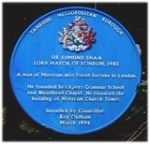
My 13th great-grandfather was Lord Mayor of London and a wealthy, influential goldsmith. My mother was always crazy about gold and jewelry. She would have been pretty excited to learn one of her ancestor’s healing rings is in the British Museum. I am excited myself.
Edmund Shaw (1434 – 1487)
is my 13th great grandfather
Elizabeth Shaw (1460 – 1493)
daughter of Edmund Shaw
Thomas Poyntz (1480 – 1562)
son of Elizabeth Shaw
Lady Susanna Elizabeth Poyntz (1528 – 1613)
daughter of Thomas Poyntz
Elizabeth Saltonstall (1557 – 1621)
daughter of Lady Susanna Elizabeth Poyntz
Henry Wyche (1604 – 1678)
son of Elizabeth Saltonstall
Henry Wyche (1648 – 1714)
son of Henry Wyche
George Wyche (1685 – 1757)
son of Henry Wyche
Peter Wyche (1712 – 1757)
son of George Wyche
Drury Wyche (1741 – 1784)
son of Peter Wyche
Mary Polly Wyche (1774 – 1852)
daughter of Drury Wyche
John Samuel Taylor (1798 – 1873)
son of Mary Polly Wyche
William Ellison Taylor (1839 – 1918)
son of John Samuel Taylor
George Harvey Taylor (1884 – 1941)
son of William Ellison Taylor
Ruby Lee Taylor (1922 – 2008)
daughter of George Harvey Taylor
Pamela Morse
I am the daughter of Ruby Lee Taylor
Dictionary of National Biography, 1885-1900, Volume 51Shaw, Edmund
by Charles Welch
SHAW or SHAA, Sir EDMUND (d 1487?), lord mayor of London, was the son of John Shaa of Dunkerfield in Cheshire. He was a wealthy goldsmith and prominent member of the Goldsmiths’ Company, of which he served the office of master. He was elected sheriff in 1474, and on his presentation the members of his company escorted him to Westminster (Herbert, Twelve Great Livery Companies, ii. 219). Shaa became alderman, and in 1485 migrated to the ward of Cheap, on the death of Sir Thomas Hill through the ‘sweating sickness.’ He was elected mayor in 1482, and towards the close of his mayoralty he took an active part in influencing the succession to the crown on the death of Edward IV. Shaa probably had financial dealings with the crown, and his intimacy with Edward IV appears from a bequest in his will for an obit for the soul of that ‘excellent prince’ and his sister, the Duchess of Exeter. He became nevertheless a strong supporter of Richard III, who made him a privy councillor, and whose claims to the throne he and his brother (see below) were doubtless largely instrumental in inducing the citizens to adopt. Shaa appears to have resided in Foster Lane, where, and in the neighbouring West Chepe, the goldsmiths kept their shops. He possessed, and probably occupied, the great mansion, with its adjoining tenements, in Foster Lane, in which Sir Bartholomew Reid had lived (ib. ii. 253).
He died about 1487, and was buried in the church of St. Thomas of Acon, where he founded a chantry for the souls of his wife Juliana (who died in 1493), his son Hugh, and others (Sharpe, Calendar of Husting Wills, ii. 612). This trust, with many singular injunctions attached, he placed under the charge of the Mercers’ Company (Watney, Account of the Hospital of St. Thomas of Acon, pp. 51–3). His will, dated 20 March 1487, was proved in the P. C. C. (Milles 12). Full effect was given to his intentions under the will of Stephen Kelk, goldsmith, who administered Shaa’s bequest under an agreement with his executors (Watney, p. 53; Prideaux, Goldsmiths’ Company, i. 33–4). One of these executors, John Shaa, goldsmith, may have been the Sir John Shaa (knighted on Bosworth Field and made a banneret by Henry VII) who was lord mayor in 1501, or a near relative. By another will, not enrolled, Shaa left four hundred marks for rebuilding Cripplegate, which was carried out by his executors in 1491. He also left property in charge of the Goldsmiths’ Company, producing an annual sum of 17l., to found a school ‘for all boys of the town of Stockport and its neighbourhood,’ in which place his parents were buried. This school was considerably developed and its advantages extended by the Goldsmiths’ Company (Herbert, ii. 252–3). Shaa also directed by his will that sixteen gold rings should be made as amulets or charms against disease, chiefly cramp. One of these rings, found in 1895 during excavations in Daubeney Road, Hackney, is now in the British Museum. On the outside are figures of the crucifixion, the Madonna, and St. John, with a mystical inscription in English; the inside contains another mystical inscription in Latin.
The lord mayor’s brother, Ralph or John Shaw (d. 1484), styled John by More and Holinshed, and Raffe by Hall and Fabyan, may without much doubt be identified with Ralph Shaw, S. T. B., who was appointed prebendary of Cadington Minor in the diocese of London on 14 March 1476–7, and was esteemed a man of learning and ability. He was chosen by the Protector (afterwards Richard III) to preach a sermon at St. Paul’s Cross on 22 June 1483, when he impugned the validity of Edward IV’s marriage with Elizabeth Woodville, and even asserted, according to More, that Edward IV and his brother Clarence were bastards. Fabyan states that he ‘lived in little prosperity afterwards,’ and died before 21 Aug. 1484 (Gairdner, Life of Richard III, 1878, pp. 100–4; FFabyan, Chronicle, 1811, p. 669; More, Life of Richard III, ed. Lumby, pp. 57, 70; Holinshed, Chronicles, ed. Hooker, iii. 725, 729; Hall, Chronicle, 1809, p. 365; Le Neve, Fasti Ecclesiæ Anglicanæ, ii. 372).
[Orridge’s Citizens of London and their Rulers, pp. 116–20; Sharpe’s London and the Kingdom, i. 320–2; Price’s Historical Account of the Guildhall, p. 186; Watney’s Hospital of St. Thomas of Acon, pp. 51–3; Sharpe’s Calendar of Husting Wills, ii. 612–17; Prideaux’s Memorials of the Goldsmiths’ Company, 1896, passim; Notes and Queries, 8th ser. xii. 345.]
When 21 June rolls around the season is about to change. Solstice is a holiday that has been celebrated around the world for centuries. For me summer has always meant time to go in the water. I like every kind of water sport from beaches, lakes, rivers , or pools. Swimming, surfing, sailing, paddle boarding, water skiing, or kayaking, I am happy to watch others with greater skill as well as indulge in trying it all. I am not a surfer but I admire the skill very much. I am also a huge fan of all the new ways to capture action video. My high risk sporting days are over, and I am happy to have survived. These are the sports I like to watch and imagine I am doing myself:
I watched X Games from Austin over the weekend and am inspired to see all the tricks and athleticism created by the participants. They continue to set the bar higher all the time by making up new tricks. I like all the events that are not motorized. The mini truck and moto cross rallies are not my style, but I understand that it takes plenty of practice and skill to do that too. I just can’t imagine myself flipping a motor bike, but somehow I can think of myself flipping and flying on a BMX bike. I applaud the new sports and the people who continually create them. I admire surfers the most. If I could magically be given the ability to surf I would consider all my lifetime wishes to have come true. What sporting ability do you wish you were granted as a gift on Solstice this year?
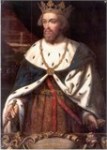
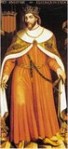
Jaime I Mallorc is my ancestor two times. Two of his children became my ancestors, Isabella and Peter, both leading to Ann Dudley, Pilgrim poet. She has the most royal of pedigrees. This is just one of them. She wrote about God and religion, but her DNA contained the royal history of Europe, crusades and all. Jaime was one of those royals who had his first marriage annulled when he wanted to marry another woman.
Jaime I Mallorc (1207 – 1276)
is my 23rd great grandfather
Isabella DeAragon (1247 – 1271)
daughter of Jaime I Mallorc
Charles DeValois (1270 – 1325)
son of Isabella DeAragon
Jeanne DeVALOIS (1294 – 1342)
daughter of Charles DeValois
Philippa deHainault (1311 – 1369)
daughter of Jeanne DeVALOIS
John of Gaunt – Duke of Lancaster – Plantagenet (1340 – 1399)
son of Philippa deHainault
Philippa Plantagenet (1370 – 1415)
daughter of John of Gaunt – Duke of Lancaster – Plantagenet
Beatrix DePinto (1403 – 1447)
daughter of Philippa Plantagenet
John Fettiplace (1427 – 1464)
son of Beatrix DePinto
Richard Fettiplace (1460 – 1511)
son of John Fettiplace
Anne Fettiplace (1496 – 1567)
daughter of Richard Fettiplace
Mary Purefoy (1533 – 1579)
daughter of Anne Fettiplace
Susanna Thorne (1559 – 1586)
daughter of Mary Purefoy
Gov Thomas Dudley (1576 – 1653)
son of Susanna Thorne
Anne Dudley (1612 – 1672)
daughter of Gov Thomas Dudley
John Bradstreet (1652 – 1718)
son of Anne Dudley
Mercy Bradstreet (1689 – 1725)
daughter of John Bradstreet
Caleb Hazen (1720 – 1777)
son of Mercy Bradstreet
Mercy Hazen (1747 – 1819)
daughter of Caleb Hazen
Martha Mead (1784 – 1860)
daughter of Mercy Hazen
Abner Morse (1808 – 1838)
son of Martha Mead
Daniel Rowland Morse (1838 – 1910)
son of Abner Morse
Jason A Morse (1862 – 1932)
son of Daniel Rowland Morse
Ernest Abner Morse (1890 – 1965)
son of Jason A Morse
Richard Arden Morse (1920 – 2004)
son of Ernest Abner Morse
Pamela Morse
You are the daughter of Richard Arden Morse
James I of Aragon (Spanish: Jaime I, Catalan: Jaume I) (Montpellier February 2, 1208 � July 27, 1276), surnamed the Conqueror, was the king of Aragon, count of Barcelona and Lord of Montpellier from 1213 to 1276.
He was the only child of Peter II of Aragon and Marie of Montpellier. As a child he was a pawn of power politics in Provence, where his father was engaged in struggles in the wars between the Cathars of Albi and Simon de Montfort. Peter endeavoured to placate the northern crusaders by arranging a marriage between his son James and Simon’s daughter, entrusting the boy to be educated in Montfort’s care in 1211, but Peter was soon forced to take up arms against them, and he was slain at the Battle of Muret September 12, 1213. Montfort would willingly have used James as a means of extending his own power. The Aragonese and Catalans, however, appealed to the pope, who forced Montfort to surrender him in May or June 1214.
James was now entrusted to the care of Guillen de Monredon, the head of the Knights Templar in Spain and Provence. The kingdom was given over to confusion till in 1216 the Templars and some of the more loyal nobles brought the young king to Saragossa.
He first married, in 1221, Leonor, daughter of Alfonso VIII of Castile, and then after having the marriage annulled (though a son was declared legitimate), in 1235, Yolande of Hungary, daughter of Andrew II of Hungary. His children were:
Alfonso (1229-1260), married Constanza de Moncada, Countess of Bigorre
Violante of Aragon (1236-1301), married Alfonso X of Castile
Peter III of Aragon
Constanza of Aragon (1239-1269), married Juan Manuel of Castile, son of Ferdinand III of Castile
James II of Majorca
Isabella of Aragon, married Philip III of France
Sancho, Archbishop of Toledo (1250-1279)
After a false start at uniting Aragon with Navarre through a scheme of mutual adoption, James turned to the south and the Mediterranean, conquered the Balearic Islands (from 1228 over the following four years) and Valencia (the city capitulated September 28, 1238).
With the French, James endeavoured to form a state straddling the Pyrenees, to counterbalance the power of France north of the Loire. As with the earlier Visigothic attempt, this policy was victim of physical, cultural and political obstacles. As in the case of Navarra, he was too wise to launch into perilous adventures. By the Treaty of Corbeil, with Louis IX, signed May, 1258, he frankly withdrew from conflict with the French king, and was content with the recognition of his position, and the surrender of antiquated and illusory French claims to the overlordship of Catalonia.
During his remaining two decades, James warred with the Moors in Murcia, on behalf of his son-in-law Alphonso the Wise of Castile. As a legislator and organizer he occupies a high place among the Spanish kings. The favor he showed his bastards led to protest from the nobles, and to conflicts between his sons legitimate and illegitimate. When one of the latter, Fernan Sanchez, who had behaved with gross ingratitude and treason to his father, was slain by the legitimate son Peter, the old king recorded his grim satisfaction.
At the close of his life King James divided his states between his sons by Yolande of Hungary, Peter receiving the Hispanic possessions on the mainland and James, the Kingdom of Majorca (the Balearic Islands and the counties of Roussillon and Cerdagne) and the Lordship of Montpellier, a division which inevitably produced fratricidal conflicts. The king fell very ill at Alcira, and resigned his crown, intending to retire to the monastery of Poblet, but died at Valencia July 7, 1276.
King James wrote or dictated at various stages a chronicle of his own life, “Llibre Dels Fets” in Catalan, which is the first self-chronicle of a Christian king. As well as a fine example of autobiography the “Book of Deeds” expresses concepts of the power and purpose of monarchy, examples of loyalty and treachery in the feudal order, the growth of national sentiment based on homeland, language and culture, and medieval military tactics.

