mermaidcamp
Keeping current in wellness, in and out of the water
You can scroll the shelf using ← and → keys
You can scroll the shelf using ← and → keys
How is your relationship with time? A busy, rattled life may or may not bring satisfaction. One thing it can’t bring is free time. This is a gift you must find for yourself. How can we define free time? Is it doing something that is free of cost? Is it free form, without a preconceived schedule or goal? Is it free from all previous habits and delusional thinking? Clearing the schedule involves being clear about priorities. Find time in your life by observing carefully what happens to your time.
It is time to plant the seeds to be harvested later. Contemplative use of time and seasons brings meaning and depth to daily life. Without perspective we often fall deeply into habitual use of time that is both wasteful and depressing. The spark of new joy can be consciously brought into being by doing things differently on a regular basis. This can be as simple as taking a new path to work, trying a new food, an art gallery, or activity. It is not important to spend money to change the habitual use of time; It is important to notice how much time is invested in unhappy activities. We can distinguish between duties that are unpleasant and bad habits by confronting the inner trickster who will always identify with your shadow instincts. The trickster inhabits the emotional territory enforcing crazy concepts that keep you stuck in emotional sludge. Look for a tendency to make excuses and flake out on your own best intentions. Meditation is the remedy for trickster tendencies, because it clears the mind allowing spacious, free time.
We have a finite amount of time, and once it has been spent in one way, it can never be retrieved or recycled. As the new year approaches, why not take a new look at time and happiness? They are closely related.

Seal of Sandwich
My 12th great-grandfather was born in Sandwich, MA, on Cape Cod, in 1623. He served as a constable in Sandwich. There is some confusion about Myles Black/Michael Blackwell records in Sandwich, which seem to indicate they are one in the same man:
Title: MICHAEL BLACKWELL OF SANDWICH, MASS. (c. 1620-1710)
URL: http://members.dencity.com/ccblack/genealogy/micheal.html
Author: LYDIA B. (PHINNEY) BROWNSON, Of Duxbury, Mass. and MACLEAN W. MCLEAN, Of Pittsburgh, Pa
No attempt has been made by the present writers to investigate possible connections between Michael Blackwell and others of the name in England or America. It certainly would be interesting to know whether the Sandwich family was in any way related to the Rulling Elder Francis Blackwell of the Separatist Church whose recantation William Bradford criticized. Actually it is by no means certain that the family name was originally Blackwell. The Sandwich list of men between 16 and 60 able to bear arms in 1643 includes one Myles Black. James Savage in his Genealogical Dictionary of The First Settlers in New England, 1860, vol. 1, p. 191, says “hardly can I doubt that this man called by Savage
“Michael or Myles Blackwell” is he designated in the Col. list of those able to bear arms 1643, as Miles Black” (THE REGISTER, vol. 4, p. 257,
July 1850). This Question puzzled also Thomas Spooner, the compiler of the Memorial of William Spooner, 1871, who corresponded with the Rev. Frederick Freeman author of The History of Cape Cod, 1858. Spooner quotes Freeman as saying: “The Blackwells of Sandwich were generally called Black. Even since my remembrance the latter name was used for those who wrote the name Blackwell and in some early instances of recorthe same Liberty was taken. The progenitor himself is in one instance at least on record as Black” (p: 60:61 footnotes.It seems to us that the evidence, while not conclusive, strongly suggesthat Miles Black and Michael Blackwell were one and the same person. The reader may speculate for himself from the data available. Conclusive proof of identity doubtless would have been found in the Barnstable County land records, but these were destroyed in the 1827 fire. Fortunately Michael Blackwell and his son, and grandsons left wills and probate records which are unusually complete. The earliest reference we find has to do with Miles Blacke who was a creditor in the amount of 7 shillings due from the estate of William Swift, Sr., 29 Jan. 1642 (Plymouth Colony Probate, Liber 1, p. 44, in May. Des., 8:170, December 1900). This first reference, by the way, poses a second problem of confusion of identities, namely.the fact that there was in New England early date a gentleman of some wealth and influence called “Mr. John Blackwell.” This complication will be discussed under the account of John Blackwell. For the moment it is enough to point out the really extraordinary co-incidence that the Swift estate should have been indebted to both Miles Black of Sandwich and to “Mr. Blackwell,” since so far as we can find the latter was of Boston and co. Middlesex, England, and had no interest in Sandwich.In 1643 Miles Black’s name appears on the list of Sandwich men aged between 16 and 60, able to bear arms (The Register, Op. Cit.), but
Michael Blackwell’s name does not appear. Yet 7 June 1648 “Mycaell Blackwell” served on the grand inquest; and the following October “Micaell Blackwell” served as grand juror in the infanticide case of
Alice Bishop (Nathaniel B. Shurtleff, ed., Records of the Colony of New Plymouth . . . , 2:134, cf. p. 124, where his name appears as Mycaell Blackwell). An agreement was made 17 Jan. 1652 by the town of Sandwich “with Daniel Wing & Michael Blackwell for the taking of fish in Herring River” (Frederick Freeman, “Annals of Sandwich” in his History of Cape Cod, 1858, 2:50).
Note:
“Myles Blacke” was appointed, 3 June 1656, constable of Sandwich (Shurtleff, op. cit., 3: 100). On the 1658 list of Sandwich land holders the name of Michaell Blackwell appears, but not that of Miles Black
(Freeman, op. cit., 2:59). Yet it would seem unlikely that the town’s constable was not a land owner. It is interesting to note here that this Miles Black or Blackwell held the post of Constable in Sandwich
immediately preceding the inauguration in 1657 of what Amos Otis called “a system of terrorism” there, under the enthusiastic leadership of the notorious Sandwich Marshall George Barlow, to whom the Colony Court gave “full power to act as constable in all things in the town of Sandwich” (C.- F. Swift, Genealogical Notes of Barnstable Families, 1888, p. 258-259). No reference is made anywhere that we have seen which would indicate that Black or Blackwell was involved in persecution of the Quakers in this period, though the Blackwell family seems to have been active members of the Sandwich Congregational Church, and not to have had family connections with the Quaker element.
Note:
On 13 June 1660 “A parcell of meadow was granted to Myles BIacke att Mannomett.” And in the following March he and Thomas Burges, Sr., were brought to court for fraudulently obtaining meadow land there (Shurtlefop. cit., 3:194, 208). These entries are perhaps significant in view of the fact that Michael Blackwell’s will refers to land adjoyning Jacob Burges, principal heir to Thomas Burges, Sr.
Note:
We come now to two entries which refer to “Myles Blackwell.” The first shows that “Myles Blackwell” served on the Grand jury 4 Oct. 1664 (Shurtleff, op. cit., 7: 1 19). The second shows that Myls Blackwell was chosen surveyor of highways in Sandwich 3 June 1668. Oddly enough the same source shows that Miacaell Blackwell served on the Grand Jury 5 Ju 1667 (ibid., 4:148, 181). Micacll Blackwell served 5 June 1671 on a committee “to view damage done to the Indians by the horses and hoggs of the English” (ibid.-, 5:62).
Note:
In 1672 “Mr. Edmund Freeman Senr., William Swift, Thomas Wing Senr., Thomas Dexter Senr., Michaell Blackwell & William Newland were constituted a committee to go forward in settling & confirming the bounof the township with the Sachem of Mannomet . . .” (Freeman, op. cit., 2:67). Joseph Burges petitioned the Court, 5 June 1673, regarding “a way that goes through lands of Myles Blackwell … att Sandwich” (Shurtleff, op. cit., 5:116). The list of “all those who have just rights to the priviledges of the Town” in 1675 shows Michaell Blackwell and his son John Blackwell, and does -not show a Miles Black (Freeman, op. cit., 2:68) In 1680 Michaell Blackwell served once more on the Grand Inquest
and in 1672 he took the inventory of the estate of Edmund Freeman. His will shows that he deeded land in 1705 to his son Joshua and it is to be inferred that he had done the same for his elder son.
Note:
His will is of considerable genealogical value. Firstly, it proves that Michael Blackwell’s wife had predeceased him. It seems strange that there is not the slightest reference to the wife of either Miles Black or Michael Blackwell. Secondly, the testator in his intense desire to be the founder of a dynasty patterned upon the model of the landed gentold England gives proof of one or two relationships which otherwise would
have remained obscure, as will be seen. The Sandwich vital records in the town hall are copies of the originals. The entry of Michael Blackwell’s death reads 6 January, the date of the year having been torn away, but the careful copy made by the late George E. Bowman of the Massachusetts Society of Mayflower Descendants notes that 1710 was added – in pencil, and as we now see, this notation is correct (May. Des., 29: 22 footnote, January 1931). With the exception of the son Michael, no dates of the births or baptisms of Michael Blackwell’s children have been found. The order of birth of the sons is clear from the father’s will, although the daughter Jane (whose husband was born in 1644) may have be older than Michael.
Michael Blackwell (1623 – 1709)
is my 12th great grandfather
John Blackwell (1645 – 1688)
son of Michael Blackwell
Elizabeth Blackwell (1662 – 1691)
daughter of John Blackwell
Thomas Baynard (1678 – 1732)
son of Elizabeth Blackwell
Deborah Baynard (1720 – 1791)
daughter of Thomas Baynard
Mary Horney (1741 – 1775)
daughter of Deborah Baynard
Esther Harris (1764 – 1838)
daughter of Mary Horney
John H Wright (1803 – 1850)
son of Esther Harris
Mary Wright (1816 – 1873)
daughter of John H Wright
Emiline P Nicholls (1837 – )
daughter of Mary Wright
Harriet Peterson (1856 – 1933)
daughter of Emiline P Nicholls
Sarah Helena Byrne (1878 – 1962)
daughter of Harriet Peterson
Olga Fern Scott (1897 – 1968)
daughter of Sarah Helena Byrne
Richard Arden Morse (1920 – 2004)
son of Olga Fern Scott
Pamela Morse
I am the daughter of Richard Arden Morse
When he died he owned quite a bit of land around Sandwich:
Michael Blackwell’s will, dated 29 Nov 1709 of “Michael Blackwell of Sandwich” gives “… unto my grand son John Blackwell, the eldest son of my son John Blackwell, deceased, all those lands, marsh and meadow ground . . . in the town of Sandwich, lying on the Northeasterly side of Skussett River . . . on part of which upland ye dwelling house of my sd. Grand son now standeth . . . adjoyning in part upon the messuage in ye tenour or occupation of Jacob Burges . . . as well as one parcell of meadow lying adjoyning Jireh Swift . . . and by the land of Irish Swift . . . on condition that my said grand son John Blackwell dye leaveing a male heire surviving, lawfully begotton of his own bodie. And that he do also pay unto Caleb Blackwell his naturall brother, the sum of 5 pounds . . . And if it shall so happen” (that said John dies without a male heir, then the testator directs the youngest brother Nathaniel, shall inherit). The will then provides that if John Blackwell survives his brothers, Caleb and Nathaniel, and finally die without male issue, the then male children of my son Joshua Blackwell shall inherit all. “Item: . . . unton my grand son Benjamin Gibbs, on half part of all upland at Waynonsett . . . lands in Sandwich adjoying land formerly belonging to John Gibbs and other lands in Sandwich and lands I formerly bought of Robert Bartlett in Plymouth township. Item: . . . unto my grand son Samuel Blackwell, son on my son Joshua Blackwell, the other half of my lands before given to Benjamin Gibbs. Item: . . . unto my daughter Jane Gibbs, that nine pounds which her husband formerly borrowed and me and which he yet oweth to me. Item: . . . unto the three sons and six daughters of my son Joshua Blackwell or to so many of them as shall survive mee, all that shall remain of my personal estate . . . to be equally divided between them. Item: . . . to my said son Joshua Blackwell the other half of my land that I bought of Robert Bartlett . . . and I do confirm unto him and unto his son Michael Blackwell all those lands, swamp & meadow ground to which I have given by deed of gift, dated 3 Aug 1705, only that he pay to my grandson Nathaniel Blackwell 10 pounds & to each of the sisters of ye said Nathaniel Blackwell, being the daughters of my said son John Blackwell, deceased, the sum of 40s in current passable pay within one year after my decease.”
Michael’s son Joshua Blackwell was named sole executor. The will was signed by a mark and was witnessed by William Bassett, Sr., William Bassett, Jr., and Nathan Bassett. The witnesses were sworn 26 Jan and administration ordered 29 Jan. 1709/10. The date of Michael Blackwell’s death is 6 Jan 1710.
~New England Historic and Genelogical Register, July, 1963, pages 180-183
The artist reaches just beyond the normal senses to bring creation into being. There is strong motivation and emotion driving the artist to produce. The medium is not as important as full artistic expression. Some of us are not making any money from art, but still live our lives involved with creating. Cooking, gardening, and all normal day to day tasks can be done in artful ways. Art truly is in the eye of the beholder; A strong desire to design and deliver creativity to the world is all that is needed to be an artist.
Making a living at art is risky, and yet rewarding. The starving artist and the crazed genius artist are examples of the shadow aspect of this archetype. I used to make my living as a potter. I worked at a school mixing glazes and firing the kiln. I was paid in clay, glazes and firing; I had to turn that into money by selling my work. I was very good at being a starving artist and never starved at all. I remember that time as an extremely abundant phase, full of friends, travel, and unlimited creative freedom. Clay is a fast medium initially. Throwing a pot on a wheel is pure zen. It must be centered and formed quickly so the clay body does not get too wet and collapse. The pot must be dried slowly to avoid cracking. The glaze firing is an alchemical process that has slightly different results each time it is done. From the first time you touch the clay you know that some of your pots will not make it. If you are lucky the problem occurs when the clay has not been fired, so you can just turn it into wet clay and try it again. I used to take finished pots I thought were too ugly to sell out to the desert and shoot them with a 22 pistol to destroy the evidence. I used to joke that anthropologists in the future will wonder what kind of civilization felt the need to shoot pottery. I am glad I still have a few pieces I made that have survived, and equally glad I shot the ugly ones.
The poet archetype is insightful and artistic. Symbolic language captures the spirit of a person, place or time to place it in the timeline of history. Painters paint and dancers dance to express wonder. Joy, sorrow, and the deepest amazement can be brought to the surface through art. The audience, the reader, or the viewer is symbolically imprinted by the artists’ insight and ability. Poetic styles change with language as it evolves over time. Essence is the poet’s product. Language is capable of painting subtle watercolors, and leaving haunting images with the reader. Poetic language does not always need to appear in published poems. Poetry and motion have similar qualities. There is style, strength, and expression in everything we do. If we were to become conscious of a story that is ours to tell, and begin to tell it, we will be poetic.

Ewer Coat of Arms
Henry Ewer moved his family from Plymouth to Sandwich, MA on Cape Cod to settle. The Pilgrims of Plymouth, right up the road, were religious nuts who banished and harassed those with whom they differed. The London contract that governor Brewster undertook allowed him to sell and or release lands to new settlers. He allowed the settlements on Cape Cod, but the church in Plymouth was in charge. The new towns on Cape Cod were subject to laws of the colony, and were treated harshly because of religious differences. The Cape Cod colonists, for instance, were to enforce observance of the Sabbath on the local native population, and make sure all the pigs had rings in their noses. They could be called up to Plymouth for infractions, and frequently were. In 1638 Henry and his wife were deemed unfit and told to leave the town, but their infractions were settled in an unknown way. Generations of Ewers continued to live in Sandwich and the surrounding area.

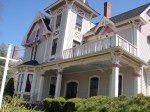




All good things must come to an end. My month of blogging daily has been a good practice. NaBloPoMo, the challenge, officially ends today. I had not participated in any blogging events before this one, and have found many new blogs I enjoy reading during the month. BlogHer is very well organized and vast. Now that I have been there for a month, I think I will look around more and learn how the whole site really works. The blogging conference they hold each year is popular and well attended. In 2014 it will be in San Jose, CA. I am not too excited about conferences in general, and big ones like this are even less appealing. I do believe I can enjoy meeting and reading other bloggers who participate without getting on a plane and seeing them in person. I appreciate the opportunity to join in the fun from my own office. Next November I think I will prepare by making an editorial calendar. The best part of reading new blogs is the variety. I am constantly amazed by the creative and imaginative work I find in blogs. Finding new work I like to read is like finding buried treasure. The discipline of producing a post every day was good, but even better was the fantastic artistic energy of the entire group of participants. I expect it gets bigger each year. Next November, instead of growing a mustache, consider blogging daily…(They are not mutually exclusive, and many blog about their mustaches).
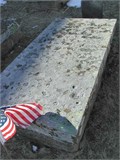
grave

Dr John
My 9th great-grandfather bought Shawomet, Warwick, RI for 144 fathoms of wampum:
Dr. John Greene was the fourth and youngest son of Sir Richard Greene, of Bowridge Hall. He was born in 9 Feb 1597 at Salisbury, Wiltshire, England. He came to Warwick, Rhode Island, sailing on the ship “James” 5 April 1635, arriving in Boston, Massachusetts, 3 June 1635. He moved his family to Providence, Rhode Island in 1637 all four of his sons being born in England. John born 15 Aug 1620, Peter born 10 Mar 1622, James born 21 Jun 1626, Thomas born 4 Jun 1628. His wife and sons all lived out their lives and are buried in Warwick, Rhode Island. He was one of the original 12 members of the Baptist Church. In January 1643, he and 10 others bought from Miantonimoh, Chief of the Narrowgansets (Native American Tribe), for 144 fathoms of Wampun, the tract of land called Shawomet (Warwick, Rhode Island). — A fathom (six feet of strung beads) of white wampum was worth ten shillings and double that for purple beads. A coat andBuskins “set thick with these Beads in pleasant wild works and a broad Belt of the same (Josselyn 1988: 101)” belonging to King Philip (Wampanoag) was valued at Twenty pounds. Even in the 1600s there was noted distinctiveness of Native-made wampum and the inability of others to counterfeit it, although attempts at imitations included beads of stone and other materials. — In 1644 Dr. John Greene went to England with Samuel Gorton and Randall Holden, returning in 1646, their mission successful. John Greene was Commissioner from 1654-57, Deputy Governer 1654. He married his first wife, Joan Tattersall, at Salisbury, England in St. Thomas Church, 4 Nov. 1619. Dr. John Greene died 11 Mar 1658. He is buried next to his wife Joan.
He married often and well:
JOHN GREENE, Surgeon, the progenitor of the Warwick Greenes, was the son of Richard and Mary (Hooker) Greene, and was born on his father’s estate at Bowridge Hill in the parish of Gillingham, County Dorset, England, about 1590. Though not so recorded, dates before and after him would seem to determine this as the year of his birth. His father, Richard, grandfather Richard, and great-grandfather, Robert, had for nearly one hundred years before him resided at Bowridge Hill, and were undoubtedly a branch of the Northamptonshire family of Greene through a younger son.
The mother of John Greene, surgeon, Mary Hooker, was the daughter of John Hooker (alias Vowell), who was born at Exeter, England, about 1524, his father, Robert Hooker, having been mayor of that city in 1520.
John Greene removed early to Sarum (Salisbury), the county town of Wiltshire, and was there married at St. Thomas’s Church,’ November 4, 1619, to Joanne Tattershall (or, as it was written on the church register, “Tatarsole”). Nothing is definitely known of her English connections. The name is frequently found in early records among post-mortem examinations, parliamentary writs, and charters, and is variously written Tatersall, Tateshall, Tatashall, Tatershal, and Tattershall. The first of the family of whom we have mention came in with William the Conqueror and obtained the lordship of Tattershall in Lincolnshire, where he seated himself and from which he took his surname. His descendants were seated in Berkshire and Norfolkshire, and were held in high repute. It is probable that other branches located in other counties, and it is not improbable to suppose that Joanne the wife of John Greene, who emigrated to America from Salisbury, County Wilts, was a connection of the family of George Tattershall, who was seated at Stapleford, County Wilts, which is about five miles distant from his Salisbury home ; but as yet this relationship has not been proved. The following note, recently received by the compiler in answer to an inquiry about records at Stapleford, may be of interest in this connection
“Stapleford Vicarage, Salisbury,” October 18, 1900.
“Madam: I have received your letter of the 25th September, but regret to say that I cannot help you in your research, as the Stapleford Register begins only with the year 1637. “J. F. D. HOERNLE, “Vicar of Stapleford.” [Joanne Tattershall ‘s marriage date was 1619, eighteen years earlier.]
The marriage of John Greene and the baptisms of all his seven children, recorded in the Parish Register of St. Thomas’s Church at Salisbury, England, are still extant. He is therein styled “Mr.” and “Gent,” a mark of some distinction at that date.” He resided at Salisbury with his family, following his profession, for about sixteen years. On April 6, 1635, he was registered for embarkation at Hampton, England with his wife and six children (one having probably died in England before this date),” in the ship James, of 200 tons, William Cooper, Master, for New England.” After a voyage of fifty-eight days he arrived at Boston, Mass., June 3, 1635. He first settled at Salem, Mass., where he was associated with Roger Williams, purchasing or building a house there, but soon after Mr. Williams’s flight from Salem (1636) he sold it and, joining Williams at Providence, secured his home lot, No.15, on the main street. He was one of eleven men baptized by Roger Williams, and one of the twelve original members of the first Baptist church on this continent, organized at Providence, R. I. He was the first professional medical man in Providence Plantations. He is alluded to in Goodwin’s Pilgrim Republic (p. 407) as “one of the two local surgeons” at Providence in 1638, though we are told “the people of Providence relied solely upon him for surgical aid long after his removal to Warwick in 1643.”
His first wife, Joanne Tattershall , the mother of all his children, died soon after his removal to Rhode Island and it is supposed was buried at Conimicut, Old Warwick (?). He married (2) ” Ailsce (Alice) Daniels, a widow” (recorded as proprietor of a home lot in Providence, 1637). They removed to Warwick, 1642-3. At the time of the persecution of the Shawomet pioneers (October, 1643), when “forty mounted and armed men,” sent from Boston to arrest them, fired over their houses, the women and children fled to the woods. Fright and exposure caused the death of the (second) wife of John Greene. (It seems more probable that this was the wife who was buried at Conimicut.) Samuel Gorton wrote of this attack of the Massachusetts troops: ” Afflicting our wives and children, forcing them to betake themselves some into the woods among the Indians, suffering such hardships as occasioned the death of divers of them, as the wife of John Greene, as also the wife of Robert Potter.” Judge Staples, in his Annals of Providence, mentions the fact that the second marriage of John Greene was not recorded, but he found evidence in Probate Records, where mention is made of the son of Alice Daniels as “John Greene’s stepson.”
Evidence of this marriage is also given in the following item:
“In the division of 52 House lots John Greene senior had lot between Thomas James on the North and John Smith on the South, and he inherited the lot of Alice Daniels his second wife between Wm. Harris on the North and John Sweet on the South” {Rhode Island Colonial Records [Printed], vol. i., p. 24).
In files. City Clerk’s office. Providence, is a book containing “A revised List of Lands and Meadows as they were originally lotted for the beginning of the Plantations of Providence in the Narragansett Bay in New England unto the [then] inhabitants of the said Plantations until anno i6—-.”
First in order are the “home lots,” beginning at the Mile-end Cove, south end of town, between Fox Point and Wickenden Streets, lots all bounded by Town (Main) Street on the west and by what is now Hope Street on the east. The name of Alice Daniels is found on this list.
Mr. Greene was married (3) in London, England, about 1644, to Phillippa (always written Phillip), who returned with him to Warwick, R. I., 1646. Her family name is not known. She died at Warwick, March 11, 1687, aged about eighty-seven years, having survived her husband for nearly thirty years.’ In further support that his third wife was from London we quote the words of Samuel Gorton, who, in a letter from Warwick addressed ” to Edward Calverly at his house by the east end of Christ Church in Newgate Market, London,” and dated November 20, 1649, wrote of this last wife of John Greene: ” Your auld neighbour, our loving friend, Mrs. Greene, hath writ a letter of advise to you [which] made me laugh not a little, which I heartily wish may come to your hands. She laies out the benefights of these parts better than I could have advised to have done. She takes well with the country and cheerfully performs her place [part], hath the love of all, non can open their mouth against her, which is a rare thing in these parts.”
Excerpt from the Book Title: The Greenes of Rhode Island, with historical records of English ancestry, 1534-1902 Author: General George Sears Greene (1801-1899) Publisher: Knickerbocker press Published in: New York Date of Publication: 1903 The Excerpt is Pages 54 – 56 The Document was retrieved from http://www.archive.org/details/greenesofrhodeis00gree
The Count

his statue in Brussels
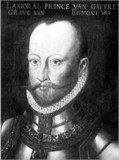
My 12th great grandfather was a count who was very political and fancy. He was beheaded in Brussels in front of the town hall. He is the ancestor of the Pilgrim Richard Sears, who was fancy and political in Plymouth Colony. He has been immortalized by Goethe and Beethoven. He came before William of Orange, and was a big part of the history of Dutch independence.
from Wikipedia: http://en.wikipedia.org/wiki/Lamoral,_Count_of_Egmont
Lamoral, Count of Egmont, Prince of Gavere (November 18, 1522 – June 5, 1568) was a general and statesman in Flanders just before the start of the Eighty Years’ War, whose execution helped spark the national uprising that eventually led to the independence of the Netherlands.
The Count of Egmont headed one of the wealthiest and most powerful families in the Low Countries. Paternally, a branch of the Egmonts ruled the sovereign duchy of Guelders until 1538. Lamoral was born in La Hamaide near Ellezelles. His father was John IV of Egmont, knight in the Order of the Golden Fleece. His mother belonged to a cadet branch of the House of Luxembourg, and through her he inherited the title prince de Gavere.[2] During his youth, he received a military education in Spain. In 1542, he inherited the estates of his elder brother Charles inHolland. His family’s stature increased further in 1544 when he wed, in the presence of the Holy Roman Emperor Charles V and of the Archduke Ferdinand Iat Spires, the Countess Palatine Sabine of Simmern, whose brother became theElector Palatine Frederick III.[1]
In the service of the Spanish army, he defeated the French in the battles of Saint-Quentin (1557) and Gravelines (1558). Egmont was appointed stadtholder of Flanders and Artois in 1559, aged only 37.
As a leading Flemish nobleman, Egmont was a member of King Philip II of Spain‘s official Council of State for Flanders and Artois. Together with William, Prince of Orange and the Count of Horn, he protested against the introduction of theinquisition in Flanders by the cardinal Antoine Perrenot Granvelle, bishop of Arras. Egmont even threatened to resign, but after Granvelle left, there was a reconciliation with the king. In 1565, Egmont went to Madrid to beseech Philip II, the king of Spain, for a change of policy in the Netherlands, but met with little more than courtesy.[1]
Soon thereafter, the Iconoclasm started, and resistance against the Spanish rule in the Netherlands increased. As a devout Catholic, Egmont deplored the iconoclasm, and remained faithful to the Spanish king.
After Philip II sent the Duke of Alba to the Netherlands, William of Orange decided to flee Brussels. Having always declined to do anything that smacked of lèse majesté, Egmont refused to heed Orange’s warning, thus he and Horn decided to stay in the city. Upon arrival, Alba almost immediately had the counts of Egmont and Horn arrested on charges of treason, and imprisoned them in a castle inGhent, prompting Egmont’s wife and eleven children to seek refuge in a convent. Pleas for amnesty came to the Spanish king from throughout Europe, including from many reigning sovereigns, the Order of the Golden Fleece, and the king’s kinsman the Emperor Maximilian II, all to no avail.
On 4 June Egmont and Horn were condemned to death, and lodged that night in the maison du roi. On June 5, 1568, both men, aged only 46 and 44 respectively, were beheaded in the Grote Markt in Brussels, Egmont’s uncomplaining dignity on the occasion being widely noted. Their deaths led to public protests throughout the Netherlands, and contributed to the resistance against the Spaniards. The Count of Egmont lies buried in Zottegem.[3]
Nowadays, a statue erected on the Petit Sablon / Kleine Zavel Square in Brussels commemorates the Counts of Egmont and Horn, in historical overview usually mentioned together as “Egmond en Hoorne” and hailed as the first leaders of the Dutch revolt, as the predecessors of William of Orange, who grew to importance and obtained the leadership after their execution, and who was assassinated in 1584 in Delft, having succeeded in liberating parts of The Netherlands in the early years of the Eighty Years’ War (1568–1648).
Egmont’s offices and vast estates were forfeited upon his execution. By inheritance he had been count of Egmont (or Egmond), prince de Gavre and van Steenhuysen, baron de Fiennes, Gaesbeke and La Hamaide, seigneur de Purmerent, Hoogwoude, Aertswoude, Beyerland, Sottenghien, Dondes, Auxy and Baer. Some of these lands were eventually returned to his heirs. By appointment, he was Captain General of the Lowlands under Charles V, knight of the Golden Fleece since 1546, and Imperial Chamberlain. Despite the taint of treason and the family’s impoverishment, his niece Louise of Lorraine-Mercouer, was chosen to became the Queen consort of Henry III of France in 1575.
Literary treatments
The Count of Egmont is the main character in a play by Goethe, Egmont. In 1810Ludwig van Beethoven composed an overture and incidental music for a revival of the play.
Phillip Lamoral VanEgmond (1530 – 1568)
is my 12th great grandfather
Marie L Egmond (1564 – 1584)
daughter of Phillip Lamoral VanEgmond
Richard Sears (1590 – 1676)
son of Marie L Egmond
Silas Sears (1638 – 1697)
son of Richard Sears
Silas Sears (1661 – 1732)
son of Silas Sears
Sarah Sears (1697 – 1785)
daughter of Silas Sears
Sarah Hamblin (1721 – 1814)
daughter of Sarah Sears
Mercy Hazen (1747 – 1819)
daughter of Sarah Hamblin
Martha Mead (1784 – 1860)
daughter of Mercy Hazen
Abner Morse (1808 – 1838)
son of Martha Mead
Daniel Rowland Morse (1838 – 1910)
son of Abner Morse
Jason A Morse (1862 – 1932)
son of Daniel Rowland Morse
Ernest Abner Morse (1890 – 1965)
son of Jason A Morse
Richard Arden Morse (1920 – 2004)
son of Ernest Abner Morse
Pamela Morse
I am the daughter of Richard Arden Morse


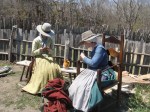
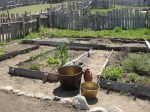
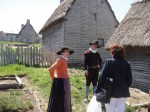
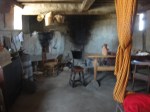
My ancestors attended the first Thanksgiving party in Plimouth Colony. Most of my heritage is English, and the Mayflower was full of my peeps. My 11th great-grandfather attended the feast as a representative of the Wampanoag people. When he first met the Pilgrims they gave him alcohol , which must have aroused his curiosity. The political system in New England was way different from the one in Europe. The local natives made friends with the Pilgrims with reservations (not the kind they have been granted by the US government). They had made contact with Brits before which had resulted in an outbreak of disease that killed a large number of the people. They saw the Mayflower, but kept a distance since they assumed these Brits would be diseased as well.
Quadequina is credited with bringing popcorn to the first Thanksgiving. The Wampanoags I met in Plymouth this year told me it was actually parched corn. Either way, there was a potluck dinner and Quadequina brought corn as his dish. He acted in good faith, was a respectful and polite guest, even allowing the Pilgrims to occupy his homeland and build a fort around their town. It was fairly impossible for the American natives to do due diligence on these religious Pilgrims who had arrived and planned to stay. Squanto, the famous translator, was about all the interface available. The Natives of New England were stuck with this highly unnatural situation through no fault of their own. They just happened to be where the Mayflower got stuck on the rocks. It was their luck.
When my 10th great-grandfather Gabriel Wheldon wanted to marry Quadequina’s daughter he gave his consent and helped the couple avoid disaster from the Pilgrims:
Gordon B. Hinckley, Shoulder for the Lord” by George M. McCune page 35- ” Two of the early immigrants to Plymouth colony were Gabriel Wheldon, of Arnold, Nottingham, England, and his brother (name unknown). Gabriel had been married in England before sailing to America but his first wife named Margaret evidentally was deceased at the time of his migration. Both brothers had a free spirit much like Stephen Hopkins and found their way to the camps of the Wampanoags. There they both fell in love with two of the daughters of chief Quadequina, younger brother of the Great Chief. They each married and Gabriel gave his second wife the English name ‘Margaret’ after his first spouse. The two counseled with their father-in-law and his older brother Massasoit regarding what to do. The Plymouth Colony would probably punish them for their intermarriage. Massasoit advised them to return to the colyn and all would be well. The Plymouth Colony tribunals saved face by banishing the couples from Plymouth for life but did not send them back to England. Gabriel and Margaret established their home in Barnstable where the Hinckleys came in late 1630’s and here Gabriel and Margaret raised a large family of girls. One of these was Catherine “Catone” Wheldon who married Stephen Hopkins'(First to build a house in Mattachesse Villiage/Yarmouth) oldest son Giles on October 9, 1639. Giles had been given the home his father had build in Yarmouth and the couple established their home and raised four children there. When Giles’ father Stephen passed away about July 1644, his father left an estate.. Some records give Margaret as the wife of Gabriel Wheldon. It seems she was his second wife, who, after his death, may have returned to England with Rev. Marmaduke Matthews and his wife. Other records state that Margaret was an Indian Princess, Wampanoag, and give her lineage for several generations. He _may_ have been Margaret’s brother. He immigrated 1638, aPreacher of the Church of Malden. He returned to England in 1655, and Several of the Malden Church members went with him. Of these returning pilgrims, the widow Margaret Wheldon, who left a law-suit over the estate of her deceased husband, Gabriel, also went to England. (from: Pg 155 The History of Malden, Massachusetts, 1633-1785). Rev Matthews died 1683 in England.
I don’t believe he is partial to either pecan or pumpkin pie. I think Quadequina would have liked to see us celebrate equal rights and justice each November. The story of Thanksgiving is mostly mythical, since very little was recorded at the time. Turkeys may not be the best logo for American seasonal gratitude. Popcorn deserves a place at the table.





When I returned to Oakmont, PA this year to see my old friends from childhood I was not thinking about politics or history. I was intrigued to find out what my old home and school looked like, and how my old friends are today. The reunion was a resounding success and a big memory jog. We toured the school where I attended grades K-4, then returned for 7-8th grades. I left after the 8th grade to live in Venezuela as a petroleum princess. This week as we watch the footage and remember where we were when we heard the news JFK had been shot I can clearly picture it. We were in the gym, which had a large dividing wall between the girls and boys for the hour. When we finished the wall was always removed at the end of the school day. On that day when the wall was parted and we saw they boys we were also listening to the loudspeaker system announce to use that the president had been shot in Dallas. It was surreal and many of us started to cry. I am not sure if I cried or not, but I remember being in shock. We talked about it when we were on tour of the school and I had almost a flashback of the feeling on that day. We went home and learned that he had died. My parents did not vote for him but they were very upset about the assassination. After 50 years we all have a chance to process what happened to us and to the world on that day in Dallas. We may have been 8th graders but we all had mature feelings about the frightful news about our country.

