mermaidcamp
Keeping current in wellness, in and out of the water
You can scroll the shelf using ← and → keys
You can scroll the shelf using ← and → keys
The activity on Empire Avenue resembles the stock market, but Wall Street does not have recreational investment games on the weekends. I like the Avenue because it allows me to meet and find new people writing all kinds of great content. The games are intended to socially introduce the members to each other in a non competitive way. Embedded treasure hunts are followed at your own pace. Reward bucks and accomplishment badges are the prizes given for participation, but the true reward is the exposure to the other players. One way I learn about the other players is by completing missions, for which I am paid in Empire bucks. This straightforward approach is better, in my opinion, than all the quid pro quo schemes I have seen in LinkedIn (like my page and I will like yours). As any investor wants his stock to increase in value, so on the Avenue you want the scores and stock prices of the players you hold in your portfolio to do well. If they quit or loose interest you can sell the stock without any problem. If they quit entirely you are given a refund in the amount of your shares invested in that person. There are commissions, and ways to save on them, but since they are all imaginary bucks I don’t stress over that particular issue. These are some of the ways Empire Avenue differs from other social media sites:
In a little less than a year I have built up almost 80 million Empire bucks in wealth. It is satisfying to watch your shares become more valuable and your portfolio rise in value too. Some of the same due diligence you do for the stock market is necessary. It is not such a good idea to buy and hold blindly. Things change. You need to stay current on your investments, just like real life. I have been thinking of inviting my fiduciary to join just to see how well he would do, but I really want him to concentrate on my money, so maybe that is a silly idea. I will let him handle calculated financial risks. I will enjoy being a mogul on #EmpireAvenue while he sticks to Wall Street.
“Even pudding needs a theme.”- Winston Churchill. He could not have ben more insightful. Americans often use freedom as a theme for national celebrations. We repeat themes in our lives without awareness, but how would it make a difference if we embraced themes? Leonardo da Vinci pioneered mind mapping by drawing similarities between seemingly unrelated things. His essential belief in Connessione broadened his thinking and increased his creativity. He took notes constantly, drew pictures and diagrams that we are lucky enough to be able to see today. His notebooks are full of connections, discovery and contemplations.
“every part is disposed to unite with the whole, that it may thereby escape from its own incompleteness”-Leonardo da Vinci. If we think in terms of unification, or connectedness it is obvious that no part of life exists by itself, on its own, with no assistance. Our social connections are different from our commercial connections, and our survival connections are a different group. We rely on systems, nature, people, and cultural beliefs to keep our lives running. By taking a theme for a day we can start to see how connections are at least as important as single relationships. Every relationship touches other relationships, and so it goes. Within the personality of each person there may be dynamic tension or power struggles daily. There are themes within those dramas too. Pick one and observe it for a day, or a week.
Choosing to observe sabotage might reveal deep meaning. We certainly sabotage others and are sabotaged by others. It is also true that we sabotage ourselves and pretend others have done it. Drawing a timeline of the history of self sabotage can be interesting, but why not look at this phenomena in real-time? Check out daily habits that dilute health, happiness or finances. The theme of saboteur is well-known in fiction because everyone has this common issue in real life. If you take time to observe your inner saboteur at work notice how it is connected to those who seem to sabotage you from the outside. Are they in secret alliance? How do they know your weaknesses so well? Are you in cahoots? What are the themes your inner and outer saboteurs use to stay connected to you?
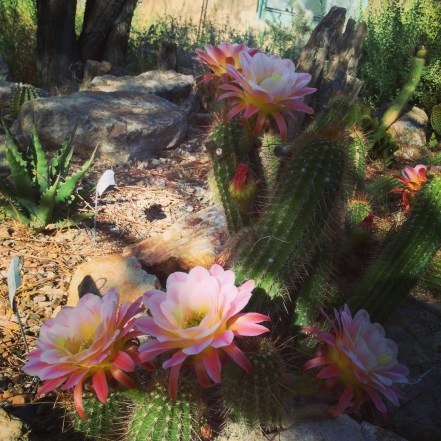
cactus blooming
Our memories are not accurate. Our self images are not well aligned with reality, and our sense of time is warped. This is true for almost everyone. I have embarked on some time line drawing exercises that have proven to me how far off base I am with a lot of my beliefs about my life and myself. The course in archetypes asks that I draw a time line for each of my dominant archetypes, including first meeting and how their powers entered and left the scene. I am surprised about the details I recall when I focus on only one aspect. This is also true if I draw a time line that includes all my physical injuries, surgeries, and illnesses. I have lead a healthy life, but I do see a pattern when I study the tendencies I have had. My doctors ask me to outline my injuries and illnesses, but I had never drawn them out on a paper with dates before. This chart alone tells a big story about your health and your life. There are other valuable time lines to draw for self knowledge:
When you have drawn these lines (all in the same scale) line up the sheets of paper under one another to see if they have any sequential patterns. Putting them all in a row shows detail that can sort out patterns in our lives. We tend to think of time in various delusional ways. We believe we have always been like this (whatever this may be), for instance. We often believe we were innocent when we were guilty, and sometimes believe just the opposite. The time line describes turning points and events that were pivotal in our development. If we then overlay the archetypes in our personalities, and which ones were dominant at what times the portrait becomes even clearer and more detailed. I started with the assignment of the archetype timelines, which is the most intricate and difficult of them all. By doing the easy ones above first we become accustomed to the focus it takes to really remember accurately. Then we are warmed up to question who was in charge and when. Time lines contain a great deal of power while still holding mystery in the line where it says nothing. Obviously there were constant events, but only some can be brought to mind. More practice brings better proficiency in stringing it all into place.
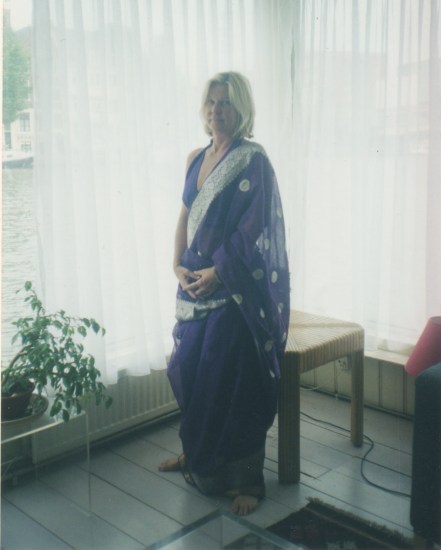
Being Blonde
Our bodies serve us as the vehicle with which and for which we live our lives. If we are strong, flexible, ambidextrous, and well coordinated we are likely to feel good and be healthy. Improving diet and exercise habits can bring about changes in attitude and vice versa. The key to being the best body you can be for your whole life is unconditional gratitude for the body you have now. You may train to become more graceful, more balanced, or more relaxed, but you must work with what you have. Start by loving your skin and everything inside of it. An understanding of basic anatomy is helpful in cultivating well-being. Learning about customs of folk medicine, healing techniques, or diets of foreign cultures can expand the options for self care. Knowledge and understanding are not the key ingredients in radiant health. Acceptance and love for all the ways your body serves you are the foundation on which strong healthy lives are created. What are the different aspects of our physical realm?
The body contains all these different ways of sensing life. Poise, grace, and fitness result from practice. Practice requires focus of mind and body to achieve results. To refine our movements as well as our thoughts we need training. Staying fit and flexible may be the best way to avoid injury. Feeling healthy does uplift the emotions and add to self confidence. Self image is a strong determining factor in the way health is pursued. To clean up and clear up some possible issues from the past answer for yourself these questions:
If you reflect well on these questions and your honest answers to them you may reach some enlightenment. Your thinking, feeling, remembering, and sensing selves can invest in better habits when they are grounded in a healthy self image. First do no harm to your own idea of your body. From there it is possible to heal misguided thoughts about wellness and self care. We deserve the best we can give our bodies for as long as we are in them. Clearing away false judgements from the past makes way for positive changes.


Planting by the moon is a simple way to increase your luck at growing anything. By planting annuals bearing fruit above the ground during the waxing phase of the moon ( new to full), and sewing plants that bear under the ground during the waning moon ( full to new) we follow ancient traditions of horticulture. To easily determine in what phase of the moon you find yourself, remember this rule: Crescent moon makes the shape of the letter C when the moon is on the wane. The moon has the shape of a capital D when it is on the rise. Think DOC–first D– then full moon–then C to remember the sequence.
Medicine was tightly constrained by local botany in history, limited to plants available and known. The natures of the plants were studied and knowledge of remedies was shared. However, before transport of goods became easy people used local plants as medicine because they had both access and some empirical evidence of the medicinal qualities. Astrology was part of pharmacology and medicine. Gardens and buildings were designed with healing and astrology in mind. Today there are ways to incorporate the heavens into garden design. The medicine wheel is one way to express the seasons and the heavenly connections. At Plimouth Plantation in Plymouth, MA a humoural garden is planted to display the relationship the Pilgrims had with plants and healing. They considered the relationship of the plants to the humors of the body. They had to rely on the plants they brought with them and those that the native people showed them.
Some gardens are designed to feature the four directions, or the elements. If you had unlimited time and money to create a symbolic garden what would you plant in it? What kind of medicine would you practice? I am fond of all the aromatic plants, so I have a vast array of herbs and flowers that can be used in tea, baths, cooking, and now in bitters. The creativity you invest in a garden returns to you many times.

My favorite herb in the garden is lemon verbena. I like to make tea with it all the time, but there are many other uses for this luscious herb. As a bath herb it brightens and refreshes the body and mind. The fragrance is used extensively in perfumery for the lemony zest it adds. In cooking it creates a lemon taste with no bitterness or aftertaste. It can be added to baked goods, salad dressings, drinks, sauces, and fruit salads to brighten a dish. Simple syrup of lemon verbena is useful for many drink and popsicle recipes with or without alcohol. Mixed with citrus fruit it becomes a big flavor enhancer. Rice pilaf, carrot cake, gazpacho, and other dishes can benefit from a pinch of this delicious herb. Store it in a glass jar in the dark to preserve freshness.
I love herbal bathing as retreat and meditative practice. The first one I tried about 20 years ago was rosemary bath. I brewed a strong tea of rosemary and added it to my bath. This method works well, as does the brewing of the tea in the tub by running hot water over a sachet, allowing it to steep, then filling the tub. When you choose the herbs and when you enter the water you can make the entire process a mindfulness experience. Drinking tea made with the same herbs will enhance the aromatic sensory intake. I am planning to take some baths this week with matching beverages and bath herbs. If you have a favorite herb you can try this at home. If the bath is taking place at the cocktail hour I think it is suitable to include the herb in a tasty concoction from the bar that aligns with the indented purposes.
These are ideas for you to design your very own aroma world to enliven your senses and change your mood. There is an art to choosing herbs for the desired mood, but there are very few side effects that inhibit experimentation. If you like an herb you can research it fully or simply determine that it is not toxic, then try it in a bath. The effectiveness may surprise you. When all the pores of your skin are soaking in the active ingredients the results are swift. Bringing to the mind’s eye the results you want to see is the strongest link that brings this practice into the meditational realm. By creating sensory stimulation and awareness at once we step out of our normal situation and into synesthsia of our own design. We use the aroma as an anchor for our meditation. At the least you can enjoy smelling and feeling bit better from the herbal bath. At the most it can be a rebirth and transformation.
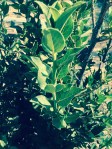

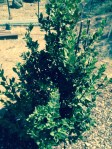
Laurus nobilis is a shrub or tree native to Asia Minor, popular in the Mediterranean, known and used for centuries. It was sacred to Apollo, the sun god in Greece, and had been used in Mesopotamia as protective incense. In the fourth century AD Greek magician and philosopher Proclus Diadochos stated that bay laurel branches were used in ceremonial work to banish spirits. The use of crowns of laurel leaves to award victors in the contests started at the Pythian games, in honor of Apollo who revered the plant. The custom spread and the laurel assumed a meaning of victory or triumph in Rome. A sudden withering or visible demise of a bay tree in the yard was considered to be a very bad omen for the owner.
The leaves are poisonous in large doses, and the sharp edges of the leaves can damage your digestive tract if ingested. They can be used in cooking either by themselves or in a bouquet garni that is removed before serving and thrown away. The flavor is exotic, lending deep flavor to sauces, stews, and pickles. Although it is less common to use bay leaves to season dessert dishes, here are some great ideas:
Try using bay leaf in new ways. Become the cook laureate of your kitchen.

secret garden

lemon thyme

lemon thyme

lemon thyme
My garden is full of lemon thyme, a culinary herb I love to use for seasoning food and drinks. It is potent as a flavoring agent, and has medicinal qualities as well. It is one of the earliest recorded plants used in Western medicine. It can be helpful in treating respiratory problems, digestive disorders, and infections. It strengthens the immune system and can ease headaches and insomnia. Those with high blood pressure need to take caution when using it because thymol, the active ingredient, can prove to be too stimulating for those individuals. Lemon thyme generally contains less thymol and more linalol than red thyme, which may cause less irritation and sensitivity. To take thyme as a remedy you can brew an infusion and drink it three times a day, or make a tincture by soaking the herb in alcohol to extract the active agents and take a few drops of the tincture three times a day. Commercially thyme is used in mouthwashes, toothpastes, and cough lozenges. It is used to flavor foods and drinks as well as in the fragrance industry.
This herb was highly praised in ancient Greece and Rome. The magical significance of the plant is to strengthen the will and promote confidence. Egyptians used it in mummification, and it was used in funeral rites in other parts of the world. The ancient belief that the dead take up residence in the flowers of the thyme plant gives some extra meaning to the psychic dimension. Making a bath sachet to use as both a confidence builder and an anti bacterial boost is a pleasant and effective way to use thyme externally. Skin absorbs the active ingredients quickly during a bath, allowing a low dose to create the maximum healing. Wrap dried herbs in a cloth and brew the tea in your bath for 10 minutes or so before bathing to enjoy the benefits of this method. You keep the sachet in the tub with you so you can scrub with it and enjoy smelling it while you soak. Since I like to include the medicinal ingredients in cocktails here are some ideas:


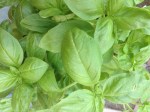

Basil is a culinary herb that has magical qualities. The different varieties add distinct flavors to dishes and drinks. You can purchase seeds for many varieties, but the most commonly used and grown is the Genovese. This very hardy herb does well in pots or in the ground. It is very tolerant of sun and thrives with minimal care. It is important to keep the flowers trimmed so the plant does not go to seed. The flowers have delicate flavor that can be used to flavor anything for which you would use the leaves. The blooms look good in cut flower arrangements, and will scent the room where they are displayed. A few common ways we see basil used are:
I love using basil in all of these traditional ways. When I find a really excellent tomato I always want to eat it with basil and fresh mozzarella. Pesto is used on everything in our house, not just for pasta. We put it on eggs, roasted veggies, potato dishes, rice, and sandwiches of all kinds. The bright green color and the bright flavor wake up any meal. I find that making a large batch with really good olive oil, roasted pine nuts, garlic and basil stores very well. I add the parmesan cheese at the time I am using it. This also allows a different proportion for each kind of use. The pesto is delicious without any cheese for those who prefer that. I have tried some really tasty cocktails that contain muddled basil for flavor. Here are some of my favorites:
That will give you some ideas to get started on your own basil concoctions to drink this summer. It is good with citrus, cucumber, and other herbs. Try a plain basil mojito to get yourself started. Basil is a prosperity herb, so you really can’t have too much of it in your food and drinks. Enjoy!

Hilton Big Horn
I was privileged to spend the weekend with a group of about 170 people who came from all over the country to a conference on the Spirituality of Healing taught by James Finley. The group included many mental health professionals and teachers who were earning credits in continuing education in their professions. Many were members of churches with meditation/prayer groups. I was new to the genre, but felt right at home in he congenial student group. I saw an ad for this in a local paper and followed up with some research into James Finley. I ordered a couple of audio books he wrote and signed up for the conference. The resort where it was held is where the Dalai Lama taught in September of 1993, so I have very fond memories of the place. The Hilton El Conquistador was turned into the the El Comtemplador for a couple of days. The hotel is dog friendly so my partner and dog could come along for a staycation away from home. It was a remarkable experience. I did not photograph the sessions or the participants because I did not want to distract myself from the teaching. I am happy I made that decision because those photos would add little to this post.
Dr. Finley is very generous with free resources on his website, His teaching in person is designed to pack the time spent together with dense, rich, profound, yet simplistic and practical ideas. His background allows him to use language of psychotherapy as well as religious language to explain his concepts. He is a brilliant speaker, but the style of presenting really enhances the message he brings. First of all, he establishes silence in the hall where the conference takes place. There is time and space outside the room to talk. On the second day the group broke bad and got noisy, so he asked that we reestablish the silence in the room. He uses humor to make his point many times, and refers to patient/clinician dialogs to shed light with specific examples. In his opening remarks he lets the audience know that trauma is a difficult and personal subject to address. He encouraged each person to leave the room, move around, take breaks as needed. He repeated several times, “To thine own self be true.” This was good for me when I decided the chairs were not sized so well for me, so I took up a spot against the wall where I had support from the wall for sitting or could even lie down. The sessions covered in sequence his Seven Steps of Spiritual Healing, which logically build upon the preceding steps. He speaks for a little over an hour to cover the material and then a 15-20 minute discussion is opened with the students. A short break for everyone is followed by the next lecture. The time is very well ordered and managed to the greatest advantage of the students. I must say the staff at the resort could not have been more pleasant and helpful, which was icing on the very tasty cake.
He shows the highest regard for the integrity of the students in his assignment of homework. He gave us several exercises to do on our own that will require a great deal of time and consideration, and then moved on to his core curriculum. If you practice you reap the benefits of practice. If you don’t, you don’t. Dr. Finley drives this point home in dramatic and impressive ways in his teaching. Not only is the task of enlightenment or healing our own responsibility, but we are doing it as a microcosm of all that is. We can only put ourselves in the position of least resistance for our desired outcome, and then let go. Deep meaning, philosophy, poetry, art and love are contained in each precious moment, available to us, and being created by us. We have all heard such statements somewhere in our past, and may believe them. What Dr. Finley offers is a system, a practice, a devotional idea to stabilize the consciousness in a state of pure love. It requires diligence and patience. He ended by giving us homework for seven years. It was the perfect wrap up for this conference. He showed how to use lexia divina, discursive meditation, and practice to move into and through the seven steps. He assigned us a step each week for seven weeks, then do that seven times (49 weeks) after a short break we were to take it up again from the beginning..seven steps, one step a week , repeated 7 times. Of course, after a break we are to start at the beginning, until we have done this practice for 7 years. I am sure some kind of heavy duty breakthrough would have to take place if we were all to do our homework. I love his optimism in assigning it. If you have a chance to study with these contemplatives, take advantage of it.

