mermaidcamp
Keeping current in wellness, in and out of the water
You can scroll the shelf using ← and → keys
You can scroll the shelf using ← and → keys

nuts to crack
If we were having coffee this week I would invite you to the nut bar to find the right mix to pair with your tea or coffee. The nut bar is a nod to both #OctoberUnprocessed, which I find easy to do, and to the tidy guru, whose advise I am finding very difficult to follow. I purchased more fall festive flavors of white tea and chai partly because my tea company offered a free tiny bottle of honey with an order over a certain amount. I was a sucker for the honey, and have yet to impose any kind of tidy rules on my tea cupboard. It makes me very happy, and when a swing the lazy susan cabinet that houses it closed it adds no visual clutter to my kitchen.
In my journey to minimalism and clean eating I have created an alternative to processed crackers this week that is far superior to the store bought version. I made pesto shortbread to die for. I still have some in the fridge ready to slice and bake. It has the flavor of homemade pesto I already had on hand and utilizes some of the pine nuts I also have in stock. My tidy muse reminded me that all of the nuts in my fridge are from last year. The few pecans I still have in the shell have been waiting for way to long to be cracked open and eaten. She (tidy muse) is absolutely right about consuming the old food to make room for the new crop which is soon to arrive on the market. In the spirit of tidy AND unprocessed I have started eating a daily deconstructed dessert. It started with apples and honey for Jewish new year. It is so pleasant and satisfying that I have followed with sliced apples or pears with cheeses and with nuts. I have been enjoying this sweet indulgence by purchasing different honey and apple varieties to combine. The honey from the tea company is cinnamon flavored, which is delightful with both the nuts and the apples. I have pecans, pine nuts, walnuts, hazel nuts, and pistachios all on special for my tasting pleasure. During your weekend beverage visit please help yourself to these seasonal delights. The tidy muse will be so pleased when all the nuts are gone.
I am inspired by the many ambitious writers who frequent this coffee share. Some of you are very prolific while you continue full lives in other realms. I have been thinking about writing more poetry, since I do really love it. Like tidying, I have to struggle against some lazy lady lurking in the shadows who does not want to make the effort to write poetry. I was set up to attend a poetry reading on Thursday, meant to get my poetry mojo working. I slept through it, as I did the vice presidential debate the previous night. I am extremely early to bed and early to rise, as well as a very sound sleeper. I count myself as lucky to be able to easily sleep and dream, so I am not too harsh on myself when I snooze through anything. I can always catch up on world events on twitter when I awaken.
Politics in the United States are heating up in all the most bizarre ways. The tidy lady needs to school the politicians about hoarding old nuts. There are now scary clowns in the woods as well as in government. We are on a strange collision course with destiny. There is absolutely no telling what will happen.
Catch up with writers who share coffee on the weekend here. Sit down, enjoy, share whatever is on your mind. Have a Nut! They are on special this week.

Medicare Vitamins
I received my giant booklet from the insurance company this week, along with the almost as thick booklet from Medicare itself. I discovered last year when I enrolled that consulting a professional insurance agent is the only way to make an informed decision on this issue without loosing your mind. To my great delight I was able to clear up a couple of questions I had about the updates on the phone with my agent. Since I am pleased with my current coverage I don’t need to do anything during open enrollment season. My agent, Karyn, will check and confirm that my dermatologist will remain in the coverage network. We can then agree simply over the phone and she will remain my agent. She makes sure the plan works for my best financial interest. She also acts on my behalf if I ever have conflict with an insurance provider. Since the data is overwhelming, and the circumstances change each year only a professional can keep current with the latest nuances. I am in a good mood not only because I have finished the task for the year, but my benefits almost all improved in 2017 for the same low price. Should I need to use them I will be rewarded with more bang for my buck.
I am happily surprised at the ways Medicare has made me happy during my first year. The Silver Sneakers benefit was created with me in mind. I need an excellent gym with a clean locker room at the least, to meet my minimum lifestyle requirements. I have been happy at the Tucson Racquet Club for years, but now I get both the Racquet Club and the Tucson Jewish Community Center member ships for free. The JCC is a wonderment of well run health and fitness programs. The beautiful gym with fast wi-fi and filtered water for your bottle gives me a thrill every time I enter. I was not miserable at the Racquet Club, but it is a real blast to have the gift of a better designed facility courtesy of Medicare. For me it is like a won the spa for life sweepstakes. There are all kinds of Silver Sneakers offers, but you must make sure that your insurance provider is on board with the program. For my own purposes, this is the most important feature. Since my company will continue to participate in the program my fabulous free membership will continue uninterrupted.
My over the counter pharmacy benefits will be slightly reduced from $25 a month to $50 each quarter. If you place no order you will not use your benefits. I make a game of trying to come out to exactly $25 each month. I use it for vitamins, bandaids, dental floss, and the like. This also is one of my favorite benefits because they deliver your products by mail, the ultimate convenience. I keep myself stocked up on these daily use items at no cost. I may never run out of chapstick and cotton swabs. The company I use is Humana, but this is not a plug. It is important to match your own consumer needs with the company’s offer. Your state may have different features, and they are all subject to change next year.
Good luck to all the Medicare consumers and their families in this wild season. My best advice is hire a great insurance agent to represent you. If you live in Tucson I highly recommend the services of Karyn Damshen. She will remove the mystery from this stressful process. Once you have a clear understanding of the options she will guide you to the best fit for you. Her services are paid by the provider, so there is no extra cost to you as her client. She works for you as an independent agent. This is a big boon to those trying to understand this complicated market. I hope you all end up happy and well covered for whatever transpires next year.

Tucson JCC
Today is #NationalPoetryDay, a time when good, bad, silly, and stuffy poets come out of the woodwork. Twitter is all a twee with creative use of language, both in rhyme and free verse. All the classics are on hand from the bard to Lisa Simpson. The political rhymes are flying along with Rumi at his best. If you have not followed a hashtag or written poetry before, today is your day. The Japanese form known as haiku is often attempted on twitter, but there are more forms from which to choose. Try your hand at a short poetic statement and join your fellow poets on this special day. You will find that 140 characters is more than enough to express sincere sentiment. Be part of history. Join #NationalPoetryDay October 6, 2016 to stretch beyond your current limits and have some fun. Here is my first of the day:

The original painting hangs at the Pilgrim Hall Museum in Plymouth, Massachusetts. Mayflower Compact, Image from painting by Edward Percy Moran (1862-1935), showing Myles Standish, William Bradford, William Brewster and John Carver signing the Mayflower Compact in a cabin aboard the Mayflower while other Pilgrims look on, ca. 1900.
My eleventh great-grandfather sailed on the Mayflower as a paying customer, not part of the Leiden religious Pilgrims. He was a merchant who sailed from England without his wife and daughters, sending for them to join him after he was established in Plymouth. As we travel in time toward Thanksgiving I like to deconstruct some of the misconceptions we have about these Mayflower pioneers. They were not all religious and they did not all survive very well in the new world. Things were not as rose as they were presented to us back in elementary school. It was not all turkey and dressing. The Plymouth story is a complicated tale of cultural clashes that continue to this day.
Richard Warren (1580 – 1628)
11th great-grandfather
Anna Warren (1612 – 1675)
daughter of Richard Warren
William Little (1640 – 1731)
son of Anna Warren
William Little (1660 – 1740)
son of William Little
William Little Jr (1685 – 1756)
son of William Little
Jeanette Little (1713 – 1764)
daughter of William Little Jr
Andrew Armour (1740 – 1801)
son of Jeanette Little
William Armor (1775 – 1852)
son of Andrew Armour
William Armer (1790 – 1837)
son of William Armor
Thomas Armer (1825 – 1900)
son of William Armer
Lucinda Jane Armer (1847 – 1939)
daughter of Thomas Armer
George Harvey Taylor (1884 – 1941)
son of Lucinda Jane Armer
Ruby Lee Taylor (1922 – 2008)
daughter of George Harvey Taylor
Pamela Morse
I am the daughter of Ruby Lee Taylor
Richard Warren (c.1580 1628) a passenger on the Mayflower, old “May Floure,” in 1620, settled in Plymouth Colony and was among 10 passengers of the Mayflower landing party with Myles Standish at Cape Cod on November 11, 1620. Richard Warren co-signed the Mayflower Compact and was one of 19 among 41 signers who survived the first winter. His wife Elizabeth, nee Walker, baptised 1583 in Baldock, Hertfordshire, England, died October 2, 1673. She and his first five children, all daughters, came to America in the ship “Anne” in 1623. Once in America, they then had two sons before Richard’s untimely death in 1628. Clearly a man of rank, Richard Warren was accorded by Governor William Bradford the prefix “Mr.”, pronounced Master, used in those times to distinguish someone because of birth or achievement. From his widow’s subsequent land transactions, we can assume that he was among the wealthier of the original Plymouth Settlers.” In Mourt’s Relation, published in 1622, we learn that Warren was chosen, when the Mayflower stopped at Cape Cod before reaching Plymouth, to be a member of the exploring party among 10 passengers, and 8 crew, and he was described as being “of London” among 3 men. Charles Edward Banks, in Ancestry and Homes of the Pilgrim Fathers writes: “Richard Warren came from London and was called a merchand of that city, by Mourt.” He was not of the Leyden, Holland, Pilgrims, but joined them in Southampton, England to sail on the Mayflower. Richard Warren received his acres in the Division of Land in 1623. In the 1627 Division of Lands and Cattle, in May of 1627, “RICHARD WARREN of the Mayflower” was given “one of the black heifers, 2 she-goats, and a grant of 400 acres of land” at the Eel River in Plymouth, Massachusetts. The Warren house built in that year, 1627, stood at the same location as the present house; it was re-built about 1700, at the head of Clifford Road, with its back to the sea, and later owned by Charles Strickland, in 1976. However, Richard Warren died a year after the division, in 1628, the only record of his death being found as a brief note in Nathaniel Morton’s 1669 book New England’s Memorial, in which Morton writes: “This year [1628] died Mr. Richard Warren, who hath been mentioned before in this book, and was an useful instrument ; and during his life bore a deep share in the difficulties and troubles of the first settlement of the plantation of New Plimouth.” -Nathaniel Morton, New England’s Memorial (Boston : John Usher, 1669) Source: http://en.wikipedia.org/wiki/Richard_Warren The Mayflower Compact was the first governing document of Plymouth Colony. It was drafted by the “Pilgrims” who crossed the Atlantic aboard the Mayflower, seeking religious freedom. It was signed on November 11, 1620 in what is now Provincetown Harbor near Cape Cod. The Pilgrims used the Julian Calendar which, at that time, was ten days behind the Gregorian Calendar, signing the covenant “ye .11. of November.” Having landed at Plymouth, so named by Captain John Smith earlier, many of the Pilgrims aboard realized that they were in land uncharted by the London Company. For this reason the Mayflower Compact was written and adopted, based simultaneously upon a majoritarian model and the settlers’ allegiance to the king. Many of the passengers knew that earlier settlements in the New World had failed due to a lack of government, and the Mayflower Compact was in essence a social contract in which the settlers consented to follow the rules and regulations of the government for the sake of survival. The government, in return, would derive its power from the consent of the governed. The compact is often referred to as the foundation of the Constitution of the United States, in a figurative, not literal, way. The list of 41 male passengers who signed was supplied by Bradford’s nephew Nathaniel Morton in his 1669 New England’s Memorial include: Richard Warren Source: Mayflower Compact, Image from painting by Edward Percy Moran (1862-1935), showing Myles Standish, William Bradford, William Brewster and John Carver signing the Mayflower Compact in a cabin aboard the Mayflower while other Pilgrims look on, ca. 1900. Source: http://en.wikipedia.org/wiki/Mayflower_Compact
My 11th great-grandfather was probably born in Hertford, England. He married Elizabeth Walker, 14 April 1610, Great Amwell, Hertford, England, daughter of Augustine Walker. He died in 1628, in Plymouth. Children: Mary, Ann, Sarah, Elizabeth, Abigail, Nathaniel, and Joseph.
Richard Warren’s English origins and ancestry have been the subject of much speculation, and countless different ancestries have been published for him, without a shred of evidence to support them. Luckily in December 2002, Edward Davies discovered the missing piece of the puzzle. Researchers had long known of the marriage of Richard Warren to Elizabeth Walker on 14 April 1610 at Great Amwell, Hertford. Since we know the Mayflower passenger had a wife named Elizabeth, and a first child born about 1610, this was a promising record. But no children were found for this couple in the parish registers, and no further evidence beyond the names and timing, until the will of Augustine Walker was discovered. In the will of Augustine Walker, dated April 1613, he mentions “my daughter Elizabeth Warren wife of Richard Warren”, and “her three children Mary, Ann and Sarah.” We know that the Mayflower passenger’s first three children were named Mary, Ann, and Sarah (in that birth order).
Very little is known about Richard Warren’s life in America. He came alone on the Mayflower in 1620, leaving behind his wife and five daughters. They came to him on the ship Anne in 1623, and Richard and Elizabeth subsequently had sons Nathaniel and Joseph at Plymouth. He received his acres in the Division of Land in 1623, and his family shared in the 1627 Division of Cattle. But he died a year later in 1628, the only record of his death being found in Nathaniel Morton’s 1669 book New England’s Memorial, in which he writes: “This year [1628] died Mr. Richard Warren, who was an useful instrument and during his life bare a deep share in the difficulties and troubles of the first settlement of the Plantation of New Plymouth.”
All of Richard Warren’s children survived to adulthood, married, and had large families: making Richard Warren one of the most common Mayflower passengers to be descended from. Richard Warren’s descendants include such notables as Civil War general Ulysses S. Grant, President Franklin D. Roosevelt, and Alan B. Shepard, Jr. the first American in space and the fifth person to walk on the moon.
6 September 1620 Richard was one of the 102 passengers that embarked on the Mayflower, leaving Plymouth, England on this day. Many people are aware that the passengers of the Mayflower were fleeing religious persecution. What most people don’t realize is that over half the passengers were “strangers” picked up from London, whose passage to America on the Mayflower helped the religious separatists pay the excessive expenses involved with sending a ship to the New World. Those in the Leyden contingent are the “religious separatists” and those of the London contingent are the “strangers”.
9 November 1620 The passengers and crew aboard the Mayflower sighted land.
11 November 1620 The passengers and crew of the Mayflower made landfall in America. The group of 102 passengers who crowded aboard the Mayflower for the crossing was not homogenous. Many of the passengers were members of the Leiden congregation, but they were joined by a number of English families or individuals who were hoping to better their life situations, or were seeking financial gain. These two general groups have sometimes been referred to as the “saints” and “strangers.” Although the Leiden congregation had sent its strongest members with various skills for establishing the new colony, nearly half of the passengers died the first winter of the “great sickness.” Anyone who arrived in Plymouth on Mayflower and survived the initial hardships is now considered a Pilgrim with no distinction being made on the basis of their original purposes for making the voyage.

prisma
Writing, music, art, and cuisine are integrated into my daily routine. I am inspired by creative projects of all kinds. I hope my study and practice keeps life fresh and stimulating. I am comfortable writing facts and stating my own opinions. I adore investigating my family tree because I constantly learn about history in a direct and personal way when I discover more facts about my ancestors. I also imagine myself inheriting some spark of talent from each and every one of them. I wish I knew more about the kinds of arts they might have pursued during their lives.

prisma
In April I join poets around the world to write 30 poems in 30 days. During the rest of the year I am a sporadic poet, and feel a tinge of guilt about it. This week I will go to a reading at our world-famous U of A Poetry Center. The theme for this series is poetry and climate change. The poets present in an ideal setting for the purpose, then answer questions posed by the audience. The caliber of the talent is outstanding. We are lucky to have this presented to the public here free of charge as part of the Poetry Center’s ongoing work. When I go to the center, either for a reading or to read part of the amazing collection, I feel extra guilt. My famous ancestor poet, Mistress Bradstreet, is represented in the collection. She wrote in colonial Massachusetts and wonders why I am not more prolific as a poet. Life as well as writing were not easy for her because the 1600’s were far less care free for women. She managed to crank out poems that told about historic events of the time in the language of the time. She thinks I should do the same, especially since I have all these electronic devices and twitter. She had nothing so convenient.
I have no real excuse to give to her. When I get into the practice of it I enjoy being a poet. I especially like to hang out with other poets, all of whom are better and more thoughtful then I am. Perhaps the reading this week will prime my poetic pump. Synesthesia is one of my daily goals in life. To create fusion of the senses, then mix them all into memory in order to make them verbal is a fun practice of self discovery. Poetry and music lend themselves to capturing the essence of sensory experience. I am not sure why I don’t do it all the time.
What do you like to do to employ your native creativity, gentle reader? Did you inherit any of your artistic talents (of which you are aware)?

audible
I have enjoyed the audible reading app from Amazon that I test drove for the last three months. In the past I had listened to audio books on long drives, but rarely at home. I took the free membership that included 3 free books over a period of three months. It is fun, but I will not continue to pay for it when the free trail ends. I do enjoy telling my robot Alexa to read to me at home, but I can still purchase books I like from Amazon and add whisper sync audio if it is available for that book. Then I have access to the audio version forever without paying for a separate audible subscription. If I had a different lifestyle that including a lot of time in my car I would consider staying subscribed to this service. Here are the features I appreciate the most:
It is true that during my audible free trail I managed to listen to 5 books that I found useful. This is an increase in the average number of books during a 3 month period. I purchased the last one in hard copy with whisper sync so I can continue to listen after I kiss this membership good-bye four days from now. I think Alexa knows how to whisper sync. If not, I will whip out the bluetooth speaker and listen the old fashioned way. Do you listen to your content, or read it? Do you use books printed on paper or electronic devices to read? Do tell, gentle reader.

October Unprocessed
If we were having coffee I would tell you that today is the first day of a commitment I make to myself and the planet during this month. I want you to consider trying it too. You are the one who decides exactly what processed means in this context. You define the challenge, which is not a diet, but an experiment. I have participated in October Unprocessed for the last couple of years. It is an enlightening voyage of discovery for me. Although I think of myself as a clean eater, I am not nearly as saintly or thrifty as I appear to (myself to) be. My trips to Trader Joe’s are all about the packaged goods as well as the high quality and good price on staples. I eat chips and crackers that cost too much and deliver too little nutrition for the buck. There are excellent substitutes. I have prepared this year by purchasing a major stash of good popcorn. This tried and true snack item can be dressed up for all occasions with seasoning. I invite you to join me for a cup of tea or coffee and a trip to the popcorn bar, which will be set up all month for your nibbling pleasure. Choose your own toppings, seasonings, butter, or even make your own popcorn ball with nuts and sticky syrup.
I am happy to be back at the weekend coffee share with so many of you who live far to the north of me. This week I collected a fabulous Norwegian recipe for soup and a bushel of apple recipes form some of the writers at this friendly table. I love to experience the vicarious digital winter through you. My grapefruit tree is full of fruit just starting to ripen. Soon I will no longer need my brand new air conditioner. This is what winter is in Tucson. Although I spend my childhood in Pennsylvania loving snow and four seasons I have been away from that for too long now. I truly would freak right out if I had to endure real winter in the north. Props to all of you who tough it out, drive right on through it. You have my full respect.
No matter where you live I am going to recommend that you try the October Unprocessed challenge. Taking a look at how much of one’s diet is packaged and transported at greater expense than the original food in said package is an eye opener. I discover when I take this month to examine how and why I purchase so many convenience items when I enjoy cooking as one of my favorite activities. Starting with fresh ingredients always yields a superior product. I know perfectly well how to do that, yet I am lured into impulse purchases of items represented as “healthy”. In fact, I snarfed down my last crispy rice crackers after midnight, so I have gone off the wagon before I even started. The idea for me is not to create guilt, but to gather information that will help me improve my diet over time. If I discover delightful alternatives I have no need to return to processed foods I have used in the past. This does not mean Trader Joe and I will be breaking up any time in the foreseeable future. It does not mean that on November 1st I will not return to using mass quantities of bacos (fake soy bacon in bits). Some things just make me happy. Bacos are essential to my mental well being, but I can go without them for a month to prove that I am not an addict.
Thanks for visiting the Weekend Coffee Share. Do visit my fellow writers, not all of whom are serving digital health food. You will find all kinds of hospitality here. Read, write, and share your thoughts with this international crew each weekend for a lively exchange of ideas.

Today we wake up to a Libra Moon who will conjoin Jupiter this morning, putting a positive spin on the day. Three planets in Libra (Sun, Moon and Jupiter) are enough to lighten the mood and hopefully crack open a few minds. Even though we’re still technically in the Balsamic Phase since the New Moon […]
via Libra Moon ushers in change 9-30-2016 — Libra Seeking Balance

reflection in my pool
Swimming is introduced to many of us when we are children. I was enrolled in the Red Cross swimming program, which I looked forward to attending each summer until I passed all the badge levels. I lived in Pittsburgh, so we had very little winter time swimming. We did occasionally go to a YMCA with an indoor pool that was open at night somewhere in the ‘burbs of the ‘Burgh. I remember my hair freezing after those sessions, but it did not bother me at all. My friends and I were big fans of the water, and our parents used going to the pool as the supreme bribe/reward.
When I was 30 I trained at the YMCA in Tucson to teach parent/infant swimming classes. After I was certified my friends with lots of kids asked me to teach at their private pools at home. I did this for many years, teaching groups organized around the convenience of the families. This very good deal for both the parents and for me finally ended against the wishes of some, but I was truly fried by the sun and ready to leave the pool deck. My skin and hair were begging me for a break.
I still taught aquatics and swimming at spas, but to adults. The adult swimming lesson becomes a greater challenge than the children’s class. If a person has not learned to swim by a certain age, it becomes a greater obstacle with every passing year. Some people were directly frightened by a water incident at some time they remember. Most don’t recall a specific reason, but have been afraid of water since they were young.
It is appropriate to fear water if one does not have the skills needed to survive in it. Of particular danger are natural bodies of water with currents, undertow, or strong surf. Even strong swimmers are subject to injury or death in torrential flash flood conditions. Caution is always a good idea in or around water. Being a good lifeguard for yourself and others is all about prevention. It is not a good idea to swim alone. Get out of the water during a lightning storm. Use common sense to keep everyone from falling or slipping around the edge of the pool.
Learning to swim well enough to swim laps for exercise has multiple benefits:
I believe the last one is the best. Nobody can interrupt you, call you, ask you for anything during your lap swim. Especially if you learn to flip turn, your obvious determination to move across the water will be respected. Nobody will mess with you until you are finished. When your goggles and your fins fit just right, and you groove into the sound of your own exhalation under the water, all is bliss. Once a good level of competence is achieved it is easy to increase stamina in the pool without risking injury. In fact, I can think of no negative side effects associated with learning to swim. Are you a strong swimmer, gentle reader? How did you learn?
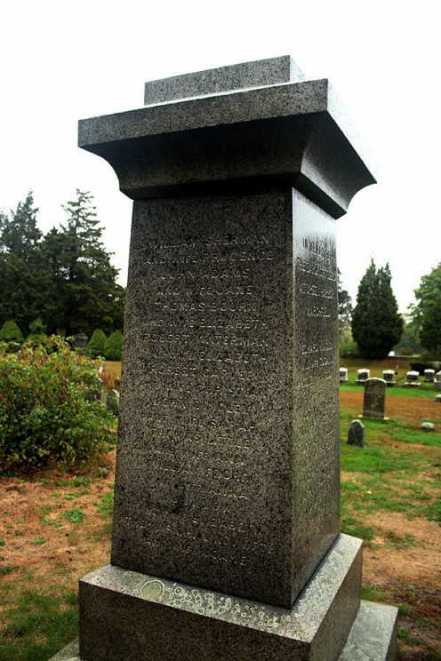
His name is on the monument dedicated to the early settlers of Green Harbor at the Winslow Cenetery in Marshfield, Mass.
The first record of Thomas Little in the new world was on the tax list of March 25, 1633. It is not known on which ship he had arrived. He moved to Marshfield, which is 14 miles from Plymouth. In the 1600’s 14 miles was a very long distance to travel. He was the constable in Marshfield, MA, in June of 1662.
Thomas married Anna Warren on April 19, 1633, in Plymouth Colony. They were the parents of about nine children.

Thomas Little, lawyer
Thomas Little was born in England before 1608 based on his marriage (Anderson, Great Migration). The Ancestral file, without documentation, lists his origin as Devon which is also known as Devonshire with Exeter as the county seat. According to many writers, he arrived at Plymouth, Massachusetts in 1630, but it is not positively known when, or on what ship he came. The earliest date in the Plymouth records is January 2nd, 1632/3, when he was taxed. He married, April 19th, 1633, Ann, born in England about 1612, daughter of Richard and Elizabeth Warren, who were Mayflower passengers (Avery 127, 129; NEHGR XIII, 279). Avery writes that Thomas Little came from England to Plymouth in 1630. He was a lawyer, and his coat of arms is still preserved at the old homestead in the house of Luther Little at Sea View, Massachusetts known as Littletown (Avery 126-127).
Thomas Little and Ann Warren had nine children as listed by Avery, Anderson in the “Great Migration,” and various others. Abigail married Josiah Keene; Patience married Joseph Jones; Ruth apparently unmarried; Hannah married Stephen Tilden; Mercy married John Sawyer; Isaac married Bethia Thomas; Ephraim married at Scituate Mary Sturtevant; Thomas died in King Phillips War; and Samuel married Sarah Gray (Anderson, Great Migration).
Thomas Little bought a shallop in 1633, and was enrolled for military service in August, 1643, at Plymouth, as was every other male in the Colony between 16 and 60 on that date (Avery 129-130).
His first residence was at Plymouth where he was a “Keeper of the Colony of New Plymouth books.” He was assessed 18 shillings in Plymouth tax lists of 1633 and 1634. In 1647, he had five acres of upland meadow on “Indian Brook,” listed as within the limits of the township of Plymouth, retaining that land in 1655. But in 1664, Jonathan Morey expressed an interest in the land that was “sometimes Thomas Little’s. Prior to that, in 1652, Thomas Little and his wife Ann sold a house and land on the Eel river in the township of Plymouth (a former residence). On 3 June 1662, Thomas Little had rights confirmed to a farm at Marshfield, and on 3 October 1665 was granted a hundred acres on which he settled title by 1 May 1666. Back in June 1662, he was a Marshfield Constable (Anderson, Great Migration, quoting Plymouth Records).
In his will, dated 17 May 1671, Thomas Little, Sr. bequeathed to “my loving wife all my housing and all of my land, upland and meadow on that side of the brook I now dwell, except only the meadow I purchased of Thomas Tildin and Morris Trewant.” He left land to sons Isacke and Ephraim land on the other side of the brook; all his land at Namassakett upland and meadow to his younger sons Thomas and Samuel, excepting an identified upland to grandson John Jones; a featherbed and furniture to Ephraim; the whole stock of cattle to be equally divided amongst all his children; and other dispositions. Administration of the estate was granted to Anna Little, his wife, on 14 August, 1662.(Anderson, Great Migration listing sources).
Thomas Little was buried at Marshfield, March 12, 1671. His widow died after February 19, 1675 (Avery 129-130).
There is some confusion from 28 October 1633 when a grant of land to Richard Warren was returned to court for failure to erect a building; the land was to be regranted to a Mr. Ralph Fogg upon his satisfactory payment to Widow Warren for her fence remaining there (PCR 1:18). But on 7 March 1636, “it is agreed upon, by the consent of the whole court, that Elizabeth Warren, widow, the relict of Mr. Richard Warren, deceased, shall be entered, and stand, and be purchaser instead of her said husband, as well because that (he dying before he had performed the said bargain) the said Elizabeth performed the same after his decease, and also for the establishing of the lots of lands givern formerly by her unto her sons-in-law Richard Church, Robert Bartlett, and Thomas Little, in marriage with their wives, her daughters” [PCR 1:54; 2:177]. On 5 May 1640, “Richard Church, Rob(er)te Bartlett, Thomas Little, and Mrs. Elizabeth Warren are granted enlargements at the heads of their lots to the foot of the Pyne Hills, leaving a way betwixt them and the Pyne Hills, for cattle and carts to pass” (PCR: 1:52). Ann Warren born est 1613, m. Thomas Little at Plymouth 19 April 1633 (PCR 1:13)
Thomas Little (1609 – 1675)
10th great-grandfather
William Little (1640 – 1731)
son of Thomas Little
William Little (1660 – 1740)
son of William Little
William Little Jr (1685 – 1756)
son of William Little
Jeanette Little (1713 – 1764)
daughter of William Little Jr
Andrew Armour (1740 – 1801)
son of Jeanette Little
William Armor (1775 – 1852)
son of Andrew Armour
William Armer (1790 – 1837)
son of William Armor
Thomas Armer (1825 – 1900)
son of William Armer
Lucinda Jane Armer (1847 – 1939)
daughter of Thomas Armer
George Harvey Taylor (1884 – 1941)
son of Lucinda Jane Armer
Ruby Lee Taylor (1922 – 2008)
daughter of George Harvey Taylor
Pamela Morse
I am the daughter of Ruby Lee Taylor
 mermaidcamp