mermaidcamp
Keeping current in wellness, in and out of the water
You can scroll the shelf using ← and → keys
You can scroll the shelf using ← and → keys
Our community in midtown Tucson started using the Nextdoor app six months ago. We now have 7% of our households in the area enrolled and communicating. This is a real change for us since few of the residents knew many other people in the vicinity. We still have more recruitment to do, but it is pretty easy and natural to grow the membership once the site gets started. This startup from San Francisco was started in 2010 by techies to meet a need that seemed obvious to them. Social media has made it possible to be in touch with folks around the world, but statistics showed that local communication was grinding to a halt. A third of Canadians and half of Americans did not know the name of a single neighbor. If you live here this should not shock you. Close knit communities are a distant memory for America. Gangs, vandalism, and drug related crime have a chance to thrive when nobody knows each other. Tagging and theft become a regular part of life when the entire population is isolated from each other. Nobody wins.
Nextdoor is a private way for neighbors to connect and start to improve social fabric of a place. Crime and safety is one of the topics frequently discussed. Like our counterparts across the nation I think it has been shocking to start to learn about how much crime is going on constantly all around us. Eventually, when we have more membership, I am sure it will become more difficult to commit crime without being busted by neighbors with cameras. We all look forward to that day since our cops are neither responsive nor communicative. People do complain about lack of law enforcement, but that will have no effect on the situation. Some angry citizens feel that owning many guns will protect them and their property, but I think this is a fallacy. One of the most common items stolen in break-ins is a gun. Heavily armed communities are not safer than those with a healthy respect for private property and a strong social fabric. They may be more dangerous and are probably depressed about what they perceive as a need to be heavily armed at home.
Here are a few good reasons to start using Nextdoor in your neighborhood:
I hope you will join us in creating safer more appealing neighborhoods through communication. Use this link to go directly to the Nextdoor site for more information and to join.

coat of arms
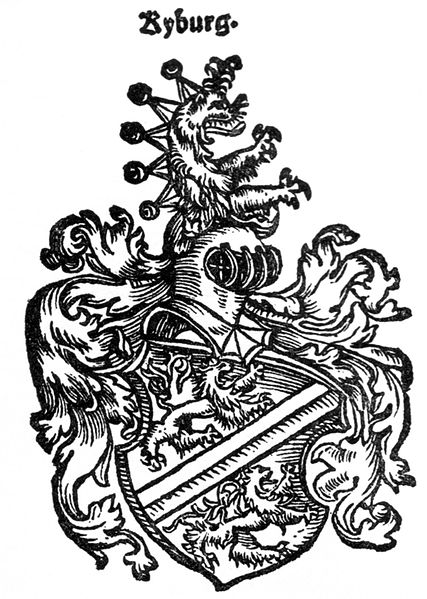
Grafen von Kyburg
Ulrich X von Kyburg* (1162 – 1227)
is my 22nd great grandfather
Hedwige VonKyburg (1192 – 1260)
daughter of Ulrich X von Kyburg*
Rudolf IV King of Germans, Holy Roman Emperor Habsburg (1218 – 1291)
son of Hedwige VonKyburg
Albert I King of Germany Habsburg (1248 – 1308)
son of Rudolf IV King of Germans, Holy Roman Emperor Habsburg
Albrecht Albert II ‘The Wise’ Duke of Austria Habsburg (1298 – 1358)
son of Albert I King of Germany Habsburg
Leopold III “Duke of Austria” Habsburg (1351 – 1386)
son of Albrecht Albert II ‘The Wise’ Duke of Austria Habsburg
Ernst I “Ironside” Archduke of Austria Habsburg (1377 – 1424)
son of Leopold III “Duke of Austria” Habsburg
Katharina Archduchess Austria Von Habsburg (1420 – 1493)
daughter of Ernst I “Ironside” Archduke of Austria Habsburg
Christof I VanBaden (1453 – 1527)
son of Katharina Archduchess Austria Von Habsburg
Beatrix Zahringen (1492 – 1535)
daughter of Christof I VanBaden
Sabine Grafin VonSimmern (1528 – 1578)
daughter of Beatrix Zahringen
Marie L Egmond (1564 – 1584)
daughter of Sabine Grafin VonSimmern
Richard Sears (1590 – 1676)
son of Marie L Egmond
Silas Sears (1638 – 1697)
son of Richard Sears
Silas Sears (1661 – 1732)
son of Silas Sears
Sarah Sears (1697 – 1785)
daughter of Silas Sears
Sarah Hamblin (1721 – 1814)
daughter of Sarah Sears
Mercy Hazen (1747 – 1819)
daughter of Sarah Hamblin
Martha Mead (1784 – 1860)
daughter of Mercy Hazen
Abner Morse (1808 – 1838)
son of Martha Mead
Daniel Rowland Morse (1838 – 1910)
son of Abner Morse
Jason A Morse (1862 – 1932)
son of Daniel Rowland Morse
Ernest Abner Morse (1890 – 1965)
son of Jason A Morse
Richard Arden Morse (1920 – 2004)
son of Ernest Abner Morse
Pamela Morse
I am the daughter of Richard Arden Morse
ULRICH von Dillingen und Kiburg, son of HARTMANN [III] Graf von Dillingen und Kiburg & his wife Richenza von Lenzburg (-1227, bur Schänis). Graf von Kiburg. Crusader 1190. Vogt von Schänis, Beromünster und Glarus 1212. “…Ulricus comes de Kiburc et filii eius Wernerus et Hardemannu…” witnessed a charter of Friedrich II King of Germany dated 31 Mar 1213 [393].
m ANNA von Zähringen, daughter of BERTHOLD IV Herzog von Zähringen & his first wife Heilwig [von Froburg] (-after 1226). The Chronicle of Alberic de Trois-Fontaines names “ducem Bertoldum…et duas sorores” as children of “ducem Bertoldum” & his wife, specifying that the younger daughter was “comitissa Kiburgensis” and had many children [394]. This is confirmed by the charter dated 1226 under which “Haimonem dominum de Fucignie” reached an agreement with the bishop of Lausanne concerning the advocacy of the church of Lausanne, which Aimon claimed had been granted by “comitibus de Ciburc”, which names “comitibus de Kibor Vuernerio et Armanno…quia filii erant sororis Bertoldi ducis Faringie” [395].
Graf Ulrich & his wife had six children:
1. WERNER [I] (-Acre 1228). “…Ulricus comes de Kiburc et filii eius Wernerus et Hardemannu…” witnessed a charter of Friedrich II King of Germany dated 31 Mar 1213 [396]. The contract of marriage between “Thomas comes Savoyæ…filiam suam Margaritham…infra nubiles annos” and “comiti Hartmanno filio comitis Ulrici de Kyburg” is dated 1 Jun 1218, stating that “Dni Bertholdi comitis de Novocastro et Dni Wilhelmi de Stavayé” acted as guarantors, and with the consent of “Ulricus comes de Kyburg et comes Garnerius frater eius et comitissa uxor comitis de Kyburg” [397]. His parentage is confirmed by the charter dated 1226 under which “Haimonem dominum de Fucignie” reached an agreement with the bishop of Lausanne concerning the advocacy of the church of Lausanne, which Aimon claimed had been granted by “comitibus de Ciburc”, which names “comitibus de Kibor Vuernerio et Armanno…quia filii erant sororis Bertoldi ducis Faringie” [398]. Graf von Kiburg. m as her first husband, ALIX [Bertha] de Lorraine, daughter of FERRY II Duke of Lorraine & his wife Agnes de Bar (-[Apr/29 Sep 1242], bur Clairlieu). The Chronicle of Alberic de Trois-Fontaines names “Aaliz relictam comitis Kyburgensis sororem ducis Lotharingie Mathei” when recording her second marriage to “Galtherus de Vangionis Rivo…filius Galtherius” [399]. She married secondly (before Nov 1229) Gautier [II] Sire de Vignory. Graf Werner [I] & his wife had three children:
a) HARTMANN [V] (-3 Sep 1263, bur Wettingen). Graf von Kiburg. Seigneur de Fribourg. The Community of “Uriburt” promised to observe the donation by “Conte Hartmano di Kibourg” with the consent of “Conte Hartmano Giuniore” to “Dama Margarita Moglie del detto Conte H. Seniore” by charter dated 1241 [400]. The necrology of Wettingen records the death “III Non Sep 1263” of “Hermannus com iunior de Kiburg et Anna uxor eius” [401]. The index of benefactors of Wettingen records the death in 1263 of “Hartmannus com de Kiburg iunior…benefactor” and his burial “apud sacellum beatæ Mariæ Virginis” [402]. The necrology of Fraubrunnen records the death “IV Non Sep” of “Graf Hartman der jünger” [403]. m firstly (before 9 Feb 1248) ANNA von Rapperswil, daughter of RUDOLF II [VIII] Graf von Rapperswil (-30 May 1253). The necrology of Wettingen records the death “III Kal Jun” of “domina Anna de Kiburg”, recalled in the later entry “III Non Sep 1263” of “Hermannus com iunior de Kiburg et Anna uxor eius” [404]. m secondly (contract 27 Jan 1254) ELISABETH de Chalon, daughter of HUGUES de Chalons Sire de Salins Comte Palatin de Bourgogne & his wife Alix von Andechs-Merano Ctss Palatine de Bourgogne (-9 Jul 1275). The primary source which confirms her parentage and marriage has not yet been identified. She became a Clarissan nun at Freiburg. Graf Hartmann [V] & his first wife had one child:
i) WERNER (-after 4 Jun 1253).
Graf Hartmann [V] & his second wife had two children:
ii) ANNA . The charter dated 1263, under which the town of Fribourg placed itself under the protection of “Dominum Comitem Rudolfum de Habisburg Landgravium Alsatie” also names “Anna ipsius domini neptis, domina nostra, quondam filia…domini nostri comitis Hartmanni junioris de Kyburgo” [405]. Dame de Fribourg. “Anna quondam filia comitis…Hartmanni de Kiburgo junioris et…Eberhardus comes de Habisburg maritus eiusdem domine” confirmed the privileges of the town of Fribourg by charter dated Mar 1275 [406]. “Domini…Eberhardi comitis de Habsburch et…dominæ…Annæ uxoris suæ” confirmed the donation to the abbey of Frienisberg by “Petrus de Viviers” by charter dated Oct 1275 [407]. The necrology of Fraubrunnen records the death “XII Kal Dec” of “Frow Anna gräfin von Kiburg” [408]. m ([30 Oct/12 Dec] 1271) EBERHARD Graf von Habsburg-Laufenburg, son of RUDOLF I “der Schweigsame” Graf von Habsburg-Laufenburg & his wife Gertrud von Regensberg (-1284, before 2 Jun). Graf von Kiburg.
iii) son (posthumously 1264-before 7 Feb 1265).
b) CLEMENTIA . 1248/49. m firstly RUDOLF [I] Graf von Montfort (-[Oct 1244/1247]). m secondly — Graf von Hohenberg .
c) ADELHEID . 1258. m (before 29 Sep 1242) FRIEDRICH [III] Graf von Leiningen in Dagsburg und Hardenburg, son of FRIEDRICH [II] Graf von Leiningen & his wife Agnes von Eberstein (-1287).
2. HARTMANN [III] (-27 Nov 1264, bur Wettingen). “…Ulricus comes de Kiburc et filii eius Wernerus et Hardemannu…” witnessed a charter of Friedrich II King of Germany dated 31 Mar 1213 [409]. His parentage is confirmed by the charter dated 1226 under which “Haimonem dominum de Fucignie” reached an agreement with the bishop of Lausanne concerning the advocacy of the church of Lausanne, which Aimon claimed had been granted by “comitibus de Ciburc”, which names “comitibus de Kibor Vuernerio et Armanno…quia filii erant sororis Bertoldi ducis Faringie” [410]. Graf von Kiburg. The necrology of Wettingen records the death “V Kal Dec 1262” of “com Hartmannus senior de Kiburg” [411]. m (contract Mouden 1 Jun 1218) MARGUERITE de Savoie, daughter of THOMAS I Comte de Savoie & his wife Marguerite [Beatrix] de Genève (1212-1/2 Sep 1270 or 1273 [412]). The contract of marriage between “Thomas comes Savoyæ…filiam suam Margaritham…infra nubiles annos” and “comiti Hartmanno filio comitis Ulrici de Kyburg” is dated 1 Jun 1218, stating that “Dni Bertholdi comitis de Novocastro et Dni Wilhelmi de Stavayé” acted as guarantors, and with the consent of “Ulricus comes de Kyburg et comes Garnerius frater eius et comitissa uxor comitis de Kyburg” [413]. Her marriage date is confirmed by the charter dated 1230 under which her husband “H. comes de Kiburch” confirmed donations “propter nuptias uxori sue filie comitis Sabaudie”, with the consent of “fratris sui Ul. Constantiensis canonici et H. filii fratris sui beate memorie Wer. quondam comitis de Kiburch” [414]. The Chronicon Colmarense records that “comes…[Kiburc]” married “filiam comitis de Sabaudia” [415]. “Amedeus comes Sabaudie et marchio Italie” granted “castrum…Monteys” {Montheys} to “sorori mee Margarete comitisse de Kiborch” by charter dated 16 Oct 1239 [416]. “Amedeus comes Sabaudie et in Italie marchio…cum…genetrice sua et fratribus suis B. Bellicensi Electo et Philippo Metensi Primicerio” granted “villam S. Mauritii de Chablaisio” {Saint-Maurice de Chablais} to “soror illorum Margareta comitissa de Kiborch” by charter dated 24 Feb 1240 [417]. “H. comes de Kyburch” granted “castra Windegge, Oltingen…advocatiam et predium in Shennis, Wizennanc et Kemanatvn” to “uxori mee” by way of dower, with the consent of “fratruelis mei H”, by charter dated 28 May 1241 [418]. The same collection includes several other charters relating to this grant, dated between 9 Jul 1241 and 1243 [419]. Her parentage is confirmed by the 1264 testament of her brother Boniface [420]. According to Europäische Stammtafeln [421], Marguerite de Savoie married secondly Eberhard von Habsburg-Laufenburg, son of Rudolf III Graf von Habsburg-Laufenburg & his wife Gertrud von Regensberg. Apart from the unlikelihood of Graf Eberhard (who at the time must have been at least 40 years old) marrying as his first wife a lady over 50 years old, his marriage to Anna heiress of Kiburg is recorded [422] as having taken place in [30 Oct/12 Dec] 1271 when Marguerite was still alive. In addition, the Chronicle of Hautecombe refers to Marguerite as ‘Margarita comitissa de Quiborch in Alemania’ when she died, with no mention of Habsburg-Laufenburg. The necrology of Waldens records the death “Kal Sep” of “Margareta com de Kuberg” [423]. The necrology of Fraubrunnen records the death “1 Kal Sep” of “Her Hartman graf von Kyburg und frow Margreta sin gemachel” [424], the date apparently referring to the death of Marguerite. The necrology of Wettingen records the death “IV Non Sep” of “Margareta com de Kiburch” [425].
3. ULRICH (-17 Jun 1237). His parentage is confirmed by the charter dated 1230 under which her husband “H. comes de Kiburch” confirmed donations “propter nuptias uxori sue filie comitis Sabaudie”, with the consent of “fratris sui Ul. Constantiensis canonici et H. filii fratris sui beate memorie Wer. quondam comitis de Kiburch” . Canon at Basel Cathedral 1223. Canon at Konstanz Cathedral 1229. Provost of Beromünster and Imperial chaplain 1231/34. Bishop of Chur 1233.
4. HEILWIG ([1192]-30 Apr 1260, bur Muri). The Ellenhardi Chronicon refers to the wife of “Alberti comitis in Habichburg…lantgravius Alsatie superioris” as “filia comitis in Kiburch” [427]. A Habsburg genealogy names “Heilwigam filiam Uolrici comitis de Chiburg” as the wife of “Alberctus” [428]. m ([1217]) ALBRECHT [IV] “der Weise” von Habsburg, son of RUDOLF II “der Alte” Graf von Habsburg, Herr zu Laufenburg & his wife Agnes von Staufen (-Ascalon, Palestine 22 Nov 1240). He succeeded his father in 1232 as Graf von Habsburg.
5. MECHTILD . 1232. m RUDOLF [I] Graf von Rapperswil (-1250). The index of benefactors of Wettingen records the death in 1250 of “Rudolphus com de Raperschwyl, patruus fundatoris” and his burial at Wettingen .
6. ADELHEID (-1231 or after). The primary source which confirms her parentage and marriage has not yet been identified. m GERHARD [IV] Graf von Dollnstein und Hirschberg, son of GERHARD [II] Graf von Dollnstein & his wife — (-1225).
he House of Kyburg was family of Grafen or counts from Zürich in Switzerland. The family was one of the three most powerful noble families in the Swiss plateau beside the Habsburg and the House of Savoy during the 11th and 12th Centuries. With the extinction of the male line in 1263, Rudolph of Habsburg laid claim to the Kyburg lands and annexed them to the Habsburg holdings, which marked the beginning of the Habsburg rise to power.
The first line of counts of Kyburg were influential in local politics during the 1020s but the male line died out in 1078. Kyburg castle, southeast of Winterthur (in the modern canton of Zürich), passed on to the Swabian counts of Dillingen.[1] Through the marriage of Hartmann von Dillingen († 1121) with a certain Adelheid the House of Dillingen acquired the old Kyburg possessions as well as territorial claims in the Thurgau. The exact origin of Adelheid is unclear. She is either the granddaughter of the Count of Grüningen-Winterthur or from a cadet branch of the Winterthur family, the Counts of Nellenburg. She might also be the daughter of Adalbert II von Winterthur, the last knight from Winterthur, who died in 1053 at the Battle of Civitate against the Normans.
Expansion of the Kyburg lands
The Kyburg land continued to be part of the possessions of the House of Dillingen until the grandson of Hartmann von Dillingen, Hartmann III († 1180), split the Dillingen lands.[2] Adalbert received the Swabian territories, while Hartmann III von Dillingen got the Swiss lands and became Hartmann I of Kyburg. The House of Kyburg were vassals of the Duke of Swabia, who was of the House of Hohenstaufen and would become the Kings of Germany from 1138-1254. When the House of Lenzburgdied out in 1172/73, the Kyburgs together with the Hohenstaufen and Zähringen split the Lenzburg possessions between them. The Kyburg family acquired the allodial title to the Vogtei of Windegg or Gaster (today 7 municipalities in the See-Gaster Wahlkreis of St. Gallen) and land around Baden. Later additional Lenzburg territories, the Schänis Abbey and Beromünster, were also acquired by the House of Kyburg.
In 1180 the family began to consolidate their power. They founded the cities of Diessenhofen and Winterthur to help spread their power. They also appointed many of the Lenzburg, and later Zähringen, vassals to be unfree knights or Ministerialis for the Kyburg family.
When the Zähringen family died out in 1218, the Kyburgs grabbed another chance to expand. Anna von Zähringen, the sister of the last Duke of Zähringen, Berthold V, was the wife of Ulrich III von Kyburg (†1227). From the Zähringen line the Kyburgs acquired land west of the Rhine and in Burgundy including the cities of Fribourg,Thun and Burgdorf as well as estates in the canton of Zurich. However, the House of Hohenstaufen, the family of the Holy Roman Emperors, refused to support the Kyburg claims on the city of Zurich and in 1226 on the Abbey of St. Gall. As a result, they turned increasingly away from the Hohenstaufens and in 1243 and were one of the mainstays of the pro-Pope and anti-Holy Roman Emperor Party.
Around 1220 they started to make claims on property and rights that had unclear ownership and was near property that they already owned. In 1225 they founded a burial site for the Chorherrenstift Heiligberg in the center of the property of the former Freiherr von Weisslingen at Winterthur, and in 1233 founded Töss Abbey west of Winterthur. Both sites were endowed with property that they had taken from the Weisslingen and Rossberg families. These two properties served to define the borders between the Kyburg and Rapperswil families.[3]
At the same time the Kyburg family attempted to strengthen themselves through marriage. Hartmann V, a grandson of Ulrich III was engaged to Anna of Rapperswil in 1227. His uncle, Hartmann IV, called the Elder, married Margaret of Savoy while his sister Heilwig, the future mother of King Rudolf I von Habsburg, married Albert IV of Habsburg
Even though the family continued to found cities and expand, they were declining in power. In 1230 they founded Zug and Baden, then Frauenfeld, Aarau, Lenzburg, and Mellingen. In 1250 they founded Sursee, Weesen and the fortified towns of Kyburg and Laupen. The last two were Richensee and Huttwil which they lost shortly thereafter.
Suffix Graf von Kyburg Birth of, Kyburg, Zürich, Switzerland Gender Male AFN WRQG-ST Ecclesiastic 1212 [ 4] Vogt von Schänis Beromünster u Glarus Name AKA Ulrich Count of Kyburg [ 5] Name AKA Ulrich III [ 6] Died 1227 [ 6, 7] Buried Schäntis Beromünster, Luzern, Switzerland [ 4] Person ID I50509 Europe: Royal and Noble Houses with Colonial American Connections Last Modified 24 Jul 2011
Father Hartmann III, Graf von Kyburg-Dillingen, d. Aft 22 Aug 1180 Mother Richenza von Lenzburg, d. Abt 24 Apr 1172 Family ID F185946 Group Sheet
Family Anna von Zähringen, d. Yes, date unknown Married Y [ 6] Children
1. Werner, Graf von Kyburg, d. 1228, Acre, Palestine
2. Heilwig von Kyburg, b. Abt 1192, of, Kyburg, Zürich, Switzerland , d. 30 Apr 1260, of, Kyburg, Zurich, Switzerland
3. Hartmann III “der Ältere”, Graf von Kyburg, d. 27 Nov 1264
4. Ulrich von Kyburg, Bischof von Chur, d. 17 Jun 1237
5. Mechtilde von Kyburg, d. Aft 1232
6. Adelheid von Kyburg-Dillingen, d. Aft 1231
Last Modified 15 Jul 2011 Family ID F148606 Group Sheet
Notes
MILITARY: In the Crusades in 1190. NOTE: Was the count of Kyburg, Leutzburgh and Baden. A descendant from the Dukes of Zahringen.
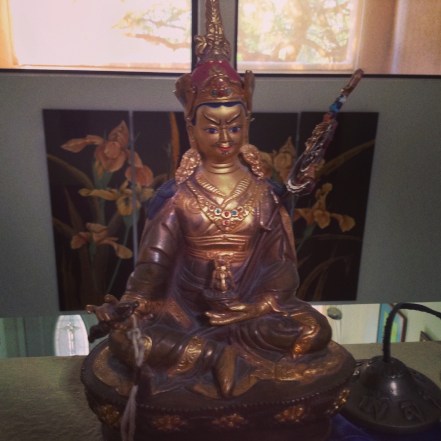
Padmasambhava
The following quote from the famous Dr Carl Jung explains the unconscious inheritance of unsolved and unanswered mysteries from our ancestors. My intense study of all the branches of my family tree that still bear data leads me to conclude that Dr. Jung was onto something. There are certainly themes that run in families, if not a shared fate. We have more than our immediate family to thank for the belief system we have been handed. The religious, cultural, and sociological forces that inspired our ancestors to take action and undertake dangerous missions and travels have not evaporated into thin air. They are passed on as attitudes if not as law.
“I feel very strongly that I am under the influence of things or
questions which were left incomplete and unanswered by my
parents and grandparents and more distant ancestors. It often seems
as if there were an impersonal karma within a family which is
passed on from parents to children. It has always seemed to me
that I had to answer questions which fate had posed to my
forefathers, and which had not yet been answered, or as if I had to
complete, or perhaps continue, things which previous ages had left
unfinished.”~ Dr. Carl Jung , Memories, Dreams, Reflections
I wonder why my addition to my family fortune and mindset will be. History changes the perception of everything, but when we learn about our ancestors we are instantly on their side, no matter what they were doing. With few very crazy exceptions I find I am sympathetic with all of my relations in history because I would not be alive if it had not for their ability to survive. I admire their adventurous natures, and am embarrassed by slaveholding, war mongering, and some elite royal behaviors of my people as they managed to survive. I identify with them and their struggles, trying to imagine myself alive in much more primitive conditions. I wonder how I would have managed in heavily religious times, or times of extreme violence and conflict. Trauma as well as enlightenment is inherited. Distrust as well as confidence is passed down to the next generation. Self image as well as ethics are part of the ethical will we are given. Our national identity contains within it preferences and prejudices that last for many generations. Can you think of belief systems you have that you never questioned? Have you ever wondered if the thoughts in the minds of your family members before your birth have influenced your thinking? How do you explain the collective consciousness?














While the butterfly exhibit is on hold for the summer the Tucson Botanical Gardens has a small but impressive display of flesh eating plants in the tropical greenhouse. It is easier to handle since the USDA does not require full time guards as they do on the butterfly species. The small and well appointed display teaches us that there are many forms that plants use to lure in insect prey for their food. We know about some of the obvious styles, like fly trap and pitcher, but the cute little flowers on bladderwort and butterworts are there to attract the insects that will be killed and consumed when stuck to the flypaper type leaves. The diminutive sundews produce extra sticky dew drops that never release the bug that gets too close. They are all botanically interesting and some very pretty to see. Imagine the poor bug’s life ending as it is called to investigate one of these exotic traps. Survival depends on more than fitness of body. In the wild we must have the good sense to leave attractive menaces alone.
What is a spiritual crisis? They are all over the biblical stories and the parables we are taught about heroes. Some power that is not explained in the regular time bound reality has an influence on the character. Through hardship, or magic, or stressful change the hero, or the hero people, become stronger than the force that had power over them. There must be a zillion versions of this in video gaming. Comic superhero figures and stories are based on supernatural battles in altered states with magical super powers thrown into the mix. We see our religion and entertainment in terms of spiritual crisis pending or resolving, or causing trauma. Why do we think of our everyday world as void of spiritual energy? What makes us draw a line between reality and spirit? Why do we think only shamans or monks have obligations to the spirit world? Just as prayer and meditation will not repair the roof, tar and roofing tiles alone will not restore peace and security inside a home that has been bombed. Everyone has both an earthly reality to tend and a higher meaning to life.
Looking at world events as evolving from a spiritual rather than scientific or political causes might change the way we act and react. Our own souls have certain obligations or tasks that coincide with the talents we have been given. It is time to find right livelihood and spend our time and energy uplifting those who need help and who are seeking spiritual guidance. At the end of life, no matter how and when that comes, we will not be concerned about how many insignificant tasks we have completed or how many hours we put on the clock doing busy work. We will wonder if we have done what we have the talent to do, and if we have contributed the gift that was ours to create. Much ado is being made about the suicide of Robin Williams this week. Without diagnosing him or making light of all the circumstances (which I don’t know) I see this incident as a crisis of spirit, like the wars around the world. It makes me sad, but I view it as a call for profound change. We need to shift our outlook, about 2 octaves higher.



Vitex is a tree with powerful medicinal uses. It stimulates and normalizes the pituitary gland, regulating progesterone. It can produce opposite effects at different times and in different subjects, which is known as an amphoteric remedy. As a hormone balancer it is used for menopausal changes as well as to regulate the body after using birth control pills. The common names of the plant, chaste tree, or monk’s pepper indicate that it is an anaphrodesiac, but in some circumstances it will act as an aphrodisiac. The berries and the purple flowers are the parts of the plant most commonly used medicinally. The berries are brewed as an infusion and drunk 3 times a day, or a tincture is made with alcohol as the carrier agent. It both looks and smells a little like cannabis, but is not to be smoked.
The vitex agnus castus plant is ornamental and spreads easily by seed. It likes well drained soil and plenty of sun to do well. I have two growing in my garden, and a baby that has come up from seed. I have not thought about selling the fruits and seeds, although when I price the product it makes me wonder if I should. The herbal remedy has been used for centuries, and today there are many preparations and capsules created using vitex. Weather you like it for the colorful floral display or for the medicine, vitex is a valuable addition to the garden.

cosmetic acupuncture
I have just completed a series of acupuncture treatments to rejuvenate my face. Jessica Breton completed studies with Mei Zen Cosmetic Acupuncture System to add to her skills and offerings but was not convinced of the efficacy of the treatment. She asked some of her friends to do a test as her models to look for results, and all reported looking and feeling better. Each person has a unique experience but everyone benefits in several ways. Skin texture improves because the use of very superficial needles stimulates collagen and elastin to flow from within the body to the face. Wrinkles smooth out for the same reason. Cheeks lift and the jawline firms. This is a gradual improvement that lasts for many months after completion.
The series includes 10 sessions with full body acupuncture to address personal state of health in general and an elaborate placement of many needles in the skin of the face. One normally does two treatments a week until finished, but I took a couple of vacation weeks off with no ill effect. I decided to do it because my thermography indicated inflammation in my face, sinus, head area. Acupuncture is powerfully good medicine to bring balance and better all around health. I decided the face needles would surely address that inflammation I saw around my head that concerned me. To be honest it is a little bit difficult to have those needles in your face without wiggling or itching or disturbing them, but the experience taught me more meditative patience and focus. It doesn’t really hurt, but it requires some ability to chill and take your mind off the obvious (needles in your face). The results are very good in terms of the look and feel of my face, but my over all health is the big winner. I followed through with a third session each week for my body as well, so I have had a lot of extra help balancing my chi. Jessica told me several clients at Zylla Acupuncture have started as cosmetic clients and continued to come because they discovered the value of regular acupuncture treatment. I am pleased that I decided to try the cosmetic side of her practice and would recommend it to anyone.

full flavor of dessert
I have been reading a lot about amaros in the blogging universe. These herbal digestive concoctions, mostly from Italy, have become a new darling star of the cocktail bar scene. Some bloggers are making their own mixtures by infusing brandy with combinations from their own gardens. This is super appealing to me. Typically served after dinner to aid in the digestive process, straight up or over a couple of ice cubes, the syrupy taste is a delight with a rich dessert. I saw a selection of amaros on the menu at Feast and decided to try one with a malted chocolate cake with rich dense creamy caramel filling. We rarely eat dessert, so sharing one slice was plenty of sweet richness for both of us. Bob tasted the amaro, but I sipped it throughout the dessert course between bites of the dense, full chocolate flavors in the cake. The cake was garnished with candied grapefruit peel, which added another dimension of bitter and sweet to the finish.
I have not been a fan of bitter herbs or any kind of digestive tonic. Since making my own bitters and shrubs this summer I have come to appreciate the ways bitterness enhances both health and flavor. The liberal use of bitters in cooking is fun, and adds extra dimension that is hard to describe, but fills out the profile of any food. More importantly, the flavor bitter stimulates the liver to produce bile, which one needs to digest fat. I am not sure how many grams of fat were in my cake, but it felt like pure butter on the tongue. I am guessing the count in butterfat was very high, but we only had a few bites which we enjoyed. The sipping of the amaro did open up kind of a new way to feel and sense the whole process of dessert. I have had after dinner drinks with brandy, eau de vie, or coffee, but have never sipped an amaro before. I recommend it to anyone who wants to expand their sense of taste. It happens to be good for digestion at the same time. Cheers, to a slightly bitter ending to your meal!

Amaro with 2 cubes of ice



Albert IV Habsburg married an heiress from Zurich. He died on a crusade in a place near Tel Aviv. How wise was it for him to be on a crusade? This guy Theobald from Navarre that was leading the Crusade sounds like one of my ancestors too. How crazy for them to trot off to the Holy Land as if they had some business there. This is what it took to be called wise at the time.
Albrecht IV Count Of HABSBURG was born about 1188 in Of Schloss Limburg, A.d. Rh., Freiburg, Baden. He died on 22 Nov 1240. He married Hedwige Countess Of KYBURG.
Hedwige Countess Of KYBURG was born about 1192 in Of, Kyburg, Zurich, Switzerland. She died on 30 Apr 1260. She married Albrecht IV Count Of HABSBURG.
They had the following children: F i Kunigunde Von HABSBURG was born about 1208 in Of Schloss Limburg, A.d. Rh., Freiburg, Baden. She died in 1228 in Kl. Adelhausen, Freiburg, , Baden.
M ii Hartmann Von HABSBURG was born about 1222 in Of Schloss Limburg, A.d. Rh., Freiburg, Baden. He died in 1252.
M iii Albrecht V Count Of HABSBURG was born about 1220 in Of Schloss Limburg, A.d. Rh., Freiburg, Baden. He died on 1 Jan 1256.
F iv Kunigunde Countess Of HABSBURG was born about 1226 in Of Schloss Limburg, A.d. Rh., Freiburg, Baden.
M v Rudolf I King Of The GERMANS was born on 1 May 1218. He died on 15 Jul 1291.
Albert IV “The Wise” Count of Habsburg (1188 – 1240)
is my 21st great grandfather
Rudolf IV King of Germans, Holy Roman Emperor Habsburg (1218 – 1291)
son of Albert IV “The Wise” Count of Habsburg
Albert I King of Germany Habsburg (1248 – 1308)
son of Rudolf IV King of Germans, Holy Roman Emperor Habsburg
Albrecht Albert II ‘The Wise’ Duke of Austria Habsburg (1298 – 1358)
son of Albert I King of Germany Habsburg
Leopold III “Duke of Austria” Habsburg (1351 – 1386)
son of Albrecht Albert II ‘The Wise’ Duke of Austria Habsburg
Ernst I “Ironside” Archduke of Austria Habsburg (1377 – 1424)
son of Leopold III “Duke of Austria” Habsburg
Katharina Archduchess Austria Von Habsburg (1420 – 1493)
daughter of Ernst I “Ironside” Archduke of Austria Habsburg
Christof I VanBaden (1453 – 1527)
son of Katharina Archduchess Austria Von Habsburg
Beatrix Zahringen (1492 – 1535)
daughter of Christof I VanBaden
Sabine Grafin VonSimmern (1528 – 1578)
daughter of Beatrix Zahringen
Marie L Egmond (1564 – 1584)
daughter of Sabine Grafin VonSimmern
Richard Sears (1590 – 1676)
son of Marie L Egmond
Silas Sears (1638 – 1697)
son of Richard Sears
Silas Sears (1661 – 1732)
son of Silas Sears
Sarah Sears (1697 – 1785)
daughter of Silas Sears
Sarah Hamblin (1721 – 1814)
daughter of Sarah Sears
Mercy Hazen (1747 – 1819)
daughter of Sarah Hamblin
Martha Mead (1784 – 1860)
daughter of Mercy Hazen
Abner Morse (1808 – 1838)
son of Martha Mead
Daniel Rowland Morse (1838 – 1910)
son of Abner Morse
Jason A Morse (1862 – 1932)
son of Daniel Rowland Morse
Ernest Abner Morse (1890 – 1965)
son of Jason A Morse
Richard Arden Morse (1920 – 2004)
son of Ernest Abner Morse
Pamela Morse
I am the daughter of Richard Arden Morse
Albert IV (or Albert the Wise) (ca. 1188 – December 13, 1239) was Count of Habsburg in the Aargau and a progenitor of the royal House of Habsburg.
He was the son of Count Rudolph II of Habsburg and Agnes of Staufen. About 1217 Albert married Hedwig (Heilwig), daughter of Count Ulrich of Kyburg (died 1237) and Anna of Zähringen. Upon the death of his father in 1232 he divided his family’s estates with his brother Rudolph III, whereby he retained the ancestral seat at Habsburg Castle. A follower of Emperor Frederick II of Hohenstaufen, he died on the 1239 crusade of King Theobald I of Navarre near Ashkelon.
Albert was the father of King Rudolph I of Germany, and a mutual ancestor of Archduke Franz Ferdinand of Austria and of his wife Sophie, Duchess of Hohenberg. He is also an ancestor of Queen Elizabeth II of the United Kingdom.
Notes
^ Ferdinand was descended from Rudolph I and Sophie was descended from Rudolph’s sister Elisabeth.
Albert IV, Count of Habsburg
Spouse
Hedwig of Kyburg
Father
Rudolph II, Count of Habsburg
Mother
Agnes of Staufen
Born
c. 1188
Died
13 December 1239
Ashkelon
When I go to the pool to play I follow no set of exercises. I generally go to the deep end and do a lot of twisting and large movements. To Floatli is to find balance and then play your way to fitness and sporty fun. Right now I have injured my foot by walking too much on holiday. It only hurts when I put weight on it, so the deep end is the place for me. I can still enjoy full range of motion (and beyond what gravity will allow) while keeping that tired tendon in my foot from overworking while it heals. I was getting kind of cranky on the last few days of my vacation when my aching feet slowed down my pace and I was away from my pool that I love so much. Water is both healing and soothing. The deep end of the pool is a lot like the deep end of life. It is best to know when you can handle depth, and when it is a good idea to stay in the shallow end of things. I am happy and lucky to have my own private deep end to use as I see fit. It keeps my mood up while I recover full use of my footsies. Gravity is fine, but has limits, especially if we are injured. What do you like to do when your body needs to heal?
 mermaidcamp