mermaidcamp
Keeping current in wellness, in and out of the water
You can scroll the shelf using ← and → keys
You can scroll the shelf using ← and → keys
Americans have trouble understanding the whole British royalty and fancy person hierarchy. My own British family has been fairly fancy in their time, but I have nothing to show for it except my family tree. In history brutal repression of common people, or peasants, was the way commerce was conducted. The United States is returning to a system of government that separates the elite in a special world of privilege and security while the majority of the population is loosing security of every kind. Our country goes around bullying other nations about lack of democratic systems that protect the population. Who will come to the United States and reprimand us for this recent class and income discrepancy we are growing? Since many around the world are already hardened against the United States for our politics about war and violence, the facts about our upper crust citizens will cause more disgust for our economically bifurcated culture. In an odd twist of fate, Americans who often use Brit accents and royalty to make fun of snooty class struggles, are making big strides creating inequity of our own. What do you think will happen to our reputation abroad, gentle reader?
I will visit Austin, TX in the middle of the summer. I look forward to spending time downtown where I have rented a fabulous vintage Airstream from Air BnB as my abode. I will attend a reunion party for which I will need a car, but I am investigating the choices and prices I have while I am in the city. Car rental at the airport for the entire time would cost about $1000. Since I like being driven more than I like to drive, especially in a city, I am trying Lyft as a way to buy one ride at a time. My Airstream home is near public bus lines, and I can rent a bike for $10 a day. I like to go on foot to see the detail around me when I visit a new area. I know Austin has a system of bike taxis that are fun to use, especially when traffic is jammed for cars. When we went to Austin City Limits Music Festival we made use of the bike taxis, water taxis, and took a sunset party cruise on a well equipped floating live music bar. Considering all these choices renting a car and finding parking for it wherever I go sounds less appealing than biking, floating or being driven.
During my career as a travel agent I was always grateful and happy to stay in hotels and use suppliers on the commercial market. I made extra effort to rent private flats when I traveled. Now that the market has changed drastically I am pleased to be able to rent with assurance from Air BnB, and now ride with assurance provided by Lyft, Uber, and probably other apps I have yet to discover. I just joined Lyft and have received a message that the first ride is on the company as my gift for being a Lyft pioneer. What is not to like? We plan to go out this weekend, so I will give that free ride a trial when we want to come home after happy hour. I will find out if they are active in Tucson and test the service. I prefer the free ride home to any chocolate bunny. Thanks, Lyft.
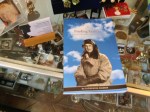
My neighbor, Cathy Harris, has written a fascinating book based on her uncle’s true experiences in as a pilot for the RAF in World War II. I interviewed her today in her shop about the new book, Finding Frances, Love Letters from a Flight Lieutenant. The way she has presented the book gives the reader a really good feel for his life and times. The letters are both historic and emotional because he tells what is happening in the war and pledges his love for Frances. The authentic snippets of his handwriting are a wonderful touch. I study family history so I am extra impressed with all the original documentation she has to show the reader. I was instantly in love with Eric as soon as I saw his pictures. I am sure with his accent and special British slang he must have been very exciting for a high school girl in Phoenix in the 1940s. I am glad she decided to put it all into book form to give us a glimpse into this dramatic part of our history in a personal, first hand account.



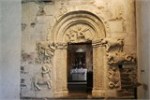
My 21st great-grandfather was born in Venice and is buried at Tirol Castle in Austria. Geography was much different in 1194, when the Holy Romans were still ruling in Europe. Today’s national boundaries have changed in recent times, and in the case of Ukraine, are changing now. Venice was once very powerful as a political as well as economic entity. Meinhard inherited power from his father as well as from his wife’s father. During his political struggles he was forced to leave two of his sons in jail in Salzburg for 6 years. I imagine jail time in Salzburg in 1252 must have been brutal. He survived to become an ancestor of the Habsburgs….and me.
Meinhard I Gorizia Tirol (1194 – 1258)
is my 21st great grandfather
Meinhard II Carinthia Duke of Gorz-Tyrol Tirol (1238 – 1295)
son of Meinhard I Gorizia Tirol
Consort Elisabeth the Romans Carinthia (1263 – 1313)
daughter of Meinhard II Carinthia Duke of Gorz-Tyrol Tirol
Albrecht Albert II ‘The Wise’ Duke of Austria Habsburg (1298 – 1358)
son of Consort Elisabeth the Romans Carinthia
Leopold III “Duke of Austria” Habsburg (1351 – 1386)
son of Albrecht Albert II ‘The Wise’ Duke of Austria Habsburg
Ernst I “Ironside” Archduke of Austria Habsburg (1377 – 1424)
son of Leopold III “Duke of Austria” Habsburg
Katharina Archduchess Austria Von Habsburg (1420 – 1493)
daughter of Ernst I “Ironside” Archduke of Austria Habsburg
Christof I VanBaden (1453 – 1527)
son of Katharina Archduchess Austria Von Habsburg
Beatrix Zahringen (1492 – 1535)
daughter of Christof I VanBaden
Sabine Grafin VonSimmern (1528 – 1578)
daughter of Beatrix Zahringen
Marie L Egmond (1564 – 1584)
daughter of Sabine Grafin VonSimmern
Richard Sears (1590 – 1676)
son of Marie L Egmond
Silas Sears (1638 – 1697)
son of Richard Sears
Silas Sears (1661 – 1732)
son of Silas Sears
Sarah Sears (1697 – 1785)
daughter of Silas Sears
Sarah Hamblin (1721 – 1814)
daughter of Sarah Sears
Mercy Hazen (1747 – 1819)
daughter of Sarah Hamblin
Martha Mead (1784 – 1860)
daughter of Mercy Hazen
Abner Morse (1808 – 1838)
son of Martha Mead
Daniel Rowland Morse (1838 – 1910)
son of Abner Morse
Jason A Morse (1862 – 1932)
son of Daniel Rowland Morse
Ernest Abner Morse (1890 – 1965)
son of Jason A Morse
Richard Arden Morse (1920 – 2004)
son of Ernest Abner Morse
Pamela Morse
I am the daughter of Richard Arden Morse
Meinhard I, Count of Gorizia-Tyrol
Spouse Adelaide of Tyrol
Noble family Meinhardiner
Father Engelbert III, Count of Gorizia
Mother Mathilda of Andechs
Born c. 1200/1205
Died January or February 1258
Meinhard I (c. 1200/1205 – January/February 1258) was Count of Gorizia from the House of Meinhardin was from 1231 and Count of Tyrol from 1253 until his death. He was the son of Count Engelbert III, Count of GoriziaEngelbert III]] of Gorizia (d. 1220) and Mathilda of Andechs, half-sister of Duke Berthold IV of Merania. He came in control over all his family’s Gorizian possessions upon the death of his uncle Meinhard the Old, and of Tyrol as a fief from his father-in-law Count Albert IV of Tyrol.
Meinhard strongly supported Emperor Frederick II of Hohenstaufen in his conflict with Pope Innocent IV and in return was appointed Imperial governor of the Duchy of Styria and the March of Carniola after the last Babenberg Duke Frederick II the Warlike had died without heirs in 1246. From 1250 onwards also governor in the Duchy of Austria, Meinhard facing the fall of the Hohenstaufen dynasty did not prevail: his rule in Carniola was challenged by the Carinthian House of Sponheim and in Austria and Styria he was expelled by Bohemian prince Ottokar II Přemysl in 1251.
Meinhard, backed by Albert IV of Tyrol, then tried to gain control over the Duchy of Carinthia but failed in an unsuccessful campaign against Duke Bernhard von Spanheim and his son Philipp, the elected Archbishop of Salzburg. On September 8, 1252, he was finally defeated and arrested at Greifenburg. According to the rules of the Treaty of Lieserhofen, concluded on December 27, 1252 he had to give his sons Meinhard II and Albert to Phillip as hostages. Both were imprisoned at Burg Hohenwerfen in Salzburg and not released until 1258. Meinhard and Albert IV also had to pay a compensation and to renounce certain possessions including Mittersill, Virgen, Matrei and Oberdrauburg.
After the death of Albert IV of Tyrol in 1253, Meinhard and his brother-in-law, Gebhard of Hirschberg, split Tyrol, of which Meinhard took the southern part with Meran. His son Meinhard II re-acquired the Hirschberg lands from Gebhard’s heirs in 1284 and two years later also received Carinthia from German king Rudolph of Habsburg.
Meinhard I died in 1258 and is buried at Tirol Castle.
Marriage and children
About 1237, Meinhhard married Adelaide, daughter of Albert IV of Tyrol. They had four known children:
Adelheid († 1291), married Count Frederick I of Ortenburg
Meinhard II (1238–1295), Count of Gorizia and Tyrol, Duke of Carinthia
Albert I († 1304), Count of Gorizia
Bertha († 1267), married Conrad, Count of Wullenstetten
From the time we learned our first Dr Seuss rhyme we were being educated by poets. Nursery rhymes and fairy tales are used to teach morals and ethics to children. There is value in the use of language to enchant and stick in the memory. Poets are feeding the artistic as well as the language skills of readers. Our own stories can only be told by our own voice. To develop a voice as a writer or a poet one simply needs to start. Children are ready to rhyme and laugh at almost any word. Adults often loose enthusiasm for word play as they grow older. Since poetry stimulates creativity, and is a tool to jog the memory it makes sense to read and write poems. Often hidden meaning can be found in song and story, as it is in Calypso. Political protest can be carried out in a rhyme using allegory to mask the obvious. Some of our nursery rhymes today were once hot treason against authorities. What kind of symbolic words would you use to write a poetic protest today?
Prophecies are made all the time about the end of the world. I am not very interested in the end of the world because it is such a relative term. I noticed the blood moon tetrad news was of interest to astronomers and astrologers. Now I see it is being discussed by those who see at as a sign that Jesus is returning. Tonight is the first night of Passover which will begin at sunset. After the seder in the middle of the night the moon will be seen as blood red during the total lunar eclipse. This is the chance for everyone in North America to witness this unusual spectacle of a full lunar eclipse appearing as a red full moon.
While I agree to a certain extent with the end of timers, I am not sure if we have 4,000 more years or 3 more weeks. Facing mortality is fine. That doesn’t mean we need to be morbid. If we are realistic we have to admit that Mother Earth is in dire straights. I plan to go out tonight and enjoy floating around while the moon turns red and listen for a message. I am not expecting prophecy, but I do think this is a special time. Those of use who have clear skies and a clear schedule can be bathed in the light of this auspicious blood mood whatever it may mean. What do you think the blood moons mean, Gentle Readers?

Netherlands
Mary Priest was born in the Netherlands. Her father Degory was a hatter who sailed to America on the Mayflower, and died in Plymouth Colony shortly after his arrival. His wife and children, including Mary, came later to Plymouth to inherit his allotment:
DEGORY PRIEST
ORIGIN: Leiden, Holland
MIGRATION: 1620 on Mayflower
FIRST RESIDENCE: Plymouth
OCCUPATION: Hatter (when admitted as a citizen of Leiden) [Leiden 216].
ESTATE: In the 1623 Plymouth land division “Cudbart Cudbartsone” received six acres as a passenger on the Anne in 1623 [ PCR 12:6]; four of these six shares would be for the deceased Degory Priest, his widow Sarah and his two daughters. In the 1627 Plymouth cattle division “Marra Priest” and “Sarah Priest” were the tenth and eleventh persons in the second company, just after their mother and stepfather [PCR 12:9].
BIRTH: About 1579 (aged about forty in 1619 [ Dexter 630]).
DEATH: Plymouth 1 January 1620/1 [ Prince 287].
MARRIAGE: Leiden 4 November 1611 [NS] “Sara Vincent, widow of Jan Vincent” [ MD 7:129-30; Leiden 216]; Priest is said to be of London. She was sister of ISAAC ALLERTON and married (3) Leiden November 1621 (betrothed 25 October 1621 [NS]) GODBERT GODBERTSON [Leiden 101].
CHILDREN:
i MARY, b. say 1612; m. by about 1630 PHINEAS PRATT.
ii SARAH, b. say 1614; m. by about 1632 JOHN COOMBS.
COMMENTS: Bradford includes “Digory Priest” in his list of those on the Mayflower, and in his accounting of 1651 says that Priest “died soon after … arrival in the general sickness,” but “had his wife and children sent hither afterwards, she being Mr. Allerton’s sister” [ Bradford 443, 447].
In 1957 John G. Hunt published the 1582 baptism for a “Digorius Prust” in Hartland, Devonshire [ NEHGR 111:320]; although there is nothing to connect this with Degory Priest of London, Leiden and Plymouth, it is a useful clue.
BIBLIOGRAPHIC NOTE: Degory Priest and his descendants have been given full and definitive treatment in the eighth volume of the Five Generations project of the General Society of Mayflower Descendants, compiled by Mrs. Charles Delmar Townsend, Robert S. Wakefield and Margaret Harris Stover, and edited by Robert S. Wakefield (Plymouth 1994). The Great Migration Begins
Sketches
PRESERVED PURITAN View Full Context

Mayflower increase
Mary Priest (1613 – 1689)
is my 12th great grandmother
Daniel Pratt (1640 – 1680)
son of Mary Priest
Henry Pratt (1658 – 1745)
son of Daniel Pratt
Esther Pratt (1680 – 1740)
daughter of Henry Pratt
Deborah Baynard (1720 – 1791)
daughter of Esther Pratt
Mary Horney (1741 – 1775)
daughter of Deborah Baynard
Esther Harris (1764 – 1838)
daughter of Mary Horney
John H Wright (1803 – 1850)
son of Esther Harris
Mary Wright (1816 – 1873)
daughter of John H Wright
Emiline P Nicholls (1837 – )
daughter of Mary Wright
Harriet Peterson (1856 – 1933)
daughter of Emiline P Nicholls
Sarah Helena Byrne (1878 – 1962)
daughter of Harriet Peterson
Olga Fern Scott (1897 – 1968)
daughter of Sarah Helena Byrne
Richard Arden Morse (1920 – 2004)
son of Olga Fern Scott
Pamela Morse
I am the daughter of Richard Arden Morse
She married Phineas Pratt, a joiner, who was part of a group that got into trouble with both Pilgrims and Natives:
Phineas Pratt was a member of a company of men sent from England by Thomas Weston. They arrived in New England in 1622 on three ships : the Sparrow, Charity and Swan (Pratt was a passenger on the Sparrow, the first to arrive). The approximately 67 men, many of them ailing, arrived with no provisions. The Pilgrims supported them throughout the summer of 1622.
In the fall of 1622, the Weston men left to colonize an area north of Plymouth called Wessagusset. They soon fell into difficulties through behaving, generally, in a very foolish and improvident fashion. They also severely angered the local Native Americans by stealing their corn.
Massasoit, sachem of the Wampanoags, informed the Plymouth colonists that there was a conspiracy among the Natives of the Wessagusset area to massacre the Weston men. Myles Standish prepared to head north with a small company of Plymouth men to rescue Weston’s men.
The same message was also delivered by one of Weston’s men, who came to Plymouth in March of 1623 “from the Massachusetts with a small pack at his back.”
Phineas Pratt was the man with the backpack. He had secretly snuck out of the Wessagusset settlement, traveling for several days without food through a snowy landscape on his 25-mile journey.
Myles Standish and a small contingent (minus Phineas, who was still recovering from his arduous journey) headed to Wessagusset to recognize Weston’s men. The Plymouth contingent killed several Native Americans in the process (for which, they were roundly scolded by their pastor, John Robinson). Soon afterwards, Weston’s group abandoned Wessagusset. Sometime in late 1623, Phineas joined the Plymouth settlement.
Sometime before May of 1648, when he purchased a house and garden in Charlestown (now a part of Boston), Pratt left Plymouth. In 1662, Pratt presented to the General Court of Massachusetts a narrative entitled “A declaration of the affairs of the English people that first inhabited New England” to support his request for financial assistance. The extraordinary document is Phineas Pratt’s own account of the Wessagusset settlement and its downfall.
Phineas Pratt was by profession a “joiner.” “Joining” was the principle method of furniture construction during the 17th century. “Joiners” were highly skilled craftsmen who specialized in this work; their skills were valued more highly than those of a carpenter.
Phineas Pratt married Mary Priest, daughter of Degory and Sarah Allerton Vincent Priest (the sister of Mayflower passenger Isaac Allerton, Sarah had been married to Jan Vincent and widowed before she married Degory Priest). Degory Priest journeyed to Plymouth on the Mayflower, his wife and two daughters intended to join him later. Priest died during the first winter. Before sailing for America, the widowed Sarah Allerton Vincent Priest married Godbert Godbertson, who became Mary Priest’s stepfather. The family (mother, stepfather and two daughters) were among the passengers of the Anne and Little James, arriving in Plymouth in 1623.
Phineas was probably born about 1593, Mary was probably born about 1612. It seems likely, given the probably age of their oldest child at the time of her death, that they married about 1631 or 1632. Phineas and Mary Pratt had 8 children.
According to his gravestone in the old Phipps Street Cemetery, in the Charlestown area of Boston, “Phinehas Pratt, agd about 90 yrs, decd April ye 19, 1680 & was one of ye first English inhabitants of ye Massachusetts Colony.” (Mayflower Descendant, Vol. 6, p. 1-2).

Priest and Pratt
The word cocktail originally meant a drink made with bitters and distilled spirits, but this has changed over time. There are many versions of how the name was derived, including a drink that was served with a garnish of feathers from a rooster. The bartender was more of a pharmacist, and the elements of the drinks were medicinal in the 1800’s. Morphine and heroin were sold on the open market and included in patent medicines in the early 1900’s, so mixed spirits were hardly the most dangerous potions one could use at that time. Bitters were concocted by bartender/pharmacists with the herbs and fruits they had on hand, with whatever knowledge they possessed about the healing qualities of those plants.
Today Angostura and Fee brothers are still producing bitters from ancient recipes while other new producers are entering the commercial market. It is easy to make your own bitters with flavors that work for you. I made a citrus vanilla infusion using an Alice Waters recipe and our organic grapefruit and Meyer lemons this winter which is delightful and has inspired me to dabble in bitters. The process is simple. Add flavors to vodka which is stored in the dark and shaken regularly for two weeks. Strain the herb/fruit/flower mixture and boil it in water to create a strong tea. Store both the vodka infusion and the strong tea for another two weeks, shaking the herbal tea frequently. Combine the tea and vodka after removing the solids and you have bitters. There are several mixtures of flavoring and bittering agents that appeal to me. I think I will make peach bitters when my peaches get ripe just to get started. The bitters can be used in non alcoholic drinks as well as in cooking. I often use Angostura bitters in food. It adds depth of flavor with great subtlety. I did not drink or make cocktails until about 3 years ago but I have become a student of the history and resurgence of the art of mixology. I enjoy seasonal fresh ingredients and the creativity of trying new combinations. What is your favorite cocktail, Gentle Reader?
It has come to my attention that April is not only National Poetry Month, but also National Grilled Cheese Sandwich Month. This combines several of my hobbies and interests in one action packed month. I hope before we get to May I will have written a decent poem to grilled cheese. There are no guarantees for my poetry, but I am no slouch in the kitchen, so I know I can create a vibrantly creative tribute to this classic comfort food that will be edible. Perhaps that will make me wax poetic…or better maybe I can crowdsource a poem, like we did yesterday on twitter, while improvising on grilled cheese combinations. Even better, as suggested by the fabulous Just Browsing blog by the Orem Public Library, I could throw a potluck featuring all kinds of cheese, breads, spreads and additives. I also love the idea of reading all the grilled cheese sandwich recipes on earth, in books and on the internet as a warm up.
I am currently in love with Romesco sauce, which seems to go on everything. I have been making cute mini pizzas with the sauce on flat bread with various toppings, including cheeses. It is a classic Spanish recipe which can be made several different ways, but the main ingredients are roasted tomatoes, roasted garlic, roasted hazelnuts, and roasted almonds. Variations abound, sort of like gazpacho. The basics are stable, but the methods and proportions differ in style. I started with dried ancho chilies, but have adapted my recipe already to include green chile. After a couple of days the sauce improves in the refrigerator, all the flavors melding. I have a big batch in a bowl right now, and am roasting more tomatoes as I write. I think this is the perfect time to invite people to my home to discover Romesco and grilled cheese. It is a twist on tomato soup that adds depth to the entire meal. How will you celebrate this famous sandwich’s month? If you write a grilled cheese poem, please send it to me. Bon appetite!!

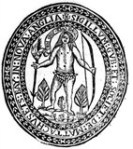
My 11th great-grandfather was born in Plymouth Colony in 1640. His father was a joiner who was well known in the colony. We know little about his life. He died in Providence, Rhode Island the same year his second child, a daughter,was born. It was common for people to move to Rhode Island from Plymouth for religious reasons. Later some members of the family are Quakers, and this may have been Daniel’s persuasion also.
Daniel Pratt (1640 – 1680)
is my 11th great grandfather
Henry Pratt (1658 – 1745)
son of Daniel Pratt
Esther Pratt (1680 – 1740)
daughter of Henry Pratt
Deborah Baynard (1720 – 1791)
daughter of Esther Pratt
Mary Horney (1741 – 1775)
daughter of Deborah Baynard
Esther Harris (1764 – 1838)
daughter of Mary Horney
John H Wright (1803 – 1850)
son of Esther Harris
Mary Wright (1816 – 1873)
daughter of John H Wright
Emiline P Nicholls (1837 – )
daughter of Mary Wright
Harriet Peterson (1856 – 1933)
daughter of Emiline P Nicholls
Sarah Helena Byrne (1878 – 1962)
daughter of Harriet Peterson
Olga Fern Scott (1897 – 1968)
daughter of Sarah Helena Byrne
Richard Arden Morse (1920 – 2004)
son of Olga Fern Scott
Pamela Morse
I am the daughter of Richard Arden Morse
 mermaidcamp