mermaidcamp
Keeping current in wellness, in and out of the water
You can scroll the shelf using ← and → keys
You can scroll the shelf using ← and → keys
It has come to my attention that April is not only National Poetry Month, but also National Grilled Cheese Sandwich Month. This combines several of my hobbies and interests in one action packed month. I hope before we get to May I will have written a decent poem to grilled cheese. There are no guarantees for my poetry, but I am no slouch in the kitchen, so I know I can create a vibrantly creative tribute to this classic comfort food that will be edible. Perhaps that will make me wax poetic…or better maybe I can crowdsource a poem, like we did yesterday on twitter, while improvising on grilled cheese combinations. Even better, as suggested by the fabulous Just Browsing blog by the Orem Public Library, I could throw a potluck featuring all kinds of cheese, breads, spreads and additives. I also love the idea of reading all the grilled cheese sandwich recipes on earth, in books and on the internet as a warm up.
I am currently in love with Romesco sauce, which seems to go on everything. I have been making cute mini pizzas with the sauce on flat bread with various toppings, including cheeses. It is a classic Spanish recipe which can be made several different ways, but the main ingredients are roasted tomatoes, roasted garlic, roasted hazelnuts, and roasted almonds. Variations abound, sort of like gazpacho. The basics are stable, but the methods and proportions differ in style. I started with dried ancho chilies, but have adapted my recipe already to include green chile. After a couple of days the sauce improves in the refrigerator, all the flavors melding. I have a big batch in a bowl right now, and am roasting more tomatoes as I write. I think this is the perfect time to invite people to my home to discover Romesco and grilled cheese. It is a twist on tomato soup that adds depth to the entire meal. How will you celebrate this famous sandwich’s month? If you write a grilled cheese poem, please send it to me. Bon appetite!!

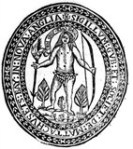
My 11th great-grandfather was born in Plymouth Colony in 1640. His father was a joiner who was well known in the colony. We know little about his life. He died in Providence, Rhode Island the same year his second child, a daughter,was born. It was common for people to move to Rhode Island from Plymouth for religious reasons. Later some members of the family are Quakers, and this may have been Daniel’s persuasion also.
Daniel Pratt (1640 – 1680)
is my 11th great grandfather
Henry Pratt (1658 – 1745)
son of Daniel Pratt
Esther Pratt (1680 – 1740)
daughter of Henry Pratt
Deborah Baynard (1720 – 1791)
daughter of Esther Pratt
Mary Horney (1741 – 1775)
daughter of Deborah Baynard
Esther Harris (1764 – 1838)
daughter of Mary Horney
John H Wright (1803 – 1850)
son of Esther Harris
Mary Wright (1816 – 1873)
daughter of John H Wright
Emiline P Nicholls (1837 – )
daughter of Mary Wright
Harriet Peterson (1856 – 1933)
daughter of Emiline P Nicholls
Sarah Helena Byrne (1878 – 1962)
daughter of Harriet Peterson
Olga Fern Scott (1897 – 1968)
daughter of Sarah Helena Byrne
Richard Arden Morse (1920 – 2004)
son of Olga Fern Scott
Pamela Morse
I am the daughter of Richard Arden Morse
Poetry is an expression of wonder. Painting a scene with words is one way to keep a vision eternal. I can see the Asyrians come down like a wolf on the fold when I hear this poem. The colorful battlefield Lord Byron creates poetically lasts forever. He was not at the battle, but he has made it part of our cultural memory. Each of us has experiences that are unique to us, that only we can express. Poetry is a vehicle for these stories or impressions to reach the mind’s eye of the reader. If we do not tell those tales or color in the details of the scenes we have seen, they will not be told. A sense of wonder and willingness to write are the only tools needed. There are good reasons to write poetry:
Consider celebrating Poetry Month this April by writing some of your own. You will not meet the poet within until you try. Tomorrow, April 9, 2014, at noon you can join NPR on twitter writing a collaborative poem. Using the hashtag #CSPoetry contribute a line to the poem. The Code Switch poem will be presented in the stream when completed. You just don’t know what will happen next. You only have to think of one good line. Go for it, Gentle Readers. Do some gentle writing.




Athena is often mentioned as a war goddess because she was never defeated. She is also the goddess of wisdom and crafts. Her protection is important in firing the kiln. The ceramic demons that destroy a firing can take over without her blessing:
Homer’s Epigrams Fragment 14 (trans. Evelyn-White) (Greek epic C8th or C7th B.C.) :
“Potters, if you give me a reward, I will sing for you. Come, then, Athena [goddess of pottery], with hand upraised over the kiln. Let the pots and all the dishes turn out well and be well fired: let them fetch good prices and be sold in plenty in the market. Grant that the potters may get great gain and grant me so to sing to them. But if you turn shameless and make false promises, then I call together the destroyers of kilns, Suntribos (Shatter) and Smaragon (Smash) and Asbetos (Charr) and Sabaktes (Crash) and Omodamos (Crudebake) who can work this craft much mischief. Come all of you and sack the kiln-yard and the buildings: let the whole kiln be shaken up to the potter’s loud lament. As a horse’s jaw grinds, so let the kiln grind to powder all the pots inside.”
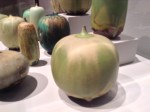
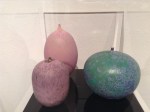
It is obvious to me that Rose Cabat made friends with Athena long ago in order to achieve such masterful results in the kiln. Her work is unique because her special glazes create a silky feel that is her secret weapon. The pots are vivid and beautifully shaped, inviting touch. The soft surface she creates is like no other. She calls the pots feelies, and has become famous for these special touchable forms. Her many collectors are happy to pay $400 and up for a tiny feelie because they only go up in value over time. Rose is still making pots from her wheel chair at age 100, and continues to be in very good standing with Athena. She has a show now at the Tucson Museum of Art featuring her work over her long career. It is incredible to see in person. I have seen her work over the years, but there are so many in one place that it delights the eye..and makes us wish we could feel them. There are some for sale in the Museum shop if you want your own to have and to hold.


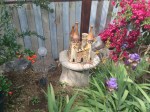







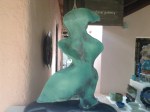




I recently reread the book Centering by Mary C Richards, a potter. In it she waxes very poetic about the subject of pottery. When I was covered with mud I considered Ms Richards to be fluffy and woo woo. About 35 years later I see how centering clay on a wheel is sheer poetry. I also notice my own approach to centering, which has never left me. I now like to center my body from the core in deep water, using tubular units for balance. This month as I attempt to write a poem a day I searched my memory for inspiration. Janet Burner, queen of all alchemists and artist of great skill and talent, popped into my mind. She has awesome technical skills and an alliance with fire like nobody I have ever seen. I like fire myself and enjoyed my time as a kiln queen. Janet has perfected various styles of firing to add variety and excitement to her work. She has always been famous for her raku. Now she has evolved other techniques, both modern and ancient, to bring her work to life.
In the kiln the pot is actually born. Just like an animal at birth, it also has a chance of dying. Potters must accept that some work will crack or be ruined in the firing. They must also accept that pottery is breakable, and glazes can only be controlled to a certain extent. Intimate knowledge and wisdom of the firing process results from practice and experimentation. I think of Janet Burner as the ultimate goddess of the fire. We talked about how ironic it is that her last name is Burner, both because of fire and because one of the oldest techniques used in finished ceramics is called burnishing. Her work today is created in a wonderful studio full of light, love, and art that she built herself. The artful courtyard garden serves as a gallery to display her work. She continues to teach at the Tucson Museum of Art School and grace our community with her participation in the Pima Arts Council Open Studio Tours. Next weekend you can visit artists and see their studios all over Tucson. This is an excellent way to find art and artists.

Thomas French
My 11th great-grandfather came to America in 1632 with his sister. He was a taylor by trade. He lived in Ipswich, MA, where he served in the Pequod War.
Thomas French (1584 – 1639)
is my 11th great grandfather
Alice French (1610 – 1666)
daughter of Thomas French
Thomas Howlett (1638 – 1667)
son of Alice French
Mary HOWLETT (1664 – 1727)
daughter of Thomas Howlett
John Hazen (1687 – 1772)
son of Mary HOWLETT
Caleb Hazen (1720 – 1777)
son of John Hazen
Mercy Hazen (1747 – 1819)
daughter of Caleb Hazen
Martha Mead (1784 – 1860)
daughter of Mercy Hazen
Abner Morse (1808 – 1838)
son of Martha Mead
Daniel Rowland Morse (1838 – 1910)
son of Abner Morse
Jason A Morse (1862 – 1932)
son of Daniel Rowland Morse
Ernest Abner Morse (1890 – 1965)
son of Jason A Morse
Richard Arden Morse (1920 – 2004)
son of Ernest Abner Morse
Pamela Morse
I am the daughter of Richard Arden Morse
ORIGIN: Assington, Suffolk
MIGRATION: 1632
FIRST RESIDENCE: Boston
REMOVES: Ipswich 1635
OCCUPATION: Tailor. John Stratton writes from Boston under date of 17 March 1633/4: “I have put my sister a suit of mohair to making at Goodman French’s. She were best get the tailor to take her measure and send per Jno. Gallop” [WP 3:157]. Thomas French’s inventory included eleven yards of homemade cloth.
CHURCH MEMBERSHIP: Admitted to Boston church as member #128, which would be no later than mid-1632 [BChR 14]; on 27 January 1638/9 “our brother Thomas French was with the consent of the congregation dismissed to the church of Ipswich” [BChR 22].
FREEMAN: 6 November 1632 [MBCR 1:367].
EDUCATION: He signed his will.
OFFICES: Essex grand jury, 28 September 1652 [EQC 1:260]. Petit jury, 30 September 1651, 31 March 1657, 28 September 1658, 29 March 1659, 27 March 1660, 25 March 1662, 27 September 1664, 26 September 1665, 28 September 1669, 24 September 1672, 31 March 1674, 30 March 1675, 24 September 1678 [EQC 1:232, 2:11, 111, 138, 195, 347, 3:182, 270, 4:175, 5:79, 269, 6:1, 7:82]. Coroner’s jury on the body of Samuel Adams, Jr., 30 September 1676 [EQC 6:234].
Had service in the Pequod War. Proposed for Lieutenant, 25 March 1639 (but apparently not confirmed; in a letter of that date Daniel Dennison writes to John Winthrop “Our company wanting some officers, have according to their liberty, made choice of some, whom they desired me to propound to the Court or Council. They were willing to express their love and liking to Sergeant French and Sergeant Howlett proposing the former for Lieutenant, the other for Ensign” [WP 4:106]). On 18 May 1664 “Sergt. Thomas French deposed that being ordered by Major Genll. Denison to carry two soldiers who were stubborn off the field to prison, he went to them and persuaded them to submit themselves, promising to mediate for them” [EQC 3:140]. Appointed ensign at Ipswich 18 May 1664 [MBCR 4:2:106].
ESTATE: At a selectman’s meeting 31 January 1660[/1] eight men, including Thomas French, were granted liberty to “clear and break up a parcel of land at Scott’s hill to have two acres each for six years upon condition that they sow four bushels of good hay seed on every acre, to keep up the fence a year so that the English grass should get head, the hay seed to be sown with the last crop” [EQC 3:271].
In his will, dated 3 August 1680 and proved 28 September 1680, “Thomas French Senior of Ipswich … being weak of body” bequeathed to “Mary my beloved wife the bed whereon I used to lie, with all the appurtenances and furniture belonging thereto”; to “my son Thomas French” clothing; to “my son John French” one cow “to make up the full sum of £30 which I formerly promised him for his portion”; to “my daughter Mary Smith” one cow; to “my son Samuel French” a bed and bedding; “my sons Thomas and Samuel French” in consideration of £20 paid to “my son Ephraim French” as the remaining part of his portion, “my two sons Thomas and Samuel” shall receive the Pequod lands and division lot of marsh to be equally divided betwixt them; to “my son Thomas French” my dwelling house and homestead, also my lot in Labour-in-vain fields of twelve acres, also the rest of my cattle, stock, and moveable goods; to “my son Samuel” two acres of upland and two acres of meadow at Reedy marsh; “my son Thomas French” to give free liberty to “Mary my wife his mother” to dwell in the said house and to make use of any room or rooms thereof for her convenient accommodation … likewise … any such moveables as I do now leave in the hands of my son Thomas”; after her [Mary’s] decease, “my son Thomas” shall deliver to “my three children John, Samuel and Mary” three of the biggest pewter dishes; “my two sons Thomas and Samuel” to provide for “their mother’s” comfortable maintenance, and if she is not satisfied, they to allow her £9 paid by Thomas and 20s. paid by Samuel annually; and if she suffers sickness and the aforesaid £10 does not suffice, “my two sons Thomas and Samuel” shall supply her with necessaries and my lot in Labour-in-vain fields and two acres of meadow at Reedy Marsh shall stand bound respectively to my said wife during her natural life as security for the true performance of this my will as respecting her maintenance by my two sons; “my son Thomas French” sole executor [EPR 3:379-81].
The inventory of Ensign Thomas French was taken 25 August 1680 and totalled £217 15s. 6d. including £150 in real estate: “his dwelling house & barn & homestead with the privilege belonging,” £70; “twelve acres of land at Labor in vain,” £60; “two acres of land by Scotes Lane,” £10; and “two acres of marsh in the common field,” £10 [EPR 3:380-81].
BIRTH: Baptized Assington, Suffolk, 27 November 1608, son of Thomas and Susan (Riddlesdale) French [Dudley Wildes Anc 64].
DEATH: Ipswich 8 August 1680.
MARRIAGE: By 1632 Mary _____; she died at Ipswich 6 May 1681.
CHILDREN:
i MARY, bp. Boston 23 September 1632 [BChR 278 (corrected from 1631)]; d. soon.
ii MARY, bp. Boston 2 March 1633/4 [BChR 278]; m. by 1657 Robert Smith (called Mary Smith in father’s will) [Amos Towne Anc 25-27].
iii JOHN, b. about 1635 (deposed aged “about forty-eight” about March 1682 [EQC 8:329] unless this is someone else); m. by 1657 Phebe Keyes (son Thomas born Ipswich 25 May 1657), daughter of ROBERT KEYES.
iv THOMAS, b. about 1636 (deposed aged 22 in 1656 [EQC 2:140], deposed aged “about forty-seven” in March 1683 [EQC 9:16], deposed aged “about forty-eight” about March 1684 [EQC 9:191]); m. Ipswich 29 February 1659/60 Mary Adams.
v SARAH, b. say 1638; on 30 September 1656 “Hackaliah Bridges, accused by Sarah French of his getting her with child, and bound over, being brought by Sergeant French, was discharged” [EQC 2:2]; if she was a daughter of Thomas French, she had apparently died without issue prior to 1680, as she is not named in his will.
vi SAMUEL, b. say 1641; convicted for fornication, 26 March 1667 [EQC 3:398]; d. Ipswich in 1688 (day and month not stated in town vital records), apparently unmarried.
vii EPHRAIM, b. about 1643 (deposed in 1658 aged 15 [EQC 2:139]); d. Enfield, Massachusetts (now Connecticut), in September 1716, unmarried [Amos Towne Anc 50].
ASSOCIATIONS: Thomas French and his sister Alice had arrived in New England by 1632, and their two next younger sisters, Dorcas and Susan, came in 1633. Their parents and younger siblings sailed for New England after 1633, and are not included in this phase of the study. [See Parker-Ruggles 412-29, Dudley Wildes Anc 63-64 and NEHGR 142:250-52, 143:213-20, 363-64 for the ancestry of this group of French siblings.] Alice married THOMAS HOWLETT and Dorcas married first CHRISTOPHER PEAKE and then GRIFFIN CRAFTS (sketches for these families will be found elsewhere in this work). Susan may have been a servant in the household of John Winthrop Jr. for a time, but otherwise left no record in New England.
In a letter dated Groton 14 March 1632/3 John Bluett asked John Winthrop Jr. to remember him to “my schollers Thomas French and John Clarke” [WP 3:108].
COMMENTS: With most of the adult male population of Ipswich, Thomas French signed the petition to keep Mr. John Winthrop Jr. in town, 21 June 1637 [WP 3:433].
Ensign Thomas French and Thomas French Jr. were sureties on the bond of Samuel French when young Samuel was charged with a misdemeanor with Lydia Browne, at court 26 March 1667 [EQC 3:398].
The Great Migration Begins
Sketches
PRESERVED PURITAN
I grew up in the 1950’s watching You Bet Your Life on our big black and white TV. When I see this episode I am shocked that Chiricahua Apache Chief, Niño Cochise was a contestant on the show. The jokes made at his expense by Groucho were equalled later in the show with his comments to an overweight woman in the contest. Our prejudices may have remained active, but nobody would publicly joke in such racist and chauvinist ways in 2014. Niño Cochise used sit at the Wilcox visitor center and to greet tourists when I moved to Arizona in the 1970’s. He is buried in Tombstone in the old cemetery. It is odd to see him in a business suit answering quiz questions while he is the Chief of the tribe. Times have changed.
April is for poets, and we are all poets. There are many ways to celebrate. I have taken the challenge to write a poem each day in April. My approach is zen. The weekend workshop on ekphrastic poetry helped me find a place to begin. By responding to art, the ekphrastic poet reflects, or echoes the artist by interpreting the artwork. Memorizing a poem is another way to participate in the fun this month. My father could recite almost all of the Cremation of Sam McGee by Robert W Service, which was always impressive. Stories told in rhyme stay in the mind’s eye.
Poets.org has a poetry party happening right now. You can make a commonbook with quotes and poems using resources on the site. If you are lucky enough to live in Tucson you can visit our Poetry Center to experience space completely dedicated to poetry. Docents there are happy to give tours of the rare books and more if you call for an appointment. Today in Tucson the 31st annual Poetry Festival invites the public for free readings and activities all weekend. Fluency and artistry enhance the lives of those who listen. Tune in this month to hear what you may have been missing.

coat of arms
My 9th great grandfather was born in Barnstable in 1648, the son of English immigrants. He fought in King Philip’s was against my Wampanoag ancestors. His parents were Pilgrims who settled in Barnstable. His father left England alone to come to America because of religious problems. He sent for his family to join him after arrival.
Eleazer Hamblen (1648 – 1698)
is my 9th great grandfather
Isaac Hamblin (1676 – 1710)
son of Eleazer Hamblen
Eleazer Hamblin (1699 – 1771)
son of Isaac Hamblin
Sarah Hamblin (1721 – 1814)
daughter of Eleazer Hamblin
Mercy Hazen (1747 – 1819)
daughter of Sarah Hamblin
Martha Mead (1784 – 1860)
daughter of Mercy Hazen
Abner Morse (1808 – 1838)
son of Martha Mead
Daniel Rowland Morse (1838 – 1910)
son of Abner Morse
Jason A Morse (1862 – 1932)
son of Daniel Rowland Morse
Ernest Abner Morse (1890 – 1965)
son of Jason A Morse
Richard Arden Morse (1920 – 2004)
son of Ernest Abner Morse
Pamela Morse
I am the daughter of Richard Arden Morse
Page 526 – Eleazer Hamblin, son of James, was a soldier in Capt. John Gorham’s company in King Philip’s war, and an original proprietor of the town of Gorham, in Maine. I have not carefully examined his record, and know but little of his history. His wife was an early member of the church, and he joined in 1686. I think he resided at Hamblen’s Plain. The Eleazer Hamblins patronized the lawyers more than all others of the name ; but I may be
GENEALOGICAL NOTES OP BAKNSTABLE FAMILIES. 527
doing injustice in making the remark in connection with the elder
Eleazer.
He married 15 Oct. 1675, Mehitabel, daughter of John Jenkins,
and had six children born in Barnstable :
The two last probably died young aud therefore their names do
not appear on the town record.

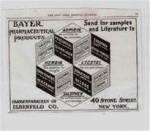

Drugs have won the war we have waged against them. Heroin is growing in popularity because it is a cheap substitute for the prescription drugs that are now the gateway. The profits are massive, and the corruption that accompanies the trade makes a joke of law enforcement. The name heroin was chosen by Bayer, the original marketers of the product, because it made the user feel like a hero. The company stopped manufacturing and selling heroin in 1913, and it was outlawed in the US in 1920. The Viet Nam war increased American use when 10-15% of our troops started using it while in Asia on deployment.
In the US today heroin use is on the rise . Young people between 18-25 are the fastest growing addict group. Mexican black tar heroin is smuggled in great quantity across the Arizona border. This corrupts our law enforcement and endangers our youth as it passes through on the way to it’s eventual market. The smuggling business includes all kinds of illicit drugs. It is organized by cartels run by very nasty individuals. The only way to pull the profit plug on the cartels is to reduce and eliminate demand on our side of the border. This is much easier said than done. From miracle cure to the ruin of our society, heroin has come a long way, baby.

