mermaidcamp
Keeping current in wellness, in and out of the water
You can scroll the shelf using ← and → keys
You can scroll the shelf using ← and → keys
The Avenger character is a masked marvel. Crusades for righteousness and fairness are the territory of this archetype. Comic book characters and super heroes use the avenger character to tell stories about balancing the scales of justice . The obvious shadow attribute the avenger can possess is the willingness to use violence to defend a cause. Frequently we see the misguided avenger on the loose; That is called the loose cannon because the lack of control is too obvious. They may be warriors or politicians, but their primary motive is to represent causes for the sake of others. They are aggressive.
Religious zealots in history have often convinced others to seek revenge or fight a holy war. Terrorism and family feuds are examples of avengers gone bad. When nations or political factions square off to avenge some perceived wrong this is the archetype in control. When the Republicans and the Democrats cut off all their noses to spite all their faces they are doing it because they believe they are finding vengeance. They tell the taxpayers they are fighting for us, but they are isolated in their own cartoon, unaware of the roles they play in our big drama. They fight because they feel entitled, and because we have allowed them to become so extreme. Their capes and masks must be recalled.

avenger card

Quaker
Jeffrey Horney was a Quaker born in Maryland. His father was a planter who left his estate to his children in 1738. Jeffrey inherited “Cottingham”:
Horney, Jeffery, planter,Talbot Co.,11th Jan., 1737;
27th Mch., 1738.
To son William and hrs., “Dixon’s Gift,” Queen Anne’s Co.; and personalty.
To son Jeffery and hrs., “Cottingham,” sd. son dying without issue sd. tract to son Philip and hrs.; and personalty.
To sons Philip, James and daus. Jane and Prissillia, personalty, some of which des. as bou. of John Carslake. Residue of personal estate to 4 sons and 4 daus. divided equally.
Son Jeffery, ex., to have care of sons Philip and James until they come to age of 18.
Test: Robert Harwood, John Regester, Edward Perkins. 21. 861. MARYLAND CALENDAR OF WILLS: Volume 7
Since I have ancestors born in Maryland named Nichols, I was very interested to learn about the Nicholite movement, also known as New Quakers. The Nichols in my tree marry into the family about 100 years later in Pennsylvania.
Jeffrey Horney (1723 – 1779)
is my 8th great grandfather
Mary Horney (1741 – 1775)
daughter of Jeffrey Horney
Esther Harris (1764 – 1838)
daughter of Mary Horney
John H Wright (1803 – 1850)
son of Esther Harris
Mary Wright (1816 – 1873)
daughter of John H Wright
Emiline P Nicholls (1837 – )
daughter of Mary Wright
Harriet Peterson (1856 – 1933)
daughter of Emiline P Nicholls
Sarah Helena Byrne (1878 – 1962)
daughter of Harriet Peterson
Olga Fern Scott (1897 – 1968)
daughter of Sarah Helena Byrne
Richard Arden Morse (1920 – 2004)
son of Olga Fern Scott
Pamela Morse
I am the daughter of Richard Arden Morse
Jeffrey Horney [III] was born before 1720 in Talbot County, Maryland. He married Deborah Baynard outside of the Quaker faith without the consent of the Friends. Their marriage license was dated October 6, 1739 in Talbot County, Maryland. Eight years later in 1747, Jeffrey and Deborah Horney would sell their land in Talbot County and move to Dorchester [now Caroline] County. On the 27th of October 1747, Jeoffery and Deborah Horney sold fifty acres of Cottingham in Talbot County to William Thomas, Gentleman. Less than one month later, on the 12th of November 1747, Jeffrey Horney of Talbot County purchased Piersons Chance [Pearsons Chance] from John Pierson of Dorchester County, formerly laid out for Thomas Pierson. The property was in two parts; one part contained 100 acres and the other part contained 50 acres. The land was located on Watts Creek, off of the Choptank riverjust south of Denton in what is now Caroline County, Maryland. As the crow flies, Piersons Chance was less than 15 miles northeast of Cottingham and was about 5 miles from the Delaware line of Kent County, Delaware.
Nov 12, 1747 John Pierson of Dor Co, planter, to Jeofrey Horney of Talb co, planter: two parts of a tract formerly laid out for Thomas Pierson called “Piersons Chance,” conveyed by said Thomas to said John by separate deeds, on Watts Creek, one part containing 100 a. and the other part containing 50 a. more or less. Wit: T. Waite, Jno. Caile, Hall Caile. Ackn by John Pierson and Elizabeth his wife before Thos. Foster abd Benj Keene, Justices. (See receipt, Dorchester County Land Records 14 Old 169).
For the first seven years of their marriage, Jeffrey and Deborah Horney lived at Cottingham, and any of their children born within the first seven years between 1740 and 1747 were born at Cottingham in Talbot County. After November 1747 when Jeffrey and Deborah purchasedPiersons Chance in Dorchester County, any subsequent children they may have had were born in Dorchester County, Maryland. This land now lies in Caroline County Maryland which was not established until 1773 from parts of Dorchester and Queen Anne’s Counties. This explains why Jeffrey and Deborah Horney and their children are subsequently found in Caroline County records. The land on which they were living from November 1747 onward,Pierson’s Chance, was once in Dorchester County in an area that became Caroline County in 1773. At least three of their children, John, Philip and William Horney, left Maryland between the 1780s and 1790’s when they may have followed the Nicholite movement into the Deep River section of Guilford County, North Carolina. Some lines would remain in North Carolina while others would move onto Ohio, Illinois and beyond.
There is a local legend surrounding the area on Watts Creek where Jeffrey and Deborah settled. It was believed that in the 1600s and early 1700s notorious pirates and privateers, such as Captain William Kidd and Edward Teach [Thatch, Thach, Thache], otherwise known asBlackbeard, may have hid or buried treasure along the shores of Watts Creek. A local legend began to circulate (or re-circulate) in 1916 when Swepson Earle wrote Manor houses on the Eastern Shore. He claimed that “Tradition says [Watts Creek, south of Denton] once provided refuge for Captain Kidd, whose ‘buried treasure’ has been sought on its banks.” Later, in the 1940s when Hulbert Footner wrote his book, Rivers of the Eastern Shore, he related that“There is such a hole near the mouth of Watts Creek that is ninety feet deep. It is called Jake’s Hole. Its exact depth is known because it’s been sounded often enough, and I’ll tell you why. There was aplenty pirates round here in the old time. The one that mostly cruised in these waters was Blackbeard; Edward Teach was his right name. Well, Blackbeard picked Jake’s Hole for one of his caches, and dropped an oaken chest bound round with copper bands in there. It’s still there. God knows what’s inside it!”However, according to Donald Shomette who more recently wrote Pirates of the Chesapeake, neither Blackbeard or Captain Kidd ever sailed into the Bay, but their legends did.
Whether or not the legends of Watts Creek spun by the old-timers were fact or fiction, there were pirates and privateers who sailed in and around the Chesapeake Bay. Among them, Roger Makeele, was found in Maryland records in 1685 when he and his band of pirates lured the crews of tobacco sloops to their camp on Watts Island. They would seize the crew and confiscate their sloops before leaving the men in the Marshes of Dorchester County. Makeele sailed the Choptank river which separated Dorchester County from Talbot County where the early Horney’s lived. Incidentally, that same year Jeffrey Honey [Horney] was testator to the will of Emanuel Jenkinson of Talbot County Maryland. It is likely the early Horney men, as well as other settlers in the area, heard of these pirates and were in peril of loosing their tobacco crops and their sloops to the pirates of the Chesapeake.
During this time, local Indians lived in the area. Their ancestors arrived in the area long before the European settlers. When John Burnyeat appointed a general meetingfor all of the Friends in the province of Maryland. George Fox wrote about that meeting in his journal, (Two Years in America 1671-1673 Chapter XVIII) It was upon me from the Lord to send to the Indian emperor and his kings to come to that meeting. The emperor came and was at the meeting. His kings, lying further off, could not reach the place in time. Besides the Horneys who married into Quaker families, other religions would later play a part in their lives. Among the early churches and societies, early Horney families were or became Puritans, Anglicans and Episcopalians. In 1760, when Joseph Nichols of Kent County, Maryland and Delaware founded the Nicholites [New Quakers], at least one branch of Horney’s were found in Nicholite Petitions. [Most likely Jeffrey and Deborah Horney and/or their descendants.] The early Horney’s also became Methodist and Methodist-Episcopal. On June 17, 1703 John Wesley, the founder of Methodism, was born in Epworth, Lincolnshire, England. By 1771, John Wesley’s teachings reached the Eastern Shore of Maryland. When Francis Asbury came to Maryland to spread Wesley’s word, the Methodist religion took a strong hold in Maryland. More than a few Horney families converted to Methodism. However, Wesley’s Tory beliefs may not have sat well with the Horney’s who served [on the American side] in the Revolutionary War.
The rivers on Maryland’s Eastern Shore defined the early transportation routes of religion. During their lifetime, the settlers of the area, did much of their traveling on the rivers, tributaries, creeks and branches which crossed the Eastern Shore of Maryland, east of the Chesapeake Bay. They lived near and traveled many of these waterways including the Choptank, Wye, St. Michaels, (now Miles),Tred Avon (Third Haven), and Tuckahoe Rivers. The Tred Avon was and still is the location of Third Haven Meeting House near what is now Easton, Talbot County, Maryland. The St. Michaels, (now Miles) River was the location ofBetty’s Cove Meeting House.
To see photos of the Choptank and Tuckahoe river areas in Talbot and Caroline counties where the Horney families lived and traveled, select the pdf file from the Upper Choptank and Tuckahoe River Cultural Resources Inventory. Another helpful tool is the Choptank and Tuckahoe Rivers Sections Map. Take a two day canoe trip on the Choptank River Sojourn, a journey of Maryland’s Eastern Shore through areas where the earliest Horneys settled and the route that Jeffrey Horney III and his wife Deborah Baynard traveled and settled after 1747. Areas mentioned throughout this river journey are Choptank, Denton, Dover Bridge, Greensboro, Hillsboro, Tuckahoe and Watts Creek. All of these locations were found in 1600 – 1700 HORNEY records in Caroline, Talbot, and Dorchester Counties, Maryland. The journey described was a likely route traveled by Jeffrey Horney III and his wife, Deborah Baynard and their children as they left Talbot County, Maryland and settled in Dorchester [now Caroline] County, Maryland.
Each of us has a child archetype within our psyche. Carolyn Myss outlines six kinds of archetypal children. They are:
The eternal child has an attachment to youth and immaturity. The positive eternal child is the stuff that ads are made of, enthusiastic, fresh and free. The shadow eternal child has a resistance to responsibility and rejection of the aging process. The need to stay youthful may lead to extreme dependence on others for security. The puer aeternus is a man who never accepts responsibility. He is frequently a character in fiction, and sadly appears often in real life. Peter Pan is a modern eternal youth story with Tinkerbell playing the puella aeterna. Clinging to youth can prevent one from reaching the full range of emotions and insights. Youthful enthusiasm and a willingness to make fresh starts are the positive aspects of this child persona. Adults who are consistently unreliable or dependent on others reflect the worst aspects of the eternal child.
 Peter Pan
Chivalry is one of those double edged swords. Knights are loyal and honorable as an ideal; love and honor do not always triumph. The good knight is brave in service to a higher calling or just ruler. The shadow knight is romantically delusional and may serve a corrupt ruler. Self image is all important to the knight, since he needs to be seen as helpful and brave. He may find himself drawn into needless drama to save damsels and others who signal distress. This may become a pattern in life, endlessly saving others.
Today the knight may be spiritually correct, always defending worthy causes. His love of honor and his loyalty to cause or leader can be very confusing in this character. If the leader demands self sacrifice and self neglect, this archetype can feel self righteous about taking this shadowy path. Loyalty to destructive or greedy powers can be the undoing of the modern knight, just as it was in history. Romantic notions of service can be a cover for the absence of chivalry and honor. It is usually easy to spot the knight riding either a black horse or a white one that symbolizes intent. This archetype distinguishes itself from all the characters by being loyal as well as romantic. The knight displays his loyalty above all else, since it is the source of his identity. Do you know any knights in your life?

jet
I have learned to budget time by planning many trips for myself and travel clients. When tour companies take groups out on an excursion the itinerary is published to give all a sense of unity. Planning time for commuting in a city or check in at a strange terminal must be done with precision and plenty of lead time. I think travelers are often too optimistic about the amount of time it really takes to get across town or out of town. Being on time for appointments or performances is essential to enjoying a visit. I also think free unstructured time to explore is an important element of happy tourism.
Here are the ways I like to expand my world when I travel. I use time in new ways:
I learn before I go. My research into options can take weeks for some destinations. I study maps and transit systems, look up details and make notes if there is something I want to make sure I see. No matter what I learn from reference materials I always ask for a local’s opinion if I can. Once I have made the arrangements for the elements of the trip, lodging, transportation, dining, and exploration I believe it is important to give in to serendipity as much as possible. I find that being open in both mood and schedule allows the magic of the place to speak to me. Sometimes I meet cool people who inform me; other times I am called by special architecture or botany. I find that when I plan and inform myself just enough to know where I am, but not too much to make assumptions, time is my ally. It expands and allows me to turn a few days into an exciting yet easy to accomplish new adventure of discovery. I am working on turning next week in San Francisco into just that. If you know about something special I need to know before I go, please pipe up, gentle reader. I do enjoy the unusual, and already know about many of the usual highlights of the bay area. I am open to learn more.
healthy food
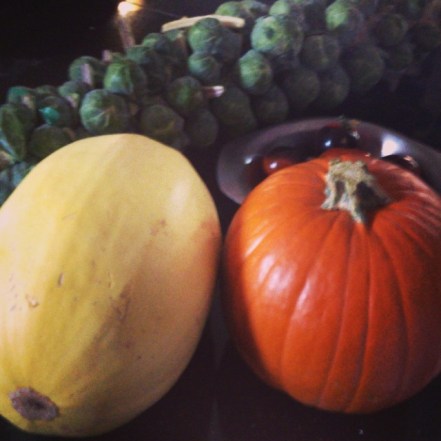
The way words are used has a big effect on culture and expectations. The words health care have come to mean prescription drugs and medical procedures. Wellness has come to mean any kind of body work, cleanse, or restrictive diet. What is even more debilitating to the public health is that insurance policies determine the care most people use. There is abuse on both sides, by wellness quacks and medical losers. Wellness or health coaches are essentially practicing counseling in everything from nutrition to psychiatry. The unhealthy American population is vulnerable and guilty, willing to jump to all kinds of conclusions, buying into all kinds of cures and programs. The market is so crowded the consumer has been confused by all the possibilities. Now the public will need to understand how health insurance functions. This is a giant leap for the citizens, a shock to the system.
I made a living teaching and promoting health and wellness through water for many years. I have enjoyed waters and spas all over the world and had the pleasure of teaching many wonderful students. I have a strong healthy body that I treat to the best food and body work I can afford to give it. Since I love movement, I move. I don’t take any prescription drugs; my plan is to avoid them. The reasons I am keeping my insurance policy as it is, and not vexing myself trying to read all the options are:
Michael Ray is a friend and colleague I met in a business development forum offered by the Hispanic Chamber of Commerce in Tucson. A small group of us continue to meet once a month to focus on the model we learned and the progress being made by individuals. Michael’s project is interesting to me because I garden in the desert with more and more difficulty myself. I also like to watch the way he solves his design problems because I too am an inventor. Some serendipity and some failure accompany all inventors.
Initially one may not even plan to invent a product, but an issue or problem starts to fascinate the inventor. Failing fast has a lot of merit when you don’t know where you are going anyhow. Eventually the prototype will show/teach the creator new ways to remedy design problems. I endorse Michael because his core concept is strong, and his creative spirit is guiding him to keep experimenting until he finds solutions. I know the long and winding road through “one size does not fit all” from my own work. I believe when the Nursetree Arch comes on the market it will benefit many gardeners, both new and experienced. I know I want one.

shade

Humphrey and Isabella
My 14th great grandfather met his future bride in a very romantic return of her glove on his lance. They married and gave the queen their first born daughter. I find the gifting of the daughter to be a bit bizarre, but that is what they did.
In the chancel of the old parish church of Elstow, near Bedford–so famous for its associations with the childhood of John Bunyan*— a monument recording Sir Humphry Radcliffe of that place, and his wife, Dame Isabella Radcliffe. As the name of the latter is not even mentioned in the extinct peerage of fir Bernard Burke, perhaps a short account of a little episode in the history of this worthy pair may not be without interest to my readers. It is hardly needful to say more about the Radcliffes or Ratcliffes–for the word was spelt both ways indifferently when writing was rare and printing was almost unknown–than that they are of undoubted Saxon origin, and that they took their name from the village of Radcliffe, near Bury, in Lancashire. We read that one, Richard de Radcliffe, of Radcliffe Tower, seneschal and minister of the royal forests in the neighborhood of Blackburn, accompanied Edward I. to Scotland, and received from that sovereign, towards the end of his reign, ‘a grant of free warren and free phase in all his demesne lands of Radcliffe.’From him were descended a variety of noble houses–as the Radclyffes, Lords Fitzwalter, and Earls of Sussex; those of Foxdenton, and of Hitchin; and the unfortunate Earls of Derwentwater, who forfeited their Northumbrian castle of Dilston, as well as their lives, in the cause of the ‘young Chevalier,’ and the luckless house of the Stuarts.
One of his descendants, Sir John Radcliffe, was summoned to Parliament by Henry VII., in right of his mother, as Baron Fitzwalter; he was also steward of the Royal Household, and acted jointly with Jasper Tudor, Duke of Bedford, as High Steward of England at the coronation of Henry’s queen, Elizabeth Plantagenet. But afterwards, being involved in the wild conspiracy of Perkin Warbeck, he was attainted, and lost his head on the scaffold at Calais.
His son, however, found so much favor with Henry VIII that he was restored in blood, and, having held the command of the van of the army sent to France under the Earl of Surrey, he was created Viscount Fitzwalter and Earl of Susses. He was a zealous supporter of the king in his quarrel with Wolsey and the Pope, and he found his reward in a life-patent of the office of Lord High Chamberlain, together with a grant of the noble abbey of Cleve, in Somerset, the ruins of which to the present day form one of the most beautiful features of the country near Minehead, and Watchet, and Dunster. He was thrice married, and on each occasion his wife was a noble dame; his first choice being a daughter of Henry Stafford, Duke of Buckingham, his second a Stanley, and his third an Arundell of Lanherne. The earl desired that Humphrey, the youngest son of his first marriage, should marry a wealthy heiress of a county family; but the son took a different view of the matter from that taken by his parents for him. Very naturally and very pardonably he said that he preferred to choose for himself.
King Henry had announced his intention of being present at a tournament in the tilt-yard at Hampton, and great preparations had been made for the occasion. As the king rode along the way from London, the windows and the balconies about Kensington were all hung with colored cloths and silks. Among the crowd of spectators in the balconies was a plain citizen of London, Edmund Harvey, along with his wife and their daughter Isabel. The ladies in the neighboring windows thought the latter nice looking, and even pretty; but no one ‘knew who she could be,’ as the old folks were but commonplace in appearance, and clearly had not been brought up in the regions of courts and cities. The father, as may be imagined, pointed out the nobles as they passed by with their trains and retinues; but Isabel had no ears for her father, and her eyes scanned each new arrival for the face of a youth whom she had met on a chance occasion, and who had professed an attachment to her, in spite of the fact that she was not the daughter of a courtier or a noble.
At length there rode along a body of knights, with their lances borne aloft and their colors flying in the wind; they were headed by the Earl of Sussex, who was attended by his son Humphrey, a fair and well-favored youth, who looked little more than twenty years of age. Isabel, however, had no difficulty in recognizing him and the black steed on which he sat, and which champed the bit and foamed beneath his rein. The truth is that they had met before at another tourney, when Sir Humphrey had incurred the scorn and displeasure of some of the king’s courtiers because of a slight civility and courtesy which he had shown to herself, her father, and her mother, whom none of the gallants knew by sight or by name, their names not having been entered by the Heralds on the rolls of the ‘College of Arms.’ Eagerly did Isabel lean over the balcony in the hope of catching his eye, and grateful did she feel for a sudden halt, which was occasioned by the pressure of the crowd.
The young knight, however, was too deeply engaged in thought to take notice of the gay and smiling occupants of the balconies above his head, for he little imagined that Isabel Harvey would be among the company. But as they moved on a few steps he was roused from his reverie by a start of his horse, caused by the fall of a glove from one of the balconies. Gallantry prompted him to pick up the glove and to return it to its fair owner. Upon looking up, his eyes met those of the fair Isabel; and as he returned to her the glove on the point of his lance, and she bowed her thanks, he felt that she was not insensible to his regard for he. He quietly watched his opportunity to fall back from the gay procession as it moved along, and guided his horse down a narrow side lane, where he remained till the pageant had passed by. His object in so doing was to prevent his father, the earl, from noticing Isabel; for he well knew the haughtiness of his temper, and his zeal for the dignity of his order, and his inflexible ambition to ally his son to the heiress of some noble house or other.
Having emerged from his retreat, the young knight came again beneath the window, and, after bowing in a courtly manner, addressed the father of Isabel, who was just about to leave the balcony. On their descending into the street, the young knight dismounted, and accompanied them back to the city, leading his horse, and entertaining them, as they passed along the Strand and through Fleet Street, by his lively and elegant conversation. On reaching their home near Cheapside, Edmund Harvey pressed the knight to join them at their meal, and he gladly closed with the invitation. So well indeed did be succeed in gaining the confidence of his newly-found friend, that ere they parted the knight confessed to him his love for the fair Isabel, and received her father’s permission to ask her band, if she had no objection.
The rest of this story may be easily imagined. On the morrow the knight accompanied them back into the country, and, representing himself to be only one of the gentlemen of the earl’s retinue, he espoused the fair Isabel a few days afterwards in the priory church of Elstow. For many months-indeed, it may have been years- -he did not disclose the full secret of his rank, nor did the fair Isabel know that she had a claim to be styled ‘My Lady; The secret, however, oozed out at length ; and in due course of time their union was blessed by the birth of sons and daughters, the eldest of whom became one of the special favorites of Queen Elizabeth.
Immediately on the accession of `her highness’ she made Humphrey Radcliffe a knight, and gave him a post at court near her person, and took his eldest daughter, Mary, as her ‘Mayden of Honor and Gentelwoman of the Privie Chamber’–a post which she filled `honorably, virtuously, and faithfully for forty years,’ as her monument tells us.
It was in the year 1566, on the 13th day of August, that Sir Humphrey Radcliffe died at Elstow, and he was buried a week later in the chancel, as stated above, by the side of his affectionate and faithful wife Isabel, and soon afterwards one of his sons erected to their memory the memorial already mentioned.
As for Mary Radcliffe, she suffered less than perhaps any other person about the Court from the whims and caprices of her royal mistress. Being possessed of great penetration and judgment, together with a high sense of honor and unshaken fidelity, she could not fail to command the esteem even of ‘the Maiden Queen.’ Although remarkable for her personal beauty, she was inaccessible to the flatteries of the fops and gallants by whom Elizabeth was surrounded, and many a smart repartee and rebuff was received by the courtiers who tried to turn the head and the heart of Mary Radcliffe. On one occasion, indeed, writes Sir Nicholas Le Strange in an anecdote communicated by Lady Hobart, ‘Mistress Radcliffe, an old courtier in Queen Elizabeth’s time, told a lord whose conversation and discourse she did not like, that his wit was like a custard, having nothing good in it but the soppe, and, when that was eaten, you might throw away the rest.`*
Throughout the long period of her services at Court, Mistress Radcliffe bore a character unblemished by a spot of evil fame or reproach. She looked upon herself, she would say, as a New Year’s gift, for it was on that day in 1561-2 that she was first presented by her father to the Queen’s Majesty, and accepted by her ; and never afterwards, to the end of her days, did she fail to give the Queen–who loved all sorts of presents, and did not think it ‘more blessed to give than to receive’–some kind of annual remembrance of that eventful morning.
As she was still living to make her yearly present on the new year of 1600, Mistress Isabel Radcliffe might very justly be called an old courtier of the jealous Queen, who was not very firm in her friendships, or very scrupulous about discharging those who failed to please her. The actual date of her death is not recorded by ‘the unlettered muse’ of Elstow.
message for dog owners

practical design
Our midtown Tucson neighborhood has pride of ownership issues. The landlords are not prone to take care of rental properties and the residents have become used to a very low level of environmental pride. Tagging of gang signs is chronic and dog owners leave waste behind everywhere. Doolen-Fruitvale Neighborhood, or DooFru for short, has an elementary school, an art college, and a Boys and Girls Club all adjacent to each other. I am asking the kids interested in art and design to enter a competition. The DooFru Design Derby will be an annual competition to design the best small enhancement to our neighborhood environment. We want to create a positive artful outlet that says we care about the space in which we live. We don’t have a place for mural art or sculpture, but we can do small, individual projects that make a difference.
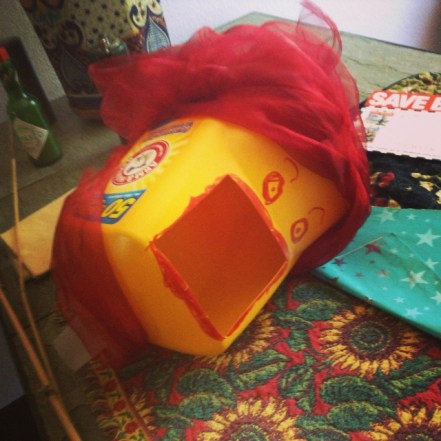
This year we are designing dog doo bag dispensers out of used plastic containers. When filled with plastic bags, they not only remind dog owners to do the right thing, but provide the means with which to do it. Some other neighborhoods have employed the bag dispensers with great success. I walk my dog in one of these adjoining areas and have noticed a big improvement in the waste problem since they put up the bag dispensers. We hope by involving kids and art we will have an even bigger impact to create a cleaner and more well cared for environment. The kids from Boys and Girls Club have joined in many neighborhood clean up efforts, only to see the same trashy behavior arise. I believe they can have a bigger influence than adults if they sincerely take on the #DooFrudumpsdogdoo initiative. They can shame the adults and set a standard of awareness simply by making art for the good of the neighborhood. My own design is designed to give the idea to the kids, but definitely not to win the derby. My #DooFrudumpsdogdoo lady is a neighborhood spokesperson in need of kids’ art.
Elizabeth Whitbread
My 11th great-grandmother married into the Spencer family. Her son Gerard went to America.
Gerard Spencer, baptized at Stotfold, co. Bedford, 20 May 1576, died before 1646; married at Upper Gravenhurst, co., Alice Whitbread or Whitbred, who belonged to a family of some prominence. It seems quite possible that Gerard and his family moved from Stotfold some years before the emigration of his sons to New England; perhaps to London, where his brother Richard had become a prosperous haberdasher.
The English surname of “Spencer” derives from the Latin word dispensator, which means a storekeeper or shopkeeper. In medieval times, a feudal lord would employ a dispensator to have charge of his possessions and to oversee distribution and sale of supplies to the serfs, peasants, and tenant farmers who worked his land. In essence, a dispensator was something like a steward. This Latin term gave rise to the occupational family names of “Dispenser,” “Spencer,” “Spenser,” “Spence,” “Spens,” “Spender,” etc. Since there must have been thousands of dispensatori, there are naturally a large number of unrelated Spencer families. Even though he was the servant of a feudal lord or a king, a dispensator often himself would be of noble or knightly rank. The two best known medieval English families bearing a form of this surname were the Dispensers, Earls of Winchester, and the Spencers of Althorp, Northamptonshire, ancestors of the present Earls Spencer, who were the family of the late Diana, Princess of Wales, formerly known as Lady Diana Spencer. The Earls Spencer are also closely related to the Spencer-Churchill family, which includes the famous British Prime Minister Sir Winston Spencer-Churchill. During the Renaissance, an unscrupulous herald manufactured a spurious genealogy tracing the Spencers of Althorp back to the Dispensers of Winchester, but that fictitious genealogy was long ago debunked — there is no proof nor any reason to believe that the Spencers of Althorp had anything to do with the old Earls of Winchester.
Elizabeth Whitbread (1538 – 1599)
is my 11th great grandmother
Thomas Spencer (1571 – 1631)
son of Elizabeth Whitbread
Thomas Spencer (1596 – 1681)
son of Thomas Spencer
Margaret SPENCER (1633 – 1670)
daughter of Thomas Spencer
Moses Goodwin (1660 – 1726)
son of Margaret SPENCER
Martha Goodwin (1693 – 1769)
daughter of Moses Goodwin
Grace Raiford (1725 – 1778)
daughter of Martha Goodwin
Sarah Hirons (1751 – 1817)
daughter of Grace Raiford
John Nimrod Taylor (1770 – 1816)
son of Sarah Hirons
John Samuel Taylor (1798 – 1873)
son of John Nimrod Taylor
William Ellison Taylor (1839 – 1918)
son of John Samuel Taylor
George Harvey Taylor (1884 – 1941)
son of William Ellison Taylor
Ruby Lee Taylor (1922 – 2008)
daughter of George Harvey Taylor
Pamela Morse
I am the daughter of Ruby Lee Taylor
6. Gerald Spencer 3 (Michael S.2, John1) was baptized on 20 Apr 1576 in Stotfold, Bedfordshire, Eng 3 and died before May 1646 in Stotfold, Bedfordshire, Eng 1.
Documented events in his life were:
1. Mention in Will, Inv. or Prob.; 17 Mar 1644/45; London, Eng 3. Cited as the father of Jarrard, Thomas, Michaell Spencer who each received �50 in the will of their uncle Richard Spencer. Also father of William Spencer, deceased, with the legacy going to William’s children.
Gerald married Alice Whitebread 1 5, daughter of John Lawrence Whitebread and Eleanor Radcliffe, in Upper Gravenhurst, Bedford, England 1. (Alice Whitebread was born between 1578-1583 in Bedfordshire, Eng 1 5 and died about 1646 in Stotfold, Bedfordshire, Eng 1.)
Children from this marriage were:
+ 15 M i. Ensign Gerard Spencer 1 2 3 was baptized on 25 Apr 1614 in Stotfold, Bedfordshire, Eng 3 and died on 29 Jun 1685 in East Haddam, Middlesex Co., CT 1.
16 M ii. William Spencer 1 3 was baptized on 11 Oct 1601 in Stotfold, Bedfordshire, Eng 3 and died on 4 May 1640 in Hartford, Hartford Co., CT 1.
Documented events in his life were:
1. Mention in Will, Inv. or Prob.; Bef 20 Nov 1628; Upper Gravenhurst, Bedford, England 5. Received legacy in the will of his grandmother Eleanor (Radcliffe) Whitebread.
2. Residence; Bef 7 Jan 1632/33; Cambridge, Suffolk Co., MA 6. William Spencer is listed as an Inhabitant � no date given. but probably before the 7 Jan 1632 date given to items on p 4
3. Lands Recorded – Granted; 7 Jan 1632/33; Cambridge, Suffolk Co., MA 7. Common Pales devided as ffollo:– William Spencer 12 Rod
4. Lands Recorded – Granted; 2 Mar 1632/33; Cambridge, Suffolk Co., MA 8. Granted William Spencer the fwampe on the other fide the Creeke.
5. Oath of Freemanship/Allegiance; 4 Mar 1632/33; Massachusetts Bay Colony, MA 9.
6. Lands Recorded – Granted; 5 Aug 1633; Cambridge, Suffolk Co., MA 10. Lotts granted for Cowyardes:– William Spencer 3 Roods
7. Town Office; 3 Feb 1633/34; Cambridge, Suffolk Co., MA 11. James Olmfted & William Spencer chosen as two of the five men to order business for the town.
8. Town Service; 1 Sep 1634; Cambridge, Suffolk Co., MA 12. ffurther it is ordered that George St^ [ ] William Spencer fhall measuer out al^ [ ] ^ranted by the Towne and have IIId the Ac^ [ ] [ ] fame.
9. Lands Recorded – Granted; 1 Dec 1634; Cambridge, Suffolk Co., MA 13. Granted William Spencer that Corner of ground by Jofeph Myats between the Swamps to bee fett out by John Haynes Efqr.
10. Town Service; 3 Feb 1634/35; Cambridge, Suffolk Co., MA 14. chosen to survey town lands: James Olmfted & William Spencer [plus 3 others]
11. Town Service; 8 Feb 1634/35; Cambridge, Suffolk Co., MA 15. Townsmen present at the town meeting:– William Spencer.
12. Town Service; 20 Aug 1635; Cambridge, Suffolk Co., MA 16. It was ordered that William Spencer and George Steele fould meafuer all the meaddow ground and undeuided belonging to the Newtowne: and when it is Meafuered and deuided to euery man his proportcion there are to: meafuer every mans feuerally and Caufe ftakes to bee fett at each end and to haue three pence the Acker for the fame and whofoever fhall not pay for the meafueringe within one yeare then the ground to returne to them for meafueringe.
13. Lands Recorded – Granted; 20 Aug 1635; Cambridge, Suffolk Co., MA 16. ffurrther it is ordered that the fame [the meaddow ground and undeuided belonging to the Newtowne] fhalbee deuided acordinge to every mans seuerall proporcion herevnder written vntell it bee all difpoffed of viz:– William Andrews 2�
14. Town Office; 23 Nov 1635; Cambridge, Suffolk Co., MA 17. William Spencer chosen one of the nine men to �order busffiness of the whole Towne for the year following� also ordered that the Towne booke fhalbee at William Spencers house.
15. Town Service; 7 Dec 1635; Cambridge, Suffolk Co., MA 18. Townsmen present at the town meeting:– William Spencer. William Spencer & Mr. Bambrigg to view the fence about the ground between the swamps [to be erected by land holders] and decide if it is sufficient.
16. Town Service; 4 Jan 1635/36; Cambridge, Suffolk Co., MA 19. Townsmen present at the town meeting:– William Spencer. William Spencer & Thomas Hofmer charged with seeing that a foot bridge is built over the Creek at the end of Spring street
17. Lands Recorded; 8 Feb 1635/36; Cambridge, Suffolk Co., MA20. The Names of Thofe men who haue houfes in the Towne at this prefent as onely are to be acconted as houfes of the Towne:– William Spencer – 2; also in the Weftend:– William Spencer – 2
18. Mention in Will, Inv. or Prob.; 17 Mar 1644/45; London, Eng 3. His children received a legacy in the will of his uncle Richard Spencer of London, England.
19. Probate; 24 Jun 1650; Hartford, Hartford Co., CT 21. This Courte taking into Consideracon the estate of William Spencer deceased with the Information of the ourseers In the presence of Thomas Spencer Brother to the said William, iwth the Consent of the wife of William Edwards: the doe Judge that 30� is as much as the estate heere will bare to be sequestred for the use of the Children, wch is to bee paid to them according tot he will of the said William Spencer, provided that suffitient security bee giuen in to the Satisfaction of the ourseers for the payment of the debts of the said William Spencer, and the aforesaid Sum of 30� to the said Children as aforesaid: And prouided allso that whatsoeuer Shall bee paid heere or in England of any Estate due to the wife of the said William Spencer while Shee was the wife of William Spencer, or that Shall Come from Concord: two thirds thereof Shall be and remaine to the propper vse of the Children aforesaid.
 mermaidcamp