mermaidcamp
Keeping current in wellness, in and out of the water
You can scroll the shelf using ← and → keys
You can scroll the shelf using ← and → keys
We are fortunate to have an excellent specialty museum in our neighborhood, The Mini Time Machine. Because the miniature art requires great concentration to appreciate the work, it is a perfect place to have a party. While enjoying food and music one can also study the museum’s well protected displays. I am a very slow and detail oriented museum patron, but really prefer the membership arrangement so I can come an go all year at my whim. I adore the doll houses with all manner of intricate trim and realistic design elements. Like other art, it is possible to discover new aspects of the work each time you observe it. Unlike most pieces, the minis always draw you in to examine the tiny achievements of scale and artistry. My museum membership is shared with my neighbor Heidi for maximum pleasure. It is a short ride from our homes, and enhances our ‘hood in a special way. We can drop in or stay all day if we feel like it.
On November 2, 2013 at 6:30 pm Vergrandis will celebrate a traditional Japanese day of the rooster known as Turi-no-Ichi with a lucky rake festival. This coincides with the fall exhibit of Netsuke and diminutive carvings from Japan. We will have a chance to enjoy foods from east and west, musical entertainment, and a silent auction that includes some desirable items. The whole museum will be lit with lanterns for the evening. I hope we will get to clap and make lucky rooster baskets like the Japanese people above, but that remains to be seen. We do have a great troop of traditional taiko drummers who will be on the scene.
The proceeds will be used to provide outreach and museum field trips for every second grade student in Pima County. I imagine there are plenty of kids in Pima County who have never been to a museum, so this one would be a really good starter experience. The $60 tickets are not tax deductible, but one can add an extra $40 which is deductible, to be a Lantern Luminary. The Luminaries are given a choice to designate their donation to a particular school or teacher if they like. It might seem like a miniature donation to give $40 toward a field trip for kids, but you will not know how big the impact might be.
Watching the US congressional dramatists perform for the nation I wonder how these folks make contact with reality. Systems thinking, or connessione provides a holistic, integrated, well proportioned view. The interests of many networks can be connected for the good of the entire system. Our congressional employees seem stuck on the idea that hostile, unproductive bickering is what the taxpayers deserve. Fractured care for our precious resources is eroding the national confidence. Rather than forming natural helpful alliances bills are created with purposeful conflicts of interests from the get go. It looks as if these representatives of the people are on some kind of very bad bummer trip, unable to view any kind of broad picture for fear of heavy freak out. They use their imaginations and creativity to whip up disharmony rather than working to connect the whole.
How can we use our own creativity as taxpayers to force these clowns to get it together on behalf of the American people? Can we imagine them working for us rather than wasting our money? I find that difficult. In the season of Halloween let us consult history and the ancestors to learn from the past. How did our ancestors off insane rulers? There have been plenty of them. We must connect the dots to understand the deep lessons history teaches. We must find the strength and the will to create a congress that works for us. We are capable of balance, even if we are not witnessing it in our elected officials.
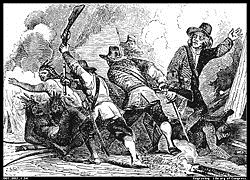
Pequot War 1637-1638
Thomas Redding was an early settler of Maine. He and his wife left a five year old child in the care of another man and never returned for him. The court awarded custody of the boy to the guardian since the promised upkeep for the child was never paid.
RESIDENCE: 1644: Scituate, Ma [BRLp10, quoting Plymouth Colony Court Records relating to their leaving their 5y old son in the care of Mr Gowan White, & failing to return to pay for his keep. The court awarded custody of the child to Mr White, unless the parents returned and paid for arrears in support]
1653: Took oath of allegiance to Massachusettes at Wells, Me as being of Saco, Me. and relocated at Three Islands, Cape Porpoise Harbor, Me (being as “Thomas Redding who hailed from New Plymouth”); he lived on the Great Island (which was known as “Redding Island” into the 1800’s) and managed the fishing Trade there until he returned to Saco about 1653/7. [BRLp11, quoting, Wilbur D. Spencer’s 1930 “Pioneers on Maine Rivers”].
1665: rem. Westcustego (the Indian name for what we call Yarmouth) [BRLp11, quoting, Wilbur D. Spencer’s 1930 “Pioneers on Maine Rivers”].
NOTE: Cape Porpoise River is now [ca.1920] known as Mousam River.
1666: “Living near the Lane family … who were living on the ‘Cousin’s Place'” [by this do we infer what is today known as “Cousin’s Island”?]BIOGRAPHY:
Quoted from: “The Redding Family and Its Relatives” by Billie Redding Lewis, Donated by the author April 1983 to (and on file at) the General Society of Mayflower Descendants Library, Plymouth, Mass.:
“No evidence has been found to connect Thomas Redding, the progenitor of the author’s family to the Thaddeus Riddan with whom Thomas is often confused. Most researchers believe all early Reddings, regardless of spelling, both in New England and the Virginia colonies, to be related.
“Banks [17] has Thomas Redding entering New England about 1635 but unfortunately, has found no ship nor English origin listed.
“One researching descendant states that Thomas came from Barbados to New England as did “John and James Saunders, Thomas Lane, John Spencer, John Manwaring, John and Thomas Hill, and others, who are found as Mr. Redding’s neighbors in what is now the state of Maine.” [18].
“Thomas Redding’s name does appear on a list of those who in 1635-8 [19] owned ten or more acres in Barbados but there is no documented proof that the Thomas Redding of Barbados is the same Thomas Redding of New England. It is quite probable, on the other hand, since Thomas, in 1639, married the sister of William Pennoyer, a wealthy London merchant, who was not only a cloth merchant but also a prosperous sea-merchant owning a number of vessels and some sugar planatations in Barbados.
“In 1637, Thomas Redding is found in “New Plymouth” as a fisherman and a volunteer for service in the Pequot War [20].
“On 20 July, 1639, Thomas Redding married Ellinor Pennoyer, who is recorded in Plymouth Colony records as Elinor “Penny”. Thomas’s name is not found again in Plymouth records until 1644 when he and Ellinor are in Scituate, Mass. where it is thought they lived less than a year & left their five year old son to be cared for by Gowan White. On 4 June, 1 645, the Plymouth Court Records state. [23]” ‘Whereas Thomas Riddings, about ayear since, came to Scituate and depted (departed) thence, leaueing a man child about fiv yeares of age with Gowen White, pmiseing him to pay xviij d p weeke for his keepeing & dyetting of him, but hath hitherto payd him nothing; and the said Gowen White hath since found him meate, drinke, and cloathes at his own charge; the court doth order and appoynt that the said shalbe wth the said Gowen White vntill he shall accomplish the age tweny and foure yeares; but if his father shall come and desire to take him away before the end of the said terme, that then he shall pay he said Gowen White for the keeping of him for such tyme as he shall haue beene wth him; and so also if bee shalbe placed wth another man.’.
“Thomas’s leaving his son is still puzzling to genealogists. The child was probably Thomas and Ellinor’s first-born since he was five years old at the time, making him born in 1640, a year after their marriage. Why was he left? Did the parents go to Barbados but did not want to change the child’s environment, or is this the period of time in which they moved to Maine and possibly did not want to subject their son to the lifestyle that would be rougher than that in Plymouth County? If they moved to Maine, why then was there no contact with Gowen White? True, travelling was not easy in those days, but the pioneers did not seem to allow obstacles to impede them completely.
“This writer could find no record of Thomas between the time he left his son in 1645 and when he took his Oath of Allegiance to Massachusetts Colony in what is now Maine, on 5 July, 1653. [25]”
[17] Charles Edward Banks, “Tophgraphical Dictionary of 2885 Emigrants”, p.234 … Baltimore.
[18] Fred E. Crowell, “Redding -Miller”, Boston “Transcript”, 1929
[19] NHGS Register, Vol. 39, taken from “Memoirs of the First Settlers of the Island of Barbados” …
[20] Winslow’s “Journal”, and Plymouth Colony Records
[23] Plymouth Colony Records; Book 2, Page 86 [25] James Savage, “A Genealogical Dictionary of the First Settlers of New England”, Vol. 4, Boston,
Thomas Redding (1607 – 1673)
is my 9th great grandfather
Martha Redding (1633 – 1702)
daughter of Thomas Redding
Abigail Taylor (1663 – 1730)
daughter of Martha Redding
Martha Goodwin (1693 – 1769)
daughter of Abigail Taylor
Grace Raiford (1725 – 1778)
daughter of Martha Goodwin
Sarah Hirons (1751 – 1817)
daughter of Grace Raiford
John Nimrod Taylor (1770 – 1816)
son of Sarah Hirons
John Samuel Taylor (1798 – 1873)
son of John Nimrod Taylor
William Ellison Taylor (1839 – 1918)
son of John Samuel Taylor
George Harvey Taylor (1884 – 1941)
son of William Ellison Taylor
Ruby Lee Taylor (1922 – 2008)
daughter of George Harvey Taylor
Pamela Morse
I am the daughter of Ruby Lee Taylor
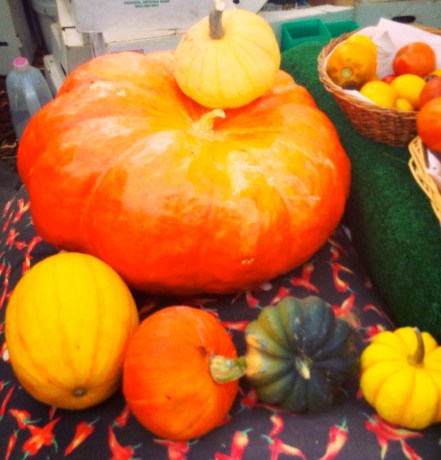
#Pumpkin
Those who do not use the blue bird for communication often say some amusing things about twitter. What is funnier is reading twitter streams to feel the pulse of the twittaverse. I recommend @Pontifex to any twitter beginner just to get the feel of the thing. I tweet less than I did when I first began to explore the possibilities of twitter. I have not joined a chat for months, but leave that option open for the future. I do still enjoy joking and being silly with other silly tweeps, but spend less time engaged in #sillyhashtagfun. I recently tried to explain the use of hashtags to my neighbor but I failed miserably. Now I will be able to send her this video clip so she can understand fully the grave importance of #hashtagging and tweeting itself.
The trickster is a character popular in many ancient mythical stories. This archetype pranks us and fools us in various ways. Like all of the Sacred Contracts, our interactions with this particular role will continue until we finally recognize the trick. The joke may be on us, or we may be the joker in the case. Good natured pranking can be done in a kind spirit; Often the dark side of the trickster misleads and harms the easily duped. When the joke is recognized as a dark misdeed the trickster is usually nowhere to be found.
I can see a pattern in my life of believing in financial tricksters. I did not carefully identify or assess risk to my own finances in my youth. I was a hedonist on a roll with no fear of failure. Even now when I believe I have done careful due diligence and consideration I am too lenient and trusting of others. While I don’t think anyone has been out to get me financially, I could have been surrounded with more trustworthy and helpful folks in my early years. The very good news is that I have become more cautious. I investigate potential partnerships and investments with much more vigor than I did in the past. I have some residual financial damage that keeps me vigilant today for any possible tricksters at work in my life. I hope I am all done with them. I can’t afford to be around them. If you have been tricked by tricksters were they stealing love, money, security, or all of the above?

memorial
My 10th great-grandfather was a carpenter who agreed to go to Maine in 1634 to stay for 5 years. He agreed to build a sawmill, a gristmill, and tenement houses for his employer, John Mason.
As extracted from Everett S. Stackpole’s “The First Permanent Settlement in Maine’
In 1634 there was an important development of the colony. Carpenters and millwrights were sent over from England in the Pied Cow, led by William Chadbourne, to build a sawmill and a “stamping mill” at the upper falls. This was the first grist-mill in New England to run by water, though Boston had a wind-mill to grind corn, and Piscataqua sent a small shipload there to be ground, James Wall was one of the carpenters and he made a deposition the 21st of the third month, 1652.
William CHADBOURNE (1582 – 1652)
is my 10th great grandfather
Patience Chadbourne (1612 – 1683)
daughter of William CHADBOURNE
Margaret SPENCER (1633 – 1670)
daughter of Patience Chadbourne
Moses Goodwin (1660 – 1726)
son of Margaret SPENCER
Martha Goodwin (1693 – 1769)
daughter of Moses Goodwin
Grace Raiford (1725 – 1778)
daughter of Martha Goodwin
Sarah Hirons (1751 – 1817)
daughter of Grace Raiford
John Nimrod Taylor (1770 – 1816)
son of Sarah Hirons
John Samuel Taylor (1798 – 1873)
son of John Nimrod Taylor
William Ellison Taylor (1839 – 1918)
son of John Samuel Taylor
George Harvey Taylor (1884 – 1941)
son of William Ellison Taylor
Ruby Lee Taylor (1922 – 2008)
daughter of George Harvey Taylor
Pamela Morse
I am the daughter of Ruby Lee Taylor
1. WILLIAM1 CHADBOURNE (RobertA), baptized Church of St Editha, Tamworth, Warwickshire, England 30 Mar 1582 (Tamworth parish register); died after his last appearance in Maine 16 Nov 1652 (qv); married Tamworth 8 Oct 1609 (ibid)ELIZABETH SPARRY, born perhaps about 1589, died after 1 Jun 1623 (birth of her last known child, Tamworth parish register). Her parentage has not been discovered; however, her surname is common in Staffordshire. William was the son of Robert and Margery or Margaret (Dooley) Chadbourne of Preston, Lancashire, and Tamworth, Warwickshire, England.
William arrived in New England aboard the Pied Cow 8 Jul 1634 (vide post) with James Wall and John Goddard. The three were under contract with Capt John Mason of London’s Laconia Company, a joint-stock company seeking profits in the new world. The purpose of the contract, dated 16 Mar 1633/4, was to build mills in Berwick. William was referred to as a housewright or master carpenter. The men began to build the first water-powered saw mill and grist mill in New England on 22 Jul 1634.
James Wall, carpenter and millwright, deposed on 21 May 1652 that about the year 1634 he and his partners William Chadbourne and John Goddard, carpenters, came over to Mason’s land on his account and their own, that Mr [Henry] Joslyn, Mason’s agent, brought them to certain lands at Asbenbedick Falls, as the Indians called the place, later the Great Works River in Berwick, where they carried on a sawmill and a stamping mill for corn three or four years. Wall built a house there and Chadbourne built another (Pope, The Pioneers of Maine and New Hampshire, 1623 to 1660, 218-19).
The house William built may be the one said by Stackpole in 1926 to be the oldest house in Maine. Part of its foundation is under the present house on the northwest corner of Brattle and Vine Streets on the road from the Lower Landing (Hamilton House) to the original mill site at Asbenbedick (later Great Works) Falls. William Chadbourne deeded the home to his son-in-law, Thomas Spencer, and a nice picture of it appeared in the Boston Evening Transcript of 25 Jun 1938. Other accounts suggest that the property occupied by Spencer was actually a second, later house, and that the early home stood in the northwesterly angle of the intersection of Brattle Street leading to the mouth of the Great Works River and the highway to Eliot.
The Asbenbedick Great Works was the site of a mill with nineteen saws built by the Leader brothers in the 1650s. The river was called Chadbournes River by many before and after, due to the Chadbourne dam and mill erected downstream in the late 1630s.
A copy of the Mason contract referred to above survives in the MA Archives 3:437. It stipulates that they were to stay five years and receive three fourths of the profits from the mills and own three fourths of the houses, which Mason was to furnish. At the termination of the contract they were to have fifty acres on lease for the term of “three lives” at the annual rent of three bushels of corn.
The articles brought on the vessel, which were taken from the company’s store were: one great iron kettle, for which Thomas Spencer was responsible, Irish blankets, one Kilkenny rug, one pair of sheets, one pentado coverlet, one brass kettle and seven spoons.
It is not clear when other members of William’s family arrived. His daughter Patience may have preceded him, since her husband Thomas Spencer came four years earlier and they may have had children between 1630 and 1634. Mason’s list of stewards and workmen sent contains the names “William Chadborn, William Chadborn, jun., and Humphry Chadborn,” but also indicates twenty-two women who are unnamed. It is known that the Pied Cow had made at least one crossing in 1631 and that the bark Warwick had made several early crossings, all for Capt Mason, but it is unlikely that William came on any of these trips, given the phrasing of Wall’s deposition which implies that he came in about 1634 (NEHGR 21:223-4).
Elizabeth is mentioned only in the couple’s marriage record. It is not known when or where she died. She may have come to Maine, for there is no burial record for her in Tamworth; however, no account of her has been found in the New World. Some have conjectured that William may have returned to England after deeding his Berwick homestead to son-in-law Thomas Spencer. No record of William’s death has been located in England or Maine.
In 1640, he and his sons were listed as NH residents (NHPP, Vol 1) before purchasing land in Kittery in those regions now called S Berwick and Eliot. Both William Sr and William Jr were in Boston in 1643 (LND, 134).
The Chadbournes, like the other people brought to ME by Mason, were not dissenters from the Church of England, emigrating for religious freedom, as was the case with most of the settlers in New England in this period. William’s father Robert, raised Catholic, professed to fear God as his reason for not attending the Church of England; but William’s family were members of the Church of England who perhaps intended to return to England after the terms of Mason’s contract were fulfilled. Indeed, that may be what William and Elizabeth Chadbourne did.
William Chadbourne, as a respected master carpenter and housewright, may have been contracted to build the so-called Great House at Strawbery Banke (now Portsmouth NH) used to house the Laconia Company’s stores and serve as a dwelling for the company workmen. The site of this building has recently been found, near the present Stawbery Banke village historic site. Claims have been made in published sources that the Great House was built by William’s son Humphrey circa 1631. Humphrey was said to have come on the Warwick in 1631, and no evidence has been found of William’s arrival before 1634. An error could have occurred because of a poorly-written paragraph in James Sullivan’s book, The History of the District of Maine , published in Boston MA in 1795, where William1, who built the Great House, and Humprhey2, who purchased land fromMr Rowles, are rolled into one. If Humphrey was baptized as an infant in 1615 he would have been sixteen at the time the Great House was built. He may very well have worked on it, although it is more likely that his father was given the contract for its building. The contract hasn’t survived and which of the Chadbournes was responsible for the building remains conjecture.
One William Chadbourne was admitted an inhabitant to the town of Portsmouth RI 25 February 1642[/3] (The Early Records of the Town of Portsmouth, Providence RI: The RI Historical Society, 1901, 19). He was granted land there in 1642 (ibid, 11), but the grant was not finalized, and it is doubtful he ever resided there. He was certainly gone by 28 Sep 1647 (ibid, 36). This may have been another William Chadbourne who is known to have come from Winchcombe (see discussion on this man in the Appendix).
On 3 Mar 1650/1, William and his sons, with others, were accused by Mrs Ann (Green) Mason, widow of Capt John Mason, of embezzling her husband’s estate. The claim was based on a contract which was not honored by either party because of the death of Capt Mason, and also based on the first recorded Indian deed in ME in 1643. The Chadbourne claim was upheld by the selectmen of Kittery and the Government of the Massachusetts Bay in New England.
On 4 May 1652, William Chadbourne was one of the chosen men assigned to a Kittery committee to pick a lot and build a meeting house. He was the first signer of the Kittery Act of Submission, 16 November 1652. We have no certain record of William after this date.

resting place
My 9th great grandmother was born in England and died in Maine.
Patience Chadbourne (1612 – 1683)
PATIENCE CHADBOURNE (1. William1), baptized Tamworth, Warwickshire, England 8 Nov 1612; died York Co ME (probably Berwick) 7 Nov 1683 (MPC III: 188-189, YD 5/1/23-4); married, perhaps in England, before 1629 (Torrey’s New England Marriages Prior to 1700 states that a child was born 1630) THOMAS1 SPENCER, born England about 1596, died Berwick 15 Dec 1681 (MW, 66-68; YD 5/1/12; inv YD 5/1/3). A Thomas Spencer was baptized 28 Mar 1597, son of William at Eastwick, Herefordshire, England (LND, 651-2). The baptism in 1603 of a Thomas Spencer, son of Thomas Spencer, has been noted in the parish registers of Winchcombe, Gloucestershire. Further research is required to determine whether this could be the Maine settler. No marriage record has been found.
Thomas arrived at Piscataqua in July 1630 on the barque Warwick (TMS), returned to England in 1633, and returned to the colonies on the Pied Cow in 1634. In his 1904 work, Emery was probably mistaken when he said Spencer was from Winchcombe, Gloucester, England. Emery went on to say erroneously that this was also the English home of the Chadbournes. By the 1950s, it was known that this was untrue and that the Chadbournes came from Tamworth (Parish records). More may be learned about Thomas Spencer’s arrival in Maine in MPC IV:172-4 and under #8 Humphrey Spencer.
Thomas was a planter, lumberman, and tavernkeeper. Pope’s Pioneers of Maine & New Hampshire says that Thomas was a proprietor of Cambridge MA in 1633, a freeman in 1634 who removed to Kittery. Patience and Thomas lived first at Strawbery Bank (Portsmouth), then on 6 Mar 1636/7 were called residents of “Piscataqua” (Kittery Point), and finally of Newichawannock (S Berwick). Dispute over Thomas’ title to land in S Berwick (where William Chadbourne gave them a house) is described under their son Humphrey #8. They were of Saco in 1654 (Holmes, Dictionary of New England Families) and Patience was (erroneously) called a widow of Saco in 1662 (Savage, Dictionary of the First Settlers of New England). In 1682 Patience was probably of Berwick as Thomas died there in 1681 and she in 1683.
Thomas was disenfranchised for entertaining Quakers in 1659 (LND, 652). Evidence that Thomas and Patience may have been Quakers is seen in the courts 7 July 1663 when they were presented for “neglecting to come to the publique meeteing on the Lords day to heare the word preached for about the space of 3 Moenths” (MPC II:139). They were presented again for the same offense on 6 July 1675 (ibid, II:306). In a long list of “those persons yt entertayned the Quakers, with the answers given in by them respectively” we find: “That Thomas Spencer pay as a fine to ye country for his entertayning the Quakers the somme of five pounds, & be disfranchised” (The Records of the Colony of the Massachusetts Bay in New England, Vol 4, part 1, p 407). Edward Wharton piloted a vessel that carried a group of Quakers up the coast, and seven people were fined varying sums and/or disenfranchised (lost the right to vote) by the Massachusetts Bay government, the only entity which could disenfranchise a freeman. Thomas Spencer obviously answered their questions in sympathy with the Quakers, defied the government, and was cast out as a result. Because we don’t have copies of his answers to the Court’s questions, we don’t know how steadfastly he supported the Quakers, but he clearly satisfied the Court that he was in sympathy with them or they would not have taken action against him. They did not take action against James Rawlings, for instance, whom they found to be “more innocent and ingenious then the rest.”
Brother Humphrey Chadbourne expressed concern for his sister Patience Spencer when he wrote his will in 1662. Humphrey directed his wife to assist “sister Spencer” if she should fall into “decay” (qv).
After Thomas’ death in Dec 1681, Patience may have continued to operate the tavern. After her death her children and relatives, William, Humphrey and Moses Spencer, Ephraim Joy, and Thomas Chick, chose William Spencer and Thomas Chick to help them divide the estate 15 Nov 1683 (MPC III:186), and then finally settled on Edward Rishworth, Richard Nason and James Emery to make the division (ibid, III:188), probably because William and Thomas were heirs.
The inventory of her estate was as follows:
Item: Wearing clothes and a green coat and waistcoat – 1/10/00
Item: Coat and waistcoat (20s), her head lining (10s) – 1/10/00
Item: two working steers (8£), one cow and third part of corn and hay in ye barn (3/10/00) – 11/10/00
Item: one bed (50s), one mare, one sow and pigs (2/15/00) – 05/05/00
Item: one cow and one third part of her hay and corn in ye barn – 03/10/00
Item: one calf, two sows – 03/05/00
Item: one tapestry covering – 01/05/00
Item: one cow and one third part of her hay and corn in the barn – 03/10/00
Item: one bolster, one hammock and a small blanket – 02/02/00
Item: two barrows and one small pig – 02/05/00
Item: two steers (6/05/00), one fowling mault and a chest (27s) – 07/12/00
Item: one table cloth and napkins (20s), one pillowbear and shet (7s6d) – 1/07/06
Item: one pair gloves and 1000 pins (2s6d), two pewter platters one one spoon (7s/9d), one porringer and salt cellar (2s9d) – 00/13/00
Item: lysborn dishes and a can silk and thread – 00/03/06
Item: one sheet (10s), one chest (4s), one third small things (3s) – 00/17/00
Item: one pair of style yards, an iron pot and pot hooks, one spittoon, one tramill and thread – 01/10/00
Item: two pewter dishes (7s6d), a porringer (15d) – 00/08/09
Item: two drinking cups (18d), 2 lysborn dishes, one spoon and one butter pot (3s9d), one blanket (10s), one chest (4s) – 09/19/03
Item: two several (3s), two chains, one pair of hooks and staple, one Neb ring and staple, an old axe and two pillows and trammel – 01/19/00
Item: one white apron, one blue apron, one white waistcoat and one black haniett chair – 00/18/00
Item: two pewter dishes, one small basin and a dram cup – 00/07/06
Item: one porringer, one caudle cup (2s9d), lysborn dishes, one spoon (2s3d) – 00/05/00
Item: two earthen jugs, silk, thread (18d), one rug (10s) – 00/11/06
Item: one chair, table (4s), pewter dishes and porringer (8s9d) – 00/12/09
Item: one pewter cup, one brass skillet (18d), two lysborn dishes, one spoon, one earthen jug, two baskets and one earthen pan (3s9d) – 00/05/03
Item: one piece of jersey flannel and five pounds of cotton wool – 00/10/00
Item: one chest (4s), small things (3s), two pewter dishes and one porringer (8s9d) – 00/15/09 Item: two small porringers, two earthen cups (18d), two lysborn dishes, one spoon, one (illegible), one earthen pan (3s2d) – 00/05/03
Item: one brass candlestick, an iron candlestick, one brass scimar – 00/08/00
Item: one iron mortar (3s), one warming pan, two pillows (17s6d) – 01/00/06
Item: in cash – 02/08/09
Item: 100 c acres of upland near Wilcox pond – 25/00/00
Item: half ye further meadow (3£), one dripping pan (18d) – 03/01/06
Item: one hide at Daniel Stoons ye shoemakers – 00/08/00
Item: cloth at ye weavers the quantity unknown – 00/00/00
TOTAL 32/06/09
We whose names are hereunder written, being made choice of by William, Humphrey & Moses Spencer, Ephraim Joy & Thomas Chicke, to take a list of all their mother Patience Spencer’s estate deceased, the 7th of November 1683 and also to divide ye same equally amongst them, as may appear under their own hands.
Whereof we have equally divided it movables and unmovables, only the land and meadow to lay responsible six months if any debts should appear, whereunto we set or names this 15th of November 1683.
Source: York Deeds, Volume V, Part 1, Fol. 24
– – – – – – –
According to historian John Frost, the Old Fields cemetery of S Berwick originated as Thomas and Patience Spencer’s burial plot. Frost believes that two of the three old plots near the woods on the riverbank, in what now appears to be an unmarked grave, hold the remains of Thomas and Patience (Chadbourne) Spencer and other early settlers (“Talk of George F Sanborn Jr,” Pied Cow 7:1).
Source: Elaine Chadbourne Bacon, The Chadbourne Family in America: A Genealogy, (1994)
Does the fall equinox have special meaning to you? Native people around the world have marked and celebrated the night that is equal in northern and southern hemispheres in spring and fall for centuries. The balance of darkness and light, the nature of shadow, the harvest of what has been sown are celebrated at this powerful change of seasons. To enter winter with excess overhead or an insufficient supply has been a recipe for disaster since the first fairy tale was created. In both short and long terms fall is a time for risk assessment. The harvest is in, or soon will be, and it must last until new crops can be grown and harvested. Failure can mean starvation. Useless baggage must be jettisoned now to keep the boat afloat.
Today our supplies come from abroad and we don’t even know when and how harvests are made. Coal, natural gas, and petroleum are harvested to process, transport and refrigerate our food. The cost of the supply chain far outweighs the cost of the food itself. Our electronic devices are similar. They are harvested elsewhere and imported to us. Globalization demands that goods and services be produced at the lowest price and sold for the highest possible price. International business must take advantage of the lowest wages and least demanding labor forces. I believe that these imperialistic practices have caused a spiritual equinox. Forces that seem to be out of our control darken the skies and freeze out those with the fewest resources. Persephone returns to her husband Hades in the underworld every year as winter approaches. Her symbolic return in the spring celebrates light over darkness. As the days grow shorter and nights grow longer what seeds will you purposely germinate? Do you believe the violence and darkness being proliferated will be reversed?

fall color

change of season
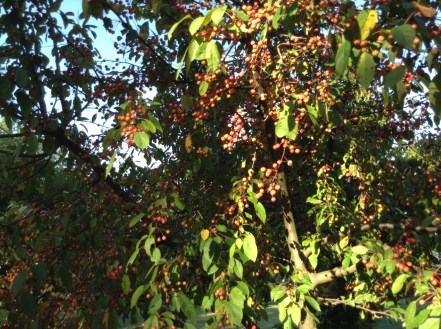
Autumn
I am afraid of the mix of media and social media consumed by the population in 2013. There are distractions of all shapes and sizes. Being over busy overbooked and overly self centered is a modern sign of success. Emotional wellbeing of average people has been sinking while stability slips out of sight. The youth will use technology in ways that are modeled by the adults they see. When parents and other adults lead the way to digital detox younger people may also consider life outside the smartphone.
I think the point Louis C.K. makes in this video about emotional range of motion is key. His claim that smartphone distraction is avoidance of fully feeling sadness or happiness in favor of a phone buzz strikes me as a valid observation. It is impossible to be engaged in meditation and smart phone love at the same time. Some feel the attachment to the full time companion, Phoney, is destroying social skills. I agree, but the strongest argument for limiting time and energy with Phoney is productivity. Phoney is there to procrastinate with you, to deny reality and to take you away from all the pending doom. It can never make you feel truly happy, but it does kill time.
Digital detox has entered the dictionary and folks are in treatment for FOMO ( fear of missing out). This is perhaps the most ironic of all conditions…to abandon real life with no fear of missing reality in favor of never missing out on the ability to respond to a phone. Do you know anyone who is in need of intervention for this tragic ailment? I do, but would not know where or how to begin.









We are lucky to have a tradition of sand mandala making at the U of Arizona Bookstore. Monks have been visiting to draw them on the floor in the basement for years. This is the third one I have been lucky enough to witness. This time they are making the Buddha of Compassion. After they create the image the sweep up the sand and dispose of some of it in water, in a ritual representing the cosmos. This demonstration of attachment and enlightenment is illustrated clearly when the sand is swept and the American viewers rush in to get a bag of the magical sand to take home and keep. The monks don’t need to do that; they are off to draw and destroy many more mandalas all over the world. They do it to show the futility of attachment. It is a beautiful way to illustrate the point.
 mermaidcamp