mermaidcamp
Keeping current in wellness, in and out of the water
You can scroll the shelf using ← and → keys
You can scroll the shelf using ← and → keys

flower sky

flower sky

flower sky
The first invitation I received to join Triberr was from a group of bloggers known as Renaissance Roundtable. The introduction to bloggers in Europe, Canada, and all over the US was an eye- opener for me. Our chief retired completely from blogging about a year after I joined. What was amazing was that the tribe continued to function and amplify each others’ blogs long after the chief retired. This was a strong testament to the systems built by the Triberr big chiefs. I had never tried to build a tribe or join others, but decided that a tribe with no chief was not the only place I needed to be. I went to New York last September on the equinox to meet and greet the Triberr creators and learn more about how to use the system.
The Tribeup NYC meetup was everything I had hoped for and more. I met, in person, some friends I had known only on line for some time. I was given excellent instruction by several professional bloggers with deep experience in the art and science. We had a chance to schmooze with each other over some crazy good Haitian food after the educational component. In retrospect, the social hour was a high point to connect in real life with New Yorkers I will not see again any time soon. The speakers all gave superb presentations that stuck with me as I went home to build my own tribes.
I am now working to create and join active enthusiastic tribes. I see that bloggers come and go, sometimes active, sometimes quiet. Some tribes have few bloggers and many followers( whose work is not shared by the tribe), indicating a one way expectation. Other tribes show members who have not done anything in months. While there is nothing evil about being dormant within a tribe or as a chief, I have come to appreciate the active and interactive tribal brothers and sisters much more than the one way broadcasters. My new strategy is to follow tribes that look interesting, and request a membership. I study the member list and see if any members are active. If the chief does not give me a membership after a few weeks of sharing the tribal posts, I quit and invite all the interesting and active sharing bloggers to my tribe. As in real life, it only makes sense to go where your peeps are. Triberr makes this simple, but not automatic. My next important role to fill in life is that of an inspiring and uplifting chief, leading my tribe to blogging mastery. The sky is now the limit.
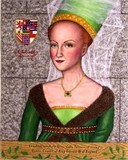
Elizabeth Wydville
QUEEN ELIZABETH WOODVILLE or WYDVILLE (1437-1492)
Jacquetta of Luxemburg, the fair young widow of the old warlike Duke of Bedford, took for her second spouse his favourite knight, the brave and handsome Sir Richard Woodville, when she came to England in 1435 to claim her dower. The time of the birth of her eldest child Elizabeth, the issue of marriage kept secret for fear of parliament, probably occurred in 1436. The matter burst out with great scandal the year after. Sir Richard was arrested and imprisoned in 1437; but as the king’s mother had married in lower degree to Owen Tudor, the young king was glad to pardon the second lady in his realm, as an excuse for showing mercy to his dying queen-mother. Jacquetta’s knight was therefore pardoned and sent home. They settled very happily at Grafton Castle, where they became the parents of a large family of handsome sons and beautiful daughters, among whom Elizabeth was fairest of the fair. The Duchess of Bedford kept the rank of the King’s aunt. His royal mother had died miserably in 1437, as shown in her life. Duchess Jacquetta, on occasions of ceremony, was the first lady in the land until the marriage of the king. Her daughter Elizabeth, took high rank among the maids of honour of Margaret of Anjou, and was the belle of her court, as two letters extant from Richard Duke of York and his friend the Earl of Warwick prove, recommending a Welsh hero, one of their knights-marshal, sir Hugh Johns, as a husband, they dwell on his great love inspired by her beauty and sweet manners; the letters show familiar acquaintance with Elizabeth, but they were of no avail. The court beauty had no fortune but her face, the Welsh champion none but his sword. She made a better match the same year with the heir of lord Ferrers of Groby, John Gray, rich, valiant, and years younger than the rejected Sir Hugh. Lord Ferrers was possessor of the ancient domain of Bradgate, which was afterwards to derive lustre as the birthplace of his descendant, lady Jane Grey. Elizabeth was appointed one of the fourt ladies of the bedchamber to Margaret of Anjou. John Gray held military command in the queen’s army. His death left Elizabeth with two infant sons, in 1460. Rancour so deep pursued the memory of John lord Gray, that his harmless infants, Thomas and Richard, were deprived of their inheritance of Bradgate. Elizabeth herself remained mourning and destitute at Grafton the two first years of Edward IV’s reign. Hearing that the young king was hunting in the neighbourhood of her mother’s dower castle at Grafton, Elizabeth waited for him beneath a noble tree known in the traditions of Northamptonshire, as “the queen’s oak,” hold a fatherless boy in either hand; and when Edward, who must have been well acquainted with her previously at the English court, paused to listen to her, she threw herself at his feet, and pleaded for the restoration of her children’s lands. Her downcast looks and mournful beauty not only gained her suit, but the heart of the conqueror. He was unwilling to make her his queen, but she left him to settle the question; knowing that he had betrayed others, her affections still clave to the memory of the husband of her youth. Her indifference increased the love of the young king. The struggle ended in his offering her marriage, which took place May 1, 1464. The marriage gave great offence to the mother of Edward IV. This lady, who, before the fall of her husband, Richard duke of York, at Wakefield, had assumed the state of a queen, had to give place to the daughter of a knight. It was on Michaelmas day, 1464, that Edward IV finally declared to Elizabeth to be his wedded wife, at Reading palace. The queen’s eldest daughter, Elizabeth, was born at Westminster palace about five months afterwards. The royal physicians, by means of their foolish studies of astrology, had assured king Edward that his expected child by his queen would prove a prince. The king, who was deep in the same kind of lore, had persuaded himself that his expected infant would wear the crown of England. One of these physicians, Dr. Dominic, obtained leave to station himself in the queen’s withdrawing-room, leading to her bed-chamber, in order that he might be the first to carry the tidings of the heir to Edward IV. Hearing the child cry, he called to one of the queen’s ladies, asking, “What her grace had?” The ladies were not in the best humour, being unwilling to answer “only a girl.” So one of them replied, “Whatsoever the queen’s grace hath here within, sure ’tis a fool that standeth there without.” Poor Dr. Dominic, being much confounded by this sharp answer, dared not enter the king’s presence. Elizabeth was crowned May 16, 1465, with great solemnity, in Westminster abbey, the young duke of Clarence officiating as high-steward. Elizabeth and Warwick were on friendly terms, as he stood godfather to her eldest daughter. The baptism of this princess for a while conciliated her two grandmothers, Cicely duchess of York, and Jacquetta duchess of Bedford, who were likewise her sponsors. The christening was performend with royal pomp, and the babe received her mother’s name of Elizabeth,—a proof that Edward was more inclined to pay a compliment to his wife than to his haughty mother. As prime-minister, relative, and general of Edward IV, the earl of Warwick had, from 1460 to 1465, borne absolute sway in England; yet Edward at that time so far forgot gratitude and propriety as to offer some personal insult to Isabel, his eldest daughter, who had grown up a beauty. Warwick had certainly been in hopes that, as soon as Isabel was old enough, he would have made her his queen, a speculation for ever disappointed by the exaltation of Elizabeth; so he gave his daughter Isabel in marriage to the duke of Clarence, and England was soon after in a state of insurrection. As popular fury was especially directed against the queen’s family, the Woodvilles were advised to retire for a time. The first outbreak of the muttering storm was a rebellion in 1468, in Yorkshire, under a freebooter called Robin of Redesdale, declared by some to have been a noble, outlawed for the cause of the Red rose. The murder of the queen’s father and brother followed in 1469. When the king advanced to suppress these outrages, he was seized by Warwick and his brother Montague, and kept at Warwick castle, where an experiment was tried to shake his affection to Elizabeth by the insinuation that her whole indluence over him proceeded from her mother’s skill in witchcraft. The Yorkist king escaped speedily to Windsor, and was soon once more in his metropolis, which was perfectly devoted to him, and where, it appears, his queen had remained in security during these alarming events. Again England was his own; for Warwick and Clarence, in alarm at his escape, betook themselves to their fleet, and fled. Then the queen’s brother, Anthony Woodville, intercepted and captured the rebel ships, but not that in which Warwick and Clarence, with their families, were embarked, which escaped with difficulty to the coast of France. The queen was placed by the king in safety in the Tower, before he marched to give battle to the insurgents. She was the mother of three girls but had not borne heirs-male to the house of York. Edward IV narrowly escaped being once more thrown into the power of Warwick, who had returned to England; but being warned by his faithful sergeant of minstrels. Alexander Carlile, he fled half-dressed from his revolting troops in the dead of night, and embarked at Lynn with a few faithful friends. Elizabeth was thus left alone, with her mother, to bide the storm. She was resident at the Tower, where her party still held Henry VI prisoner. While danger was yet at a distance, the queen’s resolutions were remarkably valiant; yet the very day that Warwick and Clarence entered London, she betook herself to her barge, and fled up the Thames to Westminster,—not to her own palace, but to a strong, gloomy building called the Sanctuary, which occupied a space at the end of St. Margaret’s churchyard. Here she registered herself, her mother, her three little daughters,—Elizabeth, Mary, and Cicely, with the faithful lady Scrope, her attendant, as sanctuary-women; and in this dismal place, November 1, 1470, the long-hoped-for heir of York was born. The queen was most destitute; but Thomas Milling, abbot of Westminster, sent various conveniences from the abbey close by. Mother Cobb, resident in the Sanctuary, charitably assisted the distressed queen, and acted as nurse to the little prince. Nor did Elizabeth, in this fearful crisis, want friends; for master Serigo, her physician, attended herself and her son; while a faithful butcher, John Gould, prevented the whole Sanctuary party from being starved into surrender. The little prince was baptized, soon after his birth, in the abbey, with no more ceremony than if he had been a poor man’s son. Early in March the queen was cheered by the news that her husband had landed, and soon after, that his brother Clarence had forsaken Warwick. The metropolis opened its gates to Edward IV, who hurried to the Sanctuary to embrace his wife and new-born son. The very morning of this joyful meeting, Elizabeth, accompanied by her royal lord, left Westminster palace, but soon after retired to the Tower of London, while her husband gained the battles of Barnet and Tewkesbury. The news of his success had scarcely reached her, before the Tower was threatened with storm by Falconbridge; but her valiant brother, Anthony Woodville being there, she, relying on his aid, stood the danger this time without running away. After Edward IV had crushed rebellion by almost exterminating his opponents, he turned his attention to rewarding the friends to whom he owed his restoration, and bestowed princely gratuities on those humble friends who had aided “his Elizabeth,” as he calls her, in that fearful crisis. When Edward IV fled in the preceding year from England, he landed with a few friends at Sluys, the most distressed company of creatures ever seen; for he pawned his military cloak, lined with marten fur, to pay the master of his ship, and was put on shore in his waistcoat. The lord of Grauthuse received, fed, and clothed him, lending him besides money and ships, without which he would never have been restored to his country and queen. Edward invited his benefactor to England. Lord Hastings received him, and led him to the far side of the quadrangle of Windsor castle, to three chambers. These apartments were very richly hung with cloth of gold arras; and when Grauthuse had spoken with the king in the royal suite, he presented him to the queen’s grace, they then ordered the lord chamberlain Hastings to conduct him to his chamber, where supper was ready for him. After refreshment, the king had him brought immediately to the queen’s own withdrawing-room, where she and her ladies were playing with little balls like marbles, and some of her ladies were playing with ninepins. Also king Edward danced with Elizabeth, his eldest daughter. In the morning the king came into the quadrant, the prince also, borne by his chamberlain, called master Vaughan, bade the lord Grauthuse welcome. The innocent little prince, afterwards the unfortunate Edward V, was then only eighteen months old. Then the queen ordered a grand banquet in her own apartments, at which her mother, her eldest daughter, the duchess of Exeter, the king, and the lord of Grauthuse all sat with her at one table. Elizabeth, in January, 1477, presided over the espousals of her second son, Richard duke of York, with Anne Mowbray, the infant heiress of the duchy of Norfolk. St. Stephen’s chapel, Westminster, where the ceremony was performed, was splendidly hung with arras of gold on this occasion. The queen led the little bridegroom, who was not five, and her brother, Earl Rivers, led the baby bride, scarcely three years old. They afterwards all partook of a rich banquet, laid out in the Painted-chamber. Soon after this infant marriage, all England was startled by the strange circumstances attending the death of the duke of Clarence. The queen had been cruelly injured by Clarence. Her father and her brother had been put to death in his name; her brother Anthony, the pride of English chivalry, had narrowly escaped a similar fate: moreover, her mother had been accused of sorcery by his party. She did not soothe her husband’s mind when Clarence gave him provocation. In fact, on the first quarrel, his arrest, arraignment, and sentence followed. He was condemned to death, and sent to the Tower. In his dismal prison a butt of malmsey was introduced one night, where he could have access to it. The duke was found dead, with his head hanging over the butt. Gloucester was certainly absent from the scene of action, residing in the north. On St. George’s day succeeding this grotesque but horrible tragedy, the festival of the Garter was celebrated with more than usual pomp; the queen took a decided part in it, and wore the robes as chief lady of the order. Her vanity was inflated excessively by the engagement which the king of France had made for his son with her eldest daughter. In the last years of king Edward’s life he gave the queen’s place in his affections to the beautiful Jane Shore, a goldsmith’s wife in the city, whom he had seduced from her duty. His death was hastened by the pain of mind he felt at the conduct of Louis XI, who broke the engagement he had made to marry the dauphin to the princess Elizabeth of York, but an intermittent fever was the cause. When expiring, he made his favourites, lords Stanley and Hastings, vow reconciliation with the queen and her family. He died with great professions of penitence, at the early age of forty-two, April 9, 1483. Excepting the control of the marriages of his daughters, his will gave no authority to the queen. She was left, in reality, more unprotected in her second than in her first widowhood. The Duke of Gloucester had been very little at court since the restoration. He was now absent in the north, and caused Edward V to be proclaimed at York, writing letters of condolence so full of kindness and submission, that Elizabeth thought she should have a most complying friend in him. Astounding tidings were brought to the queen at midnight, May 3, that the duke of Gloucester had intercepted the young king with an armed force on his progress to London, had seized his person, and arrested her brother, Earl Rivers, and her son, lord Richard Gray. In that moment of agony she, however, remembered, that while she could keep her second son in safety the life of the young king was secure. With the duke of York and her daughters she left Westminster palace for the Sanctuary; and she, and all her children and company, were registered as Sanctuary persons. Dorset, the queen’s eldest son, directly he heard of the arrest of his brother, weakly forsook his trust as constable of the Tower, and came into sanctuary to his mother. The archbishop of York brought her a cheering message, sent him by lord Hastings in the night. “Ah!” replied Elizabeth, “it is he that goeth about to destroy us.” — “Madam,” said the archbishop, “be of good comfort; if they crown any other king than your eldest son, whom they have with them, we will on the morrow crown his brother, whom you have with you here. And here is the great seal, which in like wise as your noble husband gave it to me, so I deliver it to you for the use of your son.” And therewith he handed to the queen the great seal, and departed from her in the dawning of the day. With the exception of the two beautiful and womanly maidens, Elizabeth and Cicely, the royal family were young children. The queen took with her into sanctuary Elizabeth, seventeen years old at this time, afterwards married to Henry VII. Cicely was in her fifteenth year. These princesses had been the companions of their mother in 1470, when she had formerly sought sanctuary. Richard duke of York, born at Shrewsbury in 1472, was at this time eleven years old. Katherine, born at Eltham about August 1479, then between three and four years old. Bridget, born at Eltham 1480, Nov. 20th, then only in her third year; she was afterwards professed a nun at Dartford. Gloucester’s chief object was to get possession of the duke of York, then safe with the queen. As the archbishop of Canterbury was fearful lest force should be used, he went, with a deputation of temporal peers, to persuade Elizabeth to surrender her son, urging “that the young king required the company of his brother, being melancholy without a playfellow.” To this Elizabeth replied, “Troweth the protector—ah! pray God he may prove a protector!—that the king doth lack a playfellow? Can none be found to play with the king but only his brother, which hath no wish to play because of sickness? as though princes, so young as they be, could not play without their peers—or children could not play without their kindred, with whom (for the most part) they agree worse than with strangers!” According to the natural weakness of her character, she nevertheless yielded to importunity, and taking young Richard by the hand, said, “I here deliver him, and his brother’s life with him, and of you I shall require them before God and man. Farewell! mine own sweet son. God send you good keeping! God knoweth when we shall kiss together again!” And therewith she kissed and blessed him, then turned her back and went, leaving the poor innocent child weeping as fast as herself. When the archbishop and the lords had received the young duke, they led him to his uncle, who received him in his arms with these words: “Now welcome, my lord, with all my very heart!” He then took him honourably through the city to the young king, then at Ely house, and the same evening to the Tower out of which they were never seen alive, though preparations went on night and day in the abbey for the coronation of Edward V. It is possible that Hasting’s death had some influence in the imprudent surrender of young York. If Elizabeth had any secret joy in the illegal execution of her brother’s rival and enemy, very soon she had to lament a similar fate for that dear brother, and for her son, lord Richard Gray, who were beheaded by sir Richard Radcliffe, June 24th, when the northern army, commanded by that general, commenced its march to London. When the massacre of every friend to the rights of his brother’s children was completed, and the approach of 9000 dreaded northern borderers intimidated the Londoners, the false protector entirely took off the mask. Buckingham induced Edward IV’s confessor, Dr. Shaw, who was brother to Gloucester’s partizan, the lord mayor, to preach a sermon against Edward V’s title, on pretence that Edward IV’s betrothment with lady Eleanor Butler had never been dissolved by the church. Shaw likewise urged the immediate recognition of the duke of Gloucester as sovereign, putting aside the children of Clarence on pretence of his attainder by parliament. Faint acclamations of “Long life Richard III” were raised by hired partizans, but the London citizens angrily and sullenly dispersed. Ratcliffe’s forces approached Bishopsgate on the 26th, and Richard III was proclaimed king. The unhappy queen Elizabeth Woodville and her daughters witnessed the proclamation of the usurper from the abbot’s house in the abbey. Richard then made his state visit to the Tower and city. Elizabeth and her daughters must perforce have been witnesses of his coronation, July 6, 1483. Soon after, the usurper, his wife, and son, now called Edward prince of Wales, made a grand progress to Warwick castle. The unfortunate sons of Elizabeth meantime were closely imprisoned under the care of sir Robert Brakenbury, one of Richard III’s northern commanders, who had been given the lieutenancy, under the notion that he would obey implicitly the usurper’s orders. Accordingly, Richard sent one of this gentlemen of the bedchamber, John Greene, ordering him to kill Edward IV’s sons forthwith. Brakenbury returned for answer “he would die first.” A midnight consultation took place between Richard III and his master of the horse, Sir James Tyrell, who left Warwick castle August 2, with commands to Brakenbury from king Richard that he was to surrender the keys of the Tower to sir James Tyrell for one night. On his ride from Warwickshire the master of the horse was attended by two retainers, one his squire, Miles Forrest, a northern champion of immense strength, the other his horsebreaker, John Dighton, a big, broad, square knave. Sir James had requested his own brother, Tom Tyrell, a brave gentleman, to aid him, but met with positive refusal, by which, if he lost the usurper’s favour, he gained from his country the appellation of “honest Tom Tyrell.” The three murderers reached the Tower of London after dark, August 3. Sir James Tyrell demanded the Tower keys; and in the very dead of the night when sleep weighs heaviest on young eyelids, one of the Tower wardens who waited on the hapless princes, Will Slaughter by name, guided the assassins through the secret passages, which still may be traced, from the lieutenant’s house to the portcullis gateway. There is a little dismal bedchamber hidden in the space between that tower and the Wakefield tower, approached with winding stone stairs, and which has leads on the top and an ugly recess in the walls, reaching to the ground and even beneath it. The leads communicated by a door to the Wakefield tower leaded roof, and thence to the water-stairs by a bricked-up doorway, still plainly to be seen. No spot could be more convenient for secret murder. Tradition has pertinaciously clung to it and called this fatal prison lodging the Bloody tower. Sir James Tyrell did not enter the chamber where the poor victims were sleeping, but his strong ruffians crept silently in, and oppressing the princes with their great strength and weight, stifled them with the bed-clothes and pillows. When the murders were completed Forrest and Dighton laid out the royal corpses on the bed, and invited sir James Tyrell to view their work. Tyrell ordered them to thrust them down the hole in the leads, which they did, and threw heavy stones upon them. Edward IV had lately strengthened that part of the Tower, little thinking the use to be made of it, as a poet born in his time makes him say—”I made the Tower strong; I wist not why—Knew not for whom.”
When Tyrell returned the keys to the lieutenant Brakenbury, the latter found his young prisoners had vanished. The murderous trio rode back to Warwick castle to report their doings to the head assassing. Richard III approved of everything his unscrupulous favorite and master of horse had done, excepting the disposal of his nephews’ corpses. He insisted that they should be raised from that niche and buried in consecrated ground with burial service. The averseness of sir Robert Brakenbury to have aught to do with the murders, threw great difficulty in the way of the usurper’s commands, prompted by the first twinge of conscience. It is from the confession of sir James Tyrell, put to death twenty years after for conspiring with the de la Poles, that these particulars are gathered, but he could not say where the poor children were ultimately buried: all he heard was that Richard III’s orders had been issued to the priest of the Tower, who had in the dead of night taken the bodies whither no one knew, as the old man died two or three days after. The secret was not guessed for two centuries; but when in 1674 King Charles II altered the White tower into a record office, under the flight of stairs leading up to the beautiful Norman chapel, was discovered a chest containing the bones of two children of the age of the murdered heirs of York. The orders of the usurper being fulfilled to the letter, the ground was consecrated as pertaining to the sacred place above; and deeply secret the interment was. Charles II had the poor remains of the heirs of York buried among their ancestors in Westminster abbey, where our young readers may remark the monument and inscription near Henry VII’s chapel. We must now return to the life of their unfortunate mother, Elizabeth Woodville, who being in sanctuary, early heard when and where her sons were murdered, which, says sir Thomas More, struck to her heart like the sharp dart of death: she swooned, and fell to the ground, where she lay long insensible. After she was revived and came to her memory again, with pitiful cries she filled the whole mansion. Her breast she beat, her fair hair she tore, and calling by name her sweet babes, accounted herself mad when she delivered her younger son out of sanctuary, for his uncle to put him to death. She kneeled down and cried to God to take vengeance; and when Richard unexpectedly lost his only son, for whose advancement he had steeped his soul in crime, Englishmen declared that the agonized mother’s prayer had been heard. The wretched queen’s health sank under the anguish inflicted by these murders, which had been preceded by the illegal execution of her son, lord Richard Gray, and of her brother, at Pontefract. She was visited in sanctuary by a priest-physician, Dr. Lewis, who likewise attended Margaret Beaufort, mother to Henry Tudor, Earl of Richmond, then an exile in Bretagne. The plan of uniting the princess Elizabeth with this last scion of the house of Lancaster, was first suggested to the desolate queen by Dr. Lewis. She eagerly embraced the proposition. The duke of Buckingham, having been disgusted by Richard, his partner in crime, rose in arms; but after the utter failure of his insurrection, Elizabeth was reduced to despair, and finally was forced to leave sanctuary, and surrender herself and daughters into the hands of the usurper, in March. She was then closely confined, with her daughters, in obscure apartments in the palace of Westminster. From thence she wrote to her son Dorset at Paris to put an end immediately to the treaty of marriage between Richmond and the princess Elizabeth. The friends who had projected the marriage were greatly incensed; but these steps were the evident result of the personal restraing the queen was then enduring. The successful termination of the expedition undertaken by the earl of Richmond, to obtain his promised bride and the crown of England, at once avenged the widowed queen and her family on the usurper, and restored her to liberty after the battle of Bosworth. Instead of the despotic control of Richard III’s swuire Nesfield, the queen, restored to royal rank, joyfully welcomed her eldest daughter, who was brought to her at Westminster from Sheriff-Hutton, remaining with her till the January following the battle of Bosworth, when she saw her united in marriage to Henry of Richmond, the acknowledged king of England. One of Henry VII’s first acts was to invest the mother of his queen with the privileges befitting the widow of an English sovereign. Unfortunately Elizabeth had not been dowered on the lands anciently appropriated to the queens of England, but on those of the duchy of Lancaster. However, a month after the marriage of her daughter to Henry VII she received possession of some of the dower-palaces, among which Farnham, of 102l. per annum, was by her son-in-law added to help her income. The Parliamentary Act, whereby she was deprived of her dower in the preceding reign, was ordered by the judges to be burnt. Much is said of her ill-treatment by Henry VII. However, at the very time she is declared to be in disgrace for patronizing the impostor who personated the young earl of Warwick, she was chosen by the king, in preference to his own beloved mother, as sponsor to his dearly-prized heir, prince Arthur. The last time the queen-dowager appeared in public was in a situation of the highest dignity. At the close of the year 1489 she received the French ambassador in great state; the next year Henry VII presented her with an annuity of 400l. Soon after she retired to the royal apartments at Bermondsey abbey. Elizabeth Woodville expired the Friday before Whitsuntide, 1492. Her will shows that she died destitute of personal property; but no wonder, for the great possessions of the house of York were chiefly in the grasp of the old avaricious duchess Cicely of York, who survived her hated daughter-in-law several years. Edward IV had endowed his proud mother as if she were a queen-dowager; while his wife was dowered on property to which he possessed no real title. On Whit Sunday the queen dowager’s corpse was conveyed by water to Windsor, and thence privately, as she requested, through the little part, conducted unto the castle. Her three daughters, the lady Anne, the lady Katharine, and the lady Bridget [the nun-princess] from Dartford, came by way of the Thames, with many ladies. And her son lord Dorset, who kneeled at the head of the hearse, paid the cost of the funeral. In St. George’s chapel, north aisle, is the tomb of Edward IV. On a flat stone at the foot of this monument are engraven, in old English characters, the words—
King Edward and his Queen, Elizabeth Widville.
×Elizabeth Wydeville Grey Plantagenet (1437 – 1492)
James Hillman, well known Jungian scholar, talks about soul and psychology:
His observations are pertinent today as we live with serious division in the nation’s psyche. The congress is a symbolic and highly visible example of our troubled national soul. When I was young I felt patriotic and secure that America was the greatest nation in the world. The Viet Nam War and civil rights struggles in the states changed my mind about that. I had the chance to live outside the US for a year when I was 13-14, in Venezuela. I learned Spanish. I had listened to Fidel Castro on the radio. My psyche had already been subverted before Viet Nam.
I have never missed an opportunity to vote in any election since I turned 21. I pay all my taxes and obey the law. I am a tiny part of the deeply troubled economy that is driving the young and the old into poverty. My personal comfort and economic security are good, but neighbors all around me are not as lucky. I am healthy, but the nation is statistically very ill, mentally and physically. I am concerned about the bifurcation that tears the country into two unhealthy sides of some eternal controversy. I am concerned about the soul of America.
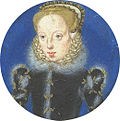
Cecily Bonville
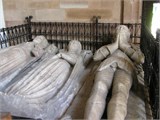
Grave
Cecily Bonville, 7th Baroness Harington and 2nd Baroness Bonville (c. 30 June 1460 – 12 May 1529) was an English peeress, who was also Marchioness of Dorset by her first marriage to Thomas Grey, 1st Marquess of Dorset, and Countess of Wiltshire by her second marriage to Henry Stafford, 1st Earl of Wiltshire.
The Bonvilles were loyal supporters of the House of York during the series of dynastic civil wars that were fought for the English throne, known as the Wars of the Roses (1455 –1485). When she was less than a year old, Cecily became the wealthiest heiress in England after her male relatives were slain in battle, fighting against the House of Lancaster.
Cecily’s life after the death of her first husband in 1501, was marked by an acrimonious dispute with her son and heir, Thomas Grey, 2nd Marquess of Dorset. This was over Cecily’s right to remain sole executor of her late husband’s estate and to control her own inheritance, both of which Thomas challenged following her second marriage to Henry Stafford; a man many years her junior. Their quarrel required the intervention of King Henry VII and the royal council.
Lady Jane Grey, Lady Catherine Grey and Lady Mary Grey were her great-granddaughters. All three were in the Line of Succession to the English throne, with Jane, the eldest, having reigned as queen for nine days in 1553.

Cecily Bonville
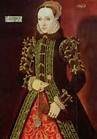
Cecily Bonville
Cecily Marchioness Dorset Bonville (1460 – 1530)
The Bonville-Courtenay Feud was an episode in the War of the Roses in 15th centuryEngland. Often local concerns can dictate choice of side in civil wars. These two rival families lived in south-western England (Devon, Cornwall, Somerset). The Courtenays held the peerage Earldom of Devon and the Bonvilles were titled Lord Harington. Their dispute concerned the Stewardship of the Duchy of Cornwall. This was not a sinecure but rather a prestigious and financially rewarding position. Rival claims to this position triggered the feud. The feud led to considerable local bitterness and even murder. It was ended by government intervention. The War of the Roses was a time of shifting allegiances in British history as the tide of War presented opportunity for advancement to various factions. A similar feud was the Percy-Neville feud also at this time. In Ireland there was strife between the Butler family, Earls of Ormond versus the Fitzgerald line, Earls of Desmondand Kildare. Many senior members of the Bonville and Courtenay families were killed in the battles and skirmishes of the War of the Roses. This feud is relevant to Local History, Family History/Genealogy and the History of England specifically the War of the Roses.
In 1441 Devon was appointed to the lucrative stewardship of the Duchy of Cornwall, an office Henry VI had already conferred on Sir William Bonville [1] in 1437, Bonville was aWest Country gentleman whose growing influence at court threatened Courtenay domination in the region. He was punished after the skirmish at Dartford. Later conflict between Devon and Bonville’s party led to the murder of Nicholas Radford [2]. Imprisoned in the Tower of London as punishment,Devon was released in 1457 by authority of QueenMargaret of Anjou.
Quote
Nor [3]did the nobility act as though dynastic considerations were decisive. Richard Neville, Earl of Warwick, moved his support from the House of York (Edward IV) to theHouse of Lancaster (Henry VI) when it suited his own ambitions. When Lord Bonville shifted his support from Lancaster to York, his local rival the Earl of Devon switched his backing to the Lancastrians
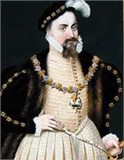
Thomas Grey
Thomas Grey, 2nd Marquess of Dorset was born on 22 June 1477.1 He was the son of Thomas Grey, 1st Marquess of Dorset and Cecilia Bonville, Baroness Bonville and Harington.2 He married, firstly, Eleanor St. John, daughter of Oliver St. John and Elizabeth Scrope.3 He married, secondly, Margaret Wotton, daughter of Sir Richard Wotton and Anne Belknap, in 1509.4 He died on 10 October 1530 at age 53.1 He gained the title of 2nd Marquess of Dorset.1 He succeeded to the title of 8th Lord of Astley [E., 1295] on 20 April 1501.5 He succeeded to the title of 8th Lord Ferrers, of Groby [E., 1299] on 20 April 1501.6 He succeeded to the title of 3rd Lord Bonville [E., 1449] before 2 June 1530.2 He has an extensive biographical entry in the Dictionary of National Biography.7
Child of Thomas Grey, 2nd Marquess of Dorset
Lord Thomas Grey+1
Children of Thomas Grey, 2nd Marquess of Dorset and Margaret Wotton
Catherine Grey+2 d. 1 May 1542
Elizabeth Grey+3 b. 1510, d. 1564
Henry Grey, 1st Duke of Suffolk+4 b. 17 Jan 1517, d. 23 Feb 1554
Thomas Marquess Dorset Knight Grey (1477 – 1530)
Thomas Grey, second Marquess of Dorset was an English peer, courtier, soldier and landowner, the grandfather of Lady Jane Grey, briefly Queen of England. Grey was the third son and eventual heir of Thomas Grey, 1st Marquess of Dorset, at the time England’s only marquess, and his wife, Cecily Bonville, the daughter and heiress of William Bonville, Baron Harington. His mother was in her own right Baroness Harington and Bonville and the richest heiress in England. The first marquess was the eldest son of Queen Elizabeth Woodville, so a stepson of King Edward IV and half-brother of Edwars, Prince of Wales, later King Edward V.
According to some reports, the young Grey attended Magdalen College School, Oxford, and he is uncertainly said to have been taught by the future Cardinal Wolsey.
Amoung the Queen of England’s closest relations, Grey and his younger brothers Leonard and Edward where welcome at court and became courtiers and later soldiers. In 1494 Grey was made night of the Bath and in 1551 knight of the Garter. Also in 1501 his father died and the younger Thomas inherited his titles and some of his estates. However much of the first Maquess’s went to his widow and not his sons, who didn’t come into his full inheritance until the death of his mother in 1530, shortly before his own death.
Later in 1501 he was chief answerer at the marrage of Arthur Prince of Wales to Catherine of Aragon. And was presented with a diamond and ruby Tudor rose at court. But in 1508 he was sent to the Tower of London and later a gaol in Calais under suspision of conspiracty against Henry the VIII, Grey was attainted and lost his title. However in 1509 he was pardoned and returned to court, and was summoned to parliment as Baron Ferrers of Groby. In 1511 he was summoned as Marquess of Dorset.
From 1509, Dorset was again an active courtier and took part with great distinction in many court tournamants, on one occasion in March 1524 nearly killing the king.
In 1514, with Charled Brandon, 1st Duke of Suffolk, Dorset escorted Henry VII’s daugher Princess Mary Rose to France for her wedding to King Louis XII.
Dorset owned land in 16 English counties and was a justice of the pease for several of them. In 1516, during a rivalry in Leicestershire with George, Baron Hastings, and Sir Richard Sacheverell, Dorset unlawfully increased his retinue at court and was brought before the Star Chamber and the Court of King’s Bench. He was bound over for good behaviour. As part of this rivalry, he greatly enlarged his ancestral home at Bradgate, Leicestershire.
In 1520, at the Field of Cloth of Gold, Dorset carried the sword of state. In 1521 he met the Holy Roman Emperor Charles V at Gravelines on the coast of France and escorted him on a visit to England. He helped with the entertainment of the court by maintaining a company of actors.
In 1521 Dorset sat in judgement on the Duke of Buckingham, despite being related to him by marriage. After is father’s death Dorset’s mother had married a brother of the Duke. Henry VIII rewarded Dorset with 3 of Buckingham’s Manors.
In 1524, Dorset’s Leicestershire feud with Lord Hastings turned into a fight between hundreds of men, and Cardinal Wolsey took action. Both rivals had to put up a bond for good behaviour of one thousand pounds, and Dorset was sent to Wales as Lord Master of Princess Mary’s Council.
In 1528, Dorset became constabel of Warwick castle , and in 1529 of Kentilworth Castle.
In 1529, recalling his role as ‘chief answerer’ at the marriage of Arthur , Prince of Wales, Dorset was a critical witness in favour of Henry VIII’s divorce of catherine of Aragon. He strongly supported the King’s contention that Arthur and Catherine’s marriage had been consummated.
In 1530, in the final months of his life. he assissted the King in the condemnations of Cardinal Wolsey.
Grey was the son and heir of Thomas Grey, 1st Marquess of Dorset, and his wife, Cecily Bonville, daughter and heiress of William Bonville, Baron Harington and of Lady Katherine Neville and granddaughter of Alice Neville, 5th Countess of Salisbry. Cicely Dorset’s maternal uncles included Richard Neville, 16th Earl of Warwick (called ‘Warwick the Kingmaker’), John Neville, 1st Marquess of Montagu and George Neville, Archbishop of York and Chancellor of England, while her aunts had married Henry de Beauchamp, 1st Duke of Warwick, William FitzAlan, 16th Earl of Arundel, Thomas Stanley, 1st Earl of Derby, and John de Vere, 13th Earl of Oxford. Cecily Grey succeeded her father as Baroness Harington in 1460, and 2 months later succeeded her great-grandfather William Bonville as Baron Bonville. After the death of her first husband, Cecily Dorset married her late husbands’s first cousin Henry Stafford, 1st Earl of Wiltshire, the younger son on Henry Stafford, 2nd Duke of Buckingham and of Catherine Woodville, Dorset’s aunt.
The younger Thomas Grey’s peternal grandparents were Queen Elizabeth Woodville and her first huband Sir John Grey of Groby, son and heir of Elizabeth Ferrers, Lady Ferrers of Groby, so his father the first marquess was a stepson of King Edward IV and half-brother of King Edward V. His grandfather Sir John Grey was killed at the Second Battle of St Albans, fighting on the Lancastrian side. His grandmother Elizabeth Woodville was the eldest daughter of Richard Woodville, 1st Earl Rivers, and Jacquetta of Luxembourg, widow of John of Lancaster, 1st Duke of Bedford. Following his grandmother’s marriage to Edward IV, members of her family gained advantages and made prosperous marriages. Elizabeth’s brother John Woodville, at the age of 20, married Catherine Neville, Dowager Duchess of Norfolk, then in her late sixties.
Through Jacquetta of Luxembourg, Dorset was descended from Eleanor of England, the daughter of King John and Isabella of Angouleme, and from several other European royal familes.
Thomas Grey first marriage was to Eleanor St John, a daugher of Oliver St John of Lydirard Tregoze, Wiltshire and of his wife Elisabeth Scrope, daugher of Henry le Scrope, 4th Lord Scrope of Bolton. Grey’s fathe-in-law Oliver St John (also known as Oliver of Ewell) was the son of Margaret Beauchamp, the great-great granddaughter of Roger Beauchamp, 1st Lord Beauchamp of Bletso, Keeper of Devizes Castle, and heiress to the Beauchamp estates. After the death of her first husband, another Oliver St John, she married John Beaufort, 1st Duke of Somerset.
In 1509, Thomas Grey married secondly Margaret Medley, daughter of Sir Robert Wottom of Boughton Malherbe, Kent and the widow of William Medley. She had 2 notable brothers, Sir Edward Wotton, treasurer of Calais, and NIcholas Wotton, a diplomat who in 1539 arranged the marriage between Henry VIII and Anne of Cleves. With Margaret, the younger Thomas Grey had four sons and four daughters, incuding Henry Grey, 1st Duke of Suffolk. His second wife survied him and died in or after 1535.
His younger brother Leonard Grey, 1st Viscount Grane served as Lord Lieutenant of Ireland from 1536 to 1540.
Dorset’s son Henry succeeded him as Marquess of Dorset, married Lady Francis Brandon, a granddaughter of King Henry VII, and in 1551 became Duke of Suffolk, by way of a new creation.
Dorsets granddaughter was Lady Jane Grey and successor of King Edward VI for 9 days. In 1554, together wiht Dorset’s other surviving sons. Lord John Grey and Lord Thomas Grey, Suffolk took part in Wyatt’s rebellion against Mary I’s marriage to Philip of Spain and in support of Lady Jane Grey. When this rebellion failed, all three were arrested, and Suffolk and his brother Thomas were executed, as were Lady Jane herself and her husband Lord Guilford Dudley. Lord John Grey survived, and in July 1603 his youngest son Henry Grey, was restored to the House of Lords by King James I as Baron Grey of Groby.
Dorset Died on 10 October 1530, and was buried in the collegiate church at Astley in Warwickshire. When he dies he held estates in London and in 16 counties, amounting to over 100 manors, and was one of the richest men in England. His grave was opened in the early 17th century and measurement of his skeleton suggested a height of 5″8′
My tribal sister Rayshay has attended a training offered by the Justice department to teach individuals how to have a conversation about race. I admire her courage and conviction in stepping up to the plate on this issue. She lives in Philly, and I live near the Mexican border in Tucson, so we have different perceptions of where we are today. I am also older, and lived in Texas in 1967-70, when civil rights were a really big deal, not in a good way. I would not take up this subject on my own. This is the first time I have responded to a prompt, but I think this discussion is important, so I hope some of my readers will decide to write a piece this week also.
In response to Rayshay’s next question: Where are we now? Where I live the strong elements of denial and us vs them mentality are damaging our quality of life. Racism is unfortunately integrated into politics and business. If you think national politics looks magnetized to the extreme, just take a walk on the wild side down here at the Mexican border of Arizona.
Here in Tucson racism is very likely to be emotionally bound to the border and immigration. The race/language/culture issues we have are about being Mexican and or Native American in a land once exclusively owned by your ancestors. Arizona became a state in 1912, so very different from Pennsylvania, one of the 13 colonies. The border itself is an unnatural place to stop anything or anyone. A long stretch of the Arizona border is on tribal land, which is a sovereign nation belonging to the people who were undoubtably here first, the Tohono O’odam. Arizona was part of Mexico; some land ownership in Arizona is documented by Spanish land grant. Rich mines belonged to the Apache tribes, and there were resources to create a thriving economy. Now we suffer from a water shortage that is unsustainable. Golf, cows, and general waste of our water has left the southwest in a pickle…literally. The salty groundwater leaves minerals in the ground that eventually make plant growth impossible. It is late in the game to decide who took what from whom; the resource of water has been depleted for everyone.
Politics in Arizona are tied to race, language, and Mexico. The school district in Tucson has been ordered to stop teaching a curriculum in ethnic studies. This complex and emotional issue brought out the worst in everyone. Some of the books from the program were apparently banned from all the libraries after the closure. There is bitterness on both sides of this issue. If public education becomes a reason to bicker, all students loose. Where we are in Arizona is nowhere near the place we need to be for a thriving and honest economy that serves the best interest of society.
The classic oil and vinegar combination, used for salad and other dishes, has taken on new epic proportions in Tucson. Alfonso Gourmet Oil and Balsamics offers a wide variety of super high quality olive oils and balsamic vinegars. I have used them for over a year and have virtually stopped buying any dressing in a bottle. I have found additional ways to use both the oils and vinegars,seasoning roasted veggies and even love the vinegars on ice cream and in cocktails. My list of favorites expands every time I go back to the store.
Tom Alfonso, the gracious owner, recently completed a course followed by a certification exam to become a professional olive oil taster. He said it was intense, with three days of learning and savoring. He just found out that he did pass the exam and is now a certified olive oil professional. I am very pleased he and his wife decided to carry these extraordinary products right next to my bank drive through window, very near my home. It is a fun extravagance that improves our meals every day. The bottles last for a very long time since a very small amount produces big flavor results.
The recycle punch card bonus system reminds you to bring the bottle back..then you try a few new items, check out the sales, leaving with a whole new culinary profile with which to play. Today my new item is a grassy, very green, high note olive oil from Australia. It is both delicious and unlike any other oil I have tasted. It is not flavored, but I have recently received a lovely gift of special Australian herbs in a combo box from a friend down under. This will be an exciting paring with greens, tomatoes and avocado. Freshness spikes the flavor in the olive oil that reduces the need for other seasonings. I will sauté with it as well as dressing salads.






The ginger blackberry balsamic I refilled today is an ingredient in a cocktail I love to make and drink, the Gas Streak. The example calls for ginger rice wine vinegar, which I am sure is nice, but the blackberry adds punch and the balsamic is fabulous with the burned sugar taste. Enjoy!

reflection of value
My recent discovery of Empire Avenue has exposed me to a new universe of contacts with tons of enthusiasm and knowledge. When your shareholders speak, you need to listen, just like real markets. They bought shares in your IPO as gamble, now they want you to be a media star so that they can profit by owning shares in you. Since real time must be invested I am working this new activity into my social media schedule at the expense of becoming the instant queen of instagram 15 second video production (another recent undertaking). I really appreciate all the expert guidance the community offers. It is more hospitable than any other network because that hospitality and expertise is a factor in driving stock prices. The more you accept and learn from the community, the more valuable you become. Real life should be so simple.
I have met a few friends on the Avenue I know from other social media sites, but most of my gentle shareholders are strangers, just studying my stats. When using real money you would be insane to try to time the market, but I am sure with experience one can easily do it in this imaginary one. This week I can safely say that my fake 4 million Empire bucks and my own stock price give me only great satisfaction. Today, however, is the first day my own stock price has dipped a tiny bit……..I do not love that as much as I love the soaring price of my IPO. Still, what goes up must come down, so I can deal with that. My hefty portfolio of pretend shares looks like this today:
Portfolio (226)
Shareholders (531)
4,151,453.72e Net Wealth
Share Price
163.48e ( 0.56e )
Avg. Dividends/Share
0.87e
Last week Paula Deen brought an IPO with Butterqueen as her ticker. I think it will be a really fascinating stock to watch. She is doing very well out of the gate. Since the stock price reflects interest, I think she will move quickly. I believe stock price can be driven by news just like it is on Wall Street. The avenue is a moderately risk free place to stage a come back and gather fans ( stockholders). Are you on the avenue, and if so, have your purchased any Butterqueen?
Leonardo da Vinci said, “Study the science of art and the art of science.” Today his advice to find balance between creative imagination and logical discovery is sage, indeed. We are swayed by evidence and data, which is appropriate. Adding the equal amount of pure artistry is the tricky part for most people. Leonardo lived Arte/Scienza as one of his core values. He worked to become ambidextrous because he thought it added to his whole brain thinking. I am sure it did.
He used mind mapping in his notebooks. One of his mottos was ostinate rigore which was important to his sense of detail. To be both detail driven and expansive in creativity was his goal. The free association and creative style thinking he used had never been promoted before Leonardo. He not only taught and believed in an infinity of ideas, his notebooks show us that he recorded a good number of them while he was alive. Notebooks with records of nightly dreams are a wonderful way to add to your own right brain training and attention. It is not as important to go into detail as it is to begin a practice of writing them down directly after awakening. If you follow a daily routine the dream memory will become stronger as you practice. Your own dreams contain both art and science that you need to create balance.
I am neutral about football. I only know about the Manning brothers because of the other commercials they do on TV. I have a whole new level of respect for Peyton and Eli now that I have seen them bling it up in this music video. I know this is an ad for Direct TV, and I am not endorsing that network. I just think this is the highest and best use of the Mannings’ obvious talent. I hope you enjoy it as much as I did.
 mermaidcamp