mermaidcamp
Keeping current in wellness, in and out of the water
You can scroll the shelf using ← and → keys
You can scroll the shelf using ← and → keys


My 4th great-grandfather was born in Virginia and died in the Revolutionary War in South Carolina.
His father, John TAYLOR, b. ca. 1723, migrated from Virginia in 1754 to the east bank of the Congaree River, 10 miles south of Columbia, South Carolina.
Captain John TAYLOR (b. 1746 m. Sarah HIRONS d. 1 Feb 1781) was wounded twice, at Fort Moultrie and Sullivan’s Island, and captured with Colonel Thomas TAYLOR (b. 10 Sept 1743 & John’s brother) at Fishing Creek, but escaped while being carried to Camden, South Carolina. He was one of three brothers who fought in the American Revolution for the SC Militia.The 3rd brother, James TAYLOR, married both Sarah’s sister, Mary HIRONS, & Sarah DANIELL. (Taylor info: http://www.geocities.com/bcvsmith/ 19 April 2002)
Captain John Taylor died of smallpox during the war.
John Taylor (1747 – 1781)
is my 4th great grandfather
John Nimrod Taylor (1770 – 1816)
son of John Taylor
John Samuel Taylor (1798 – 1873)
son of John Nimrod Taylor
William Ellison Taylor (1839 – 1918)
son of John Samuel Taylor
George Harvey Taylor (1884 – 1941)
son of William Ellison Taylor
Ruby Lee Taylor (1922 – 2008)
daughter of George Harvey Taylor
Pamela Morse
I am the daughter of Ruby Lee Taylor
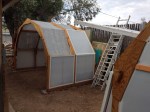
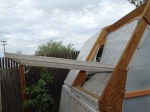
My visit with Michael Ray yesterday was fun and informative. Here he tells us about the benefits of the Nursetree Garden Arch:
I am impressed with his continual learning and improvement of his invention. I have been through the prototype process with Floatli and know it is both fun and frustrating. You can only learn through experiment. I believe Michael has created a wonderful tool desert gardeners will be needing more and more. A dozen years ago I bought 5 acres in Oracle, AZ with a gushing well, thinking I would grow food. When I sold the property last year the well was almost depleted for household use. In a way I was lucky I did not plant a big orchard and then loose the water for it. Today I garden in the city with an eye toward conservation of every kind. The garden arch is an innovative way to save water and grow food.
Michael Ray and I met at a small business group that meets at Tucson’s Ward 3 office once a month for a convo. When I saw the pictures of his invention I wanted one. After learning more in subsequent meetings, I asked to interview him about his gardening transformer, the Nursetree Arch. He developed this water catching temperature controlling environment for desert gardeners who have climate challenges. I love the way he can adapt his new prototype to the situation and economic needs of the particular client.
The fully decked out robotic arch in which Michael is growing papaya as well as brussels sprouts in Tucson on August fist is fancy indeed. He is recording data to help him refine his work. His outdoor garden benefits from his arch used as seedling starter in the winter.




Carl Jung, Leo Swiss shrink and alchemist, invited his patients to record their own visions as he did in his Red Book. He councils patients to record their visions in order to interpret the voice of the soul:
“Think of it in your imagination and try to paint it. Then when these things are in some precious book you can go to the book & turn over the pages & for you it will be your church-your cathedral-the silent places of your spirit where you will find renewal. If anyone tells you that it is morbid or neurotic and you listen to them-then you will
lose your soul-for in that book is your soul. ~Red Book; Page 216.
Today we have digital means of making art which I enjoy as self expression. What Carl is talking about here, however, is hand on paper. He tells the patient to use good paper and art supplies to document all visions. He explains that by drawing the vision the magnetism it contains is neutralized. He suggests that the expression of the detail is an important way to build self understanding. I will continue to enjoy my digital art making, but think it is time to spend more time with hand on paper. I love to draw mandalas and other geometric patterns. I wonder if I begin now if I can produce a Red Book worth saving. Have you started your Red Book?

birth chart Jung

glass mosaic
That is the question. The ways to use twitter are varied and always in flux. My own use of the stream changes over time. I started tweeting and Klout at about the same time, and quickly grasped the connection between the two. Initially I met people on Klout then followed them on twitter. My twitter stream was full of Klout tweets about K’s I gave and received. At some point I tired of this format and learned how to chat. Again, there are many styles of chat on the blue bird. Using hashtags the chat is found and followed. Here are some chat styles I have enjoyed:
All of these styles will introduce you to other tweeps interested in topics you follow. You could think of chats as parties, and they are often promoted as such. I have won wonderful prizes for participating in chats, and met interesting people from all over the world. The best thing about a twitter party is that you can come and go as you please. Protocol requires polite and on topic responses, but there is no required stay.
If you have not tried twitter and wonder why anyone would, think of it as a living reference library. It reports news, connects like minded people, and facilitates discussion. It is used as a distraction and used for nefarious purposes as well, just like all human inventions. You choose the people and the subject. If you choose to share digital #Coffee and #Bacon all day, that is your own business. You are the master of your twitter stream; you can block any user and stalk anyone with a profile. It is as powerful as you want it to be.



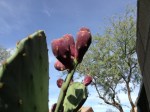


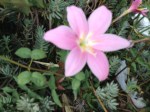
The desert when it rains is a magical place full of excitement and drama. All of a sudden the sky opens; great thunder and roaring winds announce monsoon season. Color explodes while plants express gratitude for the long cool drink. We enjoy the vibrant blooming while it lasts, and pray for more rain.

coat of arms Davis
My 7th great-grandfather was born in Northern Ireland and came to South Carolina with Presbyterians. He first settled in Virginia, then traveled south.
Tradition states that Robert Davis was born in North Ireland, where he was married to Anne Pickens. Some of their children were born in Ireland, and they are said to have come to America about 1735 or a bit earlier. The know facts in America about them from Kegley’S Virginia Frontier records are as follows: Robert Davis first received 400 acres in 1735 in South Garden, among the mountains of the Branches of Hardware River in Virginia. At that time all this territory was in Goochland County, and is located in what became the extreme southern end of Augusta county. The same year he received an additional 400 agres in the same location. This section is actually in the Branches of James and Roanoke Rivers. Kegley shows that in 1746 Robert Davis received a grant of 300 acres on the west side of the Blue Ridge. On Nov. 22, 1746, one James Davis, received a grant of 626 acres part of a larger grant of 8,100 acres on Catawaba river. Kegley shows that in 1748 the Clerk’s fee book in Augusta County,Va. shows that Robert Davis, along with many others, is “not found”. This,says Kegley, is an indication of how restless the pioneers were on the frontier, moving from place to place and the county officials unable, or unwilling to keep up with them. Robert Davis seems to have lived a fairly quiet life while in Augusta as there are relatively few records of him. Hedid not trade lands, but witnessed a good many deeds for other eople showing who his friedds and neighbors were. Most other records of Robert Davis in Augusta are in connection with the settlement of the estate of Robert Crockett. North Carolina list of applications for land grants, show that on 1 October 1751, the following applied for land: Robert Davis-for 600 acres, William Davis-for 300 acres Robert Caldwell-for 600 acres, Andrew Pickens-for 800 acres. North Carolina had a law granting land only to people who came into the colony to live on the land. Applicatons,howerever were received in advance of actual removal. In 1753 Robert Davis made the statement in Augusta county that he planned to leave the colony. It was about this date or the next year at the latest that he arrived in the Waxhaw Section, along with others from the same ara in Augusta County. The land when granted was in the then constituted county of Anson which included most of western North Carolina. Source: THE DAVIS FAMILY ** With Crockett and Pickens connections. ** compiled by E. M. Sharp From research done by Mr. D. L. McWhorter of Bethel, North Carolina, in the Archives of the State of North Carolina, and in Mecklenburg Co. North Carolina. and Researched on the Pickens family by E. M. Sharp of Memphis, Tenn.
He served in the militia with his father-in law and brother:
Early Anson county records show the follow ANSON COUNTY, MILITIA COMPANY: Year 1755. Had 61 officers and men. Among those listed were: Captain – Andrew PickensLieutenant – Robert Ramsey Ensin – John Crockett Sgt. – Thomas Wright, Sgt. – William Geard, Sgt. – William King. Corporal – Alexander Crockett. Archibald Crockett, Andrew Nutt, George Davis, John Davis, Joh Pickens, John Linn, Joseph Pickens, Moses Davis, Robert Davis, Robert Crockett, Robert McClelland, Robert Caldwell, Robert Montgomery, William Davis, William Pickens and others.




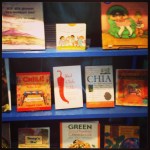

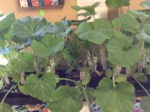

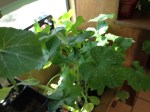
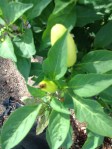
I am a member of a very special organization in Tucson. Native Seed S.E.A.R.C.H is a source for beans, garden seeds, education, and many local products. I support the mission and benefit from the close proximity of the store. We eat a wide variety of beans and chilies. The store carries the basic ingredients we use all the time in our diet. The seed preservation is the most important aspect of the mission. Today I planted 5 new plants I bought at the monsoon plant sale: 3 new watermelon varieties, a bell pepper and a special cucumber. They are all vigorous and healthy. I expect them to thrive in the rainy season, which was the point of the sale. We can grow many vegetables and fruits until frost, and if we protect them even longer. I have harvested giant crops of green tomatoes in December. These plant varieties are from Arizona and New Mexico, so they are adapted to our climate. I look forward to my Navaho red watermelon. You don’t need to live here to join. If you live in other parts of the country you can enjoy the benefits of membership which will keep your garden interesting.

O’Byrne COA
Recorded as O’ Byrne but more usually as Byrne, this is an Irish surname of great antiquity. Claiming descent from Bran, the king of Leinster, who died in 1052, this great clan originated in County Kildare where they held extensive territory until the Anglo-Norman invasion of Ireland in 1169 – 1170, when they migrated to Wicklow where they occupied the country between Rathdrum and Shillelagh. Their name in Irish is properly O’ Broin, meaning the male descendant of Bron, the raven. The O’ Broins, like their neighbours the O’ Tooles, were particularly noteworthy for their resistance to foreign aggression, and they continued to inaugurate native chiefs up to the end of the 16th Century. The seat of their chiefs was at Ballinacor, County Wicklow, and the territory over which they held sway was known as Crioch Branach. The celebrated “Leabhar Branach” or “Book of the O’ Byrnes” deals with the exploits of the clan in these times. Alderman Alfred Byrne (1882 – 1956), a distinguished recent member of the clan, was ten times Lord Mayor of Dublin. The Byrne coat of arms has the blazon of a red shield charged with a chevron between three silver dexter hands couped at the wrist, the Crest being a mermaid with comb and mirror proper. The first recorded spelling of the family name may be that of Fiacha Mac Hugh O’Byrne, the military leader. This was dated 1544 – 1595, in the Historical Records of Dublin, during the reign of Queen Elizabeth 1st of England, 1558 – 1603.
Patrick O’Byrne (1817 – 1890)

