mermaidcamp
Keeping current in wellness, in and out of the water
You can scroll the shelf using ← and → keys
You can scroll the shelf using ← and → keys

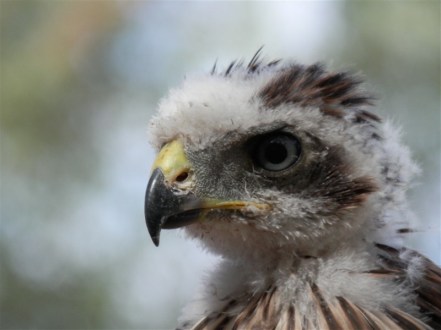
Coopers Hawk Fledgling
I live in the middle of Tucson like Gabrielle Giffords. She lives somewhere just south of my neighborhood in a much fancier part of town. On the anniversary of her shooting two years ago, today there are ceremonies to ring bells, hang bells, pray, and commemorate. Tucson seems to me less peaceful, less educated, more reactionary, and more dangerous than it was two years ago. The city creates PR about how we have come together as more civil and less crazed, less armed, less scary…as IF!!!!!!
Where I live the cops do not respond for at least an hour and then they do not bother to even report the crimes you report to them. Nobody calls them because nobody wants to wait around for no reason. The gun store close to my house has had an overflowing parking lot for the last month. My next door neighbor who goes to the shooting range with a bunch of cops on Sundays told me their highly armed group is freaking out because there is no ammo in town to be purchased. They know that the government is a threat to their freedom, and want to buy all the ammo they may need to defend themselves against the government when they try to take their arms.
While commemoration is all well and good, there are plenty of mentally ill people roaming the streets where I live with instant access to weapons. Unfortunately, they have no access to or interest in mental health therapies. There are no cracks to slip through because there is virtually no safety net to treat mentally ill Tucsonans. There is a place where they can score prescription drugs, but no therapy. There is no evidence of effective law enforcement. If Gabby stayed in my neighborhood for a few days she would understand how futile law passing is. With all due respect to her point of view, nobody enforces the laws we have now. Why would adding more laws have a positive effect? I notice a frightening negative effect in the ammo buying population, all agitated and wanting more arms. Every action has an equal and opposite reaction. It bears repeating, gentle reader.

New Year’s Eve

uplight
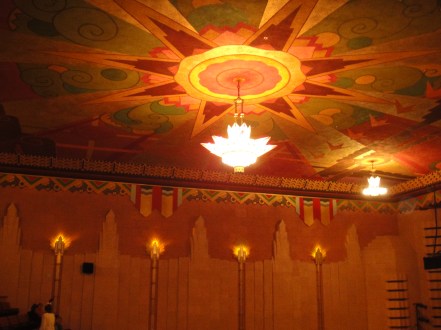
Fox Theater downtown Tucson
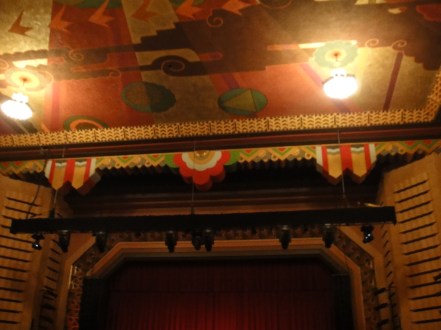
stage

Bob takes a call

before the show

lighting fixture at Fox
I had not been in the Fox Theater since the 1970’s when I used to pay $1 to stay all afternoon and watch Woody Allen movies in air conditioned comfort. Downtown Tucson has had a bit of a slow start and restart to our urban renewal concept known as Rio Nuevo. I seriously thought about moving downtown, but did not think it would ever come around to a desirable state. There are still issues, but I am very pleased with what is happening now. We went to a Paula Poundstone show on New Year’s Eve at the historic theater. It was a great comedy concert, but we really enjoyed the design and the atmosphere of the building. We were able to find a cab to take us home, which has been a problem on outings to downtown in the past. Eventually we will have a tram to take us to the restaurants and entertainment venues that are starting to appear. I have high hopes that ten years from now I will be able to hop on the bus in front of my home, connect to the tram to go enjoy the vibrant downtown Tucson deserves. I certainly hope so.
There are many forms of mediation followed in the world. I was lucky to study in Tucson with the Dalai Lama of Tibet who visited us in September, 1993 to teach patience. We had instruction for a year leading up to the visit to give us an introduction to the Tibetan view of meditation and cosmology. When the teaching finally took place at the Sheraton Conquistador when it was new and lovely we were in for both a treat and some deep concepts new to us. The Tibetan monks all sit down in front, as do many Tibetan civilians who prefer the floor for meditation. The room was full of all levels of understanding and experience, as is always the case with His Holiness. The teaching was wonderful, memorable, and inspiring.
He asked students to submit questions in writing for his consideration. He answered some that he thought best for his teaching. One woman asked how she cold begin a meditation practice, given all her stressful and distracting activities. He responded jokingly at first, saying that he also was too busy with stressful activities like leading a nation in exile. He continued quickly after the laugh to make sure he was not ridiculing the questioner, but seriously folks style, to praise her very valid question. His answer was simplicity itself. He told her that if she had time for nothing else, “Be nice.” He explained that if one did not karmically doom oneself by creating nasty thoughts, less meditation would be required to feel good. Meditation in any form is a practice to observe the mind and focus in spite of distraction. It destroys the delusions of the ego. It purifies consciousness. It turns irrational anger into patience. Meditation is the source of equanimity and deep wisdom.
You do not need to sit still or chant mantras to begin a meditation practice. If you have access to a teacher you can be taught many techniques to deepen your practice. If you want to start at the beginning and reap all the benefits, start by being nice.

Sir THOMAS
My 13th great grandfather pissed off the Tudors several times. It appears that the customs office of the queen was privately held somehow, like outsourcing. Elizabeth I gave him the job of collecting customs fees, but he was taken to court for shortages more than once. His son, Sir Thomas Smith was instrumental in colonizing the world from the British Isles. Just like my mother’s Taylors, these Smiths marry some other Smiths down the line, just to keep everyone guessing.
Sir Thomas SMITH was born 1522 in Weston Hanger, Kent Co, England. He died 7 Jun 1597 in Kent, England. Sir married Alice JUDDE on 1554 in Weston Hanger, Kent Co, England
The Harris and Smith families were interested in the discovery and development of Virginia. He is referred to as “Customer” Smith and rose from obscurity in Queen Elizabeth’s time by marrying the daughter of Sir Andrew Judd, the Lord Mayor, of humble origins himself. THOMAS SMYTHE of Corsham, Wiltsbire, England was born in 1522 and died 7 June 1591 leaving a will. He married ALICE JUDDE, daughter of Sir ANDREW and MARY Mirfyn/Mervyn JUDDE. “Item. I give and bequeath to the children of my sonne in law, WILLIAM HARRIS, Esquire,BR> which he hath or shall beget uppon the bodie of my daughter ALICE, his wife, the like somme of five hundred and fiftie pounds to be equally divided between them. And if any of them shall fortune to decease, then the parts and portion of such as shall decease to remayne and be paid and divided indifferently between the Survivors of them.”
27. Alice JUDDE was born 1535 in Weston Hanger, Kent, England. She died 1593 in England.
ALICE (Judde) SMYTHE, widow of THOMAS, dau of ANDREW and MARY JUDDE, left a will dated 10 July 1592 London, proved 1598 in Prerogative Court of Canterbury. “Item. I bequeath to my daughter HARRIS my Jewell Ringe, an of Diamonds, A table cloth of Damask of the Story of Samyell conteyn inge five yeards in length, A doble Lowell and two dozen of napkins and two chayres of crymson silk taffeta. “Item. I give to her sonne THOMAS HARRIS twentie pounds, and to Arthur, her sonne, tenne pounds to be paid at theire ages of twentie and one yeres. “item. To her daughter Al ice, twentie pounds, And to her daughter Dorathie tenne pounds to be payde to the same daughters at their marriages or ages of twentie and one yeres, whichsoever of the same time shall first happen.”

the bird
Charlie Rose talked last week on his show with the creators of twitter about how long and how deep our conversations are today. The adaptation to 140 characters is natural in our world now and creates possibilities. The flying about of links creates interest in larger deeper meaning. I agree with them that all the various forms of engagement offer a different way to approach exchange. My personal favorite link right now is Alan Simpson dancing Gangam style with the can that is being kicked down the road. To tweet that gives me a high degree of pleasure because it has great social and political import.
Since I have limited myself to reading only three books this year on the Three Book Diet I have noticed that I read constantly, book or no book. The way we read and write has not surpassed the book, but if you give up books now, you notice that reading inundates everything, and Google is the best little librarian anyone ever imagined. The data is with us. In this process I have turned my attention to homework long overdue to my own self. Writing, drawing, and active creativity needs to balance all the reading. I used to say you don’t get a healthy body to get a healthy body to get a healthy body…You get a healthy body to enjoy life or the whole thing is stupid. Literacy is the same ,I now learn. You don’t read to read to read to read ( except in elementary school). You read to acquire knowledge and skill to be productive in some way, or reading the entire library is for naught. What began as an experiment has been very instructive to me in terms of balancing my creating/sucking practice in the written word. I do love books and research. Had I not stopped to take note of the imbalance I would be sucking down a book right this minute, rather than writing this to you, gentle reader.
Charlie and the guys eventually discussed the depth of meaning diet. The conversation diet is similar to the book diet. It asks you to balance snacks (woot!) with more substantial meals (blogging), and an awareness of same. A healthy diet today consists of media production as well as consumption. The interactive phase has just begun. Tweet seats at live events tell us something about where the twitter bird is heading. The nature of all the new connecting technology is that it is more crowded every second. The individual conversation, taking place everywhere all the time is well represented by the little blue bird in flight. We need to have deep conversations about the state of affairs today. Let the bird fly for peace. May the twitter bird be free. May the twitter bird be happy. May we use it for the highest good and deepest connection.
To vent one’s spleen is an expression that means to express anger. The spleen is located in Thoracic Park, on the upper left side of your ribcage. It has very important work to do as part of the lymphatic system. In history it has been thought of in different ways, as has all anatomy and physiology. I have been studying the spleen and learning what it likes in order to make mine happier.
Your spleen likes to be warm and dry…What? It wants to be dry in terms of not waterlogged by stagnation, and warm in terms of internal energy combustion. Diet and exercise are the remedies to use to create the warm and dry conditions your spleen desires. Heaviness or lethargy is referred to as moisture in the system in Chinese Medicine, a clinical example being arthritis. This moisture is regulated throughout the body by the spleen, which works in concert with the pancreas. The happy spleen is given a diet of orange vegetables, ginger, garlic, cardamom, corn,mushrooms, barley and rye. The problem with my spleen seems to be that a happy spleen also avoids SALSA!!!!, citrus, alcohol, coffee,tofu, avocados, and some other staples in my diet. One can only hope these can be brought back in moderation after my spleen and I are on better terms.
The earth element represents support. Since my spleen supports me by filtering my lymphatic system and producing white blood cells, I feel very loyal to it. I am going to give it the kind of attention it needs and wants, including lots of core strength exercises. Plenty of movement is essential for healthy spleen Qi, including abdominal moves that help pump the lymph. Stagnation is a result of too much unhealthy food and lethargy. Together they form the vicious cycle of spleen gone out of whack. My lucky spleen has had strong advocates showing me the error of my ways. I hear you and promise that spleeny and I will be charting a better course, thanks to your professionalism. I am now ever so aware of the neglect and negligence on my part which lead to this condition. I applaud and appreciate my spleen for sticking with me while I learned how to mend my ways. I have many nice orange vegetables on hand to feed it.
We have so much negligence that it is necessary to break it down into its various categories:
Negligence per Se is obvious disregard for regulation that harms society. Criminal negligence is a gross deviation from the risk assessment skills of an average person. Gross negligence is failure to act with the slightest degree of care. Concurrant negligence is a group acting without the slightest degree of care. Obstruction of justice is acting to impede the law enforcement system. Seems a bit blurry, but we all know negligence when we see it.
The Latin root word in question here is about discernment and understanding. Intelligence is the ability to discern clearly, and negligence is sloth, injury and injustice. We do not have so many legal categories for intelligence because it is rare. There are laws, and there is the spirit of the law. Intelligent citizens will make the bureaucracy responsible for negligence of every kind. We pay for this negligence, and I think it is a raw deal. Good management practices eliminate negligence and waste of resources. The status quo looks to me a lot like concurrant negligence.
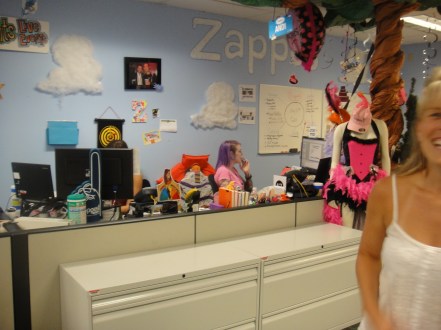
Day at the Office
Ahoy Help Desk
Shoe on Duty
Visitors Score Books

Culture Clown and Stats
Zap-Benefits
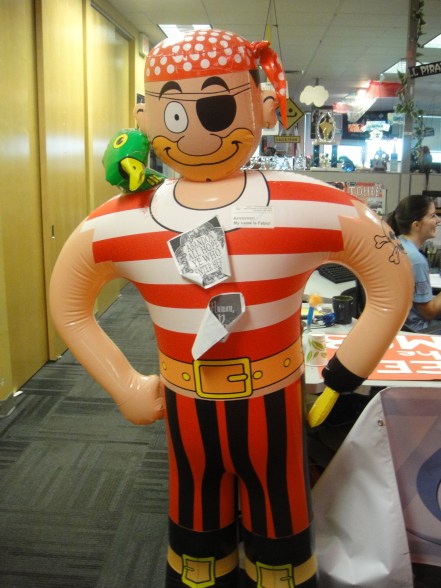
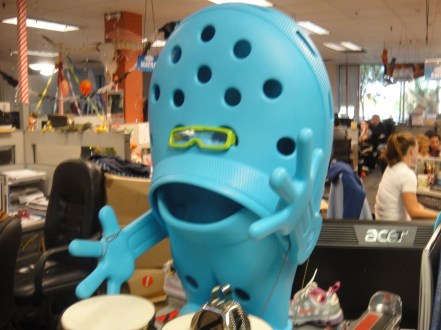
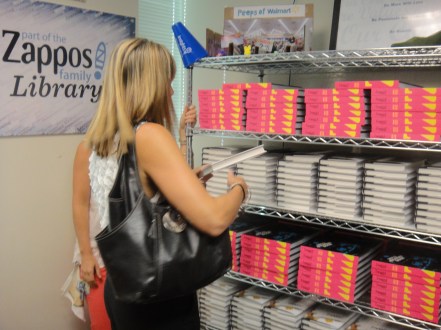
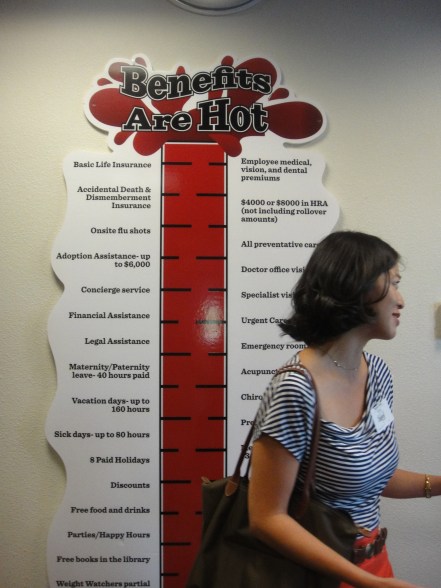
I am deeply enamored of the Zappos core values because they distinctly resonate with my own. On my visit to the Henderson office I fell even deeper under the spell of Zap-happiness. The very professional Culture Clown guided our lucky group of only three visitors around the facility. The happiness is palpable, and the systems only function to amplify existing joy.
While I could use work and practice in all these areas, I have consciously embraced these same core values for my entire business life. I learned that most products that are marketed by Zappos are studied carefully for potential compatibility, as one might expect. I also learned from Culture Clown, my guide to Zap=systems, that most companies hand in spreadsheets to be considered. I have no spreadsheets for multiple reasons, the most obvious of which is that I have not yet made a profit. I will be pleading my case by using core values 1-10 and explaining how believe I can deliver happiness to/at/with/and for Zappos. It is a worthy exercise no matter the outcome, so I plan to zap on.
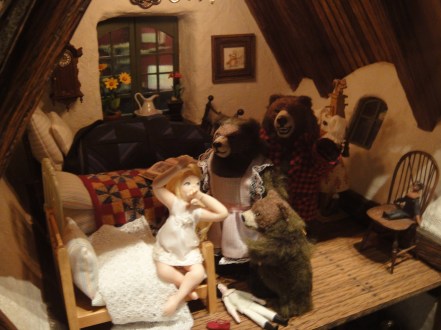
Three Bears and Goldilocks
My story in business since I returned to commerce now seems like Goldilocks and the Three Bears to me. While learning inbound marketing and social media I attempted to find the right marketing partner. I understand how this works because for years I was the marketing partner for all travel providers (travel agent) , and fancy spas sold my services as a teacher ( employee). Commission is something I have always paid happily, even back when I was young production potter paying a gallery to sell my pots. It is fair, and it keeps overhead where it belongs.
My first guess about the perfect partner was focused on Watsu. I decided that the Watsu people maintain pools which are not fully booked, therefore Floatli would give them something else to sell in their pools. I wandered around from hot spring to hot spring looking for the right one, but this combo was not going to happen, for whatever reason.
Next, I decided that mermaids naturally combined with Floatli and were trending. I learned about the people who are into mermaids, and organized a weekend at a hot spring for mermaids to meet water fitness enthusiasts. This was not the match I had imagined either. I did not suffer terribly through these experiences, mind you. I simply found no appropriate fit for a marketing vehicle.
My digital wanderings had exposed me to Chris Brogan and Anthony Innarino who taught a workshop on sales last year. The well presented course provided the piece that had been missing in my technique. They carefully explained the process of qualifying customers. I had clearly demonstrated that deciding myself that the customer needs my product was the wrong initial step to take. Then they gave me the secret to reverse all errors made in the mama bear’s bed and the papa bear’s bed. To qualify a potential customer you first ask if they want to have a conversation with you about whatever you are pitching. Proceeding without taking this step is the number one way salespeople turn others off forever. The interest as well as the ability to execute has to be there, or you are wasting time. Thanks, Chris and Anthony, that information arrived none too soon.
My target now is Zappos, which fits perfectly because Floatli is the exact opposite of shoes, and Zappos is very sporty. This time, however, I will proceed armed with my new information, and ask the Zapsters if they want to have a conversation about marketing Floatli. That is why I will send this post to them in hopes of a positive response. I believe I can show how we belong together in business, for the benefit of all sentient beings. Gravity meets weightlessness, outside the box (but inside a Zappos box). Please say yes, Zapsters.
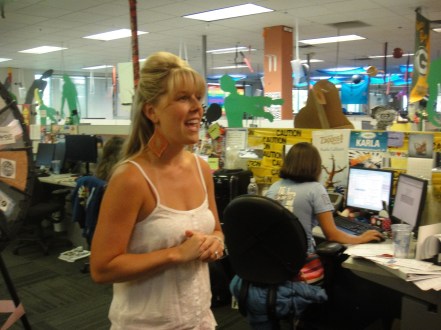
Culture Clown at Zappos
There are many records of my 10th Great Grandfather who ran away as soon as he got to America:
Gabriel Wheldon and brothers deserted ship at Plymouth. To escape punishment and being sent back to England in chains, they went inland to Massasoit’s village at Po ko net, and took to wife a daughter of a brother of Massasoit, although he had a wife in England. After children were born through the good offices of Massasoit and the English at Plymouth not wishing to offend him, consented to try Gaberial and his brothers at the Plymouth court.He was sentenced to dwell at Mattachees on land that was ceded by HighYannough at the request of Massasoit in lieu of certain annual tribute paid Massasoit by the Cape Tribes. One of Gabriel’s brothers went back to England and Gaberial and the other brother stayed in the Colonies. It was many years before Gaberial was made a freeman, and he had to go outside the jurisdiction to become one.
The first known Whelden in the line in America was Gabriel Whelden of Plymouth. He is believed to have been born in England, but the date and place are not proven. It is commonly stated that Gabriel Whelden originated in Nottinghamshire, but no records have been found to substantiate it. The author Pope reports he found a record of a land sale in Middlesex county files where Gabriel in 1653 sold land he owned in Nottingham to William Cross. The head archivist of these records, Elizabeth Bouvier has been unable to find any such record.
The Wheeldon/Wheelton family, which has not yet been connected to Gabriel Wheldon, finds the earliest spelling located to-date is Whyldon (christenings of sons of William Whyldon at Astbury, Cheshire: Matthew, 14 Dec 1574; John 14 Mar 1584; per LDS IGI ). In “Homes of Family Names in Great Britain”, Baltimore, MD: Genealogical Publishing Company, 1968) H. B. Guppy noted that the surname Wheelton as “peculiar” or “confined mostly to this county [Cheshire].” He indicated it was more specifically associated with Macclesfield. The surname is concentrated in the ancient Parish of Prestbury, which originally included Macclesfield. Additionally, “pockets” of Wheeldon ~ Wheelton individuals settled in the Cheshire / Derbyshire / Staffordshire border area known as “The Potteries.”
Was Margaret (Oguina) a Wampanoag?
Gabriel married Margaret Diguina (or Oguina), who may have been Gabriel’s second wife. Some say that Margaret was a Wampanoag Indian, although it is hotly disputed by many genealogists. Accordig to the Wampanoag theory Oguina was a child of 6 years in 1608 when a British fishing vessel picked her up along with other Wampanoags along a beach on Cape Cod. She was taken to England where she baptized and given the English name Margaret. She eventually married Gabriel Whelden.
Oguina was a daughter of Quadequina who in turn was a son of WAasaneginN. These geenrations were of the Algonkian nation of Massachusoi and tribe of Wampanoag.
Oguina’s descent is as follows:
1- WASANEGIN, born by 1554 begot 2-QUADEQUINA, born 1576. This year is determined from the fact that he was born in the year when the “Great Light” went out. European astronomers noted in 1576 that there was a Solar Eclipse. He, QUADEQUINA begot 3-OGUINA, born 1602 @ Wampanoag village in what is today Rhode Island.
Gabriel Whelden and Margaret (Oguina) had the following children:
Gabriel died January 1653/1654 in Malden, Massachusetts. Following is his Last Will and Testament:
In the name of God, and in obedience to his comand (according to my bounden duty) I, Gabriell Whelding, of the Towne and Church of Maulden, being weake and sicke in body, do make my last will. My body to be layd asleepe in the bed of the grave, in the Common buriing lace for the Inhabitants of this Towne. I give 10s as a Small testimony of my true Love to the Church of Maulden, to be payd into the hands of the Deacons within a month after my decease. i give all my estate in Maulden, consisting of house, Frame Lands, cattle, and corne, (together [with] what money is due unto me from William Croffts, of Linne, to Margaret Whelding, my wife, who I appoynt my sole executrix.
In the presence of: Nathaniell Vphame, James Larnard, Michaiah Mathews, with others.
The part that seems far fetched to me is that Margaret was taken to England as kidnapped child. However, a recent piece of good luck on this very blog has introduced me to a fellow descendant, Ron Turner, who has more information about the story. The clues are many, and my interest could not be higher.

