mermaidcamp
Keeping current in wellness, in and out of the water
You can scroll the shelf using ← and → keys
You can scroll the shelf using ← and → keys
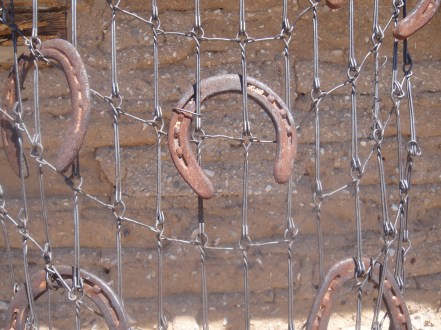
the web woven

sticky business
If we were having coffee this weekend I would serve you a long tall glass of iced tea. I am enjoying dewy cherry, a strong fruit flavored herbal tea with long lasting flavor. It is refreshing and beats the hell out of artificial cherry anything. I switch the flavor of tea daily so we never get tired of any one of them. It is also the time of year when we start of consume a lot of fresh juice. I can offer you watermelon, cucumber, tomato, or a combo of any of these juices. I went to the produce site yesterday where I pick up 60 pounds of produce for $10, and decided to score to boxes for $20. We are once again loaded with honeydew, watermelon, tomatoes, and bell peppers. I am cooking up a storm, and drying tomatoes for the future. This non-profit does not operate in the summer, since most of the Mexican produce they bring is not crossing the border in the heat. It makes a big difference to our budget when we have to go back to paying up at the grocery store for our fresh fruits and vegetables.
If we were visiting today I would tell you about the latest installment of the attempt to complete my non-fiction book. I have written this book over the course of many years and published it here on this blog in real-time, as the story developed. It could have been a short story about justice triumph and community policing. Sadly it is a true story about how the local police department accidentally used their “neighborhood watch” program to promote felony crime (charity scamming by the HOA board using our corporate property, our corporate treasury and our corporate lawyer) in the hood. It does sound like an incredible tale, and I wish it were not true. I have published each part of the book and sent the evidence to the city of Tucson since 2013, but the criminal activity has gone on much longer than that. Each time I reported the crimes I thought it would be the last time I would need to do it because I thought the city would want to stop supporting and promoting the most obvious crime in our neighborhood. Alas, the police do not understand that HOA fraud and charity scamming are against the law. They encouraged the scam, and even promoting cramming the fire lane full of cars in order to run the 24 hour donation drop off for the scam. They thought this was a community service. They thought they were serving us by protecting and promoting felony crime (including postal fraud) in front of everyone here for almost a decade. They thought that by setting up an illegal knock-off of the food bank in the fire lane of a residential condo village they would serve our community. They never understood that their actions were very detrimental to safety, property value, quality of life, and certainly did a lot of damage to respect for law enforcement officials. They flaunted obvious obstruction of justice for years and told us it was community service. They might be that ignorant, but the people in this ‘hood are not.
The national political scene is all a-twitter about a constitutional crisis caused by all the latest developments. There is nothing new happening. With all due respect to anyone who thinks they can fix national politics, I believe the crisis is one of extreme national ignorance. The governed have no idea how government is supposed to work, and neither do the folks who work for the government. If anyone knew how the justice system was intended to operate, it would be something other than a for profit prison system that fails enrich or protect the community. If people knew what the presidency was supposed to do, they would shape that mandate in the voter’s booth. I think our position in the world today is a result of a long era of willful blindness and withdrawal of education to the masses. If they can’t read, write, spell , or do math, they will probably not challenge the powers that be because they don’t even know what and where they might be. Ignorance and willful blindness are the enemies, gentle reader.
And thus I will conclude my political rant against ignorance in the United States. I have advised the city of Tucson that there are laws against charity scamming and HOA fraud, as well as blocking the fire lane with traffic for a decade in front of my house. They have yet to respond, so I can’t have a happy ending to this book. It is about the truth, and the truth is that they still think they have the right to come out here and mislead people in order to promote crime. I will end the book and let you know when they finally respond. They do not have the right to remain silent, but the continue to do so. I rarely go on political rants, in fact I consider this to be an education rant.
Thanks for joining me today while I let off steam. Please read, write or comment on the state of your personal affairs at the weekly party hosted by Nerd in the Brain. Enjoy sipping digital beverages with bloggers from all over the world each weekend. Please pipe up with your own stories.

#WeekendCoffeeShare

Sagittarius truth day and MARS in GEMINI trines JUPITER in LIBRA a very optimistic socializing airy energy. One of the best days to meet new people and socialize like mad.

green passages
People tell stories about the time before the stone wall was built. The streams and rivers flowed freely and served everyone as they went by. Water to run small mills and to irrigate crops was plentiful and easy to find. Family farmers subsided and even thrived in years when the weather was favorable. The community members provided for each other, and the simple agricultural life was comfortable. They had plenty of food, shelter, and water.
Progress came to the area in the form of a land buy out by a large estate owner who wanted to experiment in modern farming techniques. His ignorance of nature combined badly with his lame and greedy attitude toward those with deep knowledge of working the land. He changed the landscape, moved the waterways to suit his purposes, and set out to build an empire. He had a monopoly on all the waterways in the valley, having sewn up all the land on which the tributaries flowed. His signature move was a large stone wall he built. It stood in the middle of stream, with tunnels to handle the water as it flowed beneath the structure. He was secure and pleased with his conquest of this natural resource when all hell literally broke loose. With a crack of thunder and a flash of lightening the sky broke open with a stormy and deadly response to his lack of respect for Mother Nature.
The flash flood poured over all the banks and rushed through the canals and tunnels like an angry dragon. Destruction and erosion brought famine to the land, once ripe and productive. Once the greedy land owner gave up the ghost the land itself returned to a riparian state. The farmers did not return, so the land has been fallow for centuries. It no longer feeds or shelters people. The natural world has taken the place of the former residents. The streams flow sweetly and green moss covers the ancient stone as if nothing had ever happened. All is forgotten.
#writephoto
This slice of fiction is a take on the prompt of this week by Sue Vincent. Visit Sue’s Daily Echo to read, comment, or submit your own story or poem.


While time passes by your window and blows through your mind
Where are your connections to the natural world?
Are you just habitually blind?
Does the rising of the tide of hatred sting your immortal soul?
Or do you sit in the corner twiddling your thumbs
When everyone becomes a merciless troll?
Did you have a purpose for being born on earth?
If so you better get to work, because things are getting worse

hole in the wall
Holy Fools in History and Eternity
One of the greatest character archetypes in the history of literature has to be the holy (or sometimes unholy) fool. What is so absolutely strange about the holy fool is that they are said not to exist. Typically they appear in stories that have to do with some Christ figure who is so perfect among the other characters that he is blinded by that perfection in a way. His beautiful, and often romantic vision of virtue, love, and peace among people so central to his character causes the other, more realistic characters to despise him and either seek to manipulate the holy fool or kill the holy fool because of his convictions.
The differentiating factor of these characters is their sense of not belonging in the universe because of they were born into. That the act of killing them off is all at once diabolical but cosmically necessary. They are…
View original post 916 more words
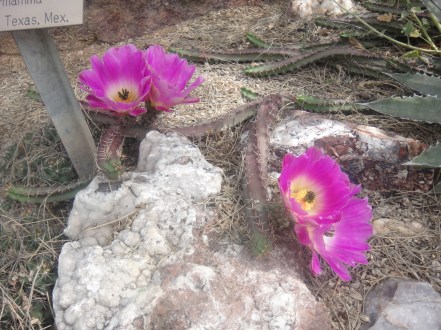
in bloom

in bloom
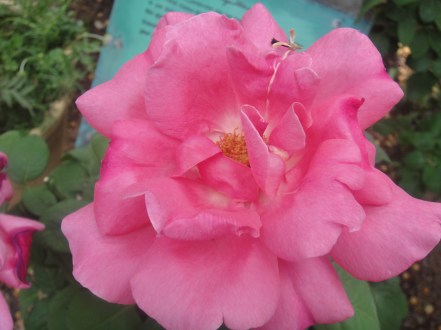
in bloom
Wipe the slate clean by taking the first day of each week
seriously.
Make a commitment to clear your space and time
to restore your serenity
To daily life that passes at a constant pace, yet seems to be compressed
Into stressful packages of worry and uncertain future demands
On the dwindling energy and time our position in life
commands
Step away from the every day, unplug from the noise and chatter
Give yourself the Sunday self care you deserve. This is an
urgent matter
Immerse yourself in music, perfume, and poetry that feeds your soul
Return to the world on Monday feeling healthy, relaxed and whole


If we were having coffee this weekend I know you will want your beverage on ice because we have hit triple digit heat. I don’t really mind it too much, but it is too much for most people. I am drinking a lovely white pear iced tea with a hint of fruity aftertaste that cools the tastebuds if not the entire body. If we were drinking tea this weekend I would tell you I did manage to write my first tea review, and found it to be easier than I thought it might be.
If you want to know the most interesting part of my week I have to tell you about my friend Gita. I was invited to a pot luck dinner party in honor of an old friend who now lives outside Guadalajara, but lived in Tucson for years, and visits here frequently. She was my mother’s lawyer, and a brilliant one. She had been a fancy tax attorney in Chicago when she decided to become a yoga teacher. She studied at Kripalu and later moved to Tucson where she developed a large following of devoted yoga students. She practiced law on the side, and was doing very well in life when she learned she has Parkinson’s Disease. She lost much of her physical strength and abilities, but still she persisted.
She became a teacher of laughter yoga, and developed a following in that innovative for of yoga, calling on her vast experience in al forms of yoga. I admired her greatly for shifting to accommodate anything that came her way. Since she moved to Mexico I had not seen her, and I assumed her Parkinson’s would be much more difficult to handle with time. I did not make the dinner party, but scheduled a private visit to catch up with her. She fit me into her busy social schedule for a visit before her donkey photo shoot.
Much to my great surprise I found my friend healthy happy, and showing no symptoms of her disease. She now spends her time studying and dancing the tango. I was shocked to see how great her recovery has been. She found a Mexican doctor who put her on the right drug, and then performed brain surgery. After ten years of pain and downhill slide, she got her life back. She drives, lives on her own, and will join a group of tango aficionados on a trip to Buenos Aires in the fall. I asked her if she felt bitter after 10 years of failure with the medical pharmaceutical industry. Her response has blown my mind and made me think about what it really means to be a yogini. She said she had been bitter during the 10 years, but then medicine gave her back her life. Parkinson’s taught her patience and gratitude. Once she got her strength and ability back she knew he just wanted to dance for the rest of her life. Gita is by far the greatest yogini I have ever met ( and I have known many great ones). Yoga is not flexibility of the body..it is strength of mind and character.
Her custom now is to meet a donkey in each city she visits and have a photo shoot. I had not planned to go along for the donkey photo shoot, but it turned out to be the icing on the cake. Here is a woman with a donkey, but not just any woman. This picture captures an ascended master with a donkey, enjoying the great cosmic joke. Dance on, Gita. Your insight and sense of humor are precious. You embody the meaning of yoga.
Let me pour you another glass of iced tea while you tell me about your week and your writing projects. I enjoy keeping up at these digital beverage parties. Read or contribute to the party at Nerd in the Brain’s party link. This movable feast takes place every weekend, rain or shine. Join us.

#WeekendCoffeeShare
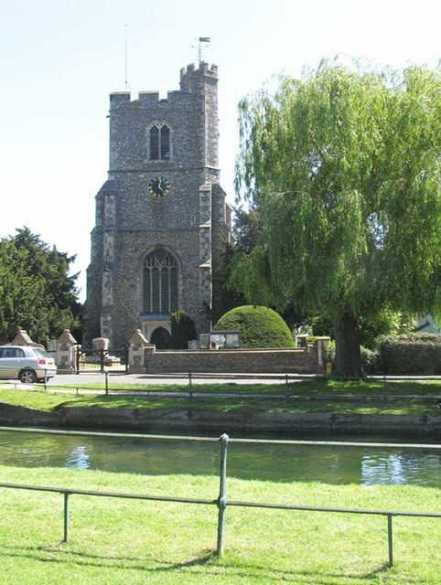
St Augustine, Broxbourne, Herts
Elizabeth Cheney (April 1422 – 25 September 1473) was an English aristocrat, who, by dint of her two marriages, was the great-grandmother of Anne Boleyn, Jane Seymour, and Catherine Howard, three of the wives of King Henry VIII of England, thus making her great-great-grandmother to King Edward VI, the son of Henry VIII and Jane Seymour, and Elizabeth I, the daughter of Henry VIII and Anne Boleyn. Her first husband was SirFrederick Tilney, and her second husband was Sir John Say, Speaker of the House of Commons. She produced a total of nine children from both marriages.
Born in Fen Ditton, Cambridgeshire in April 1422, she was the eldest child of Laurence or Lawrence Cheney or Cheyne, Esq. (c. 1396 – 1461), High Sheriff of Cambridgeshire and Elizabeth Cokayn or Cokayne[1] She had three younger sisters, Anne, wife of John Appleyard; Mary, wife of John Allington; Catherine, wife of Henry Barley, and one brother, Sir John Cheney who married Elizabeth Rempston, by whom he had issue. Sir John Cheney and his wife are ancestors of U.S. Vice President Dick Cheney. She had two half-brothers by her mother’s first marriage to Sir Philip Butler.
Her paternal grandparents were Sir William Cheney and Katherine Pabenham, and her maternal grandparents were Sir John Cockayne, Chief Baron of the Exchequer and Ida de Grey, the daughter of Reginald Grey, 2nd Baron Grey de Ruthyn and Eleanor Le Strange of Blackmere.[2]
Anne Boleyn, granddaughter of Elizabeth Tilney, eldest daughter of Elizabeth Cheney
On an unknown date, Elizabeth Cheney married her first husband Sir Frederick Tilney, of Ashwellthorpe, Norfolk, and Boston, Lincolnshire. He was the son of Sir Philip Tilney and Isabel Thorpe. They made their principal residence at Ashwellthorpe Manor. The couple had one daughter:
Elizabeth Tilney (before 1445 – 4 April 1497), married firstly in about 1466, Sir Humphrey Bourchier, by whom she had three children; and secondly on 30 April 1472, Thomas Howard, Earl of Surrey, who later became the 2nd Duke of Norfolk, by whom she had nine children. These children included Thomas Howard, 3rd Duke of Norfolk, Elizabeth Howard, mother of Anne Boleyn, and Lord Edmund Howard, father of Catherine Howard.
Sir Frederick Tilney died in 1445, leaving their young daughter Elizabeth as heiress to his estates. Shortly before 1 December 1446, Elizabeth Cheney married secondly Sir John Say, of Broxbourne, Hertfordshire, Speaker of the House of Commons, and a member of the household of King Henry VI. He was a member of the embassy, led by William de la Pole, which was sent to France in 1444 to negotiate with King Charles VII for the marriage between King Henry and Margaret of Anjou.[3] Her father settled land worth fifty marks clear per annum upon the couple and their issue before Candlemas, 1453. They made their home at Broxbourne, Hertfordshire.
Sir John Say and Elizabeth had three sons and four daughters:
Sir William Say (1452- 1529), of Baas (in Broxbourne), Bedwell (in Essendon), Bennington, Little Berkhampstead, and Sawbridgeworth, Hertfordshire, Lawford, Essex, Market Overton, Rutland, etc., Burgess (M.P.) for Plympton, Knight of the Shire for Hertfordshire, Sheriff of Somerset and Dorset, 1478–9, Sheriff of Essex and Hertfordshire, 1482–3, Justice of the Peace for Hertfordshire, 1486–1506, and, in right of his 1st wife, of East Lydford, Radstock, Spaxton, Wellesleigh, and Wheathill, Somerset, and, in right of his 2nd wife, of Wormingford Hall (in Wormingford), Essex, Great Munden, Hertfordshire, etc. He married (1st) before 18 November 1472 (date of letters of attorney) Genevieve Hill, daughter/heiress of John Hill, of Spaxton, Somerset. She was still alive in 1478. He married (2nd) shortly after 18 April 1480 Elizabeth Fray, widow of Sir Thomas Waldegrave, by whom he had two daughters, Mary Say and Elizabeth Say.
Mary, the eldest daughter married Henry Bourchier, 1st Earl of Essex and 6th Baron Bourchier, by whom she had one daughter, Anne Bourchier, 7th Baroness Bourchier.
Thomas Say, of Liston Hall, Essex.
Leonard Say, clerk, Rector of Spaxton, Somerset. See Testamenta Eboracensia, 4 (Surtees Soc. 53) (1869): 86–88 (will of Leonard Say, clerk).
Anne Say (died 1478/1494), married Henry Wentworth, K.B., of Nettlestead, Suffolk, Goxhill, Lincolnshire, Parlington and Pontefract, Yorkshire, and of London, Esquire of the Household, Knight of the Body, Sheriff of Norfolk and Suffolk, 1481–82, Sheriff of Yorkshire, 1489–90, 1492, Knight of the Shire for Yorkshire, 1491–92, by whom she had issue, including Margery Wentworth, mother of Jane Seymour.
Mary Say, married Sir Philip Calthorpe, Knt., by whom she had issue.
Margaret Say, married Thomas Sampson, Esq.
Katherine Say, married Thomas Bassingbourne.
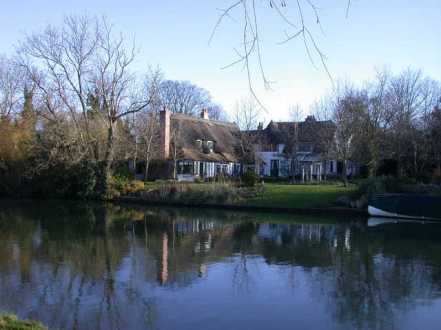
Fen Ditton from River Cam
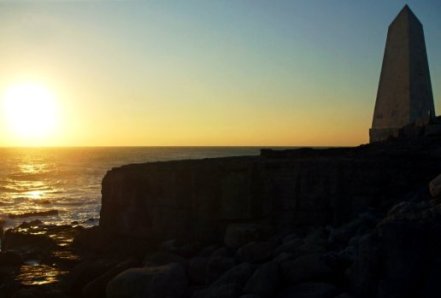
obelisk
The family sailed from England when they had a chance to come to America. The hardship of the voyage and the harsh conditions in the colonies took a toll on the surviving members of the family. They wondered about the decision to live in the new world, and felt lost without the comfort and status of British society. Carving out an existence turned out to be much more difficult than they had ever imagined. They lost touch with the roots of their family back in England and had no way to return even if they wanted to go. They had little money and just barely the time to protect and feed their offspring.
Eventually they came to feel pride in the American adventure they founded, and erected a monument to the first Morses to come to America. They had sailed from a harbor with a large assuming obelisk that bid them adieu when they left their homeland. The group decided to model the new world monument after the last sight they saw as the ship left the shore. British no more, but connected to the language and the culture of the motherland, the American obelisk builders were sure that God was on their side.

Morse Monument
This is a piece in response to Sue Vincent’s weekly photo prompt. Please join writers from around the world each week to read or submit your own story.
#writephoto

Elizabeth Tilney
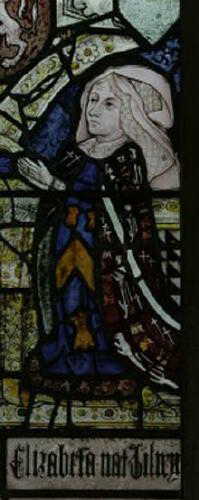
Elizabeth Tilney
Elizabeth Tilney, Countess of Surrey, was an English heiress and lady-in-waiting to two queens. She became the first wife of Thomas Howard, Earl of Surrey. She served as a lady-in-waiting to Queen consort Elizabeth Woodville, and later as Lady of the Bedchamber to the Queen’s daughter, Elizabeth of York, consort of King Henry VII of England. She stood as joint godmother to Princess Margaret Tudor at her baptism.
She was the mother of Thomas Howard, 3rd Duke of Norfolk. Through her daughter Elizabeth she was the maternal grandmother of Anne Boleyn, and through another son, Edmund, the paternal grandmother of Catherine Howard, both queens consort of King Henry VIII. Elizabeth’s great-granddaughter was Queen Elizabeth I of England.
Elizabeth was commemorated as the “Countess of Surrey” in John Skelton’s poem, The Garlande of Laurell, following his visit to the Howard residence of Sheriff Hutton Castle.
Elizabeth Tilney was born at Ashwellthorpe Hall sometime before 1445, the only child of Sir Frederick Tilney, of Ashwellthorpe, Norfolk, and Boston, Lincolnshire, and Elizabeth Cheney (1422–1473) of Fen Ditton, Cambridgeshire. Sir Frederick Tilney died before 1447, and before 1449 Elizabeth’s mother married as her second husband Sir John Say of Broxbourne, Hertfordshire, Speaker of the House of Commons, by whom she had three sons, Sir William, Sir Thomas and Leonard, and four daughters, Anne (wife of Sir Henry Wentworth of Nettlestead, Suffolk), Elizabeth (wife of Thomas Sampson), Katherine (wife of Thomas Bassingbourne), and Mary (wife of Sir Philip Calthorpe). A fifth daughter died as a young child. Henry VIII’s third queen consort, Jane Seymour, was the granddaughter of Henry Wentworth and Anne Say, and thus a second cousin to Henry VIII’s second and fifth queens consort, Anne Boleyn and Katherine Howard.
Elizabeth’s paternal grandparents were Sir Philip Tilney and Isabel Thorpe, and her maternal grandparents were Sir Laurence Cheney of Fen Ditton and Elizabeth Cockayne, widow of Sir Philip Butler. Elizabeth Cockayne was the daughter of Sir John Cockayne, Chief Baron of the Exchequer and Ida de Grey. Ida was a daughter of Welsh Marcher Lord Reginald Grey, 2nd Baron Grey de Ruthyn and Eleanor Le Strange of Blackmere. Through her mother, Ida was a direct descendant of Welsh Prince Gruffydd II ap Madog, Lord of Dinas Bran and his wife Emma de Audley.
Elizabeth was co-heiress to the manors of Fisherwick and Shelfield in Walsall, Staffordshire by right of her descent from Roger Hillary, Chief Justice of the Common Pleas (d.1356).
Elizabeth married her first husband, Sir Humphrey Bourchier, the son and heir of John Bourchier, 1st Baron Berners, and his wife Margery, in about 1466. The marriage produced a son, John Bourchier, 2nd Baron Berners and two daughters. Following her marriage, Elizabeth went to court where she served as lady-in-waiting to Queen Elizabeth Woodville, whose train she had carried at the latter’s coronation in May 1465 at Westminster Abbey. Elizabeth accompanied the Queen and her children into sanctuary at Westminster Abbey when King Edward IV had been ousted from the throne, and was present at the birth of the future King Edward V. She remained with the Queen until Edward IV was restored to power.
Sir Humphrey was killed at the Battle of Barnet on 14 April 1471 fighting on the Yorkist side. On 30 April 1472 Elizabeth married Thomas Howard, Earl of Surrey, a marriage arranged by the King. In 1475, Elizabeth inherited her father’s property of Ashwellthorpe Manor. Her second husband was a close friend and companion of Richard, Duke of Gloucester who was crowned king in 1483. Elizabeth was one of Queen Anne Neville’s attendants at Richard’s coronation, while her husband bore the Sword of State. On 22 August 1485 Thomas’s father John Howard, 1st Duke of Norfolk was killed at the Battle of Bosworth while fighting for Richard III; like his son, John was also one of King Richard’s dearest friends. Thomas Howard was wounded at Bosworth and imprisoned in the Tower for several years, and the dukedom of Norfolk was forfeited. Elizabeth was fortunate that Thomas’ attainder stipulated that she would not lose her own inheritance. On 3 October 1485, she wrote to John Paston, who was married to her cousin. The letter, which she had written from the Isle of Sheppey, mentioned how she had wished to send her children to Thorpe, pointing out that Paston had pledged to send her horses as a means of transporting them there. She continued to complain that Lord FitzWalter, an adherent of the new king Henry VII, had dismissed all of her servants; however, because of the stipulations in her husband’s attainder, FitzWalter was unable to appropriate her manor of Askwell. In December 1485 she was living in London, near St Katharine’s by the Tower, which placed her in the vicinity of her incarcerated husband. After Thomas was released from prison and his earldom and estates were restored to him, he entered the service of Henry VII. In November 1487, Thomas and Elizabeth attended the coronation of Henry’s consort Elizabeth of York, who appointed Elizabeth a Lady of the Bedchamber. Elizabeth was further honoured by being asked to stand as joint godmother to the Princess Margaret Tudor at her baptism in late 1489.
Her second marriage produced nine children, including Thomas Howard, 3rd Duke of Norfolk, Elizabeth Howard, mother of Queen Anne Boleyn, and Lord Edmund Howard, father of Queen Katherine Howard.
Elizabeth Tilney died on 4 April 1497 and was buried in the nun’s choir of the Convent of the Minoresses outside Aldgate. In her will, she left money to be distributed to the poor of Whitechapel and Hackney. By licence dated 8 November 1497 Thomas Howard married as his second wife her cousin, Agnes Tilney, by whom he had six more children.
Lady Elizabeth Tilney was governess to 1st Princess Mary Tudor and then later to Princess Elizabeth Tudor.
Elizabeth Tilney (1450 – 1497)
16th great-grandmother
Lord Thomas Howard (1473 – 1554)
son of Elizabeth Tilney
Lady Katherine Howard Duchess Bridgewater (1495 – 1554)
daughter of Lord Thomas Howard
William ApRhys (1522 – 1588)
son of Lady Katherine Howard Duchess Bridgewater
Henry Rice (1555 – 1621)
son of William ApRhys
Edmund Rice (1594 – 1663)
son of Henry Rice
Edward Rice (1622 – 1712)
son of Edmund Rice
Lydia Rice (1649 – 1723)
daughter of Edward Rice
Lydia Woods (1672 – 1738)
daughter of Lydia Rice
Lydia Eager (1696 – 1735)
daughter of Lydia Woods
Mary Thomas (1729 – 1801)
daughter of Lydia Eager
Joseph Morse III (1756 – 1835)
son of Mary Thomas
John Henry Morse (1775 – 1864)
son of Joseph Morse III
Abner Morse (1808 – 1838)
son of John Henry Morse
Daniel Rowland Morse (1838 – 1910)
son of Abner Morse
Jason A Morse (1862 – 1932)
son of Daniel Rowland Morse
Ernest Abner Morse (1890 – 1965)
son of Jason A Morse
Richard Arden Morse (1920 – 2004)
son of Ernest Abner Morse
Pamela Morse
I am the daughter of Richard Arden Morse
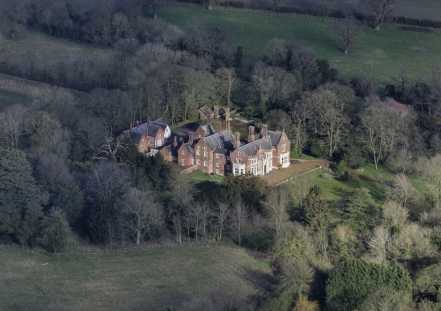
Ashwellthorpe


