mermaidcamp
Keeping current in wellness, in and out of the water
You can scroll the shelf using ← and → keys
You can scroll the shelf using ← and → keys
Basics of better aging for women

reflection in my pool
Summer ends with monsoon season here in Tucson. The humidity builds and storms bless the desert with rain in July and August. September can go either way, but normally it is dry, and just a little cooler. I do love our hot weather and spend time chilling in the pool to stay cool. I wear protective clothing, hats and sunscreen when I am outdoors. Recently my dermatology exam revealed a couple of spots worth of further testing. I had two biopsies taken, one from my shoulder, and another from my forehead. The results have not yet returned, but the physician’s assistant was certain that I am heading for surgery soon for both of them. This is the first year I am glad to see the hours of sunlight receding.
I am freaked out by the idea of cancer growing my skin, but am very happy that I can take care of them now before they become serious. A friend from the beach in California had a similar experience recently, but her medical doctor had to be convinced to examine her spots more carefully. She had to ask for a second opinion, and then was correctly diagnosed. (scary) Dermatologists can recognize the potential problems based on their extensive experience and training. The dot that will be removed from my forehead is practically invisible. It shows itself as a tiny red blotch, no roughness. The spot on my shoulder is a little rough to the touch, but I did not suspect it was cancer. Neither of these seemed like anything to me.
You may guess where this story is going, gentle reader. Sunscreen and hats are no guarantee against damage. We do owe it to our skin to be careful with exposure and use products to guard against damage, but the best defense is regular consultation with your dermatologist. With the expertise they possess and the techniques available now your outcome is likely to be good if you stay on top of your visits and exams. I am lucky my doctor, Dr Hu, at Specialists in Dermatology is located very near my home. I have spoken to a friend who had mohs surgery from Dr Hu for a spot on her nose. She is very grateful also to have nipped it in the bud. In both of our cases the early diagnosis when few apparent signs of danger were obvious to the untrained eye has made a big difference. No matter where you live, plan to visit the dermatology office on a regular basis. The face you save may be your own.

Tucson Sun

Pam and the Fam on the farm
I study my ancestry and family history. This fascinating subject consumes as much of my time as I allot to it. I have spent six years on Ancestry.com working on my tree. I am more skeptical now than I was in the beginning because I have been burned by specious data. It is painful to discover an error in one’s research, yet it is better to know sooner than later. I once had a magical surprise experience in Rhode Island at a very special private family home from the 1600’s. I was treated to a tour of the home and grounds since I announced that I was a Carr descendent. I was given instructions to find the family graves by my long-lost “cousin” who still lives on the property. I was in heaven. It turns out I was also delusional about my connection to that family because I had made a mistake a couple of generations earlier in my research. I discovered this error after I had returned home from my trip, and had to laugh about it. I also had to start again to retrace the lineage. That correction was easy because I had some good documentation to verify the facts. Other problems I have discovered or had pointed out to me have left me with a dead-end when I removed the phantom limb.
The odd phantom feeling after chopping off limbs and branches is caused my the attachment formed while studying them. There are several very common names in my tree including Scott. When I began my sturdy I started with notes written by my maternal great-grandmother about her knowledge of the family. She stated that my 2nd great-grandfather, Thomas Scott, was a soldier in the Union army during the Civil War. Even though we know his full name, Thomas Ewing Scott, born in 1842 in Ohio, I can find no decisive record of his military service. There are too many Thomas Scotts from Ohio for me to be sure. My maternal 2nd great-grandfather was, indeed, a soldier for the Confederacy. I am positive about that because I have a copy of his service record as well as his Confederate pension application that he made late in his life in Texas. After his death his wife also applied for a pension as a surviving spouse. I have her application documenting her husband’s service also.
If you find written documents of a private source they may or may not be accurate. Only when you can back up your story with official documents do you have a solid case. I have learned the hard way to verify all the connections fully before jumping back to another generation. There are many trees on the Ancestry.com site that have unverified connections. Copying the work of others without making sure of it can lead to bigger and longer errors. This is not even as safe as the cold war when we trusted by verified. Don’t trust until you verify. This practice may save you many hours of wasted time. After I have recovered from the vexation of discovering I had been wrong I still had certain affection for those people who turned out not to be related to me. My philosophy now is that I learned about history while I was out on the wrong limbs, and I have never claimed to be a professional genealogist. I am more of a time traveller. Do you know any of your family history, gentle reader? How did you learn about it?



Fitbit monitor
My iPod touch has suddenly lost its mind and ability to function. This might not be a big deal but when it crashed it took with it my ability to sync my Fitbit. This turns out to be a much bigger freak out than I could have imagined. I have reset and attempted to sync it with my other devices but it refuses to operate. I am unable to count my steps/miles/calories since early this morning. I had no idea how addicted I have become to knowing how far I have gone at what time during the day. I dance or walk 5 miles in the morning and then put in between 3-4 more miles during the course of the day. I love watching my little graphs and numbers move as I do. I might be completely obsessed with these graphs, truth be told. This temporary interruption of technical feedback shows me I need to back off the addictive qualities and enjoy the fun aspects of the Fitbit a little bit more. Long ago in a land far away I had exercise anorexia. I hardly suffer from that problem now, but this is reminder to keep my attention on what is important..healthy fun.
I have found a place in Austin that will repair my iPod at a reasonable price, but since this death happened on Saturday it seems I will need to wait until Monday to communicate with the repair shop and ship the device to them. I have done this before with an ancient iPod with success. I believe a battery replacement will get me back to normal quickly. If not ,I can consider repairs and costs they will present to me after a diagnosis. All in all it will be simple for me to get my favorite device back in order. I have an iPhone and 2 iPads, so I am not really suffering without connection. I have all my internet powers EXCEPT my sync for the Fitbit. I hate to admit how seriously I love those graphs and numbers on the Fitbit. I have reset the Fitbit several times, but this is not working.
In order to embrace how helpful it is to have the graphs as well as how the graphs only represent reality, I need to chill in this situation. I can move and dance to my heart’s content even if the Fitbit is not reporting my good deeds back to me. The feedback has been helpful, especially the information I have gained on my sleep patterns. The tool is only a tool, however. Reality is the important aspect of my fitness program, not how self competitive I can become with my Fitbit. This short break might bring me to a happier medium, but when I can once again sync I know I will be very happy. Do you have a movement monitor, gentle reader? I highly recommend the systems. Just be careful you don’t get too crazy about your numbers as I have. The numbers matter less than the reality.
Blue moon adventure

 The Blue Moon occurs on Friday, 31 July 2015, 06:42 (second Full Moon in single calendar month). Now is the time to set your intentions towards what you desire. The perfect time to plant whatever it is that you want to reap
It is a moon shrouded in mystery, magic and folklore, perhaps because it only appears once every 2.7 years. The very term “blue moon” is over 400 years old when Shakespeare first wrote the words “blue moon” to mean rare or absurd. The rarity of a full moon appearing twice in one month, or a third full moon appearing in an astronomical season with four full moons versus the normal three, must have inspired the great playwright to coin the term.
The term ‘once in a blue Moon’ means that that something is very rare. But just how rare, depends on your definition.
In astronomy, a Blue Moon…
View original post 544 more words
This July, 2015 is full of unusual astrological events. The most obvious is the blue moon in Aquarius on 31 July at the end of this week. This second full moon in a month is rare, and will not occur again until January, 2018. In astrology terms, the sky is full of aspects, squares and retrograde planets that do not bode well for relationships and power struggles.
Full moon is a time of plenty, a time to reap and be grateful. As tides swell and retreat, the moon (from our point of view) grows large until it is directly opposite the sun at full moon, and then it diminishes in size. Since ancient times farmers have followed the moon’s phases to find the right times to plant or harvest, feed, or weed the crops. The new moon begins a cycle which comes to fullness about 2 weeks later when it reaches fullness. Each new moon I make a mental and physical sweep of my space, clearing and cleaning. I have learned that for me this important step makes clear a new beginning. Projects that have been abandoned can be refreshed on the new moon. Obvious excess, including commitments that don’t benefit me, are examined for possible removal at the new moon. It reminds me of soil preparation and planting seeds. During the time between new and full your enthusiasm and efforts must continue to nurture the new project or you will arrive at the full moon with little to show. A continuum of careful execution must be carried out with mindful purpose in order to attain the goal, or the harvest we desire. Each new moon is a chance to start anew. Each full moon is a time to count our blessings and feel our successes.
This special blue moon seems to me an excellent time to examine life goals, large and small. Relationships from the past may be haunting the present. This week my meditation is about cleaning up and forgiving in order to move into the future with ease. This task is simple, but it always needs to be repeated, at least in my life. I wish all my gentle readers a joyous and adventurous blue moon.

Full Moon
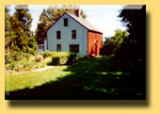
Philip Sherman’s home in Rhode Island
My 8th great-grandfather was kicked out of the Puritan’s church at Roxbury and became a Quaker. He moved to Rhode Island, as many of my ancestors did, to practice his religion. He was influential and prosperous in Rhode Island.

Portsmouth compact
Philip Sherman (1610 – 1687)
is my 8th great grandfather
Eber Sherman (1634 – 1706)
son of Philip Sherman
Mary Sherman (1688 – 1751)
daughter of Eber Sherman
Thomas Sweet (1732 – 1813)
son of Mary Sherman
Thomas Sweet (1765 – 1844)
son of Thomas Sweet
Valentine Sweet (1791 – 1858)
son of Thomas Sweet
Sarah LaVina Sweet (1840 – 1923)
daughter of Valentine Sweet
Jason A Morse (1862 – 1932)
son of Sarah LaVina Sweet
Ernest Abner Morse (1890 – 1965)
son of Jason A Morse
Richard Arden Morse (1920 – 2004)
son of Ernest Abner Morse
Pamela Morse
I am the daughter of Richard Arden Morse – (not you?)
In Bertha L. Stratton’s book, “Sherman and Other Families,” she made the statement that Philip Sherman intended to settle in New Hampshre, but the climate proved too severe and so the lands there were abandoned. Upon discussion with Roger Williams at Providence, Rhode Island, the other people from Massachusetts bought Aquidneck Island in Narraganset Bay. Nineteen men signed the compact for the town in 1638. Upon leaving the church in Roxbury, Philip joined with the Friends. The Massachusetts Court ordered Philip to appear before them on 12 Mar 1638, he did not go. But he continued as a prominent figure in Rhode Island; he was the General Recorder in 1648-1652 & the Deputy to the Assembly in 1665-1667. Tradition says he was a “devout and determined man, and he was also a “neat and expert penman & an educated man,” and his Last Will & Testament “shows that he was wealthy for those times.”
Philip Sherman immigrated to Roxbury, MA and married Sarah Odding shortly after his arrival. He might have felt pressured to marry quickly, because bachelors especially of such an advanced age as 23 were looked upon with suspicion, and their single state could even effect business opportunities and social acceptance.
According to Representative Men of Old Families of Southeastern Massachussets, by J. H. Beers & Company, in a biographical entry of one of Philip’s descendants, Philip Sherman “took the side of Anne Hutchinson,” a brave woman in Salem, MA who maintained that women should be allowed to hold prayer meetings as well as men, and proceeded to hold such meetings in her home in defiance of the rules of the time and demands that she quit. She, with some members of her family including young grandchildren, were driven out of Salem into the wilderness of Rhode Island. Families in sympathy for her or in fear of retaliation for their past support and/or defense of her beliefs soon followed to Rhode Island, and Philip Sampson and his family were among the group that left Salem following her ouster.
In Providence, Philip met Roger Williams, founder of Rhode Island promising religious freedom to it’s citizens. Williams advised Philip andthe members of his party to purchase Aquidneck from the Indians, which they did on 1 Jul 1639. They created their own government with Coddington chosen to be the first governor of Rhode Island, and Philip chosen to be secretary.
Some historians believe that the death of Anne Hutchinson with most of her family during an attack of native Americans was the first act in several that led to the end of the Puritan Church. Members of the communities in all the colonies were horrified that she was banished for her beliefs and suffered so. Many felt banished themselves from England when their Puritan faith had been banned, and her treatment forced them to recognize their own harshness.
Philip left what is now called “the Congressional Church” and joined the Society of Friends, or Quakers.
He was the father of 13 children, and many of his descendants served America as congressmen and soldiers.
We have his will:
WILL of PHILIP SHEARMAN, of Portsmouth, RI
In the name of God Amen, I, Philip Shearman, yeoman, aged seventy-one years, of the Town of Portsmouth in the colony of Rhode Island and Providence Plantations in New England, being in good memory, praise be therefor given to Almighty God, do make and ordain this my Last Will and Testament in the manner and form following: (that is to say); first and principally I commend my soul into the hands of Almighty God and my body to the earth to be decently buried by my executor hereafter named. And as for the disposition of my worldly estate, it is in manner and form following; first I give to Sarah my loving wife the use and her dwelling in the first room at the west end of my now dwelling house & bed and bedding with the furniture thereto belonging now standing in the aforenamed room. Also I do here by ordaine and appoint my son Samuel my sole Executor to this my last will and testament truely performed; and to b__ himself, heirs, Executors and Administrators for the true performance hereof; furthermore my will is that my executor shall sufficiently maintain my loving wife with food and raiment and all necessaries whatsoever during her natural life and at her decease decently to bury her; furthermore, I do give unto Sarah mywife ten good ewe sheep to be marked out of my flock for the sole use and dispose both of bodie and wool yearly, wch said number shall be kept by my said Executor during the natural life of Sarah my said wife free and without any charge to my wife.
Item: I do give unto Eber my Eldest son that which I have already given him, ten acres of land in the bounds of Portsmouth aforesaid at a place called Briggs swamp joining to a parcel of land of his own to him and his heirs forever. And all my horse flesh in the Narragansett country except one mare, the scond best; such excepted mare, I give to Thomas Mumford and Peleg Mumford my Grandchildren.
Item: I give unto my son Peleg five ewe sheep.
Item: I give unto my son Edmund a quarter share of meadow and a sixteenth part of a share of upland lying in Ponagansett within the Township of Dartmouth in the colony of New Plymouth in New England with all the privileges th__ to belonging or any wards appertaining. And also my whole right in the purchase of Squamscutt now called Westerly by thecollony to the said Edmund and his heirs.
Item: I give unto my son Samson after the decease of my said wife his half of the breadth of my farm wch I now dwell upon from the westward end to the sea and three Rood more in breadth of the whole length of the aforesaid land and bounded southward upon a straight line Eastward from the south west corner of that orchard now called Sampson’s upon a straight line to a lande marke about a rood short of the cart way that goes from my dwelling house to my barn in Portsmouth aforesaid. And from the said land marke upon a sloap line five Rood westwardly of my barn until it comes to the lineof the aforesaid half-breadth of the aforesaid farm to him and his heires forever and to have the third part of any hay and grass yearly of the aforesaid farm. And my son Samson and my son Samuel to have equal privileges in the arible land of the aforesaid farm during the natural life of Sarah my wife.
Item: I give unto my son Samuel all the remaining of my aforesaid farm with my now dwelling house and all the other buildings upon the said part of the land lying southward of the other part of my farm now given to my son Samson as aforesaid to him and his heirs forever after the decease of Sarah my wife and to have two parts of the grass and the hay during the natural life of Sarah my wife.
Item: All my neat cattle, hors kind, sheep kind and swine I do give unto my son Samuel aforenamed Executor, (excepting two oxen and a fatting cow.) And also all my moveable goods (Excepting two great chests with lock and key to each of them, which said chests I give unto my wife Sarah) he my aforesaid executor paying the several legacies herein this my will specified both the aforementioned and what shall hereafter be exprest in this my will.
Item: I givee unto my son Samson aforenamed one white faced mare with her foale and all those four Indians wch we jointly bought.
Item: I give unto my son Samson and my son Samuel my draught horse and two draught steers equally betwixt them.
Item: I give unto my son John my bay mare.
Item: I give unto my son Benjamin all the remaining __art of of my land at Brigg’s Swamp whereupon the said Benjamin’s house now stands, being by estimation twentie acres be the same more or less to him and his heires forever.
Item: I give unto my daughter Sarah ten ewe sheep to be paid her the year after my decease.
Item: I give unto my daughter Mary ten ewe sheep to be paid her the year after my decease.
Item: I give unto my daughter Hannah fivee pounds of New England silver money for the proper use of her selfe and children to be paid the year after my decease.
Item: I give unto my daughter Hannah five ewe sheep to be paid to her the year after my decease.
Item: I give unto my daughter Philip ten ewe sheep to be paid to her the year after my decease.
Item: I give unto Benjamin Clarke to my son Edmund until he comes of age of one & twenty years, the said Edmund finding the said Benjamin with sufficient food and clothing duting the terme aforesaid.
Item: I the above said Philip Shearman do ordain and appoint this to be my last will and testament, making void all former wills and testaments heretofore by me made.
In witness whereof I have hereunto sett my hand and seal this one and thirtyeth day of the month comonly called July, Anno Domino on thousand six hundred and Eightie one.
Philip Shearman (Seal)
Before the signing and sealing of this my will and testament, I the aforesaid Philip Shearman do declare that wheras the word Assigns is omitted in the giving of the several parcels of land to my children:
That it is my true intent and meaning that I do give the said several parcels of land specified in my above written will to my children to their heires and Assigns forever.
Signed and sealed in the presence of:
Job Almy
Philip Phettiplace
Elias Williams
Proved March 22, 1686/7.
Recorded on page 260 of “Land Evidence, 2nd Book, No. 1”
New England Families Genealogical and Memorial: Third Series, Volume IV
(The Sherman Line).
(IV) Philip Sherman, son of Samuel Sherman, was named after his mother. He was born in Dedham, England, February 5, 1610. He came to America when he was twenty-three, and settled at Roxbury, Massachusetts. He was made freeman there, May 14, 1634, standing next on the list after Governor Haynes. He married Sarah Odding, in the year after his arrival; she was stepdaughter of John Porter, of Roxbury, and her mother, Margaret Porter, was widow of (???) Odding. He returned to England in 1635 for a short time. On November 20, 1637, he and others were warned to give up all arms, because “the opinions and revelations of Mr. Wheelwright and Mrs. Hutchinson have seduced and led into dangerous errors many of the people here in New England.” The Church record says he was brought over to “Familism” by Porter, his wife’s stepfather. In 1638 he was in Portsmouth, Rhode Island, but the Massachusetts authorities evidently thought he had not left, for on March 12, 1638, though he had license to leave, he had summons to appear at the next court if they had not yet gone, to “answer such things as shall be objected.” He did not answer these summons, but continued to be a prominent figure in Rhode Island affairs. In 1639 he was secretary of the colony; made freeman, March 16, 1641; was general recorder, in 1648 to 1652; deputy from 1665 to 1667. On April 4, 1676, he was among sixteen persons who were requested to be at the next meeting of the deputies to give advice and help in regard to the Narragansett campaign. He died in March, 1687. His will, dated July 30, 1681, showed that he was wealthy for the times. He had thirteen children, eight boys and five girls, their dates of birth being between the years 1634 and 1652.
=========================================================================
from: “The Great Migration Begins”
PHILIP SHERMAN
ORIGIN: Unknown
MIGRATION: 1633
FIRST RESIDENCE: Roxbury
REMOVES: Portsmouth 1638
CHURCH MEMBERSHIP: “Phillip Sherman. He came into the land in the year 1623 [sic], a single man, & after married Sarah Odding, the daughter o[f] the wife of John Porter by a former husband. This man was of a melancholy temper, he lived honestly & comfortably among us several years, upon a just calling went for England & returned again with a blessing: but after his father-in-law John Porter was so carried away with these opinions of familism & schism he followed them & removed with them to the Iland, he behaved himself sinfully in these matters (as may appear in the story) & was cast out of the church” [RChR 78-79].
FREEMAN: 14 May 1634 [MBCR 1:368]. 16 March 1640/1 [RICR 1:111].
EDUCATION: Sufficient to be General Recorder of Rhode Island. His inventory included “four old Bibles & other small books” valued at £1.
OFFICES: General Recorder, 16 May 1648, 22 May 1649, 23 May 1650 [RICR 1:209, 217, 230, 236]. On 4 November 1651 colony records were demanded of Philip Sherman “late recorder of this colony” [RICR 236].
Attended Portsmouth town meeting, 13 May 1638, 20 May 1638, 20 August 1638, 5 November 1638, 2 January 1638/9 [RICR 1:53, 54, 58, 61, 63]. Selectman, 30 April 1639 [RICR 1:71]. Committee to build fences, 20 May 1638 [RICR 1:54]. Surveyor, 1640 [RICR 1:102]. Town clerk, 1649-1656 [PoTR 42, 45, 49, 50, 57, 60, 62, 67, 71]. Town Council, 1649, 1650, 1653, 1654, 1656, 1657, 1670-1673 [PoTR 42, 45, 61, 62, 71, 76, 152, 161, 169, 176]. Portsmouth commissioner to Rhode Island General Court, 21 May 1656 [PoTR 70; RICR 1:337]. Committee to audit treasurer’s accounts, 21 May 1661 [RICR 1:442]. Portsmouth deputy to Rhode Island General Court, 3 May 1665, 25 October 1665 [PoTR 130; RICR 2:96, 130].
ESTATE: On 10 February 1639/40 he was granted 200 acres at Portsmouth [RICR 1:73].
On 28 August 1650 Samuel Gorton of Warwick sold to Philip Sherman of Portsmouth seven acres in Portsmouth [PoTR 304-05].
On 3 October 1677 Philip Sherman Senior of Portsmouth deeded to “Pelegg Sherman my son” fourteen acres in Portsmouth [PoLE 1:148]. On 15 April 1678 Philip Sherman Senior of Portsmouth deeded to “Benjamin Chase my son-in-law and my daughter Philip his wife” four acres and a half in Portsmouth [PoLE 1:150].
In his will, dated 31 July 1681 and proved 22 March 1686/7, “Philip Shearman, yeoman, aged seventy-one years, of the Town of Portsmouth,” bequeathed to “Sarah my loving wife the use and her dwelling in the first room at the west end of my now dwelling…”; “my son Samuel my sole executor” and to provide “my loving wife with food and raiment and all necessaries whatsoever during her natural life and at her decease decently to bury her”; to “Sarah my wife ten good ewe sheep”; to “Eber my eldest son that which I have already given him, ten acres of land in the bounds of Portsmouth … at a place called Briggs swamp … and all my horse flesh in the Narragansett country excepting one mare, the second best, such excepted mare, I give to Thomas Mumford and Peleg Mumford my grandchildren”; to “my son Peleg five ewe sheep”; to “my son Edmund a quarter share of meadow and a sixteenth part of a share of upland lying in Ponagansett within the township of Dartmouth … also my whole right in the purchase of Squamscutt now called Westery”; to “my son Samson after the decease of my said wife his half of the breadth of my farm which I now dwell upon … my son Samson and my son Samuel to have equal privileges in the aerable land of the aforesaid farm during the natural life of Sarah my wife”; to “my son Samuel all the remaining part of my aforesaid farm with my now dwelling house and all the other buildings … and to have two parts of the grass and the hay during the natural life of Sarah my wife”; to “my son Samson … one white faced mare with her foal and all those four Indians which we jointly bought”; to “my son John my bay mare”; to “my son Benjamin all the remaining part of my land at Briggs’ Swamp whereupon the said Benjamin’s house now stands”; to “my daughter Sarah ten ewe sheep”; to “my daughter Mary ten ewe sheep”; to “my daughter Hannah £5 of New England silver money for the proper use of herself and children”; to “my daughter Hannah five ewe sheep”; to “my daughter Philip ten ewe sheep”; “I give Benjamin Clarke to my son Edmund until he comes of age of one & twenty years, the said Edmund finding the said Benjamin with sufficient food and clothing during the term aforesaid” [Roy V. Sherman, Some Descendants of Philip Sherman The First Secretary of Rhode Island, hereafter Sherman Anc, citing PoLE 2:260-61].
The inventory of the estate of Philip Sherman, dated 19 March 1686/7, totalled £100, with no real estate included [Portsmouth Scrapbook 17].
BIRTH: Baptized Dedham, Essex, 5 February 1610/1, son of Samuel Sherman [Sherman Gen 95].
DEATH: Portsmouth before 19 March 1686/7 (date of inventory).
MARRIAGE: Roxbury about 1633 Sarah Odding, daughter of Margaret (_____) (Odding) Porter [RChR 78-79; TAG 73:176-80].
CHILDREN:
i EBER, b. say 1634; m. Mary _____. (She has been called Mary Wilcox, daughter of Edward [Transatlantic Shermans 114; Philip Sherman 28], but there is no room for her in the family of Edward Wilcox [NEHGR 147:190-91].)
ii SARAH, b. say 1636; m. by about 1656 Thomas Mumford [Austin 136].
iii PELEG, b. say 1637; m. Portsmouth 26 July 1657 Elizabeth Lawton, daughter of Thomas Lawton [RIVR 4:Portsmouth:37].
iv EDMUND, b. 1641; m. by 1674 Dorcas Hicks, daughter of Samuel Hicks and granddaughter of ROBERT HICKS [Harriet Woodbury Hodge, Hicks (Hix) Families of Rehoboth and Swansea, Massachusetts (Winnetka, Illinois, 1976), p. 59].
v SAMSON, b. 1642; m. Portsmouth 4 March 1674/5 Isabel Tripp, daughter of John Tripp [RIVR 4:Portsmouth:37; TG 4:62].
vi JOHN, b. 1644; by about 1674 Sarah Spooner, daughter of William Spooner (in his will of 8 March 1683[/4] William Spooner made a bequest to “my daughter Sarah Sherman” [PCPR 4:2:71]).
vii MARY, b. 1645; living on 31 July 1681 (father’s will). (Austin says she married Samuel Wilbore, son of Shadrach, but this Samuel was born in 1663 [Austin 228], so this identification seems highly unlikely.)
viii HANNAH, b. 1647; m. by about 1678 William Chase, son of William Chase [NEHGR 87:51-52; Austin 178-79].
ix SAMUEL, b. 1648; m. Portsmouth 23 February 1680/1 Martha Tripp [RIVR 4:Portsmouth:37; TG 4:62].
x BENJAMIN, b. 1650; m. Portsmouth 3 December 1674 Hannah Mowry, daughter of ROGER MOWRY [Austin 179].
xi PHILIP, b. 1652; m. by about 1674 Benjamin Chase, son of WILLIAM CHASE [PoLE 1:150; Austin 178-79; NEHGR 87:51].
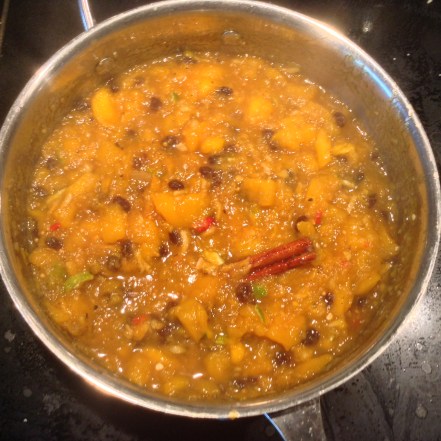
mango chutney
I grew up in Pennsylvania in the 1950’s. I ate iceberg lettuce from Kroger’s and frozen produce from my grandparents’ farm in Arkansas. I liked fruits and vegetables, but had only been exposed to a small range because in those times produce was not shipped around the world and stored. It was eaten close to the place where it was grown. When I was 13 my family moved to eastern Venezuela, where my yard contained around 30 super large mango trees. There were also tamarinds, limes, coconuts, a breadfruit, oranges, and papayas right outside the back door. There were so many mangos falling to the ground when they were ripe that a man came daily to our yard to fill a big trailer with ripe mangoes to feed to his pigs. Had he not gathered up the thick layer of ripe mangoes every day we might have drowned in compost. We did eat them and give them to everyone who wanted them, but we still had a huge excess.
I loved my new yard and the orchids my mom grew in the courtyard of our house. It was a big change from suburban Pittsburgh, and I approved. I learned to make jalea de mango with green mango, which was when I discovered my extreme skin allergy to green mangoes. If I handle them I break out I hives where they have touched my skin. Oddly enough, ripe ones don’t bother my skin at all, and I can consume both the green and ripe fruits once they are cooked without any problems. Another wonderful way to eat green mangoes is in a pie. You treat it just like an apple pie, and the flavor is slightly similar. The fruit is green and crisp when it is used it for pie.

orchids
This week I had a plethora of ripening mangoes which made me investigate different ways to preserve them. Yesterday I made chutney which turned out very well. I used a chile from our garden,one small lime, raisins, mustard seed, cinnamon stick, cloves, black pepper, lots of ginger, brown sugar and apple cider vinegar to season the ripe mangoes and create a savory and spicy condiment. This is a quick easy way to create a custom flavor burst with your own twist. I followed a recipe but cut the sugar in half to get the taste I was seeking. It is delicious with goat cheese. I think will make more chutney, with ingredients like tomato and onion, because they are simple and add a lot of bang for the buck to a meal. When my partner tasted the mango chutney he said “Get back, fancy restaurants! This is fantastic.” His enthusiasm has encouraged me to groove on down the chutney trail with new ingredients.
I still have a few ripe mangoes today, as well as some strawberries that need to be eaten. I am going to prepare a fruit compote with the two fruits plus a little orange juice, lime zest, and a touch of agave nectar. This creation will need to be consumed in the next day, but the chutney will keep for a month or so in the refrigerator, should it survive for that long. Do you have a favorite way to eat mangoes, gentle reader?
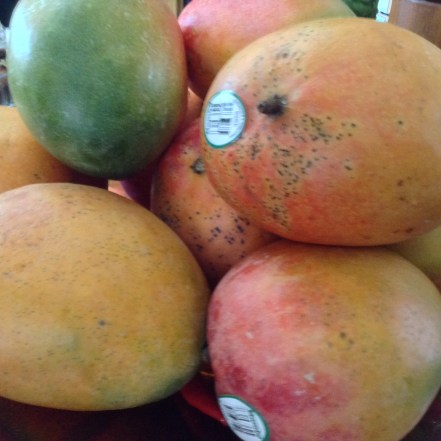
mangos for chutney
This summer I designed a home spa program for myself with an emphasis on positive change. My staycation planning evolved from the original agenda in ways I had not expected. I thought I was in a very artful groove, and needed self expression as a top priority. I listed poetry writing and art as a daily therapy for wholeness because I know these practices do make me healthier. For reasons not yet fully examined my poet and artist have been dormant with no interaction. I have taken a few photos, but what I saw as my big chance to work on my creativity with words and visuals has been channeled in other directions.
I have become a food prepper in my own way. I don’t attempt to pack or create meals for a whole week in one day as the real serious preppers on Pinterest do. I have learned from them to make my own diet healthier by planning and using contrast. My style of food prep involves a constant experimentation and learning new recipes. I have been trying many salad dressings and cold soups that are new to me. I am making a conscious effort to include anti inflammatory foods such as ginger and turmeric in my diet. I am on a huge tea safari of new flavors and types of tea, a journey that will take a lifetime. This summer I have given up coffee and never miss it because I drink tea, often spiked with ginger tea to keep the anti inflammation theme. I have tried more new dishes and teas in the last two months than I did in the previous year. I am hopping enthusiastically out of my culinary rut. I feel good, and find great satisfaction in mastering new cuisines. This afternoon I am making mango chutney for the first time. I might even make an attempt at curry. Who knows where the food muse will lead?
The most successful element of summer spa is the trend toward minimalism. If you knew me in the past you knew one of the biggest maximalists that ever lived on earth. I did everything with way too much over production. I accumulated mass quantities of stuff I never used, and crammed my space with items. I made decisions earlier that have cleaned up much of my act, and I continue to go in this direction. Each time I have the opportunity to donate to the Big Brothers Big Sisters, who provide pick up service, I gather a big bag and leave it outside. Each time I find things that have not been used in years and have little chance of being used. The upgrade is fabulous. I now own…and can find easily in my clean clear space…only things I love. I am in no hurry to fill the space with more items, since I still have more than I really need.
My exercise routine has been enhanced by the free Apple music subscription I am enjoying. I dance around my house for 5 miles in the morning listening to Apple music. By tracking I see that I dance at almost the same pace as I walk outside. My air conditioned house is much more comfortable now than it is outside. The Apple library is vast, so I switch albums and playlists all the time, never listening to the same thing twice. I don’t believe I will cover everything I want to hear in three months, but for now I am having a very good time with it. The good news is that the minimalist in me does not need that giant library and will not mind at all returning to the very big library at Amazon music. I highly recommend that everyone take them up on the free offer just to see how much is available. Even minimalists like free stuff.
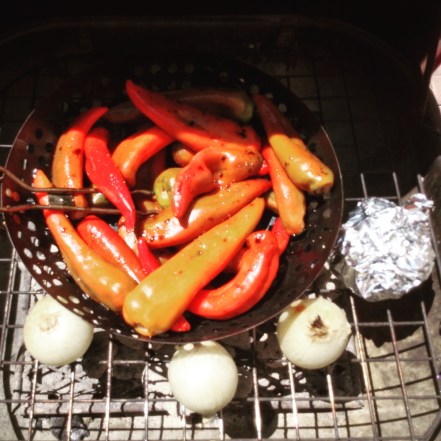
grilling vegetables
Blue laws in Plymouth Colony were created to keep Sabbath exactly the way the Puritans wanted it to be kept. The Puritans had no tolerance for other religious views, or for slacker Puritans. The criminal justice system was used to fine and persecute those found guilty of profaning the Lord’s day. It did not take much to arouse the ire of these founding fathers. The laws evolved very slowly over time, but still represent a will to control what happens on Sunday. In Plymouth you would be fined for walking anywhere but to church from Saturday at sundown until Sunday at sundown. This was a no laughing/no smiling kind of religious day and they were serious about preserving it. The Pilgrims of the Mayflower would freak right out about the televised football games, a tradition many associate with Thanksgiving.

