mermaidcamp
Keeping current in wellness, in and out of the water
You can scroll the shelf using ← and → keys
You can scroll the shelf using ← and → keys
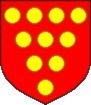
La Zouche COA
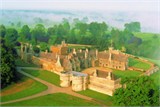
Rockingham Castle
My 24th great-grandfather was loyal to Henry III, and later Edward I of England. As usual, the royal association brought both positive and negative aspects:
Alan la Zouche (born about 1203) was summoned to accompany King Henry III to France in the 26th year of Henry’s reign. (Henry III was king from 1216 to 1272.) Within the next ten years, the whole county of Chester and all of North Wales were placed under Alan’s government. In the 45th year of Henry’s reign, Alan In the 45th year of the same reign he obtained a charter for a weekly market at Ashby-La-Zouche, in Leicestershire, and for two fairs in the year at Swavesey. At about the same time, Alan was made warden of the forests south of Trent and sheriff of Northamptonshire. In the 46th year of Henry’s reign, Alan was made Justice Iternerant for the counties of Southamptom, Buckingham, and Northampton. In the next three years, he was made Constable of the Tower of London, and Governor of the castle at Northampton. In 1268, he was violently attacked in Westminster Hall by John, Earl of Warren and Surrey, who had a dispute with Alan about some land. Alan’s son Roger was with him at the time, and Alan was severely wounded.
Alan’s son, Sir Roger la Zouche, was the Lord of Ashby. He married Ela Longespee, who was the daughter of Emmeline de Ridelisford and Sir Stephen Longespee.
Stephen Logespee was Justiciar of Ireland (something like a Prime Minister) and Seneschal of Gascony (a Seneschal was the Lord’s representative in the administration of an estate who would preside at courts, audit account,s conduct investigations, etc.).
Roger’s son Alan la Zouche (born about 1267) was the First Baron la Zouche of Ashby. Alan was governor of Rockingham Castle and steward of Rockingham Forest, England. Alan La Zouche died without any sons shortly before at the age of 46, and his barony fell into abeyance among his daughters.
Alan was in Gascony with King Edward I of England in October 1288, when he was one of the hostages given by the king to Alfonso of Aragon for the fulfillment of certain agreements. He was in Scotland in the King’s service in June of 1291. In April 1294 he had a writ of protection from the King when he travelled overseas with the King’s daughter, Eleanor of Bar. He served in Gascony in 1295 and 1296, and was present at the action around Bordeaux on March 28, 1296, when his standard bearer was captured by the French. In 1297 he was summoned for service in Flanders, and attended Councils in Rochester and London in that year.
Alan was summoned for service against the Scots in 1297-1313. He fought in the Vanguard at the Battle of Falkirk on July 22, 1298. King Edward’s army at that battle consisted of 12,000 infantry, including 10,000 Welsh, and 2,000 cavalry. William Wallace, the Scottish leader accepted battle in a withdrawn defensive position. Wallace had few cavalry and few archers; but his solid “schiltrons” (circles) of spearmen were almost invincible. The armoured cavalry of the English vanguard were hurled back with severe losses. Edward brought up his Welsh archers in the intervals between the horsemen of the second line, concentrating their arrows on specific points in the Scottish schiltrons. It was into these gaps that the English knights forced their way, and once the Scottish order was broken the spearmen were quickly massacred. Alan was at the siege of Caerlaverock in July 1300. His part was described in Nicholas’ Siege of Carlaverock:
Aleyn de la Souche tresor Signiioit ke fust brians
Sa rouge baniere a besans
Car bienscai ki a dependu Tresor plus ke en burce pendu
He was summoned to Edward II’s coronation on January 18, 1307/08. In December of that year he had a protection to go on a pilgrimage to Santiago de Compostela. He was the Constable of Rockingham Castle and the Keeper of the forests between the bridges of Oxford and Stamford.
Alan LaZouche (1203 – 1270)
is my 24th great grandfather
Roger LaZouche (1242 – 1285)
son of Alan LaZouche
Alan laZOUCHE (1267 – 1314)
son of Roger LaZouche
Maude LaZouche (1290 – 1349)
daughter of Alan laZOUCHE
Sir Thomas de Holand Wake Kent (1314 – 1360)
son of Maude LaZouche
Sir Thomas Holand Knight deHolland (1350 – 1397)
son of Sir Thomas de Holand Wake Kent
Margaret DeHoland (1385 – 1439)
daughter of Sir Thomas Holand Knight deHolland
Joan Beaufort (1407 – 1445)
daughter of Margaret DeHoland
Joan Stewart (1428 – 1486)
daughter of Joan Beaufort
John Gordon (1450 – 1517)
son of Joan Stewart
Robert Lord Gordon (1475 – 1525)
son of John Gordon
Catherine Gordon (1497 – 1537)
daughter of Robert Lord Gordon
Lady Elizabeth Ashton (1524 – 1588)
daughter of Catherine Gordon
Capt Roger Dudley (1535 – 1585)
son of Lady Elizabeth Ashton
Gov Thomas Dudley (1576 – 1653)
son of Capt Roger Dudley
Anne Dudley (1612 – 1672)
daughter of Gov Thomas Dudley
John Bradstreet (1652 – 1718)
son of Anne Dudley
Mercy Bradstreet (1689 – 1725)
daughter of John Bradstreet
Caleb Hazen (1720 – 1777)
son of Mercy Bradstreet
Mercy Hazen (1747 – 1819)
daughter of Caleb Hazen
Martha Mead (1784 – 1860)
daughter of Mercy Hazen
Abner Morse (1808 – 1838)
son of Martha Mead
Daniel Rowland Morse (1838 – 1910)
son of Abner Morse
Jason A Morse (1862 – 1932)
son of Daniel Rowland Morse
Ernest Abner Morse (1890 – 1965)
son of Jason A Morse
Richard Arden Morse (1920 – 2004)
son of Ernest Abner Morse
Pamela Morse
I am the daughter of Richard Arden Morse
Alan II (grandson of the first Baron Zouche) was justice of Chester and justice of Ireland under Henry III of England. He was loyal to the king during the struggle with the baroons, fought at the Battle of Lewes and helped to arrange the peace of Kenilworth. As a result of a quarrel over some lands with John de Warenne, 7th Earl of Surrey, he was seriously injured in Westminster Hall by the Earl and his retainers, and died on August 10, 1270.
The de la Zouche family descended from Alan la Zouche, 1st Baron la Zouche of Ashby, sometimes called Alan de Porhoët and Alan la Coche (c. 1136–1190), aBreton who settled in England durin g the reign of Henry II. He was the son of Vicomte Geoffrey I de Porhoët and Hawisa of Brittany. He married Adeline (Alice) de Belmeis, daughter of Phillip de Belmeis and Maud la Meschine and died at North Melton in Devon. He obtained Ashby in Leicestershire (called after himAshby-de-la-Zouch) by his marriage. His son was Roger la Zouche (~1175- bef 14 May 1238). Roger La Zouche became the father of Alan la Zouche (1205-1270) and Eudo La Zouche. [1]
Alan was justice of Chester and justice of Ireland under Henry III of England. He was loyal to the king during the struggle with the barons, fought at the Battle of Lewes and helped to arrange the peace of Kenilworth. As the result of a quarrel over some lands with John de Warenne, 7th Earl of Surrey, he was seriously injured in Westminster Hall by the earl and his retainers, and died on August 10,1270 .
E udo La Zouche married Millicent de Cantilou. [2]
Alan’s grandson, Alan la Zouche, was summoned to Parliament on February 6,1299 as Baron la Zouche of Ashby. He was governor of Rockingham Castle and steward of Rockingham Forest. However, this barony fell into abeyance on his death in 1314.
Another grandson of Alan de la Zouche was William la Zouche, Lord ofHaryngworth, who was summoned to Parliament as Baron Zouche, of Haryngworth, on August 16, 1308 . His great-great-great-grandson, the fifth Baron, married Alice Seymour, 6th Baroness St Maur, and assumed this peerage in her right. Their son succeeded to both titles. On the death in 1625 of the eleventh and twelfth Baron, the peerages fell into abeyance between the latter’s daughters Hon. Elizabeth and Hon. Mary. However, in 1815 the Barony of Zouche was called out of abeyance in favour of Sir Cecil Bishopp, 8th Baronet, of Parham (see Bishopp Baronets of Parham), who became the twelfth Baron Zouche. Through his mother he was a descendant of the aforementioned Hon. Elizabeth. The Barony of St Maur, however, remains in abeyance to this day. On his death in 1828 he was succeeded in the Baronetcy by a cousin, while the Barony of Zouche once again fell into abeyance, this time between his two daughters Hon. Harriet Anne Curzon and Lady Katherine Isabella Brooke-Pechell. The abeyance was terminated the following year in favour of Hon. Harriet Anne, who became the thirteenth Baroness. Known as Baroness de la Zouch, she was the wife of Hon. Robert Curzon, younger son of Assheton Curzon, 1st Viscount Curzon. Her son was the fourteenth Baron. On his death the title passed to his son, the fifteenth Baron, and then to the latter’s sister, the sixteenth Baroness. She never married and was succeeded by her cousin, the seventeenth Baroness, the granddaughter of a younger son of the thirteenth Baroness. She was succeeded by her grandson, the eighteenth and present Baron, who had already succeeded his father as 12th Baronet in 1944.
Another grandchild of the original Alan de la Zouche, Joyce la Zouche, married Robert Mortimer of Richard’s Castle; one of their younger sons, William la Zouche, took the name of la Zouche and bought Ashby-de-la-Zouch from Alan in 1304, the latter to hold it until his death (1314). On December 26, 1323 , he was created, by writ, Baron Zouche of Mortimer. This peerage became abeyant in 1406.


Well, shut my mouth!!!! My 21st great grandfather was the 184th Pope of the Roman Catholic Church. Imagine my surprise when I investigated Theobald Visconti, aka, Pope Blessed Gregory X:
Pope Blessed Gregory X Also known as Teobaldo Visconti
Theobald Visconti Memorial 9 January formerly 10 January
Profile Archdeacon of Liege, Belgium. Assigned the preach the last Crusade. Accompanied the Crusaders to Palestine, and was still there when elected the 184th Pope; elected before he was ordained a priest.
Called the Council of Lyons which briefly reconciled the Orthodox and Latin Churches. Tried to restore peace between the Guelphs and Ghibellines in Tuscany and Lombardy. Crowned Rudolf of Habsburg as emperor.
Born 1210 in Piacenza, Italy as Theobald Visconti
Papal Ascension elected 1 September 1271; ordained and consecrated as pope in 1272
Died 20 January 1276 at Arezzo, Italy
Beatified 8 July 1713 by Pope Clement XI (cultus confirmed)
Writings Protection of the Jews, 7 October 1272
Theobald Visconti (1220 – 1276)
is my 21st great grandfather
Matteo I Visconti (1250 – 1322)
son of Theobald Visconti
Stefan Visconti (1289 – 1327)
son of Matteo I Visconti
Bernabo Lord Milan di Visconti (1319 – 1385)
son of Stefan Visconti
Veridis Duchess Austria Visconti (1352 – 1414)
daughter of Bernabo Lord Milan di Visconti
Ernst I “Ironside” Archduke of Austria Habsburg (1377 – 1424)
son of Veridis Duchess Austria Visconti
Katharina Archduchess Austria Von Habsburg (1420 – 1493)
daughter of Ernst I “Ironside” Archduke of Austria Habsburg
Christof I VanBaden (1453 – 1527)
son of Katharina Archduchess Austria Von Habsburg
Beatrix Zahringen (1492 – 1535)
daughter of Christof I VanBaden
Sabine Grafin VonSimmern (1528 – 1578)
daughter of Beatrix Zahringen
Marie L Egmond (1564 – 1584)
daughter of Sabine Grafin VonSimmern
Richard Sears (1590 – 1676)
son of Marie L Egmond
Silas Sears (1638 – 1697)
son of Richard Sears
Silas Sears (1661 – 1732)
son of Silas Sears
Sarah Sears (1697 – 1785)
daughter of Silas Sears
Sarah Hamblin (1721 – 1814)
daughter of Sarah Sears
Mercy Hazen (1747 – 1819)
daughter of Sarah Hamblin
Martha Mead (1784 – 1860)
daughter of Mercy Hazen
Abner Morse (1808 – 1838)
son of Martha Mead
Daniel Rowland Morse (1838 – 1910)
son of Abner Morse
Jason A Morse (1862 – 1932)
son of Daniel Rowland Morse
Ernest Abner Morse (1890 – 1965)
son of Jason A Morse
Richard Arden Morse (1920 – 2004)
son of Ernest Abner Morse
Pamela Morse
I am the daughter of Richard Arden Morse
Things were much different then. Dude was married and was elected Pope?????
Gregory X
1271-1276
Theobald Visconti
The interval which separates the reign of Clement IV from that of Gregory X was signalized by the death of Louis IX before Tunis.
The king was attacked by plague. On Monday, August 25, 1270, the sun had scarcely glinted on the sea when the lilied flags slowly descended. At this announcement the whole camp shuddered. Knights, men at arms, the sick, the wounded, all rushed from their tents in terror; one side of the royal tent was raised, and Louis, supported by attendants made his appearance, clad in haircloth to his feet; his already livid hands bearing a crucifix, and his eyes fixed upon a bed of ashes spread upon the parched earth. The last breath of the head of the army was to be drawn upon that humble couch; it was his last command, and he had scarcely strength enough left to lie down upon it and to motion for the crucifix to be again placed before him.
Horrible convulsions seemed to rack his frame, and yet no complaint, no regret, no murmur escaped his lips. All that his dying voice was heard to utter was: “Noble Sire, God, have mercy upon this people that has followed me to this shore! Oh, conduct it to its own land, lest it be forced to deny thy holy name.” The very last words of the king “Jerusalem! We will go to Jerusalem!”
The legate who should have attended the king had himself perished of plague; but the love of the cross was so deep in the heart of the monarch and of the French that Rome, not withstanding her widowhood, had not to deplore any misfortune to the faith. The throne of Peter was vacant, but, with the aid of Louis IX, religion had no tears to shed. Yet it were not good that the great moderator should often be wanting to his children. Had Gregory X been sooner elected, the expedition against Tunis would probably have been abandoned, and Louis, upon the road to Syria and in the port of Antipatris, would have preserved his strength to lead the Christians a second time.
Blessed Gregory X, originally called Theobald Visconti, was of the family of that name at Piacenza, supposed to derive its origin from the Flavia family, to which Constantine the Great belonged. Other authors maintain that the Visconti sprang from Desiderius, king of the Lombards.
Theobald, son of Hubert, a brother of Otho Visconti, Archbishop of Milan and lord of that city, was at of Lyons, archdeacon of Liege, and then became legate in Syria. While there he was elected pontiff at Viterbo, on the 1st of September, 1271. The fifteen cardinals who composed the Sacred College could not agree upon a candidate. One of them proposed to authorize six cardinals to name the pope, all promising to recognize the one thus named by compromise. It was necessary to have recourse to such an expedient, for the conclave had lasted three years. Gatti, captain of the city, had already had the roof uncovered so that the inclemency of the weather might dispose the cardinals to make a final choice. In proceeding by compromise, the six cardinals put an end to the longest vacancy of the Holy See that had taken place since the persecutions. At first they thought of Saint Philip Benizi, of the order of Servites, who was then famous for his miracles; but learning the design from Cardinals Ottobuono Fieschi and Ubaldino, who had proposed him, Saint Philip went and hid himself on the top of Mount Tuniato until another was elected.
The six cardinals having agreed upon electing Theobald Visconti on the 1st of September, 1271, a courier was despatched to Saint Jean d’Acre, where he was with Prince Edward, eldest son of the King of England, waiting for a favorable moment to go to Jerusalem. Theobald, having received the news on the 27th of October, took the road for Italy, and disembarked at Brindisi on the 1st of January, 1272.
Accompanied by Charles, King of the Two Sicilies, he went to Benevento, and thence, by way of Capua, to Viterbo, where he found the cardinals. Thence he proceeded to and was crowned at the Vatican by Cardinal John Orsini on the 27th of March, 1272. On the day of the coronation he took possession at Saint John Lateran, preceded by a magnificent cavalcade; the King of the Two Sicilies held the pontiff’s stirrup, and, at the solemn banquet which followed, presented him with water to wash his hands, and served him with the first dish.
In 1273 the German electors, excepting the King of Bohemia, elected as king of the Romans Rudolph, Count of Hapsburg, the head of the house of Austria. The Holy Father approved the election, and induced Alphonso X, King of Castile, to renounce his claims upon the imperial diadem, to which he believed himself entitled, which that prince generously and promptly did, to show himself obedient to the Holy Father.
The same year Visconti, who had taken the name of Gregory X, wrote to Philip the Bold, King of France, to thank him for restoring to the Holy See the Venaissin, situated between Provence and Dauphiny, which was left to the Roman Church by Raymond, Count of Toulouse, who died in 1249, and which the kings of France had since held.
It was a pious, able, and generous thought that led the cardinals to elect a pope whose duties had led him to the Holy Land and who knew the distress of that unfortunate country.
The recovery of the Holy Land almost exclusive engaged the thoughts of Gregory. On the 1st of the preceding April he published a decree convoking at Lyons the fourteenth general council, and the second of Lyons, which was celebrated in that city in 1274. The pope was there even in 1273. On his way he crossed Tuscany, and paused at Florence to endeavor to restore peace between the Guelphs and the Ghibellines of that city.
History cannot ignore the conduct of Gregory X at Florence. At first he was accompanied by Baldwin II, son of Henry, brother of Baldwin I, and afterwards by Charles of Anjou, King of Naples and brother of Saint Louis.
The pope, delighted with the coolness of the water and the purity of the air, proposed to his august companions to pass the summer in that beautiful city. The Guelphs at had exiled the Ghibellines and treated them with undue rigor. On the 2nd of July the pope assembled the people of Florence and vicinity on the banks of the Arno, foot of the Rubaconte bridge. A platform having been erected to afford seats for the two princes, the pope from his throne forbade, on pain of interdict, any distinction to be made in future between Guelph and Ghibelline, and commanded the syndics of the Guelphs to embrace in his presence the syndics of the Ghibellines (the pope was head and protector of the Guelph faction). Gregory in his address to the people said: “He is a Ghibelline—yes; but he is a Christian, he is a citizen, and he is your neighbor. Is so much that we have done to bring about a union to be ineffectual? Is the very name of Ghibelline, empty as it is, to be more powerful for hatred than so many clear and substantial reasons for charity? You declare that you have embraced this party spirit in favor of the popes and against their enemies? We, Roman pontiffs, we have received these men to our heart, although they formerly offended us—these men, your fellow-citizens, who have returned to us; we have pardoned their insults, and now regard them as our children. Will you disobey your pontiff, and in his presence?”
From Florence, which no doubt he secretly blessed, Gregory went to Piacenza, his native city, and arrived there on 3rd of October. He took with him Otho Visconti, made Archbishop of Milan by Pope Urban IV, who had not been able yet to take possession of his see, because the Turriani, a revolted family, desired an archbishop of their own name. Having entered Milan, Gregory could not induce the people accept Otho Visconti, though regularly appointed and the bearer of bulls recently confirmed, and he was obliged to leave Milan in the same grief that had afflicted Florence.
The direction of the General Council of Lyons was intrusted to Saint Bonaventure. This fact is attested by the bull of canonization of that saint, issued by Sixtus IV. In that assemblage there were fifteen cardinals, two Latin patriarchs, seventy archbishops, five hundred bishops, and more than a thousand prelates and abbots. Never had there a more numerous council. The Greeks confessed that Holy Ghost proceeded from both Father and Son, and, for the fourteenth time, were reconciled to the Latin Church.
It was first decreed that considerable succor should be sent to the Holy Land. It must have been an imposing scene when the pontiff said: “We have seen the sufferings of those pilgrims; one by one we have followed all their misfortunes. Their courage never tires, no piety can be more submissive than theirs; they are true children of Jesus Christ, like the companions of Godfrey, but they have not wherewith to support life. Those who had money when they went hence, have been robbed of that money, and even of their clothes. Can our brethren in the desert ask alms of the wild beasts? These give only death. The Turk and the Jew some hearken to a cry of distress; but on that long pilgrimage there are so many cries! It is to the Holy Land that aid must go; there must be no ambition for kingdoms and provinces of Asia; Jerusalem and the Holy Sepulchre must be delivered.”
The Flagellants, wherever they were not suppressed, asserted that baptism by water was useless; that flagellation alone was effectual, which they called baptism by blood; that all religion consisted in flagellation. Baronius, according to Novaes, reproached Saint Peter Damian with having been, if not the founder, at least the propagator of this sect, so censured by the Church, and so wrong in deducing from a simple ordinary penance the consequences of the Flagellants.
This council passed thirty-one canons on ecclesiastical discipline. All except the nineteenth concern the sixth book of the Decretals. It was this council that enjoined every Catholic to bow the head as often as he hears the holy name of Jesus.
The Holy Father, remembering the length of the conclave in which he at last had been elected, passed laws to prevent like delays in future. These laws were frequently suspended and then restored whenever there was too long a conclave.
During this council the great Saint Thomas Aquinas died in the monastery of Fossa Nuova, whence he was about to repair to Lyons.
The council having terminated its sessions, the pontiff set out on the 6th of March, 1275, for Italy. He met Rudolph of Hapsburg, king of the Romans, at Lausanne on the 10th of October, and that prince swore to guarantee to His Holiness the exarchate of Ravenna and other Italian lands belonging to the Roman Church.
Gregory had governed four years, four months, and ten months, reckoning from his election, when he died at Arezzo, aged sixty-six years, on the 10th of January, 1276 (a fatal year, in which four pontiffs died), and he was interred in the cathedral of that city.
Monsignor Benedict Falconcini de Volterra, Bishop of Arezzo in 1704, solicited and obtained, under Pope Clement in 1713, at his own expense, the beatification of this illustrious pontiff.
Gregory had but little learning, but he was endowed with rare prudence. He always was the courageous defender of the faith and of the divine worship, inclined to peace and a conciliatory spirit, and an enemy to all partiality.
Platina gives the following judgment upon Gregory: “He was a man illustrious in life for prudence in affairs; for the strength of soul with which he disdained money and all low considerations; for his humanity, clemency, benevolence to poor Christians, and especially those who took refuge in the bosom of the Apostolic See.”
With reference to Saint Thomas Aquinas, Fleury says:” the life of this saint, who died at forty-nine years of age, seems short in comparison to his writings. The five first volumes are commentaries on most of the writings of Aristotle; then come the commentaries on Peter Lombard, the master of sentences; then a volume of theological questions, Summa against the Gentiles, the Summa Theologiae, many commentaries on the Holy Scripture, and, finally, short treatises to the number of seventy-three, some of which are doubted. In general, the best critics believe that many works are attributed to Saint Thomas which are only notes of his public lectures, called reportata in those days, and that a similarity of name has confounded with him Thomas the Englishman, or Jorzi, a friar of the same order who lived in the same century and at the beginning next.”
This biographical data is from “The Lives and Times of the Popes” by The Chevalier Artaud De Montor. Published by The Catholic Publication Society of New York in ten volumes in 1911. The pictures, included in the volumes, were reproduced from ” Effigies Pontificum Romanorum Dominici Basae.”

Valentina Doria
My 19th great-grandmother was from a noble family that still has branches in parts of Europe carrying titles. The Doria family was influential in northern Italy. She married Stefano Visconti, Duke of Milan, when she was 25:
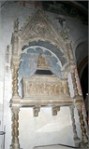
Stefano Visconti (died 4 July 1327) was a member of the House of Visconti that ruled Milan from the 14th to the 15th century. He was the son of Matteo I Visconti.
In 1318 he married Valentina Doria, with whom he had three children: Matteo, Galeazzo and Bernabò, who shared the rule in Milan after his death.
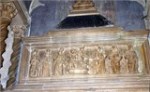
They are buried in a very fancy tomb in the church of Sant’Eustorgio in Milan. Now I have many reasons to return to Milan.
Valentina Doria (1293 – 1359)
is my 19th great grandmother
Bernabo Lord Milan di Visconti (1319 – 1385)
son of Valentina Doria
Veridis Duchess Austria Visconti (1352 – 1414)
daughter of Bernabo Lord Milan di Visconti
Ernst I “Ironside” Archduke of Austria Habsburg (1377 – 1424)
son of Veridis Duchess Austria Visconti
Katharina Archduchess Austria Von Habsburg (1420 – 1493)
daughter of Ernst I “Ironside” Archduke of Austria Habsburg
Christof I VanBaden (1453 – 1527)
son of Katharina Archduchess Austria Von Habsburg
Beatrix Zahringen (1492 – 1535)
daughter of Christof I VanBaden
Sabine Grafin VonSimmern (1528 – 1578)
daughter of Beatrix Zahringen
Marie L Egmond (1564 – 1584)
daughter of Sabine Grafin VonSimmern
Richard Sears (1590 – 1676)
son of Marie L Egmond
Silas Sears (1638 – 1697)
son of Richard Sears
Silas Sears (1661 – 1732)
son of Silas Sears
Sarah Sears (1697 – 1785)
daughter of Silas Sears
Sarah Hamblin (1721 – 1814)
daughter of Sarah Sears
Mercy Hazen (1747 – 1819)
daughter of Sarah Hamblin
Martha Mead (1784 – 1860)
daughter of Mercy Hazen
Abner Morse (1808 – 1838)
son of Martha Mead
Daniel Rowland Morse (1838 – 1910)
son of Abner Morse
Jason A Morse (1862 – 1932)
son of Daniel Rowland Morse
Ernest Abner Morse (1890 – 1965)
son of Jason A Morse
Richard Arden Morse (1920 – 2004)
son of Ernest Abner Morse
Pamela Morse
I am the daughter of Richard Arden Morse

Thomas French
My 11th great-grandfather came to America in 1632 with his sister. He was a taylor by trade. He lived in Ipswich, MA, where he served in the Pequod War.
Thomas French (1584 – 1639)
is my 11th great grandfather
Alice French (1610 – 1666)
daughter of Thomas French
Thomas Howlett (1638 – 1667)
son of Alice French
Mary HOWLETT (1664 – 1727)
daughter of Thomas Howlett
John Hazen (1687 – 1772)
son of Mary HOWLETT
Caleb Hazen (1720 – 1777)
son of John Hazen
Mercy Hazen (1747 – 1819)
daughter of Caleb Hazen
Martha Mead (1784 – 1860)
daughter of Mercy Hazen
Abner Morse (1808 – 1838)
son of Martha Mead
Daniel Rowland Morse (1838 – 1910)
son of Abner Morse
Jason A Morse (1862 – 1932)
son of Daniel Rowland Morse
Ernest Abner Morse (1890 – 1965)
son of Jason A Morse
Richard Arden Morse (1920 – 2004)
son of Ernest Abner Morse
Pamela Morse
I am the daughter of Richard Arden Morse
ORIGIN: Assington, Suffolk
MIGRATION: 1632
FIRST RESIDENCE: Boston
REMOVES: Ipswich 1635
OCCUPATION: Tailor. John Stratton writes from Boston under date of 17 March 1633/4: “I have put my sister a suit of mohair to making at Goodman French’s. She were best get the tailor to take her measure and send per Jno. Gallop” [WP 3:157]. Thomas French’s inventory included eleven yards of homemade cloth.
CHURCH MEMBERSHIP: Admitted to Boston church as member #128, which would be no later than mid-1632 [BChR 14]; on 27 January 1638/9 “our brother Thomas French was with the consent of the congregation dismissed to the church of Ipswich” [BChR 22].
FREEMAN: 6 November 1632 [MBCR 1:367].
EDUCATION: He signed his will.
OFFICES: Essex grand jury, 28 September 1652 [EQC 1:260]. Petit jury, 30 September 1651, 31 March 1657, 28 September 1658, 29 March 1659, 27 March 1660, 25 March 1662, 27 September 1664, 26 September 1665, 28 September 1669, 24 September 1672, 31 March 1674, 30 March 1675, 24 September 1678 [EQC 1:232, 2:11, 111, 138, 195, 347, 3:182, 270, 4:175, 5:79, 269, 6:1, 7:82]. Coroner’s jury on the body of Samuel Adams, Jr., 30 September 1676 [EQC 6:234].
Had service in the Pequod War. Proposed for Lieutenant, 25 March 1639 (but apparently not confirmed; in a letter of that date Daniel Dennison writes to John Winthrop “Our company wanting some officers, have according to their liberty, made choice of some, whom they desired me to propound to the Court or Council. They were willing to express their love and liking to Sergeant French and Sergeant Howlett proposing the former for Lieutenant, the other for Ensign” [WP 4:106]). On 18 May 1664 “Sergt. Thomas French deposed that being ordered by Major Genll. Denison to carry two soldiers who were stubborn off the field to prison, he went to them and persuaded them to submit themselves, promising to mediate for them” [EQC 3:140]. Appointed ensign at Ipswich 18 May 1664 [MBCR 4:2:106].
ESTATE: At a selectman’s meeting 31 January 1660[/1] eight men, including Thomas French, were granted liberty to “clear and break up a parcel of land at Scott’s hill to have two acres each for six years upon condition that they sow four bushels of good hay seed on every acre, to keep up the fence a year so that the English grass should get head, the hay seed to be sown with the last crop” [EQC 3:271].
In his will, dated 3 August 1680 and proved 28 September 1680, “Thomas French Senior of Ipswich … being weak of body” bequeathed to “Mary my beloved wife the bed whereon I used to lie, with all the appurtenances and furniture belonging thereto”; to “my son Thomas French” clothing; to “my son John French” one cow “to make up the full sum of £30 which I formerly promised him for his portion”; to “my daughter Mary Smith” one cow; to “my son Samuel French” a bed and bedding; “my sons Thomas and Samuel French” in consideration of £20 paid to “my son Ephraim French” as the remaining part of his portion, “my two sons Thomas and Samuel” shall receive the Pequod lands and division lot of marsh to be equally divided betwixt them; to “my son Thomas French” my dwelling house and homestead, also my lot in Labour-in-vain fields of twelve acres, also the rest of my cattle, stock, and moveable goods; to “my son Samuel” two acres of upland and two acres of meadow at Reedy marsh; “my son Thomas French” to give free liberty to “Mary my wife his mother” to dwell in the said house and to make use of any room or rooms thereof for her convenient accommodation … likewise … any such moveables as I do now leave in the hands of my son Thomas”; after her [Mary’s] decease, “my son Thomas” shall deliver to “my three children John, Samuel and Mary” three of the biggest pewter dishes; “my two sons Thomas and Samuel” to provide for “their mother’s” comfortable maintenance, and if she is not satisfied, they to allow her £9 paid by Thomas and 20s. paid by Samuel annually; and if she suffers sickness and the aforesaid £10 does not suffice, “my two sons Thomas and Samuel” shall supply her with necessaries and my lot in Labour-in-vain fields and two acres of meadow at Reedy Marsh shall stand bound respectively to my said wife during her natural life as security for the true performance of this my will as respecting her maintenance by my two sons; “my son Thomas French” sole executor [EPR 3:379-81].
The inventory of Ensign Thomas French was taken 25 August 1680 and totalled £217 15s. 6d. including £150 in real estate: “his dwelling house & barn & homestead with the privilege belonging,” £70; “twelve acres of land at Labor in vain,” £60; “two acres of land by Scotes Lane,” £10; and “two acres of marsh in the common field,” £10 [EPR 3:380-81].
BIRTH: Baptized Assington, Suffolk, 27 November 1608, son of Thomas and Susan (Riddlesdale) French [Dudley Wildes Anc 64].
DEATH: Ipswich 8 August 1680.
MARRIAGE: By 1632 Mary _____; she died at Ipswich 6 May 1681.
CHILDREN:
i MARY, bp. Boston 23 September 1632 [BChR 278 (corrected from 1631)]; d. soon.
ii MARY, bp. Boston 2 March 1633/4 [BChR 278]; m. by 1657 Robert Smith (called Mary Smith in father’s will) [Amos Towne Anc 25-27].
iii JOHN, b. about 1635 (deposed aged “about forty-eight” about March 1682 [EQC 8:329] unless this is someone else); m. by 1657 Phebe Keyes (son Thomas born Ipswich 25 May 1657), daughter of ROBERT KEYES.
iv THOMAS, b. about 1636 (deposed aged 22 in 1656 [EQC 2:140], deposed aged “about forty-seven” in March 1683 [EQC 9:16], deposed aged “about forty-eight” about March 1684 [EQC 9:191]); m. Ipswich 29 February 1659/60 Mary Adams.
v SARAH, b. say 1638; on 30 September 1656 “Hackaliah Bridges, accused by Sarah French of his getting her with child, and bound over, being brought by Sergeant French, was discharged” [EQC 2:2]; if she was a daughter of Thomas French, she had apparently died without issue prior to 1680, as she is not named in his will.
vi SAMUEL, b. say 1641; convicted for fornication, 26 March 1667 [EQC 3:398]; d. Ipswich in 1688 (day and month not stated in town vital records), apparently unmarried.
vii EPHRAIM, b. about 1643 (deposed in 1658 aged 15 [EQC 2:139]); d. Enfield, Massachusetts (now Connecticut), in September 1716, unmarried [Amos Towne Anc 50].
ASSOCIATIONS: Thomas French and his sister Alice had arrived in New England by 1632, and their two next younger sisters, Dorcas and Susan, came in 1633. Their parents and younger siblings sailed for New England after 1633, and are not included in this phase of the study. [See Parker-Ruggles 412-29, Dudley Wildes Anc 63-64 and NEHGR 142:250-52, 143:213-20, 363-64 for the ancestry of this group of French siblings.] Alice married THOMAS HOWLETT and Dorcas married first CHRISTOPHER PEAKE and then GRIFFIN CRAFTS (sketches for these families will be found elsewhere in this work). Susan may have been a servant in the household of John Winthrop Jr. for a time, but otherwise left no record in New England.
In a letter dated Groton 14 March 1632/3 John Bluett asked John Winthrop Jr. to remember him to “my schollers Thomas French and John Clarke” [WP 3:108].
COMMENTS: With most of the adult male population of Ipswich, Thomas French signed the petition to keep Mr. John Winthrop Jr. in town, 21 June 1637 [WP 3:433].
Ensign Thomas French and Thomas French Jr. were sureties on the bond of Samuel French when young Samuel was charged with a misdemeanor with Lydia Browne, at court 26 March 1667 [EQC 3:398].
The Great Migration Begins
Sketches
PRESERVED PURITAN

coat of arms
My 9th great grandfather was born in Barnstable in 1648, the son of English immigrants. He fought in King Philip’s was against my Wampanoag ancestors. His parents were Pilgrims who settled in Barnstable. His father left England alone to come to America because of religious problems. He sent for his family to join him after arrival.
Eleazer Hamblen (1648 – 1698)
is my 9th great grandfather
Isaac Hamblin (1676 – 1710)
son of Eleazer Hamblen
Eleazer Hamblin (1699 – 1771)
son of Isaac Hamblin
Sarah Hamblin (1721 – 1814)
daughter of Eleazer Hamblin
Mercy Hazen (1747 – 1819)
daughter of Sarah Hamblin
Martha Mead (1784 – 1860)
daughter of Mercy Hazen
Abner Morse (1808 – 1838)
son of Martha Mead
Daniel Rowland Morse (1838 – 1910)
son of Abner Morse
Jason A Morse (1862 – 1932)
son of Daniel Rowland Morse
Ernest Abner Morse (1890 – 1965)
son of Jason A Morse
Richard Arden Morse (1920 – 2004)
son of Ernest Abner Morse
Pamela Morse
I am the daughter of Richard Arden Morse
Page 526 – Eleazer Hamblin, son of James, was a soldier in Capt. John Gorham’s company in King Philip’s war, and an original proprietor of the town of Gorham, in Maine. I have not carefully examined his record, and know but little of his history. His wife was an early member of the church, and he joined in 1686. I think he resided at Hamblen’s Plain. The Eleazer Hamblins patronized the lawyers more than all others of the name ; but I may be
GENEALOGICAL NOTES OP BAKNSTABLE FAMILIES. 527
doing injustice in making the remark in connection with the elder
Eleazer.
He married 15 Oct. 1675, Mehitabel, daughter of John Jenkins,
and had six children born in Barnstable :
The two last probably died young aud therefore their names do
not appear on the town record.
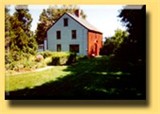
Philip Sherman’s house
My 8th great grandfather moved to Rhode Island as many of my ancestors did. He became a Quaker and the first secretary of Rhode Island Colony.
Philip Sherman (1610 – 1687)
is my 8th great grandfather
Eber Sherman (1634 – 1706)
son of Philip Sherman
Mary Sherman (1688 – 1751)
daughter of Eber Sherman
Thomas Sweet (1732 – 1813)
son of Mary Sherman
Thomas Sweet (1759 – 1844)
son of Thomas Sweet
Valentine Sweet (1791 – 1858)
son of Thomas Sweet
Sarah LaVina Sweet (1840 – 1923)
daughter of Valentine Sweet
Jason A Morse (1862 – 1932)
son of Sarah LaVina Sweet
Ernest Abner Morse (1890 – 1965)
son of Jason A Morse
Richard Arden Morse (1920 – 2004)
son of Ernest Abner Morse
Pamela Morse
I am the daughter of Richard Arden Morse
THE HON. PHILIP SHERMAN, WAS THE SON OF SAMUEL SHERMAN AND PHILIPPA WARD. HE MARRIED SARAH ODDING; THE DAUGHTER OF WILLIAM GEORGE ODDING AND MARGARET POTTER OF BRAINTREE, ESSEX CT, ENGLAND IN (1633/XX/XX),HE WAS A MAN OF MELANCOLY TEMPER WHO CAME TO BOSTON IN (1633/XX/XX) AND UPON A JUST CALLING HE WENT BACK TO ENGLAND AND RETURNED BETWEEN (1636-1637) WITH A BLESSING, IN (1637) BECAUSE OF HIS RELIGIOUS FEELINGS HE WAS BANISHED ALONG WITH JOHN COGGESHALL AND HENRY BULL FROM THE ROXBURY BAY COLONY, BOSTON, MASS, USA. LEAVING FOR RHODES ISLANDS WERE ALL BECAME RULING OFFICIALS CHOSEN TWONE CLERKE (JUNE 1649-1656), TOWNE MAGISTRATE (1656-1679), LAYER OUT OF HIGHWAYS (1683), MEMBER OF COMM. ADJUICATION (1684-1687), AND WAS THE FIRST SECRETARY AND RECORDER OF THE COLONY OF RHODES ISLANDS.
In Bertha L. Stratton’s book, “Sherman and Other Families,” she made the statement that Philip Sherman intended to settle in New Hampshre, but the climate proved too severe and so the lands there were abandoned. Upon discussion with Roger Williams at Providence, Rhode Island, the other people from Massachusetts bought Aquidneck Island in Narraganset Bay. Nineteen men signed the compact for the town in 1638. Upon leaving the church in Roxbury, Philip joined with the Friends. The Massachusetts Court ordered Philip to appear before them on 12 Mar 1638, he did not go. But he continued as a prominent figure in Rhode Island; he was the General Recorder in 1648-1652 & the Deputy to the Assembly in 1665-1667. Tradition says he was a “devout and determined man, and he was also a “neat and expert penman & an educated man,” and his Last Will & Testament “shows that he was wealthy for those times.”
Philip Sherman immigrated to Roxbury, MA and married Sarah Odding shortly after his arrival. He might have felt pressured to marry quickly, because bachelors especially of such an advanced age as 23 were looked upon with suspicion, and their single state could even effect business opportunities and social acceptance.
According to Representative Men of Old Families of Southeastern Massachussets, by J. H. Beers & Company, in a biographical entry of one of Philip’s descendants, Philip Sherman “took the side of Anne Hutchinson,” a brave woman in Salem, MA who maintained that women should be allowed to hold prayer meetings as well as men, and proceeded to hold such meetings in her home in defiance of the rules of the time and demands that she quit. She, with some members of her family including young grandchildren, were driven out of Salem into the wilderness of Rhode Island. Families in sympathy for her or in fear of retaliation for their past support and/or defense of her beliefs soon followed to Rhode Island, and Philip Sherman and his family were among the group that left Salem following her ouster.
In Providence, Philip met Roger Williams, founder of Rhode Island promising religious freedom to it’s citizens. Williams advised Philip andthe members of his party to purchase Aquidneck from the Indians, which they did on 1 Jul 1639. They created their own government with Coddington chosen to be the first governor of Rhode Island, and Philip chosen to be secretary.
Some historians believe that the death of Anne Hutchinson with most of her family during an attack of native Americans was the first act in several that led to the end of the Puritan Church. Members of the communities in all the colonies were horrified that she was banished for her beliefs and suffered so. Many felt banished themselves from England when their Puritan faith had been banned, and her treatment forced them to recognize their own harshness.
Philip left what is now called “the Congressional Church” and joined the Society of Friends, or Quakers.
He was the father of 13 children, and many of his descendants served America as congressmen and soldiers.
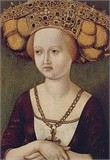
Cymburgis Masovia
My 16th great grandmother was Polish, and was the mother of a Holy Roman Emperor. My ancestor, her daughter, Katharina, was Archduchess of Austria:
Cymburgis Masovia (1391 – 1429)
is my 16th great grandmother
Katharina Archduchess Austria Von Habsburg (1420 – 1493)
daughter of Cymburgis Masovia
Christof I VanBaden (1453 – 1527)
son of Katharina Archduchess Austria Von Habsburg
Beatrix Zahringen (1492 – 1535)
daughter of Christof I VanBaden
Sabine Grafin VonSimmern (1528 – 1578)
daughter of Beatrix Zahringen
Marie L Egmond (1564 – 1584)
daughter of Sabine Grafin VonSimmern
Richard Sears (1590 – 1676)
son of Marie L Egmond
Silas Sears (1638 – 1697)
son of Richard Sears
Silas Sears (1661 – 1732)
son of Silas Sears
Sarah Sears (1697 – 1785)
daughter of Silas Sears
Sarah Hamblin (1721 – 1814)
daughter of Sarah Sears
Mercy Hazen (1747 – 1819)
daughter of Sarah Hamblin
Martha Mead (1784 – 1860)
daughter of Mercy Hazen
Abner Morse (1808 – 1838)
son of Martha Mead
Daniel Rowland Morse (1838 – 1910)
son of Abner Morse
Jason A Morse (1862 – 1932)
son of Daniel Rowland Morse
Ernest Abner Morse (1890 – 1965)
son of Jason A Morse
Richard Arden Morse (1920 – 2004)
son of Ernest Abner Morse
Pamela Morse
I am the daughter of Richard Arden Morse

Cymburgis Masovia
She was born in Warsaw and died in Lower Austria at an Abbey. It is said she contributed the protruding lower lip of the Habsburgs.
Cymburgis (also Cimburgis, Zimburgis or Cimburga) of Masovia (Polish: Cymbarka mazowiecka) (1394 or 1397 – September 28, 1429) in January 1412 became the second wife of the Habsburg Duke Ernest the Iron of Austria (since 1414 Archduke) and thus a Duchess/Archduchess of the Inner Austrian line in Styria, Carinthia and Carniola.
Cimburgis was born at Warsaw in the Duchy of Masovia to Duke Siemovit IV of the Masovian Piast dynasty and his wife Alexandra of Lithuania, daughter of Grand Duke Algirdas, a scion of the Gediminid dynasty, and sister of Władysław II Jagiełło, King of Poland.
Though his elder brother William’s engagement with the Polish princess Jadwiga had mortifyingly failed, Ernest after the death of his first wife Margaret of Pomerania proceeded to Kraków to court Cymburgis. Though not approved by the Habsburg family, the marriage turned out to be a happy one. As the mother of the later Emperor Frederick III, Cymburgis, after Gertrude of Hohenburg, became the second female ancestor of all later Habsburgs, as only his branch of the family survived in the male line. Although controversial, it has been claimed (since at least by Robert Burton in 1621) that she brought the distinctive protruding lower lip (progenism) into the family, a particular physical characteristic of most members of the family for many generations until the 18th century.[2] It can even be recognized in some of her distant descendants today (though not as markedly). Cymburgis’ statue in the Innsbruck Hofkirche church however does not show this feature.
Tradition has it that she was also known for her exceptional strength, which, for example, she showed by driving nails into the wall with her bare hands and cracking nuts between her fingers. Strength also distinguished one of her descendants, Augustus II the Strong, who allegedly broke a horseshoe bare fisted. Cymburgis outlived her husband and died at Türnitz in present-day Lower Austria. She is buried at Lilienfeld Abbey.
Descendants
5 children died at young age
Frederick III, Holy Roman Emperor (1415–1493)
Margaret, wife of Frederick II, Elector of Saxony
Albert VI, Archduke of Austria (1418–1463)
Catherine (1420–1493), wife of Charles I, Margrave of Baden-Baden
Cymburgis Masovia

Bayern COA
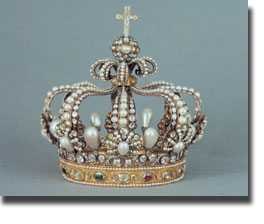
German Queen’s crown
Elisabeth of Bavaria, Queen of Germany was married to Conrad IV in her hometown of Landshut, Bavaria in 1246. Her husband the king was at war with the pope which lead to his early demise in 1254. Her second husband, Duke of Carinthia, is my ancestor. She is one of the only royal ladies in my tree who managed to avoid the monastic life.
Elisabeth of Bavaria, Queen of Germany (Landshut, c. 1227 – 9 October 1273) was the Queen consort of Conrad IV of Germany.
She was the eldest daughter of Otto II Wittelsbach, Duke of Bavaria and Agnes of the Rhine. Her maternal grandparents were Henry V, Count Palatine of the Rhine and Agnes von Staufer.
The elder Agnes was a daughter of Conrad of Hohenstaufen and Irmingard of Henneberg.
Marriages and children
Her father Otto II had become a supporter of Frederick II, Holy Roman Emperor in 1241, following initial conflict between them. Their political alliance would lead to the marriage of the elder daughter of the Wittelsbach and the elder son of the Hohenstaufen. Said son was Conrad IV of Germany, son and heir of Frederick II. Their marriage took place on 1 September 1246, in her native Landshut.
Elisabeth and Conrad would only have one son:
Her father-in-law Frederick II died on 13 December 1250. He was still involved in a war against Pope Innocent IV and his allies at the time of his death. Conrad IV would continue the war until his own death of malaria at Lavello, Basilicata on 21 May 1254.
Elisabeth remained a widow for five years. She married her second husband Meinhard, Duke of Carinthia in 1259. They had six children:
Elisabeth Wittelsbach Duchess Bavaria (1227 – 1273)
is my 20th great grandmother
Consort Elisabeth the Romans Carinthia (1263 – 1313)
daughter of Elisabeth Wittelsbach Duchess Bavaria
Albrecht Albert II ‘The Wise’ Duke of Austria Habsburg (1298 – 1358)
son of Consort Elisabeth the Romans Carinthia
Leopold III “Duke of Austria” Habsburg (1351 – 1386)
son of Albrecht Albert II ‘The Wise’ Duke of Austria Habsburg
Ernst I “Ironside” Archduke of Austria Habsburg (1377 – 1424)
son of Leopold III “Duke of Austria” Habsburg
Katharina Archduchess Austria Von Habsburg (1420 – 1493)
daughter of Ernst I “Ironside” Archduke of Austria Habsburg
Christof I VanBaden (1453 – 1527)
son of Katharina Archduchess Austria Von Habsburg
Beatrix Zahringen (1492 – 1535)
daughter of Christof I VanBaden
Sabine Grafin VonSimmern (1528 – 1578)
daughter of Beatrix Zahringen
Marie L Egmond (1564 – 1584)
daughter of Sabine Grafin VonSimmern
Richard Sears (1590 – 1676)
son of Marie L Egmond
Silas Sears (1638 – 1697)
son of Richard Sears
Silas Sears (1661 – 1732)
son of Silas Sears
Sarah Sears (1697 – 1785)
daughter of Silas Sears
Sarah Hamblin (1721 – 1814)
daughter of Sarah Sears
Mercy Hazen (1747 – 1819)
daughter of Sarah Hamblin
Martha Mead (1784 – 1860)
daughter of Mercy Hazen
Abner Morse (1808 – 1838)
son of Martha Mead
Daniel Rowland Morse (1838 – 1910)
son of Abner Morse
Jason A Morse (1862 – 1932)
son of Daniel Rowland Morse
Ernest Abner Morse (1890 – 1965)
son of Jason A Morse
Richard Arden Morse (1920 – 2004)
son of Ernest Abner Morse
Pamela Morse
I am the daughter of Richard Arden Morse
Sibilla Anjou
My 25th great grandmother was from the House of Anjou (like the pear) . Her father, Fulk, was a crusader who is buried at the Church of the Holy Sepulchre in Jerusalem, as King of Jerusalem, which is a very big deal, and pretty creepy. I have been there but did not think to look for my ancestors at the time. The Anjous are Plantagenets in that way that royal Euros had lots of different names and houses. The crusade thing is equally confusing. This is how the Anjous took over the English throne:
The Plantagenets are also called Angevins, because their immediate paternal progenitors were Counts of Anjou, an autonomous county in northern France. They descend in the male line from from the Counts of Gatinais, one of whom had married an heiress to the county, her Anjou ancestors deriving from an obscure 9th century nobleman named Ingelger. It is due to this lineage that the Plantagenets are sometimes referred to as the First House of Anjou. One of the more notable Counts was Fulk, a crusader who became King of Jerusalem. It was his son, Geoffrey, nicknamed Plantagenet, who gave his name to the dynasty, and Fulk’s grandson, Henry, was the first of the family to rule England.
Henry’ s claim to the English throne came through his mother, the Empress Matilda, who had claimed the crown as the daughter of Henry I of England. Empress Matilda’s brother William Adelin had died in the wreck of the White Ship, leaving Matilda her father’s only surviving legitimate child. However, on Henry’s death in 1135, Matilda’s cousin Stephen of Blois was supported by much of the Anglo-Norman nobility, and was able to have himself crowned instead. A tightly fought civil war known as The Anarchy ensued, with Matilda gaining support from her illegitimate half-brother, Robert, 1st Earl of Gloucester. The balance swayed both ways during the war, Matilda gained control at one point and carried the title “Lady of the English” before Stephen forced her out to Anjou. Unrest and instability continued throughout Stephen’s reign, while on the continent, Geoffrey managed to take control of the Duchy of Normandy for the Angevins in 1141 but seemingly showed no interest in campaigning across the Channel.
Sibilla went to Jerusalem where her father married the queen. Later she became a nun, like lots of my royal female ancestors:
Sibylla of Anjou (c. 1112-1165) was a daughter of Fulk V of Anjou and Ermengarde of Maine, and wife of William Clito and Thierry, Count of Flanders.
In 1123 Sibylla married to William Clito, son of the Norman Robert Curthose and future Count of Flanders. Sibylla brought the County of Maine to this marriage, which was annulled in 1124 on grounds of consanguinity. The annulment was made by Pope Honorius II upon request from Henry I of England, William’s uncle; Fulk opposed it and did not consent until Honorius excommunicated him and placed an interdict over Anjou. Sibylla then accompanied her widower father to the crusader Kingdom of Jerusalem, where he married Melisende, the heiress of the kingdom, and became king himself in 1131. In 1139 she married Thierry, Count of Flanders, who had arrived on his first pilgrimage to the Holy Land.
She returned to Flanders with her new husband, and during his absence on the Second Crusade the pregnant Sibylla acted as regent of the county. Baldwin IV, Count of Hainaut took the opportunity to attack Flanders, but Sibylla led a counter-attack and pillaged Hainaut. In response Baldwin ravaged Artois. The archbishop of Reims intervened and a truce was signed, but Thierry took vengeance on Baldwin when he returned in 1149.
In 1157 she travelled with Thierry on his third pilgrimage, but after arriving in Jerusalem she separated from her husband and refused to return home with him. She became a nun at the convent of St. Lazarus in Bethany, where her step-aunt, Ioveta of Bethany, was abbess. Ioveta and Sibylla supported Queen Melisende and held some influence over the church, and supported the election of Amalric of Nesle as Latin Patriarch of Jerusalem over a number of other candidates. Sibylla died in Bethany in 1165.
With Thierry she had six children:
Sibilla d’Anjou born about 1105 Anjou, France died 1165/67
father: *Foulques V “le Jeune” Count of Anjou & King of Jerusalemborn 1092 Anjou, France
died 10 November 1143 Jerusalem, Holy Landburied Church Of Holy Sepulchre, Jerusalem, Holy Land
mother: *Ermengarde (Ermentrude) du Maineborn about 1096 Maine, France
died 1126 Maine, Francemarried 11 July 1110 France
siblings:
*Geoffrey V “le Bon” Plantagenet born 24 August 1113 Anjou, France; died 7 September 1151 Chateau, France
Mathilde d’Anjou born about 1104 Angers, Maine-et-Loire, France; died 1154 Fontevrault Abbey, Fontevrault, Maine-et-Loire, France
Elias d’Anjou born about 1111 Anjou, France; died 15 January 1151 St Serge Abbey, Angers, Anjou, France buried L’Abbey des Sergela, Angers, France
spouse: *Dietrich (Thierry) d’ Alsaceborn about 1099 Alsace, France
died 17 January 1168married 1134
children:
*Marguerite de Lorraine born about 1135 Alsace, France died 15 November 1194
*Matthieu d’ Alsace born about 1137 Flanders, Belgium died 1214 buried St. Judoc, Ponthieu, France

Albert I King of Germany
My 19th great grandfather was born in current day Switzerland and married well:
Albert I of HabsburgKing of Germany
(formally King of the Romans)Reign27 July 1298 – 1 May 1308CoronationUncrownedGermanAlbrecht I, römisch-deutscher König, Herzog von Österreich und der Steiermark, Markgraf von MeißenTitlesDuke of Austria
Duke of Styria
Margrave of MeißenBornJuly , 1255
Rheinfelden, Free Imperial CityDiedMay 1, 1308 (aged 52)
Königsfelden, Breisgau, Further AustriaPredecessorAdolf of NassauSuccessorHenry VII, Count of LuxembourgConsortElisabeth of Gorizia-TyrolOffspringRudolph I, King of Bohemia
Frederick the Fair, King of the Romans
Leopold I, Duke of Austria
Albert II, Duke of Austria
Anna, Duchess of Brieg
Agnes, Queen of Hungary
Elisabeth, Duchess of Lorraine
Catherine, Duchess of Calabria and three others Royal HouseHouse of HabsburgFatherRudolph I, King of the RomansMotherGertrude of Hohenburg
Albert I of Habsburg (German: Albrecht I) (July 1255 – May 1, 1308) was King of the Romans, Duke of Austria, and eldest son of German King Rudolph I of Habsburg and Gertrude of Hohenburg.
He was the founder of the great house of Habsburg invested with the duchies of Austria and Styria, together with his brother Rudolph II, in 1282. In 1283 his father entrusted him with their sole government, and he appears to have ruled them with conspicuous success. Rudolph I was unable to secure the succession to the German throne for his son, and on his death in 1291, the princes, fearing Albert’s power, chose Adolf of Nassau-Weilburg as king. A rising among his Swabian dependents compelled Albert to recognize the sovereignty of his rival, and to confine himself for a time to the government of the Habsburg territories.
He did not abandon his hopes of the throne, however, which were eventually realised. In 1298, he was chosen German king by some of the princes, who were dissatisfied with Adolf. The armies of the rival kings met at the Battle of Göllheim near Worms, where Adolf was defeated and slain. Submitting to a new election but securing the support of several influential princes by making extensive promises, he was chosen at Frankfurt on July 27, 1298, and crowned at Aachen on August 24.
Albert married Elisabeth, daughter of Meinhard II, count of Gorizia and Tyrol, who was a descendant of the Babenberg margraves of Austria who predated the Habsburgs’ rule. The baptismal name Leopold, patron saint margrave of Austria, was given to one of their sons. Elisabeth was in fact better connected to mighty German rulers than her husband: a descendant of earlier kings, for example Emperor Henry IV, she was also a niece of dukes of Bavaria, Austria’s important neighbors.
Although a hard, stern man, Albert had a keen sense of justice when his own interests were not involved, and few of the German kings possessed so practical an intelligence. He encouraged the cities, and not content with issuing proclamations against private war, formed alliances with the princes in order to enforce his decrees. The serfs, whose wrongs seldom attracted notice in an age indifferent to the claims of common humanity, found a friend in this severe monarch, and he protected even the despised and persecuted Jews. Stories of his cruelty and oppression in the Swiss cantons did not appear until the 16th century, and are now regarded as legendary.
Albert sought to play an important part in European affairs. He seemed at first inclined to press a quarrel with France over the Burgundian frontier, but the refusal of Pope Boniface VIII to recognize his election led him to change his policy, and, in 1299, he made a treaty with Philip IV of France, by which his son Rudolph was to marry Blanche, a daughter of the French king. He afterwards became estranged from Philip, but in 1303, Boniface recognized him as German king and future emperor; in return, Albert recognized the authority of the pope alone to bestow the imperial crown, and promised that none of his sons should be elected German king without papal consent.
Albert had failed in his attempt to seize Holland and Zeeland, as vacant fiefs of the Empire, on the death of Count John I in 1299, but in 1306 he secured the crown of Bohemia for his son Rudolph on the death of King Wenceslaus III. He also renewed the claim made by his predecessor, Adolf, on Thuringia, and interfered in a quarrel over the succession to the Hungarian throne. His attack on Thuringia ended in his defeat at Lucka in 1307 and, in the same year, the death of his son Rudolph weakened his position in eastern Europe. His action in abolishing all tolls established on the Rhine since 1250, led the Rhenish archbishops and the count palatine of the Rhine to form a league against him. Aided by the towns, however, he soon crushed the rising.
He was on the way to suppress a revolt in Swabia when he was murdered on May 1, 1308, at Windisch on the Reuss River, by his nephew John of Swabia, afterwards called “the Parricide” or “John Parricida”, whom he had deprived of his inheritance.
Titles
Albert, by the grace of God king of the Romans, duke of Austria and Styria, lord of Carniola, over the Wendish Mark and of Port Naon, count of Habsburg and Kyburg, landgrave of Alsace
Family
Albert and his wife Elizabeth had twelve children:
Rudolph III (ca. 1282 – 4 July 1307, Horažďovice), Married but line extinct and predeceased his father.
Frederick I (1289 – 13 January 1330, Gutenstein). Married but line extinct.
Leopold I (4 August 1290 – 28 February 1326, Strassburg). Married, had issue.
Albert II (12 December 1298, Vienna – 20 July 1358, Vienna).
Heinrich (1299 – 3 February 1327, Bruck an der Mur). Married but line extinct.
Meinhard, 1300 died young.
Otto (23 July 1301, Vienna – 26 February 1339, Vienna). Married but line extinct.
Anna 1280?, Vienna – 19 March 1327, Breslau), married:
in Graz ca. 1295 to Herman, Margrave of Brandenburg-Salzwedel;
in Breslau 1310 to Duke Henry VI the Good.
Agnes (18 May 1281 – 10 June 1364, Königsfelden), married in Vienna 13 February 1296 King Andrew III of Hungary.
Elisabeth (d. 19 May 1353), married 1304 Frederick IV, Duke of Lorraine.
Catherine (1295 – 18 January 1323, Naples), married Charles, Duke of Calabria in 1316.
Jutta (d. 1329), married Ludwig V, Count of Öttingen in Baden, 26 March 1319.
Ancestry
Ancestors of Albert I of Germany 16. Albert III, Count of Habsburg 8. Rudolph II, Count of Habsburg 17. Ida von Pfullendorf 4. Albert IV, Count of Habsburg 18. Gottfried von Staufen 9. Agnes of Staufen 2. Rudolph I of Germany 20. Hartmann III, Count of Kiburg and Dillingen 10. Ulrich, Count of Kiburg and Dillingen 21. Richenza von Lenzburg 5. Heilwig of Kiburg 22. Berthold IV, Duke of Zähringen 11. Anna von Zähringen 23. Heilwig of Frohburg 1. Albert I of Germany 24. Burckhard III, Count of Hohenburg 12. Burckhard IV, Count of Hohenburg 6. Burckhard V, Count of Hohenburg 3. Gertrude of Hohenburg 28. Rudolph I, Count Palatine of Tübingen 14. Rudolph II, Count Palatine of Tübingen 29. Mechtild of Gleiberg, Countess of Giessen 7. Mechtild of Tübingen 30. Henry, Margrave of Ronsberg 15. unnamed 31. Udilhild of Gammertingen [edit] References and external linksWikimedia Commons has media related to: Albert I of Habsburg
This article incorporates text from a publication now in the public domain: Chisholm, Hugh, ed (1911). Encyclopædia Britannica (Eleventh ed.). Cambridge University Press.
Albert I of Germany
House of Habsburg
Born: 1255 Died: 1308German royaltyRegnal titlesPreceded by
AdolfKing of Germany(formally King of the Romans)
1298–1308Succeeded by
Henry VIIMargrave of Meißen
1298–1307
With: Dietrich II (1291–1307)Friedrich I (1291–1323)Succeeded by
Friedrich IIPreceded by
King Rudolph IDuke of Austria and Styria
1282–1308
With: Rudolph II (1282–83)Rudolph III (1298–1307)Succeeded by
Frederick III the Fairand Leopold I
Albert I King of Germany Habsburg (1248 – 1308)
is my 19th great grandfather
Albrecht Albert II ‘The Wise’ Duke of Austria Habsburg (1298 – 1358)
son of Albert I King of Germany Habsburg
Leopold III “Duke of Austria” Habsburg (1351 – 1386)
son of Albrecht Albert II ‘The Wise’ Duke of Austria Habsburg
Ernst I “Ironside” Archduke of Austria Habsburg (1377 – 1424)
son of Leopold III “Duke of Austria” Habsburg
Katharina Archduchess Austria Von Habsburg (1420 – 1493)
daughter of Ernst I “Ironside” Archduke of Austria Habsburg
Christof I VanBaden (1453 – 1527)
son of Katharina Archduchess Austria Von Habsburg
Beatrix Zahringen (1492 – 1535)
daughter of Christof I VanBaden
Sabine Grafin VonSimmern (1528 – 1578)
daughter of Beatrix Zahringen
Marie L Egmond (1564 – 1584)
daughter of Sabine Grafin VonSimmern
Richard Sears (1590 – 1676)
son of Marie L Egmond
Silas Sears (1638 – 1697)
son of Richard Sears
Silas Sears (1661 – 1732)
son of Silas Sears
Sarah Sears (1697 – 1785)
daughter of Silas Sears
Sarah Hamblin (1721 – 1814)
daughter of Sarah Sears
Mercy Hazen (1747 – 1819)
daughter of Sarah Hamblin
Martha Mead (1784 – 1860)
daughter of Mercy Hazen
Abner Morse (1808 – 1838)
son of Martha Mead
Daniel Rowland Morse (1838 – 1910)
son of Abner Morse
Jason A Morse (1862 – 1932)
son of Daniel Rowland Morse
Ernest Abner Morse (1890 – 1965)
son of Jason A Morse
Richard Arden Morse (1920 – 2004)
son of Ernest Abner Morse
Pamela Morse
I am the daughter of Richard Arden Morse
 mermaidcamp