mermaidcamp
Keeping current in wellness, in and out of the water
You can scroll the shelf using ← and → keys
You can scroll the shelf using ← and → keys

birth chart
Carolynn Myss defines the victim archetype in her Sacred Contracts course as one of the essential characters we all embody at some point in our lives. There are four survival archetypes present in all of us representing life challenges and our methods of maintaining self-esteem. These four are child, victim, saboteur, and prostitute. The lesson each one offers pertains to use of power and self-image. The child is needy, showing us good reason to strive for learning and independence. The victim endures bullying of various kinds in order to learn courage. Eventually the victim teaches us how to recognize and stand up to bullies. The prostitute teaches the value of maintaining integrity. Once the prostitute recognizes the folly of selling him or herself for support of others, individual mature ethics are developed. The sabatuer archetype lets us know when we are working against our own best interests. Self sabotage can be avoided once we learn to spot it. These universal psychological traits can be traced through the stories of our lives, and interact with the other 8 archetypes in our make up.
I have gotten far enough in the course to have drawn my archetypal wheel, which is played out exactly like the wheel in an astrology chart. The number 12 was chosen because it already has meaning in astrology. In reality we all have more than 12 archetypes, an unknown number. To make a practical study and apply it in a personal way the student is asked to identify the 8 most pronounced archetypes present in our lives. Placing the archetype in a house creates a kind of map. The combination of the house and the character tell a story about an aspect of our nature as it reacts with a certain aspect of our circumstances.
I find it interesting to compare the symbolic characters in my astrology chart with those in my archetypal wheel. My victim is in the 12th house, which rules self undoing and our unconscious. In my astrology chart my 12th house is loaded. It contains Venus, North Node, Jupiter and Mars. If I believe these charts my shadow side must be a deeply intuitive victim. It is very hard for me to see myself as a victim, although I have a normal life with ups and downs. Our shadow is not our bad or undesirable part, but the part of ourselves about which we remain unaware. As I take up my course work I need to write essays about when and where I encountered these archetypes in my history. I met them in others and played them all myself. The goal of the course is to learn about the dynamics of the soul. I have my work cut out for me on this victim essay. It should prove to be very self revealing. Have you ever studied the archetypes, gentle reader? Astrology is based on archetypes assigned to each house and each planet. The symbols represent characters we can recognize as actors in our world. When you hear the word victim, who pops into your mind?

archetypal wheel
family history
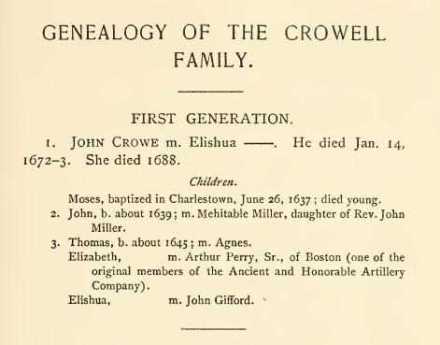
My tenth great-grandfather was part of the Great Migration. He moved to Cape Cod in January of 1639. Many Pilgrims who moved out to Cape Cod got in trouble with the Plymouth church. In those days reaching villages on Cape Cod was a long hard journey from Plymouth. Some of my ancestors who lived on Cape Cod became (or already were) Quakers, and some moved to Rhode Island to escape the oppressive Pilgrim Fathers.
On January 7, 1639 the court record refers to the land grant to the first settlers John Crow, Thomas Howes, and Anthony Thacher as “the lands of Mattacheeset, now called Yarmouth”. This is considered the first usage of the name.
“Yarmouth” to represent the new township to the east of Barnstable.
Plymouth Colony: Its History and People 1620-1691 Part One: Chronological Histories Chapter 3: The Founding of Towns (1633-1643) Yarmouth On 7 January 1638/39, the Court of Assistants granted lands at “Mattacheeset, now called Yarmouth” to Mr. Anthony Thatcher, Mr. Thomas Howes, Mr. John Crow, and John Coite “to be enquired of.” Coite might have been the man of that name of Marblehead, but apparently he did not move to Plymouth Colony. Thatcher, Howes, and Crow were proposed [p.66] as freemen of Yarmouth, along with Mr. Marmaduke Mathews, Philip Tabor, William Palmer, Samuel Rider, William Lumpkin, and Thomas Hatch. It was also specifically noted that “Old Worden (dead),” Burnell, Wright, and Wat Deville were “Psons there excepted against,” probably meaning they were not eligible to be given freemen status, and showing that some form of settlement had already been in existence. In fact, on 4 September 1638 the General Court ordered the inhabitants of Sandwich and “Mattacheese or Yarmouth” to build a bridge over the Eel River (which was just a bit south of Plymouth town, and had to be crossed for travel between Plymouth and the Cape). On 5 March 1638/39 William Palmer was authorized by the General Court to be the one at Yarmouth who would exercise inhabitants in arms, and William Chase was elected constable there. It is apparent that earlier the Plymouth Court had granted land at Yarmouth to others also, for on 1 April 1639 it noted that lands at Mattacheese (another confusion of the names, for it should have been Mattacheeset) were granted to persons who should have inhabited there long ago, but did not, and the grantees “are not likely to come to inhabite there in their owne persons, and lest such as are there should receive in unto them unworthy persons, whereof the Court hath lamentable experience …, the Court doth order that onely such of them wch at present are there shall remayne & make use of some lands for their present necessity, but shall not divide any portions of lands there either to themselves or any others
American Genealogical-Biographical Index (AGBI)
John Sr Crowell (1590 – 1673)
10th great-grandfather
Yelverton Crowell (1621 – 1683)
son of John Sr Crowell
Elishua Crowell (1643 – 1708)
daughter of Yelverton Crowell
Yelverton Gifford (1676 – 1772)
son of Elishua Crowell
Ann Gifford (1715 – 1795)
daughter of Yelverton Gifford
Frances Congdon (1738 – 1755)
daughter of Ann Gifford
Samuel Thomas Sweet (1765 – 1844)
son of Frances Congdon
Valentine Sweet (1791 – 1858)
son of Samuel Thomas Sweet
Sarah LaVina Sweet (1840 – 1923)
daughter of Valentine Sweet
Jason A Morse (1862 – 1932)
son of Sarah LaVina Sweet
Ernest Abner Morse (1890 – 1965)
son of Jason A Morse
Richard Arden Morse (1920 – 2004)
son of Ernest Abner Morse
Pamela Morse
I am the daughter of Richard Arden Morse
The Crowell family in North Dennis is descended from John Crow, who came, it is said, from Wales in 1635, to Charlestown, where he and his wife, Elishua, joined the church. It is probable that they sojourned there until 1639, when Mr. Crow came with Anthony Thacher and Thomas Howes to Yarmouth, with a grant from the court, having previously taken the oath of allegiance. All the first settlers
selected spots for their homes adjacent to good springs of water. The brook that flows through the village of North Dennis had numerous fine flowing springs to supply the need of the first comers. John Crow built his home north of the center of the present village, near the spot where the late Philip Vincent lived. His land, much of which is still owned by his descendants, was east of Indian Fields, and extended from the shore to the top of the hills back of the settlement. John Crow was a man of character and influence in the infant town of Yarmouth, filling many important offices. He died in 1673. His sons were: John, Samuel and Thomas. John married Mehitable. daughter of Rev. John Miller of Yarmouth. A grandson of John Crow, sr., whose name was John, was the first person buried in the North Dennis cemetery. He died in 1727. The name about that time had developed into Crowell. The offspring of John Crow are now to be found in all parts of the country, occupying important positions, with honor and credit to the name. Those who have remained upon the hereditary acres have produced in every generation men of ability and distinction. The late Hon. Seth Crowell and his cousin, Capt. Prince S. Crowell, and Mr. William Crowell, the well-known cranberry grower and seller, are illustrations of the character of the Crowells in the seventh generation. The family has never been large in North Dennis. Two pews in the old church sufficed to accommodate their needs for sitting room. Many of the family, before the old meeting house was torn down in 1838, had become desciples of John Wesley and left the church of their fathers.
Mr. Jeremiah Crowell, a descendant in the fourth generation from the grantee, John Crow, was for two generations a village celebrity. He lived in what was called “Crow Town,” just outside the western limits of Indian Field. The public highway went no farther east than his house in his day. The county road went through the woods south of Scargo hill. Mr. Crowell constructed a globe with the four quarters of the earth marked upon it. This was received by the Nobscusset children with open-eyed wonder. It was to be seen only, however, upon payment of one cent per head. He had besides a mammoth kite with a string a mile long, with a tail of wondrous length. He kept a daily journal of passing events, such as the capture of a whale, the arrival home of the Cod fishermen, the state of the weather, and the direction of the wind. But his great effort was the building of a pair of wings and attempting to fly. This was an achievement beyond his power to accomplish. The flying he regarded as practical and easy, but the alighting was difficult. He died at an advanced age, about the close of the last century.

Beatrice de Savoy Countess de Provence (1205 – 1267)
23rd great-grandmother
She was born as the second child of Thomas I and Beatrice de Geneve. She married Raimond Berenger de Provence in 1219. After two miscarriages she bore him a son and four daughters. Her son died young. The two elder daughters were married to reigning kings while the husbands of the younger two later rose to that rank. She was buried at the chapel in the Chateau de Menuet near Les Échelles. Her mausoleum was desecrated during the revolution and only her skull could be saved. It was deposited in her brother Bonifaces grave.
Beatrice of Savoy was Countess of Provence from December 1220 – 19 August 1245
Her spouse was Ramon Berenguer IV, Count of Provence. Their children were:
Margaret, Queen of France
Eleanor, Queen of England
Sanchia, Queen of Germany
Beatrice, Queen of Sicily
Raymond of Provence
She was from the House of Savoy (by birth) and House of Aragon (by marriage)
Beatrice of Savoy was the daughter of Thomas I of Savoy and Margaret of Geneva. She was Countess consort of Provence by her marriage to Ramon Berenguer IV, Count of Provence.
Her paternal grandparents were Humbert III, Count of Savoy, and Beatrice of Viennois. Her maternal grandparents were William I, Count of Geneva and Beatrice de Faucigny. Beatrice of Savoy’s mother, Margaret was betrothed to Philip II of France. While Margaret was travelling to France for her wedding, she was captured by Beatrice’s father, Thomas. He took her back to Savoy and married her himself. Thomas’ excuse was that Philip II was already married, which was true.
Beatrice was the tenth of fourteen children born to her parents. Her siblings included: Amadeus IV, Count of Savoy; Thomas II of Piedmont; Peter II, Count of Savoy; Philip I, Count of Savoy; Boniface of Savoy, Archbishop of Canterbury; Avita the Countess of Devon; and Margherita of Savoy wife of Hartmann I of Kyburg.
Beatrice betrothed on 5 June 1219 to Ramon Berenguer IV, Count of Provence; they married in December 1220. She was a shrewd and politically astute woman, whose beauty was likened to that of a second Niobe by Matthew Paris. Ramon and Beatrice of Savoy had four daughters, who all lived to adulthood, and married kings. Their only son, Raymond died in early infancy.[2]
Margaret, Queen of France (1221–1295), wife of Louis IX of France
Eleanor, Queen of England (1223–1291), wife of Henry III of England
Sanchia, Queen of Germany (1228–1261), wife of Richard, Earl of Cornwall
Beatrice, Queen of Sicily (1231–1267), wife of Charles I of Sicily
Raymond of Provence, died young
At the English court[edit]
In 1242, Beatrice’s brother Peter was sent to Provence by Henry III to negotiate the marriage of Sanchia to Richard. Another brother, Philip, escorted Beatrice and Sanchia to the English court in Gascony, arriving in May 1243. There they joined Henry, Eleanor, and their baby, Beatrice of England. Henry was very happy at this occasion and gave many gifts to the various relatives.
In November 1243, Beatrice and Sanchia travelled to England for the wedding. This wedding did much to strengthen the bond between Richard and Henry III. She further strengthened the unity of the English royal family by convincing Henry III to help pay the debts of his sister Eleanor and her husband Simon de Montfort, who had often been at odds with Henry.[5] In January 1244, Beatrice negotiated a loan for her husband from Henry of four thousand marks, offering the king five Provençal castles as collateral.
When Ramon Berenguer died on 19 August 1245, he left Provence to his youngest daughter, and his widow was granted the usufruct of the county of Provence for her lifetime. Beatrice’s daughter and namesake then became one of the most attractive heiresses in medieval Europe. Frederick II, Holy Roman Emperor sent a fleet and James I of Aragonsent an army to seize her, so Beatrice placed herself and her daughter in a safe fortress in Aix, secured the trust of its people then sent to the Pope for his protection. The Pope was also a target for Frederick’s military incursions in France. In Cluny during December 1245, a secret discussion, between Pope Innocent IV, Louis IX of France, his mother Blanche of Castile, and his brother Charles of Anjou, took place. It was decided that in return for Louis IX supporting the Pope militarily, the Pope would allow Charles of Anjou, youngest brother to the French King, to marry Beatrice of Provence. Mother and daughter were satisfied with this selection.[7] But Provence was to never go to France outright through Charles. It was agreed that if Charles and Beatrice had children, the county would go to them; if there was no issue, then the county would go to Sanchia of Provence. If Sanchia died without an heir, Provence would go to the King of Aragon.
Henry protested the selection, arguing that he had not yet received the full dowry for Eleanor nor his brother for Sanchia. He also still had the castles in Provence against the loan he had made to the former count.
When Charles took over the administration of Provence in 1246, he did not respect Beatrice’s rights within the county. She sought the aid of Barral of Baux and the Pope in protecting her rights within the area. The citizens of Marseille,Avignon, and Arles joined this resistance to Capetian control. In 1248, Charles began to seek peace with her so that he could join his brother’s crusade. A temporary truce was reached to allow this.
In 1248, she travelled back to England with her brother Thomas, to see their family there.
In 1254, as Louis was returning from his crusade by way of Provence, Beatrice petitioned him for a more permanent resolution of the dispute with Charles. The French queen Margaret joined the petition, noting that Charles had not respected her dowry either. Beatrice travelled with them back to Paris. As the year progressed, Henry and his wife were invited to travel to Paris, and eventually all four daughters joined their mother there for Christmas.[11]
The generally good relationship among the four sisters did much to improve the relationship of the French and English kings. It brought about the Treaty of Paris in 1259, where differences were resolved.[12] Beatrice and all her four daughters participated in the talks.[13] While the family was still gathered, Louis IX finally persuaded Beatrice to surrender her claims and control in Provence in exchange for a sizable pension to be paid to her. Charles also paid back the loan henry had made to the previous count, clearing his claims in the county.[14]
In 1262, Beatrice was part of the family discussion to try again to bring peace between Henry and Simon de Montfort. When Henry was captured in 1264, Beatrice’s brother Peter II, Count of Savoy took his army to join the efforts to free the king. He left Beatrice in charge of Savoy while he was gone.
Beatrice outlived her third daughter Sanchia and came close to outliving her youngest daughter Beatrice, who died months after her mother (Beatrice the elder died in January, Beatrice the younger died in September). Beatrice of Savoy died on 4 January 1267.
Beatrice de Savoy Countess de Provence (1205 – 1267)
23rd great-grandmother
Eleanor Berenger (1223 – 1291)
daughter of Beatrice 1205 de SavoyCountess de Provence
Edward I “the Longshanks” Plantagenet (1239 – 1307)
son of Eleanor Berenger
Elizabeth of Rhuddlan Princess of England Plantagenet (1282 – 1316)
daughter of Edward I “the Longshanks” Plantagenet
William Earl of Northampton De Bohun (1312 – 1360)
son of Elizabeth of Rhuddlan Princess of England Plantagenet
Lady Elizabeth Countess Arundel Countess DeBohun (1350 – 1385)
daughter of William Earl of Northampton De Bohun
Elizabeth Duchess Norfolk Fitzalan (1366 – 1425)
daughter of Lady Elizabeth Countess Arundel Countess DeBohun
Lady Joan De Goushill Baroness Stanley (1402 – 1459)
daughter of Elizabeth Duchess Norfolk Fitzalan
Countess Elizabeth Sefton Stanley (1429 – 1459)
daughter of Lady Joan De Goushill Baroness Stanley
Thomas Sir 8th Earl of Sefton Molyneux (1445 – 1483)
son of Countess Elizabeth Sefton Stanley
Lawrence Castellan of Liverpool Mollenaux (1490 – 1550)
son of Thomas Sir 8th Earl of Sefton Molyneux
John Mollenax (1542 – 1583)
son of Lawrence Castellan of Liverpool Mollenaux
Mary Mollenax (1559 – 1598)
daughter of John Mollenax
Gabriell Francis Holland (1596 – 1660)
son of Mary Mollenax
John Holland (1628 – 1710)
son of Gabriell Francis Holland
Mary Elizabeth Holland (1620 – 1681)
daughter of John Holland
Richard Dearden (1645 – 1747)
son of Mary Elizabeth Holland
George Dearden (1705 – 1749)
son of Richard Dearden
George Darden (1734 – 1807)
son of George Dearden
David Darden (1770 – 1820)
son of George Darden
Minerva Truly Darden (1806 – 1837)
daughter of David Darden
Sarah E Hughes (1829 – 1911)
daughter of Minerva Truly Darden
Lucinda Jane Armer (1847 – 1939)
daughter of Sarah E Hughes
George Harvey Taylor (1884 – 1941)
son of Lucinda Jane Armer
Ruby Lee Taylor (1922 – 2008)
daughter of George Harvey Taylor
Pamela Morse
I am the daughter of Ruby Lee Taylor
My 7th great-grandfather was born on May 7, 1667 in Greenwich, Fairfield County,Connecticut and died Feb. 22, 1746 in Greenwich. He is buried in the Old Burying Ground there.

Benjamin Mead was an officer in the local militia and served a term as Surveyor for Fairfield County. Reports of his action in the French and Indian War are misleading, as he died before the Seven Years’ War war started. That said, that global war was only part of an ongoing conflict in Europe from 1689-1763 that had combat ramifications in North America on at least 4 occasions when wars were officially declared. In addition to having names these wars also had numbers under the rubrique of “Intercolonial Wars,” much as we have numbered “World Wars”– since the individual wars had different names in Britain than on the Continent, the numbering system helped keep things (somewhat) straight. Finally, the Intercolonial Wars, as they were called in Europe, were called the French And Indian Wars in North America.
Benjamin Mead was old enough to have fought in any of the first three of these, King William’s War or War of the League of Augsburg (1st Intercolonial) and Queen Anne’s War or War of the Spanish Succession (2nd Intercontinental) being the most likely. So in this sense, any action he saw during those wars makes him a veteran of the French and Indian Wars.
Spouses:
Sarah Waterbury Mead (1677 – 1745)*
Rachel Brown Mead (1680 – ____)*
Children:
Benjamin Mead (1701 – 1783)*
Eliphelet Mead (1704 – 1796)*
Elizabeth Mead Peck (1705 – 1783)*
Keziah Mead Howe (1707 – 1808)*
Obadiah Mead (1719 – 1759)*
Nehemiah Mead (1721 – 1791)*
Hannah Mead Mead (1726 – 1815)*
Siblings:
Ebenezer Mead (1663 – 1728)*
Hannah Mead Scofield (1664 – 1728)*
Jonathan Mead (1665 – 1712)*
Benjamin Daniel Mead (1667 – 1746)
Benjamin Daniel Mead (1667 – 1746)
is my 7th great grandfather
Mary Mead (1724 – 1787)
daughter of Benjamin Daniel Mead
Abner Mead (1749 – 1810)
son of Mary Mead
Martha Mead (1784 – 1860)
daughter of Abner Mead
Abner Morse (1808 – 1838)
son of Martha Mead
Daniel Rowland Morse (1838 – 1910)
son of Abner Morse
Jason A Morse (1862 – 1932)
son of Daniel Rowland Morse
Ernest Abner Morse (1890 – 1965)
son of Jason A Morse
Richard Arden Morse (1920 – 2004)
son of Ernest Abner Morse
Pamela Morse
I am the daughter of Richard Arden Morse
We know what has happened to his house in Greenwich:
Benjamin Mead, the son of John Mead, one of the 15 proprietors, inherited from his father 15 acres of property in Cos Cob in 1696. The will describes the inheritance as “five acres of land at Stickling brock (Strickland Brook) as it is lyd out to mee, and all my lands & meadow lying & and being at that place commonly cauled Coscob, as it is Layd out to mee & ten acres of upland above ye road aded now to ye five”.
In 1697, Benjamin built a house on the land, a two room saltbox with center chimney. A rear lean-to, including a kitchen ell was added in 1732 according to an architectural field study by the Greenwich Historical Society.
Obadiah Mead bought the Bible Street land and house from his father Benjamin Mead in 1746 (1756) for 200 pounds New York money. In that same year Obadiah married Lois Todd daughter of the Reverend Abraham Todd minister of the Second Congregational Society in Greenwich. The couple had 2 daughters, Mary Mead b.Aug 10 1757, d.2/14/1815 and Phoebe. Obadiah died in 1759 while the girls were young.
When the girls came of age the land was divided between them with a Dower lot for their mother. Mary eventually married Michael Cox Timpany b. abt 1755, d. 10/25/1811. Mary eventually inherited her sister and mothers shares to the land.
John Timpany, son of Mary and Michael, bought the house from his mother in 1813. In 1841 he sold the house to 3 of his daughters; Elvira, Hannah and Adelice (Delia) with the provision that they care for him the rest of his life. John died 11/15/1855.
Elvira Moshier never married and held the house until she died in 1880 willing her land to Sarah Ann Moshier Olmstead, wife of Henry Olmstead and the daughter of her sister Lois and James Moshier who were farmers on Cognewaug Road.
Sarahann held on to the house until she died and it was the purchased by her younger brothers Samuel Augustus Moshier, who ran a grocery on Greenwich Avenue, and Franklin Pierce Moshier who ran a livery / stable / early car dealership on Lewis Street.
Sam and Frank held onto the house until the early 1930’s, renting it out to family member (such as John Timpany Moshier who was waked in the Parlor November 1927).
I believe the house left the family due to losses incurred by Franklin and Augustus Moshier with the stock crash of 1929.
Since then the hous has turned over many, many times.
Very recently, a new owner, claiming the house was leaning, renovated the house. It now looks like a “new” old house….

Ermengarde Blanche D Anjou Countess Gastinois
My 29th great-grandmother, Ermengarde of Anjou (c. 1018 – 18 March 1076), daughter of Count Fulk III of Anjou and Hildegarde of Sundgau, was born in Angers and was murdered at the Church of Fleurey-sur-Ouche, Côte-d’Or.
Ermengarde-Blanche of Anjou was a French noblewoman who was first Countess of Chateau-Landon and secondly Duchess of Burgundy. She is also called Hermangarde in some sources. Ermengarde-Blanch was the heiress of the countship of Anjou and is an ancestress of the House of Plantagenet.
Ermengarde-Blanc he was the daughter of Count Fulk III of Anjou and Hildegarde. She was involved in two marriage alliances that greatly benefited her father and brother as counts of Anjou. She was first contracted to marry Geoffrey II, Count of Gâtinais, called Ferréol , who was also lord of Château-Landon. It was important marriage to return Château-Landon to the counts of Anjou. It took between twelve and eighteen months to arrange the marriage. Meanwhile Fulk paid a great deal of attention to Château-Landon. He and his wife, Hildegarde, founded the abbey of Le Ronceray. Originally a church dedicated to St. Mary, Hildegard was very active in its rebuilding into an abbey. They gave the abbey many gifts including the forest of Lattay. They gave more gifts to this abbey than any other church or religious house. Her two sons of this marriage, Geoffrey III and Fulk both became counts of Anjou after her brother Geoffrey II Martel. Among her descendants are the Plantagenet (or Angevin) kings of England.
After her husband Geoffrey died Ermengarde-Blanche married Robert I Capet, Duke of Burgundy. Robert was the son of King Robert II of France. Because both Ermengarde and her second husband Robert Capet were both descendants of Ingelger, they were related by blood. This was found in charts prepared at the monastery of Saint-Aubin at Angers between 1048 and 1052. The ancestral charts show how closely the Angevin and Capet families were related. The charts were probably created over concerns of who Ermengarde and Robert’s daughter Hildegarde could or could not marry. Ermengarde-Blanche died at Fleury-sur-Ouche on 18 March 1076. Robert died three days later at the same place on 21 March 1076.
Ermengarde Blanche D Anjou Countess Gastinois (1018 – 1076)
is my 29th great grandmother
Fulk Le Rechin Rude Anjou (1043 – 1109)
son of Ermengarde Blanche D Anjou Countess Gastinois
FULK V The Younger King of Jerusalem ANJOU * (1092 – 1143)
son of Fulk Le Rechin Rude Anjou
Sibilla Anjou (1105 – 1165)
daughter of FULK V The Younger King of Jerusalem ANJOU *
Marguerite De LORRAINE (1135 – 1194)
daughter of Sibilla Anjou
Isabelle De Hainault (1170 – 1190)
daughter of Marguerite De LORRAINE
Louis VIII France (1187 – 1226)
son of Isabelle De Hainault
Charles I King of Jerusalem and Naples (1227 – 1285)
son of Louis VIII France
Charles NAPLES (1254 – 1309)
son of Charles I King of Jerusalem and Naples
Marguerite Sicily Naples (1273 – 1299)
daughter of Charles NAPLES
Jeanne DeVALOIS (1294 – 1342)
daughter of Marguerite Sicily Naples
Philippa deHainault (1311 – 1369)
daughter of Jeanne DeVALOIS
John of Gaunt – Duke of Lancaster – Plantagenet (1340 – 1399)
son of Philippa deHainault
Elizabeth Plantagenet (1363 – 1425)
daughter of John of Gaunt – Duke of Lancaster – Plantagenet
John Holland (1395 – 1447)
son of Elizabeth Plantagenet
Henry Holland (1430 – 1475)
son of John Holland
Henry Holland (1485 – 1561)
son of Henry Holland
Henry Holland (1527 – 1561)
son of Henry Holland
John Holland (1556 – 1628)
son of Henry Holland
Gabriell Francis Holland (1596 – 1660)
son of John Holland
John Holland (1628 – 1710)
son of Gabriell Francis Holland
Mary Elizabeth Holland (1620 – 1681)
daughter of John Holland
Richard Dearden (1645 – 1747)
son of Mary Elizabeth Holland
George Dearden (1705 – 1749)
son of Richard Dearden
George Darden (1734 – 1807)
son of George Dearden
David Darden (1770 – 1820)
son of George Darden
Minerva Truly Darden (1806 – 1837)
daughter of David Darden
Sarah E Hughes (1829 – 1911)
daughter of Minerva Truly Darden
Lucinda Jane Armer (1847 – 1939)
daughter of Sarah E Hughes
George Harvey Taylor (1884 – 1941)
son of Lucinda Jane Armer
Ruby Lee Taylor (1922 – 2008)
daughter of George Harvey Taylor
Pamela Morse
I am the daughter of Ruby Lee Taylor

Anjou Coat of Arms

Pam and the Fam on the farm
I study my ancestry and family history. This fascinating subject consumes as much of my time as I allot to it. I have spent six years on Ancestry.com working on my tree. I am more skeptical now than I was in the beginning because I have been burned by specious data. It is painful to discover an error in one’s research, yet it is better to know sooner than later. I once had a magical surprise experience in Rhode Island at a very special private family home from the 1600’s. I was treated to a tour of the home and grounds since I announced that I was a Carr descendent. I was given instructions to find the family graves by my long-lost “cousin” who still lives on the property. I was in heaven. It turns out I was also delusional about my connection to that family because I had made a mistake a couple of generations earlier in my research. I discovered this error after I had returned home from my trip, and had to laugh about it. I also had to start again to retrace the lineage. That correction was easy because I had some good documentation to verify the facts. Other problems I have discovered or had pointed out to me have left me with a dead-end when I removed the phantom limb.
The odd phantom feeling after chopping off limbs and branches is caused my the attachment formed while studying them. There are several very common names in my tree including Scott. When I began my sturdy I started with notes written by my maternal great-grandmother about her knowledge of the family. She stated that my 2nd great-grandfather, Thomas Scott, was a soldier in the Union army during the Civil War. Even though we know his full name, Thomas Ewing Scott, born in 1842 in Ohio, I can find no decisive record of his military service. There are too many Thomas Scotts from Ohio for me to be sure. My maternal 2nd great-grandfather was, indeed, a soldier for the Confederacy. I am positive about that because I have a copy of his service record as well as his Confederate pension application that he made late in his life in Texas. After his death his wife also applied for a pension as a surviving spouse. I have her application documenting her husband’s service also.
If you find written documents of a private source they may or may not be accurate. Only when you can back up your story with official documents do you have a solid case. I have learned the hard way to verify all the connections fully before jumping back to another generation. There are many trees on the Ancestry.com site that have unverified connections. Copying the work of others without making sure of it can lead to bigger and longer errors. This is not even as safe as the cold war when we trusted by verified. Don’t trust until you verify. This practice may save you many hours of wasted time. After I have recovered from the vexation of discovering I had been wrong I still had certain affection for those people who turned out not to be related to me. My philosophy now is that I learned about history while I was out on the wrong limbs, and I have never claimed to be a professional genealogist. I am more of a time traveller. Do you know any of your family history, gentle reader? How did you learn about it?


monument
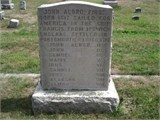
My 9th great-grandfather sailed to America in 1634 when he was only 17. He lived a long and productive life in Rhode Island.
John* (Quaker John) Albro was born 14 JAN 1617 in Warwickshire, England and died 17 DEC 1712 in Portsmouth, Newport Co. Rhode Island at the Quaker settlement (date of death given as November 1, 1712 in “The Greene Family and Its Branches” by Lora S. LaMance, Chapter XXXV, page 220)
John Albro came on the ship “Francis” in 1634 from Ipswich to New England under the care of William Freeborn. His age was called 14, which was not exact but as near as was often the case in making returns to the officials. In 1638 he accompanied William Freeborn to Rhode Island. In 1639 John Albro was a granted a lot if he would build in one year. In 1644 he was made a corporal, rising successively in after years to the office of Lieutenant, Captain and Major. Sometime in 1649 he was made a member of the Town Council, and served frequently as Moderator of town meetings, even into old age.
In 1655, John became a freeman, and a commissioner from 1660-61. On August 24, 1676, he was a member of the court martial held at Newport for the trial of certain Indians. (From the Genealogical Dictionary of Rhode Island) He is an ancestor of Gilbert Stuart (painter of George Washington).
John Albro (1617 – 1712)
is my 9th great grandfather
Elizabeth Albro (1646 – 1720)
daughter of John Albro
Benjamin Congdon (1676 – 1756)
son of Elizabeth Albro
William Congdon (1711 – 1755)
son of Benjamin Congdon
Frances Congdon (1738 – 1755)
daughter of William Congdon
Thomas Sweet (1765 – 1844)
son of Frances Congdon
Valentine Sweet (1791 – 1858)
son of Thomas Sweet
Sarah LaVina Sweet (1840 – 1923)
daughter of Valentine Sweet
Jason A Morse (1862 – 1932)
son of Sarah LaVina Sweet
Ernest Abner Morse (1890 – 1965)
son of Jason A Morse
Richard Arden Morse (1920 – 2004)
son of Ernest Abner Morse
Pamela Morse
I am the daughter of Richard Arden Morse
Major John Albro was one of the most active and influential settlers of Portsmouth, RI. He came from Ipswich, Eng., in the ship Francis, sailing from Ipswich Apr 30, 1634. He was born in England in 1617. He came under the care of William Freeborn and was only seventeen years of age. They landed at Boston and four years later (1638) came to Portsmouth RI. John then being 21 yrs. of age. His fellow townsmen soon began to give him much to do with the affairs of the community. In 1649 he was a member of the town council and he often served as moderator of the town meetings. even into old age. In 1686 King James appointed him as a member of Sir Edmund Andros’ Council for New Eng. and he attended the first meeting of this council in Boston, Dec. 30th of that year. He served as one of the commissioners of the Colony to lay out the W/Eastern? line of the Colony in 1678. During King Phillip’s War he was one of the commissioners to order, watch and ward the the island. He died at Portsmouth, Dec. 14, 1712, and in the 95th years of his age. The Friends’ Records, in recording the death of this useful man state that he “was buried in his own orchard”.
weaver
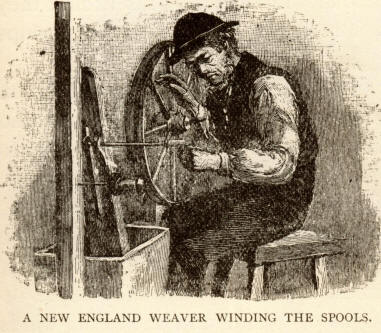
My 10th great grandfather was a Puritan weaver, lay physician, miller, and farmer. He arrived in Watertown, Massachusetts in 1630 with the Winthrop Fleet, probably on the ship Arrabella. He moved to Connecticut where he is buried in Stamford.
The MA Colonial Records, under date of March 1, 1630/31, shows that Nicholas KNOP (KNAPP), was fined five pounds for taking upon himself to cure the scurvy by water of no worthe or value, which he sold at a very deare rate. The water had been found beneficial and the suit dropped upon payment of costs. This may have been his entire lay physician career. His will is recorded, which gives us a glimpse into his worldly possessions.
Nicholas Knapp (1606 – 1670)
is my 10th great grandfather
Caleb Knapp (1637 – 1684)
son of Nicholas Knapp
Sarah Knapp (1669 – 1750)
daughter of Caleb Knapp
Ebenezer Mead (1692 – 1775)
son of Sarah Knapp
Amos Mead (1730 – 1807)
son of Ebenezer Mead
Abner Mead (1749 – 1810)
son of Amos Mead
Martha Mead (1784 – 1860)
daughter of Abner Mead
Abner Morse (1808 – 1838)
son of Martha Mead
Daniel Rowland Morse (1838 – 1910)
son of Abner Morse
Jason A Morse (1862 – 1932)
son of Daniel Rowland Morse
Ernest Abner Morse (1890 – 1965)
son of Jason A Morse
Richard Arden Morse (1920 – 2004)
son of Ernest Abner Morse
Pamela Morse
I am the daughter of Richard Arden Morse
DESCENDANTS OF NICHOLAS KNAPP
Generation No. 1
Notes for Nicholas Knapp:
ORIGIN: Unknown – [prob] England
Immigrant: 1630 – Departed England: 22 Mar 1630
Arrived Watertown, Middlesex Co, MA: 14 Jun 1630
SHIP: [prob] “Arbella” – Captain Peter Milbourne, Master
First Residence (in America): Watertown, Middlesex Co, MA
Removed to: [poss] Wethersfield, Hartford Co, CT-ca1646; [poss] Greenwich, CT-ca1648; Stamford, CT-ca1648
EDUCATION: Signed Will by Mark; Inventory included books valued at 6s. 6d.
WILL: 15 Apr 1670, Stamford, CT; Probated-Unknown [16 Sep 1670?]
INVENTORY: 27 Apr 1670 – Estate Valued at 166 lbs; 13 shillings; 11 1/2 d.
Birth approximate-based on estimated date of marriage.
More About Nicholas Knapp:
BURIED : Abt. 18 April 1670, Stamford, CT
RESIDED AT: (of) St Mary-Bures, Co Suffolk, EN; Watertown, MA; [poss] Wethersfield, CT; :[poss] Greenwich, CT; Stamford, CT
OCCUPATION(S): Weaver/Lay Physician/Miller/Farmer
RELIGION: Puritan [Congregational]
CHURCH AFF: Watertown Church, Watertown, MA; Stamford Church, Stamford, CT
MILITARY SVC: Unknown [probably local Militia]
LAST WILL AND TESTAMENT of NICHOLAS KNAPP (ca1606-1670)
Fairfield Probate Records
Vol 1665-1675, page 55 & 56
Fairfield, Fairfield Co, Connecticut
In Stamford ye 15th 2mo Anno 1670 [15 Apr 1670]:
The Last Will and Testament of Nicholas Knap of Stamford concerning the disposal of his worldly estate:
WITNESS:
(signed) John Weed Nicholas y Knap
Eleazur Slawson (his mark)
STATE OF CONN ) SS Probate Court
Dist of Fairfield )
SOURCE(S): a. Abstract of Probate Records of Fairfield, Connecticut 1648-1750:19
Children of Nicholas Knapp and Elinor are:
+ 2 i. Jonathan Knapp23, born Abt. 08 November 1631 in Watertown, Middlesex Co, MA24; died Abt. 27 December 1631 in Watertown, Middlesex Co, MA25.
+ 3 ii. Timothy Knapp, Sr, born 14 December 1632 in Watertown, Middlesex Co, MA; died Bef. 1685 in Rye, Westchester Co, CT [now NY].
+ 4 iii. Joshua Knapp, Sr, born 05 January 1634/35 in Watertown, Middlesex Co, MA; died Bef. 27 October 1684 in Greenwich, CT.
+ 5 iv. Caleb Knapp, Sr, born 20 January 1635/36 in Watertown, Middlesex Co, MA; died Bef. 04 March 1674/75 in Stamford, CT.
+ 6 v. Sarah Knapp, born 05 January 1638/39 in Watertown, Middlesex Co, MA; died 1681 in Rye, Westchester Co, CT [now NY].
+ 7 vi. Ruth Knapp, born 06 January 1640/41 in Watertown, Middlesex Co, MA; died Aft. 1702 in Greenwich, CT.
+ 8 vii. Hannah Knapp26,27,28,29,30, born 06 March 1642/43 in Watertown, Middlesex Co, MA31
More About Joshua Knapp, Sr:
BURIED : [prob] Knapp Cemetery, Greenwich, CT
RESIDED AT: Watertown, MA; [poss] Wethersfield, CT; Stamford, CT; Greenwich, CT
OCCUPATION(S): Weaver/Farmer
RELIGION: Congregational
CHURCH AFF: 1st Congregational Church, Greenwich, CT
MILITARY SVC: Unknown [probably local Militia]
Children of Joshua Knapp and Hannah Close are:
+ 12 i. Hannah Knapp, born 26 March 1660 in Stamford, CT; died 29 March 1721 in Greenwich, CT.
+ 13 ii. Joshua Knapp, Jr, born Abt. 1662 in Stamford, CT; died Abt. 1750 in Greenwich, CT.
+ 14 iii. Joseph Knapp51,52, born 1664 in Greenwich, CT53; died Bef. 12 December 1723 in Greenwich, CT54. He married Mary Lockwood55,56,57,58 Aft. 1706 in Greenwich, CT59.
+ 15 iv. Ruth Rebecca Knapp60,61, born 1666 in Greenwich, CT62; died Aft. 06 April 1736 in Greenwich, CT. She married John Reynolds Bef. 1694 in Greenwich, CT.
+ 16 v. Timothy Knapp, born 1668 in Greenwich, CT; died 16 February 1736/37 in Greenwich, CT.
+ 17 vi. Benjamin Knapp, born 1673 in Greenwich, CT; died 1716 in Greenwich, CT.
+ 18 vii. Caleb Knapp, born June 1677 in Greenwich, CT; died Bef. 26 January 1749/50 in Greenwich, CT.
+ 19 viii. Jonathan Knapp63, born 1679 in Greenwich, CT64; died in Greenwich, CT.
Caleb Knapp (Joshua, Nicholas)159 was born June 1677 in Greenwich, CT160,161, and died Bef. 26 January 1749/50 in Greenwich, CT162. He married Sarah Rundle163 01 April 1697 in Stamford, CT164,165,166, daughter of William Rundle and Abigail Mills.
Children of Caleb Knapp and Sarah Rundle are:
+ 103 i. Caleb Knapp, born 11 November 1698 in Greenwich, CT; died Bef. 12 July 1763 in Greenwich, CT.
104 ii. Charles KnappI167, born Abt. 1701 in Greenwich, CT; died Abt. 1701 in Greenwich, CT.
+ 105 iii. Nathaniel Knapp, born 21 February 1700/01 in Greenwich, CT; died in Genoa, Cayuga Co, NY.
106 iv. Charles KnappII167, born 24 February 1704/05 in Greenwich, CT; died Bef. 02 July 1763 in Greenwich, CT. He married Elizabeth Wicks 13 November 1729 in Greenwich, CT168.
107 v. Sarah Knapp169, born 27 June 1708 in Greenwich, CT.
108 vi. Deborah Knapp169, born 25 August 1710 in Greenwich, CT.
109 vii. Abigail Knapp169, born Abt. 1712 in Greenwich, CT; died Aft. 1750 in Greenwich, CT. She married Nathaniel James Aft. 1750 in Greenwich, CT.
110 viii. Nehemiah Knapp, Sr, born 15 October 1714 in Greenwich, CT; died Aft. 1756 in Stamford, CT.
111 ix. Timothy Knapp, born 27 January 1717/18 in Greenwich, CT; died 04 May 1809 in Sound Beach [Old Greenwich], Fairfielld Co, CT.
Sources for Generations 1-3:

Joan Fitzalan
My 18th paternal great-grandmother is also the ancestor of my famous poet, Anne Dudley Bradstreet. Her father was beheaded at the Tower of London by Richard II. I wonder if I have a record number of ancestors beheaded at the Tower. When Henry IV came to the throne Joan and her sisters were restored to wealth and power. Her sister Elizabeth is my mother’s ancestor, so this cozy castle was once home to both my bloodlines:

Arundel Castle
Joan Fitzalan (1360 – 1435)
is my 18th great grandmother
Joan Elizabeth Beauchamp (1396 – 1430)
daughter of Joan Fitzalan
Elizabeth Butler (1420 – 1473)
daughter of Joan Elizabeth Beauchamp
Isabel Talbot (1444 – 1531)
daughter of Elizabeth Butler
Sir Richard Ashton (1460 – 1549)
son of Isabel Talbot
Sir Christopher Ashton (1493 – 1519)
son of Sir Richard Ashton
Lady Elizabeth Ashton (1524 – 1588)
daughter of Sir Christopher Ashton
Capt Roger Dudley (1535 – 1585)
son of Lady Elizabeth Ashton
Gov Thomas Dudley (1576 – 1653)
son of Capt Roger Dudley
Anne Dudley (1612 – 1672)
daughter of Gov Thomas Dudley
John Bradstreet (1652 – 1718)
son of Anne Dudley
Mercy Bradstreet (1689 – 1725)
daughter of John Bradstreet
Caleb Hazen (1720 – 1777)
son of Mercy Bradstreet
Mercy Hazen (1747 – 1819)
daughter of Caleb Hazen
Martha Mead (1784 – 1860)
daughter of Mercy Hazen
Abner Morse (1808 – 1838)
son of Martha Mead
Daniel Rowland Morse (1838 – 1910)
son of Abner Morse
Jason A Morse (1862 – 1932)
son of Daniel Rowland Morse
Ernest Abner Morse (1890 – 1965)
son of Jason A Morse
Richard Arden Morse (1920 – 2004)
son of Ernest Abner Morse
Pamela Morse
I am the daughter of Richard Arden Morse
Joan FitzAlan, Baroness Bergavenny (1375 – 14 November 1435) was an English noblewoman, and the wife of William de Beauchamp, 1st Baron Bergavenny of the Welsh Marches.
Family and Lineage
Lady Joan FitzAlan was born in 1375, at Arundel Castle, Sussex, England, one of the seven children of Richard Fitzalan, 11th Earl of Arundel, Earl of Surrey, and his first wife Elizabeth de Bohun. Her only surviving brother was Thomas Fitzalan, 12th Earl of Arundel, of whom Joan was his co-heiress. She had an older sister Lady Elizabeth FitzAlan who married as her second husband Thomas Mowbray, 1st Duke of Norfolk. Her paternal grandparents were Richard Fitzalan, 10th Earl of Arundel and Eleanor of Lancaster, and her maternal grandparents were William de Bohun, 1st Earl of Northampton and Elizabeth de Badlesmere. On 3 April 1385, her mother died. Joan was about ten years old. Her father married secondly, Philippa Mortimer on 15 August 1390, by whom he had a son, John Fitzalan, who was born in 1394. John died sometime after 1397.
On 21 September 1397, Joan’s father, the Earl of Arundel, who was also one of the Lords Appellant, was beheaded on Tower Hill, London, on charges of high treason against King Richard II of England. The Earl had always enjoyed much popularity with the citizens of London. His titles and estates were forfeited to the Crown.
In October 1400, the new king Henry IV who had ascended the throne following Richard’s deposition in 1399, restored the titles and estates to Thomas Fitzalan, Joan’s brother. He became the 12th Earl of Arundel and Earl of Surrey. Although he married Beatrice, an illegitimate daughter of King John I of Portugal and Inez Perez Esteves, he died childless on 13 October 1415. The Earldom and castle of Arundel passed to a cousin John Fitzalan, 13th Earl of Arundel, the rest of his inheritance was divided among Joan and her two surviving sisters, Elizabeth and Margaret.
Marriage and Issue
On 23 July 1392, Joan was married to William de Beauchamp, 1st Baron Bergavenny (c.1344- 8 May 1411) the son of Thomas de Beauchamp, 11th Earl of Warwick and Katherine Mortimer. He was more than thirty years Joan’s senior.
The marriage produced a son and a daughter:
· Richard de Beauchamp, 1st Earl of Worcester, 2nd Baron Bergavenny (born before 1397- 1422), married Isabel le Despenser, daughter of Thomas le Despenser, 1st Earl of Gloucester and Constance of York, by whom he had one daughter Elizabeth de Beauchamp, Lady of Abergavenny.
· Joan de Beauchamp (1396- 3 August 1430), married on 28 August 1413 James Butler, 4th Earl of Ormond, son of James Butler, 3rd Earl of Ormond and Anne Welles, by whom she had five children, including Thomas Butler, 7th Earl of Ormond. Anne Boleyn and Mary Boleyn were notable descendants.
Joan FitzAlan died on 14 November 1435, at the age of sixty. She was buried in Black Friars, Hereford.
References
Charles Cawley,Medieval Lands, Earls of Arundel 1289–1580 (Fitzalan).
Thomas B. Costain,The Last Plantagenets, pages 196–201
thePeerage.com
Charles Cawley,Medieval Lands, Earls of Arundel 1289- 1580 (Fitzalan)
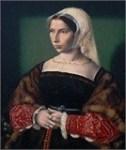

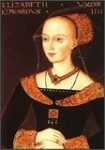
My 17th great-grandmother married well. She is one of the few women in my tree who managed to survive and live a good life after one of her husbands was beheaded for treason at the Tower of London. She married the new king’s uncle to secure her future. She is one of three siblings from her family that are my ancestors on my father’s side.
Katherine Wydeville (1458 – 1525)
is my 17th great grandmother
Edward Richard Buckingham Stafford (1479 – 1521)
son of Katherine Wydeville
Elizabeth Dutchess Norfolk Stafford Howard (1497 – 1558)
daughter of Edward Richard Buckingham Stafford
Lady Katherine Howard Duchess Bridgewater (1495 – 1554)
daughter of Elizabeth Dutchess Norfolk Stafford Howard
William ApRhys (1522 – 1588)
son of Lady Katherine Howard Duchess Bridgewater
Henry Rice (1555 – 1621)
son of William ApRhys
Edmund Rice (1594 – 1663)
son of Henry Rice
Edward Rice (1622 – 1712)
son of Edmund Rice
Lydia Rice (1649 – 1723)
daughter of Edward Rice
Lydia Woods (1672 – 1738)
daughter of Lydia Rice
Lydia Eager (1696 – 1735)
daughter of Lydia Woods
Mary Thomas (1729 – 1801)
daughter of Lydia Eager
Joseph Morse III (1752 – 1835)
son of Mary Thomas
John Henry Morse (1775 – 1864)
son of Joseph Morse III
Abner Morse (1808 – 1838)
son of John Henry Morse
Daniel Rowland Morse (1838 – 1910)
son of Abner Morse
Jason A Morse (1862 – 1932)
son of Daniel Rowland Morse
Ernest Abner Morse (1890 – 1965)
son of Jason A Morse
Richard Arden Morse (1920 – 2004)
son of Ernest Abner Morse
Pamela Morse
I am the daughter of Richard Arden Morse
Catherine Woodville, Duchess of Buckingham
From Wikipedia, the free encyclopedia
Catherine Woodville or Katherine Woodville(c. 1458 – 18 May 1497) was an English medieval noblewoman, best known for her strategic marriages. She was the sister-in-law of King Edward IV of England and gave birth to several illustrious children.
Catherine was the daughter of Richard Woodville, 1st Earl Rivers, and Jacquetta of Luxembourg. When her sister Elizabeth married King Edward IV, the King elevated and promoted many members of the Woodville family. Elizabeth Woodville’s household records for 1466/67 indicate that Catherine was being raised in the queen’s household.
Sometime before the coronation of Elizabeth in May 1465, Catherine was married to Henry Stafford, 2nd Duke of Buckingham; both were still children. A contemporary description of Elizabeth Woodville’s coronation relates that Catherine and her husband were carried on squires’ shoulders. According to Dominic Mancini, Buckingham resented his marriage to a woman of inferior birth. The couple had four children: Her husband Buckingham raised interest for Richard III’s claim to the throne, later they quarreled and hearsay was that it was because of the princes in the tower.
Edward Stafford, 3rd Duke of Buckingham (3 February 1478 – 17 May 1521)
Elizabeth Stafford, Countess of Sussex (ca. 1479 – 11 May 1532)
Henry Stafford, 3rd Earl of Wiltshire (c. 1479 – 6 April 1523)
Anne Stafford, Countess of Huntingdon (c. 1483–1544)
In 1483, Buckingham first allied himself to the Richard, Duke of Gloucester, helping him succeed to the throne as Richard III, and then to Henry Tudor, leading an unsuccessful rebellion in his name. Buckingham was executed for treason on 2 November 1483.
After Richard III was defeated by Henry Tudor at Bosworth in 1485, Catherine married the new king’s uncle Jasper Tudor on 7 November 1485.
After Jasper’s death in 1495 – not later than 24 February 1496, – Catherine married Richard Wingfield, who outlived her.
Depiction in fiction
Catherine is the main protagonist in Susan Higginbotham’s 2010 historical novel The Stolen Crown. She is briefly mentioned in Philippa Gregory’s historical novels The White Queen and The Red Queen.

Katherine Wydeville and Jasper Tudor
 mermaidcamp