mermaidcamp
Keeping current in wellness, in and out of the water
You can scroll the shelf using ← and → keys
You can scroll the shelf using ← and → keys
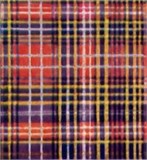
Clan Ogilvy tartan
Sir Walter was a sheriff who died in a battle. This was more or less natural life in Scotland in the middle ages. They had a very bellicose existence.
SIR WALTER OGILVY OF AUCHTERHOUSE, Knight, Sheriff of Angus. He is designed ‘Walter of Ogylwy miles’ in a charter by Thomas Sybald of Moneythin to Andrew Petcary of the lands of Monethin about 1368. On 24 October 1385 he had a grant from KingRobert II. of an annualrent out of the lands of Kyngaltny.
He was Sheriff of Angus before 1380. Douglas and Crawford state that he obtained the office by his marriage with Isabel Ramsay, daughter and heiress of Sir Malcolm Ramsay, Lord of Auchterhouse, but give no authority for their statement, and some doubt is cast upon it by a confirmation by King James III., 18 February 1482-3, of a charter by the late Alexander of Ogilvy, Sheriff of Forfar, of the lands of Balkery to his sister Matilda of Ramsay, relict of William of Fenton: the date of the original charter is therein stated to be at Auchterhouse, 21 August 1488, which is impossible, and is most probably a mistranscription of 1388, one of the witnesses being Sir David Lindesay of Glenesk, who was created Earl of Crawford in 1398.
Sir Walter Ogilvy’s mother’s name is unknown. Sir Walter of Lichtoun, who was killed along with him, is called his uterine brother. He was killed at the battle of Glenbrierachan or Glasklune in 1392 repelling an inroad of Highlandmen, and is celebrated by the chronicler Wyntoun as ‘stout and manfull, bauld and wycht,’ and as ‘Godlike, wis, and wertuous.
Sir Walter of Auchterhouse Ogilvy (1347 – 1391)

grave of Elizabeth Henchman
Elizabeth Henchman has a birthplace on file of Plymouth, MA. I doubt this is true, since in 1612 the Mayflower had not yet landed. She came from England with her parents, I believe. She married my 10th great grandfather in Plymouth in 1634. Her second husband, Richard Hildreth, was prominent in Cambridge, MA. They married in Cambridge in 1645. Her grave can still be located in Malden, MA.
The origin of the name is really from being a royal henchmen in history:
ENGLISH ORIGINS
The origin, genealogy, history, and traditions of the Henchman, Hensman, Hinchman, and Hincksman families are known to many family members today, because of the research and dedication of Robert Hinchman, Jr. (1921-1996), of Dallas, Texas, the founder and first president of the Hinchman Heritage Society. It is from this beginning in England that we may someday find connections to The Hinchman Family in America. The following two paragraphs were written by Robert for the October 1992 Hinchman Heritage Week in England.
“Legend has it that Thomas Crosborough of Magna Doddington, Northamptonshire, saved the life of King Henry VII during a hunt. Upon being rescued from the tusks of a wild boar the King said to him: “Truly, thou art my veritable henchman.” Thomas thereupon, changed his name to Henchman, and thus, the family began. His great grandson, Thomas, was apprenticed at the age of 12 to William Cokayne, Master of the Skinners’ Guild, and subsequently became a prominent merchant and Freeman of the City of London during the latter part of the reign of Elizabeth I. Thomas was the father of Humfry who was instrumental in aiding Charles II escape to France during the English Civil War. Thus, two Henchmans have helped save the lives of two English kings.”
“The scions of Thomas Crosborough Henchman are the progenitors of the Henchman/Hinchman and Hensman Families of today. The variations in spellings began to stabilize during the reign of James I and by the time of the restoration of Charles II in 1660, the orthography had become almost set .. but as a Hinchman, you well know that confusion still exists. The family began its migration to New England in 1637, to Maryland in 1664, and to Australia in the 1860’s. And, of course, English members continued down to this day. Our generation, wherever we live, are descendants of Thomas Crosborough Henchman, his sons and grandsons. It is an adventure for each of us to discover our particular origins.”
Elizabeth Henchman (1612 – 1693)
is my 10th great grandmother
Mercy Vaughn (1630 – 1675)
daughter of Elizabeth Henchman
Sarah Carr (1682 – 1765)
daughter of Mercy Vaughn
John Hammett (1705 – 1752)
son of Sarah Carr
MARGARET HAMMETT (1721 – 1753)
daughter of John Hammett
Benjamin Sweet (1722 – 1789)
son of MARGARET HAMMETT
Paul Sweet (1762 – 1836)
son of Benjamin Sweet
Valentine Sweet (1791 – 1858)
son of Paul Sweet
Sarah LaVina Sweet (1840 – 1923)
daughter of Valentine Sweet
Jason A Morse (1862 – 1932)
son of Sarah LaVina Sweet
Ernest Abner Morse (1890 – 1965)
son of Jason A Morse
Richard Arden Morse (1920 – 2004)
son of Ernest Abner Morse
Pamela Morse
I am the daughter of Richard Arden Morse
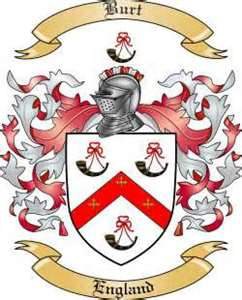
Burt Coat of Arms
Henry Burt (1595 – 1662)
Henry Burt was born about 1595 at Harberton, Devon Co, probably the second son of Henry. He married Ulalia March at Dean Prior, Devon County on December 28, 1619. He came to New England in the Spring or Summer of 1639, and with his wife and seven children settled at Roxbury, MA. Shortly after he settled there, his house was burned, for whatever reason, and, in November of 1639, the General Court made a grant to the town in the amount of 8 Pounds because of the loss . He moved to Springfield in 1640 and was Clerk of the writs (aparently the town recorder). But it is strange that his own childrens’ births are not recorded in the town. He died in Springfield, April 30, 1662.
Henry Burt, Jr
Born: About 1595 in: Harberton, Devon, England Married: December 28, 1619 in: Dean Prior, Devon, England Died: April 30, 1662 in: Springfield, MA
Ulalia March Born: About 1598 in: England Died: August 29, 1690 in: Springfield, MA
We know a lot about his life:
Documented events in his life were:
crown
My 26th great-grandmother was born in Wales and died in France. Her mother was a princess of Wales, who also died in France. Her son married a princess of England. Wales in those days was in dispute since the Romans had withdrawn. The various royals were military rivals. The language and ,most of all, the names make the ancient people of Wales funny to research. These are the most confusing names in my tree. As usual, they have various spellings and titles that are used for the same person, so scrutiny is important.
Margred Verch Madog (1150 – 1198)
is my 26th great grandmother
Llewelyn Ap Iorwerth (1173 – 1240)
son of Margred Verch Madog
Elen Verch Llewelyn (1206 – 1253)
daughter of Llewelyn Ap Iorwerth
Isabell Mar (1278 – 1296)
daughter of Elen Verch Llewelyn
Marjorie Bruce (1297 – 1316)
daughter of Isabell Mar
Scotland Stewart Robert (1316 – 1390)
son of Marjorie Bruce
Katherine Stewart (1366 – 1446)
daughter of Scotland Stewart Robert
Margaret Maxwell (1368 – 1443)
daughter of Katherine Stewart
Joanna Montgomery (1390 – 1469)
daughter of Margaret Maxwell
Thomas Boyd (1405 – 1439)
son of Joanna Montgomery
Robert Boyd (1425 – 1470)
son of Thomas Boyd
Annabella Boyd (1449 – 1476)
daughter of Robert Boyd
Robert Lord Gordon (1475 – 1525)
son of Annabella Boyd
CATHERINE GORDON (1497 – 1537)
daughter of Robert Lord Gordon
Lady Elizabeth Ashton (1524 – 1588)
daughter of CATHERINE GORDON
Capt Roger Dudley (1535 – 1585)
son of Lady Elizabeth Ashton
Gov Thomas Dudley (1576 – 1653)
son of Capt Roger Dudley
Anne Dudley (1612 – 1672)
daughter of Gov Thomas Dudley
John Bradstreet (1652 – 1718)
son of Anne Dudley
Mercy Bradstreet (1689 – 1725)
daughter of John Bradstreet
Caleb Hazen (1720 – 1777)
son of Mercy Bradstreet
Mercy Hazen (1747 – 1819)
daughter of Caleb Hazen
Martha Mead (1784 – 1860)
daughter of Mercy Hazen
Abner Morse (1808 – 1838)
son of Martha Mead
Daniel Rowland Morse (1838 – 1910)
son of Abner Morse
Jason A Morse (1862 – 1932)
son of Daniel Rowland Morse
Ernest Abner Morse (1890 – 1965)
son of Jason A Morse
Richard Arden Morse (1920 – 2004)
son of Ernest Abner Morse
Pamela Morse
I am the daughter of Richard Arden Morse
Elizabeth Bessiles
She was the only child and heiress of William Bessiles, whose family had been settled at Besils Leigh, Berks as Leland says in his quaint language, ‘syns the time of Edward the first’. The Bessells cam out of Provence in France and were ‘men of activitye in feates of arms as it appearith in monuments at Legh; how he faught in listes with a straunge knyghte that challengyd hym, at the whitche deade the kynge and quene at that time of England were present’. (source – http://www.tudorplace.com.ar)
She married Sir Richard Fettiplace.
Elizabeth Bessiles (1465 – 1511)
is my 14th great grandmother
Anne Fettiplace (1496 – 1567)
daughter of Elizabeth Bessiles
Mary Purefoy (1533 – 1579)
daughter of Anne Fettiplace
Susanna Thorne (1559 – 1586)
daughter of Mary Purefoy
Gov Thomas Dudley (1576 – 1653)
son of Susanna Thorne
Anne Dudley (1612 – 1672)
daughter of Gov Thomas Dudley
John Bradstreet (1652 – 1718)
son of Anne Dudley
Mercy Bradstreet (1689 – 1725)
daughter of John Bradstreet
Caleb Hazen (1720 – 1777)
son of Mercy Bradstreet
Mercy Hazen (1747 – 1819)
daughter of Caleb Hazen
Martha Mead (1784 – 1860)
daughter of Mercy Hazen
Abner Morse (1808 – 1838)
son of Martha Mead
Daniel Rowland Morse (1838 – 1910)
son of Abner Morse
Jason A Morse (1862 – 1932)
son of Daniel Rowland Morse
Ernest Abner Morse (1890 – 1965)
son of Jason A Morse
Richard Arden Morse (1920 – 2004)
son of Ernest Abner Morse
Pamela Morse
I am the daughter of Richard Arden Morse
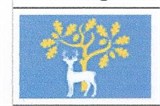
Berkshire flag
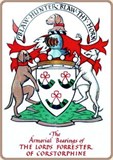
Forrester coat of arms
My 20th great-grandfather, Adam Forrester, was the founder of a clan in Scotland. He became wealthy trading, and had permission to import grain into Scotland without paying duty. His castle no longer exists, but there are parts of the churches he erected in his time that can be seen today. He and his son John held important political offices. The both were Keepers of the Great Seal of Scotland. The clan is without a chief and has been waiting for one for centuries. I want to visit someday, but I do not think they will hand over any clan power to an American woman.
Adam Forrester (1360 – 1405)
is my 20th great-grandfather
John Forrester (1390 – 1448)
son of Adam Forrester
Janet Forrester (1410 – 1488)
daughter of John Forrester
John MAXWELL (1404 – 1484)
son of Janet Forrester
Mariota Maxwell (1430 – 1472)
daughter of John MAXWELL
Annabella Boyd (1449 – 1476)
daughter of Mariota Maxwell
Robert Lord Gordon (1475 – 1525)
son of Annabella Boyd
CATHERINE GORDON (1497 – 1537)
daughter of Robert Lord Gordon
Lady Elizabeth Ashton (1524 – 1588)
daughter of CATHERINE GORDON
Capt Roger Dudley (1535 – 1585)
son of Lady Elizabeth Ashton
Gov Thomas Dudley (1576 – 1653)
son of Capt Roger Dudley
Anne Dudley (1612 – 1672)
daughter of Gov Thomas Dudley
John Bradstreet (1652 – 1718)
son of Anne Dudley
Mercy Bradstreet (1689 – 1725)
daughter of John Bradstreet
Caleb Hazen (1720 – 1777)
son of Mercy Bradstreet
Mercy Hazen (1747 – 1819)
daughter of Caleb Hazen
Martha Mead (1784 – 1860)
daughter of Mercy Hazen
Abner Morse (1808 – 1838)
son of Martha Mead
Daniel Rowland Morse (1838 – 1910)
son of Abner Morse
Jason A Morse (1862 – 1932)
son of Daniel Rowland Morse
Ernest Abner Morse (1890 – 1965)
son of Jason A Morse
Richard Arden Morse (1920 – 2004)
son of Ernest Abner Morse
Pamela Morse
I am the daughter of Richard Arden Morse
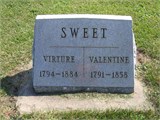
Virtue and Valentine Sweet
Valentine Sweet was born on 14 Feb, 1791 in New York. The Sweet family had come from Rhode Island. Virtue Kelly, an Irish woman no doubt, married Valentine in New York in 1811. They moved to Polo, Ogle, Illinois between 1850 and 1859. Polo had a tunnel for the underground railroad. Their daughter Sarah married her husband Daniel Morse in Illinois in 1858. Daniel and his young bride and first born son returned to New York in 1860 because he thought he might be drafted to fight in the Civil War. After the war Sarah and Daniel moved to Kansas to farm.
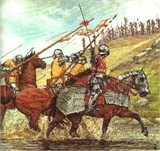
Battle of Blore Heath
My 15th great grandfather was a knight involved with Brit royalty. He lost his life defending it in a battle called Blore Heath. They were fighting about roses (red and white, although I am still not sure what the symbols meant) and the right to the throne. They were royals. They were angry. Things got bloody nasty:
The Battle of Blore Heath
September 23, 1459
After four years of uneasy peace the King presided over a wasting realm. No parliament had been summoned for three years, the country was sadly divided and distressed. The Yorkists were armed, armies were marching across all England. Lord Audley had recently raised a Lancastrian army centered round Market Drayton, and the Queen -through whom the King ruled- sent him orders to intercept Lord Salisbury, who was marching from Yorkshire to join the Duke of York at Ludlow. The two armies met head on two and a half miles east of Market Drayton at a place called Blore Heath. Salisbury, with 3,000 troops, was outnumbered by more than two to one, but could not avoid giving battle.
Audley took up a position just west of a little stream that crossed the Market Drayton-Newcastle-under-Lyme road, and Salisbury’s men were drawn up about 150 yards east of the present Audley Cross, which marks the spot where Lord Audley fell. The Yorkist left rested upon the boggy edge of a wood, but their right was in the air, and Salisbury made a laager of his wagons to protect this flank. Whether Salisbury feigned retreat in order to draw Audley on is not certain, but the Lancastrian commander was definitely the one to attack. Two cavalry charges were repulsed, the first with heavy loss to the Lancastrians, and then they mounted an infantry attack up the hill to the Yorkist position. But this too failed; there was no support from the cavalry, Lord Audley had already fallen and 500 Lancastrians chose this moment to desert to the enemy. Salisbury’s victory was complete and in the pursuit, which continued for two miles, the slaughter was very heavy. Possibly 2,000 Lancastrians perished in this battle, but fewer than 200 Yorkists fell.
For more information on the Battle of Blore Heath, contact Blore Heath 1459 online at http://www.bloreheath.org
YORKISTS LANCASTRIANS
Sir Christopher Conyers of Sokebourne, Durham
Sir Henry Bromflete, Wymington, Bedford
Sir John Conyers of Hornby, Yorkshire
Sir Robert del Booth of Wilmslow, Cheshire (killed in battle)
Sir Walter Devereux of Weobley, Herefordshire (killed in battle)
Sir John Bourchier of West Horsley, Surrey
Sir Richard Grey of Powis, Powis
Sir Hugh Calveley of the Lea, Cheshire (killed in battle)
Sir Richard Hamerton of Hamerton, Yorkshire
Sir William Catesby (Sr.) of Ashby St. Legers, Northamptonshire
Sir Thomas Harrington, Lancashire
Sir John Dawne of Cheshire
Sir Roger Kynaston of Hordley, Shropshire
Sir Jerkin Done of Wickington, Cheshire (killed in battle)
Sir Thomas Lumley of Lumley, Durham
Sir Robert Downes of Shrigley, (killed in battle)
Thomas Meering of Tong
Sir Thomas Dutton of Dutton, Cheshire (killed in battle)
Sir James Metcalfe of Nappa, Yorkshire
Sir John Dwnn of Cheshire, killed in battle
Sir John Middleton of Belsay Castle, Northumberland
Sir John Egerton of Egerton, Cheshire (killed in battle)
Sir Thomas Mountford of Hackforth, Yorkshire
Sir Nicholas of Eyton of Eyton, Shropshire
Sir Richard Neville (Earl of Salisbury) of Middleham, Yorkshire (fled to Calais)
Sir Richard Fitton of Gawsforth, Cheshire
Sir Richard Neville (Earl of Warwick) of Middleham, Yorkshire (fled to Calais)
Thomas Fitton, fate unknown
Sir Thomas Neville of Thornton Bridge, Durham
Sir John Haigh, killed in battle
Sir Robert Ogle of Ogle, Northumberland
Sir Edmund Hampden of Hampden, Buckinghamshire
Sir Thomas Parr of Kendal, Westmoreland
Sir Thomas Hesketh of Rufford, Lancashire
Richard Plantagenet, Duke of York, fled to Ireland
Sir Henry Holland of Darlington, Devon
Sir William Pudsey of Selaby, Durham
Sir John Legh of Booths, Cheshire (killed in battle)
Sir James Strangeways of Whorlton, Yorkshire
Sir Philip Maunsell of Scrurlage, Glamorgan
Sir Walter Strickland of Sizergh, Westmoreland
Sir Richard Molyneux of Sefton, Lancashire (killed in battle)
Sir John Wandesford of Kirklington, Yorkshire
Sir John Neville of Raby, Durham
Sir John Wenlock of Wenlock, Shropshire
Sir Ralph Shirley of Shirley, Sussex
Sir Walter Wrottesley of Wrottesley, Shropshire
Sir John Skidmore of Mochas, Herefordshire
Sir John Stanley of Pipe, Staffordshire
Sir Edmund Sutton of Dudley, Westmoreland
Sir John Sutton of Dudley, Westmoreland
Sir William Troutbeck of Dunham-on-the-Hill, killed in battle
James Touchet (Lord Audley) of Markeaton, Derbyshire (killed in battle)
Sir Hugh Venables of Kinderton (killed in battle)
©The Richard III Foundation, Inc.
Sir Richard Earl Sefton Molyneux (1422 – 1459)
is my 15th great grandfather
Thomas Sir 8th Earl of Sefton Molyneux (1445 – 1483)
Son of Sir Richard Earl Sefton
Lawrence Castellan of Liverpool Mollenaux (1490 – 1550)
Son of Thomas Sir 8th Earl of Sefton
John Mollenax (1542 – 1583)
Son of Lawrence Castellan of Liverpool
Mary Mollenax (1559 – 1575)
Daughter of John
Francis Gabriell Holland (1596 – 1660)
Son of Mary
John Holland (1628 – 1710)
Son of Francis Gabriell
Elizabeth Holland (1652 – 1737)
Daughter of John
Richard Dearden (1645 – 1747)
Son of Elizabeth
George Dearden (1705 – 1749)
Son of Richard
George Darden (1734 – 1807)
Son of George
David Darden (1770 – 1820)
Son of George
Minerva Truly Darden (1806 – )
Daughter of David
Sarah E Hughes (1829 – 1911)
Daughter of Minerva Truly
Lucinda Jane Armer (1847 – 1939)
Daughter of Sarah E
George Harvey Taylor (1884 – 1941)
Son of Lucinda Jane
Ruby Lee Taylor (1922 – 2008)
Daughter of George Harvey
Pamela Morse
I am the daughter of Ruby Lee

Elizabeth Darcy
My 19th great grandmother came from County Meath, Ireland, just like the O’Byrnes of the potato famine on my father’s side. She was a fancy lady with very famous ancestors herself. She was described by an historian as a wise and honorable lady.
Elizabeth Darcy (1331 – 1390)
is my 19th great grandmother
Johanna Hertforth (1345 – 1428)
Daughter of Elizabeth
Ellen Urswick (1364 – 1459)
Daughter of Johanna
Richard Molyneux (1386 – 1460)
Son of Ellen
Sir Richard Earl Sefton Molyneux (1422 – 1459)
Son of Richard
Thomas Sir 8th Earl of Sefton Molyneux (1445 – 1483)
Son of Sir Richard Earl Sefton
Lawrence Castellan of Liverpool Mollenaux (1490 – 1550)
Son of Thomas Sir 8th Earl of Sefton
John Mollenax (1542 – 1583)
Son of Lawrence Castellan of Liverpool
Mary Mollenax (1559 – 1575)
Daughter of John
Francis Gabriell Holland (1596 – 1660)
Son of Mary
John Holland (1628 – 1710)
Son of Francis Gabriell
Elizabeth Holland (1652 – 1737)
Daughter of John
Richard Dearden (1645 – 1747)
Son of Elizabeth
George Dearden (1705 – 1749)
Son of Richard
George Darden (1734 – 1807)
Son of George
David Darden (1770 – 1820)
Son of George
Minerva Truly Darden (1806 – )
Daughter of David
Sarah E Hughes (1829 – 1911)
Daughter of Minerva Truly
Lucinda Jane Armer (1847 – 1939)
Daughter of Sarah E
George Harvey Taylor (1884 – 1941)
Son of Lucinda Jane
Ruby Lee Taylor (1922 – 2008)
Daughter of George Harvey
Pamela Morse
I am the daughter of Ruby Lee
Elizabeth Darcy
Elizabeth Darcy, Countess of Ormond (3 April 1332- 24 March 1390), was the wife of James Butler, 2nd Earl of Ormond, and the mother of his six children, including James Butler, 3rd Earl of Ormond.
Family and lineageElizabeth Darcy was born on 3 April 1332 at Platten, County Meath, Ireland, the daughter of Sir John Darcy, 1st Baron Darcy of Knaith, Justiciar of Ireland, and his second wife Joan de Burgh. Sir John was a veteran of the Battle of Crecy. He held the offices of Constable of Nottingham Castle, Constable of the Tower of London, and Sheriff of Lancashire. From 1341- 1346, he was Chamberlain to King Edward III. Elizabeth had a brother Sir William Darcy, who married Catherine FitzGerald, by whom he had issue. She also had numerous half-siblings from her parents’ previous marriages. Her father’s first wife was Emeline Heron, by whom he had eight children, including his heir, John Darcy, 2nd Baron Darcy of Knaith. Elizabeth’s mother’s first husband had been Thomas FitzGerald, 2nd Earl of Kildare, by whom she had three sons, John FitzGerald, Richard FitzGerald, 3rd Earl of Kildare, and Maurice FitzGerald, 4th Earl of Kildare.Elizabeth’s paternal grandparents were Roger Darcy and Isabel d’Aton. Her maternal grandparents were Richard de Burgh, 2nd Earl of Ulster and Margaret de Burgh, daughter of Sir John de Burgh and Hawise of Lanvaley.One of her maternal aunts was Elizabeth de Burgh, wife of Robert the Bruce.Marriages and childrenOn 15 May 1346 in Ormond, Ireland, when Elizabeth was fourteen, she married her first husband James Butler, 2nd Earl of Ormond (4 October 1331- 18 October 1382), the son of James Butler, 1st Earl of Ormond and Lady Eleanor de Bohun. He was Lord Justice of Ireland in 1359, 1364, and 1376. He was also Constable of Dublin Castle in 1349. He was known as the Noble Earl, however, the Irish called him The Chaste.Upon her marriage to the Earl, Elizabeth assumed the title of Countess of Ormond.James and Elizabeth had six children: 1. Ralph Butler 2. Eleanor Butler (died 1392), married Gerald FitzMaurice FitzGerald, 3rd Earl of Desmond, by whom she had issue, including the 4th and 6th Earls of Desmond. 3. James Butler, 3rd Earl of Ormond (died 6 September 1405), before 17 June 1386, married firstly, Anne Welles, Countess of Ormond, daughter of John Welles, 4th Lord Welles and Maud de Ros, by whom he had issue, including James Butler, 4th Earl of Ormond. He married secondly, Katherine FitzGerald of Desmond, by whom he had further issue. In 1391, he purchased Kilkenny Castle. 4. Thomas Butler 5. Catherine Butler (born 1361), married firstly, Thomas Reade, by whom she had one son, Richard, and secondly, Thomas Fleming of Slane. 6. Joan Butler, married Tiege O’ Carroll
James Butler, 2nd Earl of Ormond, died on 18 October 1382 in Knocktopher and was buried in Gowran Church, Co. Kilkenny. Elizabeth married secondly, Sir Robert de Hereford, Seneschal of the Liberty of Tipperary, between 28 December 1383 and 30 March 1384.
DeathElizabeth Darcy died on 24 March 1390. She was not quite fifty-eight years old.
References 1. ^ Douglas Richardson, Kimball G. Everingham,Magna Carta Ancestry: A Study in Colonial and Medieval Families. p.161 2. ^ Charles Cawley, Medieval Lands, Earls of Ormond * http://www.Tudorplace.com.ar/DARCY.htm * http://www.Tudorplace.com.ar/BUTLER.htm * Charles Cawley, Medieval Lands, Earls of Ormond * Elizabeth Darcy at ThePeerage.com

Sears Cemetery, Barnstable
You do not need to hold a seance to contact the spirits of the dead. You can use a few facts, or many facts if you have them, to query your ancestors. These are not fictional characters of history, but your DNA connection to the past. The novels you have read in your life can not possibly match the drama of the story of your particular historical survival. Your ancestors handed down to you an ethical will. Those who left no written document have nonetheless passed values to the future, with less precision. You are now actively creating the history and the ethics you want to survive in the world.
I started to study my ancestry to learn about the ethical will of my people, whoever they were. My mother had never described her family in any racial terms. I was taught that the Taylors were, in no uncertain terms, Confederate Rebels. My mother, Ruby Taylor’s very large family all lived in Texas. They were involved in religion to a much greater degree than our family living in Pittsburgh. The went to church at least three times a week, including Wednesday. They did a bit of holy rolling and other practices foreign to me. Indeed, my great grandfather Taylor fought in the civil war and received a Confederate pension in Texas in his old age. He was a farmer and preacher in the Church of Christ. This story was the known history of the Taylor tribe, and even this information was never retold to the Taylors of the 1960’s.
What nobody knew at the Taylor family reunion in Houston on the 4th of July each year in the 1960’s was that our Taylor forefather and his wife’s uncle had been burned at the stake as Protestant martyrs in England. Now that is what I call a Rebel. The roots of each family feed the ethical expression (also known as fruit) of the family spirit. The tongue speaking, chicken frying Taylors of Humble/Houston all shared a particular extreme view of the Bible that freaked me out when I was young. The Pentecostal experience, when I was exposed to it, frightened me. Now that I know about the stake burning it all makes perfect sense.
My forefathers and mothers in the grave yard pictured above lived in Holland, then sailed to Plymouth to build a shining city on a hill, creating a strong, complex ethical will. They had a lot to say about the way they thought all cosmology worked in harmony with government. They had strong convictions by which they lived and died. Now that I know more about the lives of these elders in my tribe I have a greater responsibility. I can no longer look at Thanksgiving as a bunch of stuffing. I need to discover the meaning of the Puritan Ethic they created. The values they held are more significant than the physical goods they once owned in old Cape Cod.
On the surface they all seem to use the Bible as an excuse for their own human folly. Just under the surface is the fact that humans have always indulged in folly to learn the folly of our ways. What did they learn? How can we acquire wisdom from their knowledge?
 mermaidcamp