mermaidcamp
Keeping current in wellness, in and out of the water
You can scroll the shelf using ← and → keys
You can scroll the shelf using ← and → keys

Sears Cemetery, Barnstable
You do not need to hold a seance to contact the spirits of the dead. You can use a few facts, or many facts if you have them, to query your ancestors. These are not fictional characters of history, but your DNA connection to the past. The novels you have read in your life can not possibly match the drama of the story of your particular historical survival. Your ancestors handed down to you an ethical will. Those who left no written document have nonetheless passed values to the future, with less precision. You are now actively creating the history and the ethics you want to survive in the world.
I started to study my ancestry to learn about the ethical will of my people, whoever they were. My mother had never described her family in any racial terms. I was taught that the Taylors were, in no uncertain terms, Confederate Rebels. My mother, Ruby Taylor’s very large family all lived in Texas. They were involved in religion to a much greater degree than our family living in Pittsburgh. The went to church at least three times a week, including Wednesday. They did a bit of holy rolling and other practices foreign to me. Indeed, my great grandfather Taylor fought in the civil war and received a Confederate pension in Texas in his old age. He was a farmer and preacher in the Church of Christ. This story was the known history of the Taylor tribe, and even this information was never retold to the Taylors of the 1960’s.
What nobody knew at the Taylor family reunion in Houston on the 4th of July each year in the 1960’s was that our Taylor forefather and his wife’s uncle had been burned at the stake as Protestant martyrs in England. Now that is what I call a Rebel. The roots of each family feed the ethical expression (also known as fruit) of the family spirit. The tongue speaking, chicken frying Taylors of Humble/Houston all shared a particular extreme view of the Bible that freaked me out when I was young. The Pentecostal experience, when I was exposed to it, frightened me. Now that I know about the stake burning it all makes perfect sense.
My forefathers and mothers in the grave yard pictured above lived in Holland, then sailed to Plymouth to build a shining city on a hill, creating a strong, complex ethical will. They had a lot to say about the way they thought all cosmology worked in harmony with government. They had strong convictions by which they lived and died. Now that I know more about the lives of these elders in my tribe I have a greater responsibility. I can no longer look at Thanksgiving as a bunch of stuffing. I need to discover the meaning of the Puritan Ethic they created. The values they held are more significant than the physical goods they once owned in old Cape Cod.
On the surface they all seem to use the Bible as an excuse for their own human folly. Just under the surface is the fact that humans have always indulged in folly to learn the folly of our ways. What did they learn? How can we acquire wisdom from their knowledge?
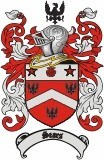
Sears COA
My 11th Great grandfather was so totally kicked out of England:
JOHN BOURCHIER, so named after his father, “he married MARIE L. daughter of PHlLIP VAN EGMONDE, of that city, and acquired with her a large fortune, principally in money. With this he was enabled to purchase property in Essex, adjoining the lands which he hoped soon to recover as his lawful patrimony. Amongst the estates thus bought were Bourchier and Little Fordham Manors, both of which had in former times belonged to his ancestors. But his return to England was resisted by those who were deeply interested in keeping at a distance so formidable a claimant to many of their broad acres. Strenuous and energetic were the efforts JOHN BOURCHIER SEARS made to remove the obstacles which intervened to keep him in exile; but all to no purpose. His opponents were inexorably hostile, and even threatened him with a prosecution, as a participator in the gunpowder plot, if he ventured to set foot in England. The attainder, it must be remembered, which hung over his grandfather, had never been removed, and still impended over the family at the time of his death in 1629.”
He left two sons and two daughter, RICHARD, JOHN, MARIE, and JANE, the three latter settled in Kent; the eldest son
“worn out by his parents’ want of success to recover their English possessions, determined at his father’s death to quit England for ever. He accordingly took passage, with a party of Puritans, for New England in America, and landed at Plymouth in Massachusetts on the 8th of May, 1630. Here he became the founder of a family which has attained wealth and honours in the New World, and died in 1676, leaving behind him three sons, KNYVET, PAUL, and SYLAS. “In the year 1851, a descendant of this family, the Honourable DAVID SEARS, of Boston, visited Colchester in company with a friend, Mr. H. G. SOMERBY, of London, and inspected with much interest the monuments in St. Peter’s Church. With a view to perpetuate the recollection of the ties that attached his family to the town of Colchester, Mr. SEARS caused a brass tablet to be engraved, and obtained the permission of the late Vicar (the Rev. S. CARR), for its erection on the North wall of the Church.”
This brass is divided into three columns, with the copies of the memorials on either side. The central column is headed by a coat of arms bearing the mottoes “EXALTAT HUMILES” and “HONOR ET FIDES”. Beneath is repeated the motto “Exaltat humiles” and the following:
Worth is better than wealth, Goodness better than nobility, Excellence better than distinction. To their Pilgrim Fathers, a grateful posterity. The outer columns transcribe the following memorials: Sacred to the Memory of Richard Sears, son of John Bouchier Sears and Marie L. Van Egmont in lineal descent from Richard Sears of Colchester and Ann Bouchier Knyvet, England. he landed at Plymouth in 1630, Married Dorothy Thacher and died in Yarmouth in 1676. Sacred to the Memory of Knyvet Sears eldest son of Richard Sears of Yarmouth, born in 1635, married Elizabeth Dymoke and died in England in 1686. Sacred to the Memory of Paul Sears, second son of Richard Sears born in 1637, married Deborah Willard and died in Yarmouth in 1707. Sacred to the Memory of Sylas Sears, third son of Richard Sears, born in 1639, married and died in Yarmouth in 1697. Sacred to the Memory of Daniel Sears, son of Knyvet Sears of Yarmouth born in 1682, married Sarah Hawes and died in Chatham in 1756. Sacred to the Memory of Daniel Sears II son of Daniel Sears of Chatham born in 1712, married Fear Freeman and died at Chatham in 1761. Sacred to the Memory of David Sears I son of Daniel Sears II of Chatham born in 1752, married Ann Winthrop and died in Boston in 1816. An explanation for this plate is given along the bottom edge: ON GRANITE MONUMENTS IN THE GRAVEYARDS OF YARMOUTH, AND CHATHAM, IN MASSACHUSETTS, NEW ENGLAND, IN NORTH AMERICA, ARE THE ABOVE INSCRIPTIONS TO THE MEMORY OF THE DESCENDANTS OF THE SAYERS OF ALDHAM, AND COLCHESTER. 1830.

Jenkins COA
My 10th great grandfather, John Jenkins sailed at age 26 on the “Defence” of London, from London the last of July 1635 and arrived at Boston October 8, 1635 with about 100 other passengers, according to Edward Bostock, master. That is a seriously long voyage.
John Jenkins (1609 – 1684)
What is normally found in the search for family history is probate records, documents, bibles, and census records. Every once in a while you come across a written piece about your ancestor. This one is not designated to a specific publication. It is unusual because it gives you a picture of his physical presence as well as his philosophy. I love the Longfellow at the end.
John was a man of about 5 ft. 10 in. in height, slim build and weighing about 155 lbs. His face was widest at the eyebrows and became narrower at the chin. His forehead was moderately high. He had a long, slender neck. Mentally, he was a conservative. One who took time to think over a plan or proposition before coming to a decision. He had a great, retentive memory and was a Liberal in religion. He was a Liberal when it took raw courage to proclaim it. His voice was pitched higher than the average person and did not carry far.
He was a student in the very limited area of his time and what he read, he understood. This conclusion must be sound because of the very large number of his descendants who have made outstanding records as students and as teachers. And the many who became competant in the legal and medical professions. He must have been very capable and worth while pioneer: one of that class of persons whom Longfellow had in mind when he wrote, “And departing, leave behind us,…Footprints on the sand of time.”

Manhattan in 1600s
My 12th great grandfather was in the first settlement of Dutch immigrants in Manhattan. Guillaume and his wife Adrienne were in New Amsterdam in 1613 as part of the crew of the trading ship Tiger. The ship burned in the harbor. After your ship burns you have fewer choices than before your ship burned. They persevered, as was their way. I am a result of their persistence.
 mermaidcamp