mermaidcamp
Keeping current in wellness, in and out of the water
You can scroll the shelf using ← and → keys
You can scroll the shelf using ← and → keys

Home in Rhode Island
My 8th great-grandmother was born in 1609 in Cornwall, England and died in Rhode Island in 1681. She sailed to America with her mother, step father, and husband in 1633. The group left Roxbury for Rhode Island because they probably were already Quakers. The Pilgrims made life hard for Quakers.
Sarah ODDYN or ODDING, daughter of William ODDYN or ODDING and Margaret Lang (parents from England). Details on vitals still being confirmed: Birth 05 Feb 1609 in Madron, Cornwall, England; Death 05 Feb 1681 in Kingston, Washington Co., Rhode Island.
Sarah Odding (1609 – 1681)
is my 8th great grandmother
Eber Sherman (1634 – 1706)
son of Sarah Odding
Mary Sherman (1688 – 1751)
daughter of Eber Sherman
Thomas Sweet (1732 – 1813)
son of Mary Sherman
Thomas Sweet (1765 – 1844)
son of Thomas Sweet
Valentine Sweet (1791 – 1858)
son of Thomas Sweet
Sarah LaVina Sweet (1840 – 1923)
daughter of Valentine Sweet
Jason A Morse (1862 – 1932)
son of Sarah LaVina Sweet
Ernest Abner Morse (1890 – 1965)
son of Jason A Morse
Richard Arden Morse (1920 – 2004)
son of Ernest Abner Morse
Pamela Morse
I am the daughter of Richard Arden Morse – (not you?)
Sarah married Phillip Sherman (Shearman), son of Samuel Sherman and Philippa Ward.
Mr Phillip Shearman was one of the 23 signers of the Portsmouth Compact dated 07 March 1638 (13th signer) … a document 138 years older than our Declaration of Independence in 1776.
Sarah and Phillip had perhaps 12 children (other source says they had 11 children and all survived to adulthood):
Eber Sherman1634 – 1706
Sarah (md Mumford) Sherman1636 – 1718
Peleg Sherman Sr. 1638 – 1719
Mary Sherman1639 – 1700
Samson Sherman1641 – 1718
Edmund Sherman1641 – 1718
Sarah Sherman1641 – ?
William Sherman1643 – 1646
John Sherman1644 – 1734
Hannah Sherman1647 – 1717
Samuel Sherman1648 – 1717
Mary (2nd one) Sherman1652 – 1729
Philip Sherman1652 – 1731
*Source: Ancestry.com
References to Phillip Shearman and his wife Sarah Odding (Oddyn) being Quakers:
• “After Phillip Shearman went to Rhode Island he left the Congregational Church and united with the Society of Friends.” (Representive of Men and Old Families of Rhode Island, Volume 1, publisher Jeff Beers & Co, Chicago c1908, page 210).
• “In the meantime, Phillip Shearman, became a member of another religious order, the Society of Friends (Quakers).” (Going to Palmyra: Sherman Deeds, by Margaret Sherman Lutzvick, 1997, page 38).
• “Philip and Sarah Sherman joined the Society of Friends as did their children and their children’s children for two hundred years.” (A New England Heritage, by Frederick Barreda Sherman, c1969, page 64).
• “After he removed to Rhode-Island he left the Congregational Church and united with the Society of Friends.” (New England Historic Genealogical Society, Vol 24 Jan 1870 page 66: Article titled The Sherman Family, By Rev David Sherman).
*SOURCE: Alonzo Sherman (descendant)
Family and descendants:
While still living in Roxbury, in the Massachusetts colony, Sherman married Sarah Odding, the daughter of William and Margaret Odding. He and Sarah had a large family of at least 11 children, most of whom survived childhood, married, and had large families.
Sherman’s mother-in-law, Margaret Odding, married secondly John Porter, another signer of the Portsmouth Compact. With Margaret, Porter had one child, Hannah, who married Samuel Wilbur, Jr., whose father, Samuel Wilbore was another signer of the compact.
Among the many descendants of Philip and Sarah Sherman are former United States Presidents George H. W. Bush and George W. Bush. Other descendants include James S. Sherman, Susan B. Anthony, Janis Joplin, Sir Winston Churchill, Lyndon LaRouche, Conrad Aiken, Mamie Eisenhower, and possibly Marilyn Monroe.
*Source: Wikipedia summary of sources.
Family links:
Spouse:
Phillip Sherman (1610 – 1687)
Burial:
Portsmouth Friends Churchyard
Portsmouth
Newport County
Rhode Island, USA
SARAH ODDING
In the list of admissions to Roxbury church, member #95 was “Sarah Odding. She was step daughter to John Porter & came with her parents & was after married to Philip Sharman of this church”.
COMMENTS: This admission was late in 1633, but her parents were much earlier in the list, and the family probably came to New England on one of the ships that arrived during the early summer. See JOHN PORTER and PHILIP SHERMAN.
In 1998 Patricia Law Hatcher discovered that Sarah Odding was born by 1612, daughter of “William Oddyn” of Braintree, Essex.

Peabody coat of arms
My 9th great-grandmother was born in New Hampshire and died in Massachusetts. My 9th great-grandfather died young, and Lydia remarried.
Lydia Peabody Howlett: Birth: Aug. 30, 1640 Hampton Rockingham County New Hampshire, USA Death: Apr. 30, 1715 Boxford Essex County Massachusetts, USA d/o Francis Peabody / Lydia Perkins bapt Hampton, Rockingham Co., NH A member of the church at Rowley and by a letter of dismission was admitted to the Boxford church 21 Feb 1702/03 – by her father’s will she received five pounds besides what she had already had. m [1] 1662 Essex Co., MA Thomas Howlett [Jr.] They had 2 children – Mary m Lt. Thomas Hazen, Lydia m
[2] 8 Jul 1667 Essex Co., MA Thomas Perley They had 6 known children – Thomas m Sarah Osgood; Lt. Jacob m 3X; Lydia; Hepzibah [Hephzibah] b/d 1694/1695 Boxford ; Mary; Sarah ca1675 – 1769 ref: MA Boxford VR Topsfield Historical Society Lydia died 30 Apr 1715 Boxford, Essex Co., MA – The Peabody Gen. by Selim Hobart Peabody 1909; Essex Probate Court Record; New England Marriages Prior to 1700 C.A. Torrey Family links: Parents: Lydia Perkins Peabody (1617 – 1649) Spouses: Thomas Howlett (1637 – 1667) Thomas Perley (1641 – 1709) Sibling: Lydia Peabody Perley (1640 – 1715) Isaac Peabody (1648 – 1727) Burial: Mount Vernon Cemetery Boxford Essex County Massachusetts, USA Created by: BluMoKitty Record added: Sep 04, 2013 Find A Grave Memorial# 116523513
Lydia Peabody (1640 – 1715)
is my 9th great grandmother
Mary Howlett (1664 – 1727)
daughter of Lydia Peabody
John Hazen (1687 – 1772)
son of Mary Howlett
Caleb Hazen (1720 – 1777)
son of John Hazen
Mercy Hazen (1747 – 1819)
daughter of Caleb Hazen
Martha Mead (1784 – 1860)
daughter of Mercy Hazen
Abner Morse (1808 – 1838)
son of Martha Mead
Daniel Rowland Morse (1838 – 1910)
son of Abner Morse
Jason A Morse (1862 – 1932)
son of Daniel Rowland Morse
Ernest Abner Morse (1890 – 1965)
son of Jason A Morse
Richard Arden Morse (1920 – 2004)
son of Ernest Abner Morse
Pamela Morse
I am the daughter of Richard Arden Morse
Goody Cole was a local “character” in Hampton who ran afoul Francis’ wife Lydia and another neighbor, Sarah Perkin. She was later apparently tried for witchcraft though she was not convicted.
Nov 4 1645: in the oldest book of records of Ipswich court, entry reads “Eunice Cole to sit in the stocks at Hampton and to make acknowledgement of her slanderous speeches concerning Susan Parkings and Lidia Pebodye and to pay to the witness Isaac perkins 7d and the feas of the court.” [Ref: PeabodySH PEABODY p8] 1645: Eunice Cole publicly acknowledges her slanderous speeches against Susan Perkins and Lydia Peabody. That these two were connected seems possible [Ref: Noyes PEABODY Francis] Mar 4 1649/50: Seating at the Meeting House, assigned Second seat on east end of the south side, as “Goody Pebody” [Ref: Noyes PEABODY Francis] Her surname appears as PERKINS in various Internet sources (most noteably the LDS Ancestral File), daughter of Isaac PERKINS who was their neighbor in Hampton, but no confirmation found
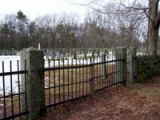
Mount Vernon Cemetery, Boxford, Essex, Massachusetts
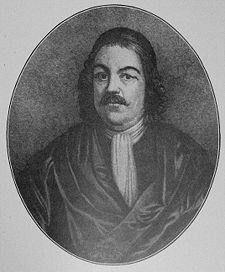
Rev. Simon Bradstreet
My 10th great-grandfather was a well educated and rebellious Puritan vicar in England. His son Simon and daughter-in-law Ann Dudley would carry his Puritan streak all the way to America.
Simon Bradstreet was on of the first Fellows of Emanuel College, Cambridge University, England and Vicar of Horbling Lincolnshire from 1596 to 1621.
Simon Bradstreet (1580 – 1621)
is my 10th great grandfather
Governor Simon Bradstreet (1604 – 1697)
son of Simon Bradstreet
John Bradstreet (1652 – 1718)
son of Governor Simon Bradstreet
Mercy Bradstreet (1689 – 1725)
daughter of John Bradstreet
Caleb Hazen (1720 – 1777)
son of Mercy Bradstreet
Mercy Hazen (1747 – 1819)
daughter of Caleb Hazen
Martha Mead (1784 – 1860)
daughter of Mercy Hazen
Abner Morse (1808 – 1838)
son of Martha Mead
Daniel Rowland Morse (1838 – 1910)
son of Abner Morse
Jason A Morse (1862 – 1932)
son of Daniel Rowland Morse
Ernest Abner Morse (1890 – 1965)
son of Jason A Morse
Richard Arden Morse (1920 – 2004)
son of Ernest Abner Morse
Pamela Morse
I am the daughter of Richard Arden Morse
He may have left England for Holland as the “Great Migration” moved toward America, but this information is unproven:
From “History of Newfield” page 447. He was a non-conformist minister in Lincolnshire, England, and Middelburg, Holland; married and died about 1617.
His death date is probably 1620-21, and some believe he died in England.

Artemisia
To care for anyone at the end of life is a privilege and an honor. Not all people are in the circumstances to allow them to devote time to caring for family members. I cared for my parents when they had end of life issues. My brother lived far away and had a demanding job. He had no extra time or energy for our parents, and I did. The direct experience I gained by taking care of their health, assets, and welfare has given me insight into mortality. I was close to them as they passed into the next realm of existence. I felt the change as they slipped into that permanent state beyond life. They became a kind of distilled essence of all they thought, all they loved, and all they did. Their presence is still felt on earth, but their physical bodies have ceased to function. They are spirits.
Yesterday we said good bye to the earthly physical life of our beautiful coon hound, Artemisia. She was a wonderful, funny, friendly, loyal dog for almost 13 years. She had reached the end of her physical limits, but needed help to make her exit. She was at home for her vet-assisted end of life. Although our sorrow and loss are devastating now it was good to be with her and love her while she departed. Our home feels and sounds empty without the sweet howling welcome when we come home. This mourning will take time. To be alive without my hound today is very hard. Her spirit is teaching me to be grateful for all we shared, no regrets. She does not regret any of her time with us, and wishes us a happy life. I can feel her love as a permanent support and protection. She knows my love for her can never fade. She is unlocking mortality’s secret code for me.
She was cremated today and scattered under trees at the pet cemetery. Now she is a couple miles down the road to the east, and her grandparents are buried a couple of miles to the west of our home. She was close to her grandma, and acted as her therapy dog. I feel sure they are together now in some way. The gift in caregiving is understanding. The task of helping someone die well can be draining and frightening. There is nothing easy about it. The rewards are lasting and meaningful. I know this will come in handy when the time comes for me to die. My loyal hound will be there to guide my way.

Pam and the Fam on the farm
I study my ancestry and family history. This fascinating subject consumes as much of my time as I allot to it. I have spent six years on Ancestry.com working on my tree. I am more skeptical now than I was in the beginning because I have been burned by specious data. It is painful to discover an error in one’s research, yet it is better to know sooner than later. I once had a magical surprise experience in Rhode Island at a very special private family home from the 1600’s. I was treated to a tour of the home and grounds since I announced that I was a Carr descendent. I was given instructions to find the family graves by my long-lost “cousin” who still lives on the property. I was in heaven. It turns out I was also delusional about my connection to that family because I had made a mistake a couple of generations earlier in my research. I discovered this error after I had returned home from my trip, and had to laugh about it. I also had to start again to retrace the lineage. That correction was easy because I had some good documentation to verify the facts. Other problems I have discovered or had pointed out to me have left me with a dead-end when I removed the phantom limb.
The odd phantom feeling after chopping off limbs and branches is caused my the attachment formed while studying them. There are several very common names in my tree including Scott. When I began my sturdy I started with notes written by my maternal great-grandmother about her knowledge of the family. She stated that my 2nd great-grandfather, Thomas Scott, was a soldier in the Union army during the Civil War. Even though we know his full name, Thomas Ewing Scott, born in 1842 in Ohio, I can find no decisive record of his military service. There are too many Thomas Scotts from Ohio for me to be sure. My maternal 2nd great-grandfather was, indeed, a soldier for the Confederacy. I am positive about that because I have a copy of his service record as well as his Confederate pension application that he made late in his life in Texas. After his death his wife also applied for a pension as a surviving spouse. I have her application documenting her husband’s service also.
If you find written documents of a private source they may or may not be accurate. Only when you can back up your story with official documents do you have a solid case. I have learned the hard way to verify all the connections fully before jumping back to another generation. There are many trees on the Ancestry.com site that have unverified connections. Copying the work of others without making sure of it can lead to bigger and longer errors. This is not even as safe as the cold war when we trusted by verified. Don’t trust until you verify. This practice may save you many hours of wasted time. After I have recovered from the vexation of discovering I had been wrong I still had certain affection for those people who turned out not to be related to me. My philosophy now is that I learned about history while I was out on the wrong limbs, and I have never claimed to be a professional genealogist. I am more of a time traveller. Do you know any of your family history, gentle reader? How did you learn about it?


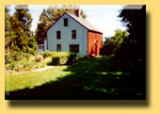
Philip Sherman’s home in Rhode Island
My 8th great-grandfather was kicked out of the Puritan’s church at Roxbury and became a Quaker. He moved to Rhode Island, as many of my ancestors did, to practice his religion. He was influential and prosperous in Rhode Island.

Portsmouth compact
Philip Sherman (1610 – 1687)
is my 8th great grandfather
Eber Sherman (1634 – 1706)
son of Philip Sherman
Mary Sherman (1688 – 1751)
daughter of Eber Sherman
Thomas Sweet (1732 – 1813)
son of Mary Sherman
Thomas Sweet (1765 – 1844)
son of Thomas Sweet
Valentine Sweet (1791 – 1858)
son of Thomas Sweet
Sarah LaVina Sweet (1840 – 1923)
daughter of Valentine Sweet
Jason A Morse (1862 – 1932)
son of Sarah LaVina Sweet
Ernest Abner Morse (1890 – 1965)
son of Jason A Morse
Richard Arden Morse (1920 – 2004)
son of Ernest Abner Morse
Pamela Morse
I am the daughter of Richard Arden Morse – (not you?)
In Bertha L. Stratton’s book, “Sherman and Other Families,” she made the statement that Philip Sherman intended to settle in New Hampshre, but the climate proved too severe and so the lands there were abandoned. Upon discussion with Roger Williams at Providence, Rhode Island, the other people from Massachusetts bought Aquidneck Island in Narraganset Bay. Nineteen men signed the compact for the town in 1638. Upon leaving the church in Roxbury, Philip joined with the Friends. The Massachusetts Court ordered Philip to appear before them on 12 Mar 1638, he did not go. But he continued as a prominent figure in Rhode Island; he was the General Recorder in 1648-1652 & the Deputy to the Assembly in 1665-1667. Tradition says he was a “devout and determined man, and he was also a “neat and expert penman & an educated man,” and his Last Will & Testament “shows that he was wealthy for those times.”
Philip Sherman immigrated to Roxbury, MA and married Sarah Odding shortly after his arrival. He might have felt pressured to marry quickly, because bachelors especially of such an advanced age as 23 were looked upon with suspicion, and their single state could even effect business opportunities and social acceptance.
According to Representative Men of Old Families of Southeastern Massachussets, by J. H. Beers & Company, in a biographical entry of one of Philip’s descendants, Philip Sherman “took the side of Anne Hutchinson,” a brave woman in Salem, MA who maintained that women should be allowed to hold prayer meetings as well as men, and proceeded to hold such meetings in her home in defiance of the rules of the time and demands that she quit. She, with some members of her family including young grandchildren, were driven out of Salem into the wilderness of Rhode Island. Families in sympathy for her or in fear of retaliation for their past support and/or defense of her beliefs soon followed to Rhode Island, and Philip Sampson and his family were among the group that left Salem following her ouster.
In Providence, Philip met Roger Williams, founder of Rhode Island promising religious freedom to it’s citizens. Williams advised Philip andthe members of his party to purchase Aquidneck from the Indians, which they did on 1 Jul 1639. They created their own government with Coddington chosen to be the first governor of Rhode Island, and Philip chosen to be secretary.
Some historians believe that the death of Anne Hutchinson with most of her family during an attack of native Americans was the first act in several that led to the end of the Puritan Church. Members of the communities in all the colonies were horrified that she was banished for her beliefs and suffered so. Many felt banished themselves from England when their Puritan faith had been banned, and her treatment forced them to recognize their own harshness.
Philip left what is now called “the Congressional Church” and joined the Society of Friends, or Quakers.
He was the father of 13 children, and many of his descendants served America as congressmen and soldiers.
We have his will:
WILL of PHILIP SHEARMAN, of Portsmouth, RI
In the name of God Amen, I, Philip Shearman, yeoman, aged seventy-one years, of the Town of Portsmouth in the colony of Rhode Island and Providence Plantations in New England, being in good memory, praise be therefor given to Almighty God, do make and ordain this my Last Will and Testament in the manner and form following: (that is to say); first and principally I commend my soul into the hands of Almighty God and my body to the earth to be decently buried by my executor hereafter named. And as for the disposition of my worldly estate, it is in manner and form following; first I give to Sarah my loving wife the use and her dwelling in the first room at the west end of my now dwelling house & bed and bedding with the furniture thereto belonging now standing in the aforenamed room. Also I do here by ordaine and appoint my son Samuel my sole Executor to this my last will and testament truely performed; and to b__ himself, heirs, Executors and Administrators for the true performance hereof; furthermore my will is that my executor shall sufficiently maintain my loving wife with food and raiment and all necessaries whatsoever during her natural life and at her decease decently to bury her; furthermore, I do give unto Sarah mywife ten good ewe sheep to be marked out of my flock for the sole use and dispose both of bodie and wool yearly, wch said number shall be kept by my said Executor during the natural life of Sarah my said wife free and without any charge to my wife.
Item: I do give unto Eber my Eldest son that which I have already given him, ten acres of land in the bounds of Portsmouth aforesaid at a place called Briggs swamp joining to a parcel of land of his own to him and his heirs forever. And all my horse flesh in the Narragansett country except one mare, the scond best; such excepted mare, I give to Thomas Mumford and Peleg Mumford my Grandchildren.
Item: I give unto my son Peleg five ewe sheep.
Item: I give unto my son Edmund a quarter share of meadow and a sixteenth part of a share of upland lying in Ponagansett within the Township of Dartmouth in the colony of New Plymouth in New England with all the privileges th__ to belonging or any wards appertaining. And also my whole right in the purchase of Squamscutt now called Westerly by thecollony to the said Edmund and his heirs.
Item: I give unto my son Samson after the decease of my said wife his half of the breadth of my farm wch I now dwell upon from the westward end to the sea and three Rood more in breadth of the whole length of the aforesaid land and bounded southward upon a straight line Eastward from the south west corner of that orchard now called Sampson’s upon a straight line to a lande marke about a rood short of the cart way that goes from my dwelling house to my barn in Portsmouth aforesaid. And from the said land marke upon a sloap line five Rood westwardly of my barn until it comes to the lineof the aforesaid half-breadth of the aforesaid farm to him and his heires forever and to have the third part of any hay and grass yearly of the aforesaid farm. And my son Samson and my son Samuel to have equal privileges in the arible land of the aforesaid farm during the natural life of Sarah my wife.
Item: I give unto my son Samuel all the remaining of my aforesaid farm with my now dwelling house and all the other buildings upon the said part of the land lying southward of the other part of my farm now given to my son Samson as aforesaid to him and his heirs forever after the decease of Sarah my wife and to have two parts of the grass and the hay during the natural life of Sarah my wife.
Item: All my neat cattle, hors kind, sheep kind and swine I do give unto my son Samuel aforenamed Executor, (excepting two oxen and a fatting cow.) And also all my moveable goods (Excepting two great chests with lock and key to each of them, which said chests I give unto my wife Sarah) he my aforesaid executor paying the several legacies herein this my will specified both the aforementioned and what shall hereafter be exprest in this my will.
Item: I givee unto my son Samson aforenamed one white faced mare with her foale and all those four Indians wch we jointly bought.
Item: I give unto my son Samson and my son Samuel my draught horse and two draught steers equally betwixt them.
Item: I give unto my son John my bay mare.
Item: I give unto my son Benjamin all the remaining __art of of my land at Brigg’s Swamp whereupon the said Benjamin’s house now stands, being by estimation twentie acres be the same more or less to him and his heires forever.
Item: I give unto my daughter Sarah ten ewe sheep to be paid her the year after my decease.
Item: I give unto my daughter Mary ten ewe sheep to be paid her the year after my decease.
Item: I give unto my daughter Hannah fivee pounds of New England silver money for the proper use of her selfe and children to be paid the year after my decease.
Item: I give unto my daughter Hannah five ewe sheep to be paid to her the year after my decease.
Item: I give unto my daughter Philip ten ewe sheep to be paid to her the year after my decease.
Item: I give unto Benjamin Clarke to my son Edmund until he comes of age of one & twenty years, the said Edmund finding the said Benjamin with sufficient food and clothing duting the terme aforesaid.
Item: I the above said Philip Shearman do ordain and appoint this to be my last will and testament, making void all former wills and testaments heretofore by me made.
In witness whereof I have hereunto sett my hand and seal this one and thirtyeth day of the month comonly called July, Anno Domino on thousand six hundred and Eightie one.
Philip Shearman (Seal)
Before the signing and sealing of this my will and testament, I the aforesaid Philip Shearman do declare that wheras the word Assigns is omitted in the giving of the several parcels of land to my children:
That it is my true intent and meaning that I do give the said several parcels of land specified in my above written will to my children to their heires and Assigns forever.
Signed and sealed in the presence of:
Job Almy
Philip Phettiplace
Elias Williams
Proved March 22, 1686/7.
Recorded on page 260 of “Land Evidence, 2nd Book, No. 1”
New England Families Genealogical and Memorial: Third Series, Volume IV
(The Sherman Line).
(IV) Philip Sherman, son of Samuel Sherman, was named after his mother. He was born in Dedham, England, February 5, 1610. He came to America when he was twenty-three, and settled at Roxbury, Massachusetts. He was made freeman there, May 14, 1634, standing next on the list after Governor Haynes. He married Sarah Odding, in the year after his arrival; she was stepdaughter of John Porter, of Roxbury, and her mother, Margaret Porter, was widow of (???) Odding. He returned to England in 1635 for a short time. On November 20, 1637, he and others were warned to give up all arms, because “the opinions and revelations of Mr. Wheelwright and Mrs. Hutchinson have seduced and led into dangerous errors many of the people here in New England.” The Church record says he was brought over to “Familism” by Porter, his wife’s stepfather. In 1638 he was in Portsmouth, Rhode Island, but the Massachusetts authorities evidently thought he had not left, for on March 12, 1638, though he had license to leave, he had summons to appear at the next court if they had not yet gone, to “answer such things as shall be objected.” He did not answer these summons, but continued to be a prominent figure in Rhode Island affairs. In 1639 he was secretary of the colony; made freeman, March 16, 1641; was general recorder, in 1648 to 1652; deputy from 1665 to 1667. On April 4, 1676, he was among sixteen persons who were requested to be at the next meeting of the deputies to give advice and help in regard to the Narragansett campaign. He died in March, 1687. His will, dated July 30, 1681, showed that he was wealthy for the times. He had thirteen children, eight boys and five girls, their dates of birth being between the years 1634 and 1652.
=========================================================================
from: “The Great Migration Begins”
PHILIP SHERMAN
ORIGIN: Unknown
MIGRATION: 1633
FIRST RESIDENCE: Roxbury
REMOVES: Portsmouth 1638
CHURCH MEMBERSHIP: “Phillip Sherman. He came into the land in the year 1623 [sic], a single man, & after married Sarah Odding, the daughter o[f] the wife of John Porter by a former husband. This man was of a melancholy temper, he lived honestly & comfortably among us several years, upon a just calling went for England & returned again with a blessing: but after his father-in-law John Porter was so carried away with these opinions of familism & schism he followed them & removed with them to the Iland, he behaved himself sinfully in these matters (as may appear in the story) & was cast out of the church” [RChR 78-79].
FREEMAN: 14 May 1634 [MBCR 1:368]. 16 March 1640/1 [RICR 1:111].
EDUCATION: Sufficient to be General Recorder of Rhode Island. His inventory included “four old Bibles & other small books” valued at £1.
OFFICES: General Recorder, 16 May 1648, 22 May 1649, 23 May 1650 [RICR 1:209, 217, 230, 236]. On 4 November 1651 colony records were demanded of Philip Sherman “late recorder of this colony” [RICR 236].
Attended Portsmouth town meeting, 13 May 1638, 20 May 1638, 20 August 1638, 5 November 1638, 2 January 1638/9 [RICR 1:53, 54, 58, 61, 63]. Selectman, 30 April 1639 [RICR 1:71]. Committee to build fences, 20 May 1638 [RICR 1:54]. Surveyor, 1640 [RICR 1:102]. Town clerk, 1649-1656 [PoTR 42, 45, 49, 50, 57, 60, 62, 67, 71]. Town Council, 1649, 1650, 1653, 1654, 1656, 1657, 1670-1673 [PoTR 42, 45, 61, 62, 71, 76, 152, 161, 169, 176]. Portsmouth commissioner to Rhode Island General Court, 21 May 1656 [PoTR 70; RICR 1:337]. Committee to audit treasurer’s accounts, 21 May 1661 [RICR 1:442]. Portsmouth deputy to Rhode Island General Court, 3 May 1665, 25 October 1665 [PoTR 130; RICR 2:96, 130].
ESTATE: On 10 February 1639/40 he was granted 200 acres at Portsmouth [RICR 1:73].
On 28 August 1650 Samuel Gorton of Warwick sold to Philip Sherman of Portsmouth seven acres in Portsmouth [PoTR 304-05].
On 3 October 1677 Philip Sherman Senior of Portsmouth deeded to “Pelegg Sherman my son” fourteen acres in Portsmouth [PoLE 1:148]. On 15 April 1678 Philip Sherman Senior of Portsmouth deeded to “Benjamin Chase my son-in-law and my daughter Philip his wife” four acres and a half in Portsmouth [PoLE 1:150].
In his will, dated 31 July 1681 and proved 22 March 1686/7, “Philip Shearman, yeoman, aged seventy-one years, of the Town of Portsmouth,” bequeathed to “Sarah my loving wife the use and her dwelling in the first room at the west end of my now dwelling…”; “my son Samuel my sole executor” and to provide “my loving wife with food and raiment and all necessaries whatsoever during her natural life and at her decease decently to bury her”; to “Sarah my wife ten good ewe sheep”; to “Eber my eldest son that which I have already given him, ten acres of land in the bounds of Portsmouth … at a place called Briggs swamp … and all my horse flesh in the Narragansett country excepting one mare, the second best, such excepted mare, I give to Thomas Mumford and Peleg Mumford my grandchildren”; to “my son Peleg five ewe sheep”; to “my son Edmund a quarter share of meadow and a sixteenth part of a share of upland lying in Ponagansett within the township of Dartmouth … also my whole right in the purchase of Squamscutt now called Westery”; to “my son Samson after the decease of my said wife his half of the breadth of my farm which I now dwell upon … my son Samson and my son Samuel to have equal privileges in the aerable land of the aforesaid farm during the natural life of Sarah my wife”; to “my son Samuel all the remaining part of my aforesaid farm with my now dwelling house and all the other buildings … and to have two parts of the grass and the hay during the natural life of Sarah my wife”; to “my son Samson … one white faced mare with her foal and all those four Indians which we jointly bought”; to “my son John my bay mare”; to “my son Benjamin all the remaining part of my land at Briggs’ Swamp whereupon the said Benjamin’s house now stands”; to “my daughter Sarah ten ewe sheep”; to “my daughter Mary ten ewe sheep”; to “my daughter Hannah £5 of New England silver money for the proper use of herself and children”; to “my daughter Hannah five ewe sheep”; to “my daughter Philip ten ewe sheep”; “I give Benjamin Clarke to my son Edmund until he comes of age of one & twenty years, the said Edmund finding the said Benjamin with sufficient food and clothing during the term aforesaid” [Roy V. Sherman, Some Descendants of Philip Sherman The First Secretary of Rhode Island, hereafter Sherman Anc, citing PoLE 2:260-61].
The inventory of the estate of Philip Sherman, dated 19 March 1686/7, totalled £100, with no real estate included [Portsmouth Scrapbook 17].
BIRTH: Baptized Dedham, Essex, 5 February 1610/1, son of Samuel Sherman [Sherman Gen 95].
DEATH: Portsmouth before 19 March 1686/7 (date of inventory).
MARRIAGE: Roxbury about 1633 Sarah Odding, daughter of Margaret (_____) (Odding) Porter [RChR 78-79; TAG 73:176-80].
CHILDREN:
i EBER, b. say 1634; m. Mary _____. (She has been called Mary Wilcox, daughter of Edward [Transatlantic Shermans 114; Philip Sherman 28], but there is no room for her in the family of Edward Wilcox [NEHGR 147:190-91].)
ii SARAH, b. say 1636; m. by about 1656 Thomas Mumford [Austin 136].
iii PELEG, b. say 1637; m. Portsmouth 26 July 1657 Elizabeth Lawton, daughter of Thomas Lawton [RIVR 4:Portsmouth:37].
iv EDMUND, b. 1641; m. by 1674 Dorcas Hicks, daughter of Samuel Hicks and granddaughter of ROBERT HICKS [Harriet Woodbury Hodge, Hicks (Hix) Families of Rehoboth and Swansea, Massachusetts (Winnetka, Illinois, 1976), p. 59].
v SAMSON, b. 1642; m. Portsmouth 4 March 1674/5 Isabel Tripp, daughter of John Tripp [RIVR 4:Portsmouth:37; TG 4:62].
vi JOHN, b. 1644; by about 1674 Sarah Spooner, daughter of William Spooner (in his will of 8 March 1683[/4] William Spooner made a bequest to “my daughter Sarah Sherman” [PCPR 4:2:71]).
vii MARY, b. 1645; living on 31 July 1681 (father’s will). (Austin says she married Samuel Wilbore, son of Shadrach, but this Samuel was born in 1663 [Austin 228], so this identification seems highly unlikely.)
viii HANNAH, b. 1647; m. by about 1678 William Chase, son of William Chase [NEHGR 87:51-52; Austin 178-79].
ix SAMUEL, b. 1648; m. Portsmouth 23 February 1680/1 Martha Tripp [RIVR 4:Portsmouth:37; TG 4:62].
x BENJAMIN, b. 1650; m. Portsmouth 3 December 1674 Hannah Mowry, daughter of ROGER MOWRY [Austin 179].
xi PHILIP, b. 1652; m. by about 1674 Benjamin Chase, son of WILLIAM CHASE [PoLE 1:150; Austin 178-79; NEHGR 87:51].
Blue laws in Plymouth Colony were created to keep Sabbath exactly the way the Puritans wanted it to be kept. The Puritans had no tolerance for other religious views, or for slacker Puritans. The criminal justice system was used to fine and persecute those found guilty of profaning the Lord’s day. It did not take much to arouse the ire of these founding fathers. The laws evolved very slowly over time, but still represent a will to control what happens on Sunday. In Plymouth you would be fined for walking anywhere but to church from Saturday at sundown until Sunday at sundown. This was a no laughing/no smiling kind of religious day and they were serious about preserving it. The Pilgrims of the Mayflower would freak right out about the televised football games, a tradition many associate with Thanksgiving.

Hammond Coat of Arms
My 10th great-grandfather was an early settler of Watertown, Massachusetts. His father died and he was declared bankrupt in England before he emigrated. William brought part of his family to America to settle before sending for his wife and younger children. By April 1634 they had all arrived in the colony. He frequently was fined for religious infractions and may have been a secret Quaker.
William Hammond
Birth: 1575, Lavenham, Suffolk, England.
Baptized: 30 Oct 1575, Lavenham, Suffolk, England.
Death: 8 Oct 1662, Watertown, Massachusetts. “Aged about ninety-four.
Father: Thomas Hammond, born and died in England.
Mother: Rose Trippe, born and died in Lavenham, Suffolk, England.
1629: On 26 Feb 1629/30, William Hammond was declared bankrupt in England.
1629: On “the 20th of November after that date, he departe[d] the land and fleeth into New England. Information from a 1656 law suit against William Hammond, citing this occurance. This would place him on the “Lyon” which sailed from Bristol on 1 Dec 1630/1631, and arriving in New England the following February.
Emigration: 1631. See above.
The Hammond family came to New England in at least three stages. In late 1630 or early 1631, John Winthrop Jr. noted receipt of £7 5s. from “Goody Hammond to send her husband.” This supports the conclusion that William Hammond was a passenger on the “Lyon” when it sailed from Bristol in late 1631.
On 26 Sept 1633, Governor John Winthrop, wrote to Sir Simonds D’Ewes, informing him that “Yours by young Hamond I received,” indicating that William Hammond Jr. probably sailed for New England in one of the ships that arrived in the fall of 1633. His sister Anne and brother Thomas may also have come at this time, because they are not included, a year later, in the passenger list of the “Francis”, which sailed from Ipswich, in the spring of 1634, with Elizabeth Hammond, (aged 47); Elizabeth Hammond, (aged 15); Sarah Hammond, (aged 10); and John Hammond, (aged 7) on board.
First Residence: William’s first residence was Watertown, Massachusetts.
Occupation: Husbandman.
Religion: Admitted to Watertown Church prior to 25 May 1636, (implied by freemanship.)
1636: Admitted as a Freeman, 25 May 1636.
1636: In his record of admissions to Scituate Church, Rev. John Lathrop, entered on 14 Apr 1636, “Elizabeth Hammon, my sister, having a dismission from the church at Watertown.”
1636: On 25 Jul 1636, William Hammond was granted forty acres in the Great Dividend.
1637: Granted eight acres in the Remote Meadows, 26 Jun 1637.
1641: Granted a farm of one hundred fifty-five acres, 10 May 1642.
1645: In the “year 1645 Rose his mother dyeth … but now in the year 1647 his son Thomas come from New England to be admitted to the land.”
1647: On 22 Nov 1647, “W[illia]m Hamond granted a letter of attorney unto Thomas Hamond, his son, to ask demand of the lord of the manor the possession of certain lands in Lavenham, in Suffolk which were the possession of Rose Steward, his mother.”
1647: William was a Watertown Selectman, 8 Nov 1647.
1656: Along with Isaac Stearns, William was an arbiter in a dispute between John Wincoll and Benjamin Crisp.
1656: “Old Goodman Hammond” was appointed to a committee to assign seats in the meeting house, 17 Nov 1656.
1660: On 6 Non 1660, Watertown Selectmen sent the constables to “Old Hamond to let him know, that contrary to order of town, he had entertained into his family such a person as is likely to prove chargeable, do therefore desire him to rid the town of such an encumbrance or otherwise to bear the burden thereof himself.”
In William’s will, dated 1 Jul 1662 and proved 16 Dec 1662:
“William Hammond of Watertowne … now about ninety years of age” bequeathed to “my loving dear wife Elizabeth Hammond my whole estate” for life;
and after her death, to “my son John Hammond all my houses, lands;”
to “Thomas Hammond son of my son Thomas Hammond, deceased,” £40 when twenty-one, but if he dies before that then “the £40 to be equally divided between the children of my daughter House, daughter Barnes, [i.e., Barron’s], children”; to “daughter Barnes” £30;
to “the four children of my daughter Elizabeth House deceased” £5 apiece; to “Adam Smith son of my daughter Sarah … one mare colt”
and to “my daughter Sarah Smith” £5.
The inventory of the estate of William Hammond totalled £467 16s. 9d., including £318 in real estate:
one dwelling house, an orchard £24;
23 acres of pasture land, £69;
11 acres of broken-up land, £48;
15 acres of meadow, £90;
8 acres of meadow remote, £15;
18 acres of land in lieu of township, £6;
1 Great Dividend, 40 acres, £40;
1 farm, 160 acres, £20; and
a part of a barn, £6.
His inventory also included “one great Bible and 3 other books” valued at 13s.
Married: Elizabeth Paine, baptized in Lavenham 22 Sep 1586. She was the daughter of William and Agnes Neves Paine. Elizabeth arrived in New England in 1634 on the “Francis” with her three youngest children. Elizabeth died 27 Sep 1670, in Watertown, Massachusetts, “aged about ninety years .”
Marriage: 9 Jun 1605, in Lavenham, Suffolk, England.
Children of William Hammond and Elizabeth Paine Hammond:
William Hammond (1575 – 1662)
is my 10th great grandfather
Elizabeth Hammond (1620 – 1703)
daughter of William Hammond
Elishua Crowell (1643 – 1708)
daughter of Elizabeth Hammond
Yelverton Gifford (1676 – 1772)
son of Elishua Crowell
Ann Gifford (1715 – 1795)
daughter of Yelverton Gifford
Frances Congdon (1738 – 1755)
daughter of Ann Gifford
Thomas Sweet (1765 – 1844)
son of Frances Congdon
Valentine Sweet (1791 – 1858)
son of Thomas Sweet
Sarah LaVina Sweet (1840 – 1923)
daughter of Valentine Sweet
Jason A Morse (1862 – 1932)
son of Sarah LaVina Sweet
Ernest Abner Morse (1890 – 1965)
son of Jason A Morse
Richard Arden Morse (1920 – 2004)
son of Ernest Abner Morse
Pamela Morse
I am the daughter of Richard Arden Morse
WILLIAM HAMMOND – ELIZABETH PAINE
(1575-1662) (1586-1676)
William, the emigrant ancestor of this branch of the family in America, was born in Lavenham, County of Suffolk, England, where he was baptized October 30, 1575. He was the only surviving son of Thomas Hammond and Rose Trippe, his younger brother, Thomas, having died in infancy. He was left an orphan by the death of his father in 1589. He married Elizabeth there June 9, 1605 and their children were all born in Lavenham. Elizabeth was born 1586, also in Lavenham, daughter of William Paine.
William, along with his older children, came to America before his wife and younger children, though the exact year is not known. Elizabeth, aged 47 years, with children Elizabeth, aged 15, Sarah, aged 10 and John, aged 7 years embarked at Ipswich, England, in the ship, “Francis,” John Cutting, Master, in April, 1634, and joined her husband in New England.
William Hammond was admitted freeman in Watertown, May 25, 1636, and was grantee of seven lots and purchaser of three lots before 1644. His homestead of 40 acres was situated on the west of Common Street. It was bounded on the east and north by lands of his brother-in-law, Dr. Simon Eire, on the west by John Simson, Isaac Sterne and John Warren, and on the south by Thomas Boyden. Bond’s Hist. of Watertown (p. 1088) says, “It is probable that William Hammond settled first on the Cambridge Road, very near the Cambridge line. Whether this was a grant to him the records do not show. He sold it early and settled on his 40-acre homestall, situated east of Pequusset meadow. He also owned three small lots in Pequusset meadow, one of these granted to him and the other two purchased. This homestall passed to his son (grandson) Thomas.” March 10, 1642, in the division of lands, he was granted lot No. 76, in the 4th Division, containing 165 acres, and this, with his other holdings, made him one of the largest land owners in the town.
The records do not show that he was often an office holder in the town and this may have been due to his independence in religious matters, which may have made him unpopular with his more puritanical neighbors, although he does not appear to have been so unpopular as some of his most intimate friends. His near neighbor and most intimate friend appears to have been John Warren, who came from the same locality in Suffolk County, England, and between whose family and his own there appears to have been considerable intimacy for several generations prior to the settlement in America.
On occasion there were fines “for an offense against the laws concerning baptism,” and “for neglect of publick worship” 14 Sabbaths at 5 shillings each. Warnings were given “for not attending publick worship”.
May 27, 1661, the houses of “old Warren and goodman Hammond” were ordered to be searched for Quakers, for whom they were known to have considerable sympathy. Considerable independence in religious matters, great love of liberty and sympathy for all who are persecuted for conscience sake seem to have been inherent family traits for generations past. It is probable that William Hammond and his intimate friend, Warren, were both inclined toward the religious teaching of Roger Williams, but were too conservative to subject themselves to the persecution that his more radical followers were compelled to endure. This view is supported by the fact that many of their descendants were rigid adherents of the Baptist Church. The tendency, however, in this family has been toward great liberty of thought in religious matters and many of the descendants have been connected with the Unitarian and Universalist denominations, while many in the later generations have held membership in no church.
The will of William Hammond is on file at East Cambridge, Mass., (Middlesex Probate No. 7167), dated July 1662; proved Dec. 16, 1672. He leaves to wife Elizabeth his whole estate during her life. To son, John, all lands, & after her death. To Thomas Hamond, “sonne of my sonne, Thomas Hamond, deceased,” œ40 at the age of 21 years. “If said Thomas, or any for him, oppose this will,” then he is not have the œ40. “Unto daughter (Hannah) Barnes, œ30, the same to remain unto her children.” “In case she again become a widow” she to have wood from his lands during her widowhood. To four children of my daughter, Elizabeth House, deceased, various sums of money. “To Adam Smith, son of daughter, Sarah, if he behave obediently to my wife after my decease, one mare, colt and œ20.” To daughter, Sarah Smith, œ5. Appoints widow, Elizabeth and John executors.
Witnesses– Matthew Bridge and Thomas Longhorne.
Inventory by Hugh Mason and Thomas Hastings, Dec. 16, 1662; œ457-16-9. Contains the following list of real estate:
25 acres of fallow land, 15 acres of broken land, 15 acres of meadow, 60 acres of meadow, &c.,
16 acres of land in low of ye town right, 40 acres in great dividend, 160 acres in a farm. Total, 331 acres.

Congdon Coat of Arms
There are conflicting versions of my 8th great-grandfather’s birth. Some believe he was born in Wales, and others think he was born in Rhode island. My research points to Wales, but I have not worked very hard on his parents. Each generation needs scrutiny to make sure there are no mistakes before proceeding backwards. I have made plenty of family tree errors in the past, and wish to avoid it in future. We are without proof, but I think young Benjamin sailed from Wales when he was very young, perhaps with his parents. He was in Rhode Island early enough to buy land from the native people:
The first notice found of Benjamin Congdon is in the Records of Portsmounth, R.I., under date of June 16th 1670, where he is proposed to become a freeman (or voter). He married Elizabeth Albro, the daughter of Major John Albro; she received as a bequest from her father 50 shillings in English money, 1 bolster case, 1 pair of sheets and 2 pewter platters. Benjamin Congdon bought land of the original proprietors (the Indians) at Potaquamscut, R.I., Sept. 22nd 1671. In his will whihc is dated July 2d, 1715, he mentions his wife, Elizabeth Congdon and his loving sons William, John, Benjamin and James. His daughters were Elizabeth Wells and Susannah Anthony.
Benjamin Congdon (1642 – 1718)
is my 8th great grandfather
Benjamin Congdon (1676 – 1756)
son of Benjamin Congdon
William Congdon (1711 – 1755)
son of Benjamin Congdon
Frances Congdon (1738 – 1755)
daughter of William Congdon
Thomas Sweet (1765 – 1844)
son of Frances Congdon
Valentine Sweet (1791 – 1858)
son of Thomas Sweet
Sarah LaVina Sweet (1840 – 1923)
daughter of Valentine Sweet
Jason A Morse (1862 – 1932)
son of Sarah LaVina Sweet
Ernest Abner Morse (1890 – 1965)
son of Jason A Morse
Richard Arden Morse (1920 – 2004)
son of Ernest Abner Morse
Pamela Morse
I am the daughter of Richard Arden Morse
Benjamin Congdon appears to have first settled in Rhode Island, where, on the 20th day of Sepctember, 1671, he bought of William Brenton, Benedict Arnold, and others, 230 acres of land in Narragansett, but did not occupy it for several years after. He was a made freeman in 1677, being born about 1650. It is not ascertained who his parents were, or whether he was born in this country. In 1679 he received a deed of 200 acres of land in Narragansett, being part of 7,630 acres laid out by Samuel Wilber to Jirch Bull and 24 others. On the 20th day of October, 1683, he sold to John Sheldon the 230 acres he purchased of William Brenton and Benedict Arnold, for 7 pounds. in the deed he styled himself, “late of Porsmouth, planter.”
His signature was made to deeds, etc., by mark Z while his son Benjamin signed by mark O. His will was executed July 2, 1715, and proved in the Probate Court Dec. 10, 1718. His executors were his wife, Elizabeth, and son, John. To sons William, John, Benjamin, and James, 5s. each, they having had their portions. To daughter Elizabeth Wells and Sussanna Northup three cows each, and to granddaughter Elizabeth Wells, a co w at deceased of his wife. To his wife, the household goods at her disposal, and the farm, orchard, and housing for life. To so John, two cows and a heifer. Benjamin Congdon married Elizabeth Albro, dau. of John Albro and Dorothy . He died Jan. 19, 1718. She died Nov. 15, 1720. Both were buried in the Congdon burial ground at Congdon Hill, near Wickford, R.i.
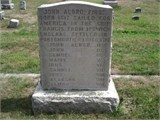
monument
My 9th great-grandfather sailed to America in 1634 when he was only 17. He lived a long and productive life in Rhode Island.
John* (Quaker John) Albro was born 14 JAN 1617 in Warwickshire, England and died 17 DEC 1712 in Portsmouth, Newport Co. Rhode Island at the Quaker settlement (date of death given as November 1, 1712 in “The Greene Family and Its Branches” by Lora S. LaMance, Chapter XXXV, page 220)
John Albro came on the ship “Francis” in 1634 from Ipswich to New England under the care of William Freeborn. His age was called 14, which was not exact but as near as was often the case in making returns to the officials. In 1638 he accompanied William Freeborn to Rhode Island. In 1639 John Albro was a granted a lot if he would build in one year. In 1644 he was made a corporal, rising successively in after years to the office of Lieutenant, Captain and Major. Sometime in 1649 he was made a member of the Town Council, and served frequently as Moderator of town meetings, even into old age.
In 1655, John became a freeman, and a commissioner from 1660-61. On August 24, 1676, he was a member of the court martial held at Newport for the trial of certain Indians. (From the Genealogical Dictionary of Rhode Island) He is an ancestor of Gilbert Stuart (painter of George Washington).
John Albro (1617 – 1712)
is my 9th great grandfather
Elizabeth Albro (1646 – 1720)
daughter of John Albro
Benjamin Congdon (1676 – 1756)
son of Elizabeth Albro
William Congdon (1711 – 1755)
son of Benjamin Congdon
Frances Congdon (1738 – 1755)
daughter of William Congdon
Thomas Sweet (1765 – 1844)
son of Frances Congdon
Valentine Sweet (1791 – 1858)
son of Thomas Sweet
Sarah LaVina Sweet (1840 – 1923)
daughter of Valentine Sweet
Jason A Morse (1862 – 1932)
son of Sarah LaVina Sweet
Ernest Abner Morse (1890 – 1965)
son of Jason A Morse
Richard Arden Morse (1920 – 2004)
son of Ernest Abner Morse
Pamela Morse
I am the daughter of Richard Arden Morse
Major John Albro was one of the most active and influential settlers of Portsmouth, RI. He came from Ipswich, Eng., in the ship Francis, sailing from Ipswich Apr 30, 1634. He was born in England in 1617. He came under the care of William Freeborn and was only seventeen years of age. They landed at Boston and four years later (1638) came to Portsmouth RI. John then being 21 yrs. of age. His fellow townsmen soon began to give him much to do with the affairs of the community. In 1649 he was a member of the town council and he often served as moderator of the town meetings. even into old age. In 1686 King James appointed him as a member of Sir Edmund Andros’ Council for New Eng. and he attended the first meeting of this council in Boston, Dec. 30th of that year. He served as one of the commissioners of the Colony to lay out the W/Eastern? line of the Colony in 1678. During King Phillip’s War he was one of the commissioners to order, watch and ward the the island. He died at Portsmouth, Dec. 14, 1712, and in the 95th years of his age. The Friends’ Records, in recording the death of this useful man state that he “was buried in his own orchard”.
 mermaidcamp