mermaidcamp
Keeping current in wellness, in and out of the water
You can scroll the shelf using ← and → keys
You can scroll the shelf using ← and → keys

Sherman Coat of Arms
My 7th great-grandfather was born in Massachusetts, but moved with his parents to Rhode Island as baby. His father was a judge and prominent Quaker in Rhode Island after being driven out of Salem for religious differences. The family quit the Puritan Church and joined the Quaker Church. We have a copy of his will.
EBER SHERMAN WAS THE SON OF THE HON. PHILIP SHERMAN AND SARAH ODDINGS OF PORTSMOUTH, RHODES ISLAND, USA. HE MARRIED HIS FIRST WIFE MARY WILCOX, THE DAUGHTER OF EDWARD AND SUSANNA THOMPSON, AND SOPHIA A. BROWN HIS SECOND WIFE. HE WAS ADMITTED FREEMAN, TUESDAY, JUNE 08, 1658, IN PORTSMOUTH, RHODES ISLAND, HE WAS ONE OF THE FIRST SETTLERS IN THE NARRAGANSETT COUNTY, “DECB’R 05, 1679 AN ACCO’T OF LANDS LAID OUT & ALLWED TO MR. SAM’LL WILBORE & COMPA. TO JARED BULL, AND SEVERAL OTHERS”, SHOWS 500 ACRES TO EBER SHERMAN. (FONES RECORD-1894. PP36-7) ” HE WAS A PROMINENT AND INFLUENTIAL MAN, AND HELD MANY OF THE LOCAL OFFICES”. F.D. SHERMAN LISTS ABIGAIL AS A DAUGHTER WITH A QUESTION MARK, F.D.S. 602; A LETTER, MRS. THOMAS O. TREHARNE, TROY NY. HE SETTLED ON THE WEST SIDE OF
NARRAGANSETT BAY AT NORTH KINGSTON. “GOING TO PALMYRA; SHERMAN DEEDS” BY MARGARET SHERMAN, LUTZVICK, 1977.
Eber Sherman (1634 – 1706)
7th great-grandfather
Mary Sherman (1688 – 1751)
daughter of Eber Sherman
Thomas Sweet (1732 – 1813)
son of Mary Sherman
Thomas Sweet (1765 – 1844)
son of Thomas Sweet
Valentine Sweet (1791 – 1858)
son of Thomas Sweet
Sarah LaVina Sweet (1840 – 1923)
daughter of Valentine Sweet
Jason A Morse (1862 – 1932)
son of Sarah LaVina Sweet
Ernest Abner Morse (1890 – 1965)
son of Jason A Morse
Richard Arden Morse (1920 – 2004)
son of Ernest Abner Morse
Pamela Morse
I am the daughter of Richard Arden Morse
WILL OF EBER SHERMAN OF NORTH KINGSTON, RI.
GOD SO BLEST ME IN THIS LIFE I GIVE AND BEQUEATH THE SAME IN THE FOLLOWING MANNER AND FORM FIRST MY DEBTRS AND FUNERALL CHARGES BE PAID ( ) I GIVE TO MY BELOVED SON EBER SHERMAN ONE HUNDRED ACRES OF LAND JOYNING TO THE HOUSE WHICH JO ( ) TO BE TO HIM AND TO HIS HEIRES LAWFULLY BEGOTTEN OF HIS OWN BODY ITEM; I GIVE TO MY BELOVED SON SAMUEL SHERMAN ACRES OF LAND JOYNING AND BOUNDING UPON MY SON EBER SHERMANS LANDD THAT IS ABOVE MENTIONED TO BE TO HIM AND TO HIS HEIRES LAWFULLY BEGOTTEN OF HIS OWN BODY. ITEM I GIVE TO MY BELOVED SON STEPEN SHERMAN ONE HUNDRED ACRES OF LAND JOYNING AND BOUNDING UPON THE LAND GIVEN TO SAMUEL SHERMAN MY SONTHAT IS TO SAY TO HIM AND TO HIS HEIRES LAWFULLY BEGOTTEN OF HIS OWN BODY. I GIVE TO MY BELOVED SON ELISHA SHERMAN ONE HUNDRED ACRES OF LAND JOYNING AND BOUNDING UPON THE LAND GIVEN TO SON STEPEN SHERMAN BEFORE MENTIONED TO BE TO HIM AND HIS LAQFULLY GEGOTTEN OF HIS OWN BODY. ITEM I GIVE TO MY BELOVED SON WILLIAM SHERMAN ONE HUNDRED ACRES OF LAND ADJOYNING AND BOUNDING UPON THE LAND WHICH I HAVE GIVEN TO MY STO ELISHA SHERMAN TO BE TO HIM AND TO HIS HEIRES LAWFULLY BEGOTTEN OF HIS OWN BODY.ITEM. I GIVE TO MY BELOVED SON PELEG SHERMAN ONE HUNDRED AND EIGHTY & TWO ACRES OF LAND ( ) BOUNDED UPON JOHN SWEETS LAND NEAR ( ) TO BE TO HIM AND TO HIS HEIRES LAWFULLY BEGOTTEN OF HIS OWN BODY BUT IN CASE ANY OF THEM W ( ) ENTIONED SHAL DEPART THE ( ) I HEREBY UTTERLY DIALLOW AND REVOKE ALL OTHER TESTAMENTS AND WILLS BY ME FORERLY ANY WISE NAMED WRI( )ING AND CONFIRMING THIS & NOE OTHER TO MY LAST WILL AND TESTAMENT; IN WITNESS WHEREOF I HAVE HERE UNTO SETT MY HAND AND SEALE THE DAY AND YEAR ABOVE WRITEN SIGNED SEALED PUBLISHED AND DECLARED TO BE THE LAST WILL AND TESTAMENT IN THE PRESENCE OF THE SUBSCRIBERS BY EBER SHERMAN. EBER ( HIS MARK) SHERMAN CAPTAIN JESSE ( HIS MARK) CHAMPLIN PELEG MUMFORD THEOPHILUS WHALE CAPT. JEFFERY CHAMPLIN AND PELED MUMFORD BOTH OF KINGSTOWNE IN THE COLONY OF RHOOD ISLAND AND PROVIDENCE PLANTATIONS DID BOTH APPEAR BEFORE THE COUNCIL OF KINGSTOWNE THE 14TH DAY OF ( ) DID DECLEAR THAT THEY DID SEE AND HEAR EBR SHERMAN OF KINSTOWNE (LATE DECEASED) SETT HIS MARK AND SEAL UPON THE ABOVE WRITEN INSTRUMENT AND DECLARED THE SAME TO ( ) HIS LAST WILL AND TESTAMENT AND THAT THEY SETT THEIR NAMES THERTO AS WITNESSES TO THE SAME. ENTERED UPON RECORD THE 13TH DAY NOVERMER 1706 SAMUEL FFONES CLARKE
INVENTORY OF EBER SHERMANS ESTATE LATE DECEASED BY US JUSTICE CHAMPLIN, JONATHAN SHERMA; OXEN FIVE COWS TWO THREE YEAR OLDS ONE CALF- – NORTH KINGSTOWN, R.I. PROBATE RECORDS V. 1-5, PP. 81-82 F.D.S. 603,604
THE ABOVE WILL CAN BE FOUND IN “SOME OF THE DESCENDANTS OF PHILIP SHERMAN, THE FIRST SECRETARY OF RHODE ISLAND” BY ROY V. SHERMAN, PP. 26-28—
Child of PHILIP SHERMAN and SARAH ODDING is:
5. i. EBER5 SHERMAN, b. December 1634, Roxbury, Suffolk Co., MA; d. 1706, North Kingstown, Washington Co., RI.
Generation No. 5
Notes for EBER SHERMAN:
Will of EBER SHERMAN of North Kingston, RI
(Margins destroyed by fire, Dec. 1870)
God so blest me in this life I give and bequeath the same in the following manner and form
first my debts and funerall charges be paid ( )
I give to my beloved Son Eber Sherman one hundred acres of land joyning to the house which jo ( )
to be to him and to his heires lawfully begotten of his own body ( )
Item: I give to my beloved son Samuel Sherman ( ) acres of land joyning and bounding upon my son Eber Shermans land that is above mentioned to be to him and to his heires lawfully begotten of his own body. Item I give to my beloved son Stephen Sherman one hundred acres of land joyning and bounding upon the land given to Samuel Sherman my son that is to say to him and to his heires lawfully begotten of his own body.
Item: I give to my beloved son Elisha Sherman one hundred acres of land joyning and bounding upon the land given to son Stephen Sherman before mentioned to be to him and his lawfully begotten of his own body. Item. I give to my beloved son William Sherman one hundred acres of land adjoyning and bounding upon the land which I have given to my son Elisha Sherman to be to him and to his heires lawfully begotten of his own body. Item. I give to my beloved son Peleg Sherman one hundred and eighty & two acres of land ( ) bounded upon John Sweets land near ( ) to be to him and to his heires lawfully begotten of his own body but in case any of them w( ) entioned shal depart th ( ) I hereby utterly disallow and revoke all other testaments and wills by me formerly any wise named wri( ) ing and confirming this & noe other to be my last will and testament; In witness whereof I have here unto sett my hand and seale the day and year above writen ( ) signed sealed published and declared to be the last will and testament in the presence of the subscribers by Eber Sherman.
Eber (his mark) Sherman
Captain Jesse ( his mark) Champlin
Peleg Mumford
Theophilus Whale
Capt. Jeffery Champlin and Peled Mumford both of Kingstowne in the colony of Rhood Island and Providence Plantations did both appear before the Council of Kingstowne the 14th day of ( ) did declear that they did see and hear Eber Sherman of Kingstowne (late deceased) sett his mark and seal upon the the above writen instrument and declared the same to ( ) his last will and testament and that they sett their names thereto as witnesses to the same.
Entered upon record the 13th day
November 1706
Samuel ffones Clerke
Inventory Follows
Kingstown October the 11th day 1706
Inventory of Eber Shermans Estate late deceased
By us Justice Champlin, Jonathan Sherman:
Oxen five cows two three year old
olds one calf–
North Kingstown, R.I. Probate Records V. 1-5, pp. 81-82
F.D.S. 603, 604
Eber was the son of the immigrant Philip Sherman and his wife, Sarah Odding. Secondary sources say Eber was born in Roxbury, Mass. December 1634; however, a “Heber Sherman” cosigned a deed in Portsmouth, RI on 1 March 1649 [/50?], and if that was this individual, then Eber would have been born no later than 1629. He d. N. Kingstown, RI 1706, and married late in life. c. 1677 Mary, b. c. 1650, living in Oct 1719 when named in the will of Eber’s brother, Peleg Sherman. Mary, in many sources, has been called the daughter of Edward Wilcox, but that Mary was born about 1639, and would be too old to be the mother of Eber’s younger children.
In his 1968 genealogy of the Sherman family, Roy V. Sherman asserts that Eber had another wife named Sophia Brown. If this is the case, then Sophia would have been a first wife, since Mary was the widow of Eber in 1719.
Though Eber grew up in Portsmouth, Rhode Island where his father settled, by 1670 he was living across the Narragansett Bay in Pettaquamscutt (now S. Kingstown), where he and four others were appointed to set a tax rate. In 1687 he was taxed in Kingstowne (which was spilt between North and South in 1722).
Eber’s will was proved in (North) Kingstown on 13 Nov 1706. Alden Beaman provided a good rendition of this family in his Rhode Island Genealogical Register, vol. 9, pages 1-12. However, I take exception to the son Stephen being placed as one of the older children, because he was the last of the children to marry. I have therefore re-arranged the children slightly from Beaman’s account. Children:

The best feature about New Moons is the feeling of starting anew, a fresh start, a new beginning. Although the New Moon data is not as popular as the Full Moon, the dates are sought out by many people who know just how meaningful the New Moon event can be. The August 2 New Moon […]
via New Moon August 02, 2016, Filled With Abundance — Cherokee Billie Spiritual Advisor

Coat of Arms of Scotland(1660-1689).
Latin is sometimes the most technical as well as the most expressive way to convey a concept. The phrase Nemo Me Impune Lacessit means “Wha daur meddle wi’ me?” in Scottish. This is the motto of the Scottish Dragoon Guards. It translates literally into English as “No one cuts me with impunity.” I like the way it makes clear where the line has been drawn. This was also the motto of my ancestors in the Stewart clan. I like all my ancestral warriors, but I think I like the Scotsmen the best. Even when they came to America to be Presbyterians they were badass Revolutionary War heroes in South Carolina. They had a super strong sense of independence.
This phrase was taught to me by one of the gentle readers of this blog, and I treasure it, along with my ancestors who embodied it. Thank you John Holton for this tasty and meaningful piece of history. I hope to go someday to Edinburgh Castle where it is written above the entrance.
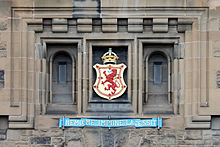
Edinburgh castle Nemo me
impune lacessit

class clown

ain’t too proud to wear it
I think the time is right to bring back the tradition of wearing the dunce cap. John Duns Scotus ( yes, exactly like SCOTUS) created the dunce cap as an educational tool. He was born in Scotland in 1266, so he might well have been hanging out with my ancestors, perhaps even influencing their upbringing. Both of my parents have Scottish ancestry. The Subtle Doctor, as Scotus was known, was a famous philosopher, teaching in Oxford, Cambridge, and Paris before his fall from grace.
It seems the doctor was stabbed to death for his school of thinking. His students used their pens to kill him because he was trying to “make them think”. Now we have to ask ourselves which one of these “schools of thought” was crazier than the other, and also is the pen mightier than the sword.
For modern use I think we just make corrupt officials who are caught breaking the law to fashion their own caps out of construction paper. They all need to sent to sit in the corner for public humiliation until they repent of their stupidity. Do you think this could work, gentle reader?
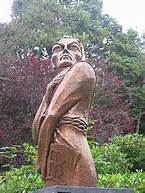
Scotus

resting place
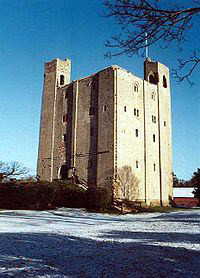
Birth Place-Hedingham Castle
Richard de Vere, 11th Earl of OxfordKG (15 August 1385 – 15 February 1417) was the son and heir of Aubrey de Vere, 10th Earl of Oxford. He took part in the trial of Richard, Earl of Cambridge and Lord Scrope for their part in the Southampton Plot, and was one of the commanders at Agincourt in 1415.
Richard de Vere, born 15 August 1385, was the eldest son of Aubrey de Vere, 10th Earl of Oxford, and his wife Alice Fitzwalter, daughter of John, 2nd Baron Fitzwalter, by Eleanor Percy, daughter of Henry de Percy, 2nd Baron Percy. The 10th Earl died on 23 April 1400 while Richard was underage. His wardship was initially granted to his mother, but after her death on 29 April 1401, King Henry IV granted it to his mother-in-law, Joan de Bohun, Countess of Hereford. Oxford had livery of his lands on 21 December 1406 without proof of age.
From 1410 onwards Oxford was appointed as a commissioner in Essex on various occasions, and in November 1411 was a Trier of Petitions from overseas in Parliament.
In August 1412 Oxford was among those who sailed to Normandy under Thomas of Lancaster, 1st Duke of Clarence, to aid the Armagnac party against the Burgundians. According to Pugh, the members of the nobility who accompanied the Duke of Clarence on this expedition did so in hope of financial gain, Oxford’s earldom in particular having suffered from forfeitures and attainders during the lives of his predecessors which had made him ‘the poorest member of the English higher nobility’. Another member of the Duke of Clarence’s expedition was Richard, 3rd Earl of Cambridge, and three years later, on 5 August 1415, Oxford was among the peers at the trial, presided over by the Duke of Clarence, which condemned to death Cambridge and Lord Scrope for their part in the Southampton Plot on the eve of Henry V’s invasion of France. A few days later Oxford sailed to France with the King, and was one of the commanders at Agincourt on 25 October 1415.
In May 1416 Oxford was invested with the Order of the Garter, and in that year sailed with the fleet to relieve Harfleur, taking part in the naval battle at the mouth of the Seine on 15 August.
Oxford died 15 February 1417, aged 31, and was buried at Earls Colne, Essex. His widow, Alice, married Sir Nicholas Thorley (d. 5 May 1442). She died 18 May 1452, and was buried at Earls Colne.
Oxford married firstly, before 1400, Alice Holland, daughter of John Holland, 1st Duke of Exeter by Elizabeth, sister of King Henry IV and daughter of John of Gaunt, Duke of Lancaster. There were no issue of the marriage.
Oxford married secondly, about 1406-7, Alice Sergeaux (c.1386 – 18 May 1452), the widow of Guy St Aubyn of St Erme, Cornwall, and daughter of Sir Richard Sergeaux of Colquite, Cornwall by his second wife, Philippe (d. 18 May 1452), the daughter and co-heiress of Sir Edmund de Arundel,who had been bastardized by the annulment in 1344 of the marriage of his parents, Richard Fitzalan, 10th Earl of Arundel and Isabel Despenser. They had three sons:
John de Vere, 12th Earl of Oxford.
Sir Robert Vere (1410-1461), of Haccombe, Devon, who married Joan Courtenay (d. before 3 August 1465), daughter of Sir Hugh Courtenay by Philippa Archdekne, and widow of Sir Nicholas Carew (d. before 20 April 1448). Sir Robert Vere and Joan Courtenay had one son, John Vere (d. before 15 March 1488), who married Alice Colbroke, and by her was father of John de Vere, 15th Earl of Oxford.
Sir Richard Vere, who married Margaret Percy (d. 22 September 1464), widow of Henry Grey, 6th Baron Grey of Codnor (d. 17 July 1444), and daughter and co-heiress of Sir Henry Percy ‘of Atholl’ of Harthill, Yorkshire, and his wife Elizabeth Bardolf, daughter of William Bardolf, 4th Baron Bardolf by Agnes Poynings.
References
· Cokayne, George Edward (1945). The Complete Peerage, edited by H.A. Doubleday X. London: St. Catherine Press.
· Castor, Helen (2004). Vere, John de, twelfth earl of Oxford,(1408-1462), magnate. Oxford Dictionary of National Biography. Retrieved 15 March 2011.
Sir Richard, 11th Earl of Oxford DeVere KG (1385 – 1417)
19th great-grandfather
Sir John 12th Earl of Oxford DeVere (1408 – 1462)
son of Sir Richard, 11th Earl of Oxford DeVere KG
John DeVere (1447 – 1509)
son of Sir John 12th Earl of Oxford DeVere
John DeVere (1490 – 1540)
son of John DeVere
Frances DeVere (1517 – 1577)
daughter of John DeVere
Thomas Howard (1536 – 1572)
son of Frances DeVere
Margaret Howard (1561 – 1591)
daughter of Thomas Howard
Lady Ann Dorset (1552 – 1680)
daughter of Margaret Howard
Robert Lewis (1574 – 1656)
son of Lady Ann Dorset
Robert Lewis (1607 – 1644)
son of Robert Lewis
Ann Lewis (1631 – 1686)
daughter of Robert Lewis
Joshua Morse (1669 – 1753)
son of Ann Lewis
Joseph Morse (1692 – 1759)
son of Joshua Morse
Joseph Morse (1721 – 1776)
son of Joseph Morse
Joseph Morse III (1756 – 1835)
son of Joseph Morse
John Henry Morse (1775 – 1864)
son of Joseph Morse III
Abner Morse (1808 – 1838)
son of John Henry Morse
Daniel Rowland Morse (1838 – 1910)
son of Abner Morse
Jason A Morse (1862 – 1932)
son of Daniel Rowland Morse
Ernest Abner Morse (1890 – 1965)
son of Jason A Morse
Richard Arden Morse (1920 – 2004)
son of Ernest Abner Morse
Pamela Morse
I am the daughter of Richard Arden Morse
Hedingham Castle
middle ages to the present , Essex, England
Aubrey de Vere was one of William the Conqueror’s most favoured knights. After the Battle of Hastings he was given land in many counties including Middlesex where he owned Kensington and Earls Court. His son Aubrey II built a huge castle at Hedingham c.1140 using the Archbishop of Canterbury as his architect. Aubrey III was created Ist Earl of Oxford by Queen Matilda and the castle remained the stronghold of the de Veres for 550 years and is still owned by a descendant. The Norman keep with its magnificent banqueting hall and minstrels’ gallery is now the only remaining evidence of this great medieval castle and its later extensive Tudor buildings.
The immensely rich and powerful de Veres were one of the most important medieval families who, as Lord Great Chamberlains, gave loyal service and military leadership to their kings and queens for over 500 years. Hedingham had many royal visitors including King Henry VII, King Henry VIII and Queen Elizabeth I.
The Earls of Oxford were great crusaders and Aubrey, 2nd Earl fought with Richard Coeur de Lion and Robert, 3rd Earl was one of the barons who forced King John to sign the Magna Carta in 1215. The following year Hedingham Castle was besieged by King John, and again by the Dauphin of France in 1217. The de Veres were commanders throughout history and featured at the Siege of Caerlaverock and the famous battles of Crecy, Poitiers, Agincourt and Bosworth. John, 15th Earl took part in the Battle of the Spurs and accompanied King Henry VIII at the Field of the Cloth of Gold, and as Lord
Great Chamberlain bore the crown at Anne Boleyn’s coronation. John, 16th Earl escorted young Elizabeth from Hatfield to London for her coronation in 1559 and his wife Margery became her maid of honour. In 1561 Queen Elizabeth I aged twenty-eight stayed at Hedingham from August 14th-19th, and Edward,17th Earl, became one of her favourites and was acclaimed to be the best of the courtier poets.
Aubrey, 20th Earl of Oxford, had no sons and when he died in 1703 this famous title became extinct. His daughter Diana married Charles, the illegitimate son of Nell Gwynne and King Charles II who was created 1st Duke of St. Albans. In 1713 the castle was purchased by Sir William Ashhurst, M.P., Lord Mayor of London. He landscaped the grounds and built a fine country house which was finished in 1719. The estate passed to his great granddaughter, Elizabeth Houghton who married Lewis Majendie. This family owned Hedingham for 250 years until Miss Musette Majendie left it to her cousin, The Honourable Thomas Lindsay, who is descended from the de Veres through both his mother and his father. His son Jason and his wife Demetra now live at Hedingham with their three small children.
The castle is now available to be seen and explored by visitors. It is even possible to have weddings and banquets there.
His monumental effigy was removed from the ruined priory at Earls Colne and placed at St Stephen’s Chapel in Bures, Suffolk.

A cenotaph is an “empty tomb” or a monument erected in honour of a person or group of people whose remains are elsewhere. The word derives from the Greek: κενοτάφιον = kenotaphion (kenos, one meaning being “empty”, and taphos, “tomb”).

Church of St Nicholas, burial place of Elizabeth de Vere, Countess of Oxford
Spouse John de Vere, 15th Earl of Oxford
My 16th great-grandmother was a lady-in-waiting to Ann Boleyn. She was the second wife of John de Vere, 15th Earl of Oxford.
Elizabeth de Vere (née Trussel), Countess of Oxford (1496 – before July 1527) was an English noblewoman. Through her daughter Frances, she was the mother-in-law of celebrated poet Henry Howard, Earl of Surrey.
Elizabeth was born in Kibblestone, Staffordshire, England on an unknown date in 1496 to Sir Edward Trussel and Margaret Dun. On 10 April 1509 at the age of about thirteen, she became the second wife of John de Vere, 15th Earl of Oxford. His first wife, Christian Foderingey had died about ten years earlier without having produced children. Together John and Elizabeth had seven children.
Children
1. Elizabeth de Vere (born about 1512)
2. John de Vere, 16th Earl of Oxford (1516 – 3 August 1562 married (1) Dorothy Neville (2) Margery Golding
3. Lady Frances de Vere (c. 1517 – 30 June 1577 married Henry Howard, Earl of Surrey
4. Aubrey de Vere (born about 1519) married (1) Margaret Spring (2) Bridget Gibbon
5. Robert de Vere (born about 1520)
6. Anne de Vere (c. 1522 – February, 1571/72) married Edmund Sheffield, 1st Baron Sheffield of Butterwick
7. Jeffrey de Vere (born about 1526) married Elizabeth Hardkyn daughter of Sir John Hardkyn of Colchester
From Wikipedia, the free encyclopedia
Elizabeth de Vere, Countess of Oxford
Church of St Nicholas, burial place of Elizabeth de Vere, Countess of Oxford
Spouse(s)John de Vere, 15th Earl of Oxford
Issue
John de Vere, 16th Earl of Oxford
Aubrey Vere
Robert Vere
Geoffrey Vere
Elizabeth Vere
Anne Vere
Frances VereNoble familyDe Vere (by marriage)FatherEdward TrussellMotherMargaret DonneBorn1496DiedBefore July 1527BuriedChurch of St Nicholas, Castle Hedingham, Essex
Elizabeth de Vere (née Trussell), Countess of Oxford (1496 – before July 1527) was an English noblewoman. As a young child she became a royal ward. She married John de Vere, 15th Earl of Oxford, and by him was mother of the 16th Earl and grandmother ofSir Francis and Sir Horace Vere, the ‘fighting Veres’.
Family
Elizabeth Trussell, born in 1496,was the daughter of Edward Trussell (c.1478 – 16 June 1499) of Elmesthorpe, Leicestershire, only son of Sir William Trussell (d. before 24 June 1480) of Elmesthorpe, Knight of the Body for King Edward IV, by Margaret Kene. The Trussells were a ‘very ancient Warwickshire family’; Elizabeth’s ancestor, Sir Warin Trussell, was of Billesley, Warwickshire.
Elizabeth Trussell’s mother was Margaret Donne, the daughter of Sir John Donne (1450–1503) of Kidwelly, Carmarthenshire, and Elizabeth Hastings (c.1450 – 1508), daughter of Sir Leonard Hastings and Alice Camoys, and sister of William Hastings, 1st Baron Hastings. Sir John Donne’s mother, Joan Scudamore, was the granddaughter of the Welsh rebel, Owain Glyndŵr.
Elizabeth had a brother, John Trussell (d.1499), to whom she was heir.
Through her father’s family, Elizabeth was a descendant of King Henry II by his mistress, Ida de Tony.
Elizabeth Trussell’s grandfather, Sir John Donne, from the Don triptych by Hans Memling.
Elizabeth’s father, Edward Trussell, had been a ward of William Hastings, 1st Baron Hastings, and at Hastings’ death in 1483 was still a minor. In his will, Hastings expressed the wish that Trussell’s wardship be purchased by Hastings’ brother-in-law, Sir John Donne:
Also I will that mine executors give to my sister Dame Elizabeth Don 100 marks . . . Also where I have the ward and marriage of Edward Trussell, I will that it be sold and the money employed to the performing of this my will and for the weal of my soul; and if my brother Sir John Don will buy the said ward, I will that he be preferred therein before any other by £10.[9]
After her father’s death on 16 June 1499 and the death of her brother, John, in the same year,[10] Elizabeth Trussell became a royal ward. Her wardship and marriage were initially purchased from King Henry VII by George Grey, 2nd Earl of Kent (d. 21 December 1503), who intended her as a bride for Sir Henry Grey (d. 24 September 1562), the 2nd Earl’s son by his second marriage to Katherine Herbert, daughter of William Herbert, 1st Earl of Pembroke, by Anne Devereux, the daughter of Sir Walter Devereux. However after the 2nd Earl’s death, Richard Grey, 3rd Earl of Kent, the 2nd Earl’s eldest son and heir by his first marriage to Anne Woodville, abducted Elizabeth Trussell, a crime for which the King levied a heavy fine against him:
Aged at least twenty-five when he succeeded his father in 1503, [the 3rd Earl] wasted his family’s fortunes — possibly, as Dugdalesays, he was a gambler. In a striking series of alienations he gave away or sold most of the lands, principally in Bedfordshire, that he had inherited . . . The earl also fell quickly into debt to the king: he failed to pay livery for his father’s lands, and he was fined 2500 marks for abducting Elizabeth Trussell, whose wardship the second earl had left to Richard’s half-brother Henry; he then failed to keep up the instalments laid down for the payment of the fine.
As a result of these events Elizabeth Trussell’s wardship and marriage again came into the hands of the King, who sold it on 29 April 1507[12] to John de Vere, 13th Earl of Oxford, and his cousin John de Vere, later 15th Earl of Oxford, for an initial payment of 1000 marks and an additional £387 18s to be paid yearly, less £20 a year for Elizabeth’s maintenance. The annual value of Elizabeth’s lands had been estimated in the inquisition post mortem taken after her brother John’s death at £271 12s 8d a year.
Marriage and issue
Between 29 April 1507 and 4 July 1509 Elizabeth became the second wife of John de Vere, 15th Earl of Oxford, whose first wife was Christian Foderingey (born c. 1481, died before 4 November 1498), the daughter and co-heiress of Thomas Foderingey (c. 1446 – 1491) ofBrockley, Suffolk, by Elizabeth Doreward (c. 1473 – 1491), daughter of William Doreward of Bocking, Essex, by whom the 15th Earl had no issue.
By her marriage to the 15th Earl of Oxford, Elizabeth had four sons and three daughters:
John de Vere, 16th Earl of Oxford (1516 – 3 August 1562), who married firstly, Dorothy Neville (died c. 6 January 1548),[16] second daughter of Ralph Neville, 4th Earl of Westmorland, by whom he had a daughter, Katherine de Vere, who married Edward Windsor, 3rd Baron Windsor. The Earl married secondly, Margery Golding (d. 2 December 1568), by whom he had a son, Edward de Vere, 17th Earl of Oxford, and a daughter, Mary de Vere.
Aubrey de Vere (d. 1580), who married firstly Margaret Spring, the daughter of John Spring of Lavenham, by whom he had a daughter, Jane, who married Henry Hunt of Gosfield,Essex, and a son, Hugh Vere,[18] who married Eleanor Walsh, the daughter of William Walsh. Hugh Vere and Eleanor Walsh had a son, Robert, who inherited the title as 19th Earl of Oxford. Aubrey de Vere married secondly, Bridget Gibbon, the daughter of Sir Anthony Gibbon of Lynn, Norfolk.
Robert de Vere (died c. 1598), who married firstly, Barbara Berners, by whom he had a son, John Vere, and a daughter, Mary Vere, and secondly, Joan Hubberd, sister of Edward Hubberd (d. 1602), by whom he had no issue.
Geoffrey Vere (d. 1572), who in 1556 married Elizabeth Hardekyn (d. December 1615), daughter of Richard Hardekyn (d. 1558) of Wotton House near Castle Hedingham, by whom he had four sons, John Vere (c. 1558 – 1624) of Kirby Hall near Castle Hedingham, Sir Francis Vere (born c. 1560), Robert Vere (b. 1562), and Sir Horatio Vere (b. 1565), and a daughter, Frances Vere (born 1567), who married, as his second wife, the colonial adventurer and author, Sir Robert Harcourt (1574/5–1631), of Nuneham on 20 March 1598.
Elizabeth de Vere (born c. 1512), who married, as his second wife, Thomas Darcy, 1st Baron Darcy of Chiche (d. 28 June 1558), by whom she had three sons, John Darcy, 2nd Baron Darcy of Chiche (d. 3 March 1581), Aubrey (d. 1558–68) and Robert (died c. 1568), and two daughters, Thomasine and Constance, of whom the latter married Edmund Pyrton (died c. 1609).
Anne de Vere, (born c. 1522, died c. 14 February 1572), who married firstly, Edmund Sheffield, 1st Baron Sheffield of Butterwick, Lincolnshire, second but eldest surviving son of Sir Robert Sheffield by Margaret Zouche, by whom she had a son and three daughters. Edmund Sheffield was slain 31 July 1549 during the suppression of Kett’s rebellion. Anne de Vere married secondly, John Brock, esquire, of Colchester, Essex, son and heir of John Brock of Little Leighs, Essex, by Agnes Wiseman, by whom she had no issue.[23]
Frances de Vere (c. 1517 – 30 June 1577), who married firstly, Henry Howard, Earl of Surrey, by whom she was the mother of Jane Howard, Thomas Howard, 4th Duke of Norfolk, Margaret Howard, Henry Howard, 1st Earl of Northampton, and Katherine Howard. Frances de Vere married secondly, Thomas Steynings, by whom she had no issue.
Elizabeth died before July 1527, and was buried in the Church of St Nicholas, Castle Hedingham, Essex, where her effigy can be seen on the black marble tomb erected for Elizabeth and her husband, the 15th Earl.
Footnotes
She is usually said to have been born at the Trussell manor of Cubleston or Kibblestone near Barlaston and Stone, Staffordshire.

Elizabeth DeVere, Countess of Oxford
Elizabeth Trussel (1494 – 1527)
16th great-grandmother
Frances DeVere (1517 – 1577)
daughter of Elizabeth Trussel
Thomas Howard (1536 – 1572)
son of Frances DeVere
Margaret Howard (1561 – 1591)
daughter of Thomas Howard
Lady Ann Dorset (1552 – 1680)
daughter of Margaret Howard
Robert Lewis (1574 – 1656)
son of Lady Ann Dorset
Robert Lewis (1607 – 1644)
son of Robert Lewis
Ann Lewis (1631 – 1686)
daughter of Robert Lewis
Joshua Morse (1669 – 1753)
son of Ann Lewis
Joseph Morse (1692 – 1759)
son of Joshua Morse
Joseph Morse (1721 – 1776)
son of Joseph Morse
Joseph Morse III (1756 – 1835)
son of Joseph Morse
John Henry Morse (1775 – 1864)
son of Joseph Morse III
Abner Morse (1808 – 1838)
son of John Henry Morse
Daniel Rowland Morse (1838 – 1910)
son of Abner Morse
Jason A Morse (1862 – 1932)
son of Daniel Rowland Morse
Ernest Abner Morse (1890 – 1965)
son of Jason A Morse
Richard Arden Morse (1920 – 2004)
son of Ernest Abner Morse
Pamela Morse
I am the daughter of Richard Arden Morse
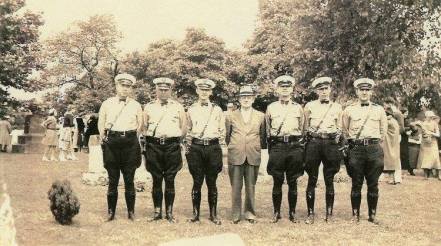
Oakmont police force 1947
When I was growing up in a small suburb of Pittsburgh my town had a small police department. Oakmont was so small that neighborhood policing was natural, as well as the only option. Everyone knew everyone’s business and everyone’s children. The photo above of the 1947 Oakmont force with the mayor was only a few years before I took up residence in the town. This was taken, no doubt, on Memorial Day after the parade at the cemetery. This is probably all the motorcycle cops, with the mayor in the middle. None of the people in this picture could have imagined how much the role of the police would change in society.

motorcycle cops today
I had a frank discussion recently with Officer Marquis, who is a motorcycle cop at TPD. I asked him what it is like to wear the vest. His answers surprised me because he brought up an issue I had never considered. He told me how hot it makes him. OMG, you are out in Tucson in the summer wearing leather boots, and now you need to add a ceramic vest to protect your vital organs!!! How cruel and unusual can your job be? I was just thinking about the way the weight compresses the spine, but he made me see another way the vest has unintended consequences. The K9s are not allowed to wear their vests for too long because it will overheat and damage their organs and possibly their brains. Meanwhile, we are roasting our human cops. Officer Marquis wears a lighter style vest with ceramic inserts that he adds when he wears it. I think this eliminates a few ounces of the total burden..but then there is the physical mastery of the bike, which is heavy in itself. Tough job.
We talked about his bike and other interesting stuff. He seemed pretty happy about his job, despite the roasting factor. I asked him if he feels like a target (this was months before the world truly went barbaric). He said yes. On his motorcycle he is obviously less protected than the car cops. He was not complaining and I am absolutely sure he would not have brought the subject up had I not done so. I went on to ask a couple more cops that day if they felt like targets. The other two said no, but I wonder what they might answer now, after the the violent events of last week. All cops have to feel like victims now, because it is a very reasonable assessment of the situation that prevails.
The lady cop vests look particularly uncomfortable. I am not sure how they are fitted, but this lady told me hers was as long as possible (makes sense). She said she does not feel like a target. I was apparently the only person from the fashion police who had ever asked her about it. It does not flatter the female figure, to say the least. Even Jessica Rabbit would look like the Marshmallow guy from Ghostbusters in the lady cop vest. This lady cop wears hers well and does not mind wearing it, but one can only imagine how attractive she is in real life.

lady in vest
I have become obsessed with this vest question. It is symbolic as well as physical. It does compress their spine and add weight for their skeleton to carry, as well as keep them safe. It heats them up and makes it hard to cool down. The looney in Dallas wore one himself. In Tucson the cops have to pay for their own because city taxes are not set aside for that. I am shocked that the city can get away with that. In private industry I don’t think you can demand that workers risk their lives and BYO safety equipment. Can you think of an example of that, gentle reader?
I doubt that people here know that there is a charitable organization here with a purpose of providing the vests to the individual cops. Adopt-a-Cop is the program provide this necessary safety equipment to the force, since as taxpayers we are not even doing THAT. We need to step up to solve our civil unrest problems on all sides. This seems like a basic step to take, Tucson. Let’s buy them vests. Then let’s get some new politicians who will put the vests in the city’s budget.
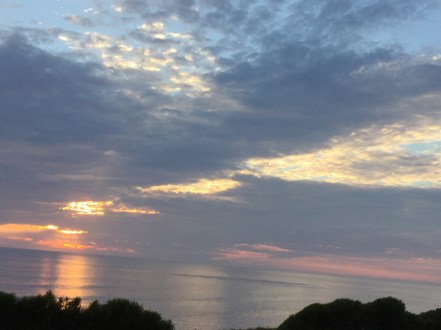
Pacific
When I was a freshman a the University of Texas at Austin in 1968 I was an idealist. I was a folk singer, hum dinger. I protested the war in Viet Nam and civil rights atrocities. We thought that an egalitarian, high minded society was just around the corner. We thought the empire of fascist evil would end as soon as Barry Goldwater died. We knew less about world affairs then, but we knew that war was not only the only true sin amount nations, but also unconstitutional in the way it was being waged with no declaration. Since 1968 the United States has been at war with at least one part of the world all the time. Peace has not been achieved, and civil rights have been all but forgotten. Now we have the for profit prison system to mass incarcerate people of color, and laws designed specifically to feed that system. Our war on drugs has produced an epidemic of cheap heroin and an addiction crisis.
I was too young to march on Washington in 1963. I was busy living as an ex-pat petroleum princess in Venezuela. I spent a lot of time listening to Radio Havana because it was the only station that we got with a strong signal on the radio. I usually turned it off when Fidel went off on his speeches, but I liked the music from Cuba. Back in those days Venezuela had a natural contempt for Cuba and Fidel, and dependence on oil companies for their entire economy. This worked very well for the preteen petroleum princess, but not so well for the impoverished worker class. Like the historical Buddha I was exposed to suffering I never could have imagined in the world. The really interesting part was that my parents had no problem with the semi slavery and obscene show of wealth we enjoyed. I didn’t either until I thought about it. Now my own country has almost the same level of income disparity I observed in 1963 in Venezuela. The hippies have not yet accomplished our mission. I wonder if in the chaos and violence of this time, so similar to 1968, we might finally see the ship come in. The whole wide world is certainly watching.

Pacific
There are gaps of understanding between the citizens and the police. This has always been the case. Today we face an ever growing divide that makes everyone in the United States vulnerable to senseless violence and hate crimes of all kinds.
We have a new police chief in Tucson who has come to teach us neighborhood policing. When he held up a hashtag sign in his former town of Richmond, California, he was criticized widely across the nation for betraying cops. The Police Union in Tucson soundly rejected his bid to become chief over this sign. Thank goodness they lost the battle and Chief Magnus has started the very serious task of bringing our cops together in unity not only with each other but, for the first time, with the community. He has reorganized the department, focusing on more stable local assignments so the cops learn more about the same area all the time. He has eliminated some of the “specialties”, as recommended by the DOJ’s 21st Century Guidelines for Policing, in order to make each cop more full service and user friendly. He knew he was moving to a much bigger city, but I don’t think he could have imagined how much we needed him down here in Tucson. This will be a very big job for him, but I am glad he has started it.
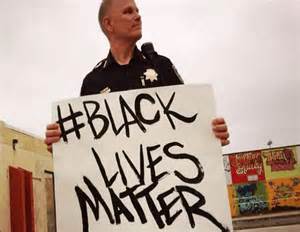
Chris Magnus
Welcome to Tucson, Chief Chris,”357″,Magnus. You are just what the doctor ordered.
The daily reports of violence make life in America scary and real. I see the trend that has been targeting young black males, but I am a little old lady, as WASP as WASP can be. I do not trust the police as far as I can throw them. They make my neighborhood very unsafe by refusing to respond when crime is reported. I don’t fear brutality, but everyone where I live has suffered years of police mendacity that has destroyed any trust there might have been in our local law enforcement agencies. The new sliding scale introduced for the unprecedented Hillary e mail case is all about intent. Now it is more important to decide if the entity meant do violate laws rather than to know if laws were broken. That is how there can be a homicide with no person who committed it. The crazy trend to reach a verdict without any trial or jury, by letting the FBI decide, or by letting cops murder people without even arresting them has gone way too far. We are not safe in our homes or on the streets of our cities. The system is not rigged, per se, it is just entirely corrupt. It is not a matter of good cop/bad cop. It is a dysfunctional system that is not attached to justice, but to a separate reality in which there is no law but their opinion. My Puritan ancestors would plotz to know what has become of their nation.
What would the ancestors do?
We can never go back to colonial America to find out how we lost our ethical boundaries and our civil rights. Murders by cop are live streamed to the world today. I have not watched this last one because I saw the one from Baton Rouge yesterday, and I can’t take in another one. The victim’s mother has decided not to watch it for her own mental health. We need to find a way to stop the bloodbath. I am calling on all my relations to give me insight into this crisis.

white senior issues
 mermaidcamp