mermaidcamp
Keeping current in wellness, in and out of the water
You can scroll the shelf using ← and → keys
You can scroll the shelf using ← and → keys

Padre Kino

Padre Kino
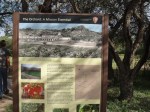
I initiated my new fabulous senior pass for the national parks yesterday at Tumacacori. It was a full moon night and a special program was presented. The park reopens a few times a year to let the public experience the place after dark. The ranger was a wonderfully knowledgeable presenter who showed a lot of pride in her position. This is a unique park because it preserves history of a mission that was abandoned. The original mission was founded by Padre Kino, who visited a couple of times before he died, but had little contact with the locals. He became popular by gifting the natives with seeds, animals and trees. Mission land was granted for the natives to use, but not trade or sell. Success through new agriculture was the main selling point used by the missionaries. By farming within the mission walls the crops were protected from wildlife and livestock grazing in the area. Crops and animals were introduced that provided food in seasons when native plant harvests were scarce.
Kino was a member of the Jesuit order, which would eventually be banished from New Spain by the king. The Franciscans took over the place, but when Mexico won independence the funds no longer flowed from Spain. The missionaries moved north to Mission San Javier del Bac, which is still in use today as a Catholic church. The abandoned site sat empty until the National Park Service took over.




The full moon tour was an exciting and authentic way to honor this historic place by learning about the past. I learned many new facts that make me curious to learn more and return in the future to take in this very special atmosphere. I plan to make the most of my senior pass by checking out all the national parks in Arizona. I will have many happy travels in the future by tuning into programs and events such as the one we enjoyed yesterday as a day trip . If you know a senior (62 or over) who does not yet have a pass, this would make the very best of holiday gifts. It works for a whole car load of visitors. You only need one senior pass per car for free entry for all passengers. Maybe it is time to start traveling with a senior on board.


Arizona is full of scenic places with ancient civilizations. We are privileged to have such a rich cultural and natural tradition surrounding us. Now that I am loaded with my lifetime park pass I will be taking full advantage of it.



candle lanterns

altar in the church

park ranger and Padre Kino
I am in luck that a new model for Medicare patients has come to my neighborhood. Today Iora Primary Care opened a new practice very close to my home. My health insurance agent told me about this new practice that operates in a revolutionary way. I was invited to the ribbon cutting this morning that was well attended and very festive. Dr. Rushika Fernandopulle and some of the senior staff of the company flew out to Tucson from Boston, the site of the home office. The day had started with a heavy downpour and thunderstorm, but the weather cleared in time for an excellent party, some brief speeches, an official proclamation by the mayor of Tucson, and a ceremonial ribbon cutting to launch the business. A fine time was had by all. I sat down with Dr. Fernandopulle later this afternoon to learn more about our new local health care option. He has some great ideas.
His model was born partly from frustration in his American practice of primary care and partly from experience working around the world. By observing what works well with low or no tech he has crafted a system that takes advantage of good relationships first. The team approach makes the best use of both the patient and the doctor’s time. The office has a casual feel to it, and all the employees I met are enthusiastic about their jobs. I think Rushika is right that the synergy of culture is what distinguishes this medical practice from all others. I am very pleased to be given this choice for my Medicare coverage.

Rushika

Julie

healthy spread

Half Moon Beer

Mission Garden
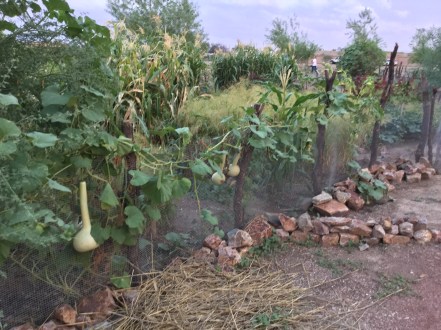
gourd crop
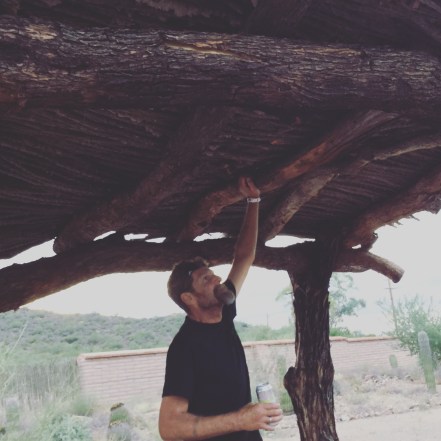
adobe ramada

irrigation system

Regina Romero, City Council

historic crops

A Mountain

Missy the party cow
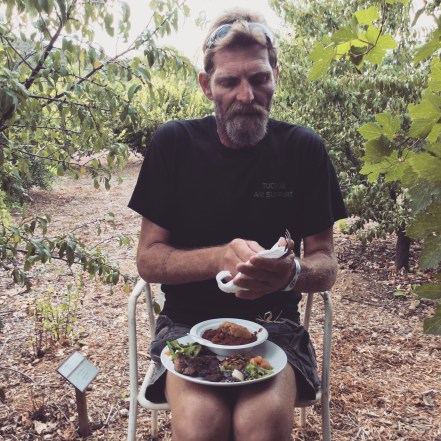
Bob dining in the garden
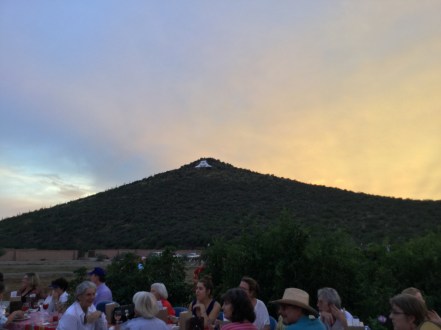
sunset dining in the garden

sunset dining in the garden
The Friends of Tucson’s Birthplace held a fine dinner party in the garden yesterday. Our historic Mission Garden has been rebuilt in the original site close to the Santa Cruz River. The agricultural heritage of the location is ancient. The garden is being developed as a living museum preserving original species grown by the Spanish colonial conquistadors who built the San Augustin Mission. The orchard of stone fruits, citrus, quince and figs is growing strong and bearing fruit. Gardens of okra, corn, chiles and other native crops thrive within the walls of the preserved site.
Local chefs were invited to create specialties for the Farm to Table event. We were excited to taste the food and also to get to tour the gardens. Musicians were hired to play throughout the space, which added an artistic note to the already splendid surroundings. The city councilwoman from that ward spoke briefly about the importance of agricultural history and her own family’s collection of historic recipes. All the food was over the top creative and fresh. My partner Bob enjoyed the grass fed beef and the buffalo chile, but most of the dishes served were vegetarian. Drinks were served with dinner, but for an extra fee we enjoyed a specialty beer brewed from organic wheat grown from preserved species. The beer tasted fantastic, and sold out quickly.
The event was a success for all involved. The chefs, no doubt, won some new fans with their creative concoctions. The garden certainly is a place we will plan to visit again in the future. In fact we may go to the quince festival next weekend at which we would have chance to win a special antique Spanish heirloom variety quince tree. The quince crop is ripe and abundant in the orchard, looking very pretty. The beauty and history preserved in this spot is a great asset to the city, and will only improve with time.
The hedonist archetype is both admired and disrespected in our society. We receive mixed messages about fun, enjoyment, and merchandise. “How much is too much?”, is a question we are in the process of answering. During our holiday season excess is encouraged in all things. We see images of over decorating, over eating, over indulging in sweets and alcohol as mandates to celebrate with certain products. If we give in to the marketing engines we will let our health and finances go in order to buy holiday goods. There is a fine line between genuine appreciation that brings joy and repetitive addictive habits that have flatlined. The solution is not to give up pleasure or fine things in life. To find balance we each need to find our own specific definitions of pleasure. We also need to monitor exactly how much pleasure is still left in long standing habits. We may be fooling ourselves sometimes.
Since I am a hedonist in the first house it is important for me to evaluate and stay aware of the ways in which I indulge myself. I am attached to sensuality and leisure which could easily lead to lack of discernment. In order to stay healthy I must stay clear about how much time, money and effort I spend to feel good. A feeling of wellbeing and good energy is the reward for putting health first. The shadow hedonist is like the cartoon red devil sitting on a shoulder acting as the conscience. This little delusion devil is persuasive. The dark side of hedonism is ironically anhedonia. The pursuit of pleasure to one’s detriment eventually results in a complete inability to experience pleasure. Addictions that require treatment are common now in America. What starts as a good time ends frequently in heartache.
When you think of the hedonist does someone you know come to mind? Do you recognize a hedonist in yourself? Calibrate the Fun-O-Meter to make sure you are still having some.
And all the men and women merely players;
They have their exits and their entrances,
And one man in his time plays many parts,
His acts being seven ages.
William Shakespeare sets out seven ages of man in this monologue from As You Like it. Carl Jung used characters as archetypes to describe the different aspects of one human life. These archetypes are played out in ancient Greek drama and mythology. From biblical proverbs to modern fiction characters based on eternal qualities of humanity are employed to tell stories. We embody different characters during our journey toward the end of life, sometimes joyous and other times somber. We act as students and as guides, as teachers and as pilgrims. Our energies are spent on our greatest passions, and we become known for our most obvious traits. Both our view of the world and the world’s view of us is constantly changing. The way we relate to one group may be different from the way we act toward another one.
Before we die we play parts that we have never considered. The soul is intricate and connected to the past as well as the future. Spirit and soul demand that our basic clay be sculpted into figures that arise from our dreams. The figures are fired in a kiln of experience and discernment. We are asked to step out on a ledge of unknowing in order to satisfy our inner longings. Some of our feelings come from the ancestors and some from our society. By observing our inner lives we can make the acquaintance of our own archetypes at work. By looking into patterns from the past and present we may notice how we fit into the story with other archetypes, the other players on the stage with us.
October is time for costuming and honoring the dead. Let us notice which characters cross our paths, and which ones we are playing. We are the casting directors of our own dramas….scary, isn’t it?

miniature Halloween

You thrill me when you drill me
I have just discovered a new music app that makes me very happy. I was not shopping for a new one, but I found the tumblr blog for 8 tracks and had to try it. Each set of tracks is selected and curated by a member of the community. Titles and descriptions give a clue about the intention of the curator. An example illustrated above is You Thrill Me when You Drill Me playlist, a collection of jazz and blues from the 1920’s to the 1970’s. This collection of 35 songs includes some very funny lyrics. The staff chooses lists that are very popular to help you select new playlists to try.
I have heard no commercials interrupting my listening so far, but I have only used it for a couple of times. What I love about the offering is a chance to hear other people’s collections and combinations that thrill them as well as a chance to hear new artists and music. I have found almost all the tunes on 8 tracks are new to me. Some of the classical and relaxing style mixes are very artful and enchanting. There is no charge to use it, and the app is free. I look forward to using it at home and in the phone while working out or walking. There is a treasure trove of new music waiting for me in this app. Try it. You’ll like it, gentle reader.

8 tracks

Apple Music
I have just been informed that my free account has been closed by Apple Music. I am not very upset to learn this news. I have enjoyed using the streaming music service for the last three months, but determined that for me it is not worth $10 a month to keep it. I already have Amazon streaming music because I am a Prime customer. It serves my needs and then some. I don’t need every song on earth in my library. I just like to have variety and ease of use, which both these systems have. I did learn more about how to use streaming music and it now enhances my use of the Amazon system. Here are the discoveries I made during my free subscription:
Do you use streaming music services, gentle reader? Have you decided to pay for any of them? If you are a Prime member at Amazon I hope you will download the Amazon music app and enjoy your perks.

Amazon Prime Music

Fulk III, Count of Anjou
My 30th great-grandfather was an extreme personality. He was a crusader and founder of religious orders. He was also a completely furious nut with little restraint. He left his mark on history.
Fulk III The Black Count of Anjou ( – 1040)
is my 30th great grandfather
Ermengarde Blanche D Anjou Countess Gastinois (1018 – 1076)
daughter of Fulk III The Black Count Anjou of
Fulk Le Rechin Rude Anjou (1043 – 1109)
son of Ermengarde Blanche D Anjou Countess Gastinois
FULK V The Younger King of Jerusalem ANJOU * (1092 – 1143)
son of Fulk Le Rechin Rude Anjou
Sibilla Anjou (1105 – 1165)
daughter of FULK V The Younger King of Jerusalem ANJOU *
Marguerite De LORRAINE (1135 – 1194)
daughter of Sibilla Anjou
Isabelle De Hainault (1170 – 1190)
daughter of Marguerite De LORRAINE
Louis VIII France (1187 – 1226)
son of Isabelle De Hainault
Charles I King of Jerusalem and Naples (1227 – 1285)
son of Louis VIII France
Charles NAPLES (1254 – 1309)
son of Charles I King of Jerusalem and Naples
Marguerite Sicily Naples (1273 – 1299)
daughter of Charles NAPLES
Jeanne DeVALOIS (1294 – 1342)
daughter of Marguerite Sicily Naples
Philippa deHainault (1311 – 1369)
daughter of Jeanne DeVALOIS
John of Gaunt – Duke of Lancaster – Plantagenet (1340 – 1399)
son of Philippa deHainault
Elizabeth Plantagenet (1363 – 1425)
daughter of John of Gaunt – Duke of Lancaster – Plantagenet
John Holland (1395 – 1447)
son of Elizabeth Plantagenet
Henry Holland (1430 – 1475)
son of John Holland
Henry Holland (1485 – 1561)
son of Henry Holland
Henry Holland (1527 – 1561)
son of Henry Holland
John Holland (1556 – 1628)
son of Henry Holland
Gabriell Francis Holland (1596 – 1660)
son of John Holland
John Holland (1628 – 1710)
son of Gabriell Francis Holland
Mary Elizabeth Holland (1620 – 1681)
daughter of John Holland
Richard Dearden (1645 – 1747)
son of Mary Elizabeth Holland
George Dearden (1705 – 1749)
son of Richard Dearden
George Darden (1734 – 1807)
son of George Dearden
David Darden (1770 – 1820)
son of George Darden
Minerva Truly Darden (1806 – 1837)
daughter of David Darden
Sarah E Hughes (1829 – 1911)
daughter of Minerva Truly Darden
Lucinda Jane Armer (1847 – 1939)
daughter of Sarah E Hughes
George Harvey Taylor (1884 – 1941)
son of Lucinda Jane Armer
Ruby Lee Taylor (1922 – 2008)
daughter of George Harvey Taylor
Pamela Morse
I am the daughter of Ruby Lee Taylor
Fulk III, Count of Anjou
Foulques III “the Black” Count of Anjou (d’Anjou), Comte de AnjouFulk III “the Black”, born circa 966, was the son of Geoffrey Grisegonelle “Greymantle” or “Grey Tunic”. He one of the most remarkable figures of his period and the most powerful member of the dynasty. Fulk ruled Anjou for 53 years. He was both cruel and devotional, and had a violent and pious temperament. He was partial to acts of extreme cruelty and penitence. A temperamental, passionate and unbalanced character, his most heinous act was having his first wife (and cousin), Elisabeth of Vendôme, burned at the stake in her wedding dress, after discovering her with a goatherder in December 999. Fulk came into conflict with the Counts of Rennes, he conquered and slew Conan I of Rennes at the Battle of Conquereuil on 27 June 992. He then extended his power over the Counties of Maine and Touraine. He died at Metz, while on pilgrimage. Fulk was an old man when he decided to make what might be his last pilgrimage, as penance for his sins. The first night he stayed at the abbey of St. Maur-sur-Loire, where he learned more about the life of St. Maur. Fulk became overcome with passion and devotion in the Holy Lands. Previously Fulk was known as “the Black.” Fulk died in Metz while returning from his last pilgrimage. He is buried in the chapel of his monastery at Beaulieu. By his first wife Elisabeth, he left one daughter, Adela. By his second wife (1001), Hildegard of Sundgau, he had two children, Geoffrey Martel, who was his successor, and Ermengard. A writer said of Fulk III that “he was a plunderer, murderer, robber, and swearer of false oaths, a truly terrifying character of fiendish cruelty, founded not one but two large abbeys. This Fulk was filled with unbridled passion, a temper directed to extremes. Whenever he had the slightest difference with a neighbor he rushed upon his lands, ravaging, pillaging, raping, and killing. Nothing could stop him, least of all the commandments of God.” Fulk III (972 – 21 June 1040), called Nerra (that is, le Noir, “the Black”) after his death, was Count of Anjou from 21 July 987 to his death. He was the son of Geoffrey Greymantle and Adelaide of Vermandois. Fulk Nerra’s castle keep at LochesFulk III was the founder of Angevin power. He was only fifteen when he succeeded his father, and had a violent but also pious temperament, was partial to acts of extreme cruelty as well as penitence. In his most notorious act, he had his first wife (and cousin) Elisabeth of Vendôme burned at the stake in her wedding dress, after he discovered her in adultery with a goatherd in December 999. On the other hand, he made four pilgrimages to the Holy Land in 1002, 1008, and 1038 and, in 1007, built the great abbey at Beaulieu-lès-Loches. As a result, historiography has this to say about him: “ Fulk of Anjou, plunderer, murderer, robber, and swearer of false oaths, a truly terrifying character of fiendish cruelty, founded not one but two large abbeys. This Fulk was filled with unbridled passion, a temper directed to extremes. Whenever he had the slightest difference with a neighbor he rushed upon his lands, ravaging, pillaging, raping, and killing; nothing could stop him, least of all the commandments of God.[1]Fulk fought against the claims of the counts of Rennes, defeating and killing Conan I of Rennes at the Battle of Conquereuil on 27 June 992. He then extended his power over the Counties of Maine and Touraine.Fulk’s enterprises came up against the no less determined and violent ambitions of Odo II of Blois, against whom he made an alliance with the Capetians. On 6 July 1016, he defeated Odo at the Battle of Pontlevoy. In 1025, after capturing and burning the city of Saumur, Fulk reportedly cried, “Saint Florentius, let yourself be burned. I will build you a better home in Angers.” However, when the transportation of the saint’s relics to Angers proved difficult, Fulk declared that Florentius was a rustic lout unfit for the city, and sent the relics back to Saumur.Fulk also commissioned many buildings, primarily for defensive purposes. While fighting against the Bretons and Blesevins, protecting his territory from Vendôme to Angers and from there to Montrichard, he had more than a hundred castles, donjons, and abbeys constructed, including those at Château-Gontier, Loches (a stone keep), and Montbazon. He built the donjon at Langeais (990), one of the first stone castles. These numerous pious foundations, however, followed many acts of violence against the church.Fulk died in Metz while returning from his last pilgrimage. He is buried in the chapel of his monastery at Beaulieu. By his first wife, Elisabeth, he left one daughter, Adela. By his second wife (1001), Hildegard of Sundgau, he had two children, Geoffrey Martel, his successor, and Ermengarde, through whom he was an ancestor of Geoffrey Plantagenet and the Plantagenet kings of England. http://en.wikipedia.org/wiki/Fulk_III,_Count_of_AnjouHe was born on 21 Jun 967 in Anjou, France. He died on 21 Jun 1040 in Metz, France.115 He was buried on 21 Jun 1040 in , Beaulieu-Lès-Loches, 37.16 He was also known as Le Noir The Black. Known as a terrifying character of fiendish cruelty. Plunderer, murderer, robber, and swearer of false oaths. Made 3 or 4 pilgrimages to Jerusalem to atone for his sins . When taken w/ remorse he abandoned himself to incredible penances. Buried at Abbey de St. Pier re de Beaulieu, France.” Not all founders [of monasteries] were known for their kindness. Fulk of Anjou, plunderer, murderer, robber, and swearer of false oaths, a truly terrifying character of fiendish cruelty, founded not one but two large abbeys. This Fulk was filled with unbridled passion, a temper directed to extremes. Whenever he had the slightest difference with a neighbor he rushed upon his lands, rav aging, pillaging, raping, and killing; nothing could stop him, least of all the commandments of God. This appalling man had countless crimes upon his conscience, but when seized with a fit of remorse he abandoned himself to incredible penances. Thus the very tomb of St. Martin, whose monks he had ill-treated, saw him prostrate, with bare feet and in penitent’s dress; and four times during his life he went to Jerusalem as a devout pilgrim, treading half-naked the sorrowful road of the passion while two of his servants flogged him until the blood flowed, crying, “Lord, receive thy perjured Fulk!” ” — Richard Erdoe s, *AD 1000: Living on the Brink of Apocalypse*, 1988 (reprint 1995) p 121 _FA2Parents: Count Of Anjou Geoffroi Ier Grisegonelle D’ANJOU and Countess Anjou Adelaide De VERMANDOIS. Parents: Count Of Anjou Geoffroi Ier Grisegonelle D’ANJOU and Adelaide De Chalon DE VERMANDOIS. Parents: Count Of Anjou Geoffroi Ier Grisegonelle D’ANJOU and Of Vermandois ADELAIDE.Spouse: Hildegarde Of Lotharingia. Count Of Fulk III The BLACK and Hildegarde Of Lotharingia were married after 1000 in , , Anjou, France.115,263 Children were: Comtesse Ermengarde D’ANJOU.Spouse: HILDEGARDE. Count Of Fulk III The BLACK and HILDEGARDE were married. Children were: 1st Baron Of Kendal Ivo Fitzrichard TAILLEBOIS DE REUMAR, Ermengarde Ou Blanche D’ANJOU.Children were: Comtesse Ermengarde D’ANJOU.Spouse: Elizabeth De VENDOME. Count Of Fulk III The BLACK and Elizabeth De VENDOME were married before 989 in , , , France. Children were: Adele De ANJOU.Spouse: Hildegarde De ANJOU. Count Of Fulk III The BLACK and Hildegarde De ANJOU were married in 1000 in Anjou, France.15,20,314,707 Children were: Geoffrey Of Anjou MARTEL, Elizabeth De ANJOU, Geoffroy II De ANJOU, Comtesse Ermengarde D’ANJOU. http://freepages.genealogy.rootsweb.ancestry.com/~lzrslong/b351.htm#P187727 ——————–
Geoffrey’s successor Fulk III Nerra [d.1040], one of the most remarkable figures of his period and the most powerful member of the dynasty, ruled from 987 to 1040. He finally drove his encroaching neighbours back beyond the frontiers of Anjou and built strongly fortified castles along the border of his territory. Fulk’s son Geoffrey II ‘Martel’ (1040-60) pursued the policy of expansion begun by his father and annexed the Vendômois and a part of Maine to Anjou. Because he left no sons, his two nephews, Geoffrey III the Bearded [le Barbu] and Fulk IV ‘the Rude’ [le Réchin], shared the succession. However, they soon came into armed conflict, and Fulk defeated Geoffrey in 1068. Nevertheless, he had to give up most of the lands that Fulk III Nerra had acquired to defend his fief against the claims of the Duke of Normandy. ——————– Fulk III (972 – 21 June 1040), called Nerra (that is, le Noir, “the Black”) after his death, was Count of Anjou from 21 July 987 to his death. He was the son of Geoffrey Greymantle and Adelaide of Vermandois.Fulk III was the founder of Angevin power. He was only fifteen when he succeeded his father, and had a violent but also pious temperament, was partial to acts of extreme cruelty as well as penitence. In his most notorious act, he had his first wife (and cousin) Elisabeth of Vendôme burned at the stake in her wedding dress, after he discovered her in adultery with a goatherd in December 999. On the other hand, he made four pilgrimages to the Holy Land in 1002, 1008, and 1038 and, in 1007, built the great abbey at Beaulieu-lès-Loches. As a result, historiography has this to say about him: “ Fulk of Anjou, plunderer, murderer, robber, and swearer of false oaths, a truly terrifying character of fiendish cruelty, founded not one but two large abbeys. This Fulk was filled with unbridled passion, a temper directed to extremes. Whenever he had the slightest difference with a neighbor he rushed upon his lands, ravaging, pillaging, raping, and killing; nothing could stop him, least of all the commandments of God.[1] . . . un des batailleurs les plus agités du Moyen Âge.[2] ” Fulk fought against the claims of the counts of Rennes, defeating and killing Conan I of Rennes at the Battle of Conquereuil on 27 June 992. He then extended his power over the Counties of Maine and Touraine. Fulk’s enterprises came up against the no less determined and violent ambitions of Odo II of Blois, against whom he made an alliance with the Capetians. On 6 July 1016, he defeated Odo at the Battle of Pontlevoy. In 1025, after capturing and burning the city of Saumur, Fulk reportedly cried, “Saint Florentius, let yourself be burned. I will build you a better home in Angers.” However, when the transportation of the saint’s relics to Angers proved difficult, Fulk declared that Florentius was a rustic lout unfit for the city, and sent the relics back to Saumur. Fulk also commissioned many buildings, primarily for defensive purposes. While fighting against the Bretons and Blesevins, protecting his territory from Vendôme to Angers and from there to Montrichard, he had more than a hundred castles, donjons, and abbeys constructed, including those at Château-Gontier, Loches (a stone keep), and Montbazon. He built the donjon at Langeais (990), one of the first stone castles. These numerous pious foundations, however, followed many acts of violence against the church. Fulk died in Metz while returning from his last pilgrimage. He is buried in the chapel of his monastery at Beaulieu. By his first wife, Elisabeth, he left one daughter, Adela. By his second wife (1001), Hildegard of Sundgau, he had two children, Geoffrey Martel, his successor, and Ermengarde, through whom he was an ancestor of Geoffrey Plantagenet and the Plantagenet kings of England.——————– Fulk III (972 – 21 June 1040), called Nerra (that is, le Noir, “the Black”) after his death, was Count of Anjou from 21 July 987 to his death. He was the son of Geoffrey Greymantle and Adelaide of Vermandois . . . un des batailleurs les plus agités du Moyen Âge.Fulk died in Metz while returning from his last pilgrimage. He is buried in the chapel of his monastery at Beaulieu. By his first wife Elisabeth, he left one daughter, Adela. By his second wife , Hildegard of Sundgau, he had two children, Geoffrey Martel, his successor, and Ermengard. ——————– From Wikipedia, the free encyclopediaFulk died in Metz while returning from his last pilgrimage. He is buried in the chapel of his monastery at Beaulieu. By his first wife, Elisabeth, he left one daughter, Adela. By his second wife (1001), Hildegard of Sundgau, he had two children, Geoffrey Martel, his successor, and Ermengarde, through whom he was an ancestor of Geoffrey Plantagenet and the Plantagenet kings of England.[edit] Notes 1. ^ Erdoes. 2. ^ Achille Luchaire.[edit] Sources * Bachrach, Bernard S. Fulk Nerra, the Neo-Roman Consul, 987-1040: a Political Biography of the Angevin Count. University of California Press, 1993. * Erdoes, Richard. AD 1000: Living on the Brink of Apocalypse, 1988 * Fichtenau, Henry. Living in the Tenth Century, 1991.——————– http://en.wikipedia.org/wiki/Fulk_the_Black ——————– Fulk III, Count of Anjou From Wikipedia, the free encyclopediaBachrach, Bernard S. Fulk Nerra, the Neo-Roman Consul, 987-1040: a Political Biography of the Angevin Count. University of California Press, 1993. Erdoes, Richard. AD 1000: Living on the Brink of Apocalypse, 1988 Fichtenau, Henry. Living in the Tenth Century, 1991.THE ORDER OF SAINT JOHN:”Pilgrimage to sites regarded as holy is as old as mankind” (Riley-Smith, 3). Surviving accounts of journeys to Jerusalem date from the year 333. After Jerusalem fell to the Muslims, in 638, there were fewer visitors because of the uncertainy of safety. By the time of the first millenium, in the year 1000, people tried to again make these pilgrimages to the Holy Lands. This was most likely because of the omens about the world ending with the return of the anti-Christ and the return of their Savior to oust the Devil.Early in the 11th century (in the 1030s) many more people were making pilgrimages to the holy city of Jerusalem. By this period in time, Count Fulk III (972-June 21, 1040) of Anjou was taking his last pilgrimage.Fulk had ruled Anjou for fifty-three (53) years. Fulk was both cruel and devotional. He had a violent and pious temperament. He was partial to acts of extreme cruelty and penitence. His most heinous act was having his first wife (and cousin), Elisabeth of Vendôme, burned at the stake in her wedding dress, after discovering her with a goatherder in December 999.Fulk was an old man when he decided to make what might be his last pilgrimage, as penance for his sins. The first night he stayed at the abbey of St. Maur-sur-Loire, where he learned more about the life of St. Maur. Fulk became overcome with passion and devotion in the Holy Lands. Previously Fulk was known as “the Black.” Fulk died in Metz while returning from his last pilgrimage. He is buried in the chapel of his monastery at Beaulieu. By his first wife Elisabeth, he left one daughter, Adela. By his second wife (1001), Hildegard of Sundgau, he had two children, Geoffrey Martel, who was his successor, and Ermengard.A writer said of Fulk III:Fulk of Anjou [was] plunderer, murderer, robber, and swearer of false oaths, a truly terrifying character of fiendish cruelty, founded not one but two large abbeys. This Fulk was filled with unbridled passion, a temper directed to extremes. Whenever he had the slightest difference with a neighbor he rushed upon his lands, ravaging, pillaging, raping, and killing; nothing could stop him, least of all the commandments of God (un des batailleurs les plus agités du Moyen Âge and Wikipedia.The First Crusade began in the 1090s. Pilgrimages led some Italian merchants to obtain, from the city’s Muslim rulers, the right to maintain a Roman Catholic Church there. In connection with this church, a hospital was established for the pilgrims who contracted various diseases on their journey. When the Crusaders took Jerusalem, the master of the hospital was Gerard de Martignes (d. 1120), from Provencial France. Blessed Gerard, as founder, acquired territory and revenues for his order throughout the Kingdom of Jerusalem and beyond. The pilgrim’s hospital was dedicated to St. John the Baptist and founded around 1070 as part of a Benedictine monastery.Gerard was director of the Hospital of Notre Dame in the Holy City sometime before the Crusaders conquered Jerusalem in 1099. At first, Gerard directed the Hospital under the authority of the Abbot of St. Mary. Later he and his companions left and created a special congregation, adopted a Rule, took vows and were accredited by the Popes. The first papal bull, in their favor, is dated 15 February 1113 and refers to “Gerard, Founder and Governor of the Hospital at Jerusalem and his Legitimate Successors”. This document was adminstered by Pope Paschal II (1099-1118). A sub-order was called “The Canons of the Holy Sepulchre.” They were responsible for guarding the tomb of Christ. Each knight of the Hospitallers was allowed his own four horses and two esquires, while a sergeant had two horses and, from 1302, a sergeant was also allowed one squire. Blessed Gerard’s skull is precerved in the convent of St. Ursula, in Vallette, Malta.Valletta is the capital city of Malta, and is built on the northern half of the Sciberras peninsula, which separates the Grand Harbour from Marsamxett Harbour. Valletta was conceived by Grand Master Jean de la Valette, of the Knights of Saint John. When the knights agreed to make Malta their headquarters, they realized that they needed a defensible city to protect the island against the Turkish hordes. The Turks had already been driven them out of Rhodes, and the they followed them to Malta.At the Grand Master’s request, the Pope sent his own architect, Francesco Laperelli, to plan this city. Laparelli was the great Michelangelo’s assistant. Laparelli arrived in Malta on December 28th, 1565. His plans, for the city, were drawn up within three days. On March 28th, 1565, Valette was officially born. Their new city was christened “Valletta” after the Grand Master Jean de la Valette.Towards the end of 1568, a Maltese architectural engineer, Gerolamo Cassar, took charge of the building of the city. Grand Master Laparelli left for active service in Crete, and died. The body of Jean de la Valette was entombed in the church, called Our Lady of Victory, until St. John’s Co-Cathedral was built. St. John the Baptist is the Patron Saint of the Order. St. John’s was the Order’s church and was accorded the status of Co-Cathedral in 1882 along with the Cathedral at Mdina.Then The Order of the Knights Templar was established in 1119-1120. In 1128, the Order of the Knights Templar is recognized by the Catholic Church. These two Orders were united in the same cause, which was to protect and heal the Christians as they made their pilgrimage to the Holy Lands. Somewhere around 1135-1154, the Hospitallers were made independent of local religious authorities (The Muslims).Pilgrimages were an important part of religious life in the Middle Ages. Out of devotion or penance, men and women made their way to the various shrines of Europe to pay homage to the saints or holy places. The most popular destinations were Santiago de Compostela in Spain, to Rome, and to Jerusalem. Trips to Jerusalem were dangerous, since Jerusalem had been in Muslim hands since the seventh century. In 1016, Caliph Hakin began to persecute Christians, and he tore down the Church of the Holy Sepulchre. Hakim declared himself divine in the same year, and even began to kill his own subjects. Most thought him a madman.In 1095, the Emperor of Bzyantium, Alexius I, Comnenus (1081-1118), asked the Roman Pope to send Christian knights to help him to reconquer eastern Turkey. Eastern Turkey was lost at the Battle of Manzikert in 1071. Thus began the war on God’s behalf.The main “Soldiers of God” were the Hospitallers and the Knights Templars. However, for some reason of dispute, by the thirteenth century, the Templars and Hospitallers were fighting each other in Acre.The Order was also called the “Knights of Malta” and then became the “Knights of Rhodes.” The “Sovereign Military and Hospitaller Order of St. John of Jerusalem,” followed the rule of St. Augustine. After the fall of Acre, in 1291, the Order transferred to Cyprus, then to Rhodes (in 1310), and in 1530 to Malta after being driven out of Rhodes by the forces of Sulieman, “The Magnificent,” in 1530. Note that Sulieman is “Solomon” in English. Sulieman was the sultan of the Ottoman Empire from 1520-1566. The Hospitallers were a major military force in the Meditteranean until they were defeated by Napoleon in 1789. The Order was given protection by Russian Emperor Paul I (1796-1801), and by 1834 it moved its headquarters to Rome with the help of Pope Leo XIII.http://www.ffish.com/family_tree/Descendants_Charlemagne/D1.htm#90http://www.celtic-casimir.com/webtree/2/25579.htm
Fulk III castle keep at Loches
The season of scare is upon us as the month of Halloween arrives. Vampires are popular mythical characters used in costuming, entertaining, and decor during this season. The classic tale of Dracula is the famous story of a vampire most people know and think of when drawing up this archetype. The vampire returns to drain the life from his prey each night until it is depleted.
In a larger sense the vampire can represent the dynamic present in some couples (or even nations). One partner can sustain the psychic or material needs of the other by allowing themselves to be drained. Today this can be seen outwardly in financial situations. Neediness is the bond between the two, and survival of the couple depends on an unspoken and unhealthy agreement. Financial codependence does not resemble sharing. It more closely parodies a horror flick.
The positive result of an encounter with the vampire archetype is an awareness that some person or entity can suck the living daylights out of your soul. The shadow vampire sucks energy from others to maintain approval. Once you recognize this character in yourself and others you can take appropriate steps to protect your own energy. You will then be able to perceive your own dependencies in a new light. Once the light of day has been shed on the entire drama it can be laid to rest.

Day of the Dead

October Unprocessed
This is the sixth year of the October Unprocessed challenge, but the first time I have heard of it. This is an excellent idea for eaters of all stripes. Everyone can benefit from learning more about our food and how it is made. Diet is a hot topic, and many are the suggestions for improving it. I think the least complicated plan is the best. For folks who think fast food is the only way to eat this change might pose a bigger problem, but for my household this is not much of a stretch. At first I believed it meant I would use nothing prepackaged, but the definition used is not that tight. For this purpose unprocessed means something an ordinary cook could prepare with normal ingredients in a normal kitchen. It does not exclude foods prepared with minimum alteration. I can still be in the group while using my boxed tomatoes and jars of olives or pickles.
What will have to be banished for October?
I am not opposed to buying help with food preparation as long as the product is not altered or preserved. I sometimes use baking mixes and some frozen pastry products, but for the month I will make my own pastry because it is much more cost-effective. It can be also be made in appropriate small batches for the two of us. Fall is an easy time to create fruit crisps, crumbles, and cobblers with the harvest. Fruit and cheese plates make lovely desserts without any fuss or bother.
I like all the support offered including dining options in popular chain restaurants. The sponsors and leaders are prepared to inform, uplift, and encourage anyone who wants to try to improve their eating habits. Rather than “going on a diet” this program is aimed at awareness and alternatives to the status quo. I am enthusiastically on board. I will finish off my beet and plantain chips with gusto before Thursday. What do you think, gentle reader? I think it is worth the effort.

bell peppers, unprocessed
 mermaidcamp