mermaidcamp
Keeping current in wellness, in and out of the water
You can scroll the shelf using ← and → keys
You can scroll the shelf using ← and → keys
What is your relationship to God? Your archetypes will define and expose your spirit. While we may all want to be a visionary or some very special rare spiritually gifted being, our story may be stronger than our experience. If you know the spiritual archetype, you will also have some experience with the shadow of it. Spirit does not bring along only happy good time feelings. It brings lessons required for our own wisdom and advancement. If you really are a martyr you have used your own suffering to manipulate others. The depth of the reality depends on how truthful and open you are. None of us worships like our parents before us…well, very few. Do you give your spirit a rich practice or a platitude?

PA and Penn State Teach Fracking
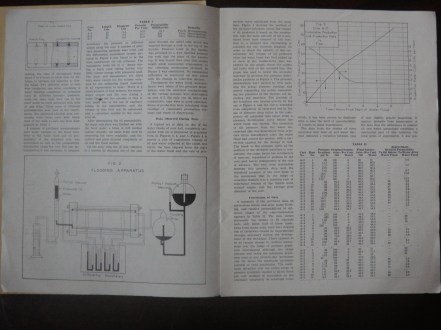
In 1947 you could obtain from the Pennsylvania Mineral Industries Experiment Station a paper written by my father. It cost 25 cents to learn the science behind water flooding from The School of Mineral Industries. He and his friend, Pete Terwillager, a co-author of this paper, would go on to work together to frack many a well.

Science Behind Fracking
This was the work my father did to earn his masters degree before I was born. Water flooding is the subject of this research. When he graduated with his masters he went to work in Tulsa for Stanolind, and so did Pete Terwillager. He obtained a patent for fracking together with Stanolind. Now they were done with water injection as the displacement method, and had moved on to an oil like substance.
Fracking explained
My father grew up on the Cherokee Strip seeing all kinds of explosions done to procure petroleum. His father, Ernest Morse, drilled for oil with a crew before the invention of the rotary bit, so they were desperate. The fact that he eventually became the first man to make a numerical model of an oil field on a computer made him brilliant. It did not change his relationship with the resources of the earth. The wild-wild west, boomer sooner attitude is the reason they both lost and won. These barons of resources saw themselves as saviors of society. It was years after my father’s death in 2004 that fracking became a subject the public discussed. It came up as if the practice had recently been invented and applied. Not hardly.
The Zappos fourth core value is about creativity and adventure. This aspect of life is my driving force. I enjoy being creative in everything I do. I have had great work environments with all my marketing partners. I was an outside sales travel agent , an independent contractor teaching at fabulous spas, and sometimes I would combine the two. I was a potter before that who had marketing partners in galleries. I supplied the creativity, sometimes the product, and they provide the infrastructure, like accounting. I embrace failure by being very productive..moving beyond errors by making lots of them. This core value at Zappos is an acceptance of failure as part of success. Without courage to fail you also lack courage to change anything.
I want Zappos to be my next marketing partner because I believe it can work very well for both of us. I think the product Floatli will be popular if marketed well, and that the sport, Floatli, can be a thinking, training, cooperation activity at Zappos. It can be totally non competitive, or mimic another game like volleyball wearing the equipment. By reversing gravity, the participant usually regresses and feels like laughing. If you loose control you just float to the top of the water, so injury is extremely unlikely while practicing Floatli in a pool, river, or lake. It can also feel good to move underwater with support when injury makes walking or running impossible. Prehabilitation is a great use of the Floatli system. With good range of motion and enhanced flexibility from movement n water, you are a lot less likely to hurt yourself at an active sport like skiing.
I am not looking for a job at Zappos, but a partnership, to sell the most innovative system for staying fit and flexible in the water. I will fly to Vegas, Tony, and give you a demo any time you feel adventurous and open minded enough to give me an opportunity to show you how it works. I believe we have very similar core values. I always love your products, and on my visit I loved the atmosphere at the office in Henderson. I admire the way you handle business and the happiness of all involved. I believe I can make a positive contribution to that mission, and add even more creativity to their already very zesty mix.
If you ask a group of Americans to raise their hands if they consider themselves to be middle class, almost all of them will raise them. The economic sophistication of our citizens is not adequate to survive. Lingering debt, choking all hopes of prosperity, is a driving force in most households in the United States, and yet concern is focused on government debt and misconduct. There are some fundamentals that are not at all understood, such as how money works and where it goes. If we were better educated I wonder if we would have a different outcome. The rose colored glasses are much rosier than we previously believed.
Putnam Coat of Arms
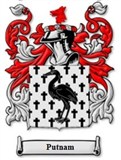
Sarah Putnam was born in England and died in Providence Rhode Island. Her journey included changing religions and fleeing to Rhode Island. The Puritans has this effect on lots of people including Quakers, Baptists, and the very famous Ann Hutchinson. Sarah married her husband, John Hutchinson, in Salem, where her family was entangled in the witch trials. Rhode Island was full of people who were persecuted in Massachusetts for religious reasons. It was not easy to get there, but it was better than being hanged as a witch. Sarah was the aunt of the accuser girls in the Putnam family, so staying would surely mean involvement with the trials. These were scary religious times, especially for women. For women’s history month I am featuring the women who survived in my family. Sarah Putnam narrowly escaped Puritan witch fever, and for that I am glad.
Sarah Putnam (1600 – 1672)
Scottish witches and the cats who were burned with them were pardoned in 2004, which sparked an interest in doing the same for the witches of Salem:
The Salem Witch Trials Written and researched by Margaret Odrowaz-Sypniewska, B.F.A.
PURITANS IN MASSACHUSETTS:
Puritans landed in Massachusetts in December in 1620, during the reign of James I of England, while they were trying to reach the Virginia Colony. A storm at sea directed them north.
Since many people could not afford the price of passage to the American colonies, they indentured themselves to the ship’s captain or another colonist. It usually took five to seven years to pay the money used for passage to the New World. After this time was up, their masters were required to provide their indentured servants with farm tools, seed to grow their own crops, and other essentials they needed to make it on their own.
By 1630 the population of Massachusetts was around 2,000 people. It was then that Governor John Winthrop would begin his first term of office. The Massachusetts Bay Colony would not have a royal standing until May 12, 1686. Most women had as many as twenty-five (25) pregnancies in their life. Families generally consisted of twenty-five people including grandparents, parents, children and their wives. The average life expectancy was forty-five years of age. There were many that lived into their nineties, while children were at the greatest risk during the first years of their lives. Pregnant women were at high risk of dying in childbirth. Most women had to work before and after the birth of their children because the early colonial times were hard and everyone had to work long and difficult hours to survive.
Dying was a regular part of life. Mortality rates were as high as 75% in the early years. Most Puritans were Calvinists. Presbyterians were the model for English Calvinists.
Most Puritans held that:
People were personally responsible for their own actions and beliefs.
People must be educated to read and interpret the Bible.
People should not allow themselves to follow a corrupt minister.
Literacy and education should be highly regarded.
See my Timeline of Events in the Early New England Colonies.
SALEM, MASSACHUSETTS:
The year 2002 marked the 310th anniversary of the witchcraft hysteria in Salem, Massachusetts. In October of 2004, Stanley Usovicz, mayor of Salem, MA. said that he is considering pardoning those persecuted during the seaport town’s infamous 17th century witch trials” (Judith Kane, 19). He said the the 315th anniversary, in 2007, would be a good time to put pardons into effect.
Eighty-one Scottish witches were pardoned, in 2004, in Prestonpans. Most witches were convicted on the basis of spectral evidence [ghosts, apparitions, and other objects of dread) or evil spirits or voices were heard. The Prestonpans, a seaside resort in Scotland, east of Edinburgh, pardoned all “witches” were convicted, including the cats that were burned along with their owners.
Salem, Massachusetts got its name from Jerusalem. Salem was known as Salem Farms, and today is known as Danvers.
Danvers, MA.:
Danvers is located seventeen (17) miles north of Boston, and is bordered by Salem (present) and Beverly. The town of Danvers still has some of the architectural structures from its older days.
Danvers was known as “Salem Village” in the 17th century, and there are still over a dozen houses in Danvers dating from that era, many of which are associated with the witchcraft tragedy of 1692. Danvers became independent from Salem in 1752, because the Salem witch trials were, in part, a result of the the border disputes (as explained in this article and others). Danvers was established to end these hostile feelings.
“The existence of demons and the efficacy [effectiveness] of witchcraft were accepted facts throughout the world in 1692. The Puritans of Salem Village were certain of the devil’s hand in every incident of evil they suffered, from petty misfortune to apalling tragedy. Witches and agents of ‘the ould deluder’ Satan delivered to the people of the commonwealth all manner of torments: deadly epidemics of smallpox; murderous raids by Indians; and ignorant children” (Kenneally, 37).
The Witches of Salem were hanged. This was less painful than the burning of witches in Europe. They thought the burning of a witch was the only way to release the evil, since the Devil would be forced to exit the melting body through the smoke.
Witchcraft in Massachusetts singled out:
spinsters [unmarried beyond the usual age of marriage]
barren women
the ugly
the extremely successful
the independant
the reclusive
the litigious [prone to lawsuits]
the willful.
In New England, no one that confessed was put to death. Those who denied the accusations and fought to clear their names were hanged. The first victim of witchcraft, in New England, was Margaret Jones of Charlestown, Massashusetts. Margaret was hanged, in 1648, for giving herbal cures. Margaret was a physician and some thought she had the “malignant touch” after some of her patients started vomiting or suffered violent seizures. Prison guards testified that they saw a small child run out of the witch’s cell into another room, and then vanished. This was enough to prove that she was under the influence of evil. Anne Hibbons, the sister of the Deputy Governor Bellingham of Massachusetts was hanged, in the words of John Norton for “having more wit that her neighbors” (Buckland, 402-411). Anne’s husband died in 1654. He was a Boston merchant, a Colonial Agent, and an assistant Agent. She was “quarrelsome,” and had “supernatural” knowledge. She was accused in 1655, and was executed in 1656.
New England Colonists – MA Origins Salem, Massachusetts
THE TOWNE FAMILY CONNECTION TO WITCHCRAFT:
My family lines go back to William Towne and Joanna [nee Blessings]. William was born circa 1600 in Braceby, England. He married Joanna on March 25, 1620, in Braceby. William Towne was cited by the Archbishop of Norwich County, England, for failing to appear for communion and was noted as a “Separatist” [not a member of the Church of England]. His family was Puritan. William Towne came to America on the Rose from Great Yarmouth. They left Ipswich and arrived in June 1637. William came to Massachusetts with his wife and children.
1) Rebecca Towne was born on February 21, 1621, in Great Yarmouth, England. Rebecca married Frances Nurse, a tray maker, on August 24, 1644. Rebecca was hanged for witchcraft on June 19, 1692, [at age 61] in Salem, MA.
2) John Towne was born February 16, 1623 in Great Yarmouth, England. John married Phebe Lawson, and he died in 1672 [at age 49], twenty years before his sisters were accused of witchcraft.
3) Suzanna Towne was born October 20, 1625 in Great Yarmouth, England. Suzanna died in 1672 [at age 47], twenty years before her sisters were accused of witchcraft.
4) Edmund Towne was born July 28, 1628, in Great Yarmouth. Edmund married Mary Browning in 1652 [at age 24].
5) Jacob Towne was born on March 11, 1632. Jacob married Catherine Symonds, daughter of Samuel Symonds (1693-1772) and Elizabeth Andrews, on June 26, 1657. He died November 22, 1704, in Topsfield, MA. [at age 72]. His father-in-law and Jacob’s two siblings all died in 1672.
6) Mary Towne was born August 24, 1634. He married Isaac Estey. Mary was hanged on September 22, 1692, during the Salem witch trials [at age 58].
These are the last children born in England.
7) Sarah Towne – born on September 3, 1639, in Salem, MA. He married (1) Edmund Bridges (2) Peter Cloyes. Sarah Cloyes was accused of witchcraft, in 1692 [at age 53], and put into prison, and later released. She pressed charges for her unlawful arrest and the killing of her sisters. She received three gold sovereigns for each of them. The movie, Three Sovereigns For Sister Sarah is about this event.
8) Joseph Towne – born on September 3, 1639, in Salem, MA. Joseph married Phebe Perkins in 1665.
When Joanne [nee Blessing] Towne came to the colonies her sister, Alice [nee Blessing] Firmage, and her brother-in-law, Robert Buffam, husband of her other sister, Margaret [nee Blessing] Buffam(deceased) came together. In the will Robert Moulton, a master shipwright, left twenty shillings to Goodwife Buffum and Joshua Buffam in 1655. Joanne Blessing was known as “Mother Goose.” However, her sister was the real Mother Goose.
William Goose was a mariner, and his wife Mary [nee Blessing] also came to Salem from Great Yarmouth. An article called “The Great Yarmouth Company of Migrant Families” by Barbara MacAllan is featured in The New England Historical and Genealogical Register. Volume 154, April 2000, 215-217. A William Goose, was first living in Salem in 1635, and they were admitted to the church on August 6, 1637 (Farmer, 126). McAllan states that William Goose was the master of the Mary Anne of Yarmouth, and the Sparrow and that his wife Mary ran their trading business from Salem, Massachusetts. William had moved to Charlestown, MA. by 1658. Apparently they traded in the Caribbean Islands and brought passengers from Great Yarmouth to New England. The Goose family was said to be prominent in the Ormesby cluster of villages, north of the port of Great Yarmouth. Gregory Goose, fisherman left his grandsons (?) William and Gregory, Jr. his fishing boat the William, in 1570. Gregory, Sr.’s will was dated 1629.
The Goose:
The Goose was once considered a mystic bird:
The Egyptian god Ra was born to a goose.
The Goose is a symbol of fertility in China.
The Sumerians thought that their god known as Gula used a chariot pulled by four white geese.
In ancient times, the goose was thought to stand for constancy and had immortality like the gods.
The Romans thought the goose was a symbol of fate and vigilance, because a flight of geese warned the Romans that the Gauls were attacking Rome.
There was the goose that laid the golden egg, thus symbolizing plenty.
Today we think of a “silly goose” as a foolish person.
Old Mother Goose When she wanted to wander Would fly through the air On a very fine gander.
Mother Goose had a house; It stood in the wood Where an owl at the door As sentinel stood.
CLICK HERE for the rest of this rhyme.
Mother Goose:
Some trace “Mother Goose” to a French book by Charles Perrault (1697) that had the subtitle Contes de ma mère L’Oye which translates into Tales of Mother Goose.. This name has been associated with Queen Goosefoot, Charlemagne’s mother (see Bertrada), who was a patron of children. Mother Goose was first published, in 1719, in Boston by Thomas Fleet. His mother-in-law was Elizabeth Vergoose.
So it seems unlikely that the Pilgrims thought of the title of Mother Goose in this way. Apparently since Mother Goose rode a goose rather than a broom (a tool of the witch) that the Goose might have been thought of as a Satanist bird?
The “Mother Goose” of book fame, is a watchful nanny, who tells stories and teaches rhymes to her charges. Mother Goose rides on a gander as Gula, the Sumerian god, had used geese to pull his chariot.
Mother Goose is portrayed as a wise old woman, who lives in the woods. Her owl stands as sentinel.
The Owl:
The owl was the symbol of the goddess Athena in Greece. Athena is the goddess of wisdom. Owls used to live in Athens by the tens of thousands. They were revered as Athena’s favorite pet, who spied on her enemies.
Some Native Americans think of the owl as a harbinger of death. “I Heard the Owl Call My Name” refers to the fact that they believe that Owls appear to you before you die. In Denmark the owl is seen on most bookstores as books deliver knowledge.
On March 20, 1647, William Towne and Francis Nurse asked for a grant of land. Francis Nurse married William’s daughter, Rebecca Towne.
By 1651, William Towne bought land in Topsfield, from William Paine of Ipswich, and William Howard. This property bordered Topsfield and Salem and was known as “Salem Farms” and “Salem Village.” The Towne children were all brought up in a house which was located at the intersection of South Main Street and Salem Street. This house was built in 1651.
In 1681, Jacob Towne testified, at age 50, that the house of William Towne, was bought some 30 years previous and William paid for it with wheat. Remember barter was the way most people obtained property at this time. When his father moved to Topsfield, he was said to have sold the twenty acre lot to Nathaniel Felton.
In 1682 Jacob Towne acted as an witness to end the bitter dispute between Salem and Topsfield over the boundary line. This event is considered to have birthed repercussions that resulted in the witchcraft accusations in 1692.
Jacob Towne (b. 1632), the son of William Towne, married Catherine Symonds on June 26, 1657 in Salem. Essex County, MA., and his daughter, Deliverance Towne, was born on August 5, 1665, in Topsfield, Essex, MA. Jacob is listed as paying taxes in 1664-1669 in Salem, Essex, MA.
Joanna Towne filed a series of lawsuits against the Rev. Thomas Gilbert, a Topsfield minister. She thought “People should not allow themselves to follow a corrupt minister.” Gilbert gave testimony that he was not well, which he said was the reason for his erratic behavior. However, all the town knew that he drank too much, and that caused his erratic loud and abusive tongue. The court ruled in favor of Joanna and the other principal parishioners of Topsfield. Mr. and Mrs. Gilbert, Capt. John Gould, Thomas Perkins, and their wives told of the Rev. Gilbert drinking of too much wine on that occasion after giving them all the sacrament.
Joanna’s husband William died June 24, 1673. His estate was NOT immediately proved since he left no will. William was a basketmaker and gardener. Joanna administered his estate, which was not divided between his heirs until her own death in 1682 in Topsfield. Joanna was buried at Pine Hill Cemetary in Topsfield, Essex County, MA. William’s sons were Edmund, Jacob, and Joseph Towne. His daughters were Rebecca [Towne] Nurse, Sarah [Towne] Bridges, and Mary [Towne] Estey. Joanna [Blessing] Towne was accused of witchcraft in Salem, MA., but was never convicted of the crime. Three of Joanna’s daughters were accused of witchcraft. Arthur Miller’s play, The Crucible, was based on this trial.
Rebecca [nee Towne] Nurse, wife of Francis Nurse was 71 years of age when she was accused of witchcraft, on March 23, 1692. She had been bedridden for over a year. Over thirty-nine (39) people signed a petition regarding Rebecca’s good character. Ann Putnam said she saw a Black Man with Rebecca [see below].
The Black Man
In Hereditary Witchcraft, there is mention of “the man in black,” whom the Inquisitors thought was the devil. In witchcraft, the man in black was an emmisary from the Old Religion (witchcraft) to the peasant folk. He was known as Capinera to the Italian Strega (witch). The priesthood/priestesshood of the Old Religion still existed and periodically sent out figures in an attempt to ensure the survival of the Witch Cult. They often approached outcasts who sought solitude in the woods.
My The Towne Family Connection
THE “WITCH BITCHES” AND SAMUEL PARRIS:
Rev. Samuel Parris was the son of Thomas Parris of London, and was born circa 1653. The English-American clergyman was ordained on November 15, 1689. He lived in Barbados for a time, and we can assume that he had knowledge of Voodoo ceremonies there. Voodoo was frightening to whites. Samuel brought two Carib Indian servants back from Barbadoes with him to Salem, MA. They were named Tituba and her husband was called John Indian. Samuel was not a popular man amongst his congregation, and he was fearful that he would lose his job. He did leave his ministry in June 1696 (4 years after the witch trials), and he moved to Concord. Concord records show him still living there in 1705.
Samuel’s slave Tituba told his daughter and their friends stories of witches and other things that went bump in the night. She also filled their heads with supersititions about how to tell a witch.
Rev. Samuel Parris gave a sermon called “One of Them is a Devil,” and Sarah Cloyse, daughter of Joanna [nee Blessing] Towne, remembers well that her own mother was accused just ten years earlier. Even though her mother was acquitted, the memories still remained. Sarah did not want that ordeal to begin anew. Shortly after walking out of the Meeting Hall, during Parris’ sermon, Sarah [nee Towne] Cloyse was herself accused of witchcraft on April 3, 1692.
In 1711 Samuel Parris preached again in Dunstable, but only for about six months. His will was dated in 1720. By this time, Samuel was living in Sudbury, Middlesex County, Massachusetts. Samuel owned a plantation near “Spick Town” called Cotton Boll. Cotton Boll was located near Bridgetown, Barbadoes. Samuel’s uncle, John Parris, Esquire, and his father, Thomas Parris, both had interests in this plantation. In Thomas’s will dated September 4, 1673, this property was left to Samuel. Samuel, in turn, left it to Noyce Parris, a graduate of Harvard College (1721) and Samuel Parris, Jr. of Sudbury, Middlesex County, Massachusetts. Noyce and Samuel Jr. were his sons.
Four months after Sarah Cloyse was accussed, the “Witch Bitches” were identified by John Willard. John was the Deputy Constable of Salem, and he spoke out against the girls thinking that they were using their accusations as a vehicle for attention and to “get even” with people they did not like. John Willard was himself victimized and was hanged on August 19, 1692, for witchcraft:
He named the following girls as perpetrators:
Samuel’s daughter Elizabeth Parris – seven (7) years of age. Lived with Samuel Parris.
“Betty” Parris’ cousin Abigail Williams was nine(9) years of age, and lived with Samuel Parris.
Ann Putnam, Jr. seemed to have done the most accusing and identification of “witches.” (age 12) Her mother always took her daughter’s part and generally was the dangerous gossip that put thoughts into Anne’s head. Anne later confessed, at age 26 [fourteen years later], that she and the others were wrong in their accusations. Ann lived with Thomas Putnam, Jr.
Mary Walcott (age 17) lived with Thomas Putnam, Jr. The aunt of Mary Wolcott turned to “white magic” to break the witch’s spell on her niece.
Elizabeth Hubbard (age 17) lived with Dr. William Griggs.
Elizabeth Booth (age 18)
Susannah Sheldon (age 18) was known as “Widow Shelton.”
Mary Warren (age 20) lived with John Proctor as his maid-servant.
and Sarah Churchill (age 20) lived with George Jacobs, Sr.
Sarah Bibber of Wenham.
Mercy Lewis (age 19) was a servant in the house of Thomas Putnam.
At the time of the witch trials, Mercy Short a New England servant girl of a Boston family, had violent fits and visions of the devil from 1690 until 1693.
At first the girls were taken to doctors to discover why they were having fits and other ailments. A Dr. William Griggs, of Salem, told their parents and guardians that: “The evil is upon them.” He believed them to be victims of the evils of witchcraft.
*****
Criss – Cross, double cross, Tell the monster to get lost! [A Colonial American chant to ward off evil spirits].
*****
By the end of September 1692, at least 150 people (including children) were arrested, and 19 were hanged.
THE AMERICAN WITCH TRIALS OF 1692:
Thirty years before the Salem Witch Trials, Cotton Mather (1663-1728) clergyman, author, and scholar, was born in Boston, MA., on February 12, 1663. He was named after his grandfather John Cotton. He wrote Memorable Providences Relating to Witchcraft and Possessions. Cotton Mather was a member of the Royal Society, England’s scientific association. Cotton graduated from Harvard College in 1678, and got his M.A. in 1681. In 1655 he was ordained as a minister, and succeeded his father as pastor of the Second Church, in 1723. Cotton was the eldest son of Increase Mather (1634-1723).
Prior to the Salem witchcraft trials, only five executions on the charge of witchcraft are known to have occurred in Massachusetts. Such trials were held periodically, but the outcomes generally favored the accused.
Cotton Mather thought Salem was filled with “witches.” The magistrates during these trials were John Hathorne (1641-1717) (ancestor of Nathaniel Hawthorne the author), and Jonathan Corwin (1640-1718).
Cotton married (1) Abigail Philips, daughter of Col. John Philips (2) the widow Hubbard, daughter of John Clark and (3) Widow George, daughter of Samuel Lee. Cotton and his first two wives had 15 children. Mather’s own wife was accused of witchcraft at one point.
Formal charges of witchcraft were brought against 156 people from 24 towns and villages in the county of Essex, Massachusetts. While it is true that the majority of the accused were innocent, it is also true that some were guilty. The accused were:
Sarah Osborne was thought (by Nevins) to have been born in Watertown, Massachusetts, however there are no records to prove this. She was accused of witchcraft on February 29, 1692. She was about forty-nine (49) years old and was a bedridden cripple. She held property, in trust, after the death of her husband Robert Prince. Robert was a tailor, in Salem, and was admitted to the church on January 16, 1642 and became a deacon. Robert died on June 4, 1674 (at age 61). Robert married Sarah [nee Warren], on April 5, 1662. Thirty years after their marriage, Sarah died, in jail, on May 1692. Her husband, Robert Prince had been dead for 18 years by 1692.
The town all thought that Sarah “lived in sin” before marrying her next “husband.” Sarah was known to have enjoyed the company of men, and she did not attend church services regularly, so she was the subject of much gossip. The main scandal regarding Sarah Osborne was that she had been left in charge of her minor son’s estate. In her husband’s (Robert Prince’s) will, James Prince and Joseph Prince were to inherit Robert’s lands and house when they reached adulthood (age 18). James was 18 in 1686 (6 years before his mother’s death) and Joseph was 18 in 1690 (2 years before his mother’s death). Captain John Putnam and Thomas Putnam were both Robert Prince’s neighbors and the executors of his will.
In 1686, they tried to give James his inheritance and Sarah offered resistence. The Putnam’s became even more aggressive about Robert Prince’s will, in 1690, when Joseph was old enough to inherit. After Sarah took up with her Irish manservant, Alexander Osborne, she paid off his indenture. Alexander testified that Sarah was a witch or would be soon. He also said that he saw a “strange tit or wart” on Sarah’s body (Hanson, 32-33). Alexander Osborne remarried shortly after Sarah’s death. Robert Prince’s sister had married into the Putnam clan in 1662, so Anne Putnam, Jr., Sarah’s accuser, was the Prince boy’s second cousin. See the similar background of Sarah Good. Sarah Good had too many husbands for the townspeople’s comfort. Both Sarahs were among the first three to be accused, along with Tituba, the Barbadoes servant of the Putnams. Sarah Osborne was the first to die in jail. All three women had Anne Putnam, Jr. or Abigail Williams, Anne’s cousin, as their main accuser. Both girls lived in the Putnam house.
Martha Corey was accused on March 19, 1692, by Ann Putnam (age 12} Martha Corey was thought to had a half-caste bastard son. It was thought her son’s father was a Native American. Martha was hanged on September 22, 1692. Her husband was Giles Corey and Martha Corey was adamantly against witchcraft.
Giles Corey came to Salem in 1659. Giles who had earlier testified against his own wife, Martha, was lead to a field beside the Salem jail in September 1492. To extract a confession, Giles was pressed to death because he would NOT say if he was “guilty” or “not guilty” – thus making the trial unable to begin. He would not repent his sins. Giles refused to the end and his final words were “More weight, more weight.” Giles died two days before his wife on September 19, 1692 (at age 77). He took two days to die.
Tituba, the Carib Indian slave from Samuel Parris’s plantation in Barbados, confessed and was sent to prison. The basis for trying Tituba seems to be simply the fact that she was from the West Indies. The Puritans also believed the American Indians worshiped the devil. In early Salem, the Devil was often described as a “black man.”
Sarah [nee Solart] Poole Good was the daughter of John Solart of Wenham, Essex and Elizabeth? He father was said to have staged his own drowning on April 29, 1672. So his “death by suicide” was considered “sinful.” Sarah’s brother, John Solart, Jr. inherited twice as much as her and her sisters, Hannah, Martha, Abigail, and Bethia; and her brother Joseph Solart. Sarah married Daniel Poole of Salem. In 1686, Ezekial Woodward, Sarah’s step-father, testified that he gave Sarah and her husband, William Good, her inheritance, as stated in her father’s will. The Thorndike property of William Good (a weaver) and his wife Sarah [nee Solart] was seized in November 1686; after Sarah was said to have given her free consent to its sale on August 30, 1686. William Good wrote a letter to the General Court, after May 1710, regarding his wife. He started that 1)his wife Sarah was in prison for four months before she was executed, and 2)that his family lost both a sucking child and 3)his daughter, Dorcas Good, who spent seven to eight months in chains, and was terrified to such a degree that she had little reason to govern herself. William’s letter was dated May 1710, and was most likely written so that he might get some sort of settlement from the court. The court said that what happened to Dorcas was brutal, but that William himself had testified against his own wife and thus was the one responsible for his own family’s fate.
Before this happened a dispute developed regarding the sale of this land. Sarah was accused of witchcraft by a neighbor, so when she was accused again on February 29, 1692, the townspeople rallied to that thought. Sarah was born in Wenham, and was thirty-one (31) years old at the time of the witch trials.
Sarah was thought to have been a prosperous woman, but she ended up a beggarwoman who smoked a pipe, after two unfortunate marriages. Sarah was left her without an inheritance. She was thought to have gotten in her present state by being slovenly in her work and personal affairs. Sarah’s daughter, Dorcas Good, died in prison (at age 5). Sarah was said to have signed “The Devil’s Book,” as testified to by Tituba, Samuel Parris’ servant. It was thought that Sarah Good’s misfortune might have influenced Sarah Osborne’s decision to keep her husband’s land until her death. I find it very telling that both of these women were accused at the same time. Neither one should have been left penniless. Most wives were allowed to keep their husband’s goods until their own death. Sarah was hanged on September 22, 1692. Before her death she cursed Rev. Nicholas Noyes saying that God would give him blood to drink.
Mary Sibley asked Tituba’s husband, John Indian, to make a “witch cake” of barley and children’s urine for her dog who suffered from ague [a fever like malaria with fits], and to save her niece Mary Walcott from being bewitched.
Ann Pudeator was accused on May 12, 1692, and was hanged on September 22, 1692.
Mary Parker was accused in August 1692, and was hanged on September 22, 1692, along with forty others from Andover.
Mrs. Cary of Charlestown was accused May 28, 1692, was arrested, and later released.
Even Captain John Alden, of Boston, Suffolk County, Massachusetts was accused on May 31, 1692, and thrown into prison. He managed to escape four months later. John was the son of the Pilgrim John Alden and Priscella Mullins who came to Plymouth on 1620 on the Mayflower. John Jr. went from Duxbury to Boston as early as 1659. He died March 14, 1702.
John Willard was born January 15, 1657, to Simon Willard of Concord. John Willard was arrested May 12, 1692. John was a farmer and Deputy Constable in Salem was the first one to recognize that the eight “witch bitches” were to blame for all the frenzy in his village. He was charged by the girls and Mrs. Putnam on seven indictments. He was hanged on August 19, 1692. John Willard’s wife was named Margaret.
John Proctor refused to believe in witchcraft and so he was accused on April 11, 1692, and hanged on August 19, 1692. John Proctor was known to have a violent temper. His will did not include his wife.
Martha Proctor was accused even though she a devout churchgoer.
Elizabeth Proctor was found to be pregnant and was reprived. A pregnant woman would not be executed, on the grounds that her child was an innocent. However, after the child’s birth, the mother could be executed. Elizabeth Proctor’s child was not born until January 1693, when the witchcraft frenzy was over.
Suzanna [nee North] Martin was baptized in Olney, Buckinghamshire, England, on September 30, 1621. Suzanna’s parents were Richard North and Joan Bartram/Bertram. Her mother died when she was young. Suzanna came to Massachusetts with her father, her step-mother, and at least one sister. Suzanna North married George Martin, a blacksmith, on August 11, 1646, in Salisbury, MA. Richard North, her father, was one of the first proprietors of Providence, and he was made a freeman in 1641. Suzanna and George Martin had eight (8) children. In 1669, Suzanna [nee North] Martin was said to be a witch. This all began because William Sargent, Jr. told people that Suzanna had an illegitmate child with Captain Wiggins. Her husband George sued Thomas Sargent for saying that his son, George Martin, Jr. was “a bastard.” Suzanna and three more were hanged on June 19, 1692, twenty-three (23) years after Sargent’s original accusations.
Bridget Bishop was first accused in 1680 for her husband death. It is not known if this was for (1)Goodman Wasslebee’s death or for (2) Edward Bishop’s death, but she was acquitted. She was, this time, accused on April 18, 1692 [12 years later]. Bridget was an inn keeper. She was accused of being a temptress in her red push-up bodice. By this time Bridgett was an elderly woman. Bridget was hanged on June 10, 1692. Bridget was married to husband three (3)Edward Bishop. It was Edward that said she was a witch. They had no children.
Margaret Scott was hanged on September 22, 1692.
George Burroughs was accused on April 30, 1691. George was said to have had a feud with Ann Putnam, Sr. He was a defrocked clergy. He graduated from Harvard College in 1670. He served Salem from 1680 until 1682. In fact, he moved to Wells, Maine and they brought him back to Salem for trial. He was thought to be “The Black Man” in charge of the witches’ coven. Burroughs was about to be set free, when Cotton Mather said the Devil spoke for him when he recited the Lord’s Prayer correctly. Since Burroughs was a minister he would surely have known the Lord’s Prayer as he said it each Sunday. This was a case of “damned if you do, damned if you don’t.” George Burroughs was hanged on August 19, 1692.
Martha Carrier of Andover was accused on May 28, 1692, and hanged on August 19, 1692.
George Jacobs, Sr. was hanged June 19, 1692, despite a withdrawal of charges. He said: “You tax me for a wizard. You may as well tax me for a buzzard, I have done no harm.” His granddaughter, Margaret Jacobs, testified against him. Margaret Jacobs herself was charged when she withdrew her testimony against her grandfather. She had a abcess in her head and was treated before she could stand trial. She outlived the witch hunt.
The Daughters of William Towne, brother to my own line: Suzanna Towne (1605-1664), wife of Deacon Thomas Hayward (1601-1686)
***Rebecca (nee Towne) Nurse, daughter of Rebecca Blessing, was thought to have used witchcraft to kill Benjamin Holton after an argument over his pigs breaking out of their pens and destroying her crops and land. She was accused on May 2, 1692. Ann Putnam, senior reported that Jonathan Putnam’s child was killed because she told Rebecca that it was no wonder her and her sisters were witches, since her mother Joanne [nee Blessing] Towne was a witch. On July 3, 1692, Rebecca Nurse was excommunicated from the First Church of the Town of Salem. Rebecca was the mother of eight children, who all pleaded for her life. Rebecca and five others were hanged on June 19, 1692. Her family was not welcomed to take communion until 1699. In 1711, Nurse’s family was later compensated by the government for her wrongful death.
***Sarah Cloyse was accused on April 3, 1692. She had stormed out of the meeting house when Rev. Parris gave his sermon “One of them is a Devil.” The girls pointed to Sarah as a Devil worshipper. She was jailed the next day and spent four months in chains. Her case was dismissed on January 1693.
***Mary [nee Towne] Esty was accused on April 1, 1692, and hanged on September 22, 1692. Her sister was Rebecca Nurse.
My Other Lines in Salem, Massachusetts
Elizabeth Howe, of Topsfield, was accused on April 21, 1692, and was hanged June 19, 1692.
Alice Parker was accussed on May 12, 1692, and was hanged on September 22, 1692.
Wilmot “Mommy” Redd was known as the town witch of Marblehead. She was accused May 28, 1692, and was hanged on September 22, 1692.
Margaret Scott was accused in September 1692, and hanged on September 22, 1692.
Samuel Wardwell, of Andover, was accused on September 1, 1962 and was reprieved. Sarah was the widow of Samuel.
Sarah Wilds/Wildes was married first (1) to Edward Bishop, the son of Edward Bishop, the founder of the church in Beverly, Massachusetts. Sarah was accused on April 21, 1692, and was hanged on Tuesday, June 19, 1692.
Sarah Bridges was married to Edward Bishop, son of Edward Bishop, Sr. Edward was said to have founded the church in Beverly, MA.
Lydia Dustin died in jail.
“Dr.” Roger Toothaker died in jail. He bragged that he and his daughter killed a witch.
Rebecca Eames/Ames was reprieved.
Dorcas Hoar was reprieved, even though he had been dabbling in the occult for years by telling fortunes in Beverly. She was said to have predicted her husband, William Hoar’s death.
Abigail Hobbs was reprieved
Mary [nee Perkins] Bradbury was born on September 3, 1615, in Hillmorton, Warwickshire, England. She was the daughter of my relatives, JOhn Perkins and Judith Gates. Her husband was Captain Thomas Bradley of MA. Mary’s case was defended by Major Robert Pike, a magistrate of Salisbury. She was released.
The Perkins Family – with more information about Mary’s trial
Mary Lacy
Abigail Faulkner was found to be pregnant and was reprieved.
Ann Foster died in prison.
In 1693, fifty-two (52) people were released. While only three were sentenced to death.
Sir William Phips, Governor of New England gave his own wife a reprieve along with seven others. Phips decided to discount the validity of the spectral evidence and halted further trials. Several others wanted to continue the trials but they were set aside.
January 15, 1697, was designated a day of repentance and the legislature annulled all the the convictions, and in 1711, Massachusetts made restitutions to the victim’s families.
Elizabeth Warren (1629 -1715) was the daughter of John Warren of Nayland, Suffolk, England, and his wife Margaret ?. Elizabeth was accused of witchcraft by Cotton Mather, but was released. Elizabeth married James Knapp (1627-1715) in 1715.
Candy, a Negro slave from Barbadoes was examined on July 4, 1692. She told them she was a witch.
My relative, Joanne Blessings, wife of William Towne died in 1682. She was accused of witchcraft and was reprieved. Later on, three of her daughters would be accused.
Arthur Miller’s play, The Crucible was about the Salem Witch Trials. The Crucible was written in 1953. Miller’s account of the Salem Witch Trials closely paralled political events of 1950’s in the United States.
By the 18th century Witch Trials were beginning to come to a halt all over the world.
In 1727, the last Scottish witch was executed.
By 1735, under George II, the Witchcraft Act was passed. It stated that witchcraft did not exist.
but, in Poland, there were still witch hunts during the 18th century.
In 1775, nine old Polish women were hanged for witchcraft.
After this the witchcraft era, in Europe and America, seemingly ended. However before the nations returned to sanity, many innocent lives were taken and many families were ruined both financially and spiritually.
I see a trend towards this type of thinking emerging once again. Here’s hoping that the new religious right does not make the same mistakes. People who speak out should not be persecuted or threatened. Our nation was built upon the idea that “Freedom of Speech” and “Freedom of Religion” should reign. Let it be a lesson to us all to not let this sort of religious fervor, towards those who do not fit in, develop into some sort of master plan for their death.
For more information about witchcraft in the past and today see: Witches’ League For Public Awareness. Although I may not agree with all they say there, I am of the opinion that we should “live and let live.”
*****
RingSurf: New Ring Join List Previous Next Random Previous 5 Next 5 Skip Previous Skip Next
Powered by RingSurf
SOURCES:
Boyer, Paul and Stephen Nissenbaum. Salem Village Witchcraft: A Documentary Record of Local Conflict in Colonial New England. Boston: Northeastern University Press, 1993.
Buckland, Raymond. The Witch Book: The Encyclopedia of Witchcraft, Wicca, and Neo-paganism. Detroit: Invisible Ink, 2002.
Crow, W.B. A Fascinating History of Witchcraft, Magic, and Occultism. Hollywood: Wiltshire Book Company, 1970.
Eisenkraft-Palazzola, Lori. Witches: A Book of Magic and Wisdom. New York: Smithmark Publishers, 1999.
Farmer, John. A Genealogical Register of the First Settlers of New England. Baltimore: Genealogical Publishing Compnay, Inc., 1998.
Farrington, Karen. Hamlyn History of the Supernatural. London: Hamlyn Limited, 1997.
Fraser, Antonia. The Lives of the Kings and Queens of England. New York: Alfred A. Knopf, 1975.
Glass, Justine. Witchcraft: The Sixth Sense. Hollywood: Wiltshire Book Company, 1965.
Grimassi, Raven. Hereditary Witchcraft: Secrets of the Old Religion. St. Paul: Llewellyn Publications, 1999.
Jung, Erica. Witches. New York: Harry N. Abrams, Inc. Publisher, 1981.
Hanson, Chadwick. Witchcraft at Salem. New York: George Braziller, 1962.
Kerr, Daisy. Keeping Clean: A Very Peculiar History. New York: Franklin Watts, 1995.
Maple, Eric. The Domain of Devils. New York: A.S. Barnes and Company, Ltd., 1966.
Marshall, Richard. Witchcraft: The History and Mythology. New York: Barnes & Noble Books, 1998.
Morrison, Sarah Lyddon. The Modern Witch’s Book of Symbols. Secaucus, N.J.: A Citadel Press Book, 1997.
Larner, Christina. Enemies of God: The Witch Hunt in Scotland. Edinburgh: John Donald, 2000.
Pickering, David. Cassell Dictionary of Witchcraft. London: Cassell, 1996.
Roach, Marilynne K. The Salem Witch Trials. New York: Taylor Trade Publishing, 2002.
“Salem, MA, May Pardon Witches” by Judith Kane. Renaissance Magazine. Volume 10, Issue 44.
Taylor, Dale. The Writer’s Guide to Everyday Life in Colonial America (1607-1783). Cincinnati: Writer’s Digest Books, 1997.
Walsh (editor), Michael J. Lives of Popes. London: Salamander Books Limited, 1998.
If I am classified by others I imagine the rebel archetype is used liberally. I have both cast myself in this role, and have been asked to play it. Rebels are catalysts for change. They reject conformity. Steve Jobs made the misfits trendy and to disrupt is now an honored business method. Disobedience or disrespect of authority is not as evil as we are taught by those same authorities. Revolutions are brought about in all corners of the earth by people who are willing to risk and step outside the norm.
Many revolutions in history have been brutal and angry, while some of the grandest have been almost sneaky. The digital revolution has a cutting edge that must be driven by rebels because it takes that spirit to continually disrupt and change the current methods. We may soon have Google glasses and internet TV at home because of the rebellious among us. I have to tend my own rebel, who does not do homework, who procrastinates, and who takes shortcuts. She is not terribly evil, but she does give my teacher archetype a whole lot of flack. If I have an internal war, it is between this teacher and this rebel. They are both persuasive and have great achievements to show for their particular philosophy. Both study and patience and completely out of the ordinary gambles have worked out for me. I need to honor them both because they are sticking with me for the rest of the flight, it seems. The rebel must be unleashed with care and proper consideration for best effect.

Gov Simon Bradstreet
Bradstreet was chosen to fill several important positions in colonial affairs, and he served as an assistant in the lower house of the General Court for most of his life. During his first twenty years in the colony, he was heavily involved in business pursuits, as well as the founding of new towns. In 1661, he was chosen as an envoy to the court of Charles II, that monarch having recently been restored to power. In 1679 Bradstreet was chosen governor of the colony. He would turn out to be the last governor under the original charter. In 1686, the colony was denied its right to self-rule, and Sir Edmund Andros was installed as governor. Bradstreet served briefly as governor again after Andros was overthrown, but England replaced him with Sir William Phips in 1692. Bradstreet continued to serve in government until his death in 1697, in Salem, Massachusetts.
Simon Bradstreet built his first home in America at the present location of Harvard Square at Brattle Street and John F. Kennedy Street, Cambridge Massachusetts
Governor Simon Bradstreet (1604 – 1697)
is my 9th great grandfather
John Bradstreet (1652 – 1718)
son of Governor Simon Bradstreet
Mercy Bradstreet (1689 – 1725)
daughter of John Bradstreet
Caleb Hazen (1720 – 1777)
son of Mercy Bradstreet
Mercy Hazen (1747 – 1819)
daughter of Caleb Hazen
Martha Mead (1784 – 1860)
daughter of Mercy Hazen
Abner Morse (1808 – 1838)
son of Martha Mead
Daniel Rowland Morse (1838 – 1910)
son of Abner Morse
Jason A Morse (1862 – 1932)
son of Daniel Rowland Morse
Ernest Abner Morse (1890 – 1965)
son of Jason A Morse
Richard Arden Morse (1920 – 2004)
son of Ernest Abner Morse
Pamela Morse
I am the daughter of Richard Arden Morse
ORIGIN: Horbling, Lincolnshire MIGRATION: 1630 FIRS T RESIDENCE: Boston RE MOVES: Cambridge 1634, Ipswich 1636, Salem 1646, Andover 1652, Salem 1676, Boston by 1689, Salem 1692 RETU RN TRIPS: To England and return in 1662 on colony business OCCUPATION: Magistrate. CHURCH MEMBERSHIP: “Simon Brandstreete” admitted to Boston church as member #7, which would be in the fall of 1630 [BChR 13]. FREE MAN: 25 May 1636 [MBCR 1:372]. (He was one of seven men admitted on that day who had been involved with the Massachusetts Bay Company for many years, and had held high offices; their admission to freemanship on this date was merely a formality that recognized a status that had existed for some time.) ED UCATION: Morison argues that the Simon Bradstreet who received degrees at Emmanuel College, Cambridge, was not the immigrant, although the immigrant did reside at that college about 1628-9 and was a very well-educated man [Morison 367-68; see Venn 1:203 for the record of the “other” Simon Bradstreet]. OFFICES: Assistant, Massachusetts Bay Colony, 1630 to 1678; Secretary, 1630 to 1636; Governor, 1679 to 1686 and 1689 to 1692; Commissioner of the United Colonies, 1644, 1663 to 1667 [MA Civil List 17-18, 21-26, 28]. (Savage credits Bradstreet with service as Deputy Governor from 1673 to 1678, but Samuel Symonds held this office in those years, as Savage also notes.) Bradstreet held many other offices at the county and local level, such as Cambridge selectman and Essex magistrate. ESTATE: With other leading men of Essex county, “Mr. Symon Bradstreete” petitioned to be allowed a “free company of adventurers” to pursue trade in Massachusetts Bay, 1 October 1645 [MBCR2:138]. The General Court granted “Mr. Symon Bradstreete” eight hundred acres to be located near the farms of Capt. Keane and others, 23 May 1650 [MBCR 3:193, 413]. Bradstreet and Thomas Wiggen, gent., were granted one thousand acres near Dover, with the privilege of timber for their sawmill, 14 October 1651 [MBCR 3:247, 306, 364]. Mr. Bradstreet and Mr. Symonds were granted five hundred acres “in reference to service done at York and Kittery,” 14 September 1653 [MBCR 3:339] to be laid out eight miles from the Haverhill meeting house [MBCR 4:2:327]. He was granted another five hundred acres, August 1653, near the Connecticut River next to his two hundred acres, 6 May 1657 [MBCR 3:430], but was encouraged to locate it elsewhere, 28 May 1659 [MBCR 4:1:380]. As a result, he was granted an additional three hundred acres, to be six miles or more from the Northampton meeting house, 31 May 1660 [MBCR 4:1:420]. His five hundred acres near Hadley was in controversy 18 May 1664 [MBCR 4:2:106]. In his will, dated 23 December 1689 (with codicil of 27 January 1692/3) and proved 2 April 1697, “Simon Bradstreet of Boston … being at present in competent health and strength” set his house in order and “for my outward estate which God in his rich mercy hath blessed me withal in this Wilderness (having given all my eight children such portions as I thought meet and equal & divided my plate and household stuff amongst them)” the remainder was bequeathed to “my dear and loving wife Mrs. Ann Bradstreet all that estate real and personal whatsoever that I had of hers or with her in marriage … (according to agreement made with her before marriage) in lieu of her thirds,” also £10 per year during her life out of my farm at Lynn “whereon Cornet John Lewis now liveth,” also £10 more during her widowhood, one half from my house and land at Andover and the other half from my farm at Topsfield, also “my negro woman Hannah and her daughter Bilhah now living with me, not to be sold to any except in way of marriage, but if she finds meet to dispose of them or either of them before or at her death, then to some of my children whom she pleaseth,” also “use of that little household stuff I bought since I came to Boston during her pleasure and then to some of my children as she shall see meet,” also provisions at the house in Boston with one quarter rent of the house wherein I lived at my death “entreating her to accept of these small bequests as a testimony of my unfeigned love … in regard of that love, care and tenderness she hath always showed to me and mine”; whereas “by a former will I had given to my eldest son Samuel Bradstreet my farm at Lynn” but at his death by his will given to Mary Bradstreet “his eldest daughter by his first wife whom I have been forced to educate and maintain … since September 1670 … and have now three of my said son’s children sent me from Jamaica” make some alteration to this gift by granting my wife £10 a year from the farm and “to the said Mercy Bradstreet the daughter of my son Samuel” the farm in Lynn occupied by Cornet John Lewis, to her and her heirs or in want of such heirs of her body, to the children of her father Samuel Bradstreet equally she paying the aforementioned £10 to “her grandmother Ann Bradstreet”; to “the said Mercy her father’s picture and household goods”; to “John and Simon Bradstreet two of my son Samuel’s children now with me my house and land in Lynn” purchased of Major Samuel Appleton and his son Samuel, said land and house equally divided betwixt them, also to the said John Bradstreet my twenty acres of meadow and part of a little island in Topsfield; to “Anne Bradstreet another child of my son Samuel Bradstreet” a house and land in Lynn of forty-three acres lately purchased of Mr. Ezekiel Needham; “my dear and loving wife Mrs. Ann Bradstreet” executrix as regards the three children of my son Samuel viz. John Simon and Anne; to the three children of my son Simon Bradstreet viz. Simon John and Lucy, a half of all my houses and lands in Andover, also £10; to Simon Bradstreet the eldest of the three children before mentioned ten acres in Lynn near my farm; to “my son Dudley Bradstreet” the other half of my houses and lands in Andover, also to each of his children living at my decease £10 each; to “my son John Bradstreet and to the heirs of his body lawfully begotten my house and farm at Topsfield wherein he now liveth,” also the lots of wood belonging to the farm, also the parcel of meadow purchased of Robert Muzzey together with all the swamp and ten or twelve acres of upland, also £60 and to each of his children living at my decease £10 apiece, his heirs to receive the farm as follows, one half to his eldest son and the other half equally divided amongst the rest of his sons and daughters; to “my grandchild Mr. John Cotton of Hampton” £20 and to his sisters “the daughters of my daughter Dorothy” or so many of them living at my decease £10 each “only as to Ann’s legacy I leave it to my executor and overseers to do therein as they shall see cause and as she may deserve” by her carriage and behavior; to “my son-in-law Mr. Andrew Wiggin” all that debt which he owes me £50″ and to every of his children by “my daughter Hannah” living at my decease £10 each; to “my daughter Mrs. Sarah Ward and to her husband Capt. Samuel Ward” all that debt which her former husband Mr. Richard Hubbard owed me being more than £100, and to every of her children living at my decease £10; to “my daughter Mrs. Mercy Wade and to her husband Mr. Nathaniel Wade” my farm at Topsfield whereon John Hunkins now lives, with twenty six acres of upland, part of an island, also the lot of upland of forty acres, she or her husband paying yearly the sum of £5 to “my wife Mrs. Ann Bradstreet during her widowhood,” also to every one of her children living at my death £10 each; to “the three children of my son Simon” one farm of five hundred acres granted me for service to the colony and not laid out yet; to “my son Dudley Bradstreet” the other farm of five hundred acres granted me; to “the three children of my son Samuel (viz) John Simon and Anna now with me” £100 each for their education and make void a former bequest to them of my two houses and lands in Lynn mentioned in the former part of my will, “having already disposed of one of them”; to Mr. Samuel Willard “the Reverend Pastor of the South Church in Boston” £5; residue distributed by my executors to some of my grandchildren, especially to those of “my son Simon and Daughter Cotton whose parents had the least portions”; son Dudley Bradstreet sole executor except in duties committed to “my dear wife”; “my much honored friends Capt. Wait Winthrop Esqr. and Mr. Peter Sedgwick” overseers to accept 40s. each to buy a ring. In a codicil dated 27 January 1692/3 Bradstreet altered the bequest of his two negros Hannah and Bilhah so they were completely at the dispose of wife Ann Bradstreet and she to pay to said negros 20s. each; to my wife my spectacles set in gold; again entrusted the education of his son Simon’s three children to wife Ann Bradstreet; to my grandson John [Bradstreet] my set of gold shirt buttons; to Simon a silver trencher salt; to Anna a silver porringer; to “my granddaughter Mrs. Mary Oliver her father’s picture”; to “my three grandchildren John, Simon and Anne, all the arrears of what is due to me for salary as late Governor of the Colony of the Massachusetts Bay”; to “my grandson Simon the son of my late son Mr. Simon Bradstreet” ten acres of land in Lynn “he standing in great need of my help”; authorized his executor to sell the farm at Topsfield if the price of £250 can be gotten, £100 to his three grandchildren, John, Simon and Anne the children of my son Samuel, and the rest to my daughter Wade; Mr. Isaac Addington overseer [SPR 11:276-82]. BIRTH: Baptized Horbling, Lincolnshire, 18 March 1603/4, son of Rev. Simon Bradstreet [NEHGR 48:168-71]. DEATH: Salem 27 March 1697 [Sewall 371]. MAR RIAGE: (1) Before 1630 Anne Dudley, daughter of THOMAS DUDLEY. (At the birth of her first child she wrote “It pleased God to keep me a long time without child …” [EIHC 64:303]. She was admitted to Boston church as member #13, shortly after her husband [BChR 13]. She died at Andover 16 September 1672. (Simon Bradstreet’s first wife, Anne (Dudley) Bradstreet, was, of course, the renowned poetess. Two recent studies of Anne Bradstreet and her poetry are Elizabeth Wade White, Anne Bradstreet: The Tenth Muse [New York 1971], and Ann Stanford, Anne Bradstreet: The Worldly Poet [New York 1974].) Of her children she wrote
(2) 6 June 1676 Ann (Downing) Gardner, baptized St. Brides Fleet Street, London, 12 April 1633, daughter of Emanuel Downing (by his second wife, Lucy Winthrop), and widow of Captain Joseph Gardner of Salem (son of THOMAS GARDNER) [Hale, House 518]; she d. 19 April 1713 [Sewall 710]. CHILDREN:
ASSOCIATIONS: As argued under JOHN BOSWORTH, Simon Bradstreet may have brought with him as servants ANTHONY COLBY, JOHN BOSWORTH, GARRETT HADDON and JOSEPH REDDING. While still in England Bradstreet had married the daughter of THOMAS DUDLEY.COMMENTS:Bradstreet was partners with George Carr and Richard Saltonstall in a vessel captained by Elias Parkman, who plied up and down the coast from the Bay to Connecticut. Parkman’s debt was the subject of a letter by Saltonstall to Winthrop in October, 1638 [WP 4:64]. Stephen Bachiler invited the help of “our Christian Friend Mr. Brodstreet” the first working day when he began the settlement of Hampton [WP 4:70]. On 23 April 1646 Emmanuel Downing reported to John Winthrop that “Mr. Broadstreet is about to settle his habitation with us, at Salem; and to imploy his stock in trading here” [WP 5:78]. At the General Court on 27 November 1661, “the honored Mr. Bradstreete is called, on the service of the country, to leave his family’s occasions, & go for England…” [MBCR 4:2:36]. “1661 February 10th Mr. Bradstreet & Mr. Norton with Mr. Davis & Mr. Hull took ship & set sail the next morning” [RChR 199]. Eliot welcomes him home 3 September 1662: “Mr. Bradstreet & Mr. Norton returned from England, bringing with them a gracious letter from his Majesty confirming our Charter & liberties” [RChR 200]. In parallel with other New England colonies, Massachusetts Bay saw the need to send representatives to England at the time of the Restoration to see to their “liberties.” John Eliot recorded on 10 July 1666 that There happened a dreadful burning at Andover. Mr. Bradstreet’s house & the greatest part of his goods were burnt. The occasion of which burning was the carelessness of the maid, who put hot ashes into an hogshead over the porch: the tub fired about 2 o’clock in the morning & set the chamber & house on fire [RChR 204]. Unlike several of his contemporaries, Simon Bradstreet managed his estate with a firm hand and dealt with reliable people. There was no necessity for him to clog the courts with debt cases, and aside from the occasional dead cow [EQC 1:116], “worried hog” [EQC 1:248] or missing beaver skins [EQC 1:90], Bradstreet generally tended to stay on the bench and not before it. Certainly in comparison to others of similar broad trading interests, Bradstreet’s business career was quite peaceful. His choice of servants was generally good as well, although he did have a little trouble with Thomas “Shareman” [EQC 1:205]. BIBLIOGRAPHIC NOTE: Unlike many of his equally illustrious contemporaries, Bradstreet has not been the subject of a lengthy biography (having been eclipsed by his more famous wife in this regard). William Andrews Pew did summarize his life in 1928 [EIHC 64:301-28]. |
The Great Migration BeginsSketchesPRESERVED PURITAN
Handicrafts Club
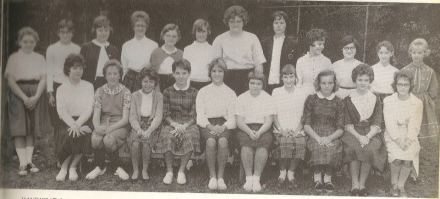
I have been found by a group of people I would never have guessed were looking for me. My classmates from elementary and junior high have tracked me down to invite me to the reunion of the graduation I would have had with them had I not moved. I am blown away in many ways. First, I always admire good detective work. Second, I am touched and pleased and thrilled to be remembered for so long. Third, in am in flashback mode, laughing hysterically. Stories and pictures have been produced that take me back to Oakmont, PA in the 1950’s and early 1960’s. These were very fun, if somewhat unfashionable, times. In the above picture I am in the front row with jazz hands crossed on lap at the left end. Nobody remembers what kind of handicrafts we made. Another sexist ploy like home ec, where I received the one and only D of my academic career for stabbing the seam ripper through the pocket of my apron sewing project. Mrs. Gallashun, you can shove your apron….because I still have it for some perverse reason.
Jr high cheerleaders
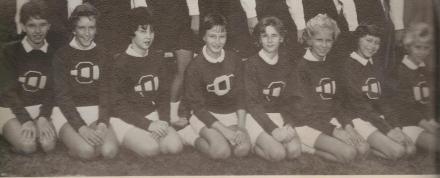
In the photo above I am seated in my Oaks sweater, which was green and white. I am third from the left, leaning conspicuously to the left in some body language clue about my feelings about my fellow cheerleaders. This one is very funny to me because it brings on total recall of the games and the cheers and getting my collar bone broken playing tackle football with the high school boys when my parents were out of town. In fact it brings back floods of nostalgia and appreciation for the really excellent place we had to live as kids. We had Roberto Clemente, and life was very easy.
These are the people with whom I built snow forts, went sledding, ice skated, sang, baton twirled, and played dodge ball. These are the people who taught me to speak with a very heavy accent I no longer have, but do enjoy hearing. I am into the Amish Mafia on TV because I like to hear them talk. I can’t believe they have changed so much, but still sound the same. The Oakmonters are having a party which includes a tour of the high school, which happens to be the same building where I went to elementary school, two blocks from my house. I think I have to go. I think the past is calling loudly, and I have to answer. It is just too funny.
The use of flower essences was made popular by Dr Bach in the first half of the 20th century. He was a physician who discovered the effects on his own emotions when he took simple essences of flowers. His formulas are used widely today, the most famous being rescue remedy, which is a combination of flowers. I have used these concentrated bottled products for years and find them to be effective. However, when the flowers bloom I enjoy making and drinking fresh pure flower remedies.
Practitioners of this method must know and study carefully the proper dosage for a patient. Since I am enjoying my own, I am not concerned with the conventional practice of using a few drops diluted in alcohol for a remedy. I drink much larger quantities straight up. I always know the meaning of the flower and the cure for which it is used commercially. There are many local companies doing remedies now, so finding a reference to a specific flower is not so hard. It does require the use of the Latin name. Common names in botany can lead to serious errors.
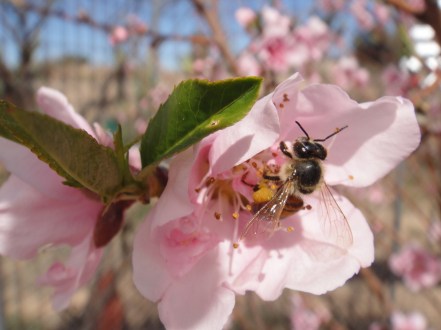
My peach tree is in bloom now and the bees are busy turning the blooms into peaches. I will make an essence when the weather warms later in the week. Peach, Prunus persica, is used for altruism. It is a catalyst that facilitates the release of tension by those who fret excessively over their own problems. It allows nurturing from wholeness rather than from neediness. It is recommended for external application. This is important. The remedy works if you put it in a bath or rub it into the skin. You do not need to consume it to enjoy the benefits. The first step in making an essence is to meditate on the plant. Enter a quiet state, the best you can, and ask the plant for healing.
This is not natural to you yet, but if you do it for a while, you will begin to feel (notice, perceive) the plant respond to your request. Staying quiet and respectful, pay attention as you pick the flowers so as not to strip or deplete the tree. Placing the flowers in a clear vessel full of clear water, rest the glass container in the sun (or moon) for a while. This is subjective. Do not let it become sun tea, as the flower is delicate. Stop before the flower wilts, but after a taste has entered the water. It often tastes like cucumber or melon. Roses, iris, violets, and citrus taste just like they smell, which is lovely. Peach has little smell or taste, but the beauty of the flowers makes a very happy meditation.

bee in peach tree

prunus persica

peach blossom special

bee on peach

bee with pollen sacks

bee in peach blossom
bee in peach tree

prunus persica flowers

seasonal food
“The preparation of good food is merely another expression of art, one of the joys of civilized living…” Dione Lucas
Survival depends on finding a source of nutrition. Today there is a trend to look to restaurants for food service. In the distant past the household was challenged to grow, kill, store, and otherwise provide the food for a family. Now by driving through, it is possible to leave the drudgery of dietary delicacy decision making to the folks at Dairy Queen. Restaurants now exist in giant chains with processed ingredients provided by the central supplier. This has given rise to a slew of cooking shows and networks, and celebrities. These celebrities enjoy food and know how to prepare it. That is why they are out of the ordinary in 2013. They remember, or have been trained, to eat and enjoy a variety of seasonal foods. They may have even visited a farm. No wonder we regard them as very special beings.
The McRib is not a seasonal food, although Americans believe it is. The pumpkin spice latte is not either. Pumpkins themselves are seasonal, growing outside in fields and needing to be picked at a certain time. Latte flavoring is forever. It is possible it will remain in your organs forever also. How is it possible that America is so far removed from grow it, kill it, eat it, that they have no idea where their food has been, or by whom it has been handled? I am not a stuffy or a picky eater, which might be challenged, since I am a vegetarian. What I want when I pay another entity to feed me is attention to detail, each and every detail. I want to feel the careful work that has been done to please my palette every time I put a bite into my mouth. When I cook that is what I hope to achieve. Of course, I do not always succeed, but there is never a doubt that I have made the effort. I would rather fail royally in my own kitchen than to be fed by the careless.
 mermaidcamp