mermaidcamp
Keeping current in wellness, in and out of the water
You can scroll the shelf using ← and → keys
You can scroll the shelf using ← and → keys
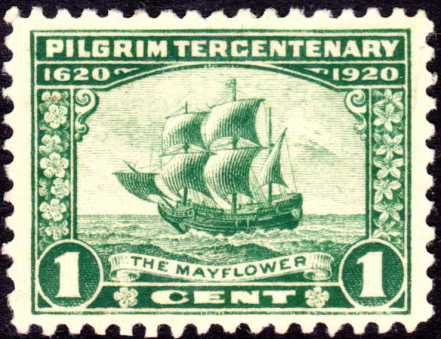
Mayflower
The ship was grounded on the shoals
The Pilgrims had not yet achieved their goals
The crowd was hungry, tired, depressed and sick
There was no welcoming party with a magic trick
To heal the suffering and recover moral fortitude
All the tribe had to offer was comfort and food
With great trepidation they approached the invaders
Dressed in high hats and collars of religious crusaders

Tower Of Power
The Roman army built the arches, aqueducts, and city streets
Then conscripted the local constabulary, farmers and priests
They marched off to conquer and manage all humans and beasts
The emperor demanded tribute in service, and taxes paid in gold.
The able bodied were enslaved and abducted to serve the will of Rome
It is hard to say which one issue caused the empire to crumble and fall
Maybe that imperial power concentrated in one place was never real at all
The ruins of foundations laid down long ago are remnants from the past
Mighty political forces appear and disappear, never meant to last

#writephoto
This poem is in response to this week’s photo prompt on Sue Vincent’s Daily Echo. Join us each week to read, comment, or submit your own take on the photo. I think this poem is also inspired by today’s political climate.
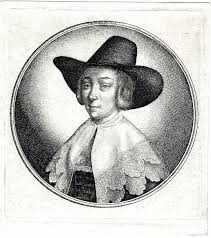
Colonist
My eleventh great-grandfather was born in England and died in Essex Massachusetts.
| Name: | Isaac Perkins |
|---|---|
| Birth Date: | 1571 |
| Birth Place: | Rugby Borough, Warwickshire, England |
| Death Date: | 1639 |
| Death Place: | Ipswich, Essex County, Massachusetts, United States of America |
| Cemetery: | Old Burying Ground |
| Burial or Cremation Place: | Ipswich, Essex County, Massachusetts, United States of America |
Isaac Perkins was baptized 20 December 1571 in Hillmorton, Warwick, England, the son of Thomas Perkins and Alice (possibly Kebble). Isaac married first Alice —. This Alice was buried in June of 1602 in Hillmorton, Warwick, England. Isaac married second Alice —. Isaac became a yeoman in Ipswich, Essex, Massachusetts. On 15 June 1639, his widow Alice sold the lot in Ipswich.
Isaac and the first Alice’s children are:
1. Sarah Perkins, baptized 3 Feb 1596 in Hillmorton, Warwick, England.
2. Elizabeth Perkins, baptized 19 May 1600 in Hillmorton, Warwick, England.
3. Thomas Perkins, baptized 27 May 1601 in Hillmorton, Warwick, England.
Isaac and the second Alice’s children are:
4. Abraham Perkins, baptized in 1603 in Hillmorton, Warwick, England, married Mary (Wyeth?), one of first settlers of Hampton, Rockingham, New Hampshire, miller, clerk of the market, constable, and tavern keeper.
5. Jacob Perkins, baptized 23 Mar 1605/6 in Hillmorton, Warwick, England, said to have settled in Holmes Hole, Martha’s Vineyard, Dukes, Massachusetts.
6. Abigail Perkins, baptized 8 Nov 1607 in Hillmorton, Warwick, England.
7. Isaac Perkins, baptized 26 Jan 1611/2 in Hillmorton, Warwick, England, married Susanna —, one of first settlers of Hampton, Rockingham, New Hampshire, constable.
8. Hannah Perkins, baptized 9 Oct 1614 in Hillmorton, Warwick, England.
9. Lydia Perkins, baptized 1 Jan 1617/8 in Hillmorton, Warwick, England.
10. Mary Perkins, baptized 16 Sep 1621 in Hillmorton, Warwick, England, may very likely have been the Mary who married Henry Green of Hampton, Rockingham, New Hampshire and died 26 Apr 1690.[1]
Sources:
1. Perkins in Hillmorton Parish Records (England), extracted by Jim Perkins.
2. Davis, Walter Goodwin, The Ancestry of Dudley Wildes, 1759–1820, of Topsfield, Massachusetts, Portland, ME: Anthoensen Press, 1959, p. 89.
3. Noyes, Sybil, Libby, Charles Thornton, and Davis, Walter Goodwin, Genealogical Dictionary of Maine and New Hampshire, Baltimore, MD: Genealogical Publishing Co., 1976, p. 541.
4. Savage, James, A Genealogical Dictionary of the First Settlers of New England, Vol. 3, Baltimore, MD: Genealogical Publishing Co., 1990 (originally published Boston, 1860-1862).
5. Holmes, Frank R., Directory of Heads of New England Families, 1620-1700, New York, 1923, p. 354.
Baptisms20 Dec 1571 Isaac son of Thomas
3 Feb 1596 Sarah dau of Isaac
19 May 1600 Elizabeth dau of Isaac
27 Mar 1601 Thomas son of Isaac
Burial[28?] June 1602 Alice wife of Isaac
Baptisms[4 July ?] 1603 Abraham son of Isaac & Alice
23 Mar 1605/6 Jacob son of Isaac
8 Nov 1607 Abigail dau of Isaac
26 Jan 1611/12 Isaac son of Isaac
9 Oct 1614 Hannah dau of Isaac
1 Jan 1617/18 Lydia dau of Isaac
16 Sep 1621 Mary dau of Isaac
Source: Perkins in Hillmorton Parish Records (England), extracted by Jim Perkins.
In 1637 there was an Isaac Perkins in Ipswich where he owned “land lying above the street called Brook street, six acres.” He was dead before 15 Jun 1639, when his widow Alice Perkins sold the lot to Joseph Morse. It is tempting to believe that he was also of the Hillmorton stock. John Perkins did not have a brother Isaac, but he had an uncle Isaac only eleven years older than he, while other Isaacs were baptized in Hillmorton in 1597/8 and 1611/2.
If Isaac Perkins of Ipswich was a man of middle age, which we have no means of knowing, he and Alice may have been the parents of Abraham and Isaac Perkins who turned up in Hampton, not far down the coast, where Abraham took the Freeman’s Oath in 1640 and Isaac in 1642. These men are presumed to have been brothers. Abraham named a son Luke, not a common name, and John Perkins of Hillmorton and Ipswich had an uncle Luke, a brother Luke, and a grandson Luke.
Source: Davis, Walter Goodwin, The Ancestry of Dudley Wildes, 1759–1820, of Topsfield, Massachusetts, Portland, ME: Anthoensen Press, 1959, p. 89.
Perkins/Perkeings/Perkus/Parkins, Isaac, yeoman, Ipswich, propr. 1637. His widow Alice sold land and house 15 (4) 1639. [Ips. Rec.] Ch. Isaac (rem. to Hampton); Jacob (sold land recd. from his father 23 (2) 1674, after removing to Holmes Hole.)
Source: Holmes, Frank R., Directory of Heads of New England Families, 1620-1700, New York, 1923, p. 354.

Ye History of Ye Town of Greenwich
My tenth great-grandfather, Henry Smith, was born in 1619 in St. Mary-Adermanbury, in London,England. He died 5 Jul 1687 in Stamford,Fairfield,CT. He was a minister. While no proof positive exists for the name of his first wife, circumstantially it is quite possible that she is Ann Jackson, who came to America [of record 27 Jul 1635] on the ship “Princess”, along with (a) Henry Smith; he age 22; she age 23. The age of 22 for Henry Smith of the ship “Princess” equates to a birth year of about 1613, the probable birth year of Henry Smith in this writing. In the absence of a verifiable source for this theory, Ann Jackson is placed in this writing, but with question. I am descended from his second wife, Hannah:
Rev. Henry Smith arrived in Charlestown, MA from England in 1636 (according to Savage). By 1648 he was in Wethersfield, CT. with his second wife and children from his first marriage. Henry was described as a gentleman from a good family. He was the patriarch of what was considered one of the best sustained and accomplished families in New Engalnd.
He was the first recorded minister in Wethersfield, but his ministry was not a happy one. Mr. Clement Chaplin, a Ruling Elder of the church was a man of wealth, prominent and influencial with a majority of the congregation. For many years he involved Henry Smith in difficulities to the point the conflict wa before the General Court. After a long examination of the merits of the case, in 1643 Mr. Chaplin was fined 11 pounds for libeling Henry. But Mr. Chaplin continued to harrass Henry with carious civil suits until again it came before the General Court. Henry was again exonerated and vindicated by the court. Although the conflict did not completely end, there was no further serious issues. However it is believed the the strain of the trails and harrassment brought Henry to an early grave in 1648.
Pequod War
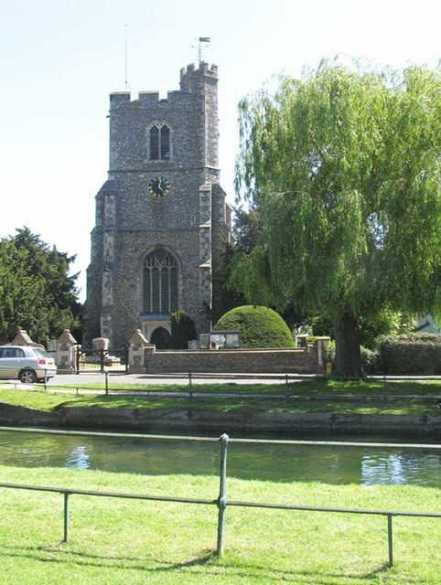
St Augustine, Broxbourne, Herts
Elizabeth Cheney (April 1422 – 25 September 1473) was an English aristocrat, who, by dint of her two marriages, was the great-grandmother of Anne Boleyn, Jane Seymour, and Catherine Howard, three of the wives of King Henry VIII of England, thus making her great-great-grandmother to King Edward VI, the son of Henry VIII and Jane Seymour, and Elizabeth I, the daughter of Henry VIII and Anne Boleyn. Her first husband was SirFrederick Tilney, and her second husband was Sir John Say, Speaker of the House of Commons. She produced a total of nine children from both marriages.
Born in Fen Ditton, Cambridgeshire in April 1422, she was the eldest child of Laurence or Lawrence Cheney or Cheyne, Esq. (c. 1396 – 1461), High Sheriff of Cambridgeshire and Elizabeth Cokayn or Cokayne[1] She had three younger sisters, Anne, wife of John Appleyard; Mary, wife of John Allington; Catherine, wife of Henry Barley, and one brother, Sir John Cheney who married Elizabeth Rempston, by whom he had issue. Sir John Cheney and his wife are ancestors of U.S. Vice President Dick Cheney. She had two half-brothers by her mother’s first marriage to Sir Philip Butler.
Her paternal grandparents were Sir William Cheney and Katherine Pabenham, and her maternal grandparents were Sir John Cockayne, Chief Baron of the Exchequer and Ida de Grey, the daughter of Reginald Grey, 2nd Baron Grey de Ruthyn and Eleanor Le Strange of Blackmere.[2]
Anne Boleyn, granddaughter of Elizabeth Tilney, eldest daughter of Elizabeth Cheney
On an unknown date, Elizabeth Cheney married her first husband Sir Frederick Tilney, of Ashwellthorpe, Norfolk, and Boston, Lincolnshire. He was the son of Sir Philip Tilney and Isabel Thorpe. They made their principal residence at Ashwellthorpe Manor. The couple had one daughter:
Elizabeth Tilney (before 1445 – 4 April 1497), married firstly in about 1466, Sir Humphrey Bourchier, by whom she had three children; and secondly on 30 April 1472, Thomas Howard, Earl of Surrey, who later became the 2nd Duke of Norfolk, by whom she had nine children. These children included Thomas Howard, 3rd Duke of Norfolk, Elizabeth Howard, mother of Anne Boleyn, and Lord Edmund Howard, father of Catherine Howard.
Sir Frederick Tilney died in 1445, leaving their young daughter Elizabeth as heiress to his estates. Shortly before 1 December 1446, Elizabeth Cheney married secondly Sir John Say, of Broxbourne, Hertfordshire, Speaker of the House of Commons, and a member of the household of King Henry VI. He was a member of the embassy, led by William de la Pole, which was sent to France in 1444 to negotiate with King Charles VII for the marriage between King Henry and Margaret of Anjou.[3] Her father settled land worth fifty marks clear per annum upon the couple and their issue before Candlemas, 1453. They made their home at Broxbourne, Hertfordshire.
Sir John Say and Elizabeth had three sons and four daughters:
Sir William Say (1452- 1529), of Baas (in Broxbourne), Bedwell (in Essendon), Bennington, Little Berkhampstead, and Sawbridgeworth, Hertfordshire, Lawford, Essex, Market Overton, Rutland, etc., Burgess (M.P.) for Plympton, Knight of the Shire for Hertfordshire, Sheriff of Somerset and Dorset, 1478–9, Sheriff of Essex and Hertfordshire, 1482–3, Justice of the Peace for Hertfordshire, 1486–1506, and, in right of his 1st wife, of East Lydford, Radstock, Spaxton, Wellesleigh, and Wheathill, Somerset, and, in right of his 2nd wife, of Wormingford Hall (in Wormingford), Essex, Great Munden, Hertfordshire, etc. He married (1st) before 18 November 1472 (date of letters of attorney) Genevieve Hill, daughter/heiress of John Hill, of Spaxton, Somerset. She was still alive in 1478. He married (2nd) shortly after 18 April 1480 Elizabeth Fray, widow of Sir Thomas Waldegrave, by whom he had two daughters, Mary Say and Elizabeth Say.
Mary, the eldest daughter married Henry Bourchier, 1st Earl of Essex and 6th Baron Bourchier, by whom she had one daughter, Anne Bourchier, 7th Baroness Bourchier.
Thomas Say, of Liston Hall, Essex.
Leonard Say, clerk, Rector of Spaxton, Somerset. See Testamenta Eboracensia, 4 (Surtees Soc. 53) (1869): 86–88 (will of Leonard Say, clerk).
Anne Say (died 1478/1494), married Henry Wentworth, K.B., of Nettlestead, Suffolk, Goxhill, Lincolnshire, Parlington and Pontefract, Yorkshire, and of London, Esquire of the Household, Knight of the Body, Sheriff of Norfolk and Suffolk, 1481–82, Sheriff of Yorkshire, 1489–90, 1492, Knight of the Shire for Yorkshire, 1491–92, by whom she had issue, including Margery Wentworth, mother of Jane Seymour.
Mary Say, married Sir Philip Calthorpe, Knt., by whom she had issue.
Margaret Say, married Thomas Sampson, Esq.
Katherine Say, married Thomas Bassingbourne.
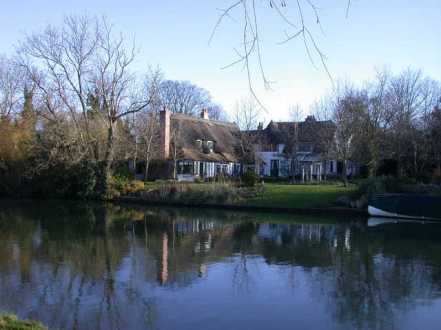
Fen Ditton from River Cam
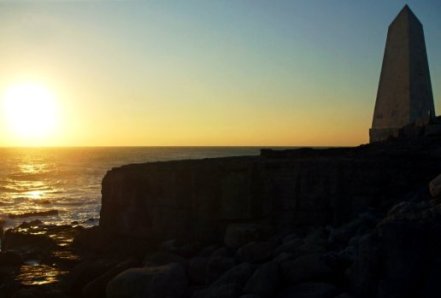
obelisk
The family sailed from England when they had a chance to come to America. The hardship of the voyage and the harsh conditions in the colonies took a toll on the surviving members of the family. They wondered about the decision to live in the new world, and felt lost without the comfort and status of British society. Carving out an existence turned out to be much more difficult than they had ever imagined. They lost touch with the roots of their family back in England and had no way to return even if they wanted to go. They had little money and just barely the time to protect and feed their offspring.
Eventually they came to feel pride in the American adventure they founded, and erected a monument to the first Morses to come to America. They had sailed from a harbor with a large assuming obelisk that bid them adieu when they left their homeland. The group decided to model the new world monument after the last sight they saw as the ship left the shore. British no more, but connected to the language and the culture of the motherland, the American obelisk builders were sure that God was on their side.

Morse Monument
This is a piece in response to Sue Vincent’s weekly photo prompt. Please join writers from around the world each week to read or submit your own story.
#writephoto

Elizabeth Tilney
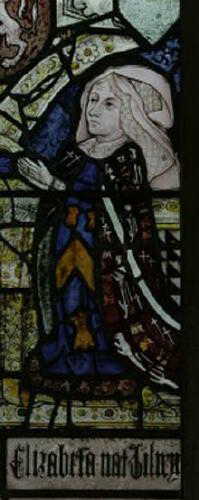
Elizabeth Tilney
Elizabeth Tilney, Countess of Surrey, was an English heiress and lady-in-waiting to two queens. She became the first wife of Thomas Howard, Earl of Surrey. She served as a lady-in-waiting to Queen consort Elizabeth Woodville, and later as Lady of the Bedchamber to the Queen’s daughter, Elizabeth of York, consort of King Henry VII of England. She stood as joint godmother to Princess Margaret Tudor at her baptism.
She was the mother of Thomas Howard, 3rd Duke of Norfolk. Through her daughter Elizabeth she was the maternal grandmother of Anne Boleyn, and through another son, Edmund, the paternal grandmother of Catherine Howard, both queens consort of King Henry VIII. Elizabeth’s great-granddaughter was Queen Elizabeth I of England.
Elizabeth was commemorated as the “Countess of Surrey” in John Skelton’s poem, The Garlande of Laurell, following his visit to the Howard residence of Sheriff Hutton Castle.
Elizabeth Tilney was born at Ashwellthorpe Hall sometime before 1445, the only child of Sir Frederick Tilney, of Ashwellthorpe, Norfolk, and Boston, Lincolnshire, and Elizabeth Cheney (1422–1473) of Fen Ditton, Cambridgeshire. Sir Frederick Tilney died before 1447, and before 1449 Elizabeth’s mother married as her second husband Sir John Say of Broxbourne, Hertfordshire, Speaker of the House of Commons, by whom she had three sons, Sir William, Sir Thomas and Leonard, and four daughters, Anne (wife of Sir Henry Wentworth of Nettlestead, Suffolk), Elizabeth (wife of Thomas Sampson), Katherine (wife of Thomas Bassingbourne), and Mary (wife of Sir Philip Calthorpe). A fifth daughter died as a young child. Henry VIII’s third queen consort, Jane Seymour, was the granddaughter of Henry Wentworth and Anne Say, and thus a second cousin to Henry VIII’s second and fifth queens consort, Anne Boleyn and Katherine Howard.
Elizabeth’s paternal grandparents were Sir Philip Tilney and Isabel Thorpe, and her maternal grandparents were Sir Laurence Cheney of Fen Ditton and Elizabeth Cockayne, widow of Sir Philip Butler. Elizabeth Cockayne was the daughter of Sir John Cockayne, Chief Baron of the Exchequer and Ida de Grey. Ida was a daughter of Welsh Marcher Lord Reginald Grey, 2nd Baron Grey de Ruthyn and Eleanor Le Strange of Blackmere. Through her mother, Ida was a direct descendant of Welsh Prince Gruffydd II ap Madog, Lord of Dinas Bran and his wife Emma de Audley.
Elizabeth was co-heiress to the manors of Fisherwick and Shelfield in Walsall, Staffordshire by right of her descent from Roger Hillary, Chief Justice of the Common Pleas (d.1356).
Elizabeth married her first husband, Sir Humphrey Bourchier, the son and heir of John Bourchier, 1st Baron Berners, and his wife Margery, in about 1466. The marriage produced a son, John Bourchier, 2nd Baron Berners and two daughters. Following her marriage, Elizabeth went to court where she served as lady-in-waiting to Queen Elizabeth Woodville, whose train she had carried at the latter’s coronation in May 1465 at Westminster Abbey. Elizabeth accompanied the Queen and her children into sanctuary at Westminster Abbey when King Edward IV had been ousted from the throne, and was present at the birth of the future King Edward V. She remained with the Queen until Edward IV was restored to power.
Sir Humphrey was killed at the Battle of Barnet on 14 April 1471 fighting on the Yorkist side. On 30 April 1472 Elizabeth married Thomas Howard, Earl of Surrey, a marriage arranged by the King. In 1475, Elizabeth inherited her father’s property of Ashwellthorpe Manor. Her second husband was a close friend and companion of Richard, Duke of Gloucester who was crowned king in 1483. Elizabeth was one of Queen Anne Neville’s attendants at Richard’s coronation, while her husband bore the Sword of State. On 22 August 1485 Thomas’s father John Howard, 1st Duke of Norfolk was killed at the Battle of Bosworth while fighting for Richard III; like his son, John was also one of King Richard’s dearest friends. Thomas Howard was wounded at Bosworth and imprisoned in the Tower for several years, and the dukedom of Norfolk was forfeited. Elizabeth was fortunate that Thomas’ attainder stipulated that she would not lose her own inheritance. On 3 October 1485, she wrote to John Paston, who was married to her cousin. The letter, which she had written from the Isle of Sheppey, mentioned how she had wished to send her children to Thorpe, pointing out that Paston had pledged to send her horses as a means of transporting them there. She continued to complain that Lord FitzWalter, an adherent of the new king Henry VII, had dismissed all of her servants; however, because of the stipulations in her husband’s attainder, FitzWalter was unable to appropriate her manor of Askwell. In December 1485 she was living in London, near St Katharine’s by the Tower, which placed her in the vicinity of her incarcerated husband. After Thomas was released from prison and his earldom and estates were restored to him, he entered the service of Henry VII. In November 1487, Thomas and Elizabeth attended the coronation of Henry’s consort Elizabeth of York, who appointed Elizabeth a Lady of the Bedchamber. Elizabeth was further honoured by being asked to stand as joint godmother to the Princess Margaret Tudor at her baptism in late 1489.
Her second marriage produced nine children, including Thomas Howard, 3rd Duke of Norfolk, Elizabeth Howard, mother of Queen Anne Boleyn, and Lord Edmund Howard, father of Queen Katherine Howard.
Elizabeth Tilney died on 4 April 1497 and was buried in the nun’s choir of the Convent of the Minoresses outside Aldgate. In her will, she left money to be distributed to the poor of Whitechapel and Hackney. By licence dated 8 November 1497 Thomas Howard married as his second wife her cousin, Agnes Tilney, by whom he had six more children.
Lady Elizabeth Tilney was governess to 1st Princess Mary Tudor and then later to Princess Elizabeth Tudor.
Elizabeth Tilney (1450 – 1497)
16th great-grandmother
Lord Thomas Howard (1473 – 1554)
son of Elizabeth Tilney
Lady Katherine Howard Duchess Bridgewater (1495 – 1554)
daughter of Lord Thomas Howard
William ApRhys (1522 – 1588)
son of Lady Katherine Howard Duchess Bridgewater
Henry Rice (1555 – 1621)
son of William ApRhys
Edmund Rice (1594 – 1663)
son of Henry Rice
Edward Rice (1622 – 1712)
son of Edmund Rice
Lydia Rice (1649 – 1723)
daughter of Edward Rice
Lydia Woods (1672 – 1738)
daughter of Lydia Rice
Lydia Eager (1696 – 1735)
daughter of Lydia Woods
Mary Thomas (1729 – 1801)
daughter of Lydia Eager
Joseph Morse III (1756 – 1835)
son of Mary Thomas
John Henry Morse (1775 – 1864)
son of Joseph Morse III
Abner Morse (1808 – 1838)
son of John Henry Morse
Daniel Rowland Morse (1838 – 1910)
son of Abner Morse
Jason A Morse (1862 – 1932)
son of Daniel Rowland Morse
Ernest Abner Morse (1890 – 1965)
son of Jason A Morse
Richard Arden Morse (1920 – 2004)
son of Ernest Abner Morse
Pamela Morse
I am the daughter of Richard Arden Morse
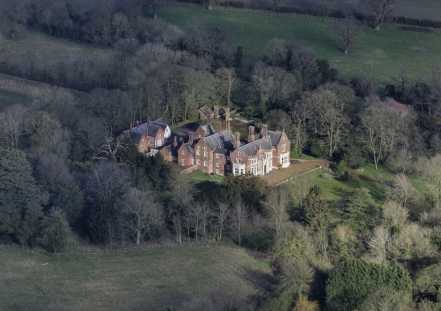
Ashwellthorpe

stone arch
When we find the arch of stones standing alone
In the ruins of a once grand castle of a once grand duke
We can feel the hours spent preening to make an entrance
Through the elegant opening that framed the costume
The servants scurried to please His Lordship and his guests
With musical serenades, crumpets, and a silver tea service
No expense nor effort was spared to create the illusion
Of grandeur and pomp, great excess and special privilege
Nothing remains of the era they thought would never end
This pile of stones can’t tell us now if history is foe or friend
#writephoto
Please join a talented group of writers who are inspired each week by Sue Vincent’s photo prompts. Visit Sue’s Daily Echo to read, write, or comment on the posts. It is fun to read all the variation on the same photo inspiration.

#NaPoWriMo2017
April is National Poetry Writing Month. Please bust a rhyme yourself, or enjoy reading some poetry at the #NaPoWriMo site here. There are poets contributing for all over the globe, so this year this had been acknowledged by using the #GloPoWriMo hashtag. Both can be followed on twitter or Facebook for more poetic material.

#GloPoWriMo
#NaPoWriMo2017
Dear Gentle Readers,
In April I write 30 poems in 30 days to honor my famous ancestor who was an exceptional poet and a special kind of historian. Today I join folks from around the world to participate in this year’s #NaPoWriMo. Since it is a global initiative it is also known as #GloPoWriMo to make it clear that everyone is invited. You can follow both these hashtags on twitter or Facebook for more information. I invite you to partake as a fan or a poet. You my be surprised at the poet you find inside of yourself. There are many wonderful styles of writing to discover in this treasure trove of artistic expression. Don’t be shy. Write a poem.
#GloPoWriMo
Please sit down, relax, take a load off your feet
While I tell you the story of Ann Dudley Bradstreet
She published her poetry in the Puritan times
Her English is old school, her well crafted rhymes
Were concerned with religion and current events
She made poignant requests to her progeny to stay
On the right side of God’s will, never sit on the fence
She begged us to be ethical, honest, virtuous and bold
Her legacy is eloquent, the details of our family were told
In real time as America took unexpected turns toward liberty
Finding her voice as a woman was a rare privilege, an anomaly
As her descendant I call on her esteemed presence in April every year
I ask for her assistance to drop a few decent beats, to be pertinent and clear
And so, dear ancestor, now scattered into stardust and moonbeams
Visit me with your discipline, your wisdom, and all of your ancient dreams
To follow in your footsteps I am going to require a great deal of your love
Look down on your daughter here on earth, send inspiration from above

in bloom
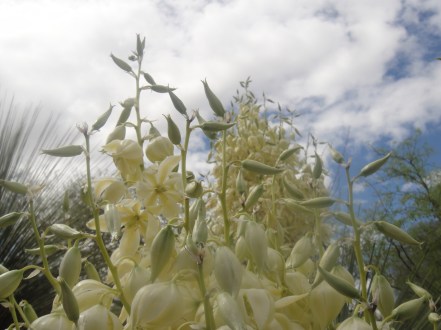
looking up
If we were having coffee this month I would ask my coffee friends around the table to ride the poetry train if you are able. I know it is corny and may turn perverse. I assure you than in May I will return to verse. The coffee share and the poetry train go well as a duo, in my opinion. Help yourself to coffee, tea, and poetry. For more digital beverages and prose, please visit Nerd in the Brain. The weekly party is always interesting and stimulating.

#WeekendCoffeeShare
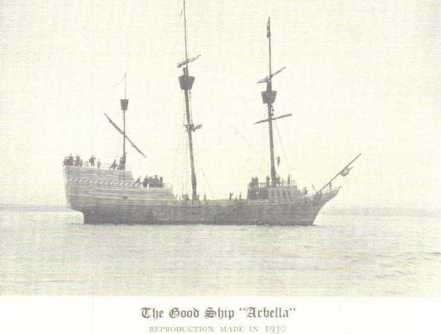
The Arabella
My eleventh great-grandfather was an early settler in Cambridge, Massachusetts. The records of the Massachusetts Bay Colony are extensive, so we know quite a bit about his life in America.
MIGRATION: 1630
FIRST RESIDENCE: Cambridge
FREEMAN: Requested 19 October 1630 (as “Mr. Edmond Lockwood”) and admitted 18 May 1631 (as “Mr. Edmond Lockewood”) [MBCR 1:79, 366].
OFFICES: Trial jury in case of Walter Palmer (as “Mr. Edmond Lockwood”), 9 November 1630 [MBCR 1:81]; “Mr. Lockwood” deputy to General Court for Cambridge, 9 May 1632 [MBCR 1:95]; “Mr. Edmond Lockwood” constable for Cambridge, 9 May 1632
ESTATE: 3 March 1634/5: “It is ordered, that Ruth Lockwood, widow, shall bring all the writings that her husband left in her hands to John Haynes, Esq., & Simon Bradstreete, on the third day of the next week, who shall detain the same in their hands till the next Court, when they shall be disposed of to those to whom they belong”
7 April 1635: “It is referred to the church of Waterton, with the consent of Rob[er]te Lockwood, executor of Edmond Lockwood, deceased, to dispose of the children & estate of the said Edmond Lockwood, given to them, to such persons as they think meet, which if they perform not within fourteen days, it shall be lawful for the Governor, John Hayne, Esq., & Simon Bradstreete, to dispose of the said children & estates as in their discretion, they shall think meet, as also to take an account of the said Rob[er]te Lockwood, & give him a full discharge”
2 June 1635: “In the cause of the children & widow of Edward Lockwood, (the elders & other of the church of Waterton being present,) and upon consideration of the order of Court in April last made in the case, which was found not to have been observed, because the estate was not computed & apportioned, it is now ordered, with consent of all parties, viz:, the church of Waterton, the widow of the said Edmond living, & the executor having consented to the former order, that the present Governor & the Secretary shall have power to call parties & witnesses for finding out the true estate, having consideration of the uncertainty of the will, & the debts, & other circumstances, to apportion the remainder of the estate to the wife & children, according to their best discretion; & then the church of Waterton is to dispose of the elder children & their portions as shall be best for their Christian education & the preservation of their estate” [MBCR 1:151].
BIRTH: By about 1600 based on estimated date of marriage (but see COMMENTS below).
DEATH: Cambridge between 9 May 1632 [MBCR 1:95, 96] and 3 March 1634/5 [MBCR1:134] (and probably closer to the earlier date, since Edmund Lockwood does not appear in any of the recorded Cambridge land grants beginning in August 1633).
MARRIAGE: (1) By about 1625 _____ _____; she may have died in England before 1630.
(2) By 1632 Elizabeth Masters, daughter of JOHN MASTERS; she married (2) Cary Latham of Cambridge.
CHILDREN:
With first wife
i EDMUND, b. England say 1625; m. Stamford 7 January 1655[/6] Hannah Scott, daughter of Thomas Scott [FOOF 1:381].
ii Child (one or more additional children by first wife implied by court order to the Watertown church “to dispose of the elder children” [MBCR 1:151]); no further record.
With second wife
iii JOHN, b. Cambridge November 1632 (“son of Edward Lockwood & Elisabeth his wife”) [NEHGR 4:181]; d. at New London in 1683, unmarried [Lockwood Gen 10].
ASSOCIATIONS: Although no record states the relationship explicitly, Edmund and Robert Lockwood were almost certainly brothers.
COMMENTS: The oft-stated origin of the Lockwood brothers in Combs, Suffolk, seems to be based on nothing more than finding the right names at about the right time. Further research is needed before this origin can be accepted.
In a discussion of financial transactions, John Winthrop wrote to his son John in Groton 23 July 1630 saying “If money be brought to you or your Uncle Downinge for Goodman Lockwood, let Mr. Peirce be paid his bill of provisions for him, and bring the rest with you” [WP 2:306].
“Mr. Edmond Lockwood” was the third in the list of eight “Newtowne Inhabitants” which is found at the beginning of the Cambridge town records, and probably dates from 1632 [CaTR2].
After NICHOLAS KNAPP was fined for quackery on 1 March 1630/1, “Mr. Will[ia]m Pelham and Mr. Edmond Lockewood hath promised to pay to the Court the sum of £5” [MBCR 1:83].
BIBLIOGRAPHIC NOTE: The 1889 Lockwood genealogy (Frederic A. Holden and E. Dunbar Lockwood, Descendants of Robert Lockwood, History of the Lockwood Family in America[Philadelphia 1889]) was deservedly described by Jacobus as “a genealogical atrocity” [TAG31:222]. By lumping all the descendants of the first Edmund under his brother Robert, the posterity of this family through eldest son Edmund was misplaced.
Donald Lines Jacobus began to sort the family out properly in 1930, with further contributions made in 1955 [FOOF 1:380-81; TAG 31:222-24]. In 1978 Harriet Woodbury Hodge published detailed arguments for a rearrangement of the Lockwood families that would restore to Edmund Lockwood his children [Some Descendants of Edmund Lockwood (1594-1635) of Cambridge, Massachusetts, and his son Edmund Lockwood (c. 1625-1693) of Stamford, Connecticut (New York 1978), cited above as Lockwood Gen].
Edmund Lockwood (1574 – 1634)
11th great-grandfather
Eliner Lockwood (1592 – 1658)
daughter of Edmund Lockwood
Caleb Knapp (1637 – 1684)
son of Eliner Lockwood
Sarah Knapp (1669 – 1750)
daughter of Caleb Knapp
Ebenezer Mead (1692 – 1775)
son of Sarah Knapp
Deacon Silas Meade (1730 – 1807)
son of Ebenezer Mead
Abner Mead (1749 – 1810)
son of Deacon Silas Meade
Martha Mead (1784 – 1860)
daughter of Abner Mead
Abner Morse (1808 – 1838)
son of Martha Mead
Daniel Rowland Morse (1838 – 1910)
son of Abner Morse
Jason A Morse (1862 – 1932)
son of Daniel Rowland Morse
Ernest Abner Morse (1890 – 1965)
son of Jason A Morse
Richard Arden Morse (1920 – 2004)
son of Ernest Abner Morse
Pamela Morse
I am the daughter of Richard Arden Morse
 mermaidcamp