mermaidcamp
Keeping current in wellness, in and out of the water
You can scroll the shelf using ← and → keys
You can scroll the shelf using ← and → keys

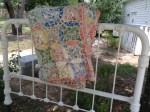









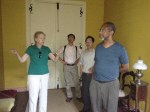




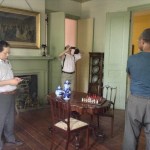
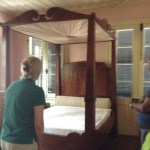

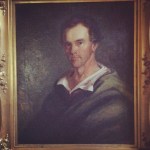


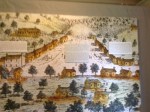
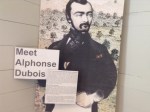
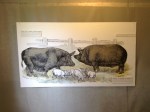

There is only one foreign diplomatic residence in the United States outside of Washington, DC. It was the home of the French government’s embassy to the Republic of Texas. The Republic only existed between 1836 and 1846. The city of Austin was a town of about 800 people, including slaves. The French wanted to trade with the Republic because they built ships and wanted the wood in Texas. They believed the Texans, with a long shoreline, needed ships. They also thought the people on the frontier would buy French wine. They sent a young man in the diplomatic corps from Washington, DC to Galveston to do a study to determine the feasibility of setting up a relationship with Texas. This man was Alphonse DuBois. He came back with glowing report, and landed the job of charge d’affaires to the Republic of Texas for himself. His diplomatic skills, or his ability to adjust to life on the frontier, were lacking. He bought a giant piece of land above the town and built a grand Creole style home for himself. He got into a serious altercation with a local about some pigs who broke into his corn. This became the Pig War, and was the downfall of Mr DuBois. He left for New Orleans, supposedly for his health, but when he returned to Austin Sam Houston was carrying on most of the Republic’s business in Travis County. His career was never the same after that. He was eventually recalled to France.
A visit to the French Legation Museum is well worth the time. The guided tour, which is done very professionally, is only $5, which hardly pays for the air conditioning while you are there. On the second and fourth Sundays of the month real French people show up to play pantenque and have a potluck. The public is invited to participate. The park’s outdoor spaces are open to the public. They have an agreement with a group of sculptors who maintain a high quality display of local artists’ work on the grounds. It is a very special place to visit. The front porch has a protected view of the capital building, which is pretty sweet. Nobody can build anything that blocks the view.





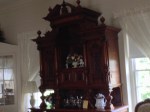

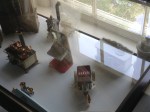



Many Germans were settlers in Texas. I noticed in the Oakwood Cemetery lots of headstones noting birthplaces in Germany or Prussia, and some were inscribed in the German language. As I was walking downtown Austin on a Saturday I passed a sign for the German Free School. I was curious to see kids at play in the courtyard. I asked a lady next to the gate if there was a museum in the building. She was very friendly but on duty with the kids who come on the weekends to learn German. She directed me to another adult upstairs who took me on a quick tour while the kids were still on play break. It is small, but very well preserved. When there are no other events taking place they rent it out for weddings and parties. It would be a very elegant place for any affair. The library is full of books in German or about Germany, and a wonderful collection of antiques gives the full impression of German artistic flair. Ornate carved furniture, that must be priceless, fills the main room. The courtyard is also very well designed with nice statuary. I want to show the gentle readers what I saw on my lucky personal tour of this historic landmark. Achtung Baby!

Oakwood Cemetery
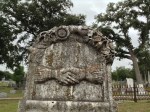
My own fascination with dead people is neither religious nor political. I study my own ancestry to get a broader understanding of history and how I came into being. When I travel I love nothing better than to check out cemeteries to meet the locals and see what they have been doing. I am lucky right now to be situated between two very old and very large grave yards. All of these people have died in Austin, Texas over the span of hundreds of years. I notice what similar features the plots and monuments have in common, and then notice what makes each grave distinct. The designs and the grand expenditures tell one part of the tale, but if you let yourself imagine what their lives were like and how they made the journey here history becomes a real human story. Some might think graves are macabre, but to me they are clues to the ongoing conditions of cultural change. The dead at Oakwood express themselves in a few ways:
The handshake:


The private yard:


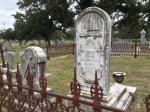
The Texan:
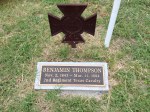


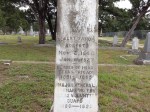

I learned that some of the important people in history in Oakwood have QR codes on the grave to give you the entire story of their lives. I did not have my phone with me today, so I will go back and try this super smart way to get more out of a grave yard visit. The grounds are lovely and well maintained. I count this one as a top destination for those of us who love graves, topped only by all the people who fell off the Matterhorn who are buried in Zermatt (still the best I have seen), and the one in Salzburg at the monastery. Y’all come and discover these dead Texans for yourselves. They are cute and friendly.

luggage
Time may be finite, but I notice that it can expand and contract based on circumstances. When I am home I always have some day to day chores waiting for me. Being busy is not my style, but I do cross items off the to do list in a regular fashion. Planning is big for me, but it often leads to changing plans. I drive very little by choice, so on line shopping is a big friend of mine when I am not supporting local businesses. My routine includes time with friends, my dog, and my neighbors as well as tending the garden and running the house. I find excitement in studying my ancestors, history, culture and the arts. I rarely need to go anywhere to stimulate my imagination and creativity. I had a long career as a travel agent, so I am very able to make choices and plans that suit my fancy in terms of a destination. I like to spend my holiday time involved in activities I either can’t do at home, or just don’t do at home. Some of my favorite vacation features are:
My budget for both time and money is set free during holiday times. I look for new ways to spend both that I have never done. I do a lot of research before i visit a place. I usually have a long list of possible places I want to go, and then let the weather be the deciding factor. I need some rainy day plans as well as some perfect day plans. My main goal in traveling is to flow into a new schedule, a new culture, and a new rhythm based on what I discover. I usually do some reconnaissance on foot to see what the neighborhood has to offer before I set out in a car. I study maps and read reviews to help me decide what to investigate. It is a perfect combination of very well informed and not obligated to anything. I am looking forward to doing this for the next to weeks in Austin, Texas, live music capitol of the US. I hope my gentle readers will enjoy the trip as you come along for the ride.
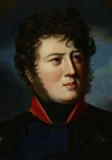
Karl I
My 15th great-grandfather was Margrave of Baden Baden, like his father before him. His son and my 14th great- grandfather followed him in this position. He married very well.
Karl I Von Baden (1424 – 1475)
is my 15th great grandfather
Christof I VanBaden (1453 – 1527)
son of Karl I Von Baden
Beatrix Zahringen (1492 – 1535)
daughter of Christof I VanBaden
Sabine Grafin VonSimmern (1528 – 1578)
daughter of Beatrix Zahringen
Marie L Egmond (1564 – 1584)
daughter of Sabine Grafin VonSimmern
Richard Sears (1590 – 1676)
son of Marie L Egmond
Silas Sears (1638 – 1697)
son of Richard Sears
Silas Sears (1661 – 1732)
son of Silas Sears
Sarah Sears (1697 – 1785)
daughter of Silas Sears
Sarah Hamblin (1721 – 1814)
daughter of Sarah Sears
Mercy Hazen (1747 – 1819)
daughter of Sarah Hamblin
Martha Mead (1784 – 1860)
daughter of Mercy Hazen
Abner Morse (1808 – 1838)
son of Martha Mead
Daniel Rowland Morse (1838 – 1910)
son of Abner Morse
Jason A Morse (1862 – 1932)
son of Daniel Rowland Morse
Ernest Abner Morse (1890 – 1965)
son of Jason A Morse
Richard Arden Morse (1920 – 2004)
son of Ernest Abner Morse
Pamela Morse
I am the daughter of Richard Arden Morse
Charles I of Baden (d. 24 February 1475, Pforzheim) was a Margrave of Baden-Baden in 1454-1475.
Charles was the elder son of Jacob, Margrave of Baden-Baden and his wife Catherine of Lorraine. In 1462 he began the Baden-Palatinate war with Elector Frederick I of the Rhine. This war was finished in the same year with Charle’s defeat.
Family and children
On 1 July 1447 he married Katharina of Austria (1423 – 11 September 1493), daughter of Archduke Ernest the Iron. They had six children:
Katharina (15 January 1449 – before 8 May 1484), married on 19 May 1464 to Count George III of Werdenberg-Sargans
Zimburg (15 May 1450 – 5 July 1501), married on 19 December 1468 to Count Engelbert II of Nassau-Dillenburg
Margareta (1452 – 1495), Abbess in Lichtenthal
Christopher I, Margrave of Baden-Baden (13 November 1453 – 19 April 1527)
Albert, Margrave of Baden-Hachberg (1456 – 1488)
Frederick (9 July 1458 – 24 September 1517), Bishop of Utrecht
Artemis is an independent spirit, choosing solitary activities. She is a hunter who feels at home in the woods and with nature. Her social life is limited, and she remains single. She loves a group women who are her companions, all sworn to chastity. These are the original wild women, happy in the forrest, hunting and living in accord with natural rhythm. The story of Callisto illustrates how seriously Artemis took the privacy and chastity of her followers. Artemis’ own father Zeus seduced Callisto and made her pregnant. When Artemis discovered the pregnancy she changed Callisto into a bear.
Her protective nature makes her the guardian of childbirth and children. She is Apollo’s twin sister. It is said that she was born first, then assisted in the birth of her brother the sun god. Her strength and confidence come from her powers of discernment. Hunters learn the ways of the prey in order to be successful in a hunt. Artemis is physical prowess and natural instinct combined in a strong feminine being. Her positive force is derived from loving herself without reservation. She is not influenced by the opinions of others, and rarely condescends to take part in arguments. She has abilities to discern the motives of those around her. She is happy, free, and physically in tune with nature. Her fitness and poise come from a life of natural exertion. She has enough self confidence to protect, inspire and enlighten others.
To get in touch with Artemis use the herb Artemisia vulgaris. It can be purchased as essential oil, although a good quality oil is hard to find of this herb. Use it very sparingly because the oil is very potent. It needs to be diluted with a carrier oil like jojoba. On full or new moons the Artemis energy is high because she is a moon goddess. Inhaling the scent or using the diluted oil on the temples of the head increases the connection to the magical huntress. Choose a meditation or journaling exercise that invites animals into your imagination. By setting a scene, perhaps a lake, or a shady spot, in your mind’s eye, wait to see the wildlife that comes into the picture. Notice if the animals are healthy or seem stressed. Just observe what they do, how they act, and what you think they desire. By going deeper into these images you will make a connection with the Artemis in you. Follow her instincts. Her refined intuition makes a wonderful guide through the woods of life.
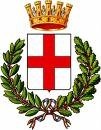

My 20th great-grandmother was the ancestor of many famous people:
The PEDIGREE of
Bonacossa (Bonacosta) BORRI
Born: abt. 1249 Died: 1321
HM George I’s 9-Great Grandmother. HRE Ferdinand I’s 6-Great Grandmother. U.S. President’s 18-Great Grandmother. PM Churchill’s 19-Great Grandmother. HM Margrethe II’s 17-Great Grandmother. Gen. Pierpont Hamilton’s 19-Great Grandmother. Otto von Bismarck’s 15-Great Grandmother. Red Baron' Richthofen's 16-Great Grandmother.the Great’ VISCONTI
Husband/Partner: Matteo I
Children: Stefano (di) VISCONTI ; Galeazzo I VISCONTI
She and several members of her family are buried in Milan in a chapel. This would be a very special grave to visit.
Bonacossa Borri (1254 – 1321)
is my 20th great grandmother
Stefan Visconti (1289 – 1327)
son of Bonacossa Borri
Bernabo Lord Milan di Visconti (1319 – 1385)
son of Stefan Visconti
Veridis Duchess Austria Visconti (1352 – 1414)
daughter of Bernabo Lord Milan di Visconti
Ernst I “Ironside” Archduke of Austria Habsburg (1377 – 1424)
son of Veridis Duchess Austria Visconti
Katharina Archduchess Austria Von Habsburg (1420 – 1493)
daughter of Ernst I “Ironside” Archduke of Austria Habsburg
Christof I VanBaden (1453 – 1527)
son of Katharina Archduchess Austria Von Habsburg
Beatrix Zahringen (1492 – 1535)
daughter of Christof I VanBaden
Sabine Grafin VonSimmern (1528 – 1578)
daughter of Beatrix Zahringen
Marie L Egmond (1564 – 1584)
daughter of Sabine Grafin VonSimmern
Richard Sears (1590 – 1676)
son of Marie L Egmond
Silas Sears (1638 – 1697)
son of Richard Sears
Silas Sears (1661 – 1732)
son of Silas Sears
Sarah Sears (1697 – 1785)
daughter of Silas Sears
Sarah Hamblin (1721 – 1814)
daughter of Sarah Sears
Mercy Hazen (1747 – 1819)
daughter of Sarah Hamblin
Martha Mead (1784 – 1860)
daughter of Mercy Hazen
Abner Morse (1808 – 1838)
son of Martha Mead
Daniel Rowland Morse (1838 – 1910)
son of Abner Morse
Jason A Morse (1862 – 1932)
son of Daniel Rowland Morse
Ernest Abner Morse (1890 – 1965)
son of Jason A Morse
Richard Arden Morse (1920 – 2004)
son of Ernest Abner Morse
Pamela Morse
I am the daughter of Richard Arden Morse
Bonacossa Borri, also known as Bonaca, or Bonaccossi Bonacosta (1254–1321), was Lady of Milan by marriage from 1269 to 1321.
Biography
Bonacossa was the daughter of Squarcina Borri (1230–1277, also called Scarsini), captain of exiles from Milan fom the advent of the Torriani family, and a loyal supporter of the Visconti, and Antonia (1236 -?), of unknown lineage, who married in 1254. Borri’s family, originally from the town of Santo Stefano Ticino together with some feudal lands of nearby Corby. The Borri family was one of the most respected of Milan, and counted among its ranks a saint, Monas of Milan, Bishop of Milan.
Once the Visconti had conquered Milan, Squarcina Borri gave his daughter in marriage to Matteo I Visconti, Lord of Milan in 1269 to cement those bonds essential to maintaining the rule of the Visconti.
Bonacossa and her husband co-founded of the chapel of St. Thomas in the Basilica of Sant’Eustorgio of Milan, where they were buried, along with their son Stefano and his two daughters Beatrice and Catherine, and the brother of Matteo, Uberto III Visconti.
She died in Milan on 13 January 1321 .
Descendents
Galeazzo I Lord of Milan. He married Beatrice d’Es
Beatrice (b. 1280)
Caterina (b. 1282)
Luchino (b. 1285) Lord of Milan, married Violante di Saluzzo
Stefano (b. 1287) Count of Arona , married Valentina Doria
Marco (b. 1289)
Giovanni (b. 1291), Archbishop of Milan
Zaccaria (b. 1295)
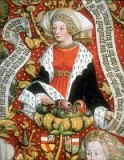
Gertrude of Austria
My 24th great-grandmother died at age 30 after she had 4 children.
Gertrude of Babenberg (c. 1118 – 8 April 1150) was the first wife of Vladislaus II of Bohemia and the Duchess of Bohemia. She was the daughter of count Leopold III, Margrave of Austria and his wife Agnes of Germany.
Gertrude married Duke of Bohemia in 1140. Through her mother, she was half-sister of Conrad III of Germany, so she was a good catch for Vladislaus. In the time of siege of Prague by Conrad II of Znojmo (1142) she successfully defended Prague Castle, together with her brother-in-law Děpolt, while Vladislaus asked Conrad III of Germany for help.
She was took share in Vladislaus founding activity and thanks to her the duke invited to Czech lands new religious orders. She gave birth to four children and died in 1150, at the age of 30.
Issue
Frederick, Duke of Bohemia
Svatopluk, married a daughter of Geza II of Hungary
Vojtech, archbishop of Salzburg as Adalbert III
Agnes (died 7 June 1228), abbess of St George of Prague
Literature
ŽEMLIČKA, J. Čechy v době knížecí 1034–1198. Praha : NLN, 2002. 660 p. ISBN 80-7106-196-4.
Gertrud Austria (1119 – 1150)
is my 24th great grandmother
Fredrich Bohemia (1141 – 1189)
son of Gertrud Austria
Lidmila Bohemia (1170 – 1240)
daughter of Fredrich Bohemia
OTTO II Wittelsbach of Bavaria (1206 – 1253)
son of Lidmila Bohemia
Elisabeth Wittelsbach Duchess Bavaria (1227 – 1273)
daughter of OTTO II Wittelsbach of Bavaria
Consort Elisabeth the Romans Carinthia (1263 – 1313)
daughter of Elisabeth Wittelsbach Duchess Bavaria
Albrecht Albert II ‘The Wise’ Duke of Austria Habsburg (1298 – 1358)
son of Consort Elisabeth the Romans Carinthia
Leopold III “Duke of Austria” Habsburg (1351 – 1386)
son of Albrecht Albert II ‘The Wise’ Duke of Austria Habsburg
Ernst I “Ironside” Archduke of Austria Habsburg (1377 – 1424)
son of Leopold III “Duke of Austria” Habsburg
Katharina Archduchess Austria Von Habsburg (1420 – 1493)
daughter of Ernst I “Ironside” Archduke of Austria Habsburg
Christof I VanBaden (1453 – 1527)
son of Katharina Archduchess Austria Von Habsburg
Beatrix Zahringen (1492 – 1535)
daughter of Christof I VanBaden
Sabine Grafin VonSimmern (1528 – 1578)
daughter of Beatrix Zahringen
Marie L Egmond (1564 – 1584)
daughter of Sabine Grafin VonSimmern
Richard Sears (1590 – 1676)
son of Marie L Egmond
Silas Sears (1638 – 1697)
son of Richard Sears
Silas Sears (1661 – 1732)
son of Silas Sears
Sarah Sears (1697 – 1785)
daughter of Silas Sears
Sarah Hamblin (1721 – 1814)
daughter of Sarah Sears
Mercy Hazen (1747 – 1819)
daughter of Sarah Hamblin
Martha Mead (1784 – 1860)
daughter of Mercy Hazen
Abner Morse (1808 – 1838)
son of Martha Mead
Daniel Rowland Morse (1838 – 1910)
son of Abner Morse
Jason A Morse (1862 – 1932)
son of Daniel Rowland Morse
Ernest Abner Morse (1890 – 1965)
son of Jason A Morse
Richard Arden Morse (1920 – 2004)
son of Ernest Abner Morse
Pamela Morse
I am the daughter of Richard Arden Morse

Empress Irini Augusta Dukaina Dukas
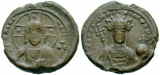
Empress Irini Augusta Dukaina Dukas’ seal
My 29th great-grandmother was married when she was 11 years old. By this marriage she became Empress Mother of the Byzantine Empire. Her daughter Anna recorded history, perhaps revisionist. Empress Irini is an ancestor of Ann Dudley Bradstreet, another woman who recorded history and wrote poetry. I have noticed that Mistress Bradstreet has the most impressive pedigree of important powerful women. This one, like many other royals who are embroiled in political intrigue, landed in a convent under mild house arrest at the end of her life.
Irene Doukaina or Ducaena (Greek: Ειρήνη Δούκαινα, Eirēnē Doukaina) (c. 1066 – February 19, 1123 or 1133) was the wife of the Byzantine emperor Alexios I Komnenos, and the mother of the emperor John II Komnenos and of the historian Anna Komnene.
Empress Irini Augusta Dukaina Dukas (1066 – 1133)
is my 29th great grandmother
Theodora Comnena (1096 – 1116)
daughter of Empress Irini Augusta Dukaina Dukas
Andronikos Dukas Angelos (1122 – 1185)
son of Theodora Comnena
Alexios Emperor Byzantine Empire (1153 – 1204)
son of Andronikos Dukas Angelos
Empress Anna Komnene Angelina Nicaea (1176 – 1212)
daughter of Alexios Emperor Byzantine Empire
MARIA Laskarina (1206 – 1270)
daughter of Empress Anna Komnene Angelina Nicaea
King of Hungary Stephen V (1240 – 1277)
son of MARIA Laskarina
Marie DeHungary (1257 – 1323)
daughter of King of Hungary Stephen V
Marguerite Sicily Naples (1273 – 1299)
daughter of Marie DeHungary
Jeanne DeVALOIS (1294 – 1342)
daughter of Marguerite Sicily Naples
Philippa deHainault (1311 – 1369)
daughter of Jeanne DeVALOIS
John of Gaunt – Duke of Lancaster – Plantagenet (1340 – 1399)
son of Philippa deHainault
Philippa Plantagenet (1370 – 1415)
daughter of John of Gaunt – Duke of Lancaster – Plantagenet
Beatrix DePinto (1403 – 1447)
daughter of Philippa Plantagenet
John Fettiplace (1427 – 1464)
son of Beatrix DePinto
Richard Fettiplace (1460 – 1511)
son of John Fettiplace
Anne Fettiplace (1496 – 1567)
daughter of Richard Fettiplace
Mary Purefoy (1533 – 1579)
daughter of Anne Fettiplace
Susanna Thorne (1559 – 1586)
daughter of Mary Purefoy
Gov Thomas Dudley (1576 – 1653)
son of Susanna Thorne
Anne Dudley (1612 – 1672)
daughter of Gov Thomas Dudley
John Bradstreet (1652 – 1718)
son of Anne Dudley
Mercy Bradstreet (1689 – 1725)
daughter of John Bradstreet
Caleb Hazen (1720 – 1777)
son of Mercy Bradstreet
Mercy Hazen (1747 – 1819)
daughter of Caleb Hazen
Martha Mead (1784 – 1860)
daughter of Mercy Hazen
Abner Morse (1808 – 1838)
son of Martha Mead
Daniel Rowland Morse (1838 – 1910)
son of Abner Morse
Jason A Morse (1862 – 1932)
son of Daniel Rowland Morse
Ernest Abner Morse (1890 – 1965)
son of Jason A Morse
Richard Arden Morse (1920 – 2004)
son of Ernest Abner Morse
Pamela Morse
I am the daughter of Richard Arden Morse
Succession of Alexios and Irene
Irene was born in 1066 to Andronikos Doukas and Maria of Bulgaria, granddaughter of Ivan Vladislav of Bulgaria. Andronikos was a nephew of Emperor Constantine X and a cousin of Michael VII.
Irene married Alexios in 1078, when she was still eleven years old. For this reason the Doukas family supported Alexios in 1081, when a struggle for the throne erupted after the abdication of Nikephoros III Botaneiates. Alexios’ mother, Anna Dalassene, a lifelong enemy of the Doukas family, pressured her son to divorce the young Irene and marry Maria of Alania, the former wife of both Michael VII and Nikephoros III. Irene was in fact barred from the coronation ceremony, but the Doukas family convinced the Patriarch of Constantinople, Kosmas I, to crown her as well, which he did one week later. Anna Dalassene consented to this but forced Kosmas to resign immediately afterwards; he was succeeded by Eustratios Garidas.
Alexios’ mother Anna continued to live in the imperial palace and to meddle in in her son’s affairs until her death 20 years later; Maria of Alania may have also lived in the palace, and there were rumours that Alexios carried on an affair with her. Anna Komnene vociferously denied this, although she herself was not born until December 1, 1083, two years later.
Character
Anna may have been whitewashing her family history; she has nothing but praise for both of her parents. She describes her mother in great detail:
“She stood upright like some young sapling, erect and evergreen, all her limbs and the other parts of her body absolutely symmetrical and in harmony one with another. With her lovely appearance and charming voice she never ceased to fascinate all who saw and heard her. Her face shone with the soft light of the moon; it was not the completely round face of an Assyrian woman, nor long, like the face of a Scyth, but just slightly oval in shape. There were rose blossoms on her cheeks, visible a long way off. Her light-blue eyes were both gay and stern: their charm and beauty attracted, but the fear they caused so dazzled the bystander that he could neither look nor turn away…Generally she accompanied her words with graceful gestures, her hands bare to the wrists, and you would say it was ivory turned by some craftsman into the form of fingers and hand. The pupils of her eyes, with the brilliant blue of deep waves, recalled a calm, still sea, while the white surrounding them shone by contrast, so that the whole eye acquired a peculiar lustre and a charm which was inexpressible.”
It “would not have been so very inappropriate,” Anna writes, to say that Irene was “Athena made manifest to the human race, or that she had descended suddenly from the sky in some heavenly glory and unapproachable splendour.”
Irene was shy and preferred not to appear in public, although she was forceful and severe when acting officially as empress (basileia). She preferred to perform her household duties, and enjoyed reading hagiographic literature and making charitable donations to monks and beggars. Although Alexios may have had Maria as a mistress early in his reign, during the later part of his reign he and Irene were genuinely in love (at least according to their daughter Anna). Irene often accompanied him on his expeditions, including the expedition against Prince Bohemund I of Antioch in 1107 and to the Chersonese in 1112. On these campaigns she acted as a nurse for her husband when he was afflicted with gout in his feet. According to Anna she also acted as a sort of guard, as there were constant conspiracies against Alexios. Alexios’ insistence that Irene accompany him on campaigns may suggest that he did not fully trust her enough to leave her in the capital. When she did remain behind in Constantinople, she acted as regent, together with Nikephoros Bryennios, Anna’s husband, as a counselor.
Death of Alexios
Irene frequently suggested that Alexios name Nikephoros and Anna as his heirs, over their own younger son John. According to Niketas Choniates, who depicts her more as a nagging shrew than a loving wife, she “…threw her full influence on the side of her daughter Anna and lost no opportunity to calumniate their son John… mocking him as rash, pleasure-loving, and weak in character.” Alexios, preferring to create a stable dynasty through his own son, either ignored her, pretended to be busy with other matters, or, at last, lost his temper and chastized her for suggesting such things.
Irene nursed Alexios on his deathbed on 1118, while at the same time still scheming to have Nikephoros and Anna succeed him. Alexios had already promised the throne to John, and when John took his father’s signet ring Irene accused him of treachery and theft. When Alexios finally died, she felt genuine grief, and wore the mourning clothes of her daughter Eudokia, whose own husband had died previously. However, she soon conspired with Anna against John, but their plots were unsuccessful and both Irene and Anna were then forced into exile at the monastery of Kecharitomene, which Irene had founded a few years previously. It was not a harsh exile, and Irene lived there in peace, distributing food to the poor and educating young orphan girls. Irene may have inspired the history written by her son-in-law Nikephoros Bryennios and corresponded with or patronized several important literary figures, including Theophylact of Ohrid and Michael Italikos.
In Literature
The great modern Greek poet Constantine Cavafy includes a reference to Irene Doukaina in his poem “A Byzantine Nobleman in Exile Composing Verses”, which refers to Doukaina “that viper Irini Doukaina” and that as the cause of the titular nobleman’s exile, “may she be cursed”. It is a clear reference to her reputation as a plotter.
Children
Irene died on February 19, in either 1123 or 1133, most likely the latter. With Alexios I Komnenos she had nine children:
Anna Komnene (1083–1153)
Maria Komnene
John II Komnenos (1087–1143)
Andronikos Komnenos
Isaac Komnenos
Eudokia Komnene
Theodora Komnene, who married Constantine Angelos. Among their children were John Doukas (who took his grandmother’s surname) and Andronikos Angelos, father of the emperors Alexios III Angelos and Isaac II Angelos.
Manuel Komnenos
Zoe Komnene
Sources
The Oxford Dictionary of Byzantium, Oxford University Press, 1991.
Anna Comnena, The Alexiad, trans. E.R.A. Sewter. Penguin Books, 1969.
Nicetas Choniates, O City of Byzantium: Annals of Niketas Choniates, trans. Harry J. Magoulias. Wayne State University Press, 1984.
Georgina Buckler, Anna Comnena: A Study. Oxford University Press, 1929.
Thalia Goumia-Peterson, “Gender and Power: Passages to the Maternal in Anna Komnene’s Alexiad “, in Anna Komnene and Her Times, ed. Thalia Goumia-Peterson. Garland Publishing, 2000.
Warren Treadgold, A History of the Byzantine State and Society. Stanford University Press, 1997.
Royal titles
Preceded by
Maria of Alania
Byzantine Empress consort
1081–1118
Succeed ed by
Piroska of Hungary
Empress-Mother of the Byzantine Empire
1118–February 19, 1133
Shared title with Piroska of Hungary from 1122 until 1133.


Planting by the moon is a simple way to increase your luck at growing anything. By planting annuals bearing fruit above the ground during the waxing phase of the moon ( new to full), and sewing plants that bear under the ground during the waning moon ( full to new) we follow ancient traditions of horticulture. To easily determine in what phase of the moon you find yourself, remember this rule: Crescent moon makes the shape of the letter C when the moon is on the wane. The moon has the shape of a capital D when it is on the rise. Think DOC–first D– then full moon–then C to remember the sequence.
Medicine was tightly constrained by local botany in history, limited to plants available and known. The natures of the plants were studied and knowledge of remedies was shared. However, before transport of goods became easy people used local plants as medicine because they had both access and some empirical evidence of the medicinal qualities. Astrology was part of pharmacology and medicine. Gardens and buildings were designed with healing and astrology in mind. Today there are ways to incorporate the heavens into garden design. The medicine wheel is one way to express the seasons and the heavenly connections. At Plimouth Plantation in Plymouth, MA a humoural garden is planted to display the relationship the Pilgrims had with plants and healing. They considered the relationship of the plants to the humors of the body. They had to rely on the plants they brought with them and those that the native people showed them.
Some gardens are designed to feature the four directions, or the elements. If you had unlimited time and money to create a symbolic garden what would you plant in it? What kind of medicine would you practice? I am fond of all the aromatic plants, so I have a vast array of herbs and flowers that can be used in tea, baths, cooking, and now in bitters. The creativity you invest in a garden returns to you many times.
 mermaidcamp