mermaidcamp
Keeping current in wellness, in and out of the water
You can scroll the shelf using ← and → keys
You can scroll the shelf using ← and → keys
 Basil
BasilThere is a long history of perfumes and incense used in ceremony and in popular culture. The Ancient Egyptians used many fragrant oils in the embalming process. It is said that when King Tut’s tomb was opened 3000 years after it had been sealed the urns still gave off the fragrance of frankincense and other spices. Ancient Greeks called all the aromatic products they used aromata. Athletes were anointed with scented oils before competing, and bay leaves were burned at Delphi to induce trance in the priestesses who foretold the future. The Romans raised the popularity and awareness of aromatherapy to new heights. Scented oil massage was the ritual ending at the communal baths in Julius Caesar’s time. Many Roman holidays involved great quantities of scented materials. Rose petals were strewn before men of stature as they walked, and perfume was sprayed on spectators at games. In China the herbal tradition is rich and deep, and it includes the use of oils extracted from plants. They believed that the extraction of the oil liberated the soul of the plant.
Artemisia vulgaris is used in Chinese medicine for moxibustion. In ancient China some people could afford a special room for childbirth. It was called the Artemisia room because the plant was burned during labor to attract kind spirits to the mother and child. The first uses of romantic plants in Chinese healing practices date back to about 2000 BC in The Yellow Emperor’s Book of Chinese Medicine. In Japan incense and the formal art of burning it is taken seriously and used in religion. Special schools, still in existence today, teach the art of Kodo, or perfumery.
Druids burned incense for ceremonial rites, and the Celtic people continued the use. Juniper was used frequently to banish spirits for healing or magic. In Britain monasteries grew medicinal herbs and shared knowledge of plants with other monks. The Crusades brought new plants and remedies traveling back from the Holy Land with the Knights Templar and others. The plague was a time when aromatic plants were used in amulets and strewn to deter fleas, the carriers of the dread disease. The Renaissance brought even wider use of perfumery and aromatic oils in healing.
Today we have many products and options available to us. The availability of pure essential oils is much more widely enjoyed than it was 10 years ago. Products for skin and hair that contain pure oils also abound. Bath sachets, herbal teas, and hair rinses are easy water based ways to absorb botanicals through the skin. Using oils can be simple too. Simply place a few drops on a cotton ball or piece of cloth and take a whiff. Here are a couple of common and inexpensive oils to try:


My 19th great-grandfather was Speaker of the House of Commons, and asked the king to excuse him from that duty. Richard II refused to excuse him. He is buried on the north side of the parish church St. Mary at Bures in Essex. These Waldegraves must be added to the buried in church tour of Europe I need to make someday.
Sir Richard II Lord Bures De Waldegrave (1335 – 1401)
is my 19th great grandfather
Sir Richard III Lord Bures Silveste DeWALDEGRAVE (1370 – 1434)
son of Sir Richard II Lord Bures De Waldegrave
Sir John William deWaldegrave (1397 – 1454)
son of Sir Richard III Lord Bures Silveste DeWALDEGRAVE
Lady Anne De Waldegrave (1429 – 1454)
daughter of Sir John William deWaldegrave
Knight Edmond Bedingfield (1450 – 1496)
son of Lady Anne De Waldegrave
Edmund Bedingfield (1483 – 1552)
son of Knight Edmond Bedingfield
Henry Bedingfield (1509 – 1583)
son of Edmund Bedingfield
Edmund Bedingfield (1534 – 1585)
son of Henry Bedingfield
Nazareth Bedingfeld (1561 – 1622)
daughter of Edmund Bedingfield
Elishua Miller Yelverton (1592 – 1688)
daughter of Nazareth Bedingfeld
Yelverton Crowell (1621 – 1683)
son of Elishua Miller Yelverton
Elishua Crowell (1643 – 1708)
daughter of Yelverton Crowell
Yelverton Gifford (1676 – 1772)
son of Elishua Crowell
Ann Gifford (1715 – 1795)
daughter of Yelverton Gifford
Frances Congdon (1738 – 1755)
daughter of Ann Gifford
Thomas Sweet (1759 – 1844)
son of Frances Congdon
Valentine Sweet (1791 – 1858)
son of Thomas Sweet
Sarah LaVina Sweet (1840 – 1923)
daughter of Valentine Sweet
Jason A Morse (1862 – 1932)
son of Sarah LaVina Sweet
Ernest Abner Morse (1890 – 1965)
son of Jason A Morse
Richard Arden Morse (1920 – 2004)
son of Ernest Abner Morse
Pamela Morse
I am the daughter of Richard Arden Morse
Sir Richard Waldegrave (died 2 May 1401) was a member of Parliament for Lincolnshire in 1376, and Speaker of the House of Commons from 1381 to 1382, during the reign of King Richard II.
Life
His father Sir Richard Waldegrave was returned to parliament in 1335 for Lincolnshire. Richard the son resided at Smallbridge in Suffolk, and was returned to parliament as a knight of the shire in the parliament of February 1376. He was elected to the first and second parliaments of Richard II and to that of 1381. In 1381 he was elected speaker of the House of Commons, and prayed the king to discharge him from the office; the first instance, according to James Alexander Manning, of a speaker desiring to be excused. The king, however, insisted on his fulfilling his duties.
During his speakership parliament was chiefly occupied with the revocation of the charters granted to the villeins by Richard during Wat Tyler’s rebellion. It was dissolved in February 1382. Waldegrave represented Suffolk in the two parliaments of 1382, in those of 1383, in that of 1386, in those of 1388, and in that of January 1389–90.
He died at Smallbridge on 2 May 1402, and was buried on the north side of the parish church of St. Mary at Bures in Essex. He married Joan Silvester of Bures, by whom he had a son, Sir Richard Waldegrave.
Referenc es
” Waldegrave, Richard”. Dictionary of National Biography, 1885–1900. London: Smith, Elder & Co.
Attribution
This article incorporates text from a publication now in the public domain: “Waldegrave, Richard”. Dictionary of National Biography, 1885–1900. London: Smith, Elder & Co.



Laurus nobilis is a shrub or tree native to Asia Minor, popular in the Mediterranean, known and used for centuries. It was sacred to Apollo, the sun god in Greece, and had been used in Mesopotamia as protective incense. In the fourth century AD Greek magician and philosopher Proclus Diadochos stated that bay laurel branches were used in ceremonial work to banish spirits. The use of crowns of laurel leaves to award victors in the contests started at the Pythian games, in honor of Apollo who revered the plant. The custom spread and the laurel assumed a meaning of victory or triumph in Rome. A sudden withering or visible demise of a bay tree in the yard was considered to be a very bad omen for the owner.
The leaves are poisonous in large doses, and the sharp edges of the leaves can damage your digestive tract if ingested. They can be used in cooking either by themselves or in a bouquet garni that is removed before serving and thrown away. The flavor is exotic, lending deep flavor to sauces, stews, and pickles. Although it is less common to use bay leaves to season dessert dishes, here are some great ideas:
Try using bay leaf in new ways. Become the cook laureate of your kitchen.

Hammond Coat of Arms
My 10th great-grandfather was born and went bankrupt in England. His family sailed to America at different times, William himself probably arriving in 1631 on the ship Lyon. He lived in Watertown, MA. raising animals. We have a record of his will.
William Hammond (1575 – 1662)
is my 10th great grandfather
Elizabeth Hammond (1620 – 1703)
daughter of William Hammond
Elishua Crowell (1643 – 1708)
daughter of Elizabeth Hammond
Yelverton Gifford (1676 – 1772)
son of Elishua Crowell
Ann Gifford (1715 – 1795)
daughter of Yelverton Gifford
Frances Congdon (1738 – 1755)
daughter of Ann Gifford
Thomas Sweet (1759 – 1844)
son of Frances Congdon
Valentine Sweet (1791 – 1858)
son of Thomas Sweet
Sarah LaVina Sweet (1840 – 1923)
daughter of Valentine Sweet
Jason A Morse (1862 – 1932)
son of Sarah LaVina Sweet
Ernest Abner Morse (1890 – 1965)
son of Jason A Morse
Richard Arden Morse (1920 – 2004)
son of Ernest Abner Morse
Pamela Morse
I am the daughter of Richard Arden Morse
William HammondBirth: 1575, Lavenham, Suffolk, England.
Baptized: 30 Oct 1575, Lavenham, Suffolk, England.
Death: 8 Oct 1662, Watertown, Massachusetts. “Aged about ninety-four [sic].
Father: Thomas Hammond, born and died in England.
Mother: Rose Trippe, born and died in Lavenham, Suffolk, England.
1629: On 26 Feb 1629/30, William Hammond was declared bankrupt in England.
1629: On “the 20th of November after that date, he departe[d] the land and fleeth into New England. Information from a 1656 law suit against William Hammond, citing this occurance. This would place him on the “Lyon” which sailed from Bristol on 1 Dec 1630/1631, and arriving in New England the following February.
Emigration: 1631. See above.
The Hammond family came to New England in at least three stages. In late 1630 or early 1631, John Winthrop Jr. noted receipt of £7 5s. from “Goody Hammond to send her husband.” This supports the conclusion that William Hammond was a passenger on the “Lyon” when it sailed from Bristol in late 1631.
On 26 Sept 1633, Governor John Winthrop, wrote to Sir Simonds D’Ewes, informing him that “Yours by young Hamond I received,” indicating that William Hammond Jr. probably sailed for New England in one of the ships that arrived in the fall of 1633. His sister Anne and brother Thomas may also have come at this time, because they are not included, a year later, in the passenger list of the “Francis”, which sailed from Ipswich, in the spring of 1634, with Elizabeth Hammond, (aged 47); Elizabeth Hammond, (aged 15); Sarah Hammond, (aged 10); and John Hammond, (aged 7) on board.
First Residence: William’s first residence was Watertown, Massachusetts.
Occupation: Husbandman.
Religion: Admitted to Watertown Church prior to 25 May 1636, (implied by freemanship.)
1636: Admitted as a Freeman, 25 May 1636.
1636: In his record of admissions to Scituate Church, Rev. John Lathrop, entered on 14 Apr 1636, “Elizabeth Hammon, my sister, having a dismission from the church at Watertown.”
1636: On 25 Jul 1636, William Hammond was granted forty acres in the Great Dividend.
1637: Granted eight acres in the Remote Meadows, 26 Jun 1637.
1641: Granted a farm of one hundred fifty-five acres, 10 May 1642.
1645: In the “year 1645 Rose his mother dyeth … but now in the year 1647 his son Thomas come from New England to be admitted to the land.”
1647: On 22 Nov 1647, “W[illia]m Hamond granted a letter of attorney unto Thomas Hamond, his son, to ask demand of the lord of the manor the possession of certain lands in Lavenham, in Suffolk which were the possession of Rose Steward, his mother.”
1647: William was a Watertown Selectman, 8 Nov 1647.
1656: Along with Isaac Stearns, William was an arbiter in a dispute between John Wincoll and Benjamin Crisp.
1656: “Old Goodman Hammond” was appointed to a committee to assign seats in the meeting house, 17 Nov 1656.
1660: On 6 Non 1660, Watertown Selectmen sent the constables to “Old Hamond to let him know, that contrary to order of town, he had entertained into his family such a person as is likely to prove chargeable, do therefore desire him to rid the town of such an encumbrance or otherwise to bear the burden thereof himself.”
In William’s will, dated 1 Jul 1662 and proved 16 Dec 1662:
“William Hammond of Watertowne … now about ninety years of age” bequeathed to “my loving dear wife Elizabeth Hammond my whole estate” for life;
and after her death, to “my son John Hammond all my houses, lands;”
to “Thomas Hammond son of my son Thomas Hammond, deceased,” £40 when twenty-one, but if he dies before that then “the £40 to be equally divided between the children of my daughter House, daughter Barnes, [i.e., Barron’s], children”; to “daughter Barnes” £30;
to “the four children of my daughter Elizabeth House deceased” £5 apiece; to “Adam Smith son of my daughter Sarah … one mare colt”
and to “my daughter Sarah Smith” £5.
The inventory of the estate of William Hammond totalled £467 16s. 9d., including £318 in real estate:
one dwelling house, an orchard £24;
23 acres of pasture land, £69;
11 acres of broken-up land, £48;
15 acres of meadow, £90;
8 acres of meadow remote, £15;
18 acres of land in lieu of township, £6;
1 Great Dividend, 40 acres, £40;
1 farm, 160 acres, £20; and
a part of a barn, £6.
His inventory also included “one great Bible and 3 other books” valued at 13s.
Married: Elizabeth Paine, baptized in Lavenham 22 Sep 1586. She was the daughter of William and Agnes Neves Paine. Elizabeth arrived in New England in 1634 on the “Francis” with her three youngest children. Elizabeth died 27 Sep 1670, in Watertown, Massachusetts, “aged about ninety years [sic].”
Marriage: 9 Jun 1605, in Lavenham, Suffolk, England.
Children of William Hammond and Elizabeth Paine Hammond:
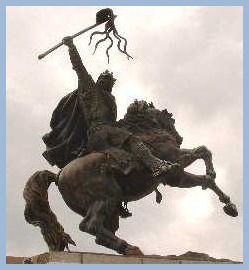
William the Conqueror
My 26th great-grandfather is famous for bringing big changes to England. He died from injuries sustained when he fell from his horse in battle. He became king of England in 1066. He was too fat to fit into his burial sarcophagus. His grave was vandalized several times, including during the French Revolution. Although the memorial remains, almost none of his remains are in the grave.

William the Conqueror
William I ‘ the Conqueror’ of Normandy (1024 – 1087)
is my 26th great grandfather
King Henry I of England Beauclerc (1068 – 1135)
son of William I ‘ the Conqueror’ of Normandy
Mathilda Roesa (1090 – 1110)
daughter of King Henry I of England Beauclerc
Lady Gilberta Godiva le Becket (1100 – 1186)
daughter of Mathilda Roesa
Hervey Butler (Boteler) (1130 – 1190)
son of Lady Gilberta Godiva le Becket
Theobald I FitzWalter, 1st Chief Butler of Eng & Ire, de Butler (Boteler) (1170 – 1206)
son of Hervey Butler (Boteler)
Theobald II le Boteler (1200 – 1230)
son of Theobald I FitzWalter, 1st Chief Butler of Eng & Ire, de Butler (Boteler)
Lady Maud Matilda DeVerdun Countess DeBoteler Countess Arundel (1225 – 1283)
daughter of Theobald II le Boteler
Matilda Tideshall FitzAlan Baroness Corbet De Arundel (1244 – 1309)
daughter of Lady Maud Matilda DeVerdun Countess DeBoteler Countess Arundel
Sir Thomas Corbet of Moreton, Knight of The Bath Corbet (1281 – 1310)
son of Matilda Tideshall FitzAlan Baroness Corbet De Arundel
Knight Sir Robert XII Corbet, Lord of Moreton Corbet (1304 – 1375)
son of Sir Thomas Corbet of Moreton, Knight of The Bath Corbet
Sir Roger XIII (Lord of Morton) Corbet (1330 – 1396)
son of Knight Sir Robert XII Corbet, Lord of Moreton Corbet
Robert Corbet (1383 – 1440)
son of Sir Roger XIII (Lord of Morton) Corbet
Blanche Corbet (1423 – 1458)
daughter of Robert Corbet
Humphrey Coningsby (1458 – 1535)
son of Blanche Corbet
Amphyllis Coningsby (1478 – 1533)
daughter of Humphrey Coningsby
Margaret Tyndale (1510 – 1555)
daughter of Amphyllis Coningsby
Thomas Taylor (1548 – 1588)
son of Margaret Tyndale
Thomas Taylor (1574 – 1618)
son of Thomas Taylor
James Taylor (1608 – 1698)
son of Thomas Taylor
John Taylor (1685 – 1776)
son of James Taylor
John Taylor (1727 – 1787)
son of John Taylor
John Taylor (1747 – 1781)
son of John Taylor
John Nimrod Taylor (1770 – 1816)
son of John Taylor
John Samuel Taylor (1798 – 1873)
son of John Nimrod Taylor
William Ellison Taylor (1839 – 1918)
son of John Samuel Taylor
George Harvey Taylor (1884 – 1941)
son of William Ellison Taylor
Ruby Lee Taylor (1922 – 2008)
daughter of George Harvey Taylor
Pamela Morse
I am the daughter of Ruby Lee Taylor
William I (1027[1] – 9 September 1087), better known as William the Conqueror (French: Guillaume le Conquérant), was Duke of Normandy from 1035 and King of England from 1066 to his death. William is also referred to as “William II” in relation to his position as Duke of Normandy. In particular, before his conquest of England, he was known as “William the Bastard” (French: Guillaume le Bâtard) because of the illegitimacy of his birth.[2]
To claim the English crown, William invaded England in 1066, leading an army of Normans to victory over the Anglo-Saxon forces of Harold Godwinson (who died in the conflict) at the Battle of Hastings, and suppressed subsequent English revolts in what has become known as the Norman Conquest.[3]
His reign, which brought Norman culture to England, had an enormous impact on the subsequent course of England in the Middle Ages. In addition to political changes, his reign also saw changes to English law, a programme of building and fortification, changes to the vocabulary of the English language, and the introduction of continental European feudalism into England.
Early life
William was born in Falaise, Normandy, the illegitimate and only son of Robert I, Duke of Normandy, who named him as heir to Normandy. His mother, Herleva (among other names), who later had two sons to another father, was the daughter of Fulbert, most probably a local tanner. William had a sister, Adelaide of Normandy, another child of Robert and Herleva. Later in his life, the enemies of William are said to have commented derisively that William stank like a tannery, and the residents of besieged Alençon hung skins from the city walls to taunt him.
William is believed to have been born in either 1027 or 1028, and more likely in the autumn of the latter year.[1] He was born the grandnephew of Queen Emma of Normandy, wife of King Ethelred the Unready and later of King Canute the Great.[4]
William’s illegitimacy affected his early life and he was known to contemporaries as ‘William the Bastard’. Nevertheless, when his father died, he was recognised as the heir.[5]
Duke of Normandy
By his father’s will, William succeeded him as Duke of Normandy at age eight in 1035 and was known as Duke William of Normandy (French: Guillaume, duc de Normandie; Latin: Guglielmus Dux Normanniae). Plots by rival Norman noblemen to usurp his place cost William three guardians, though not Count Alan III of Brittany, who was a later guardian. William was supported by King Henry I of France, however. He was knighted by Henry at age 15. By the time William turned 19 he was successfully dealing with threats of rebellion and invasion. With the assistance of Henry, William finally secured control of Normandy by defeating rebel Norman barons at Caen in the Battle of Val-ès-Dunes in 1047, obtaining the Truce of God, which was backed by the Roman Catholic Church.
Against the wishes of Pope Leo IX, William married Matilda of Flanders in 1053 in the Cathedral of Notre Dame at Eu, Normandy (Seine-Maritime). At the time, William was about 24 years old and Matilda was 22. William is said to have been a faithful and loving husband, and their marriage produced four sons and six daughters. In repentance for what was a consanguine marriage (they were distant cousins), William donated St-Stephen’s church (l’Abbaye-aux-Hommes) and Matilda donated Sainte-Trinité church (Abbaye aux Dames).
Feeling threatened by the increase in Norman power resulting from William’s noble marriage, Henry I attempted to invade Normandy twice (1054 and 1057), without success. Already a charismatic leader, William attracted strong support within Normandy, including the loyalty of his half-brothers Odo of Bayeux and Robert, Count of Mortain, who played significant roles in his life. Later, he benefitted from the weakening of two competing power centers as a result of the deaths of Henry I and of Geoffrey II of Anjou, in 1060. In 1062 William invaded and took control of the county of Maine, which had been a fief of Anjou.
English succession
Upon the death of the childless Edward the Confessor, the English throne was fiercely disputed by three claimants — William, Harold Godwinson, the powerful Earl of Wessex, and the Viking King Harald III of Norway, known as Harald Hardraada. William had a tenuous blood claim, through his great aunt Emma (wife of Ethelred and mother of Edward). William also contended that Edward, who had spent much of his life in exile in Normandy during the Danish occupation of England, had promised William the throne when William visited Edward in London in 1052. Finally, William claimed that Harold had pledged allegiance to him in 1064. William had rescued the shipwrecked Harold from the count of Ponthieu, and together they had defeated Conan II, Count of Brittany. On that occasion, William knighted Harold. He also deceived Harold by having him swear loyalty to William over the concealed bones of a saint.[7]
In January 1066, however, in accordance with Edward’s last will and by vote of the Witenagemot, Harold Godwinson was crowned King by Archbishop Aldred.
Norman Invasion
Meanwhile, William submitted his claim to the English throne to Pope Alexander II, who sent him a consecrated banner in support. Then, William organized a council of war at Lillebonne and openly began assembling an army in Normandy. Offering promises of English lands and titles, he amassed at Saint-Valery-sur-Somme a considerable invasion force of 600 ships and 7,000 men, consisting of Normans, Bretons, French mercenaries, and numerous foreign knights. In England, Harold assembled a large army on the south coast and a fleet of ships to guard the English Channel.
Fortuitously for William, his crossing was delayed by weeks of unfavourable winds. William managed to keep his army together during the wait, but Harold’s was diminished by dwindling supplies and falling morale with the arrival of the harvest season.[8] Harold also consolidated his ships in London, leaving the English Channel unguarded. Then came the news that the other contender for the throne, Harald III of Norway, allied with Tostig Godwinson, had landed ten miles from York; Harold was forced to march against them.
Before he could return south, the wind direction turned and William crossed, landing his army at Pevensey Bay (Sussex) on 28 September. Thence he moved to Hastings, a few miles to the east, where he built a prefabricated wooden castle for a base of operations. From there, he ravaged the hinterland and waited for Harold’s return from the north.
William chose Hastings as it was at the end of a long peninsula flanked by impassable marshes. Battle was on the isthmus. William at once built a fort at Hastings to guard his rear against potential arrival of Harold’s fleet from London. Having landed his army, William was less concerned about desertion and could have waited out the winter storms, raided the surrounding area for horses and started a campagn in the spring. Harold had been reconnoitering the south of England for some time and well appreciated the need to occupy this isthmus at once.
Battle of Hastings
Main article: Battle of Hastings
Harold, after defeating his brother Tostig and Harald Hardrada in the north, marched his army 241 miles to meet the invading William in the south. On 13 October, William received news of Harold’s march from London. At dawn the next day, William left the castle with his army and advanced towards the enemy. Harold had taken a defensive position atop the Senlac Hill/Senlac ridge, about seven miles from Hastings, at present-day Battle, East Sussex.
The Battle of Hastings lasted all day. Although the numbers on each side were about equal, William had both cavalry and infantry, including many archers, while Harold had only foot soldiers and few if any archers.[10] Along the ridge’s border, formed as a wall of shields, the English soldiers at first stood so effectively that William’s army was thrown back with heavy casualties. William rallied his troops, however — reportedly raising his helmet, as shown in the Bayeux Tapestry, to quell rumors of his death. Meanwhile, many of the English had pursued the fleeing Normans on foot, allowing the Norman cavalry to attack them repeatedly from the rear as his infantry pretended to retreat further. Norman arrows also took their toll, progressively weakening the English wall of shields. A final Norman cavalry attack decided the battle irrevocably, resulting in the death of Harold, killed by an arrow in the eye. Two of his brothers, Gyrth and Leofwine Godwinson, were killed as well. At dusk, the English army made their last stand. By that night, the Norman victory was complete and the remaining English soldiers fled in fear.
March to London
For two weeks, William waited for a formal surrender of the English throne, but the Witenagemot proclaimed the quite young Edgar Ætheling instead, though without coronation. Thus, William’s next target was London, approaching through the important territories of Kent, via Dover and Canterbury, inspiring fear in the English. However, at London, William’s advance was beaten back at London Bridge, and he decided to march westward and to storm London from the northwest. After receiving continental reinforcements, William crossed the Thames at Wallingford, and there he forced the surrender of Archbishop Stigand (one of Edgar’s lead supporters), in early December. William reached Berkhamsted a few days later where Ætheling relinquished the English crown personally and the exhausted Saxon noblemen of England surrendered definitively. Although William was acclaimed then as English King, he requested a coronation in London. As William I, he was formally crowned on Christmas day 1066, in Westminster Abbey, by Archbishop Aldred.[7]
English resistance
Although the south of England submitted quickly to Norman rule, resistance in the north continued for six more years until 1072. During the first two years, King William I suffered many revolts throughout England (Dover, western Mercia, Exeter) and Wales. Also, in 1068, Harold’s illegitimate sons attempted an invasion of the south western peninsula, but William defeated them.
For William I, the worst crisis came from Northumbria, which had still not submitted to his realm. In 1068, with Edgar Ætheling, both Mercia and Northumbria revolted. William could suppress these, but Edgar fled to Scotland where Malcolm III of Scotland protected him. Furthermore, Malcolm married Edgar’s sister Margaret, with much éclat, stressing the English balance of power against William. Under such circumstances, Northumbria rebelled, besieging York. Then, Edgar resorted also to the Danes, who disembarked with a large fleet at Northumbria, claiming the English crown for their King Sweyn II. Scotland joined the rebellion as well. The rebels easily captured York and its castle. However, William could contain them at Lincoln. After dealing with a new wave of revolts at western Mercia, Exeter, Dorset, and Somerset, William defeated his northern foes decisively at the River Aire, retrieving York, while the Danish army swore to depart.
William then devastated Northumbria between the Humber and Tees rivers, with his Harrying of the North. This devastation included setting fire to the vegetation, houses and even tools to work the fields. He also burnt crops, killed livestock and sowed the fields and land with salt, to stunt growth. After this cruel treatment the land did not recover for more than 100 years. The region ended up absolutely deprived, losing its traditional autonomy towards England. However it may have stopped future rebellions, scaring the English people into obedience. Then, the Danish king disembarked in person, readying his army to restart the war, but William suppressed this threat with a payment of gold. In 1071, William defeated the last rebellion of the north through an improvised pontoon, subduing the Isle of Ely, where the Danes had gathered. In 1072, he invaded Scotland, defeating Malcolm, who had recently invaded the north of England. William and Malcolm agreed to a peace by signing the Treaty of Abernethy and Malcolm gave up his son Duncan as a hostage for the peace. In 1074, Edgar Ætheling submitted definitively to William.
In 1075, during William’s absence, the Revolt of the Earls was confronted successfully by Odo. In 1080, William dispatched his half brothers Odo and Robert to storm Northumbria and Scotland, respectively. Eventually, the Pope protested that the Normans were mistreating the English people. Before quelling the rebellions, William had conciliated with the English church; however, he persecuted it ferociously afterwards.
Reign in England English RoyaltyHouse of NormandyWilliam I Robert II Curthose, Duke of Normandy Richard, Duke of Bernay William II Rufus Adela, Countess of Blois Henry I Beauclerc
Events
As would be habit for his descendants, William spent much of his time (11 years, since 1072) in Normandy, ruling the islands through his writs. Nominally still a vassal state, owing its entire loyalty to the French king, Normandy arose suddenly as a powerful region, alarming the other French dukes who reacted by attacking the duchy persistently. William became focused on conquering Brittany, and the French King Philip I admonished him. A treaty was concluded after his aborted invasion of Brittany in 1076, and William betrothed Constance to the Breton Duke Hoel’s son, the future Alan IV of Brittany. The wedding occurred only in 1086, after Alan’s accession to the throne, and Constance died childless a few years later.
The mischief of William’s elder son Robert arose after a prank of his brothers William and Henry, who doused him with filthy water. The situation became a large scale Norman rebellion. Only with King Philip’s additional military support was William able to confront Robert, who was based at Flanders. During the battle in 1079, William was unhorsed and wounded by Robert, who lowered his sword only after recognizing him. The embarrassed William returned to Rouen, abandoning the expedition. In 1080, Matilda reconciled both, and William revoked Robert’s inheritance.
Odo caused many troubles to William, and he was imprisoned in 1082, losing his English estate and all royal functions, except the religious ones. In 1083, Matilda died, and William became more tyrannical over his realm.
Reforms
William initiated many major changes. He increased the function of the traditional English shires (autonomous administrative regions), which he brought under central control; he decreased the power of the earls by restricting them to one shire apiece. All administrative functions of his government remained fixed at specific English towns, except the court itself; they would progressively strengthen, and the English institutions became amongst the most sophisticated in Europe. In 1085, in order to ascertain the extent of his new dominions and to improve taxation, William commissioned all his counselors for the compilation of the Domesday Book, which was published in 1086. The book was a survey of England’s productive capacity similar to a modern census.
William also ordered many castles, keeps, and mottes, among them the Tower of London’s foundation (the White Tower), to be built throughout England. These ensured effectively that the many rebellions by the English people or his own followers did not succeed.
His conquest also led to French (especially, but not only, the Norman French) replacing English as the language of the ruling classes for nearly 300 years. Furthermore, the original Anglo-Saxon culture of England became mingled with the Norman one; thus the Anglo-Norman culture came into being.
William is said to have eliminated the native aristocracy in as little as four years. Systematically, he despoiled those English aristocrats who either opposed the Normans or who died without issue. Thus, most English estates and titles of nobility were handed to the Norman noblemen. Many English aristocrats fled to Flanders and Scotland; others may have been sold into slavery overseas. Some escaped to join the Byzantine Empire’s Varangian Guard, and went on to fight the Normans in Sicily. By 1070, the indigenous nobility had ceased to be an integral part of the English landscape, and by 1086, it maintained control of just 8% of its original land-holdings.[15] However, to the new Norman noblemen, William handed the English parcels of land piecemeal, dispersing these wide. Thus nobody would try conspiring against him without jeopardizing their own estates within the so unstable England. Effectively, this strengthened William’s political stand as a monarch.
William also seized and depopulated many miles of land (36 parishes), turning it into the royal New Forest region to support his enthusiastic enjoyment of hunting.
Death, burial, and succession
In 1087 in France, William burned Mantes (50 km west of Paris), besieging the town. However, he fell off his horse, suffering fatal abdominal injuries by the saddle pommel. On his deathbed, William divided his succession for his sons, sparking strife between them. Despite William’s reluctance, his combative elder son Robert received the Duchy of Normandy, as Robert II. William Rufus (his third son) was next English king, as William II. William’s youngest son Henry received 5,000 silver pounds, which would be earmarked to buy land. He also became King Henry I of England after William II died without issue. While on his deathbed, William pardoned many of his political adversaries, including Odo.
William died at age 59 at the Convent of St Gervais in Rouen, capital city of Normandie, France, on 9 September 1087. William was buried in the Abbaye-aux-Hommes, which he had erected, in Caen, Normandy.
According to some sources, a fire broke out during the funeral; the original owner of the land on which the church was built claimed he had not been paid yet, demanding 60 shillings, which William’s son Henry had to pay on the spot; and, in a most unregal postmortem, William’s corpulent body would not fit in the stone sarcophagus.
William’s grave is currently marked by a marble slab with a Latin inscription; the slab dates from the early 19th century. The grave was defiled twice, once during the French Wars of Religion, when his bones were scattered across the town of Caen, and again during the French Revolution. Following those events, only William’s left femur remains in the tomb and some skin particles
Legacy
William’s invasion was the last time that England was successfully conquered by a foreign power. Although there would be a number of other attempts over the centuries, the best that could be achieved would be excursions by foreign troops, such as the Raid on the Medway during the Second Anglo-Dutch War, but no actual conquests such as William’s. There have however been occasions since that time when foreign rulers have succeeded to the English/British throne, notably the Dutch Stadtholder William III of Orange in 1688 after a successful invasion of England by Dutch troops (see Glorious Revolution) and George of Hanover b. 1660, who acceded by virtue of the exclusion of Roman Catholics from the succession.
As Duke of Normandy and King of England he passed the titles on to his descendants. Other territories would be acquired by marriage or conquest and, at their height, these possessions would be known as the Angevin Empire.
They included many lands in France, such as Normandy and Aquitaine, but the question of jurisdiction over these territories would be the cause of much conflict and bitter rivalry between England and France, which took up much of the Middle Ages, including the Hundred Years War and, some might argue, continued as far as the Battle of Waterloo of 1815.
An example of William’s legacy even in modern times can be seen on the Bayeux Memorial, a monument erected by Britain in the Normandy town of Bayeux to those killed in the Battle of Normandy during World War II. A Latin inscription on the memorial reads NOS A GULIELMO VICTI VICTORIS PATRIAM LIBERAVIMUS – freely translated, this reads “We, once conquered by William, have now set free the Conqueror’s native land” .
Physical appearance
No authentic portrait of William has been found. Nonetheless, he was depicted as a man of fair stature with remarkably strong arms, “with which he could shoot a bow at full gallop”. William showed a magnificent appearance, possessing a fierce countenance. He enjoyed an excellent health until old age; nevertheless his noticeable corpulence in later life augmented eventually so much that French King Philip I commented that William looked like a pregnant woman.
Descendants
Family tree
William is known to have had nine children, though Agatha, a tenth daughter who died a virgin, appears in some sources. Several other unnamed daughters are also mentioned as being betrothed to notable figures of that time. Despite rumours to the contrary (such as claims that William Peverel was a bastard of William)[19] there is no evidence that he had any illegitimate children,[20]
Robert Curthose (1054–1134), Duke of Normandy, married Sybil of Conversano, daughter of Geoffrey of Conversano.
Richard (c. 1055 – c. 1081), Duke of Bernay, killed by a stag in New Forest.
Adeliza (or Alice) (c. 1055 – c. 1065), reportedly betrothed to Harold II of England.
Cecilia (or Cecily) (c. 1056 – 1126), Abbess of Holy Trinity, Caen.
William “Rufus” (c. 1056 – 1100), King of England.
Agatha (c. 1064 – 1079), betrothed to Alfonso VI of Castile.
Constance (c. 1066 – 1090), married Alan IV Fergent, Duke of Brittany; poisoned, possibly by her own servants.
Adela (c. 1067 – 1137), married Stephen, Count of Blois.
Henry “Beauclerc” (1068–1135), King of England, married Edith of Scotland, daughter of Malcolm III, King of the Scots. His second wife was Adeliza of Leuven.


My 25th great-grandmother as born in Constantinople and died in Bursa, Turkey. Her first husband met with an unfortunate demise, but she remarried. Her father was the Byzantine emperor. Her second husband was emperor of Nicaea.
Empress Anna Komnene Angelina Nicaea (1176 – 1212)
is my 25th great grandmother
MARIA Laskarina (1206 – 1270)
daughter of Empress Anna Komnene Angelina Nicaea
King of Hungary Stephen V (1240 – 1277)
son of MARIA Laskarina
Marie DeHungary (1257 – 1323)
daughter of King of Hungary Stephen V
Marguerite Sicily Naples (1273 – 1299)
daughter of Marie DeHungary
Jeanne DeVALOIS (1294 – 1342)
daughter of Marguerite Sicily Naples
Philippa deHainault (1311 – 1369)
daughter of Jeanne DeVALOIS
John of Gaunt – Duke of Lancaster – Plantagenet (1340 – 1399)
son of Philippa deHainault
Philippa Plantagenet (1370 – 1415)
daughter of John of Gaunt – Duke of Lancaster – Plantagenet
Beatrix DePinto (1403 – 1447)
daughter of Philippa Plantagenet
John Fettiplace (1427 – 1464)
son of Beatrix DePinto
Richard Fettiplace (1460 – 1511)
son of John Fettiplace
Anne Fettiplace (1496 – 1567)
daughter of Richard Fettiplace
Mary Purefoy (1533 – 1579)
daughter of Anne Fettiplace
Susanna Thorne (1559 – 1586)
daughter of Mary Purefoy
Gov Thomas Dudley (1576 – 1653)
son of Susanna Thorne
Anne Dudley (1612 – 1672)
daughter of Gov Thomas Dudley
John Bradstreet (1652 – 1718)
son of Anne Dudley
Mercy Bradstreet (1689 – 1725)
daughter of John Bradstreet
Caleb Hazen (1720 – 1777)
son of Mercy Bradstreet
Mercy Hazen (1747 – 1819)
daughter of Caleb Hazen
Martha Mead (1784 – 1860)
daughter of Mercy Hazen
Abner Morse (1808 – 1838)
son of Martha Mead
Daniel Rowland Morse (1838 – 1910)
son of Abner Morse
Jason A Morse (1862 – 1932)
son of Daniel Rowland Morse
Ernest Abner Morse (1890 – 1965)
son of Jason A Morse
Richard Arden Morse (1920 – 2004)
son of Ernest Abner Morse
Pamela Morse
I am the daughter of Richard Arden Morse
Anna Komnene Angelina or Comnena Angelina (c. 1176 – 1212) was a daughter of the Byzantine Emperor Alexios III Angelos and of Euphrosyne Doukaina Kamatera.
Her first marriage was to the sebastokratōr Isaac Komnenos, a great-nephew of the emperor Manuel I Komnenos. They had one daughter, Theodora Angelina. Soon after Anna’s father became emperor, in 1195, Isaac Komnenos was dispatched to combat the Vlach-Bulgarian Rebellion. He was captured, became a pawn between rival Bulgarian and Vlach factions, and died in chains.
Her second marriage to Theodore Laskaris, eventually emperor of Nicaea, was celebrated in a double wedding in early 1200 (the other couple was Anna’s sister Irene and Alexios Palaiologos). Anna and Theodore had three daughters and two sons:
Nicholas Laskaris (died c. 1212)
John Laskaris (died c. 1212)
Irene Doukaina Komnene Laskarina, who married first the general Andronikos Palaiologos and then John III Doukas Vatatzes
Maria Laskarina, who married King Béla IV of Hungary
Eudokia Laskarina, engaged to Robert de Courtenay, married bef. 1230 Anseau de Cayeux, Latin Governor of Asia Minor
Sources
K. Varzos, I genealogia ton Komninon (Thessalonica, 1984).
O city of Byzantium: annals of Niketas Choniates tr. Harry J. Magoulias (Detroit: Wayne State University Press, 1984) especially pages 255–258, 280.

cheers

hotel dog
The earth appreciates that I need less travel in my life that I did when I was younger. I was a carbon hog, flying all the time. I enjoyed it and will not regret it now that I like staying at home better than ever. I got while the getting was very good, and now I fly with much more selective purposes and goals in mind. I saw a lot of the world, and plan to see more of it. I also plan to concentrate on the wonderful options available in Arizona that require little time in transit. I like the idea of maximum tourism time and minimum time on the road. We have stayed at resorts around Tucson and in Scottsdale that make us happy for different reasons. These days any hotel stay has to include our coon hound, Artemisia, who is a hotel fan. A short get away with the dog that includes some dining and walking in nature works as a retreat for the whole family. I usually like to get in the water, but since I do that at home all the time it is not my first priority when looking for a weekend location near home. There are many benefits the staycation offers the holiday maker as well as Mother Earth:
Consider a place near home that makes you want to get away, but not very far away. You might find you will come back from holiday much more rested and perhaps in harmony with the earth.

Isabell Harvey
My 14th great grandmother is buried with her husband in a church in England. She met her husband and married him before she knew he was the son of an earl. Their meeting was very romantic:
Isabel Hervey was the daughter of Edmund Hervey (b.1492) and Margaret Wentworth (c.1492-1511). Her father was a wealthy London merchant with a house in Cheapside. According to the legend, Isabel and her father were visiting friends in the village of Kensington when the earl of Sussex and his retinue rode past. In her eagerness to see the cavalcade, Isabel leaned too far out a window and dropped her glove. Sir Humphrey Radcliffe (c.1509-August 13,1566), third son of the earl, dipped his lance, impaled the glove, and returned it to its owner. Struck by her beauty, he left his father’s company and offered his services to Hervey to escort him and his daughter back to London. Humphrey represented himself as one of the earl’s men, but did not tell them he was Sussex’s son until, some versions of the tale insist, he and Isabel had been married for some time. They lived at Elstow in Bedfordshire and Edgworth, Lancashire. They were the parents of four daughters and two sons, including Mary (d.1616/17), a maid of honor to Queen Elizabeth, Edward (1552-1643), Martha, and Frances (b.1545). Portrait: the Hans Holbein the Younger drawing at Windsor inscribed “The Lady Ratclif” may be Isabel Hervey, although neither the date of her marriage nor the date of the drawing are known. Other likely candidates (Elizabeth Howard, Lady Fitzwalter; Margaret Stanley, countess of Sussex; Mary Arundell, countess of Sussex) would not have been called Lady Radcliffe.
Isabell Harvey (1510 – 1594)
is my 14th great grandmother
Edward Radcliffe (1535 – 1643)
son of Isabell Harvey
Lady Eleanor Elizabeth Radcliffe (Whitebread) (1550 – 1628)
daughter of Edward Radcliffe
Elizabeth Whitbread (1538 – 1599)
daughter of Lady Eleanor Elizabeth Radcliffe (Whitebread)
Thomas Spencer (1571 – 1631)
son of Elizabeth Whitbread
Thomas Spencer (1596 – 1681)
son of Thomas Spencer
Margaret SPENCER (1633 – 1670)
daughter of Thomas Spencer
Moses Goodwin (1660 – 1726)
son of Margaret SPENCER
Martha Goodwin (1693 – 1769)
daughter of Moses Goodwin
Grace Raiford (1725 – 1778)
daughter of Martha Goodwin
Sarah Hirons (1751 – 1817)
daughter of Grace Raiford
John Nimrod Taylor (1770 – 1816)
son of Sarah Hirons
John Samuel Taylor (1798 – 1873)
son of John Nimrod Taylor
William Ellison Taylor (1839 – 1918)
son of John Samuel Taylor
George Harvey Taylor (1884 – 1941)
son of William Ellison Taylor
Ruby Lee Taylor (1922 – 2008)
daughter of George Harvey Taylor
Pamela Morse
I am the daughter of Ruby Lee Taylor
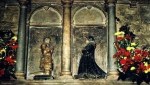
In the chancel of the old parish church of Elstow, near Bedford–so famous for its associations with the childhood of John Bunyan— a monument recording Sir Humphry Radcliffe of that place, and his wife, Dame Isabella Radcliffe.


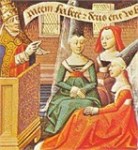

My 28th great grandmother married the king of France when both she and he were already married.
Bertrade de Montfort (1059 – 1115)
is my 28th great grandmother
Louis VI France ( – 1180)
son of Bertrade de Montfort
Louis VII France (1119 – 1180)
son of Louis VI France
Philippe Auguste II France (1165 – 1223)
son of Louis VII France
Louis VIII France (1187 – 1226)
son of Philippe Auguste II France
Charles I King of Jerusalem and Naples (1227 – 1285)
son of Louis VIII France
Charles NAPLES (1254 – 1309)
son of Charles I King of Jerusalem and Naples
Marguerite Sicily Naples (1273 – 1299)
daughter of Charles NAPLES
Jeanne DeVALOIS (1294 – 1342)
daughter of Marguerite Sicily Naples
Philippa deHainault (1311 – 1369)
daughter of Jeanne DeVALOIS
John of Gaunt – Duke of Lancaster – Plantagenet (1340 – 1399)
son of Philippa deHainault
Philippa Plantagenet (1370 – 1415)
daughter of John of Gaunt – Duke of Lancaster – Plantagenet
Beatrix DePinto (1403 – 1447)
daughter of Philippa Plantagenet
John Fettiplace (1427 – 1464)
son of Beatrix DePinto
Richard Fettiplace (1460 – 1511)
son of John Fettiplace
Anne Fettiplace (1496 – 1567)
daughter of Richard Fettiplace
Mary Purefoy (1533 – 1579)
daughter of Anne Fettiplace
Susanna Thorne (1559 – 1586)
daughter of Mary Purefoy
Gov Thomas Dudley (1576 – 1653)
son of Susanna Thorne
Anne Dudley (1612 – 1672)
daughter of Gov Thomas Dudley
John Bradstreet (1652 – 1718)
son of Anne Dudley
Mercy Bradstreet (1689 – 1725)
daughter of John Bradstreet
Caleb Hazen (1720 – 1777)
son of Mercy Bradstreet
Mercy Hazen (1747 – 1819)
daughter of Caleb Hazen
Martha Mead (1784 – 1860)
daughter of Mercy Hazen
Abner Morse (1808 – 1838)
son of Martha Mead
Daniel Rowland Morse (1838 – 1910)
son of Abner Morse
Jason A Morse (1862 – 1932)
son of Daniel Rowland Morse
Ernest Abner Morse (1890 – 1965)
son of Jason A Morse
Richard Arden Morse (1920 – 2004)
son of Ernest Abner Morse
Pamela Morse
I am the daughter of Richard Arden Morse
Bertrade de Montfort (c. 1070-February 14, 1117) was the daughter of Simon I de Montfort and Agnes, Countess of Evreux. Her brother was Amauri de Montfort. The oft-married Count Fulk IV of Anjou was married to the mother of his son in 1089, when the lovely Bertrade caught his eye. According to the chronicler John of Marmoutier: The lecherous Fulk then fell passionately in love with the sister of Amaury of Montfort, whom no good man ever praised save for her beauty. For her sake, he divorced the mother of Geoffrey II Martel… Bertrade and Fulk were married, and they became the parents of a son, Fulk, but in 1092 Bertrade left her husband and took up with King Philip I of France. Philip married her on May 15, 1092, despite the fact that they both had spouses living. He was so enamoured of Bertrade that he refused to leave her even when threatened with excommunication. Pope Urban II did excommunicate him in 1095, and Philip was prevented from taking part in the First Crusade. Astonishingly, Bertrade persuaded Philip and Fulk to be friends. Bertrade and Philipe had three children together: Philippe de France, Count of Mantes (living in 1123) Fleury de France, seigneur of Nangis (living in 1118) Cecile of France (died 1145), married (1) Tancred, Prince of Galilee; married (2) Pons of Tripoli According to Orderic Vitalis, Bertrade was anxious that one of her sons succeed Philip, and sent a letter to King Henry I of England asking him to arrest her stepson Louis. Orderic also claims she sought to kill Louis first through the arts of sorcery, and then through poison. Whatever the truth of these allegations, Louis succeeded Philippe in 1108. Bertrade lived on until 1117; William of Malmesbury says: “Bertrade, still young and beautiful, took the veil at Fontevraud Abbey, always charming to men, pleasing to God, and like an angel.” Her son from her first marriage was Fulk V of Anjou who later became King of Jerusalem. The dynasties founded by Fulk’s sons ruled for centuries, one of them in England (Plantagenet), the other in Jerusalem.
Sources Ancestral Roots of Certain American Colonists Who Came to America Before 1700 By Frederick Lewis Weis, Lines 50-25, 118-23. Orderic Vitalis William of Malmesbury

Apollo and the 9 muses
In Greek mythology the nine muses are daughters of Mnemosyne. She was the muse of memory. Zeus slept with her for 9 nights, resulting in the birth of the 9 muses. They were raised by Apollo and a nymph in a secluded atmosphere. They became completely dedicated to the arts. Each was in charge of a different aspect of culture:
June 14 is celebrated as the birthday of the muses. Have you ever tried to invite a muse for a visit in your creative world? I have wanted to be more poetic since I discovered my Pilgrim poet ancestor, Mistress Bradstreet. I made some effort in April to write a poem each day, but I think the missing piece is the muse. I have trudged away at the poems without inviting a spark or a mystic inspiration to reach into the creative process. I have assigned myself the job of poet, but have not consulted with the poetic energy that inspires and makes art possible. Words themselves need a creative current or tradition on which to flow, or the audience will be left flat. I love comedy the best, although Mistress Bradstreet was more about sacred hymns. Next time I go out into the world I will ask Thalia to accompany me to find the humor in what I experience. Which is your favorite muse? Could you call on them to enhance your creativity more often? I know I could.
 mermaidcamp