mermaidcamp
Keeping current in wellness, in and out of the water
You can scroll the shelf using ← and → keys
You can scroll the shelf using ← and → keys

mask
The door was blocked by a large figure standing next to the fire
His face obscured by smoke, his identity concealed from us,
He moved with deliberate intent so swift and sure he seemed a ghost,
A phantom memory of the times when this place served as the center
Of a large and looming ogre with scary tendrils reaching into every nook
We were not sure if he entered the flames on purpose or was pulled
By fate or backdraft into the inferno that had started so suddenly
The night exploded as the bright red fire consumed the mask of power
Some rejoiced as the melting symbol of the past became a molten puddle
Most of us wondered how long it would be before the area would be safe
We all believed the melting mask was telling us to take great precaution

#writephoto
This poem is a response to this week’s photo prompt from Sue Vincent’s Echo. Each Thursday she posts a photo. She is a very good sport to post for us this week since her own computer exploded and has made access to her photo collection tedious. Thank you Sue. We appreciate your generosity. Please join other writers here to read, write, comment on last week’s prompt.
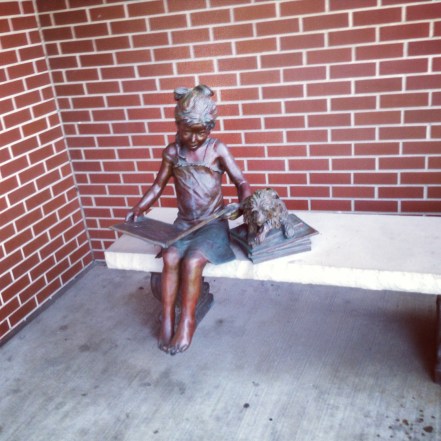
Audrey
She knew from the smell when she opened the front door that her mother was cooking cabbage rolls again. The hallway and the stairwell smelled heavily of cabbage when she came home from school. For her it was the reassurance of a meal to eat, but for others who visited her after school it was foreign. They always asked when they arrived at the landing in front of her upstairs apartment, “What is that smell?” Her parents were both from Poland, and her mother was an excellent cook. She used cabbage almost every day because it was cheap and healthy. Audrey was both proud and ashamed of her heritage and her ethnic diet at home. She wanted to blend in with kids at school who ate much differently than her family. Her mom was really the one with the mad chef skills, but she was ashamed of that cuciferous odor coming from the kitchen all the time.
Her home and the family income were average for the time and the place. Audrey felt that she and almost everyone she knew in school would be classified as “middle class”. There were fewer class distinctions in elementary school than there would be later in life. She had friends, boyfriends, and was popular. In the 1950’s in our tiny town the children were given relative freedom to do as we pleased until dinner time. Friendships that began on the whiffle ball field or in a snow fort would often conclude with an invitation to eat dinner at another kid’s home. Most mothers would consent if an extra child was brought home, but permission had to be granted from the visitor’s parents. In this way we checked out each other’s family dining habits and parental norms. It was a very common practice. She held back from accepting invitations because she did not want to reciprocate. This was the beginning of her social withdrawal.
Now that she is back at home taking care of her parents in their home she wishes she had learned to make stuffed cabbage the way her mom did. She is an adequate cook, but does not know any of her grandparents’ traditional recipes from the old country. She buys frozen foods and prepared packaged meals. A certain amount of guilt consumes her as she spoon feeds frozen corndogs to her mom. She does not understand what her mother is telling her in Polish, and she feels a loss that cannot be recovered.

as the crow flies
They called out to each other when he entered the building. “CaCaw-CaCaw”, the sound of the crow echoed through the staff to warn that the boss has arrived. Quickly scurrying to clean up, sweep up, and look alive, everyone knows what the boss likes to see and what sets him off. This factory was for a while the last remaining business in the town. Generations of village folk have worked in the same jobs for decades. The relationships between the factory and the town were simple. The workers provided an honest labor force, and the factory provides jobs to keep the economy alive.
The casket industry is a lucrative niche in the death market. Since 1795 the luxury leaders in the industry had been Royal Flush. They were the providers of royal caskets, designed for pomp and ceremony. To stay in high society and leave a lasting legacy the final statement had to reflect an abundance of tradition and very flashy symbols of wealth and power. No expense was spared as the Victorians went about turning the funeral into a well orchestrated show with all the trimmings. Modern times brought new color and swag to the final container. The possibility to jack up the price with extras had never been better. Nobody wanted to be outdone by others as they made their final exit. Caskets were almost pure profit.
Times changed, global warming had severe consequences for graveyards everywhere. As the costal waters rose currents swept through cemeteries causing remains to float to the surface and drift out to sea. Nobody had anticipated this side effect. Suddenly burial was no longer the first choice of those who needed to dispose of their dead family members. Royal Flush was the last place any sane person would look for a civilized end. The factory doors closed and the workers all had to move to higher ground. As they looked back at the factory for the last time a black crow swept low in the sky and shouted, “CaCaw, CaCaw”. They understood his warning, his message. They saw the folly in resisting change and biting the hand that feeds. It was too late.
#writephoto
This story is written in response to Sue Vincent’s Echo, where a photo prompt is featured every Thursday. Join us to read, write, and comment here. Jump right in with your version! It is fun to see how many ways the picture is interpreted.

best wishes
To whom can we look for guidance in crisis?
The sea is full of troubled waters and dying fish
Our battles and embroiled excuses do not end with ISIS
Our future floats lifelessly on the surface, a futile wish
For earth to find the harmony needed to stay alive
While we argue viciously about every possible decision
Blindly contradicting truth only helps ignorance thrive
Time leaves us with fewer options to complete our mission

Ye History of Ye Town of Greenwich
My tenth great-grandfather, Henry Smith, was born in 1619 in St. Mary-Adermanbury, in London,England. He died 5 Jul 1687 in Stamford,Fairfield,CT. He was a minister. While no proof positive exists for the name of his first wife, circumstantially it is quite possible that she is Ann Jackson, who came to America [of record 27 Jul 1635] on the ship “Princess”, along with (a) Henry Smith; he age 22; she age 23. The age of 22 for Henry Smith of the ship “Princess” equates to a birth year of about 1613, the probable birth year of Henry Smith in this writing. In the absence of a verifiable source for this theory, Ann Jackson is placed in this writing, but with question. I am descended from his second wife, Hannah:
Rev. Henry Smith arrived in Charlestown, MA from England in 1636 (according to Savage). By 1648 he was in Wethersfield, CT. with his second wife and children from his first marriage. Henry was described as a gentleman from a good family. He was the patriarch of what was considered one of the best sustained and accomplished families in New Engalnd.
He was the first recorded minister in Wethersfield, but his ministry was not a happy one. Mr. Clement Chaplin, a Ruling Elder of the church was a man of wealth, prominent and influencial with a majority of the congregation. For many years he involved Henry Smith in difficulities to the point the conflict wa before the General Court. After a long examination of the merits of the case, in 1643 Mr. Chaplin was fined 11 pounds for libeling Henry. But Mr. Chaplin continued to harrass Henry with carious civil suits until again it came before the General Court. Henry was again exonerated and vindicated by the court. Although the conflict did not completely end, there was no further serious issues. However it is believed the the strain of the trails and harrassment brought Henry to an early grave in 1648.
Pequod War


The Heritage Inn in Snowflake, AZ is perfectly positioned in the middle of an historical neighborhood. Surrounded by restored buildings, the Inn stands out because of the flower gardens. The luscious rose collection welcomes guests at 161 Main Street. The ample shaded front porch is home to a couple of active humming bird feeders, vintage furniture, and charming outdoor art. One is instantly transported to a specific time. The decor throughout the inn reflects the historic legacy of this well restored home. Portraits of the original inhabitants and some traces of their story remind the visitor of the founding of this small town. We stayed in the Mary Maude Porter room, named for one of the first inhabitants of the home, which had been built in the 1890’s.


We went to Snowflake to escape the heat and go to a lavender farm that was having a festival. The heat followed us up the mountain, so the relief was not forthcoming from mother nature. We decided not to go out to the farm because it was just too hot to deliver what we wanted. Instead, we investigated the little town of Snowflake, then the adjacent town of Taylor, and checked in to the room a little early chill in the air conditioning. The weather was pleasant enough to take a stroll in the evening, and we walked around the museums and historic homes that were not open on Saturday. There is a good display in the small Heritage Park next to the inn that details the founding of the town and the families who developed area.
Our room had a French door that opened onto the patio, where a fountain decorated a lovely garden. Tables and chairs are placed for guests to use for relaxing, or for breakfast service. We chose to eat by the fountain in the morning, when the weather had cooled down a bit. Our fancy table setting and gourmet breakfast in the cool setting gave us what we had come to experience, a complete change of pace. When I travel I am looking or something different from day to day existence. The hosts of the Heritage Inn, JoAnne and Craig, give guests superior service in an elegant atmosphere of private, historical chic. We liked the feeling of elegant leisure, and plan to return when we know the weather will be cooler. Next time I will plan ahead and arrange to see the tour of the historical homes. The tiny town has much to offer the history buff, and the Heritage Inn offers superior accommodation from which to see it.

fountain patio


London
Sarah Allerton was born in London in 1588, and died in Plymouth Colony in 1633. She arrived in the new world on the ship Anne with her third husband in 1632 after my 13th great-grandfather had sailed on the Mayflower then died shortly after arrival in the colony. Her brother Isaac was a signer of the Mayflower Compact as well, and assistant to Governor Bradford in America. Isaac later disgraced himself, moved to New Amsterdam, and became known as the first Yankee trader.
Sarah Allerton’s parents are not given but information is provided by unknown sources. Her parents would have been Edward Allerton, b. 1555 St. Dionis, Backchurch, London, England, died 1590 England, and Rose Davis, b. ca. 1559 in St. Peters, Corningshire, died June 1596 in England. Edward’s father was William Allerton, b. 1529. Sarah however certainly had at least two brothers. Isaac’s will also mentions a “brother Breuster”. The two siblings were:
1) Isaac Allerton, b. ca. 1586. He was one of the more famous of the Pilgrim Fathers. He was originally a tailor in London and was married in Leyden, the same day as his sister, 4 November 1611, to Mary Norris of Newbury, England, b. ca. 1588.
He came over on the Mayflower, with his wife and three children, and became First Assistant (1621 to ca. 1631) to Governor Bradford. Mary Norris died in childbirth, with a stillborn son, the first winter. She died 25 February 1620/1 on the Mayflower, while the first houses were still being built at Plymouth. In ca. 1626 he married Fear Brewster, b. 1606 at Scrooby, England , daughter of William and Mary Brewster, William being one of the most famous Pilgrims. Fear had arrived in Plymouth in July 1623, on the Anne, the same ship that brought Mary Priest and her two children.
Isaac was well known for his unscrupulous dealings with fellow Pilgrims and eventually left the colony in disgrace in the 1630’s when he lost the support of William Brewster. “A most enterprising man, he engaged in commercial pursuits at Marblehead and in Maine and later resided at New Amsterdam.” . He is often remembered as “the first Yankee trader”. Fear died in Plymouth before 12 December 1634. Isaac Allerton was probably married a third time to Joanna Swinnerton, before 1644, probably New Haven, CT. There were no known children from this marriage. He died insolvent between 1 and 12 February 1658/9 in New Haven, CT. Joanna was still living in 1684. Isaac’s children were (Sarah and Isaac were by his second wife):
Bartholomew, b. ca. 1612, in Leyden, Holland. Bartholomew returned to England. He first married Margaret _____ and then Sarah Fairfax, prob. in Rumbough, Suffolk, England. He died between 15 October 1658 and 19 February 1658/9, prob. at Bramfield, Suffolk, England. Four children are recorded.
Remember, b. ca. 1614 in Leyden. She m. Moses Maverick, before 6 May 1635 and died between 12 Sept. 1652 and 22 Oct. 1656. Moses lived in Lynn, Salem, and at Marblehead (all MA) in the time they were married. They had seven children, born at Lynn and Salem. Moses remarried in Boston to Eunice (Cole) Roberts by whom he had four children.
Mary, b. June 1616, m. Thomas Cushman, ca. 1636, in Plymouth, MA. Cushman came to Plymouth in 1621 on the Fortune. They had eight children. She died 28 November 1699, Plymouth, MA, the last survivor of those who came on the Mayflower. One of her grandchildren, Allerton Cushman, married in 1726 to Elizabeth Sampson, cousin of Benjamin Sprague.
Child, buried St. Peters, Leyden, 5 February 1620.
Stillborn son, b. 22 December 1620 on the Mayflower, Plymouth Harbor.
Sarah, b. ca. 1627 in Plymouth, died young before 1651.
Isaac Allerton, Jr., b. between 22 May 1627 and 1630, Plymouth, MA. He married first to Elizabeth _____, ca. 1652 (2 children) and then to Elizabeth Willoughby, a widow of Overzee and Colclough, ca. 1663, in Norfolk County, VA. Elizabeth was born in 1635 in England (12). They had three children, all born in Westmoreland Co, VA. Isaac became the first Plymouth student at Harvard (he graduated according to in 1650) and later went into business and made a fortune himself. He died Westmoreland Co., VA in 1702.
As is the case for Degory Priest, a General Society of Mayflower Descendents book is available on the first five generations of Isaac Allerton’s descendents. A somewhat earlier and shorter version, covering four generations, was published in 1996. Isaac Allerton has apparently a relatively small number of descendants compared to other Mayflower passengers, but is an ancestor to Presidents Zachary Taylor and Franklin D. Roosevelt (the latter also descended from Degory Priest through Sarah). The presidents are both thus our very remote (!) relatives: President Zachary Taylor (1784-1850), through Isaac Allerton Jr., was a 5th cousin to Mary (Scott) Wisdom; President Franklin D. Roosevelt (1882-1945), through Degory Priest, was an 8th cousin to Paul Graham.
2) Sarah Allerton, b. ca. 1588 at London . She was first married to John Vincent and then married to Degory Priest as noted above. Having received word of her husband’s death, she remarried on 13 November 1621 in Leyden, to Godbert Godbertson (name used in but also often called Cuthbert Cuthbertson). They arrived in July-August of 1623 on the Anne with their three children (two by Degory Priest). It is possible that there were two additional children with them by the first marriage of Godbertson (I think there is a reference to five children that arrived with them in and see also mention of three Cuthbertson below). Francis Sprague, another of my ancestors, was also a passenger. Godbert (ca. 1590-633), a Dutch Walloon, was a hat-maker in Leyden. He had been married previously in 1617 to Elizabeth Kendall. He became a “purchaser”, i.e., a shareholder in the Pilgrim Company when it was formed in 1626. He died seven years later, in Plymouth, of “infectious fever”. She died in Plymouth before 24 October 1633. On 11 November 1633 their son-in-law Phineas Pratt was appointed “to take possession of the personal property of Cuthbert Cuthbertson and his wife Sarah”.

Solstice

Solstice
In ancient times the calendar and the clock were primary ways to communicate to the population. Holidays, and the Sabbath every week, were commemorated and acknowledged. Today we have less formally structured time, and many of us work on weekends. Sunday was dedicated to the sun once upon a time, and the solstice twice a year was viewed as significant. The marking of midsummer in agricultural societies was a celebration of bounty and fertility. Working the land in harmony with the stars and planets was a tradition that included observance of the astronomical events in the heavens. After the solstice the sun begins the journey back to the other hemisphere. The days will become shorter, just as now they are increasing.
Solstice will occur on a Wednesday in 2017, so I am making a few preparations to be ready in my heart and in my home for a new season. My celebration will involve synesthesia of colors, sounds, and flavors of this season. I am creating special menus for the week that feature the foods and drinks that spotlight summer. Grilled veggies and picnic style presentation remind me of my childhood. Seasonal cocktails make the adult party complete. I will be working up this party theme for the next 10 days, so I have time to find the best seasonal fruits on the market. The full strawberry moon has just passed, but the strawberries are in full swing. Berries and stone fruits like peaches, apricots and nectarines are both visual beauties and very tasty additions to any summer table. I like to eat berries straight up, but will probably make a shortcake to elevate the dessert factor.
I have been switching out my wardrobe and bed linens for the season, choosing lighter, brighter colors. It feels good to me to put all my winter clothing away to make space for what works now. I hope to complete this chore today, which will make me feel accomplished. I will reward myself with a long lavender scented epsom salts bath when those sweaters and jackets are all packed and stored until I need them next fall. I am listening to new music, trying new sounds as background. I think Baroque music just sounds like this time of year….it is zippy, light, bright, and happy. I have been listening and dancing around my house in anticipation of a harvest of happy times in 2017.
Synesthesia is the fusion of the senses. Sight, sound, taste, feel, and scent are purposely brought together to create a strong sensory impression. How will you prepare for your own midsummer’s night? I invite you to join me in a sensuous and pleasurable gratitude party.

Alexios I
Alexios I Komnenos, or Comnenus (Greek: Αλέξιος Α’ Κομνηνός) (1048 – August 15, 1118), Byzantine emperor (1081–1118), was the son of John Comnenus and Anna Dalassena and the nephew of Isaac I Comnenus (emperor 1057–1059). The military, financial and territorial recovery of the Byzantine Empire began in his reign.
Life
Alexius’ father declined the throne on the abdication of Isaac, who was accordingly succeeded by four emperors of other families between 1059 and 1081. Under one of these emperors, Romanus IV Diogenes (1067–1071), he served with distinction against the Seljuk Turks. Under Michael VII Ducas Parapinaces (1071–1078) and Nicephorus III Botaneiates (1078–1081), he was also employed, along with his elder brother Isaac, against rebels in Asia Minor, Thrace and in Epirus.
Alexius’ mother wielded great influence during his reign, and he is described by his daughter, the historian Anna Comnena, as running next to the imperial chariot that she drove. In 1074, the rebel mercenaries in Asia Minor were successfully subdued, and, in 1078, he was appointed commander of the field army in the West by Nicephorus III. In this capacity, Alexius defeated the rebellions of two successive governors of Dyrrhachium, Nicephorus Bryennius (whose son or grandson later married Alexius’ daughter Anna) and Nicephorus Basilakes. Alexius was ordered to march against his brother-in-law Nicephorus Melissenus in Asia Minor but refused to fight his kinsman. This did not, however, lead to a demotion, as Alexius was needed to counter the expected Norman invasion led by Robert Guiscard near Dyrrhachium.
While the Byzantine troops were assembling for the expedition, Alexius was approached by the Ducas faction at court, who convinced him to join a conspiracy against Nicephorus III. Alexius was duly proclaimed emperor by his troops and marched on Constantinople. Bribing the western mercenaries guarding the city, the rebels entered Constantinople in triumph, meeting little resistance on April 1, 1081. Nicephorus III was forced to abdicate and retire to a monastery, and Patriarch Cosmas I crowned Alexius I emperor on April 4.
During this time, Alexius was rumored to be the lover of Empress Maria of Alania, the daughter of King Bagrat IV of Georgia, who had been successively married to Michael VII Ducas and his successor Nicephorus III Botaneiates, and was renowned for her beauty. Alexius arranged for Maria to stay on the palace grounds. It was also thought that Alexius may have been considering marrying the erstwhile empress. However, his mother consolidated the Ducas family connection by arranging the Emperor’s marriage to Irene Ducaena, granddaughter of the Caesar John Ducas, the uncle of Michael VII, who would not have supported Alexius otherwise. As a measure intended to keep the support of the Ducae, Alexius restored Constantine Ducas, the young son of Michael VII and Maria, as co-emperor and a little later betrothed him to his own first-born daughter Anna, who moved into the Mangana Palace with her fiancé and his mother.
However, this situation changed drastically when Alexius’ first son John II Comnenus was born in 1087: Anna’s engagement to Constantine was dissolved, and she was moved to the main Palace to live with her mother and grandmother. Alexius became estranged from Maria, who was stripped of her imperial title and retired to a monastery, and Constantine Ducas was deprived of his status as co-emperor. Nevertheless, he remained in good relations with the imperial family and succumbed to his weak constitution soon afterwards.
This coin was struck by Alexius during his war against Robert Guiscard.
Byzantine-Norman Wars
Alexius’ long reign of nearly thirty-seven years was full of struggle. At the very outset, he had to meet the formidable attack of the Normans (led by Robert Guiscard and his son Bohemund), who took Dyrrhachium and Corfu, and laid siege to Larissa in Thessaly (see Battle of Dyrrhachium). Alexius suffered several defeats before being able to strike back with success. He enhanced this by bribing the German king Henry IV with 360,000 gold pieces to attack the Normans in Italy, which forced the Normans to concentrate on their defenses at home in 1083–1084. He also secured the alliance of Henry, Count of Monte Sant’Angelo, who controlled the Gargano Peninsula and dated his charters by Alexius’ reign. Henry’s allegiance was to be the last example of Byzantine political control on peninsular Italy. The Norman danger ended for the time being with Robert Guiscard’s death in 1085, and the Byzantines recovered most of their losses.
Alexius had next to deal with disturbances in Thrace, where the heretical sects of the Bogomils and the Paulicians revolted and made common cause with the Pechenegs from beyond the Danube. Paulician soldiers in imperial service likewise deserted during Alexius’ battles with the Normans. As soon as the Norman threat had passed, Alexius set out to punish the rebels and deserters, confiscating their lands. This led to a further revolt near Philippopolis, and the commander of the field army in the west, Gregory Pakourianos, was defeated and killed in the ensuing battle. In 1087 the Pechenegs raided into Thrace and Alexius crossed into Moesia to retaliate but failed to take Dorostolon (Silistra). During his retreat, the emperor was surrounded and worn down by the Pechenegs, who forced him to sign a truce and pay protection money. In 1090 the Pechenegs invaded Thrace again, while the brother-in-law of the Sultan of Rum launched a fleet and attempted to arrange a joing siege of Constantinople with the Pechenegs. Alexius overcame this crisis by entering into an alliance with a horde of 40,000 Cumans, with whose help he crushed the Pechenegs at Levounion in Thrace on April 29, 1091.
The Byzantine Empire at the accession of Alexius I Comnenus, c. 1081
This put an end to the Pecheneg threat, but in 1094 the Cumans began to raid the imperial territories in the Balkans. Led by a pretender claiming to be Constantine Diogenes, a long-dead son of the Emperor Romanos IV, the Cumans crossed the mountains and raided into eastern Thrace until their leader was eliminated at Adrianople. With the Balkans more or less pacified, Alexius could now turn his attention to Asia Minor, which had been almost completely overrun by the Seljuk Turks.
Byzantine-Seljuk Wars
As early as 1090, Alexius had taken reconciliatory measures towards the Papacy, with the intention of seeking western support against the Seljuks. In 1095 his ambassadors appeared before Pope Urban II at the Council of Piacenza. The help which he wanted from the West was simply mercenary forces and not the immense hosts which arrived, to his consternation and embarrassment, after the pope preached the First Crusade at the Council of Clermont later that same year. Not quite ready to supply this number of people as they traversed his territories, the emperor saw his Balkan possessions subjected to further pillage at the hands of his own allies. Alexius dealt with the first disorganized group of crusaders, led by the preacher Peter the Hermit, by sending them on to Asia Minor, where they were massacred by the Turks in 1096.
The second and much more formidable host of crusaders gradually made its way to Constantinople, led in sections by Godfrey of Bouillon, Bohemund of Taranto, Raymond IV of Toulouse and other important members of the western nobility. Alexius used the opportunity of meeting the crusader leaders separately as they arrived and extracting from them oaths of homage and the promise to turn over conquered lands to the Byzantine Empire. Transferring each contingent into Asia, Alexius promised to supply them with provisions in return for their oaths of homage. The crusade was a notable success for Byzantium, as Alexius now recovered for the Byzantine Empire a number of important cities and islands. The crusader siege of Nicaea forced the city to surrender to the emperor in 1097, and the subsequent crusader victory at Dorylaion allowed the Byzantine forces to recover much of western Asia Minor. Here Byzantine rule was reestablished in Chios, Rhodes, Smyrna, Ephesus, Sardis, and Philadelphia in 1097–1099. This success is ascribed by his daughter Anna to his policy and diplomacy, but by the Latin historians of the crusade to his treachery and falseness. In 1099, a Byzantine fleet of 10 ships were sent to assist the Crusaders in capturing Laodicea and other coastal towns as far as Tripoli. The crusaders believed their oaths were made invalid when the Byzantine contingent under Tatikios failed to help them during the siege of Antioch; Bohemund, who had set himself up as Prince of Antioch, briefly went to war with Alexius in the Balkans, but was blockaded by the Byzantine forces and agreed to become Alexius’ vassal by the Treaty of Devol in 1108.
Personal life
During the last twenty years of his life Alexius lost much of his popularity. The years were marked by persecution of the followers of the Paulician and Bogomil heresies—one of his last acts was to publicly burn on the stake Basil, a Bogomil leader, with whom he had engaged in a theological dispute. In spite of the success of the crusade, Alexius also had to repel numerous attempts on his territory by the Seljuks in 1110–1117.
Alexius was for many years under the strong influence of an eminence grise, his mother Anna Dalassena, a wise and immensely able politician whom, in a uniquely irregular fashion, he had crowned as Augusta instead of the rightful claimant to the title, his wife Irene Ducaena. Dalassena was the effective administrator of the Empire during Alexius’ long absences in military campaigns: she was constantly at odds with her daughter-in-law and had assumed total responsibility for the upbringing and education of her granddaughter Anna Comnena.
Succession
Alexius’ last years were also troubled by anxieties over the succession. Although he had crowned his son John II Comnenus co-emperor at the age of five in 1092, John’s mother Irene Doukaina wished to alter the succession in favor of her daughter Anna and Anna’s husband, Nicephorus Bryennius. Bryennios had been made kaisar (Caesar) and received the newly-created title of panhypersebastos (“honoured above all”), and remained loyal to both Alexius and John. Nevertheless, the intrigues of Irene and Anna disturbed even Alexius’ dying hours.
Legacy
Alexius I had stabilized the Byzantine Empire and overcome a dangerous crisis, inaugurating a century of imperial prosperity and success. He had also profoundly altered the nature of the Byzantine government. By seeking close alliances with powerful noble families, Alexius put an end to the tradition of imperial exclusivity and coopted most of the nobility into his extended family and, through it, his government. This measure, which was intended to diminish opposition, was paralleled by the introduction of new courtly dignities, like that of panhypersebastos given to Nicephorus Bryennius, or that of sebastokrator given to the emperor’s brother Isaac Comnenus. Although this policy met with initial success, it gradually undermined the relative effectiveness of imperial bureaucracy by placing family connections over merit. Alexius’ policy of integration of the nobility bore the fruit of continuity: every Byzantine emperor who reigned after Alexius I Comnenus was related to him by either descent or marriage.
Family
By his marriage with Irene Ducaena, Alexius I had the following children:
Anna Komnene, who married the Caesar Nicephorus Bryennius.
Maria Komnene, who married (1) Gregory Gabras and (2) Nicephorus Euphorbenos Katakalon.
John II Komnenos, who succeeded as emperor.
Andronikos Comnenus, sebastokratōr.
Isaac Comnenus, sebastokratōr.
Eudocia Komnene, who married Michael Iasites.
Theodora Komnene, who married (1) Constantine Kourtikes and (2) Constantine Angelos. By him she was the grandmother of Emperors Isaac II Angelos and Alexios III Angelos.
Manuel Komnenos.
Zoe Komnene.
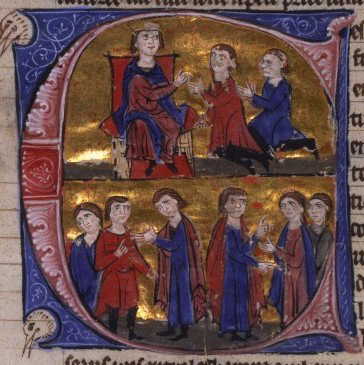
Council of the Crusaders

Byzantine Empire
John Komnenos (Greek: Ἰωάννης Κομνηνός; ca. 1015 – 12 July 1067) was a Byzantine aristocrat and military leader. The younger brother of Emperor Isaac I Komnenos, he served as Domestic of the Schools during Isaac’s brief reign (1057–59). When Isaac I abdicated, Constantine X Doukas became emperor and John withdrew from public life until his death in 1067. Through his son Alexios I Komnenos, who became emperor in 1081, he was the progenitor of the Komnenian dynasty that ruled the Byzantine Empire from 1081 until 1185, and the Empire of Trebizond from 1204 until 1461.
Life.
John Komnenos was born ca. 1015 as the younger son of the patrikios Manuel Erotikos Komnenos, a senior military commander in the late reign of Basil II (ruled 976–1025). He is first mentioned in 1057, the year his elder brother Isaac I Komnenos, at the head of a group of generals, rebelled against Michael VI and forced him off the throne. At the time of the revolt, John held the post of doux, but after his brother’s victory, he was raised to the rank of kouropalates and appointed as Domestic of the Schools of the West.
Nothing is known of John’s activities during his brother’s reign, although Nikephoros Bryennios the Younger, who married John’s granddaughter Anna Komnene, says that in his capacity as Domestic of the West he left his (unspecified) acts as an “immortal monument” to the people of the Balkan provinces.
Isaac’s reign was cut short by his clash with the powerful Patriarch of Constantinople,Michael Keroularios, who had been instrumental in securing Michael VI’s abdication, and the powerful civil aristocracy of the capital. Keroularios and his supporters led the opposition against Isaac’s stringent economizing policies, forcing him to resign on 22 November 1059, after which he withdrew to the Stoudios Monastery.
The crown then passed to Constantine X Doukas (r. 1059–67), although Bryennios asserts that it was first offered to John, who refused it, despite the pressure of his wife, Anna Dalassene, to accept. According to the historian Konstantinos Varzos, however, this version is suspect, and may well be a post-fact attempt at legitimizing the eventual usurpation of the throne by John’s son, Alexios I Komnenos (r. 1081–1118).
John is not mentioned in the sources during the reign of Constantine X, perhaps indicating, according to Konstantinos Varzos, that he was in imperial disfavour, despite Bryennios’ assertion that both he and his brother remained much honoured by the new emperor.The late 12th-century typikon of the Monastery of Christ Philanthropos, founded by Alexios I’s wife Irene Doukaina, is the only source to record that John Komnenos retired to a monastery, probably at the same time as his wife, Anna Dalassene. He died as a monk on 12 July 1067.
Family..John Komnenos married Anna Dalassene, the daughter of Alexios Charon, most likely in 1044. Anna, born ca. 1028, long outlived her husband and after his death ran the family as its undisputed matriarch. Anna became involved in conspiracies against the Doukas family, whom she never forgave for taking the throne in 1059. Later she also played a major role in the successful overthrow of Nikephoros III Botaneiates (r. 1078–81) and the rise of her son Alexios to the throne. After that, and for about fifteen years, she served as the virtual co-ruler of the empire along her son. She then retired to a monastery, where she died in 1100 or 1102.
With Anna, John had eight children, five boys and three girls:
IOANNES Komnenos, son of MANUEL Erotikos Komnenos & his wife — ([1015]-12 Jul 1067). Nikephoros Bryennios names “maiori natu Isaacio…iunior Ioannes” as the two sons of “Comneni Manuelis” . His parentage is confirmed by the Alexeiad which describes Emperor Isaakios Komnenos as brother-in-law of Anna Dalassena, an earlier passage naming him Ioannes [43]. Patrikios. Skylitzes records that Emperor Isaakios created “Joannem fratrem et Catacalon Combustum curopalatas” and “fratrem suum magnum domesticum” after his accession, in 1057 . His brother abdicated in his favour 25 Dec 1059, but Ioannes refused the throne. He became a monk as IOANNES. The list of obituaries of Empress Eirene Doukas’s family records the death “12 Jul, monk John father of Emperor”.
m ([1042]) ANNA Dalassena, daughter of ALEXIOS Kharon Prefect of Italy & his wife — Dalassena (-1 Nov/27 Apr 1100/01). Nikephoros Bryennios records the marriage of “Ioanni” and “filia Charonis Alexii…Anna”, recording that her mother was “genus a Dalassenis”. The Alexeiad names “Anna Dalassena, the mother of the Komneni” when recording that she arranged the marriage of “the grandson of Botaneiates and the daughter of Manuel her eldest son”. Despoina 1048/57. Regent of Byzantium 1081 and 1094-1095. She became a nun at Pantopopte convent which she founded. The list of obituaries of Empress Eirene Doukas’s family records the death “1 Nov, Anna, mother of the Emperor”.
Ioannes Komnenos & his wife had eight children:

