mermaidcamp
Keeping current in wellness, in and out of the water
You can scroll the shelf using ← and → keys
You can scroll the shelf using ← and → keys
Empire Avenue, a game with distinct gains
Empire Avenue for beginners
Very impressive



Eagles. For centuries, these seemingly larger-than-life birds have fascinated and inspired us with brilliant leadership characteristics. When eagles come to mind, people commonly imagine some enormous hunter soaring above wide-open spaces on outsized wings. Indeed, eagles are among the world’s largest birds of prey. We venerate them as living symbols of power, freedom, and transcendence. In some religions, high-soaring eagles are believed to touch the face of God. Legend holds that Mexico’s Aztecs so revered the birds that they built Tenochtitlan, their capital, at the spot where an eagle perched on a cactus.
Man for many years have taken Eagles as a symbol of beauty, bravery, courage, honour, pride, determination and grace. What makes this bird so important and symbolic to humanity is its characteristics. Seven important characteristics of eagle has been closely associated to leadership and is widely researched and the facts accepted globally.
View original post 1,543 more words
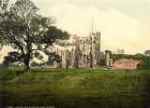

Sir Alan II La Zouche was born about 1203 in Ashby-De-La-Zouch, Leicestershire, England and died on 10 Aug 1270 in England. He was the son of Roger La Zouche.
Sir Alan married Helen de Quincy before 1242 in Winchester, Hampshire, England. Helen was born about 1222 in Winchester, Hampshire, England. She was the daughter of Roger de Quincy and Henen of Galloway. She died before 20 Aug 1296 in England.
Sir Alan was appointed, by Henry III, Constable of the Tower of London.
Children:
1. Margery La Zouche was born about 1251 in Clavering, Essex, England. Margery married Robert Fitzroger Clavering about 1265. Robert was born about 1247 in Clavering, Essex, England. He was the son of Roger Fitzjohn De Bailol Clavering. He died on 29 Apr 1310.
2. Eon (Eudes) le Zouche was born about 1244 in Ashby, Leicestershire, England and died before 25 Jun 1279.
http://www.renderplus.com/hartgen/htm/la-zouche.htm
Both of Sir Alan’s children, Margery and Eudo, are my ancestors. This is the paternal line:
Sir Knight Alan II Knight Baron of Ashby Constable of the Tower of London de la Zouche (1205 – 1270)
is your 23rd great grandfather
Margery La Zouche (1247 – 1329)
daughter of Sir Knight Alan II Knight Baron of Ashby Constable of the Tower of London de la Zouche
EUPHEMIA FITZROGER DE CLAVERING. (1267 – 1329)
daughter of Margery La Zouche
RALPH DE NEVILLE (1291 – 1367)
son of EUPHEMIA FITZROGER DE CLAVERING.
Sir John ‘3rd Baron de Raby’ Neville, Admiral of the Kings Fleet (1341 – 1388)
son of RALPH DE NEVILLE
Thomas De Neville (1362 – 1406)
son of Sir John ‘3rd Baron de Raby’ Neville, Admiral of the Kings Fleet
Maude de Neville (1392 – 1421)
daughter of Thomas De Neville
John Talbot (1413 – 1460)
son of Maude de Neville
Isabel Talbot (1444 – 1531)
daughter of John Talbot
Sir Richard Ashton (1460 – 1549)
son of Isabel Talbot
Sir Christopher Ashton (1493 – 1519)
son of Sir Richard Ashton
Lady Elizabeth Ashton (1524 – 1588)
daughter of Sir Christopher Ashton
Capt Roger Dudley (1535 – 1585)
son of Lady Elizabeth Ashton
Gov Thomas Dudley (1576 – 1653)
son of Capt Roger Dudley
Anne Dudley (1612 – 1672)
daughter of Gov Thomas Dudley
John Bradstreet (1652 – 1718)
son of Anne Dudley
Mercy Bradstreet (1689 – 1725)
daughter of John Bradstreet
Caleb Hazen (1720 – 1777)
son of Mercy Bradstreet
Mercy Hazen (1747 – 1819)
daughter of Caleb Hazen
Martha Mead (1784 – 1860)
daughter of Mercy Hazen
Abner Morse (1808 – 1838)
son of Martha Mead
Daniel Rowland Morse (1838 – 1910)
son of Abner Morse
Jason A Morse (1862 – 1932)
son of Daniel Rowland Morse
Ernest Abner Morse (1890 – 1965)
son of Jason A Morse
Richard Arden Morse (1920 – 2004)
son of Ernest Abner Morse
Pamela Morse
I am the daughter of Richard Arden Morse
Alan la Zouche (born about 1203) was summoned to accompany King Henry III to France in the 26th year of Henry’s reign. (Henry III was king from 1216 to 1272.) Within the next ten years, the whole county of Chester and all of North Wales were placed under Alan’s government. In the 45th year of Henry’s reign, Alan In the 45th year of the same reign he obtained a charter for a weekly market at Ashby-La-Zouche, in Leicestershire, and for two fairs in the year at Swavesey. At about the same time, Alan was made warden of the forests south of Trent and sheriff of Northamptonshire. In the 46th year of Henry’s reign, Alan was made Justice Iternerant for the counties of Southamptom, Buckingham, and Northampton. In the next three years, he was made Constable of the Tower of London, and Governor of the castle at Northampton. In 1268, he was violently attacked in Westminster Hall by John, Earl of Warren and Surrey, who had a dispute with Alan about some land. Alan’s son Roger was with him at the time, and Alan was severely wounded.

cactus blooming
Our memories are not accurate. Our self images are not well aligned with reality, and our sense of time is warped. This is true for almost everyone. I have embarked on some time line drawing exercises that have proven to me how far off base I am with a lot of my beliefs about my life and myself. The course in archetypes asks that I draw a time line for each of my dominant archetypes, including first meeting and how their powers entered and left the scene. I am surprised about the details I recall when I focus on only one aspect. This is also true if I draw a time line that includes all my physical injuries, surgeries, and illnesses. I have lead a healthy life, but I do see a pattern when I study the tendencies I have had. My doctors ask me to outline my injuries and illnesses, but I had never drawn them out on a paper with dates before. This chart alone tells a big story about your health and your life. There are other valuable time lines to draw for self knowledge:
When you have drawn these lines (all in the same scale) line up the sheets of paper under one another to see if they have any sequential patterns. Putting them all in a row shows detail that can sort out patterns in our lives. We tend to think of time in various delusional ways. We believe we have always been like this (whatever this may be), for instance. We often believe we were innocent when we were guilty, and sometimes believe just the opposite. The time line describes turning points and events that were pivotal in our development. If we then overlay the archetypes in our personalities, and which ones were dominant at what times the portrait becomes even clearer and more detailed. I started with the assignment of the archetype timelines, which is the most intricate and difficult of them all. By doing the easy ones above first we become accustomed to the focus it takes to really remember accurately. Then we are warmed up to question who was in charge and when. Time lines contain a great deal of power while still holding mystery in the line where it says nothing. Obviously there were constant events, but only some can be brought to mind. More practice brings better proficiency in stringing it all into place.


My 19th great-grandfather was Speaker of the House of Commons, and asked the king to excuse him from that duty. Richard II refused to excuse him. He is buried on the north side of the parish church St. Mary at Bures in Essex. These Waldegraves must be added to the buried in church tour of Europe I need to make someday.
Sir Richard II Lord Bures De Waldegrave (1335 – 1401)
is my 19th great grandfather
Sir Richard III Lord Bures Silveste DeWALDEGRAVE (1370 – 1434)
son of Sir Richard II Lord Bures De Waldegrave
Sir John William deWaldegrave (1397 – 1454)
son of Sir Richard III Lord Bures Silveste DeWALDEGRAVE
Lady Anne De Waldegrave (1429 – 1454)
daughter of Sir John William deWaldegrave
Knight Edmond Bedingfield (1450 – 1496)
son of Lady Anne De Waldegrave
Edmund Bedingfield (1483 – 1552)
son of Knight Edmond Bedingfield
Henry Bedingfield (1509 – 1583)
son of Edmund Bedingfield
Edmund Bedingfield (1534 – 1585)
son of Henry Bedingfield
Nazareth Bedingfeld (1561 – 1622)
daughter of Edmund Bedingfield
Elishua Miller Yelverton (1592 – 1688)
daughter of Nazareth Bedingfeld
Yelverton Crowell (1621 – 1683)
son of Elishua Miller Yelverton
Elishua Crowell (1643 – 1708)
daughter of Yelverton Crowell
Yelverton Gifford (1676 – 1772)
son of Elishua Crowell
Ann Gifford (1715 – 1795)
daughter of Yelverton Gifford
Frances Congdon (1738 – 1755)
daughter of Ann Gifford
Thomas Sweet (1759 – 1844)
son of Frances Congdon
Valentine Sweet (1791 – 1858)
son of Thomas Sweet
Sarah LaVina Sweet (1840 – 1923)
daughter of Valentine Sweet
Jason A Morse (1862 – 1932)
son of Sarah LaVina Sweet
Ernest Abner Morse (1890 – 1965)
son of Jason A Morse
Richard Arden Morse (1920 – 2004)
son of Ernest Abner Morse
Pamela Morse
I am the daughter of Richard Arden Morse
Sir Richard Waldegrave (died 2 May 1401) was a member of Parliament for Lincolnshire in 1376, and Speaker of the House of Commons from 1381 to 1382, during the reign of King Richard II.
Life
His father Sir Richard Waldegrave was returned to parliament in 1335 for Lincolnshire. Richard the son resided at Smallbridge in Suffolk, and was returned to parliament as a knight of the shire in the parliament of February 1376. He was elected to the first and second parliaments of Richard II and to that of 1381. In 1381 he was elected speaker of the House of Commons, and prayed the king to discharge him from the office; the first instance, according to James Alexander Manning, of a speaker desiring to be excused. The king, however, insisted on his fulfilling his duties.
During his speakership parliament was chiefly occupied with the revocation of the charters granted to the villeins by Richard during Wat Tyler’s rebellion. It was dissolved in February 1382. Waldegrave represented Suffolk in the two parliaments of 1382, in those of 1383, in that of 1386, in those of 1388, and in that of January 1389–90.
He died at Smallbridge on 2 May 1402, and was buried on the north side of the parish church of St. Mary at Bures in Essex. He married Joan Silvester of Bures, by whom he had a son, Sir Richard Waldegrave.
Referenc es
” Waldegrave, Richard”. Dictionary of National Biography, 1885–1900. London: Smith, Elder & Co.
Attribution
This article incorporates text from a publication now in the public domain: “Waldegrave, Richard”. Dictionary of National Biography, 1885–1900. London: Smith, Elder & Co.

Hilton Big Horn
I was privileged to spend the weekend with a group of about 170 people who came from all over the country to a conference on the Spirituality of Healing taught by James Finley. The group included many mental health professionals and teachers who were earning credits in continuing education in their professions. Many were members of churches with meditation/prayer groups. I was new to the genre, but felt right at home in he congenial student group. I saw an ad for this in a local paper and followed up with some research into James Finley. I ordered a couple of audio books he wrote and signed up for the conference. The resort where it was held is where the Dalai Lama taught in September of 1993, so I have very fond memories of the place. The Hilton El Conquistador was turned into the the El Comtemplador for a couple of days. The hotel is dog friendly so my partner and dog could come along for a staycation away from home. It was a remarkable experience. I did not photograph the sessions or the participants because I did not want to distract myself from the teaching. I am happy I made that decision because those photos would add little to this post.
Dr. Finley is very generous with free resources on his website, His teaching in person is designed to pack the time spent together with dense, rich, profound, yet simplistic and practical ideas. His background allows him to use language of psychotherapy as well as religious language to explain his concepts. He is a brilliant speaker, but the style of presenting really enhances the message he brings. First of all, he establishes silence in the hall where the conference takes place. There is time and space outside the room to talk. On the second day the group broke bad and got noisy, so he asked that we reestablish the silence in the room. He uses humor to make his point many times, and refers to patient/clinician dialogs to shed light with specific examples. In his opening remarks he lets the audience know that trauma is a difficult and personal subject to address. He encouraged each person to leave the room, move around, take breaks as needed. He repeated several times, “To thine own self be true.” This was good for me when I decided the chairs were not sized so well for me, so I took up a spot against the wall where I had support from the wall for sitting or could even lie down. The sessions covered in sequence his Seven Steps of Spiritual Healing, which logically build upon the preceding steps. He speaks for a little over an hour to cover the material and then a 15-20 minute discussion is opened with the students. A short break for everyone is followed by the next lecture. The time is very well ordered and managed to the greatest advantage of the students. I must say the staff at the resort could not have been more pleasant and helpful, which was icing on the very tasty cake.
He shows the highest regard for the integrity of the students in his assignment of homework. He gave us several exercises to do on our own that will require a great deal of time and consideration, and then moved on to his core curriculum. If you practice you reap the benefits of practice. If you don’t, you don’t. Dr. Finley drives this point home in dramatic and impressive ways in his teaching. Not only is the task of enlightenment or healing our own responsibility, but we are doing it as a microcosm of all that is. We can only put ourselves in the position of least resistance for our desired outcome, and then let go. Deep meaning, philosophy, poetry, art and love are contained in each precious moment, available to us, and being created by us. We have all heard such statements somewhere in our past, and may believe them. What Dr. Finley offers is a system, a practice, a devotional idea to stabilize the consciousness in a state of pure love. It requires diligence and patience. He ended by giving us homework for seven years. It was the perfect wrap up for this conference. He showed how to use lexia divina, discursive meditation, and practice to move into and through the seven steps. He assigned us a step each week for seven weeks, then do that seven times (49 weeks) after a short break we were to take it up again from the beginning..seven steps, one step a week , repeated 7 times. Of course, after a break we are to start at the beginning, until we have done this practice for 7 years. I am sure some kind of heavy duty breakthrough would have to take place if we were all to do our homework. I love his optimism in assigning it. If you have a chance to study with these contemplatives, take advantage of it.

The Freaks Shall Inherit the Earth
There are different ways to approach finances, but there is only one way to count. You can count by 5’s or by 10’s but when you come up with a sum, that is reality. People today are often confused about what constitutes wealth, security, or satisfaction. One of the problems I notice is the addition of interest rates and complicated denial schemes to hide from financial reality. When people became accustomed to using credit cards many also abandoned balancing the budget. Some might believe ignorance is bliss, but when the interest rates catch up with your finances there will be no bliss for you. The popularity of Suze Orman shows how very well educated and powerful people can be financially illiterate to the point of causing agony in their lives. When I was a child there were no credit cards. The parents had metal plates that belonged to specific stores, but I don’t think there was credit advanced. The bill at the store was paid each month in full. We did not consider borrowing money to buy everything. Time was more bountiful too, so people were not strapped to decide which meeting/sporting event/social episode to choose. We had time for everything, including hopping in the car to drive across the country. I do not think we need to return to the days of yesteryear to conquer or mathematical shortcomings. I think we need a simple way to teach those who have always lived in a world with credit cards how to understand compounded interest.
Chris Brogan, one of my favorite authors, has written a book, The Freaks Shall Inherit the Earth, that offers a wonderful solution to our dilemma of rampant financial delusion. He calls it “Mortgage Math”. It is a brilliant way to compare and bring into focus money that one is contemplating spending. Instead of trudging onward randomly spending, paying, and wondering how to get out of debt he suggests that each expenditure be compared to something you buy all the time. A mortgage payment is a very common overhead expense to which people can relate. If you have to decide if what you will pay (both now and in interest) for something is worth it, just ask how it compares to your mortgage payment. This adds perspective to an otherwise never-ending spending problem that has buried many Americans in hopeless debt. I have no mortgage, but I use this system to compare anything to a trip. I want a first class ticket to Europe, plus time and money to spend months tracking down my dead ancestors in style. This adventure will be pretty pricey, and I want it more than most day to day things I might purchase. I am not really saving up for it, but rather am using it as a guideline for comparison. I am not an interest payer. I like to be an interest collector, but I still find this idea very useful for attuning with financial reality. He uses a similar formula to determine how valuable time is. By limiting meetings to 20 minutes, saying no often, and staying aware that tempus fugit, memento mori, he gives good advice to create frameworks for more abundant free time. By valuing what you already have, time and freedom of choice, you can make your own financial future more comfortable and successful. There are many good ideas in this book, but this way of looking at finances and time has great potential to help many get on track and fulfill dreams.
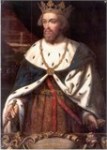
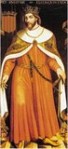
Jaime I Mallorc is my ancestor two times. Two of his children became my ancestors, Isabella and Peter, both leading to Ann Dudley, Pilgrim poet. She has the most royal of pedigrees. This is just one of them. She wrote about God and religion, but her DNA contained the royal history of Europe, crusades and all. Jaime was one of those royals who had his first marriage annulled when he wanted to marry another woman.
Jaime I Mallorc (1207 – 1276)
is my 23rd great grandfather
Isabella DeAragon (1247 – 1271)
daughter of Jaime I Mallorc
Charles DeValois (1270 – 1325)
son of Isabella DeAragon
Jeanne DeVALOIS (1294 – 1342)
daughter of Charles DeValois
Philippa deHainault (1311 – 1369)
daughter of Jeanne DeVALOIS
John of Gaunt – Duke of Lancaster – Plantagenet (1340 – 1399)
son of Philippa deHainault
Philippa Plantagenet (1370 – 1415)
daughter of John of Gaunt – Duke of Lancaster – Plantagenet
Beatrix DePinto (1403 – 1447)
daughter of Philippa Plantagenet
John Fettiplace (1427 – 1464)
son of Beatrix DePinto
Richard Fettiplace (1460 – 1511)
son of John Fettiplace
Anne Fettiplace (1496 – 1567)
daughter of Richard Fettiplace
Mary Purefoy (1533 – 1579)
daughter of Anne Fettiplace
Susanna Thorne (1559 – 1586)
daughter of Mary Purefoy
Gov Thomas Dudley (1576 – 1653)
son of Susanna Thorne
Anne Dudley (1612 – 1672)
daughter of Gov Thomas Dudley
John Bradstreet (1652 – 1718)
son of Anne Dudley
Mercy Bradstreet (1689 – 1725)
daughter of John Bradstreet
Caleb Hazen (1720 – 1777)
son of Mercy Bradstreet
Mercy Hazen (1747 – 1819)
daughter of Caleb Hazen
Martha Mead (1784 – 1860)
daughter of Mercy Hazen
Abner Morse (1808 – 1838)
son of Martha Mead
Daniel Rowland Morse (1838 – 1910)
son of Abner Morse
Jason A Morse (1862 – 1932)
son of Daniel Rowland Morse
Ernest Abner Morse (1890 – 1965)
son of Jason A Morse
Richard Arden Morse (1920 – 2004)
son of Ernest Abner Morse
Pamela Morse
You are the daughter of Richard Arden Morse
James I of Aragon (Spanish: Jaime I, Catalan: Jaume I) (Montpellier February 2, 1208 � July 27, 1276), surnamed the Conqueror, was the king of Aragon, count of Barcelona and Lord of Montpellier from 1213 to 1276.
He was the only child of Peter II of Aragon and Marie of Montpellier. As a child he was a pawn of power politics in Provence, where his father was engaged in struggles in the wars between the Cathars of Albi and Simon de Montfort. Peter endeavoured to placate the northern crusaders by arranging a marriage between his son James and Simon’s daughter, entrusting the boy to be educated in Montfort’s care in 1211, but Peter was soon forced to take up arms against them, and he was slain at the Battle of Muret September 12, 1213. Montfort would willingly have used James as a means of extending his own power. The Aragonese and Catalans, however, appealed to the pope, who forced Montfort to surrender him in May or June 1214.
James was now entrusted to the care of Guillen de Monredon, the head of the Knights Templar in Spain and Provence. The kingdom was given over to confusion till in 1216 the Templars and some of the more loyal nobles brought the young king to Saragossa.
He first married, in 1221, Leonor, daughter of Alfonso VIII of Castile, and then after having the marriage annulled (though a son was declared legitimate), in 1235, Yolande of Hungary, daughter of Andrew II of Hungary. His children were:
Alfonso (1229-1260), married Constanza de Moncada, Countess of Bigorre
Violante of Aragon (1236-1301), married Alfonso X of Castile
Peter III of Aragon
Constanza of Aragon (1239-1269), married Juan Manuel of Castile, son of Ferdinand III of Castile
James II of Majorca
Isabella of Aragon, married Philip III of France
Sancho, Archbishop of Toledo (1250-1279)
After a false start at uniting Aragon with Navarre through a scheme of mutual adoption, James turned to the south and the Mediterranean, conquered the Balearic Islands (from 1228 over the following four years) and Valencia (the city capitulated September 28, 1238).
With the French, James endeavoured to form a state straddling the Pyrenees, to counterbalance the power of France north of the Loire. As with the earlier Visigothic attempt, this policy was victim of physical, cultural and political obstacles. As in the case of Navarra, he was too wise to launch into perilous adventures. By the Treaty of Corbeil, with Louis IX, signed May, 1258, he frankly withdrew from conflict with the French king, and was content with the recognition of his position, and the surrender of antiquated and illusory French claims to the overlordship of Catalonia.
During his remaining two decades, James warred with the Moors in Murcia, on behalf of his son-in-law Alphonso the Wise of Castile. As a legislator and organizer he occupies a high place among the Spanish kings. The favor he showed his bastards led to protest from the nobles, and to conflicts between his sons legitimate and illegitimate. When one of the latter, Fernan Sanchez, who had behaved with gross ingratitude and treason to his father, was slain by the legitimate son Peter, the old king recorded his grim satisfaction.
At the close of his life King James divided his states between his sons by Yolande of Hungary, Peter receiving the Hispanic possessions on the mainland and James, the Kingdom of Majorca (the Balearic Islands and the counties of Roussillon and Cerdagne) and the Lordship of Montpellier, a division which inevitably produced fratricidal conflicts. The king fell very ill at Alcira, and resigned his crown, intending to retire to the monastery of Poblet, but died at Valencia July 7, 1276.
King James wrote or dictated at various stages a chronicle of his own life, “Llibre Dels Fets” in Catalan, which is the first self-chronicle of a Christian king. As well as a fine example of autobiography the “Book of Deeds” expresses concepts of the power and purpose of monarchy, examples of loyalty and treachery in the feudal order, the growth of national sentiment based on homeland, language and culture, and medieval military tactics.





I ate lunch today at my new favorite restaurant, Cafe Botanica. This charming restaurant is nestled into the exotic greenery at Tucson Botanical Gardens. I visit frequently and for no particular reason had never eaten there. When I met a neighbor who works there as a server I decided to make a point to try the food. To my great surprise the offerings are the most seasonal, the most creative, and for my personal taste, the most delightful plates in the city of Tucson. The concept is to make use of every kind of local, organic, sustainable source of ingredients. I think they go beyond any other restaurant to achieve this goal, but without the brilliance of Chef Cristopher and his wild creativity the concept would not be as smashing. He combines ingredients I would not have thought of, including some I have never eaten, such as radish tops. The result was exactly the kind of full flavor, gorgeous to see, plate of variety I want to eat all the time. The great news is that I have a garden, and they will trade me prepared food for some of my extra produce. This could become a serious habit…the kind with only positive effects!!!
New Summer hours will start on June 3, including a weekend brunch. Dog membership also begins on June 3, and has expanded to inviting member dogs on both Tuesday and Thursday this year. The innovative menu, and the fact that the gardens create a cooler micro climate for morning walks will be an exciting new addition to our neighborhood. There will also be Thursday dinners this summer with BYOB wine. This is a major upgrade for Tucson. I highly recommend Cafe Botanica to anyone. There is an air conditioned inside dining room for times when it is too hot. The gourmet, homemade dishes are very reasonably priced, and there is no chef more caring, and into it, than Christopher. Mandy, my friend and server, puts her heart into making guests feel right at home.

